Free Printable Stoichiometry of Gases Worksheets for Year 10
Year 10 stoichiometry of gases worksheets from Wayground help students master molar calculations and gas law relationships through comprehensive practice problems, free printables, and detailed answer keys.
Explore printable Stoichiometry of Gases worksheets for Year 10
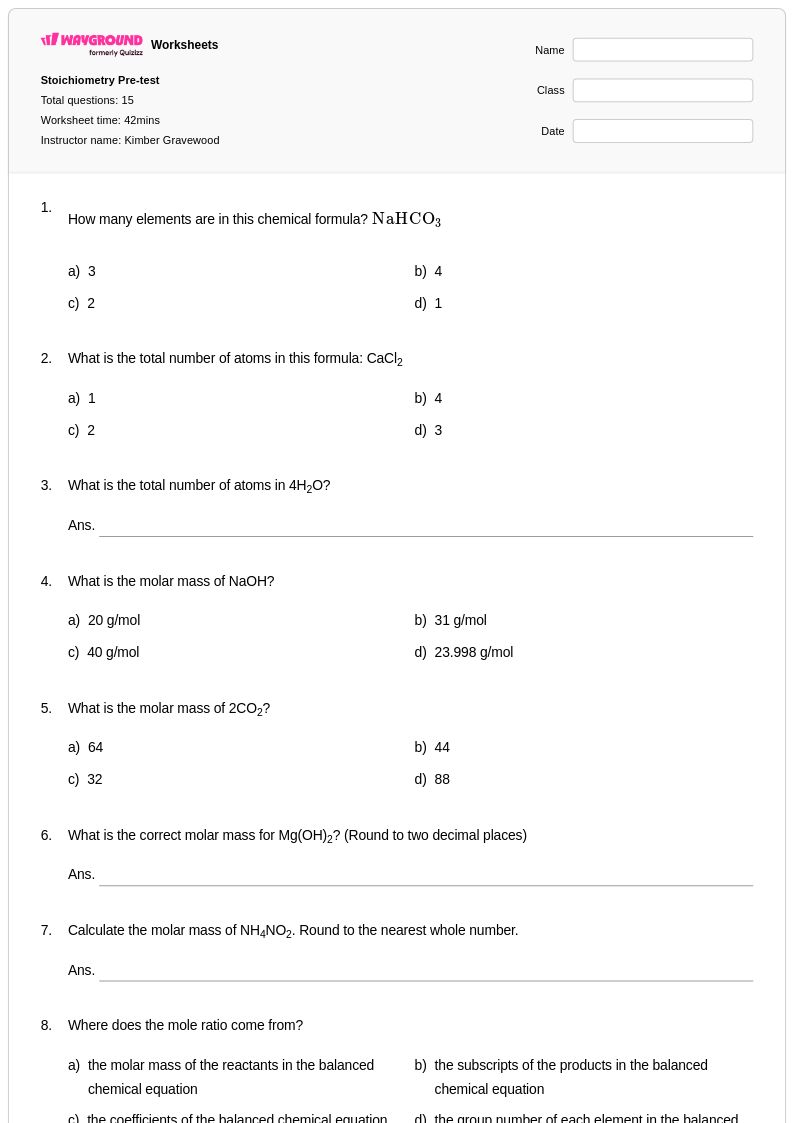
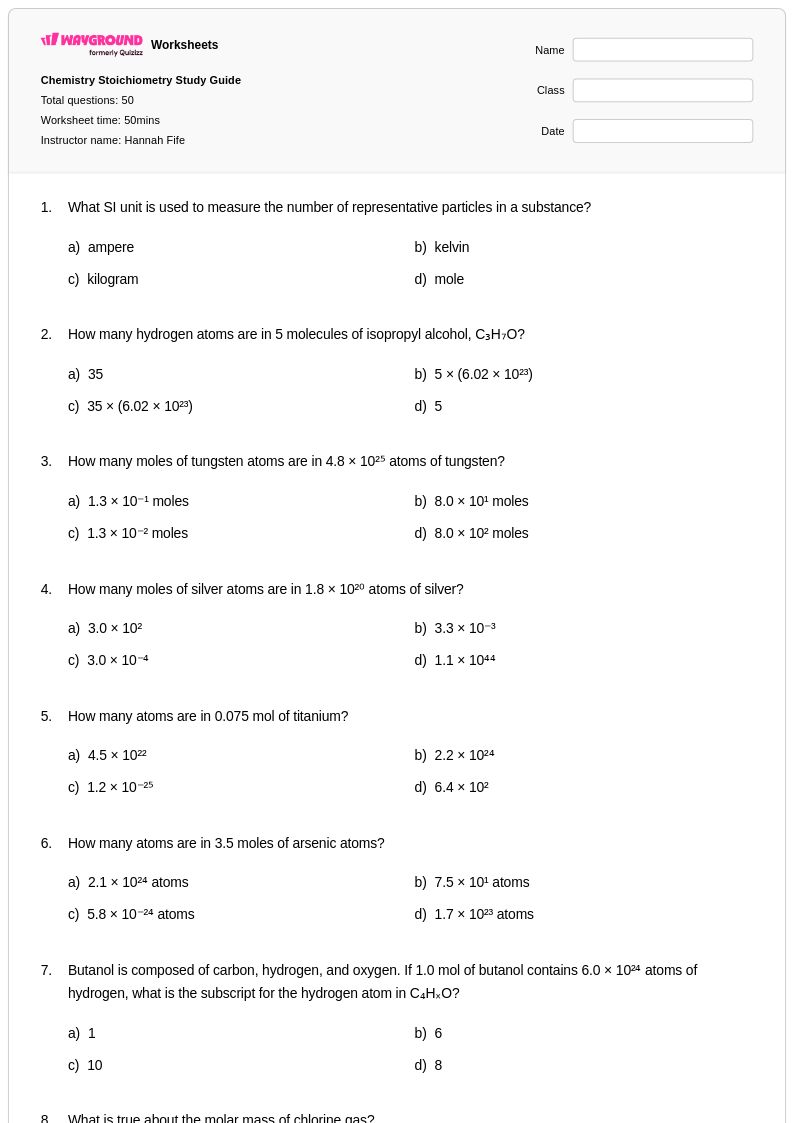
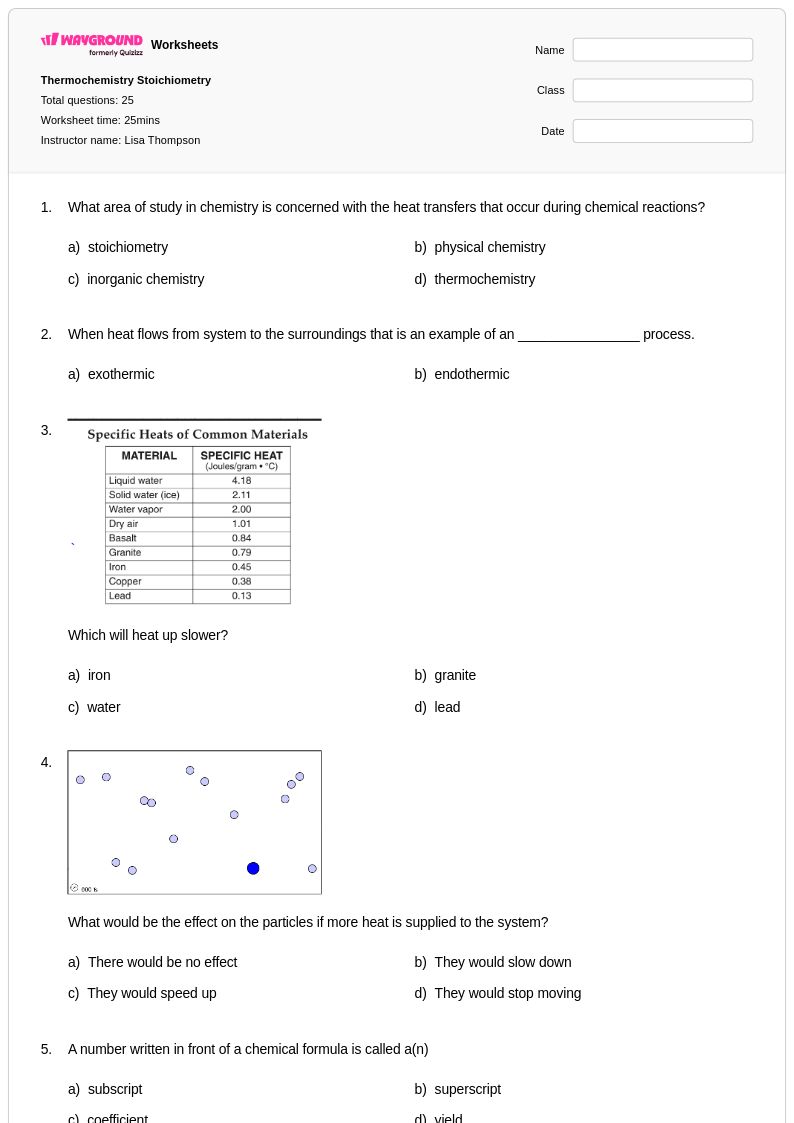
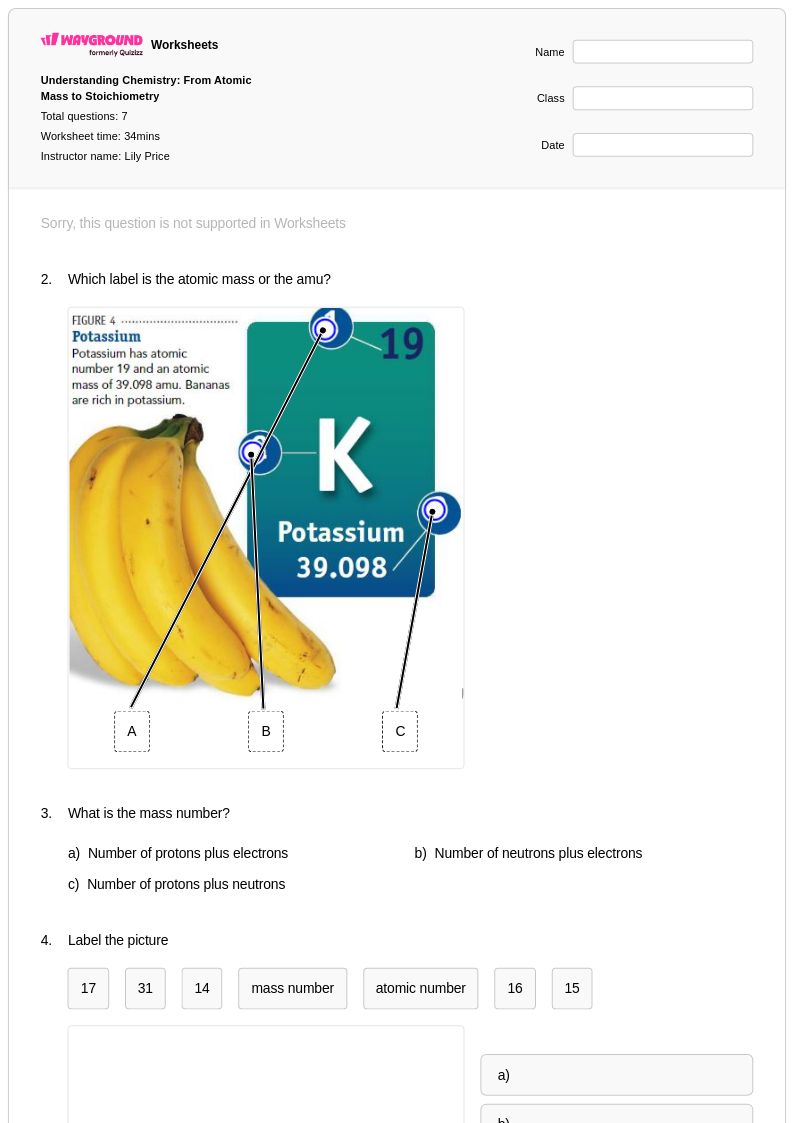
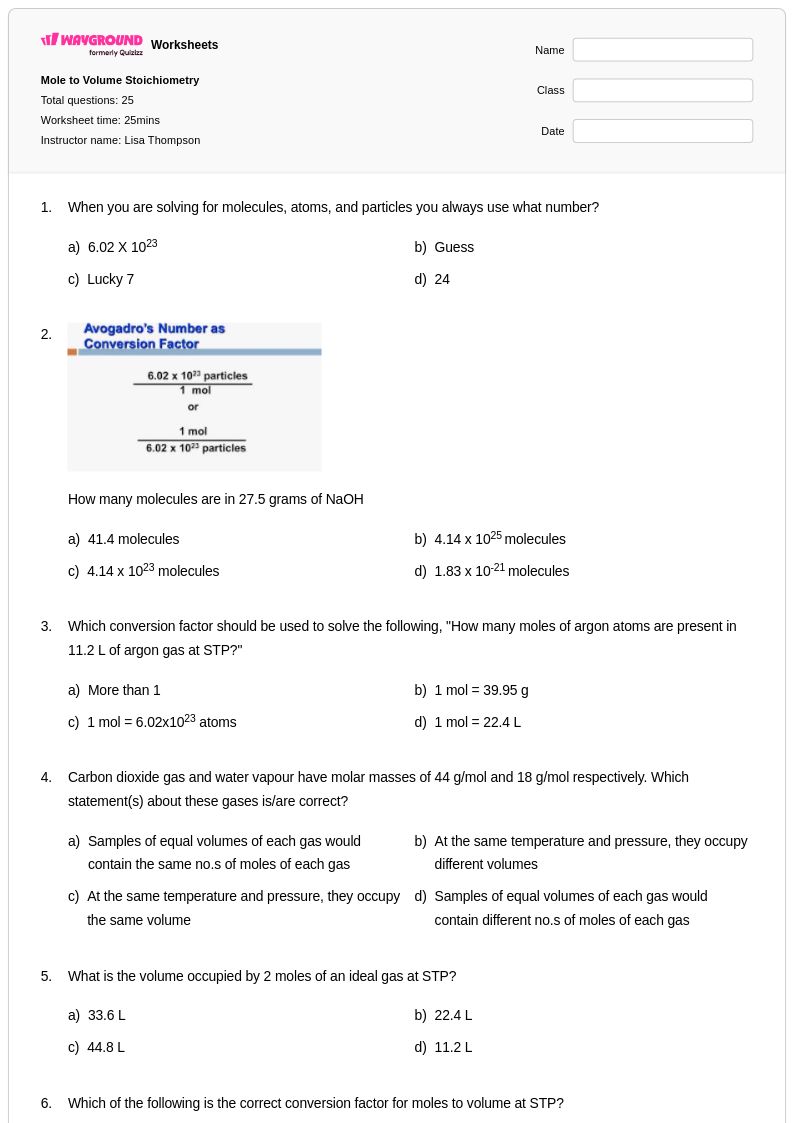
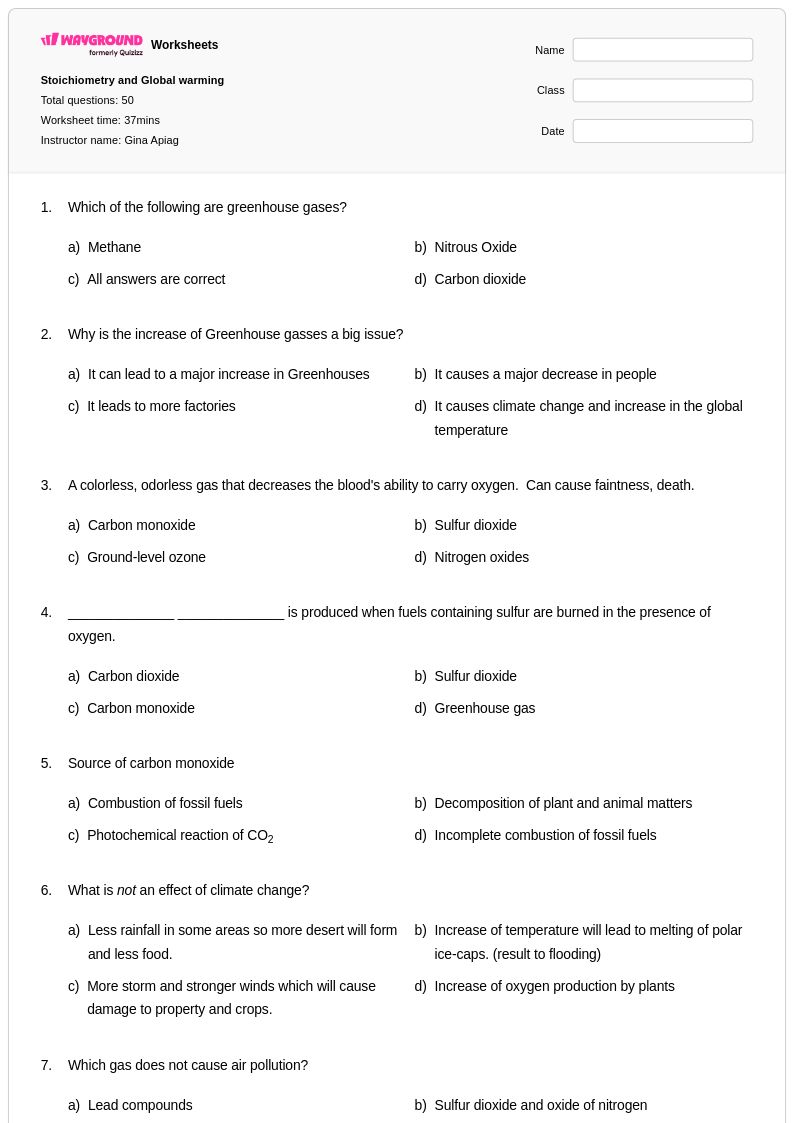
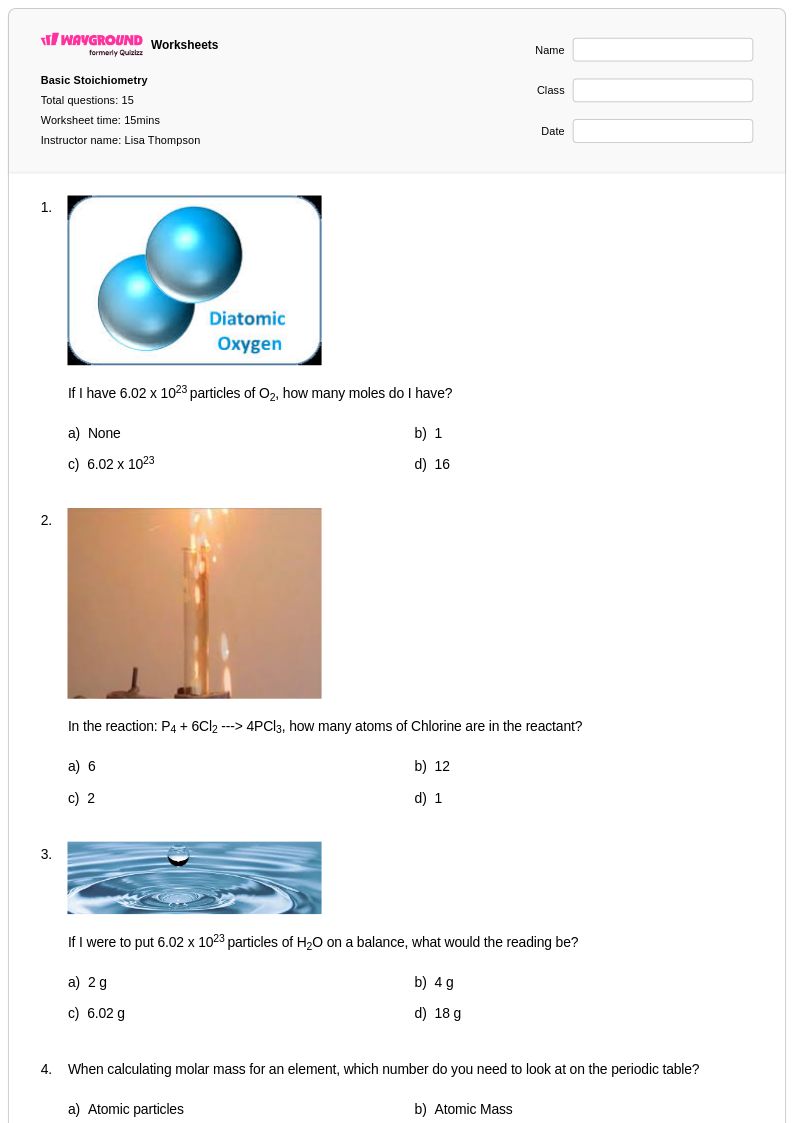
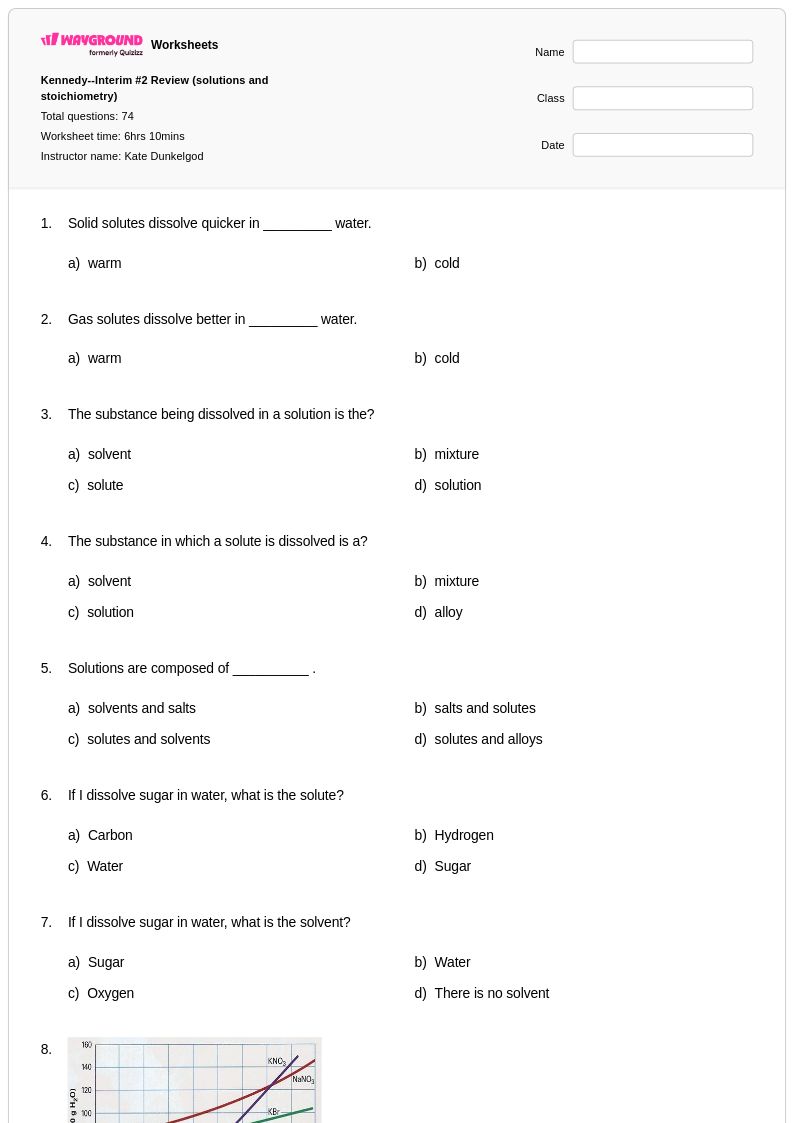
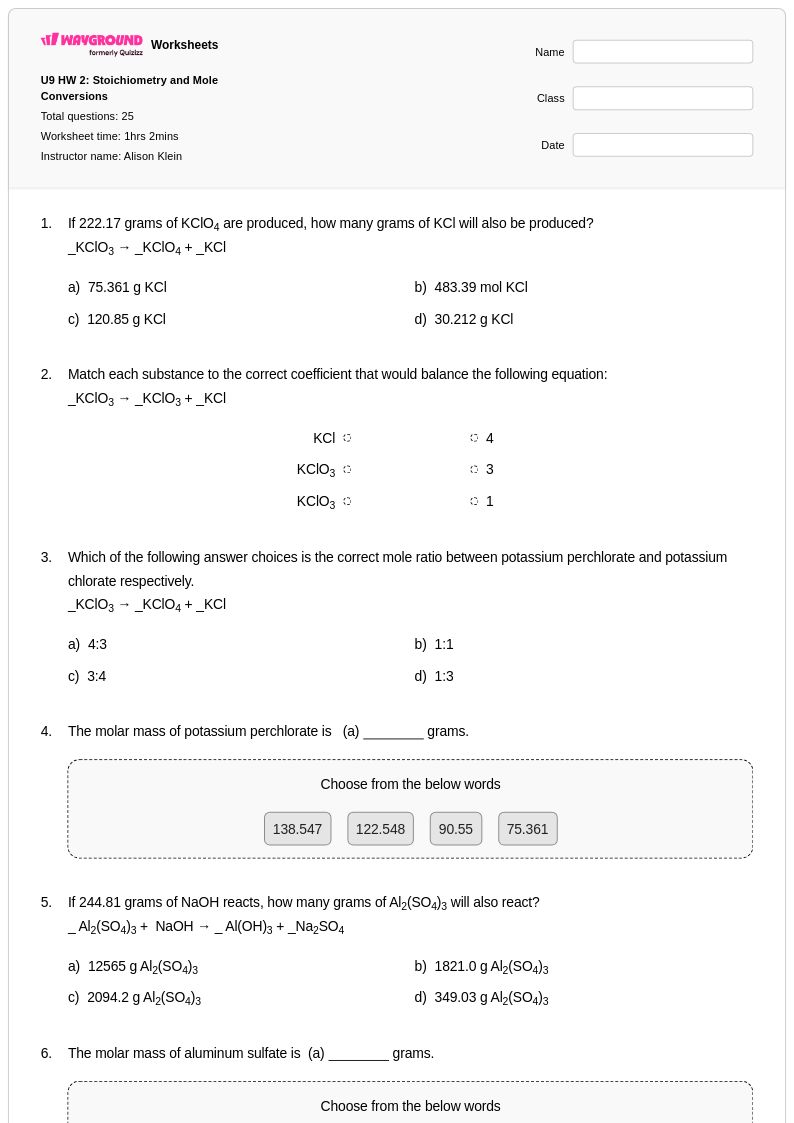
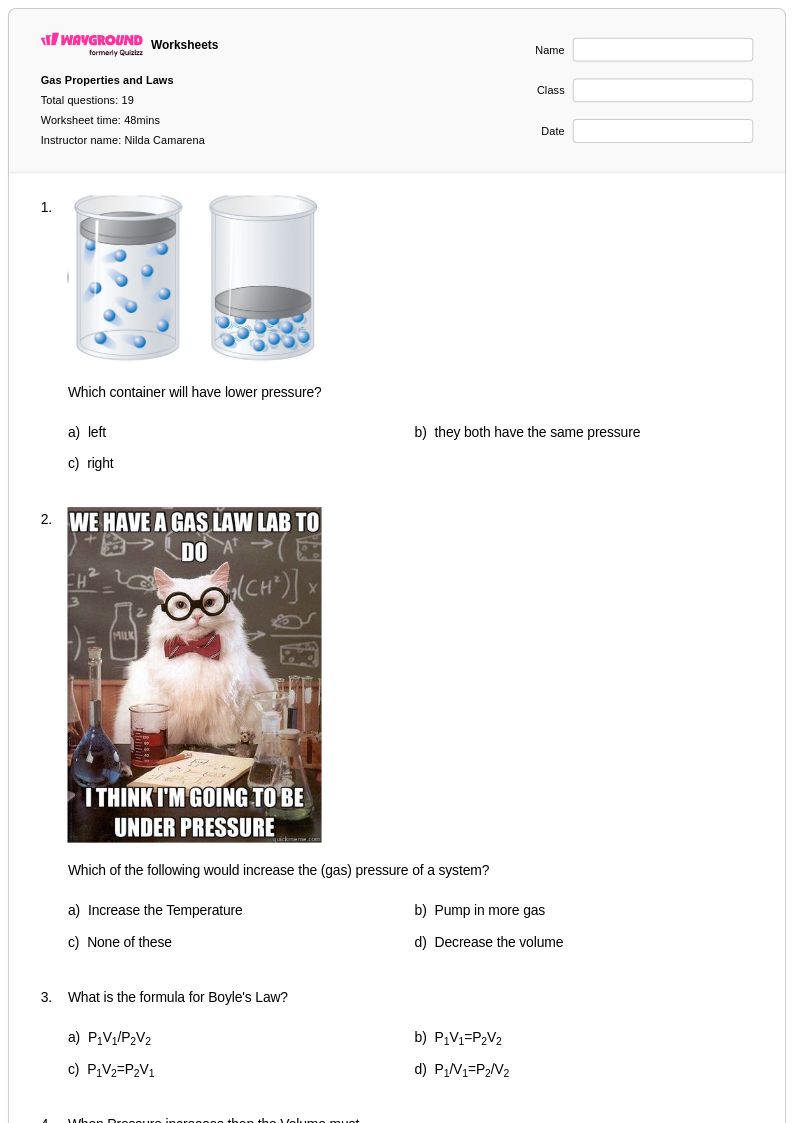
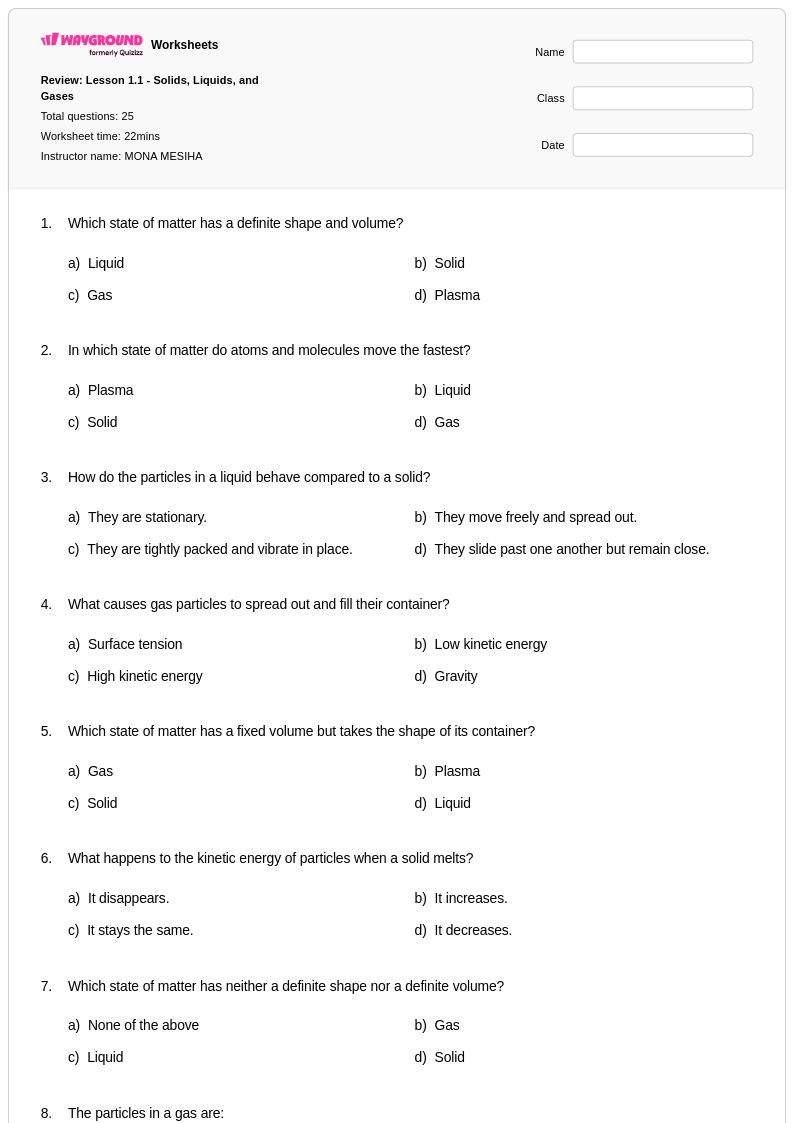
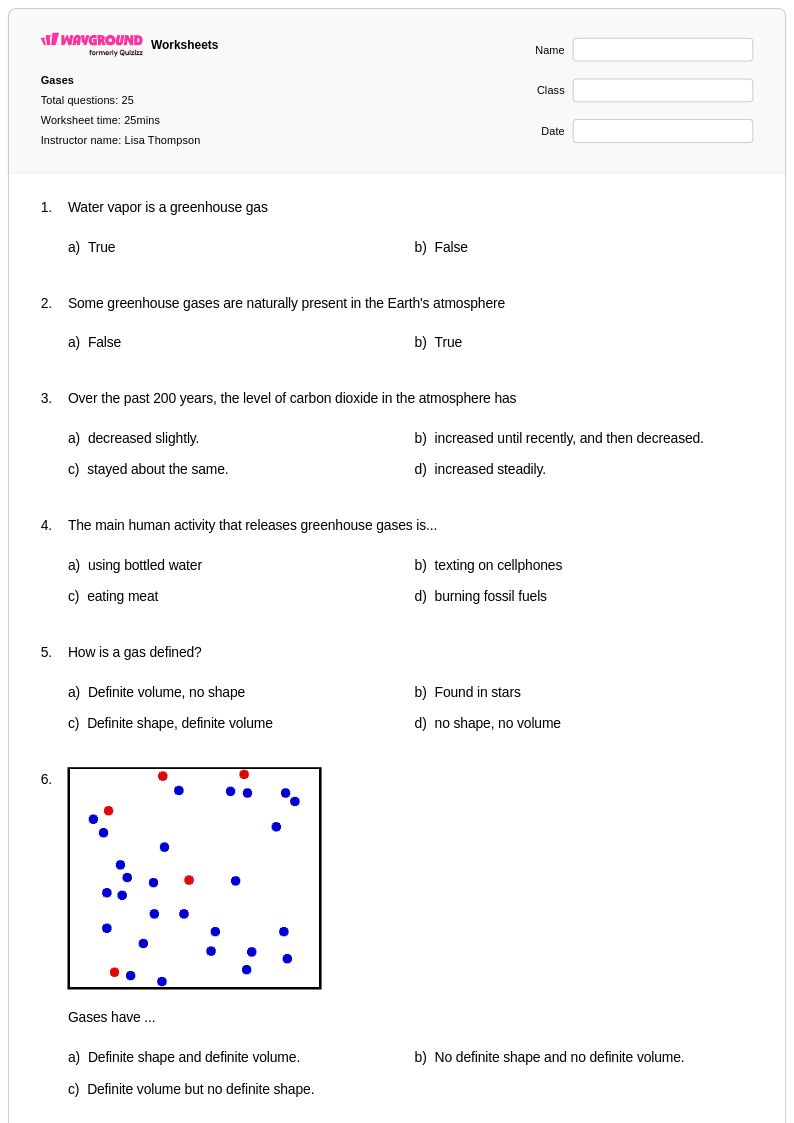
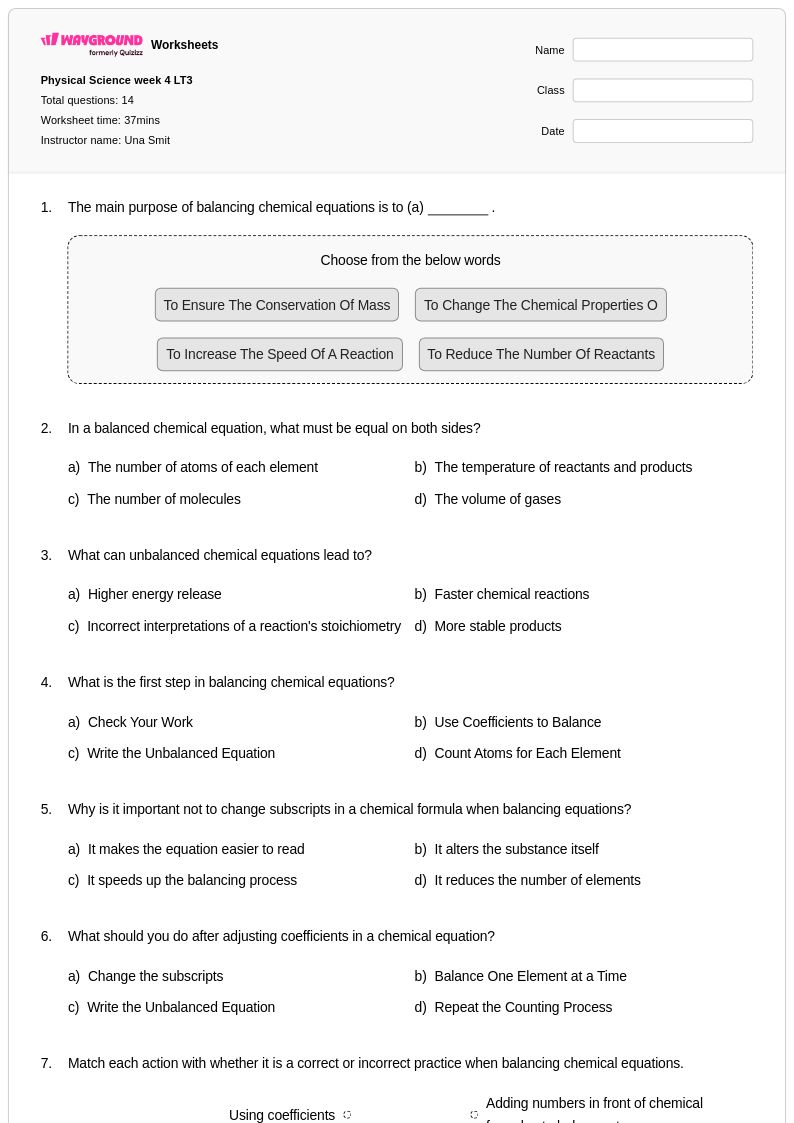
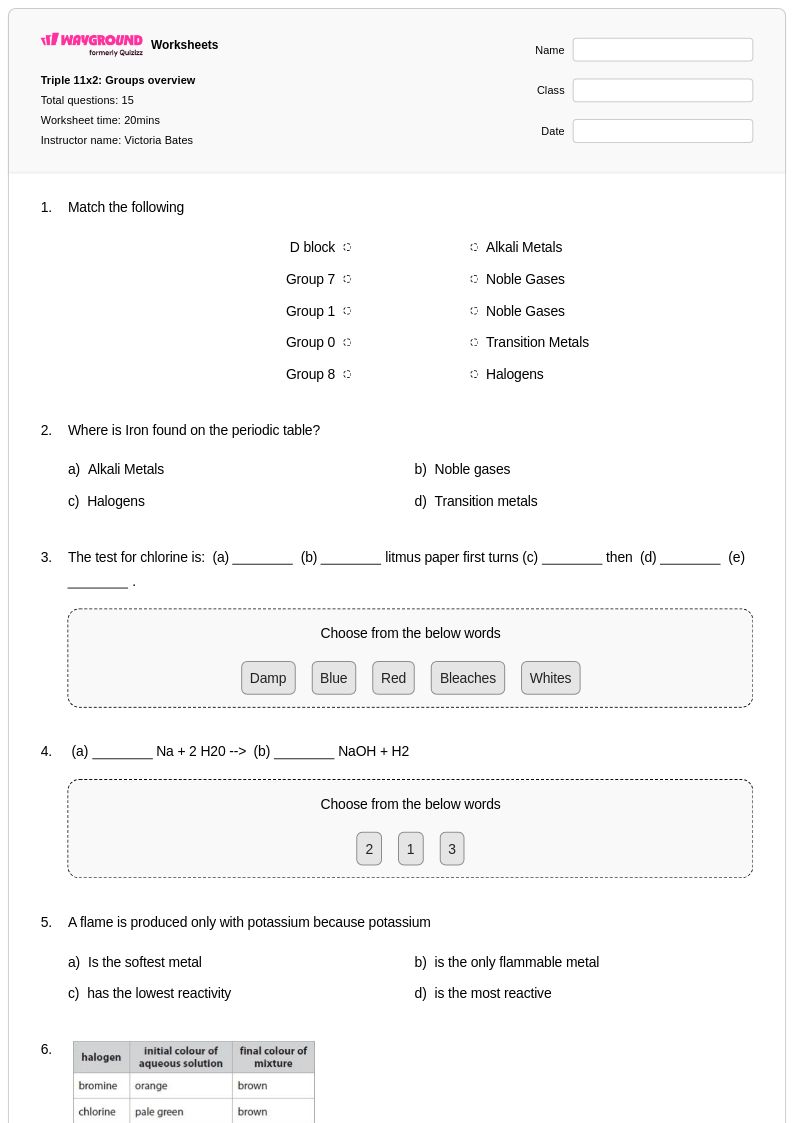
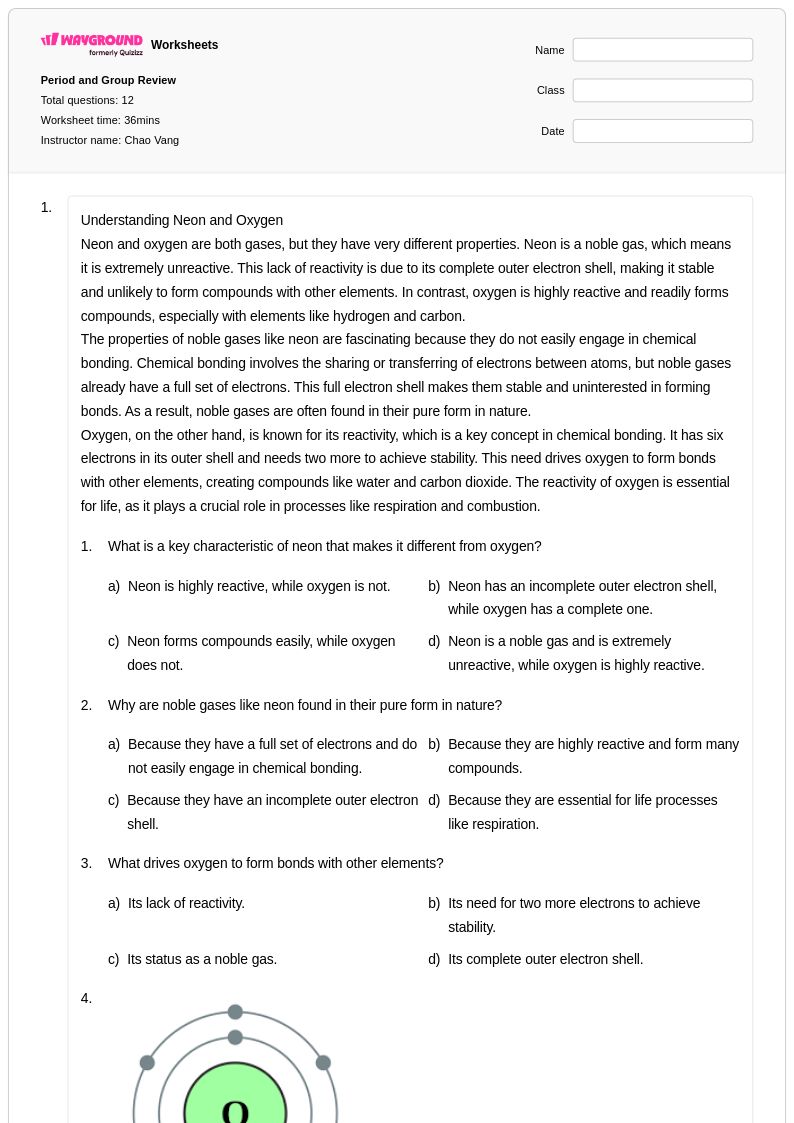
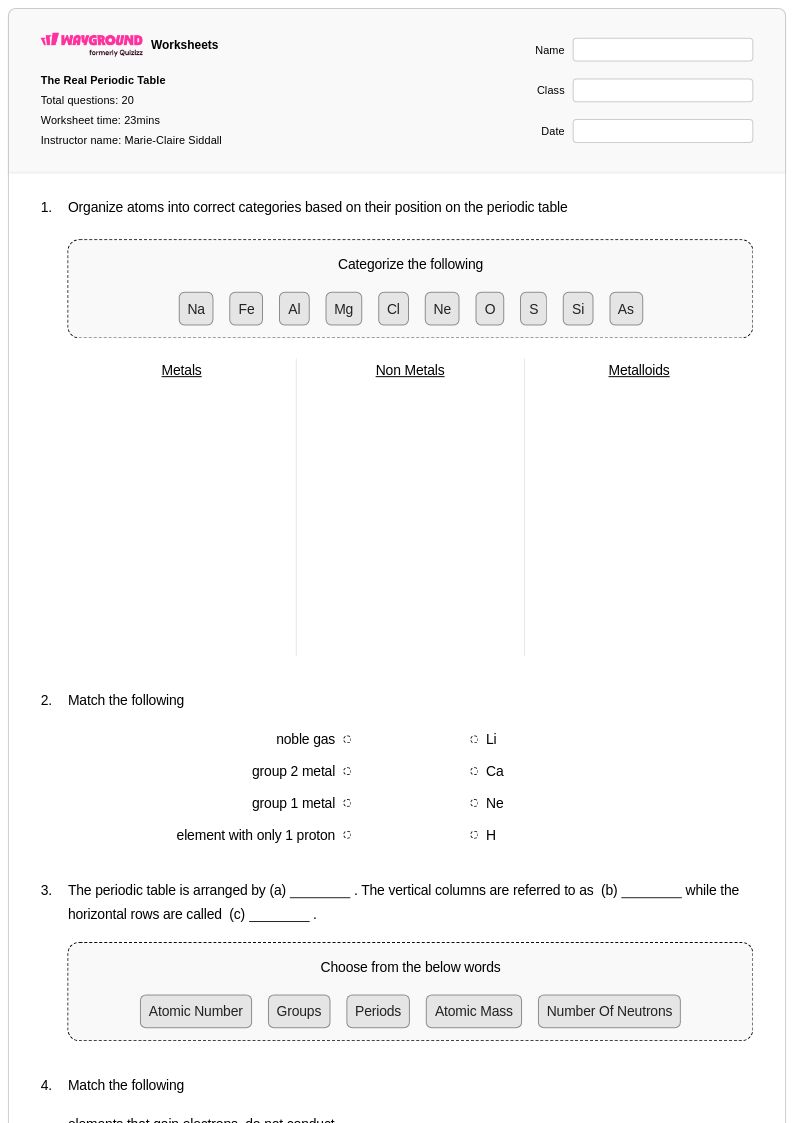
Stoichiometry of gases represents one of the most challenging yet essential concepts in Year 10 chemistry, requiring students to master the quantitative relationships between gaseous reactants and products in chemical reactions. Wayground's comprehensive collection of stoichiometry of gases worksheets provides targeted practice problems that help students develop proficiency in applying gas laws, molar volume calculations, and balanced chemical equations to solve complex stoichiometric problems. These carefully crafted printables strengthen critical analytical skills by guiding students through step-by-step calculations involving standard temperature and pressure conditions, ideal gas behavior, and mass-to-volume conversions. Each worksheet includes detailed answer keys that allow students to verify their understanding of concepts such as molar ratios, limiting reactants in gaseous systems, and theoretical yield calculations, making these free resources invaluable for both classroom instruction and independent study.
Wayground formerly Quizizz empowers chemistry teachers with millions of teacher-created resources specifically designed to address the complexities of gas stoichiometry instruction. The platform's robust search and filtering capabilities enable educators to quickly locate worksheets that align with specific curriculum standards and target particular skill levels, from basic molar volume problems to advanced multi-step calculations involving gas mixtures and reaction yields. Teachers can easily differentiate instruction by selecting from various difficulty levels and problem types, then customize these materials to meet individual student needs or modify them for different assessment purposes. Available in both digital and printable PDF formats, these stoichiometry resources support flexible lesson planning while providing essential tools for remediation, enrichment, and systematic skill practice that helps students build confidence in quantitative chemical analysis.
FAQs
How do I teach stoichiometry of gases to chemistry students?
Start by ensuring students are solid on mole-to-mole stoichiometry before introducing gas-specific calculations. Then layer in the concept of molar volume at STP (22.4 L/mol) so students can convert between moles and liters of gas directly from a balanced equation. From there, introduce the ideal gas law (PV = nRT) for non-STP conditions so students can handle more realistic scenarios. Using stepwise, multi-part problems helps students see each calculation as part of a connected process rather than an isolated skill.
What are the most common mistakes students make with stoichiometry of gases?
The most frequent error is applying the 22.4 L/mol molar volume shortcut to conditions that are not at STP — students often forget this value is only valid at standard temperature and pressure. A second common mistake is failing to use mole ratios from the balanced equation before converting to volume, skipping the mole bridge entirely. Students also frequently confuse which reactant is limiting when both reactants are gases, especially when volume ratios are given instead of moles. Explicitly requiring students to write out each conversion step helps surface and correct these errors.
What practice problems help students master gas stoichiometry calculations?
Effective practice problems for gas stoichiometry include: converting between moles and liters of a gaseous product at STP, using the ideal gas law to find the volume of a gas produced at non-standard conditions, and identifying the limiting reactant in reactions where one or both reactants are gases. Multi-step problems that require students to sequence a mole-to-mole conversion followed by a gas law calculation are especially useful for building procedural fluency. Problems that vary given information — sometimes providing mass, sometimes volume, sometimes pressure — train students to approach each scenario flexibly.
How do I differentiate gas stoichiometry instruction for students at different readiness levels?
For students still building foundational skills, begin with single-step problems limited to STP conditions using the 22.4 L/mol shortcut before introducing the ideal gas law. More advanced students can work through multi-step problems involving limiting reactants and percent yield with gaseous systems. On Wayground, teachers can apply accommodations such as reduced answer choices for students who need support, or extended time per question for those who require it — settings that can be assigned to individual students while other students receive default conditions.
How can I use Wayground's stoichiometry of gases worksheets in my classroom?
Wayground's stoichiometry of gases worksheets are available as printable PDFs for traditional paper-based practice and in digital formats for technology-integrated learning environments, including the option to host them as a quiz on Wayground for instant feedback. This flexibility makes them suitable for in-class problem sets, homework assignments, lab pre-work, or remediation sessions targeting specific gas law calculations. Complete answer keys are included with each worksheet, so teachers can use them for self-paced review or formative check-ins without additional grading burden.
How does the ideal gas law connect to stoichiometry of gases problems?
The ideal gas law (PV = nRT) connects to stoichiometry by allowing students to calculate the number of moles of a gaseous reactant or product when conditions are not at STP. Once moles are determined using PV = nRT, standard mole ratio calculations from the balanced equation apply as usual. This means gas stoichiometry problems under real-world conditions require students to integrate two major chemistry concepts: the ideal gas law and mole-to-mole stoichiometry. Teaching these as a connected two-step framework, rather than two separate topics, significantly reduces student confusion.