Free Printable Word Equations Worksheets for Year 10
Year 10 word equations worksheets from Wayground help students master chemical reaction representations through comprehensive printables, practice problems, and answer keys that build essential chemistry skills.
Explore printable Word Equations worksheets for Year 10
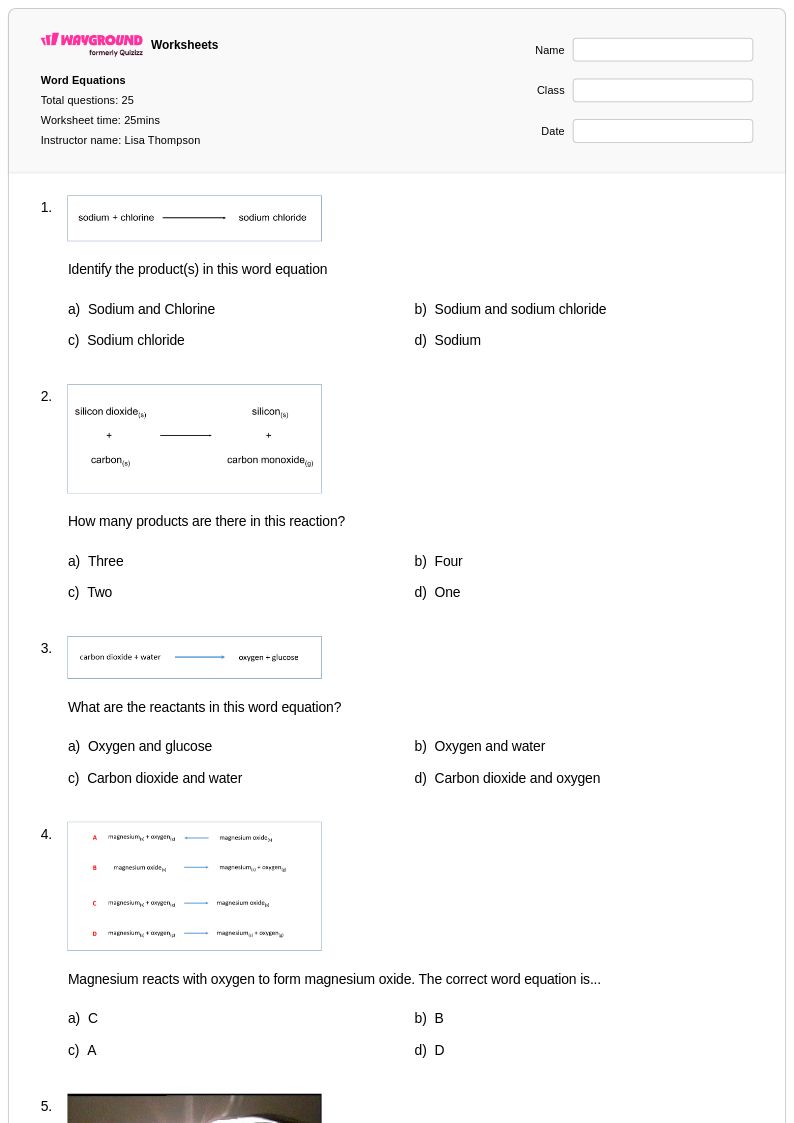
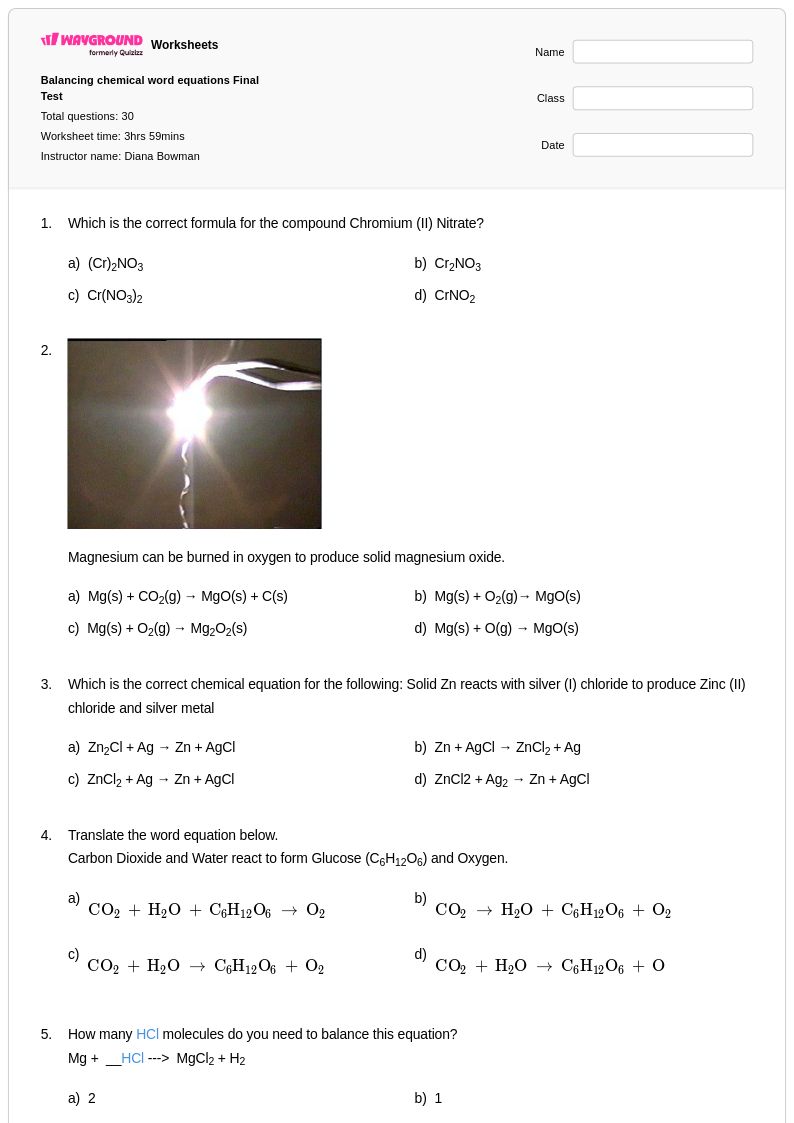
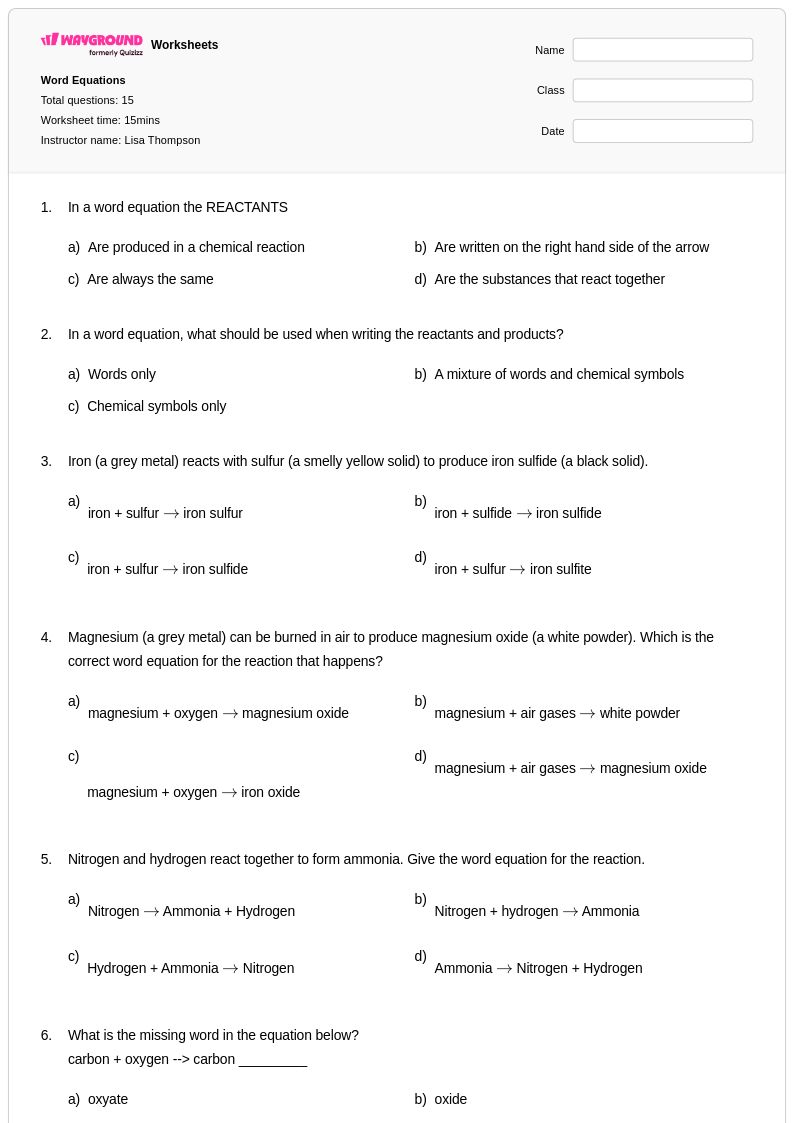
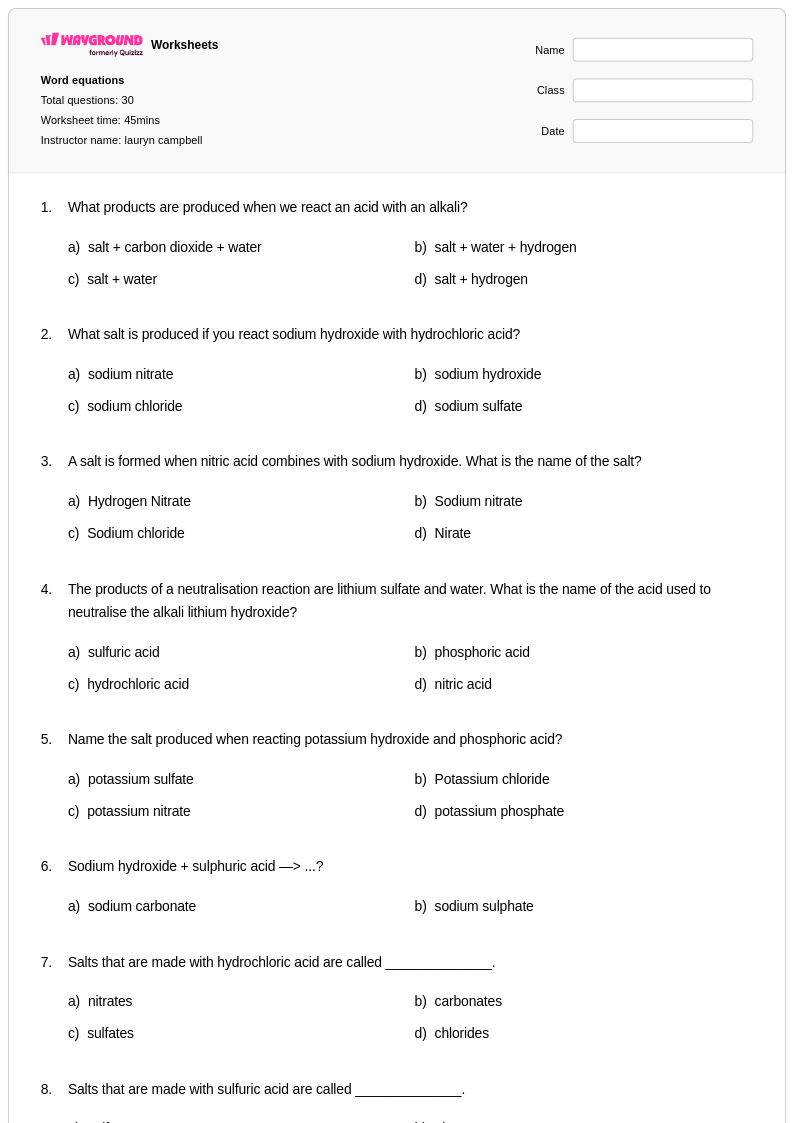
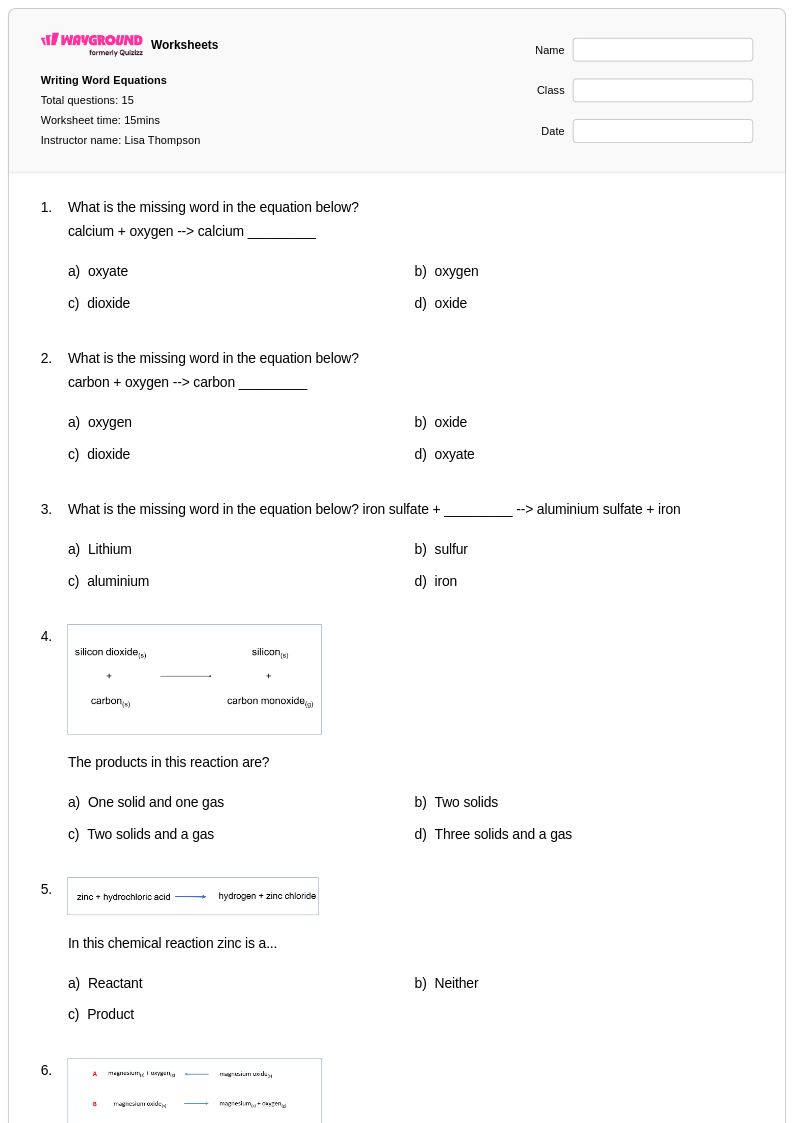
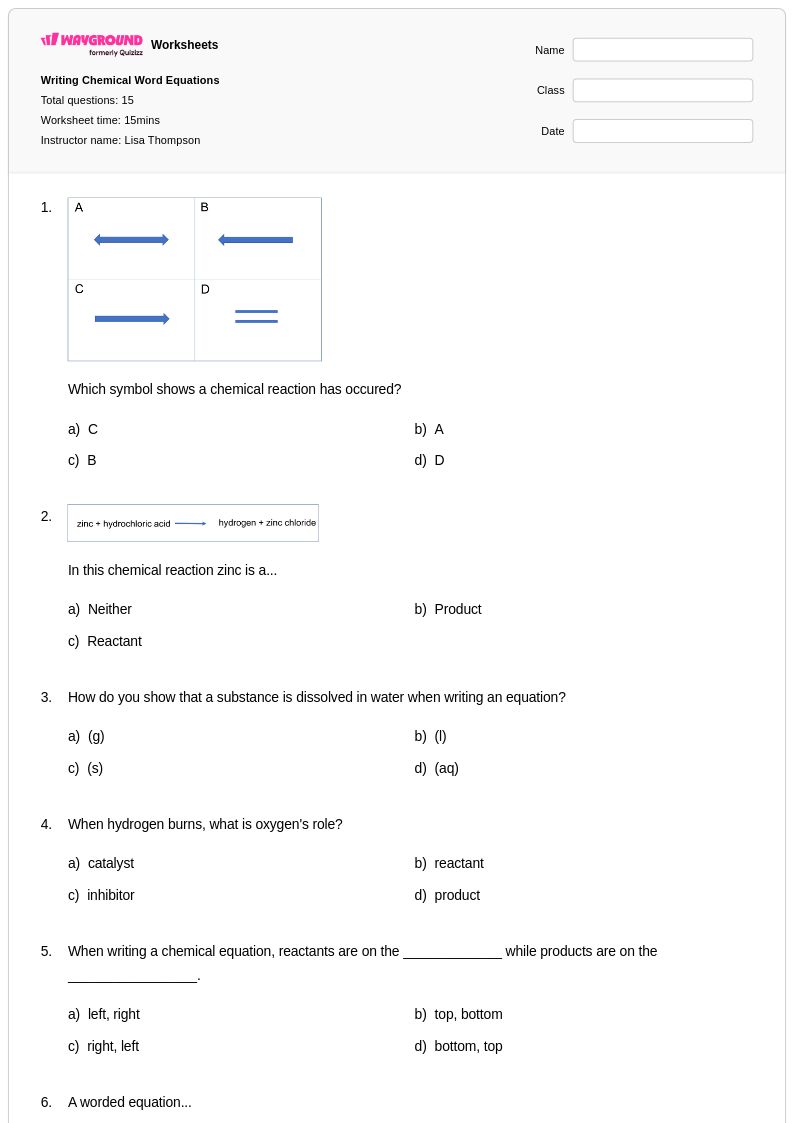
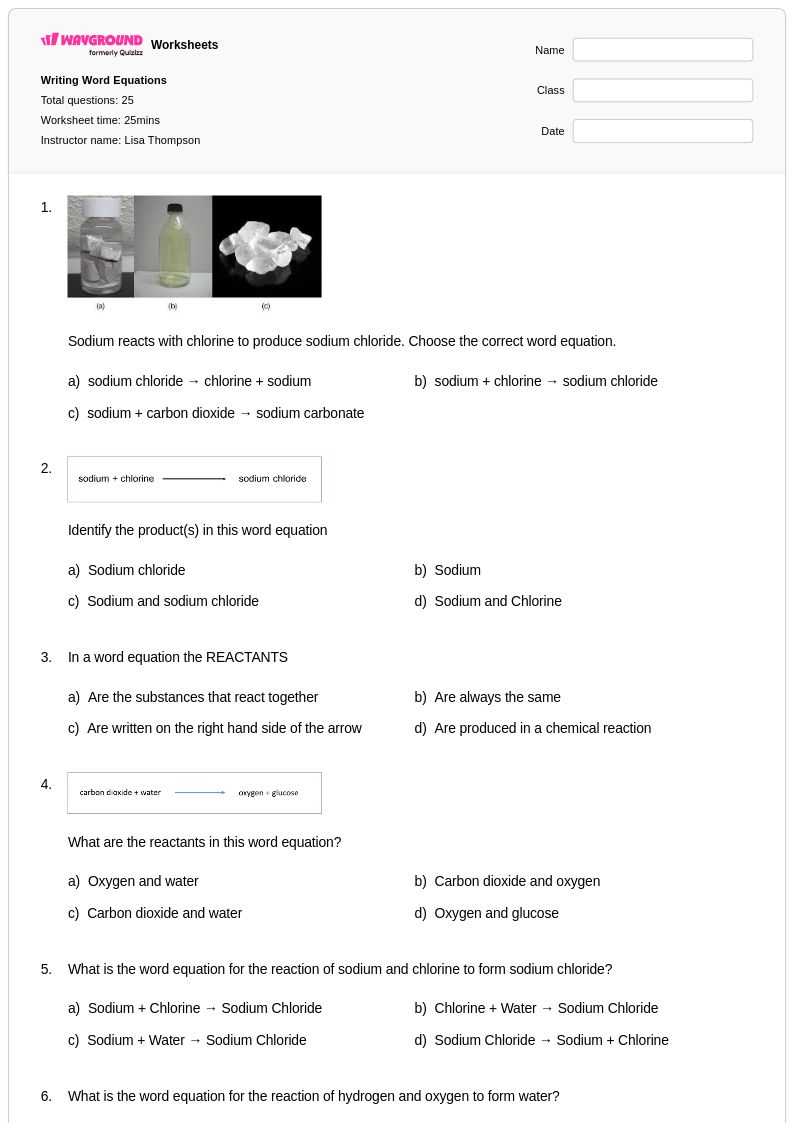
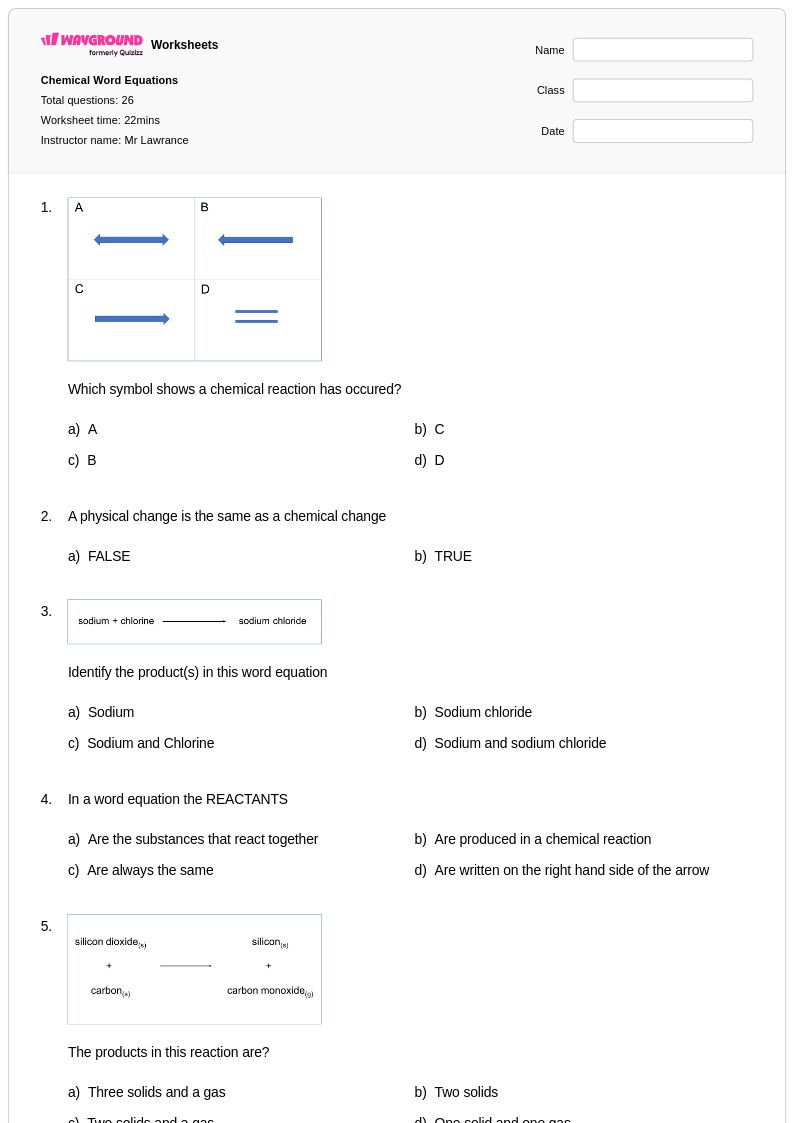
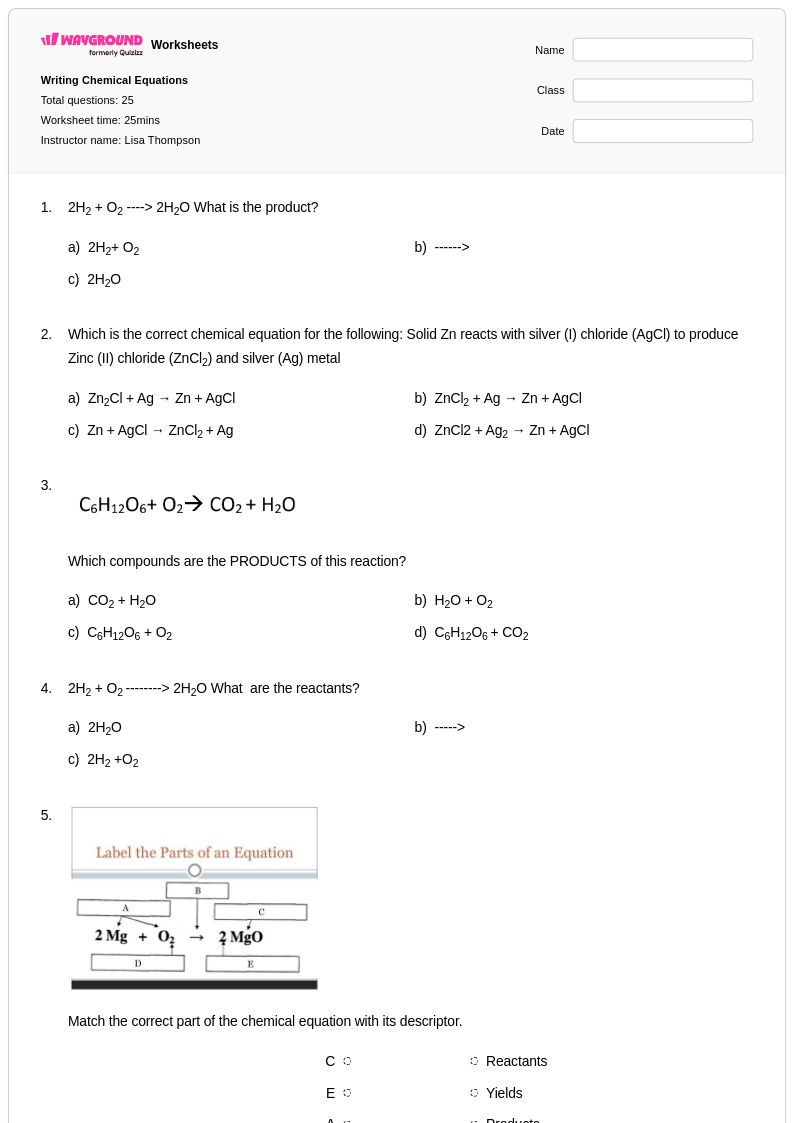
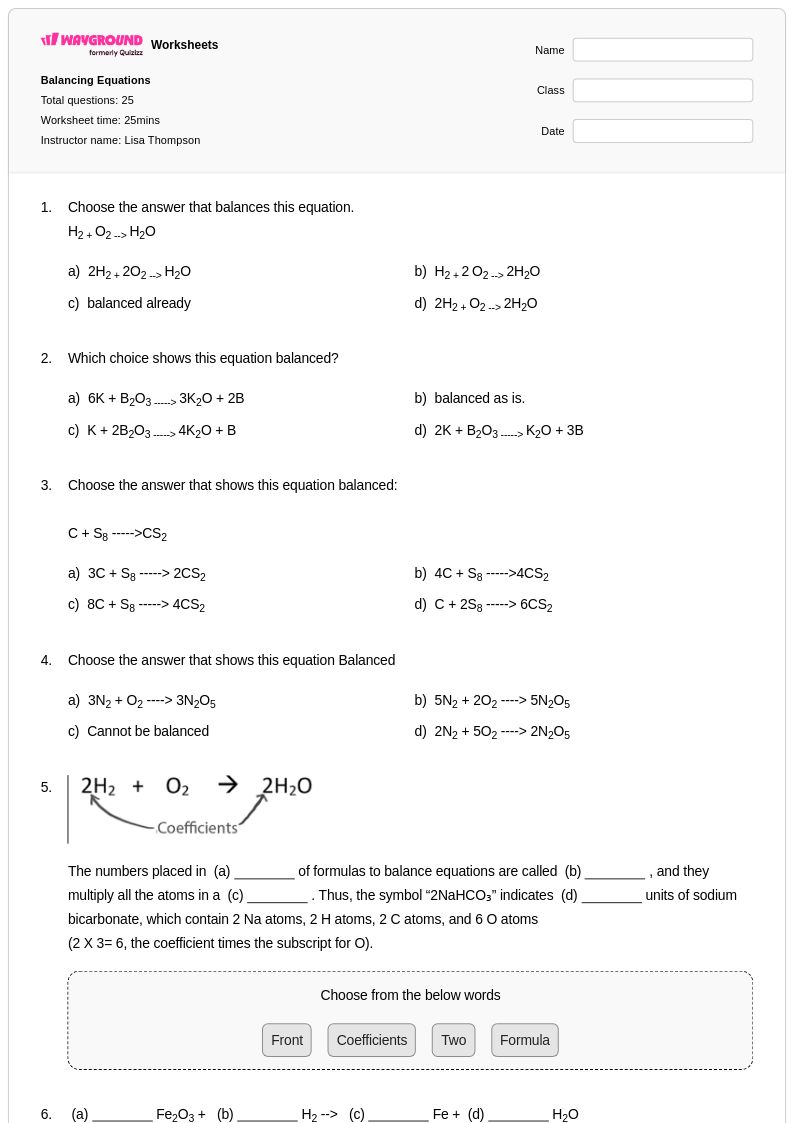
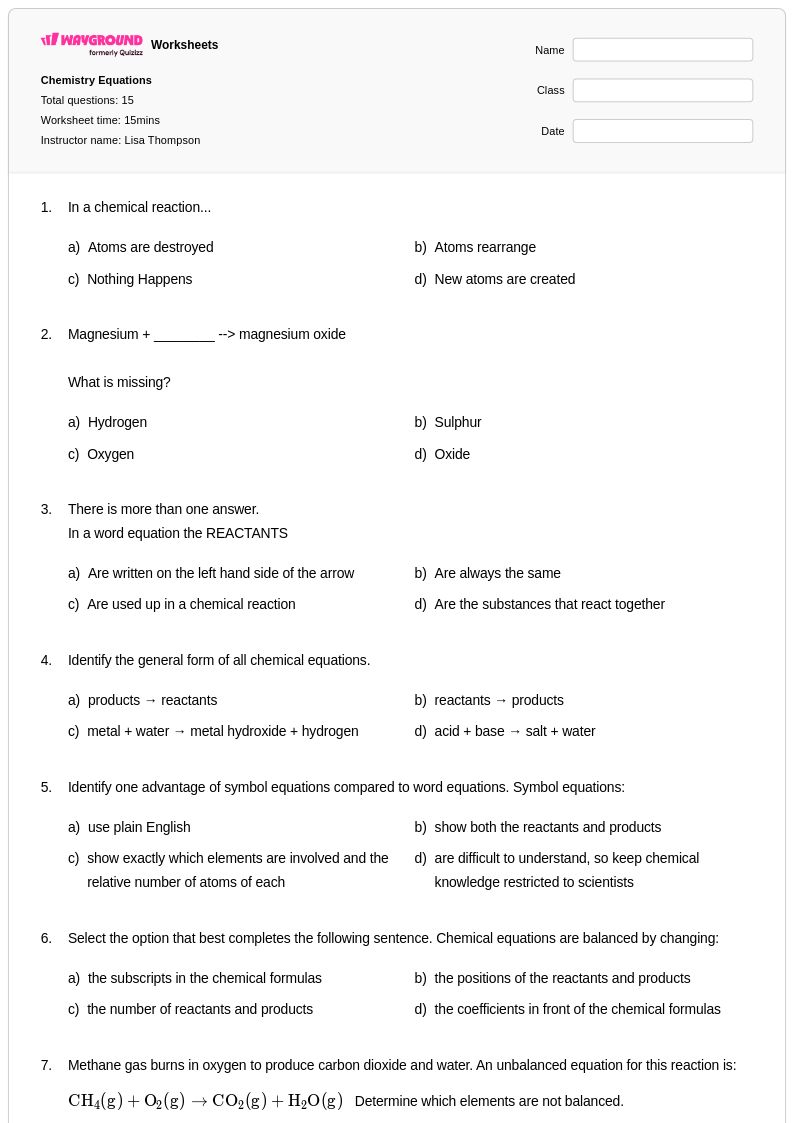
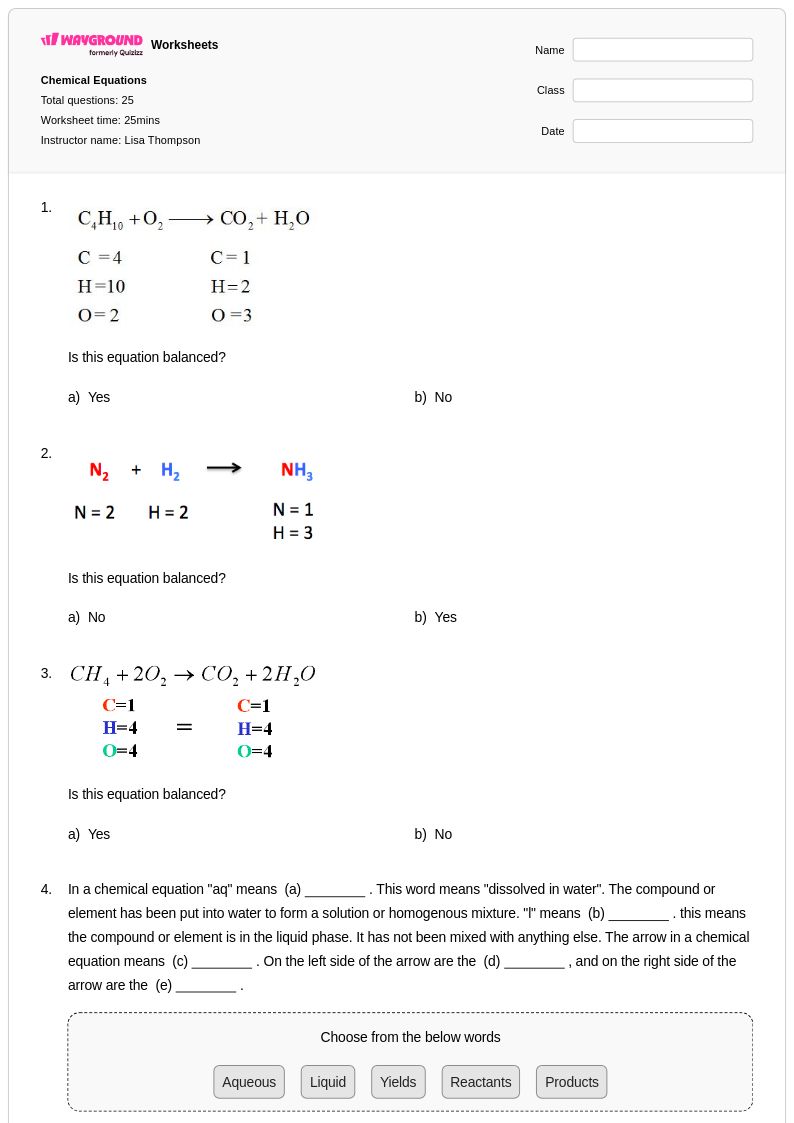
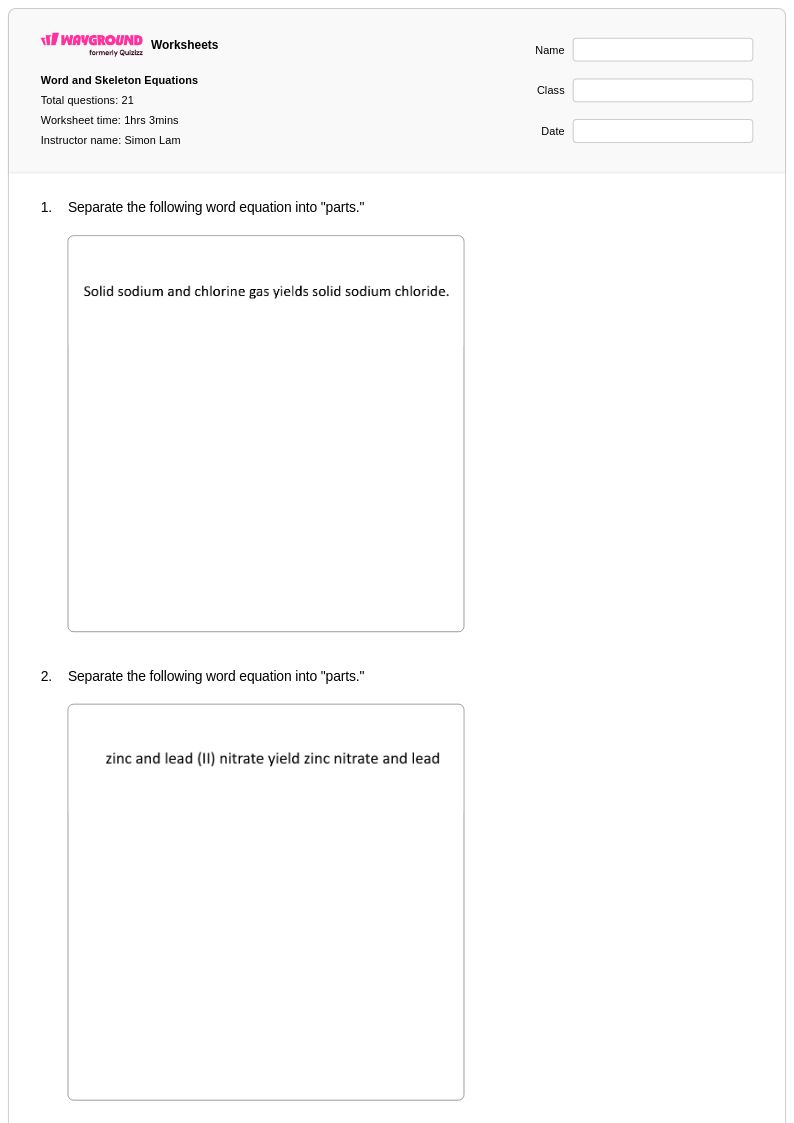
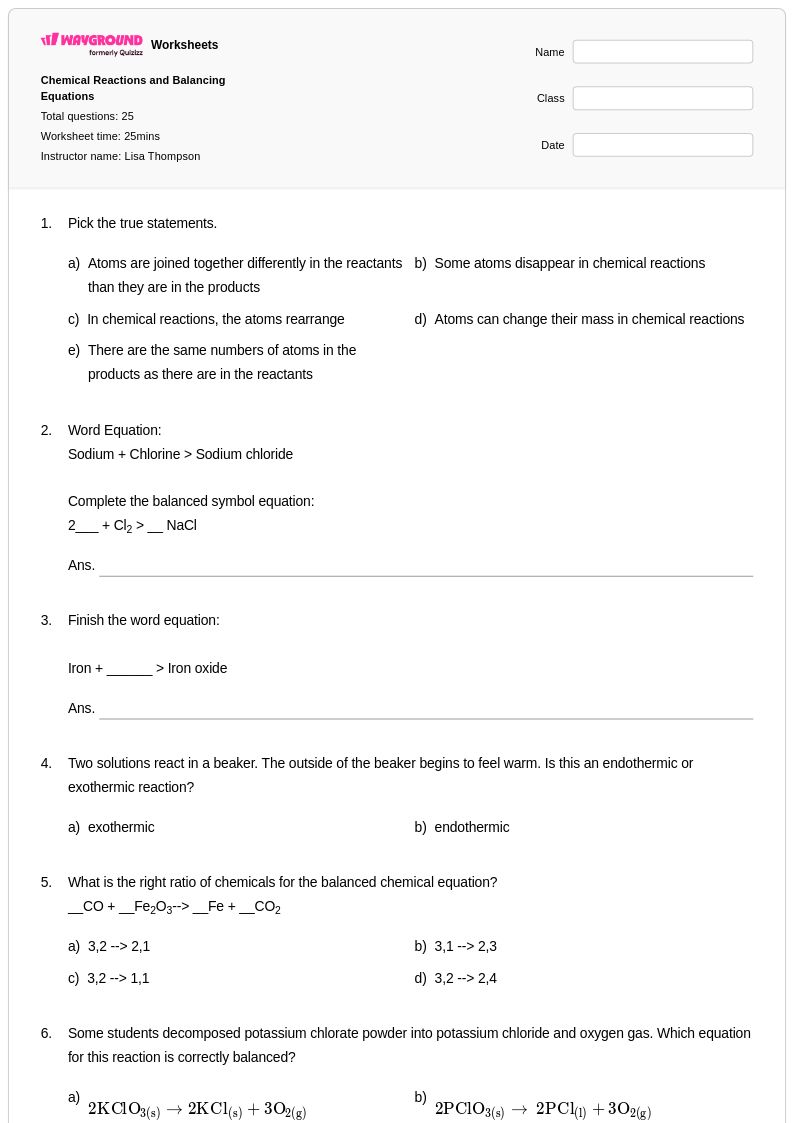
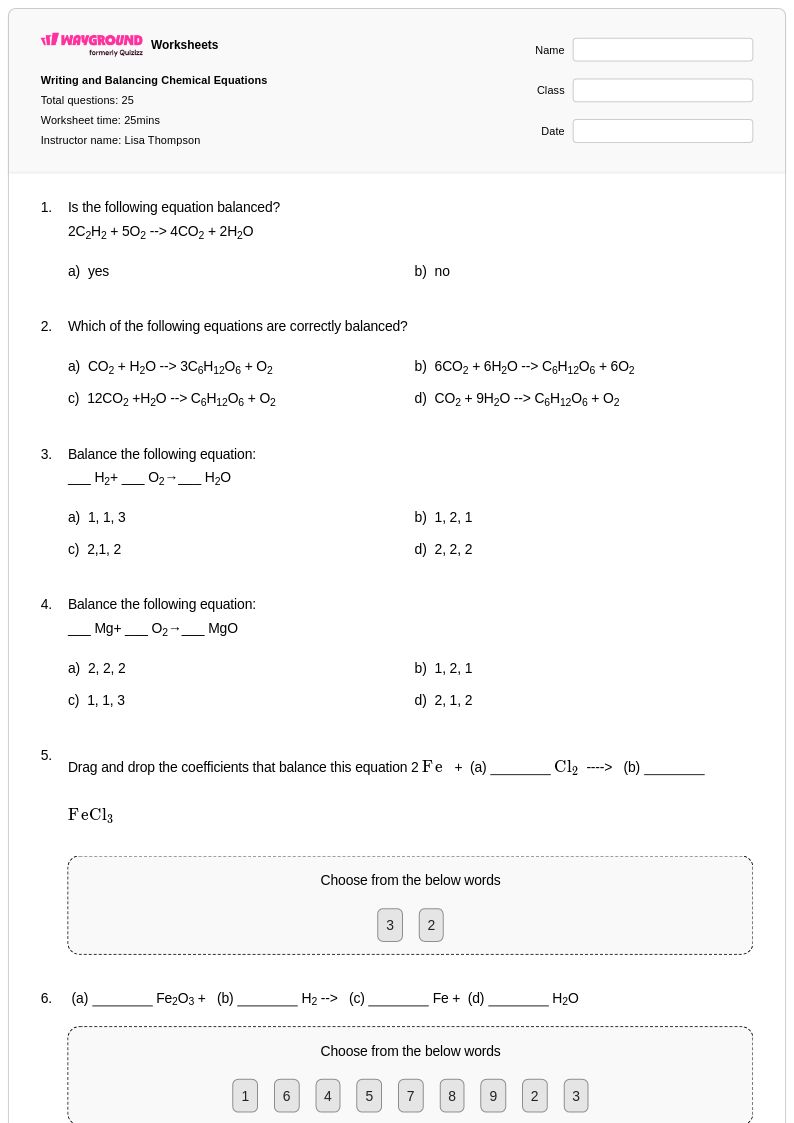
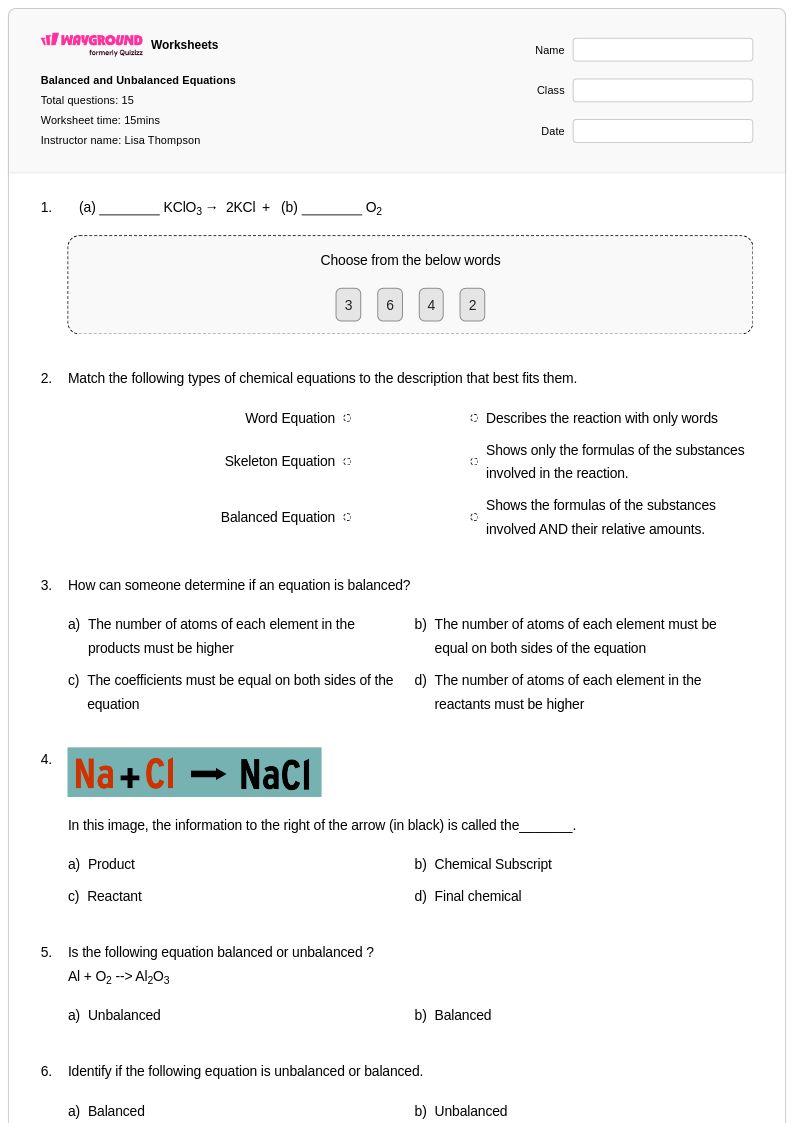
Year 10 word equations worksheets available through Wayground (formerly Quizizz) provide students with essential practice in translating chemical reactions from descriptive language into symbolic representation. These comprehensive worksheet collections focus on developing students' ability to identify reactants and products, understand chemical processes described in words, and convert verbal descriptions into proper chemical nomenclature. The practice problems systematically guide students through various reaction types including synthesis, decomposition, single and double replacement reactions, helping them master the fundamental skill of chemical communication. Each worksheet includes detailed answer keys that allow students to verify their understanding and identify areas needing additional review, while the free printable format ensures accessibility for both classroom instruction and independent study.
Wayground (formerly Quizizz) supports chemistry educators with an extensive library of millions of teacher-created word equation resources specifically designed for Year 10 students. The platform's robust search and filtering capabilities enable teachers to quickly locate worksheets aligned with curriculum standards and tailored to specific learning objectives, whether focusing on particular reaction types or varying difficulty levels. Teachers can easily customize these printable and digital pdf worksheets to accommodate diverse learning needs, creating differentiated instruction materials for remediation or enrichment activities. This flexible collection streamlines lesson planning by providing ready-to-use practice materials that reinforce classroom instruction, support skill development, and offer multiple opportunities for students to strengthen their chemical equation interpretation abilities across various formats and complexity levels.
FAQs
How do I teach word equations in chemistry?
Teaching word equations works best when students first understand that a chemical reaction always involves reactants transforming into products. Start by introducing simple reactions like hydrogen plus oxygen yields water, and explicitly model how to identify what is consumed versus what is produced. Once students can reliably name reactants and products, introduce reaction types such as synthesis, decomposition, and combustion so students can begin recognizing patterns rather than memorizing individual reactions. Connecting word equations to their symbolic counterparts early helps students build the translational skill they will need throughout chemistry.
What are common mistakes students make when writing word equations?
The most frequent error is reversing reactants and products, often because students do not yet have a firm grasp of what it means for a substance to be consumed versus produced in a reaction. Students also commonly omit the yield arrow or replace it with an equals sign, which obscures the directionality of the reaction. Another widespread misconception is confusing word equations with balanced symbolic equations, leading students to attempt to assign coefficients to word-form substances. Targeted practice that requires students to explicitly label reactants and products before writing the full equation helps correct these patterns.
What exercises help students practice word equations?
Effective practice combines translation exercises, where students convert a described reaction into a word equation and vice versa, with reaction-type classification tasks that ask students to identify synthesis, decomposition, or combustion patterns. Fill-in-the-blank problems that isolate individual components, such as naming only the products of a given reaction, help students build confidence before tackling complete equations. Varied problem sets that include both familiar and novel reactions prevent rote memorization and push students toward genuine conceptual understanding.
How do I use Wayground's word equations worksheets in my classroom?
Wayground's word equations worksheets are available as printable PDFs for traditional classroom use and in digital formats for technology-integrated environments, making them adaptable to in-person, hybrid, or remote instruction. Teachers can also host these worksheets as a quiz directly on Wayground, enabling real-time student response tracking. Each worksheet includes a complete answer key, so teachers can use them for independent practice, formative checks, or self-graded review without additional preparation. The flexible format options mean the same material can serve as a take-home assignment, a timed in-class activity, or an interactive digital assessment depending on instructional needs.
How do I differentiate word equation practice for students at different levels?
For students who are still building foundational understanding, start with single-step reactions involving familiar substances and provide a word bank of reactant and product names to reduce cognitive load. More advanced students can be challenged with multi-step reaction descriptions or asked to predict products before writing the word equation. On Wayground, teachers can apply student-level accommodations such as reduced answer choices or read-aloud support for individual students who need additional scaffolding, while the rest of the class works through standard problem sets without disruption.
How do word equations connect to the broader chemistry curriculum?
Word equations serve as the conceptual bridge between descriptive chemistry language and symbolic chemical notation, making them a critical foundational skill that underpins balanced chemical equations, stoichiometry, and reaction classification. Students who struggle with symbolic equations later in the course often have unresolved gaps in their understanding of word equations, particularly around identifying reactants and products. Establishing fluency with word equations early reduces the cognitive burden when students encounter formula writing and equation balancing, because the underlying reaction logic is already familiar.