Free Printable Cell Communication Worksheets for Year 9
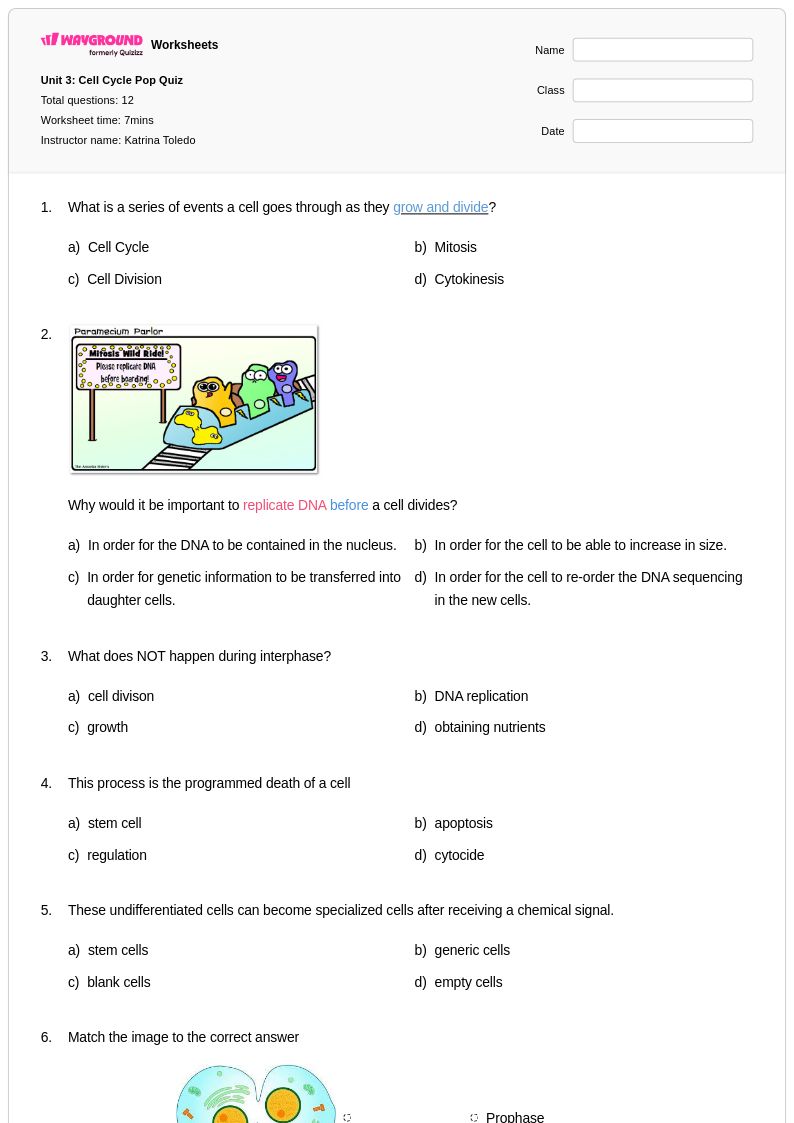
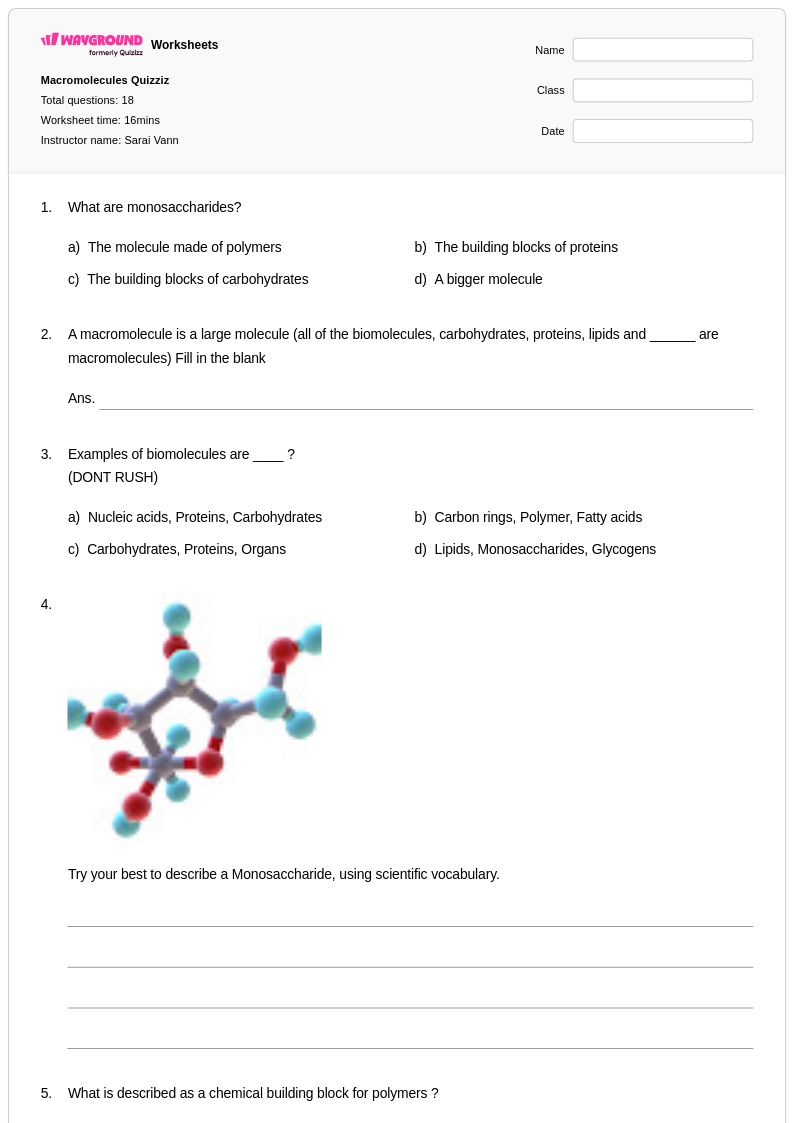
Explore Year 9 cell communication worksheets and printables that help students master how cells send, receive, and respond to signals through engaging practice problems, free PDFs, and comprehensive answer keys.
Explore printable Cell Communication worksheets for Year 9
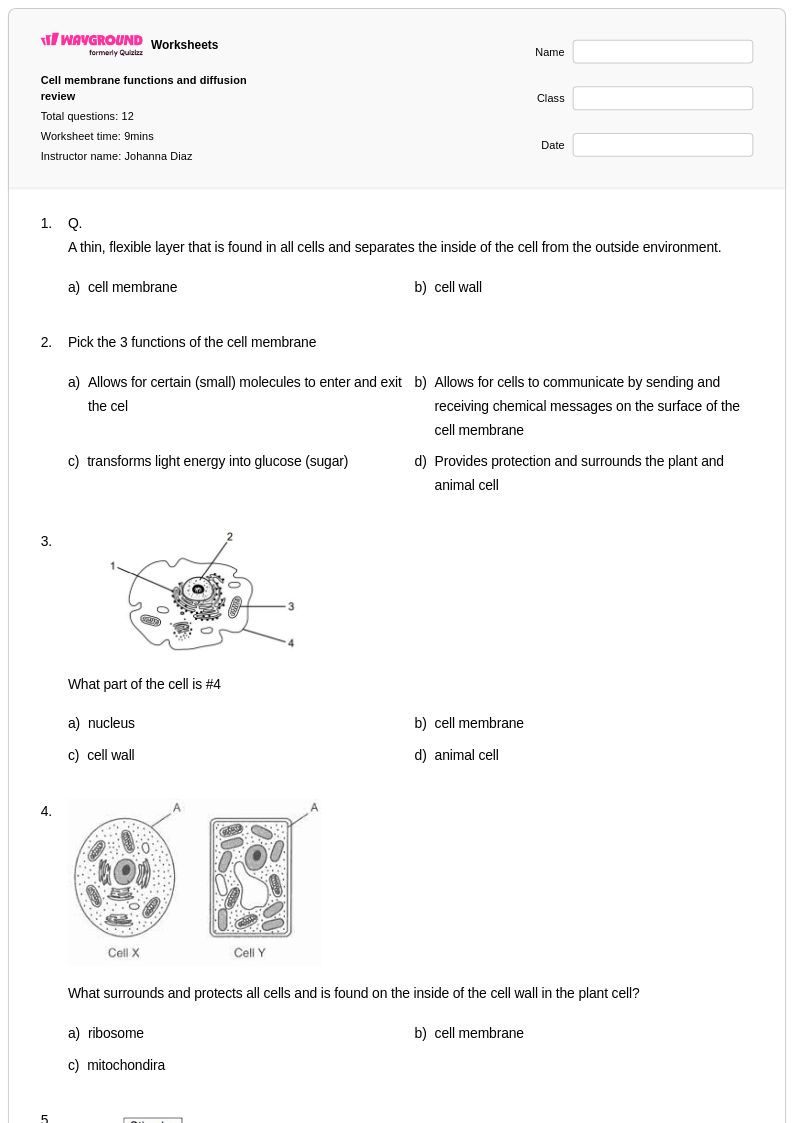
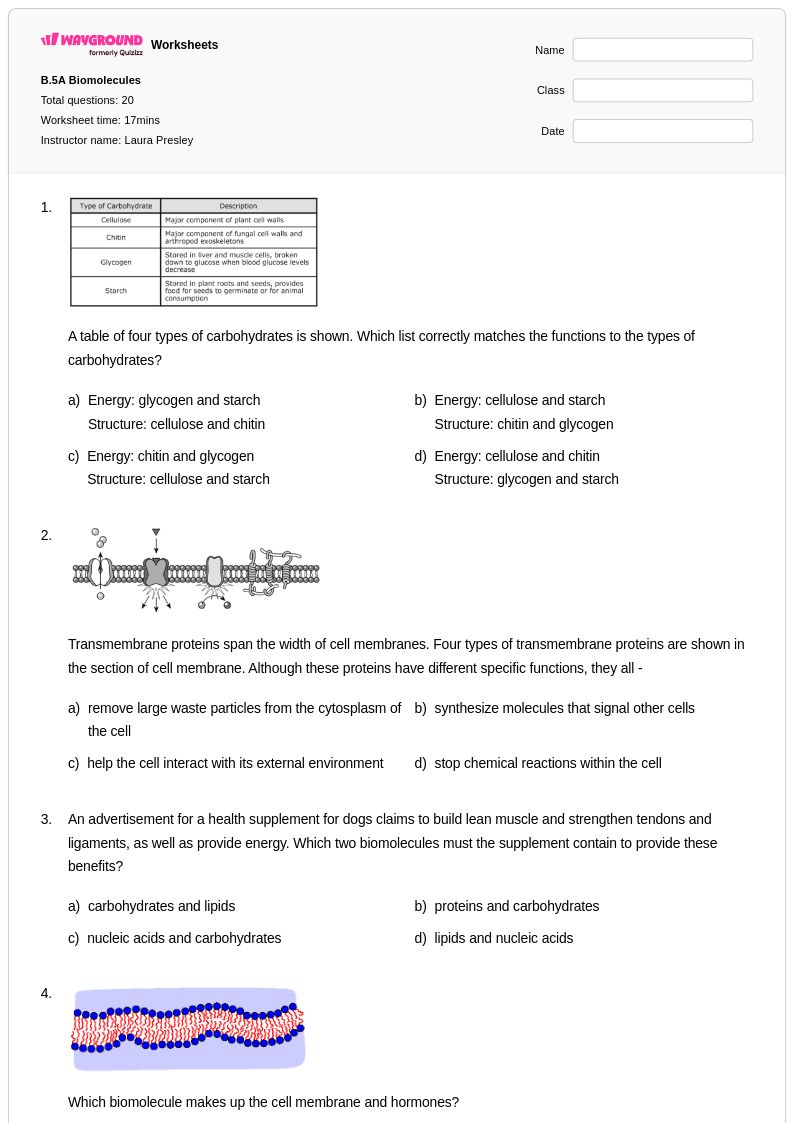
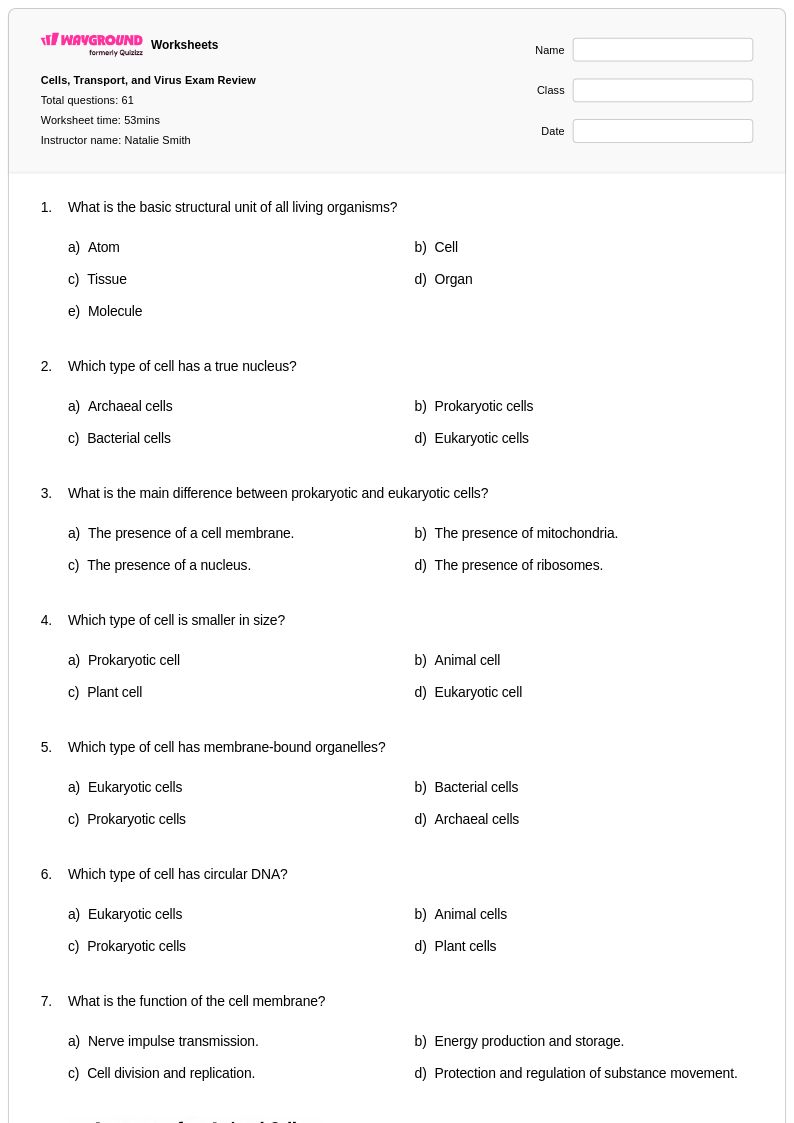
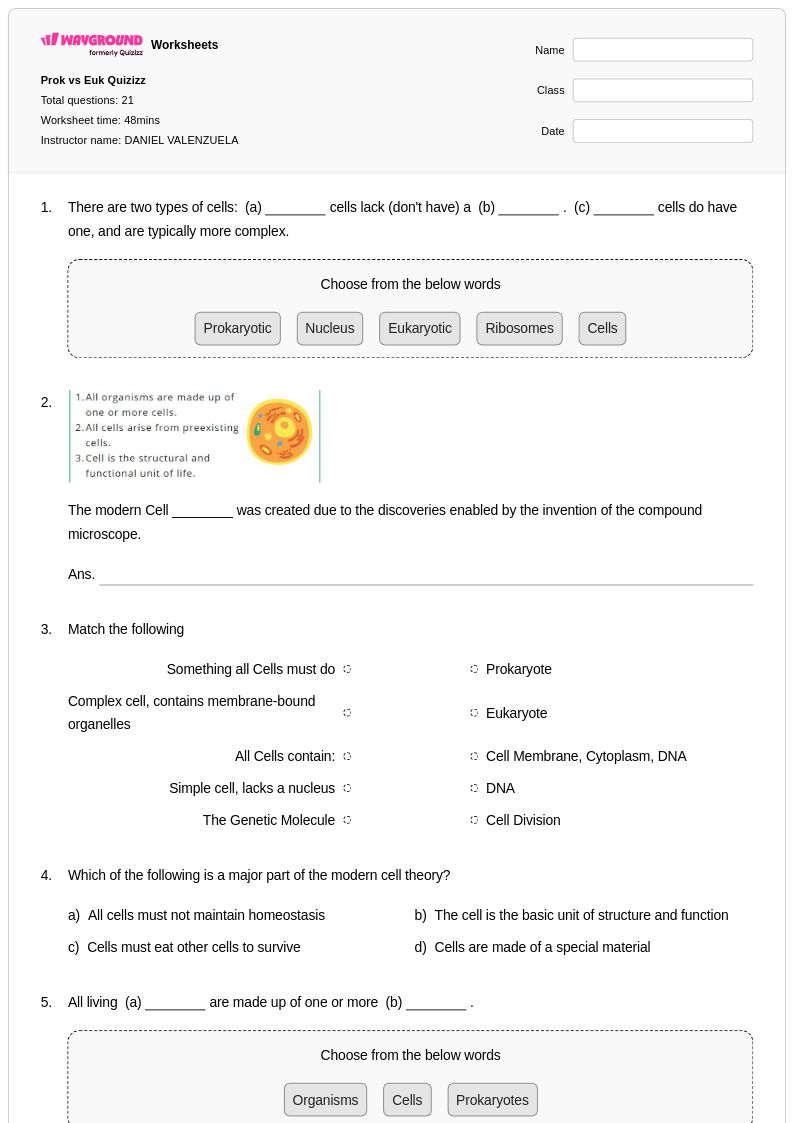
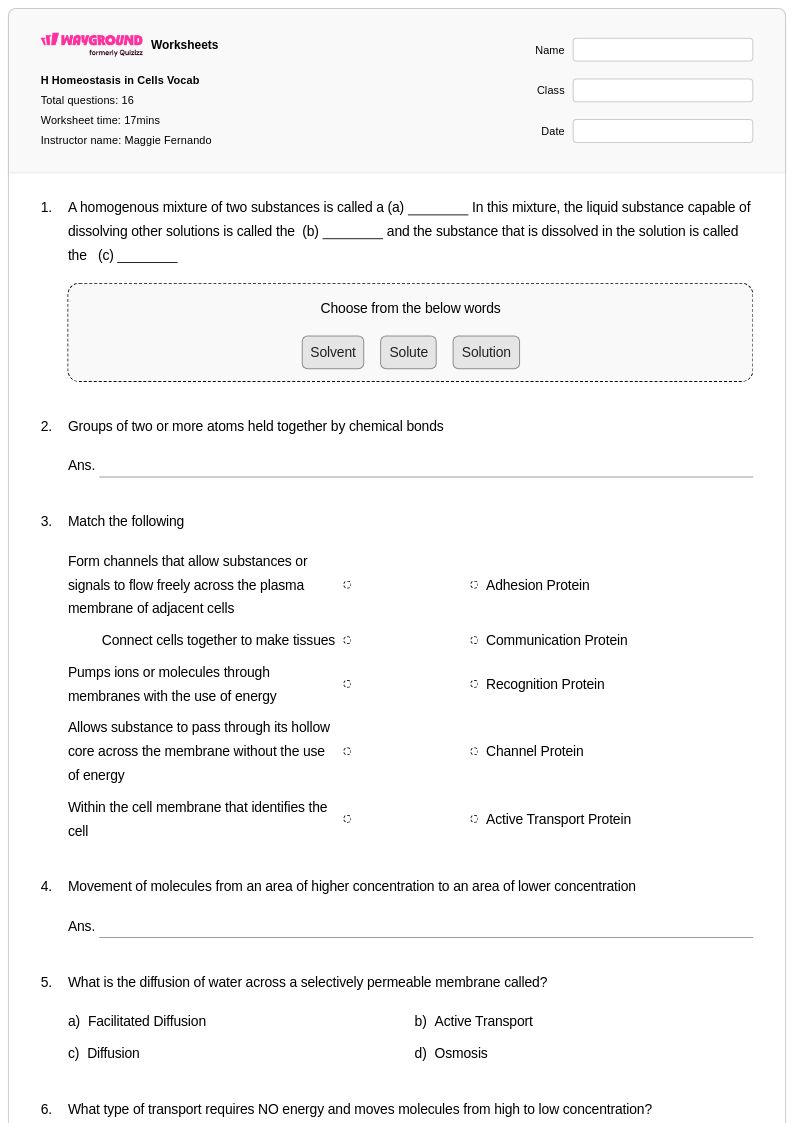
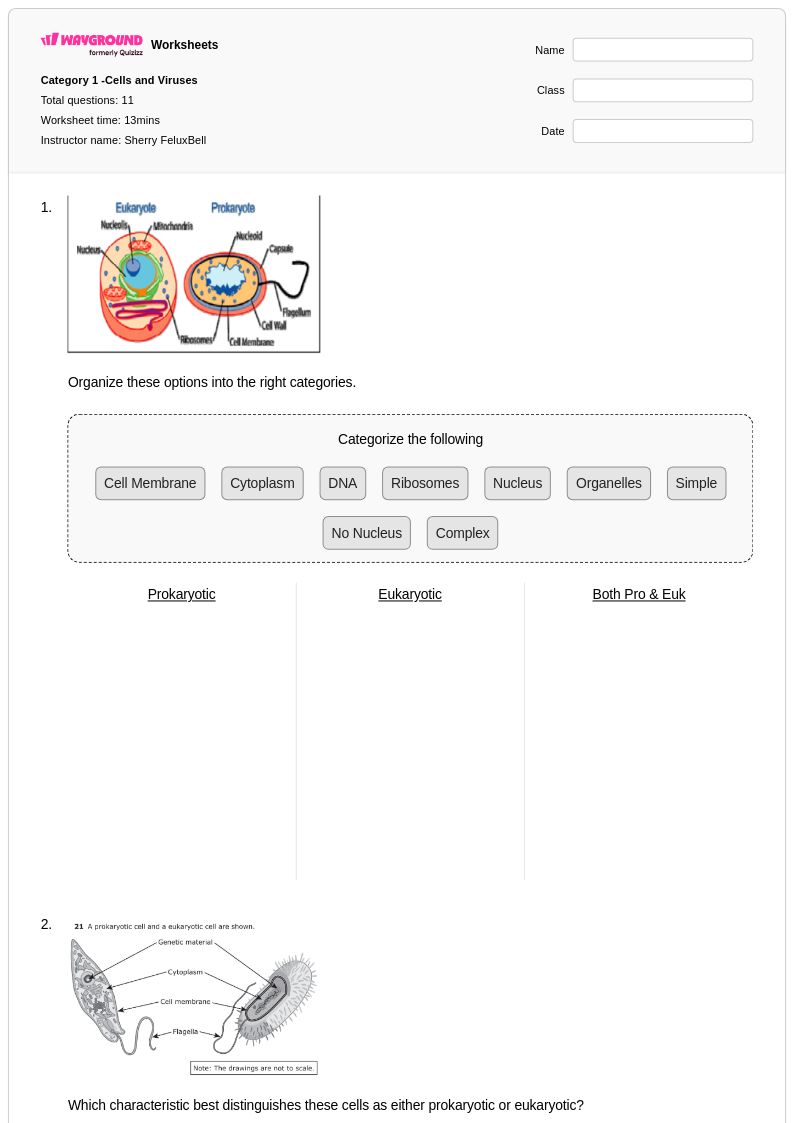
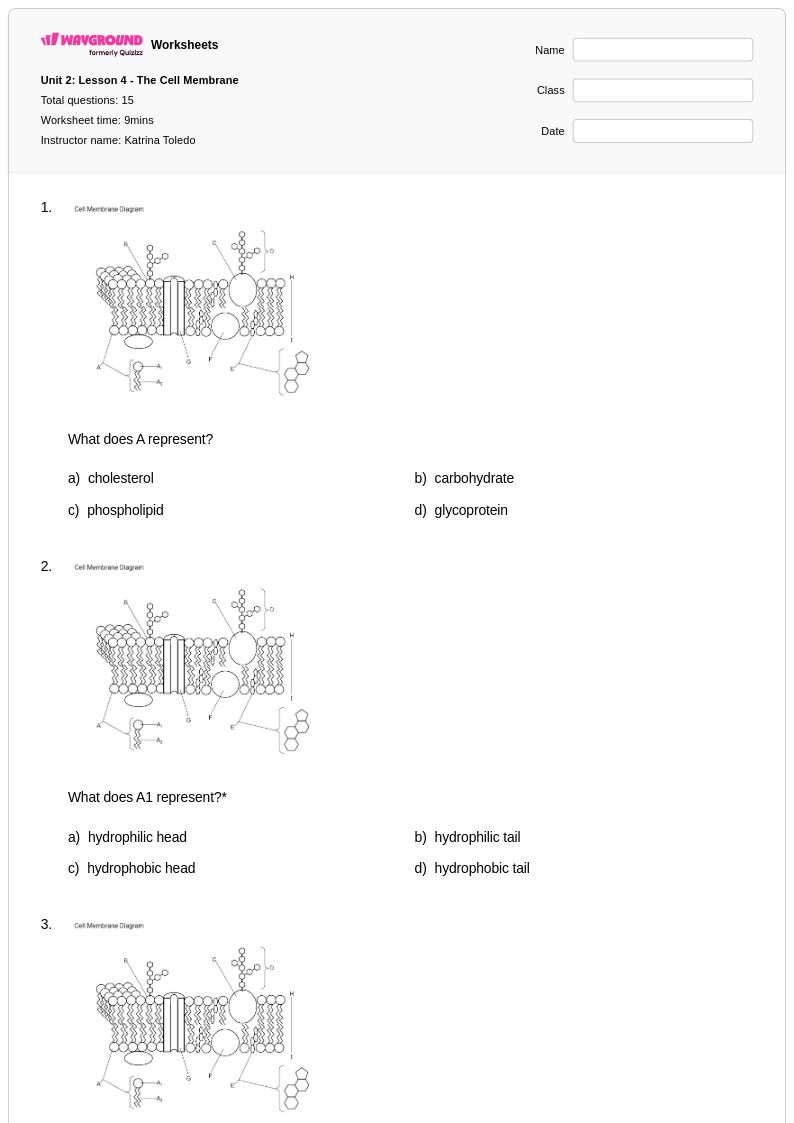
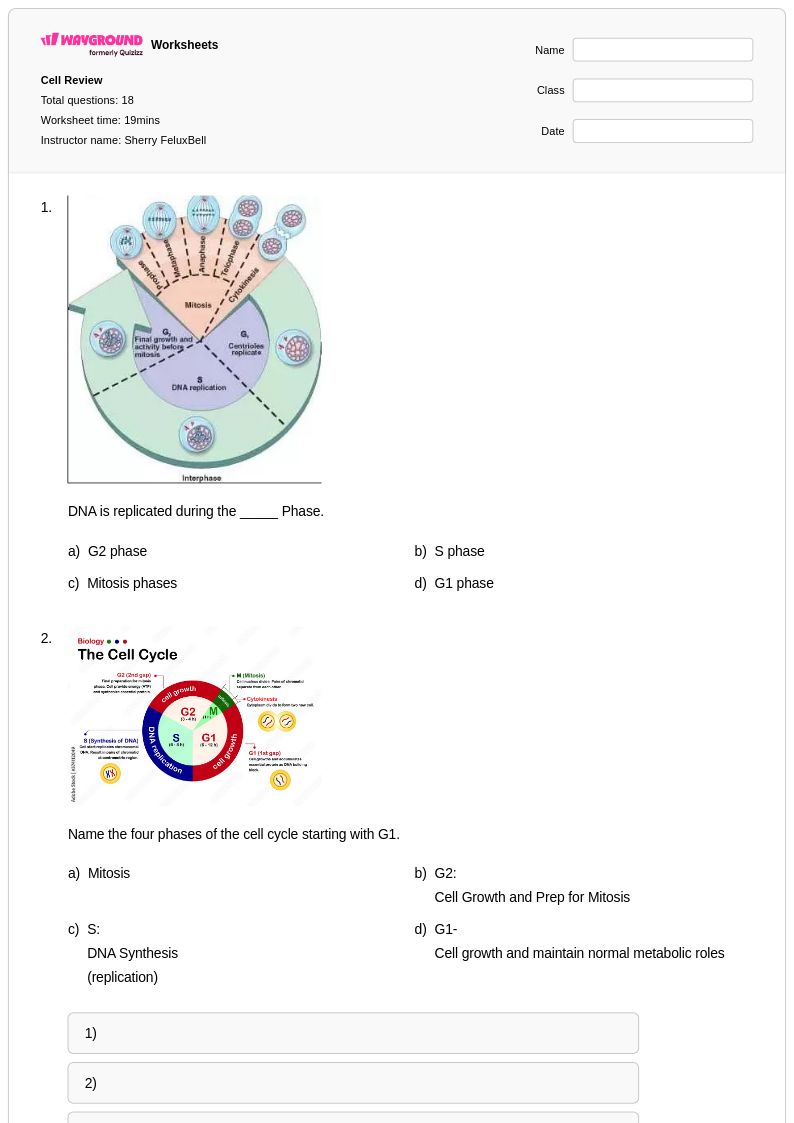
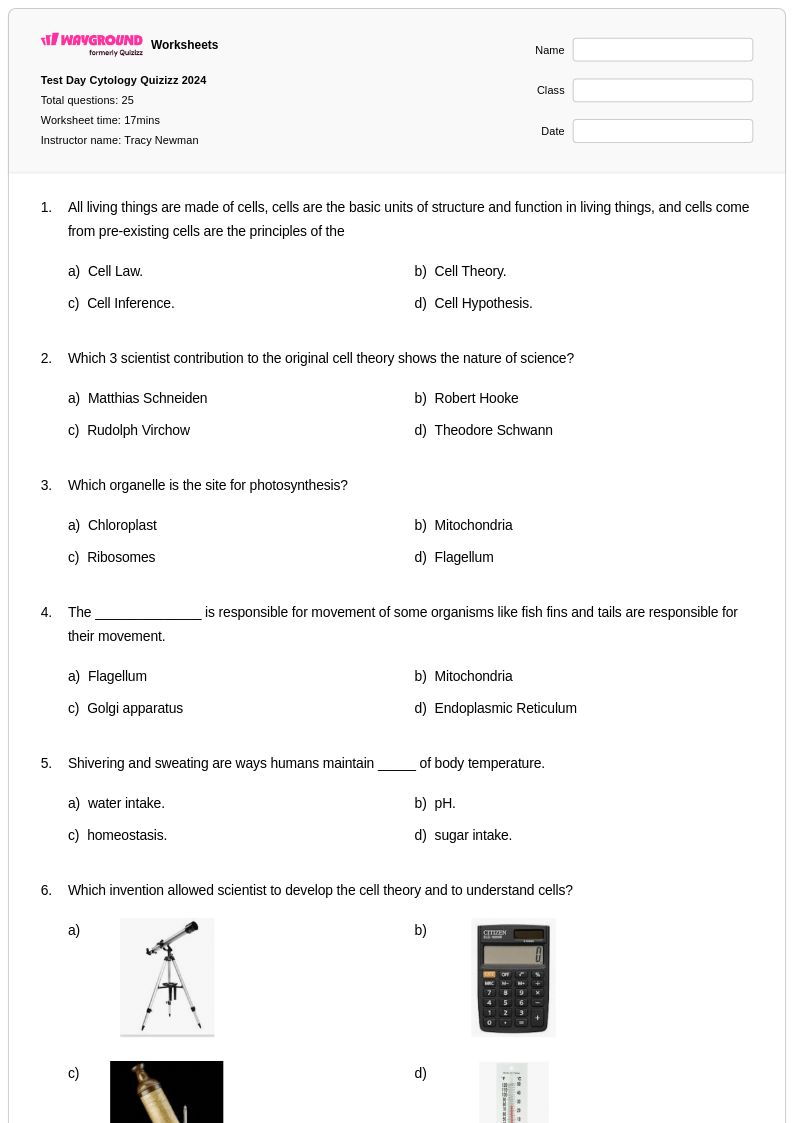
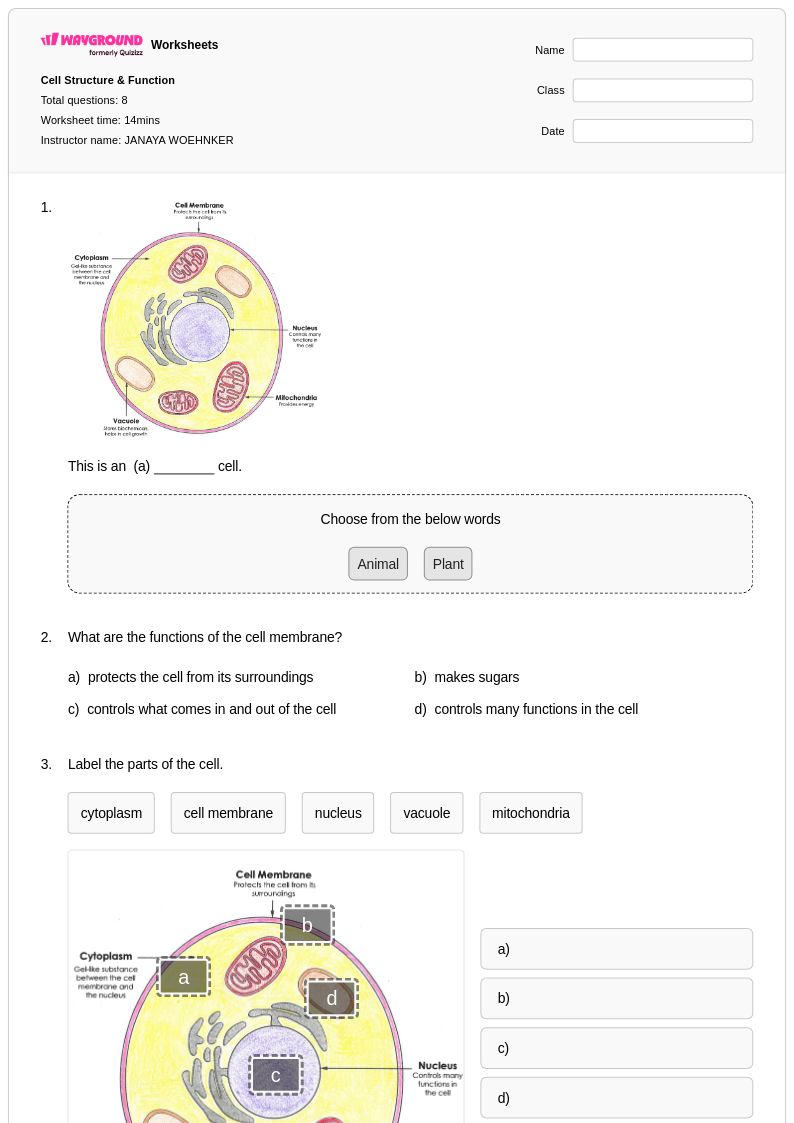
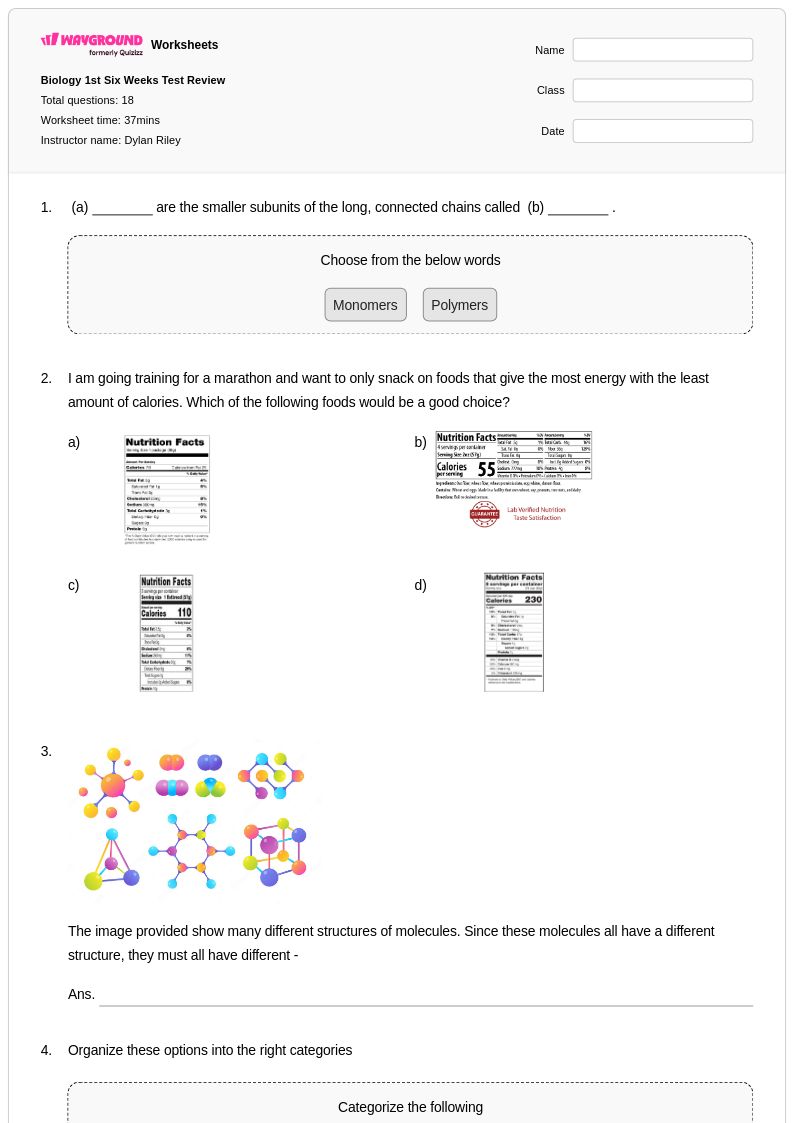
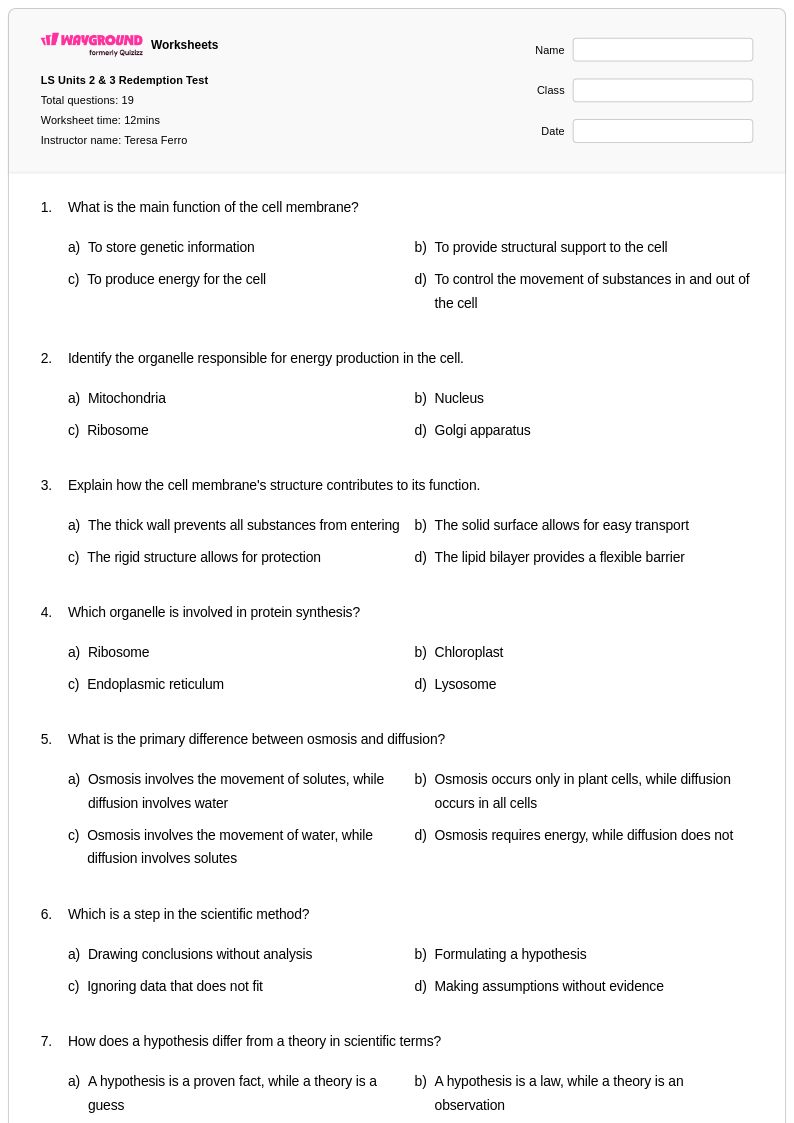
Cell communication worksheets available through Wayground (formerly Quizizz) provide Year 9 biology students with comprehensive practice materials that explore how cells send, receive, and respond to chemical signals. These expertly designed worksheets strengthen critical skills in understanding signal transduction pathways, hormone interactions, and cellular response mechanisms that are fundamental to advanced biological processes. Students work through practice problems that cover key concepts including ligand-receptor binding, second messenger systems, and feedback mechanisms, while teachers benefit from complete answer keys and free printable resources in convenient pdf formats. The worksheets systematically build understanding of how multicellular organisms coordinate complex functions through intricate cellular messaging networks.
Wayground (formerly Quizizz) supports biology educators with millions of teacher-created resources specifically focused on cell communication concepts, featuring robust search and filtering capabilities that align with state and national science standards. Teachers can easily customize worksheet content to match their specific curriculum needs, selecting from differentiated materials that accommodate various learning levels within their Year 9 classrooms. These flexible resources are available in both printable and digital pdf formats, enabling seamless integration into lesson planning while supporting targeted remediation for struggling students and enrichment opportunities for advanced learners. The platform's comprehensive collection ensures educators have access to high-quality practice materials that reinforce essential cell communication concepts through varied problem types and real-world applications.
FAQs
How do I teach cell communication to biology students?
Begin with the three stages of cell signaling: reception, transduction, and response. Use concrete analogies, such as comparing receptor-ligand binding to a lock-and-key mechanism, before moving into signal transduction cascades. Building from direct contact communication (gap junctions, plasmodesmata) to long-distance hormonal signaling helps students develop a hierarchical understanding of how multicellular organisms coordinate cellular activity.
What practice problems help students understand signal transduction pathways?
Effective practice problems ask students to trace a signal from receptor binding through second messenger activation to the final cellular response, rather than simply recalling definitions. Diagram-labeling exercises, pathway sequencing tasks, and scenario-based questions that ask students to predict cellular outcomes given a specific ligand or receptor mutation reinforce the mechanistic logic of signal transduction.
What mistakes do students commonly make when learning cell communication?
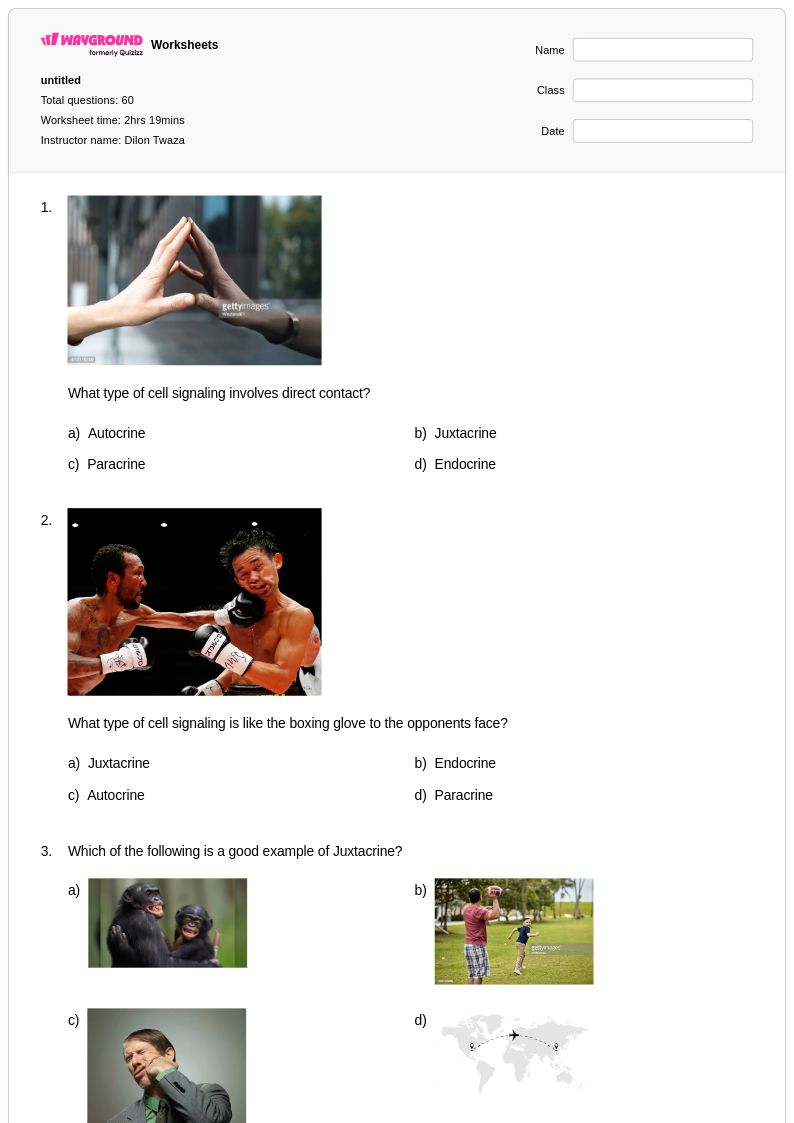
Students frequently confuse the ligand with the receptor, assuming the signaling molecule enters the cell rather than binding to a surface or intracellular receptor. A second common error is treating signal transduction as a linear, one-step process rather than an amplifying cascade. Students also tend to conflate different signaling types, for example misclassifying paracrine signaling as endocrine signaling, which indicates a gap in understanding signaling distance and target specificity.
How do I differentiate cell communication instruction for students at different readiness levels?
For students who need additional support, simplify pathway diagrams to show only the core reception-transduction-response arc before introducing second messengers or phosphorylation cascades. For advanced students, introduce inhibitory signaling, feedback loops, or disease contexts such as how cancer can result from constitutively active signaling proteins. On Wayground, teachers can apply accommodations such as read aloud, reduced answer choices, and extended time to individual students without disrupting the experience for the rest of the class.
How can I use Wayground's cell communication worksheets in my classroom?
Wayground's cell communication worksheets are available as printable PDFs for traditional classroom use and in digital formats for technology-integrated learning environments, including the option to host them as a quiz directly on Wayground. Teachers can search and filter the platform's collection to find materials aligned with their current unit focus, whether that is receptor-ligand interactions, second messenger systems, or hormonal signaling cascades. Answer keys are included, making them practical for independent practice, homework, or formative assessment.
How does cell communication connect to other biology topics I'm already teaching?
Cell communication is a unifying concept that connects directly to endocrine system function, immune response, nervous system signaling, cell division regulation, and cancer biology. When students understand how cells send and receive chemical signals, topics like hormone action, apoptosis, and gene expression regulation become significantly more accessible. Positioning cell communication as a foundational mechanism rather than an isolated unit helps students build durable conceptual frameworks across the entire course.