
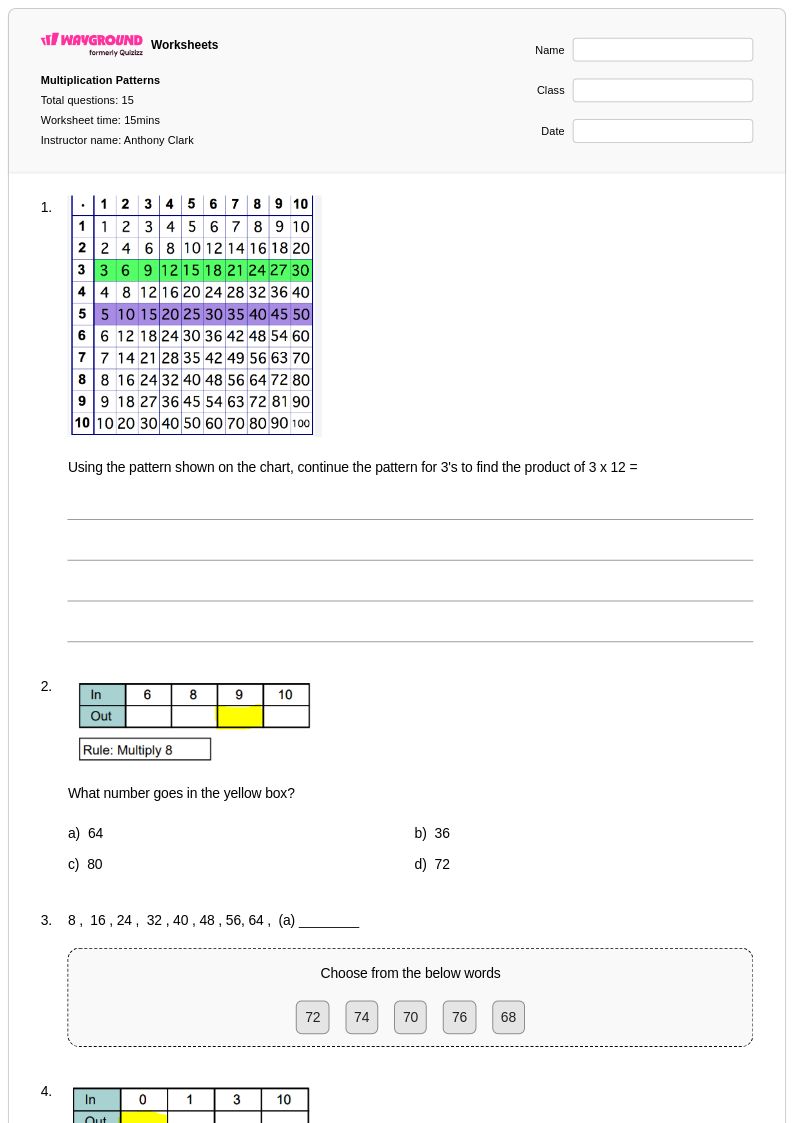
15Q
3rd - Uni
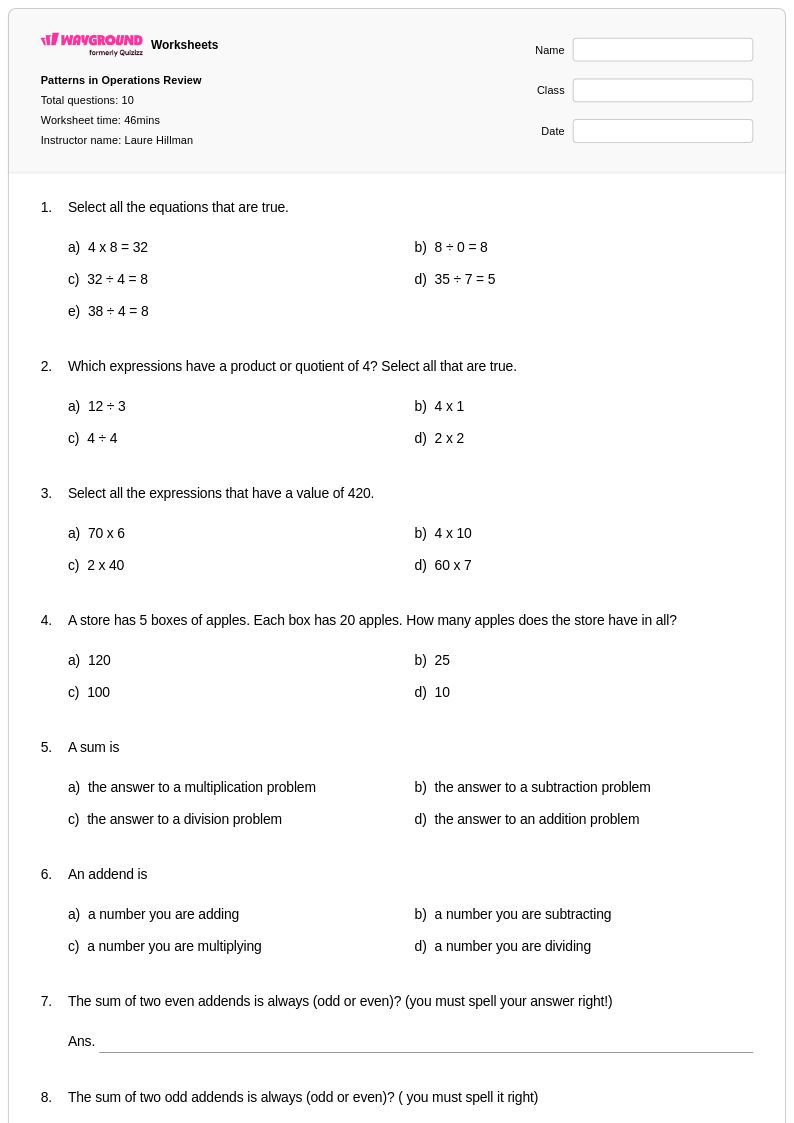
10Q
3rd
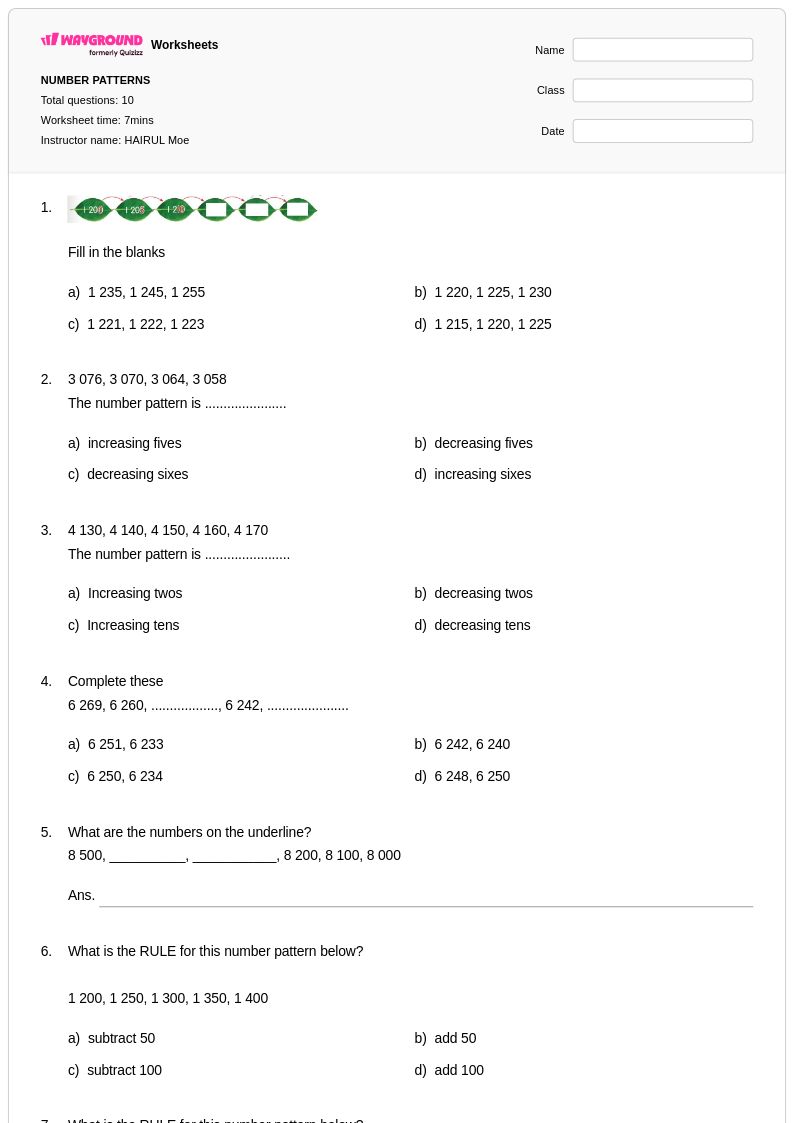
10Q
3rd
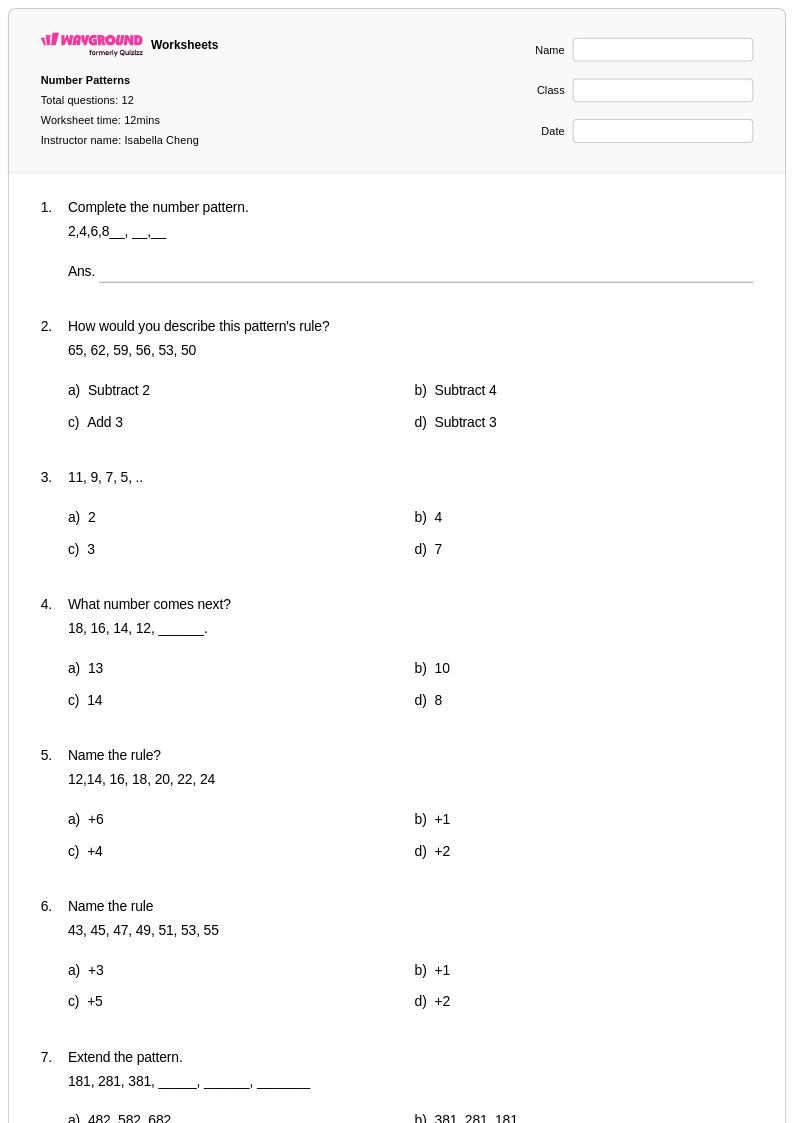
12Q
3rd - 4th
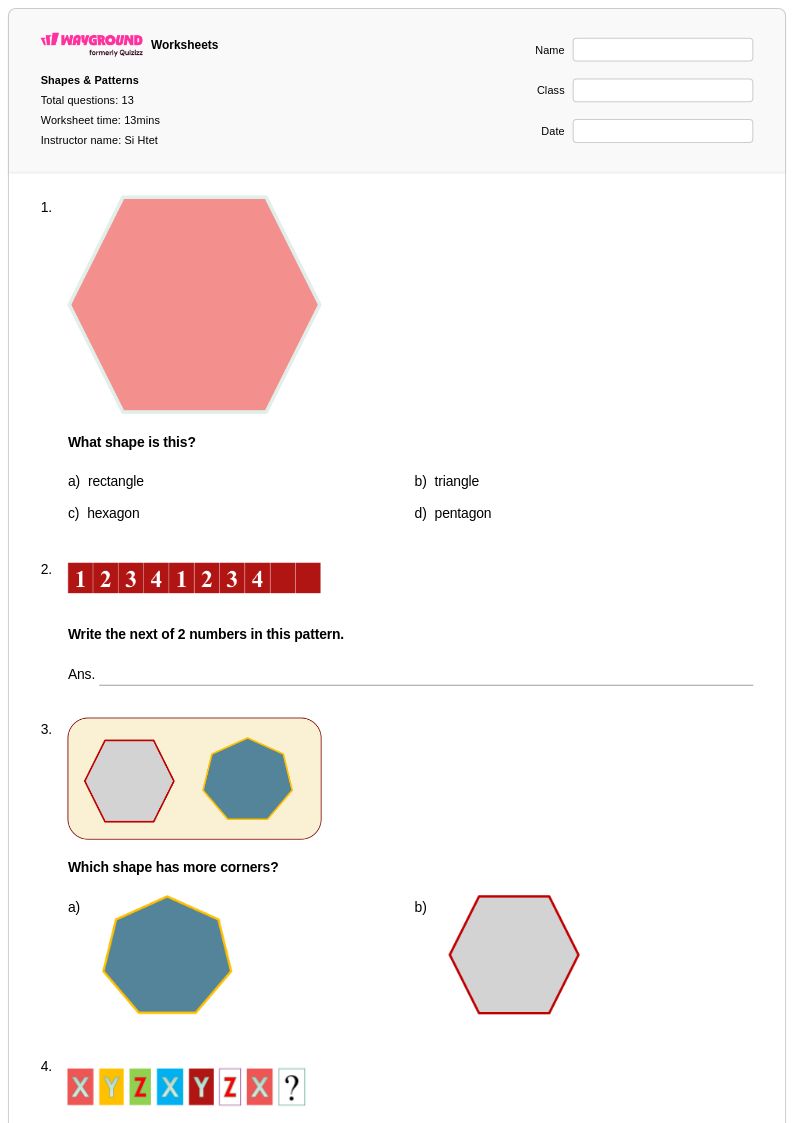
13Q
2nd - 4th
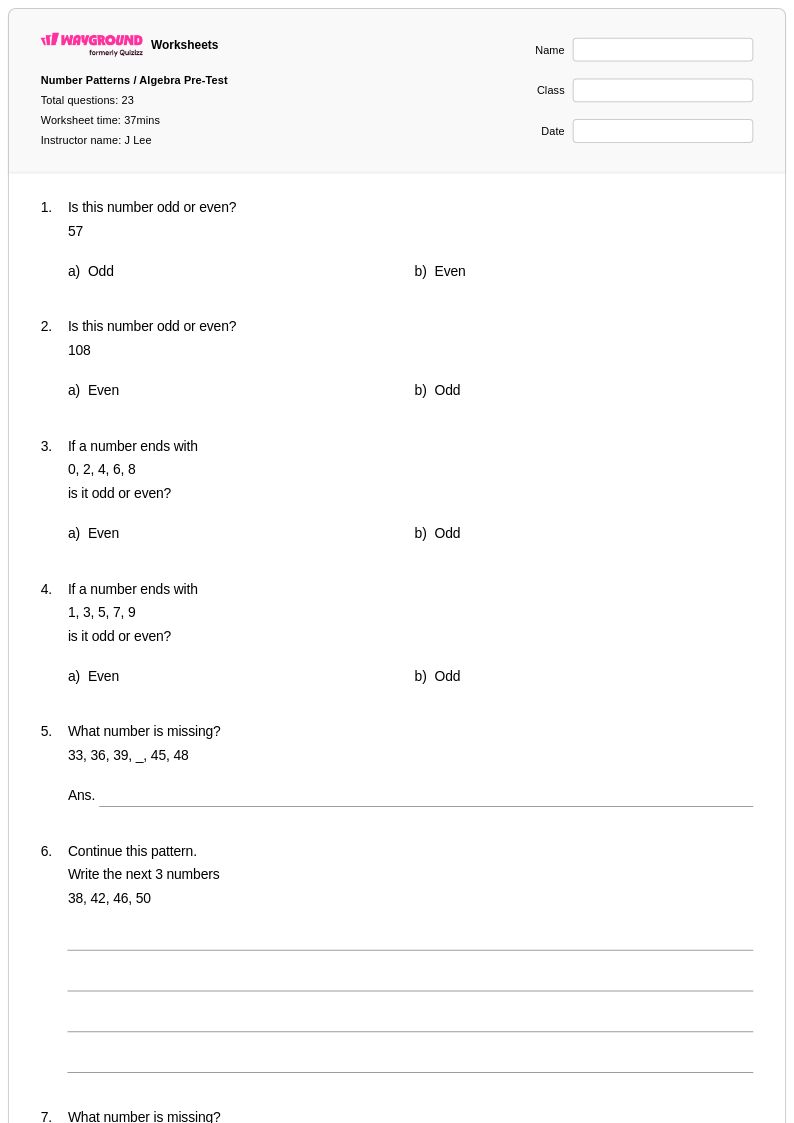
23Q
3rd
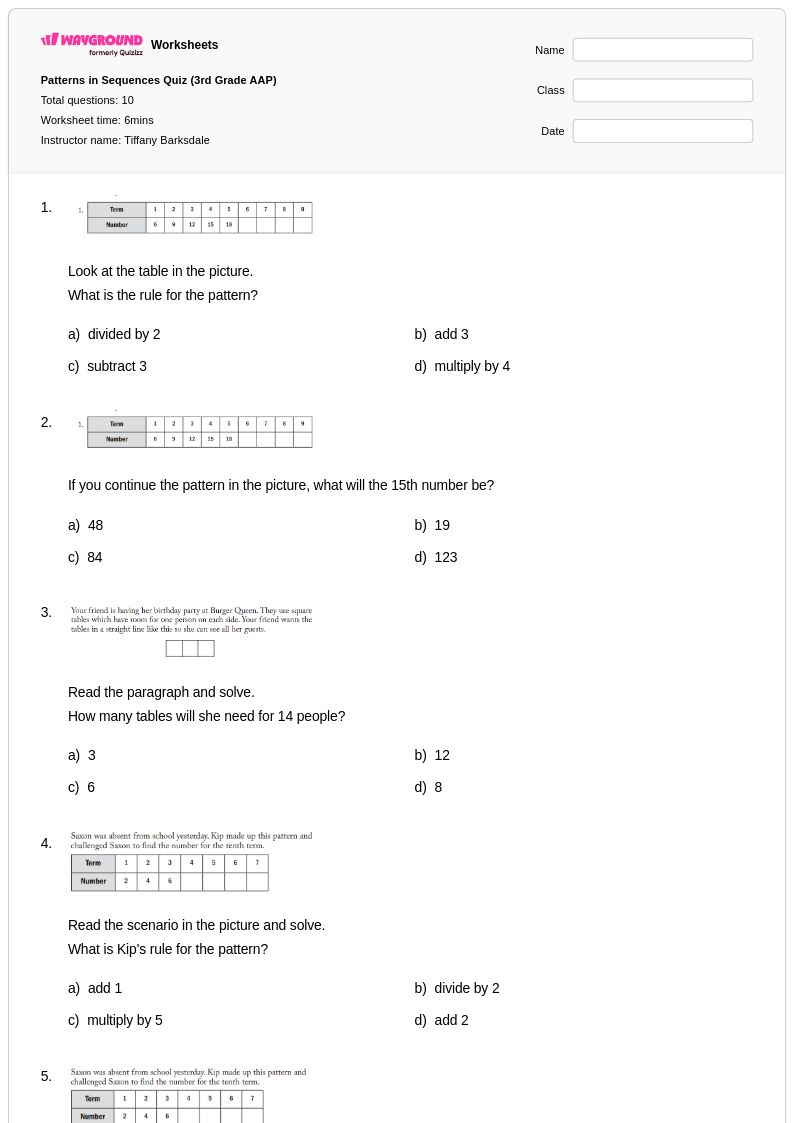
10Q
3rd
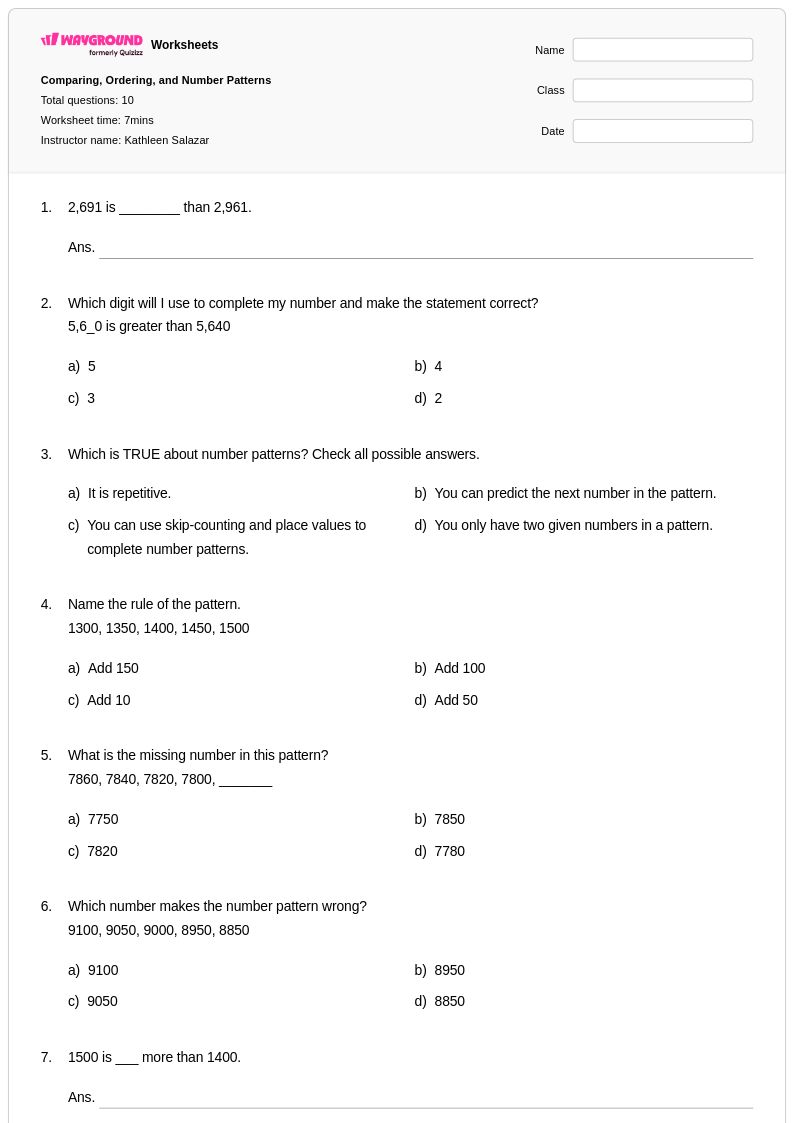
10Q
3rd
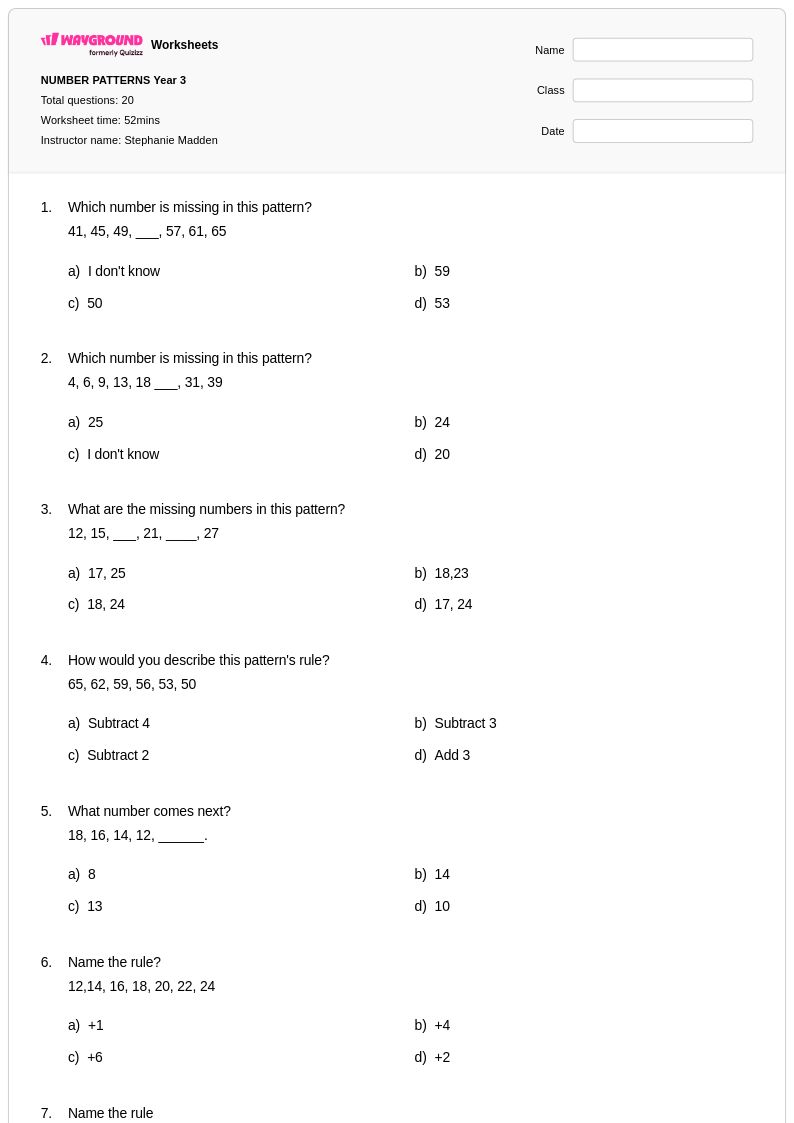
20Q
3rd
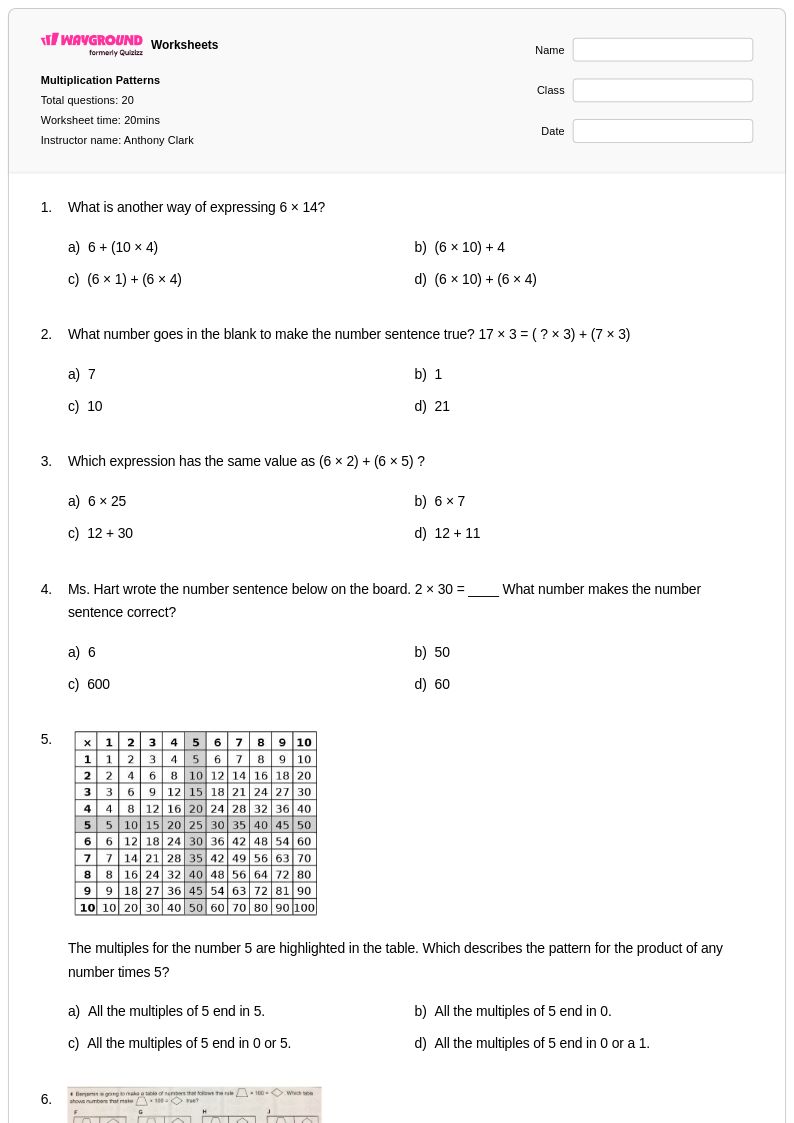
20Q
3rd - Uni
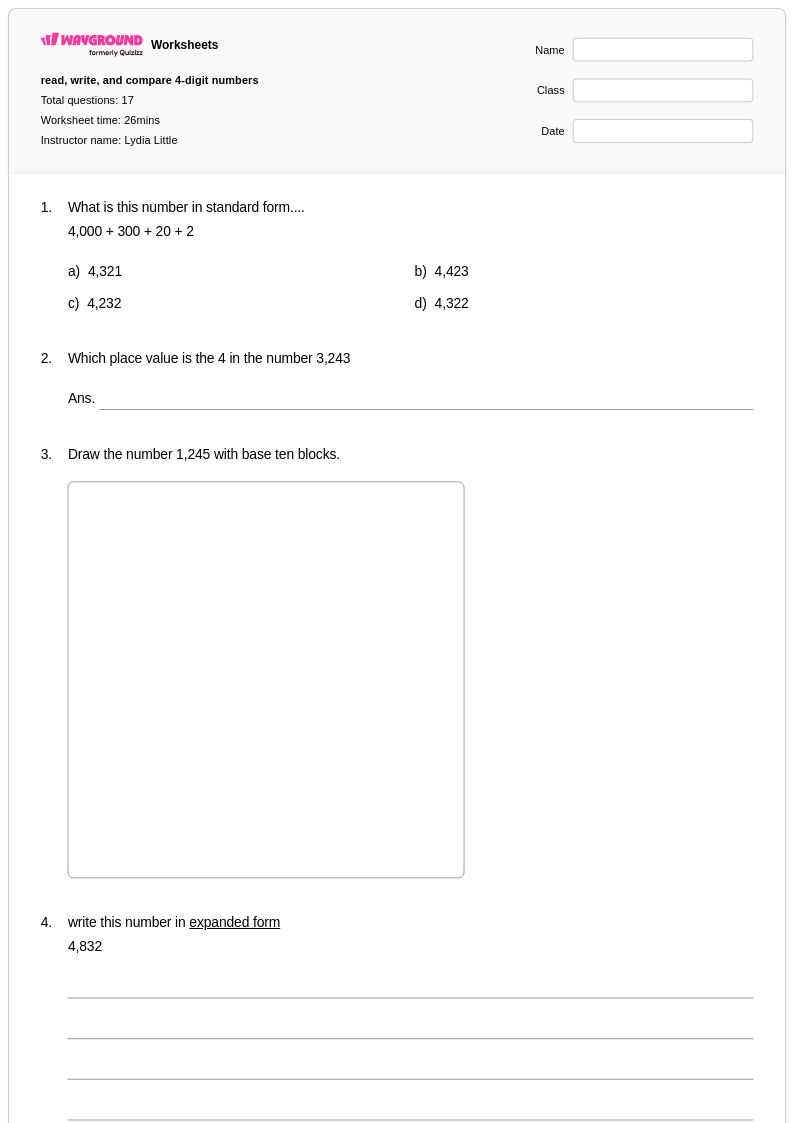
17Q
3rd
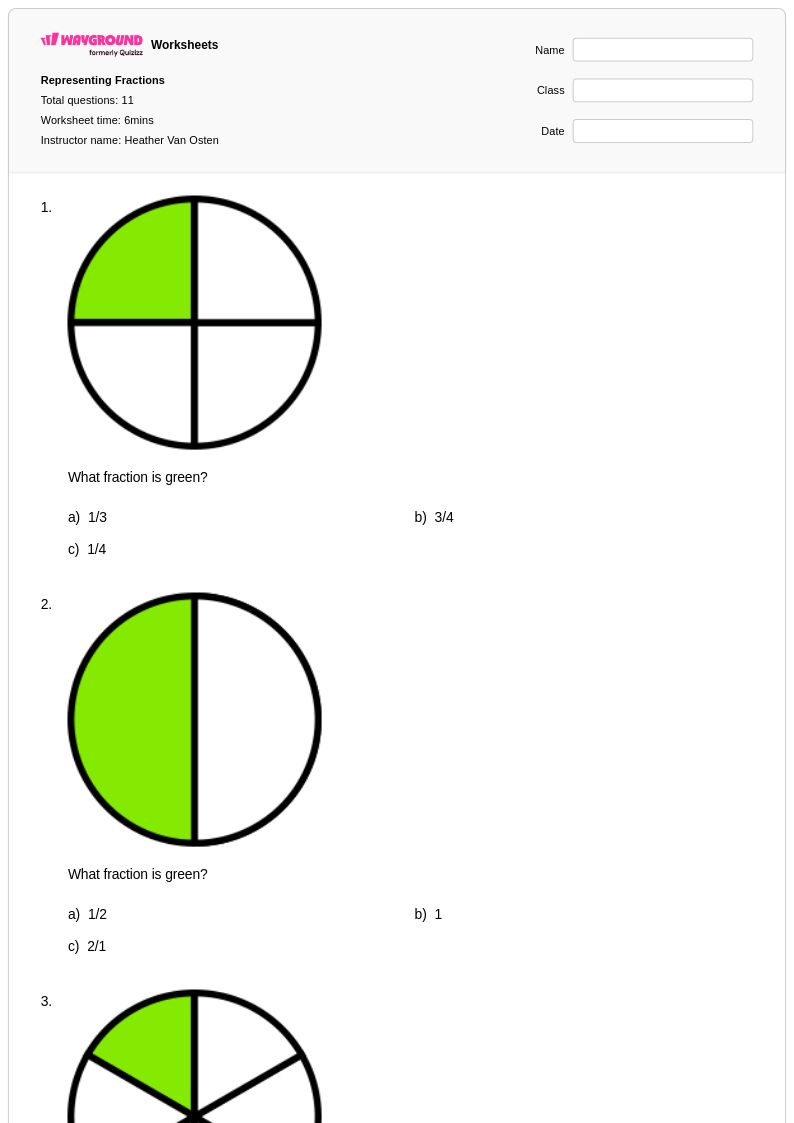
11Q
2nd - 3rd
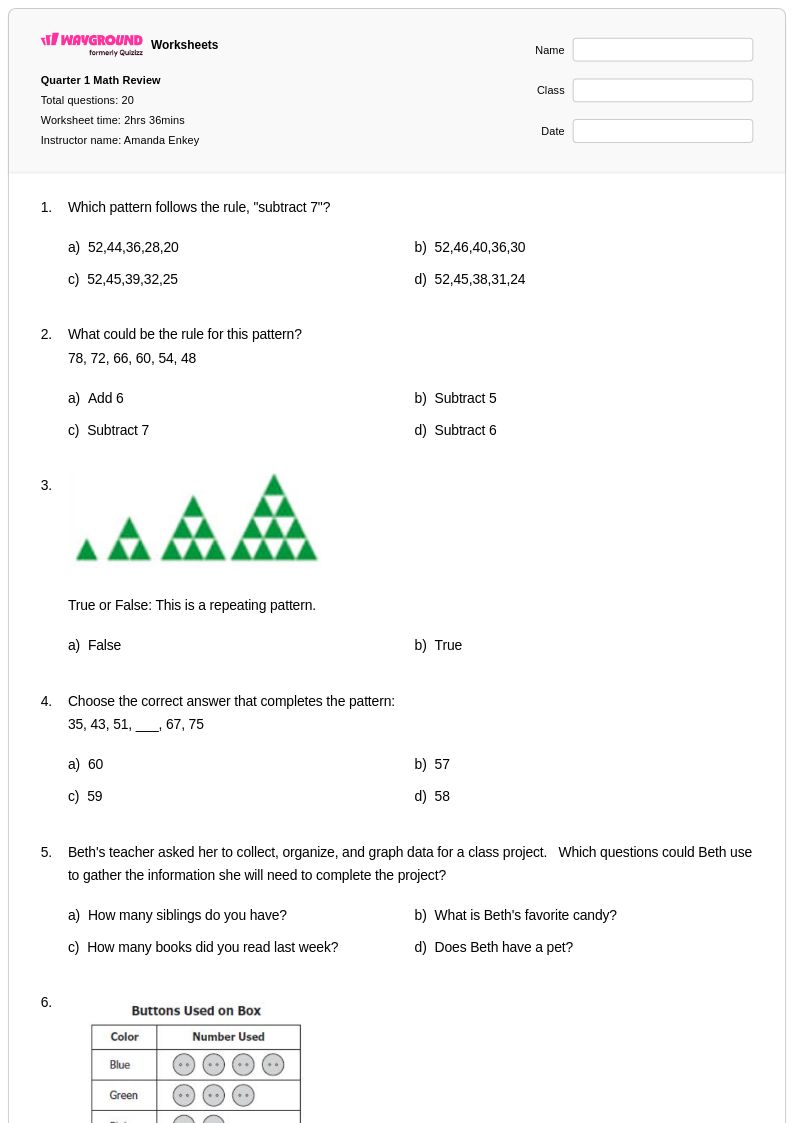
20Q
3rd
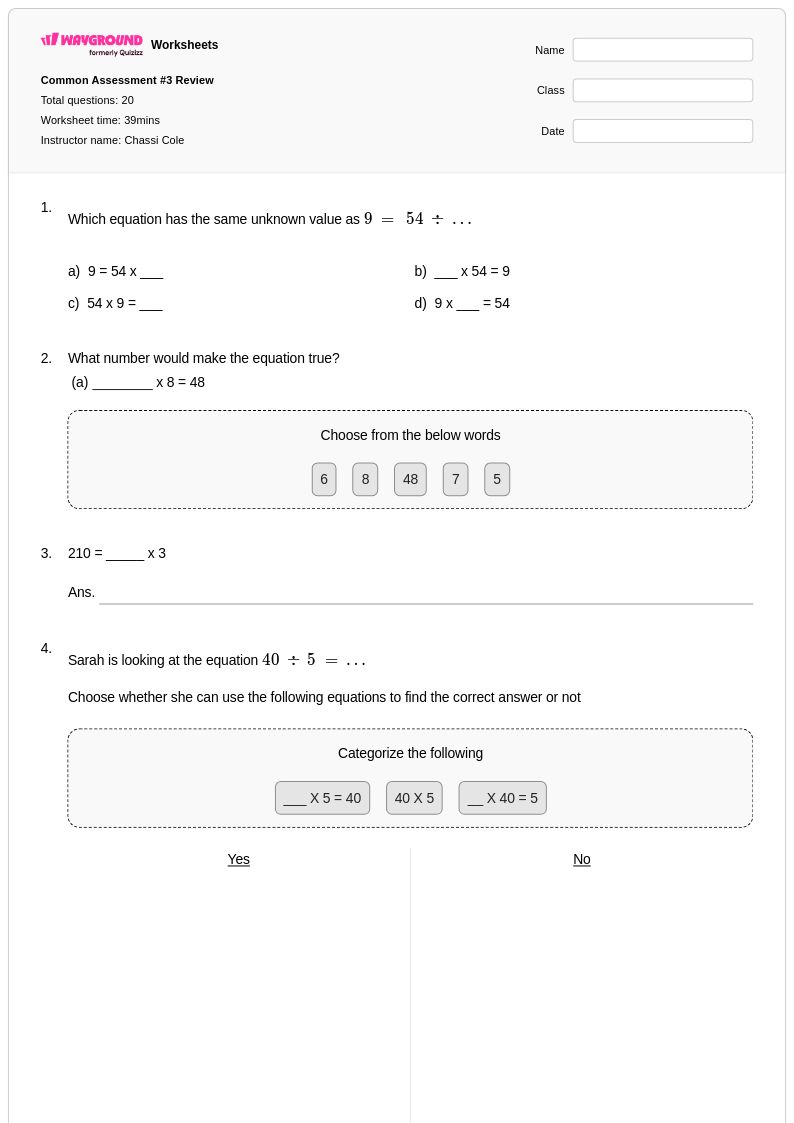
20Q
3rd
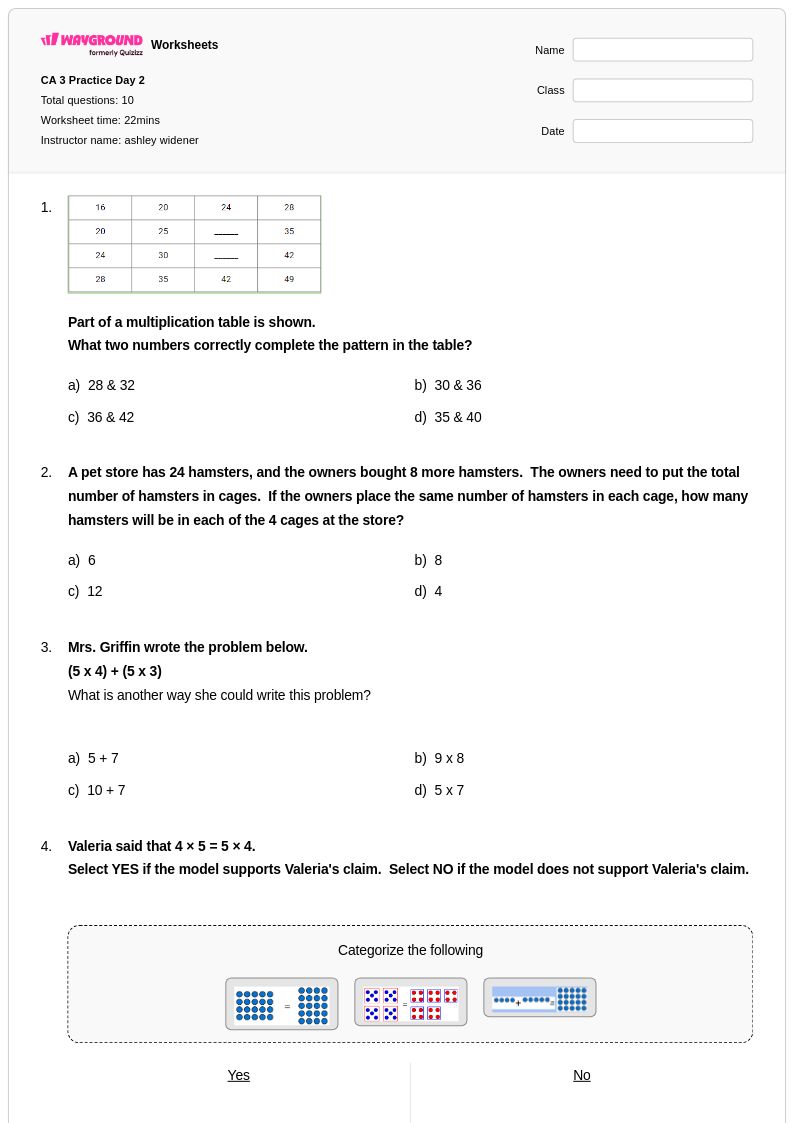
10Q
3rd
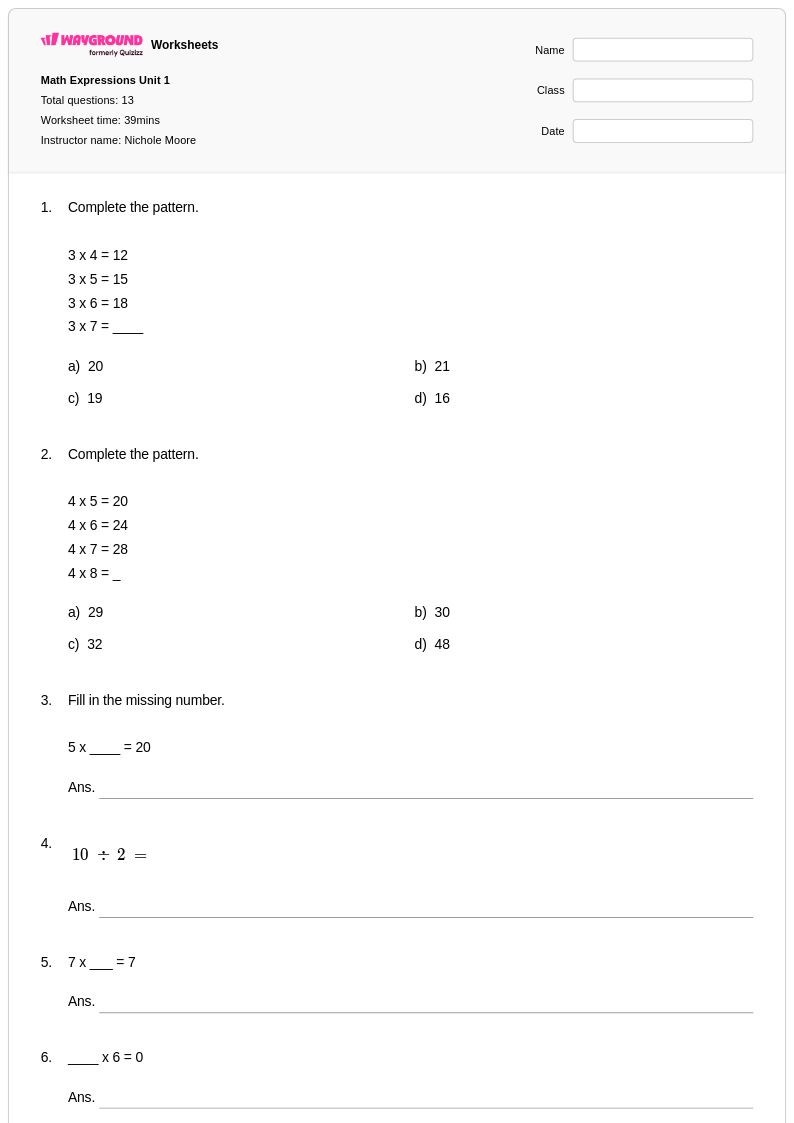
13Q
3rd
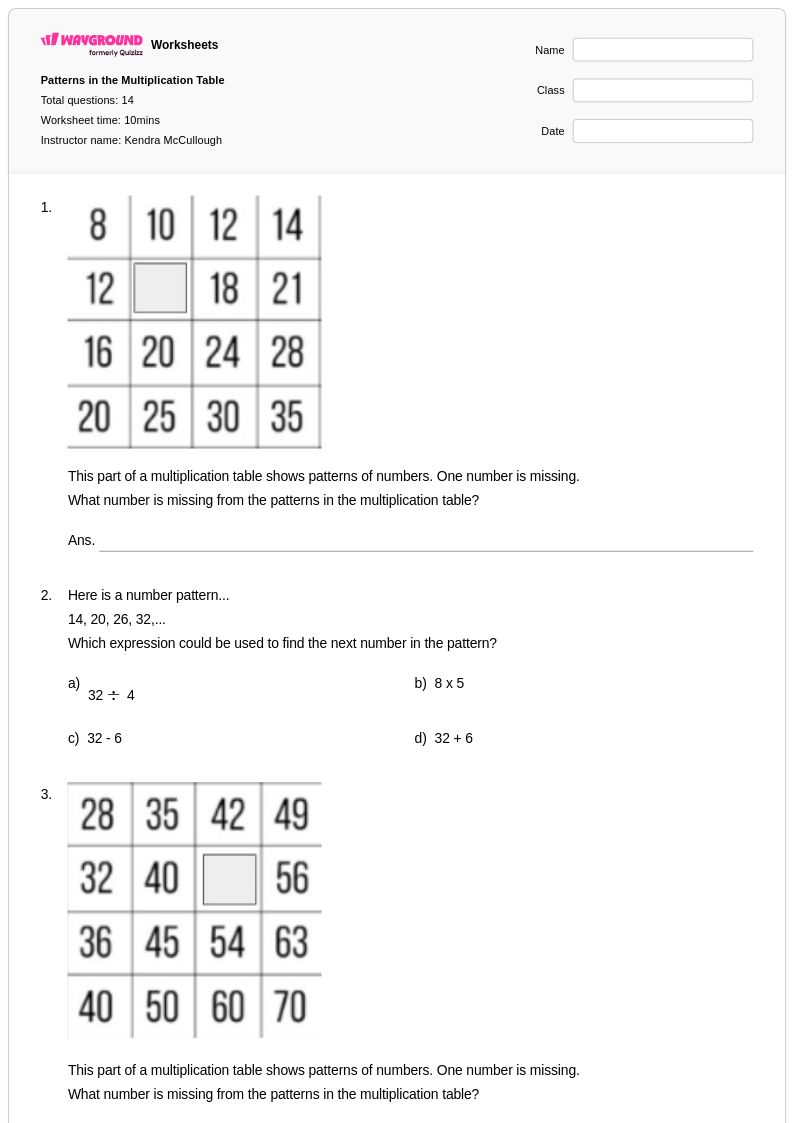
14Q
3rd
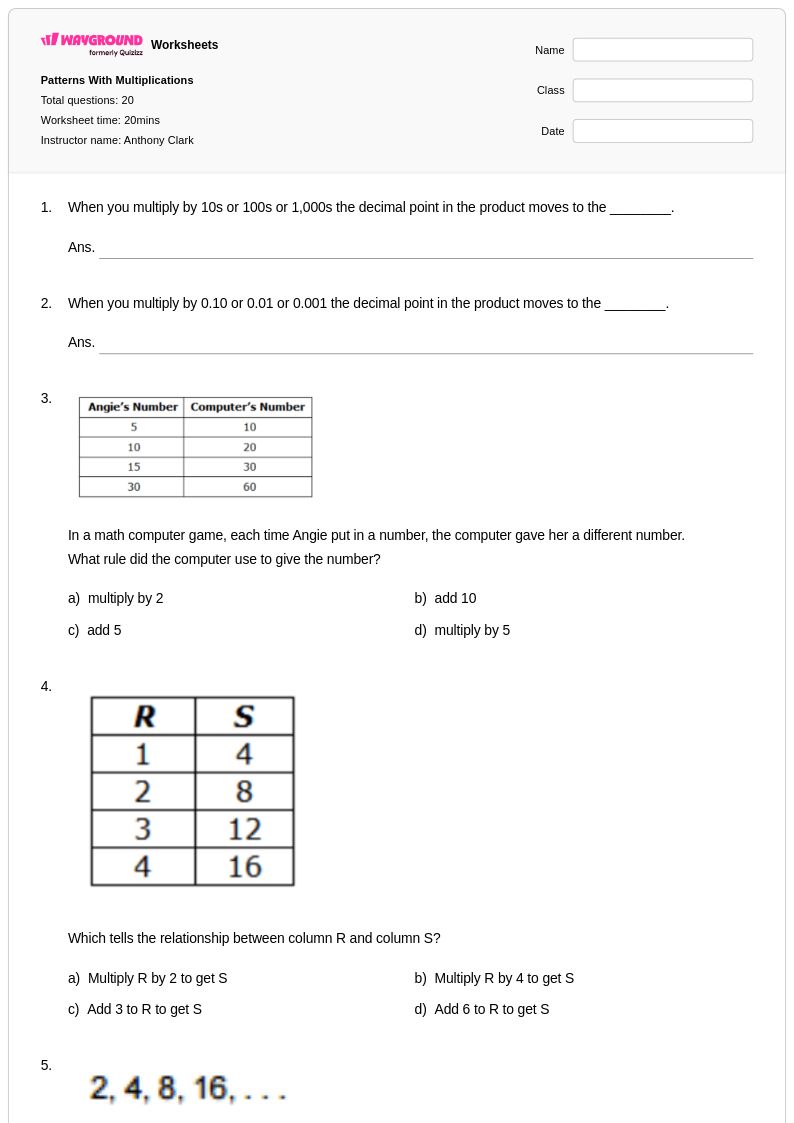
20Q
3rd - Uni
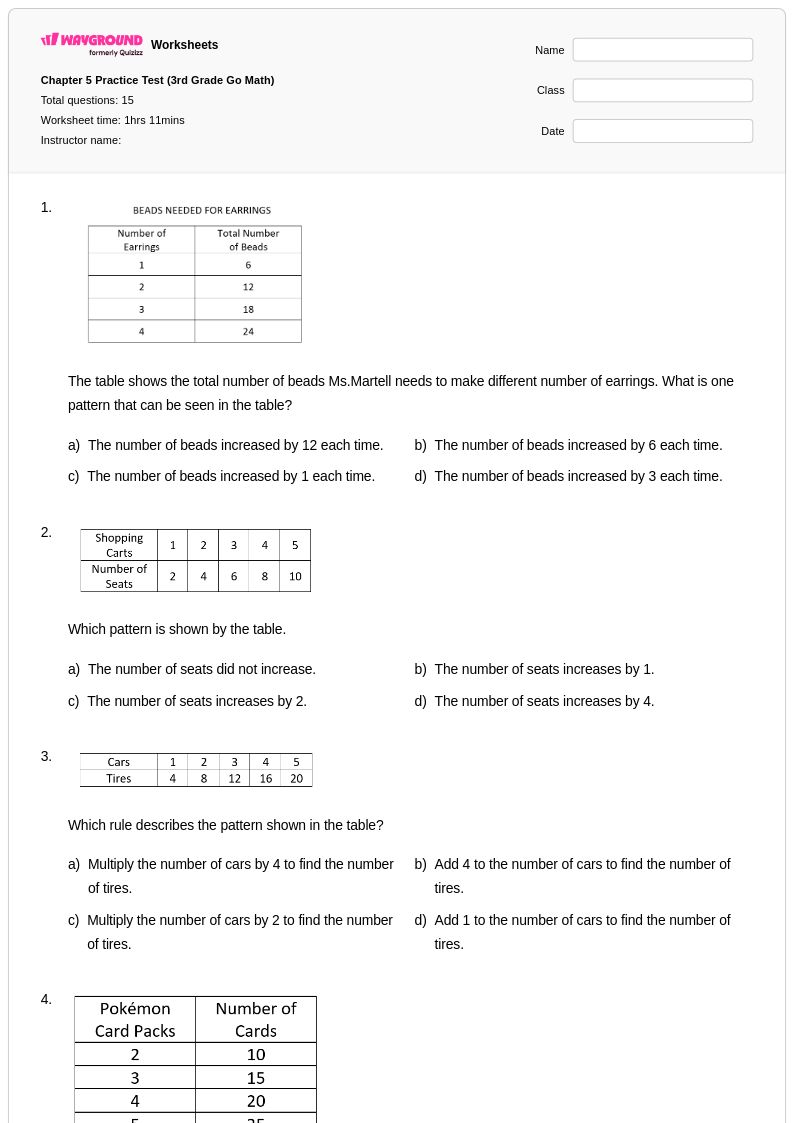
15Q
3rd
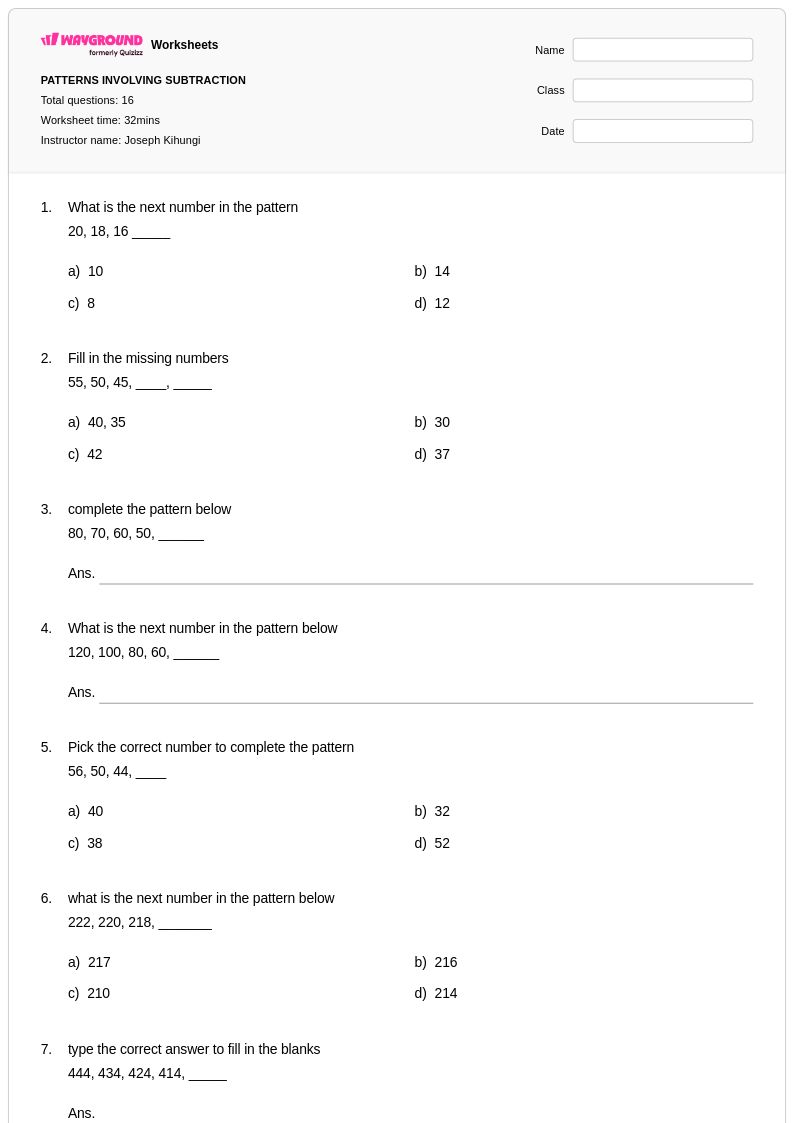
16Q
3rd
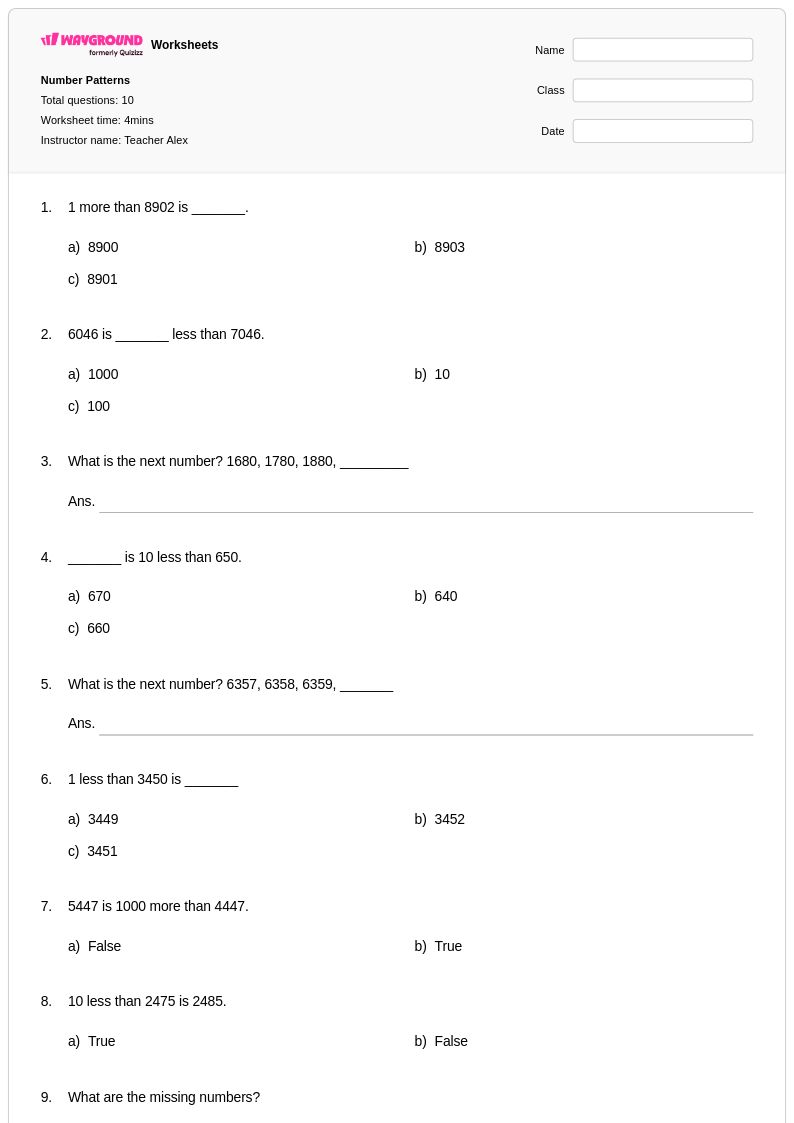
10Q
3rd
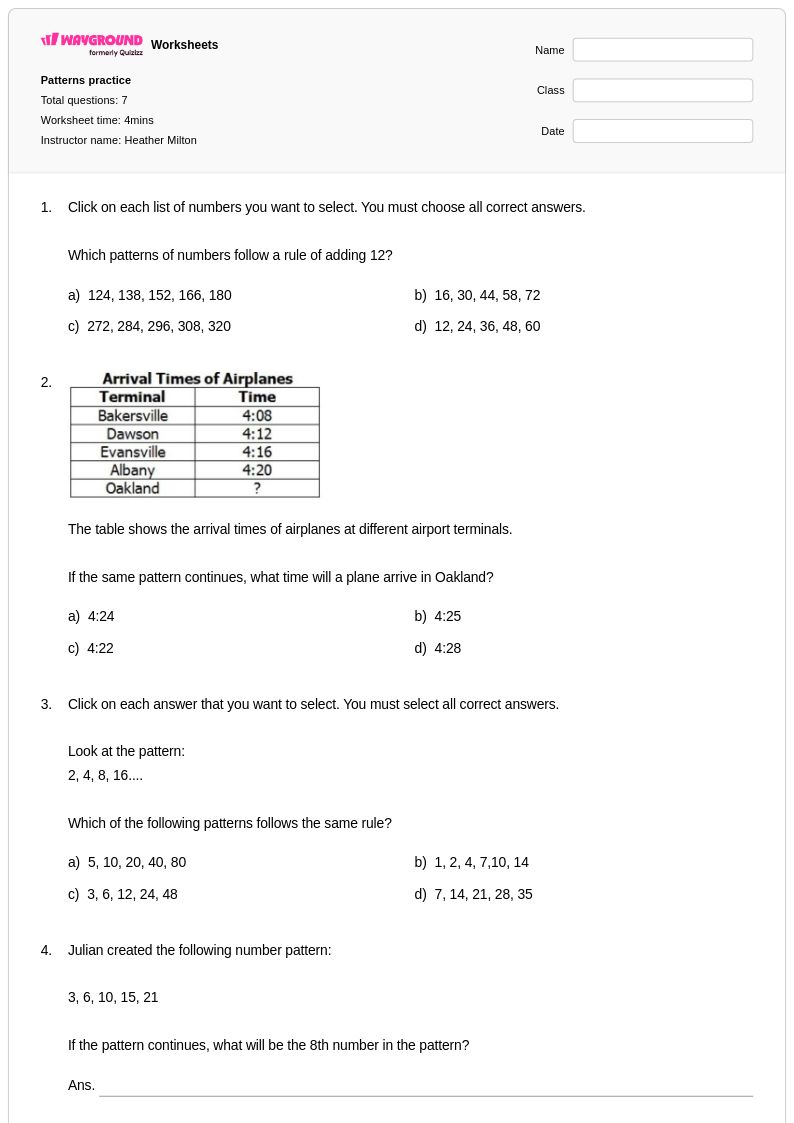
7Q
3rd
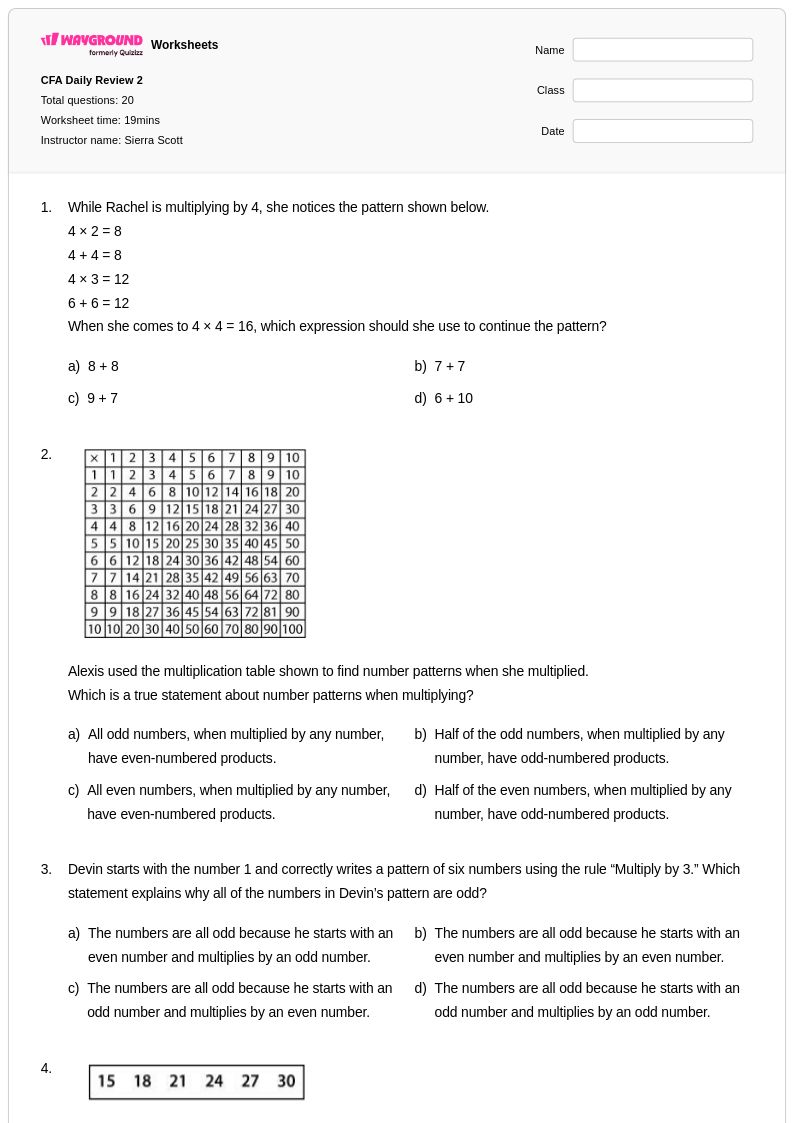
20Q
3rd
Explorar Color Patterns hojas de trabajo por grados
Explore otras hojas de trabajo de materias para year 3
Explore printable Color Patterns worksheets for Year 3
Color patterns worksheets for Year 3 mathematics provide essential practice in recognizing, extending, and creating visual sequences that strengthen foundational number sense skills. These comprehensive printables guide young learners through systematic exploration of repeating color arrangements, helping them identify pattern cores, predict what comes next in a sequence, and understand the mathematical relationships that govern pattern structures. Students work with increasingly complex color combinations while developing critical thinking abilities that transfer directly to number patterns, algebraic reasoning, and problem-solving strategies. Each worksheet includes clear instructions and practice problems designed to build confidence, with answer keys provided to support independent learning and allow teachers to quickly assess student understanding of these fundamental mathematical concepts.
Wayground, formerly Quizizz, empowers educators with an extensive collection of teacher-created color pattern resources specifically aligned to Year 3 mathematics standards and learning objectives. The platform's robust search and filtering capabilities enable teachers to quickly locate worksheets that match their students' current skill levels, whether for initial instruction, remediation, or enrichment activities. These versatile materials are available in both printable pdf format for traditional classroom use and digital formats for interactive learning experiences, allowing for seamless differentiation across diverse learning needs. Teachers can customize existing worksheets or combine multiple resources to create comprehensive lesson plans, making it simple to provide targeted skill practice that addresses individual student gaps while building the pattern recognition abilities essential for mathematical success.
FAQs
How do I teach color patterns to third graders?
What color pattern exercises are useful in Grade 3?
What mistakes do third graders make with color patterns?
How can I use Wayground Grade 3 color patterns worksheets?
How do Grade 3 color patterns support the Common Core math progression?
How can I differentiate Grade 3 color pattern worksheets?
What grade level are these color pattern worksheets designed for?