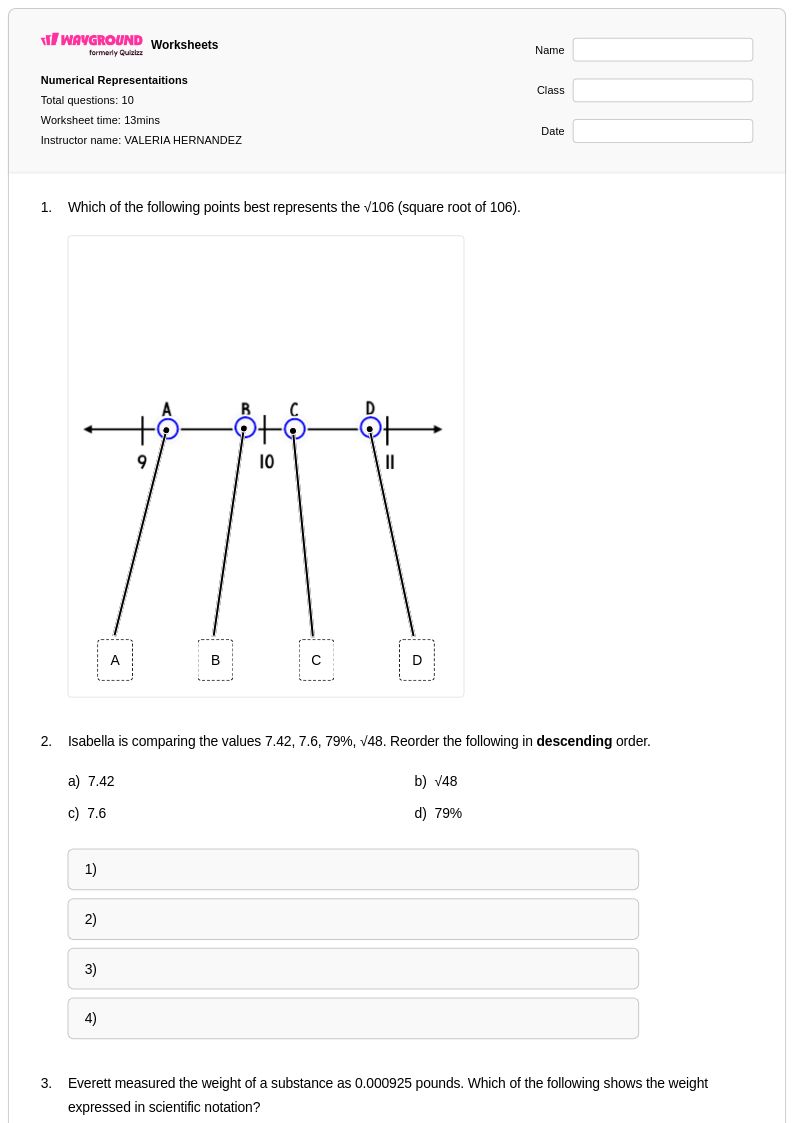
Free comparing sets worksheets and printables help students develop essential number sense skills through engaging practice problems that teach visual comparison, counting, and mathematical reasoning with complete answer keys included.
Comparing sets worksheets available through Wayground (formerly Quizizz) provide students with essential practice in developing foundational number sense skills through systematic comparison of different collections of objects or quantities. These comprehensive mathematics resources strengthen students' ability to analyze quantities, identify relationships between groups, and apply comparison vocabulary such as more than, less than, equal to, greater than, and fewer than. The worksheets feature diverse practice problems that guide learners through visual comparisons using concrete objects, pictorial representations, and abstract numerical sets, with each printable resource including a detailed answer key to support independent learning and immediate feedback. These free educational materials systematically build conceptual understanding of quantity relationships while developing critical thinking skills essential for more advanced mathematical concepts.
Wayground (formerly Quizizz) supports mathematics educators with an extensive collection of teacher-created comparing sets worksheets drawn from millions of high-quality educational resources developed by experienced classroom professionals. The platform's robust search and filtering capabilities enable teachers to quickly locate materials that align with specific learning objectives and curriculum standards, while built-in differentiation tools allow for seamless customization based on individual student needs and varying ability levels. These versatile resources are available in both printable pdf format and interactive digital versions, providing educators with flexible options for lesson planning, targeted remediation, skill enrichment, and ongoing practice opportunities that can be adapted for whole-group instruction, small-group interventions, or independent student work across diverse learning environments.
FAQs
How do I teach students to compare sets?
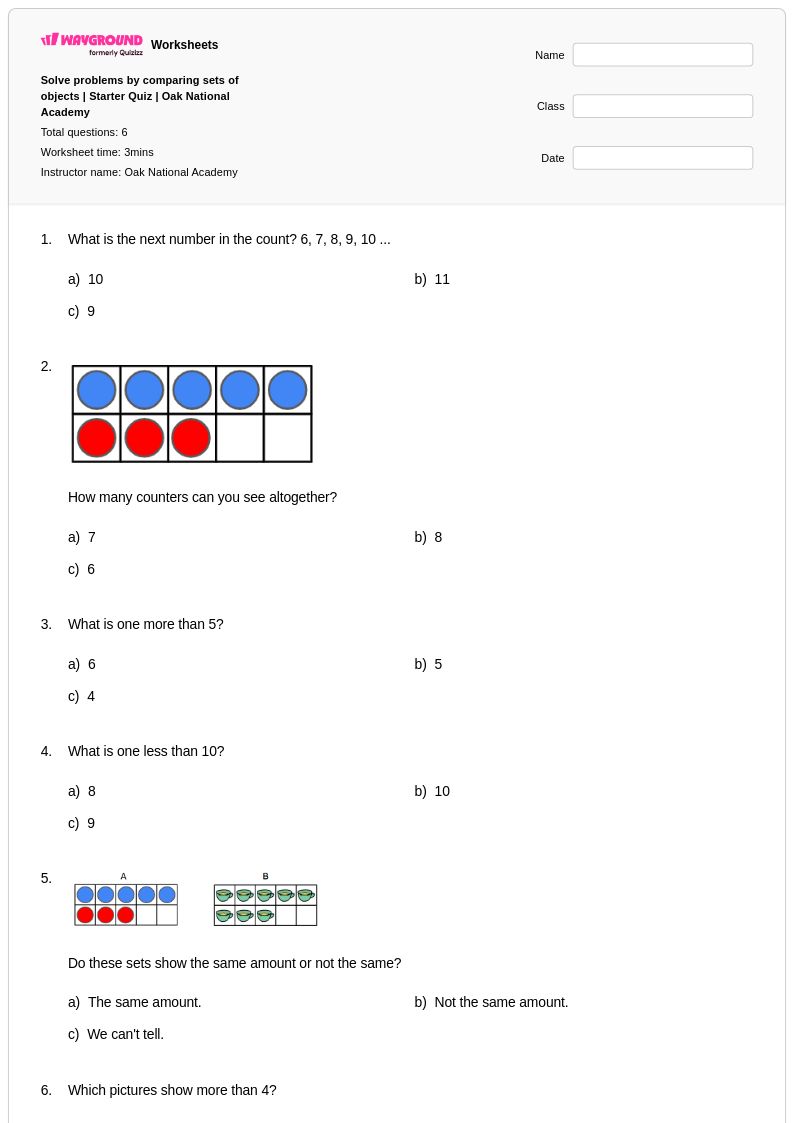
Begin with two collections of concrete objects and have students match items one to one. Ask them to describe which set has more, fewer, or the same number before introducing greater than, less than, and equal to language or symbols. Progress from concrete objects to pictures and then to abstract numerical sets.
What exercises help students practice comparing sets?
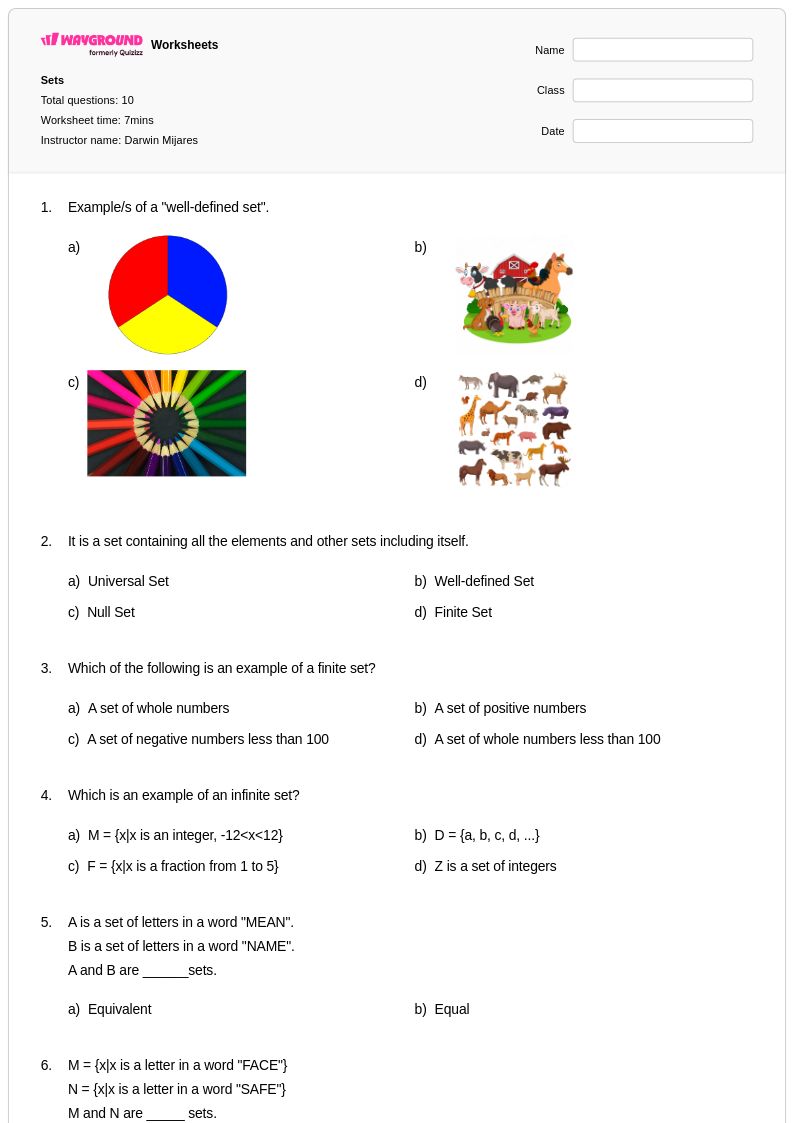
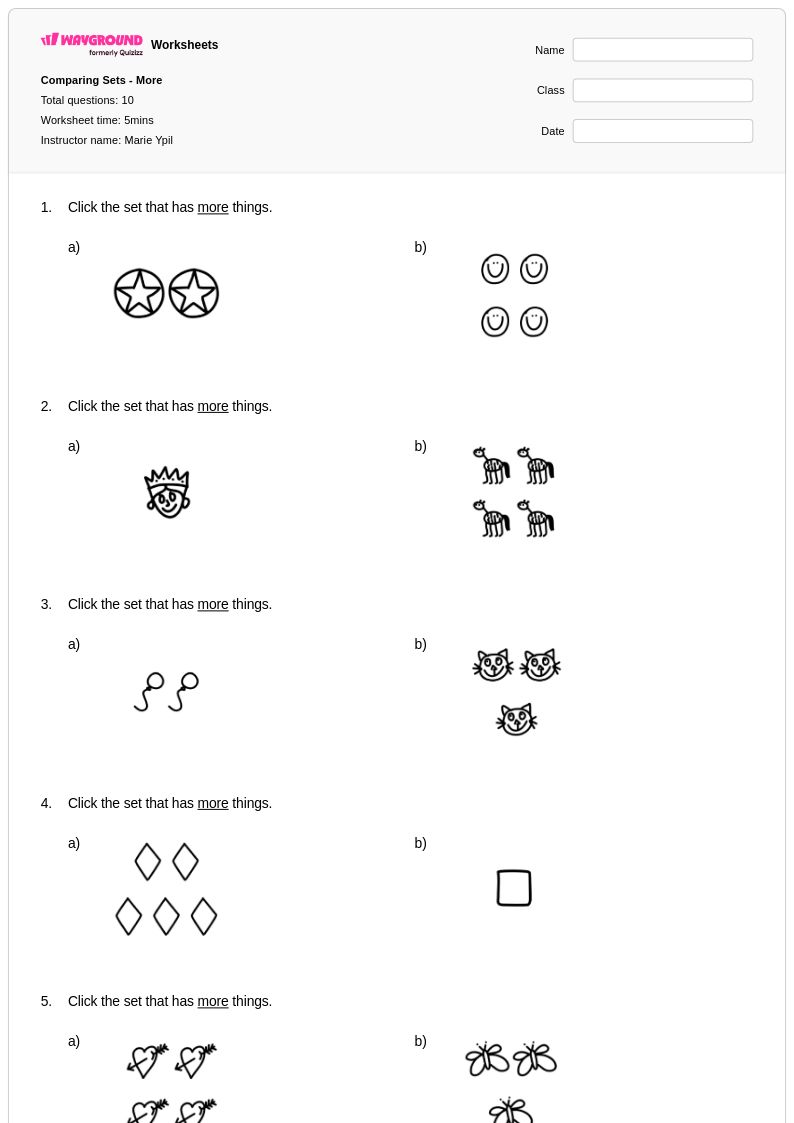
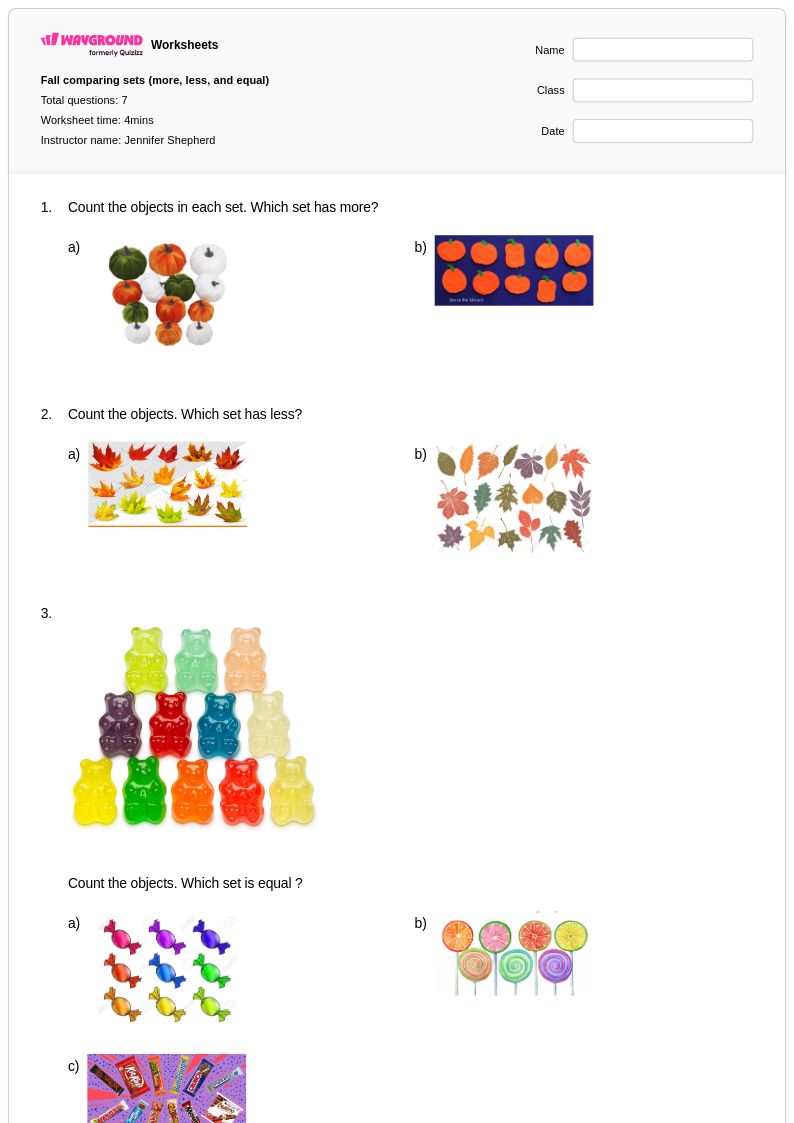
Effective exercises include matching objects one to one, counting and comparing two pictured groups, identifying sets with more or fewer items, and finding equal sets. A useful practice sequence moves from concrete and pictorial comparisons to abstract numerical sets so students connect quantity relationships with comparison vocabulary.
What mistakes do students commonly make when comparing sets?
Students may judge a set by how much space it covers rather than by the number of items, especially when objects are spread apart or differ in size. They may also reverse more and fewer or assume that two sets are equal because they look similar. One-to-one matching and recounting help reveal and correct these errors.
How can I use a comparing sets worksheet on Wayground?
Wayground worksheets are available as printable PDFs and digital formats, so teachers can host a worksheet as a digital quiz or print it for paper-based practice in different learning environments. Printable copies can also support schools seeking to reduce screen time, and teachers can scan or capture completed paper submissions for grading with the Wayground for Teachers app. Every worksheet includes a complete answer key for checking work and providing feedback.
How does comparing sets fit into the Common Core math progression?
Comparing sets supports Common Core’s progression from counting objects and connecting numbers to quantities toward comparing numerals and using comparison language. Students first establish which collection has more, fewer, or the same number through matching and counting, then apply that understanding to increasingly abstract number comparisons.
How can I differentiate comparing sets practice for mixed-ability learners?
Teachers can scaffold comparing sets worksheets with larger text, wider spacing, a dyslexia-friendly font, translated versions, or alternate worksheets that use simpler visual sets before abstract numbers. In digital sessions, Wayground can provide individual students with extended time, Read Aloud, reduced answer choices, or Reading Mode while classmates retain the default settings. These accommodations can be combined and saved for future sessions.

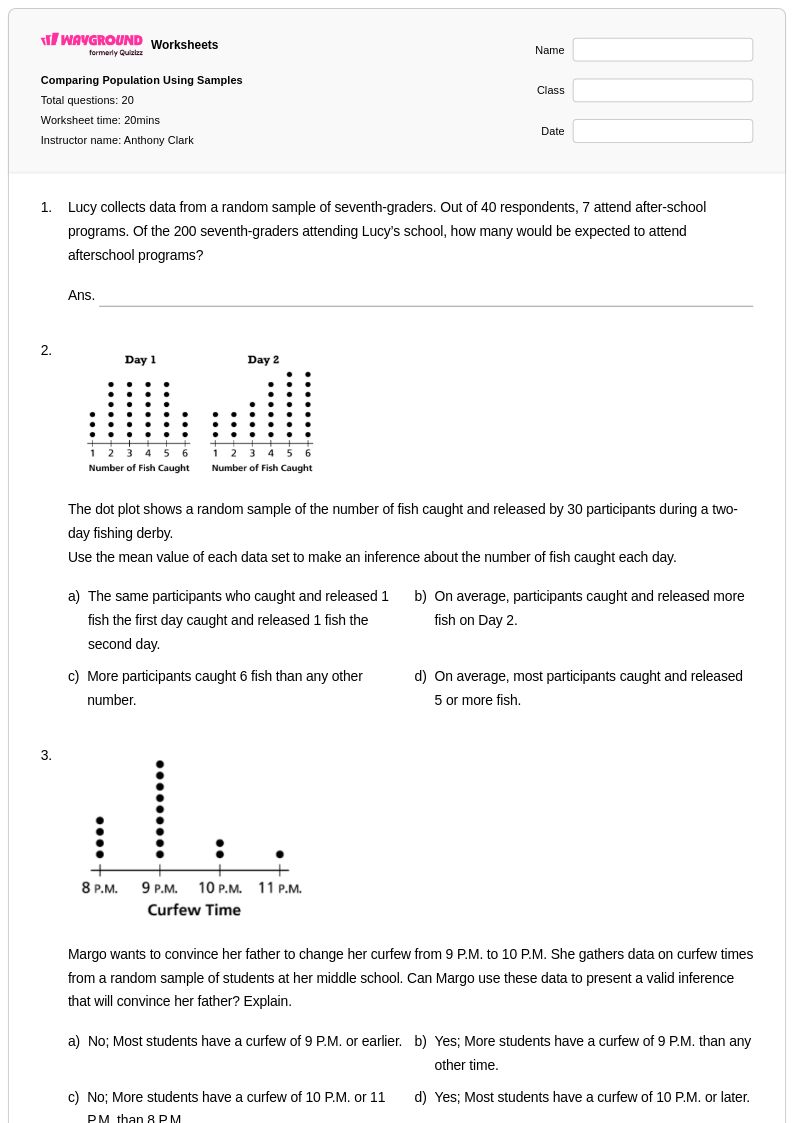
![Interpreting Visuals [7.SP.4] - Printable Comparing-sets Worksheets - Wayground](https://quizizz-static.s3.amazonaws.com/_media/worksheets-new/632321f8bc6a79001d175365-interpreting-visuals-7sp4)