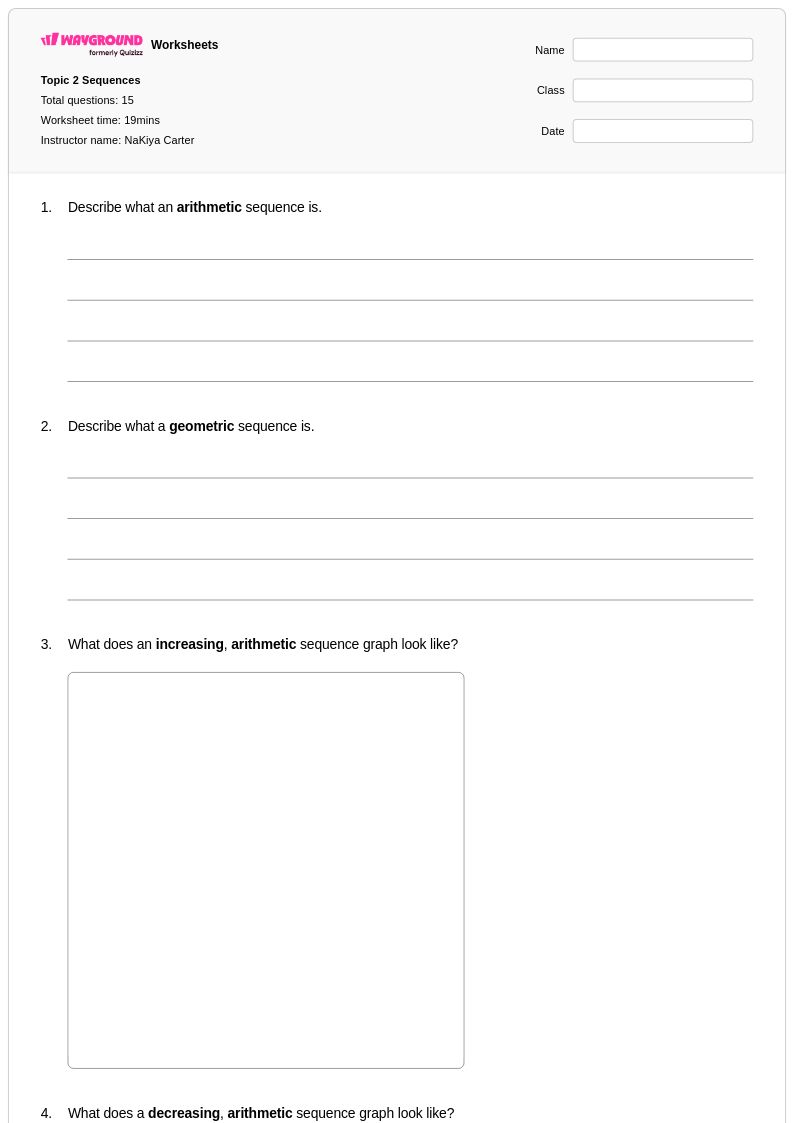
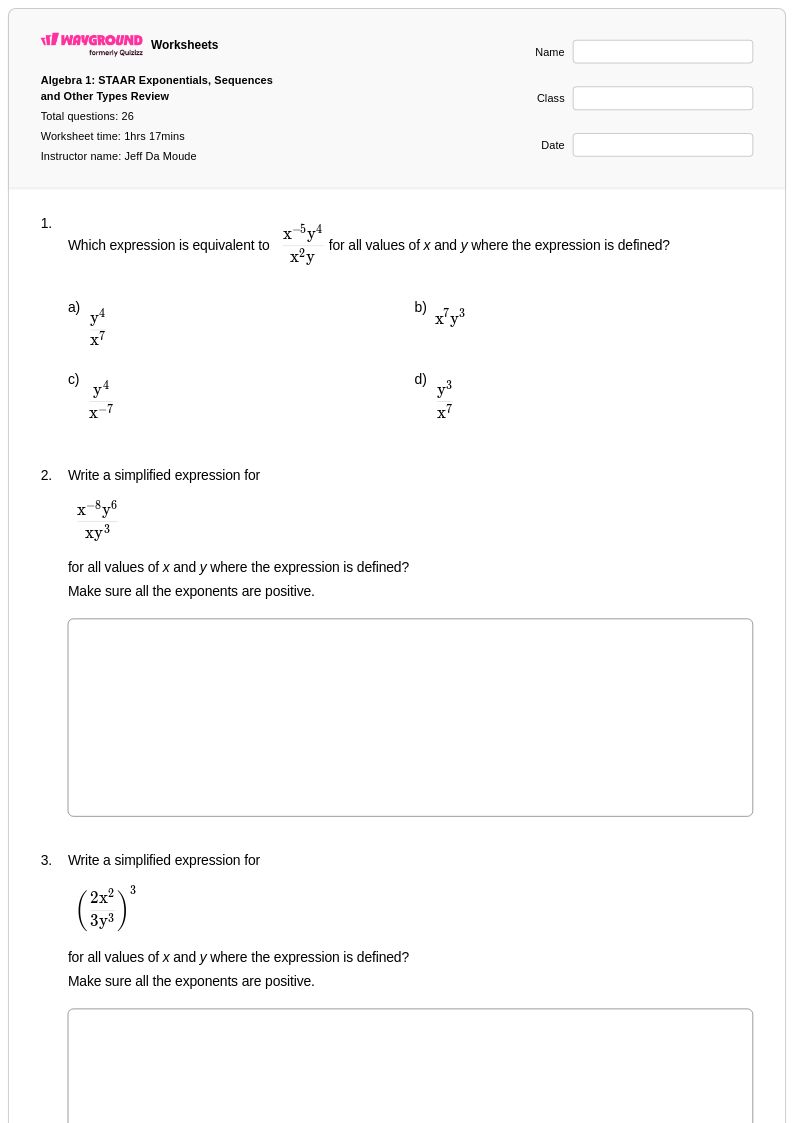
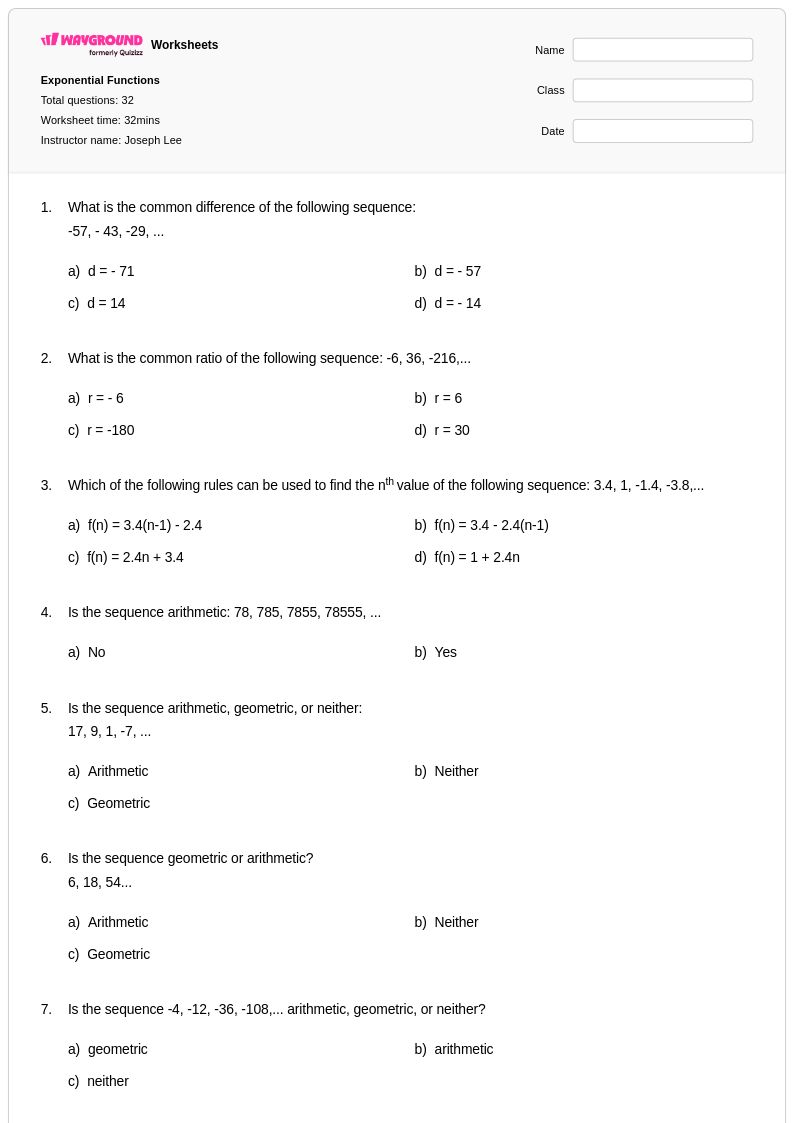
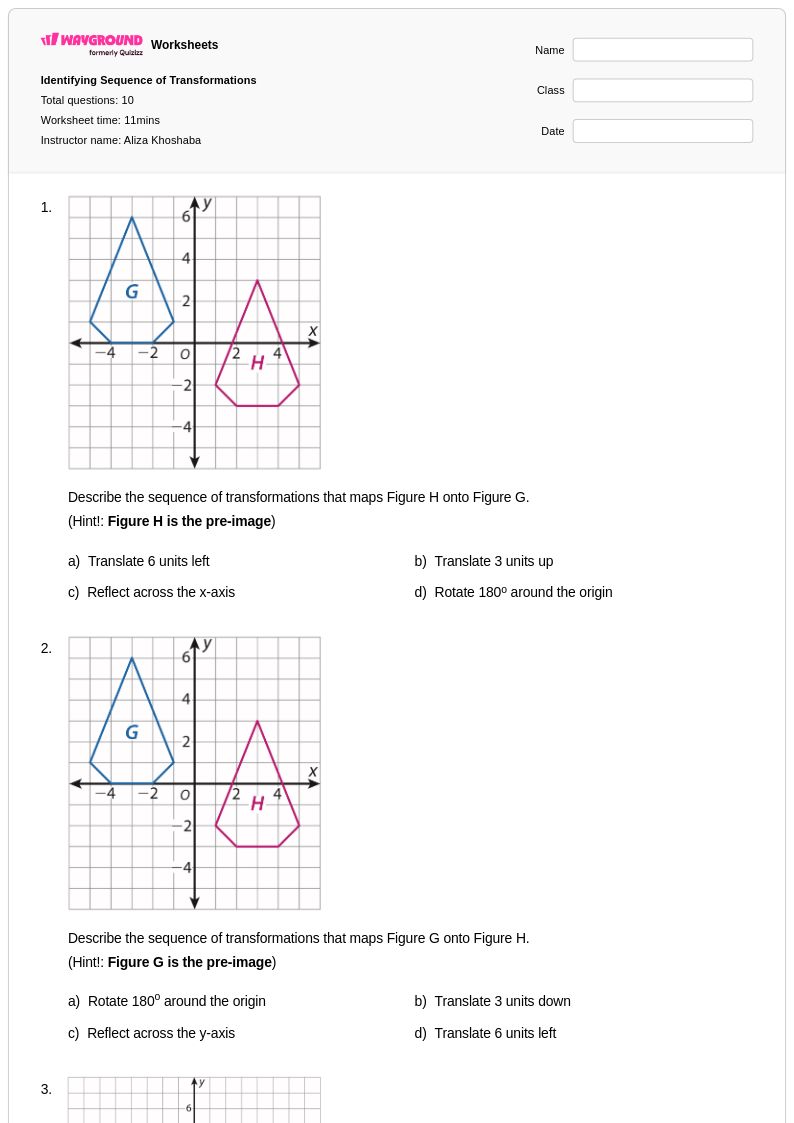
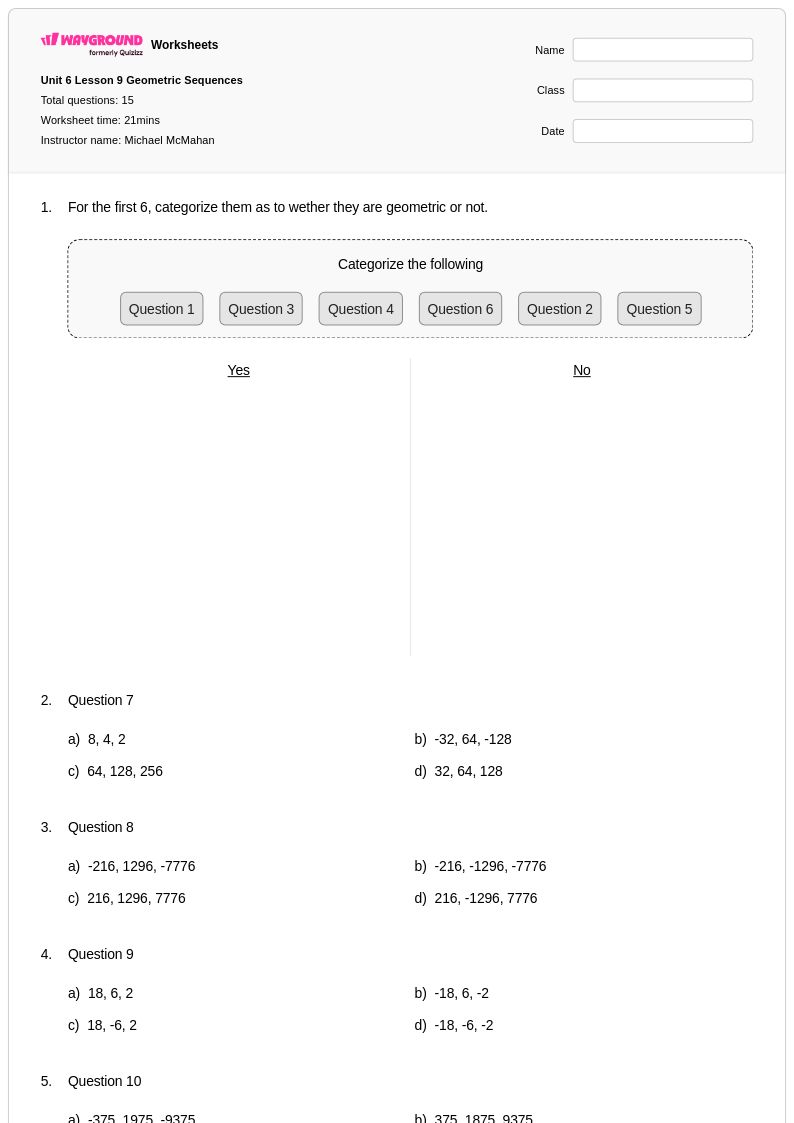
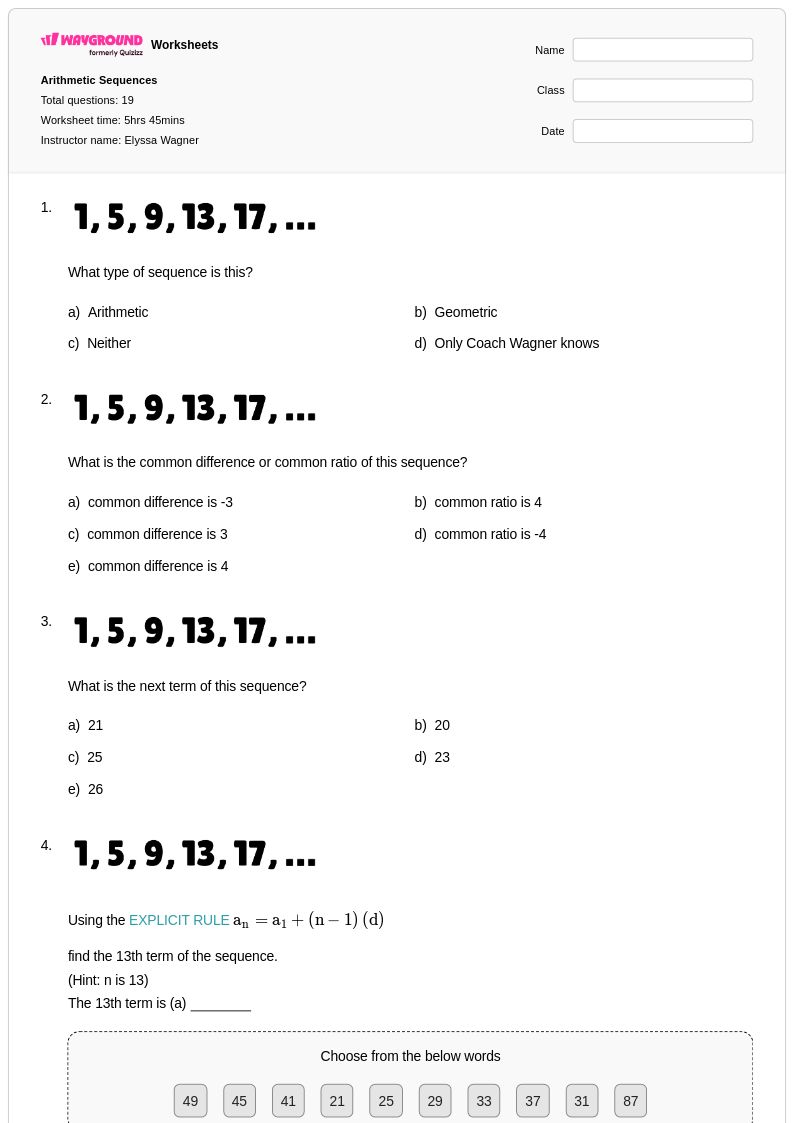
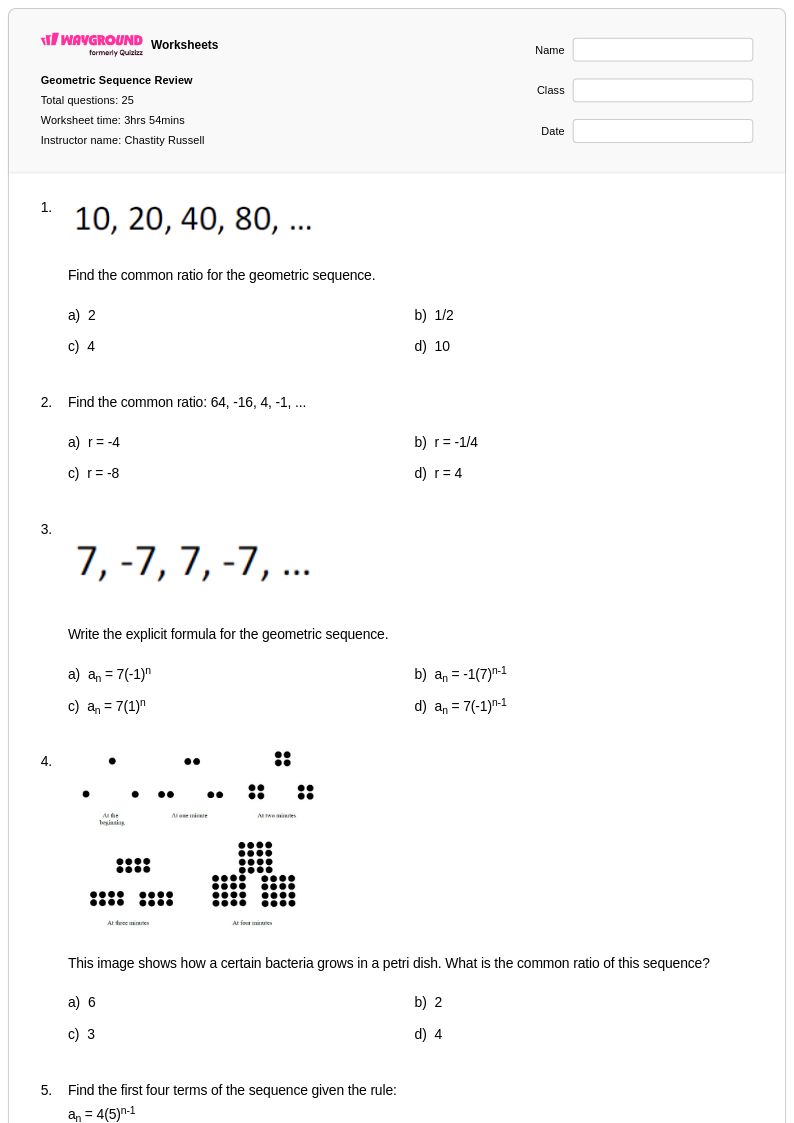
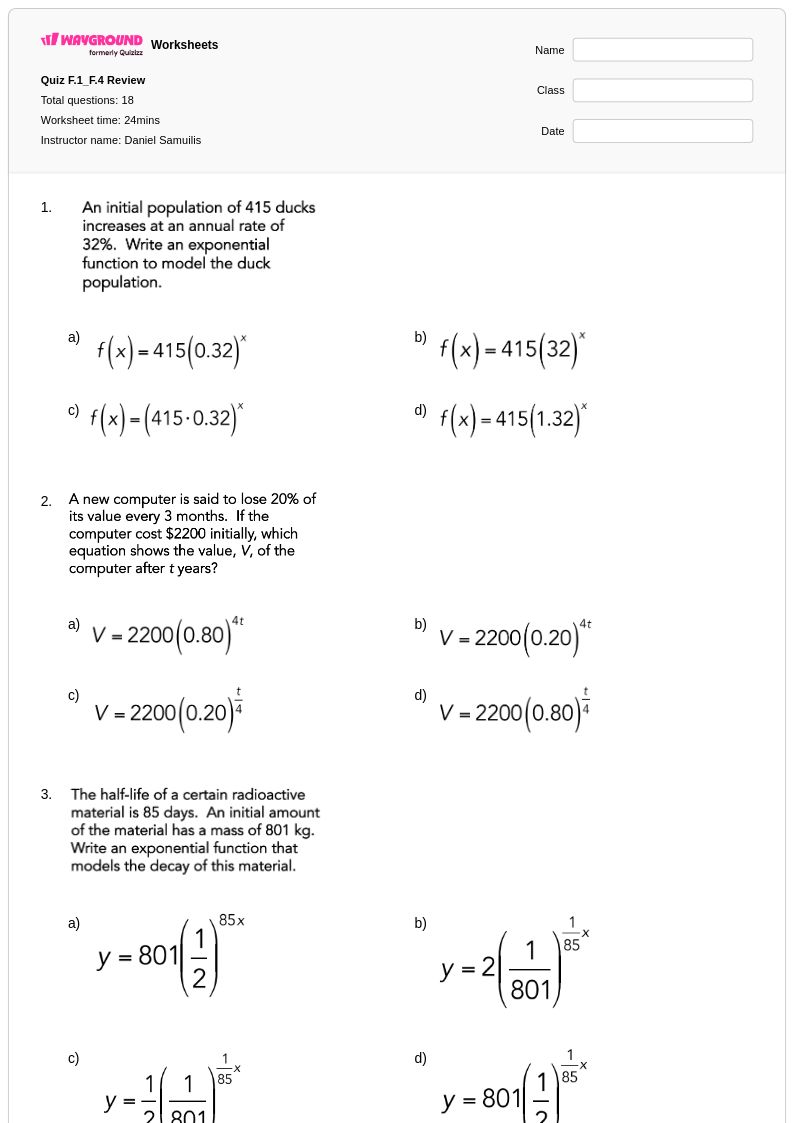
Explore Wayground's free decreasing sequences worksheets and printables that help students master identifying, extending, and analyzing number patterns that decrease, complete with practice problems and answer keys in convenient PDF format.
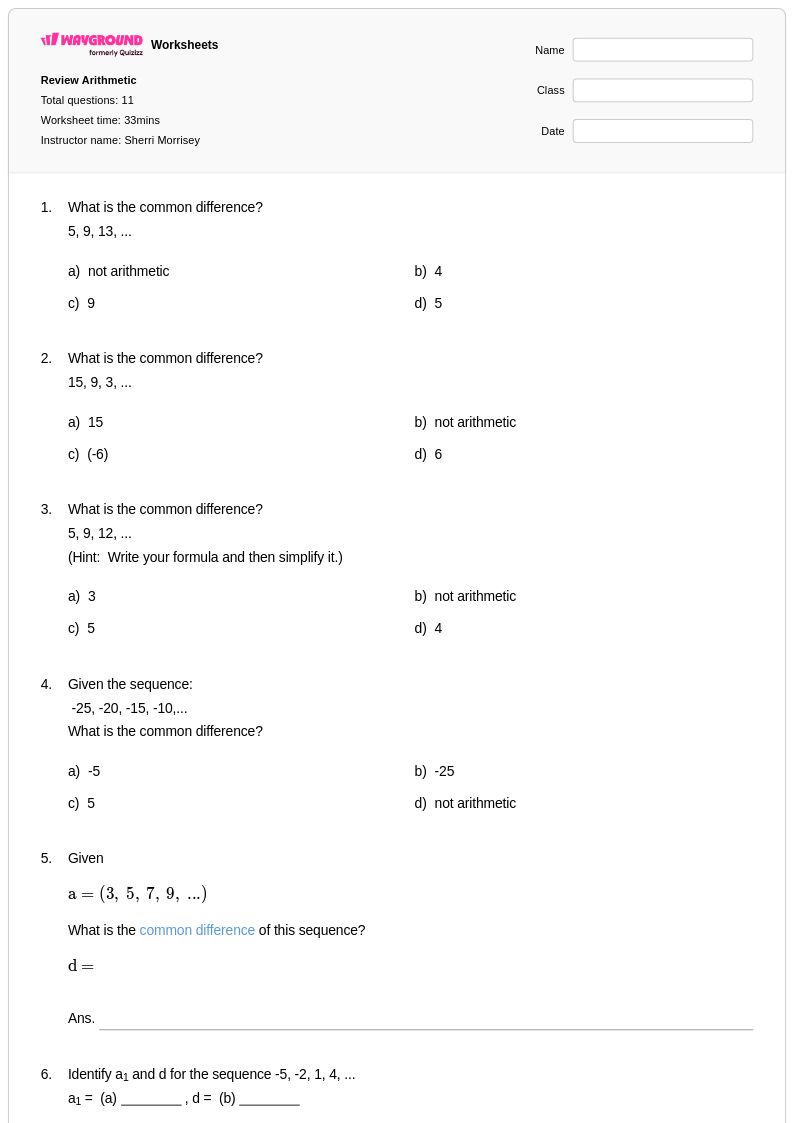
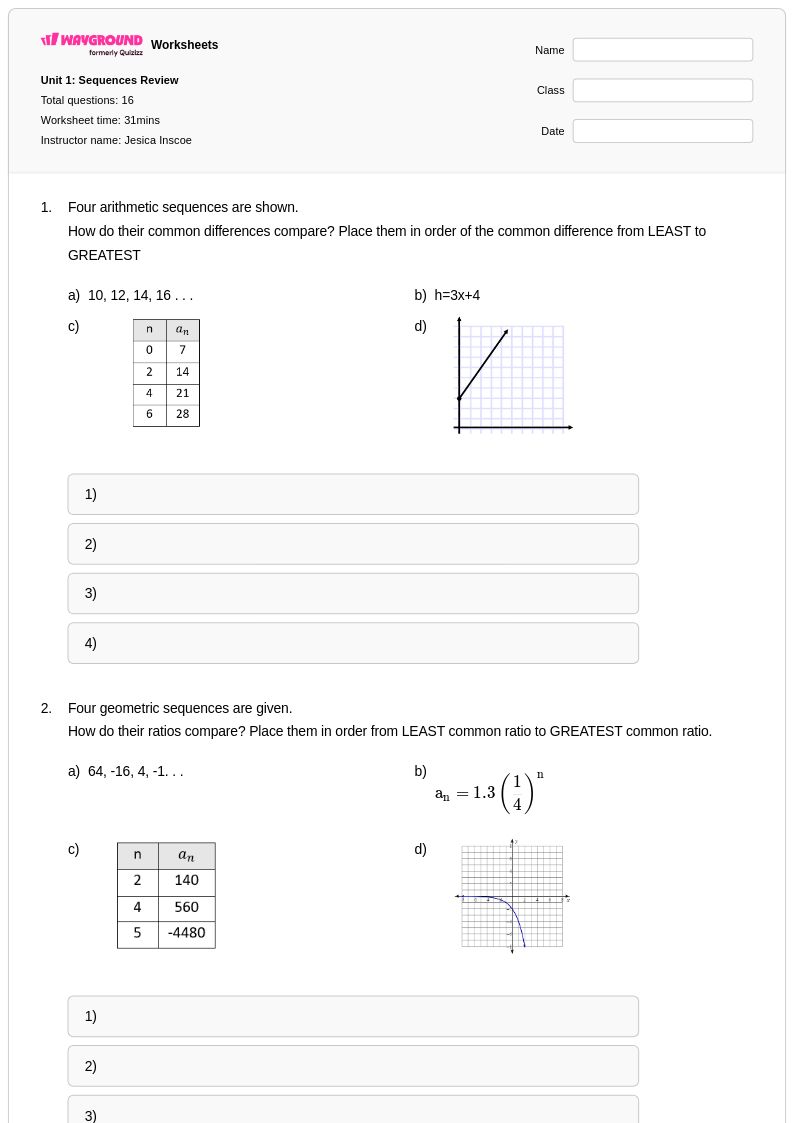
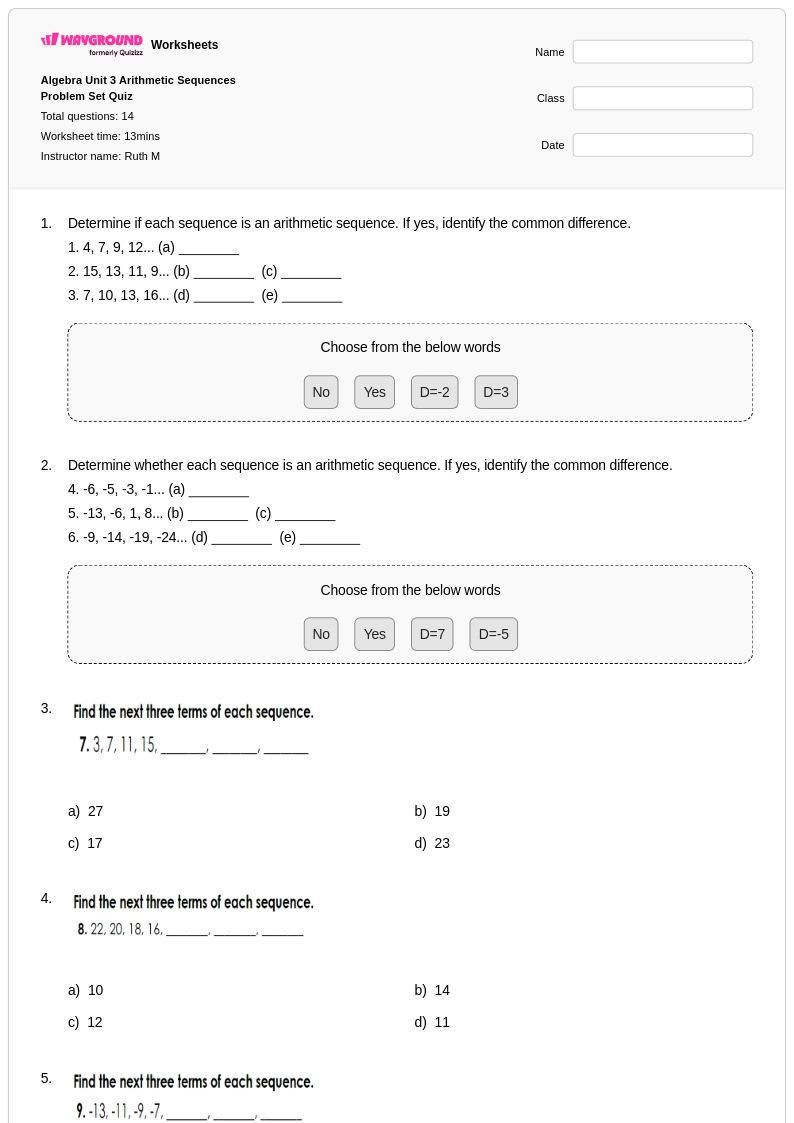
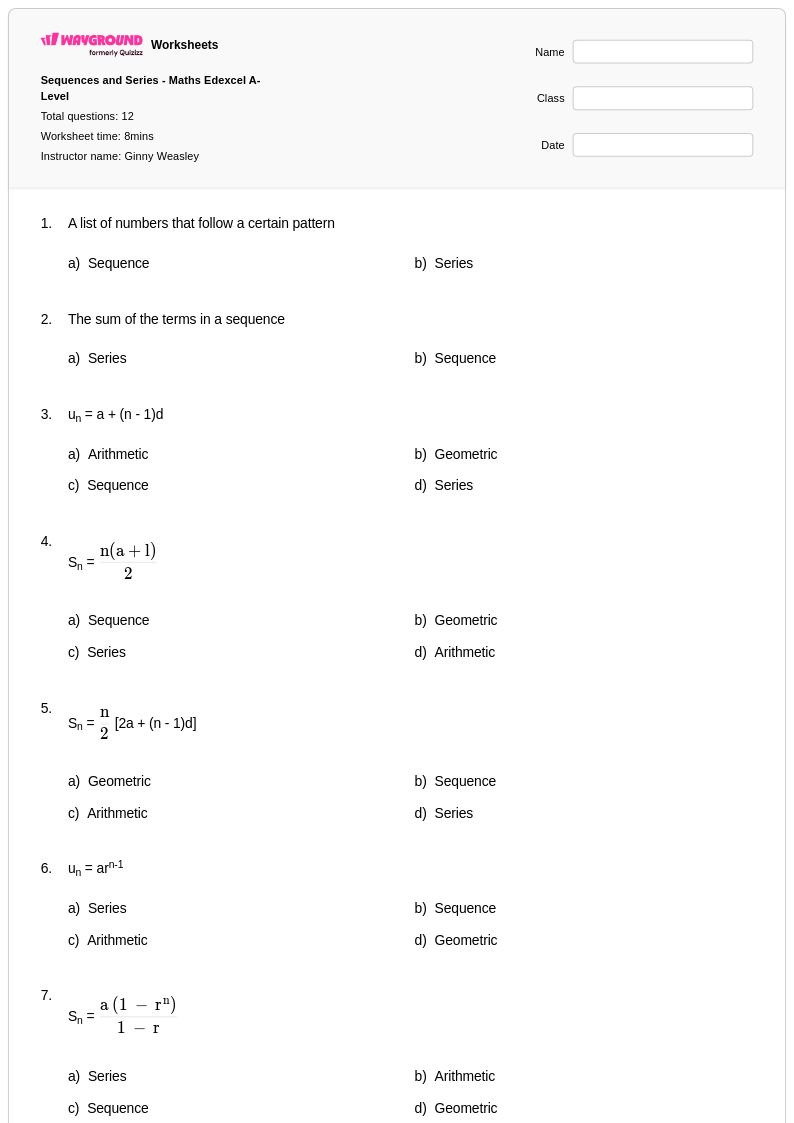
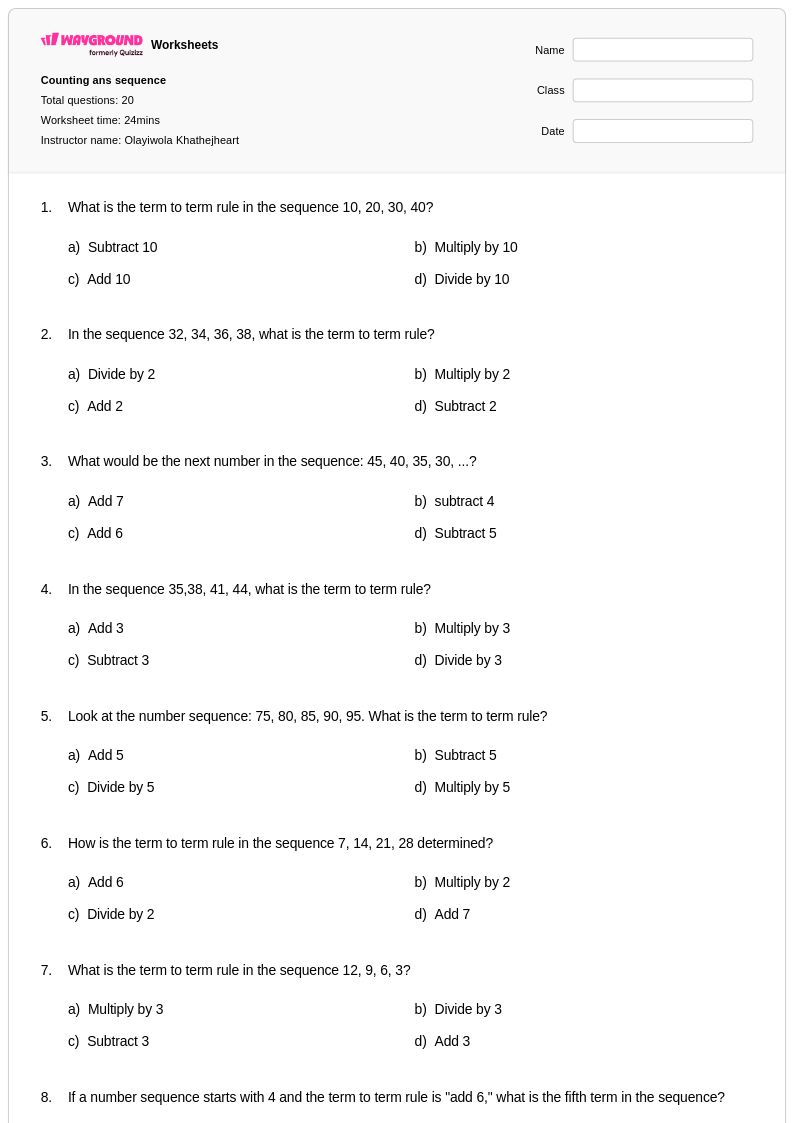
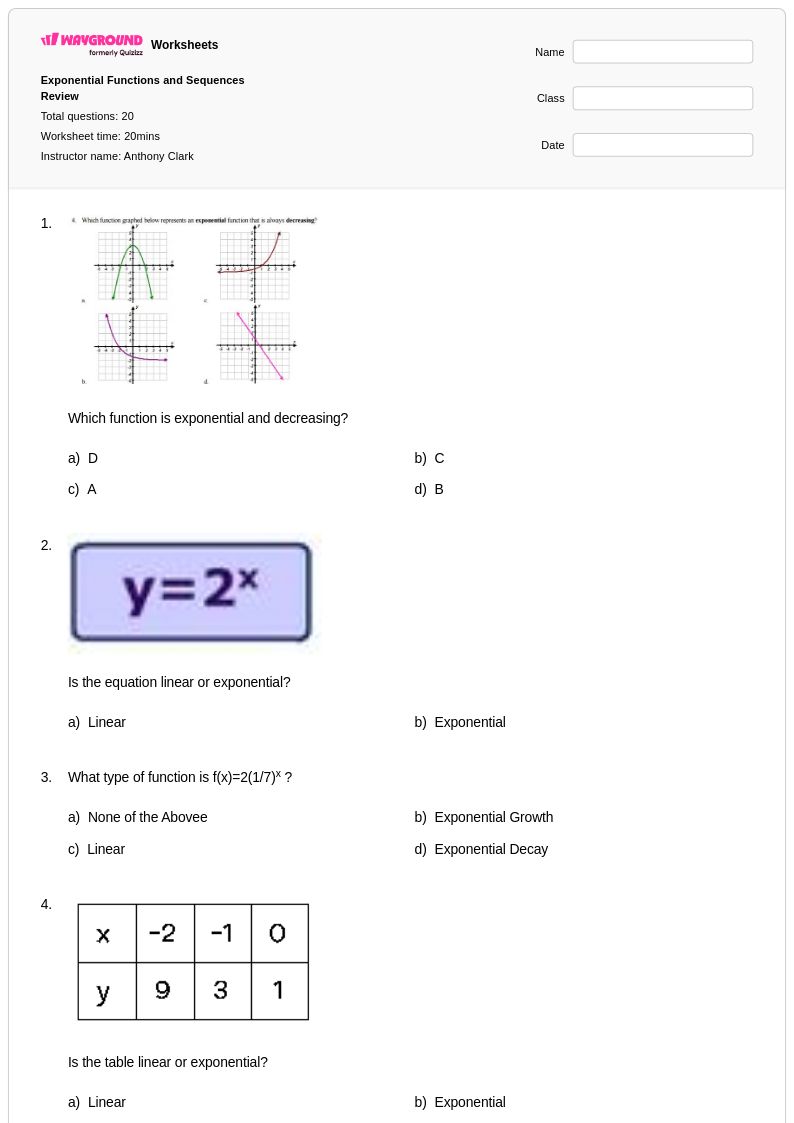
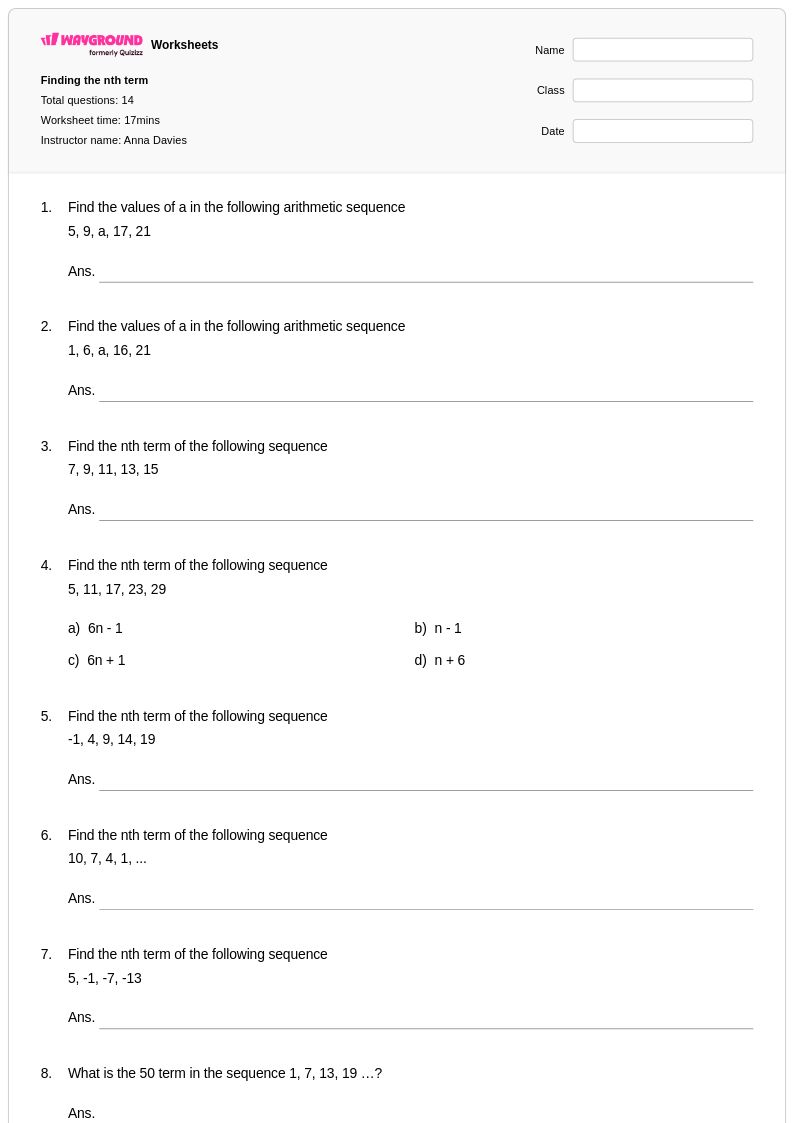
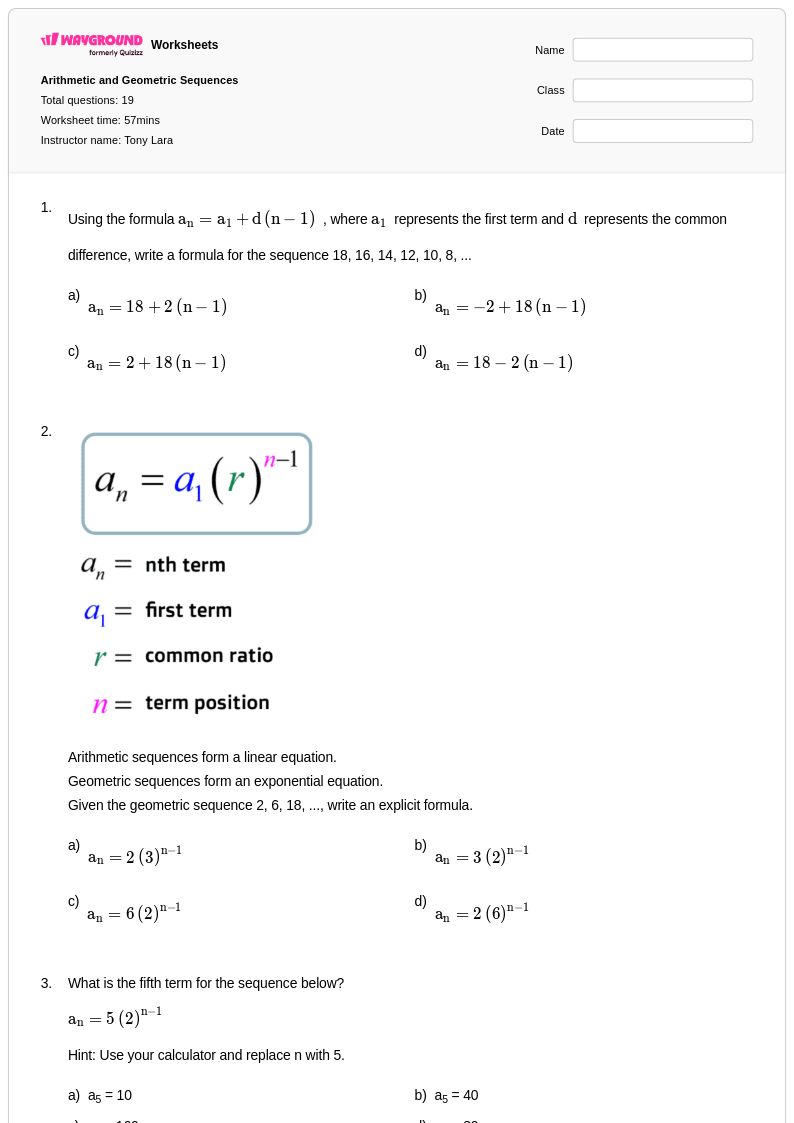
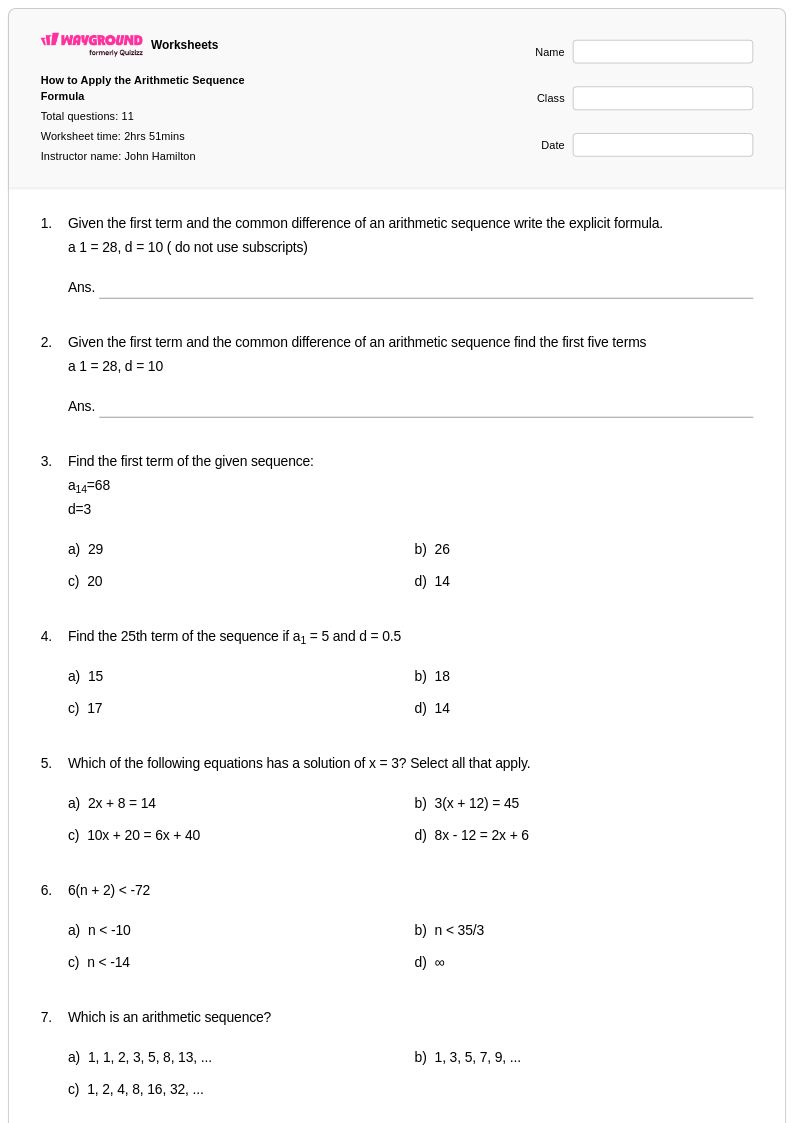
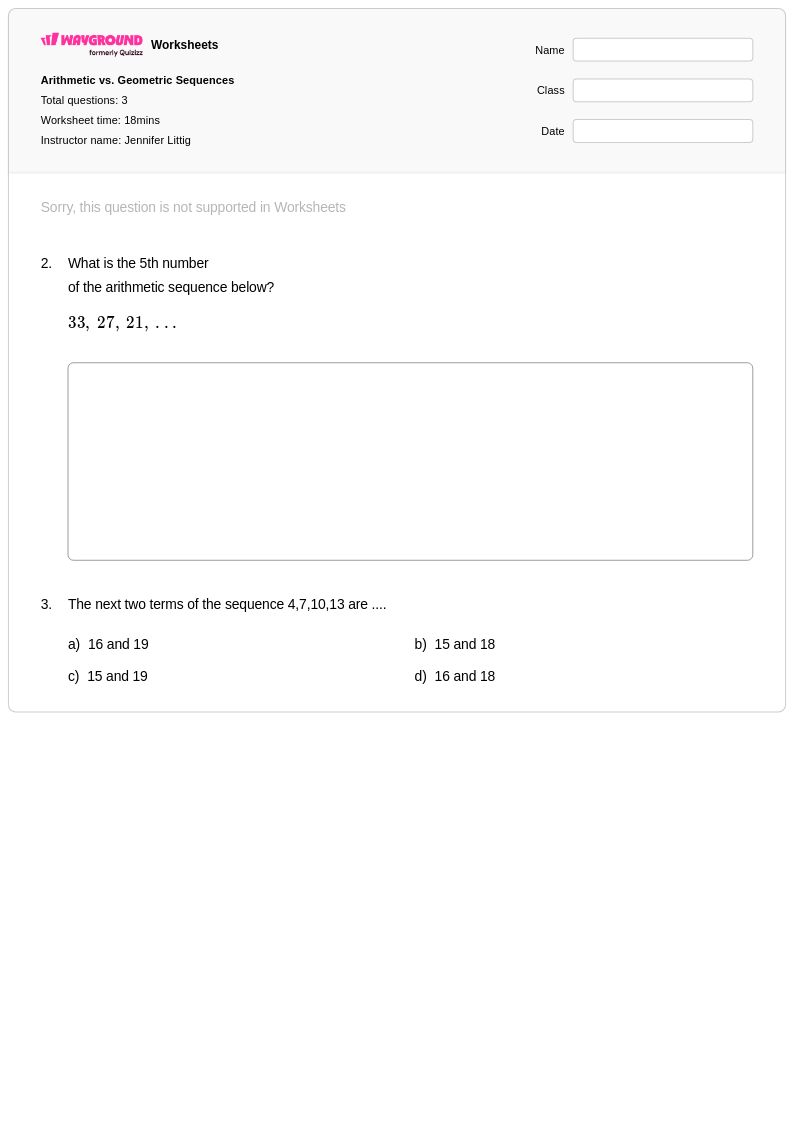
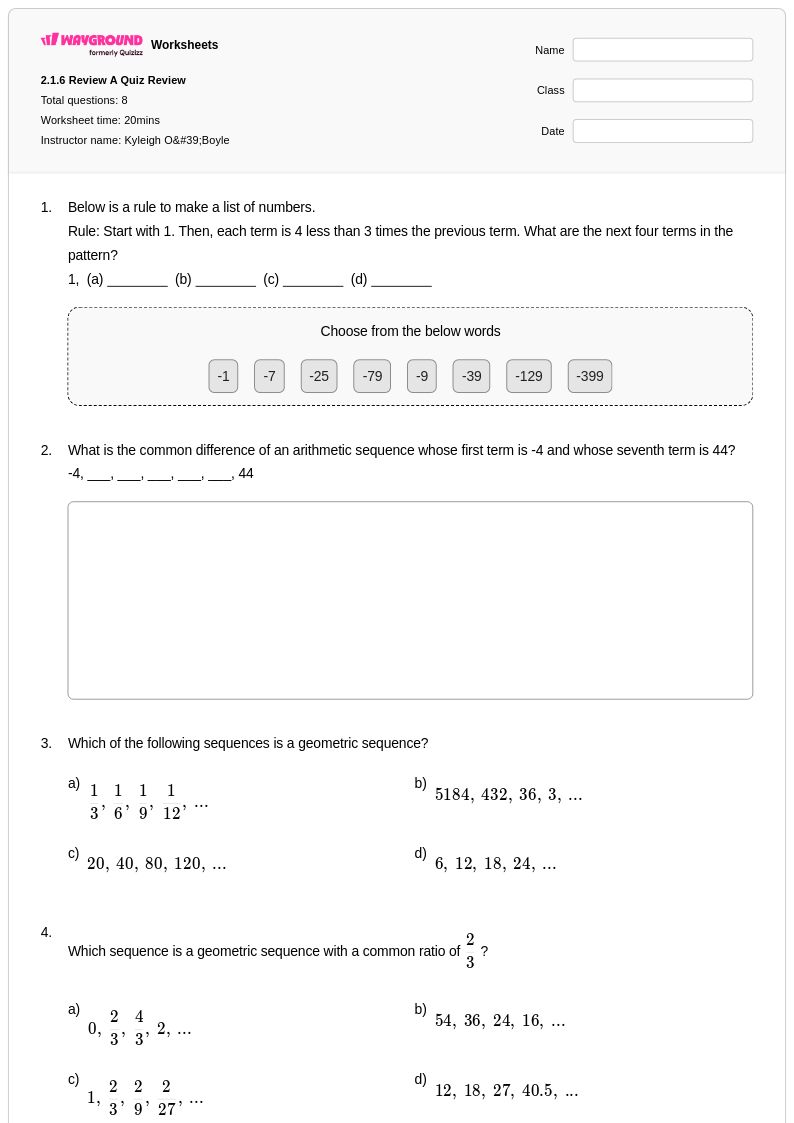
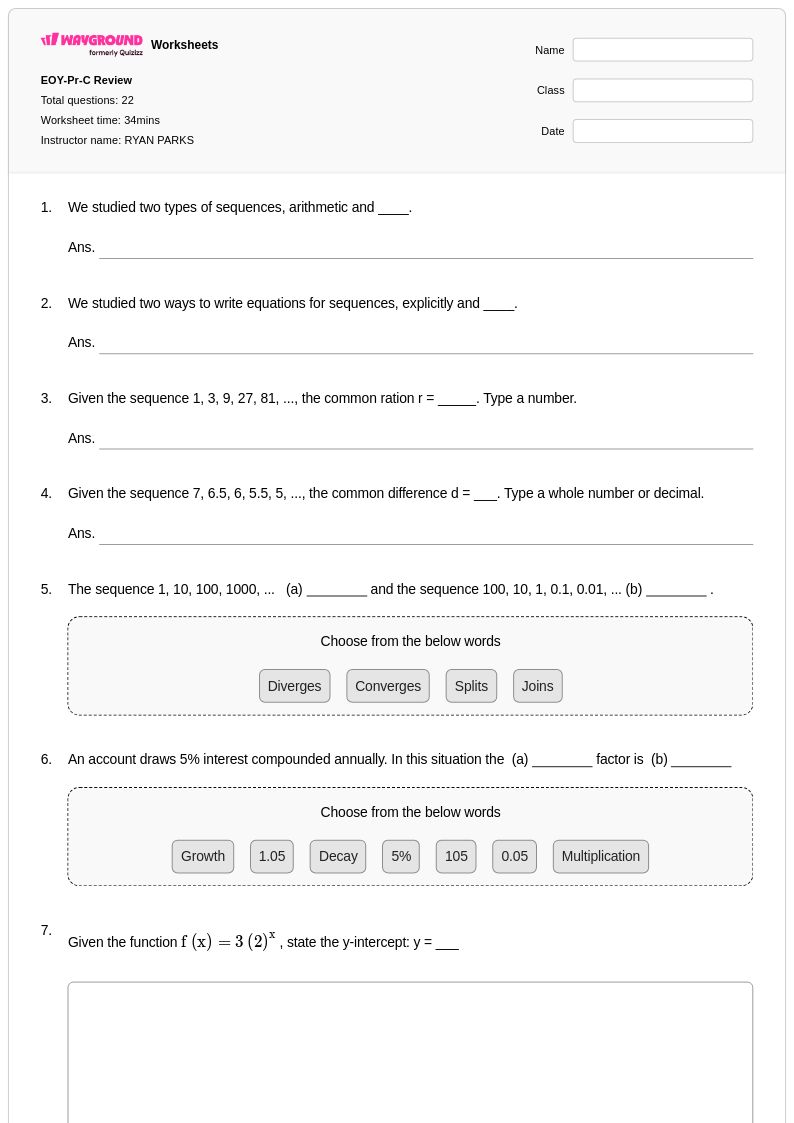
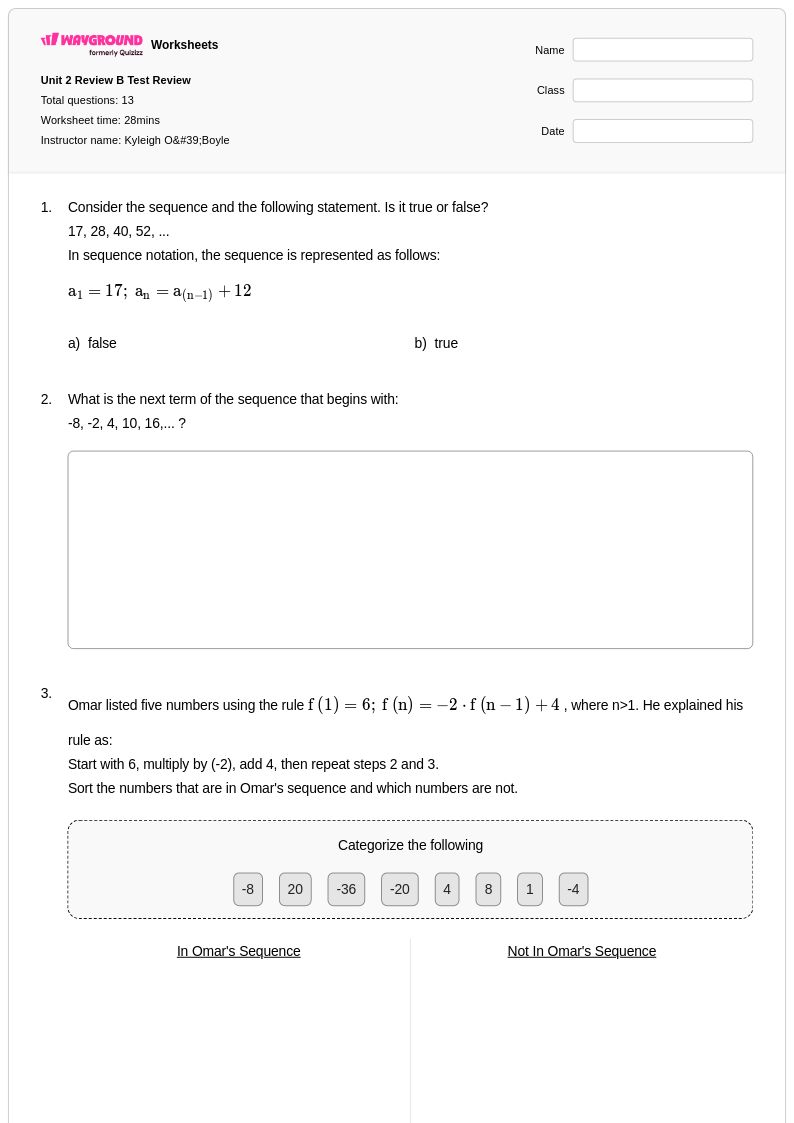
Decreasing sequences worksheets available through Wayground (formerly Quizizz) provide students with comprehensive practice in identifying, analyzing, and extending mathematical patterns that systematically reduce in value. These carefully designed practice problems strengthen critical pattern recognition skills by challenging students to determine the rule governing each sequence, calculate missing terms, and predict future values in decreasing numerical progressions. The collection includes worksheets featuring arithmetic sequences with constant differences, geometric sequences with multiplicative patterns, and more complex decreasing patterns that incorporate fractions, decimals, and algebraic expressions. Each worksheet comes with a complete answer key and is available as a free printable pdf, enabling students to work through problems systematically while developing the analytical thinking skills essential for advanced mathematical reasoning.
Wayground (formerly Quizizz) supports mathematics educators with an extensive library of millions of teacher-created decreasing sequences worksheets that can be easily located through robust search and filtering capabilities. Teachers benefit from standards-aligned resources that accommodate diverse learning needs through built-in differentiation tools, allowing for seamless customization of difficulty levels and problem types to match individual student capabilities. The platform offers flexible access to materials in both printable pdf formats for traditional classroom use and digital formats for interactive learning environments. These comprehensive worksheet collections streamline lesson planning while providing targeted resources for remediation of struggling learners, enrichment activities for advanced students, and consistent skill practice opportunities that reinforce pattern recognition concepts across various mathematical contexts.
FAQs
How do I teach decreasing sequences?
Start by making the pattern visible. Have students count backward aloud, then write the numbers down and ask: what's happening each time? Once they can articulate the rule in words ('subtract 4 each time'), move to written sequences with missing terms. Arithmetic sequences with constant differences are the natural entry point; geometric decreasing sequences (where each term is multiplied by a fraction) come later, after students are comfortable identifying rules from the numbers alone.
What exercises help students practice decreasing sequences?
The most effective practice mixes three task types: identifying the rule from a given sequence, filling in missing terms, and extending a sequence several steps forward. Wayground's decreasing sequences worksheets cover all three, and include arithmetic sequences, geometric sequences, and patterns involving fractions and decimals — so students aren't just practicing one flavor of decrease.
What mistakes do students commonly make with decreasing sequences?
Two errors come up constantly. First, students confuse the direction of change — they find the difference between terms correctly but then add instead of subtract when extending the sequence. Second, with geometric sequences, students try to apply a constant difference when the pattern is actually multiplicative. A quick diagnostic: give students a sequence that decreases by halving and one that decreases by a fixed amount, and see whether they treat them the same way.
How do I use Wayground's decreasing sequences worksheets in my class?
You can run these as a digital quiz hosted on Wayground — students work through the problems on-screen and results come back to you automatically. If you'd rather go paper, every worksheet is available as a printable PDF, and you can grade submitted work using the Wayground for Teachers app by scanning or capturing student responses. Either way, a complete answer key is included so you're never hunting for solutions.
How are decreasing sequences aligned to Common Core math standards?
Common Core builds pattern work progressively: students in early grades count backward and identify simple rules, then move toward analyzing and generating number patterns in Grade 4, and eventually extend that thinking to algebraic expressions and functions in middle school. Decreasing sequences sit squarely in this progression — they're where students first practice articulating a rule precisely enough to predict any term, which is the conceptual move that later underpins linear functions with negative slopes.
How can I differentiate decreasing sequences practice for mixed-ability classes?
For students who struggle, Wayground's reduced answer choices accommodation lowers the cognitive load on multiple-choice items, and the read-aloud feature helps students who have difficulty parsing written number patterns independently. For layout-based accessibility, you can generate an alternate version of the same worksheet with a dyslexia-friendly font or larger text — same problems, adjusted presentation. Advanced students can be pointed toward the worksheet variants that include fractions, decimals, and multi-step patterns without any of this being visible to the rest of the class.