Free Printable Dichotomous Key Worksheets for Year 7
Year 7 dichotomous key worksheets from Wayground provide free printables and practice problems with answer keys to help students master biological classification and species identification skills through hands-on learning activities.
Explore printable Dichotomous Key worksheets for Year 7
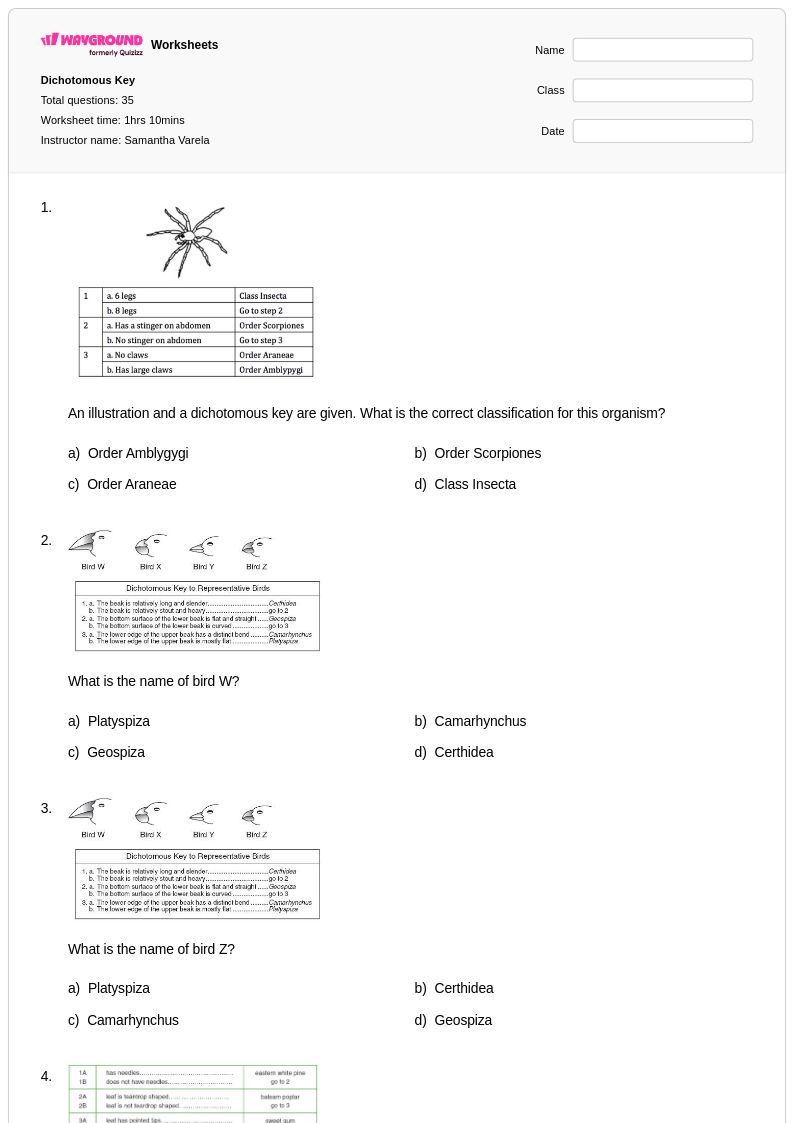
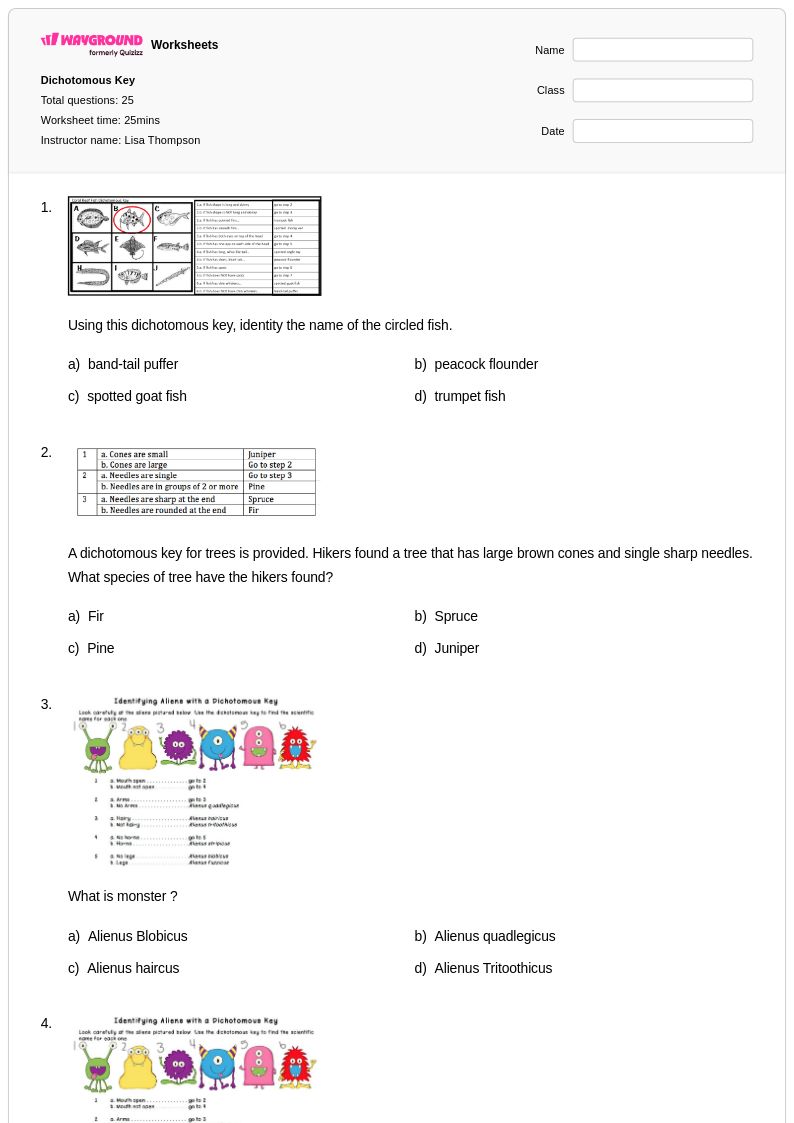
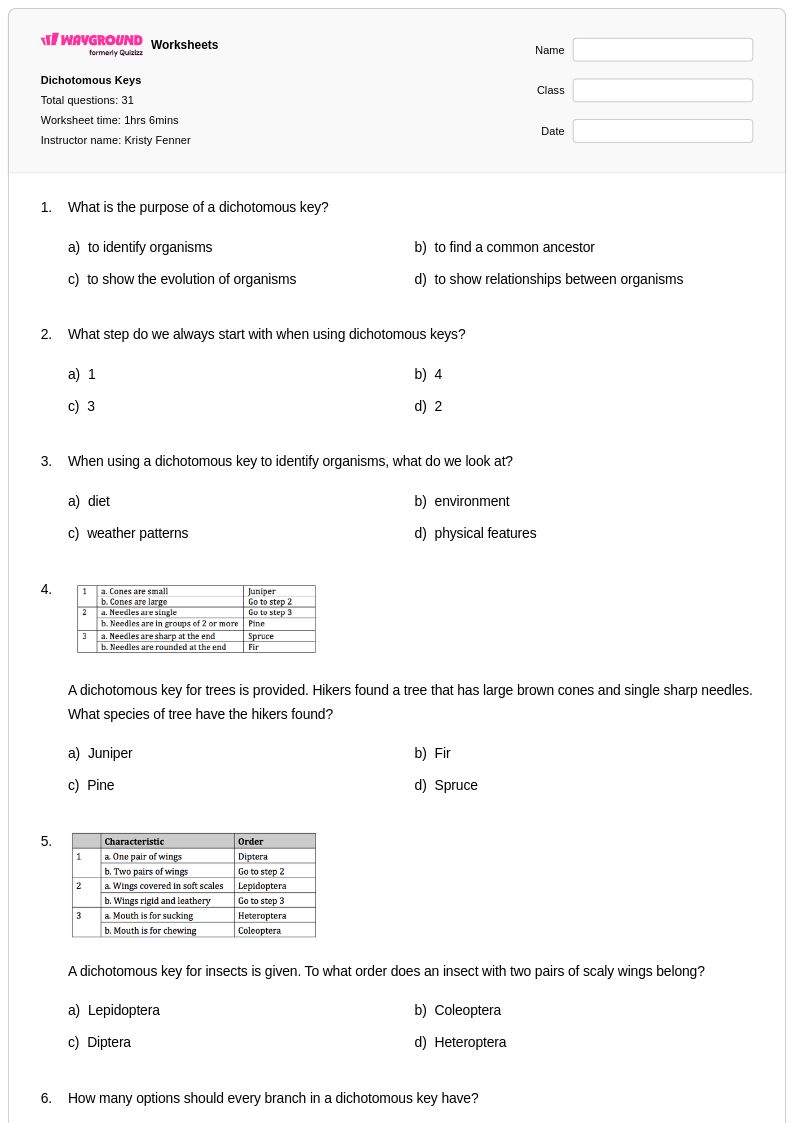
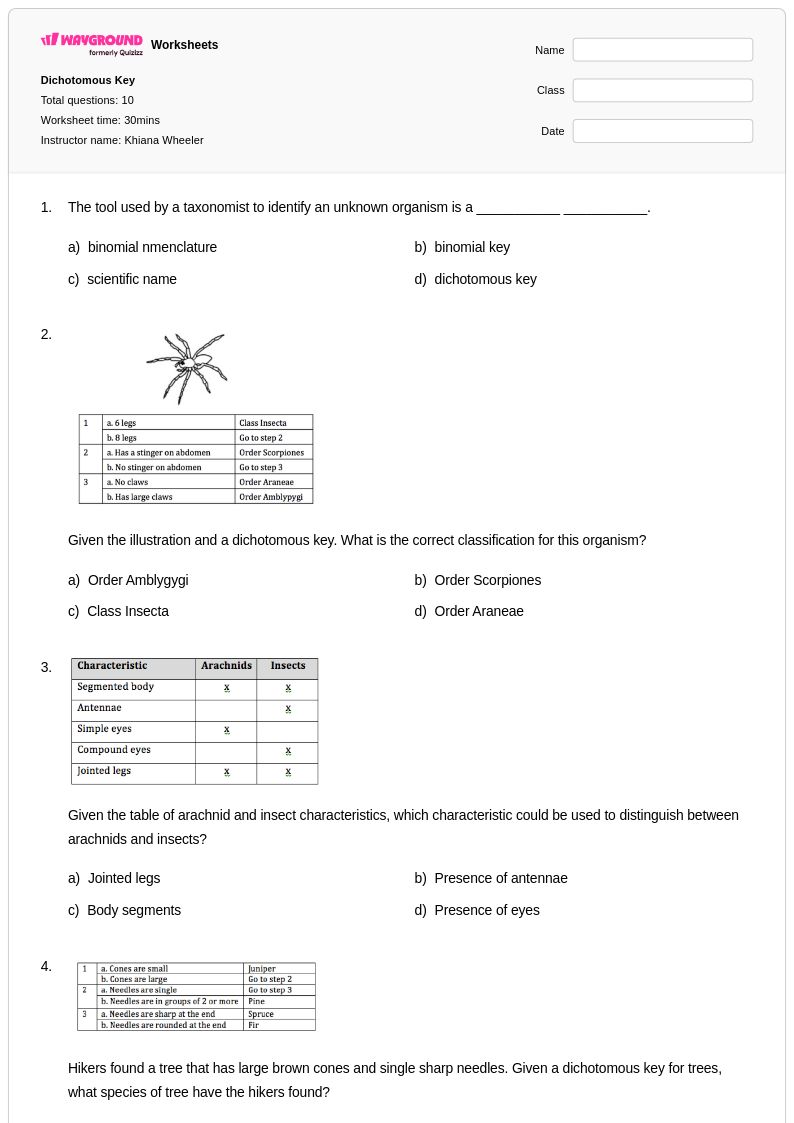
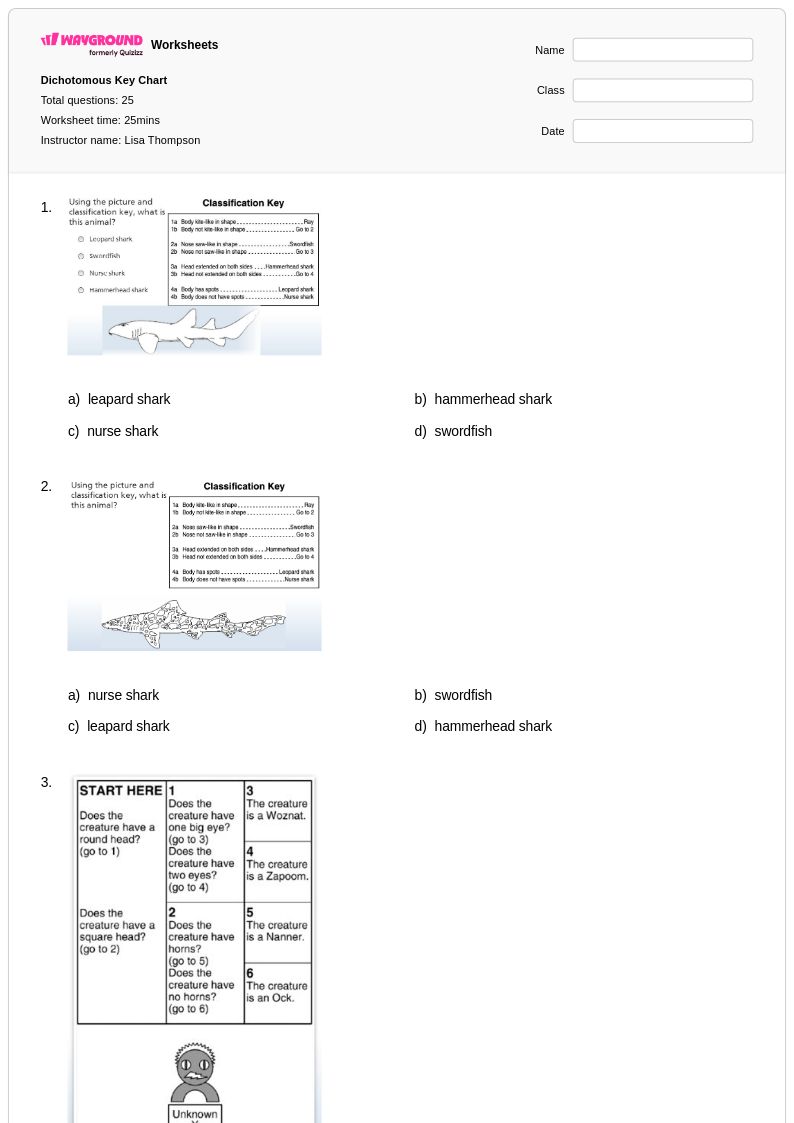
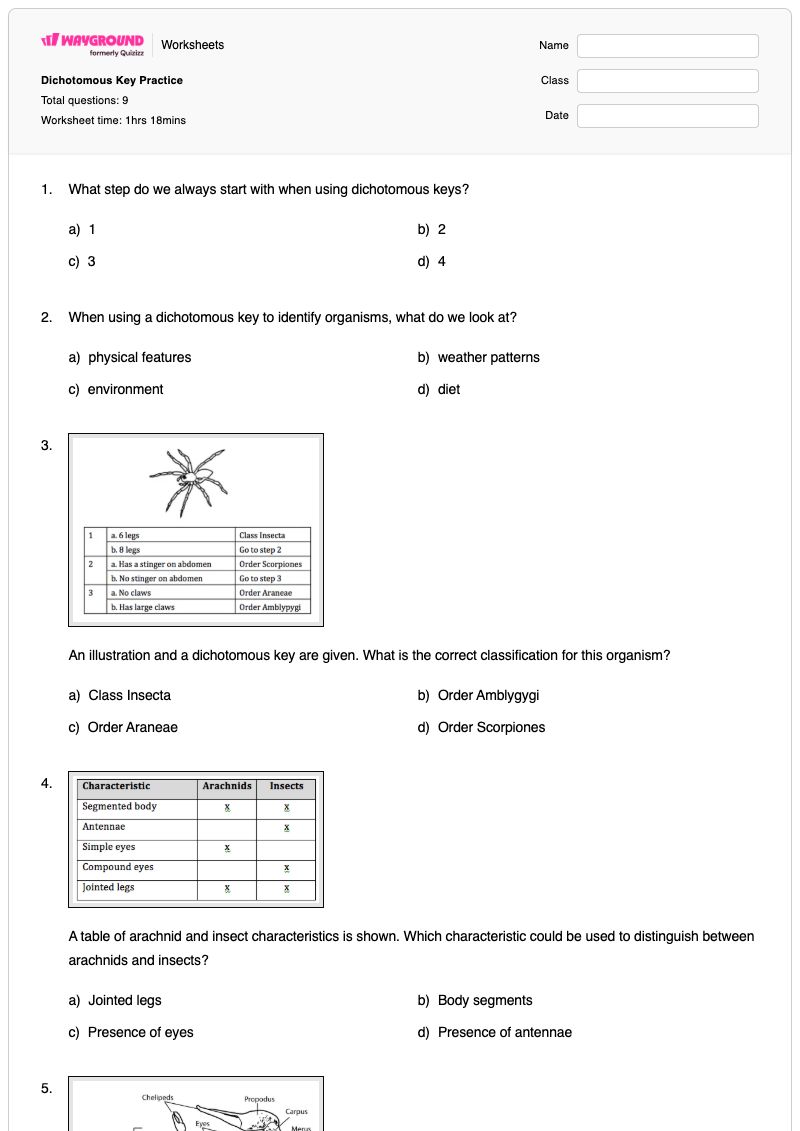
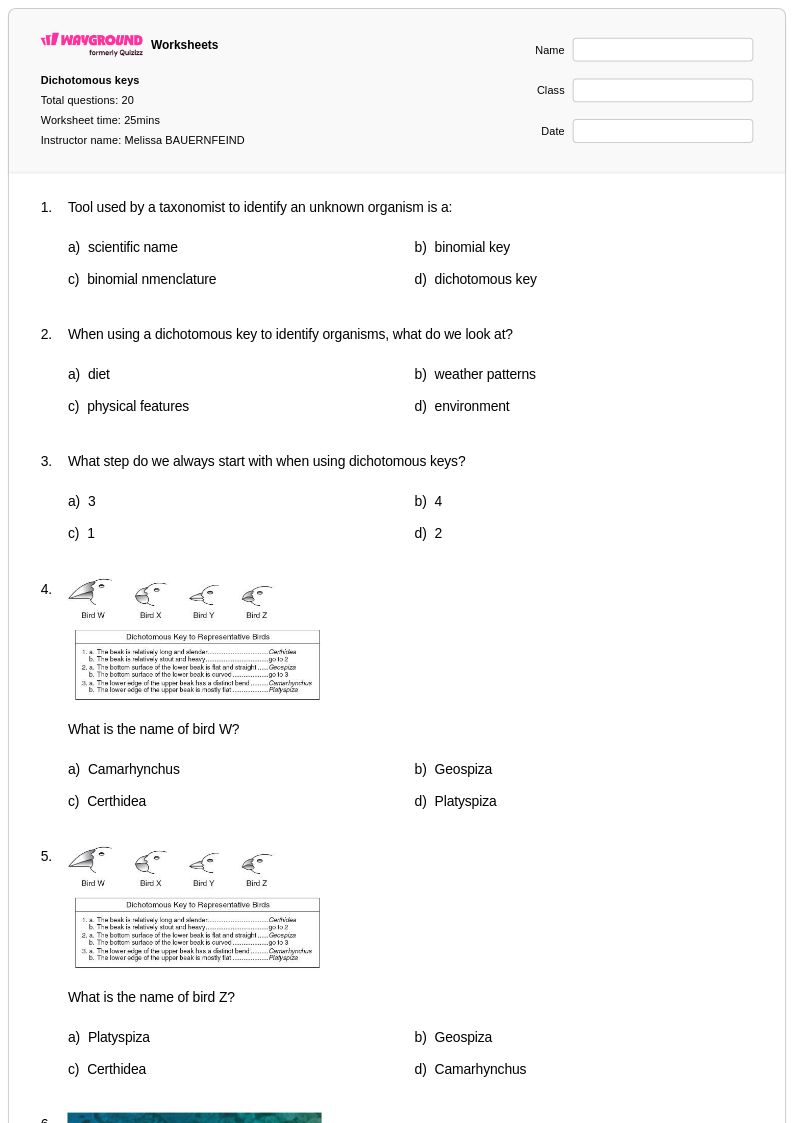
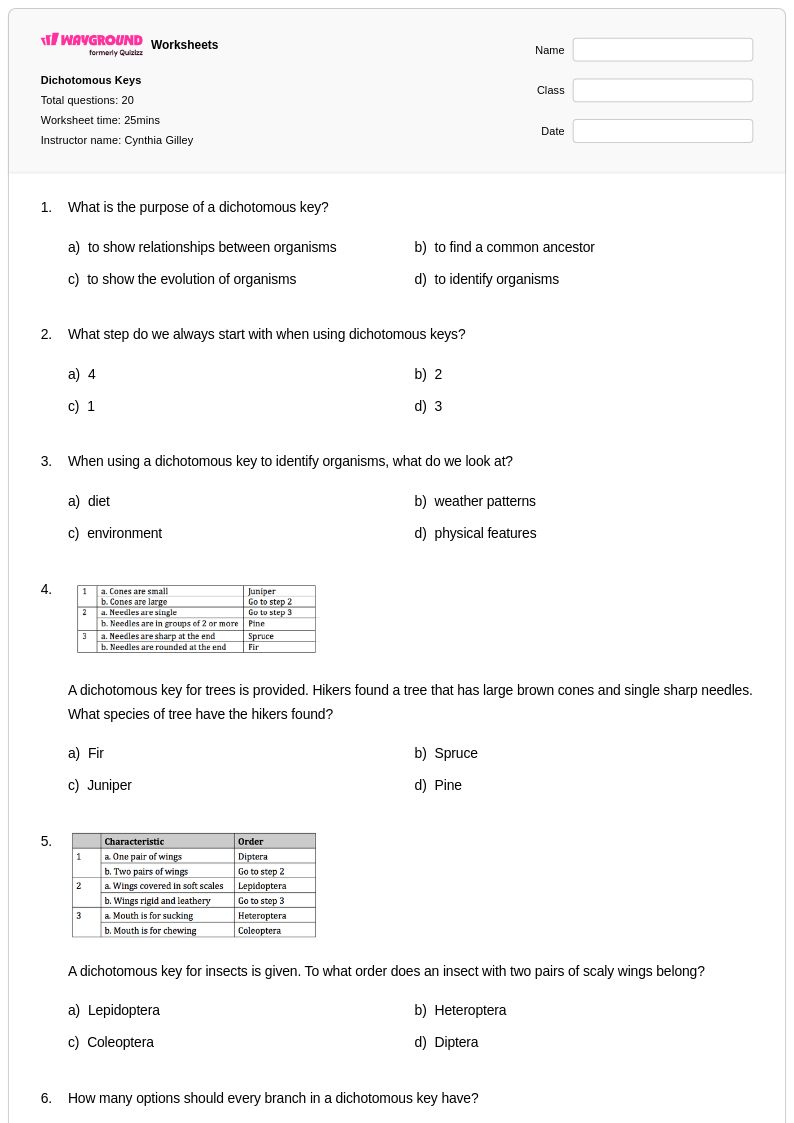
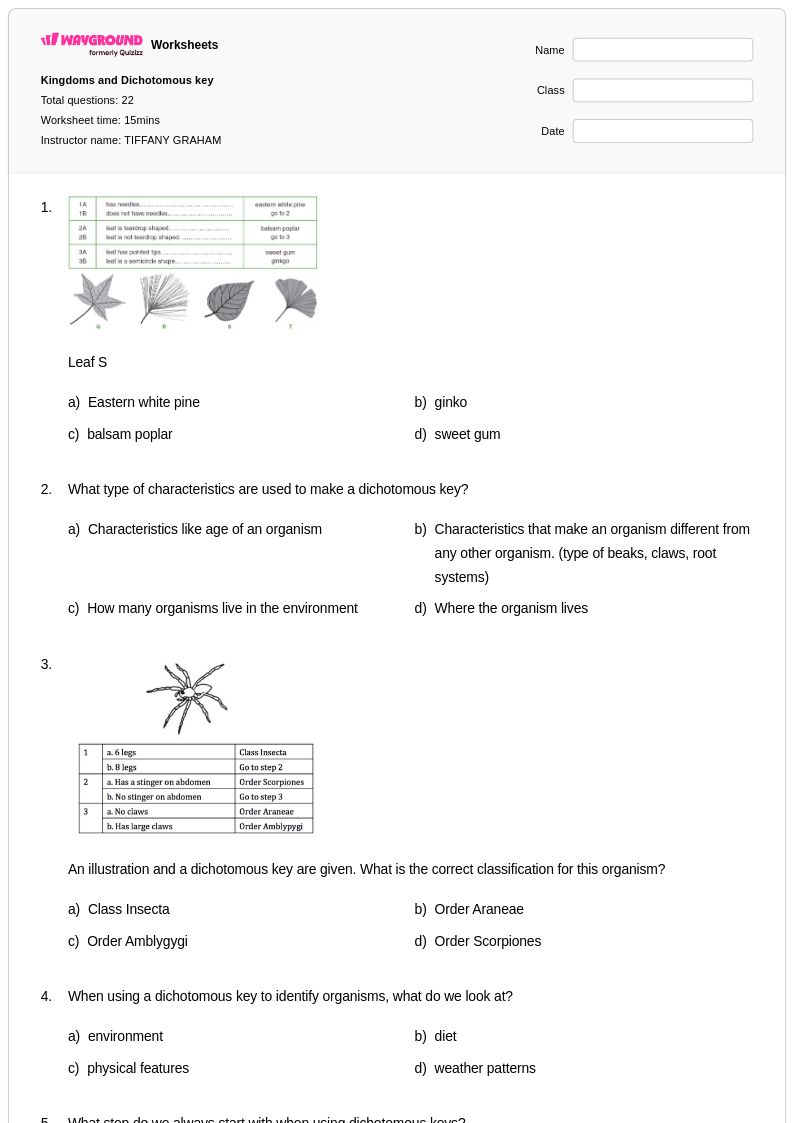
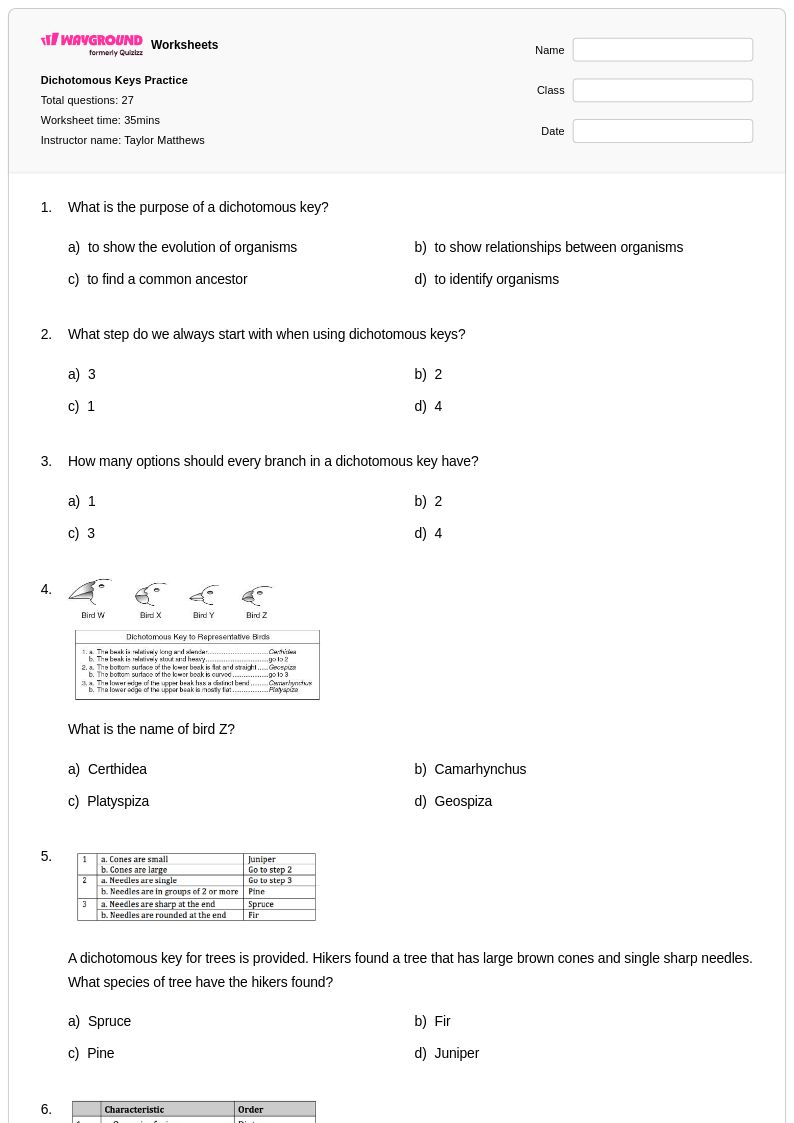
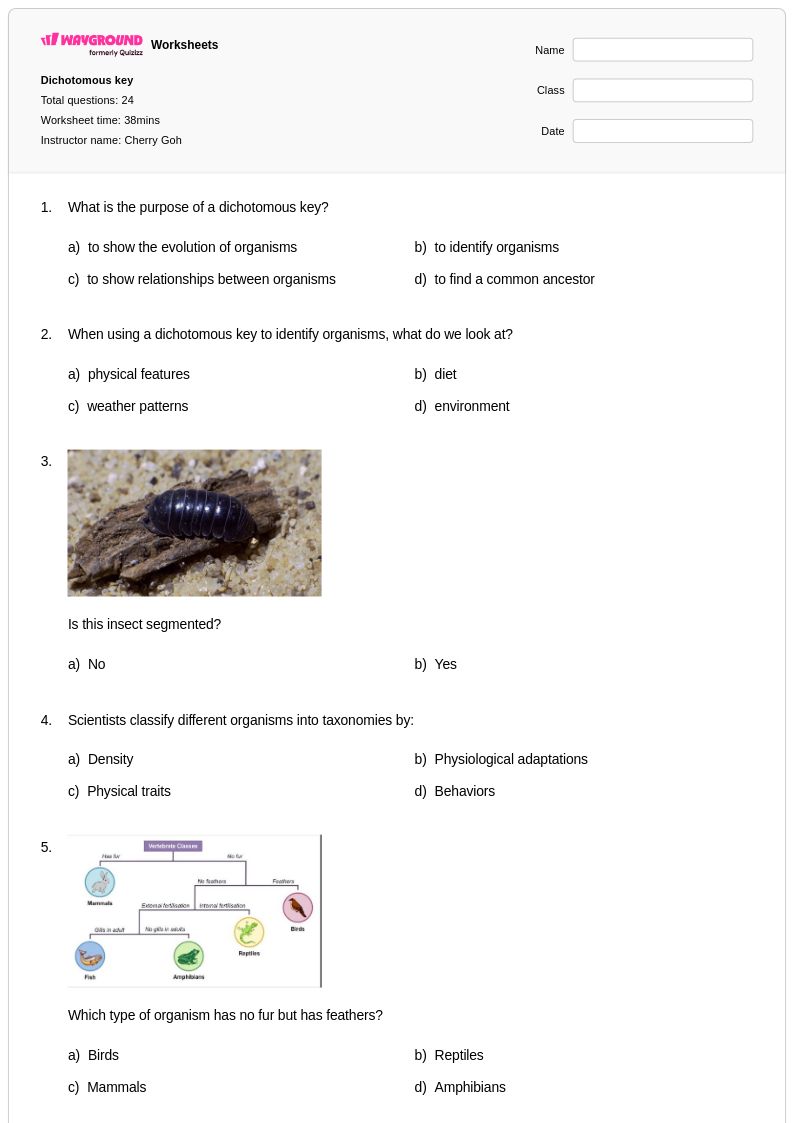
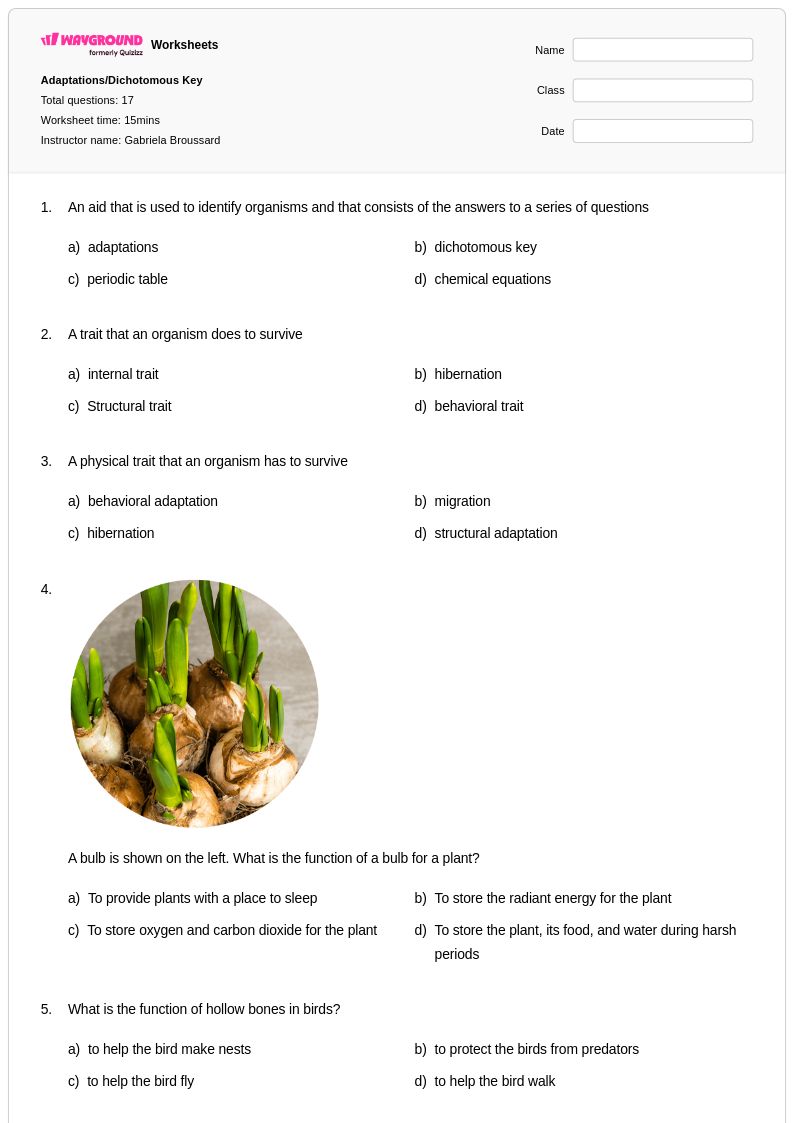
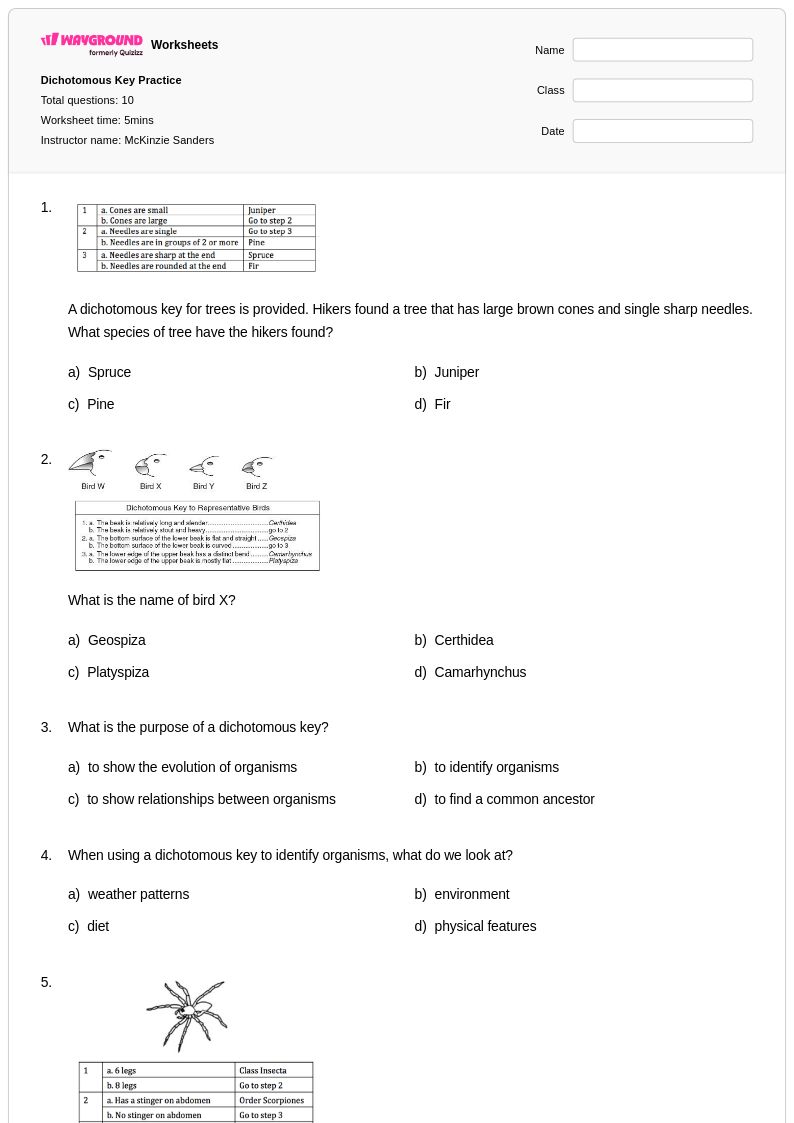
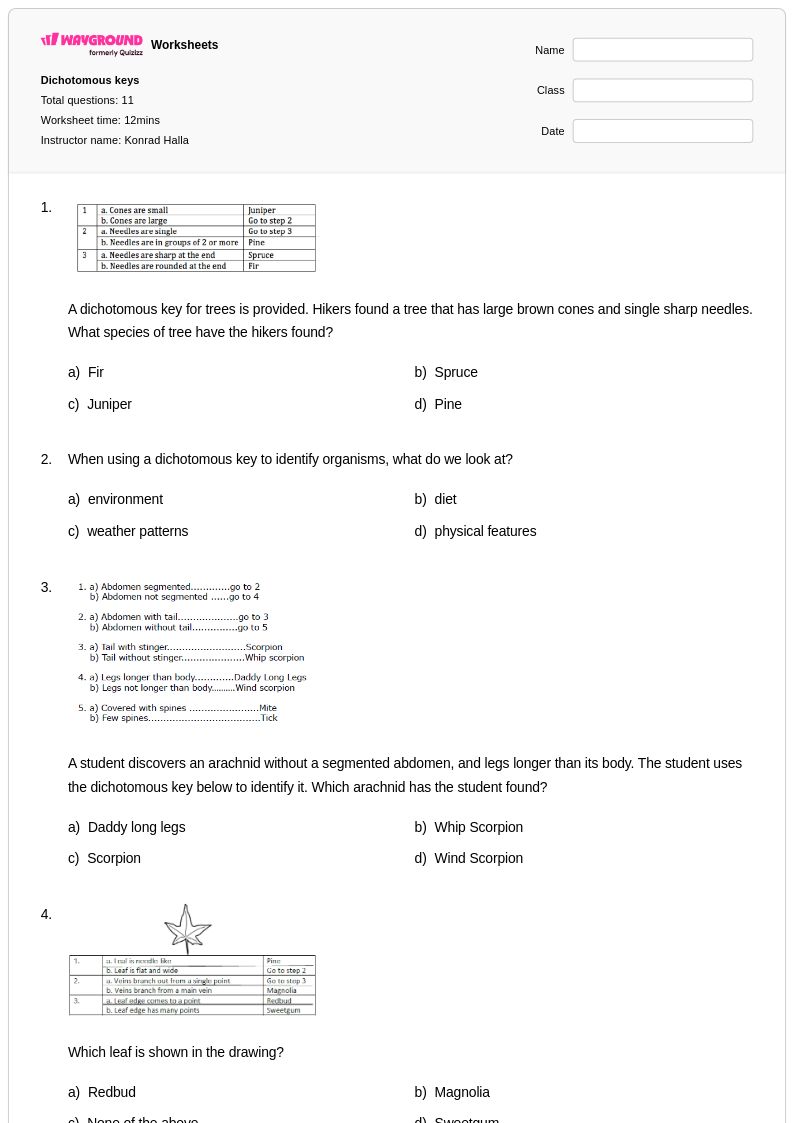
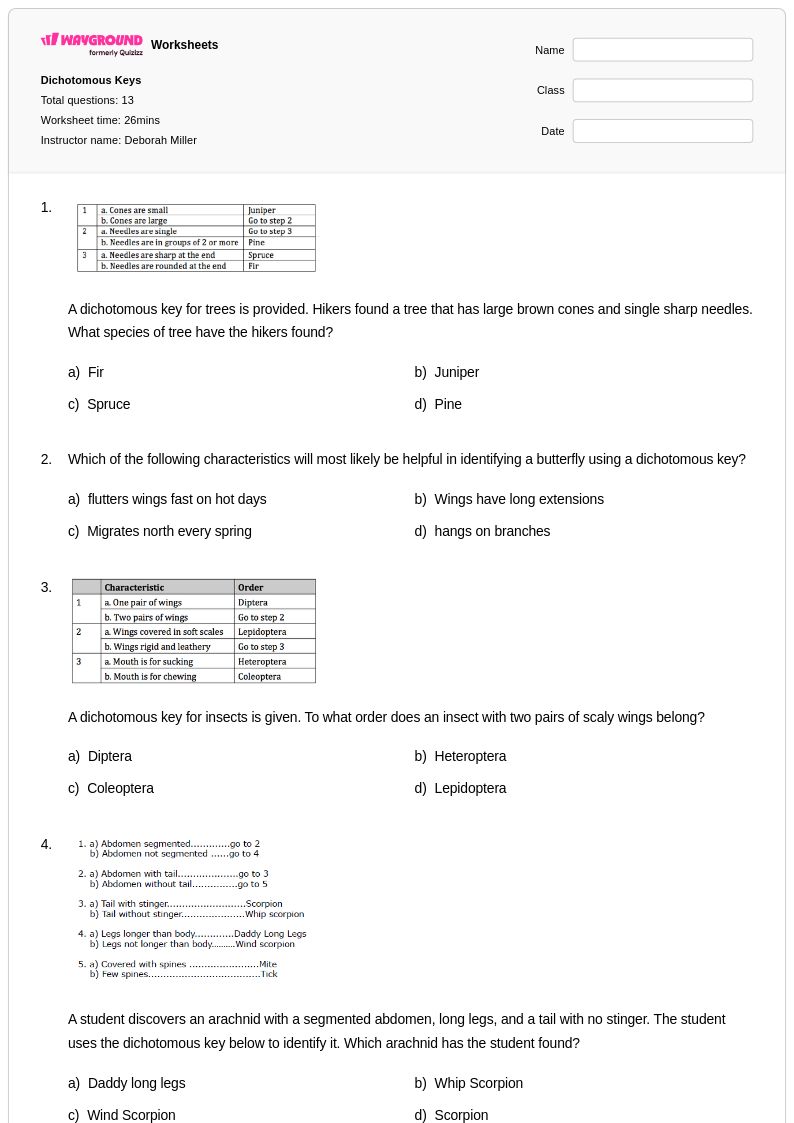
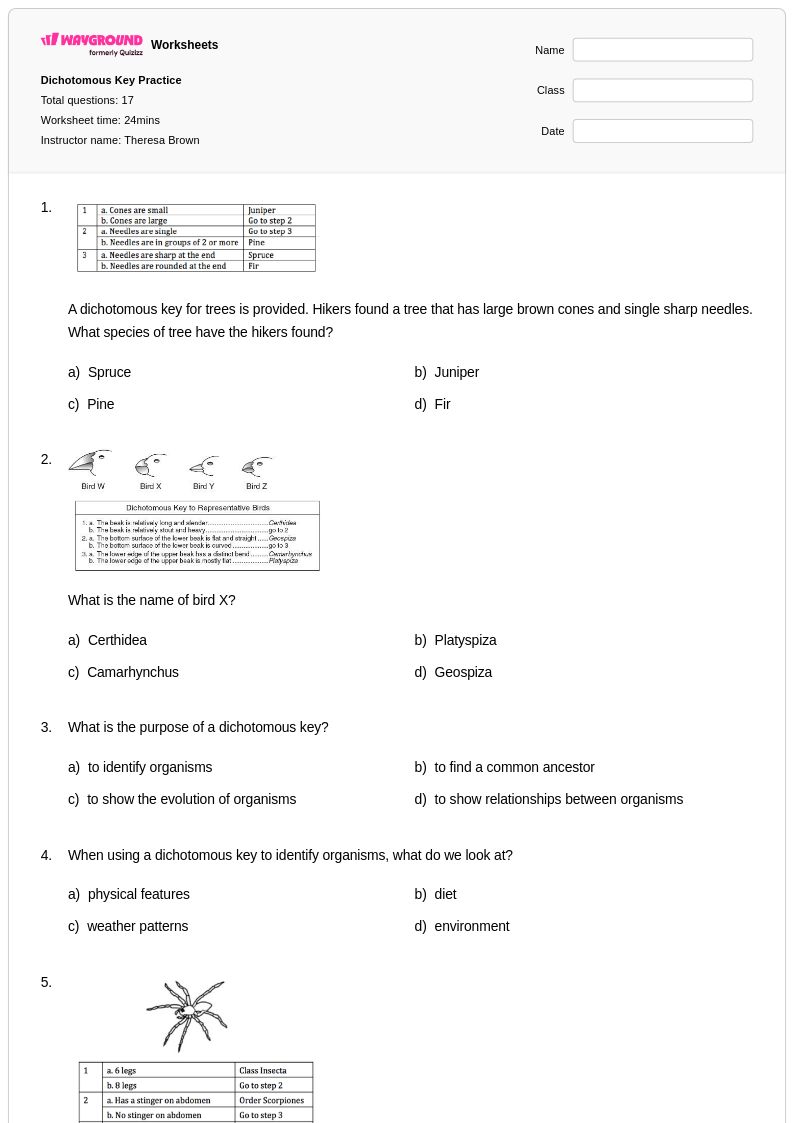
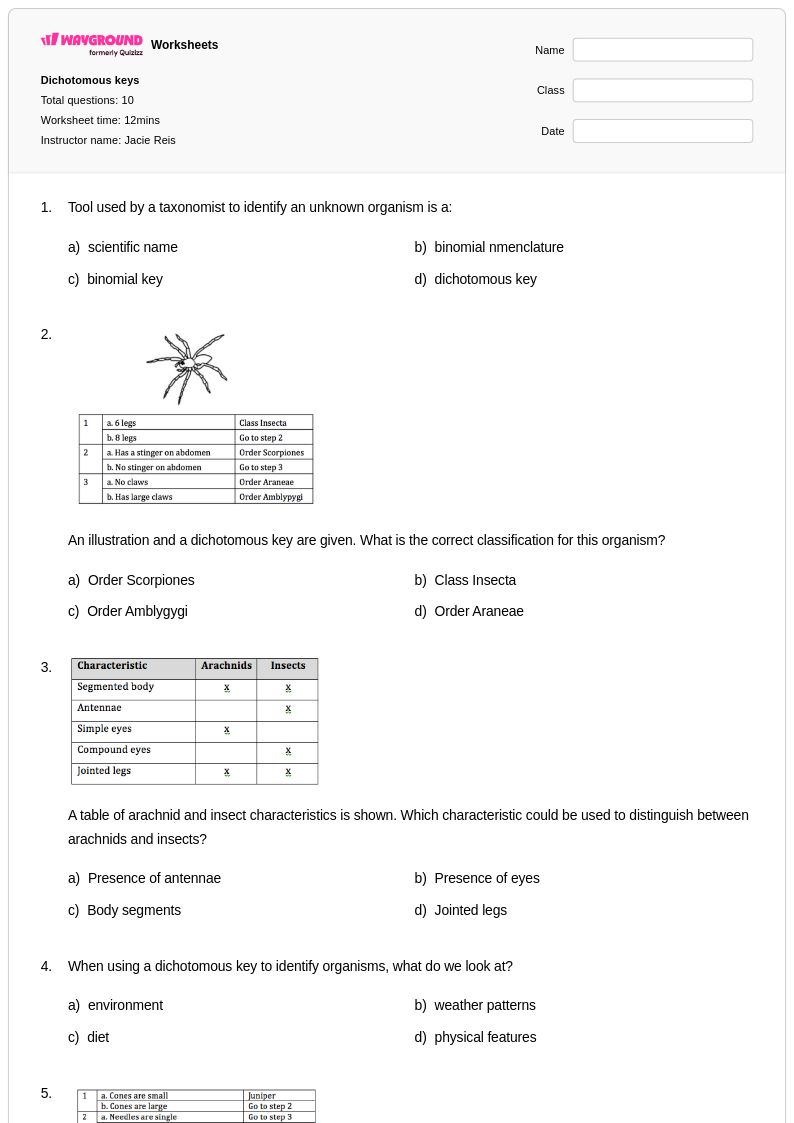
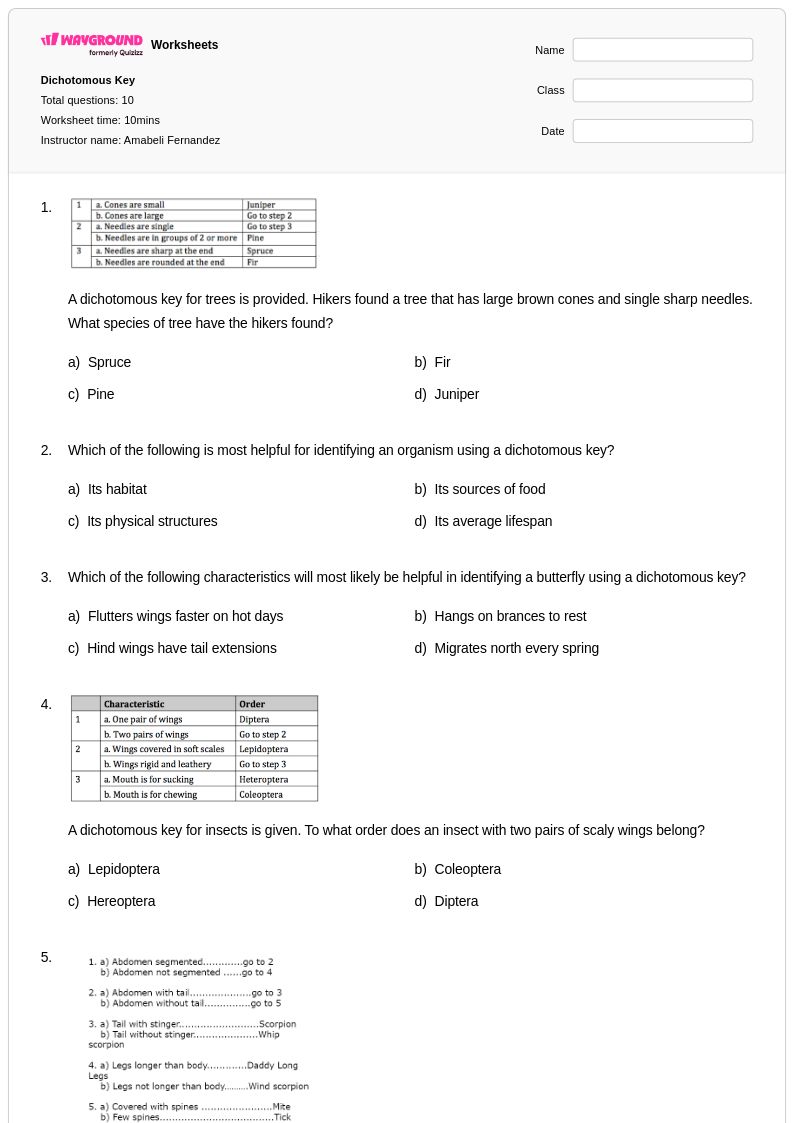
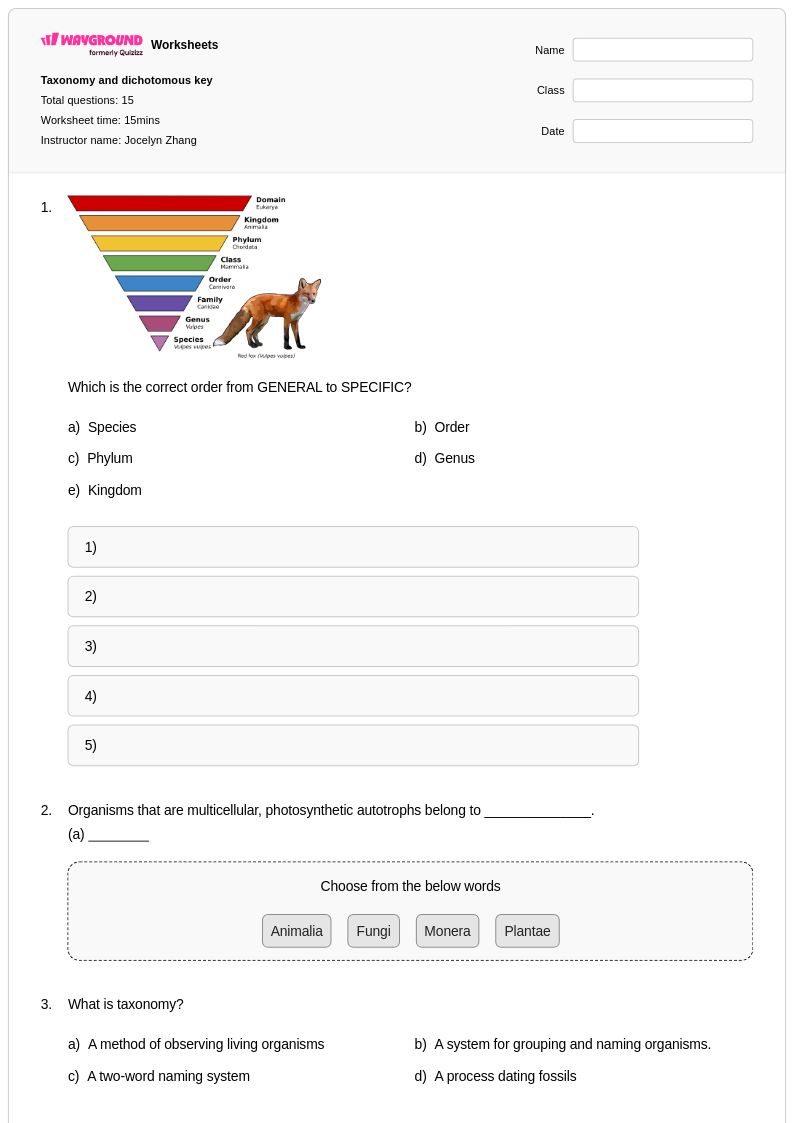
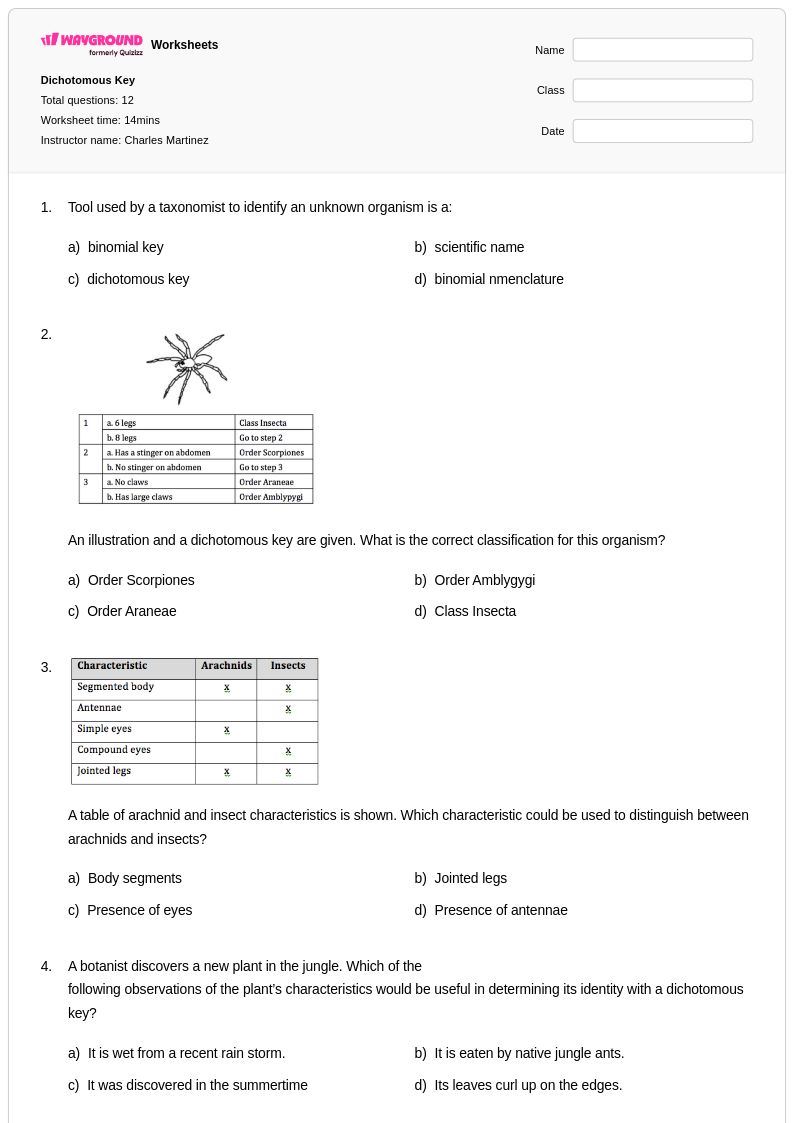
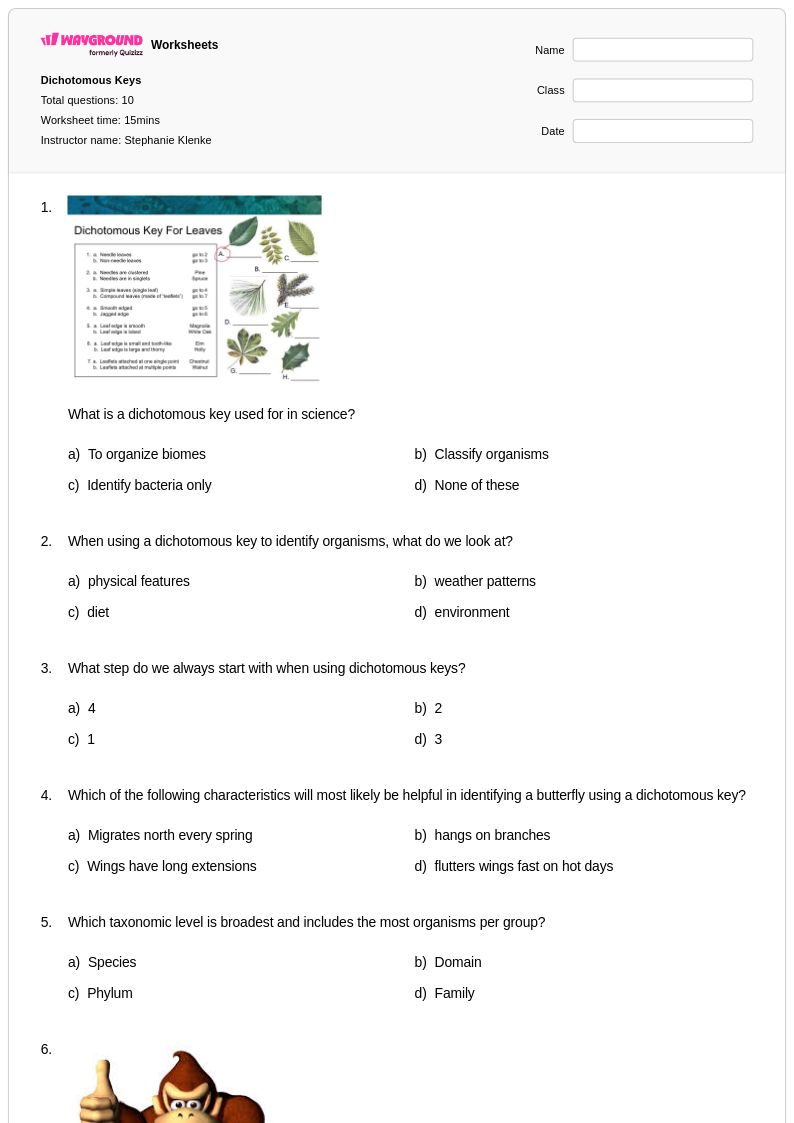
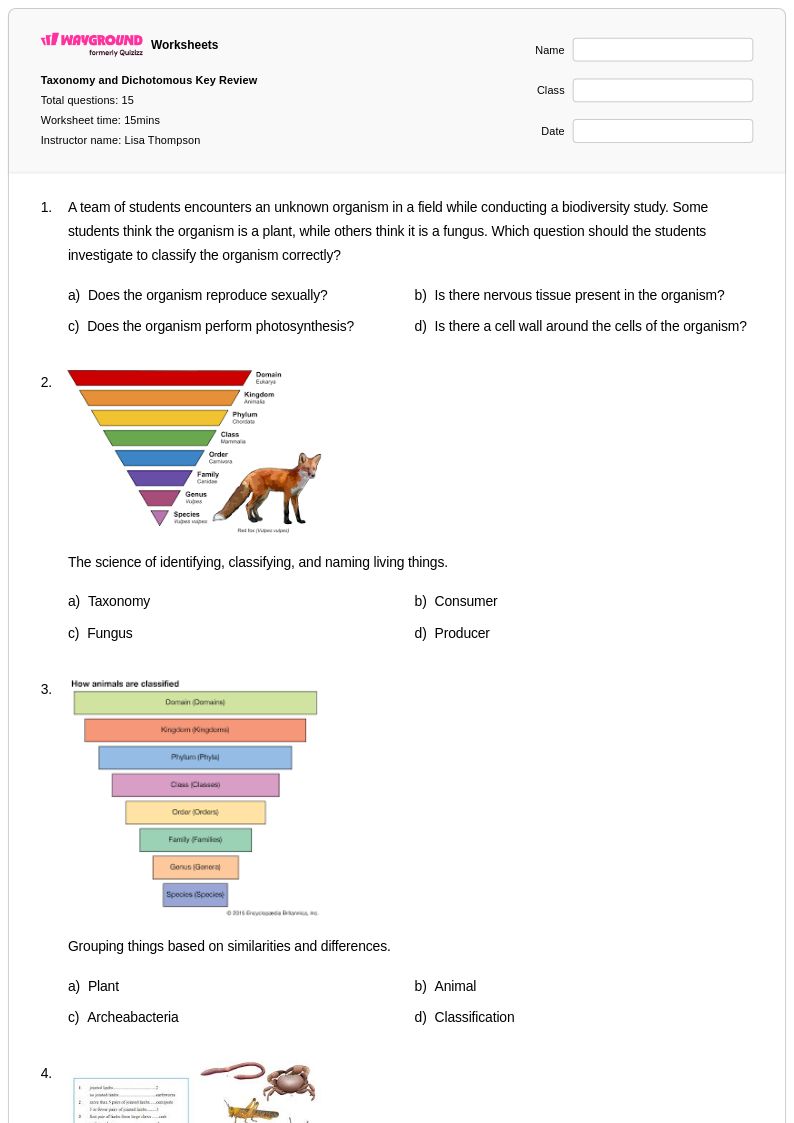
Dichotomous key worksheets for Year 7 students available through Wayground (formerly Quizizz) provide essential practice in biological classification and identification skills. These comprehensive resources guide seventh-grade learners through the systematic process of using branching identification keys to classify organisms, minerals, and other biological specimens based on their observable characteristics. Students develop critical thinking abilities as they navigate through paired statements and make logical decisions at each branch point, strengthening their understanding of taxonomic relationships and scientific observation techniques. The worksheet collections include detailed answer keys that allow students to verify their classification pathways, while free printable versions ensure accessibility for diverse learning environments. Practice problems range from simple plant and animal identification exercises to more complex scenarios involving microscopic organisms, helping students master this fundamental biological tool used by scientists worldwide.
Wayground (formerly Quizizz) supports educators with an extensive library of millions of teacher-created dichotomous key resources that can be easily searched and filtered by specific organisms, difficulty levels, and curriculum standards. Teachers benefit from robust differentiation tools that allow customization of worksheet complexity, enabling them to provide appropriate challenges for students at varying skill levels within the same Year 7 classroom. The platform's flexible format options include both digital interactive versions and traditional pdf printables, accommodating different instructional preferences and technology availability. These comprehensive collections streamline lesson planning by offering ready-to-use materials for skill practice, remediation support for students struggling with classification concepts, and enrichment opportunities for advanced learners ready to tackle more sophisticated identification challenges, all while maintaining alignment with established science education standards.
FAQs
How do I teach students to use a dichotomous key?
Start by introducing the concept of paired choices using familiar, non-biological examples — such as sorting classroom objects by shape or color — before applying the same logic to organisms. Once students understand the branching structure, walk them through a simple plant or animal key as a class, modeling how to read each couplet, observe the organism's features, and follow the correct pathway. Gradually release responsibility by having students work through keys independently, emphasizing that accuracy depends on careful observation of morphological traits rather than guessing.
What exercises help students practice using dichotomous keys?
Effective practice exercises include guided worksheets where students follow a pre-built key to identify a set of organisms, as well as reverse tasks where they construct their own key from a group of specimens. Moving from simple plant and animal identification to more complex scenarios involving microscopic organisms progressively builds the analytical skills students need for biological fieldwork and lab investigations. Repeated practice with varied organism sets helps students internalize the logic of sequential, binary decision-making.
What mistakes do students commonly make when using a dichotomous key?
The most common error is skipping steps — students often guess at an identification rather than working through every couplet in sequence. Another frequent mistake is misreading paired alternatives, particularly when descriptive language is technical or when two traits appear visually similar. Students also struggle when they encounter an unfamiliar term for a morphological feature, which is why pre-teaching key vocabulary before students work through identification exercises significantly reduces errors.
How can I differentiate dichotomous key activities for students at different skill levels?
For struggling learners, simplify the key by reducing the number of organisms or providing labeled diagrams that highlight the specific features students need to observe at each step. Advanced learners can be challenged with complex keys involving microscopic organisms or with tasks that require them to build their own classification trees from scratch. On Wayground, teachers can apply individual accommodations such as read-aloud support for students who need text read to them, or reduced answer choices to lower cognitive load for students who need additional scaffolding.
How do I use Wayground's dichotomous key worksheets in my classroom?
Wayground's dichotomous key worksheets are available as downloadable printable PDFs for traditional classroom use and in digital interactive formats for technology-integrated environments, giving teachers flexibility to assign them as in-class practice, homework, or lab preparation. Teachers can also host the worksheets as a quiz directly on Wayground, making it easy to collect and review student responses in one place. Each worksheet includes a complete answer key, so teachers can distribute materials for independent work or self-checking without additional preparation.
How do dichotomous keys connect to broader biology curriculum goals?
Dichotomous keys are a foundational tool in biological taxonomy, directly supporting curriculum goals around classification systems, organism identification, and scientific observation skills. Proficiency with keys prepares students for fieldwork and laboratory investigations where identifying specimens accurately is essential. The logical, step-by-step reasoning required also reinforces broader scientific thinking skills, making dichotomous key practice a cross-cutting competency within life science courses.