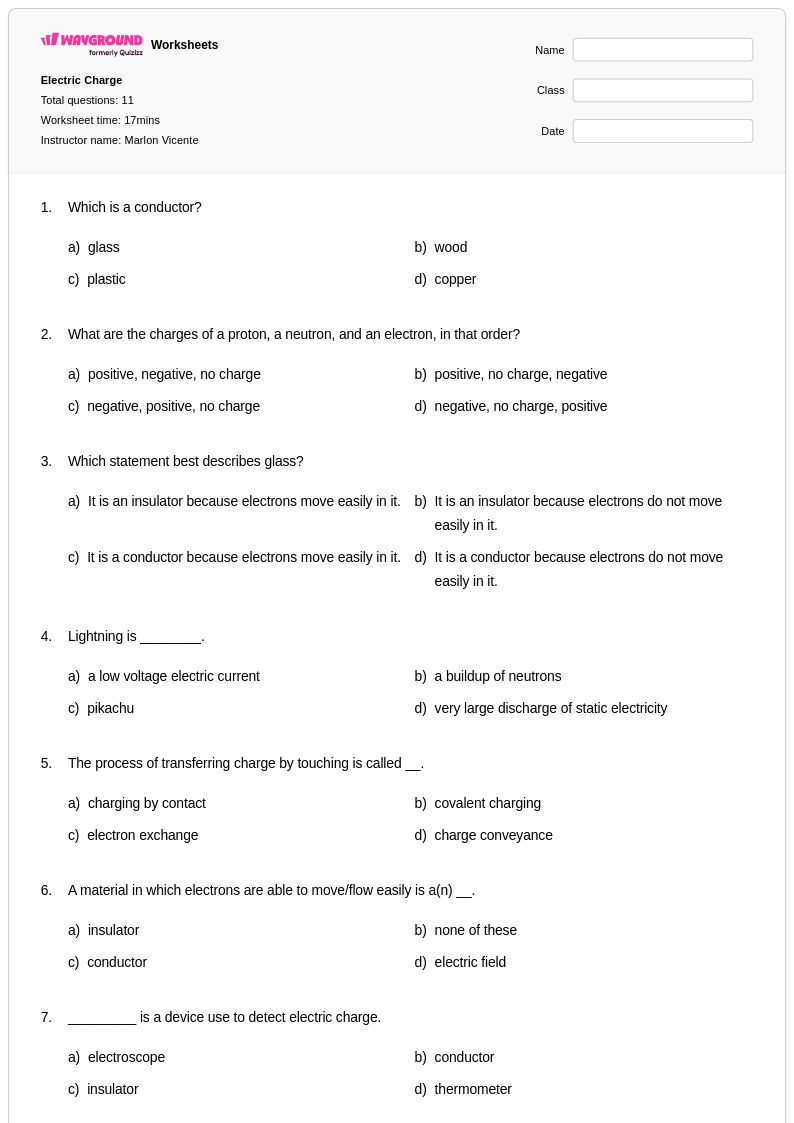
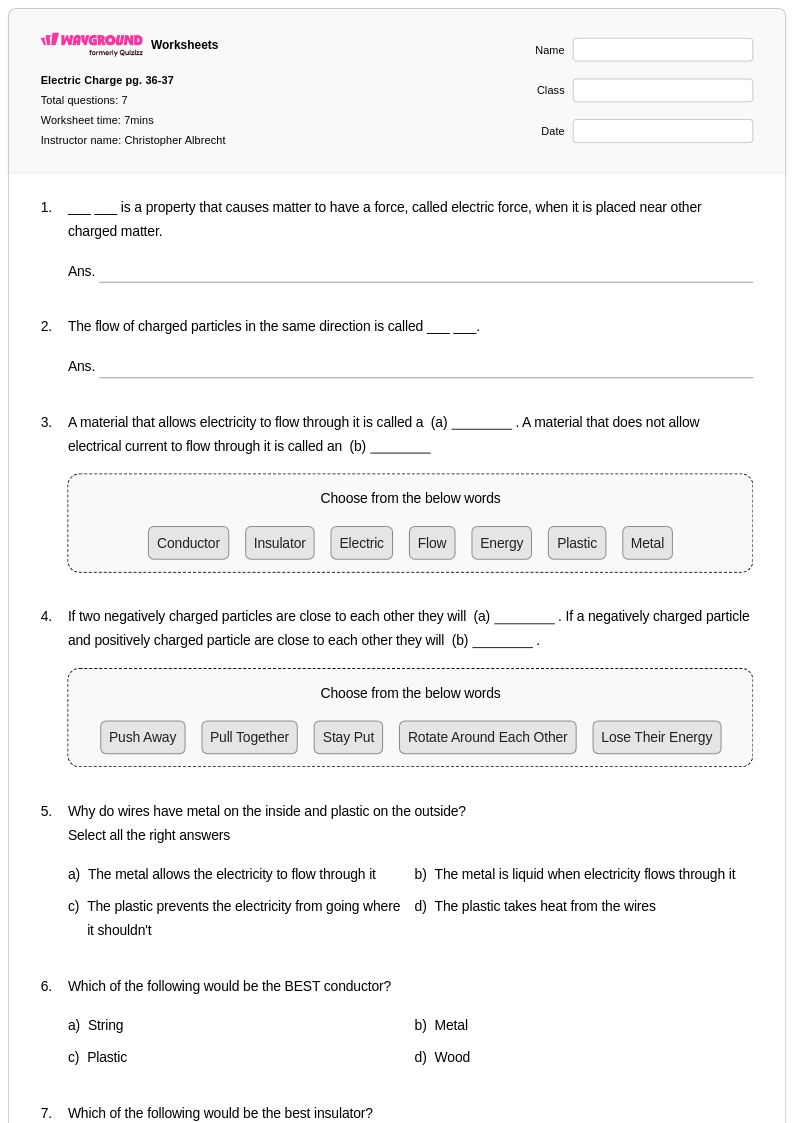
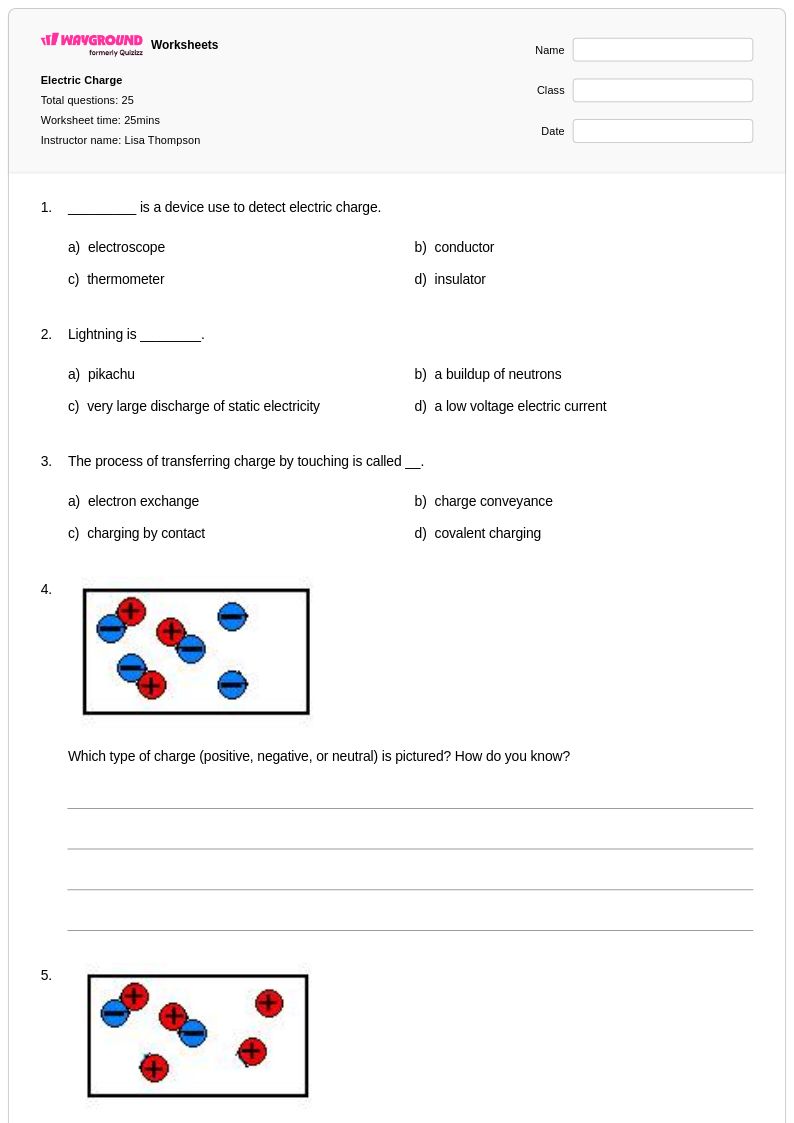
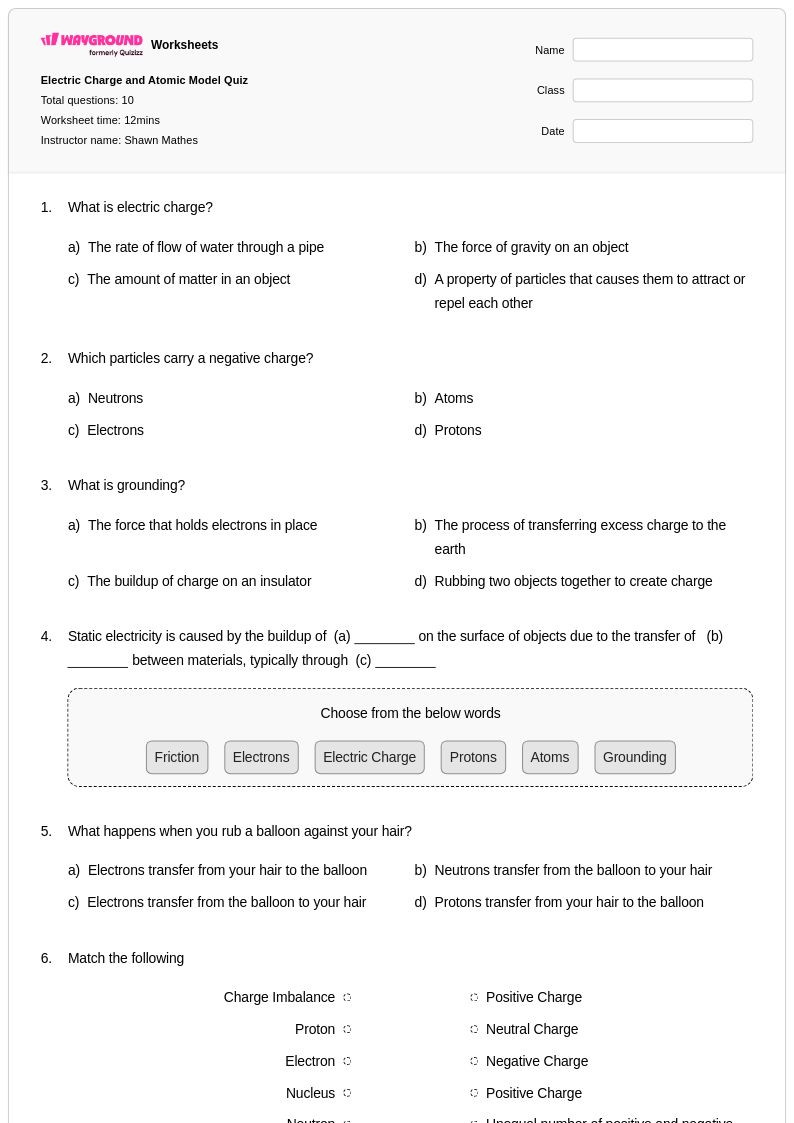
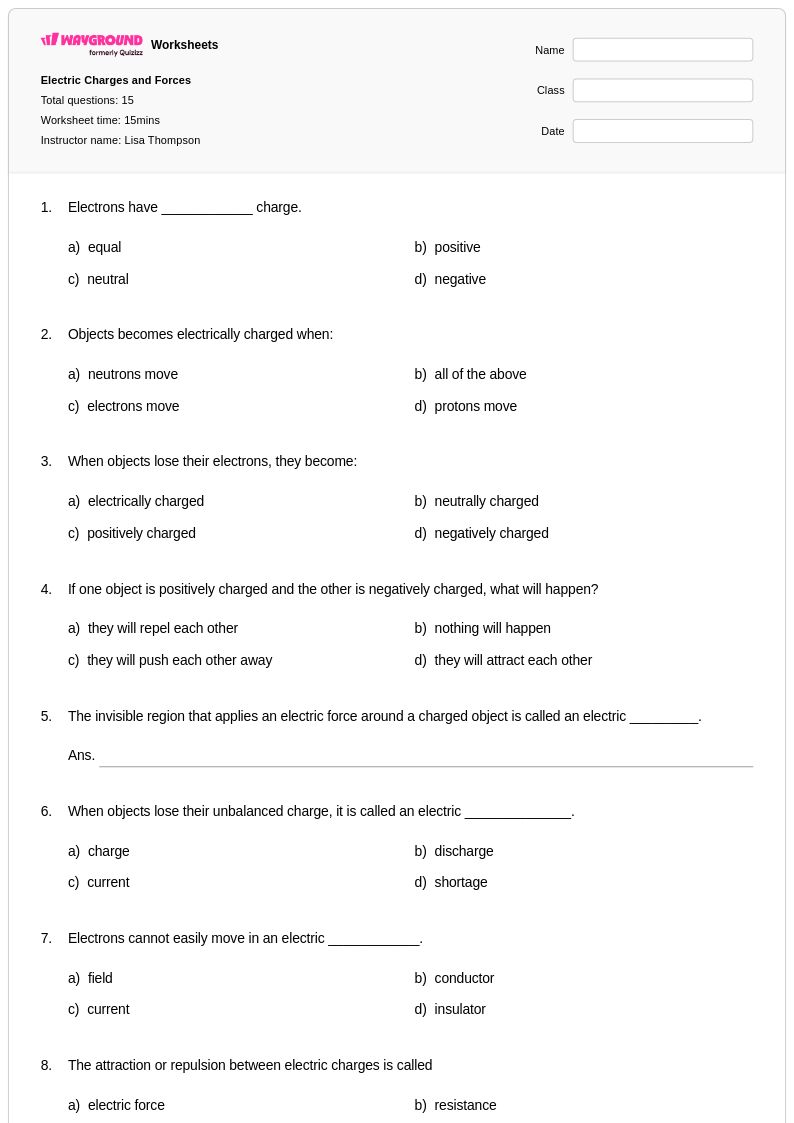
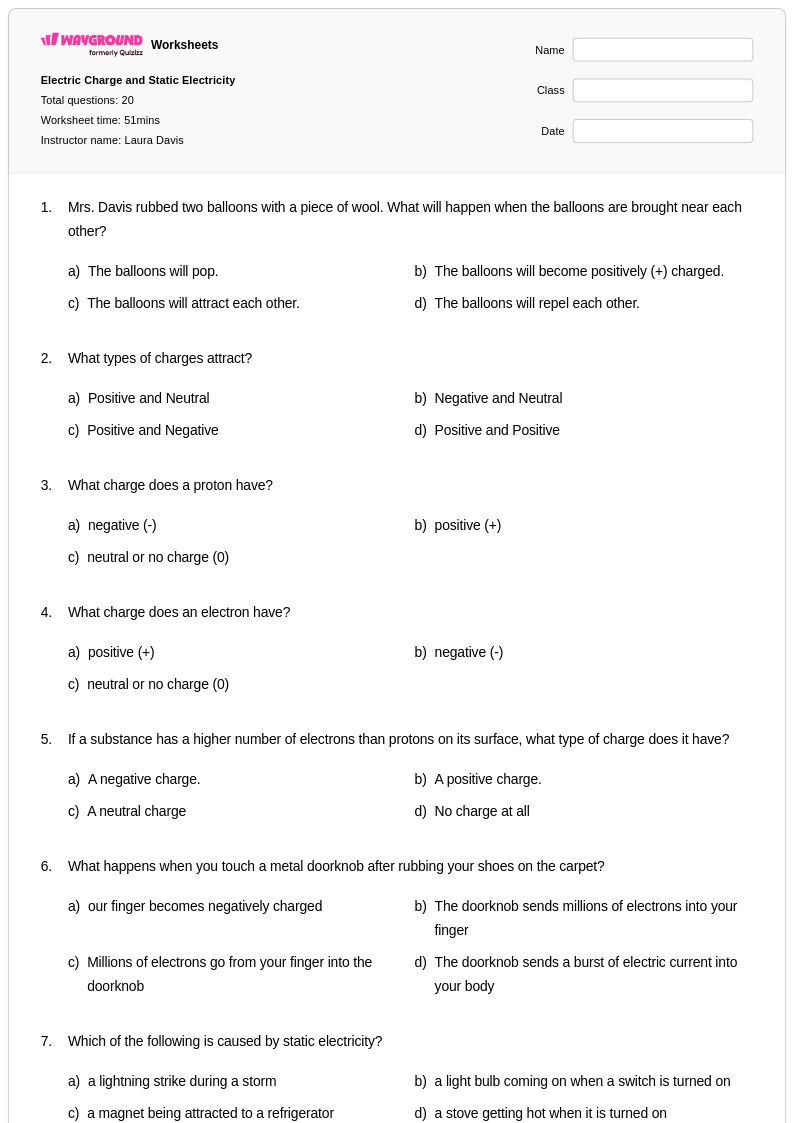
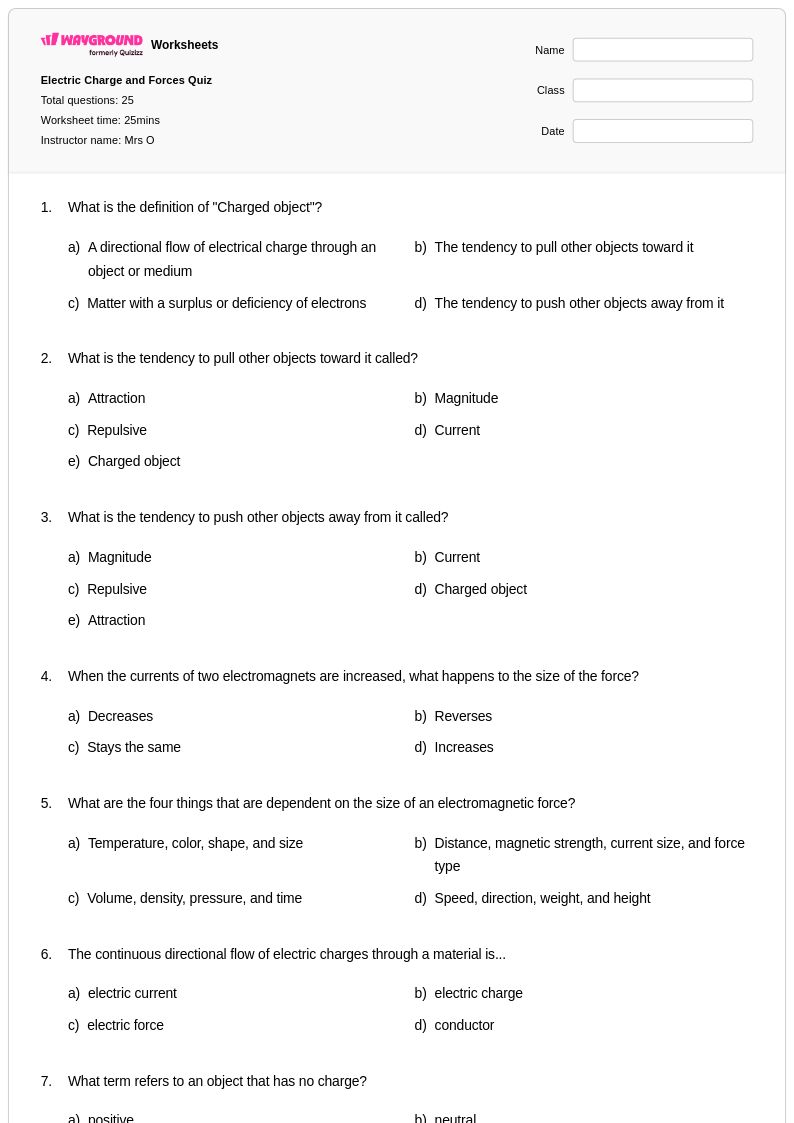
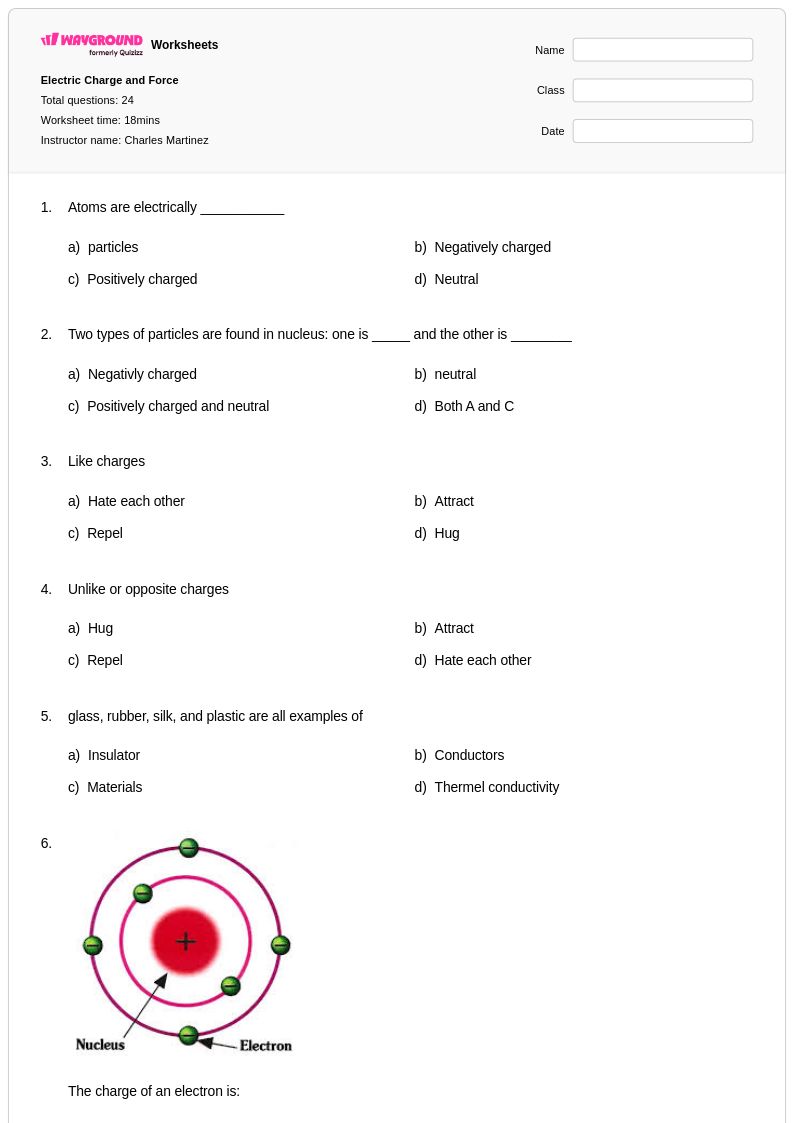
Enhance student understanding of electric charge fundamentals with Wayground's comprehensive collection of free physics worksheets, featuring printable PDFs, engaging practice problems, and complete answer keys for effective learning.
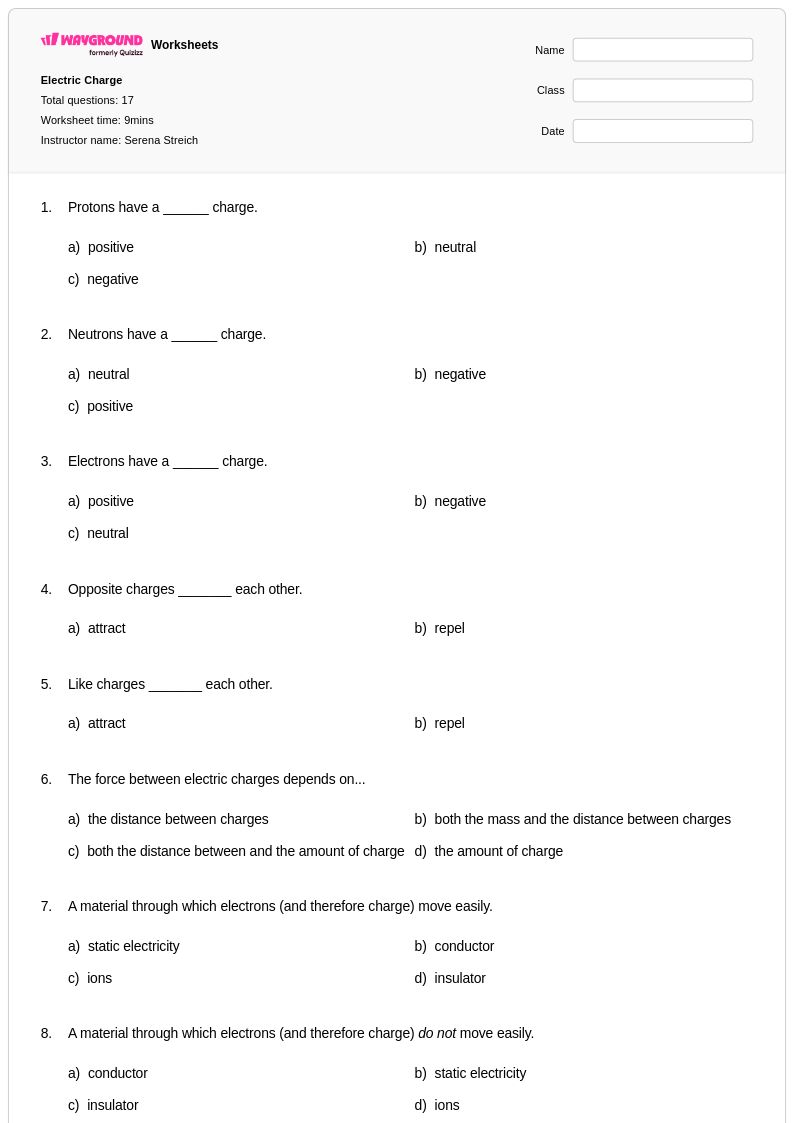
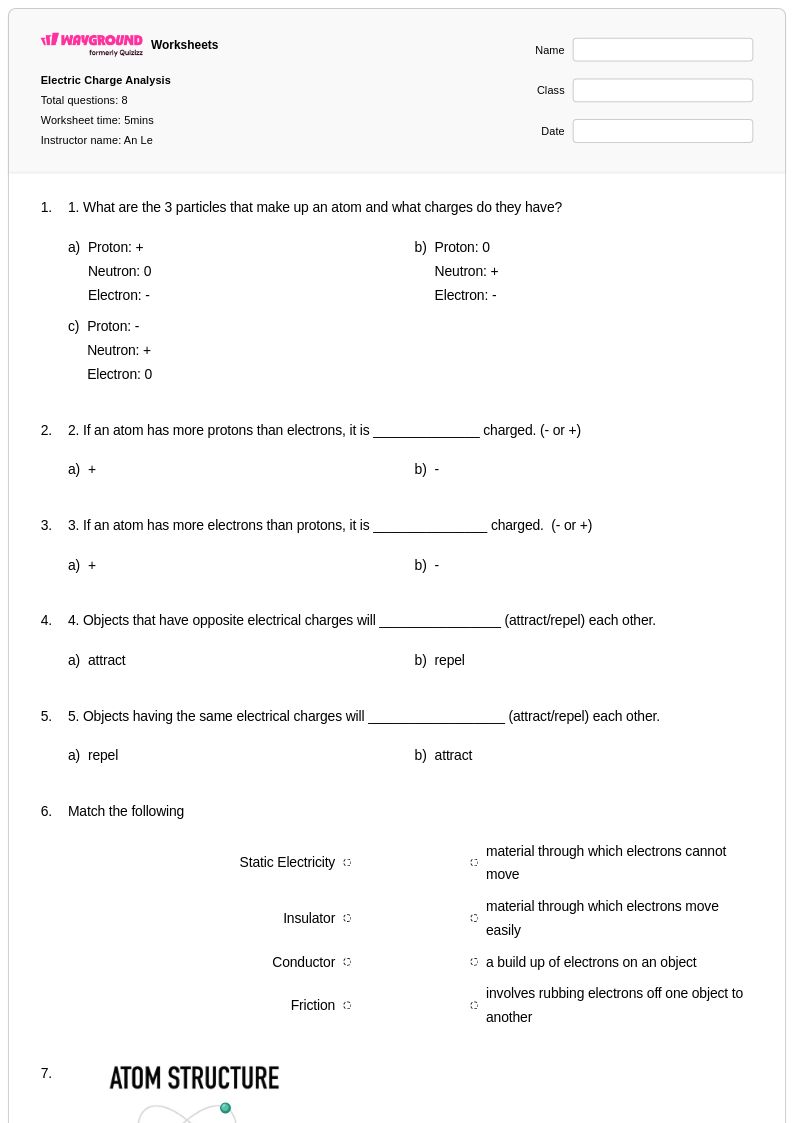
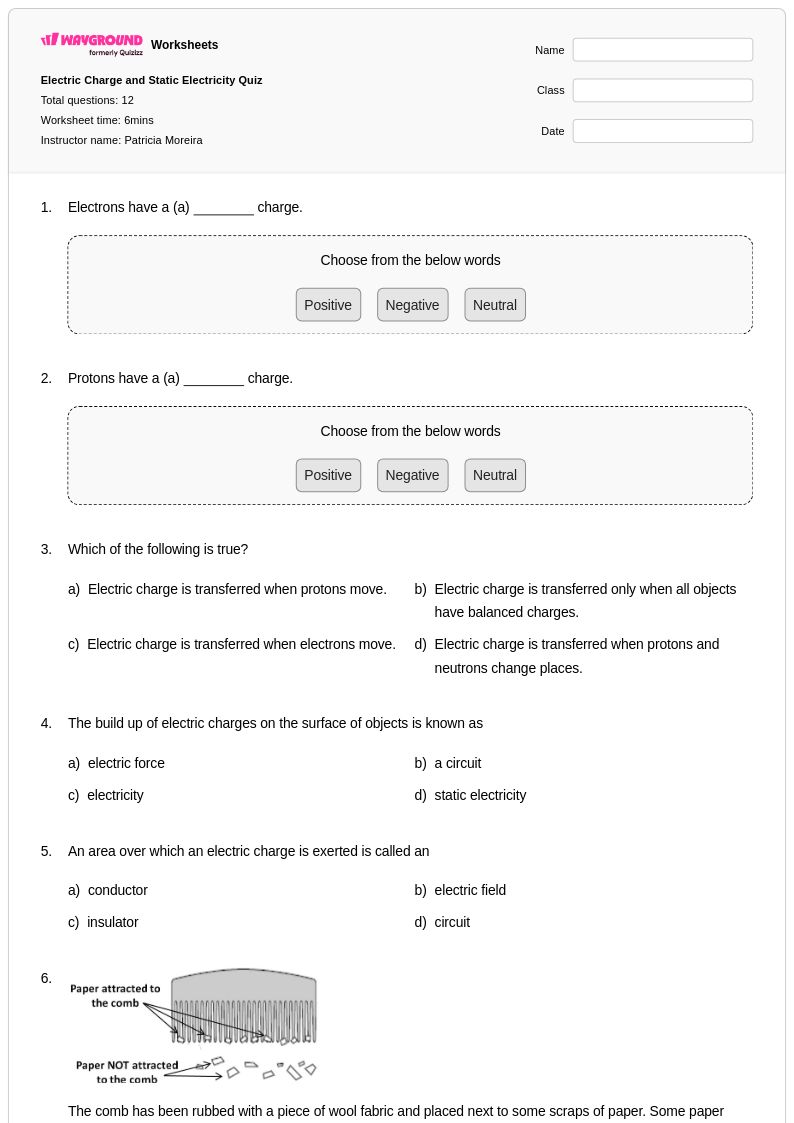
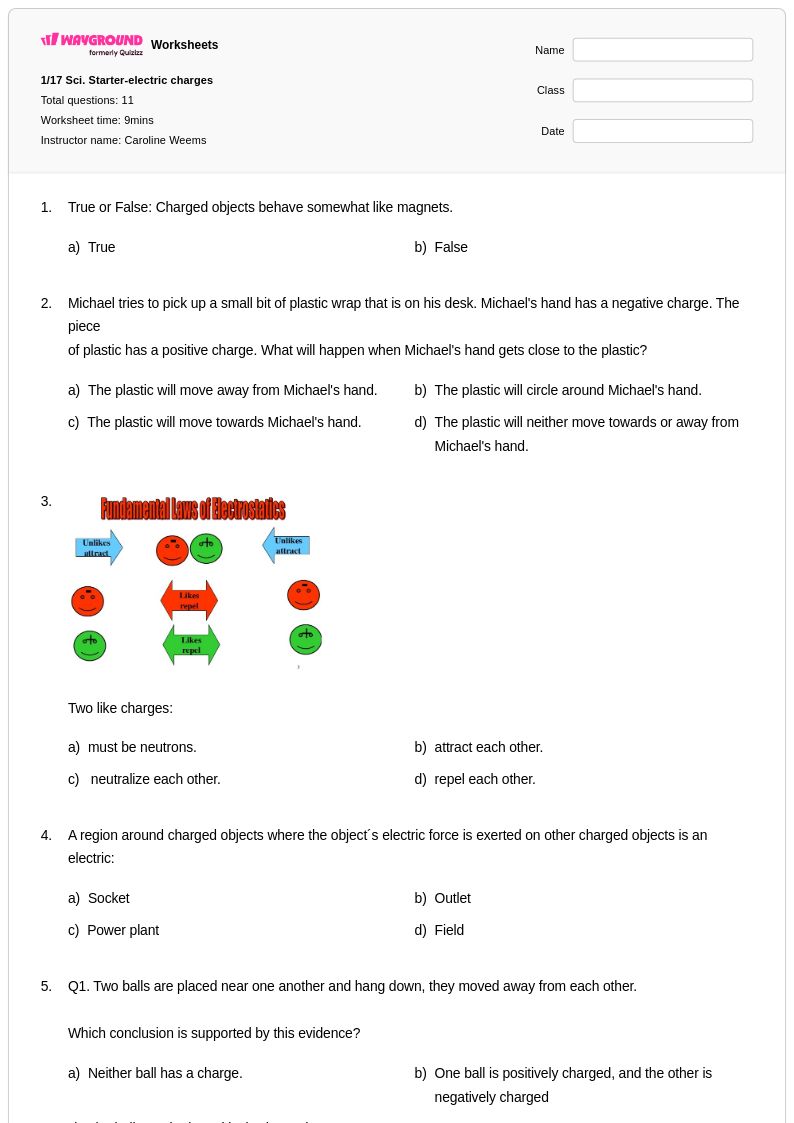
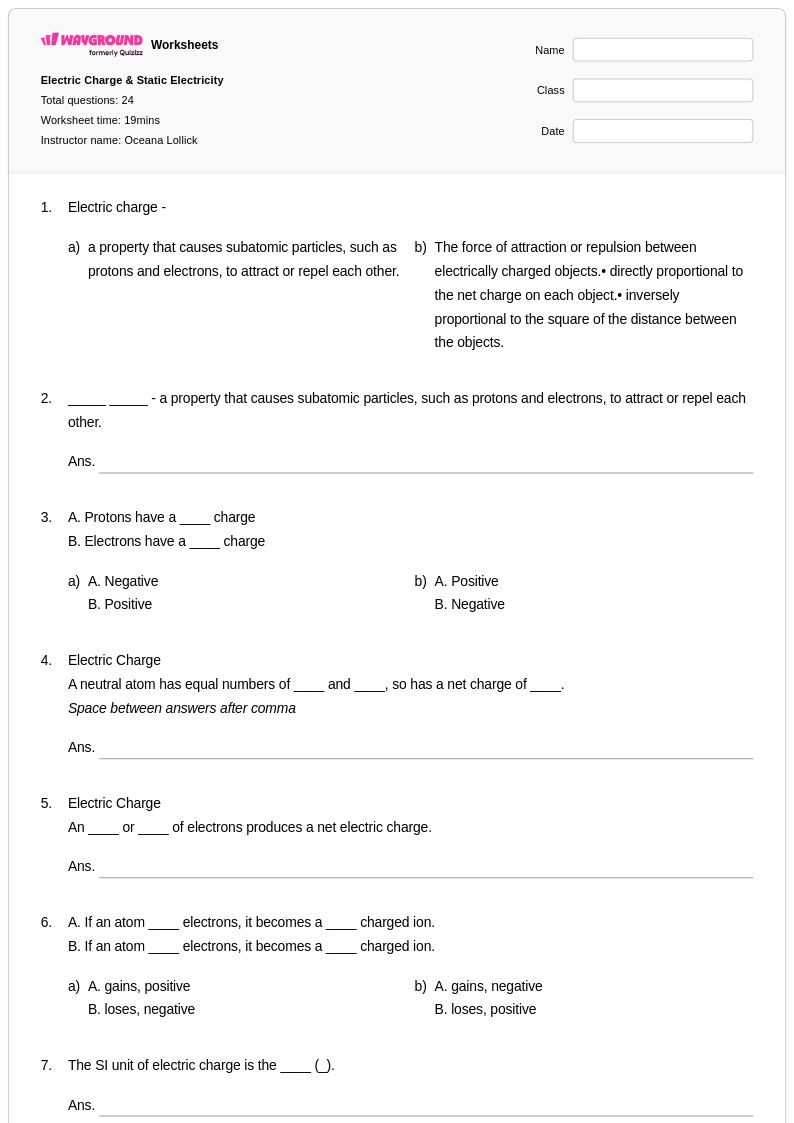
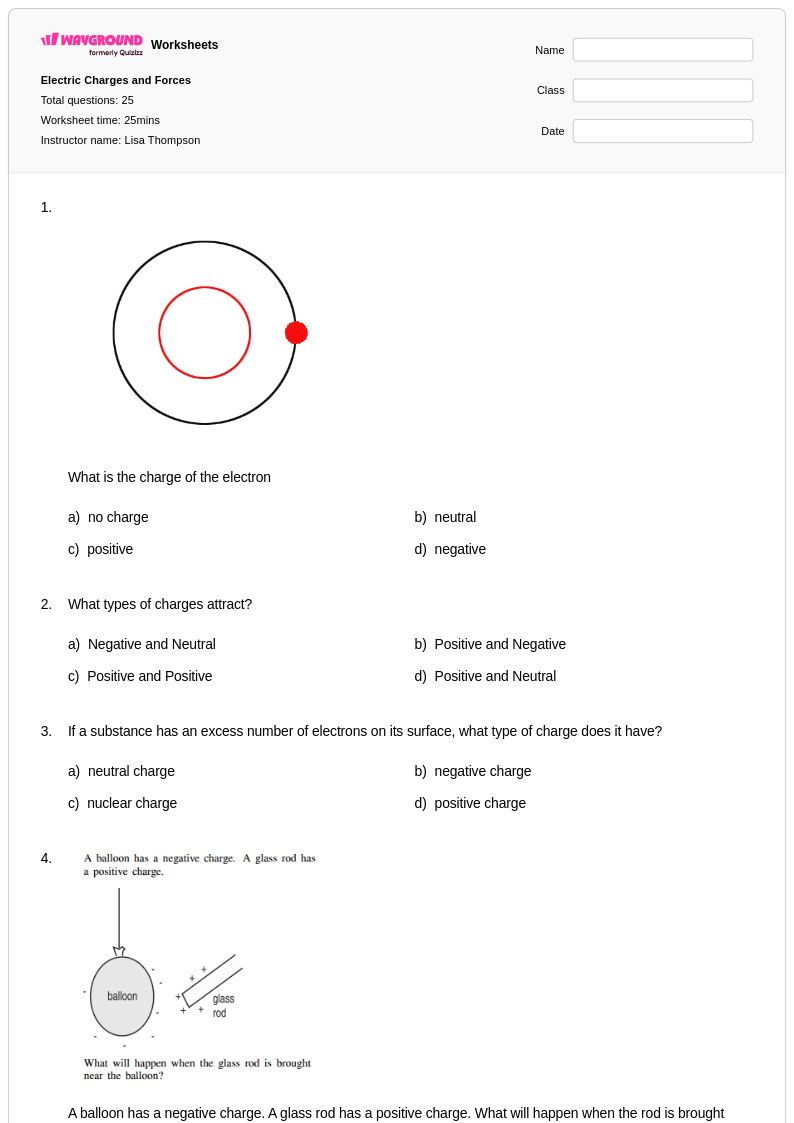
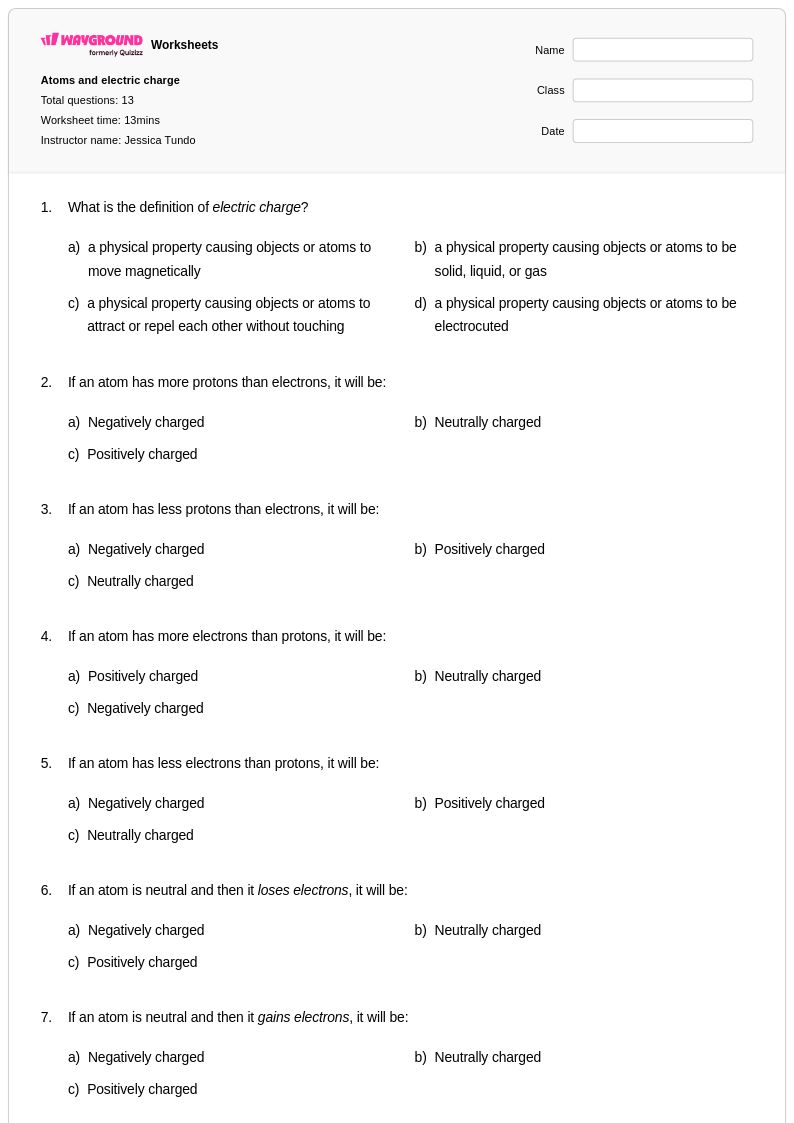
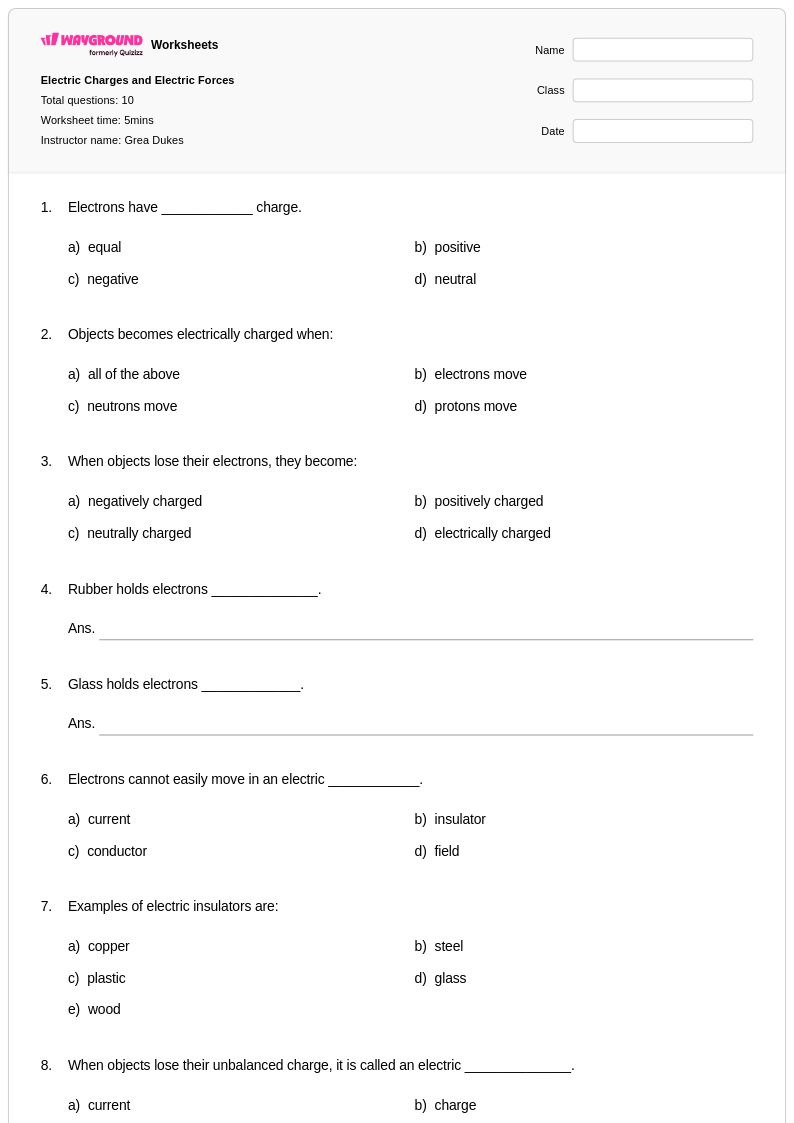
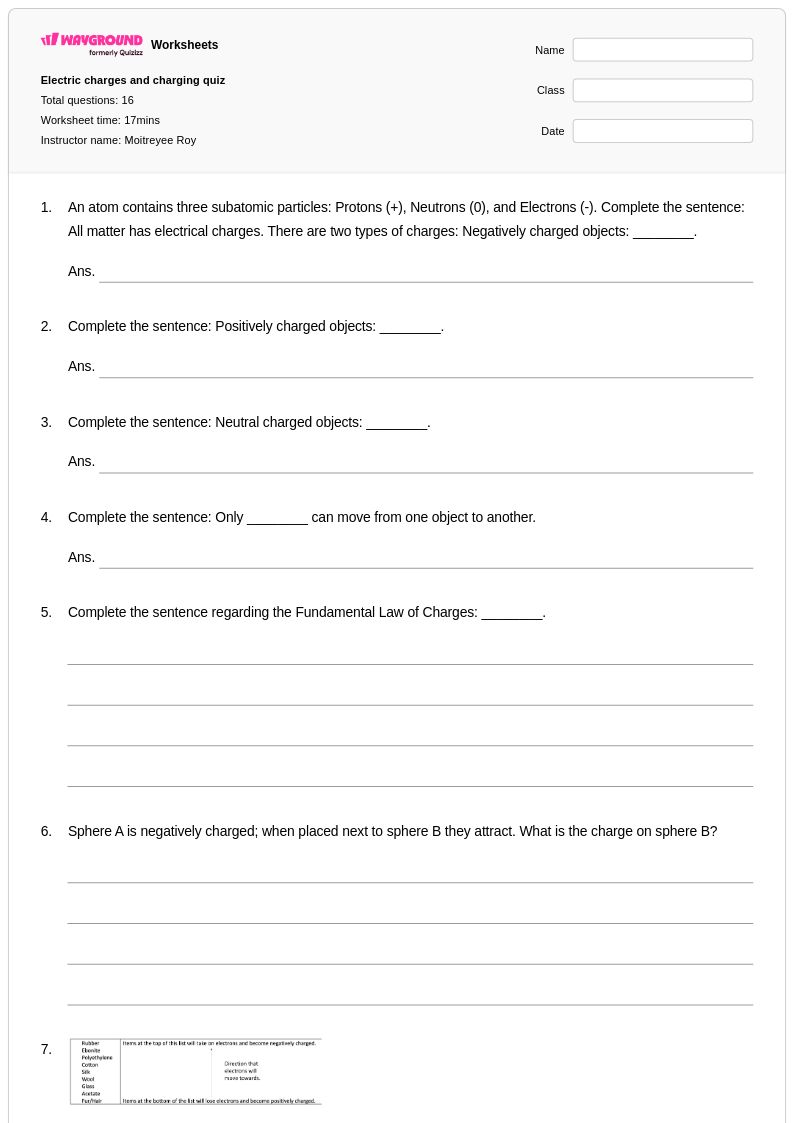
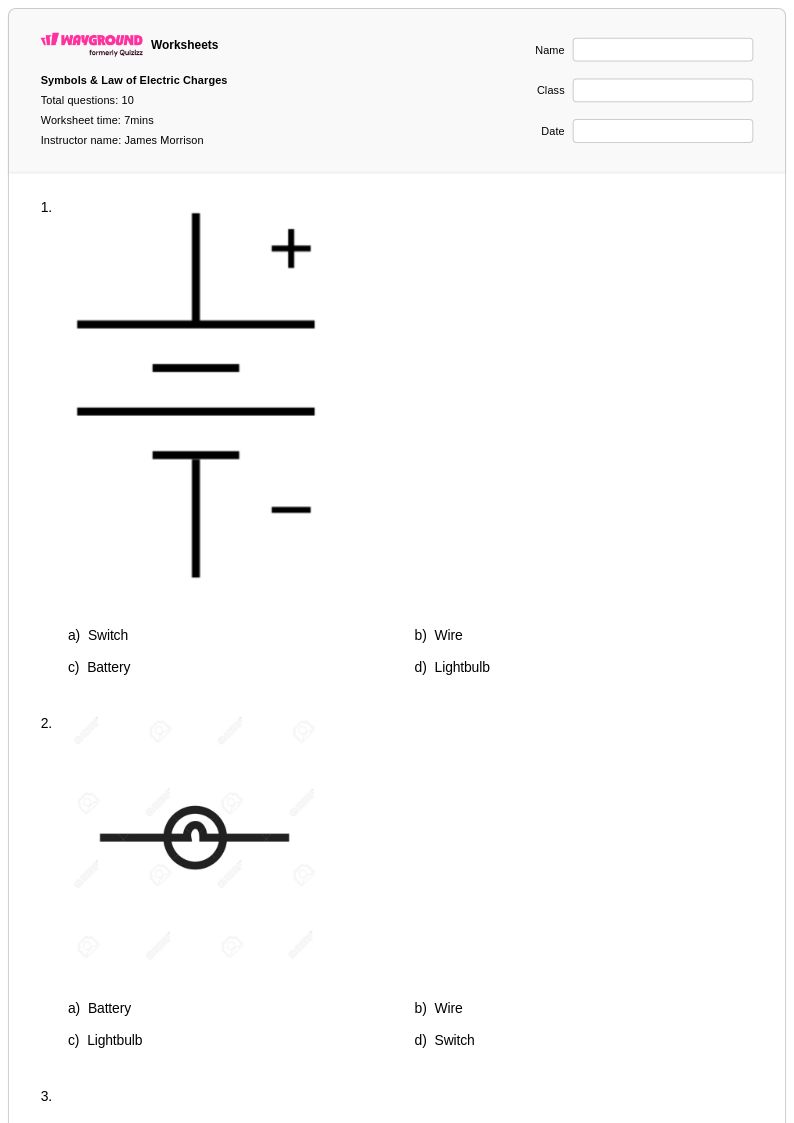
Electric charge worksheets available through Wayground (formerly Quizizz) provide comprehensive practice materials that help students master the fundamental concepts of electrostatics and charged particle interactions. These expertly designed resources strengthen critical physics skills including identifying types of electric charge, calculating electrostatic forces using Coulomb's law, analyzing charge distribution in conductors and insulators, and understanding electric field concepts. Students work through carefully structured practice problems that progress from basic charge identification to complex scenarios involving multiple charged objects and field interactions. Each worksheet includes detailed answer keys that support independent learning and self-assessment, while the free printable format ensures accessibility for both classroom instruction and home study.
Wayground (formerly Quizizz) empowers educators with millions of teacher-created electric charge resources that streamline physics instruction and accommodate diverse learning needs. The platform's robust search and filtering capabilities allow teachers to quickly locate worksheets aligned with specific physics standards and learning objectives, whether focusing on elementary charge concepts or advanced electrostatic applications. Differentiation tools enable seamless customization of content difficulty and problem complexity, supporting both remediation for struggling students and enrichment opportunities for advanced learners. These electric charge materials are available in flexible digital and printable pdf formats, facilitating integration into traditional classroom settings, hybrid learning environments, and remote instruction scenarios while providing consistent opportunities for skill practice and conceptual reinforcement.
FAQs
How do I teach electric charge to high school physics students?
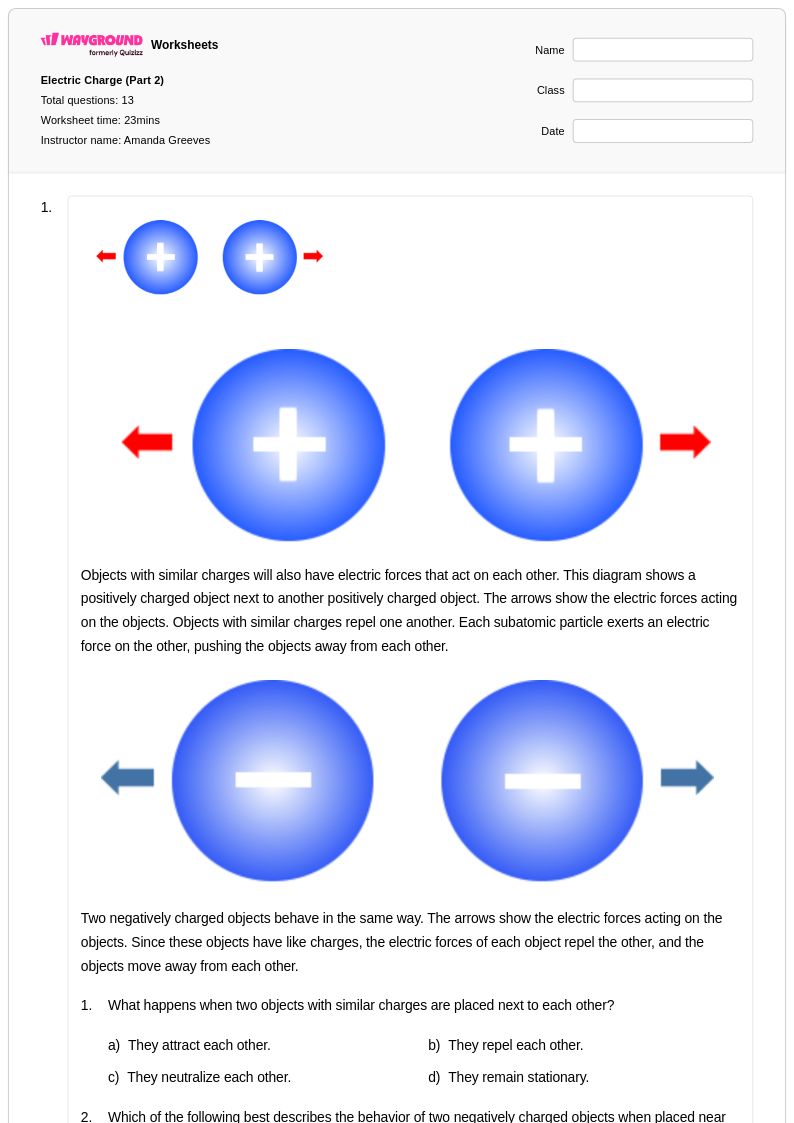
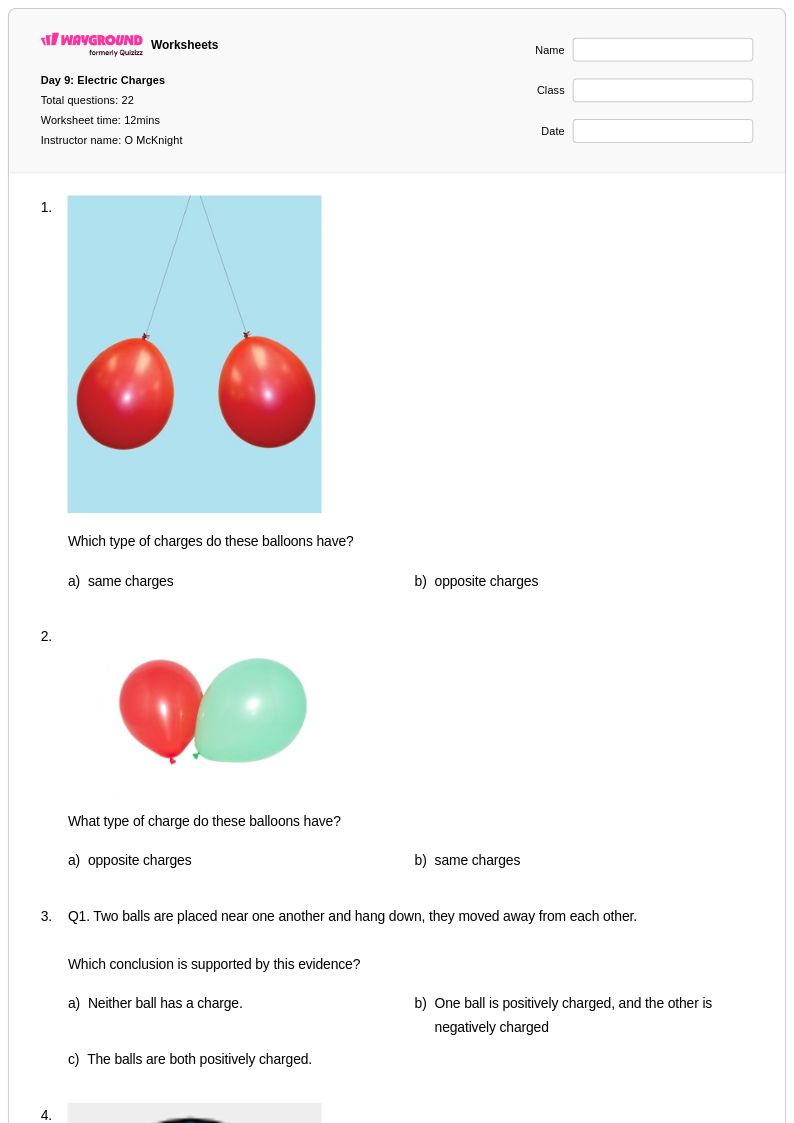
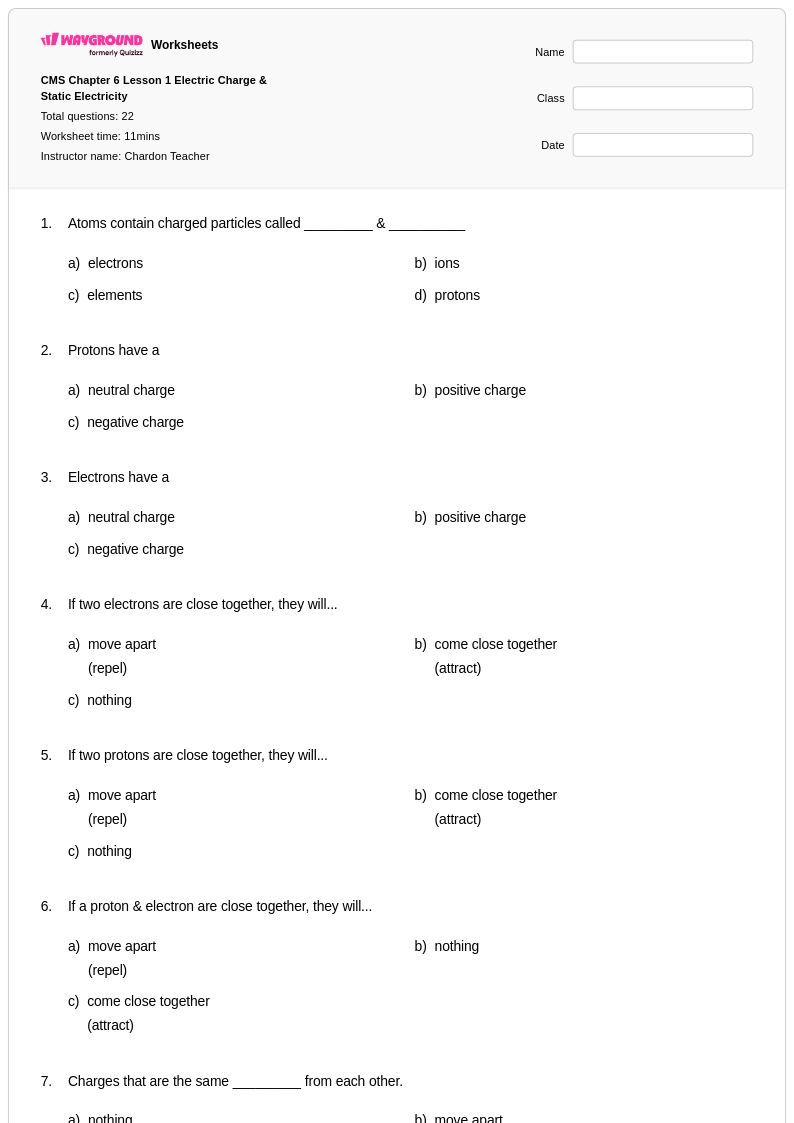
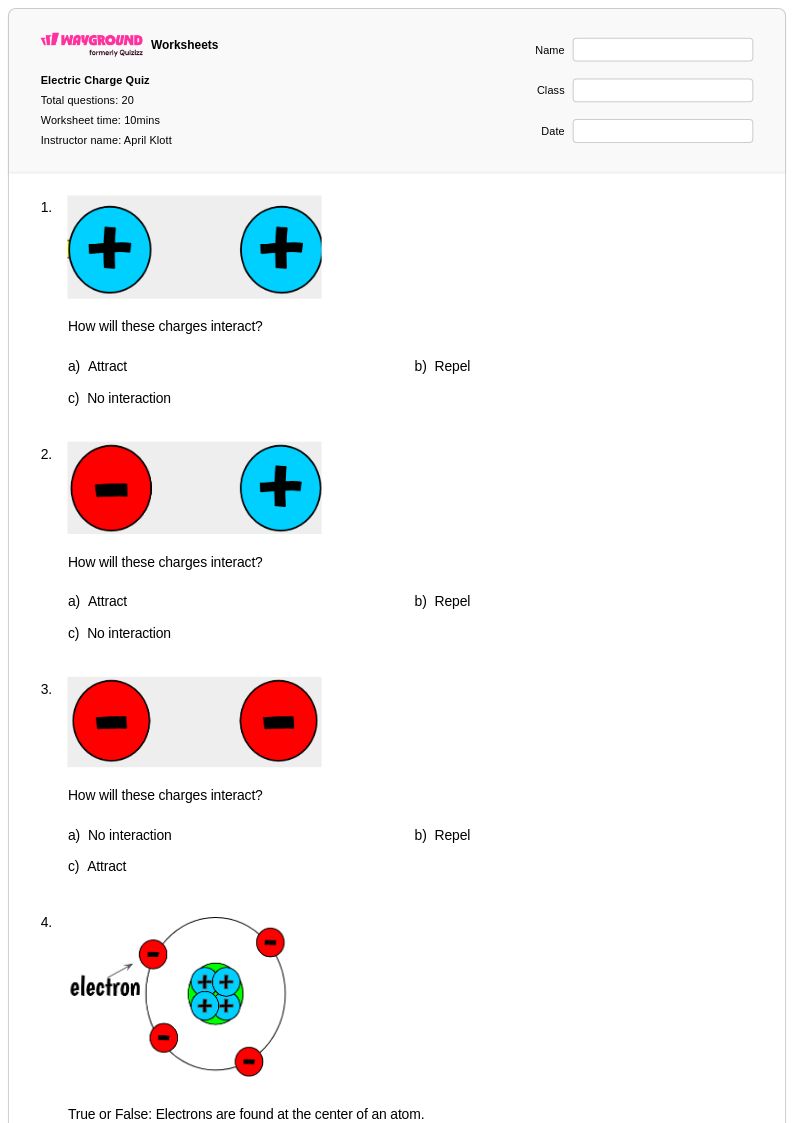
Start by grounding students in the two types of charge — positive and negative — and the principle that opposite charges attract while like charges repel. From there, build toward Coulomb's law, charge distribution in conductors versus insulators, and electric field concepts. Using concrete analogies and hands-on demonstrations with charged objects (like balloons and aluminum foil) helps students develop intuition before moving to quantitative problem-solving.
What kinds of practice problems help students master electric charge and Coulomb's law?
Effective practice should progress from identifying charge types and predicting interactions to calculating electrostatic forces using Coulomb's law with one and then multiple charged objects. Problems that ask students to compare force magnitudes when charge or distance is varied build proportional reasoning. Scenarios involving charge distribution across conductors and insulators push students to apply conceptual understanding in realistic contexts.
What mistakes do students commonly make when learning about electric charge?
A frequent misconception is that only negatively charged objects can attract — students often overlook that any two oppositely charged objects attract regardless of sign. Another common error is misapplying Coulomb's law by forgetting that force is inversely proportional to the square of distance, not just distance. Students also tend to conflate conductors and insulators, assuming all materials behave the same way when charged.
How can I differentiate electric charge instruction for students at different skill levels?
For struggling students, focus on conceptual charge identification and simple attraction/repulsion scenarios before introducing equations. Advanced learners can tackle multi-charge systems, net force vector analysis, and field mapping. On Wayground, teachers can apply accommodations such as reduced answer choices to lower cognitive load for individual students, while other students receive standard problem sets — all without disrupting the rest of the class.
How do I use Wayground's electric charge worksheets in my classroom?
Wayground's electric charge worksheets are available as printable PDFs for traditional classroom use and in digital formats for technology-integrated environments, including the option to host them as a quiz directly on Wayground. Each worksheet includes a complete answer key, making them suitable for in-class practice, independent review, or home study. Teachers can also apply student-level accommodations — such as extended time or read-aloud settings — directly from the session or Students tab.