
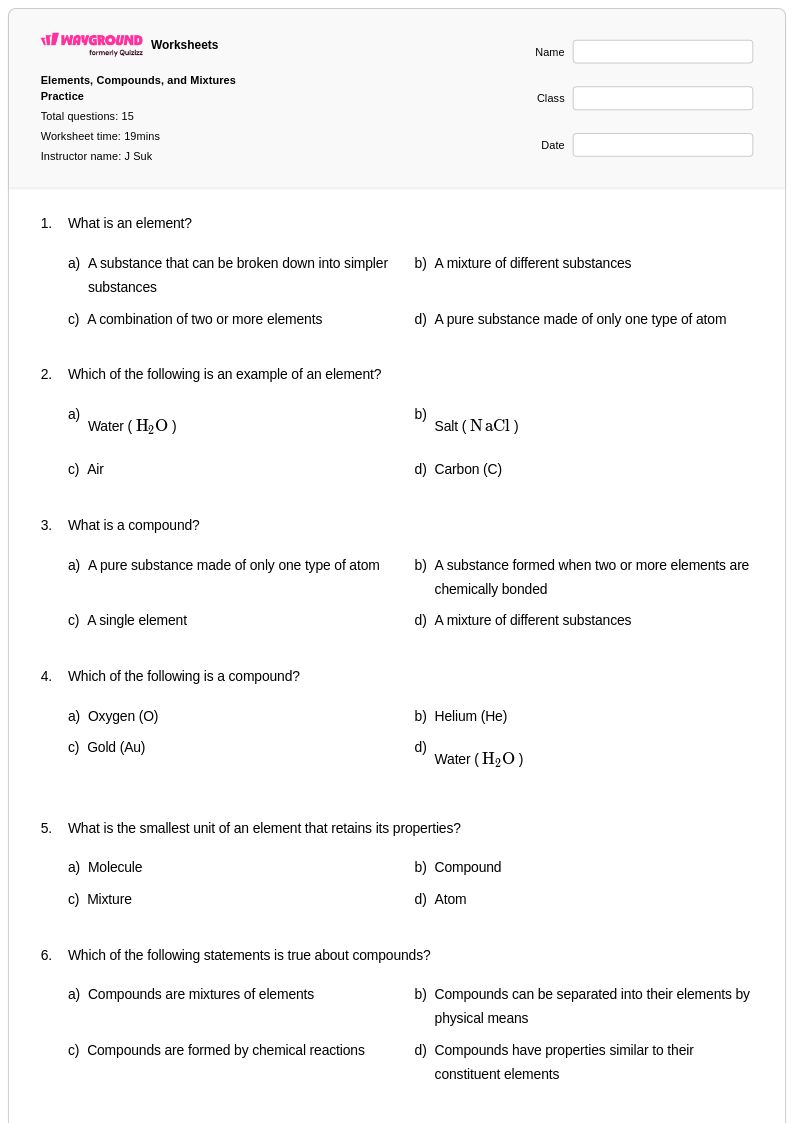
17 Q
6th
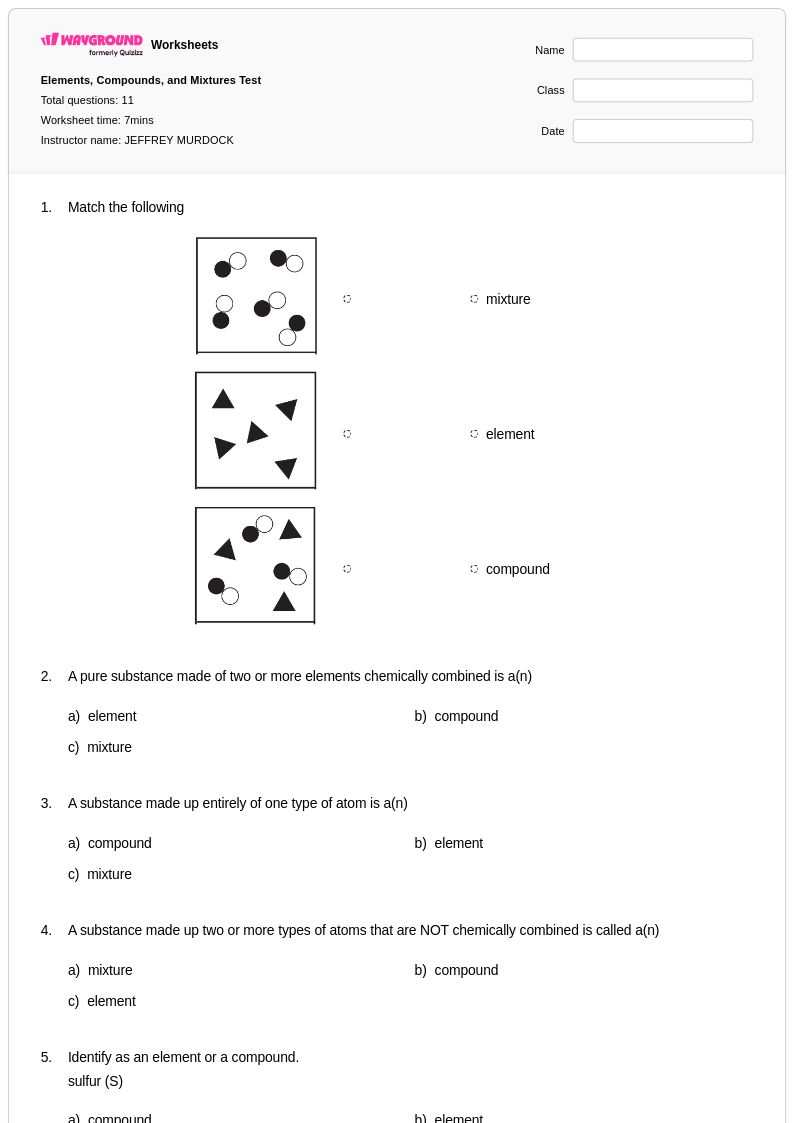
11 Q
6th
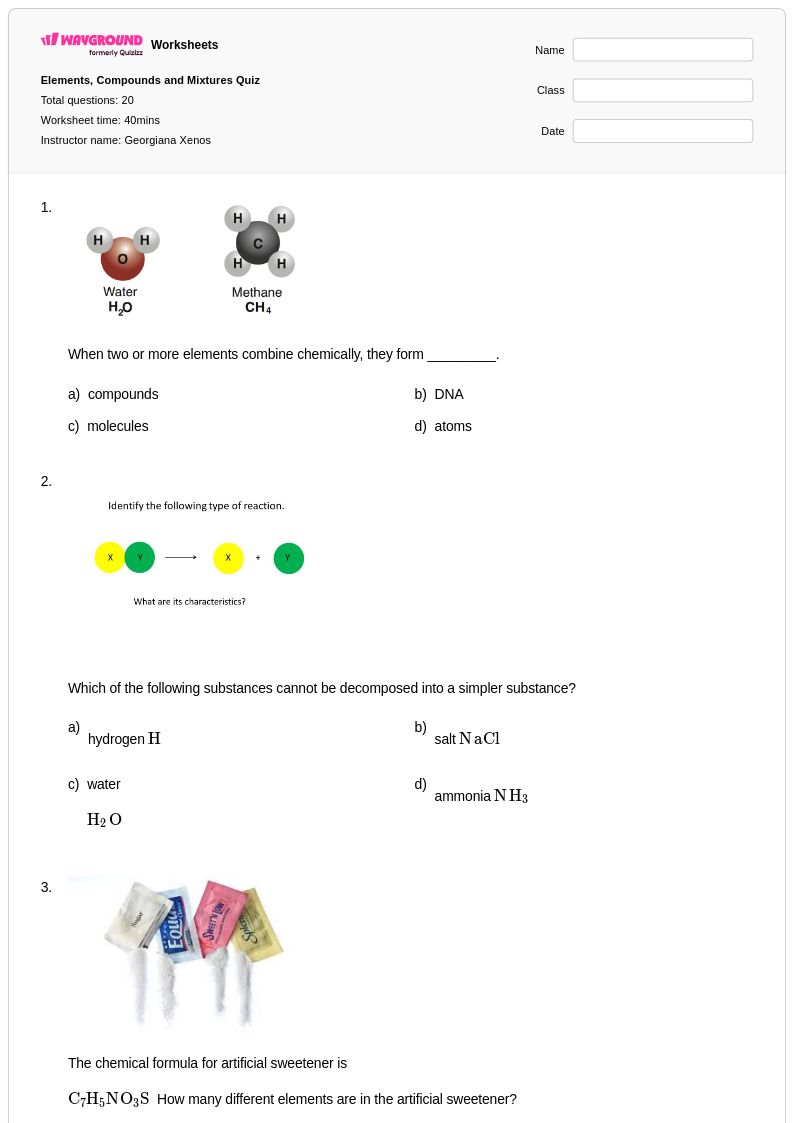
20 Q
6th
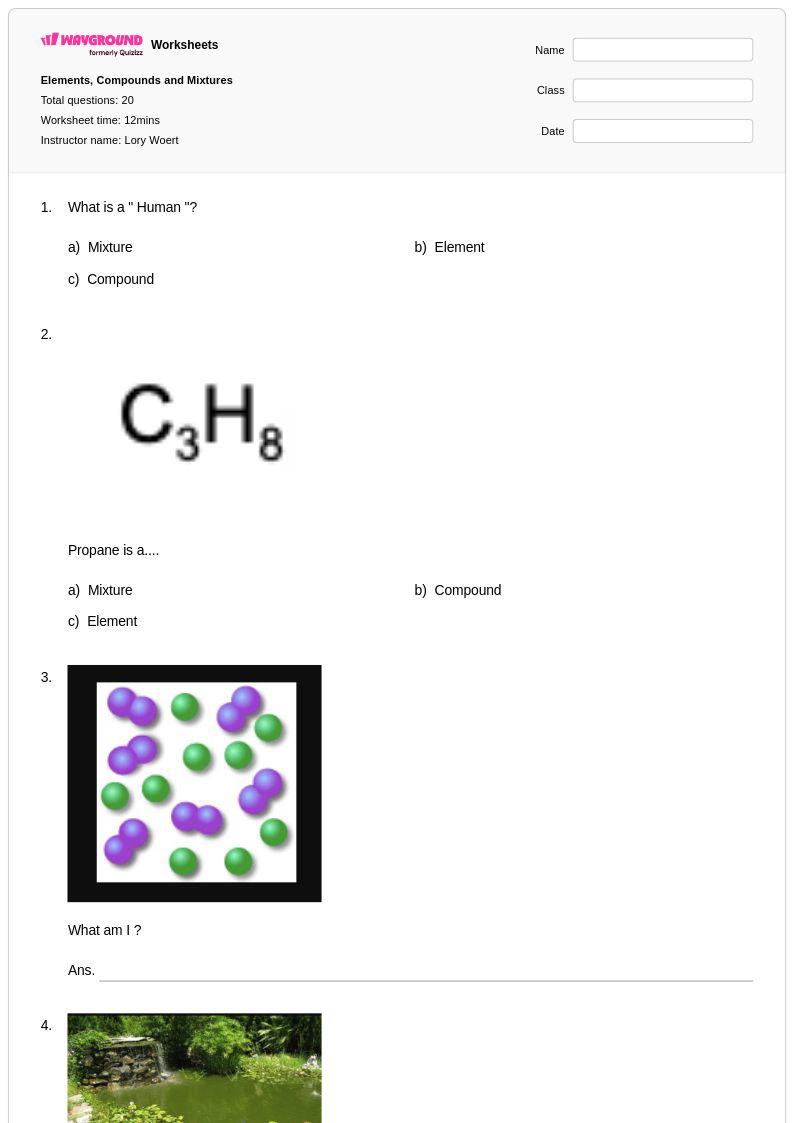
20 Q
6th - 9th
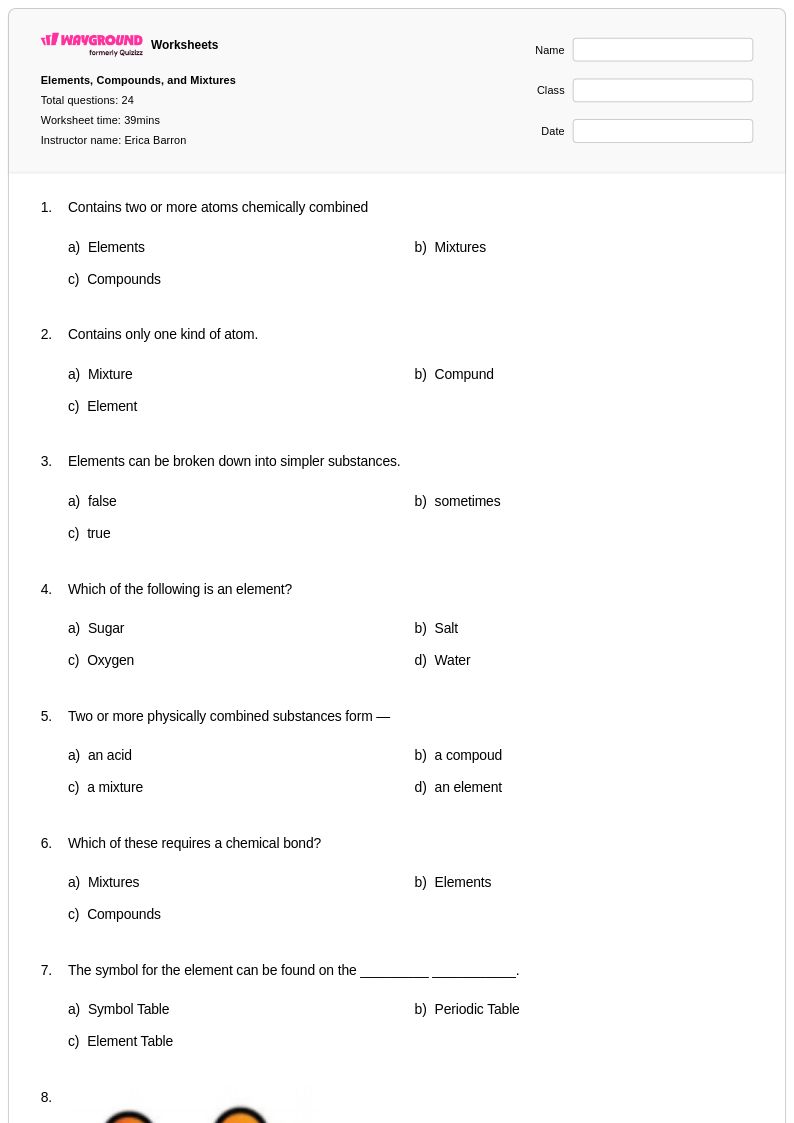
24 Q
6th - 8th
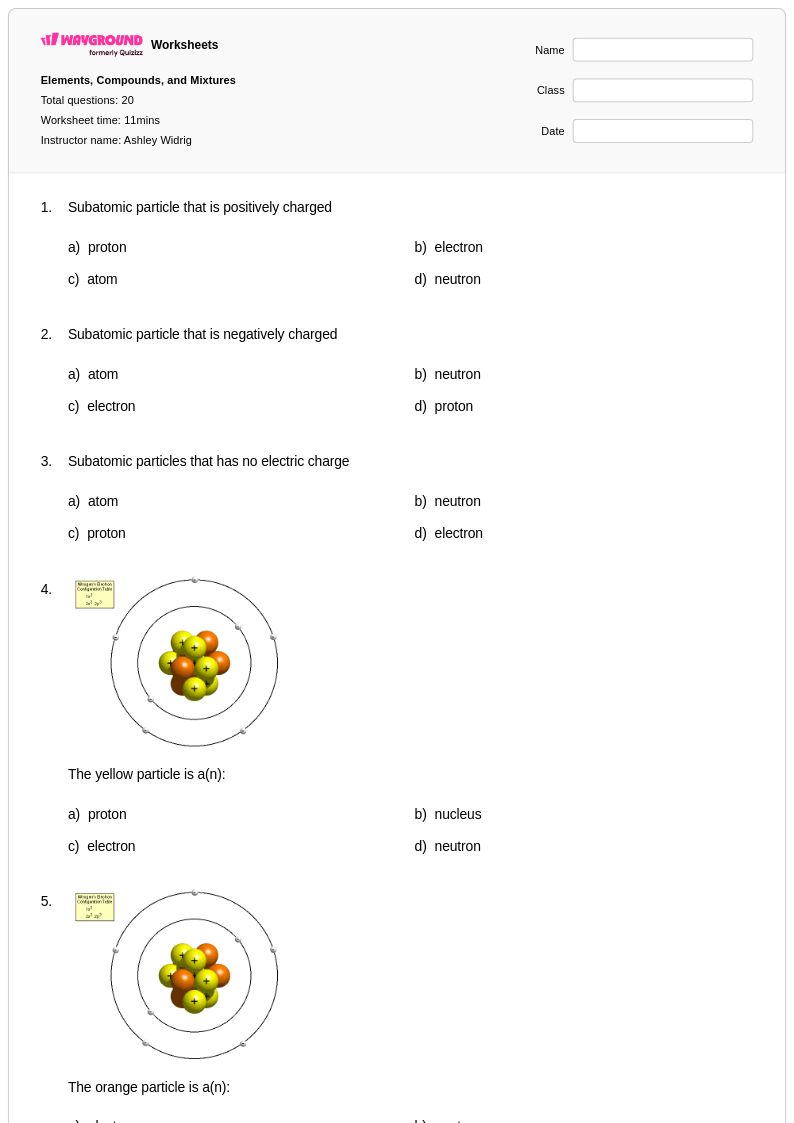
20 Q
6th - 8th
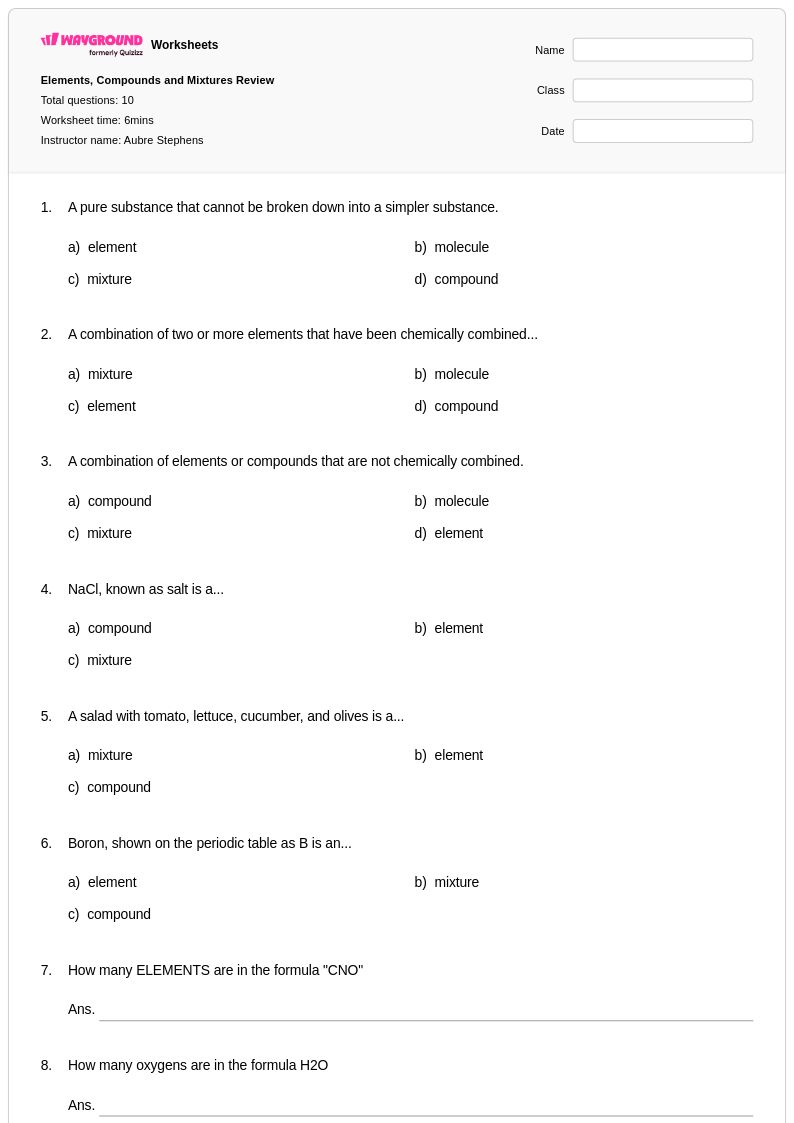
10 Q
6th - 8th
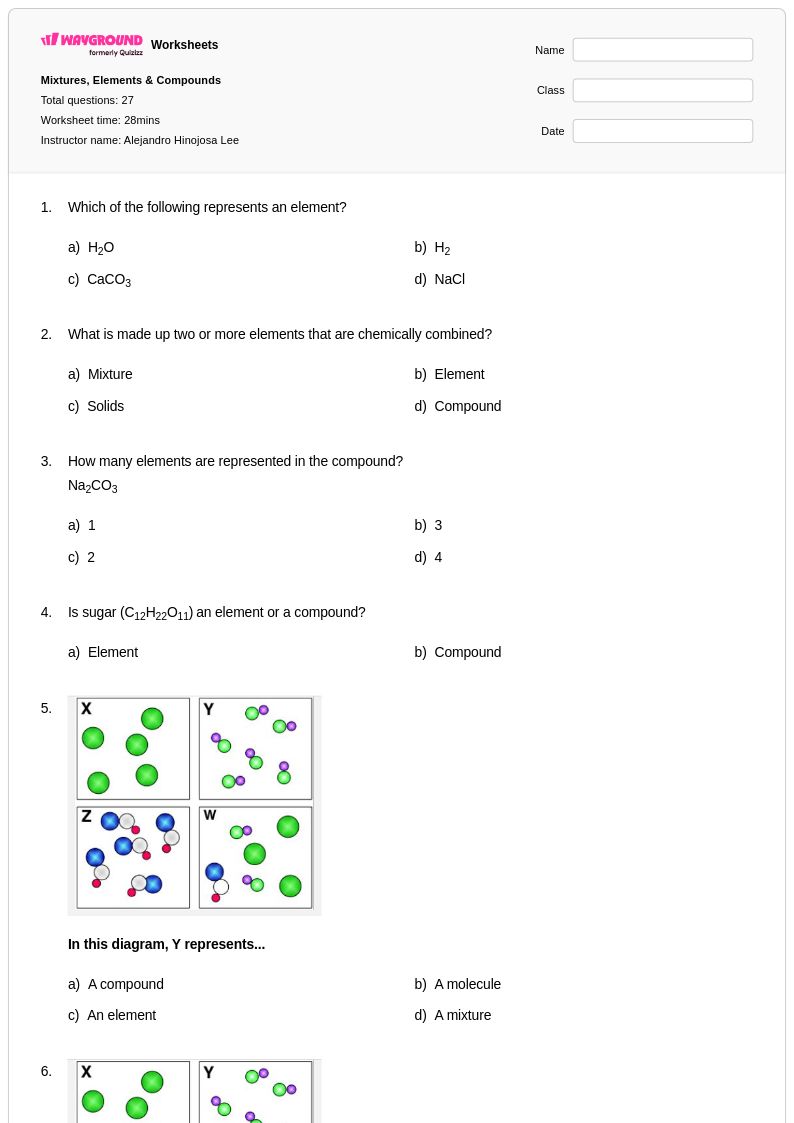
27 Q
6th - 8th
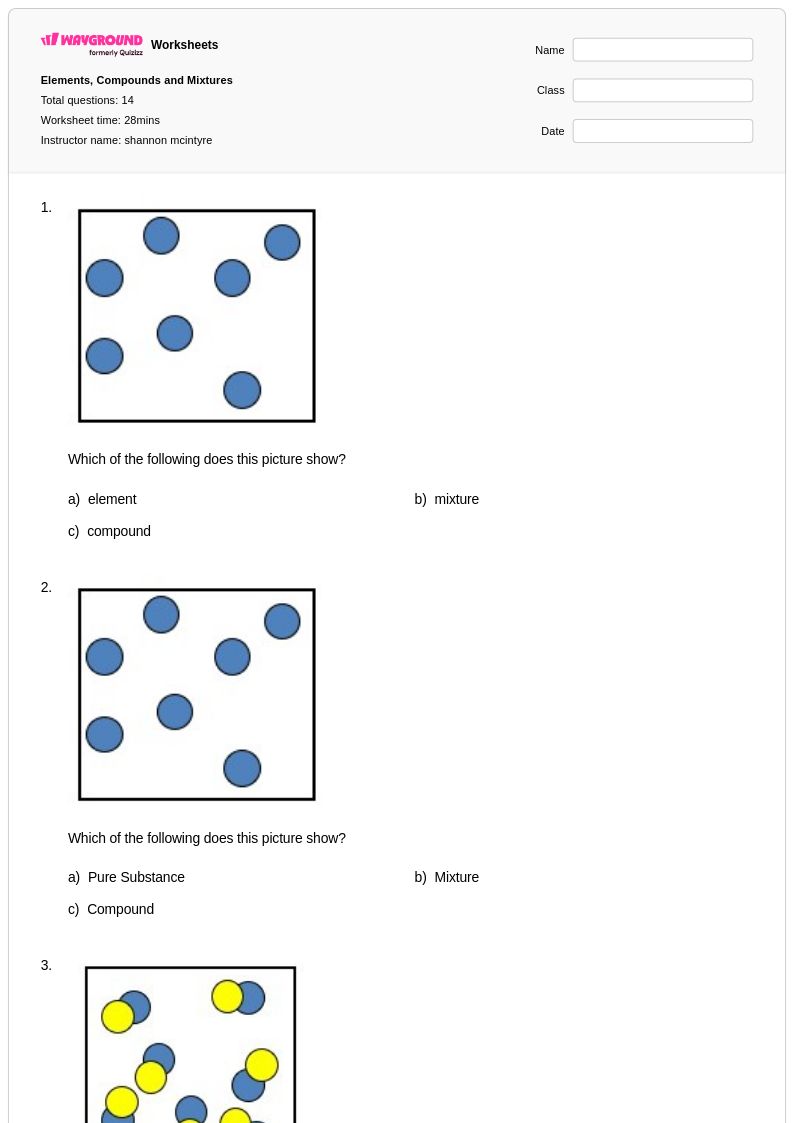
14 Q
6th - 8th
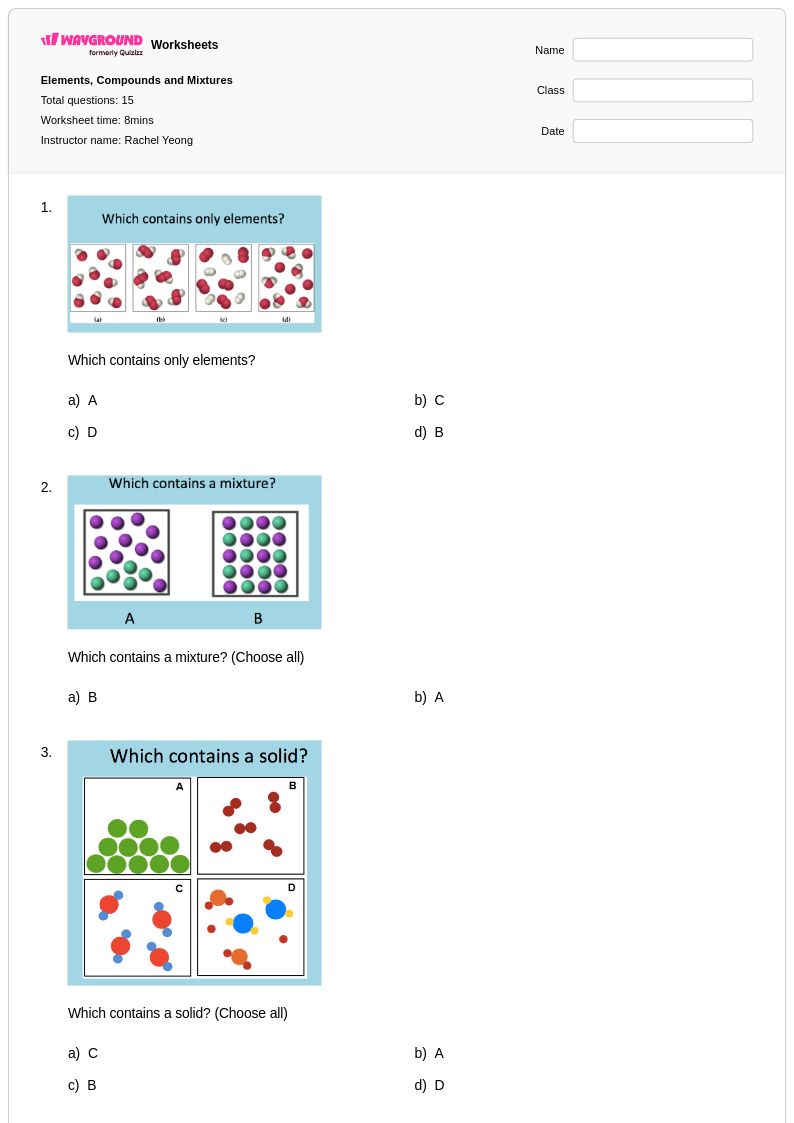
15 Q
6th - 7th
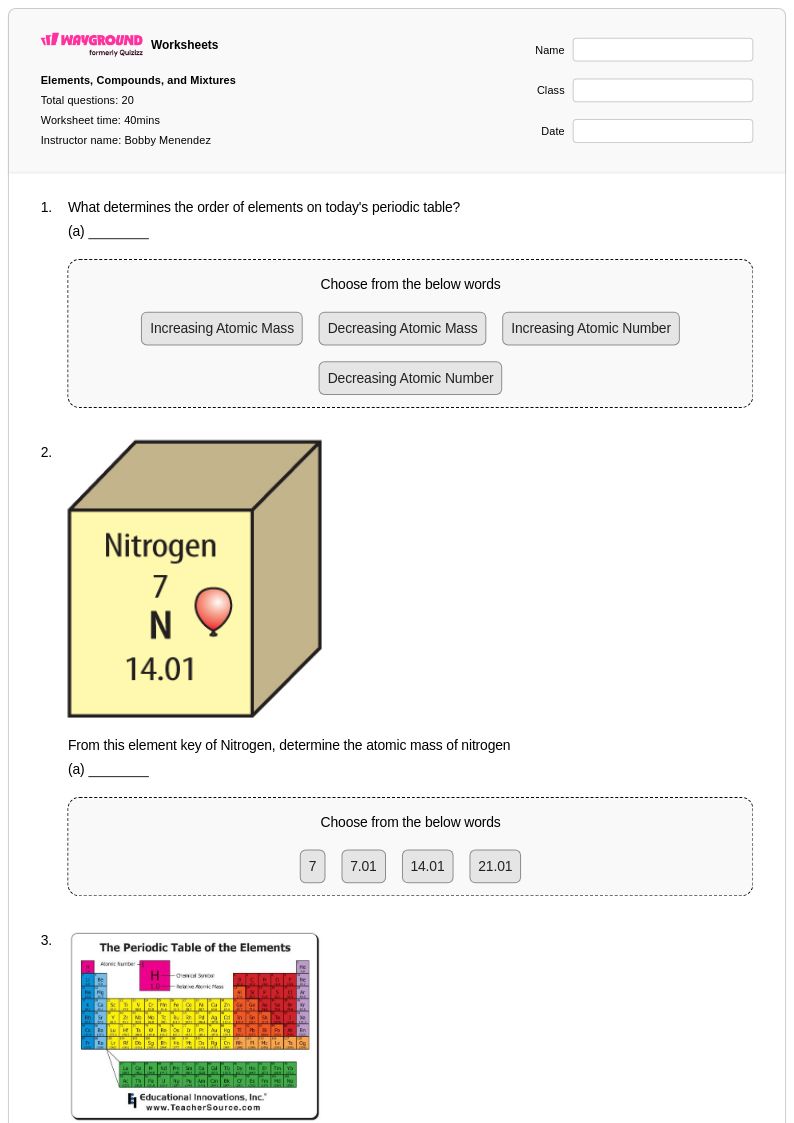
20 Q
6th - 8th
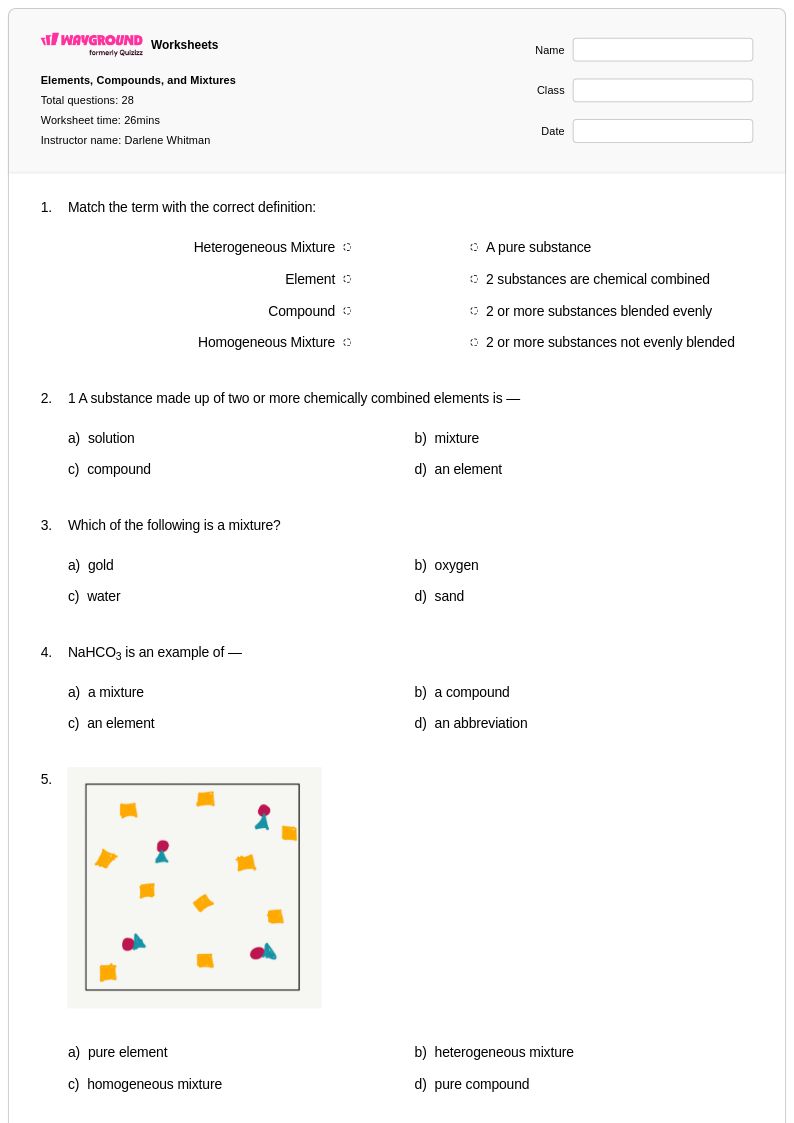
28 Q
6th - 8th
17 Q
5th - 11th
64 Q
6th
28 Q
6th - 8th
18 Q
6th - 8th
5 Q
6th
26 Q
6th - 8th
13 Q
6th - 8th
25 Q
6th - Uni
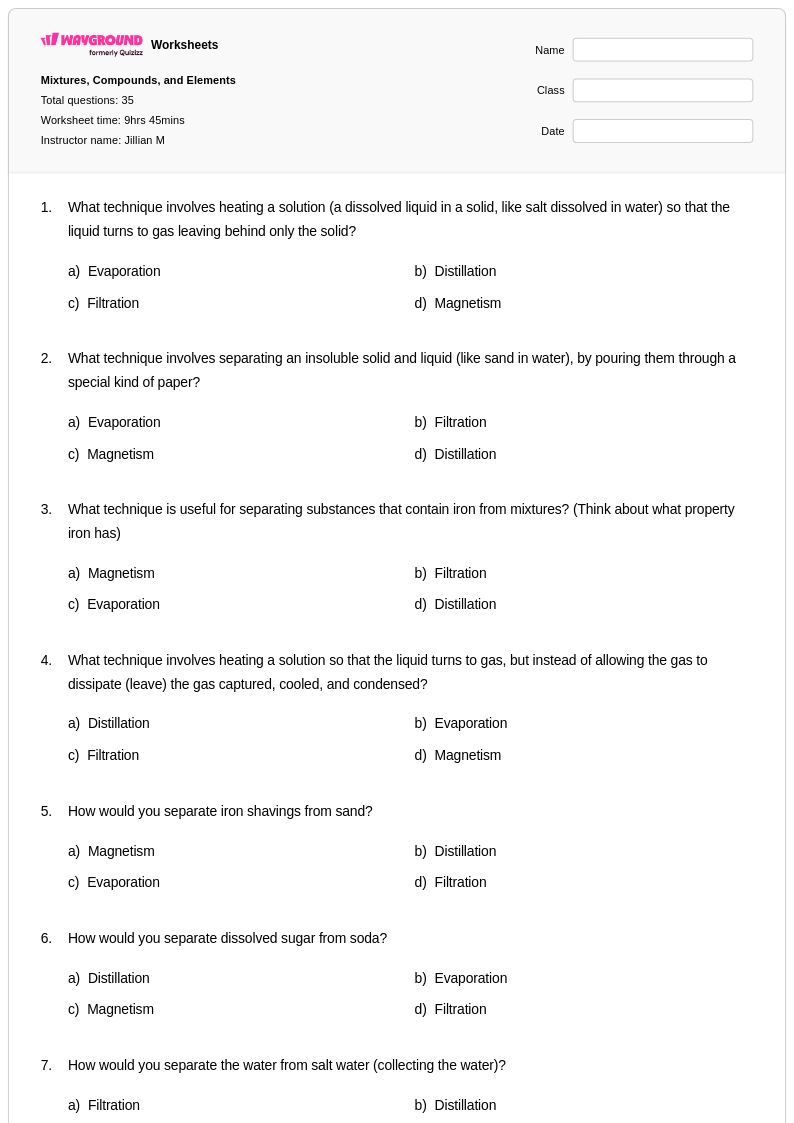
35 Q
6th
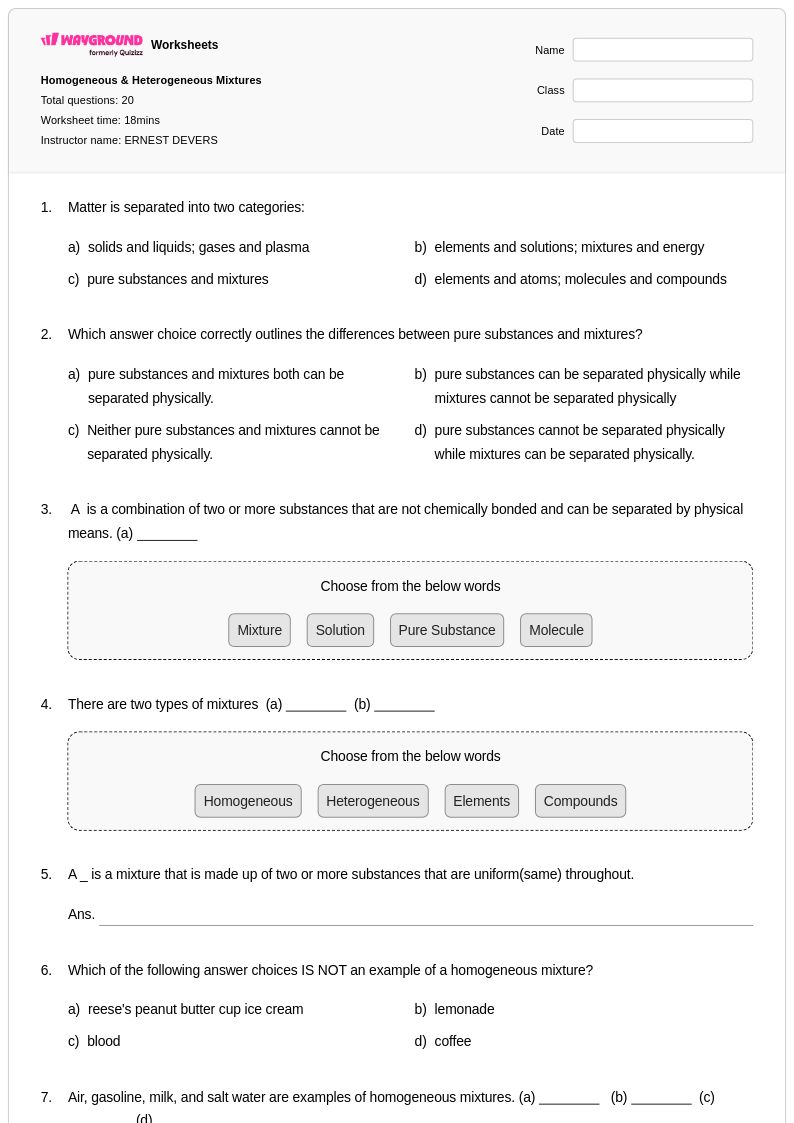
20 Q
6th - 8th
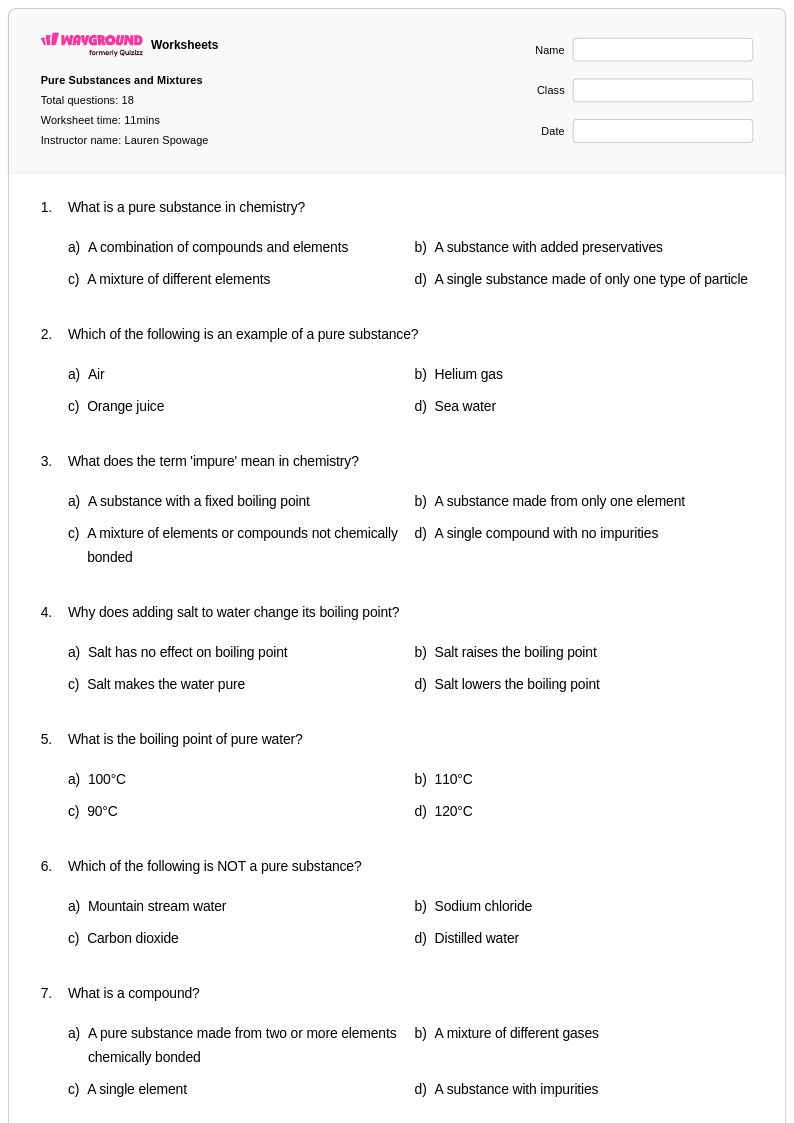
18 Q
6th
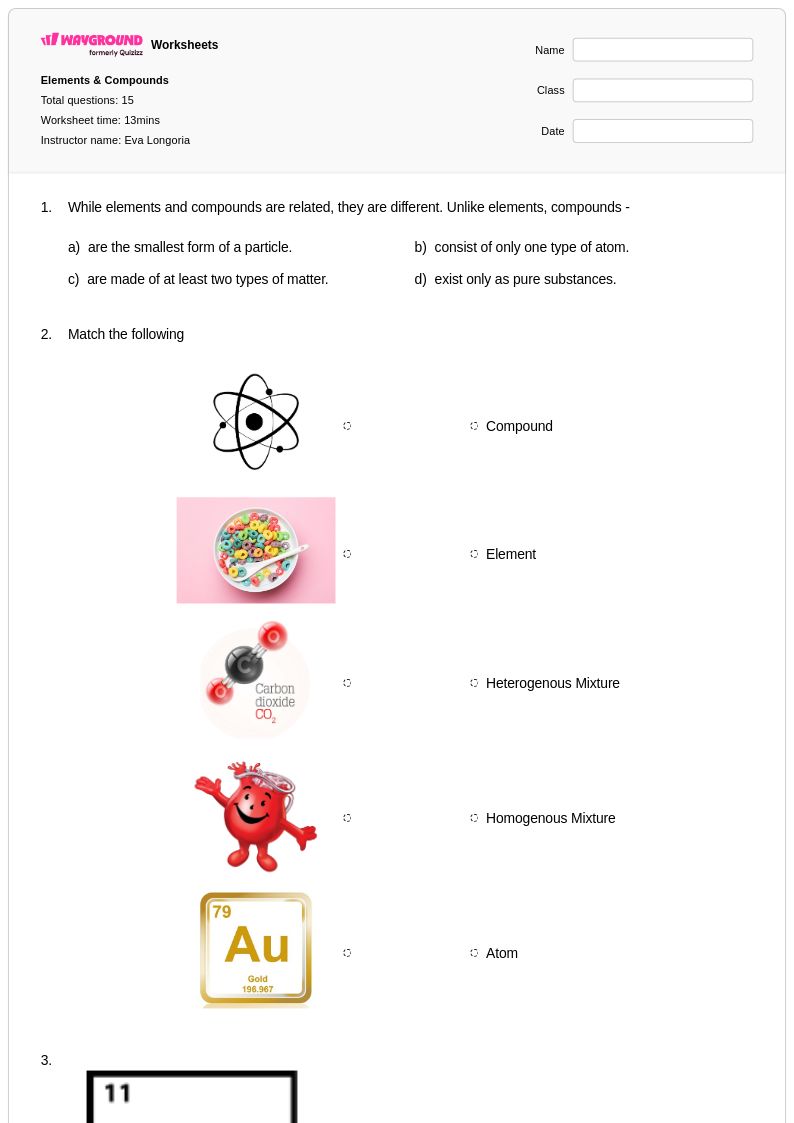
15 Q
6th
Explore Elements, Compounds, and Mixtures Worksheets by Grades
Explore Other Subject Worksheets for year 6
Explore printable Elements, Compounds, and Mixtures worksheets for Year 6
Elements, compounds, and mixtures worksheets for Year 6 students available through Wayground (formerly Quizizz) provide comprehensive coverage of fundamental chemistry concepts that form the building blocks of scientific understanding. These carefully designed practice problems help students distinguish between pure substances and mixtures while developing critical thinking skills needed to classify matter based on its composition and properties. The worksheet collection includes engaging activities that guide students through identifying elements on the periodic table, recognizing common compounds in everyday life, and analyzing different types of mixtures including solutions, suspensions, and colloids. Each printable resource comes with a detailed answer key to support independent learning and self-assessment, while the free pdf format ensures easy access for both classroom instruction and home study.
Wayground's extensive collection draws from millions of teacher-created resources specifically designed to support Year 6 chemistry instruction on elements, compounds, and mixtures. The platform's robust search and filtering capabilities allow educators to quickly locate age-appropriate materials that align with curriculum standards and learning objectives. Teachers benefit from built-in differentiation tools that enable customization of worksheet difficulty levels to meet diverse student needs, whether for remediation of struggling learners or enrichment activities for advanced students. The flexible format options, including both printable and digital versions, streamline lesson planning while providing multiple pathways for skill practice and formative assessment, helping educators effectively guide students through these essential chemistry concepts with confidence and precision.
FAQs
How do I teach students the difference between elements, compounds, and mixtures?
What exercises help students practice classifying elements, compounds, and mixtures?
What mistakes do students commonly make when classifying elements, compounds, and mixtures?
How do I help struggling students understand particle arrangements in elements, compounds, and mixtures?
How can I use elements, compounds, and mixtures worksheets in my classroom?
How do I assess student understanding of elements, compounds, and mixtures?