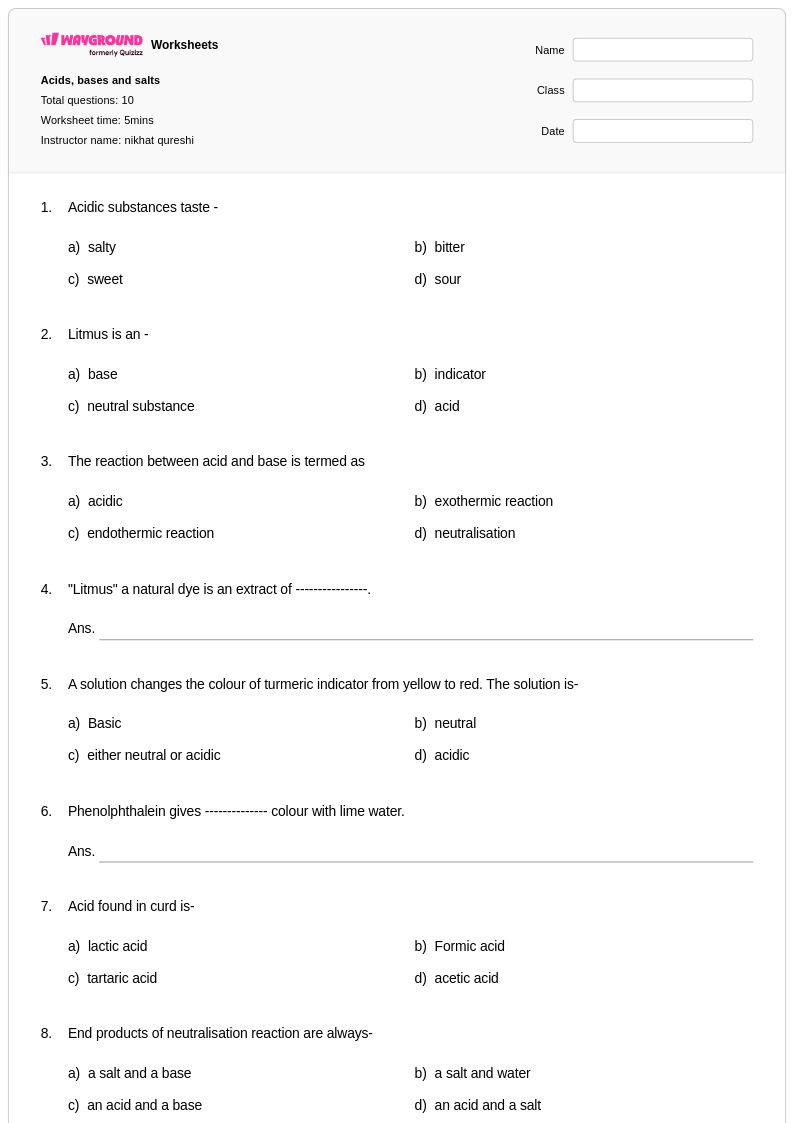
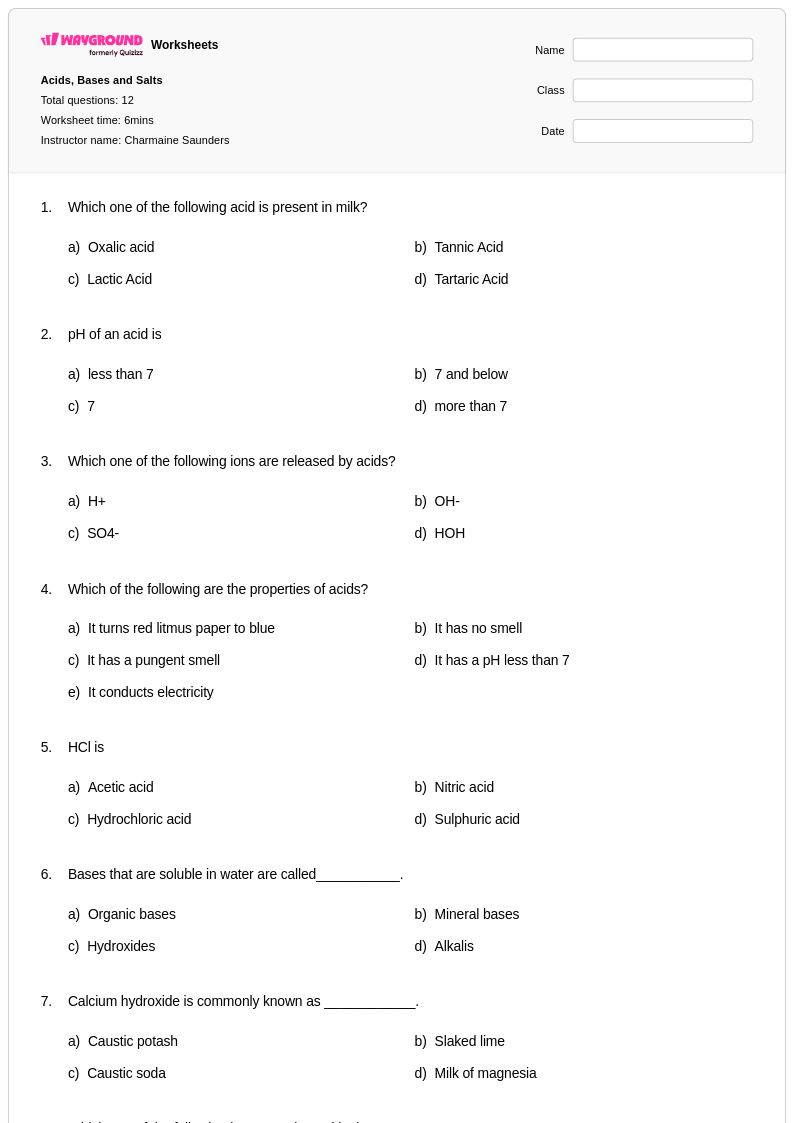
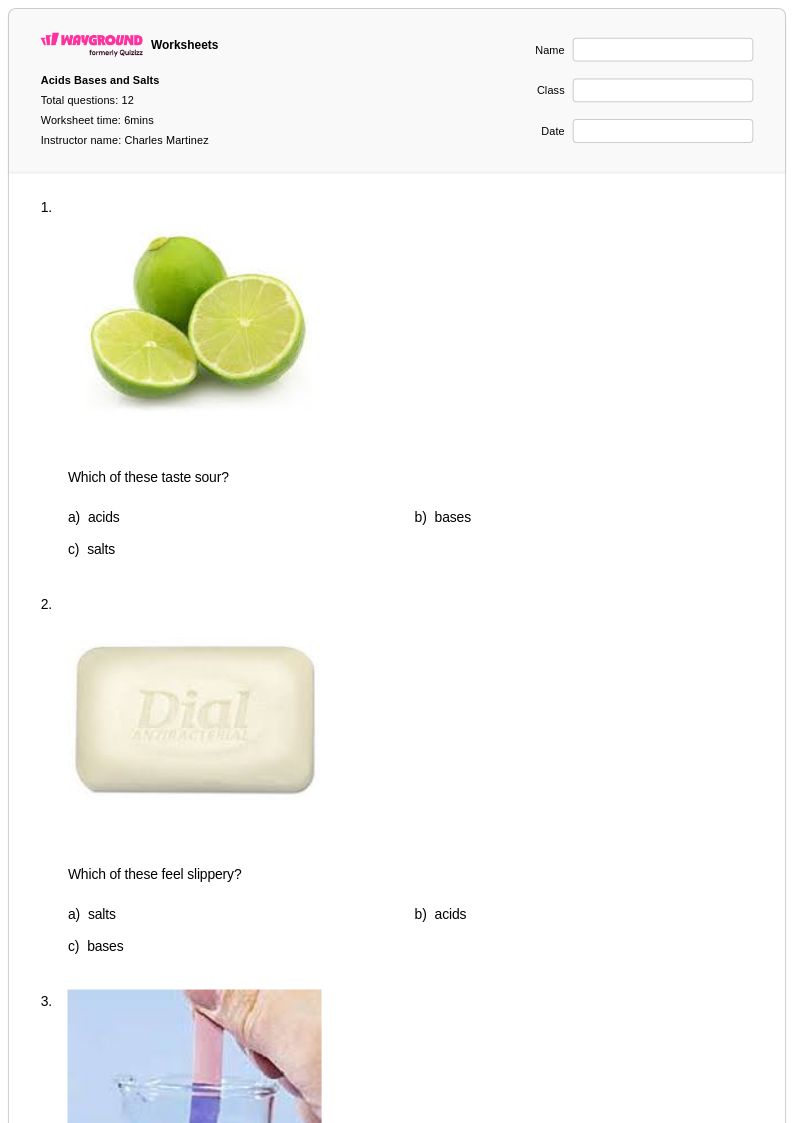
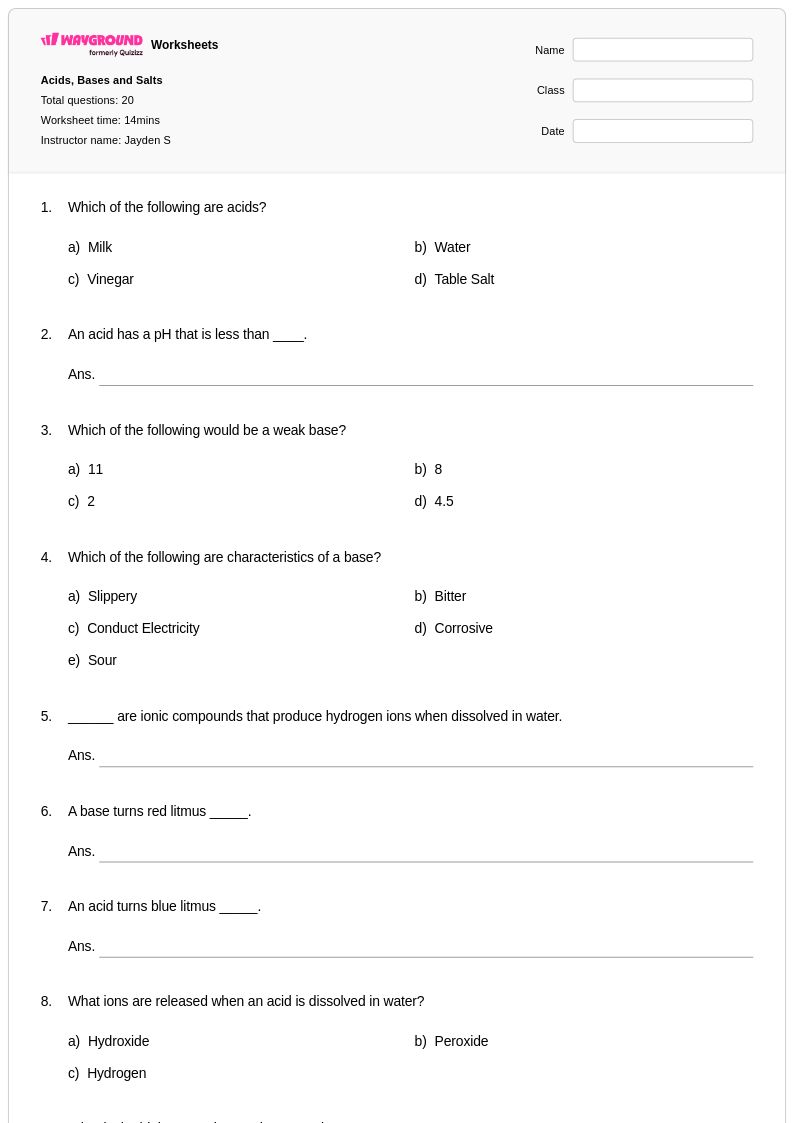
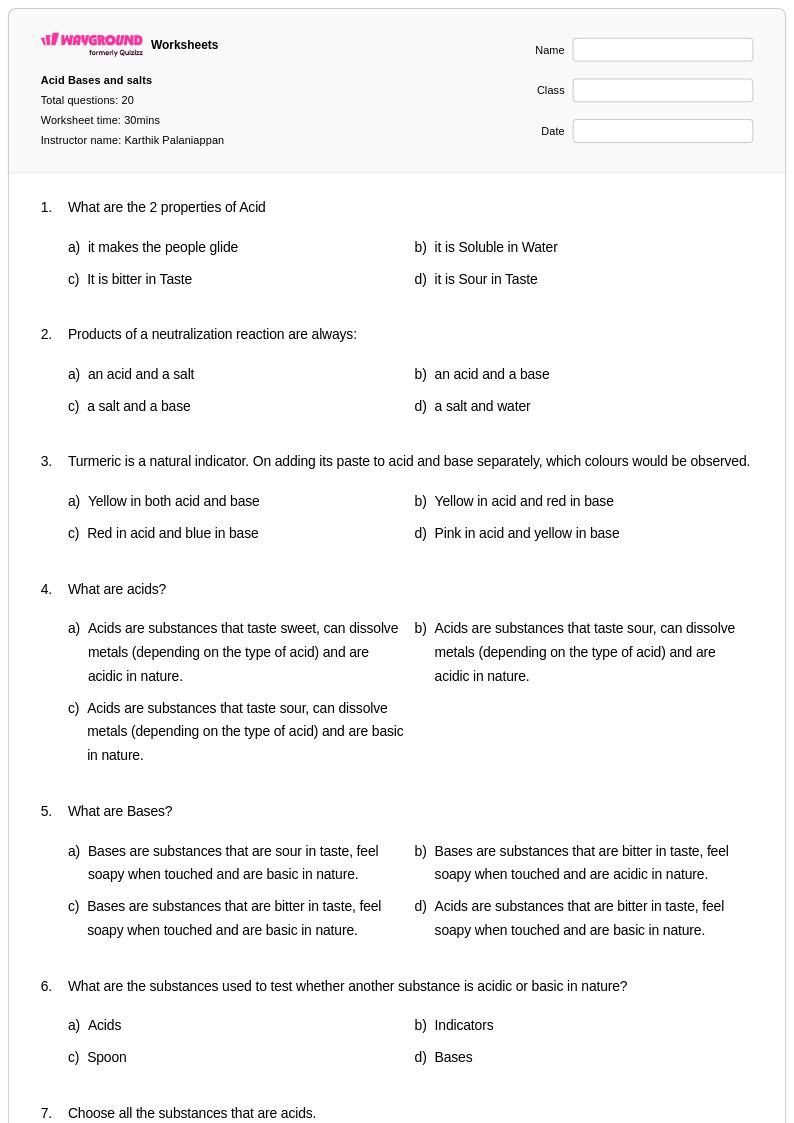
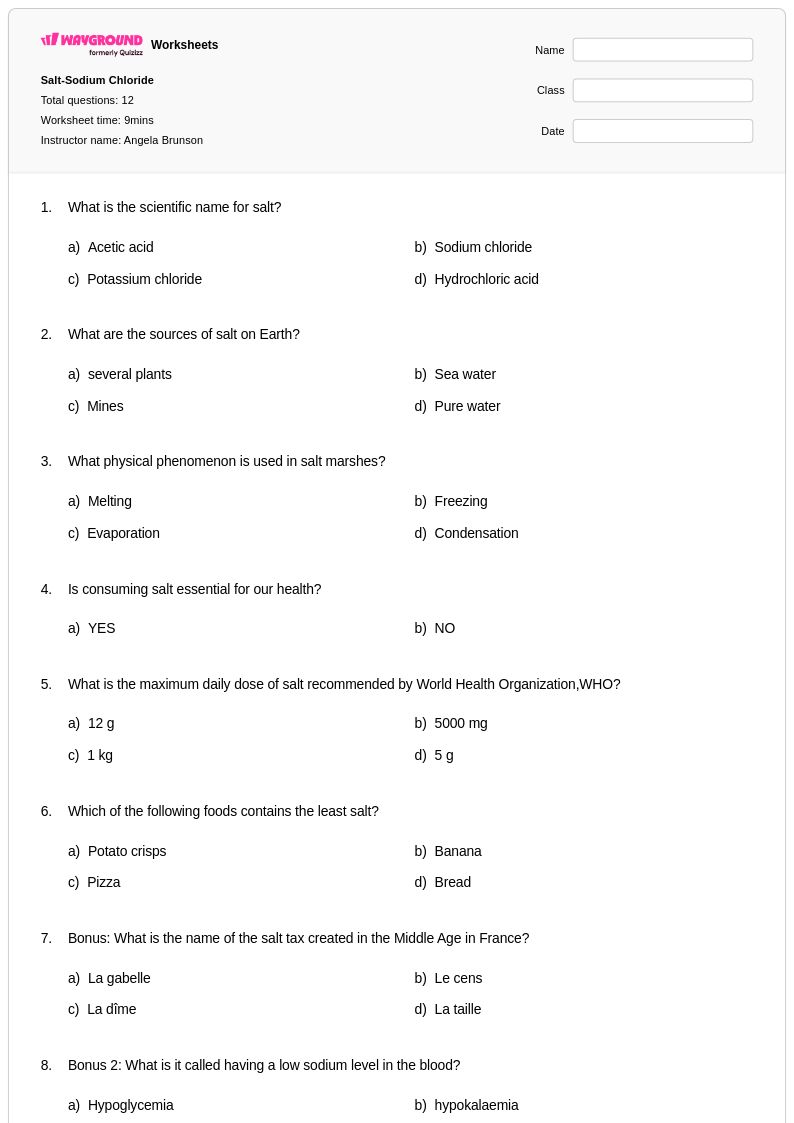
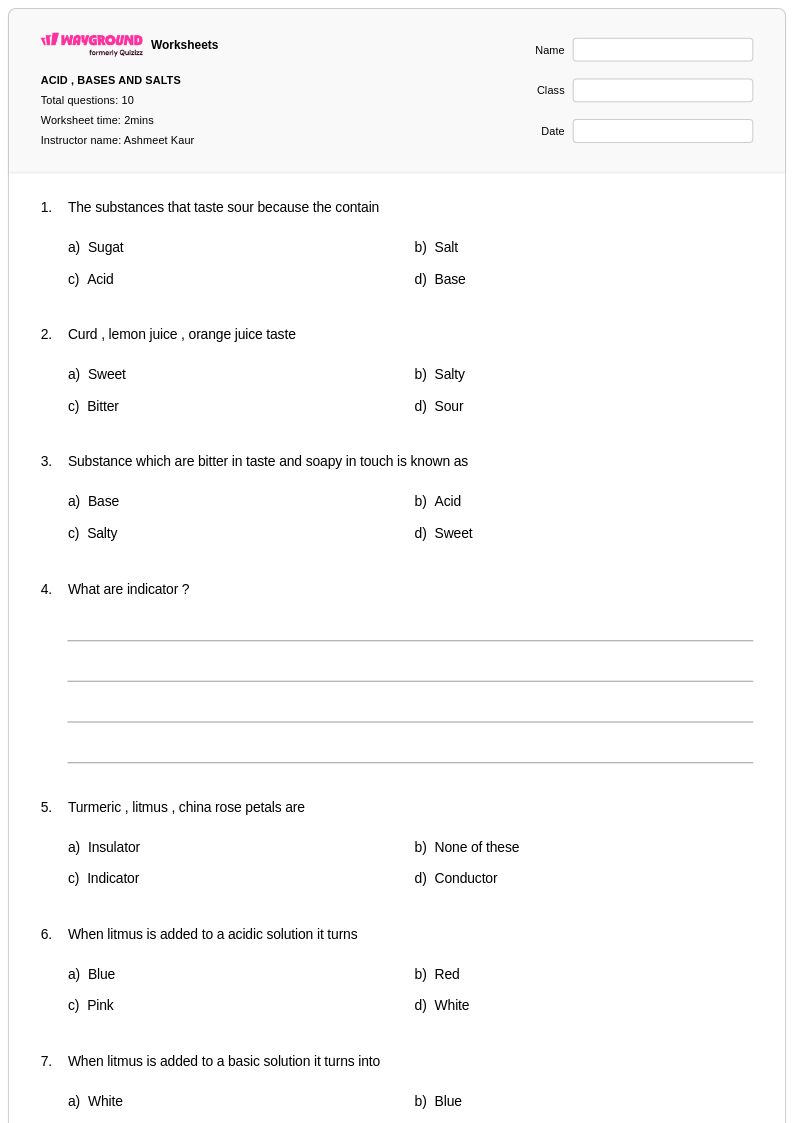
Explore our comprehensive Year 6 salts worksheets and printables that help students master chemical compounds, ionic bonding, and salt formation through engaging practice problems, free PDF downloads, and complete answer keys.
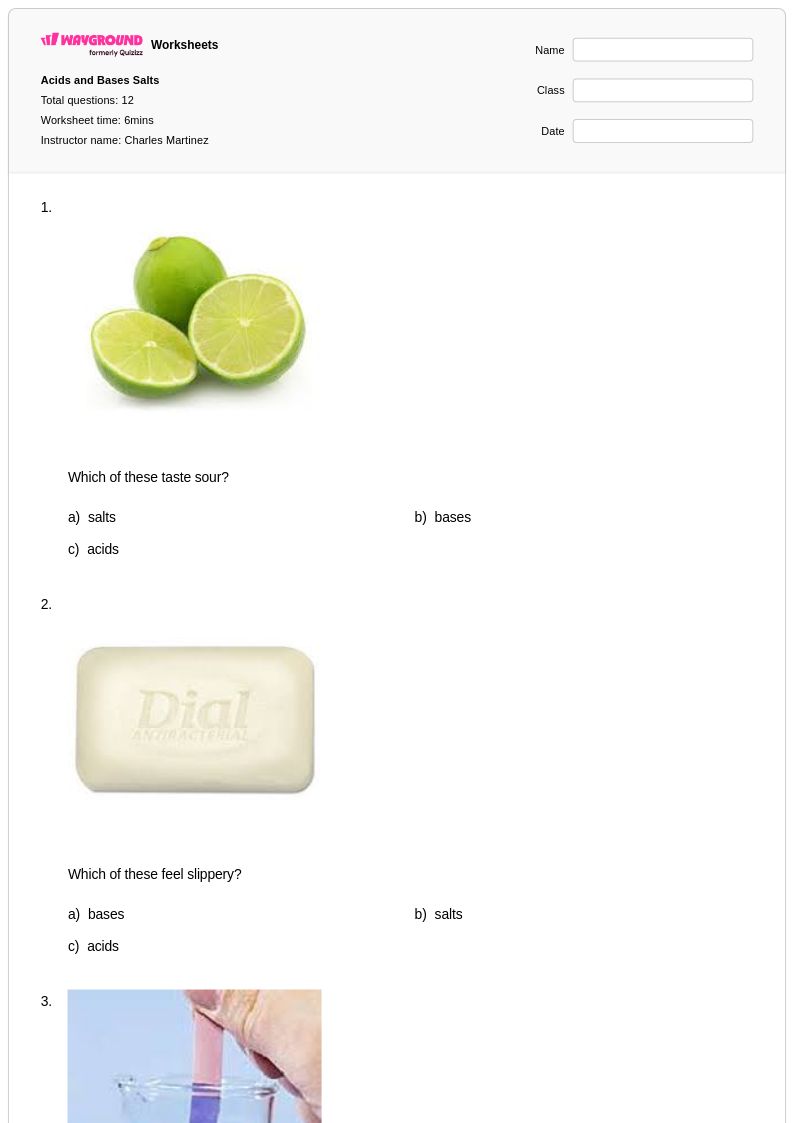
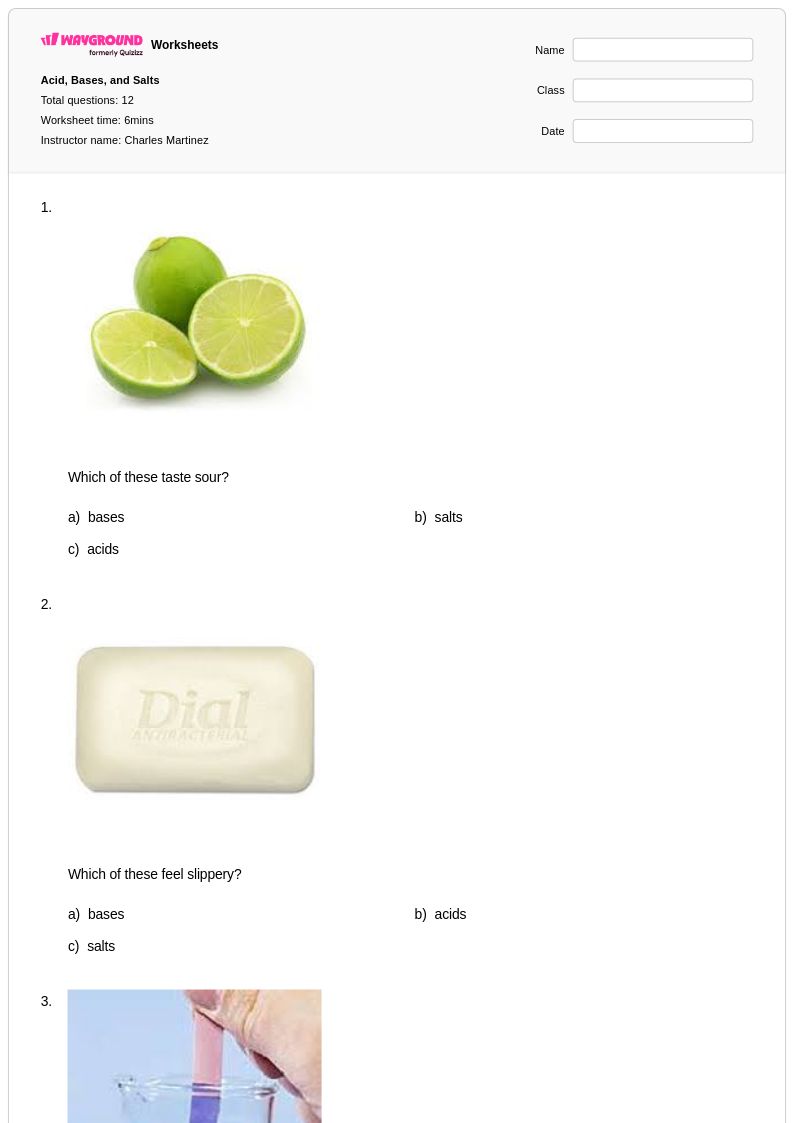
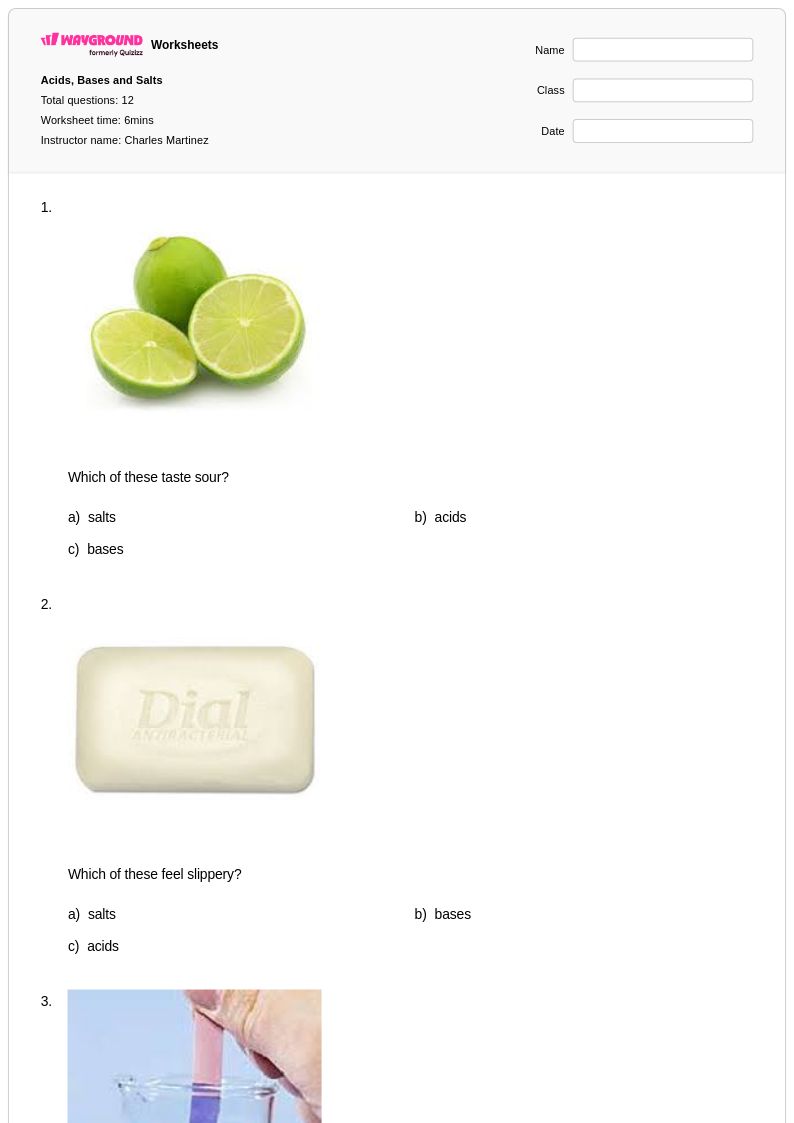
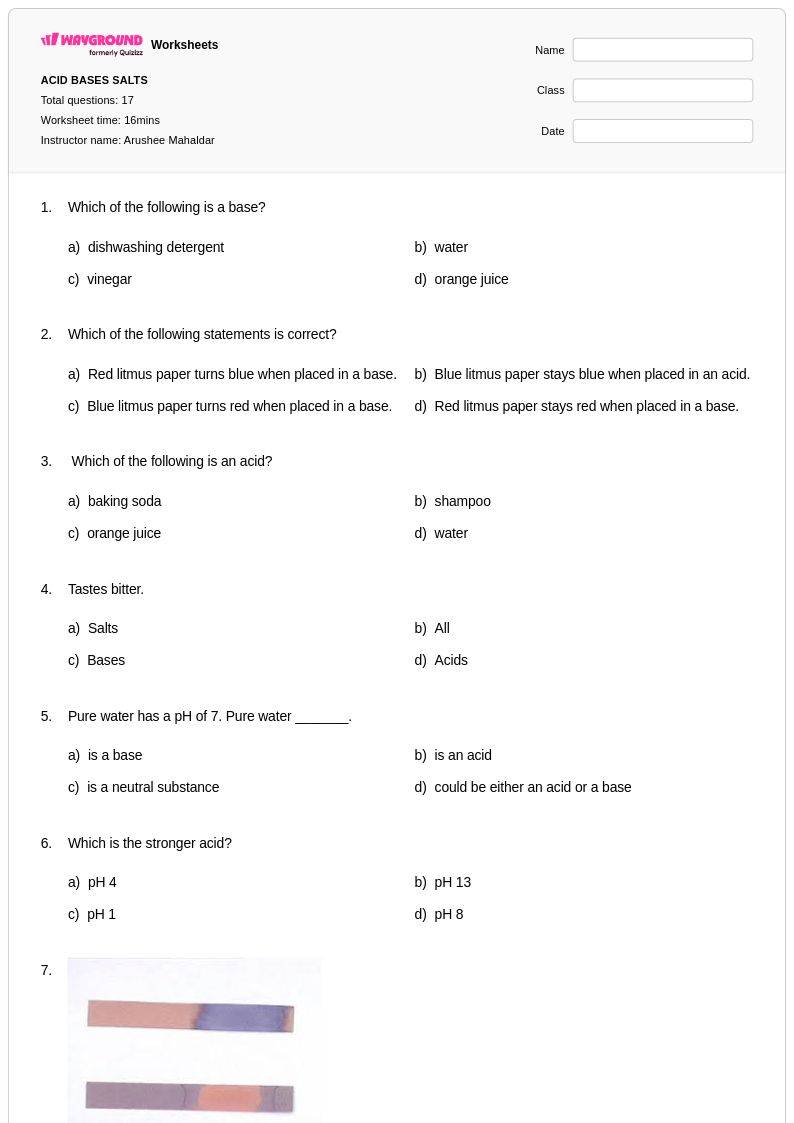
Year 6 salts worksheets available through Wayground (formerly Quizizz) provide comprehensive coverage of this fundamental chemistry concept, helping students understand how ionic compounds form when acids and bases neutralize each other. These carefully designed educational resources strengthen critical scientific skills including identifying common salts like sodium chloride and calcium carbonate, understanding the properties that distinguish salts from their parent acids and bases, and recognizing real-world applications of salts in food preservation, water treatment, and industrial processes. Each worksheet collection includes detailed answer keys that support independent learning and self-assessment, while the free printables offer practice problems ranging from basic salt identification to more complex scenarios involving salt formation reactions and solubility patterns.
Wayground (formerly Quizizz) empowers educators with access to millions of teacher-created salt chemistry resources that streamline lesson planning and accommodate diverse learning needs in the Year 6 science classroom. The platform's robust search and filtering capabilities allow teachers to quickly locate worksheets aligned with specific curriculum standards, while built-in differentiation tools enable customization for students requiring remediation or enrichment activities. These versatile materials are available in both printable pdf format and interactive digital versions, providing flexibility for traditional classroom instruction, homework assignments, or remote learning environments. Teachers can efficiently modify existing worksheets or combine multiple resources to create targeted practice sessions that reinforce salt chemistry concepts and prepare students for assessments while building confidence in their understanding of ionic compound behavior.
FAQs
How do I teach students the difference between salt types in chemistry?
Start by establishing that all salts are ionic compounds formed when an acid and base neutralize each other, then categorize them by anion type: binary salts (metal + nonmetal), oxy-salts (containing polyatomic anions like sulfate or nitrate), and acid salts (partially neutralized acids). Teaching nomenclature alongside formation helps students connect structure to naming conventions from the start. Using IUPAC naming rules consistently prevents confusion when students later encounter complex polyatomic compounds.
What practice exercises help students get better at naming ionic compounds and salts?
The most effective practice combines formula-to-name and name-to-formula exercises in equal measure, so students build fluency in both directions. Scaffolded problem sets work best: begin with binary salts using fixed-charge metals, then introduce variable-charge metals requiring Roman numerals, and finally move to polyatomic ions. Balancing salt formation equations alongside naming tasks reinforces the connection between chemical identity and composition.
What common mistakes do students make when learning about salts and ionic compounds?
One of the most frequent errors is confusing the charge of polyatomic ions, particularly writing sulfate as SO3²⁻ instead of SO4²⁻ or misremembering nitrate versus nitrite. Students also regularly forget to balance ionic charges when writing formulas, defaulting to a 1:1 ratio regardless of valency. A third persistent misconception is assuming all salts are soluble in water, which conflicts with solubility rules they need to apply in solution chemistry.
How do I use salts worksheets to assess whether students understand neutralization reactions?
Effective assessment goes beyond naming: include problems that ask students to write complete neutralization equations, identify the acid and base that produced a given salt, and predict the pH of the resulting solution based on the strength of the parent acid and base. If students can correctly reverse-engineer the reactants from a salt's formula, they demonstrate genuine understanding of the reaction mechanism rather than rote memorization of nomenclature rules.
How can I use Wayground's salts worksheets in my chemistry class?
Wayground's salts worksheets are available as printable PDFs for traditional classroom and homework use, and in digital formats for technology-integrated or blended learning environments. Teachers can also host them as a quiz directly on Wayground, enabling instant student submission and streamlined grading. Each worksheet includes a complete answer key, which supports both self-assessment by students and targeted feedback from instructors.
How do I support struggling students when teaching salt chemistry without slowing down the rest of the class?
Wayground allows teachers to apply individual accommodations to specific students, including extended time per question, read-aloud support for written problems, and reduced answer choices to lower cognitive load, without notifying or affecting other students. These settings can be configured from the Students tab or session settings page and are saved for future assignments, making differentiated support practical to maintain across an entire unit on salts.