
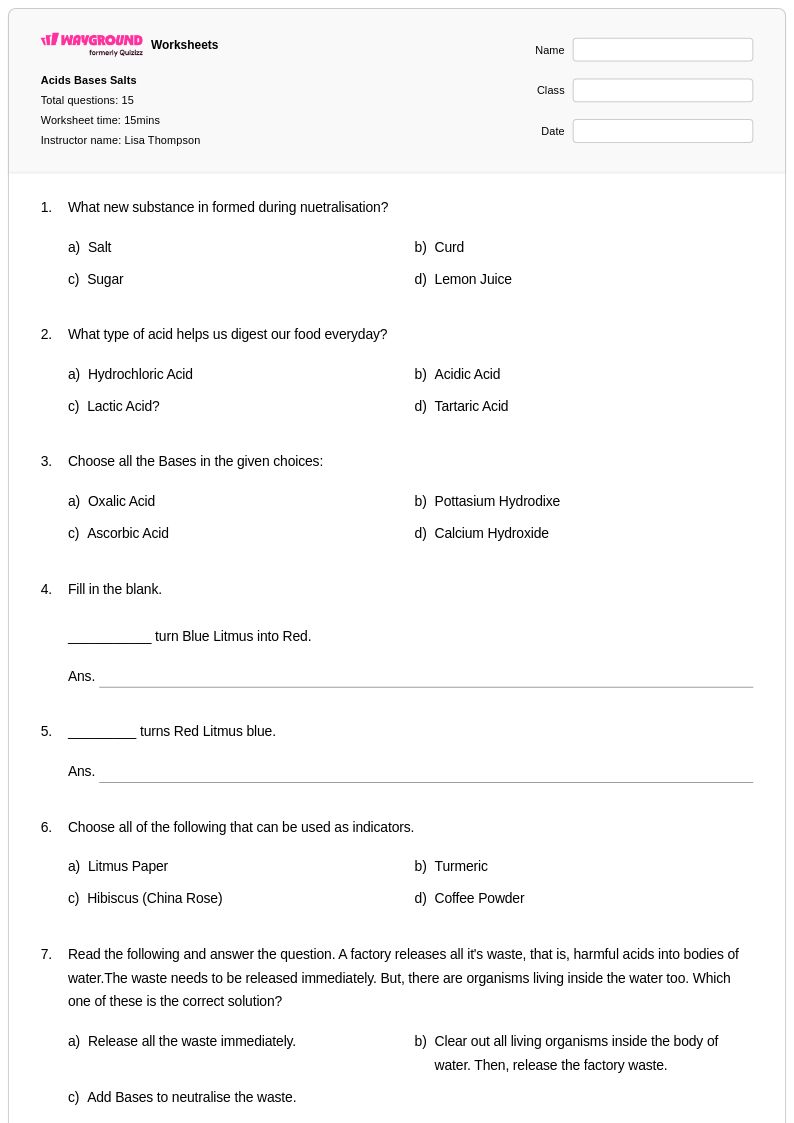
15 Q
7th - Uni
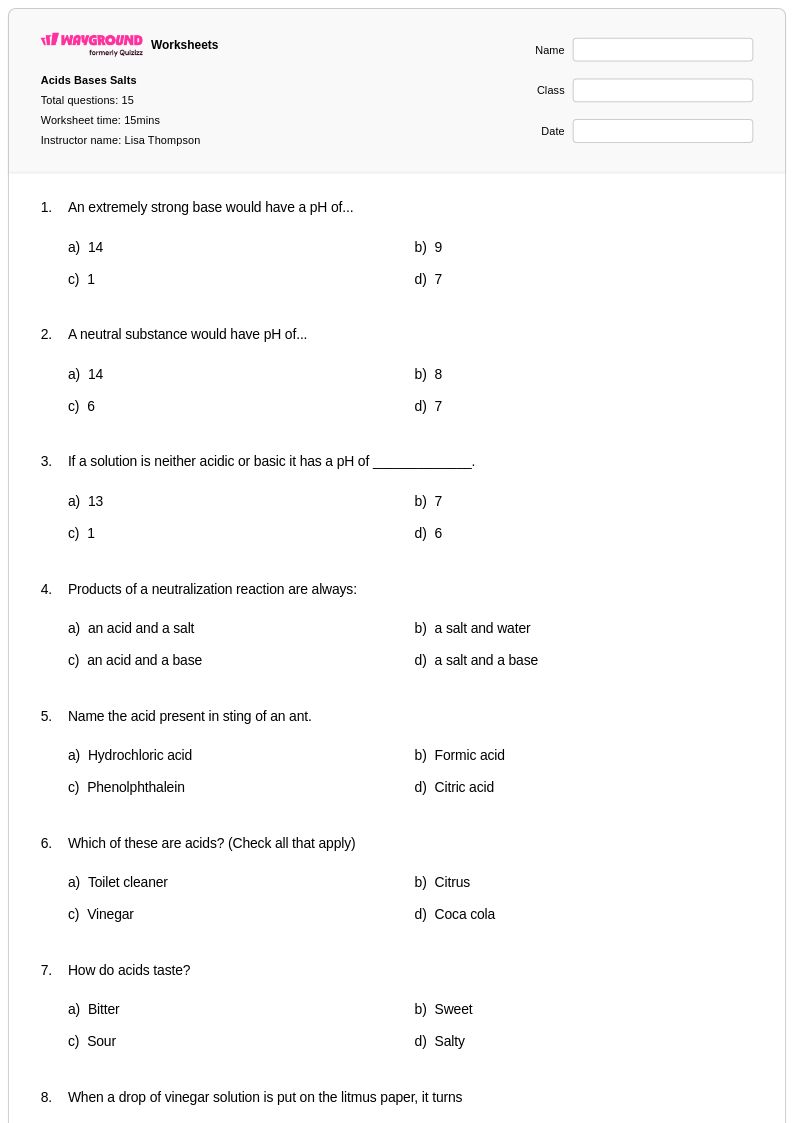
15 Q
7th - Uni
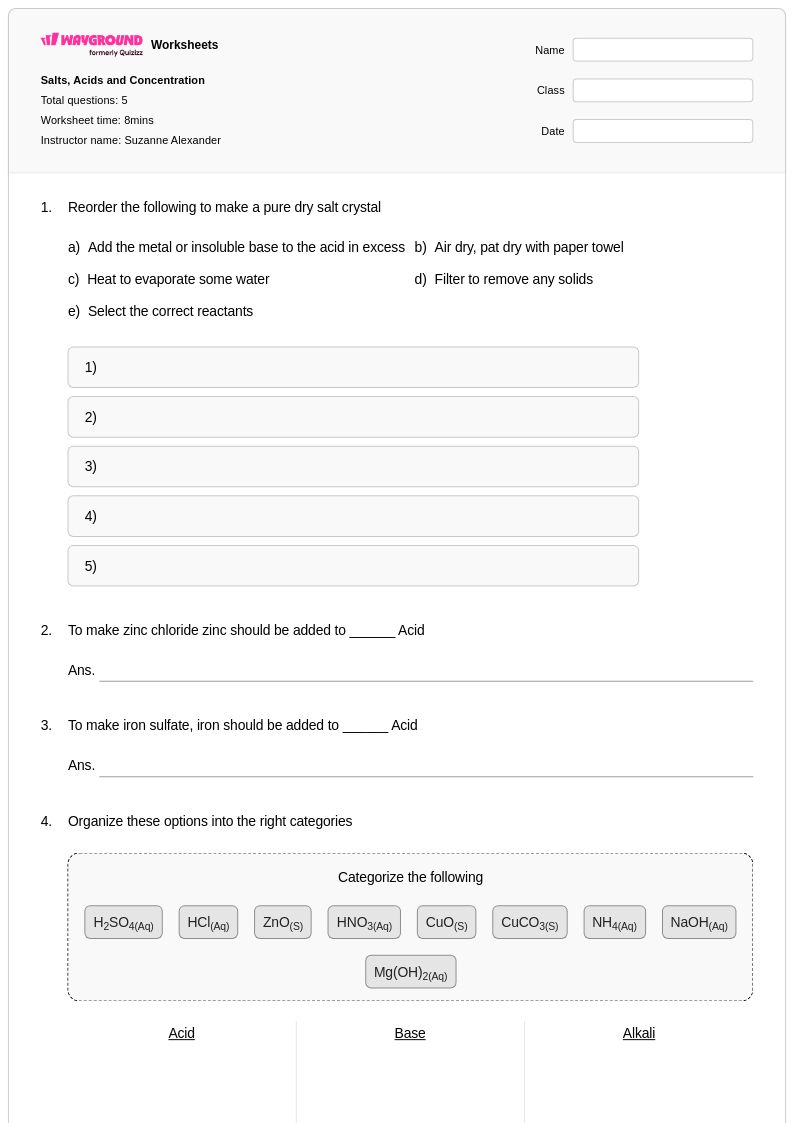
5 Q
9th - 12th
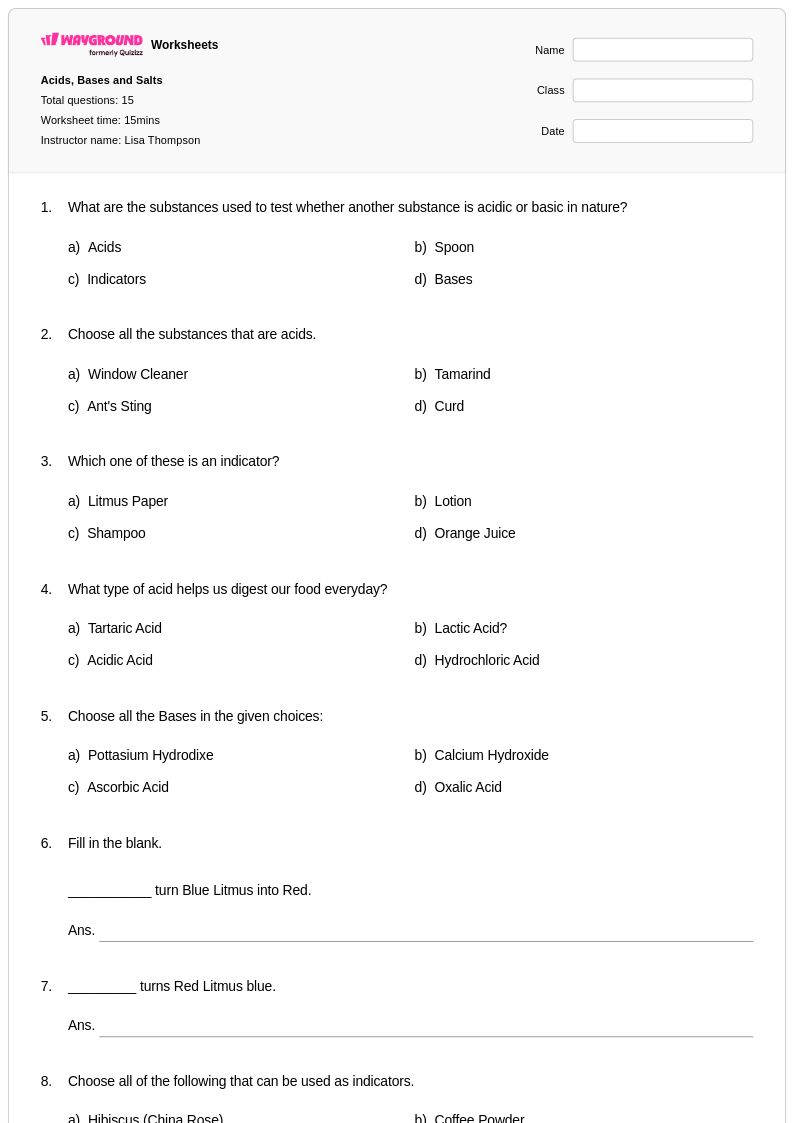
15 Q
7th - Uni
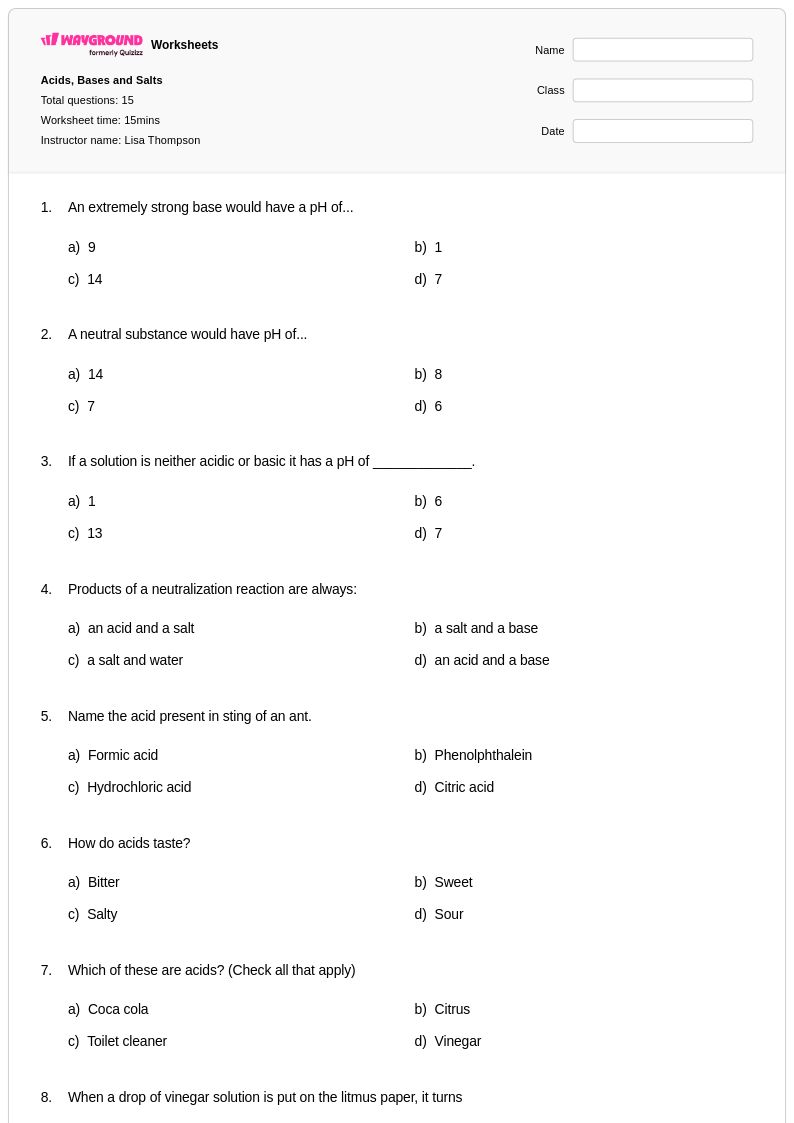
15 Q
7th - Uni
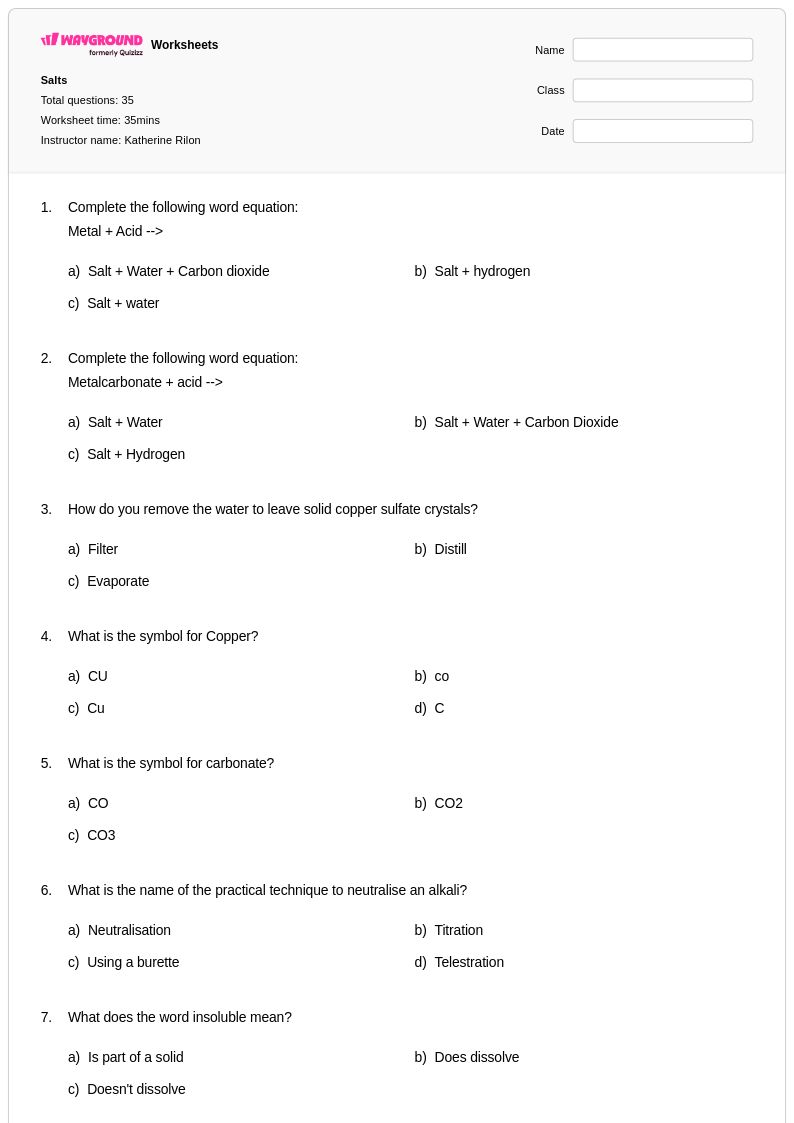
35 Q
10th - 11th
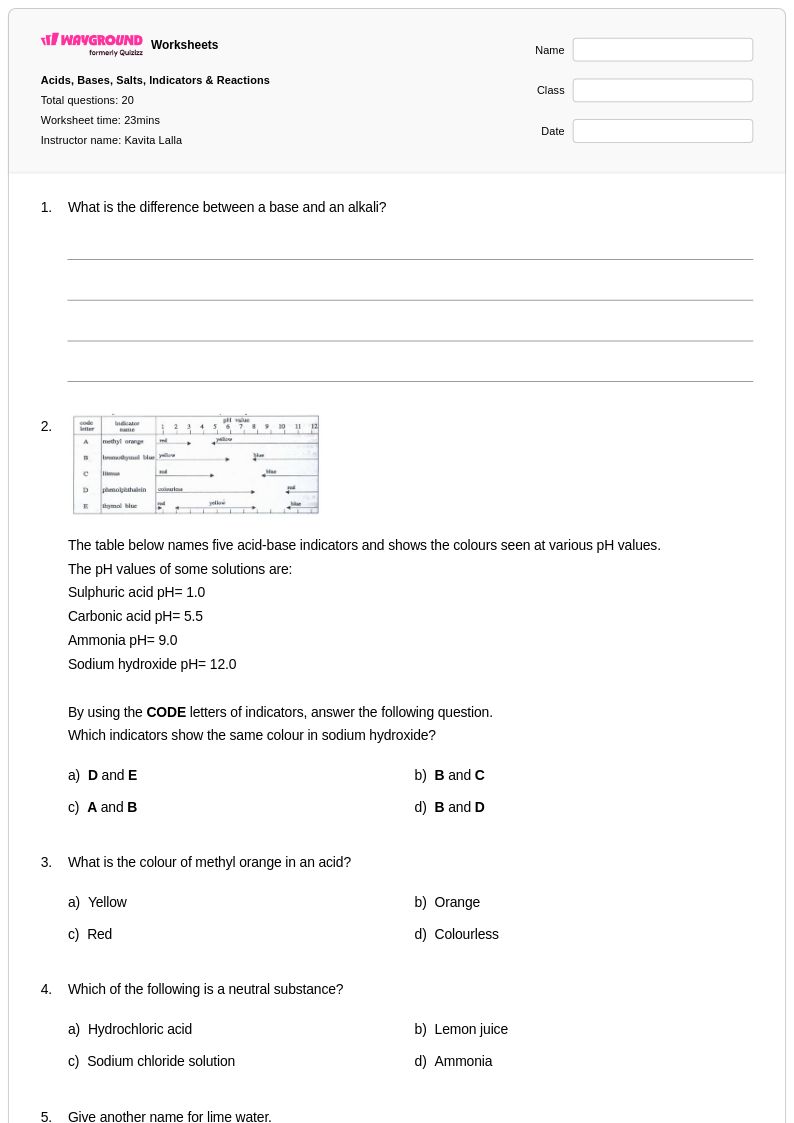
20 Q
8th - 12th
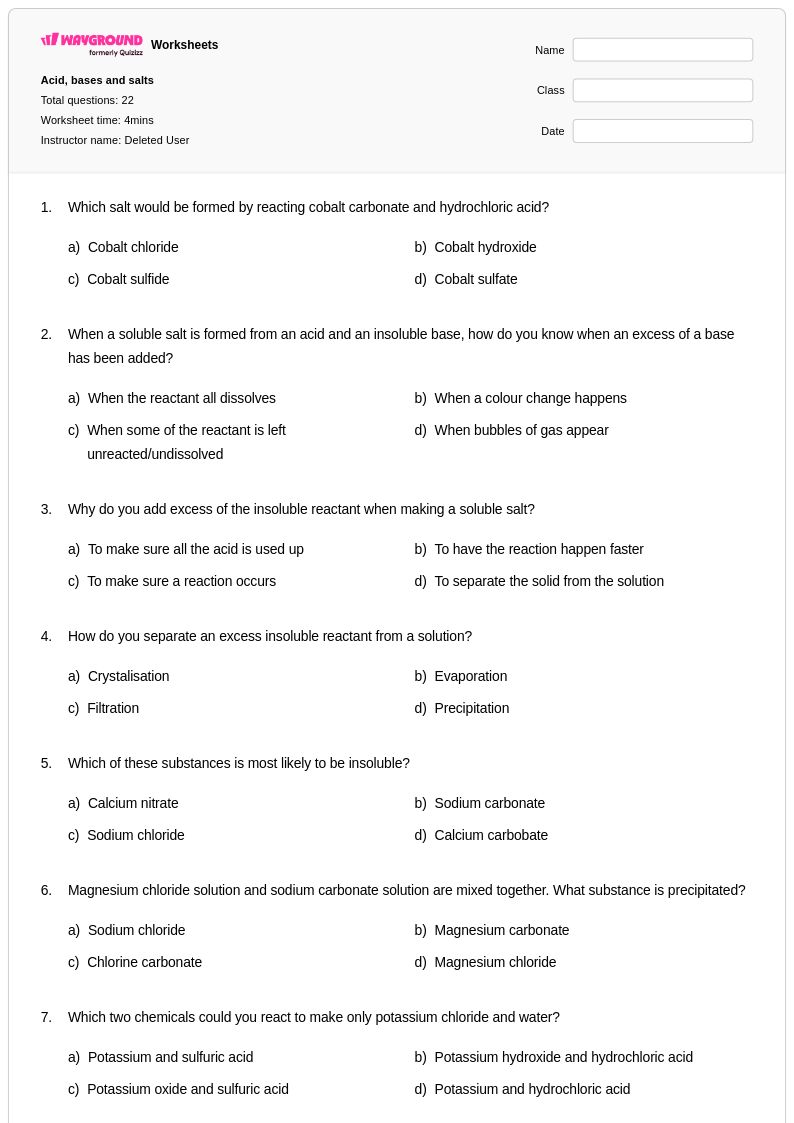
22 Q
10th - 11th
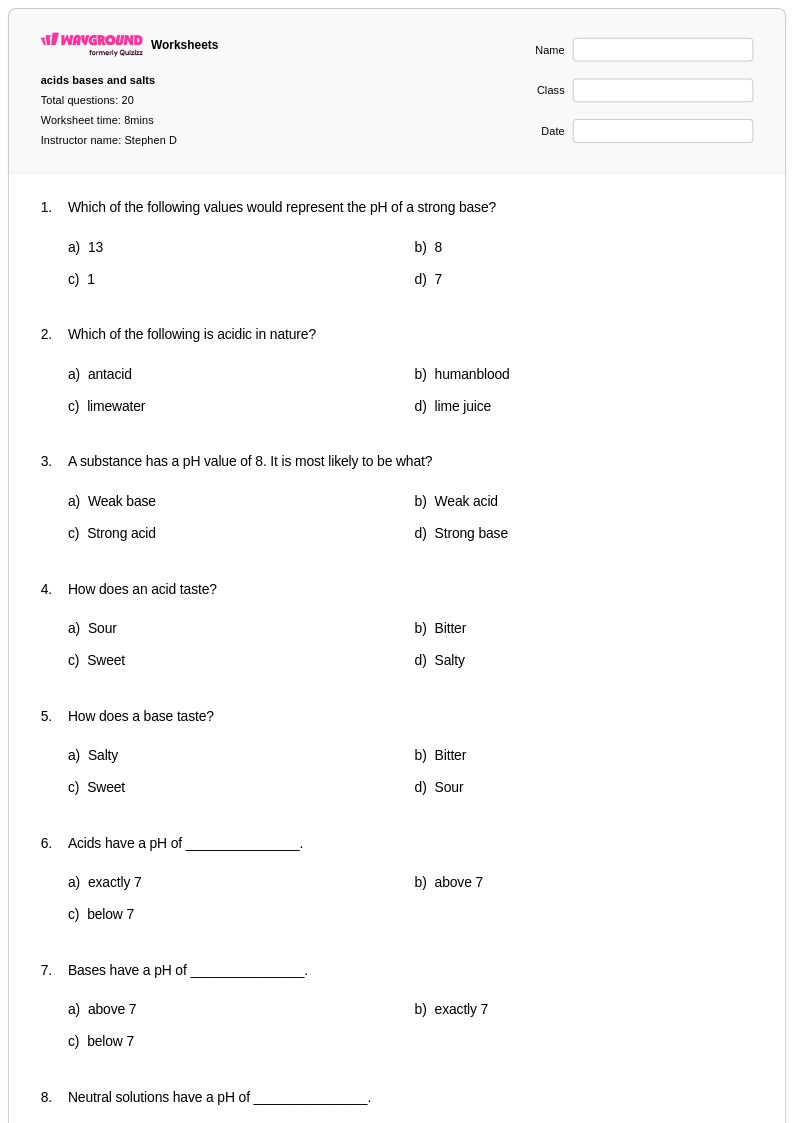
20 Q
8th - 12th
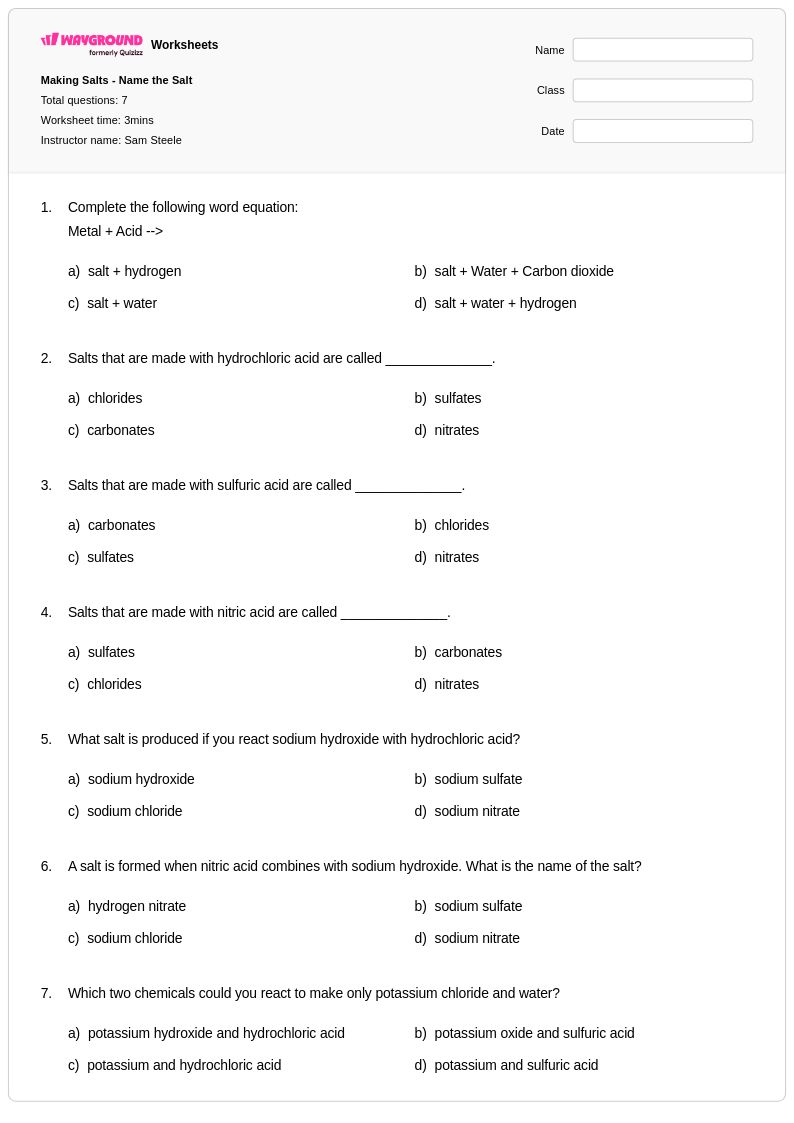
7 Q
7th - 12th
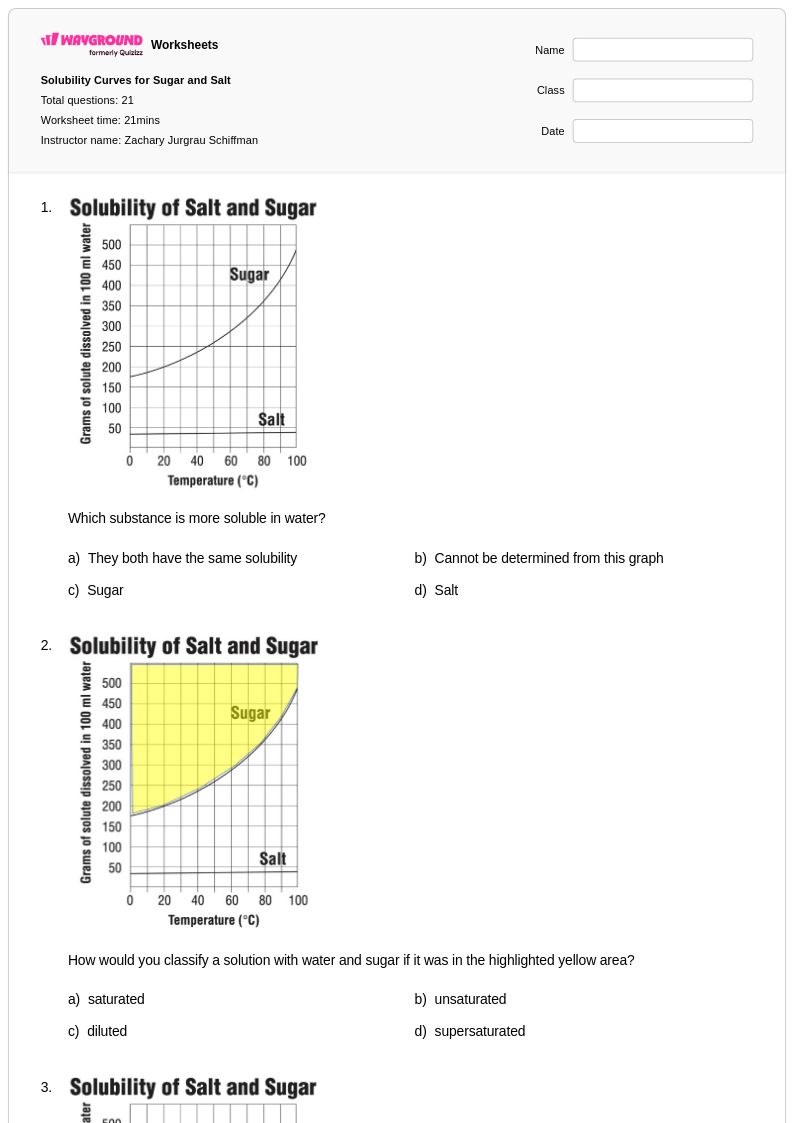
21 Q
9th - 12th
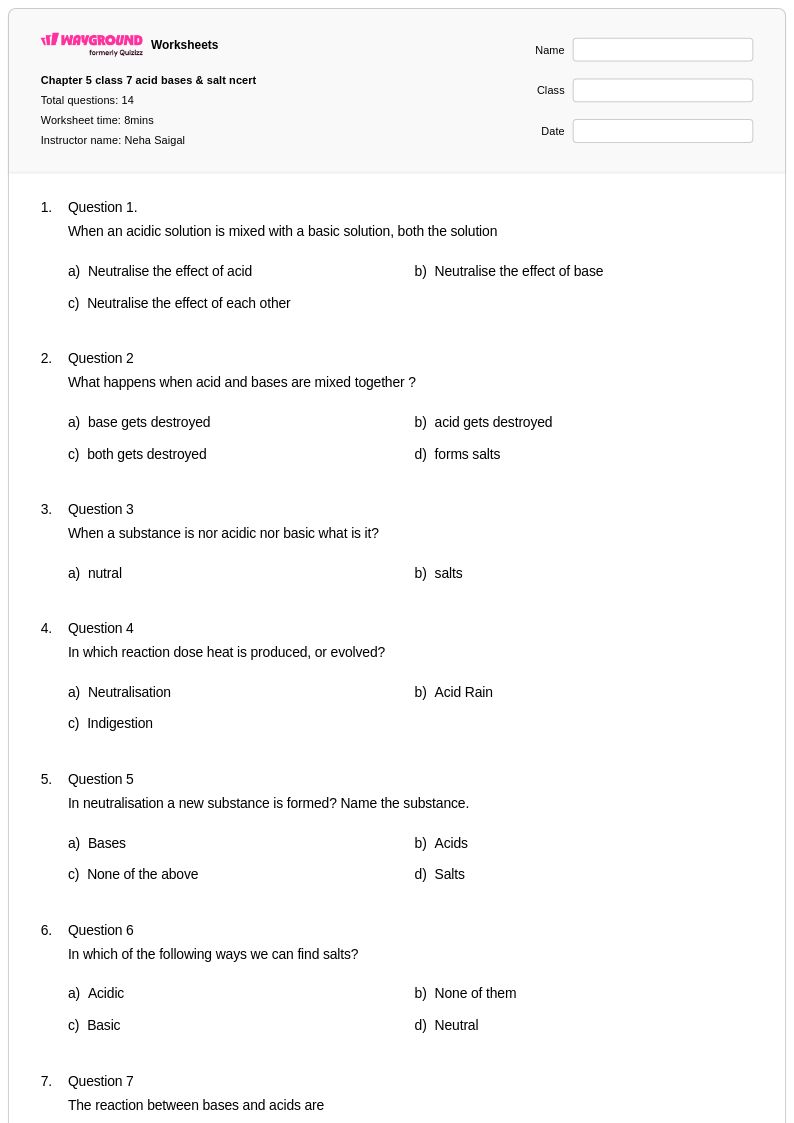
14 Q
7th - PD
20 Q
9th - 11th
27 Q
11th
20 Q
6th - PD
10 Q
10th - 12th
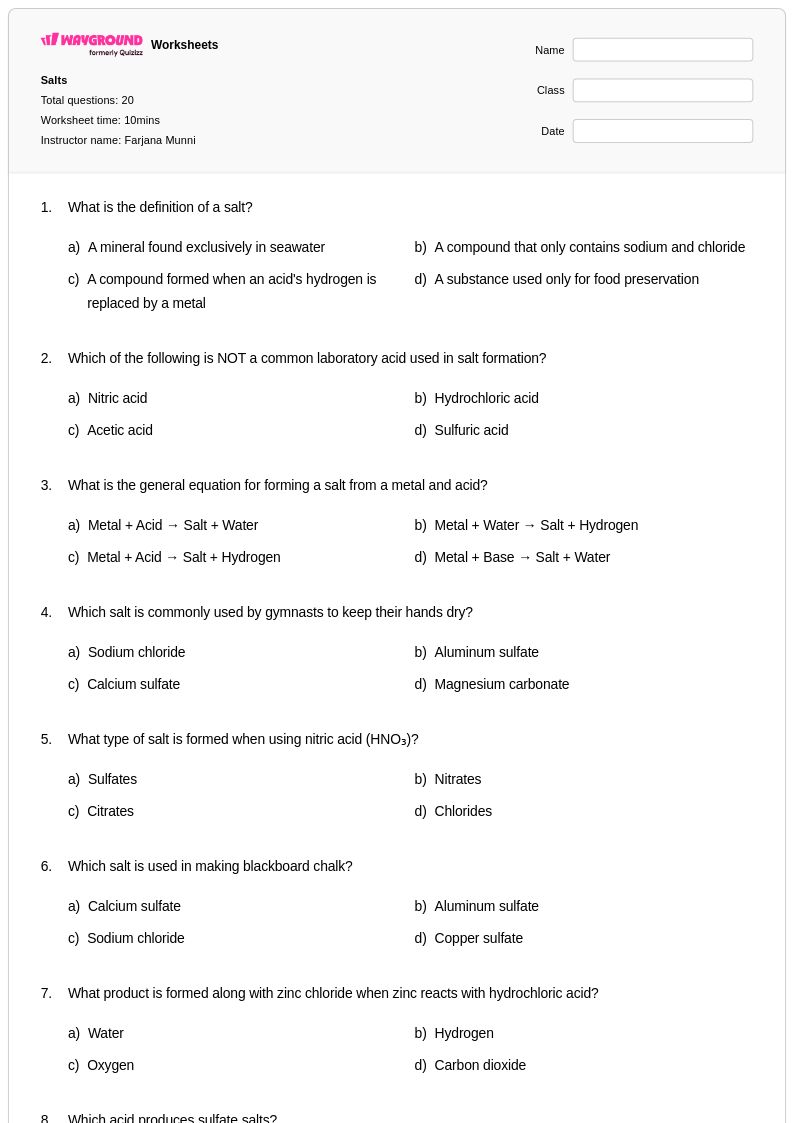
20 Q
9th - Uni
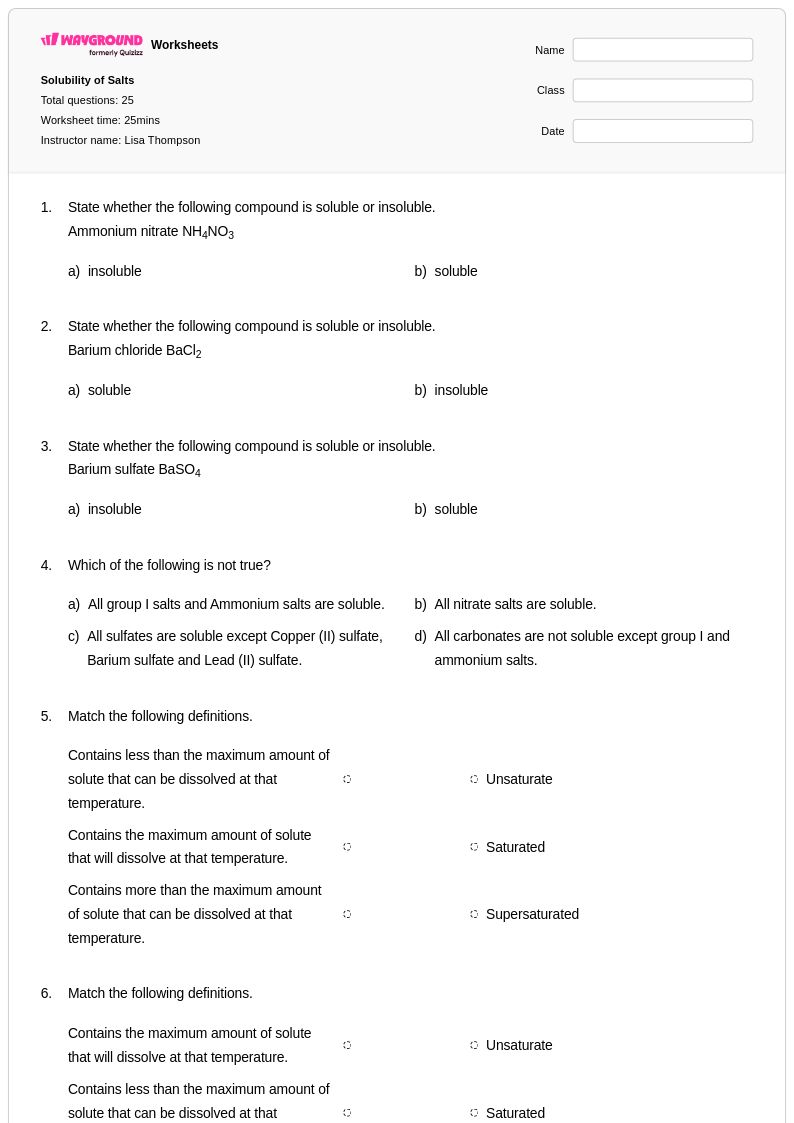
25 Q
8th - Uni
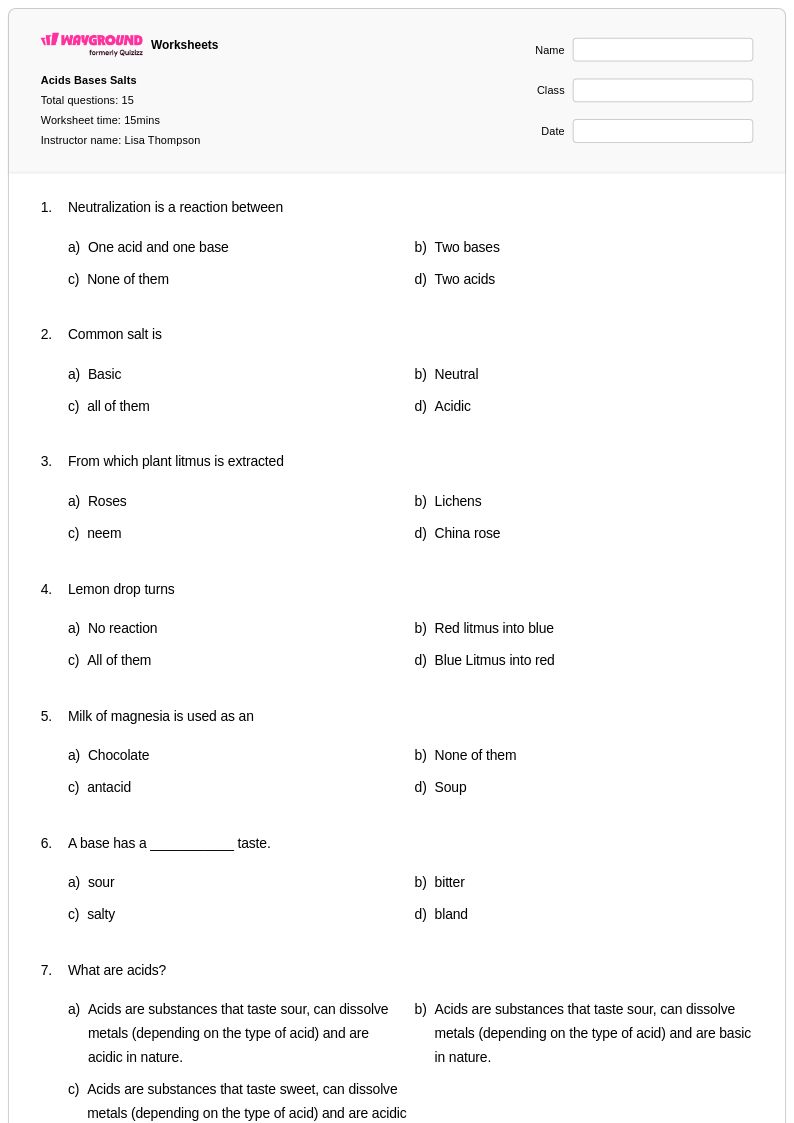
15 Q
7th - Uni
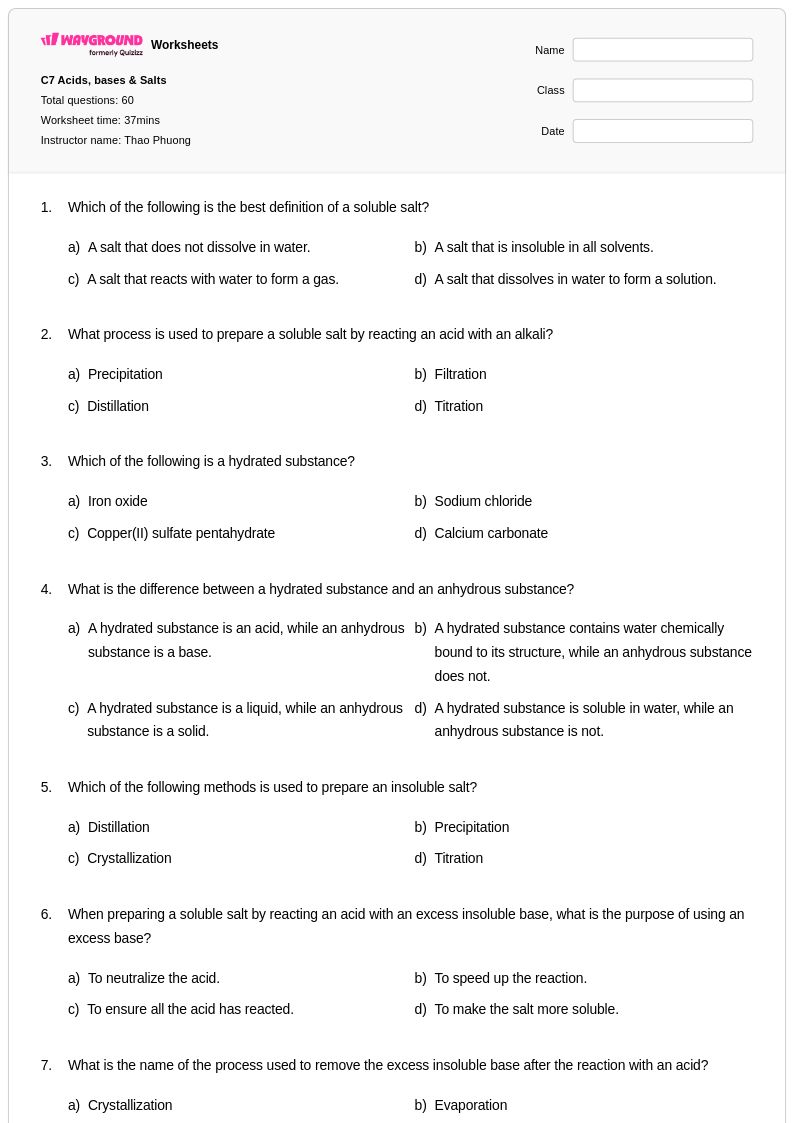
60 Q
9th - Uni
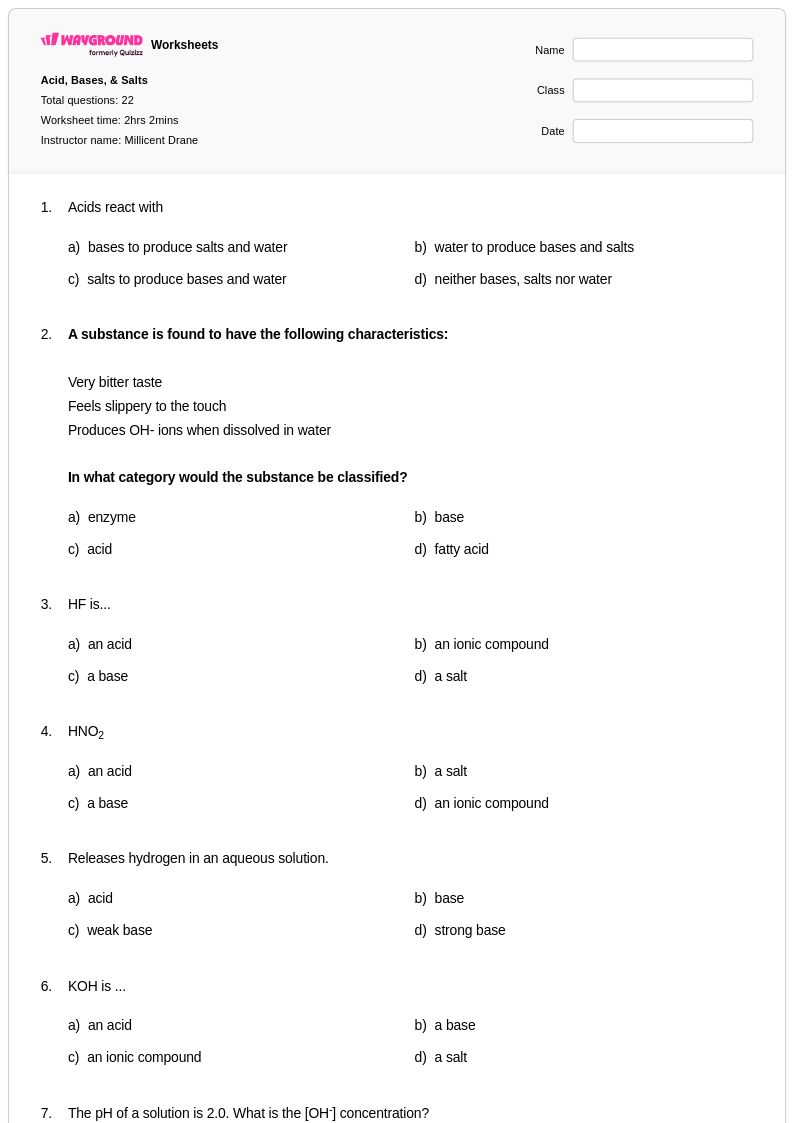
22 Q
11th
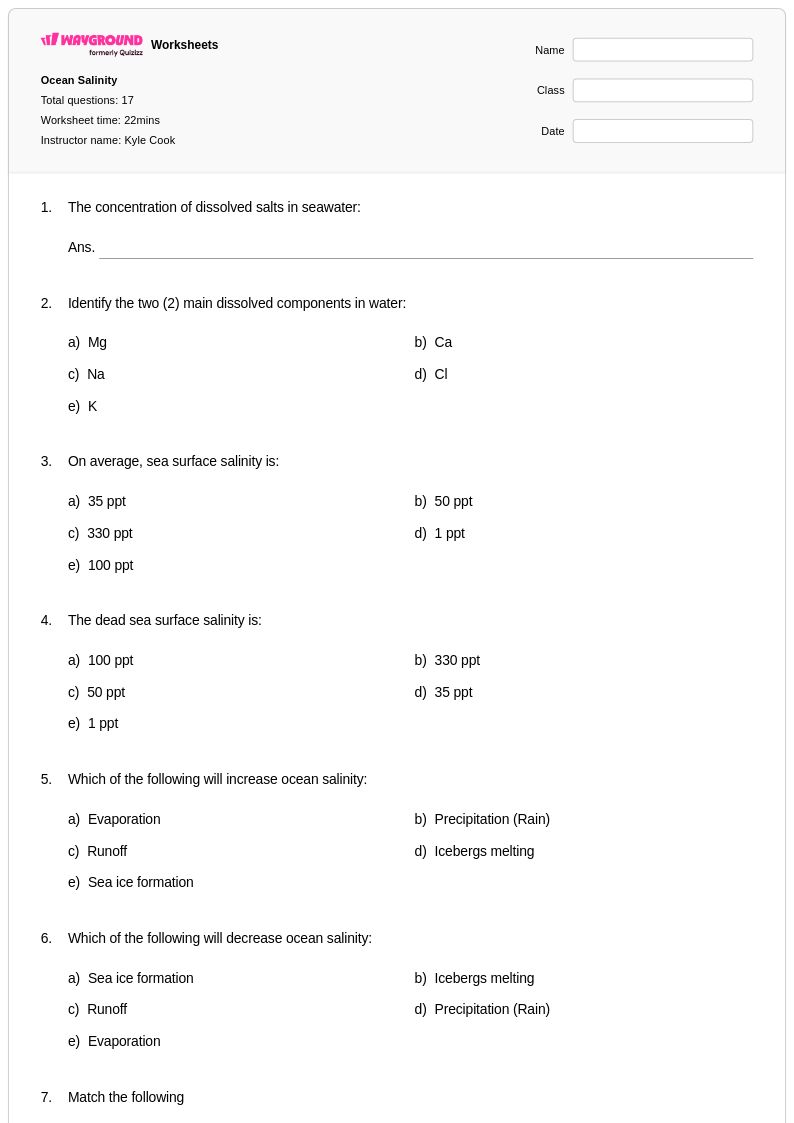
17 Q
9th - 12th
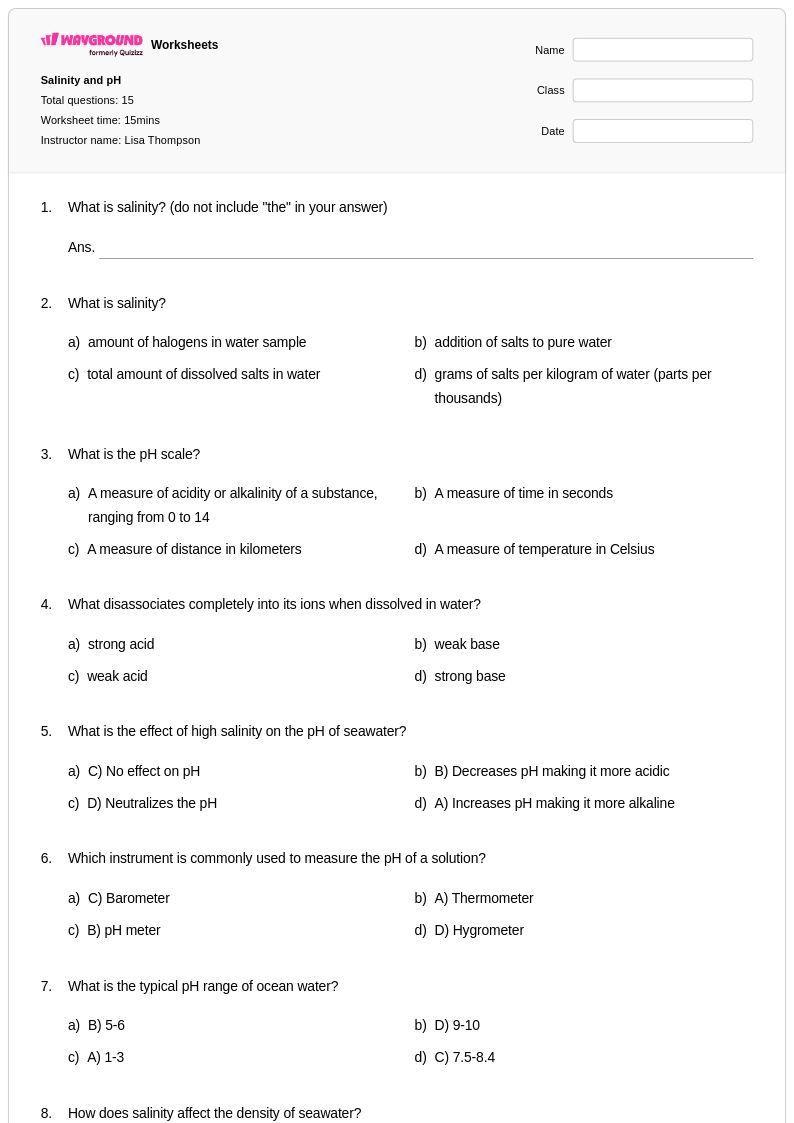
15 Q
9th - Uni
Explore Other Subject Worksheets for year 11
Explore printable Salts worksheets for Year 11
Year 11 salts worksheets available through Wayground (formerly Quizizz) provide comprehensive coverage of ionic compound formation, nomenclature, and chemical properties essential for advanced high school chemistry students. These expertly crafted resources strengthen students' understanding of salt formation through acid-base neutralization reactions, solubility rules, and crystal lattice structures while developing critical skills in chemical equation balancing and ionic formula writing. The collection includes detailed practice problems that guide students through identifying cations and anions, predicting salt solubility in various solutions, and analyzing the relationship between ionic bonding and physical properties. Each worksheet comes with a complete answer key and is available as a free printable pdf, making it easy for educators to implement immediate feedback and assessment strategies that reinforce proper salt nomenclature and reaction prediction techniques.
Wayground (formerly Quizizz) empowers chemistry teachers with millions of teacher-created salt worksheets that feature robust search and filtering capabilities, allowing educators to quickly locate resources aligned with specific curriculum standards and learning objectives. The platform's differentiation tools enable teachers to customize worksheet difficulty levels and problem types to meet diverse student needs, while flexible formatting options provide both printable pdf versions for traditional classroom use and digital formats for online learning environments. These comprehensive features streamline lesson planning by offering ready-to-use materials for skill practice, targeted remediation for students struggling with ionic compound concepts, and enrichment activities for advanced learners ready to explore complex salt hydrolysis and buffer systems. The extensive database ensures teachers can access age-appropriate content that progresses logically from basic salt identification to sophisticated analysis of ionic equilibria and precipitation reactions.
FAQs
How do I teach students the difference between salt types in chemistry?
What practice exercises help students get better at naming ionic compounds and salts?
What common mistakes do students make when learning about salts and ionic compounds?
How do I use salts worksheets to assess whether students understand neutralization reactions?
How can I use Wayground's salts worksheets in my chemistry class?
How do I support struggling students when teaching salt chemistry without slowing down the rest of the class?