Free Printable Chemical Reactivity Worksheets for Year 11
Free Year 11 chemical reactivity worksheets and printables help students master reaction patterns, predict products, and understand factors affecting reaction rates through comprehensive practice problems with detailed answer keys.
Explore printable Chemical Reactivity worksheets for Year 11
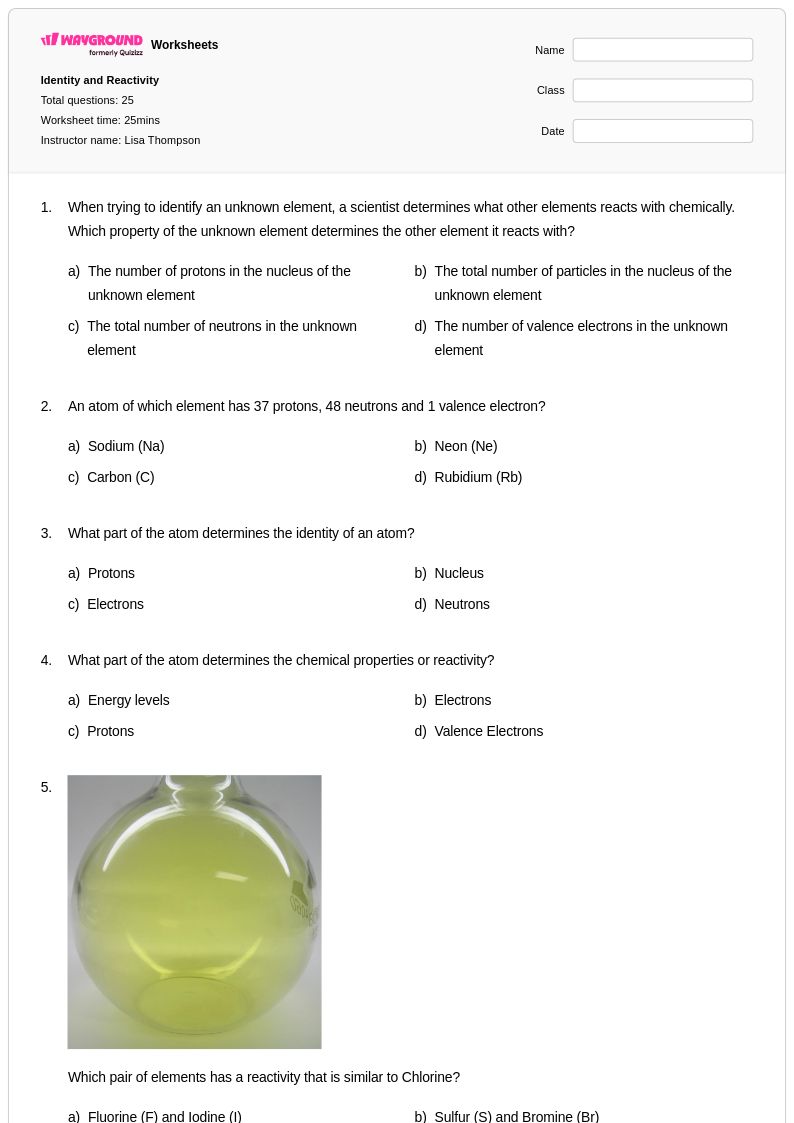
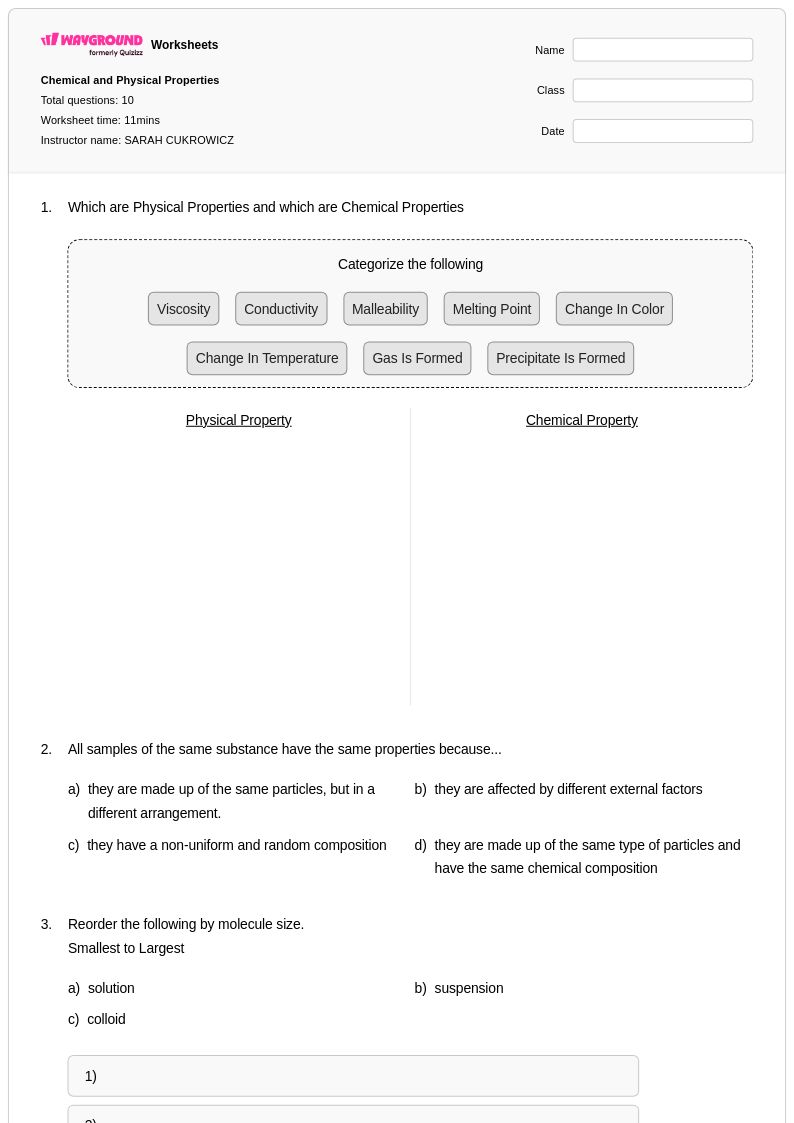
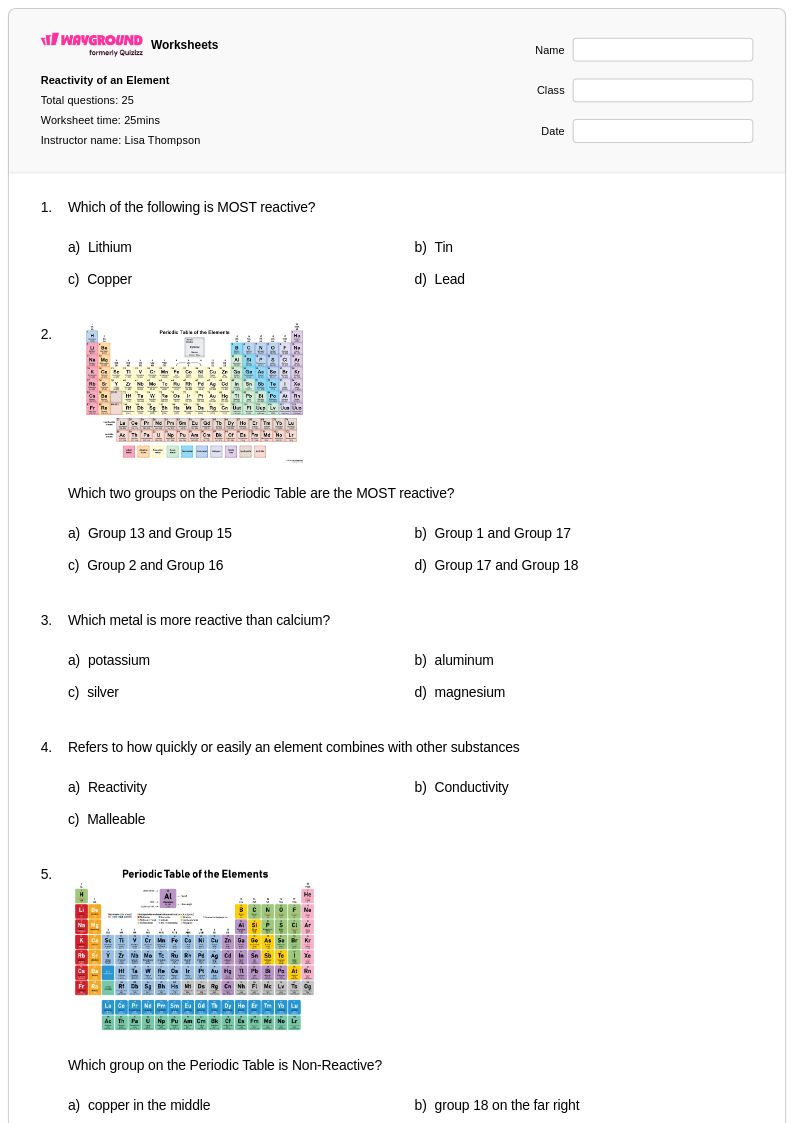
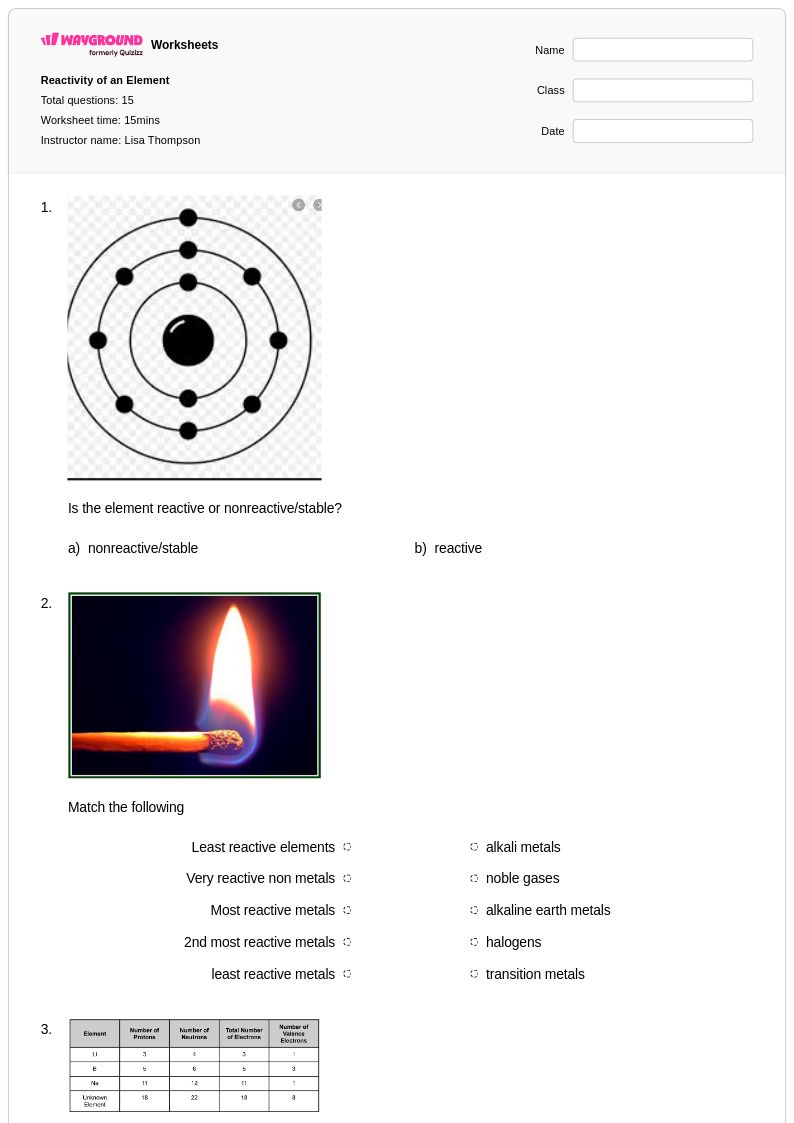
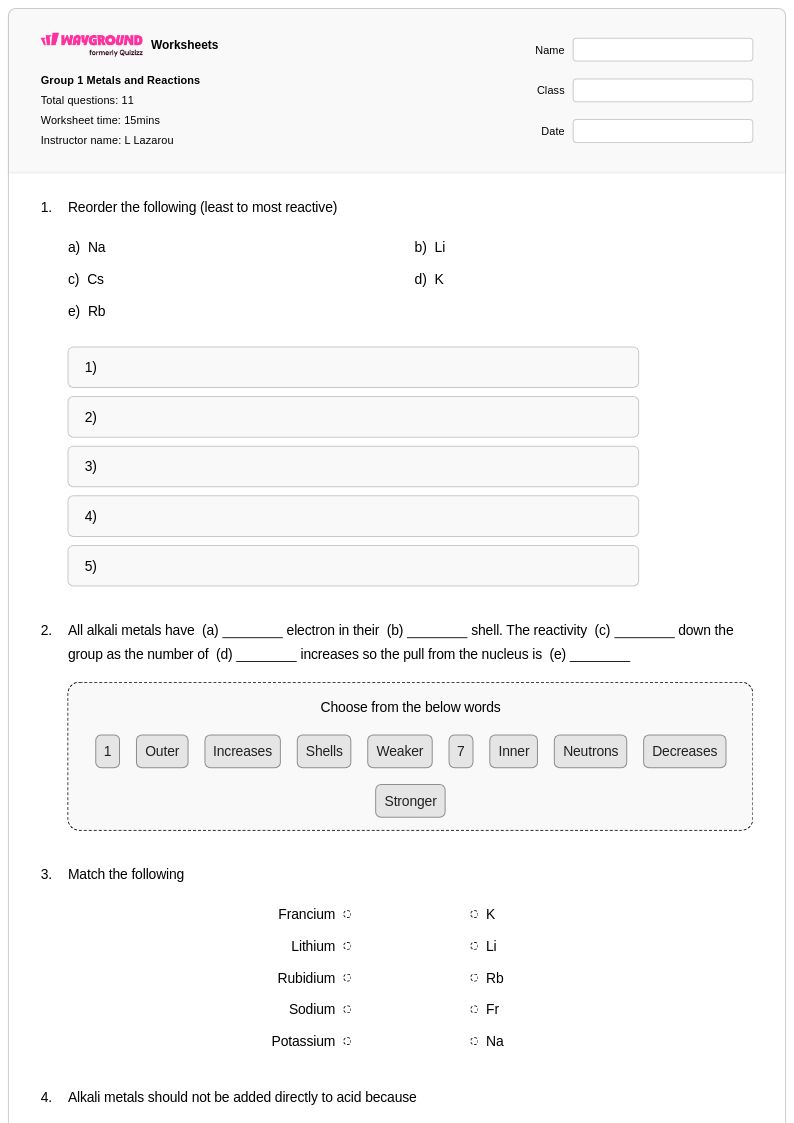
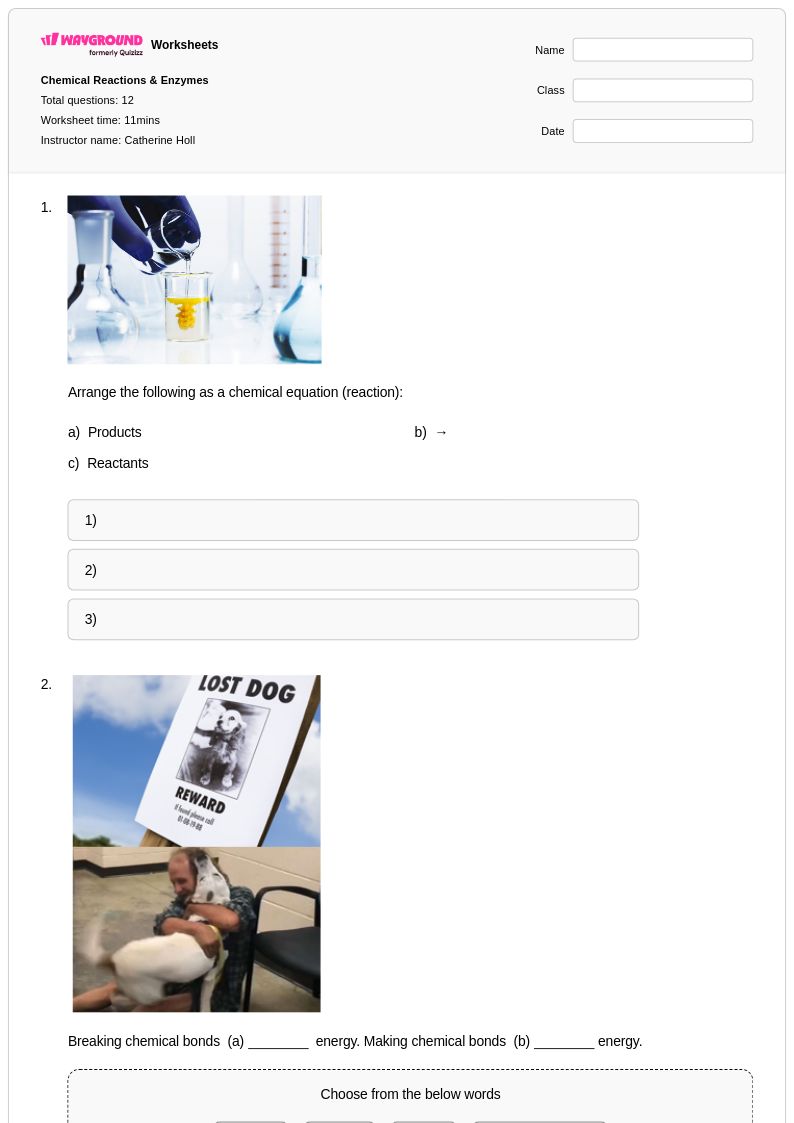
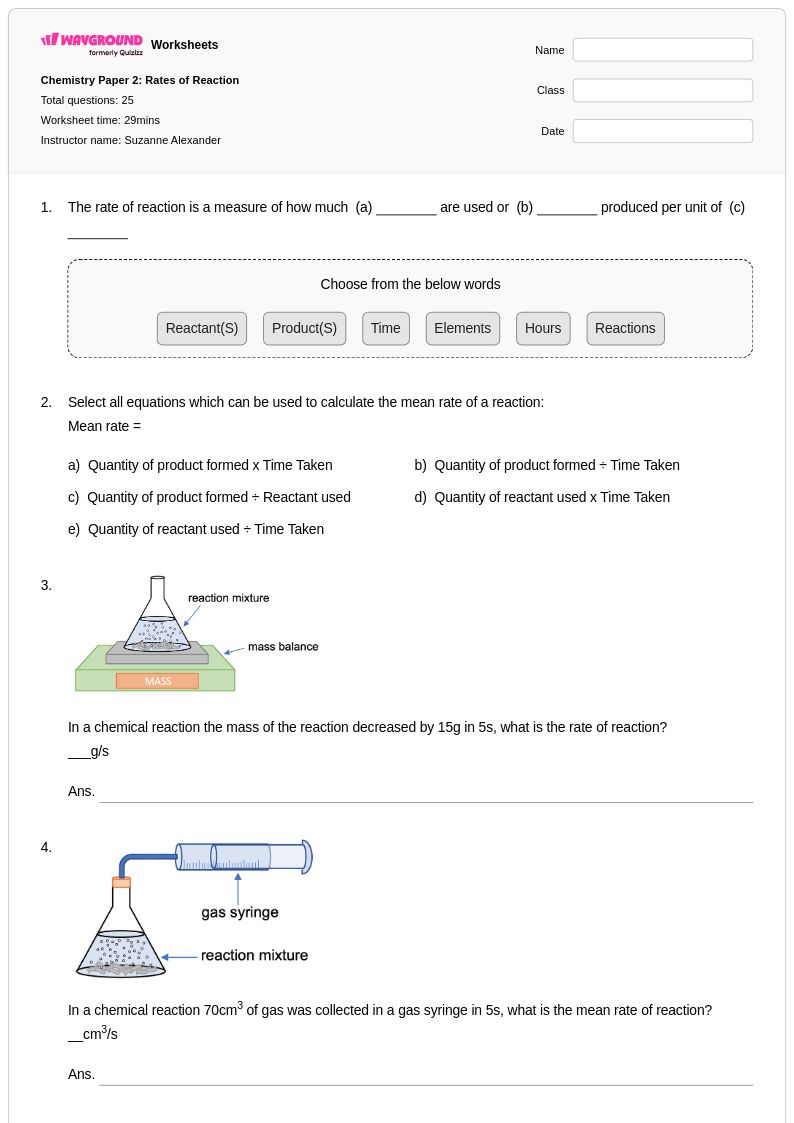
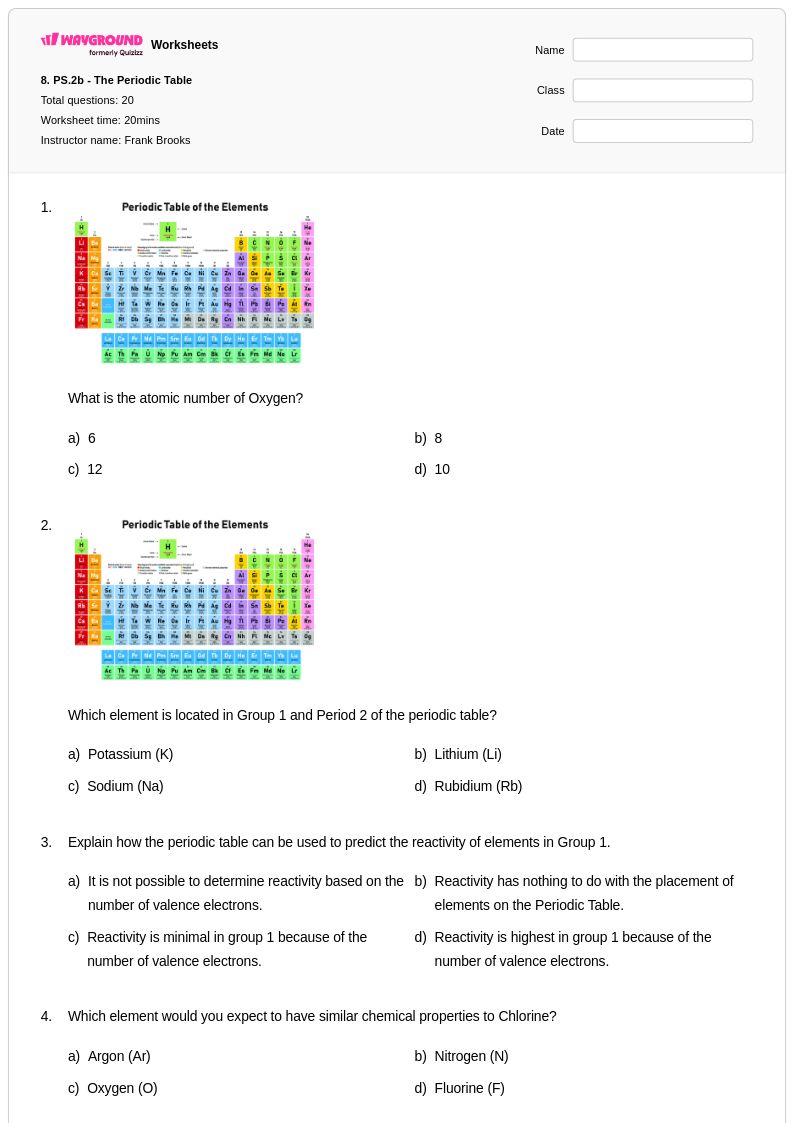
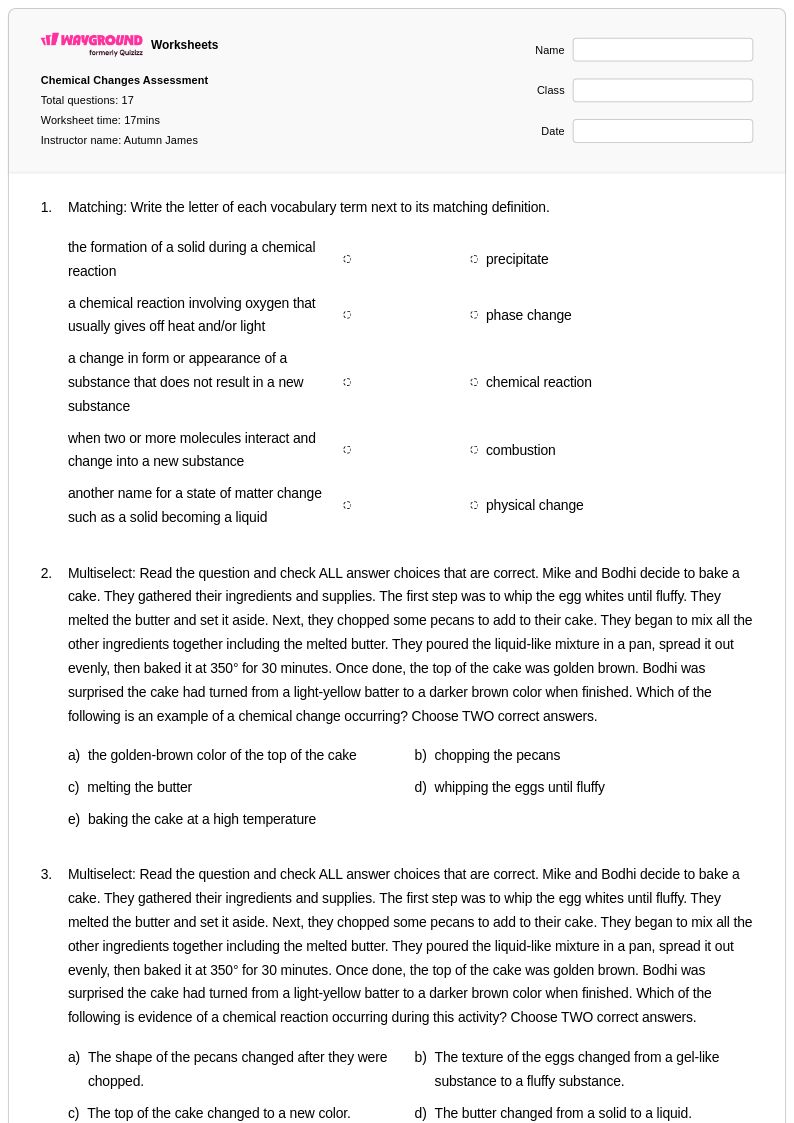
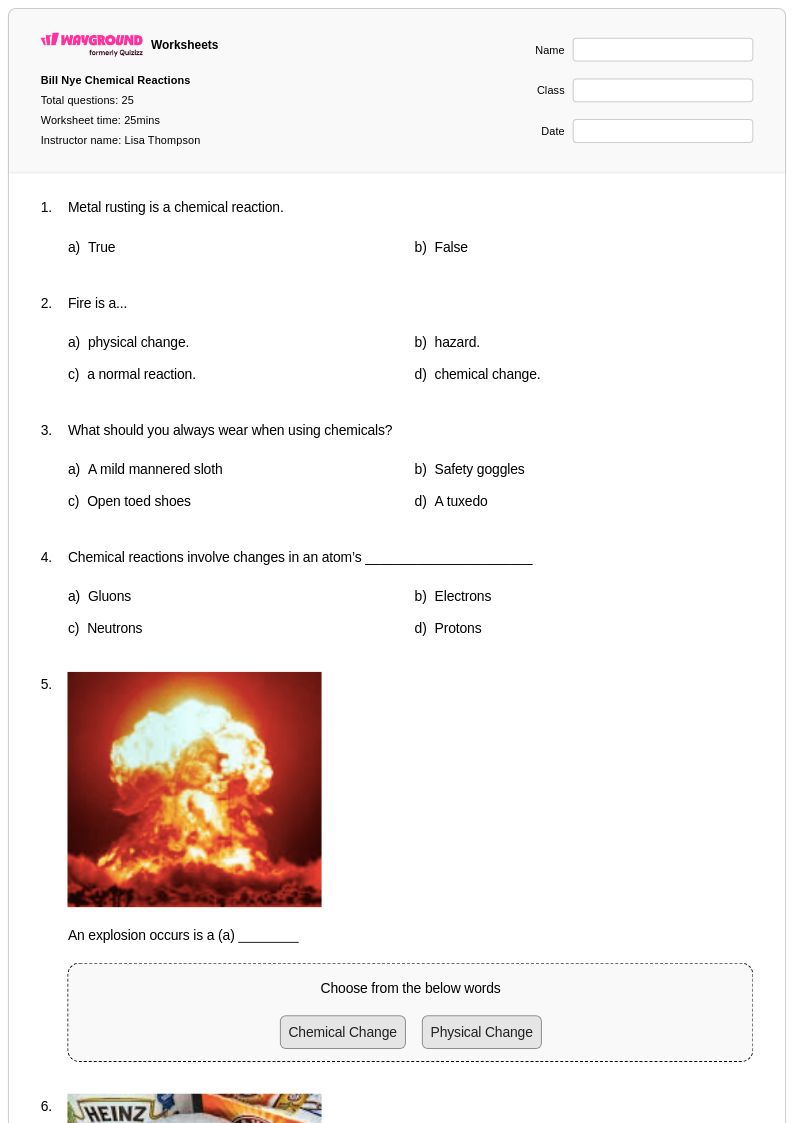
Chemical reactivity worksheets for Year 11 students through Wayground (formerly Quizizz) provide comprehensive practice opportunities that deepen understanding of how and why chemical reactions occur. These expertly designed resources focus on fundamental concepts including reaction mechanisms, activation energy, collision theory, and factors affecting reaction rates such as temperature, concentration, and catalysts. Students engage with practice problems that challenge them to predict reaction outcomes, analyze energy diagrams, and apply Le Chatelier's principle to equilibrium systems. The worksheets strengthen critical thinking skills through systematic exploration of periodic trends in reactivity, electronegativity patterns, and redox processes, while comprehensive answer keys support independent learning and self-assessment. Available as free printables and digital resources, these materials offer flexible pdf formats that accommodate diverse classroom needs and learning preferences.
Wayground (formerly Quizizz) empowers educators with an extensive collection of millions of teacher-created chemical reactivity worksheets specifically aligned with Year 11 chemistry standards and curriculum requirements. The platform's robust search and filtering capabilities enable teachers to quickly locate resources targeting specific reactivity concepts, from simple synthesis reactions to complex multi-step mechanisms. Differentiation tools allow seamless customization of worksheet difficulty levels, ensuring appropriate challenge for diverse learners while supporting both remediation for struggling students and enrichment opportunities for advanced practitioners. Teachers can efficiently plan comprehensive units on chemical reactivity by accessing materials in both printable and digital formats, facilitating varied instructional approaches that include individual practice, collaborative problem-solving sessions, and formative assessment activities that track student progress in mastering these essential chemistry concepts.
FAQs
How do I teach chemical reactivity to high school chemistry students?
Teaching chemical reactivity effectively starts with building students' understanding of why atoms and molecules interact, grounding lessons in concepts like electronegativity, oxidation states, and electron transfer. From there, introduce reactivity series and activity charts so students can predict which reactions will occur before moving into acid-base and redox chemistry. Hands-on lab observations paired with structured practice problems help students connect theoretical patterns to real chemical behavior.
What worksheet exercises help students practice predicting chemical reaction products?
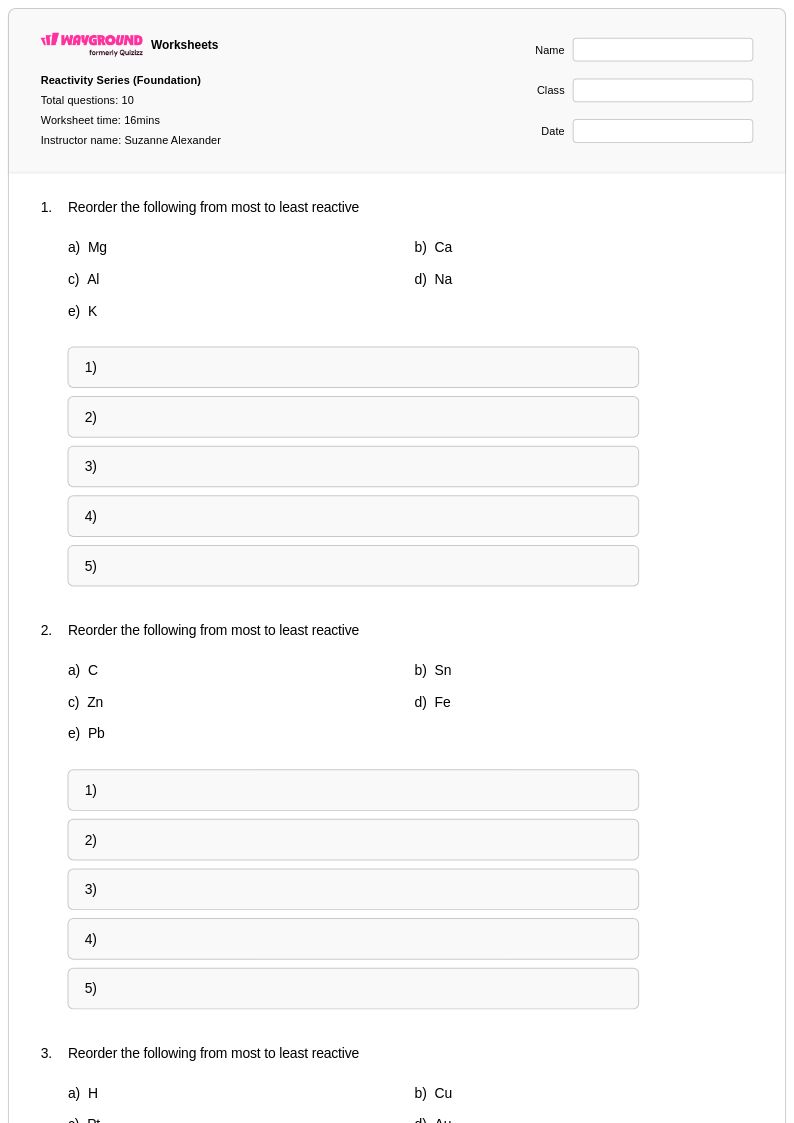
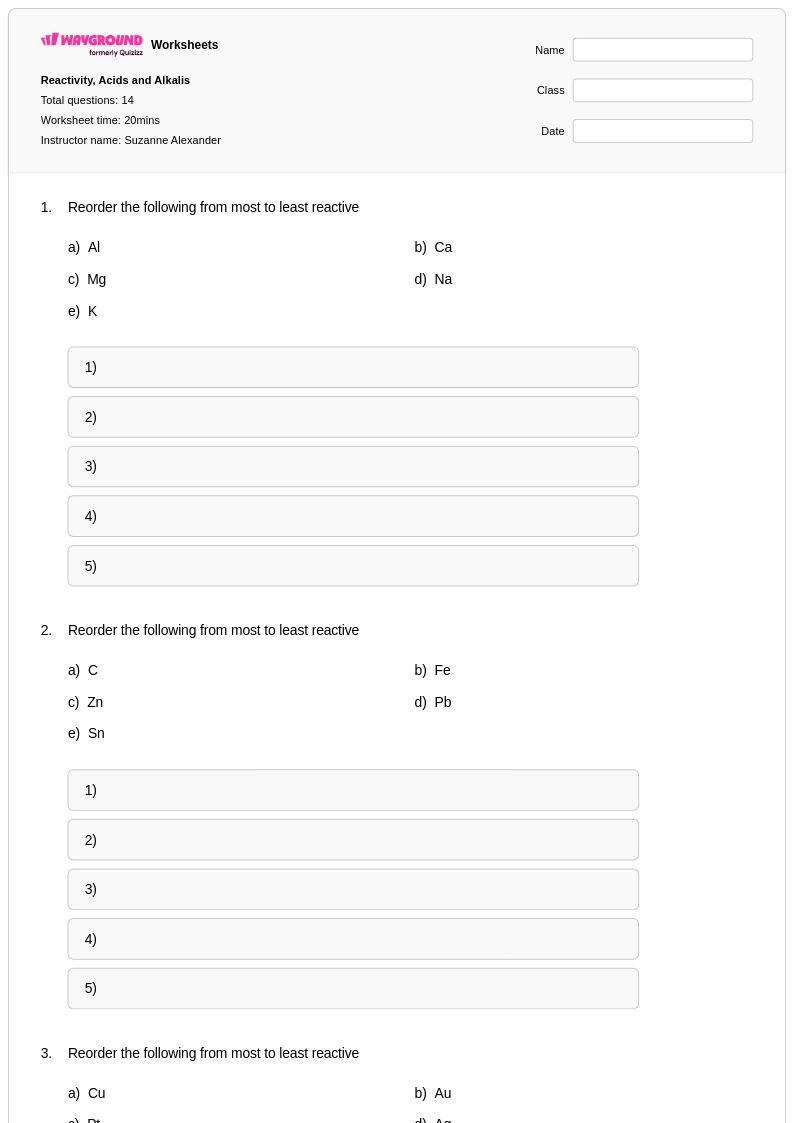
Exercises that ask students to identify reaction types first, such as single replacement, double replacement, combustion, or synthesis, and then apply pattern-based rules to predict products are the most effective for building this skill. Reactivity series problems, where students determine whether a reaction will occur based on relative activity, give structured practice before moving to more complex scenarios. Balancing the resulting equations as a follow-up step reinforces both product prediction and conservation of mass.
What mistakes do students commonly make when working with chemical reactivity concepts?
One of the most frequent errors is confusing reaction rate with spontaneity. Students often assume a thermodynamically favorable reaction must proceed quickly, when in fact activation energy can make it nearly imperceptible. Students also struggle with correctly applying the activity series, especially when polyatomic ions are involved, and may incorrectly swap ions in double replacement reactions without accounting for solubility rules.
How can I differentiate chemical reactivity instruction for students at different skill levels?
For students who need additional support, start with visual reactivity series charts and guided prediction templates before introducing open-ended problems. More advanced students can be challenged with thermodynamic calculations involving Gibbs free energy or multi-step redox balancing using the half-reaction method. On Wayground, teachers can apply accommodations such as reduced answer choices or read-aloud features to individual students, ensuring struggling learners receive targeted support without disrupting the rest of the class.
How do I use chemical reactivity worksheets from Wayground in my classroom?
Wayground's chemical reactivity worksheets are available as printable PDFs for traditional classroom use and in digital formats for technology-integrated learning environments. Teachers can also host worksheets directly as a quiz on Wayground, making it easy to assign practice, track completion, and review student responses in one place. All worksheets include complete answer keys, so they can be used for guided practice, independent work, or self-paced review sessions.
How do I help students understand the difference between oxidation and reduction in chemical reactions?
The most reliable approach is to anchor the concept in electron transfer rather than oxygen gain or loss, which can mislead students in reactions that don't involve oxygen at all. Teaching students to assign oxidation numbers systematically and then track which species increases and which decreases in oxidation state gives them a reliable method across all redox contexts. Paired half-reaction problems, where students write the oxidation and reduction steps separately before combining them, build procedural fluency and conceptual clarity simultaneously.