
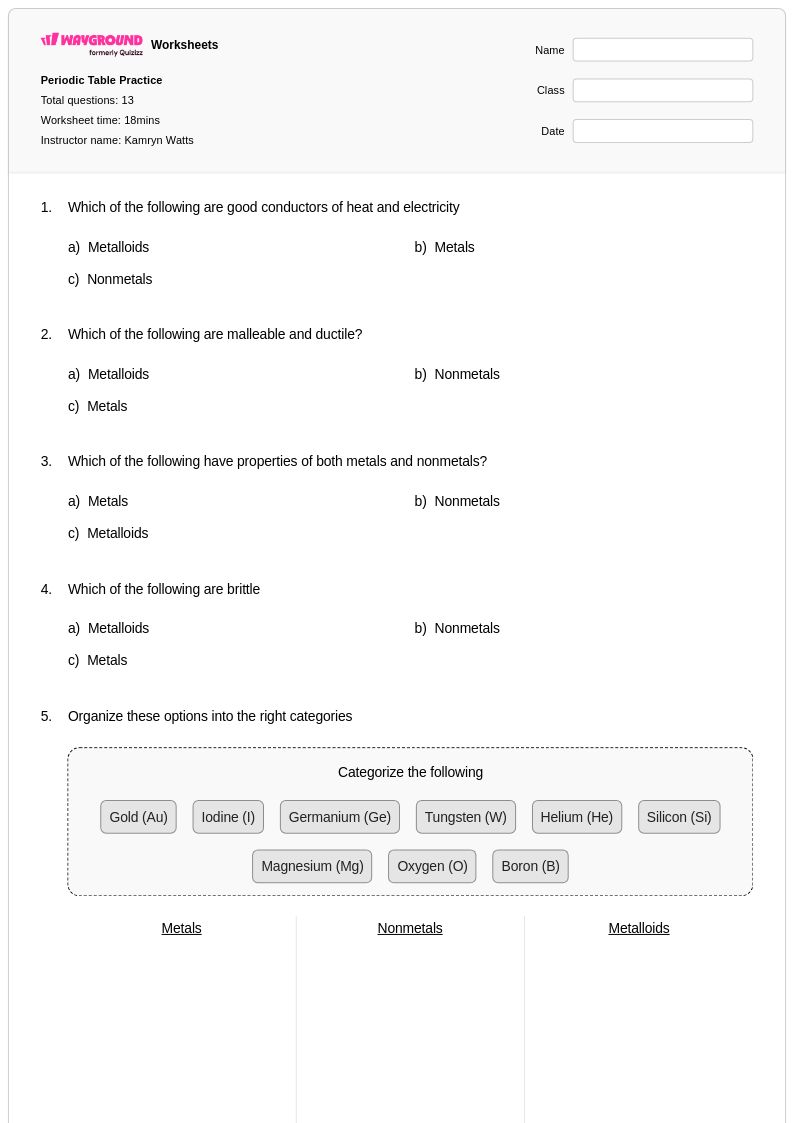
13 T
9th - 12th
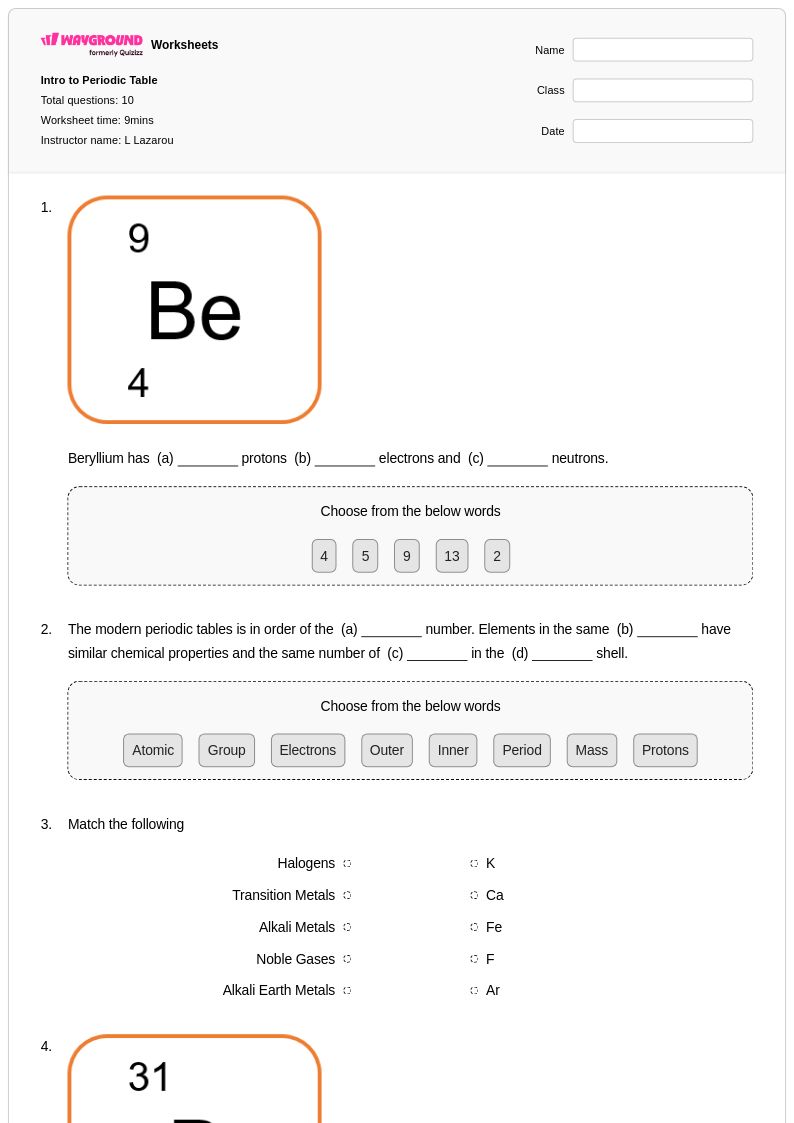
10 T
9th - 12th
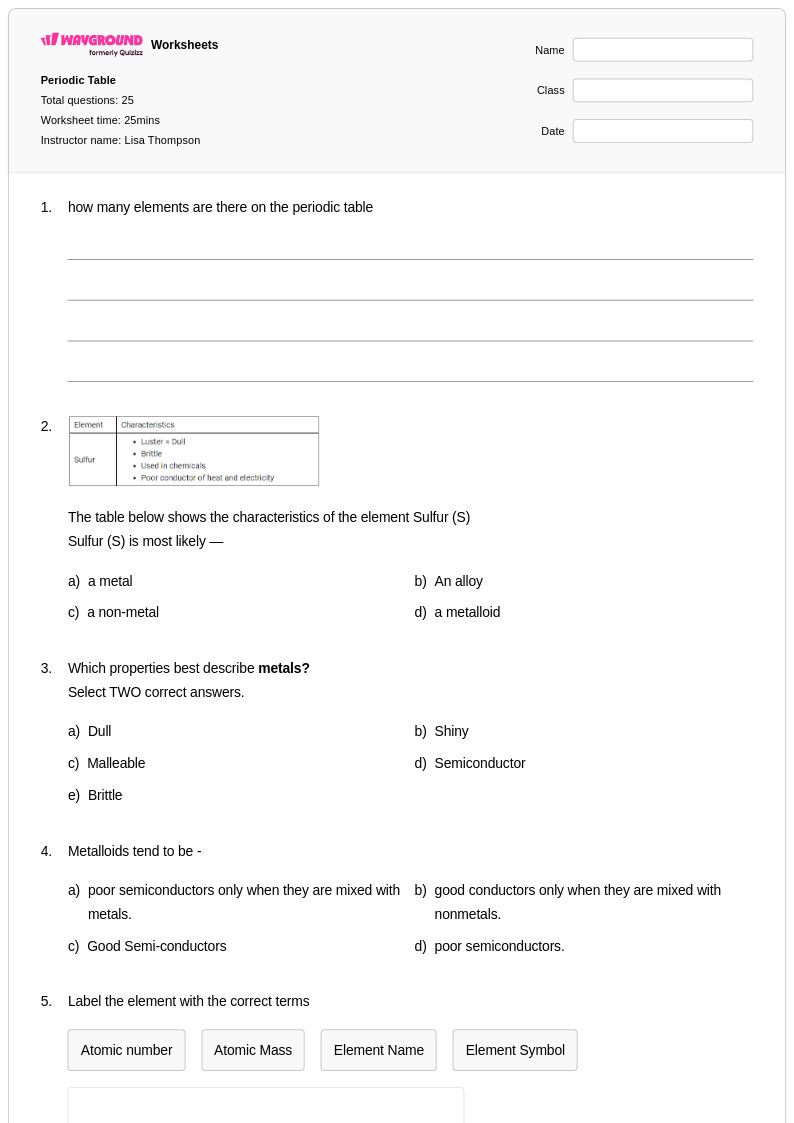
25 T
6th - Uni
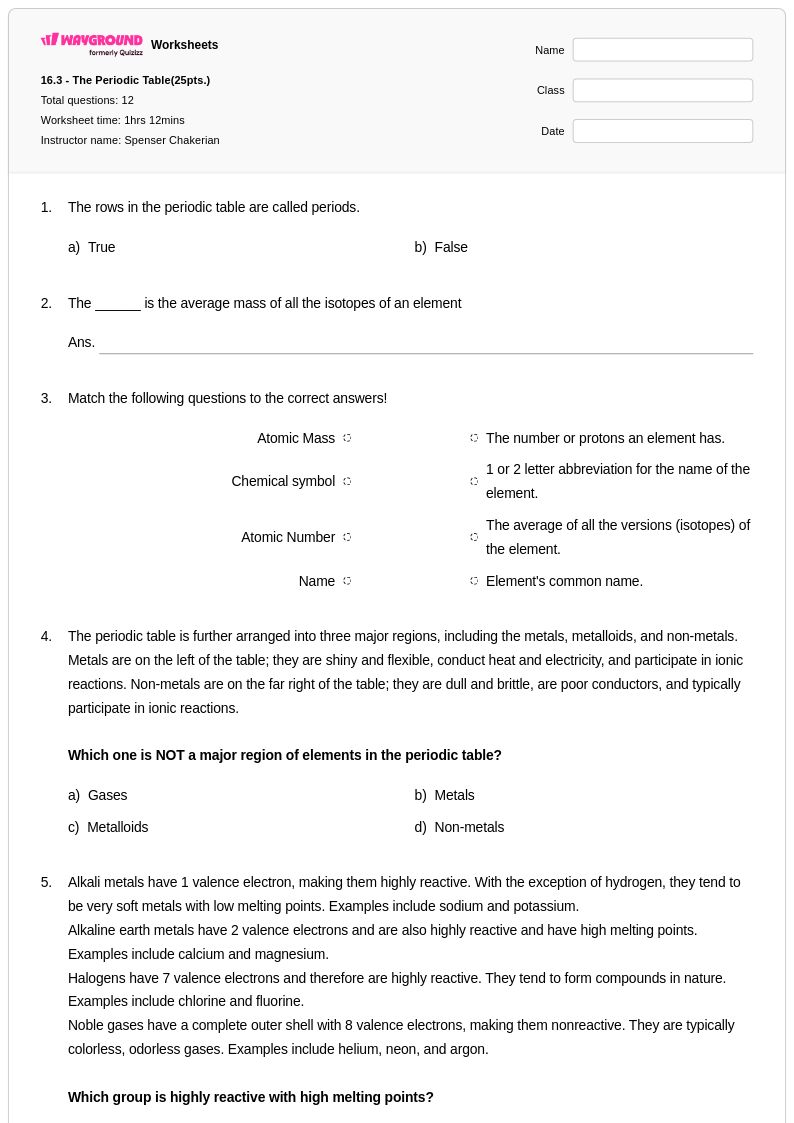
12 T
9th - 12th
25 T
9th - Uni
25 T
8th - Uni
25 T
8th - Uni
15 T
8th - Uni
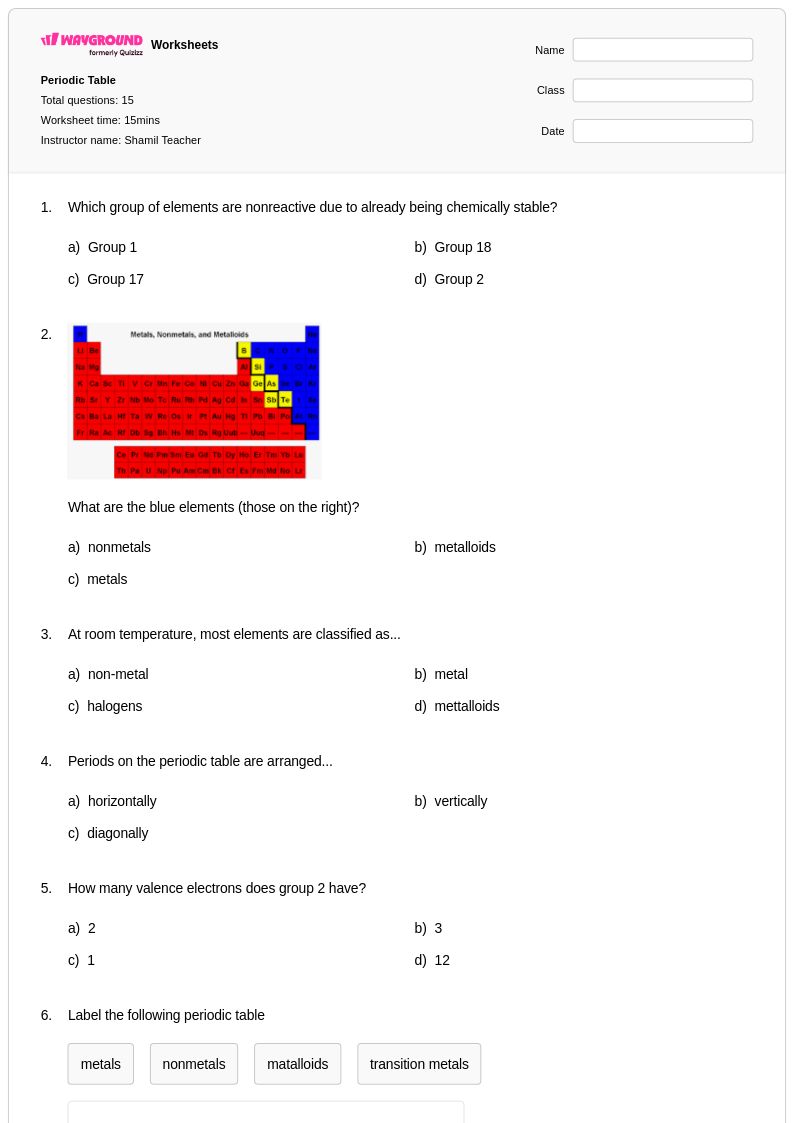
15 T
8th - Uni
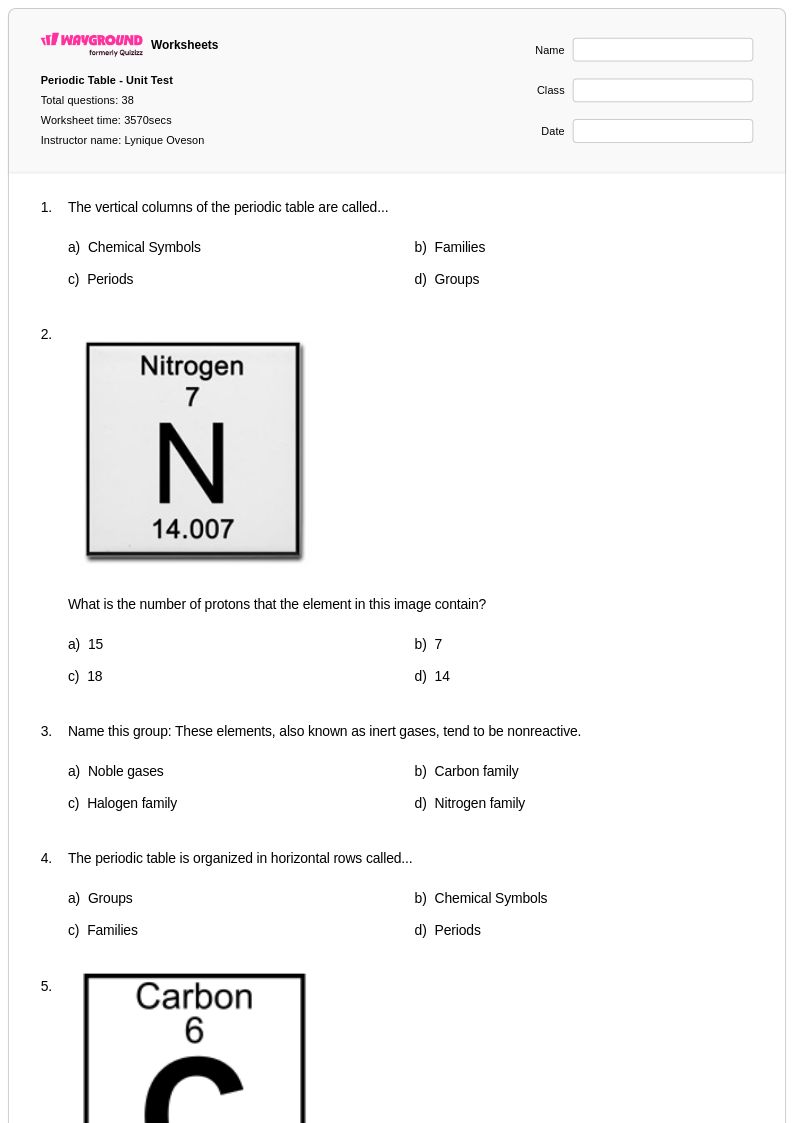
38 T
9th - 12th
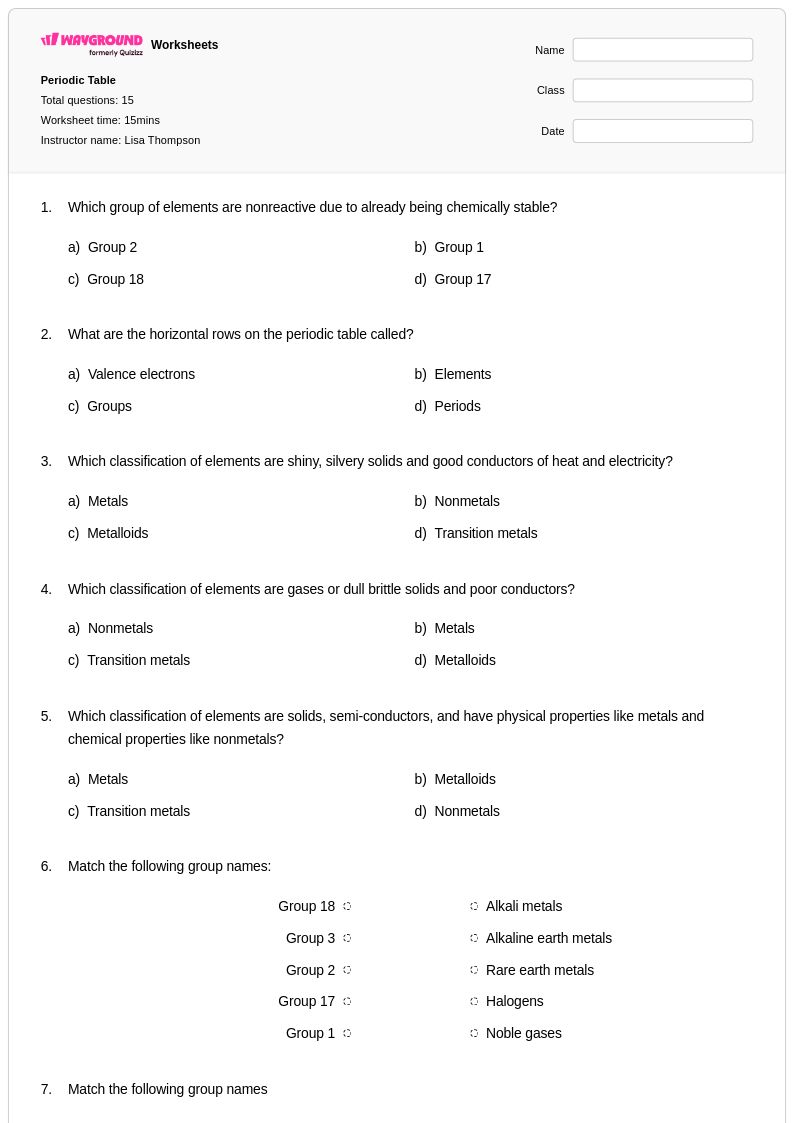
15 T
8th - Uni
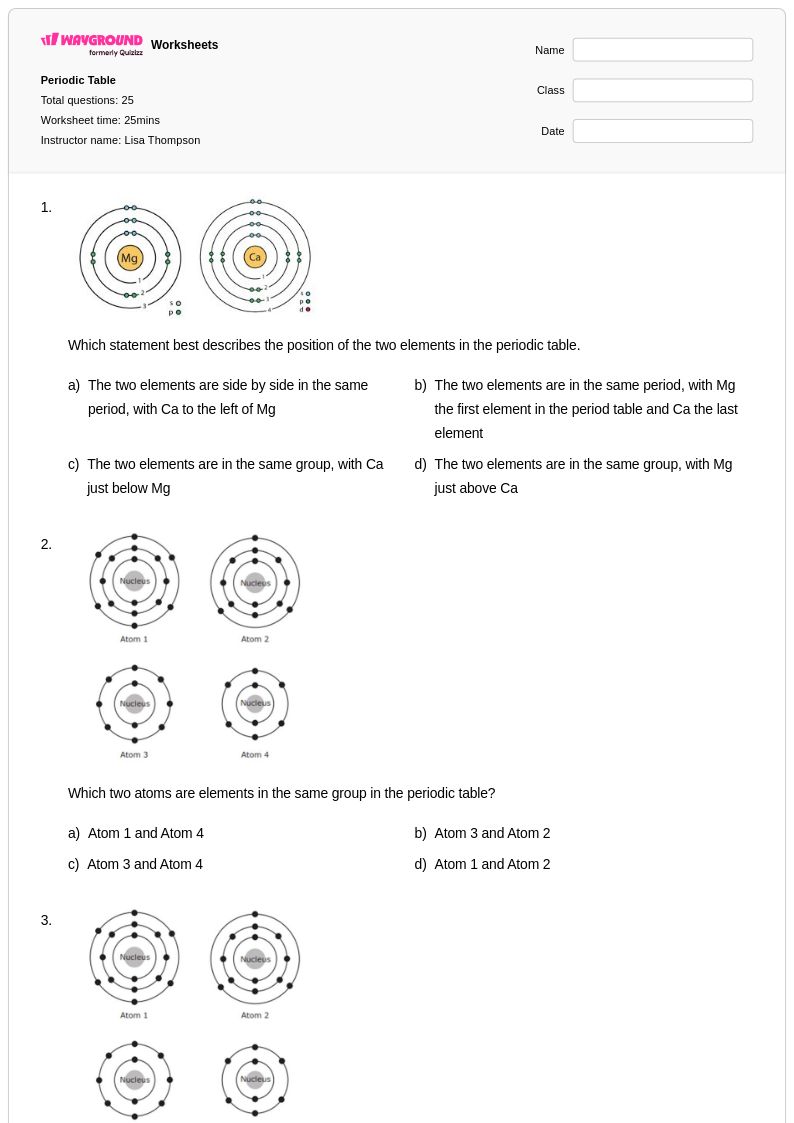
25 T
8th - Uni
20 T
8th - Uni
25 T
8th - Uni
12 T
9th - 12th
26 T
11th
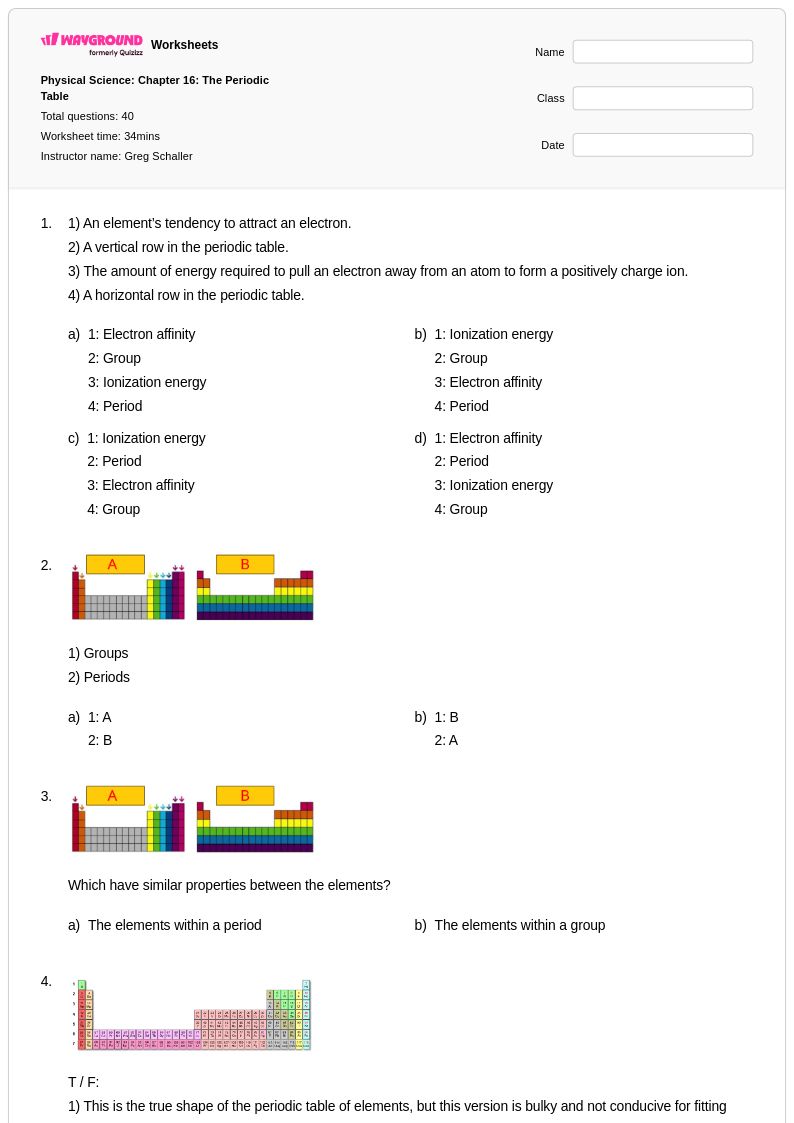
40 T
9th - 12th
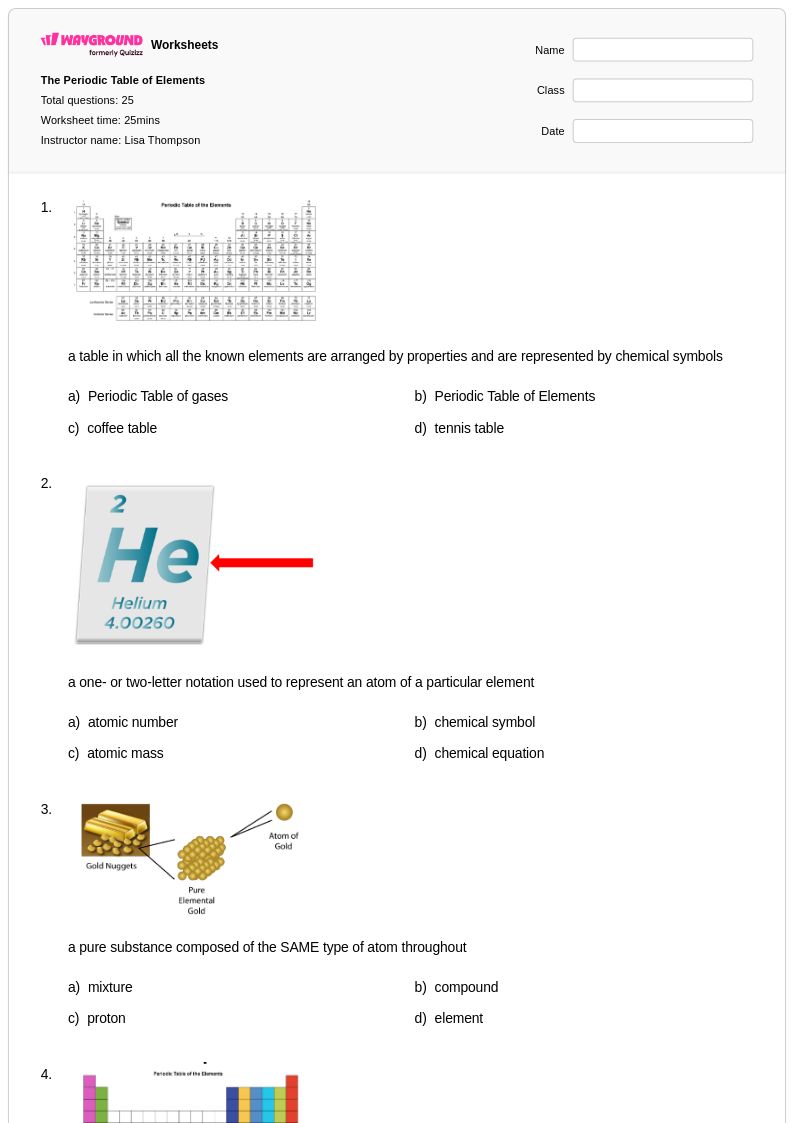
25 T
8th - Uni
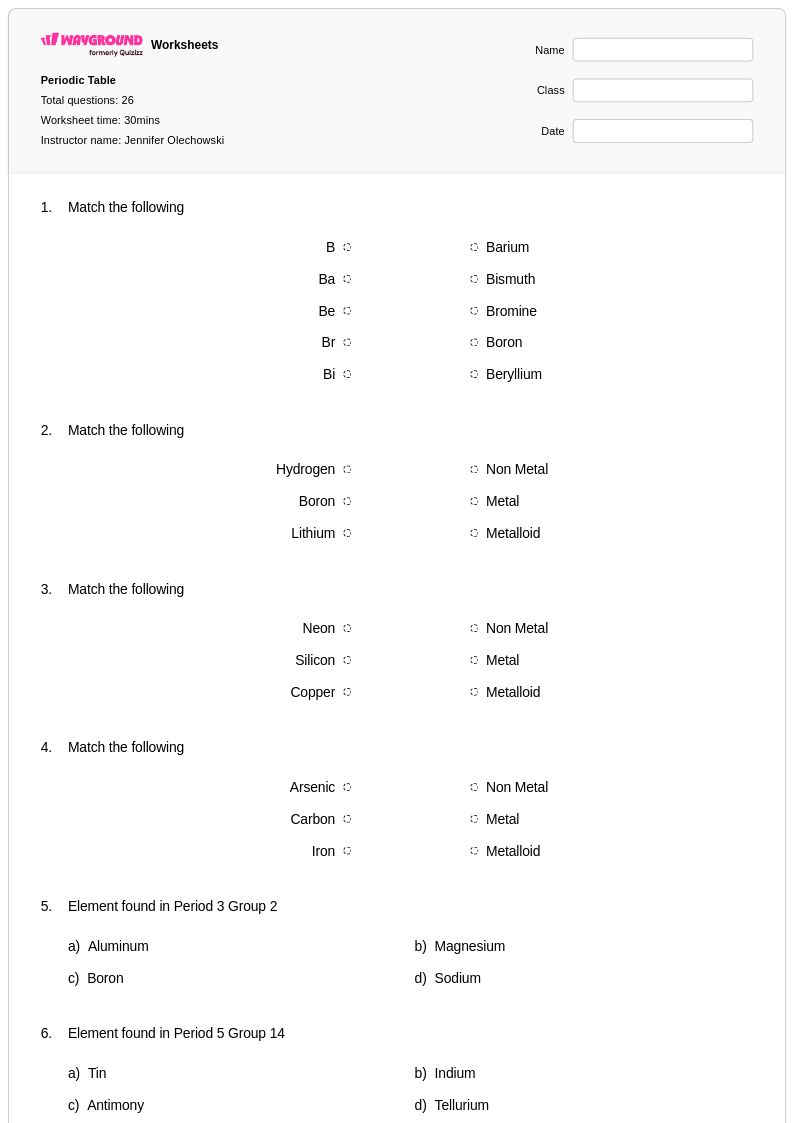
26 T
9th - 12th
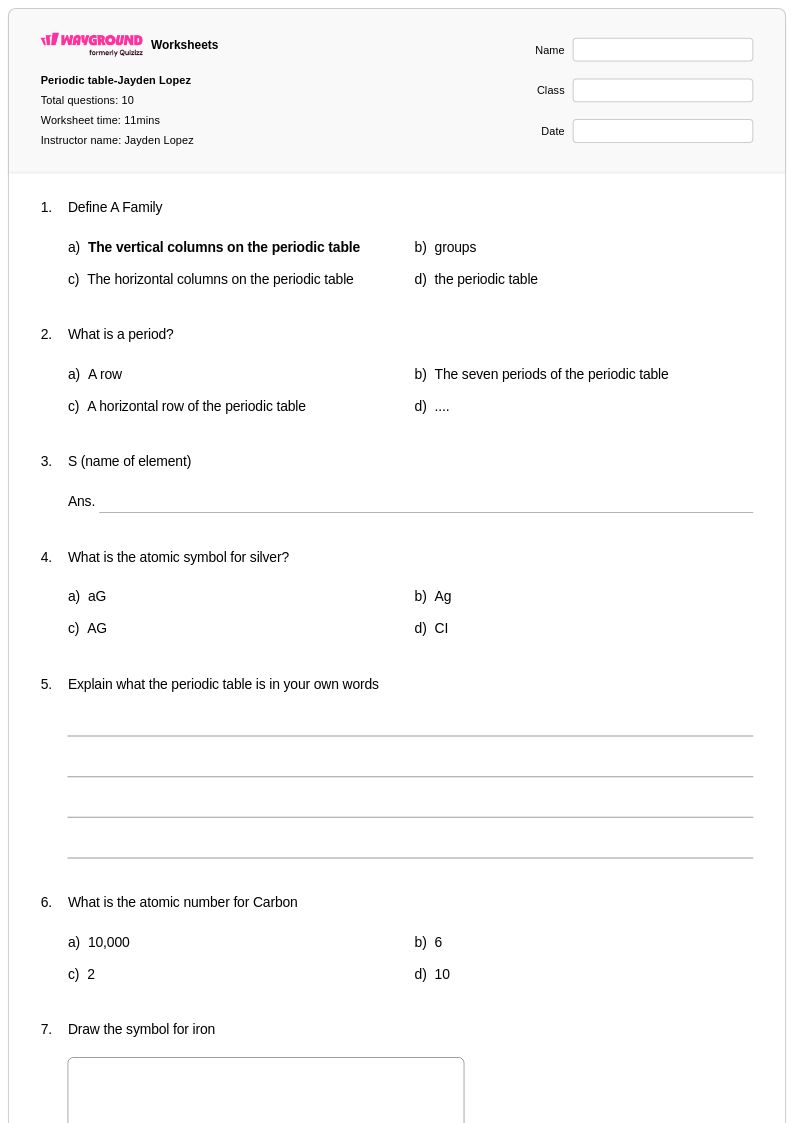
10 T
9th - 12th
14 T
9th - 12th
15 T
8th - Uni
10 T
9th - 12th
25 T
8th - Uni
Jelajahi Periodic Table Lembar Kerja berdasarkan Nilai
Jelajahi Lembar Kerja Mata Pelajaran Lainnya untuk year 11
Explore printable Periodic Table worksheets for Year 11
Year 11 Periodic Table worksheets available through Wayground (formerly Quizizz) provide comprehensive practice materials that deepen students' understanding of atomic structure, chemical properties, and elemental relationships. These expertly designed resources strengthen critical chemistry skills including electron configuration analysis, periodic trend identification, ion formation prediction, and chemical bonding principles. Students work through practice problems that reinforce concepts such as atomic radius variations, ionization energy patterns, and electronegativity trends across periods and groups. The collection includes detailed answer key materials and free printables in pdf format, enabling students to master complex topics like transition metal properties, noble gas configurations, and the relationship between atomic structure and chemical behavior.
Wayground (formerly Quizizz) empowers chemistry educators with millions of teacher-created Periodic Table resources that support diverse instructional needs and learning objectives. The platform's robust search and filtering capabilities allow teachers to quickly locate materials aligned with specific chemistry standards, whether focusing on atomic theory, chemical periodicity, or elemental classification systems. Differentiation tools enable customization of worksheet difficulty levels to accommodate varying student abilities, while both printable and digital pdf formats provide flexibility for classroom instruction, homework assignments, and independent study. These comprehensive resource collections streamline lesson planning by offering ready-to-use materials for skill practice, targeted remediation of challenging concepts like orbital filling patterns, and enrichment activities that challenge advanced learners to explore complex periodic relationships and predict chemical properties based on atomic structure.
FAQs
How do I teach the periodic table to students who find it overwhelming?
What exercises help students practice reading and interpreting the periodic table?
What are the most common mistakes students make when working with the periodic table?
How do I use periodic table worksheets to differentiate instruction in my chemistry class?
How can I use Wayground's periodic table worksheets in my classroom?
How do I help students understand periodic trends like electronegativity and atomic radius?