Free Printable Double Replacement Reaction Worksheets for Year 11
Year 11 double replacement reaction worksheets from Wayground offer comprehensive printables and practice problems with answer keys to help students master predicting products and balancing chemical equations in these essential chemistry reactions.
Explore printable Double Replacement Reaction worksheets for Year 11
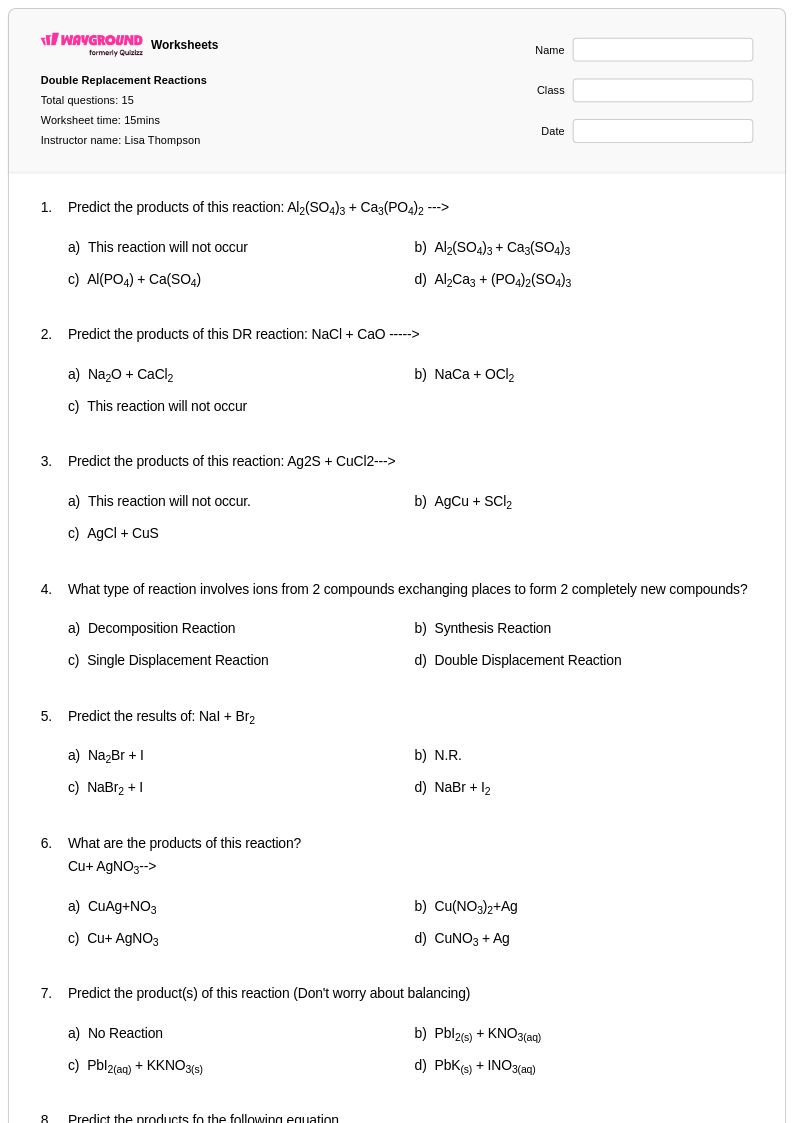
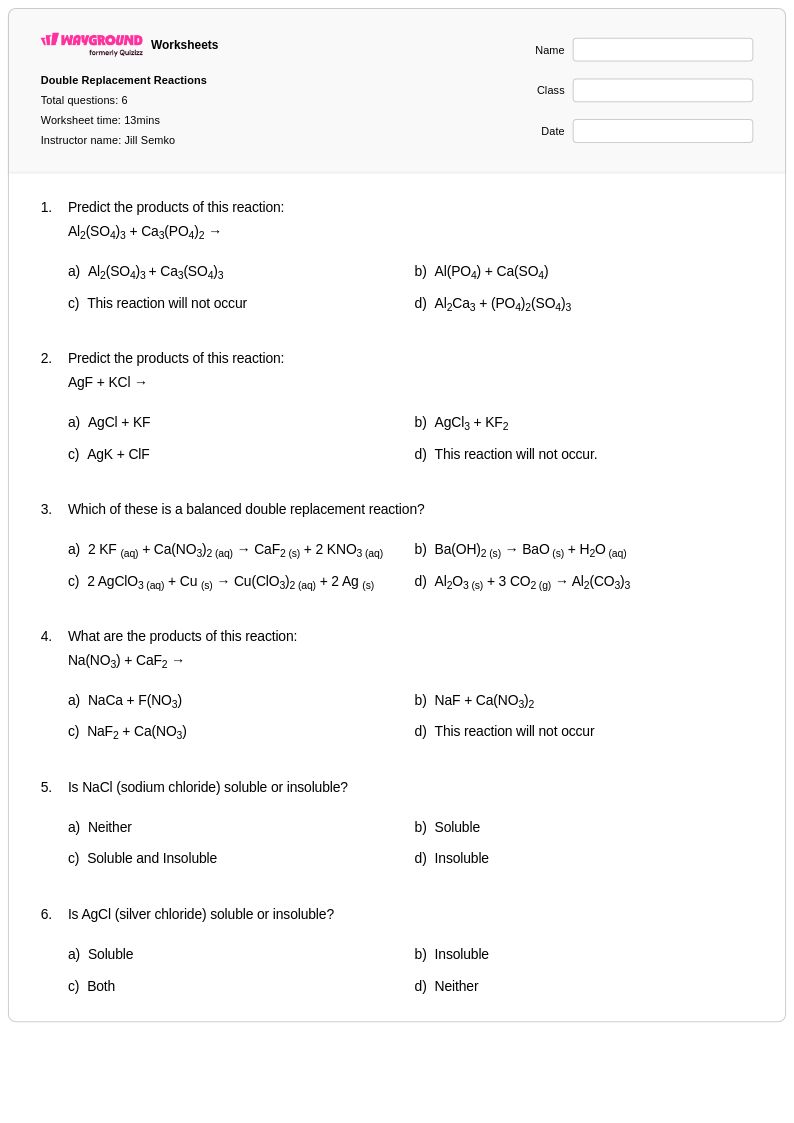
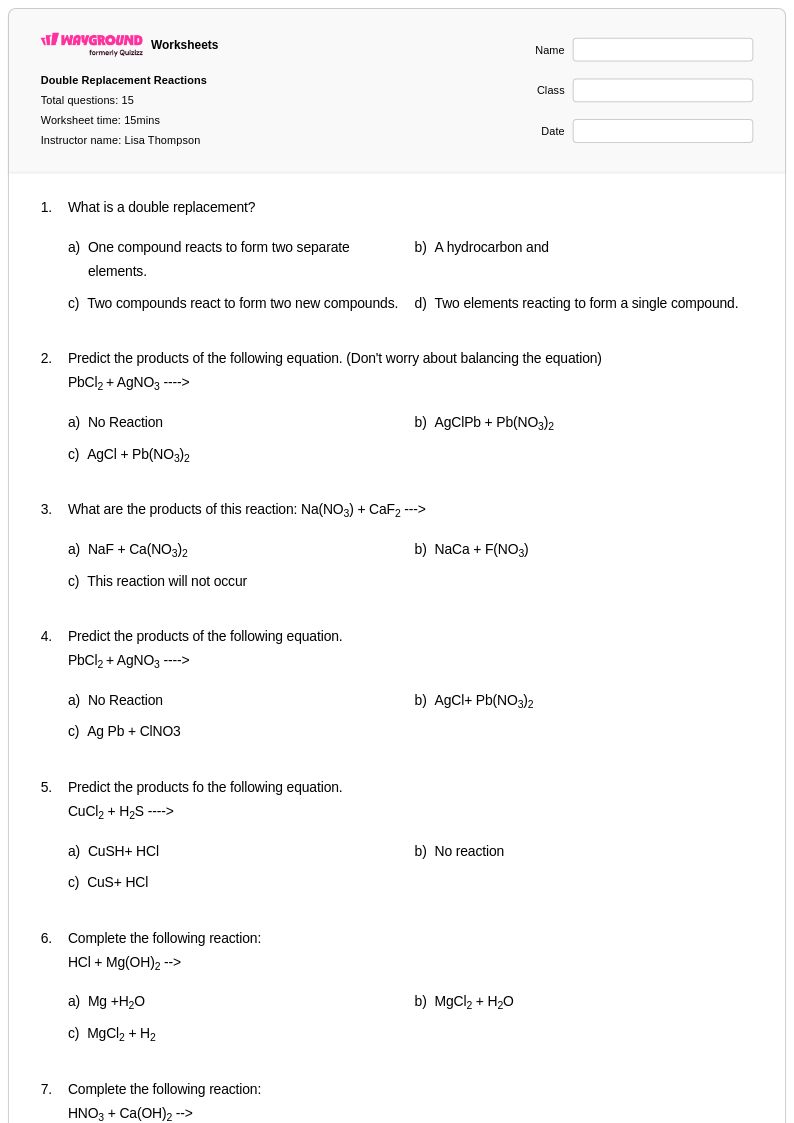
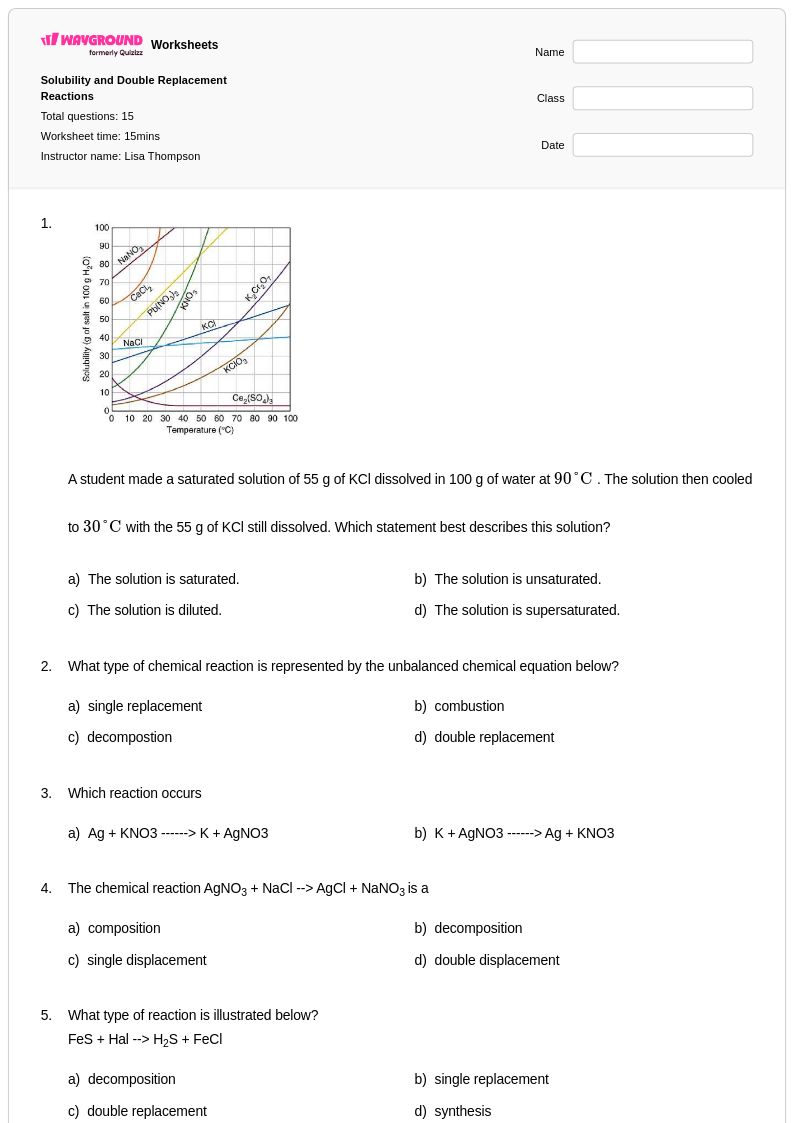
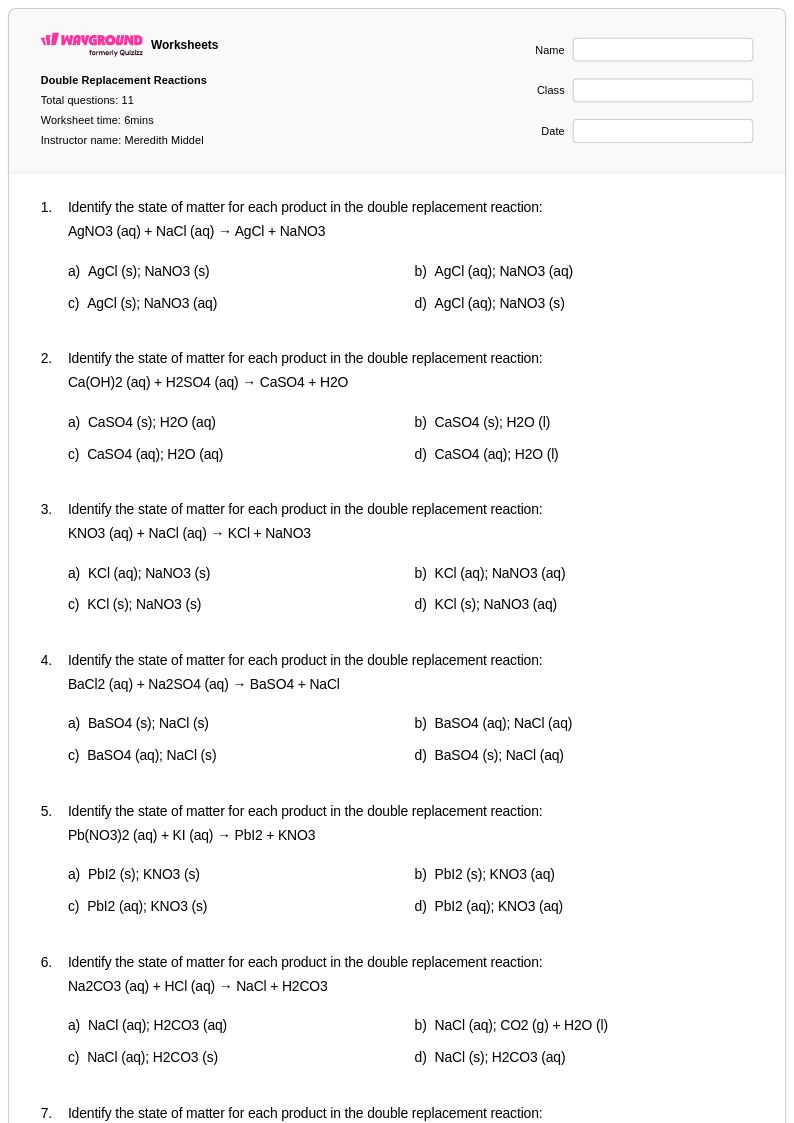
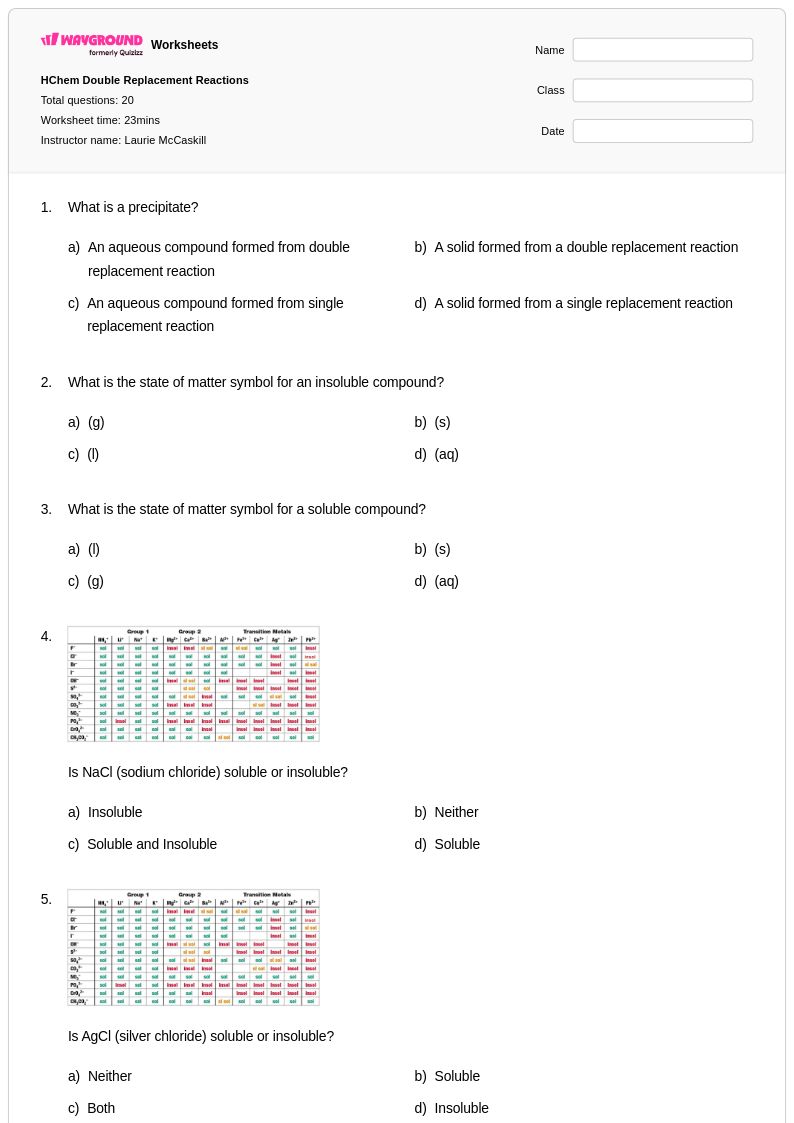
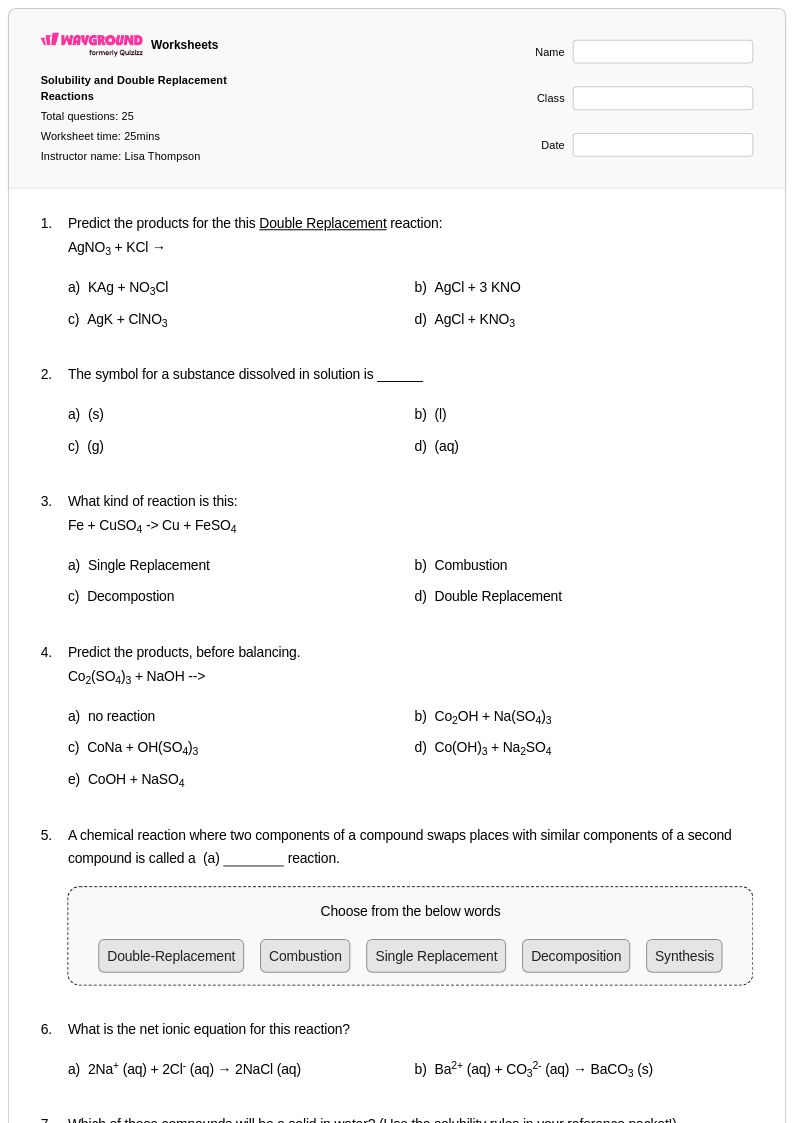
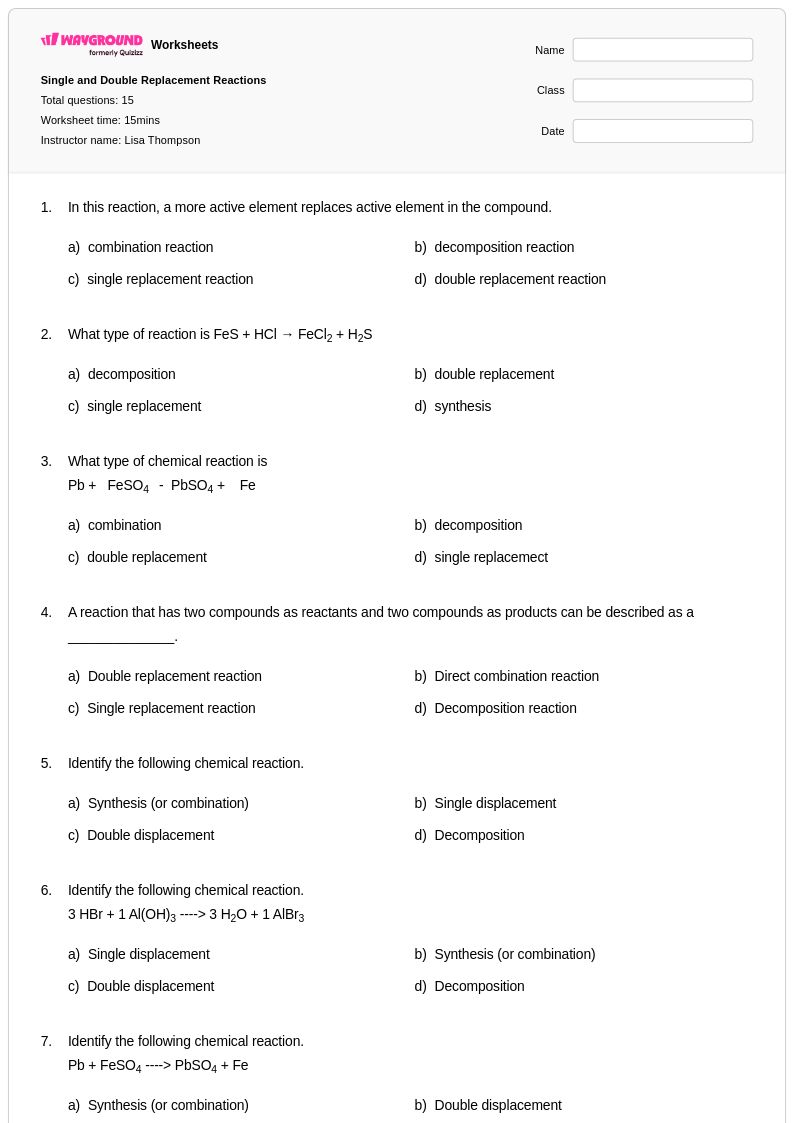
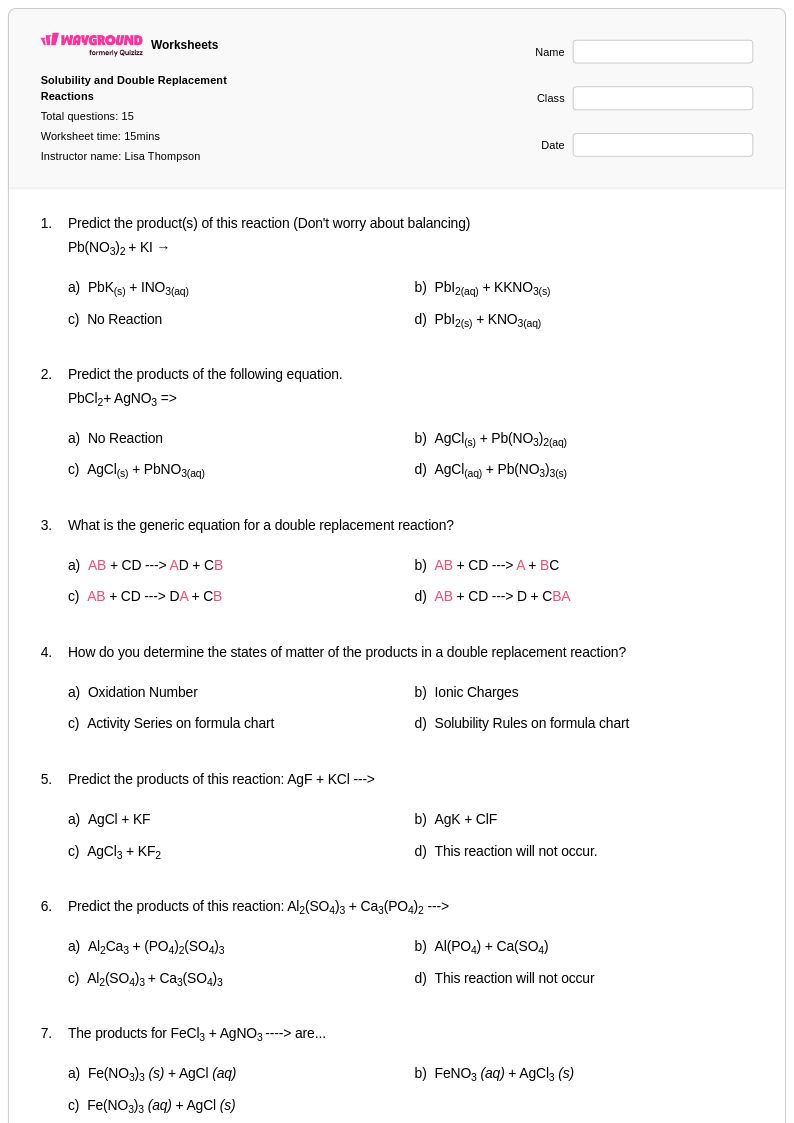
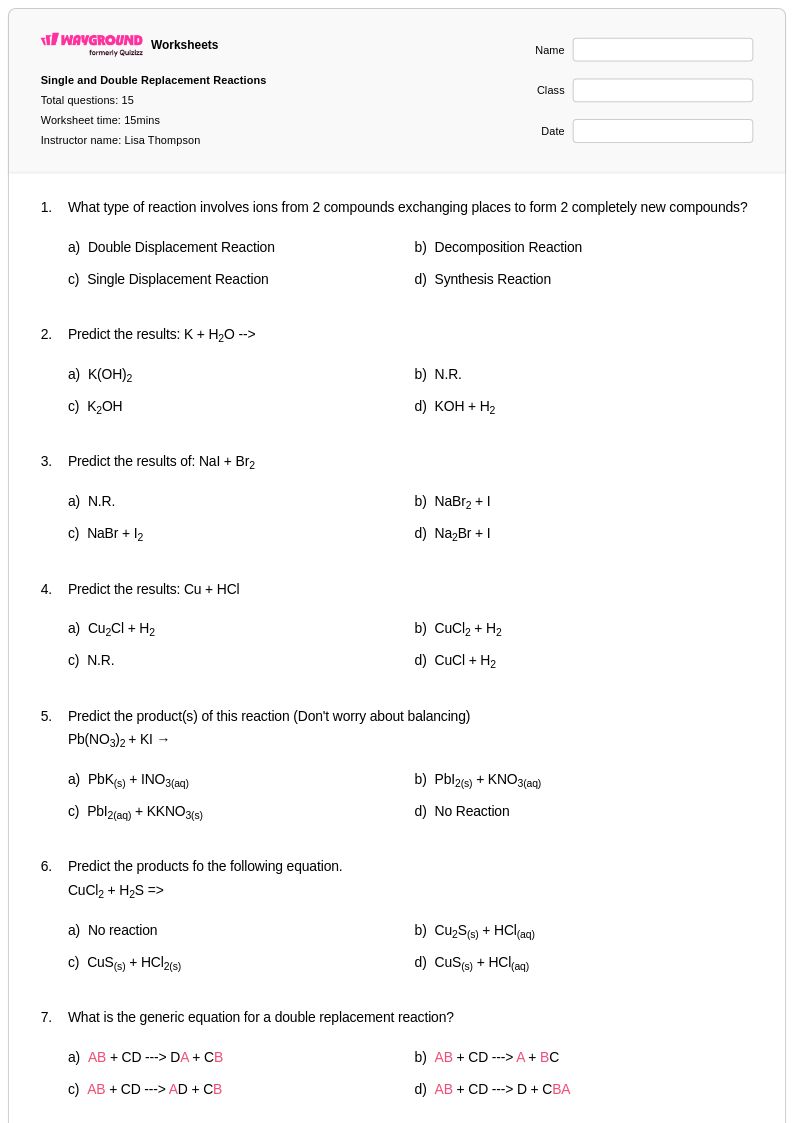
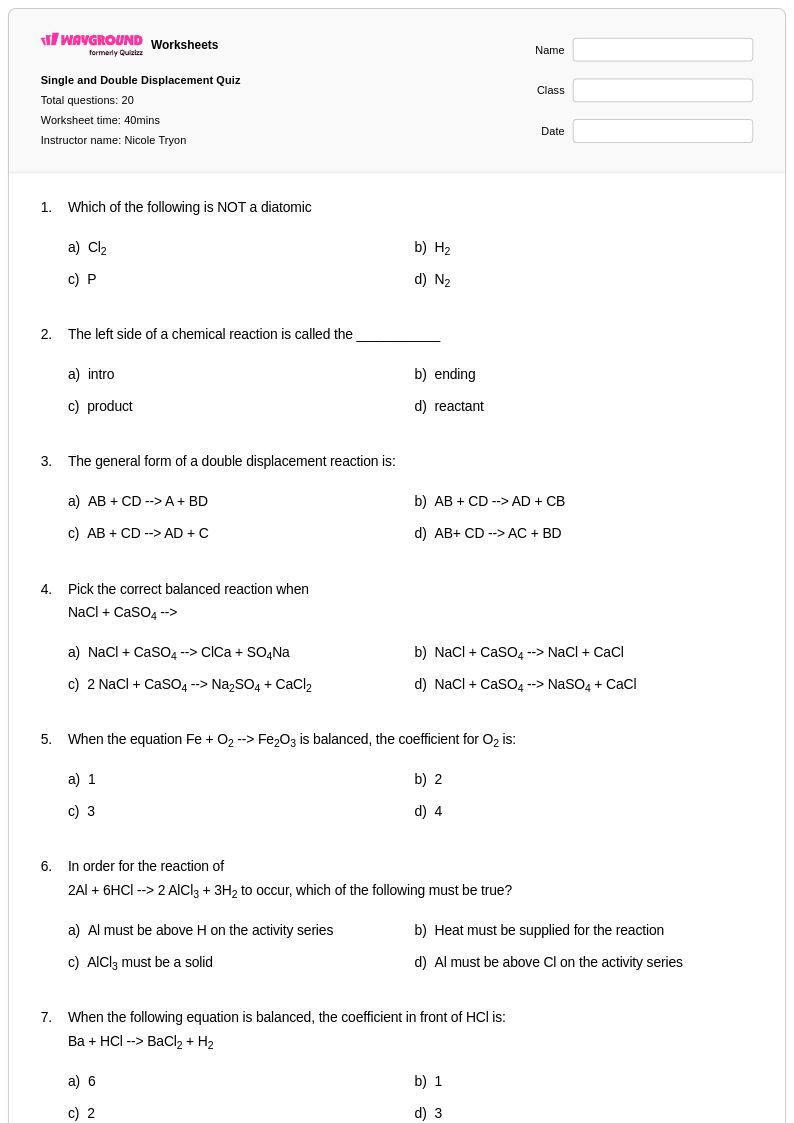
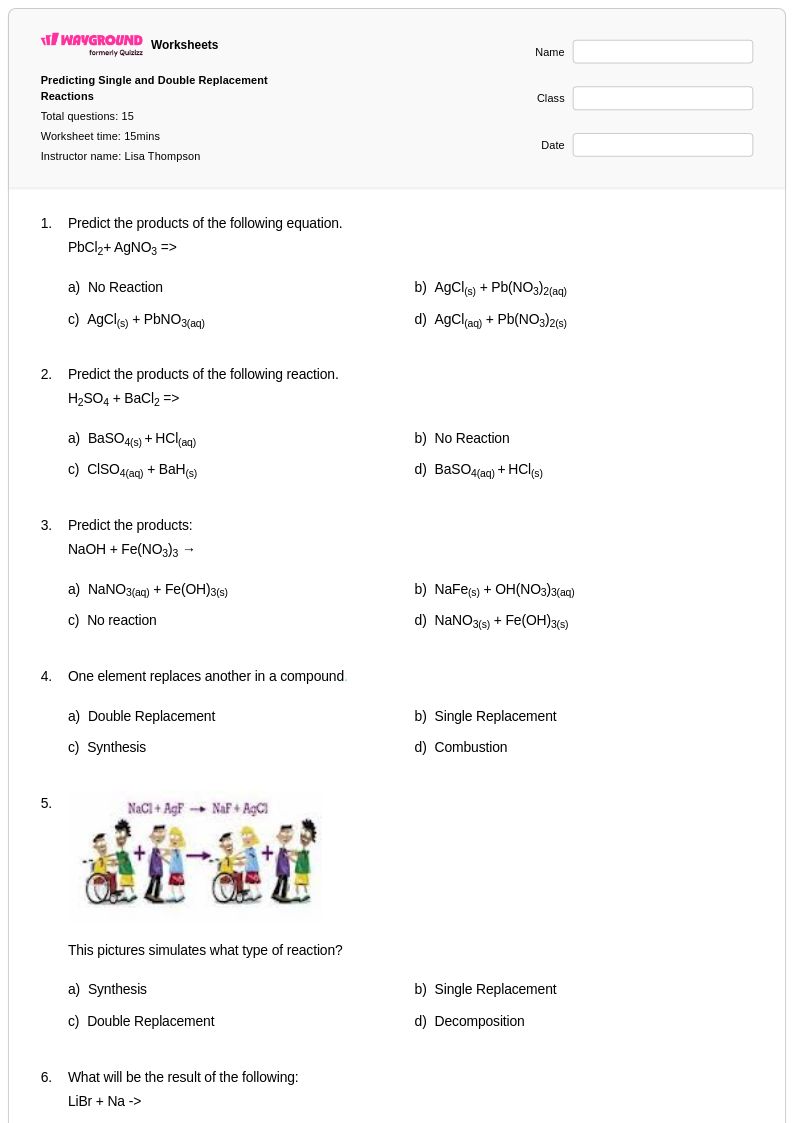
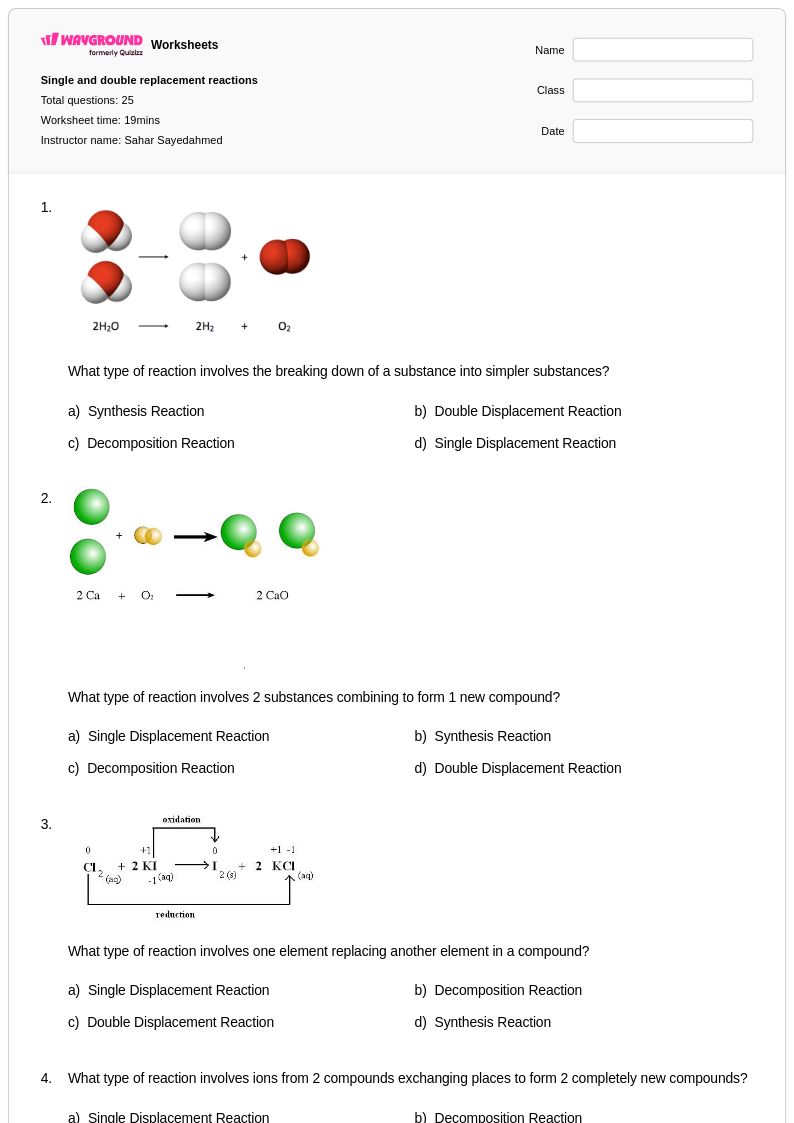
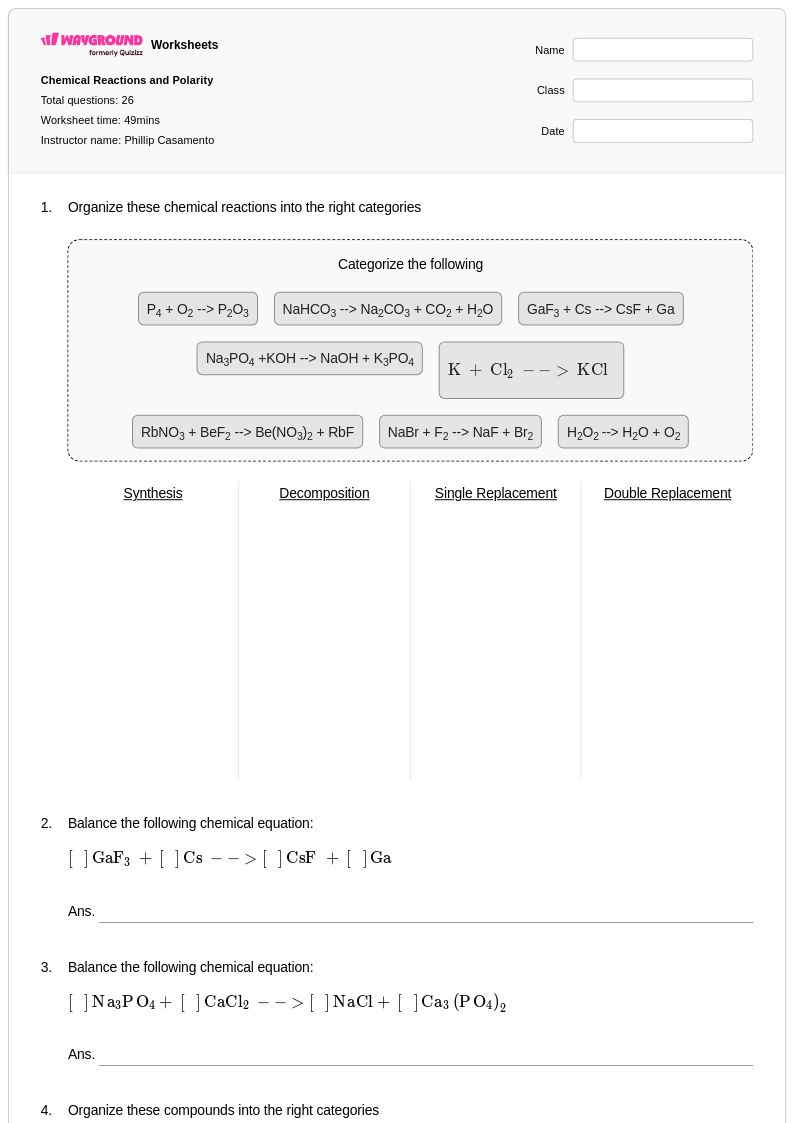
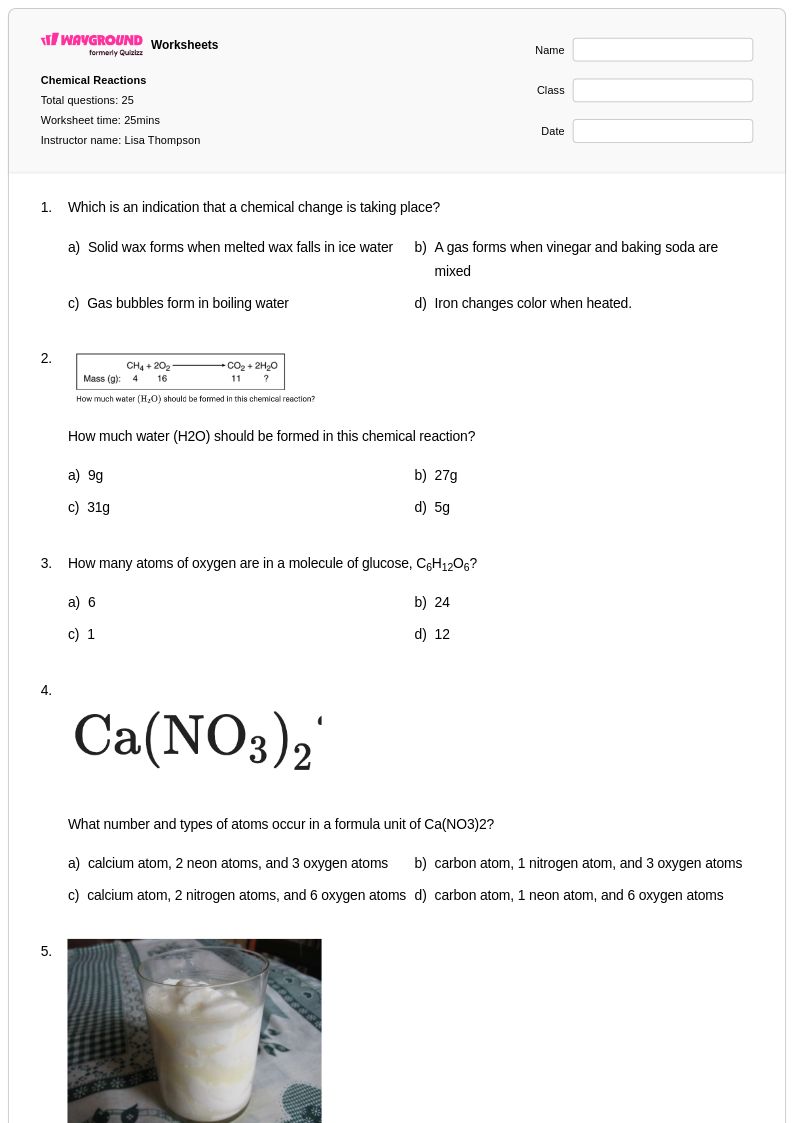
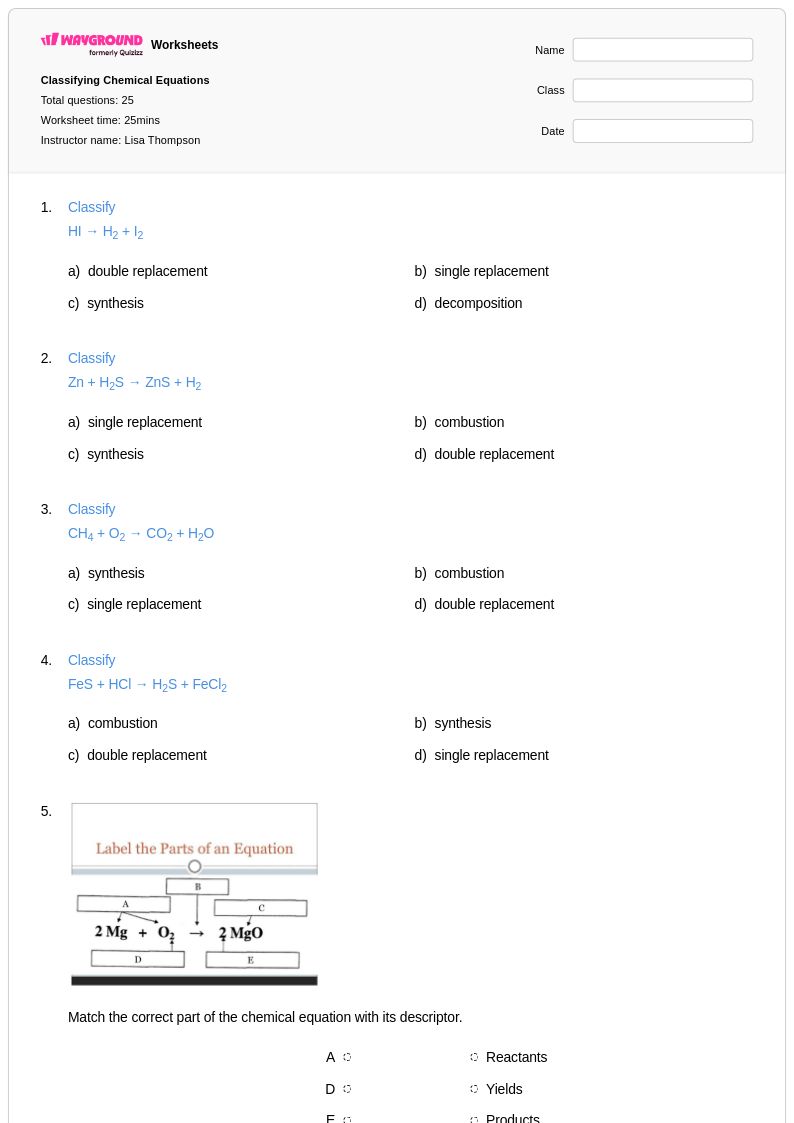
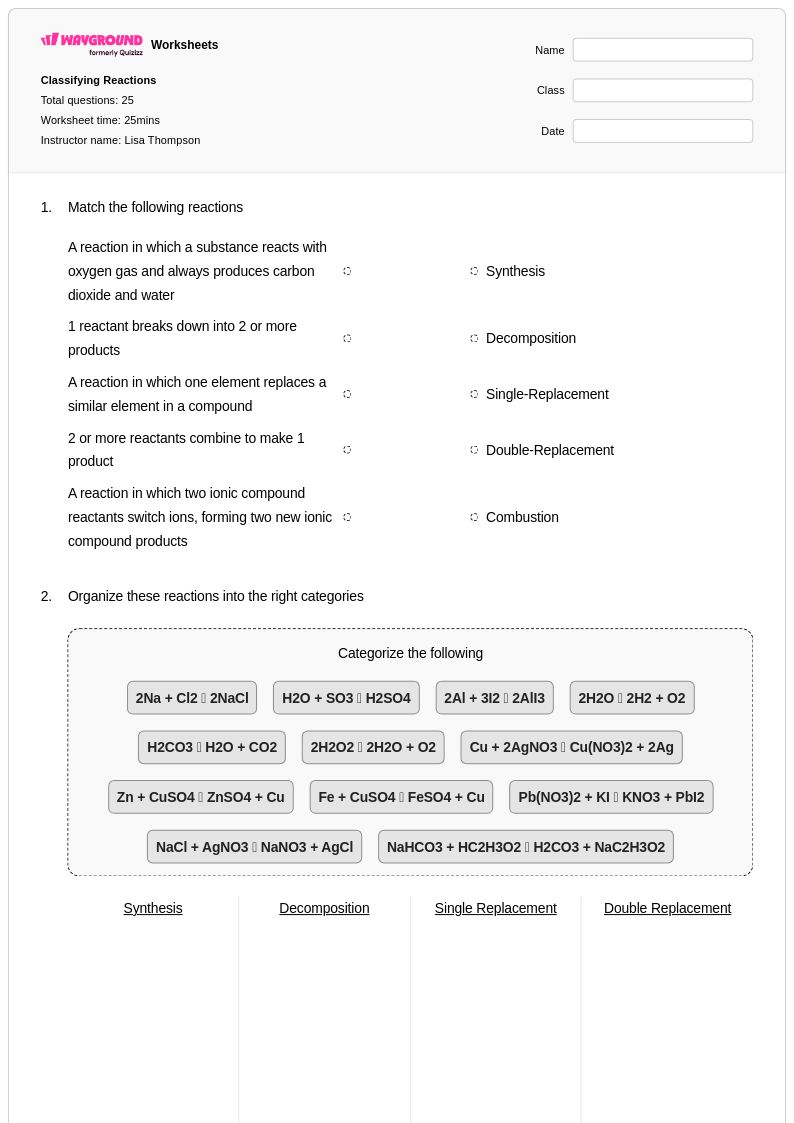
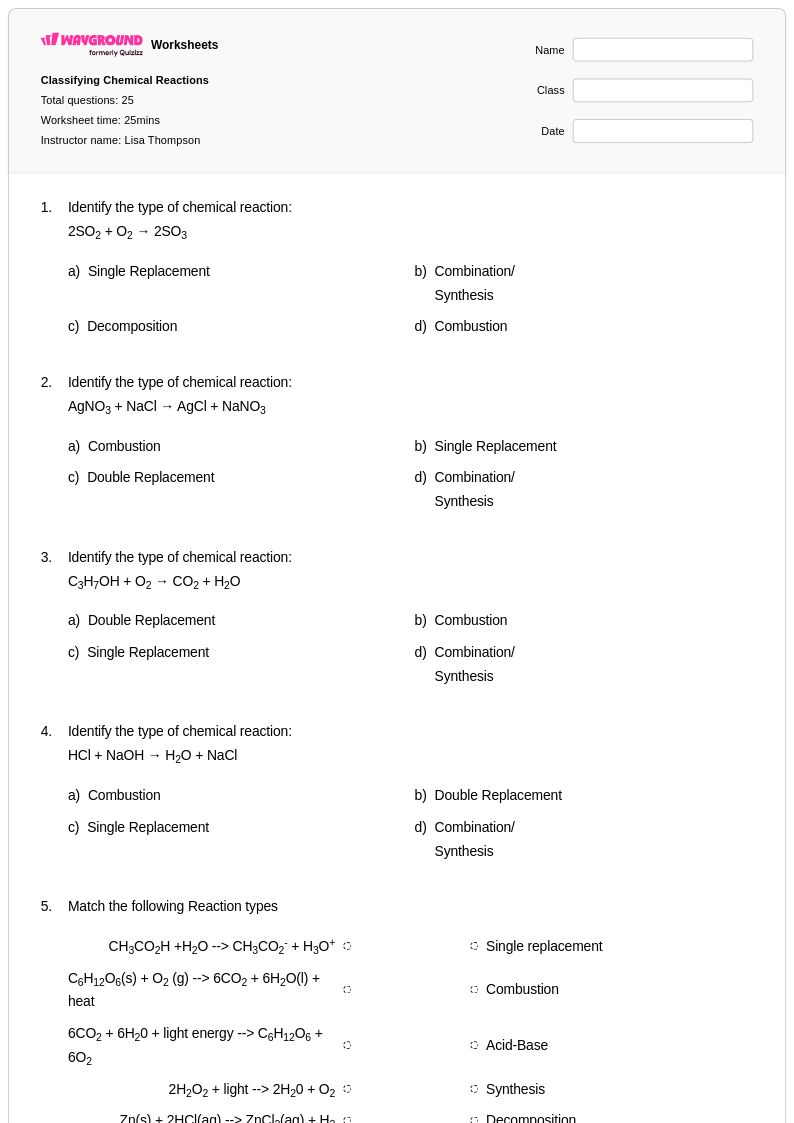
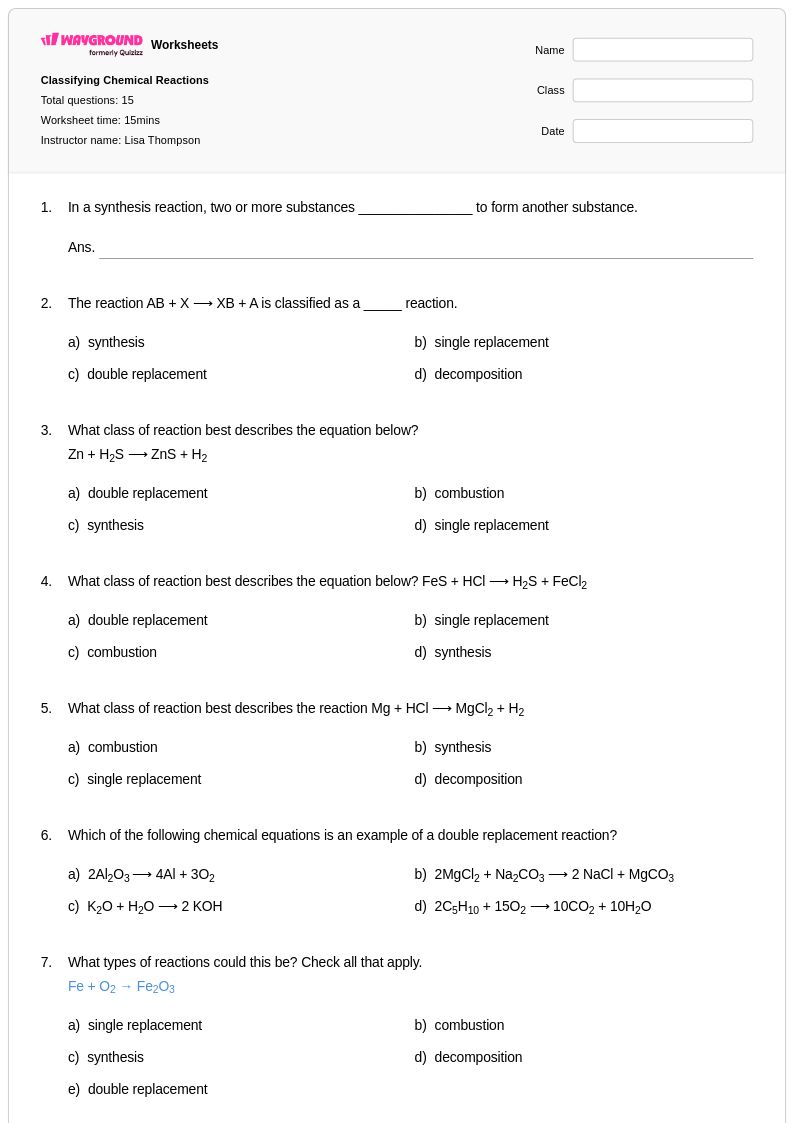
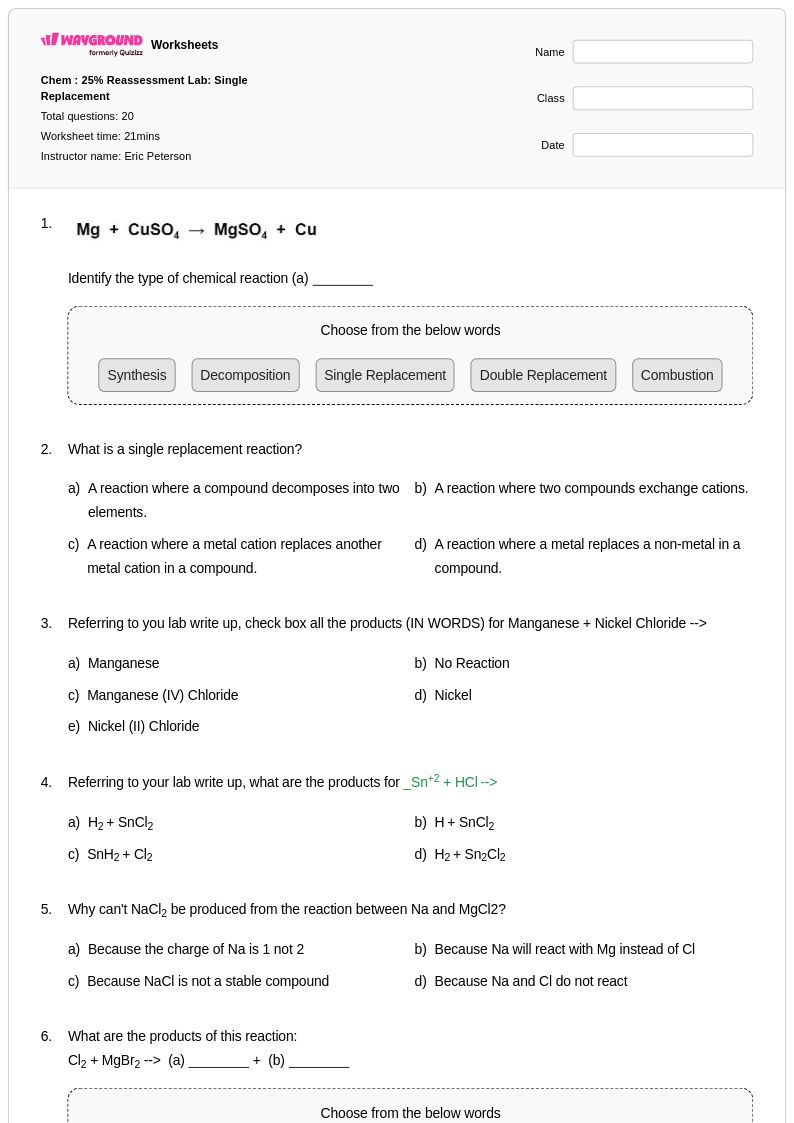
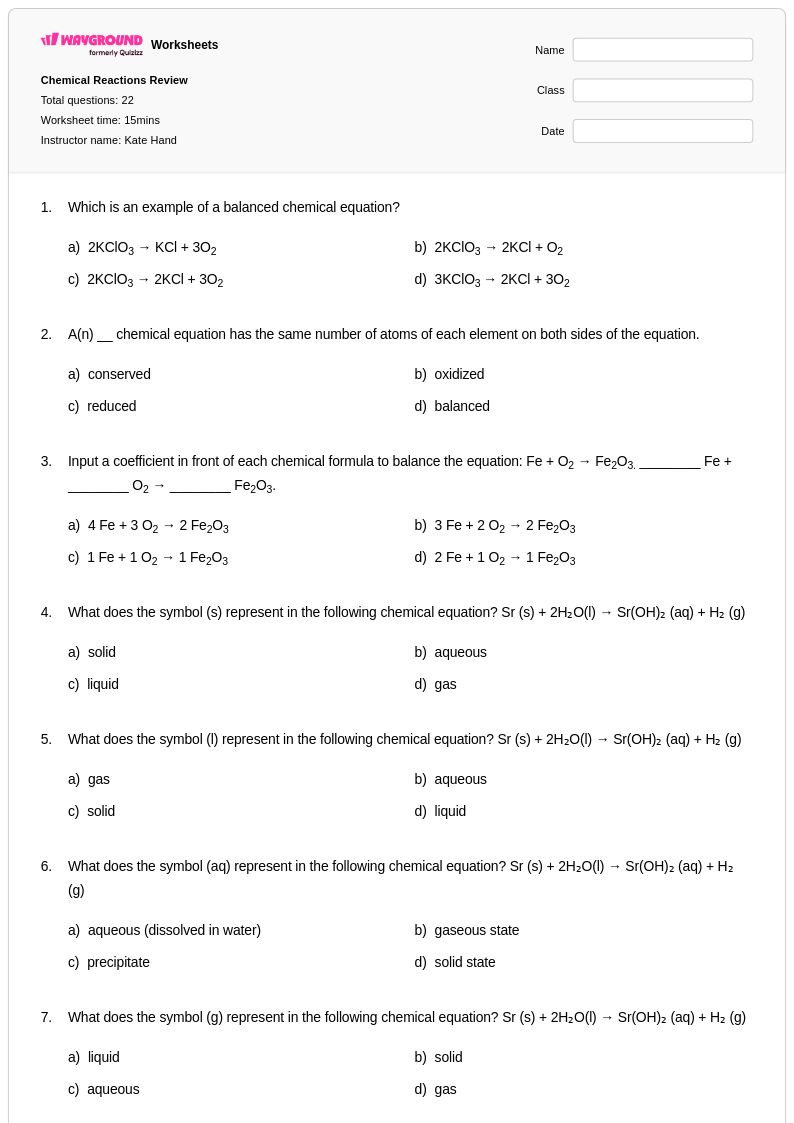
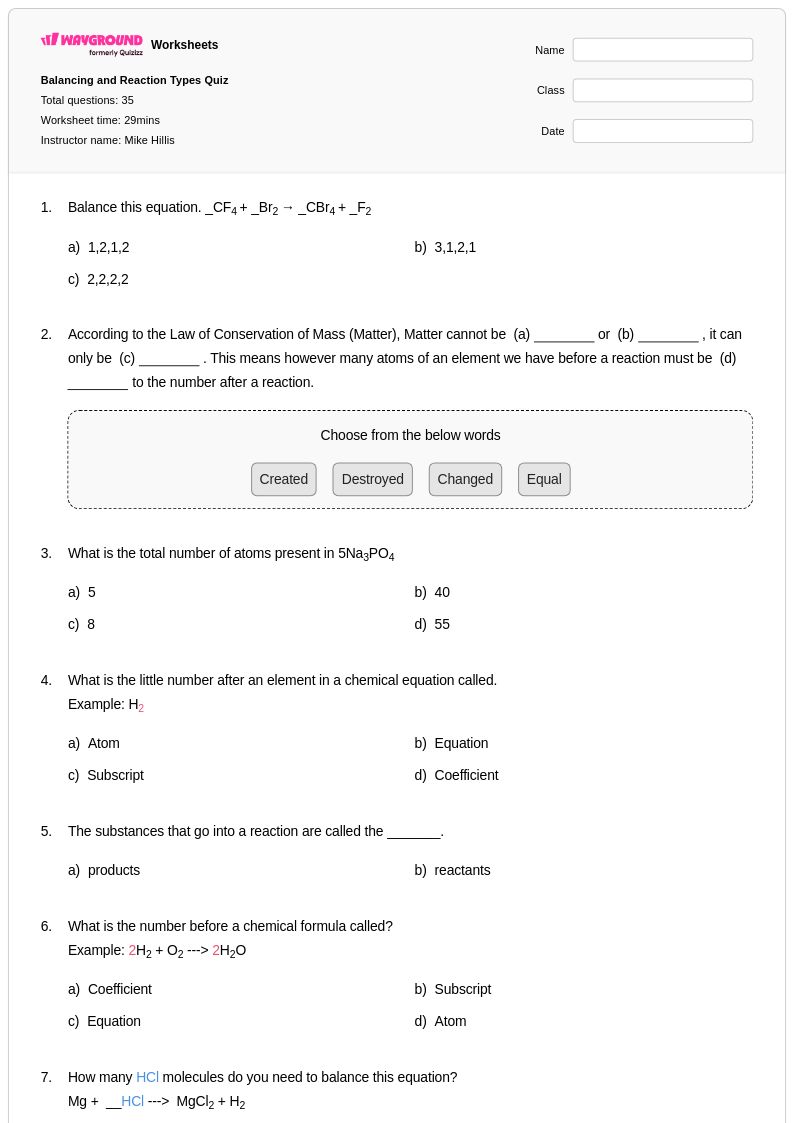
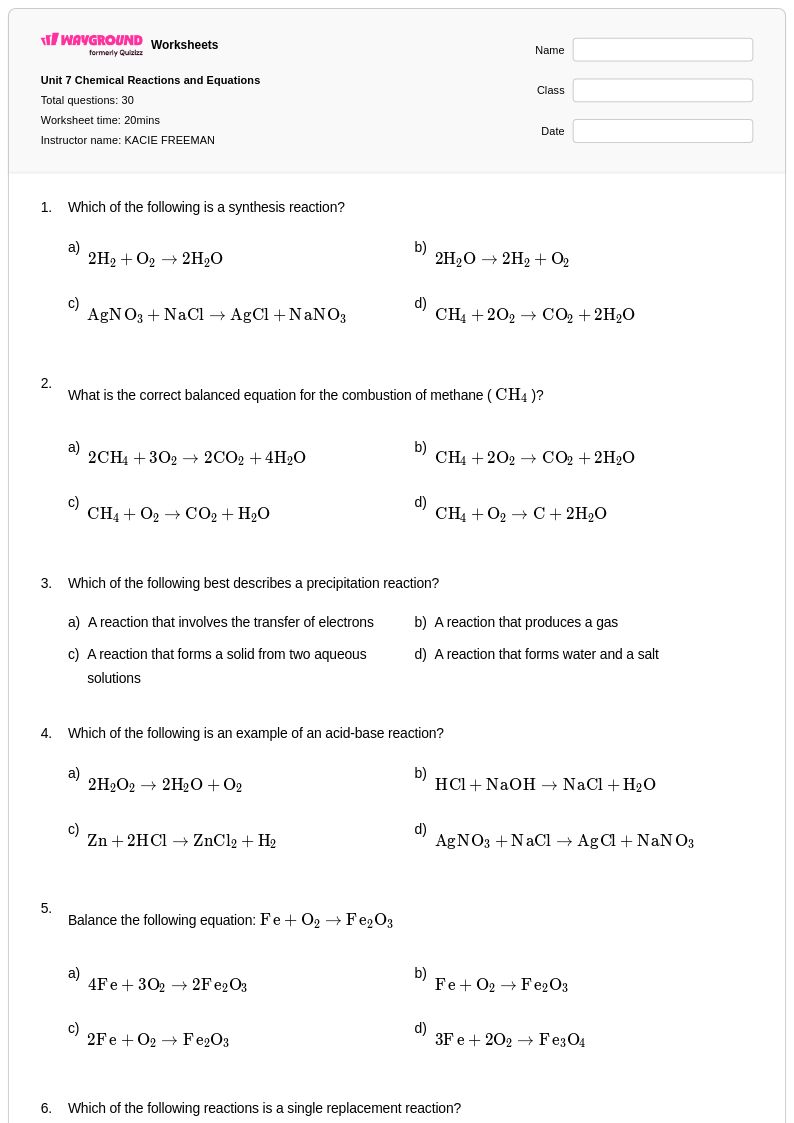
Double replacement reactions represent a fundamental concept in Year 11 chemistry that challenges students to master the intricate process of ionic compound exchange and precipitation formation. Wayground's comprehensive collection of double replacement reaction worksheets provides students with structured practice problems that develop their ability to predict products, write balanced chemical equations, and identify driving forces behind these reactions. These carefully crafted printables strengthen essential skills including solubility rule application, net ionic equation writing, and molecular versus ionic equation differentiation. Each worksheet comes with a detailed answer key that supports independent learning and self-assessment, while the free pdf format ensures accessibility for both classroom instruction and home study. Students work through progressively challenging scenarios involving aqueous solutions, precipitation reactions, and acid-base neutralizations that build confidence in chemical equation manipulation and stoichiometric calculations.
Wayground's extensive library, featuring millions of teacher-created resources, empowers educators to locate precisely the right double replacement reaction materials for their Year 11 chemistry curriculum through powerful search and filtering capabilities. The platform's standards-aligned worksheets support differentiated instruction by offering varying complexity levels, from basic product prediction exercises to advanced thermodynamic analysis problems. Teachers benefit from flexible customization tools that allow modification of existing worksheets to match specific classroom needs, whether for remediation of struggling students or enrichment challenges for advanced learners. Available in both printable and digital formats including downloadable pdf versions, these resources streamline lesson planning while providing consistent skill practice opportunities that reinforce conceptual understanding and prepare students for laboratory applications and standardized assessments.
FAQs
How do I teach double replacement reactions to chemistry students?
Start by ensuring students can identify ionic compounds and understand the concept of ion exchange before introducing double replacement reactions. Use a systematic approach: show students how cations and anions switch partners, then work through predicting products using solubility rules to determine whether a precipitate, gas, or water forms as the driving force. Reinforcing each driving force type separately — precipitation, gas formation, and acid-base neutralization — before combining them helps students build a reliable mental model they can apply consistently.
What practice problems help students get better at double replacement reactions?
The most effective practice problems for double replacement reactions move students through a progression: first predicting products from two ionic compounds, then balancing the resulting equations, and finally writing complete ionic and net ionic equations. Problems that require students to apply solubility rules to identify precipitates are especially valuable because they connect reaction prediction to real chemical outcomes. Mixing problem types across precipitation, neutralization, and gas-forming reactions within a single practice set also builds the flexibility students need for assessments.
What mistakes do students commonly make with double replacement reactions?
The most frequent error is incorrectly swapping ions — students often exchange entire formulas rather than just the cations and anions, leading to products with wrong charges or formulas. A second common mistake is failing to apply solubility rules accurately, which causes students to either miss precipitate formation or incorrectly label a soluble compound as a precipitate. Students also frequently forget to balance equations after writing products, and many struggle to correctly cancel spectator ions when writing net ionic equations.
How do I use double replacement reaction worksheets in my classroom?
Double replacement reaction worksheets on Wayground are available as printable PDFs for traditional classroom use and in digital formats for technology-integrated or remote learning environments, making them easy to deploy regardless of your instructional setting. You can also host them as a live quiz on Wayground, which allows you to track student responses in real time and identify misconceptions quickly. The included answer keys make it straightforward to use these worksheets for guided practice, independent work, or targeted remediation sessions.
How do I help struggling students understand solubility rules in the context of double replacement reactions?
Students who struggle with solubility rules benefit from having a reference chart available during initial practice so they can focus on applying the rules rather than memorizing them simultaneously. Start with reaction problems guaranteed to produce a precipitate, then introduce soluble-only outcomes so students practice recognizing when no reaction occurs. On Wayground, teachers can apply accommodations such as reduced answer choices or read-aloud support for individual students who need additional scaffolding, without disrupting the workflow of the rest of the class.
How do I differentiate double replacement reaction instruction for advanced versus struggling students?
For struggling students, limit early practice to simple precipitation reactions with straightforward solubility cases before introducing gas-forming or neutralization reactions. For advanced learners, extend practice to writing complete and net ionic equations, identifying spectator ions, and predicting whether reactions will actually occur based on driving forces. Wayground's differentiation tools allow teachers to assign different worksheet versions or apply accommodations such as extended time and reduced answer choices to specific students, so each learner is appropriately challenged without requiring separate lesson plans.