
21 Q
9th - 12th
43 Q
11th
68 Q
11th
12 Q
9th - Uni
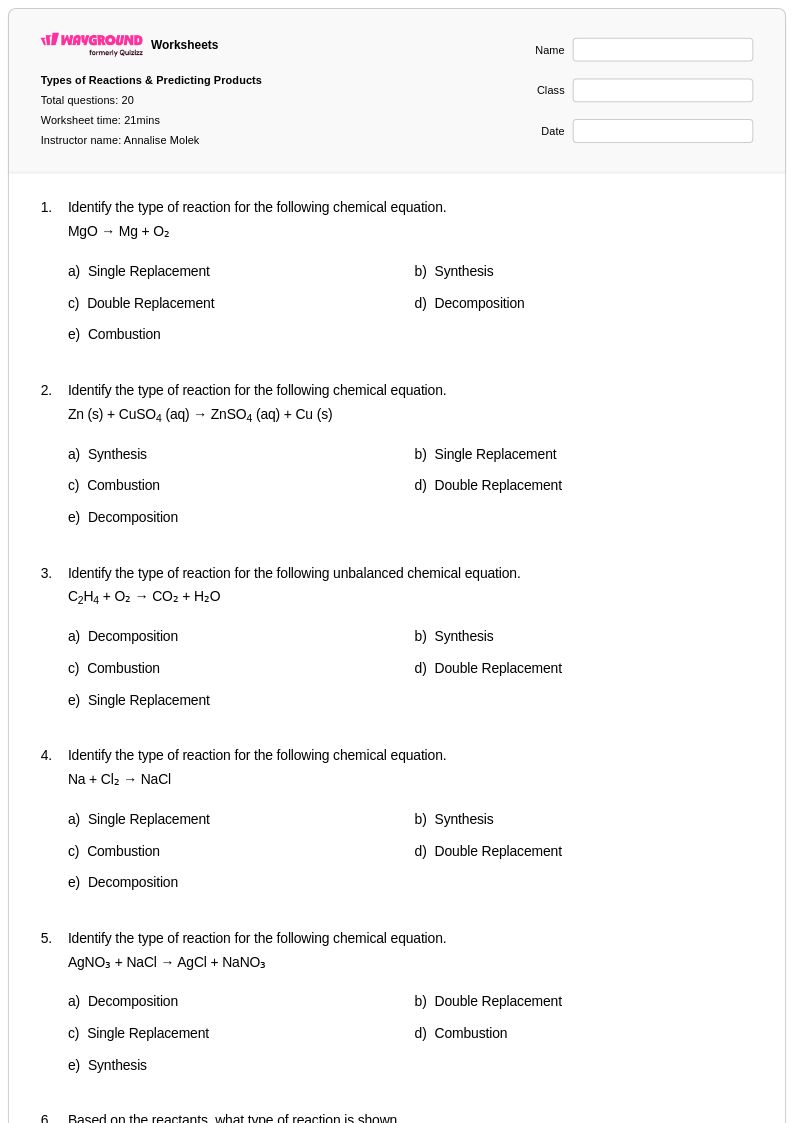
20 Q
9th - 12th
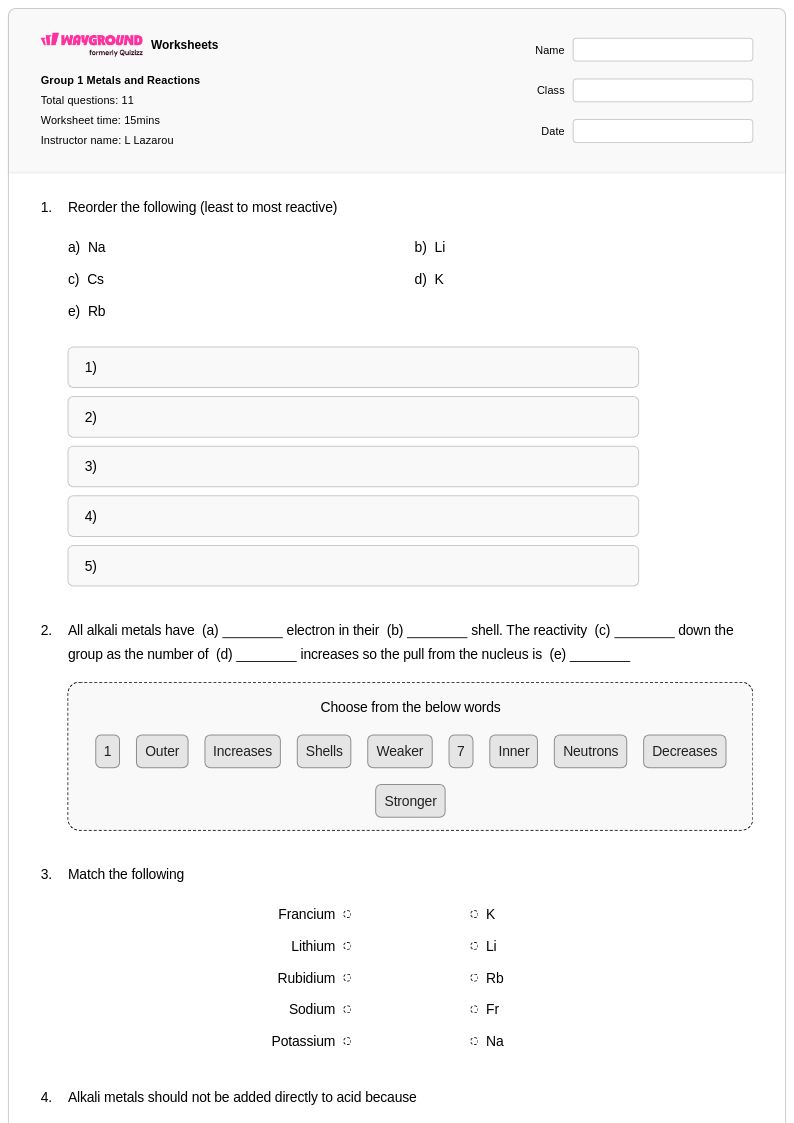
11 Q
9th - 12th
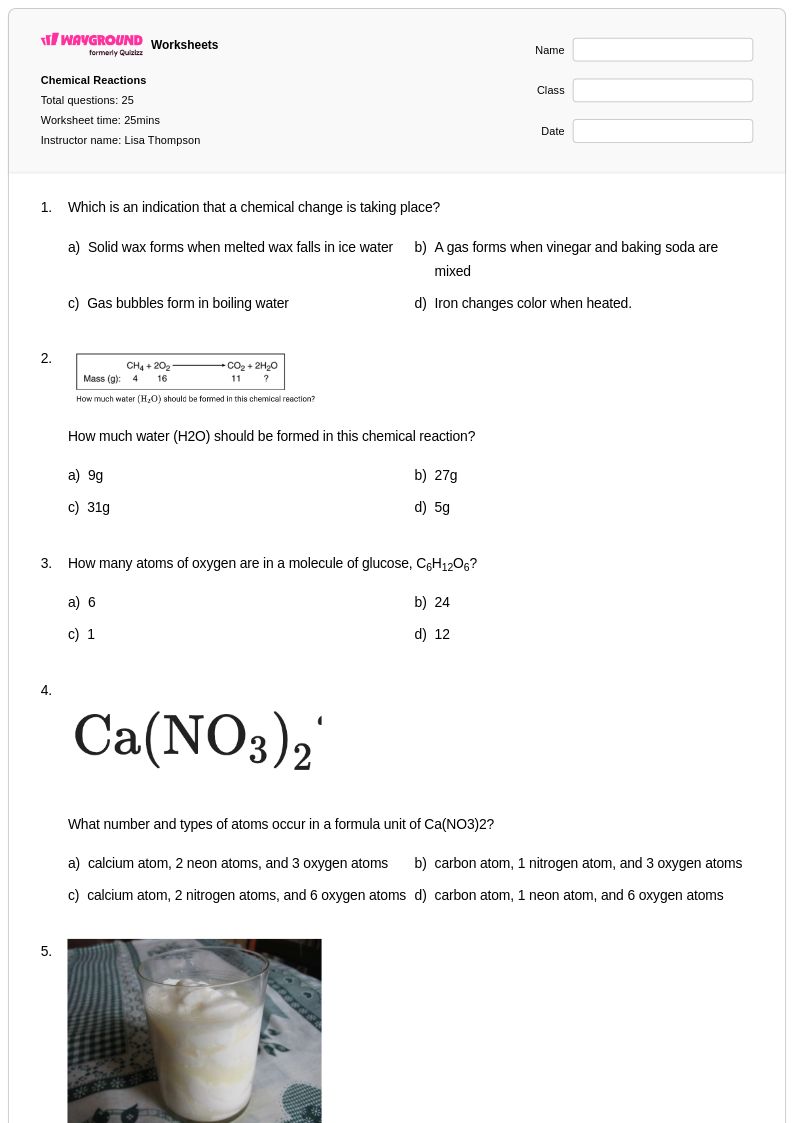
25 Q
8th - Uni
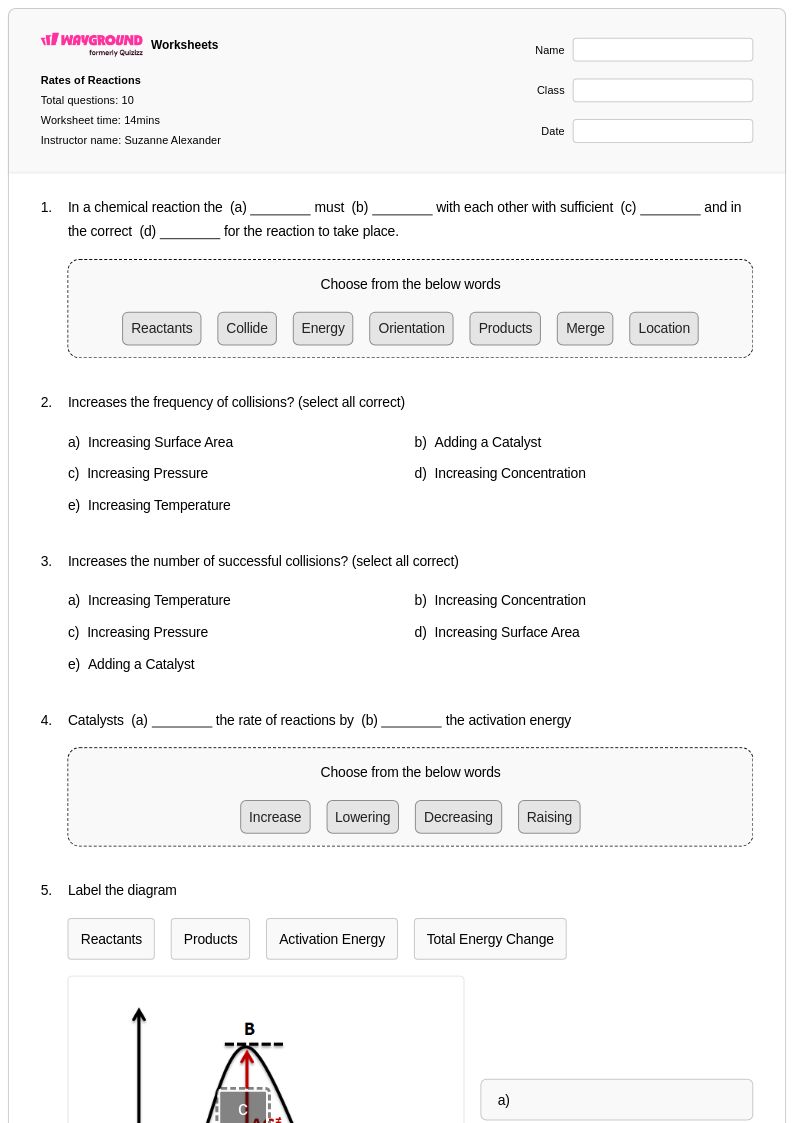
10 Q
9th - 12th
10 Q
10th - Uni
26 Q
9th - 12th
25 Q
9th - 12th
20 Q
8th - Uni
10 Q
9th - 12th
14 Q
9th - 12th
35 Q
11th
15 Q
9th - 12th
20 Q
10th - 12th
40 Q
9th - 12th
20 Q
9th - 12th
25 Q
9th - Uni
15 Q
9th - Uni
25 Q
11th - Uni
15 Q
11th
20 Q
8th - Uni
Explore Other Subject Worksheets for year 11
Explore printable Identifying Reactions worksheets for Year 11
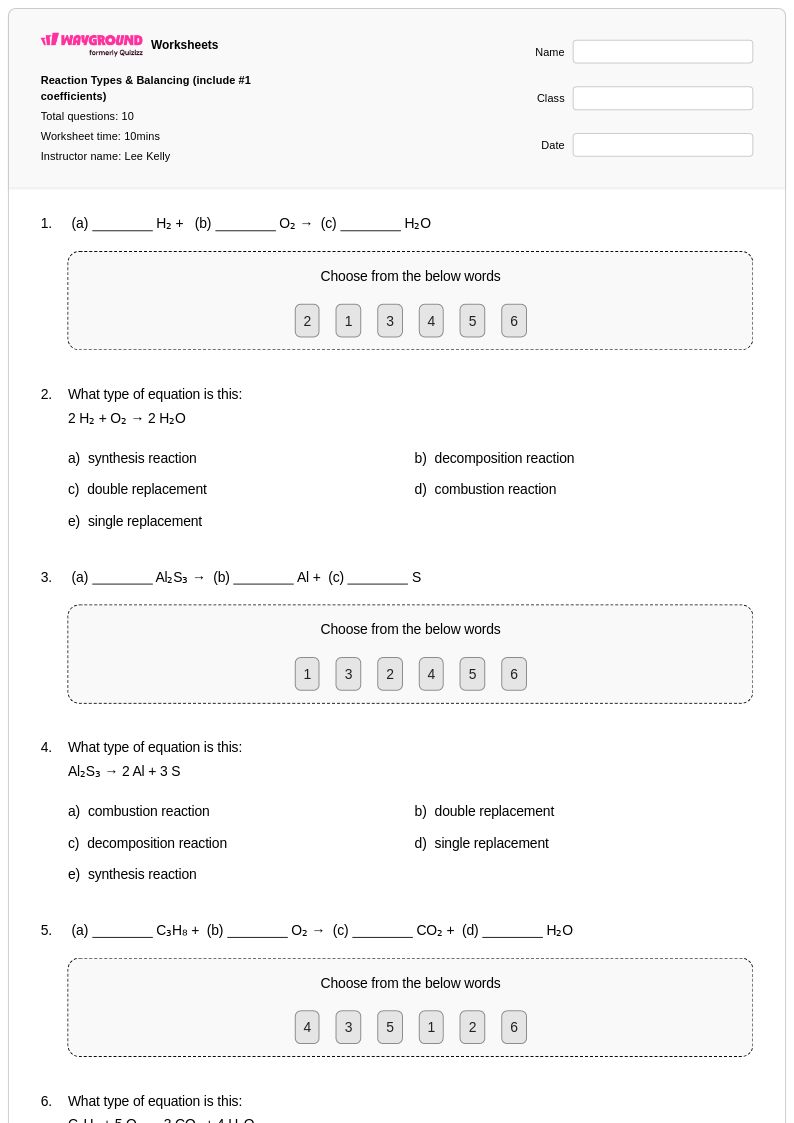
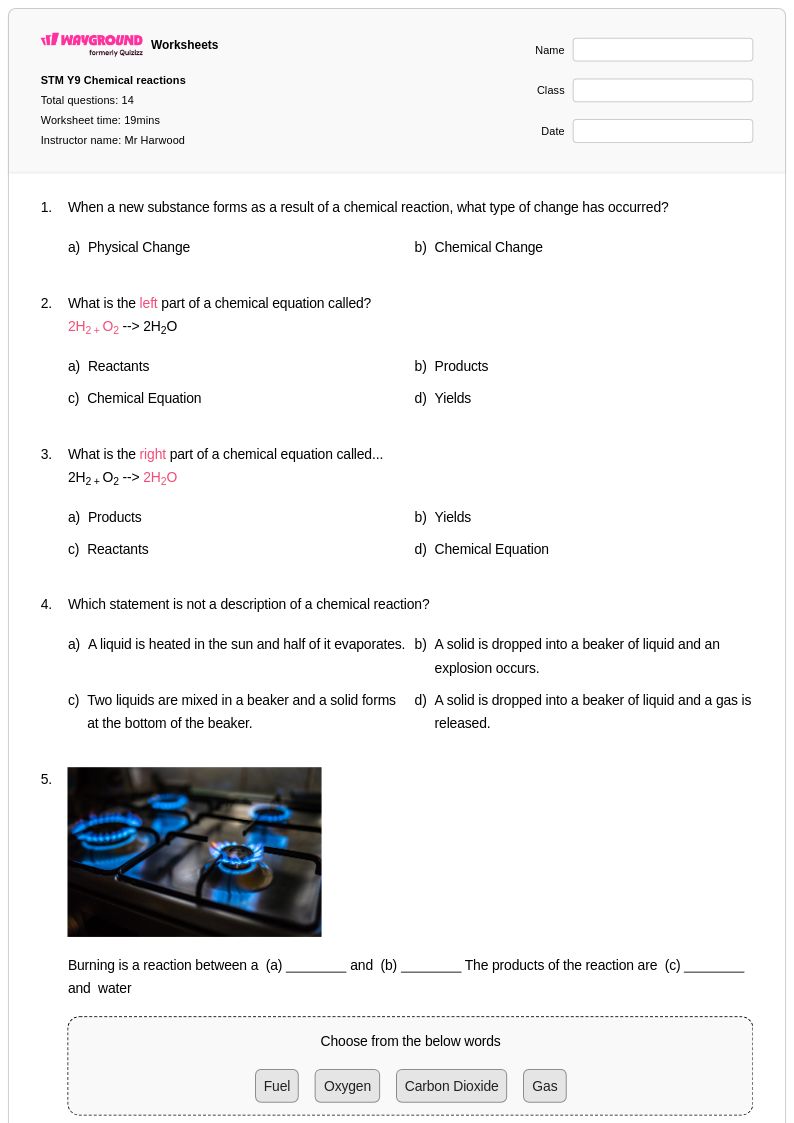
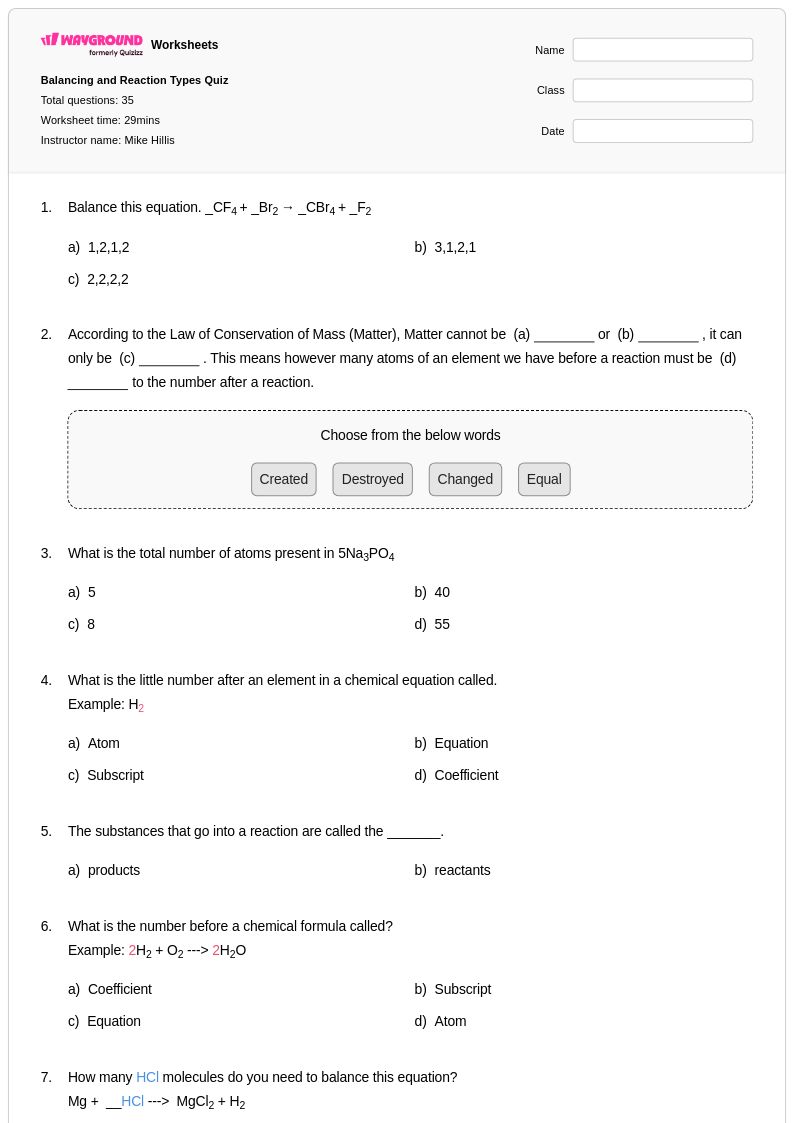
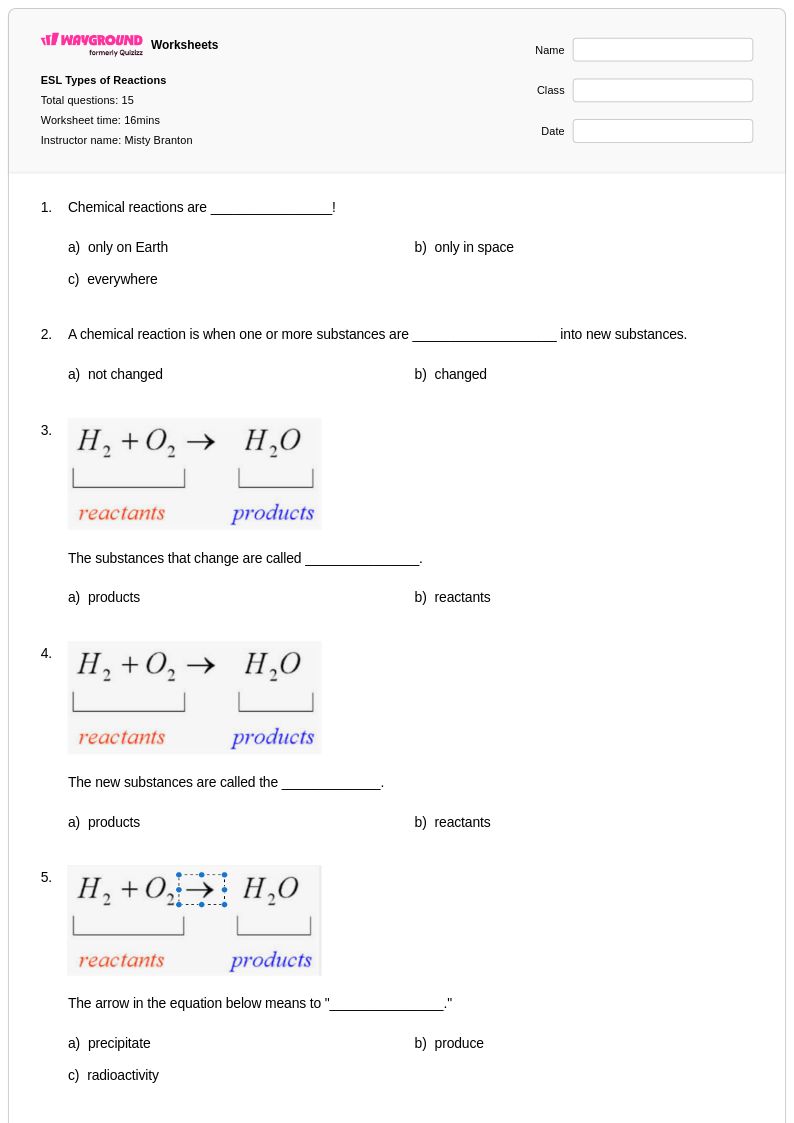
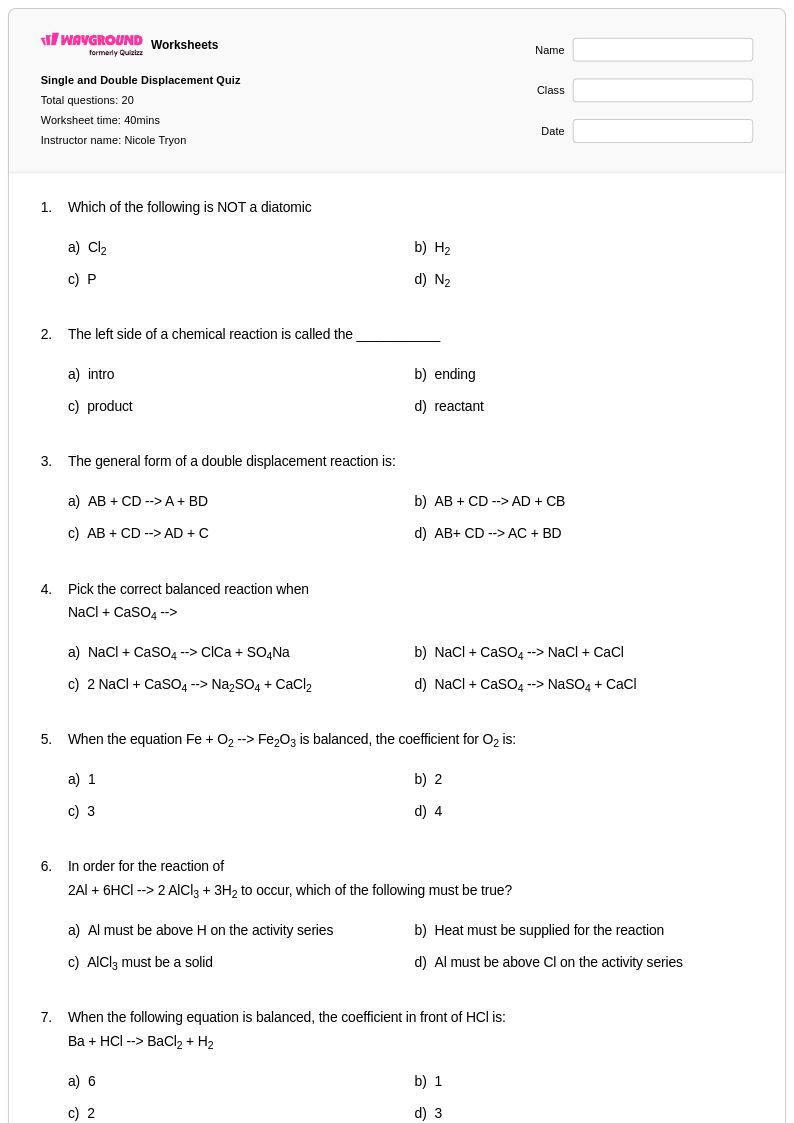
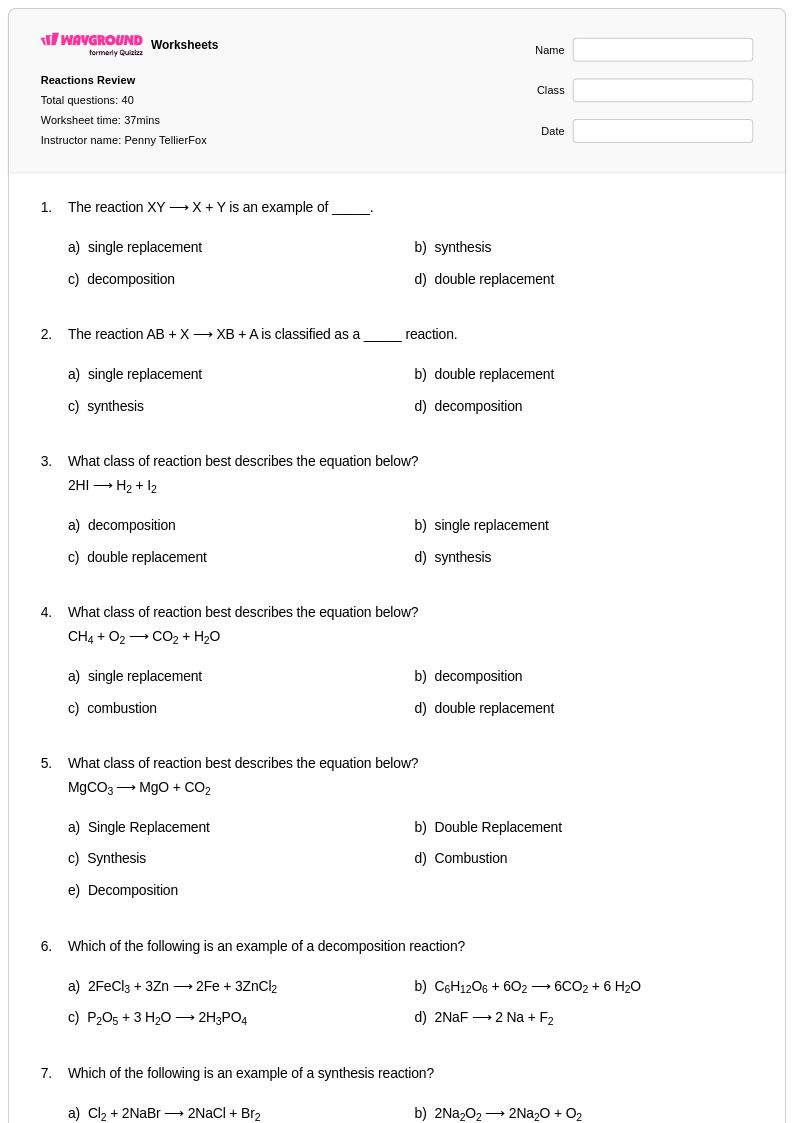
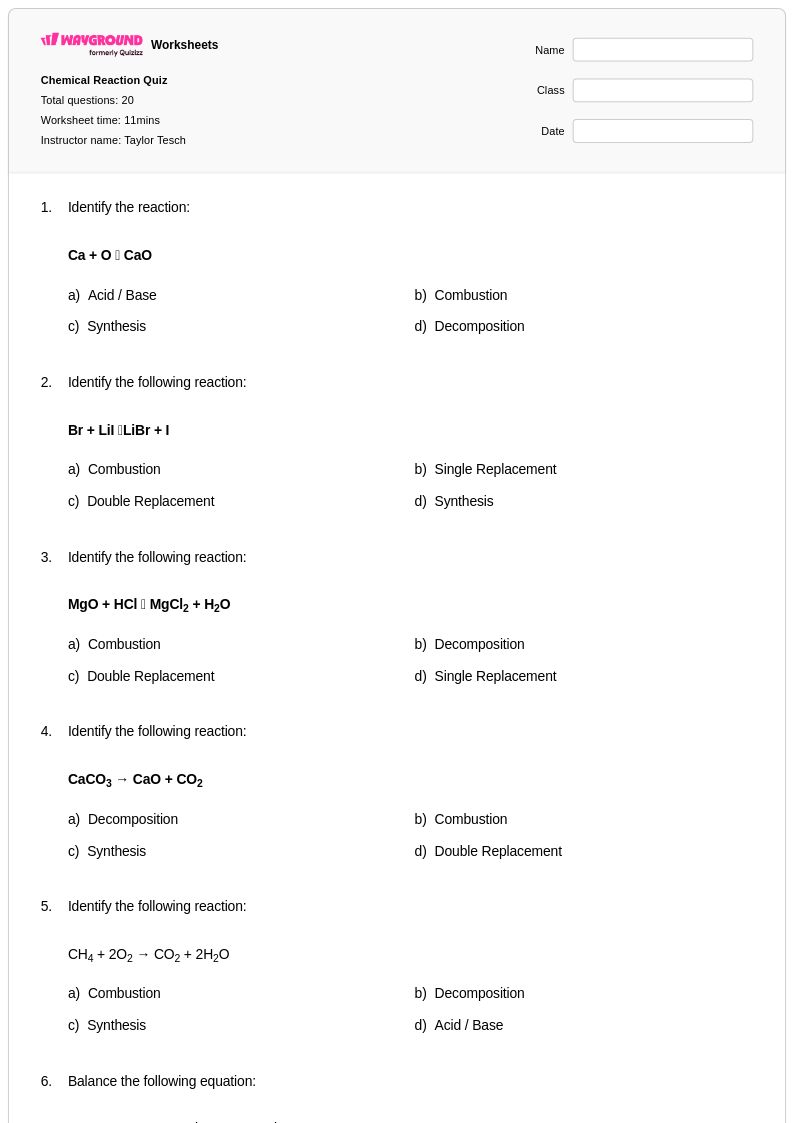
Identifying reactions worksheets for Year 11 chemistry students available through Wayground (formerly Quizizz) provide comprehensive practice in recognizing and categorizing the fundamental types of chemical reactions. These expertly designed worksheets strengthen students' analytical skills by presenting diverse chemical equations and scenarios that require identification of synthesis, decomposition, single replacement, double replacement, and combustion reactions. Each worksheet collection includes detailed answer keys and step-by-step solution guides that help students understand the characteristic patterns and driving forces behind different reaction types. The free printable resources feature practice problems ranging from basic pattern recognition to complex multi-step reaction sequences, enabling students to build confidence in predicting products and balancing equations across various chemical systems.
Wayground (formerly Quizizz) empowers chemistry educators with millions of teacher-created identifying reactions worksheets that can be seamlessly integrated into Year 11 curriculum planning and instruction. The platform's robust search and filtering capabilities allow teachers to locate resources aligned with specific chemistry standards and learning objectives, while built-in differentiation tools enable customization for students with varying skill levels and learning needs. These worksheets are available in both printable pdf format for traditional classroom use and interactive digital versions for online learning environments, providing maximum flexibility for lesson planning, targeted remediation, and enrichment activities. Teachers can efficiently modify existing worksheets or combine multiple resources to create comprehensive practice sets that address specific gaps in student understanding of reaction identification concepts.