Free Printable Collision Theory Worksheets for Year 11
Explore Year 11 collision theory worksheets and printables that help students master reaction rates, molecular collisions, and activation energy through comprehensive practice problems with answer keys.
Explore printable Collision Theory worksheets for Year 11
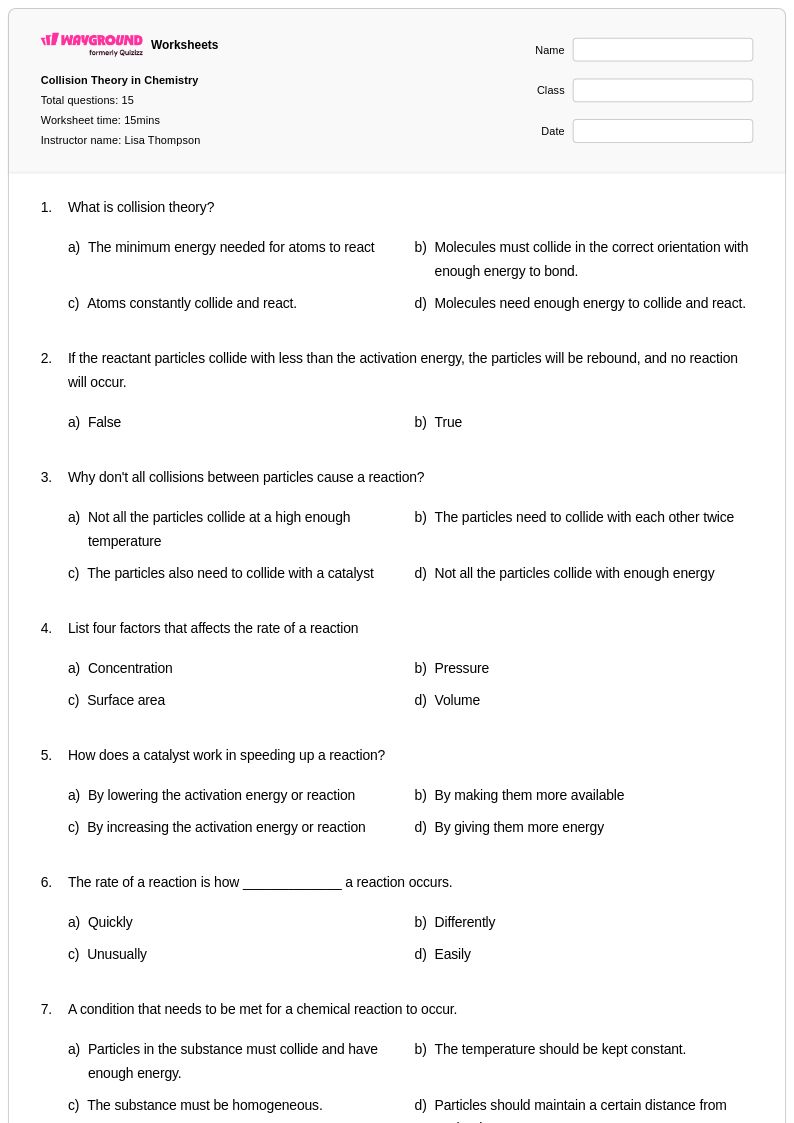
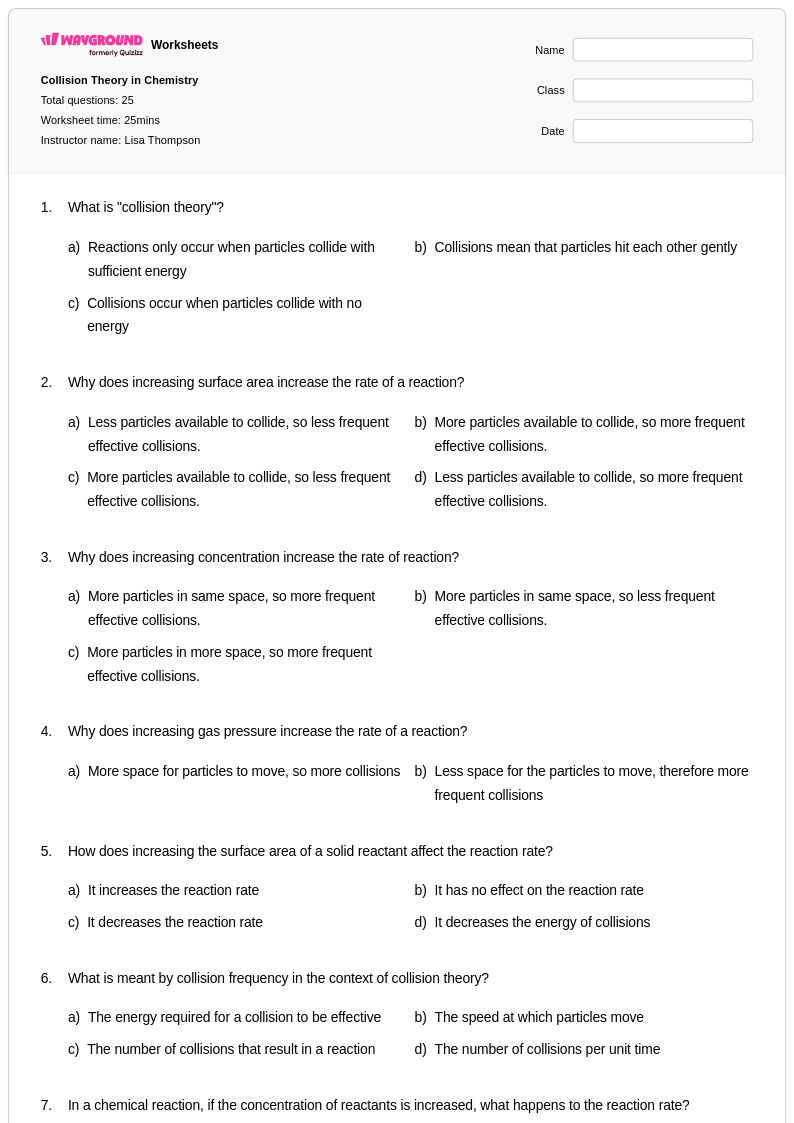
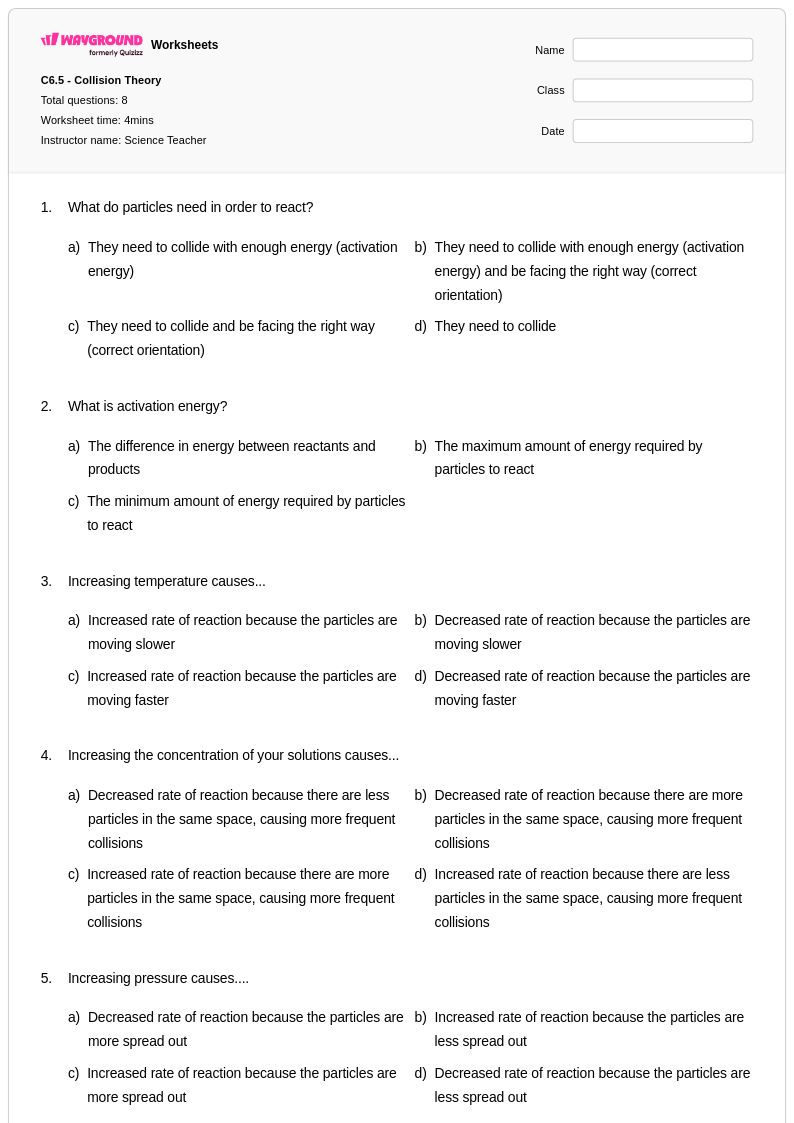
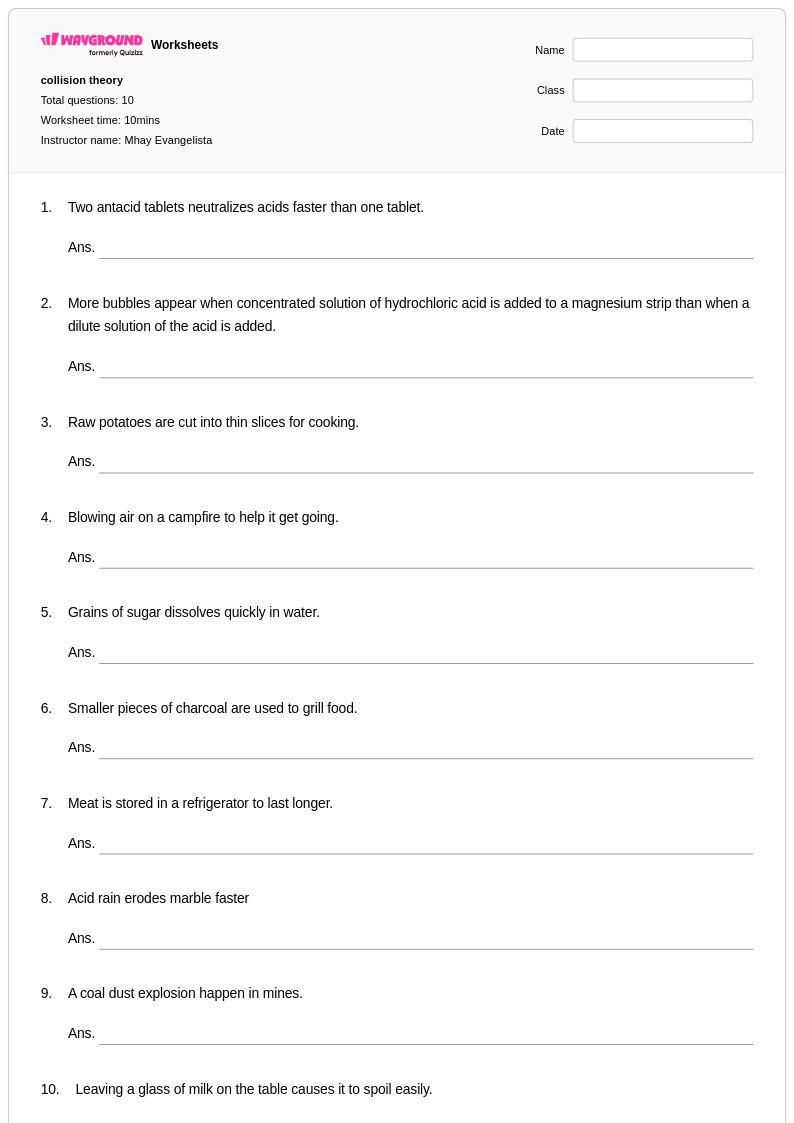
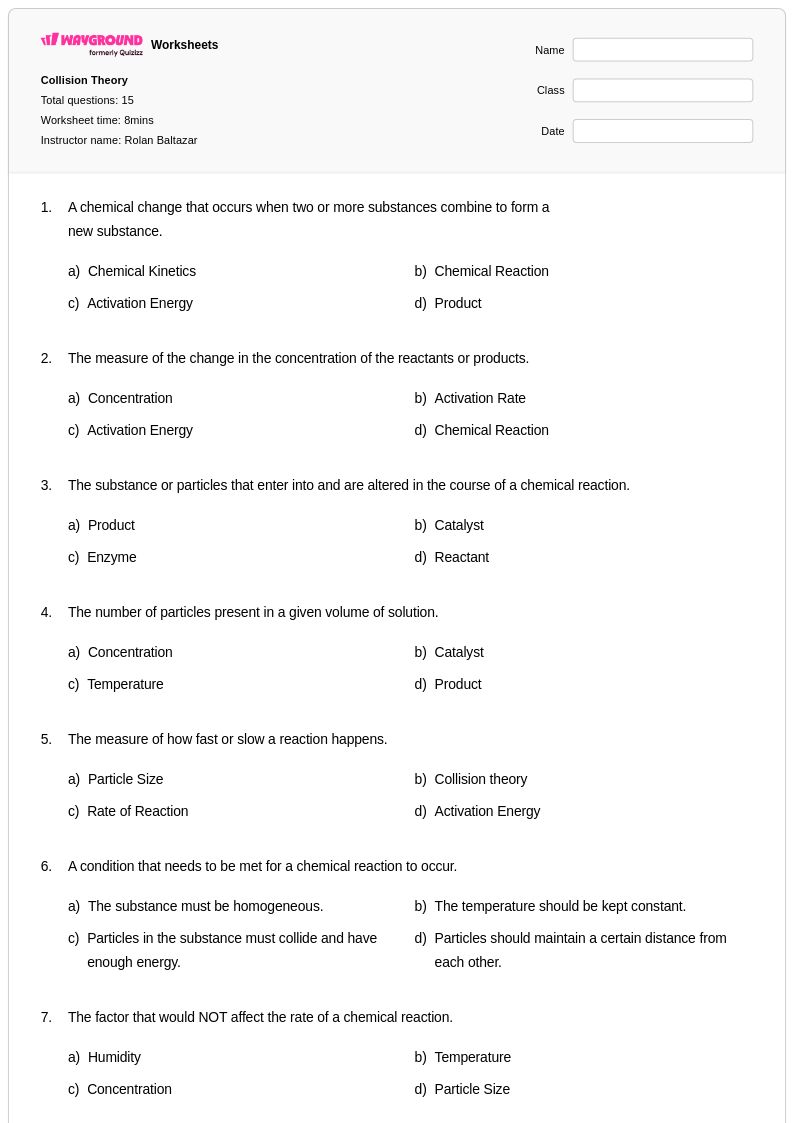
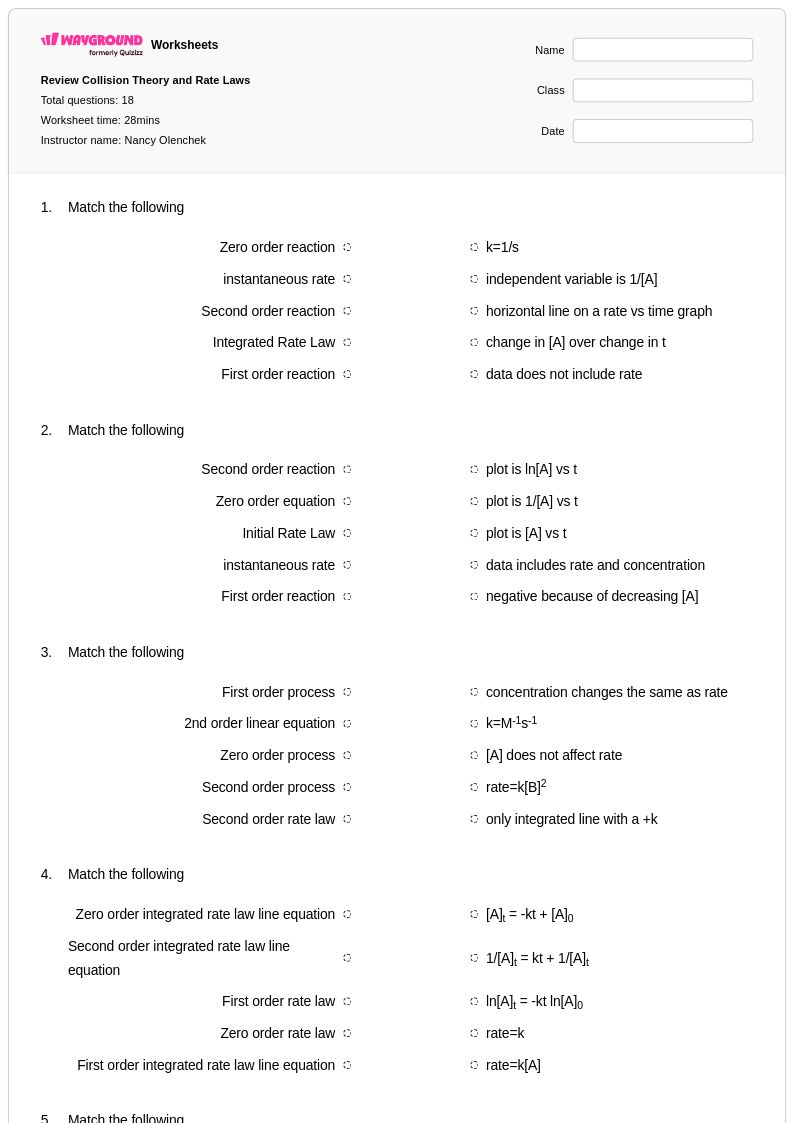
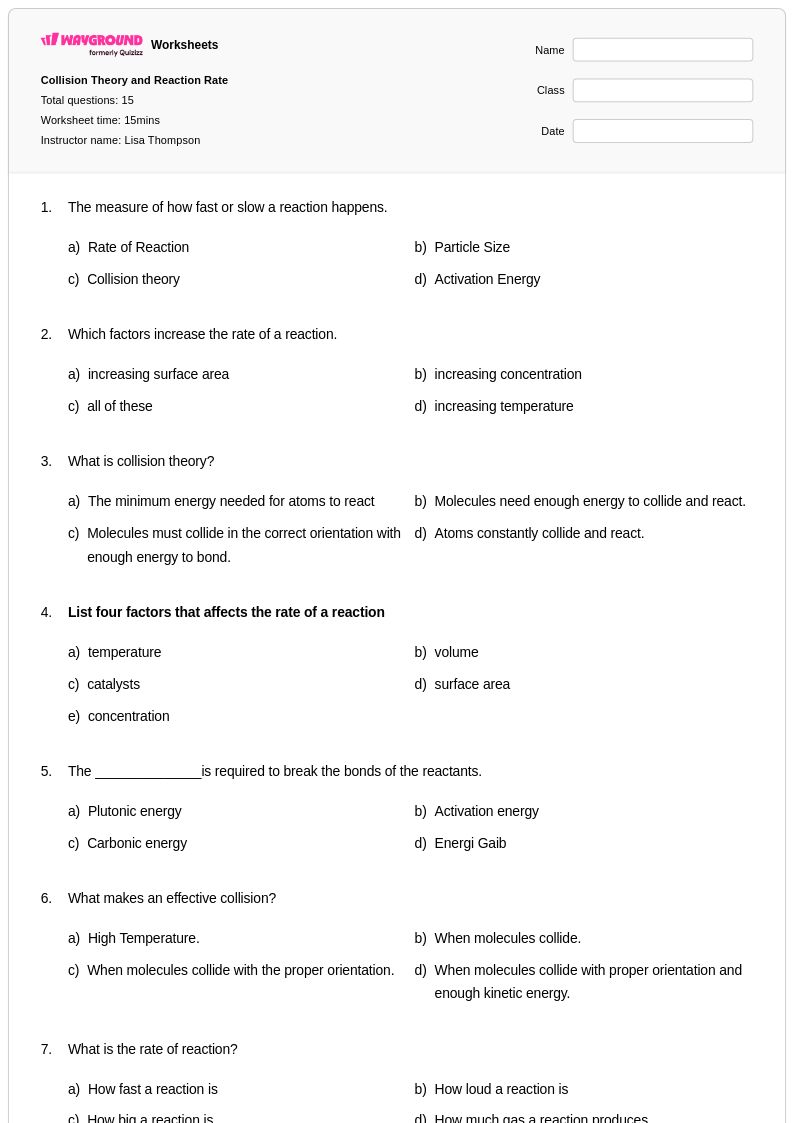
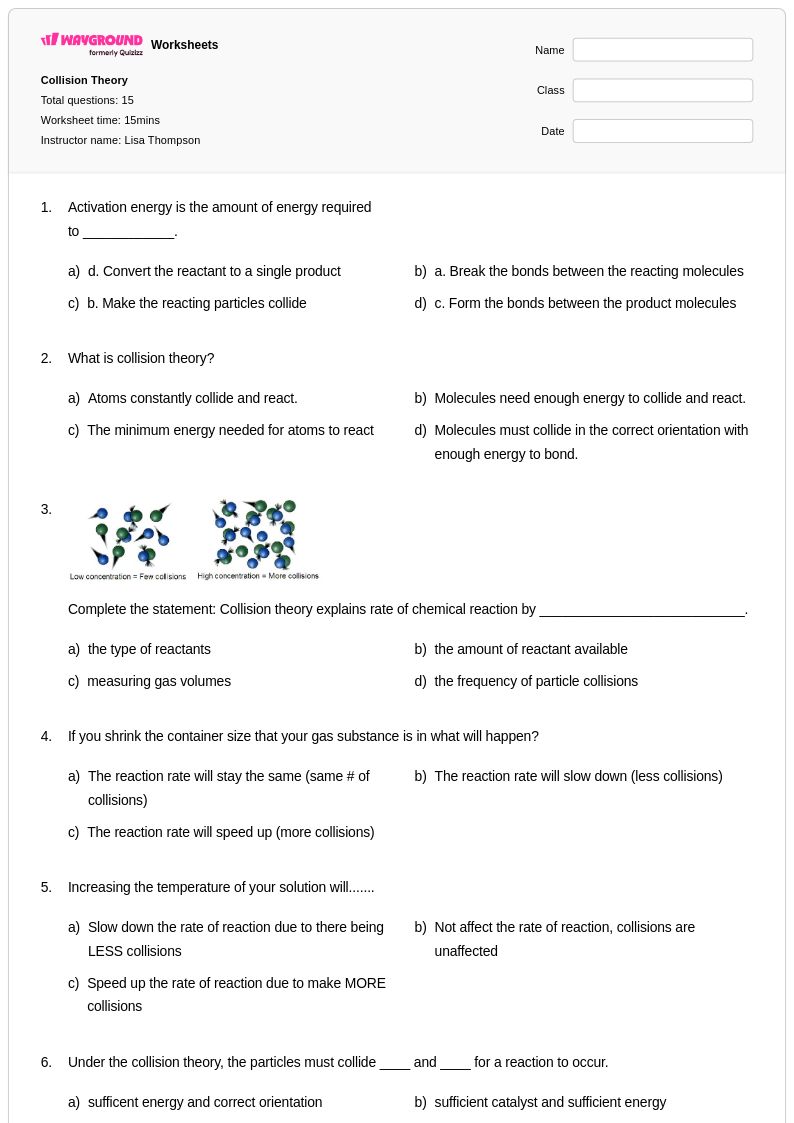
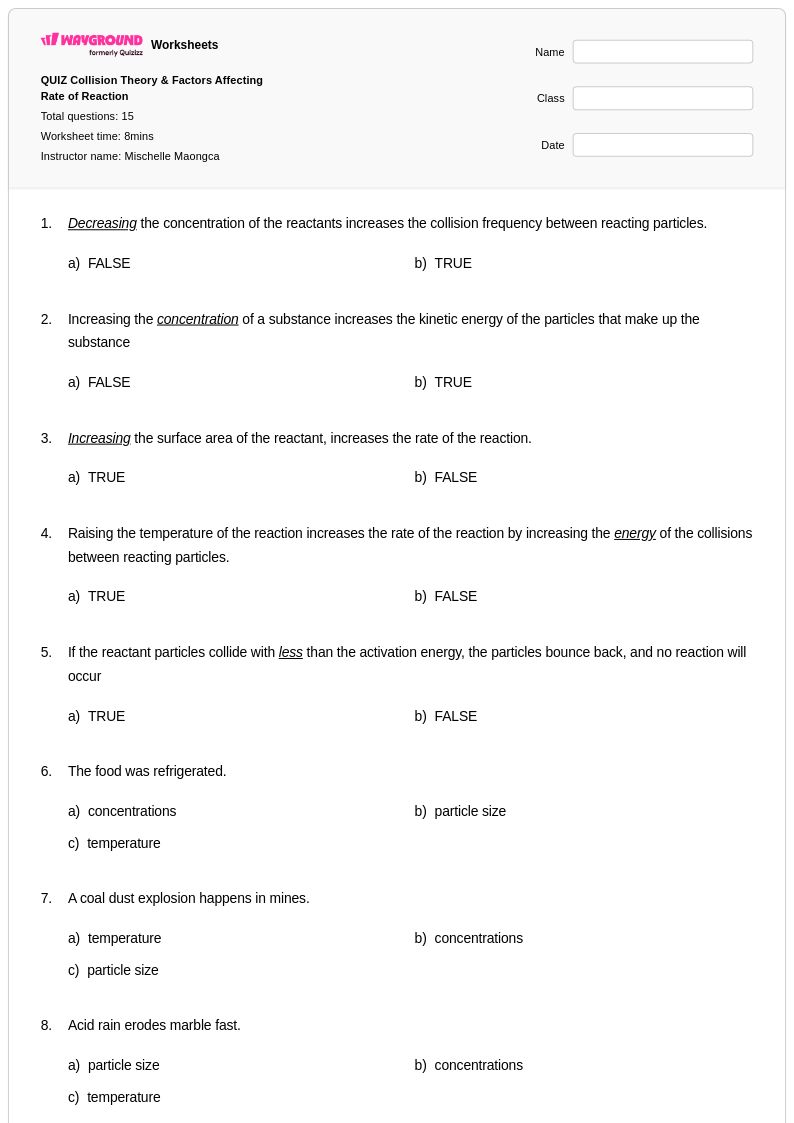
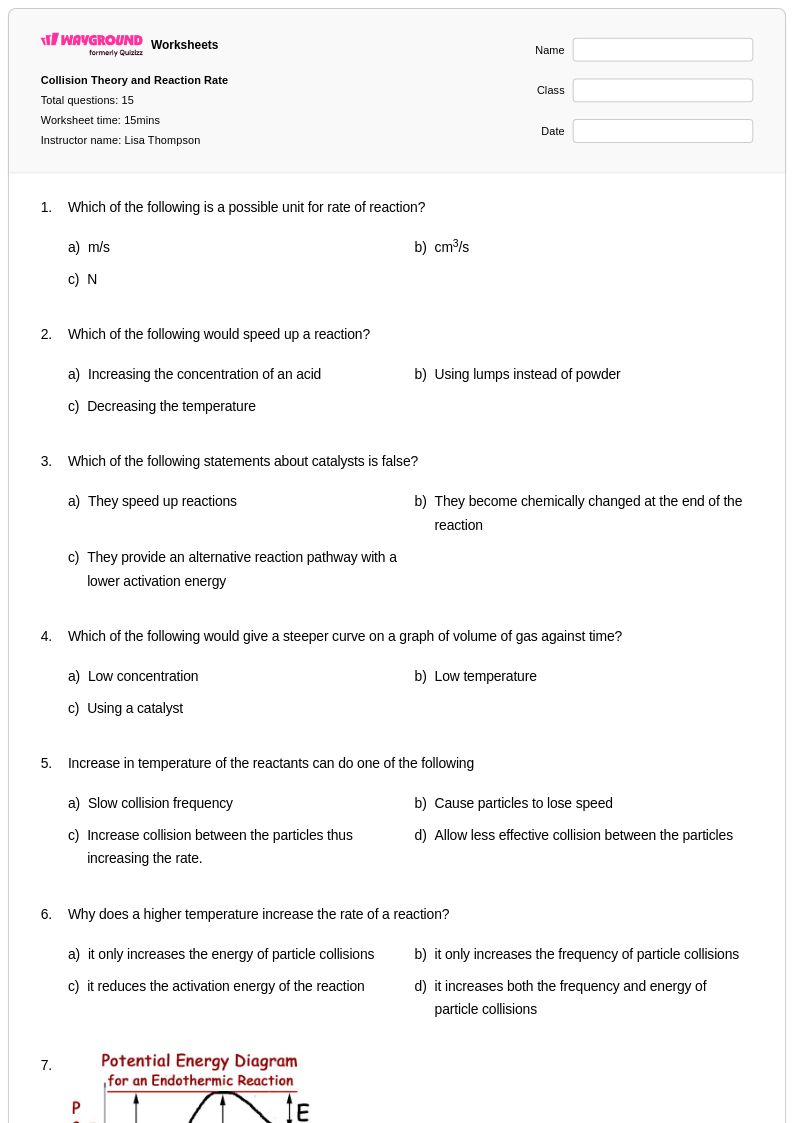
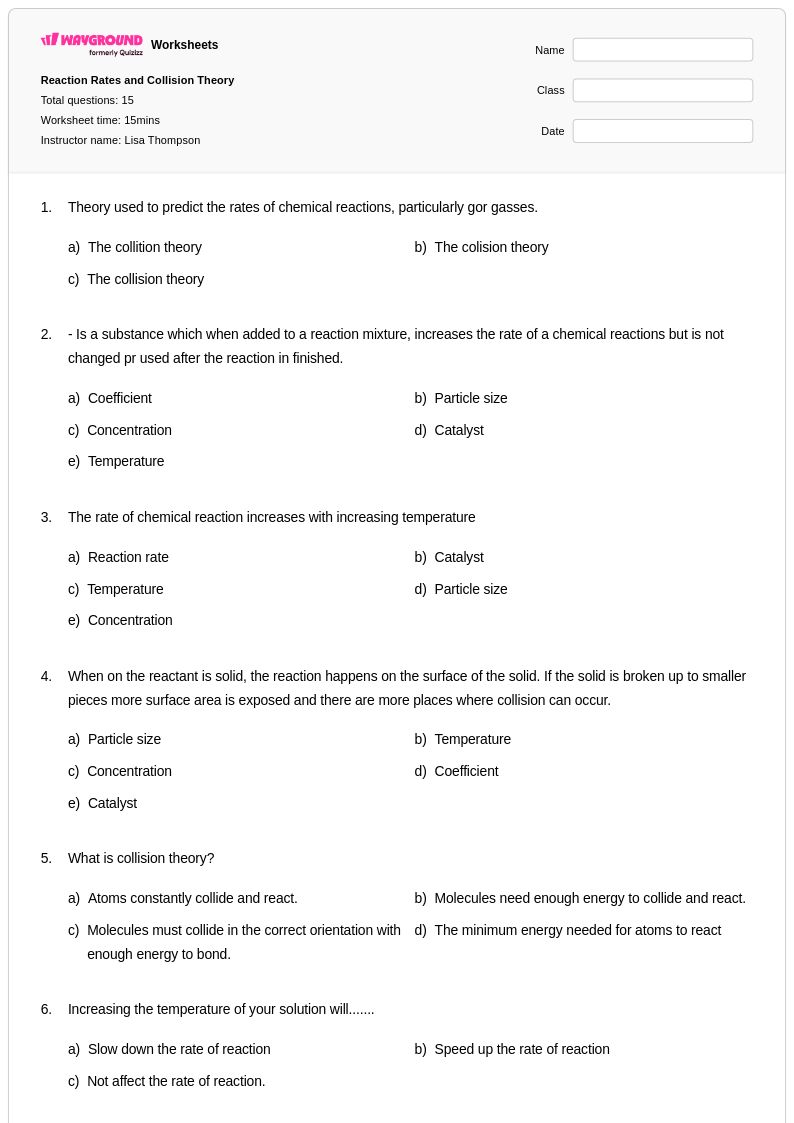
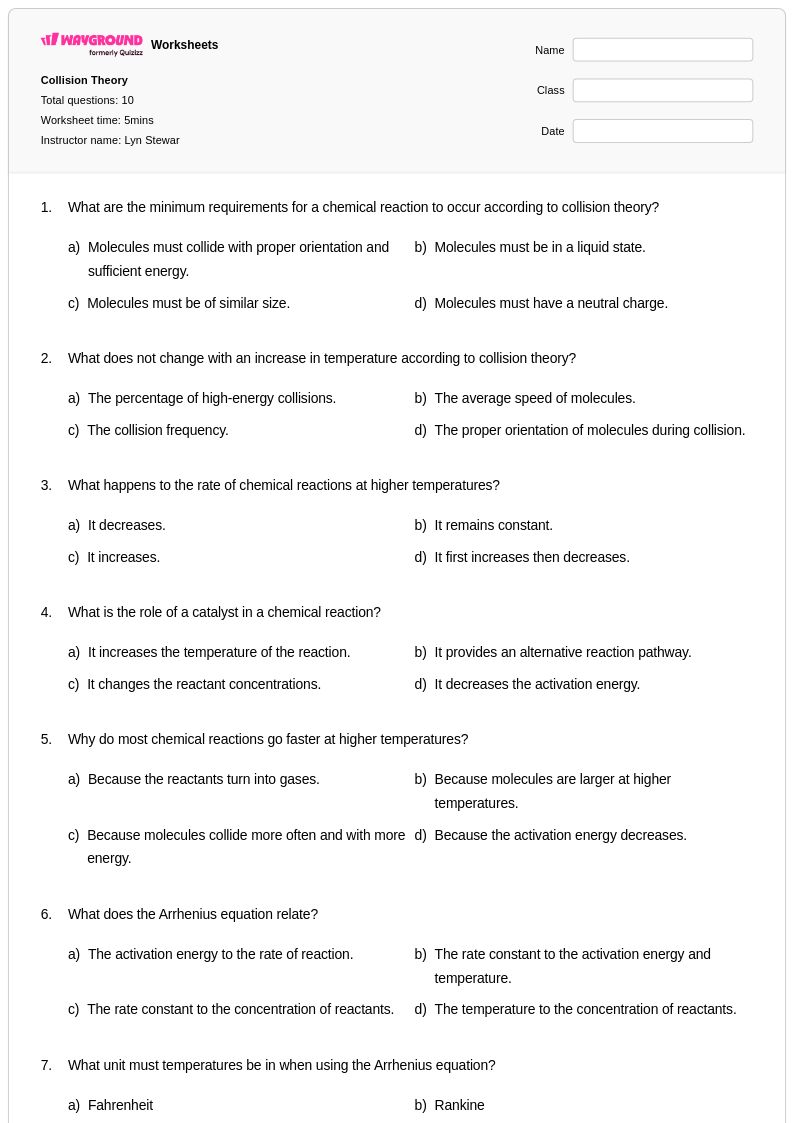
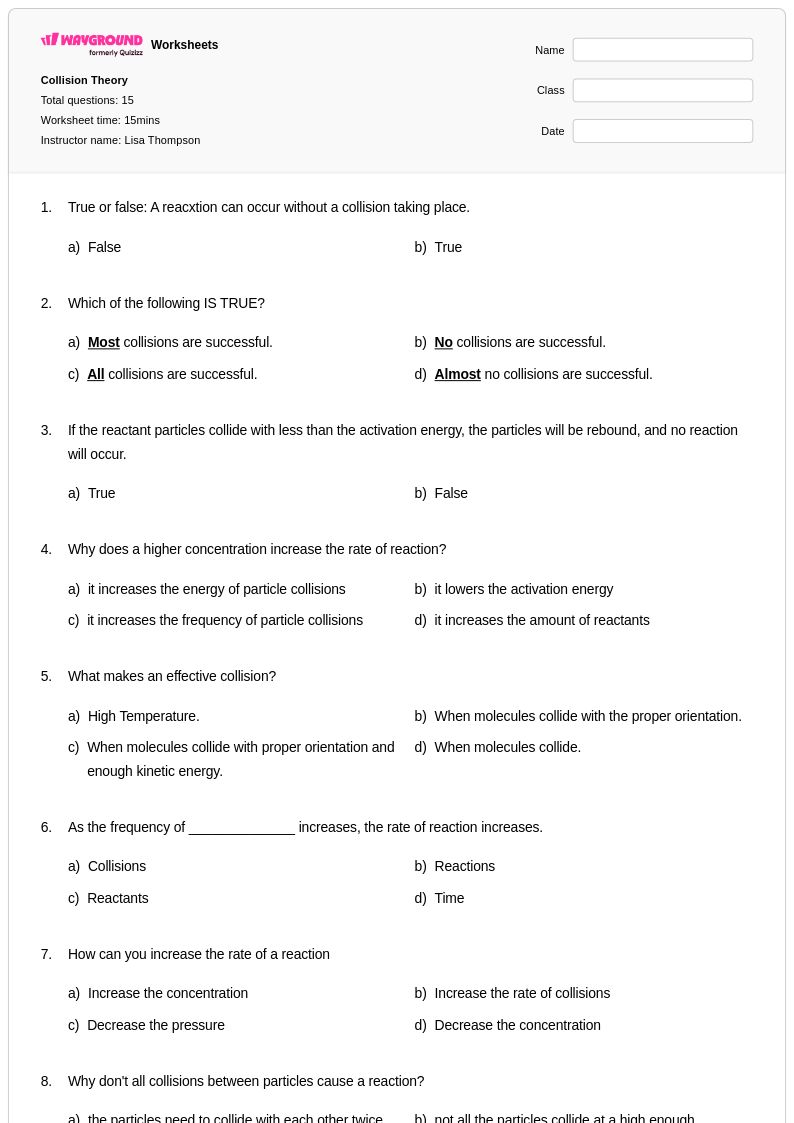
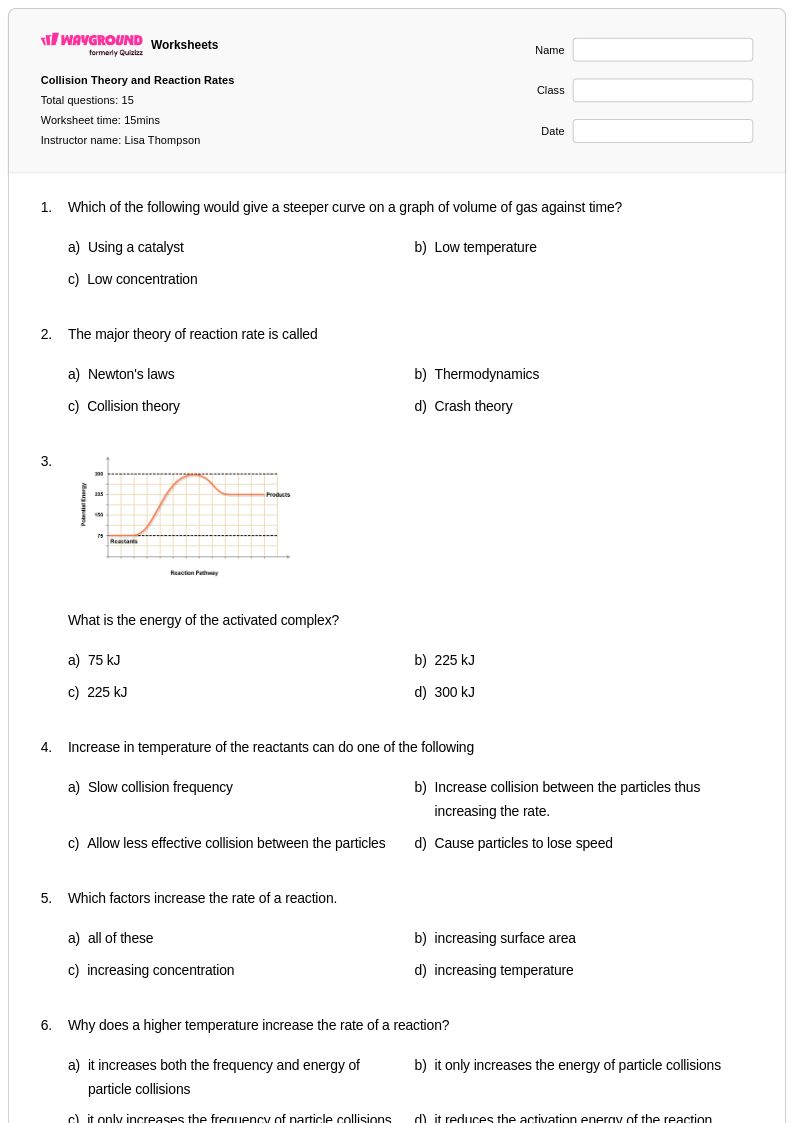
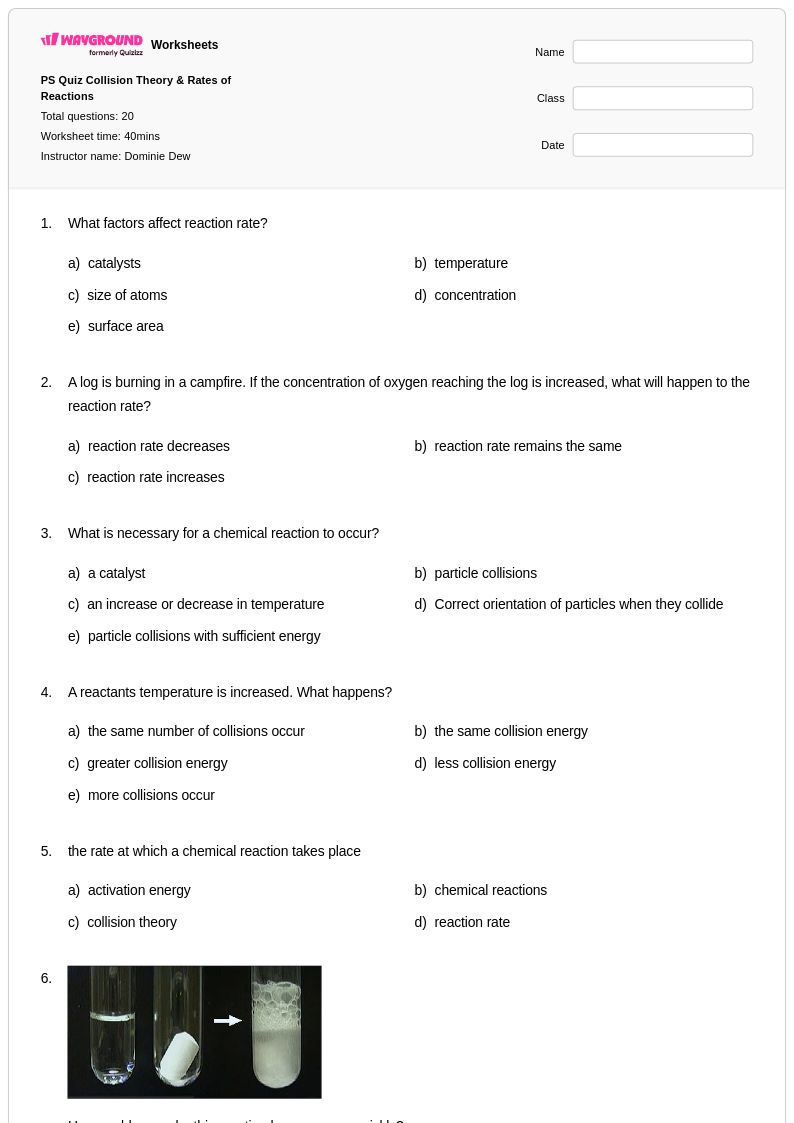
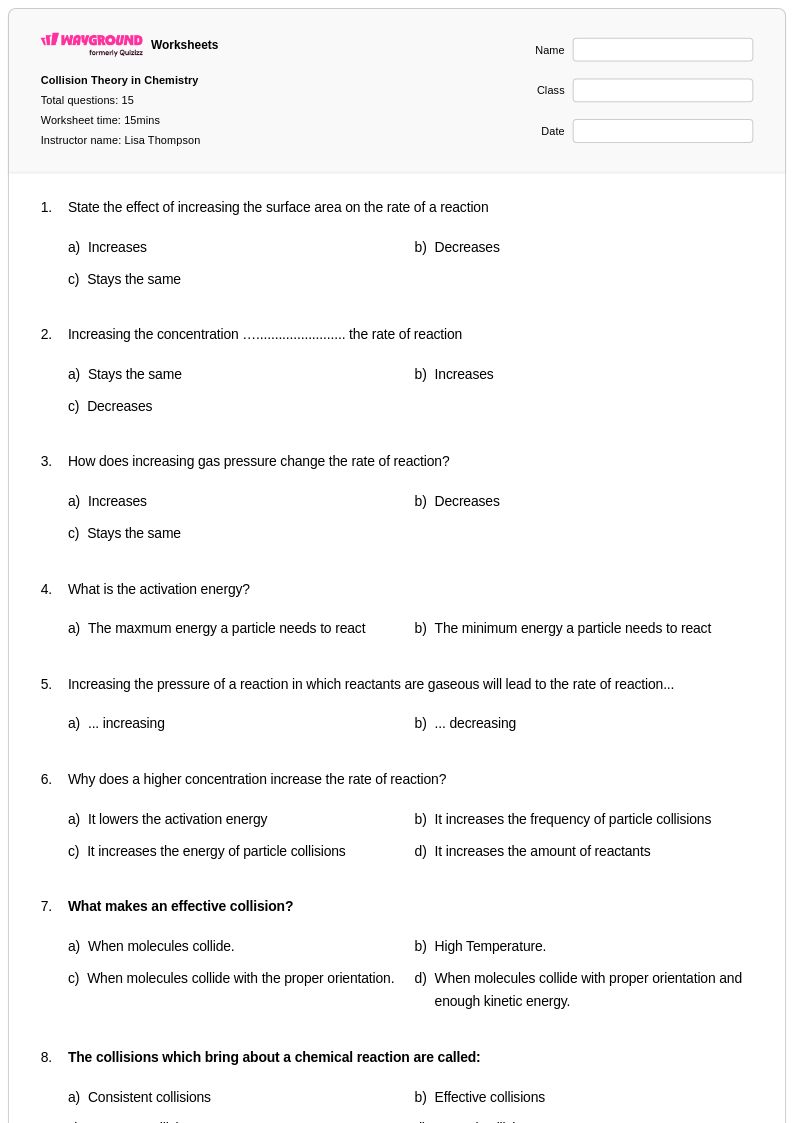
Collision theory worksheets for Year 11 chemistry provide essential practice for students learning to understand how molecular interactions determine reaction rates and mechanisms. These comprehensive resources from Wayground (formerly Quizizz) focus on helping students master the fundamental principles that govern when and why chemical reactions occur, including the role of activation energy, molecular orientation, and collision frequency. The worksheets strengthen critical analytical skills through practice problems that require students to interpret energy diagrams, calculate reaction rates based on collision parameters, and predict how temperature and concentration changes affect molecular collisions. Each worksheet collection includes detailed answer keys and is available as free printables in pdf format, enabling students to work through complex collision theory scenarios at their own pace while building confidence in applying kinetic molecular theory to real chemical systems.
Wayground (formerly Quizizz) supports chemistry educators with an extensive library of millions of teacher-created collision theory resources that can be easily customized to match specific classroom needs and learning objectives. The platform's robust search and filtering capabilities allow teachers to quickly locate worksheets aligned with state and national chemistry standards, while built-in differentiation tools enable educators to modify content difficulty and complexity for diverse learners. These collision theory worksheet collections are available in both printable pdf formats for traditional classroom use and digital formats for interactive learning experiences, making them ideal for lesson planning, targeted remediation of kinetic concepts, enrichment activities for advanced students, and ongoing skill practice. Teachers can seamlessly integrate these resources into their curriculum to reinforce understanding of molecular collision dynamics, activation energy barriers, and the factors that influence successful chemical reactions.
FAQs
How do I teach collision theory to chemistry students?
Teaching collision theory effectively starts with grounding students in the two conditions required for a successful reaction: sufficient collision energy (at or above activation energy) and correct molecular orientation. From there, build outward to factors that influence collision frequency and effectiveness, including temperature, concentration, surface area, and catalysts. Visual models showing molecular orientation and energy diagrams help students connect abstract particle behavior to observable reaction rate changes. Scaffolding practice problems that increase in complexity allows students to transfer conceptual understanding into analytical reasoning.
What exercises help students practice collision theory?
Effective collision theory practice includes problems that ask students to predict how changing conditions, such as increasing temperature or concentration, affect collision frequency and reaction rate. Exercises involving activation energy calculations, effective versus ineffective collision diagrams, and Maxwell-Boltzmann distribution interpretation reinforce the quantitative and conceptual dimensions of the topic. Worksheets that combine multiple-choice questions with short-answer analysis give students practice in both recognition and application, which is especially useful for exam preparation.
What common mistakes do students make when learning collision theory?
A frequent misconception is that any collision between reactant molecules results in a chemical reaction. Students often overlook the role of molecular orientation, assuming that energy alone determines whether a collision is effective. Another common error is confusing reaction rate with reaction yield, leading students to incorrectly conclude that faster reactions produce more product. Students also struggle to correctly interpret energy profile diagrams, particularly when identifying the activation energy for forward versus reverse reactions.
How does temperature affect collision theory and reaction rates?
Increasing temperature raises the average kinetic energy of molecules, which increases both the frequency of collisions and the proportion of collisions that meet or exceed the activation energy threshold. This dual effect is why even a modest temperature increase can cause a disproportionately large increase in reaction rate. Students should understand that temperature shifts the Maxwell-Boltzmann distribution curve to the right, meaning more molecules possess sufficient energy for effective collisions at any given moment.
How can I use Wayground's collision theory worksheets in my classroom?
Wayground's collision theory worksheets are available as printable PDFs for traditional classroom use and in digital formats for technology-integrated or remote learning environments, and teachers can also host them as a quiz directly on Wayground. The digital format supports differentiated instruction through built-in accommodation settings, including read aloud, extended time, and reduced answer choices, which can be assigned to individual students without disrupting the rest of the class. All worksheets include complete answer keys, making them practical for independent practice, homework, or guided review sessions.
How do I differentiate collision theory instruction for students at different levels?
For students who need remediation, focus first on the conceptual model of effective collisions using visual aids and guided practice before introducing calculations. For advanced students, extend practice to include energy profile diagrams, rate law connections, and catalyst mechanisms. On Wayground, teachers can apply student-level accommodations such as reduced answer choices or read aloud settings to support learners with different needs, while the platform's filtering tools help locate materials matched to specific ability levels or chemistry standards.