Free Printable Energy in Reactions Worksheets for Year 11
Explore Year 11 Chemistry worksheets focused on Energy in Reactions, featuring free printables and practice problems with answer keys to help students master thermodynamics, enthalpy changes, and reaction energetics through Wayground's comprehensive PDF resources.
Explore printable Energy in Reactions worksheets for Year 11
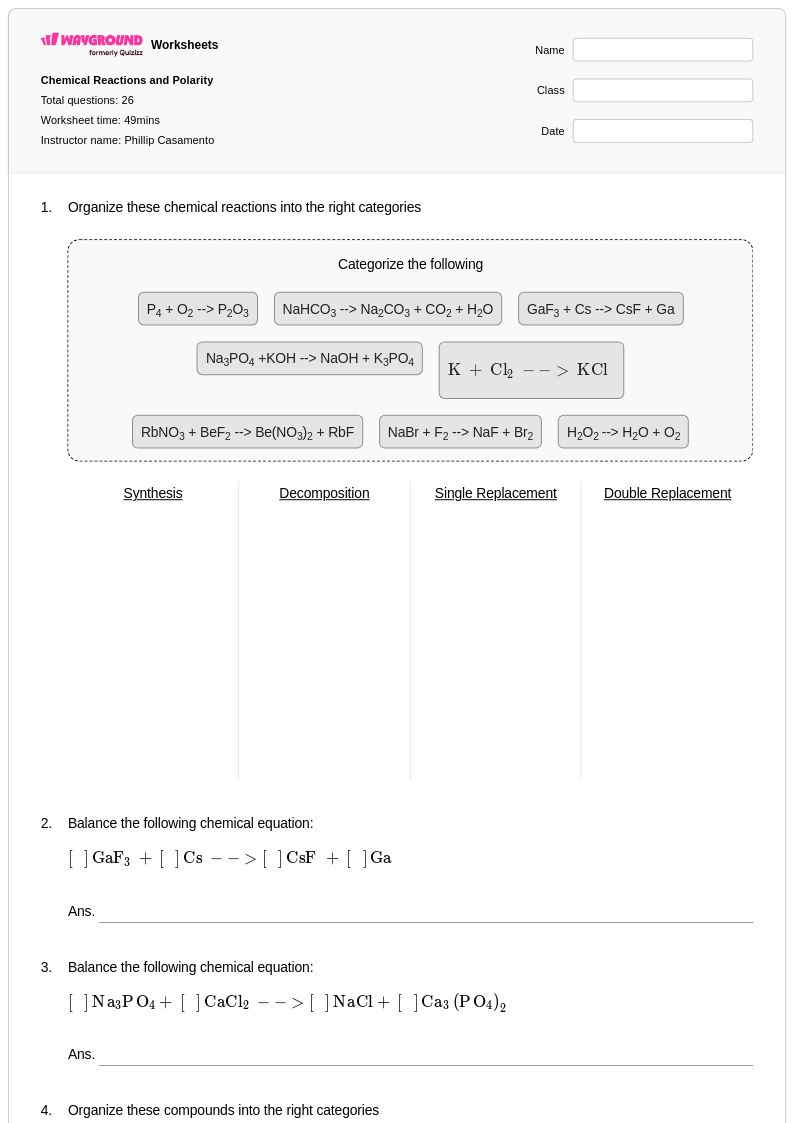
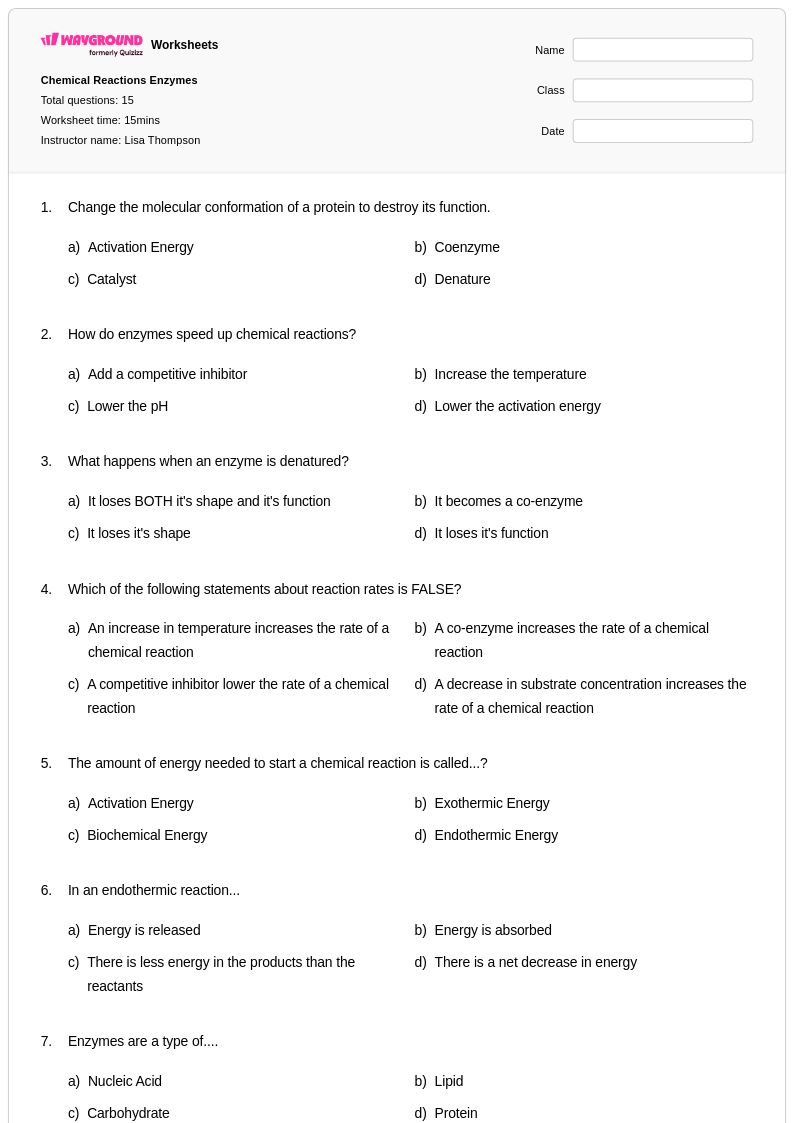
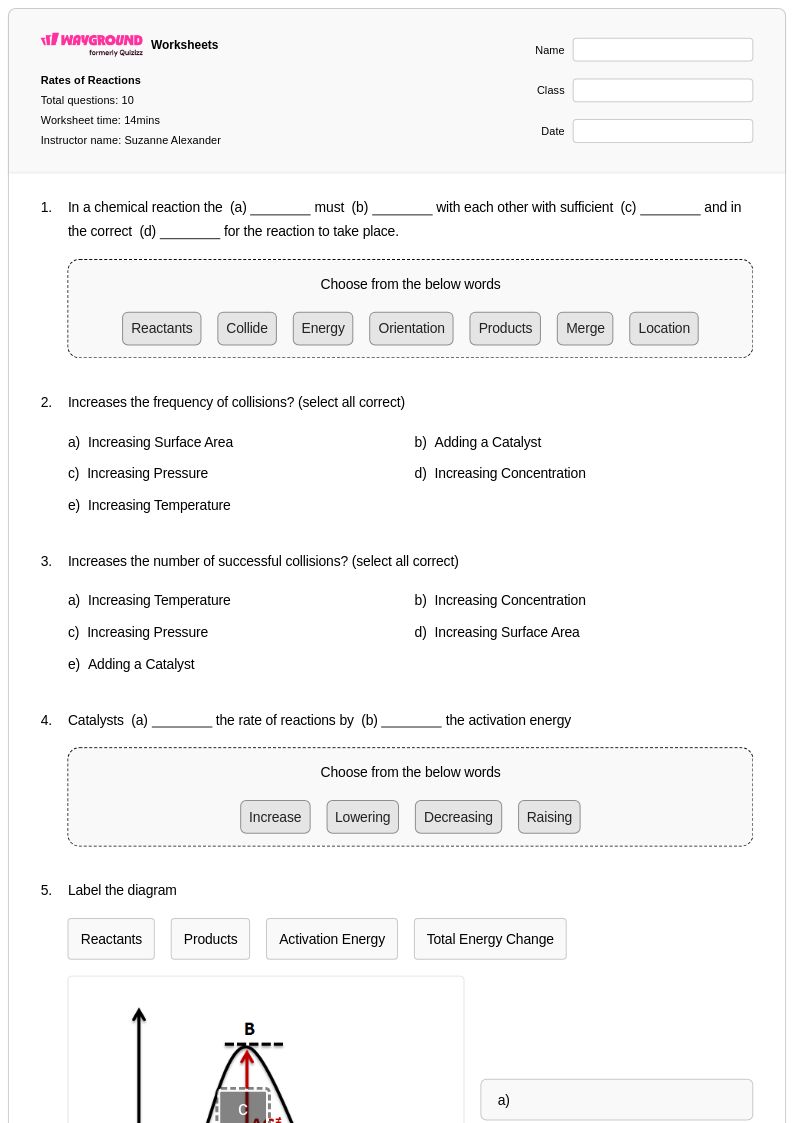
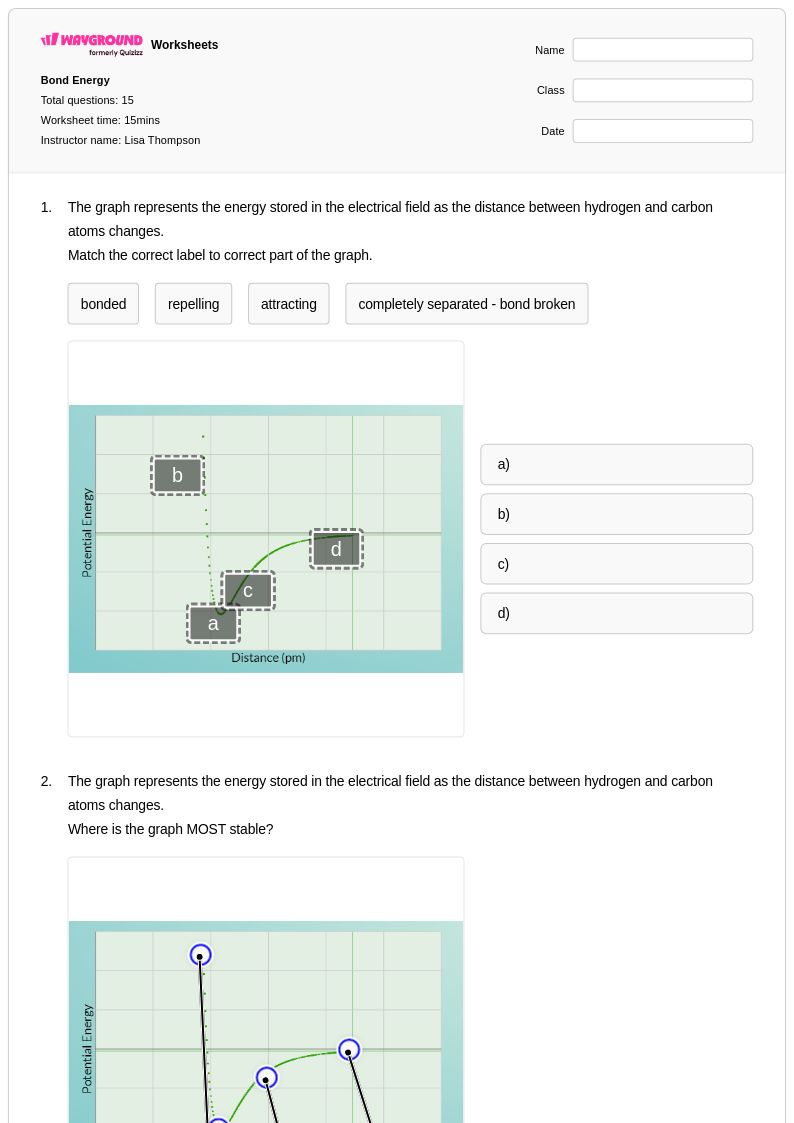
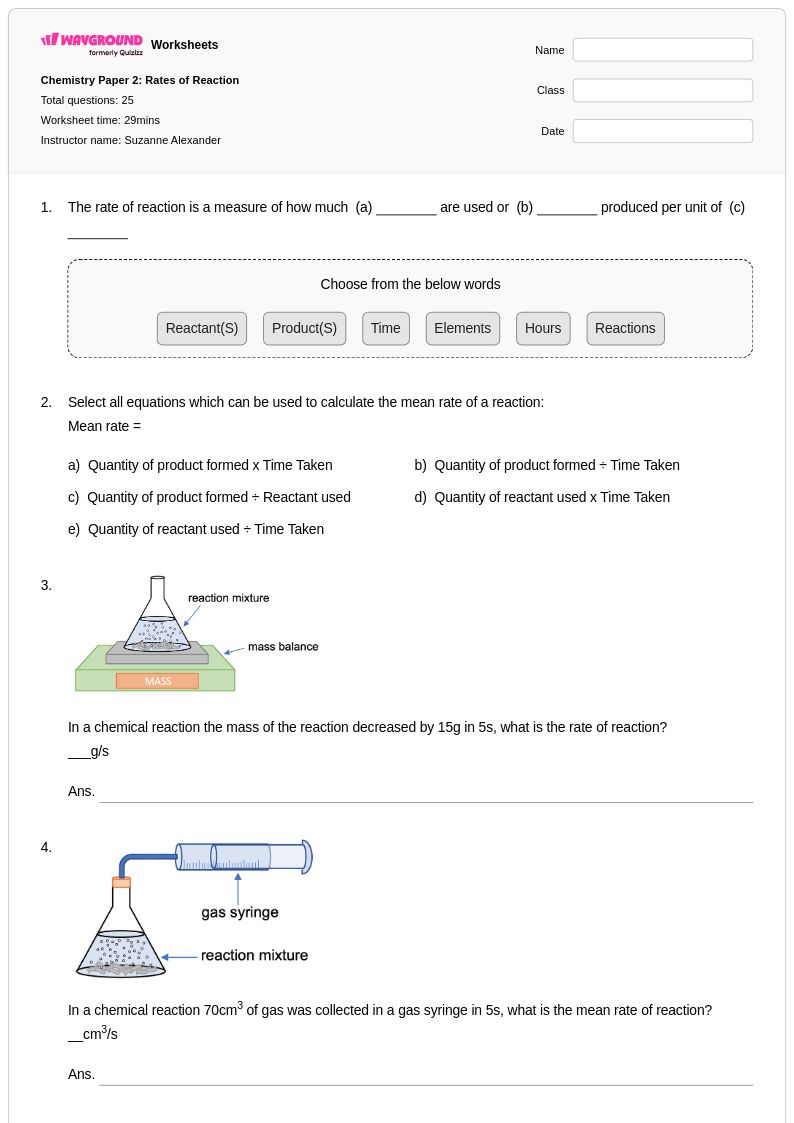
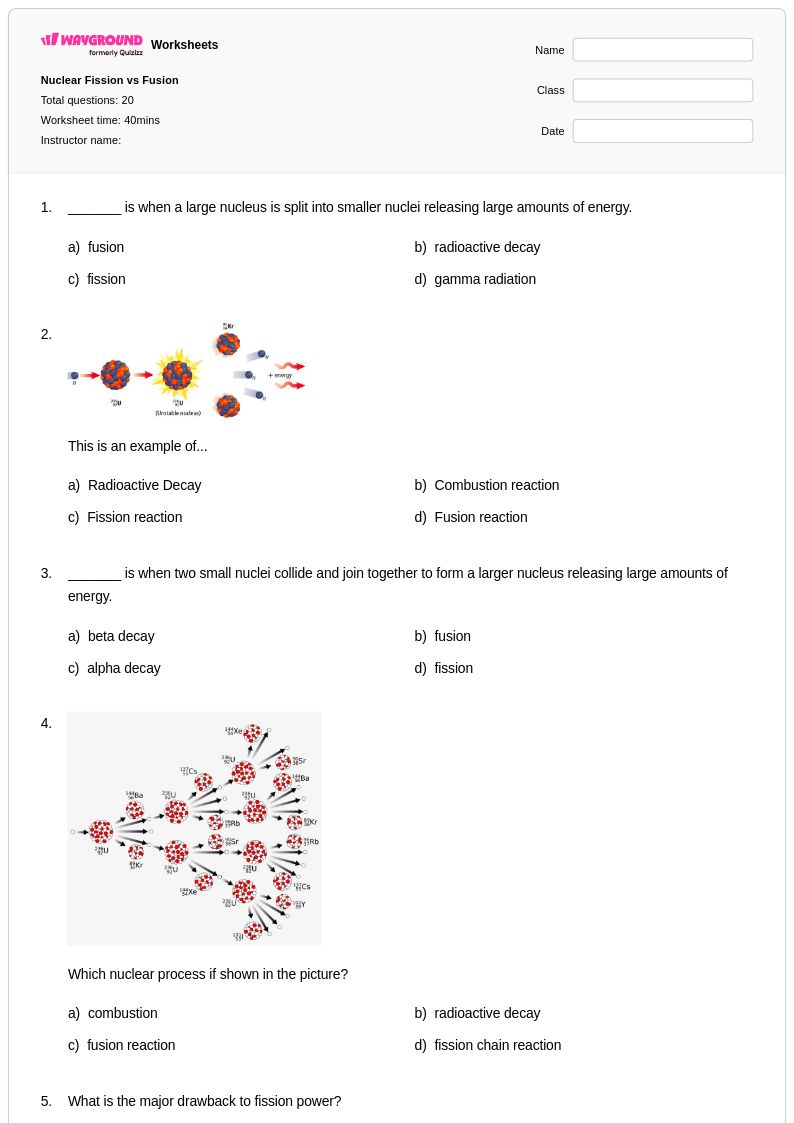
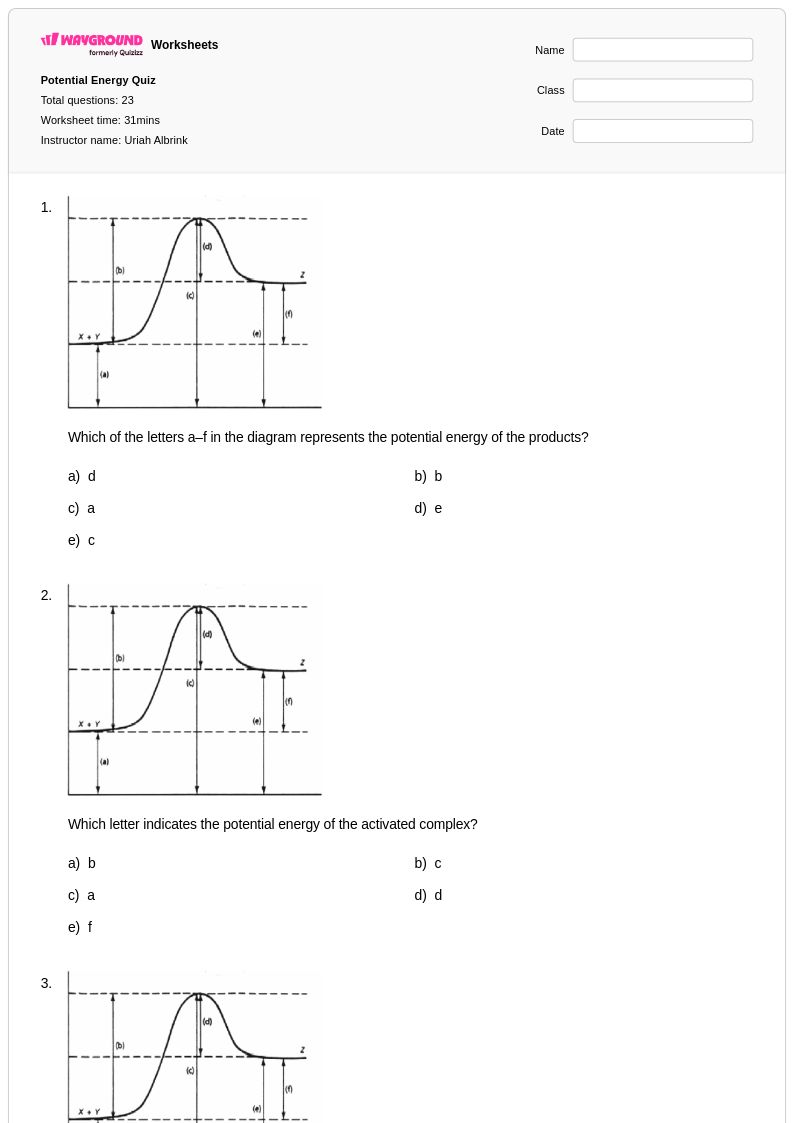
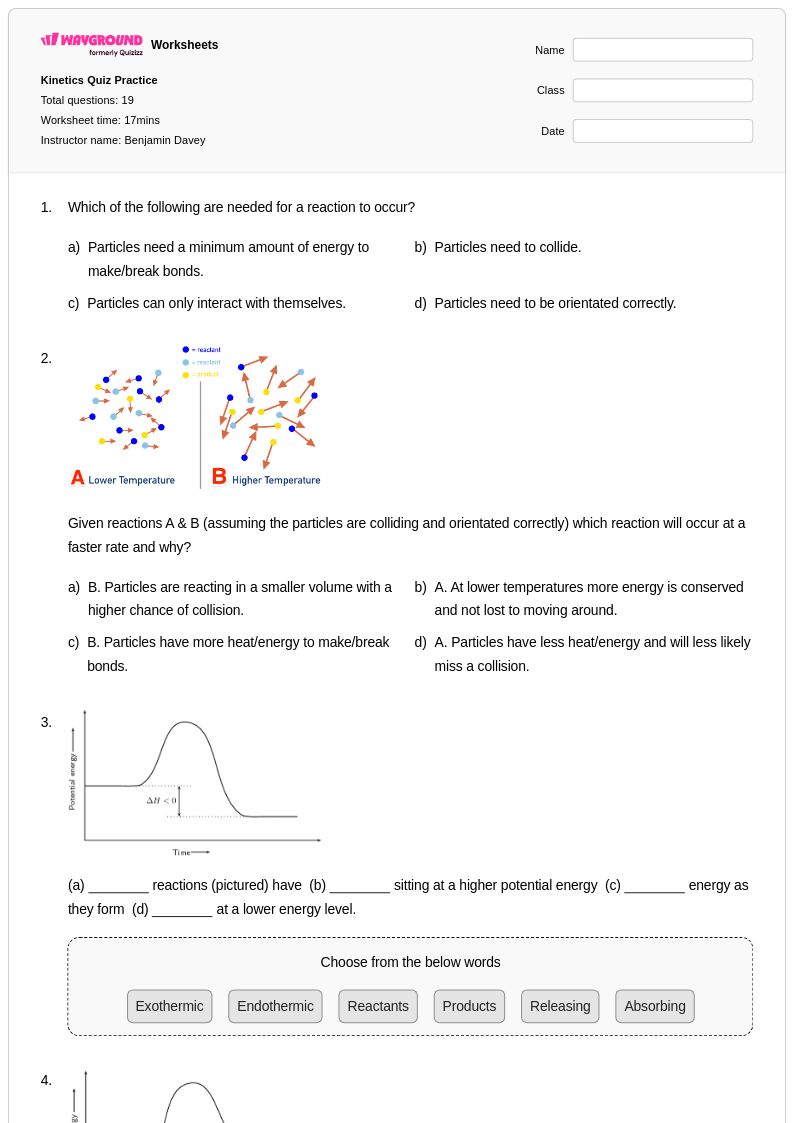
Energy in reactions worksheets for Year 11 students available through Wayground (formerly Quizizz) provide comprehensive coverage of thermodynamics, activation energy, and energy transformations in chemical processes. These expertly designed resources strengthen students' understanding of enthalpy changes, endothermic and exothermic reactions, and the relationship between molecular collisions and reaction rates. Each worksheet collection includes detailed practice problems that guide students through calculating energy changes, interpreting potential energy diagrams, and analyzing the factors that influence reaction spontaneity. The materials come complete with answer keys and are available as free printables in pdf format, making them accessible for both classroom instruction and independent study sessions.
Wayground (formerly Quizizz) supports chemistry educators with an extensive library of millions of teacher-created resources specifically designed for Year 11 energy in reactions concepts. The platform's robust search and filtering capabilities allow instructors to quickly locate worksheets that align with curriculum standards and target specific learning objectives, from basic calorimetry calculations to advanced thermodynamic principles. Teachers can easily differentiate instruction by selecting from various difficulty levels and question types, while the flexible customization tools enable modification of existing materials to meet diverse student needs. Available in both printable and digital formats including downloadable pdfs, these worksheet collections streamline lesson planning and provide valuable resources for remediation, enrichment activities, and targeted skill practice in chemical energetics.
FAQs
How do I teach energy in reactions to chemistry students?
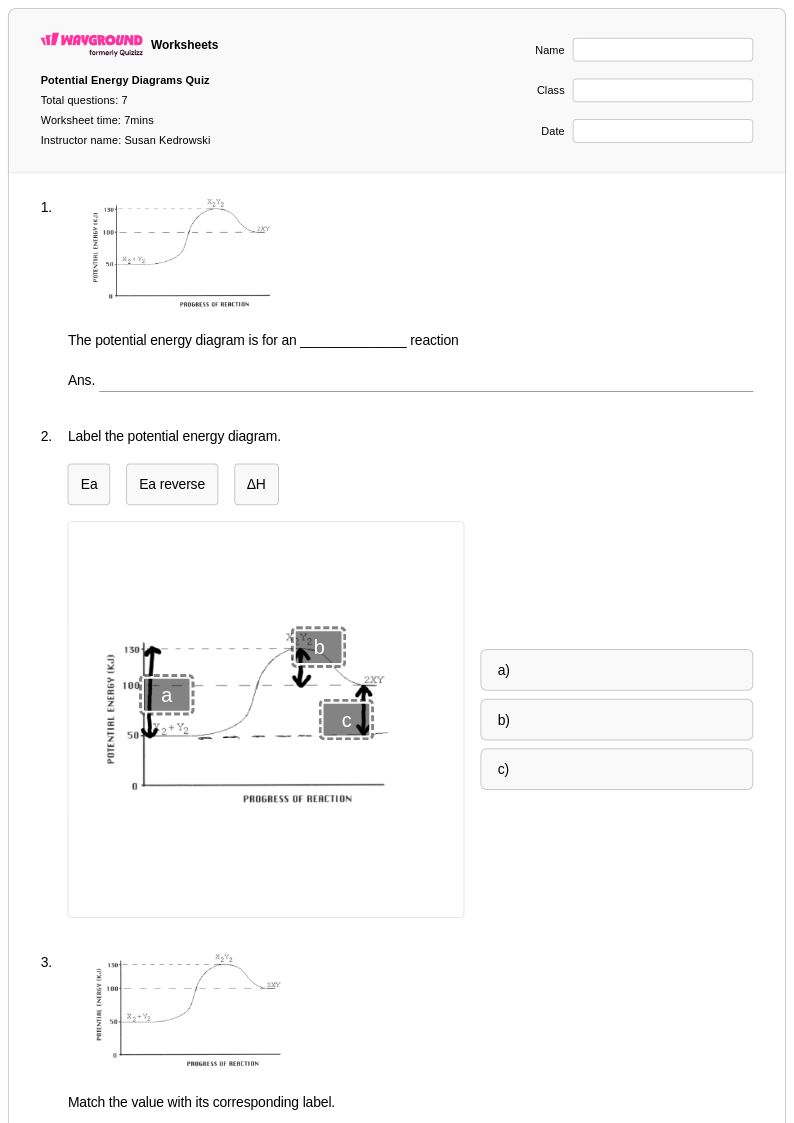
Start by building students' conceptual understanding of endothermic and exothermic processes before introducing quantitative work like enthalpy calculations. Use energy diagrams as a visual anchor — students grasp activation energy, reactant and product energy levels, and the role of catalysts more readily when they can see the reaction pathway. From there, connect molecular-level events (bond breaking and forming) to the macroscopic energy changes students observe, then move into calorimetry as a concrete, lab-based application of conservation of energy.
What practice problems help students master thermodynamics and chemical energetics?
Effective practice should span multiple skill levels: interpreting and sketching energy diagrams, calculating enthalpy changes using Hess's Law or bond energies, and solving calorimetry problems using q = mcΔT. Students also benefit from problems that ask them to classify reactions as endothermic or exothermic from data tables or diagrams, since this tests conceptual understanding rather than just calculation ability. Mixing problem types within a single practice set helps students recognize which approach to apply, which is a common exam challenge.
What mistakes do students commonly make when learning about energy in chemical reactions?
One of the most persistent misconceptions is confusing activation energy with the overall energy change of a reaction — students often assume a reaction with high activation energy must be endothermic. Another frequent error is sign confusion in enthalpy calculations: students mix up when ΔH is negative versus positive and what that means for heat flow relative to the system versus the surroundings. In calorimetry, students routinely forget to account for the specific heat of the solution or misapply the formula by using mass of solute instead of mass of solution.
How do I differentiate energy in reactions worksheets for students at different ability levels?
For struggling students, begin with conceptual tasks like labeling energy diagrams and classifying reactions before introducing numerical problems. For advanced learners, extend practice to multi-step Hess's Law problems or questions connecting bond enthalpy data to molecular structure. On Wayground, teachers can apply individual accommodations such as read aloud support, reduced answer choices, and extended time to specific students, allowing the same worksheet session to serve the whole class while each student receives appropriately adjusted conditions.
How can I use Wayground's energy in reactions worksheets in my chemistry class?
Wayground's energy in reactions worksheets are available as printable PDFs for traditional classroom use and in digital formats for online or hybrid learning environments, making them practical for homework assignments, lab preparation, or exam review. Teachers can also host worksheets as a live quiz on Wayground, which adds interactivity and allows for real-time monitoring of student responses. Each worksheet includes a complete answer key, so teachers can use them for independent practice, peer review, or self-assessment without additional grading prep.
How do I help students understand the difference between endothermic and exothermic reactions?
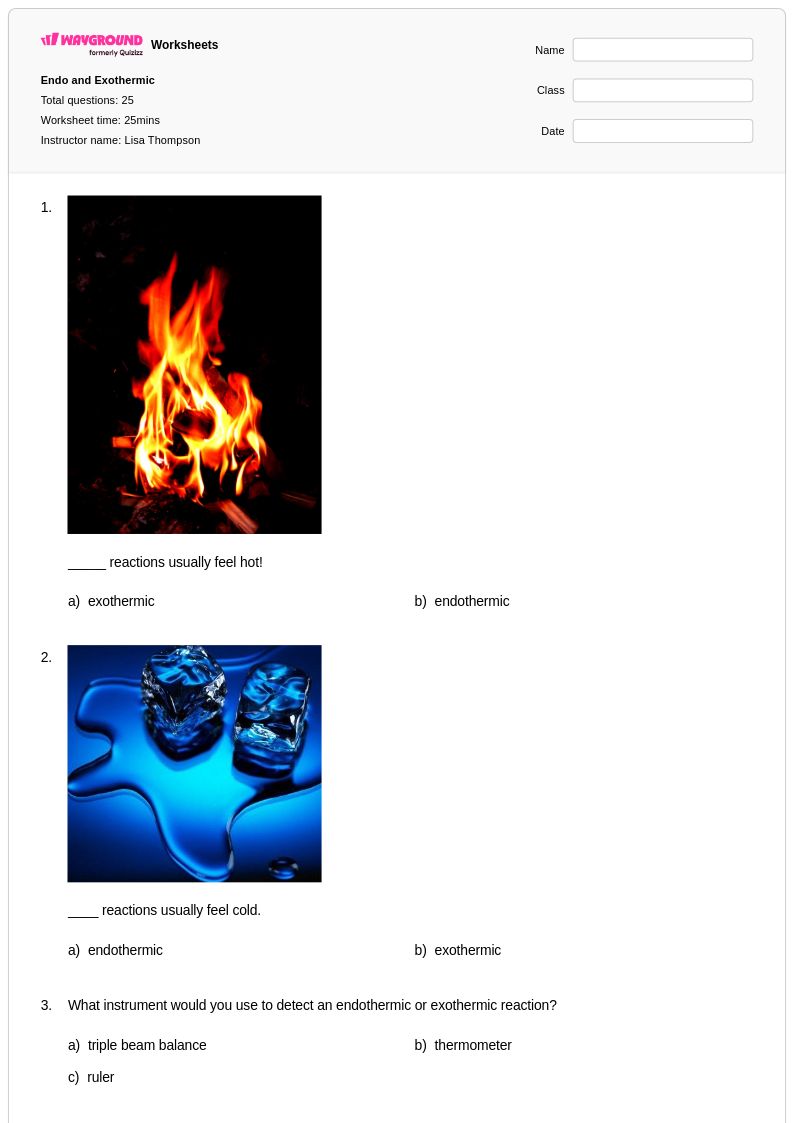
Ground the distinction in observable, real-world examples first: hand warmers and combustion for exothermic, cold packs and photosynthesis for endothermic. Then connect those observations to energy diagrams, showing students that in exothermic reactions the products sit at a lower energy level than the reactants, and vice versa. Reinforce this with practice problems that ask students to interpret ΔH values and match them to diagram shapes, since students who can move fluently between representations are far less likely to confuse the two.