Free Printable Organic Chemistry Worksheets for Year 11
Explore our comprehensive collection of Year 11 Organic Chemistry worksheets and printables that help students master molecular structures, functional groups, and reaction mechanisms through engaging practice problems with detailed answer keys.
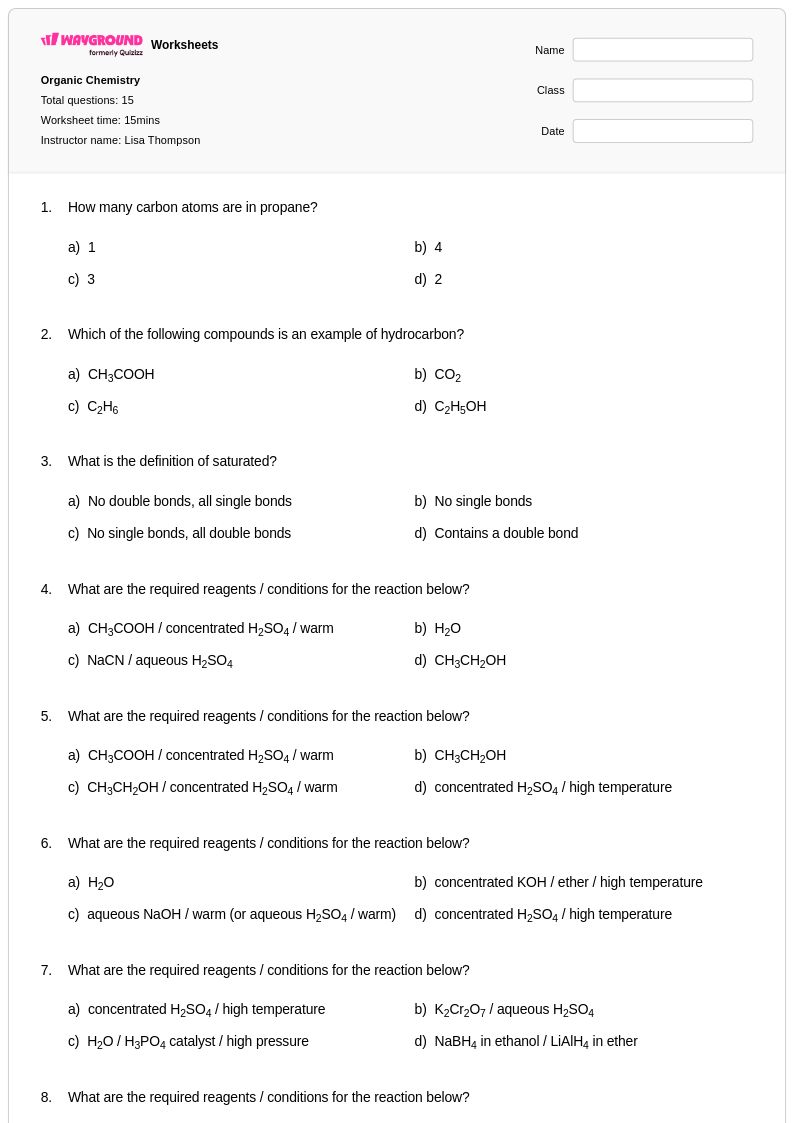
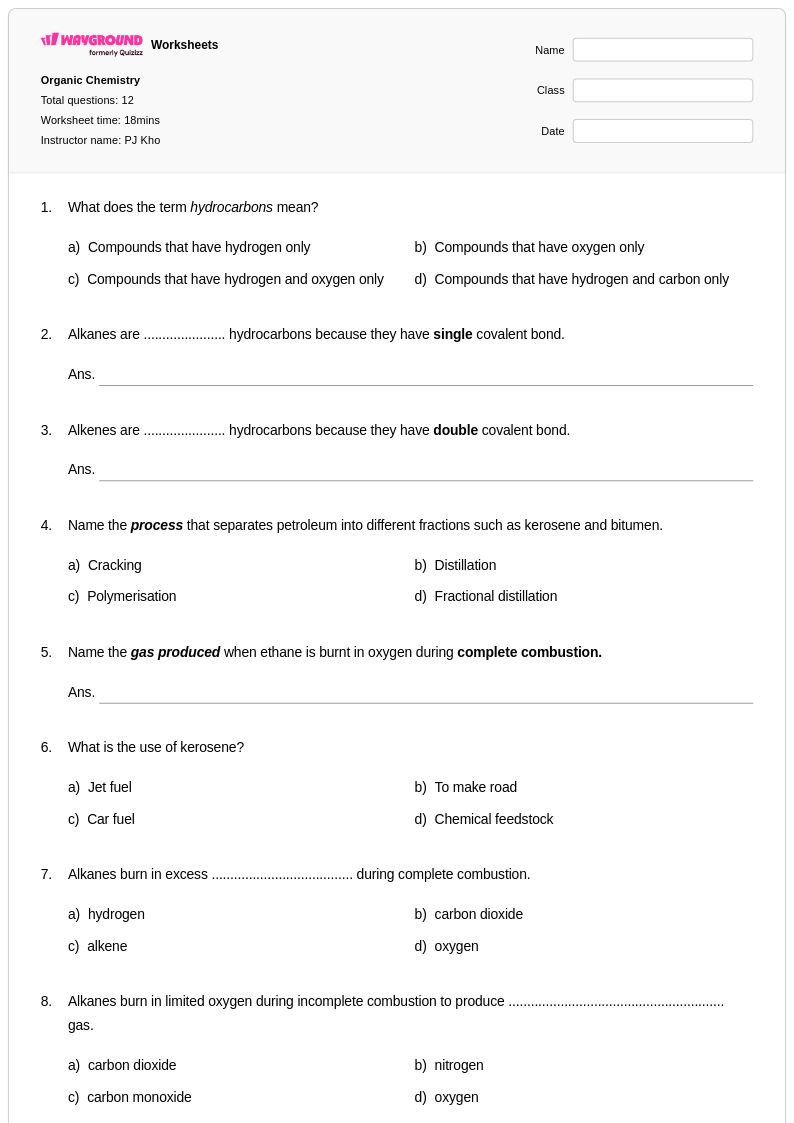
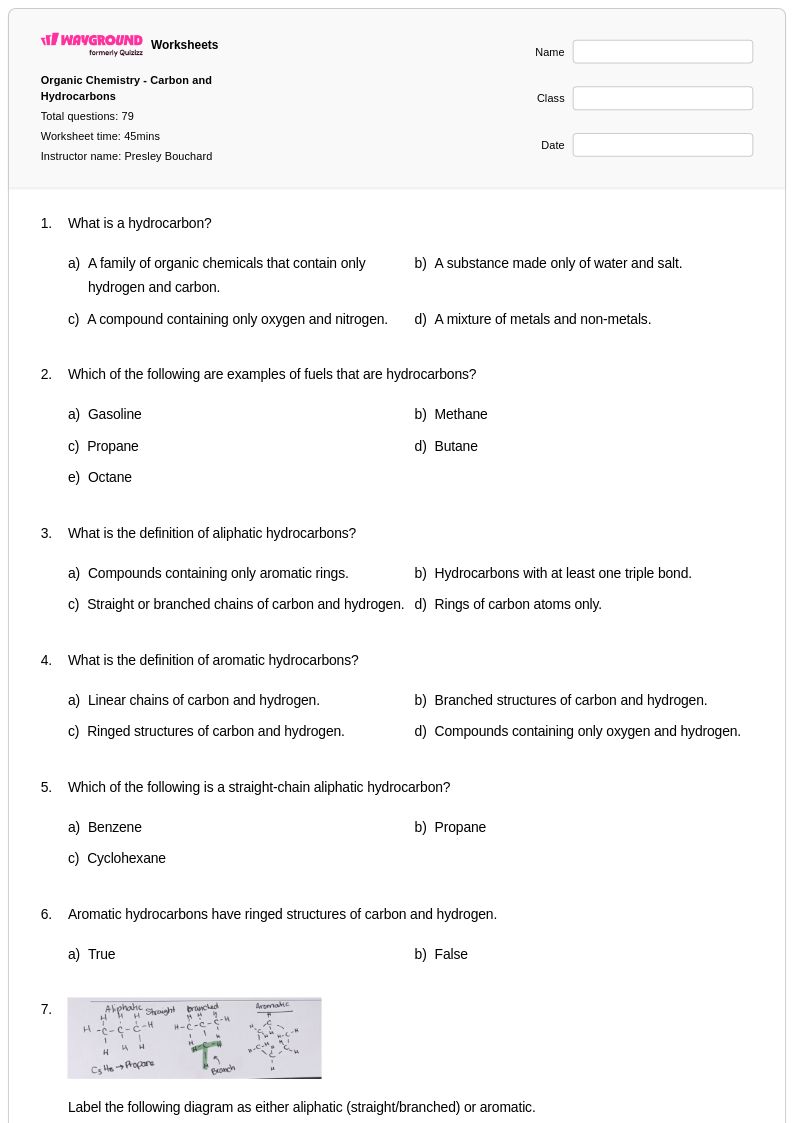
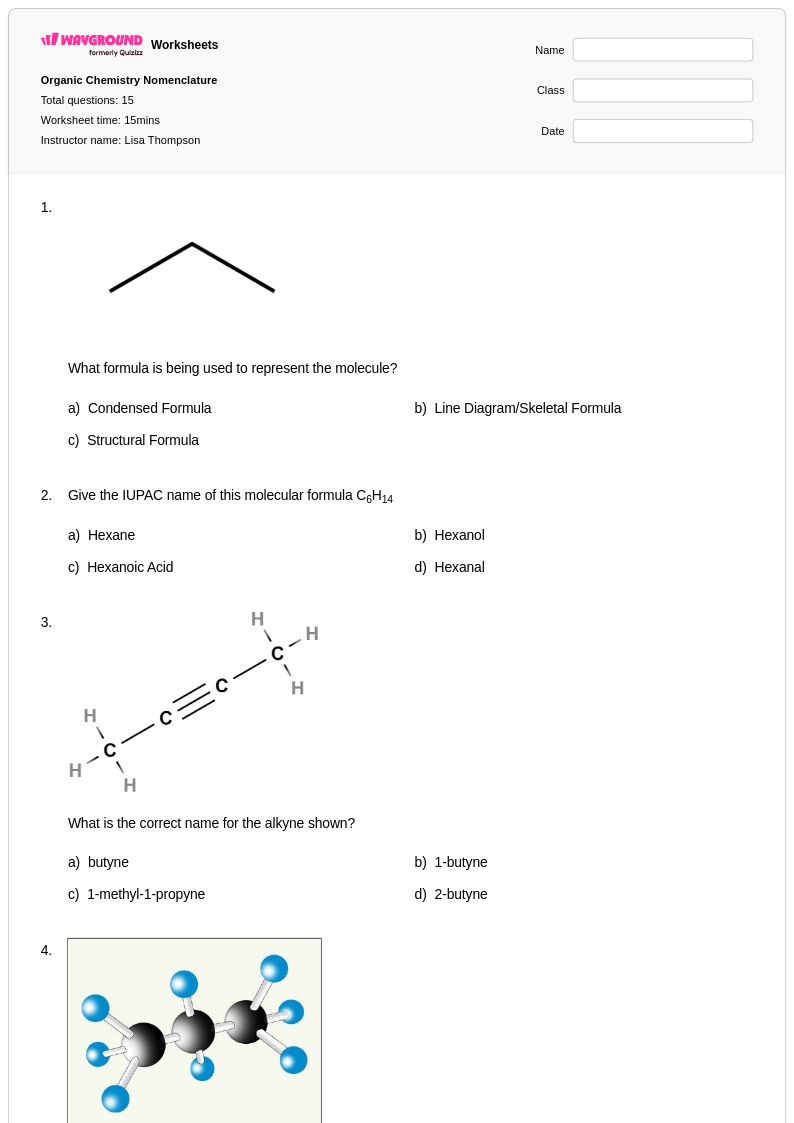
Explore printable Organic Chemistry worksheets for Year 11
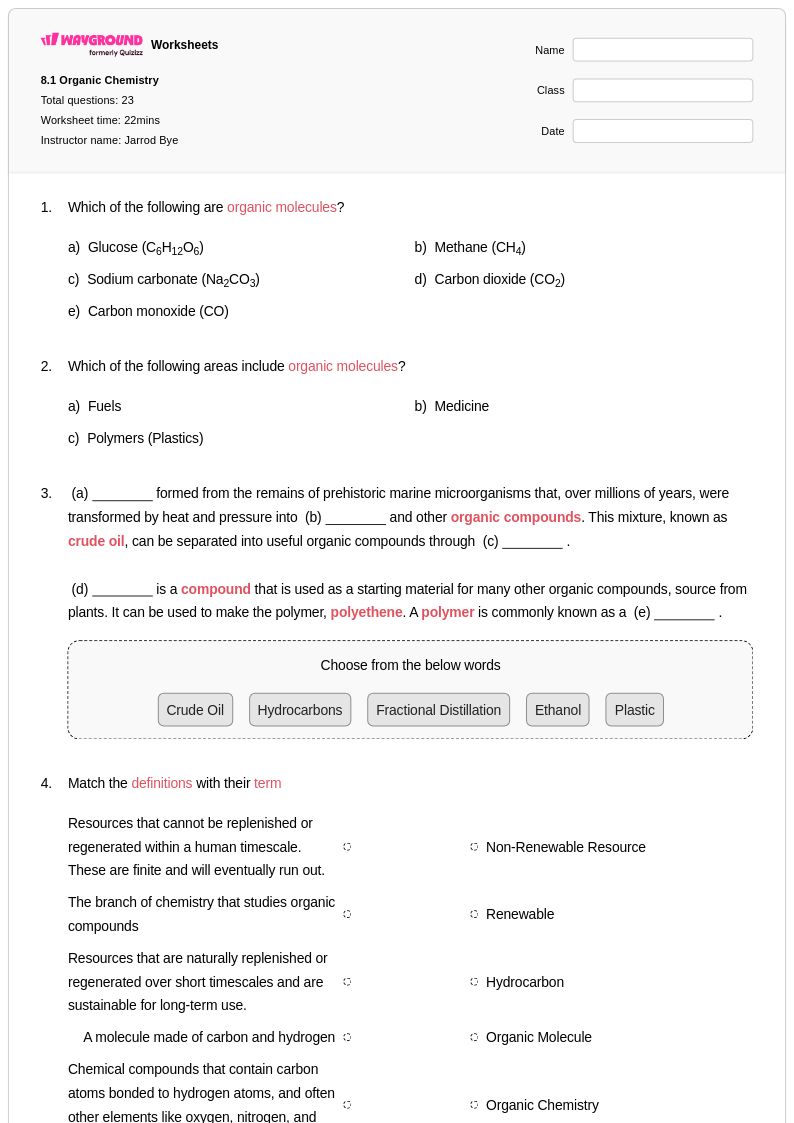
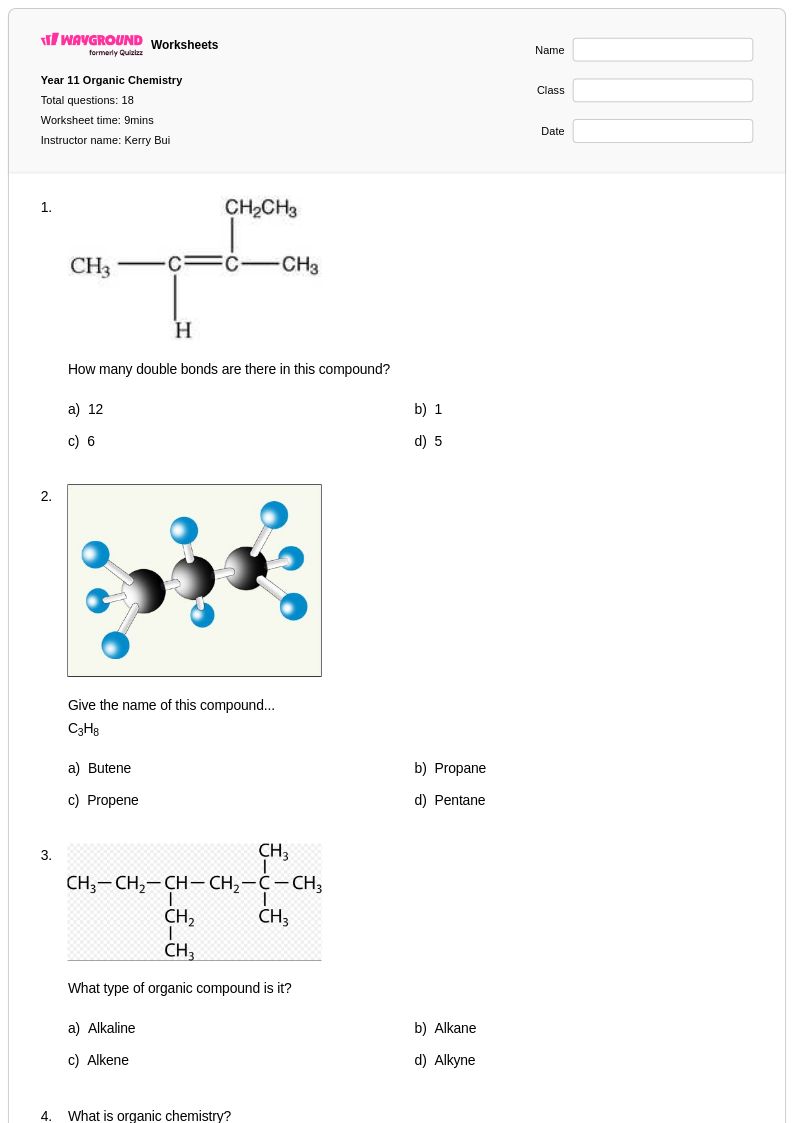
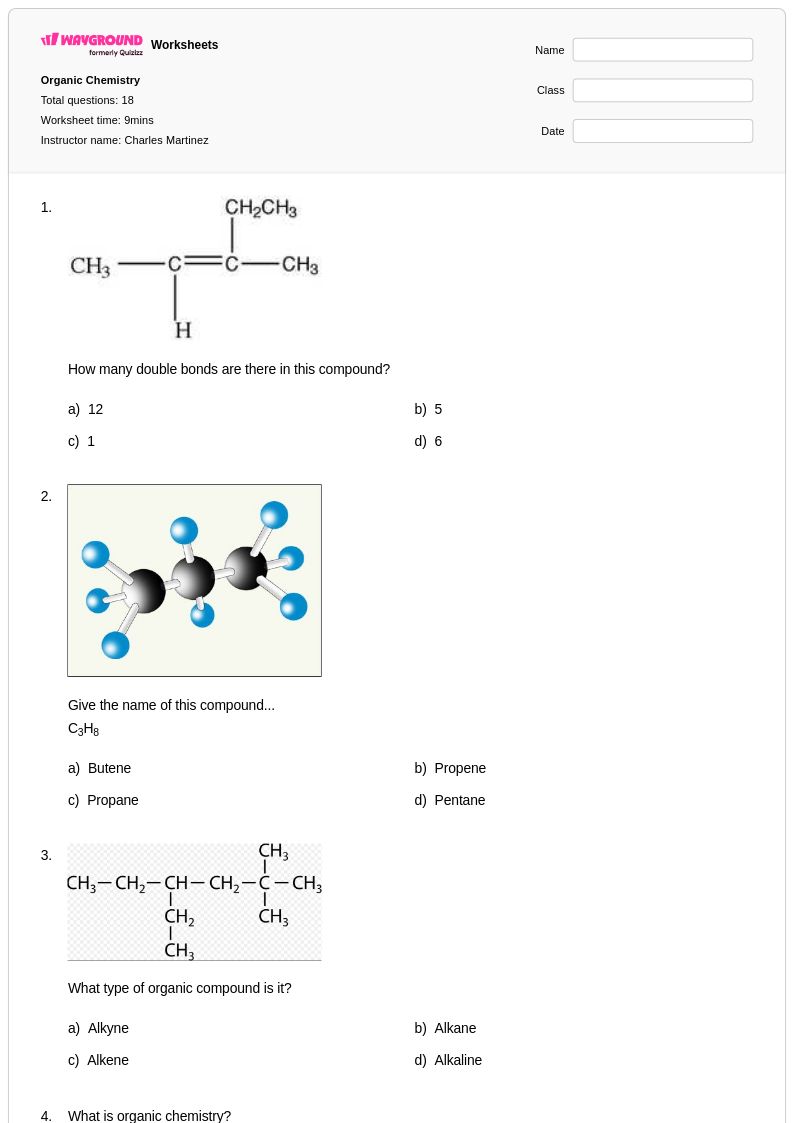
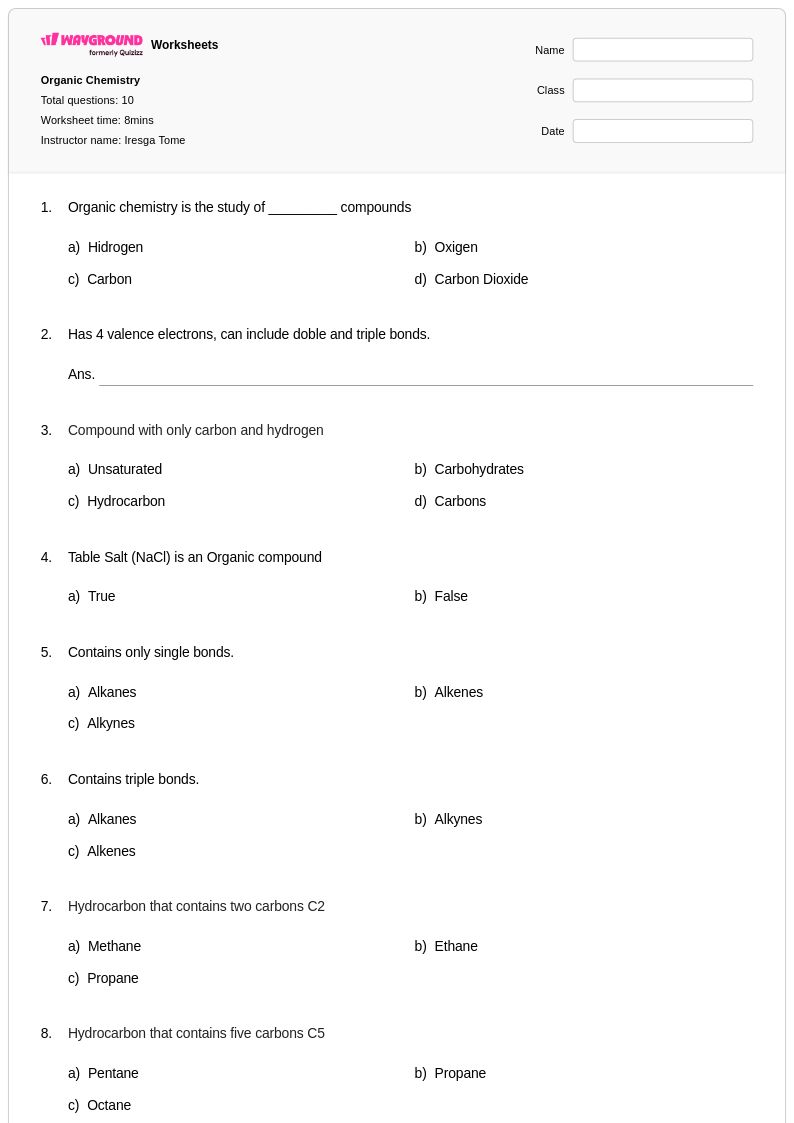
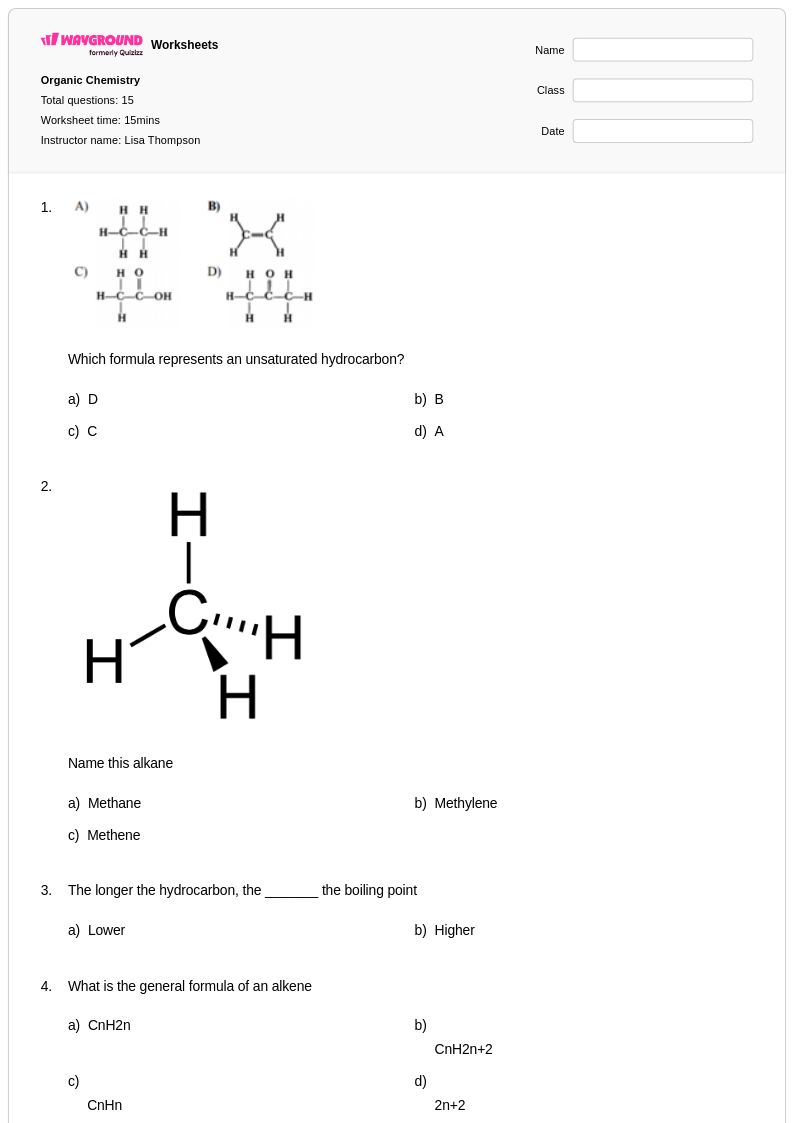
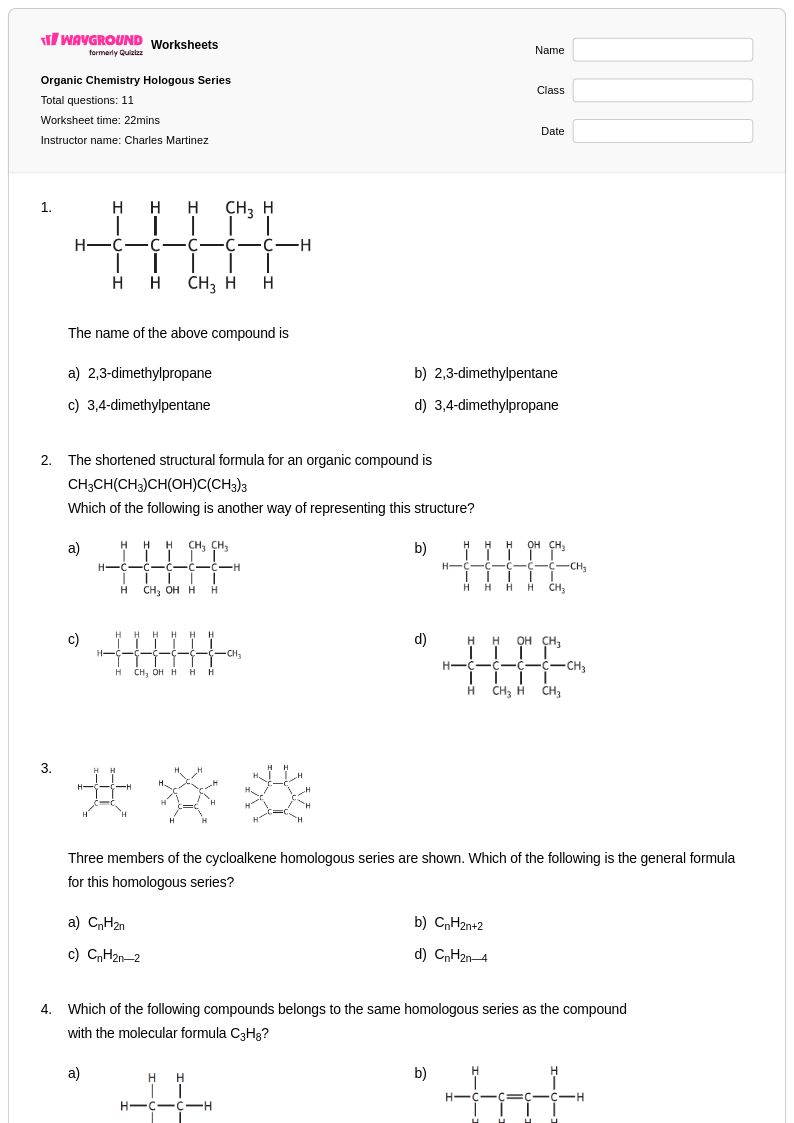
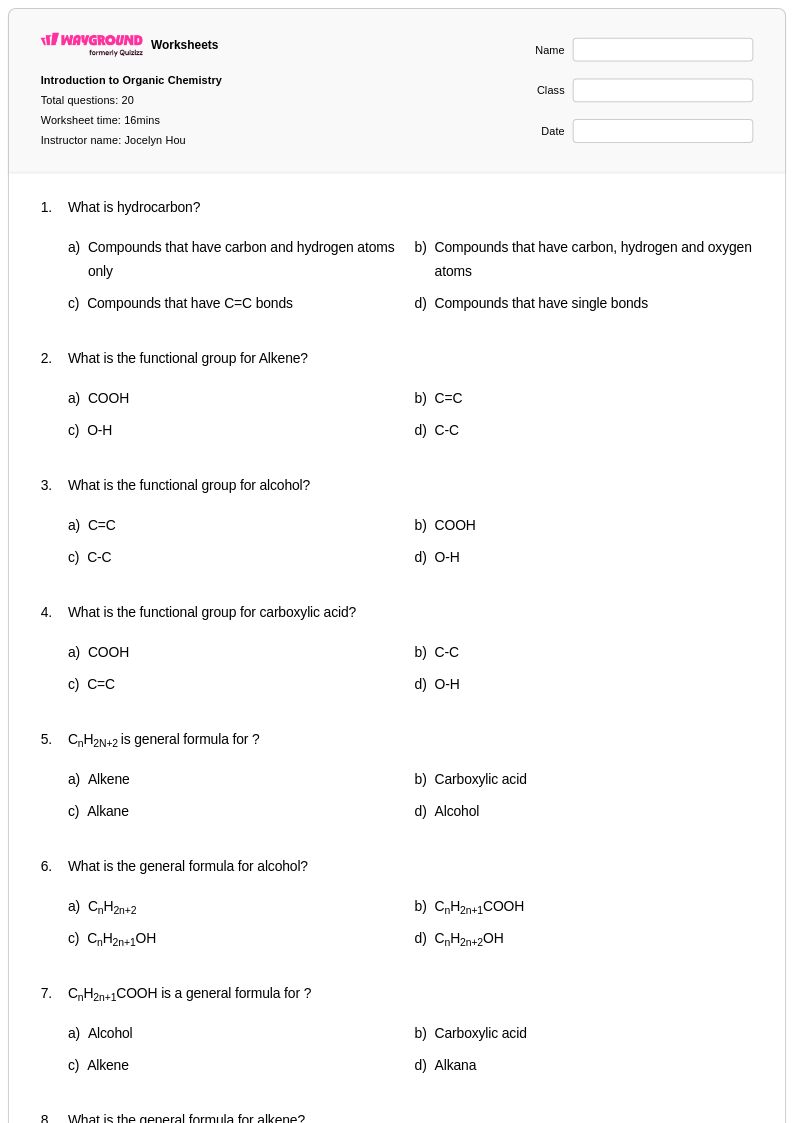
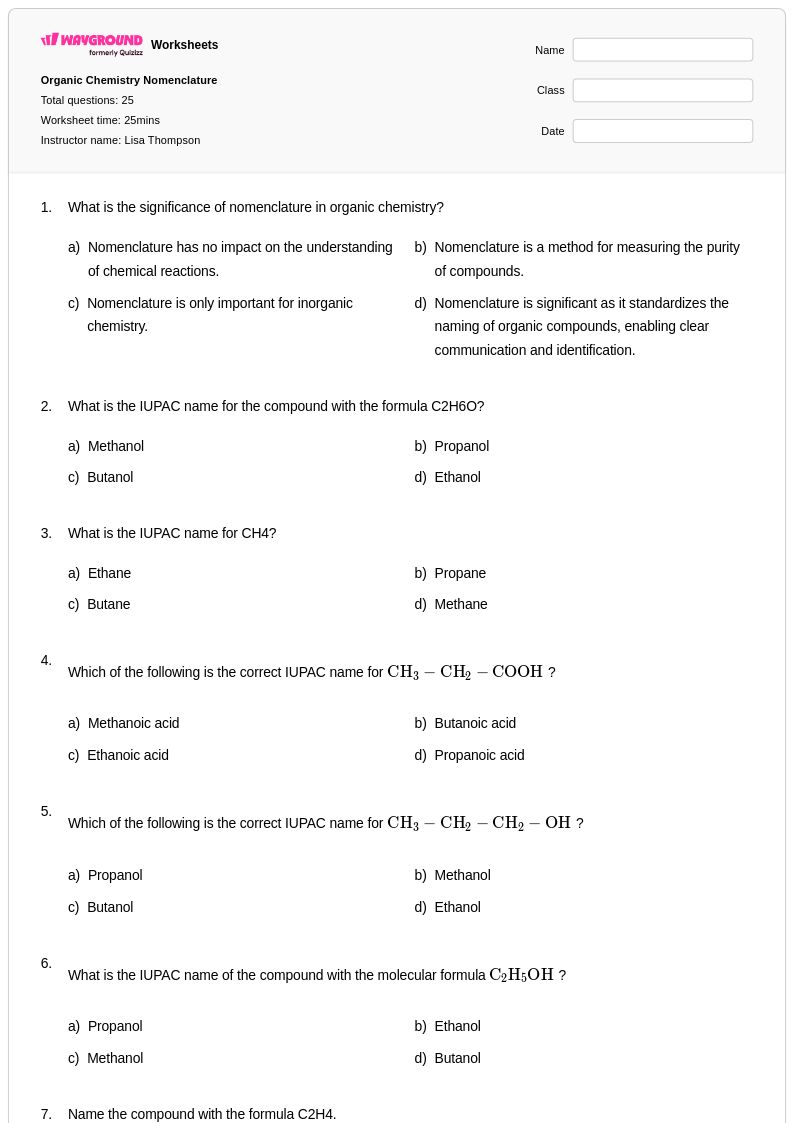
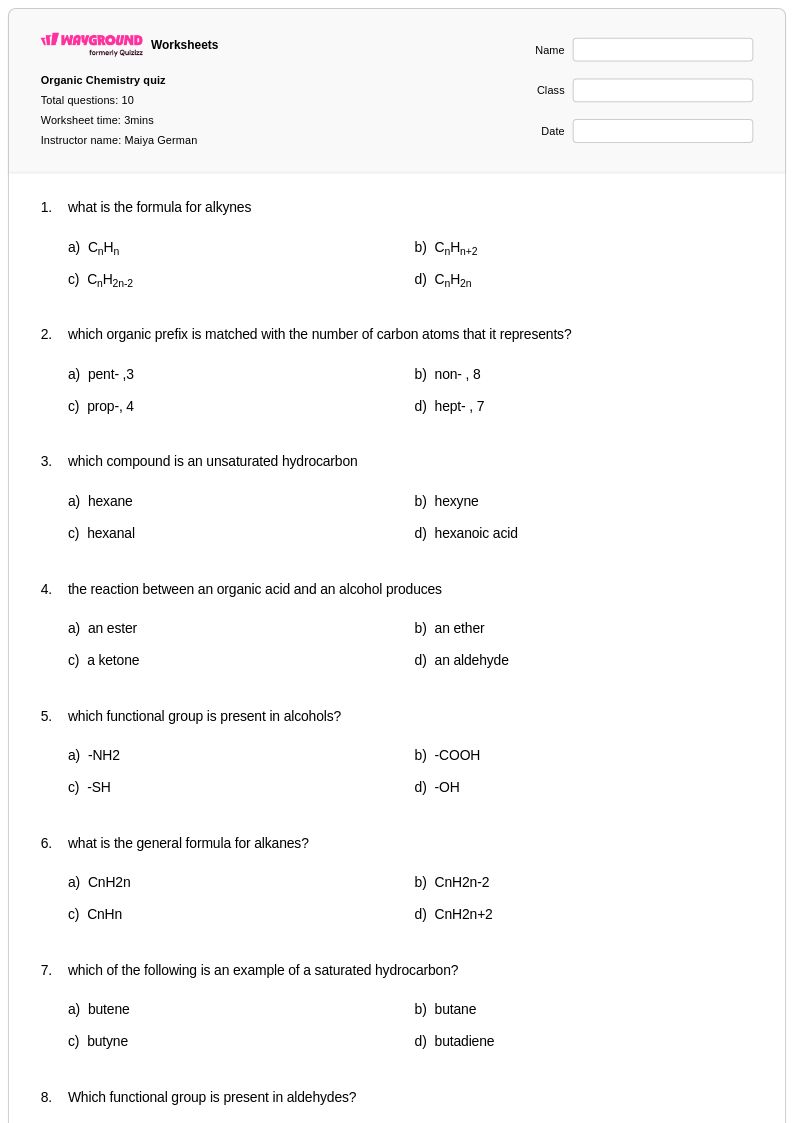
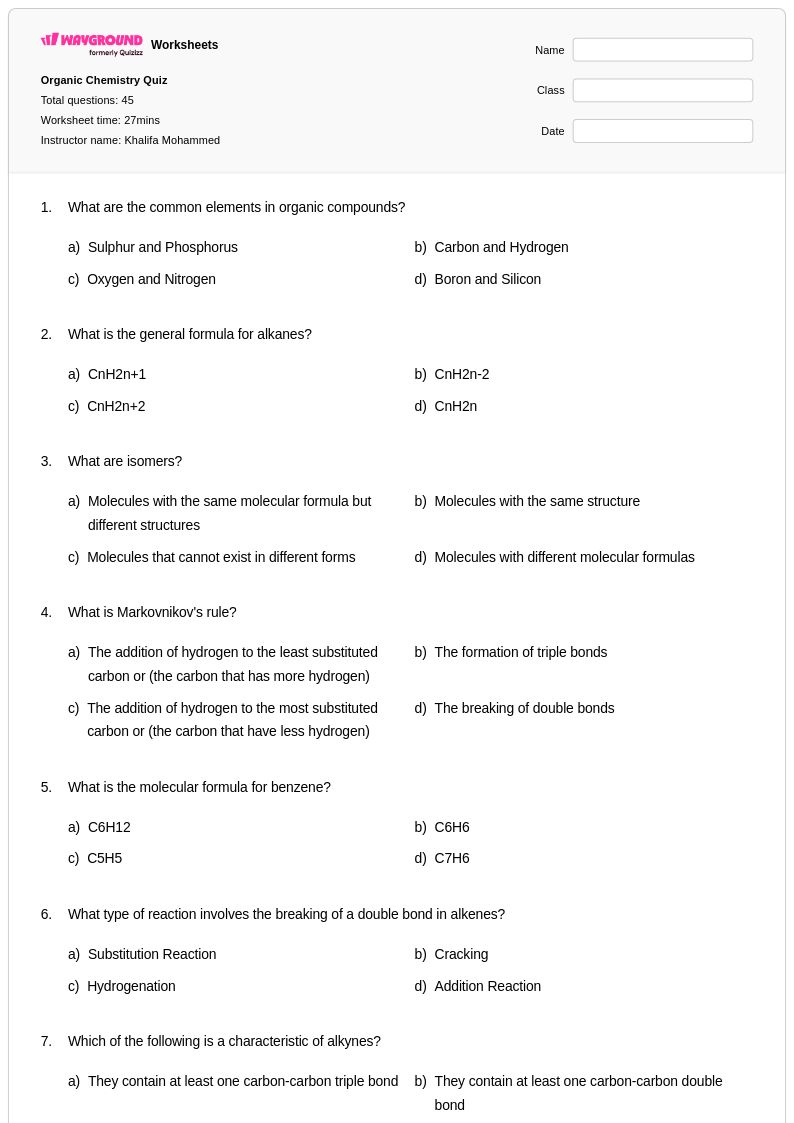
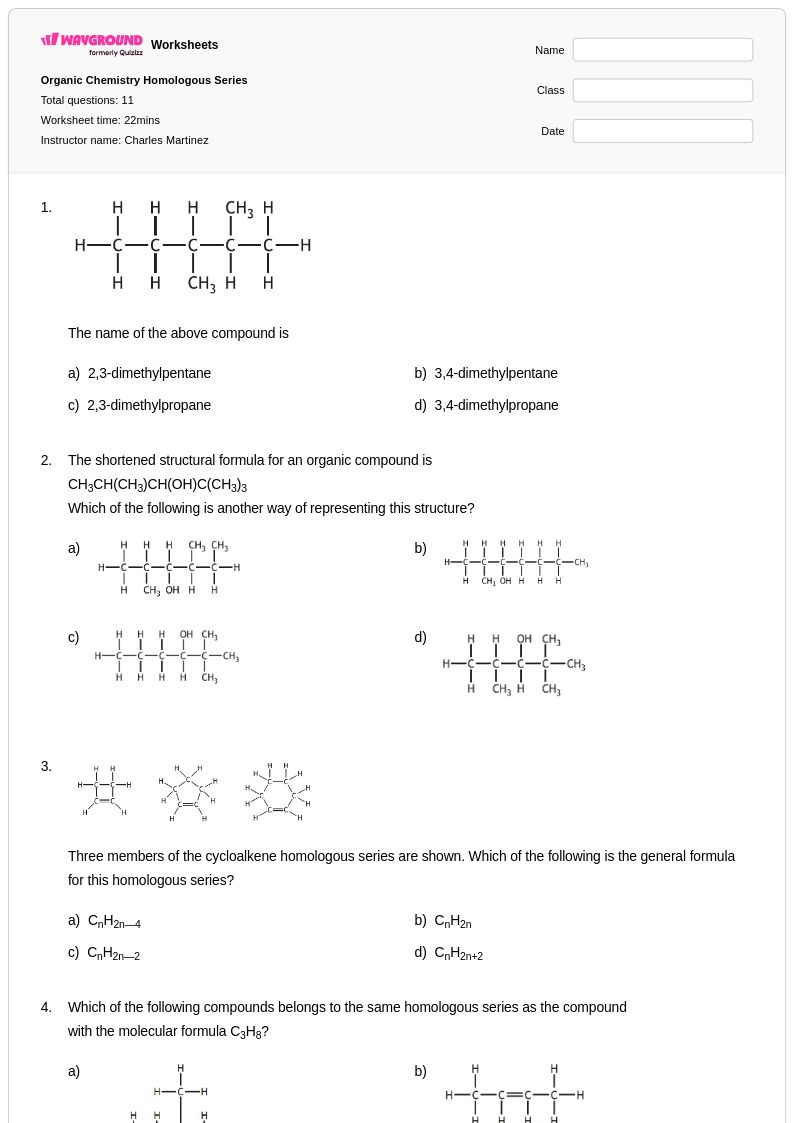
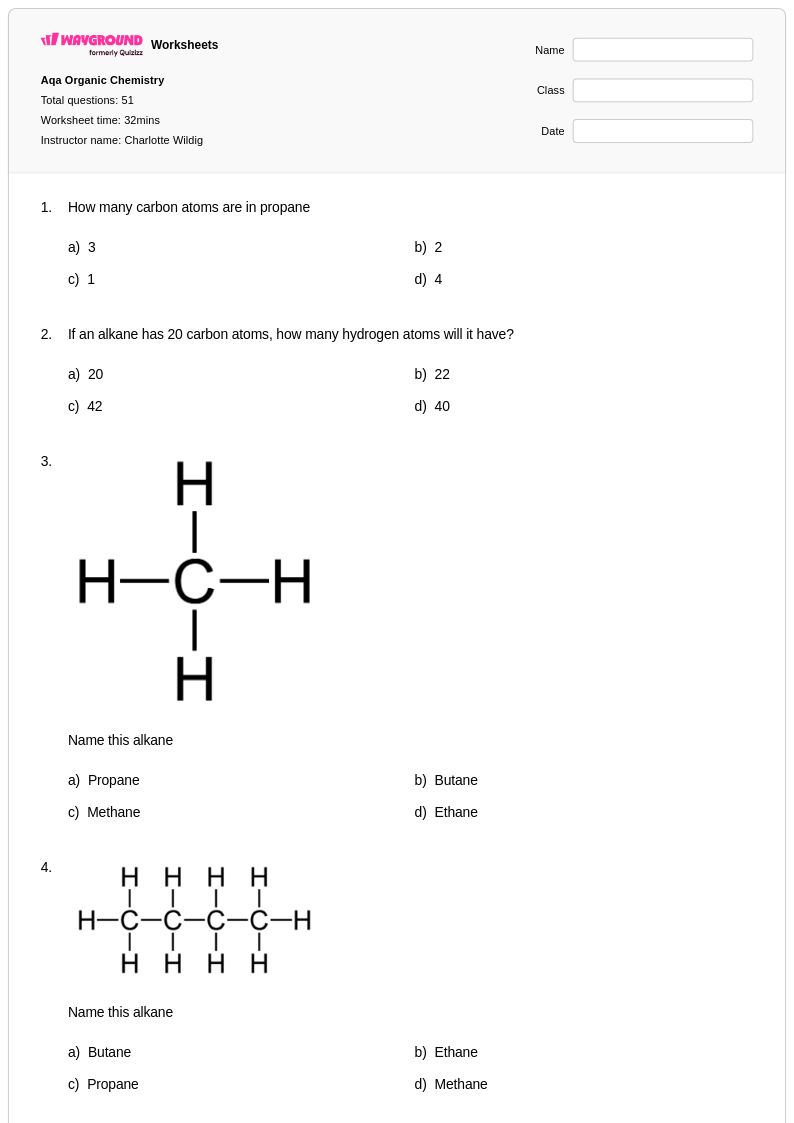
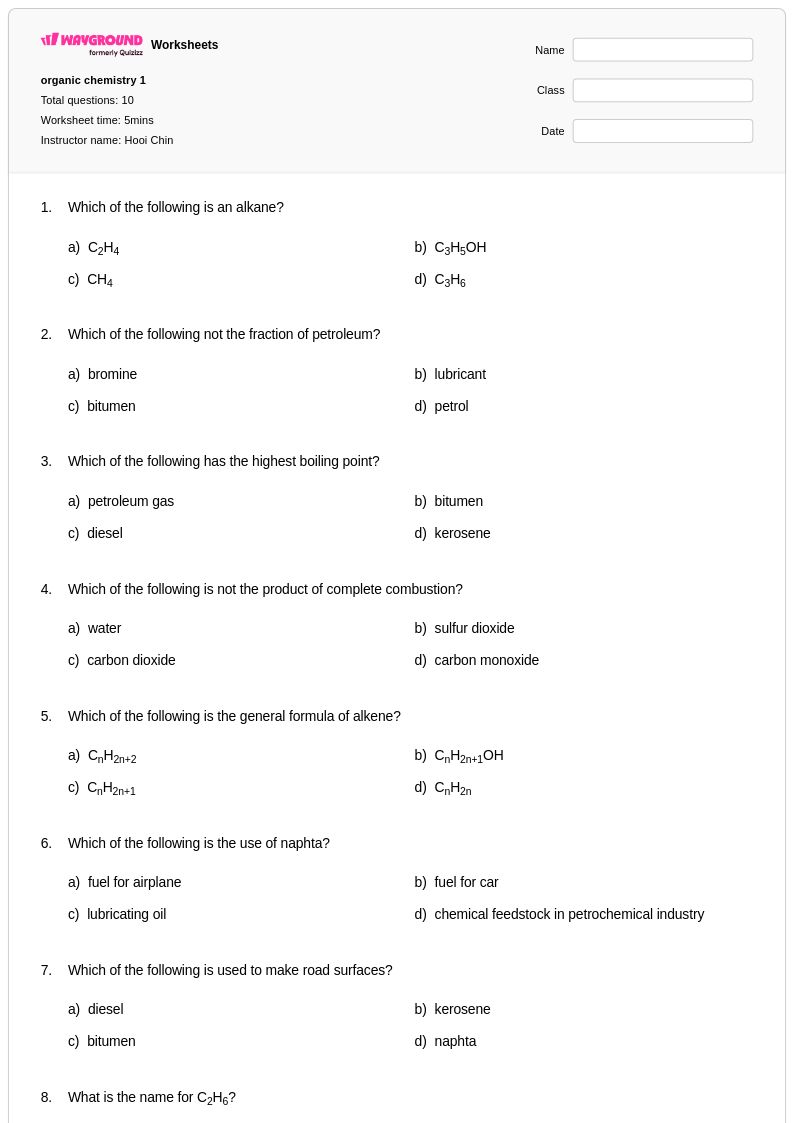
Year 11 Organic Chemistry worksheets available through Wayground (formerly Quizizz) provide comprehensive coverage of fundamental concepts including hydrocarbon structures, functional groups, nomenclature systems, and reaction mechanisms. These expertly designed resources strengthen students' ability to identify and draw organic molecules, apply IUPAC naming conventions, predict reaction products, and understand stereochemistry principles. The worksheet collections include detailed answer keys and are available as free printables in convenient pdf format, offering systematic practice problems that progress from basic molecular recognition to complex multi-step synthesis pathways. Students develop critical analytical skills through exercises covering alkanes, alkenes, alkynes, aromatic compounds, and their characteristic reactions, building the foundation necessary for advanced chemistry coursework.
Wayground (formerly Quizizz) supports chemistry educators with an extensive library of millions of teacher-created organic chemistry resources that can be easily accessed through powerful search and filtering capabilities. The platform's standards-aligned worksheet collections offer flexible customization options, allowing teachers to modify content difficulty and focus areas to meet diverse classroom needs for differentiation. Available in both printable and digital formats including downloadable pdf files, these resources streamline lesson planning while providing targeted materials for remediation, enrichment, and skill reinforcement. Teachers can efficiently locate specific organic chemistry topics, from basic hydrocarbon identification to advanced reaction mechanisms, enabling them to create comprehensive practice sessions that address individual student learning gaps and strengthen conceptual understanding across all ability levels.
FAQs
How do I teach organic chemistry nomenclature to students who keep mixing up IUPAC naming rules?
Start by anchoring students to the parent chain selection rule before introducing substituents. Use color-coded molecular diagrams to visually separate the longest carbon chain from branches, then practice numbering direction as a separate step before combining both skills. Systematic progression from simple alkanes to branched and substituted compounds prevents students from conflating steps they haven't yet mastered individually.
What worksheets help students practice identifying functional groups in organic compounds?
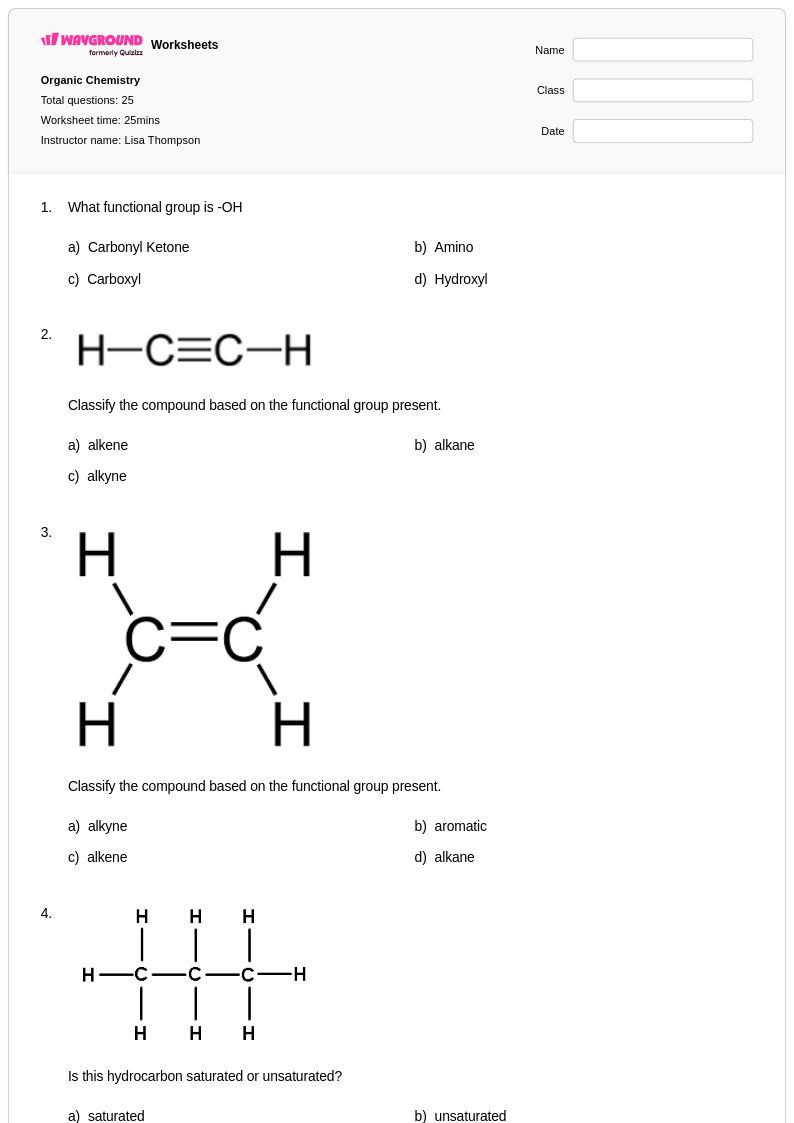
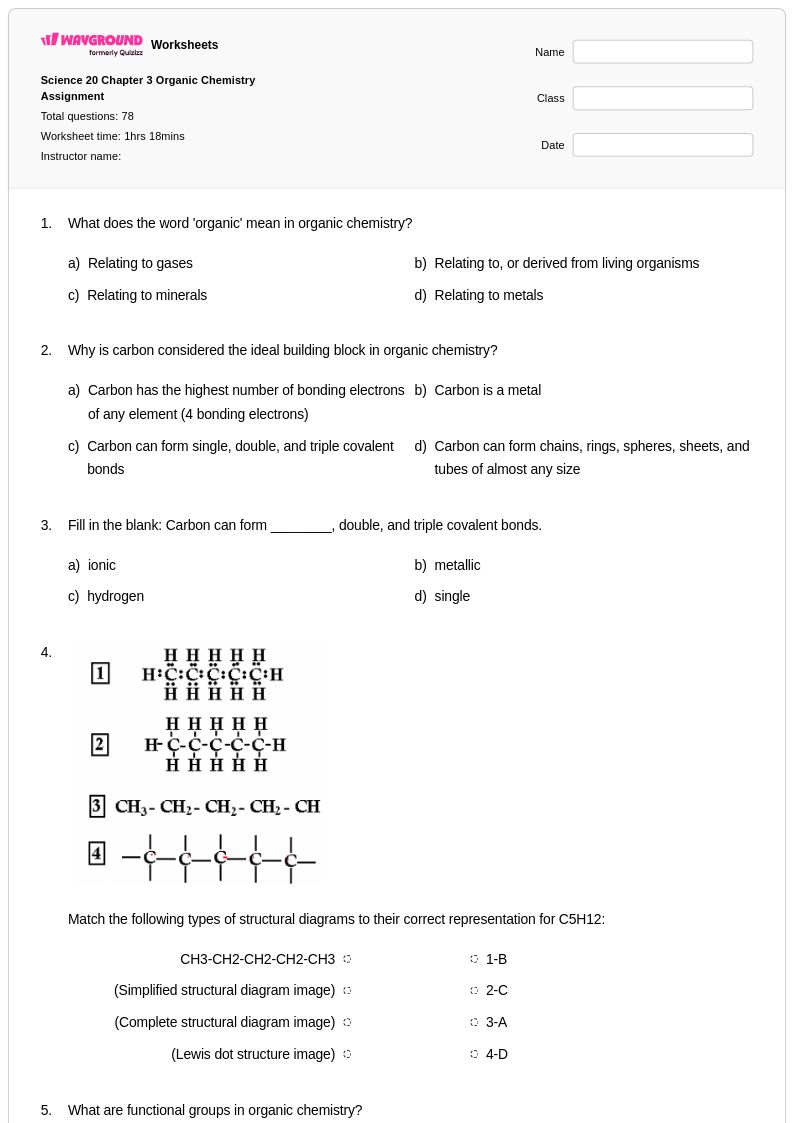
Worksheets that present structural formulas and ask students to circle, label, and classify functional groups build pattern recognition more effectively than multiple-choice alone. The most useful practice problems mix saturated and unsaturated compounds, include compounds with multiple functional groups, and ask students to predict reactivity based on the groups they identify. Organic chemistry worksheets on Wayground cover functional group identification as part of a structured progression from basic molecular structure recognition to more complex reaction-based problems.
What are the most common mistakes students make when drawing organic reaction mechanisms?
The most frequent errors involve incorrect arrow pushing — specifically, drawing arrows from bonds rather than electron pairs, or reversing arrow direction to show electron flow incorrectly. Students also commonly misidentify nucleophiles and electrophiles in a given reaction, which cascades into incorrect mechanism steps. Requiring students to annotate each arrow with a written explanation of the electron movement catches both types of errors before they become entrenched habits.
How do I help students who struggle with stereochemistry concepts like R/S configuration?
Students typically struggle with R/S configuration because they try to assign priority and determine spatial orientation simultaneously. Break the skill into isolated steps: first practice Cahn-Ingold-Prelog priority rules with flat structures, then introduce wedge-and-dash notation separately before combining both tasks. Physical molecular model kits are highly effective at this stage because they make the three-dimensional component tangible before students are asked to interpret it from a 2D drawing.
How can I use Wayground's organic chemistry worksheets in both print-based and digital classroom settings?
Wayground's organic chemistry worksheets are available as printable PDFs for traditional classroom use and in digital formats for technology-integrated learning environments, including the option to host them as a quiz directly on Wayground. This flexibility means the same worksheet resource works for in-person lab review, homework packets, or assigned digital practice. All worksheets include answer keys, which supports both self-paced independent learning and efficient teacher grading.
How do I differentiate organic chemistry practice for students at different skill levels in the same class?
Differentiation in organic chemistry is most effective when it targets problem complexity rather than topic breadth — advanced students should engage with multi-step synthesis and mechanistic prediction while struggling students consolidate functional group recognition and simple naming. Wayground supports individual student accommodations including reduced answer choices to lower cognitive load and Read Aloud for students who need audio support, and these settings can be applied per student without other students being notified. This allows a single digital assignment to serve multiple skill levels simultaneously.
What's the best way to sequence organic chemistry practice problems across a unit?
Effective sequencing moves from structural recognition to classification to reactivity prediction, treating each as a prerequisite for the next. Students should achieve accuracy with molecular structure drawing and functional group identification before attempting reaction mechanisms, and mechanisms should be mastered before multi-step synthesis problems are introduced. Worksheets that explicitly scaffold this progression — rather than mixing all difficulty levels randomly — reduce cognitive overload and produce more durable understanding.