Free Printable Empirical and Molecular Formula Worksheets for Year 11
Free Year 11 empirical and molecular formula worksheets with printable PDFs help students master chemical composition calculations through practice problems and detailed answer keys.
Explore printable Empirical and Molecular Formula worksheets for Year 11
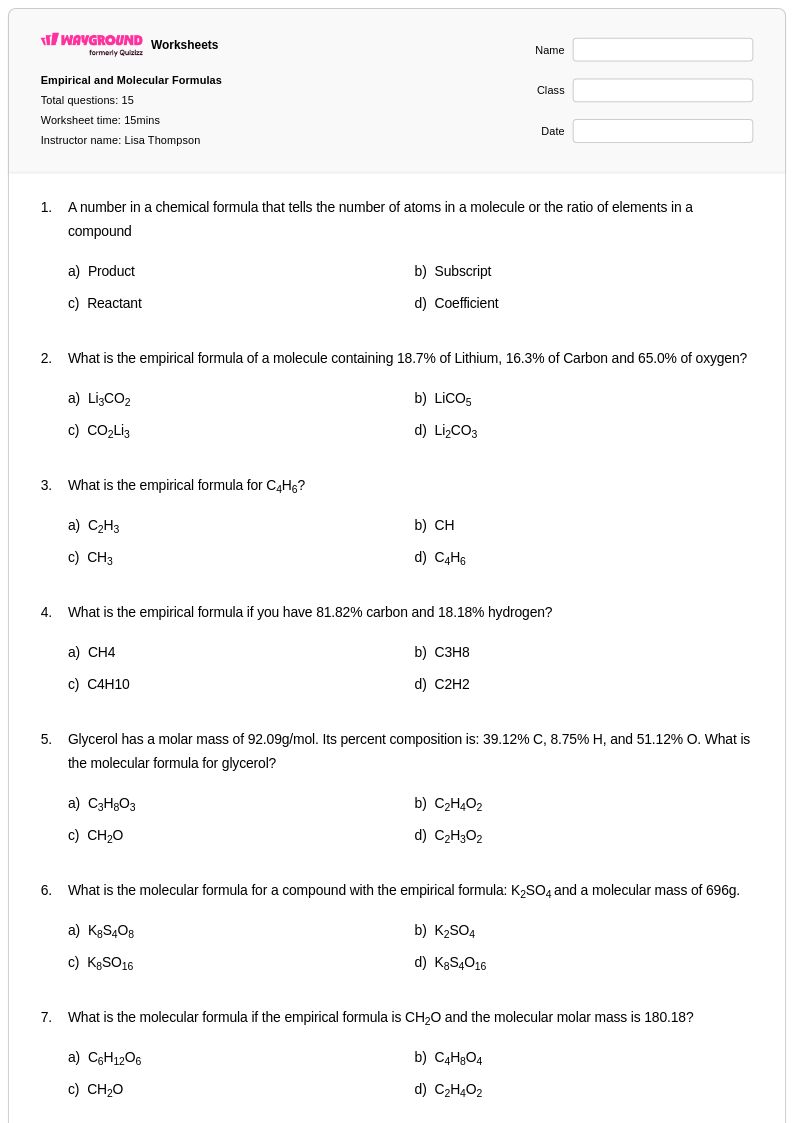
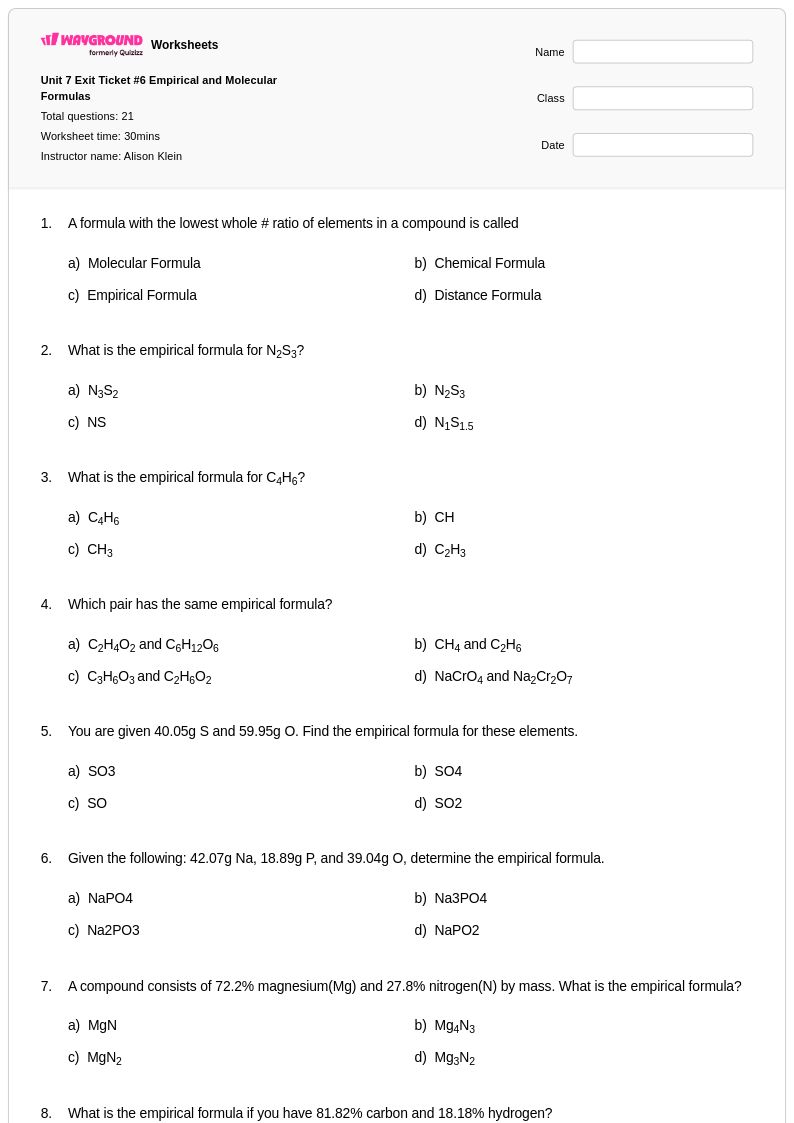
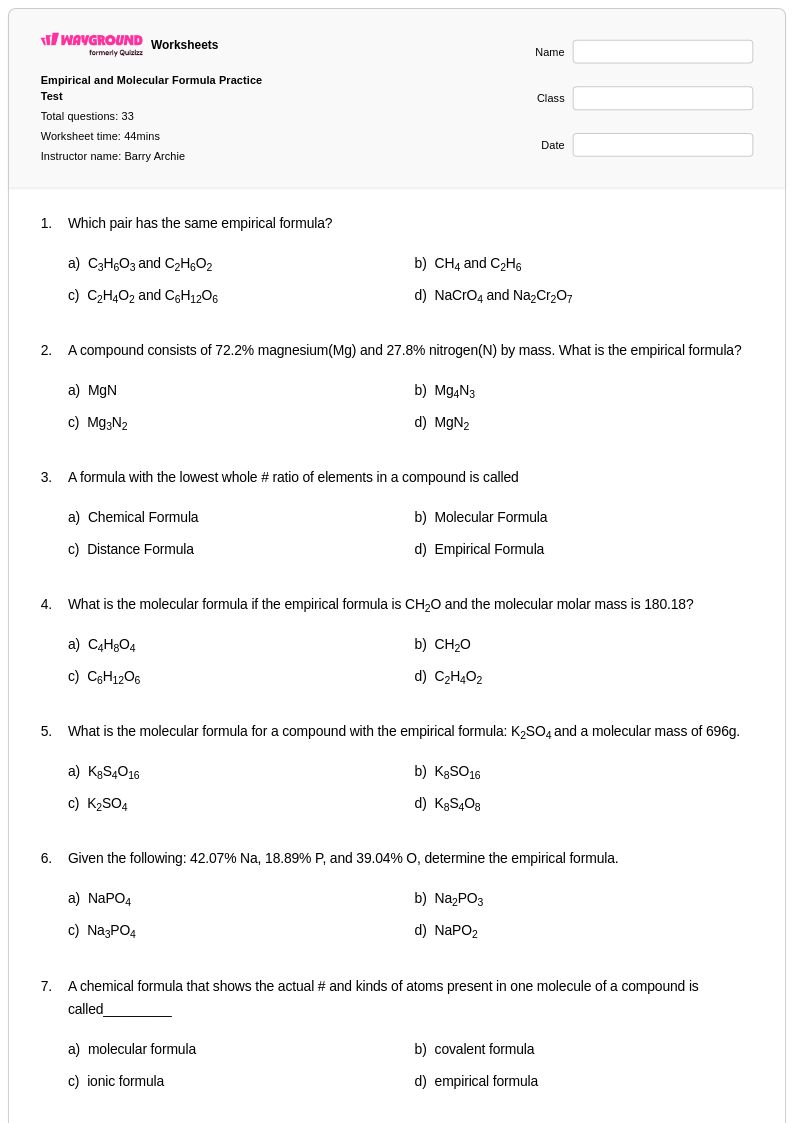
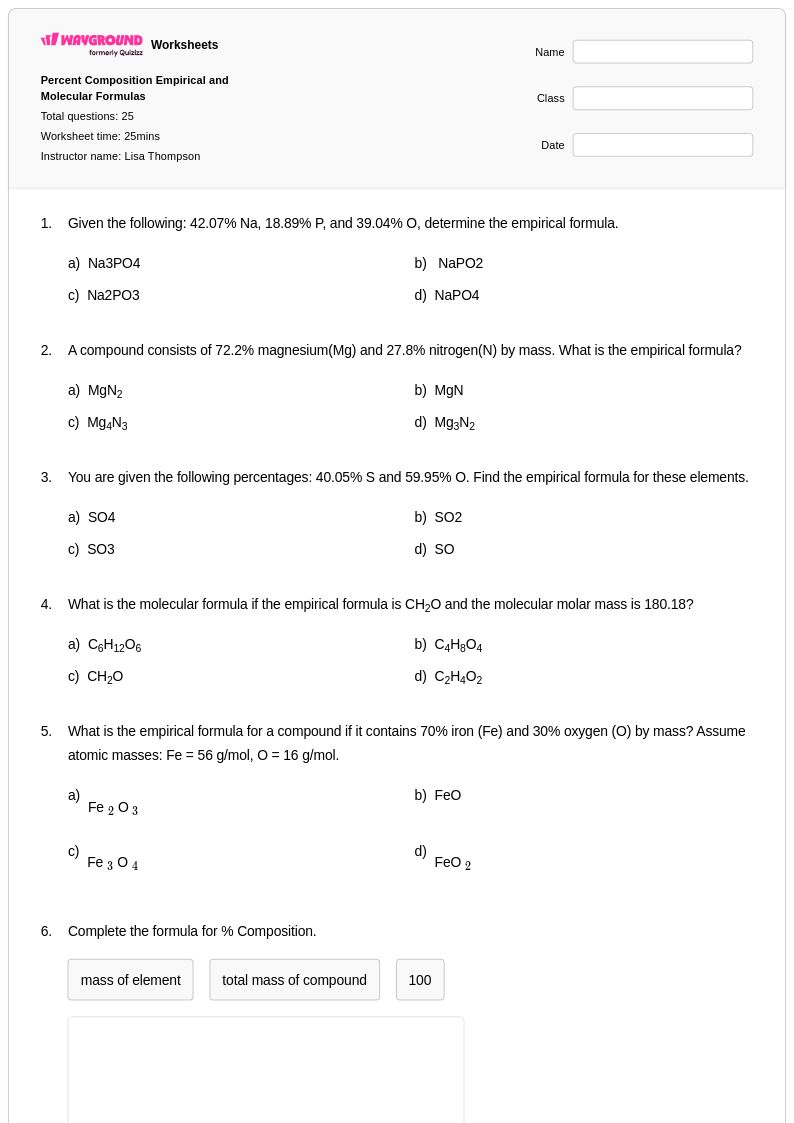
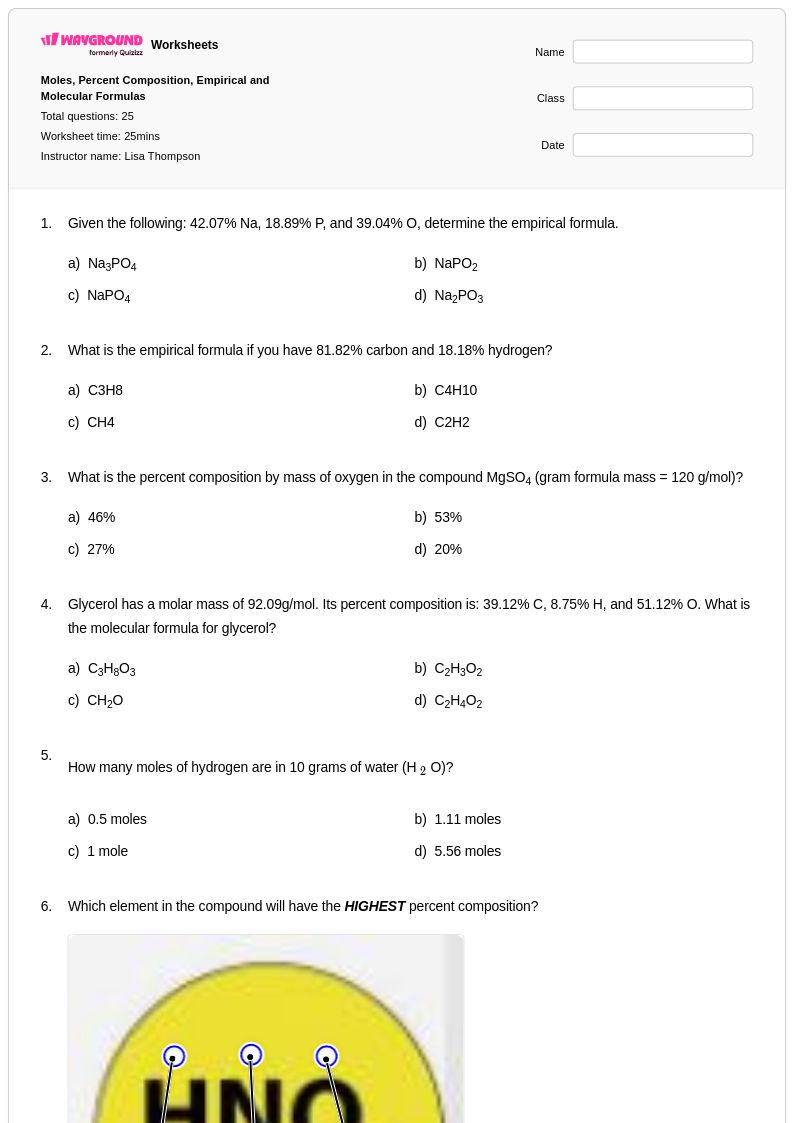
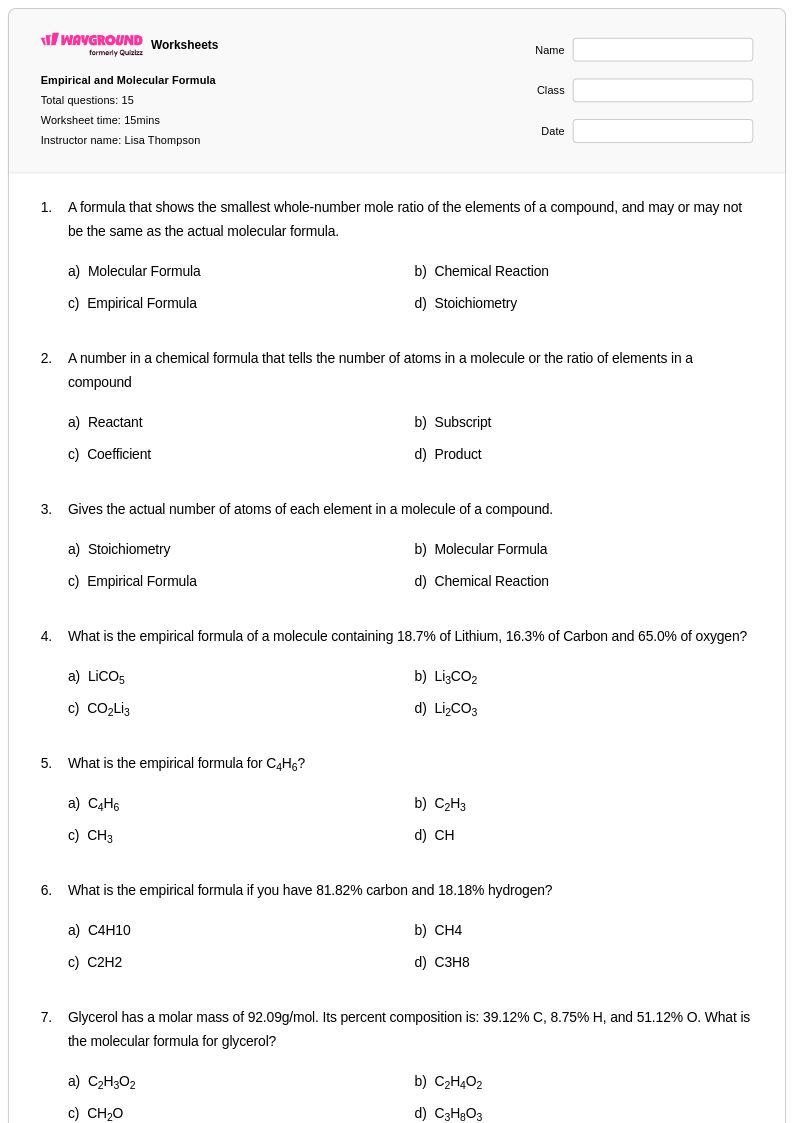
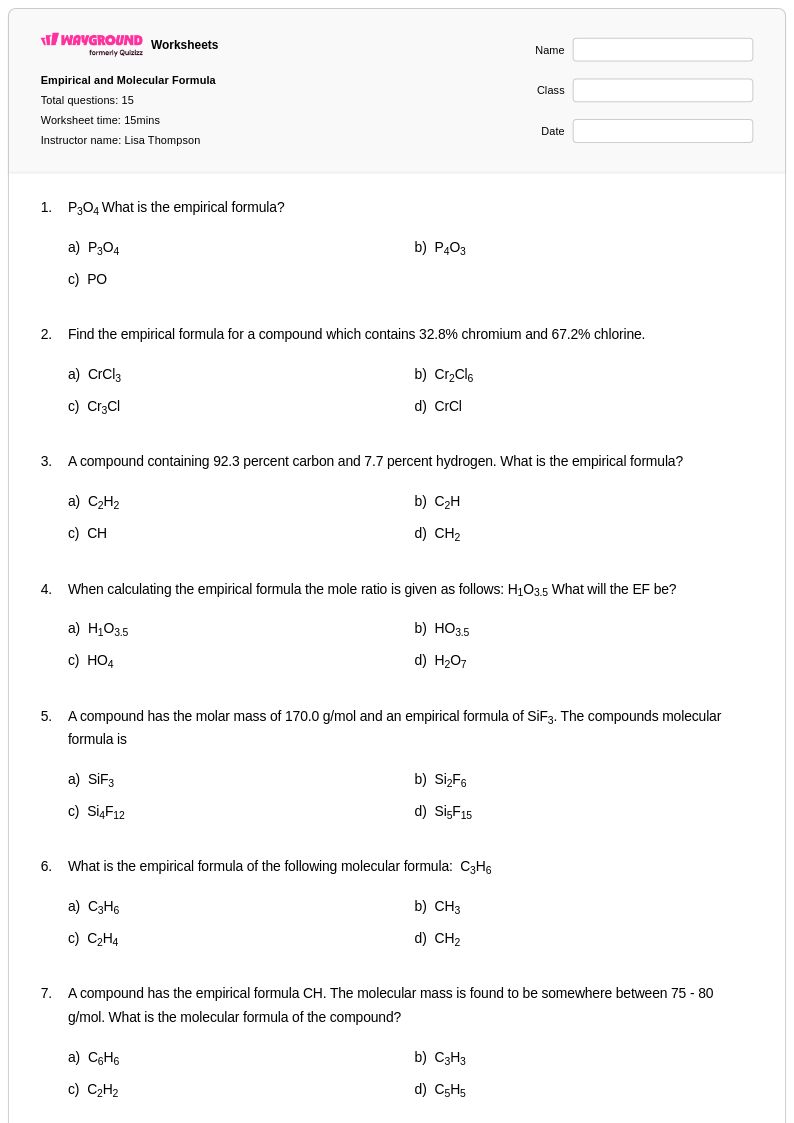
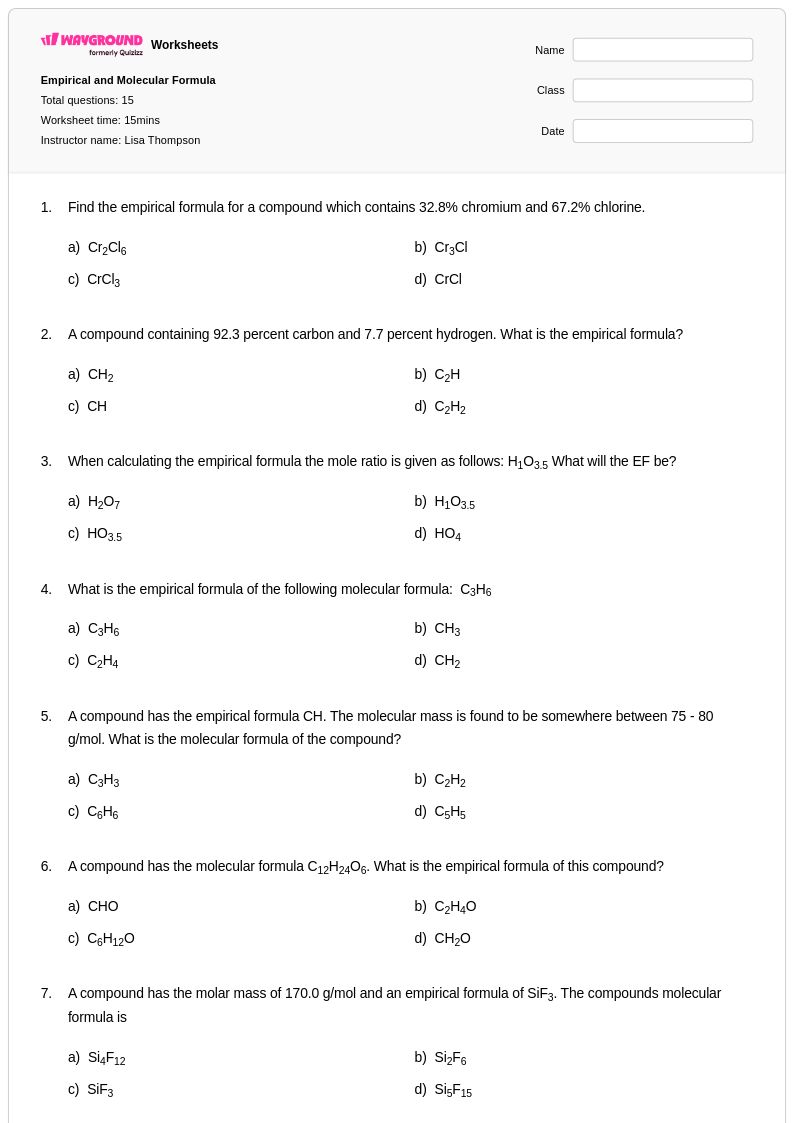
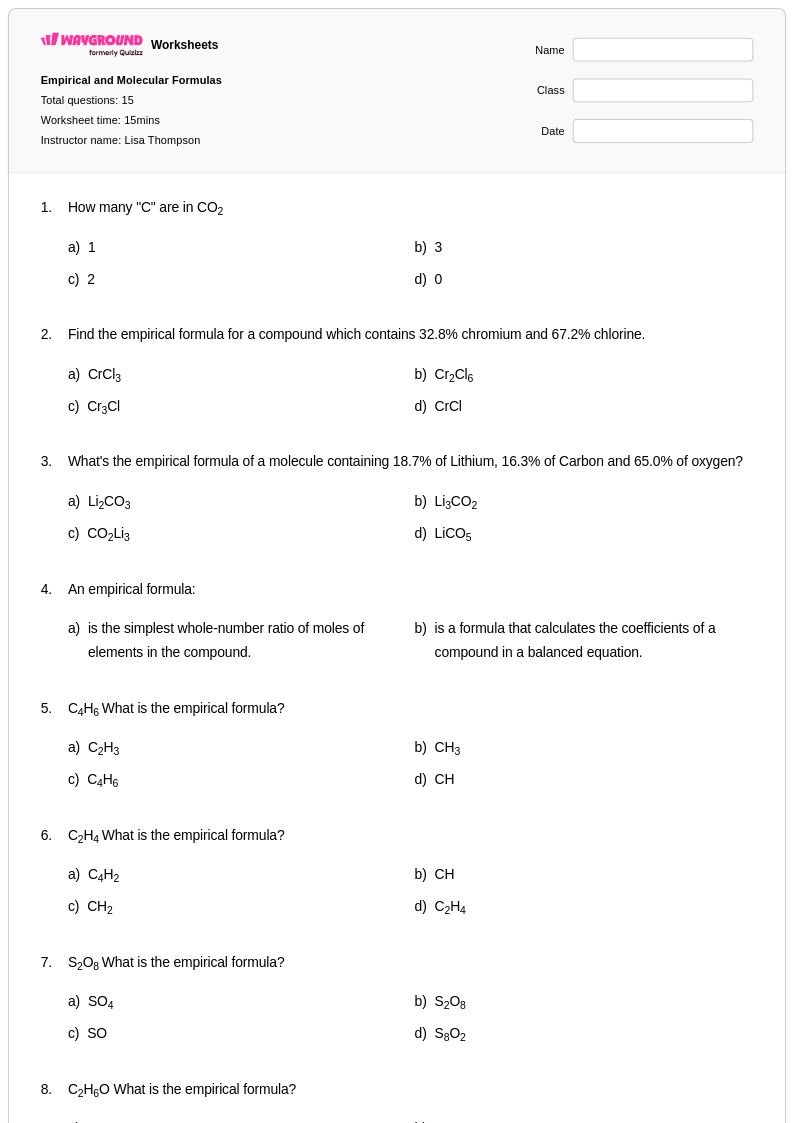
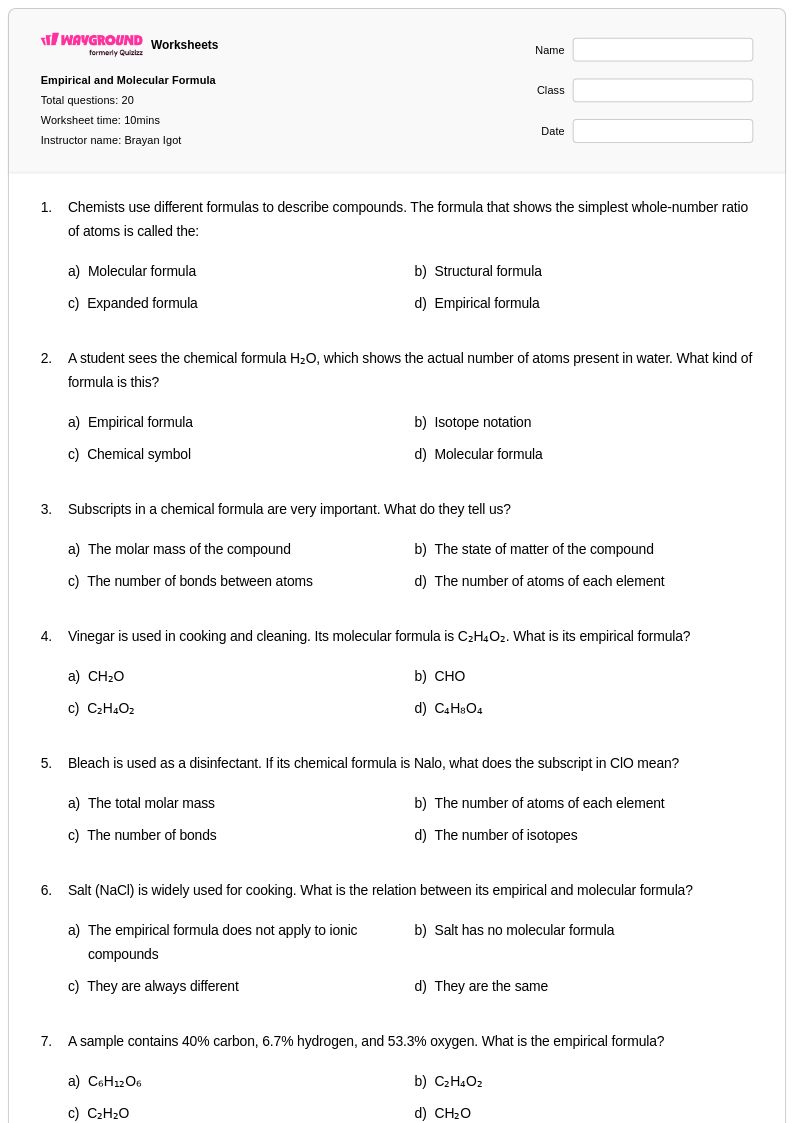
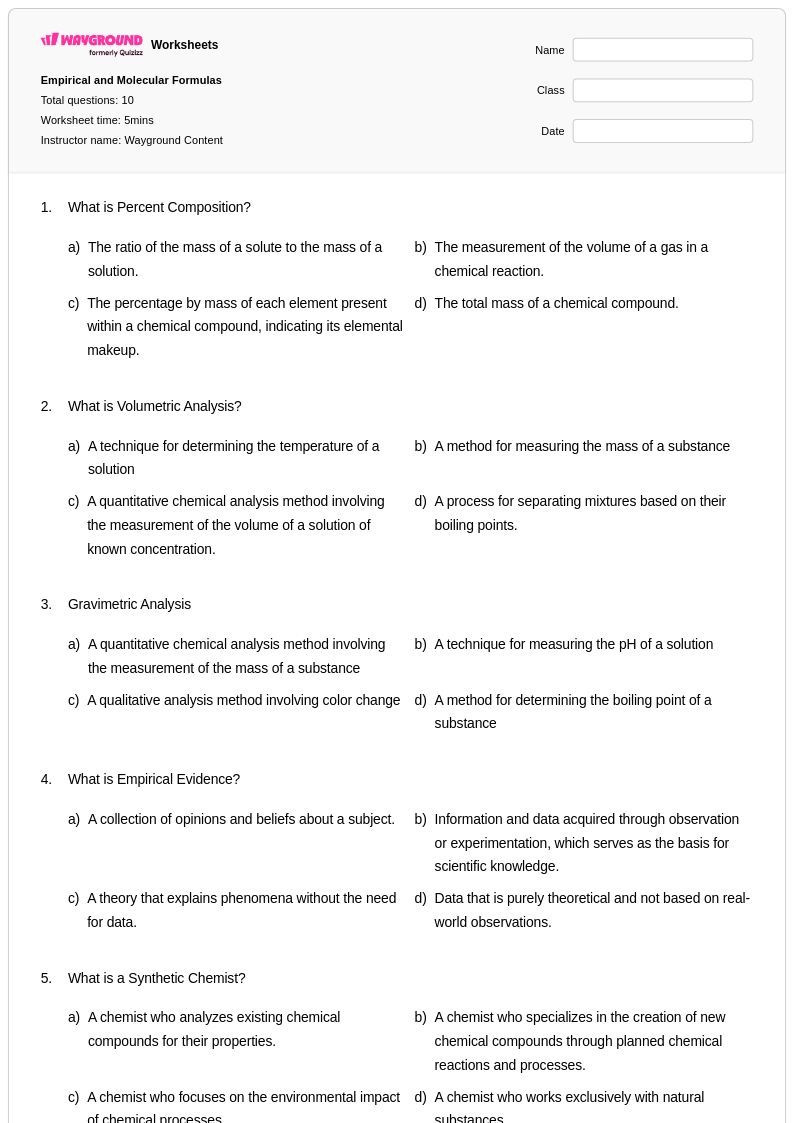
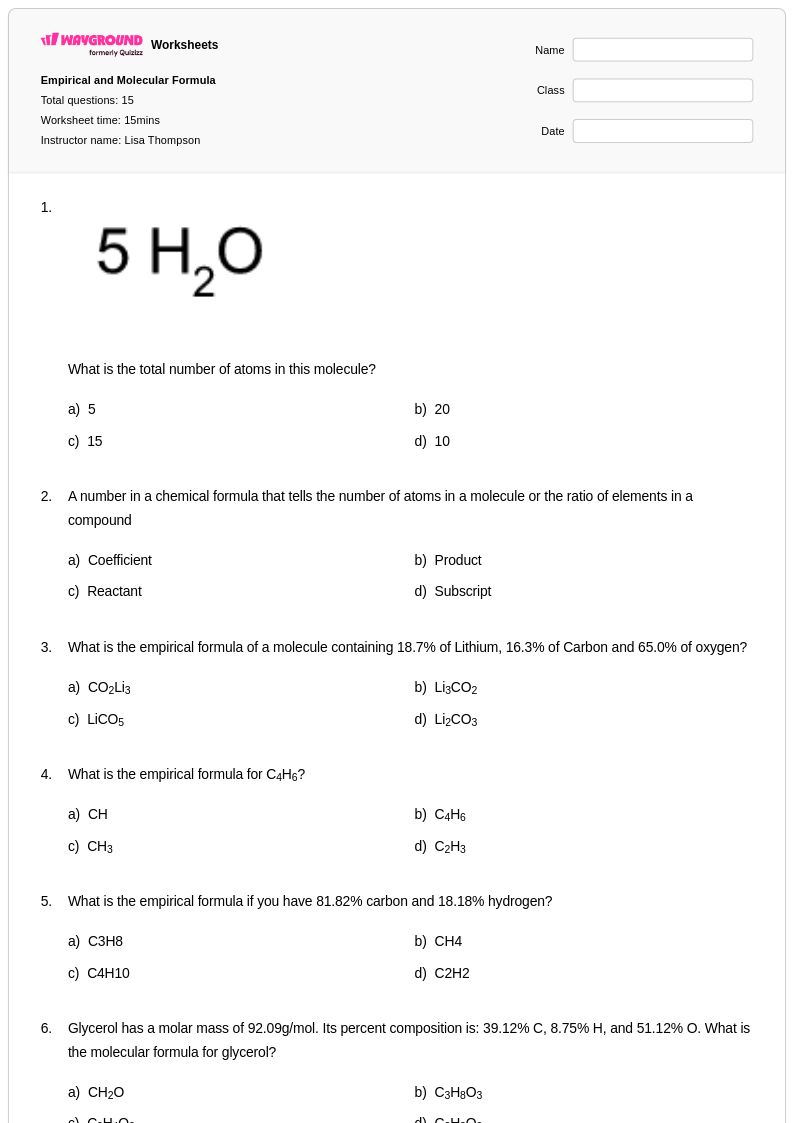
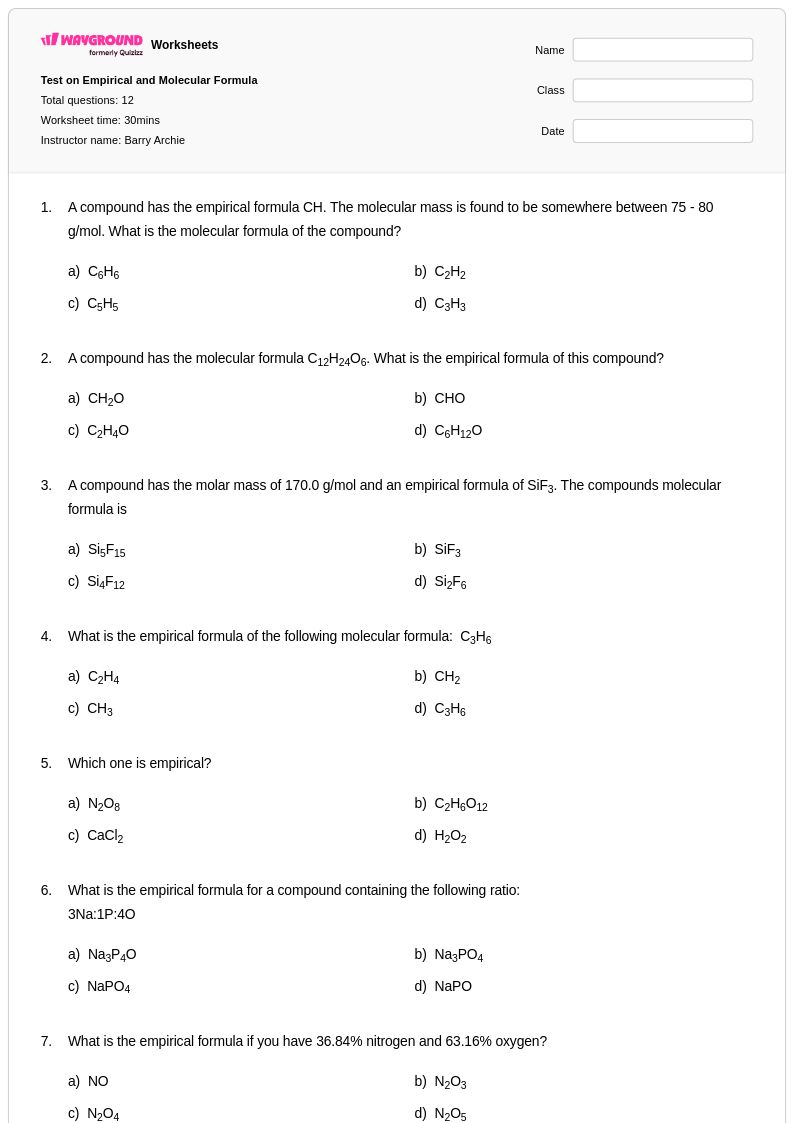
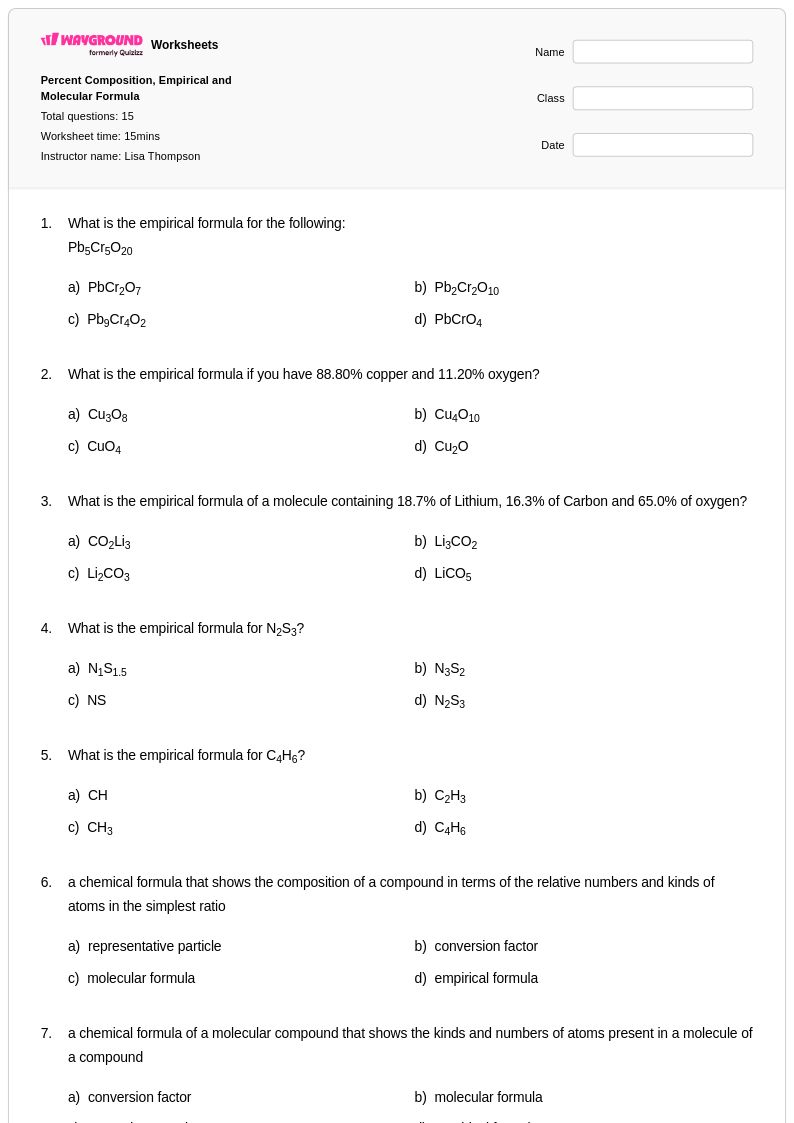
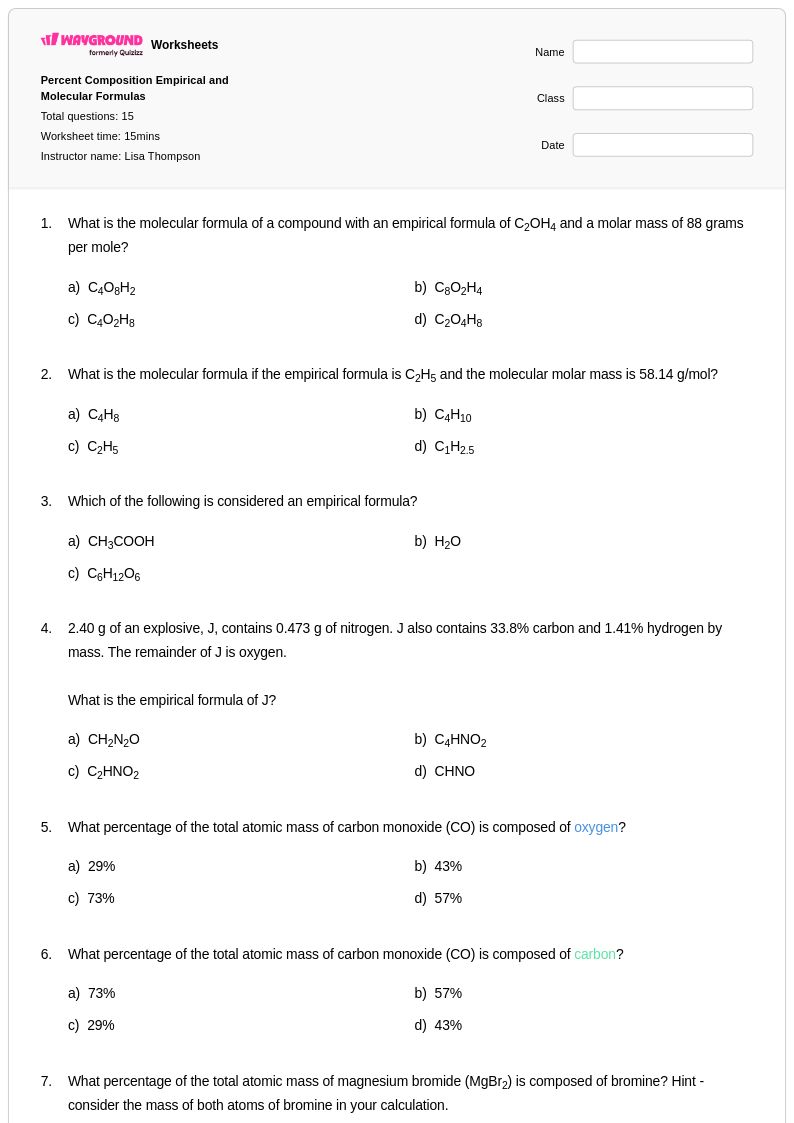
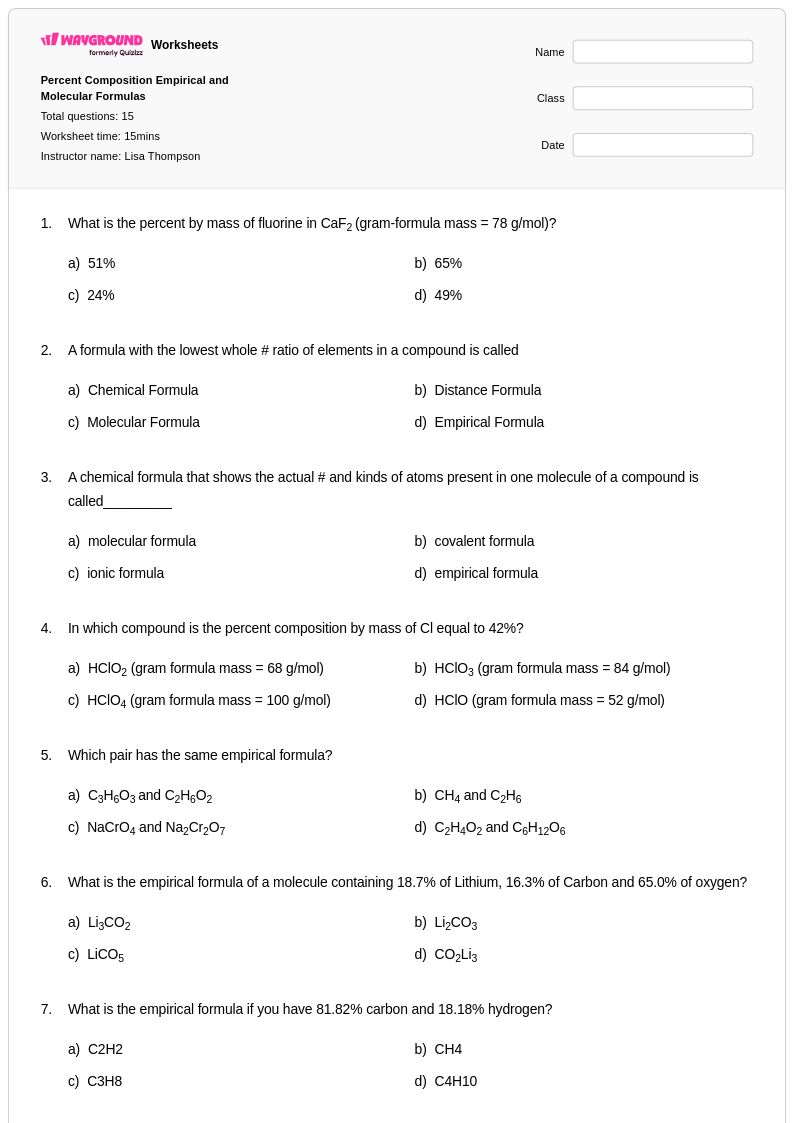
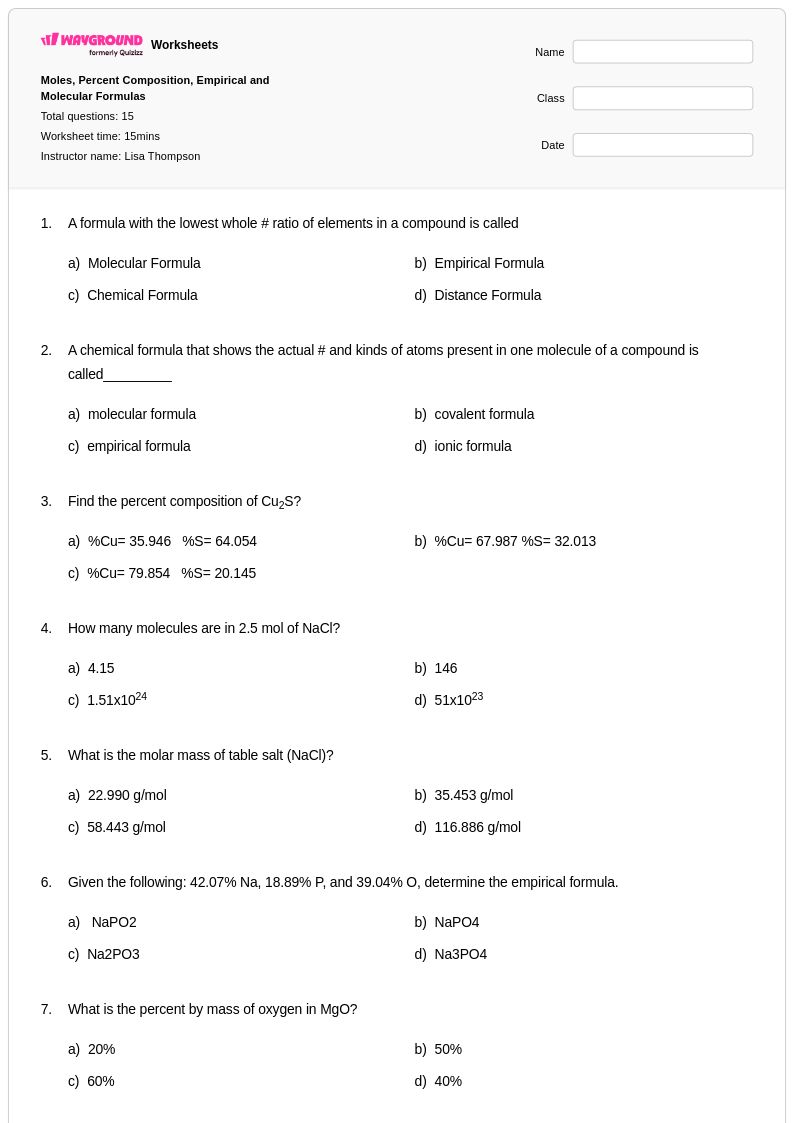
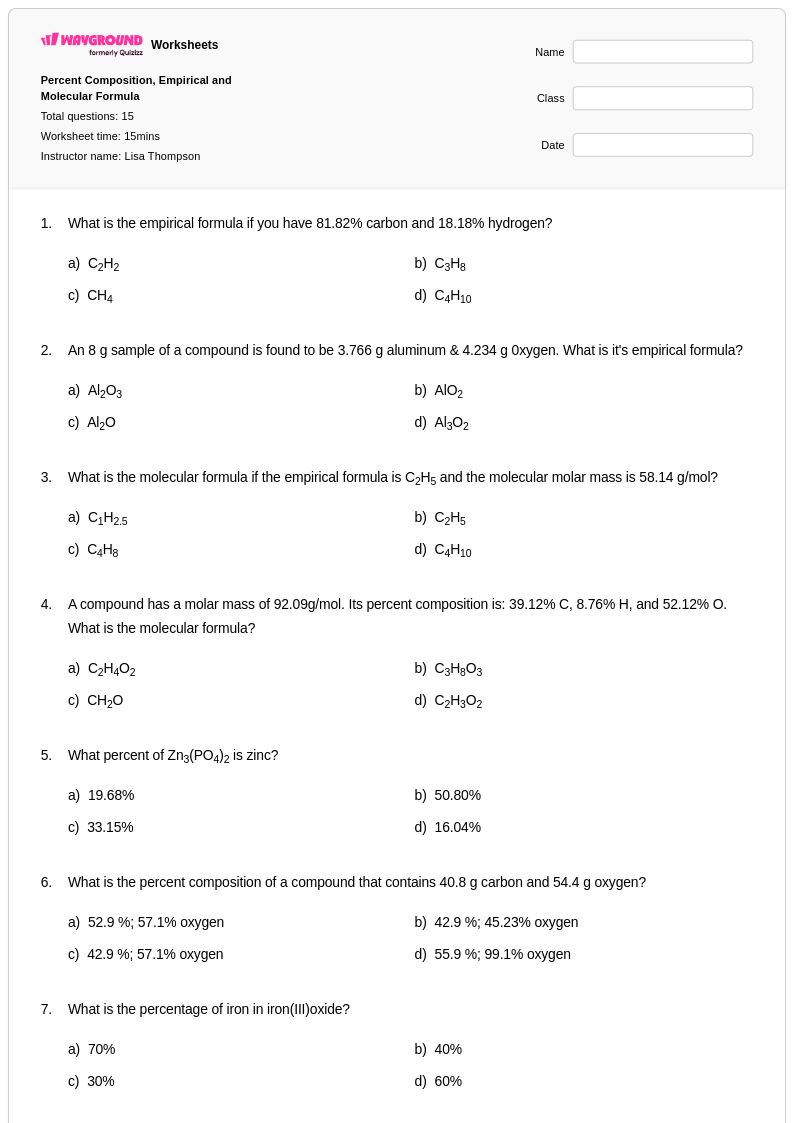
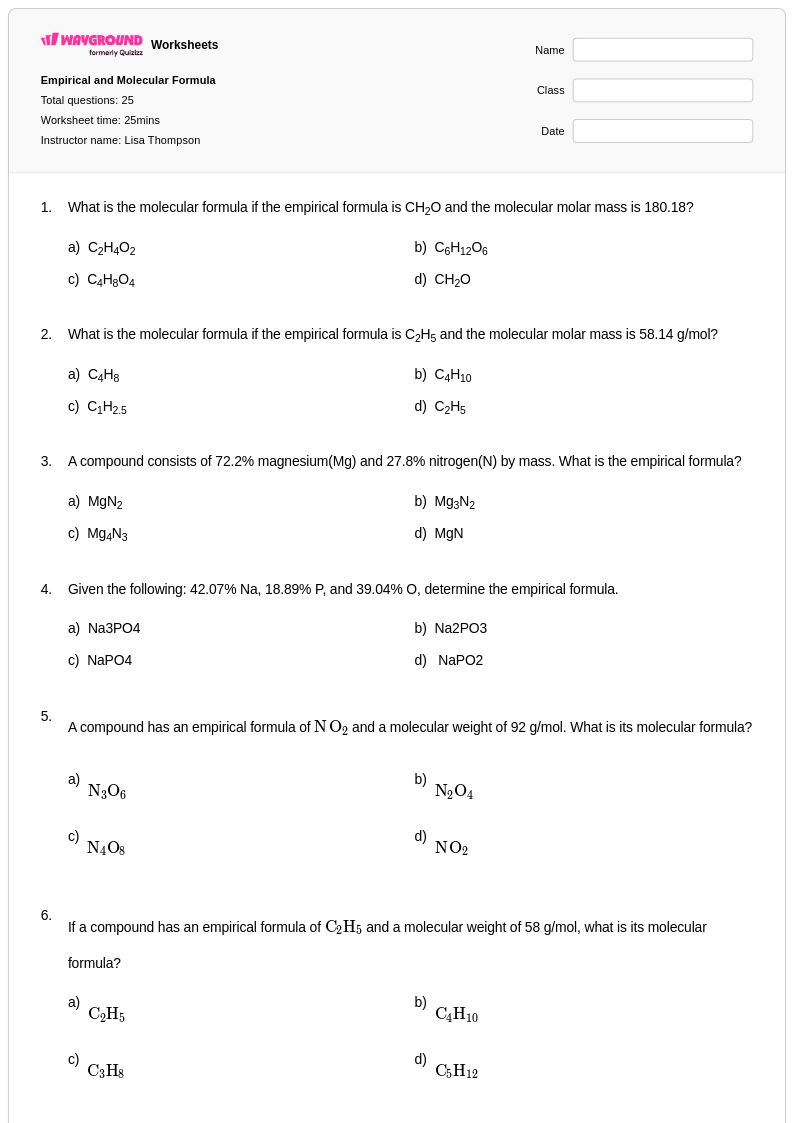
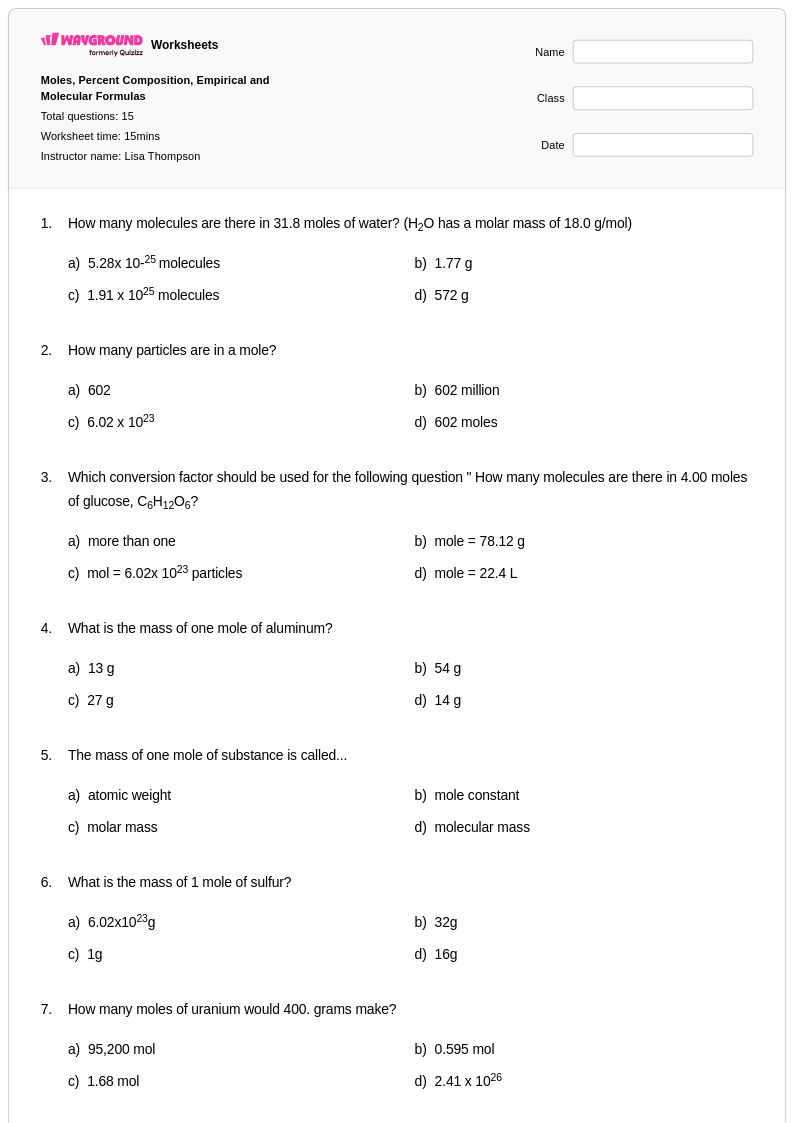
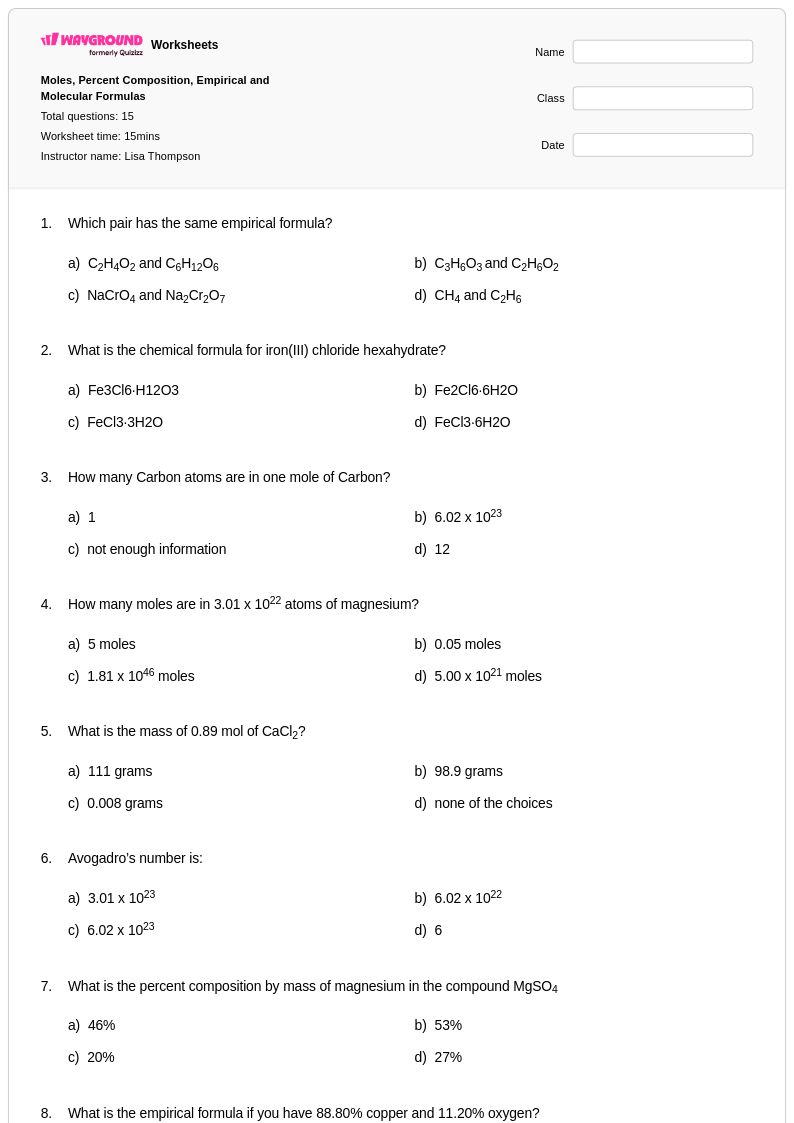
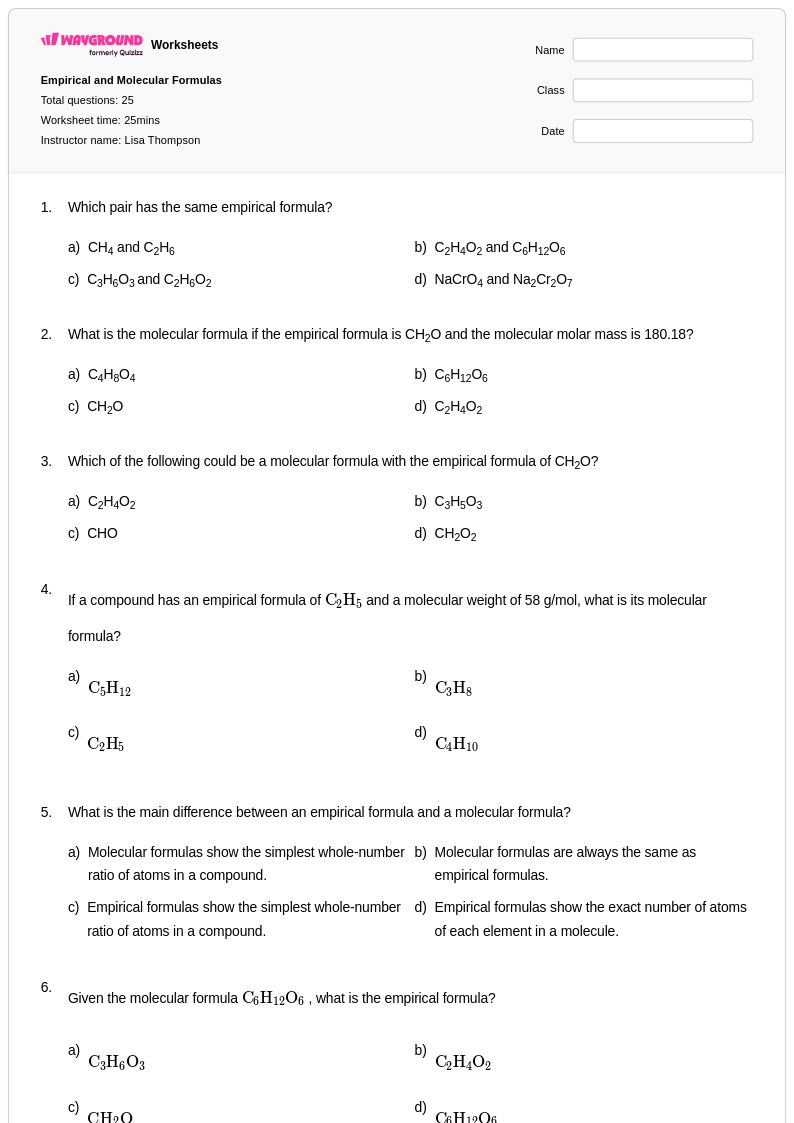
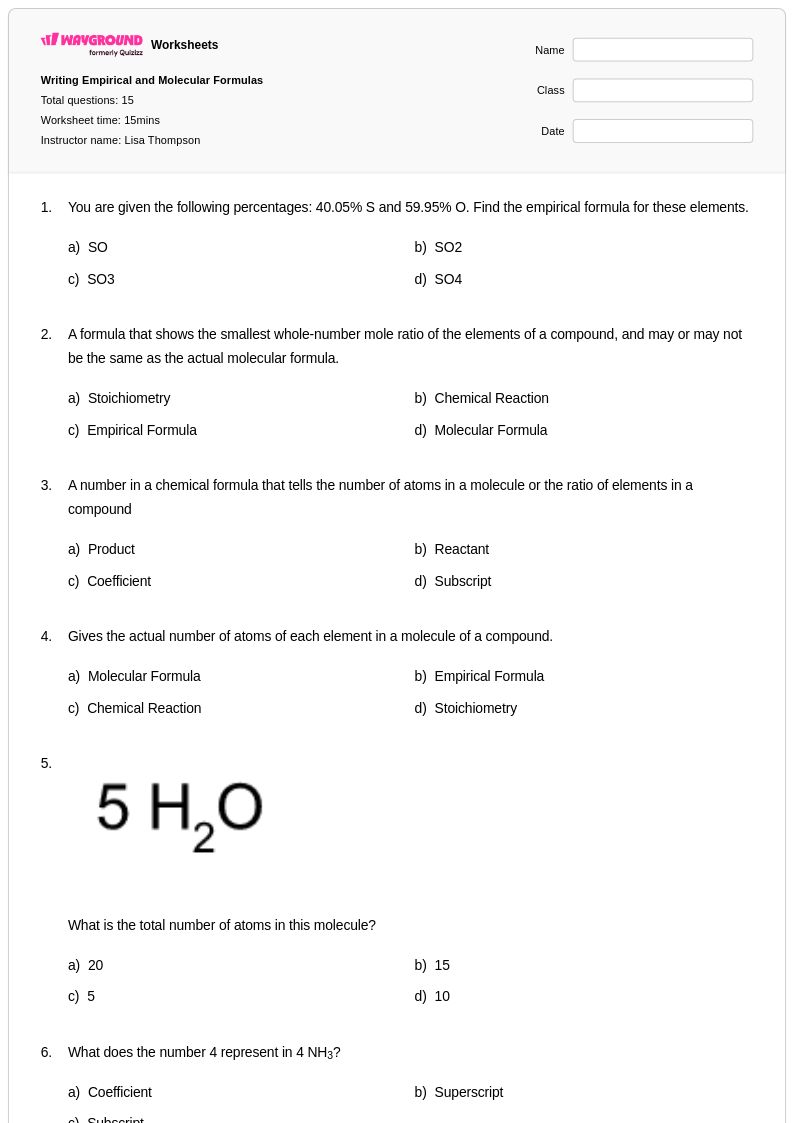
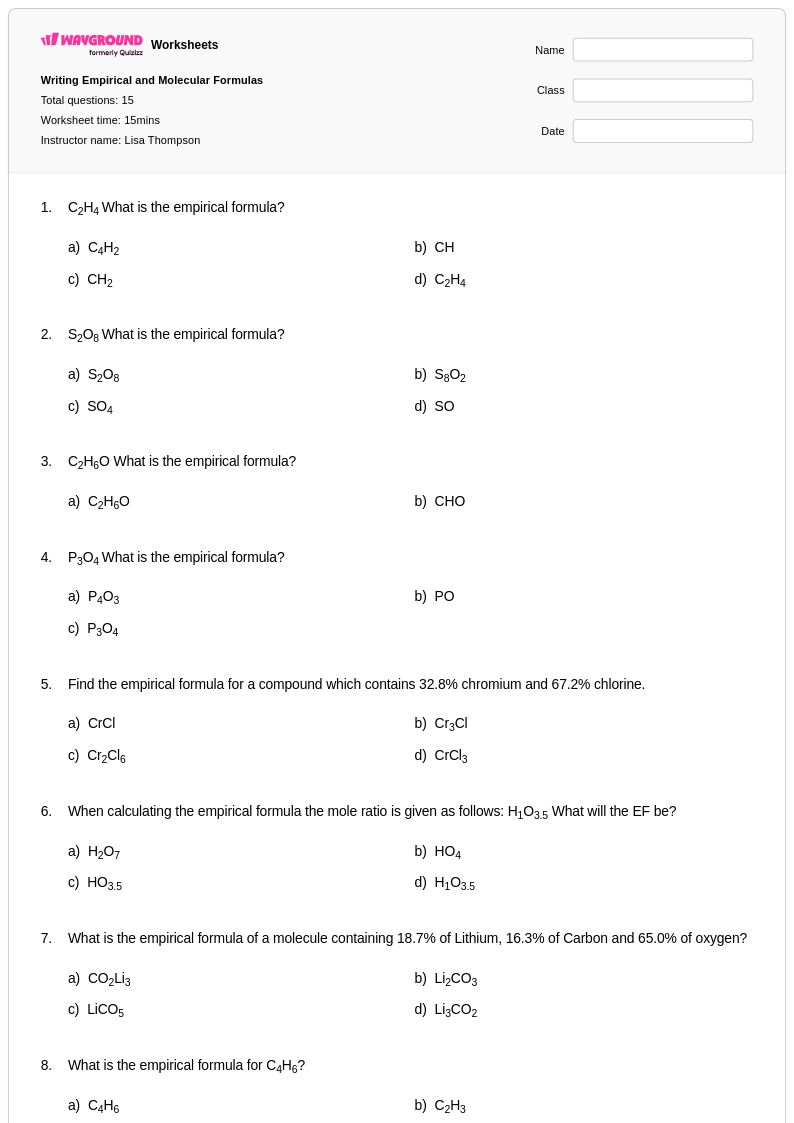
Empirical and molecular formula worksheets for Year 11 students provide essential practice in determining the simplest whole-number ratio of atoms in compounds and calculating actual molecular compositions from experimental data. These comprehensive worksheets available through Wayground (formerly Quizizz) strengthen critical analytical skills including percent composition calculations, mole conversions, and the systematic approach to finding both empirical and molecular formulas from combustion analysis data. Students work through progressively challenging practice problems that require them to interpret mass spectrometry results, apply stoichiometric principles, and distinguish between empirical formulas that show the simplest atom ratios and molecular formulas that reveal the actual number of atoms in molecules. Each worksheet includes detailed answer keys and step-by-step solutions, with free printable pdf versions that allow students to practice these fundamental chemistry concepts at their own pace.
Wayground (formerly Quizizz) supports chemistry educators with an extensive collection of millions of teacher-created resources specifically designed for empirical and molecular formula instruction at the Year 11 level. The platform's advanced search and filtering capabilities enable teachers to quickly locate worksheets that align with specific learning standards and match their students' proficiency levels, while differentiation tools allow for seamless customization of problem complexity and question types. Teachers can access these resources in both printable pdf formats for traditional classroom use and interactive digital versions for online learning environments, making lesson planning more efficient and providing flexible options for skill practice, remediation sessions, and enrichment activities. The comprehensive nature of these worksheet collections ensures that students receive thorough exposure to various problem-solving scenarios, from determining empirical formulas of hydrates to calculating molecular formulas using molar mass data.
FAQs
How do I teach empirical and molecular formulas in chemistry class?
Start by ensuring students have a solid grasp of mole calculations and percent composition before introducing empirical formulas. Teach the process as a step-by-step algorithm: convert percentages to grams, convert grams to moles, divide by the smallest mole value to get whole-number ratios, and simplify. Once students can reliably determine empirical formulas, introduce molecular formulas by showing how molar mass relates to the empirical formula mass. Connecting each step to its chemical meaning, rather than treating it as pure arithmetic, helps students build lasting conceptual understanding.
What practice problems help students master empirical and molecular formula calculations?
Effective practice should progress from straightforward percent composition problems with clean whole-number ratios to messier real-world examples that require rounding judgment. Students should practice converting between empirical and molecular formulas using molar mass, as well as working backward from a molecular formula to identify the empirical formula. Including combustion analysis problems adds an applied layer that prepares students for advanced coursework. Worksheets that sequence problems by difficulty allow students to build confidence before tackling multi-step scenarios.
What mistakes do students commonly make when calculating empirical formulas?
The most frequent error is improper ratio simplification: students often forget to divide all mole values by the smallest value, or they round too aggressively and lose accuracy. Another common mistake is confusing percent composition with mole ratios without performing the gram-to-mole conversion first. Students also struggle when ratios produce decimals like 1.5 or 1.33, not recognizing that these signal a need to multiply all values by a common factor such as 2 or 3. Targeted practice with these edge cases helps students recognize and correct these patterns independently.
How do I use empirical and molecular formula worksheets effectively in my chemistry class?
These worksheets work well as guided practice during instruction, independent review after a lesson, or formative assessment before a unit exam. Wayground's empirical and molecular formula worksheets are available as printable PDFs for traditional classroom use and in digital formats for technology-integrated or remote learning environments, and teachers can also host them as a quiz directly on Wayground. The included answer keys support both self-paced independent study and efficient in-class review, making them flexible enough for whole-class instruction or small-group intervention.
How do empirical and molecular formulas differ, and why does that distinction matter for students?
An empirical formula gives the simplest whole-number ratio of atoms in a compound, while a molecular formula gives the actual number of atoms in one molecule. For example, glucose has the empirical formula CH₂O but the molecular formula C₆H₁₂O₆. This distinction matters because two compounds with very different properties can share the same empirical formula, which reinforces that chemical identity depends on more than elemental ratios alone. Understanding this relationship is foundational for stoichiometry, organic chemistry, and interpreting lab data throughout advanced coursework.
How can I support struggling students with empirical and molecular formula problems?
Breaking the calculation into a clearly labeled multi-step template helps struggling students track their work and identify where errors occur. On Wayground, teachers can apply individual accommodations such as read aloud support and reduced answer choices for students who need additional scaffolding, without affecting the experience of the rest of the class. Pairing these accommodations with problems that use clean, whole-number ratios before introducing decimal scenarios allows students to build procedural fluency at a manageable pace.