Free Printable VSEPR Theory Worksheets for Year 11
Explore Year 11 VSEPR Theory worksheets and printables that help students master molecular geometry concepts through practice problems, free PDF resources, and comprehensive answer keys.
Explore printable VSEPR Theory worksheets for Year 11
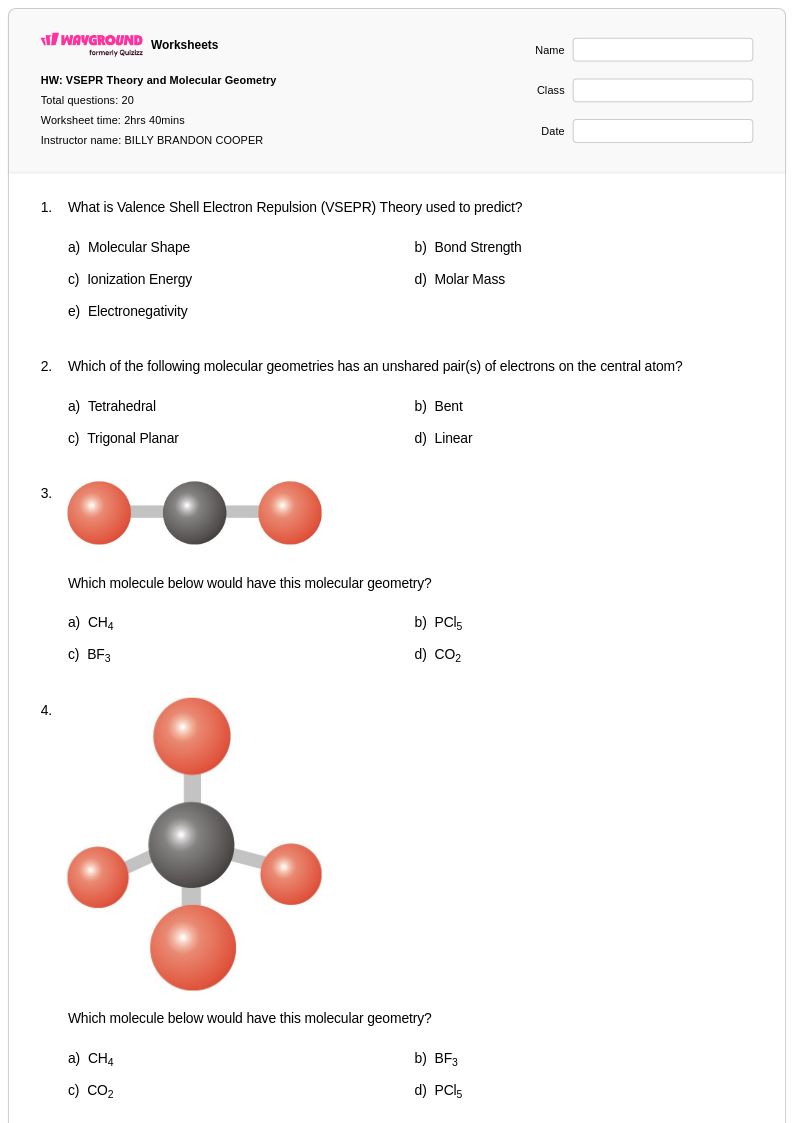
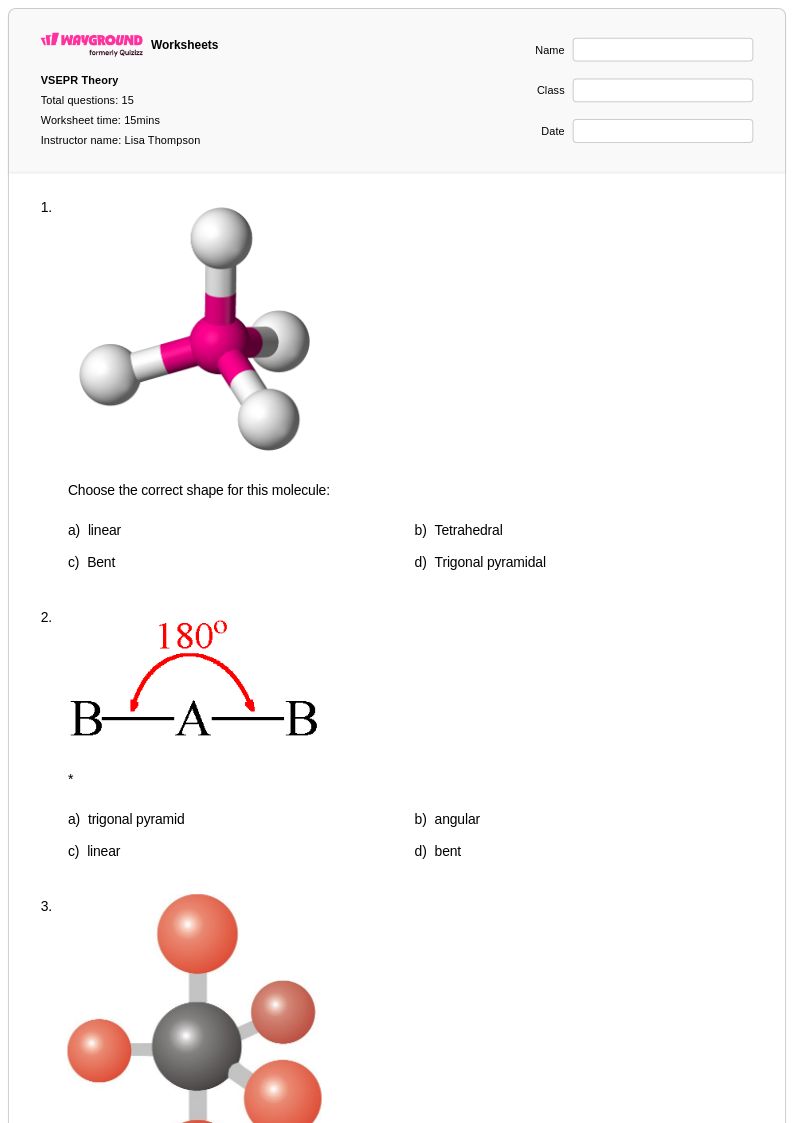
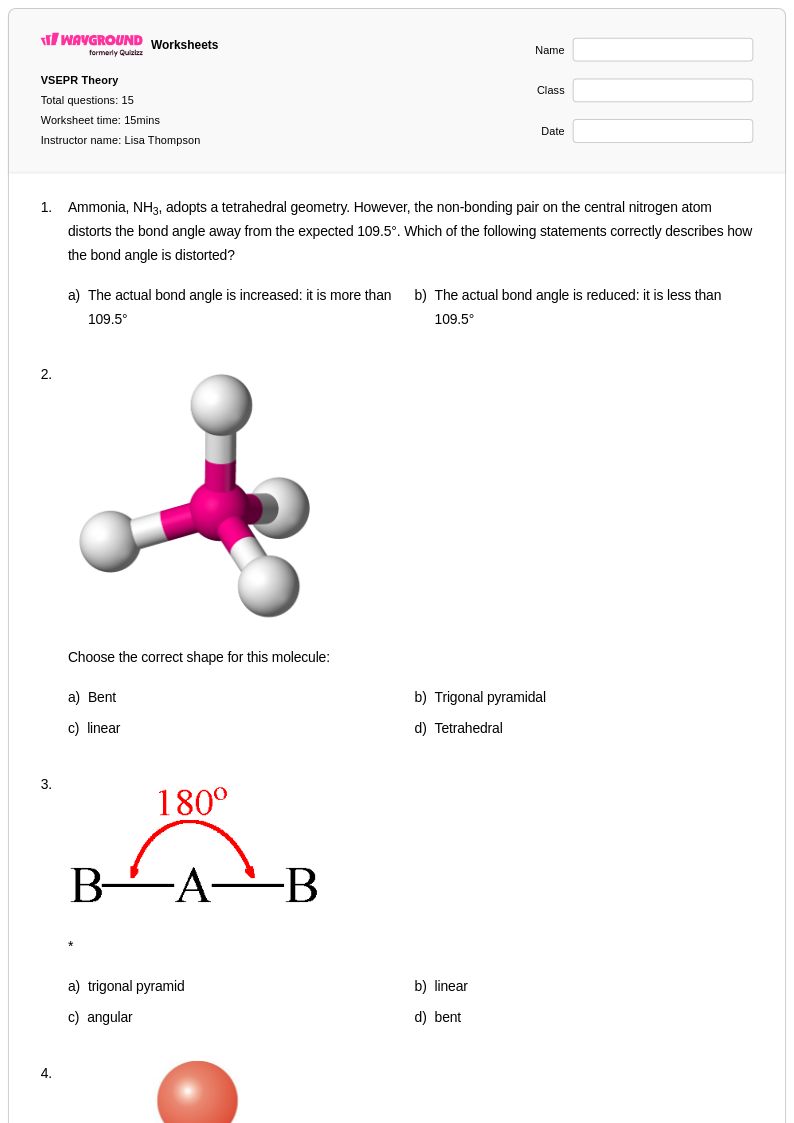
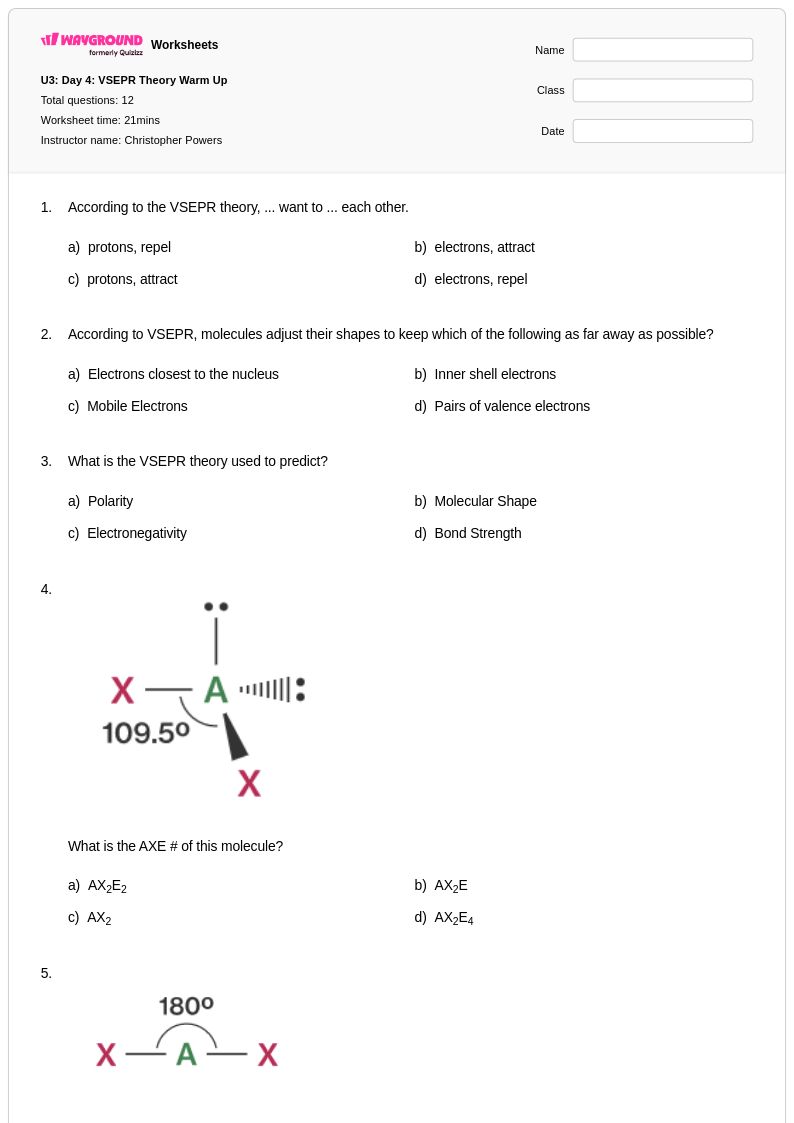
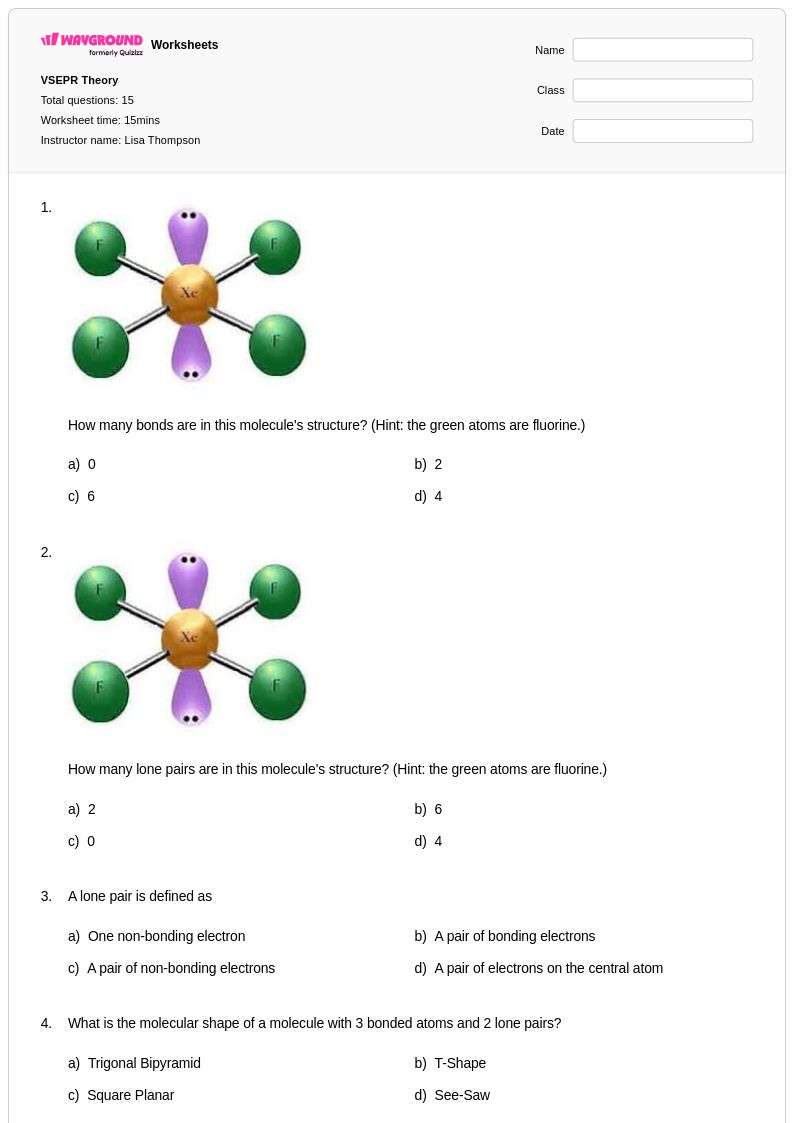
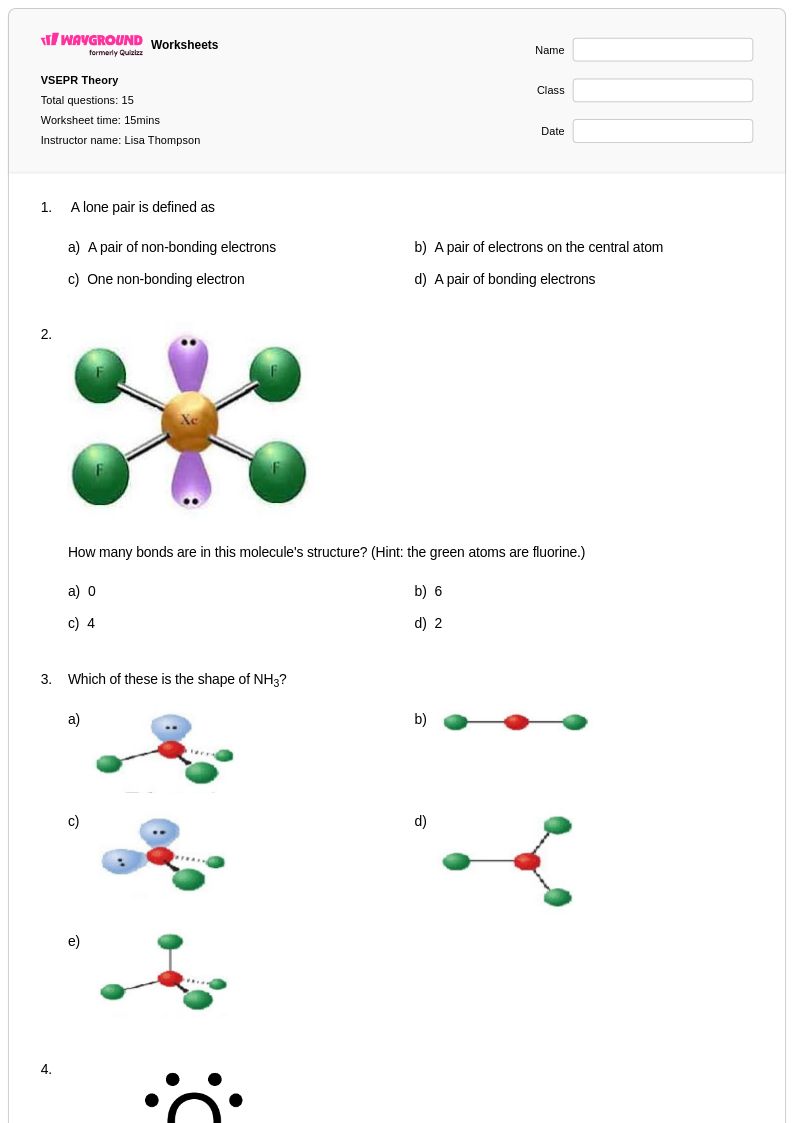
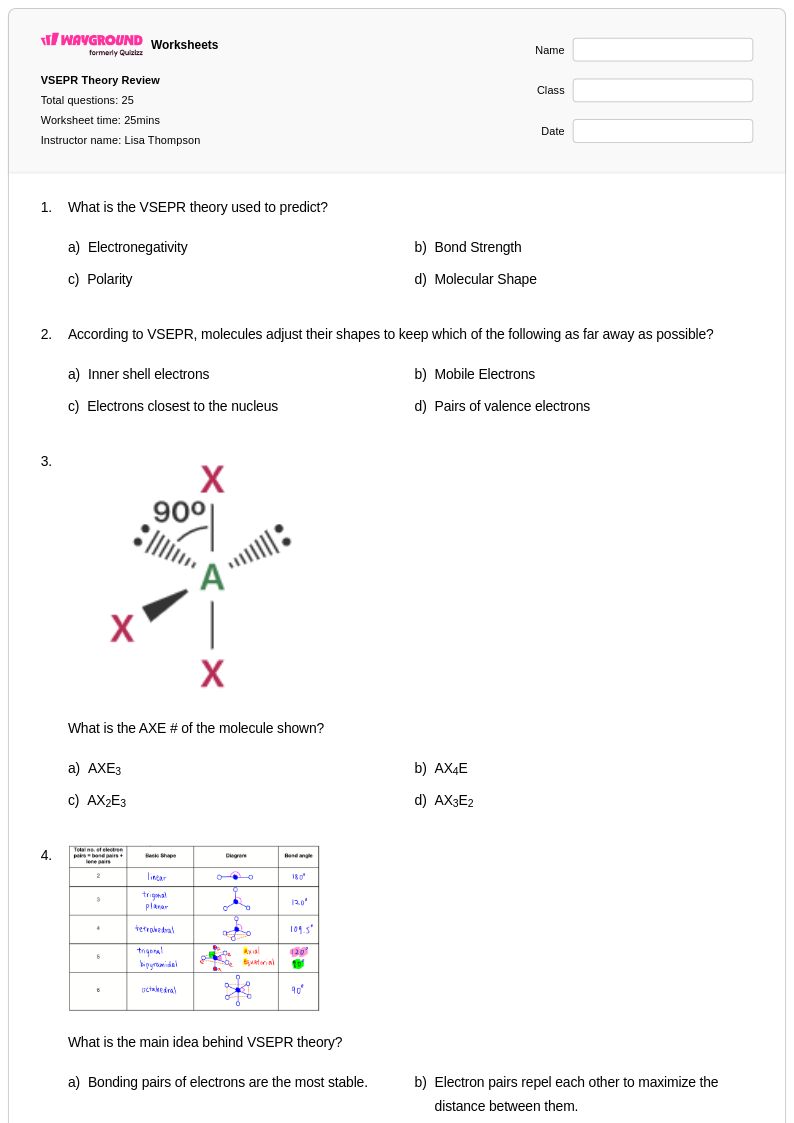
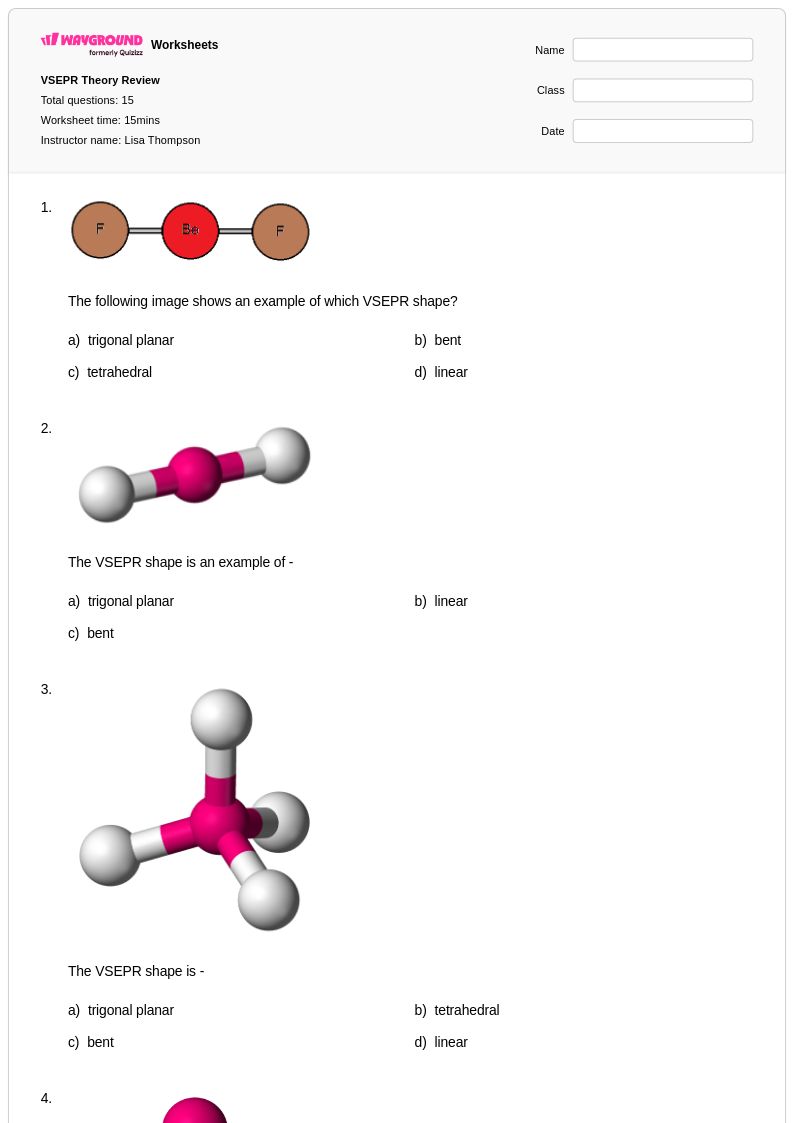
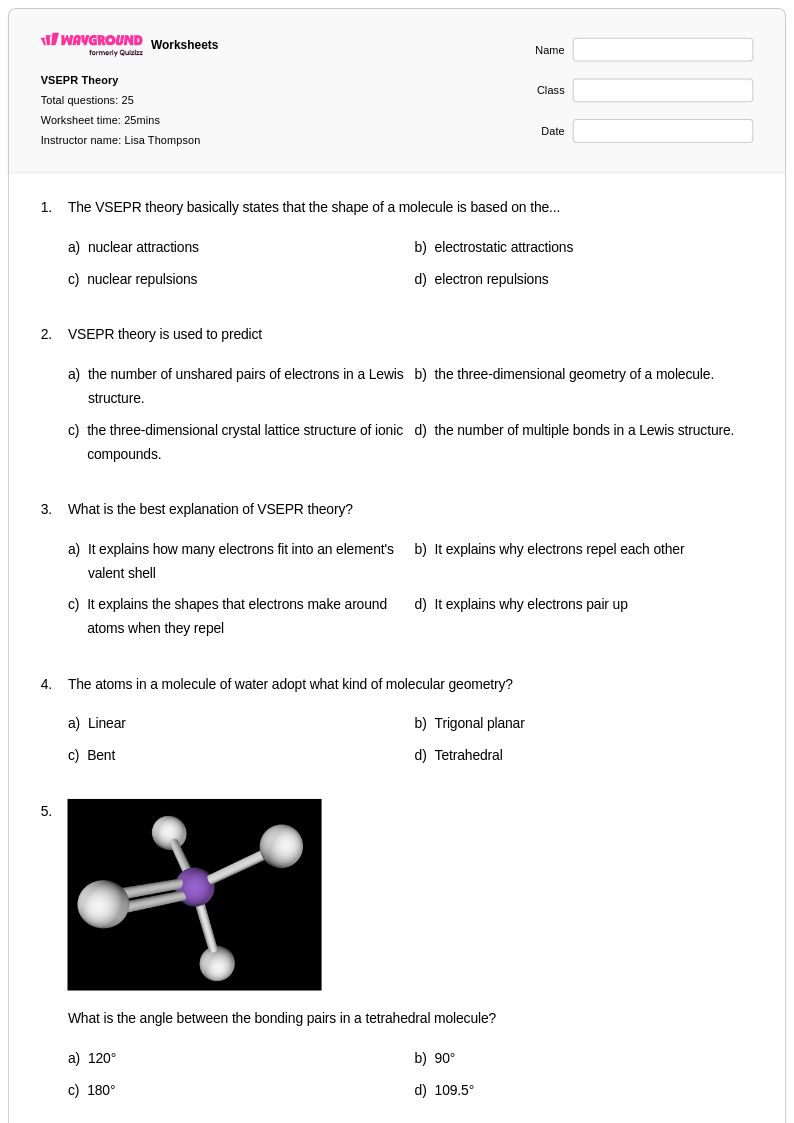
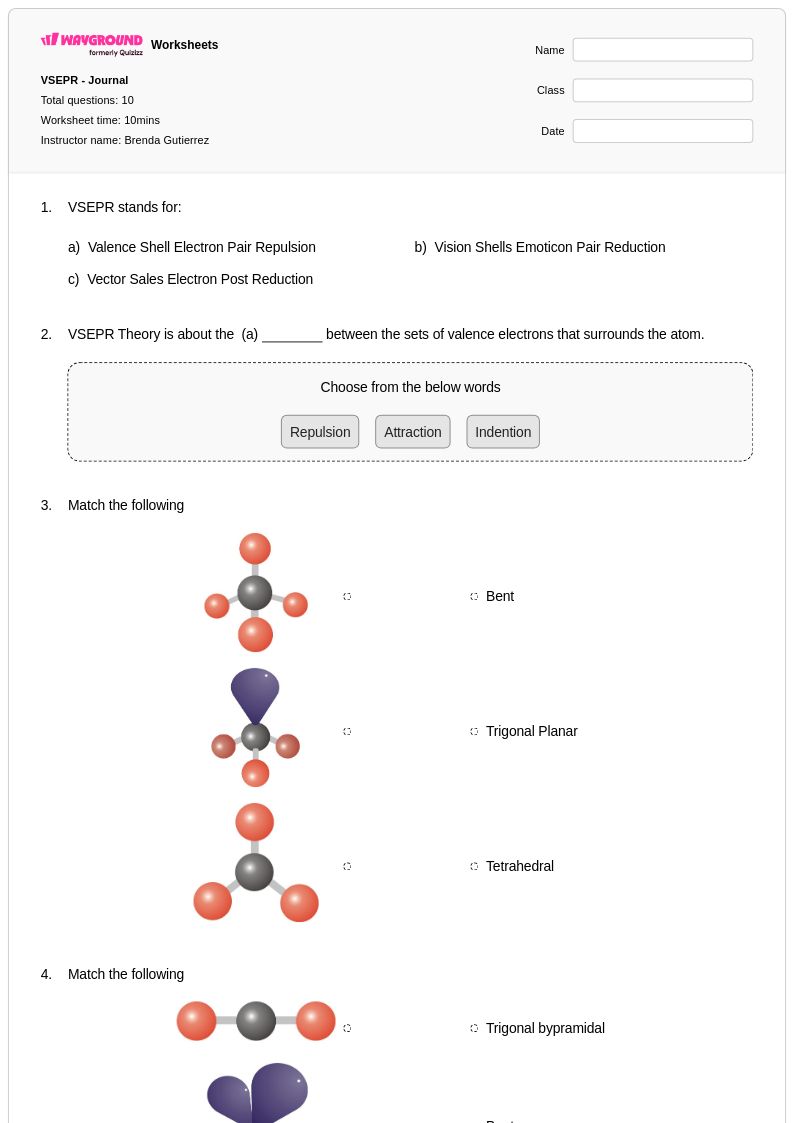
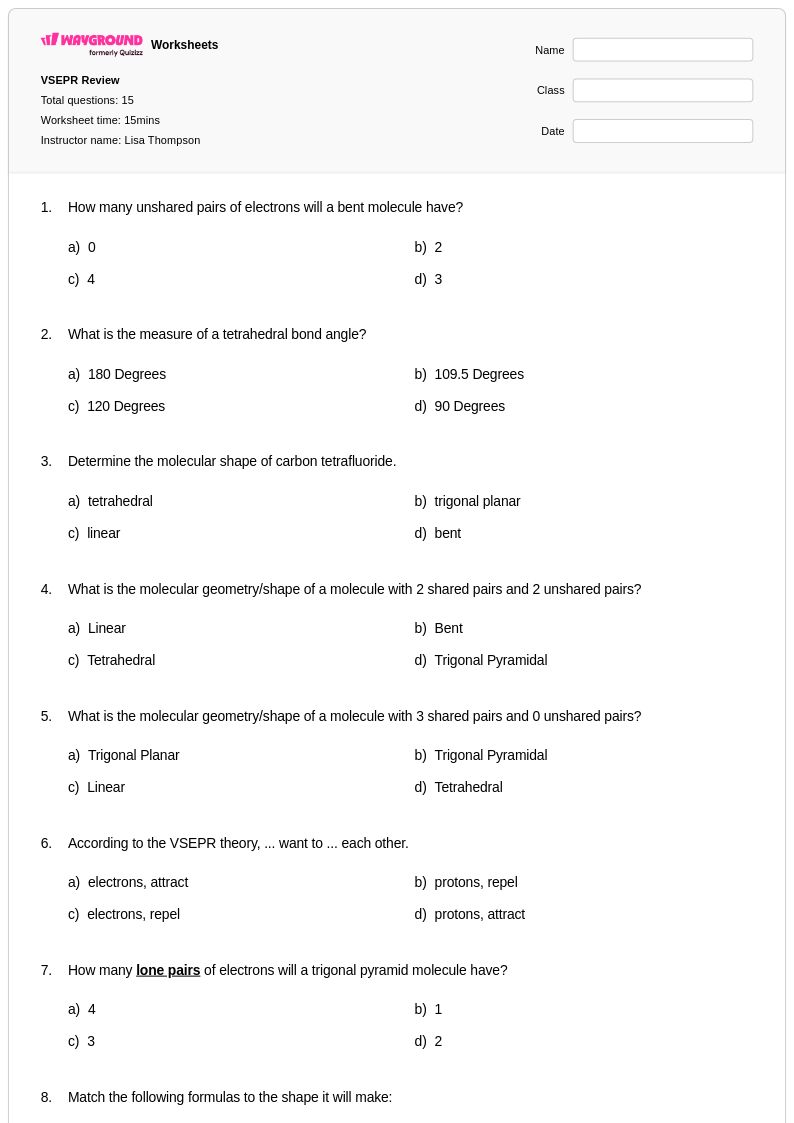
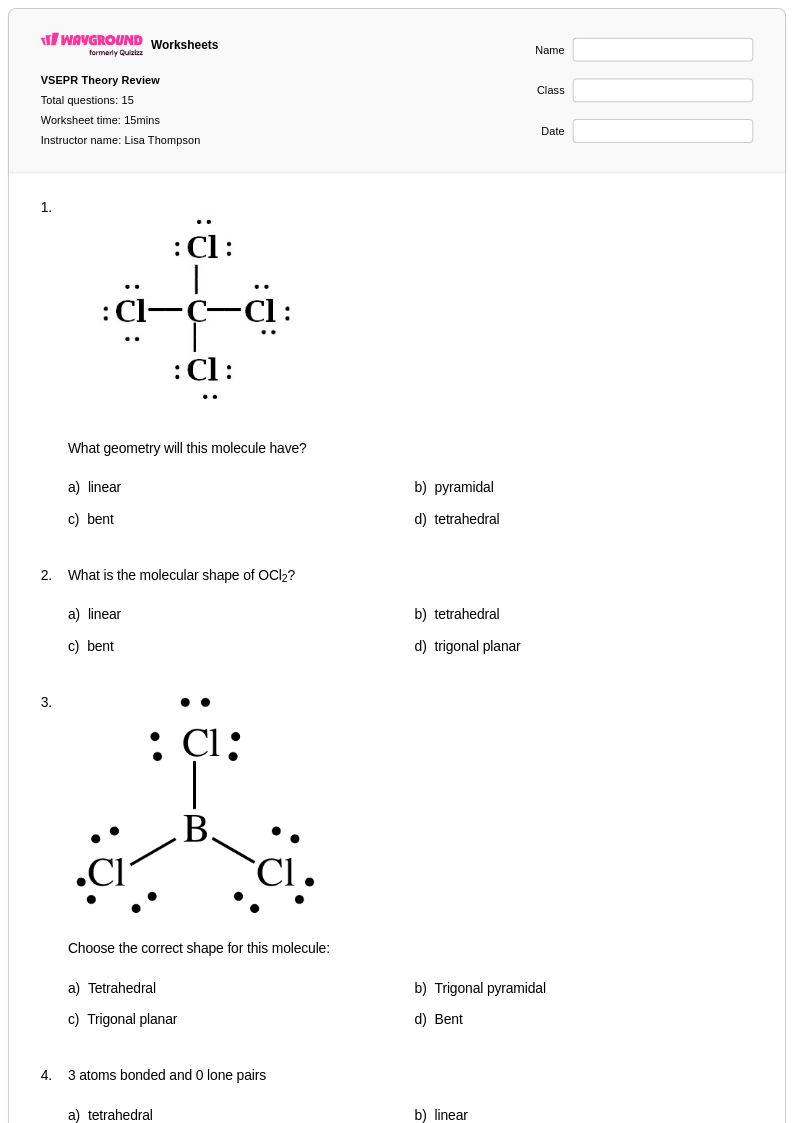
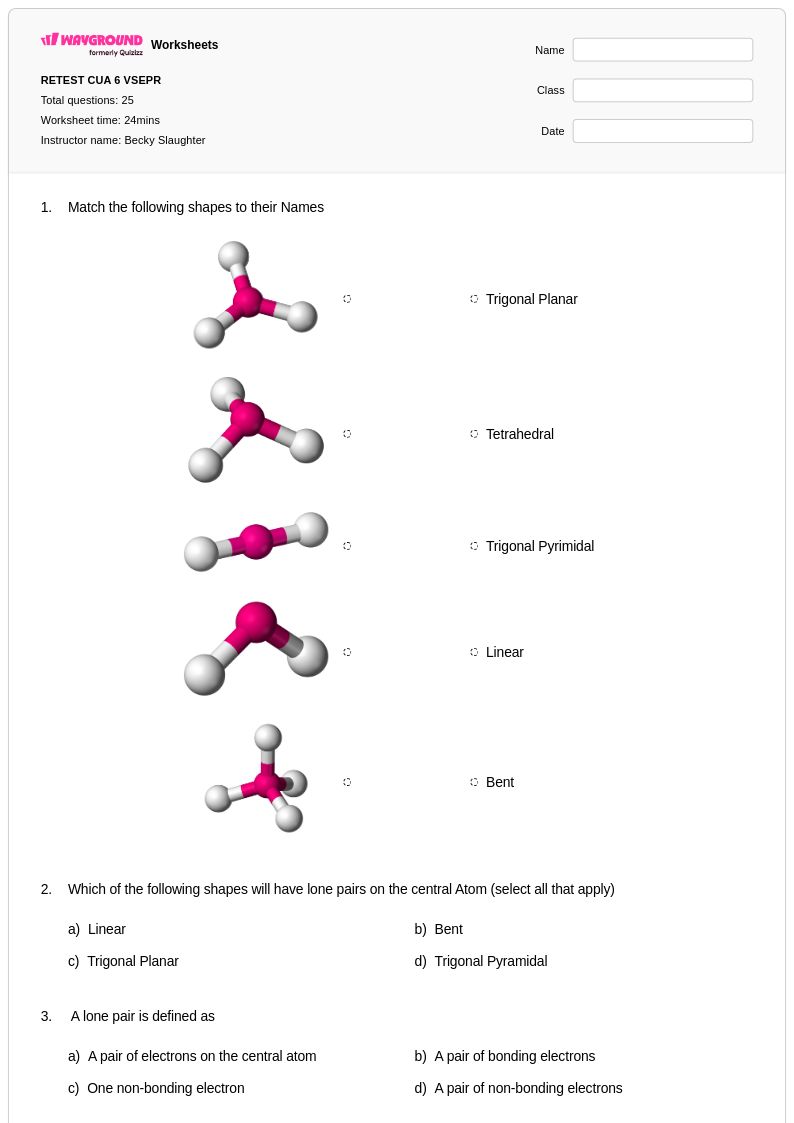
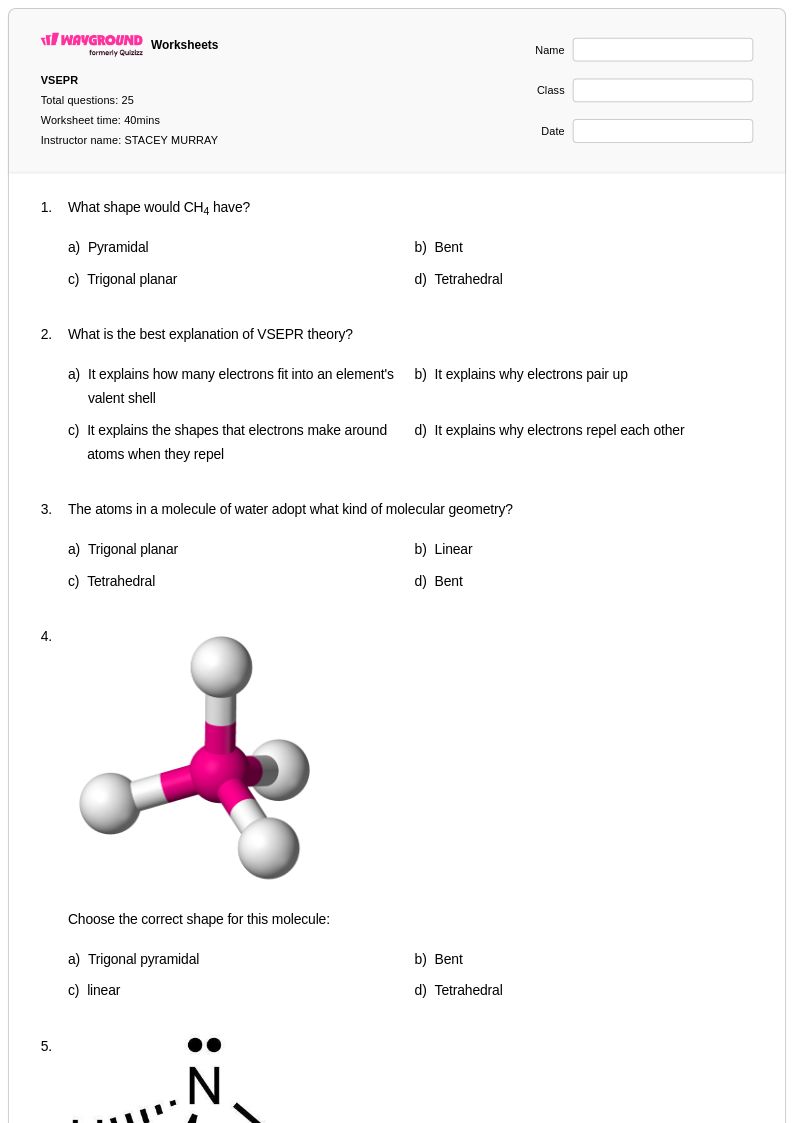
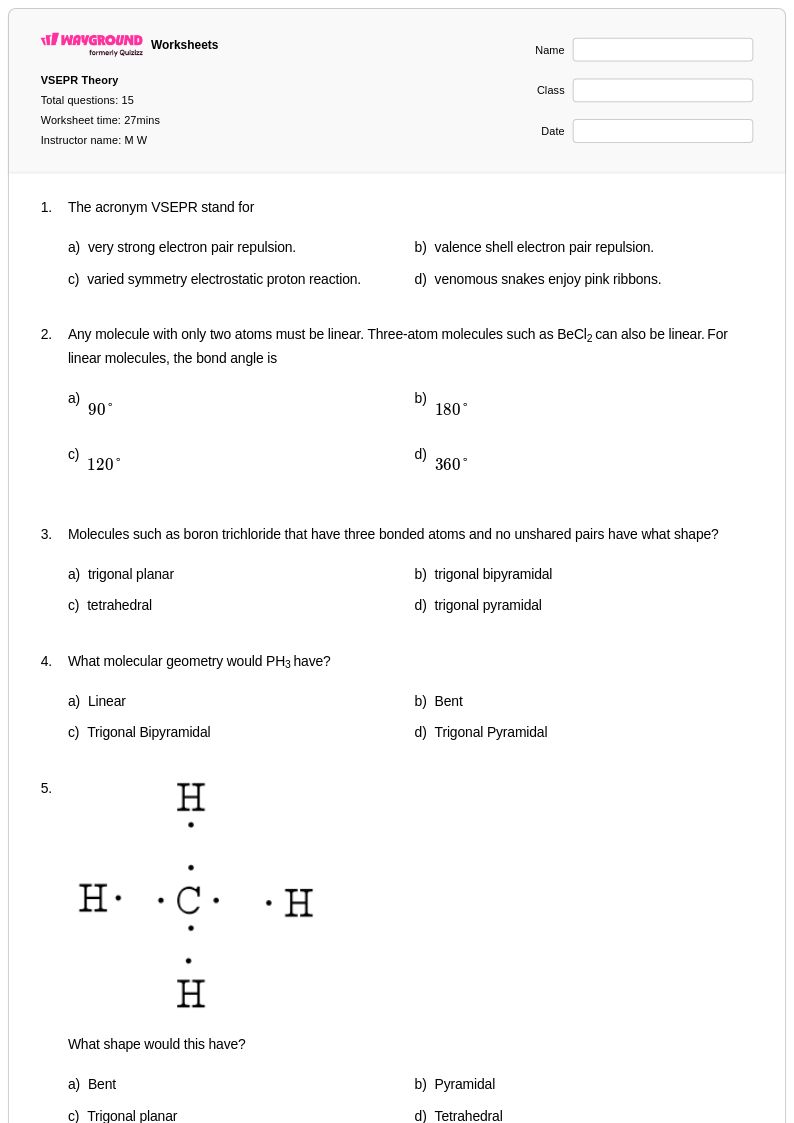
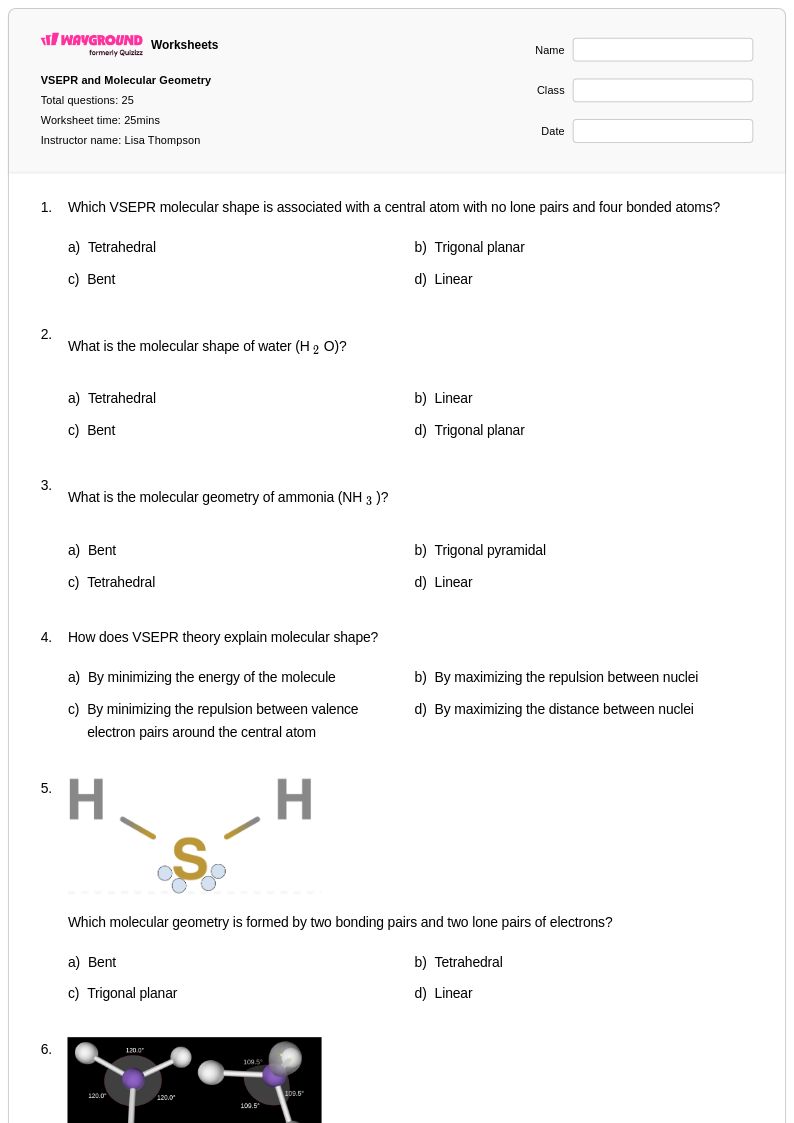
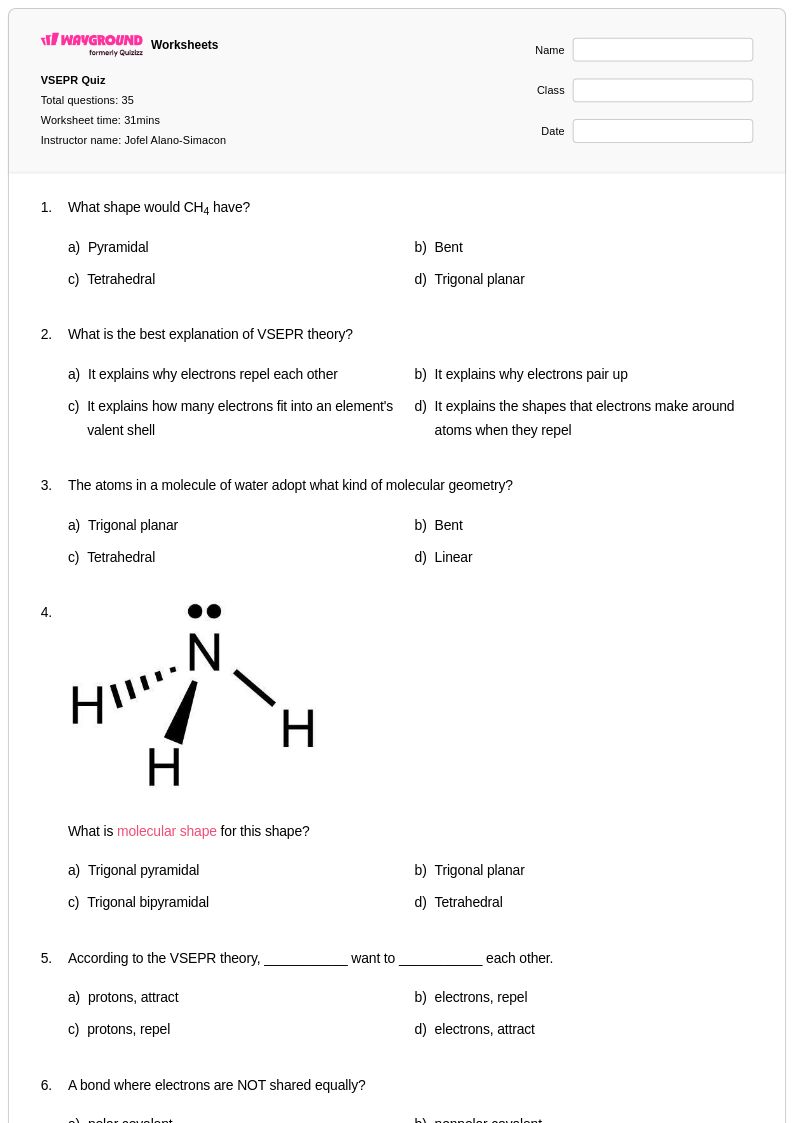
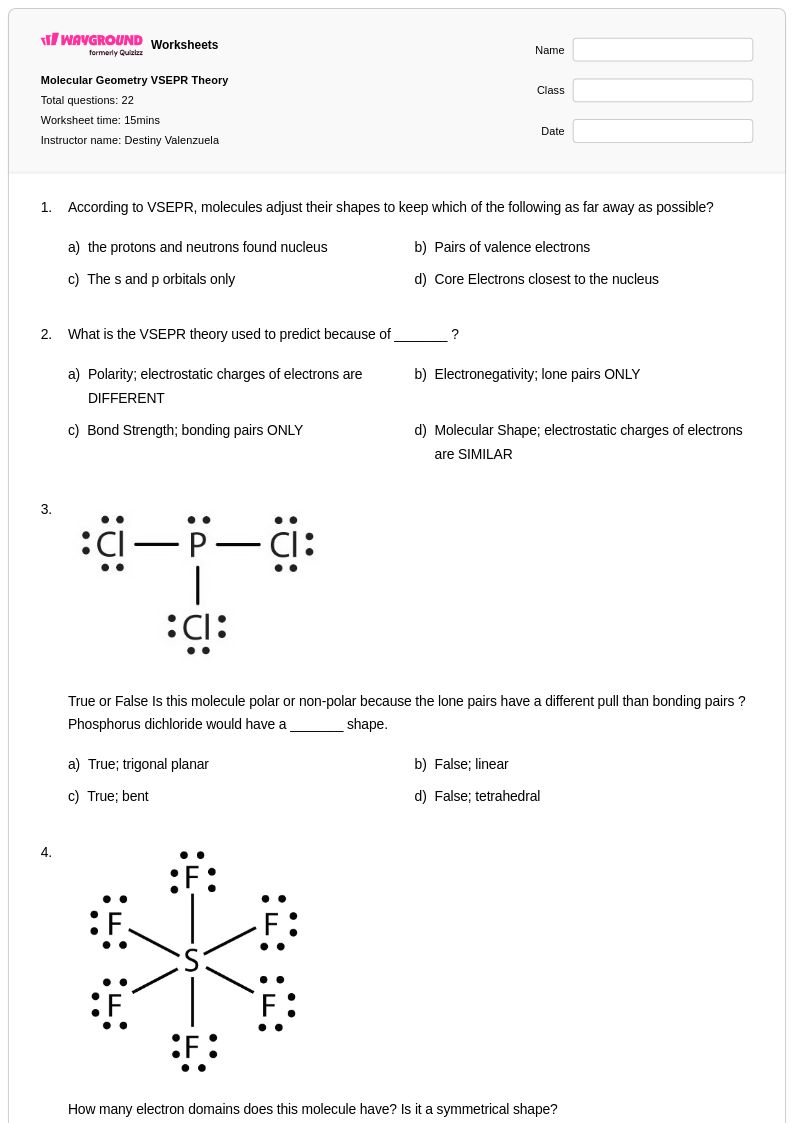
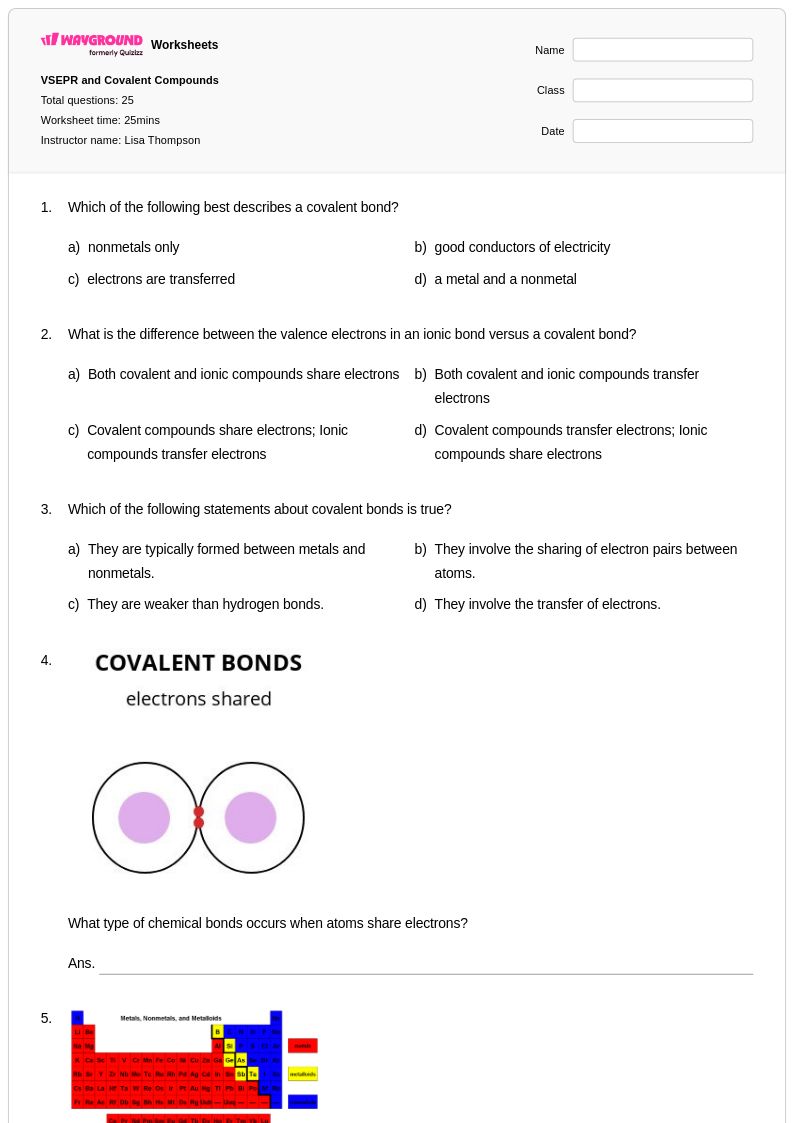
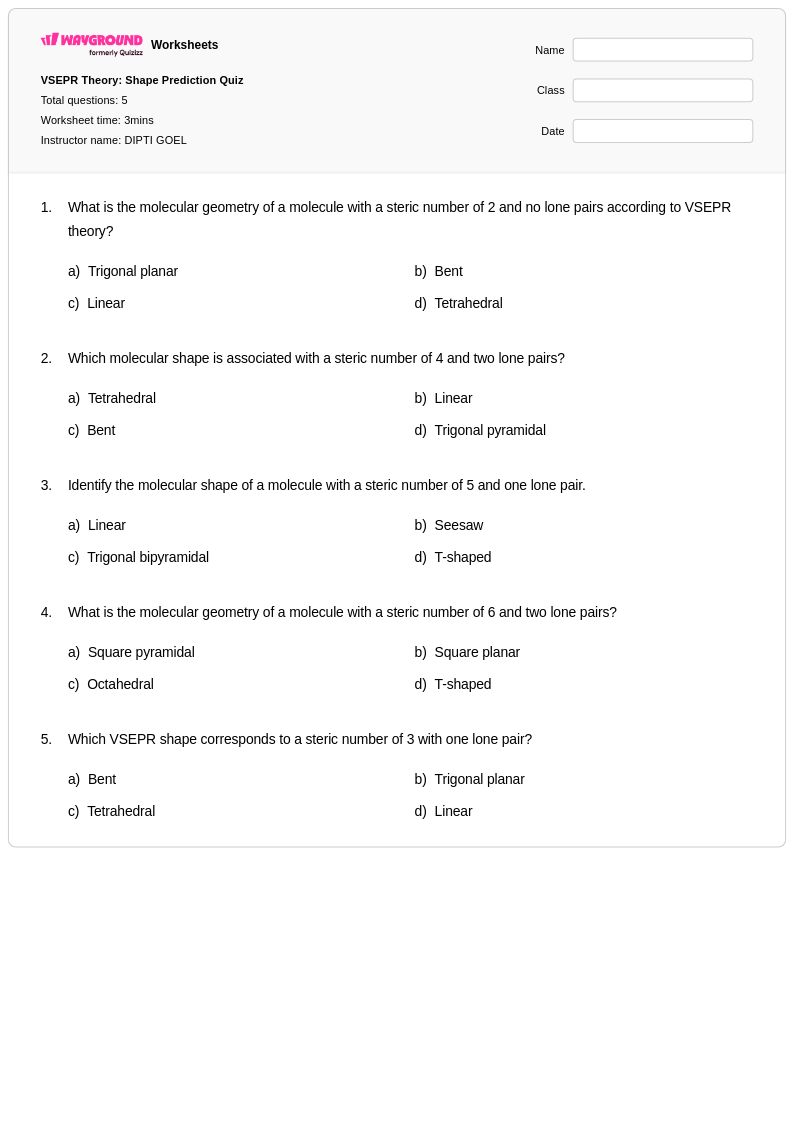
VSEPR Theory worksheets for Year 11 students available through Wayground (formerly Quizizz) provide comprehensive practice with molecular geometry prediction and three-dimensional molecular structure analysis. These expertly designed resources strengthen students' understanding of electron pair repulsion principles, enabling them to accurately determine molecular shapes for compounds ranging from simple diatomic molecules to complex polyatomic structures with multiple bonding domains. The worksheets systematically guide students through identifying central atoms, counting electron pairs, distinguishing between bonding and lone pairs, and applying VSEPR rules to predict geometries such as linear, trigonal planar, tetrahedral, trigonal bipyramidal, and octahedral arrangements. Each printable resource includes detailed practice problems that progress from basic molecular geometry identification to advanced applications involving bond angles, molecular polarity, and hybrid orbital theory, with comprehensive answer keys provided in convenient PDF format for immediate feedback and self-assessment.
Wayground (formerly Quizizz) supports chemistry educators with an extensive collection of millions of teacher-created VSEPR Theory resources that streamline lesson planning and enhance student mastery of molecular geometry concepts. The platform's robust search and filtering capabilities allow teachers to quickly locate worksheets aligned with specific curriculum standards and learning objectives, while built-in differentiation tools enable seamless customization for varying skill levels within Year 11 classrooms. Teachers can access these resources in both printable PDF format for traditional worksheet distribution and digital formats for interactive online learning, making them ideal for remediation sessions with struggling students, enrichment activities for advanced learners, and regular skill practice to reinforce three-dimensional thinking in chemistry. The comprehensive answer keys and detailed solution explanations facilitate efficient grading and provide teachers with valuable diagnostic information to identify common misconceptions about electron geometry, molecular geometry relationships, and the impact of lone pairs on molecular shapes.
FAQs
How do I teach VSEPR theory to chemistry students?
Start by ensuring students are comfortable with Lewis dot structures before introducing VSEPR, since identifying electron pairs around a central atom is the foundation of the theory. Use physical models or 3D manipulatives to help students visualize how electron pair repulsion determines bond angles and molecular shape. Progress systematically from simple geometries like linear and trigonal planar to more complex shapes like trigonal bipyramidal and octahedral, reinforcing each step with targeted practice problems.
What are the most common mistakes students make when predicting molecular geometry using VSEPR?
The most frequent error is confusing electron geometry with molecular geometry — students often forget that lone pairs occupy space and influence shape but are not counted when naming the molecular geometry. For example, water has a tetrahedral electron geometry but a bent molecular geometry, and this distinction trips up many students. Another common mistake is failing to account for lone pairs when estimating bond angles, leading to incorrect predictions for molecules like ammonia or sulfur dioxide.
What practice exercises help students get better at identifying molecular shapes?
Systematic practice problems that ask students to draw Lewis structures, identify the number of bonding and lone electron pairs, and then predict both electron geometry and molecular geometry are the most effective. Exercises that progress from diatomic molecules to polyatomic structures with multiple lone pairs build fluency incrementally. Including bond angle prediction alongside shape identification reinforces the connection between electron pair repulsion and three-dimensional molecular arrangement.
How can I differentiate VSEPR theory instruction for students at different ability levels?
For students struggling with basic shapes, focus first on molecules with no lone pairs — like BF3 or CCl4 — before introducing the added complexity of lone pair effects on geometry. Advanced learners can explore expanded octets and hypervalent molecules such as PCl5 or SF6, where five or six electron domains create trigonal bipyramidal and octahedral geometries. On Wayground, teachers can customize worksheets based on student ability levels, offering remedial practice for students working on basic molecular shapes and enrichment activities for those tackling more complex geometries.
How do I use VSEPR theory worksheets from Wayground in my classroom?
Wayground's VSEPR theory worksheets are available as printable PDFs for traditional classroom use and in digital formats for technology-integrated environments, giving you flexibility depending on your instructional setting. You can also host them as a quiz directly on Wayground, which allows students to complete practice problems interactively and receive immediate feedback on their molecular geometry predictions. All worksheets include detailed answer keys, making them straightforward to use for guided practice, homework, or formative assessment.
How does VSEPR theory connect to other chemistry concepts students need to know?
VSEPR theory is a bridge concept that connects Lewis structures to molecular polarity, intermolecular forces, and ultimately physical properties like boiling point and solubility. Once students can accurately predict molecular geometry, they can determine whether a molecule is polar or nonpolar by analyzing the symmetry of its shape and the electronegativity differences of its bonds. This makes VSEPR a foundational skill for understanding reactivity, phase behavior, and chemical interactions in more advanced chemistry coursework.