Free Printable Hydrocarbon Nomenclature Worksheets for Year 11
Year 11 hydrocarbon nomenclature worksheets from Wayground provide comprehensive practice problems and answer keys to help students master organic chemistry naming conventions through free printable PDFs and interactive exercises.
Explore printable Hydrocarbon Nomenclature worksheets for Year 11
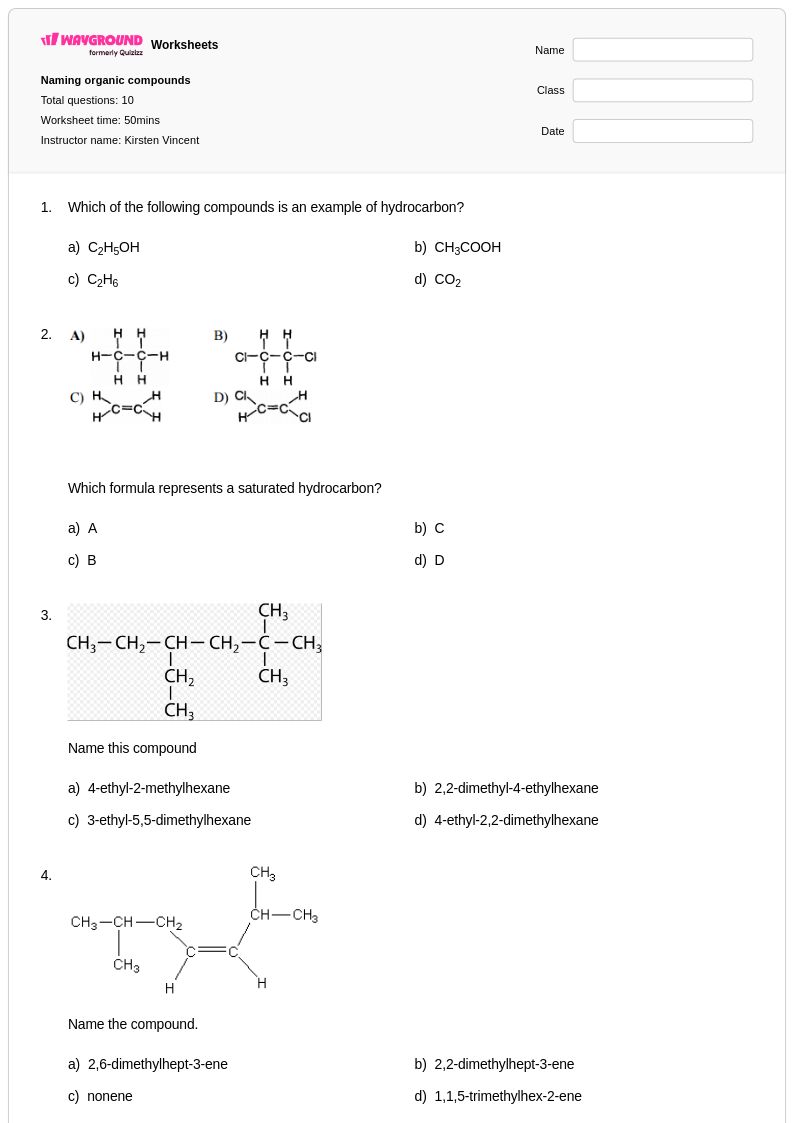
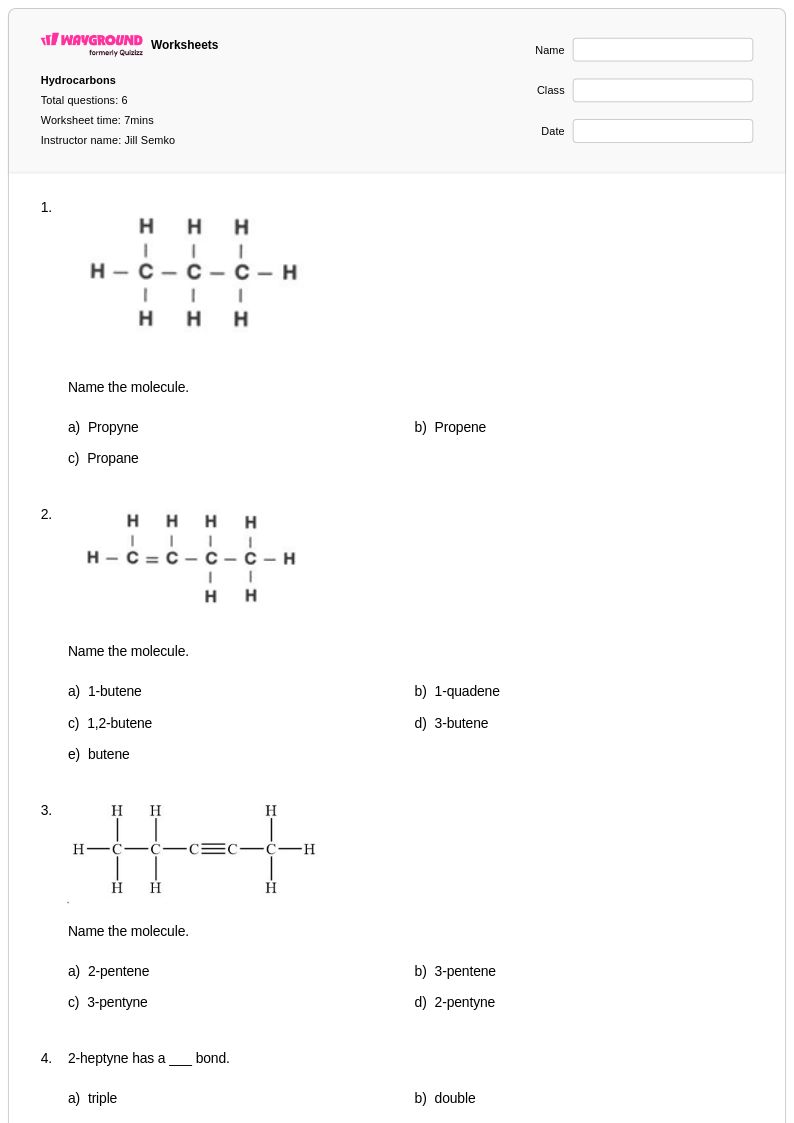
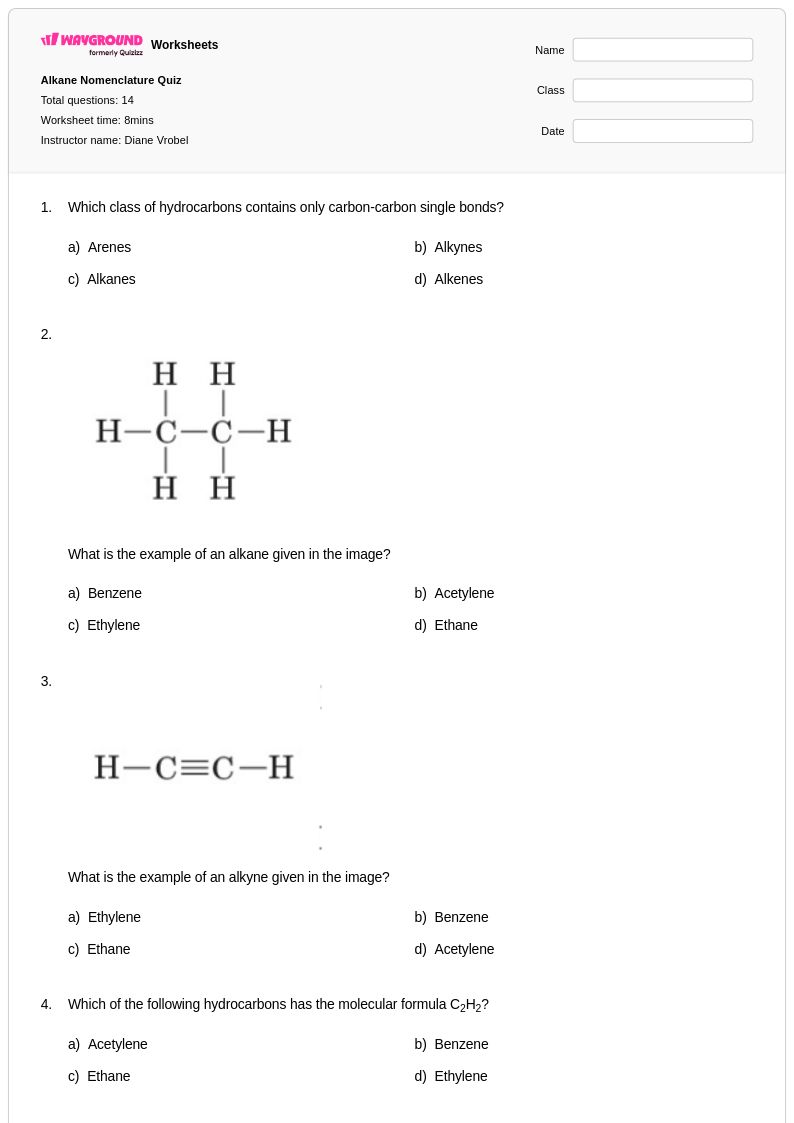
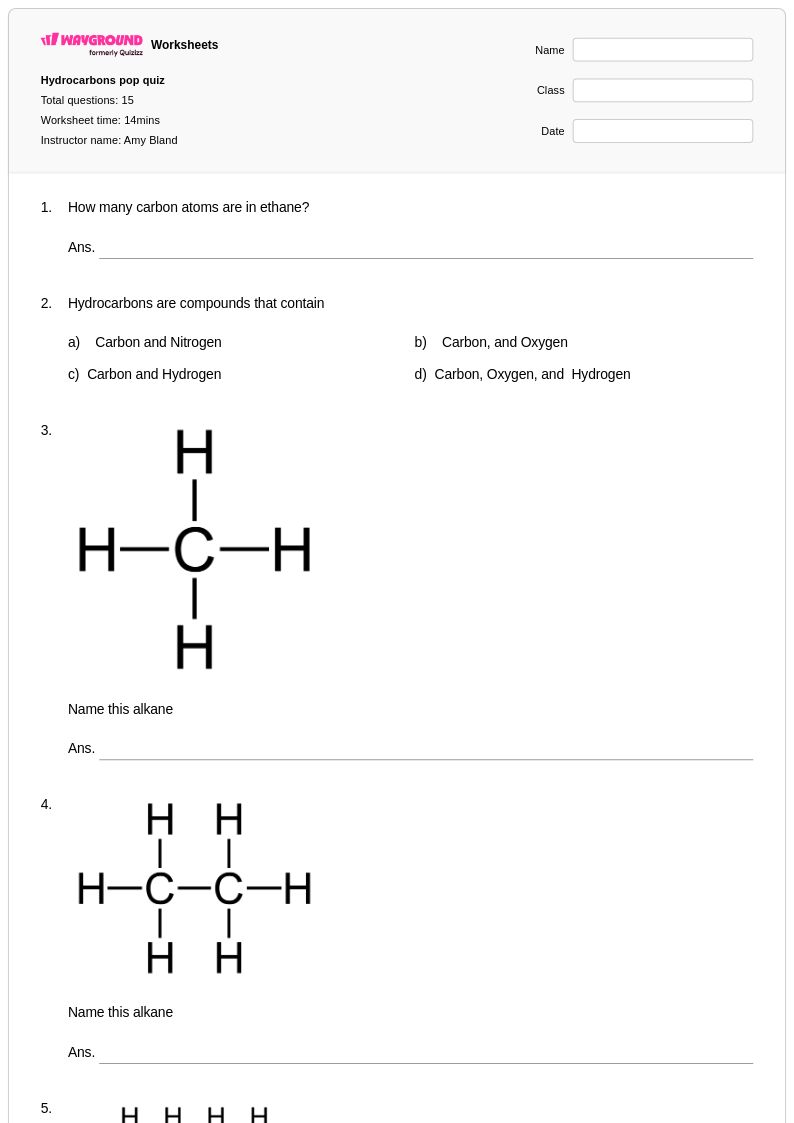
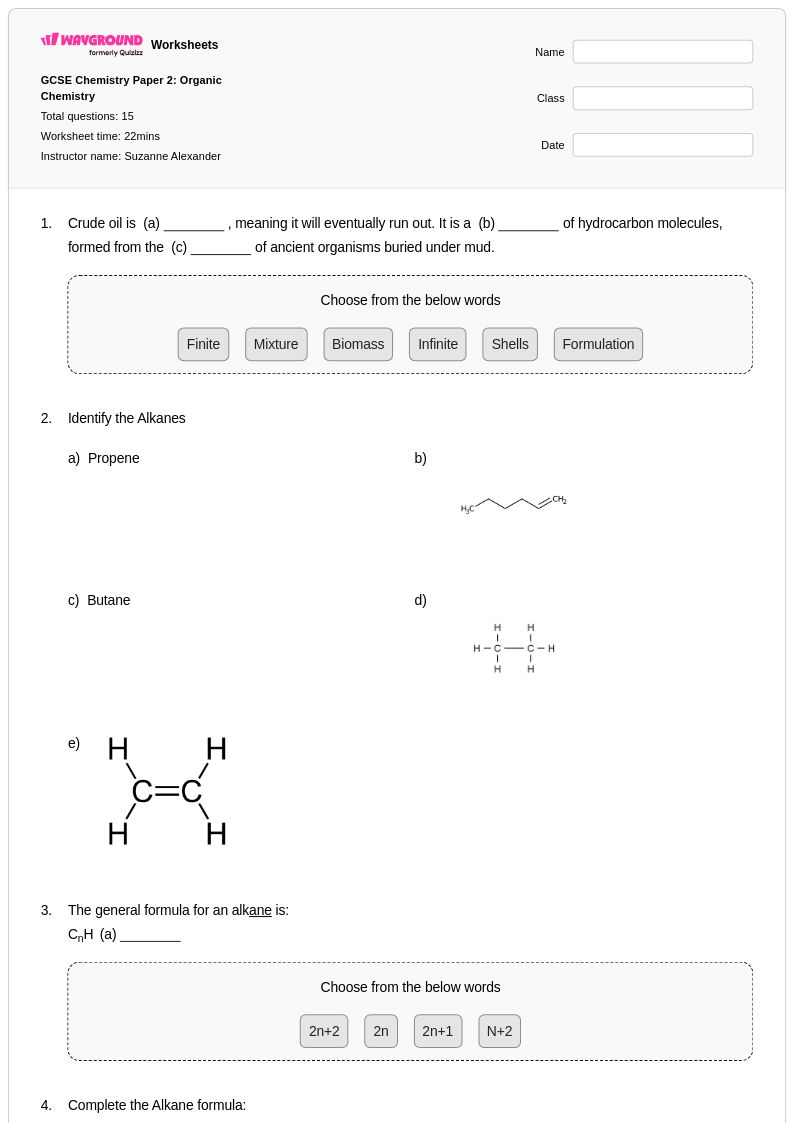
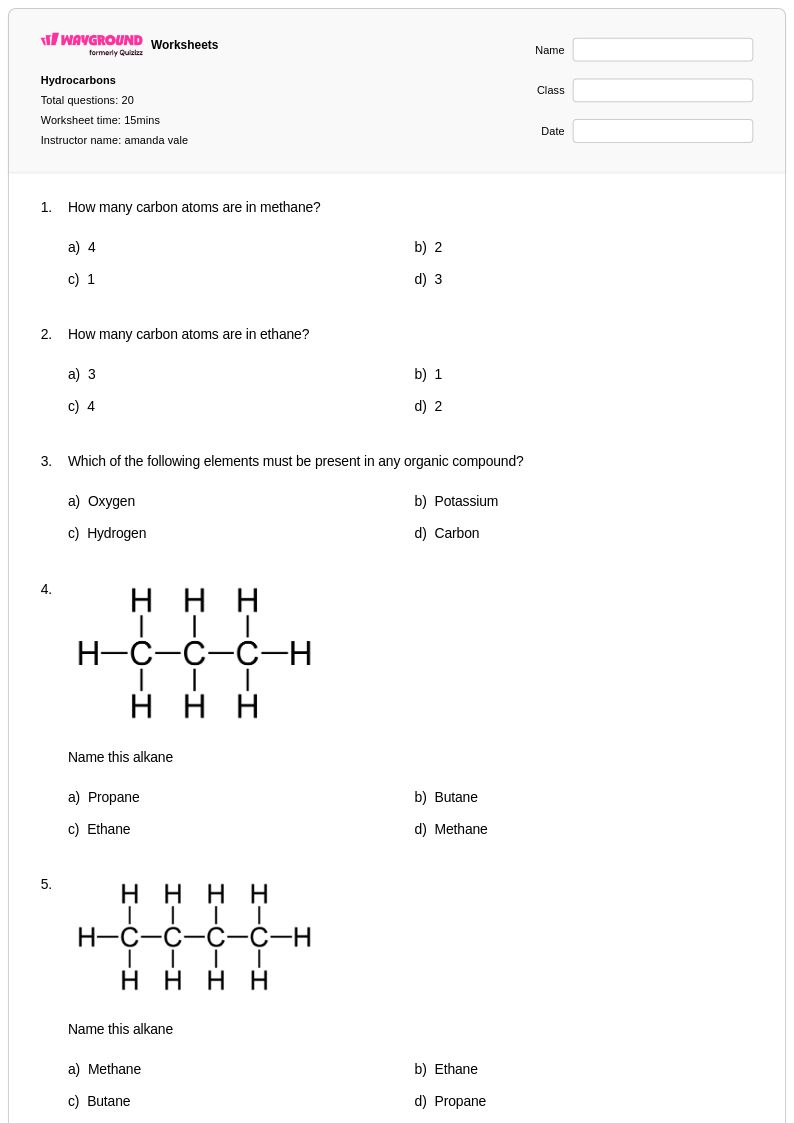
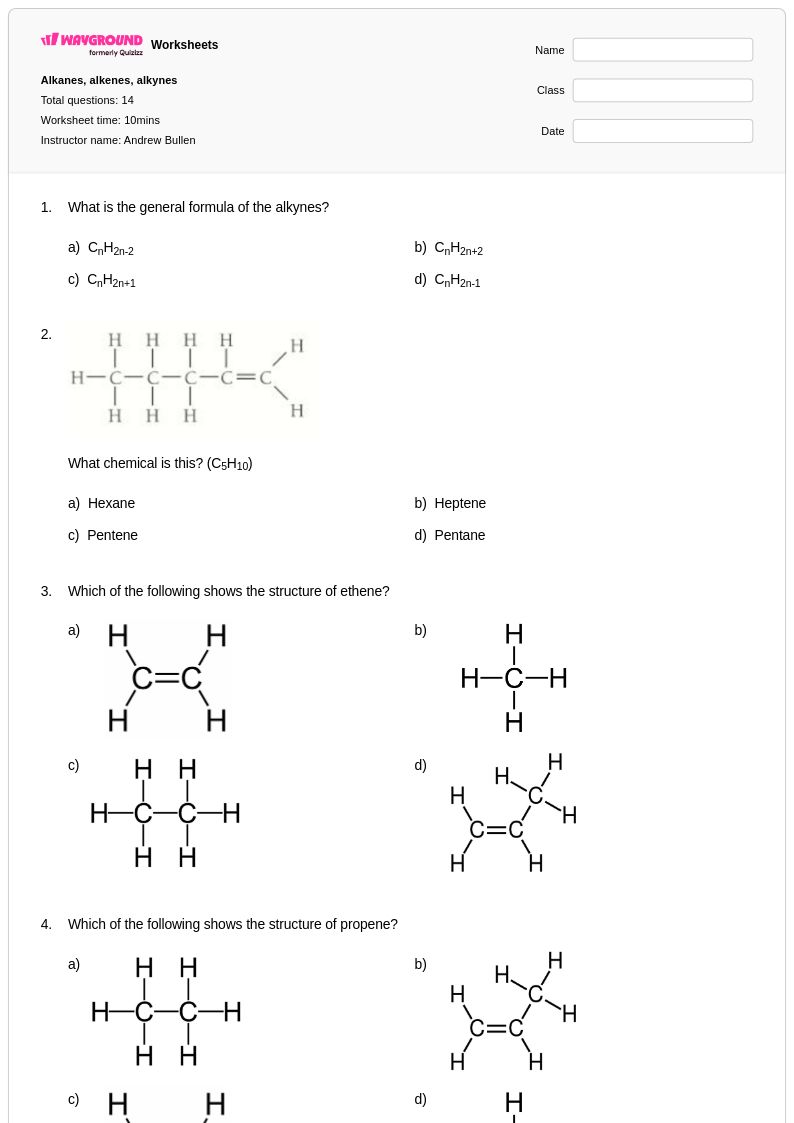
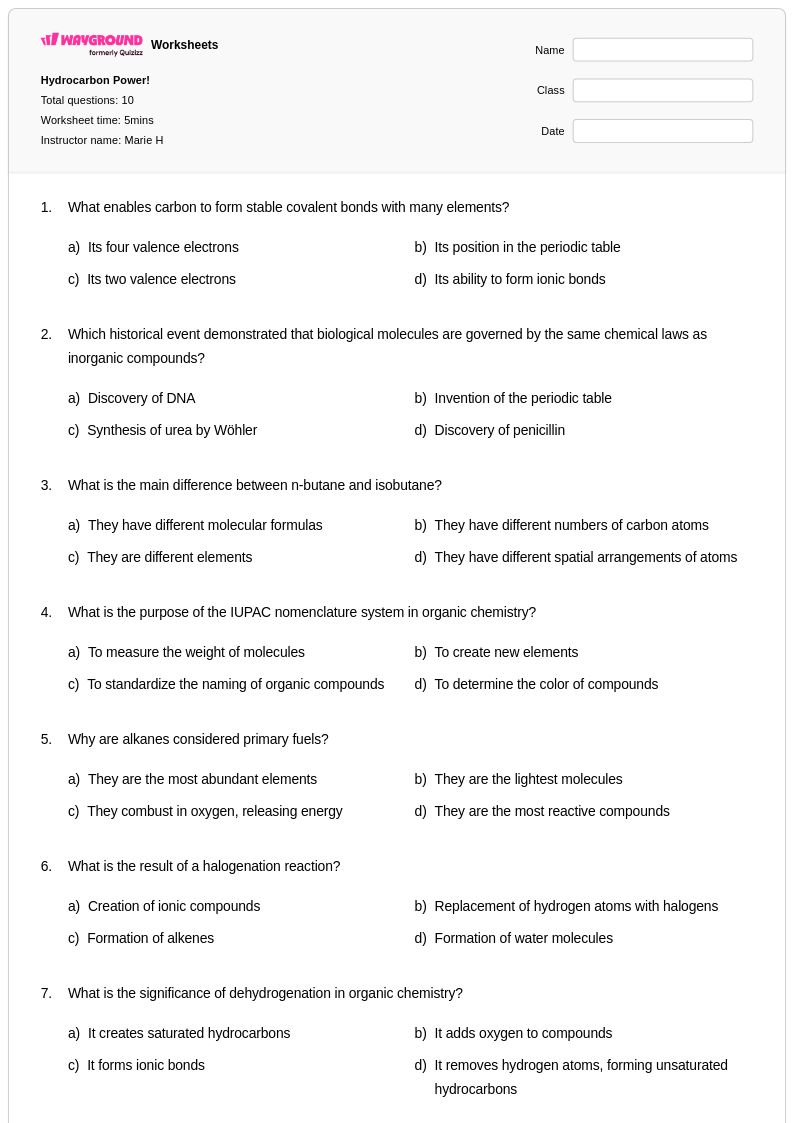
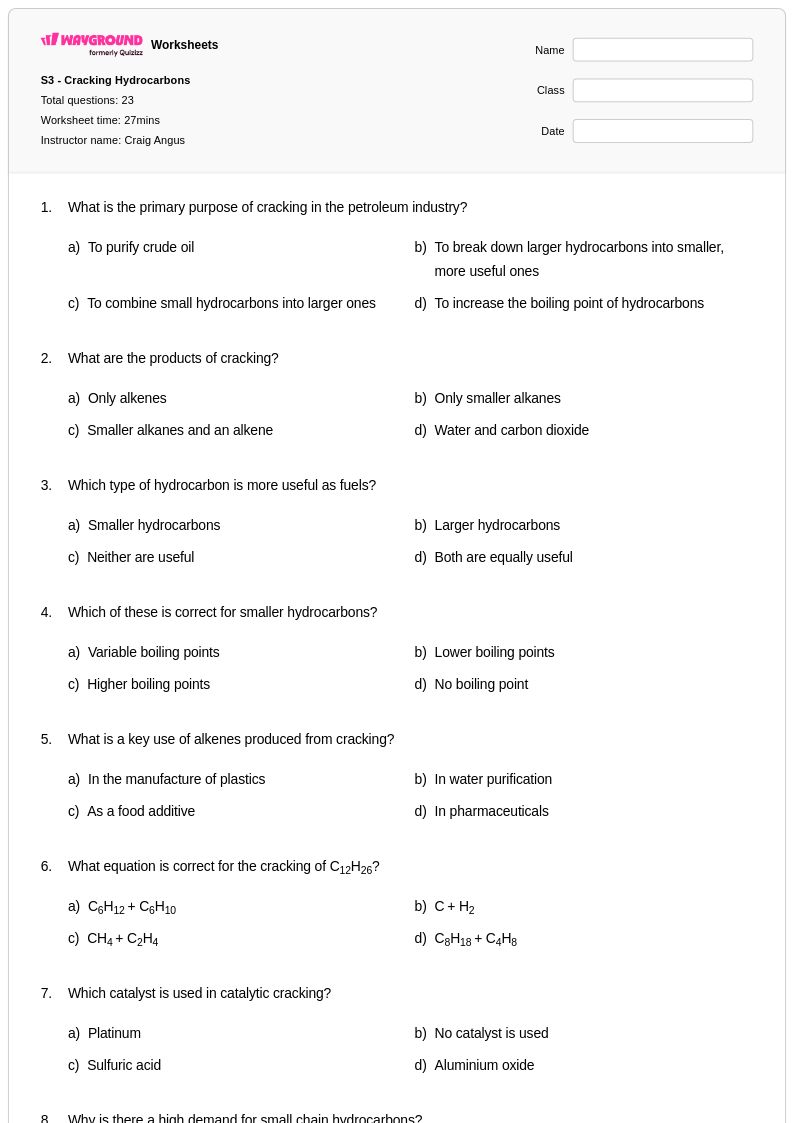
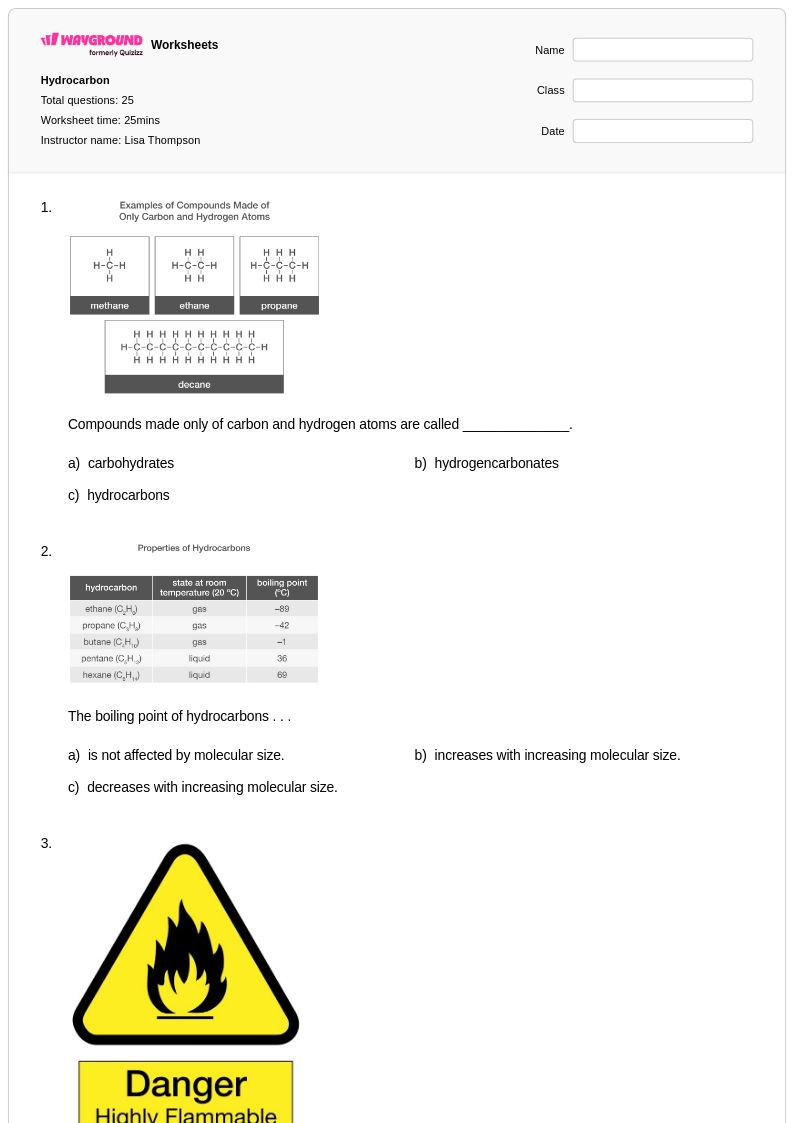
Hydrocarbon nomenclature worksheets for Year 11 students available through Wayground (formerly Quizizz) provide comprehensive practice with the systematic naming conventions essential for organic chemistry mastery. These carefully designed resources strengthen students' ability to identify and name alkanes, alkenes, alkynes, and aromatic compounds using IUPAC rules, while building proficiency in recognizing functional groups, determining longest carbon chains, and applying proper numbering systems. The worksheet collections include diverse practice problems that progress from basic linear hydrocarbons to complex branched structures, cyclic compounds, and molecules with multiple functional groups, ensuring students develop the analytical skills necessary for advanced organic chemistry coursework. Each worksheet comes with a detailed answer key and is available as a free printable pdf, allowing students to work through problems systematically and verify their understanding of nomenclature principles.
Wayground (formerly Quizizz) empowers educators with an extensive library of millions of teacher-created hydrocarbon nomenclature resources, featuring robust search and filtering capabilities that allow instructors to locate worksheets aligned with specific curriculum standards and learning objectives. The platform's differentiation tools enable teachers to customize worksheet difficulty levels, modify problem sets to address individual student needs, and create targeted practice sessions for remediation or enrichment purposes. These hydrocarbon nomenclature materials are available in both printable and digital formats, including downloadable pdf versions, giving educators the flexibility to seamlessly integrate practice problems into classroom instruction, homework assignments, or assessment preparation. The comprehensive worksheet collections support strategic lesson planning by providing scaffolded practice opportunities that help students master the fundamental nomenclature skills required for success in advanced organic chemistry concepts.
FAQs
How do I teach IUPAC naming conventions for hydrocarbons?
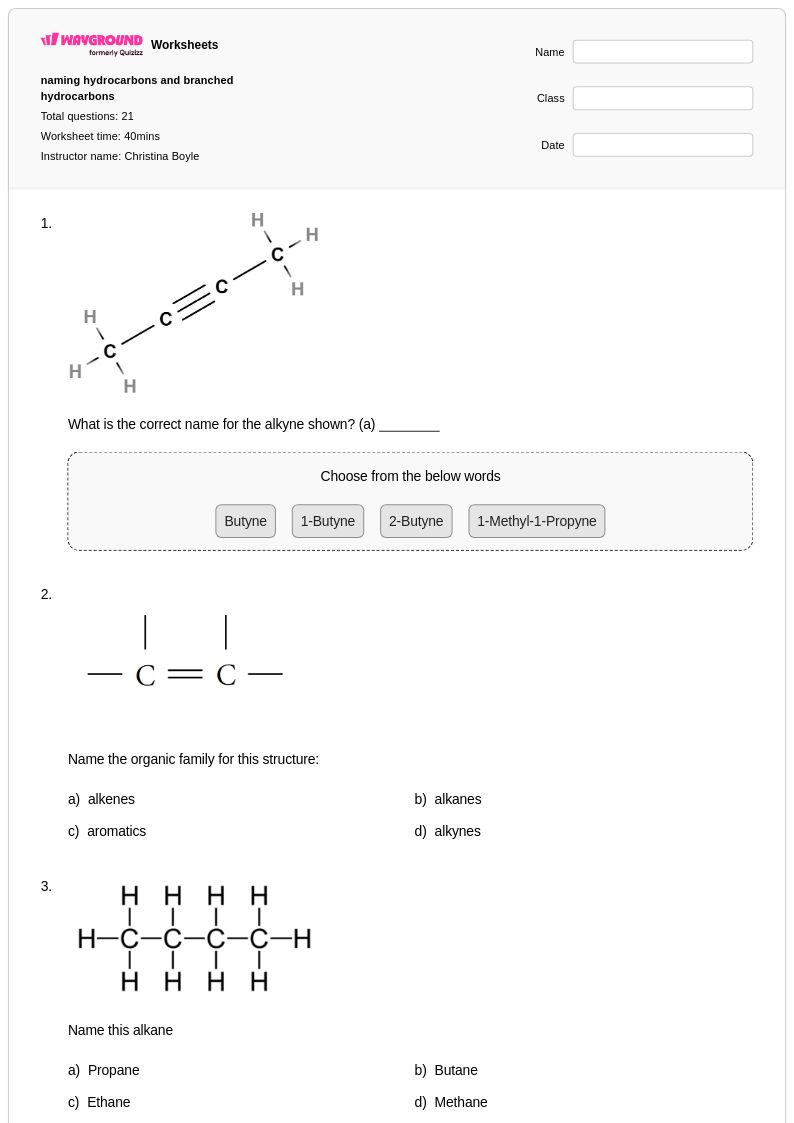
Start by establishing the three core hydrocarbon families — alkanes, alkenes, and alkynes — and their corresponding suffixes (-ane, -ene, -yne) before introducing naming rules. Teach students to identify the longest continuous carbon chain as the parent chain, then number carbons from the end closest to a substituent or multiple bond. Scaffold instruction by beginning with unbranched straight-chain structures before progressing to branched and multiply-substituted compounds. Using structural formulas alongside IUPAC names simultaneously helps students connect visual structure to systematic nomenclature.
What exercises help students practice hydrocarbon nomenclature?
The most effective practice exercises alternate between two directions: naming a compound from its structural formula and drawing a structure from a given IUPAC name. Students should work through a progression that starts with simple straight-chain alkanes, then advances to branched alkanes, then to alkenes and alkynes with locant numbering. Timed naming drills and error-correction exercises — where students identify mistakes in incorrectly named structures — also build fluency and reinforce rule application.
What mistakes do students commonly make when naming hydrocarbons using IUPAC rules?
The most common error is failing to identify the longest possible parent chain, especially in complex branched structures where the chain changes direction. Students also frequently number the carbon chain from the wrong end, leading to incorrect locants for substituents or multiple bonds. Another persistent mistake is confusing the naming of alkyl substituents (methyl, ethyl) with the parent chain suffix, particularly when multiple substituents are present. Requiring students to explicitly justify their parent chain selection before naming often catches these errors early.
How do I use hydrocarbon nomenclature worksheets in my chemistry class?
Hydrocarbon nomenclature worksheets on Wayground are available as printable PDFs for traditional classroom use and in digital formats for technology-integrated environments, including the option to host them as a quiz directly on Wayground. Printable versions work well for guided practice during class or as homework assignments, while digital formats allow for self-paced review or formative assessment. Each worksheet includes a complete answer key, so they can also be used for independent self-checking or peer correction activities.
How do I differentiate hydrocarbon nomenclature instruction for students at different skill levels?
For students still building foundational skills, limit initial practice to straight-chain alkanes with no more than six carbons before introducing branching. Advanced students can be challenged with multiply-branched structures, cyclic hydrocarbons, or compounds containing both substituents and multiple bonds. On Wayground, teachers can apply accommodations such as reduced answer choices to lower cognitive load for struggling students, or enable Read Aloud for students who benefit from auditory support, without other students being notified of these adjustments.
What is the correct order to teach hydrocarbon families when introducing nomenclature?
Begin with alkanes because they introduce the core naming framework — parent chain identification, numbering, and substituent naming — without the added complexity of locating multiple bonds. Once students are confident naming branched alkanes, introduce alkenes and the rule for numbering from the end closest to the double bond, then extend to alkynes. This sequence builds each new rule onto an established foundation rather than introducing all three families simultaneously, which reduces cognitive overload and improves retention of IUPAC conventions.