
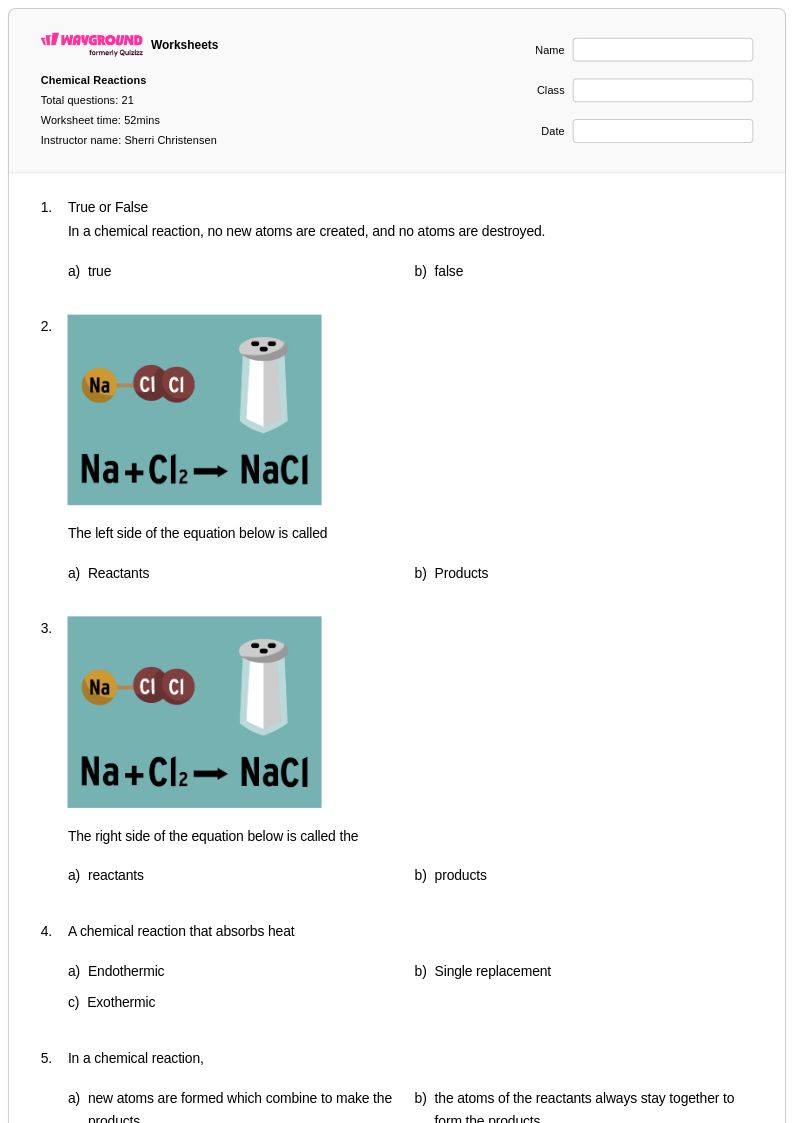
21 Q
9th - 12th
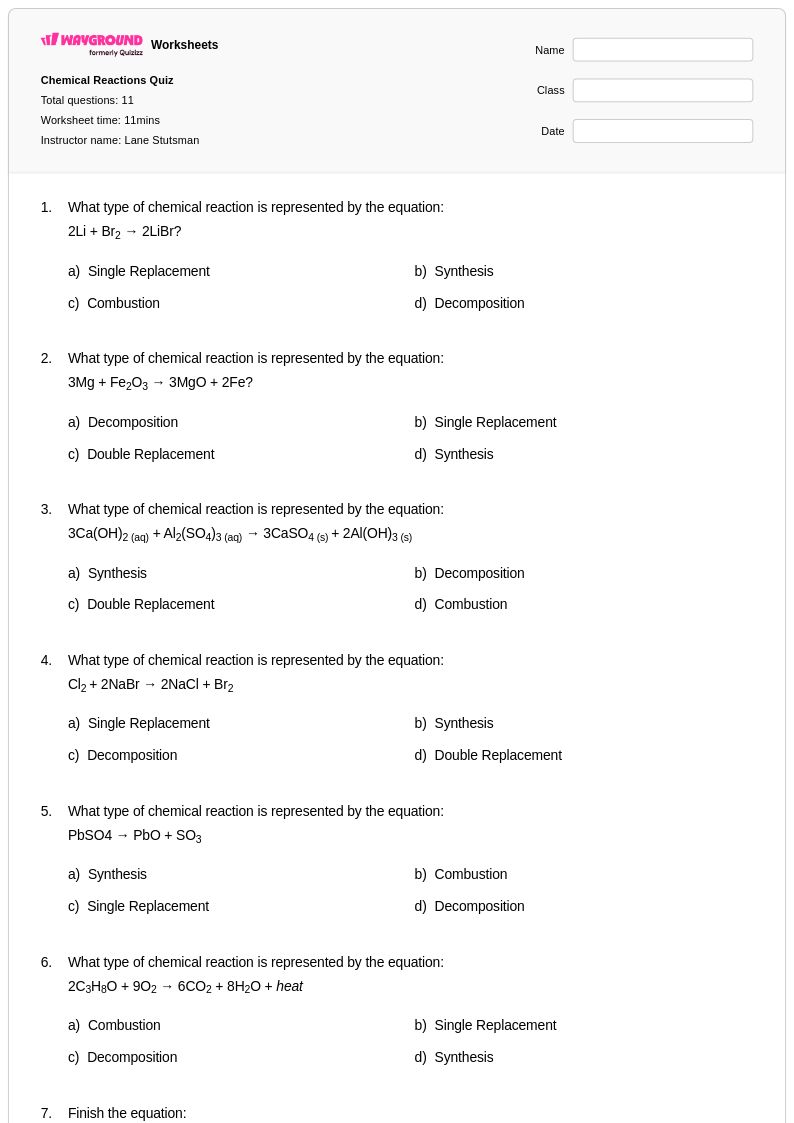
11 Q
12th
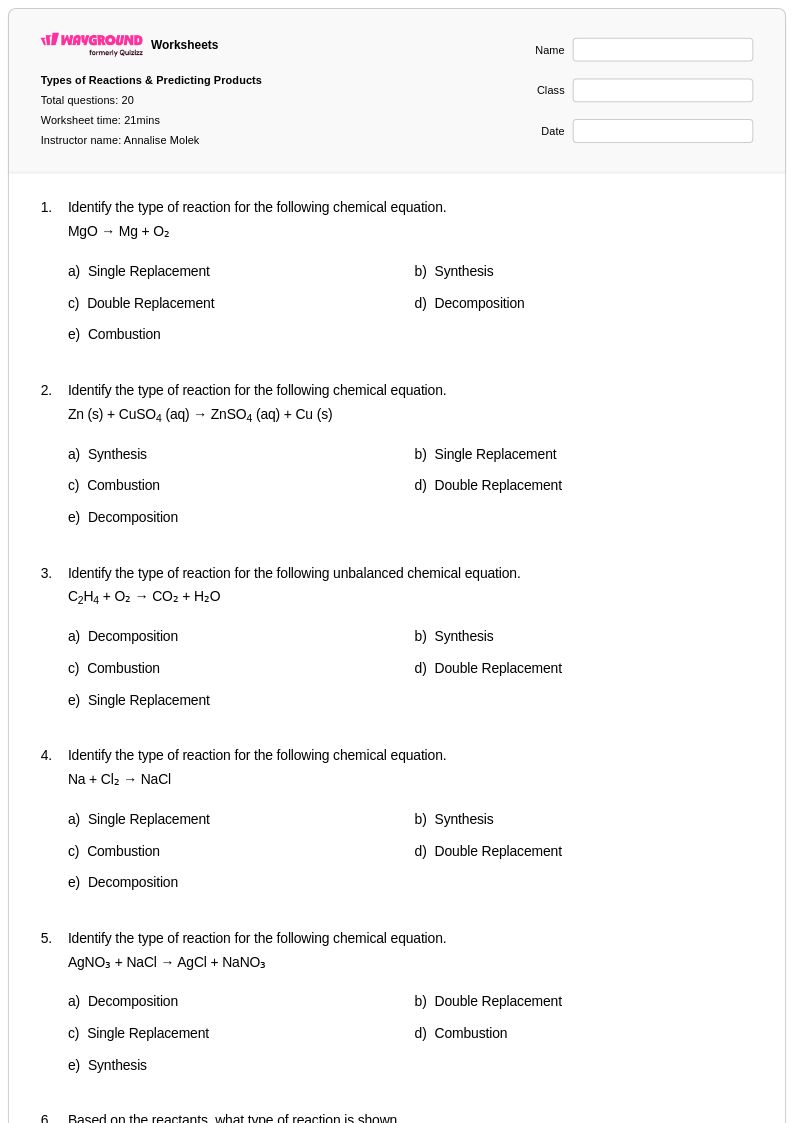
20 Q
9th - 12th
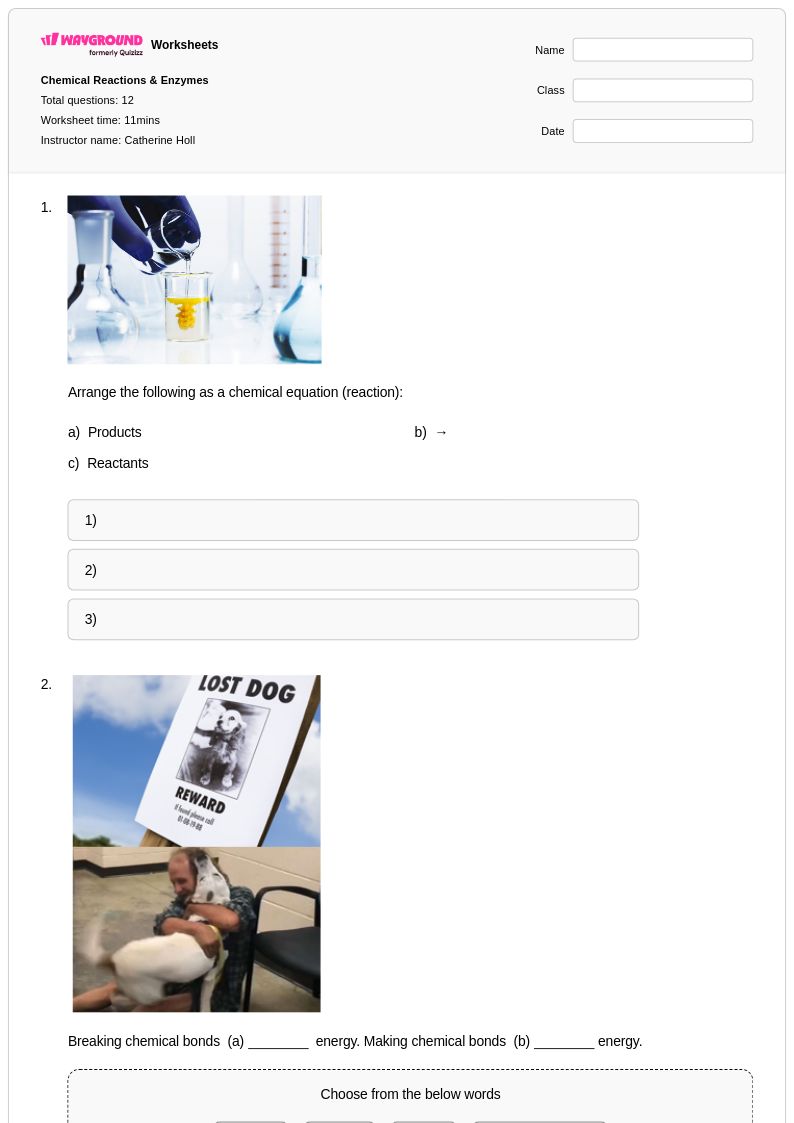
12 Q
9th - Uni
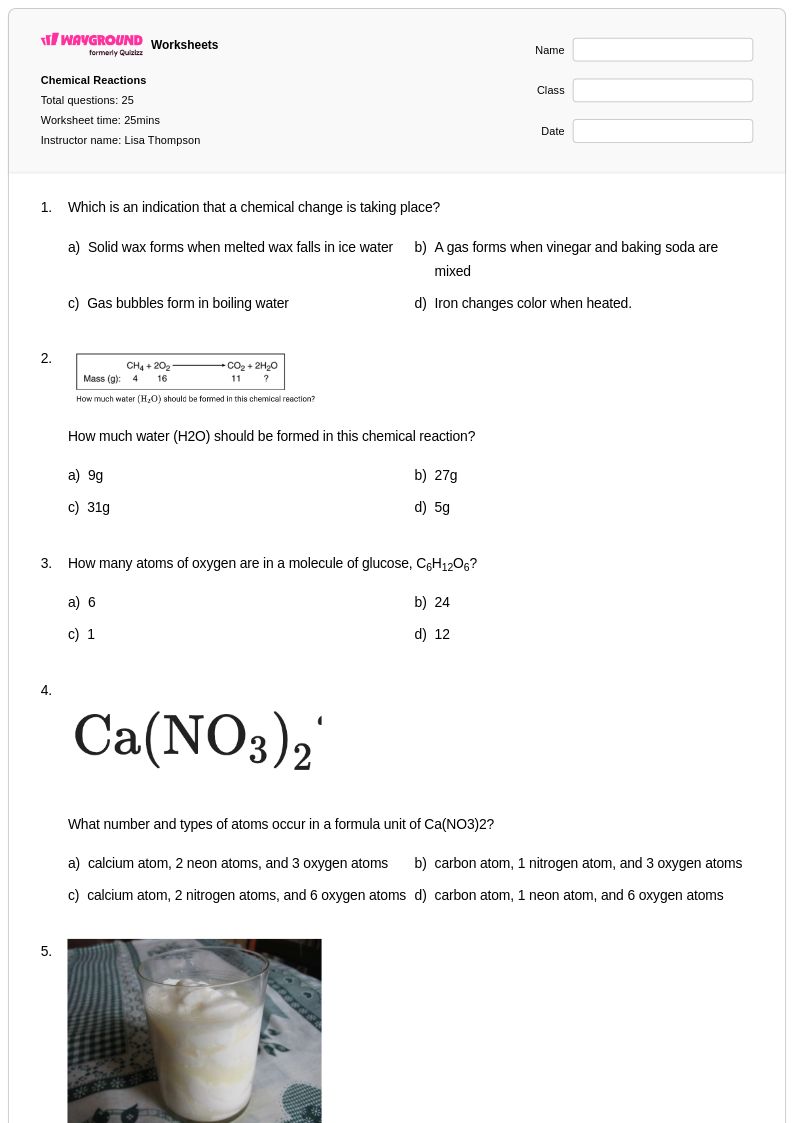
25 Q
8th - Uni
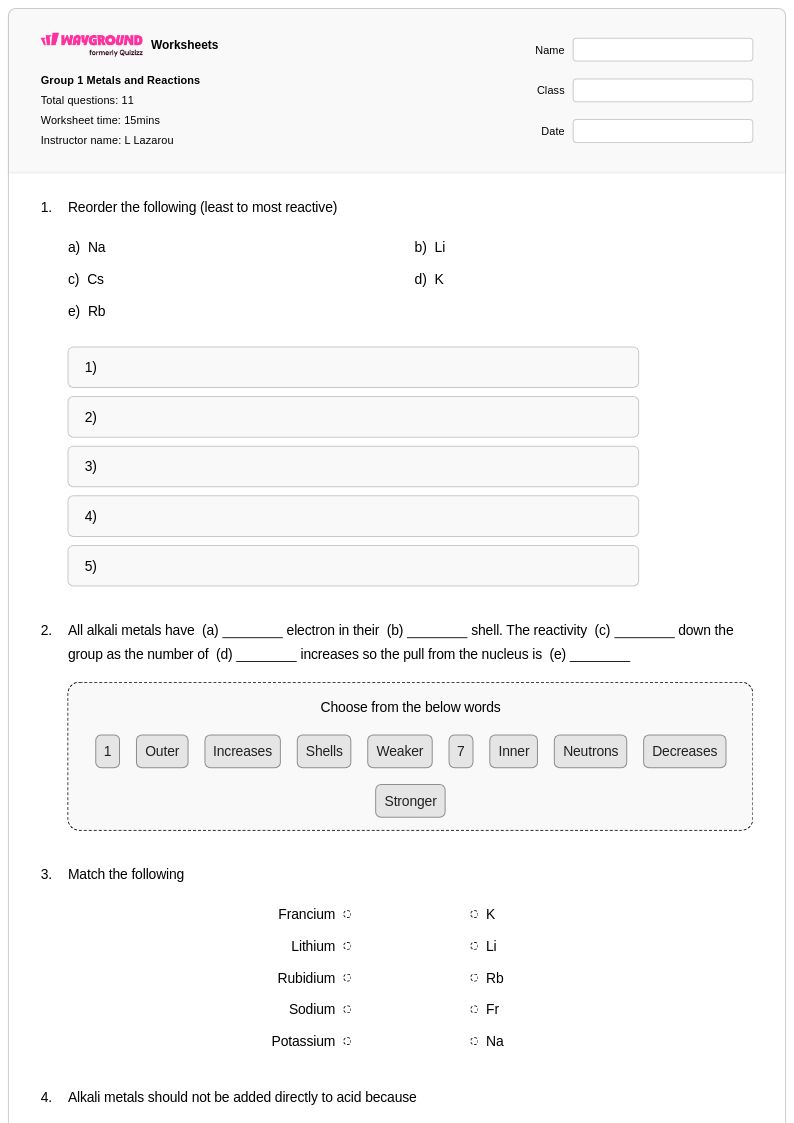
11 Q
9th - 12th
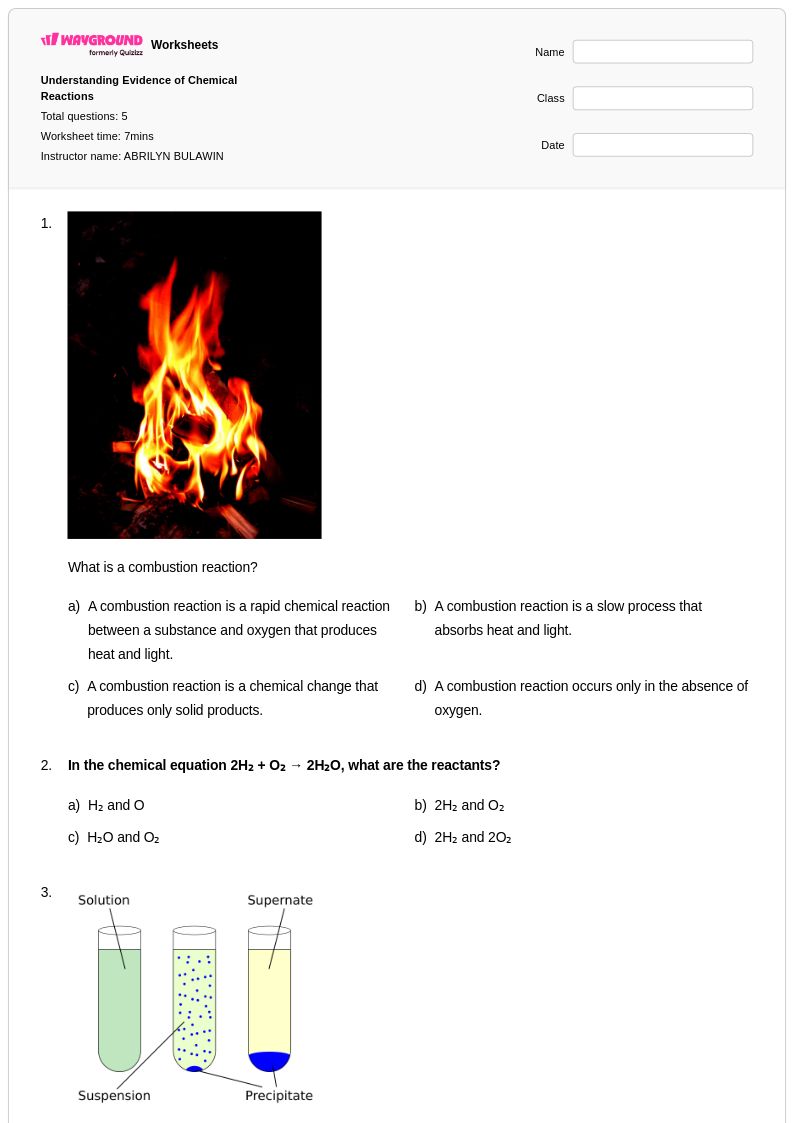
10 Q
10th - Uni
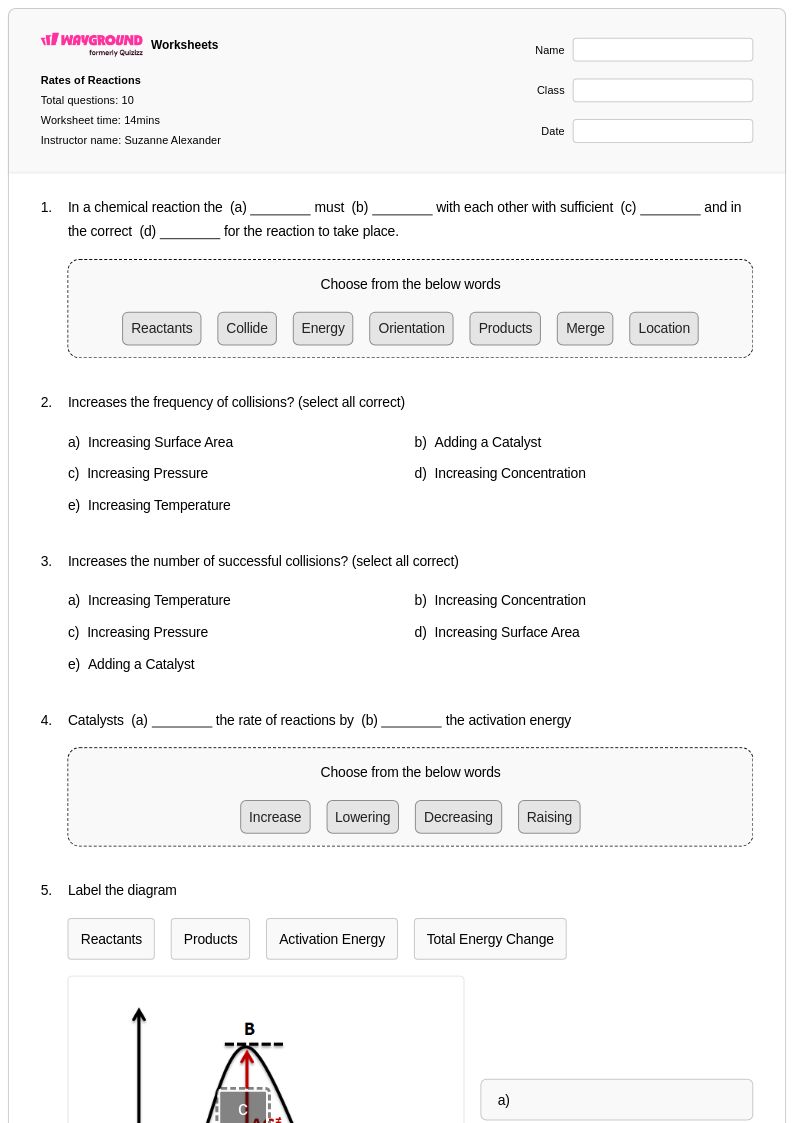
10 Q
9th - 12th
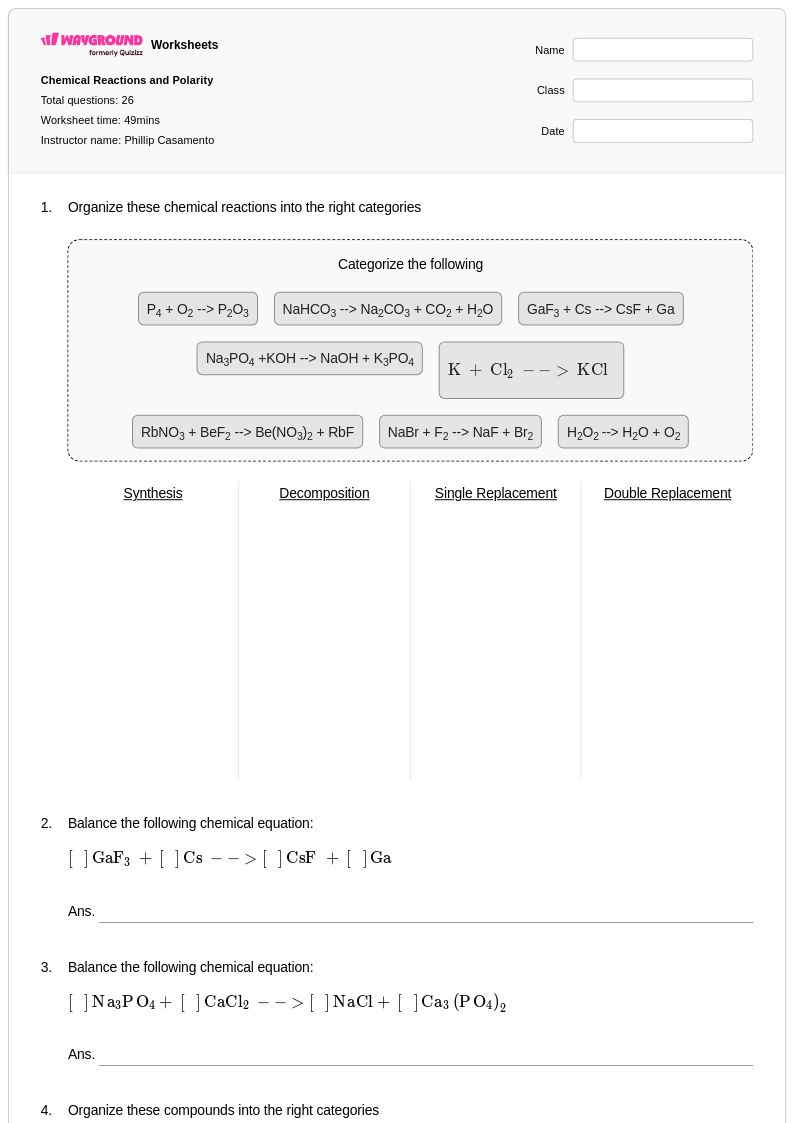
26 Q
9th - 12th
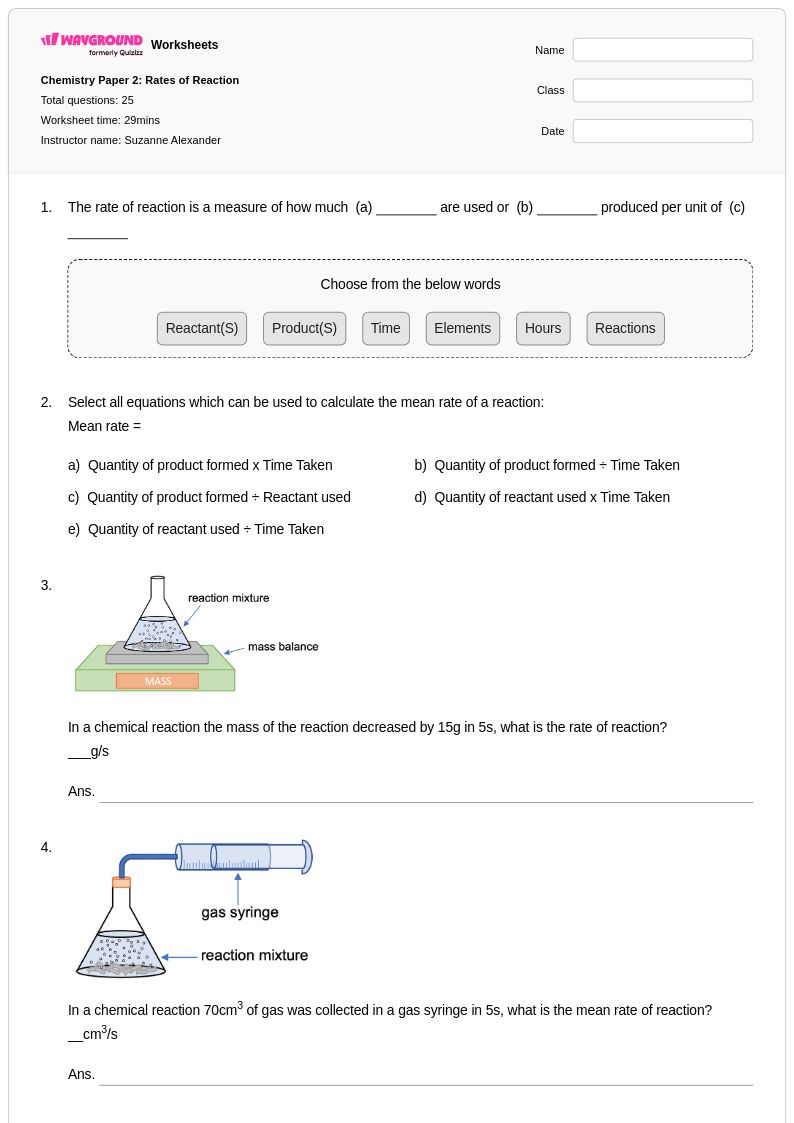
25 Q
9th - 12th
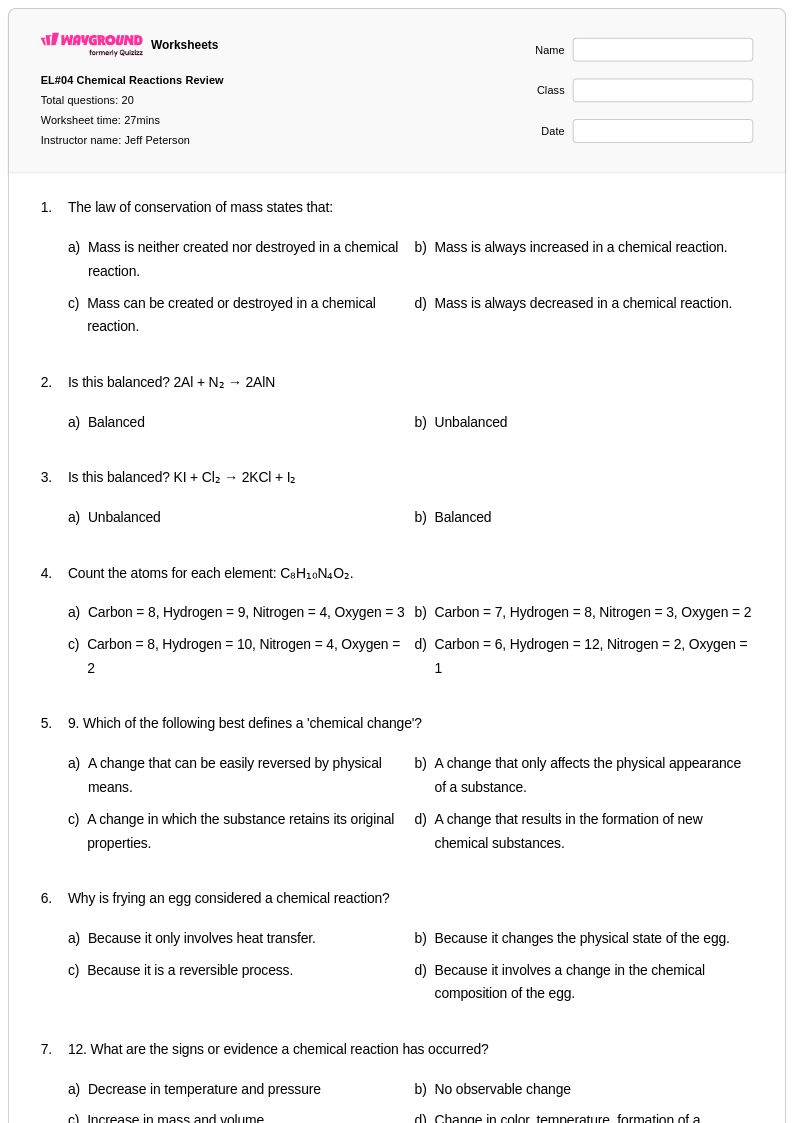
20 Q
8th - Uni
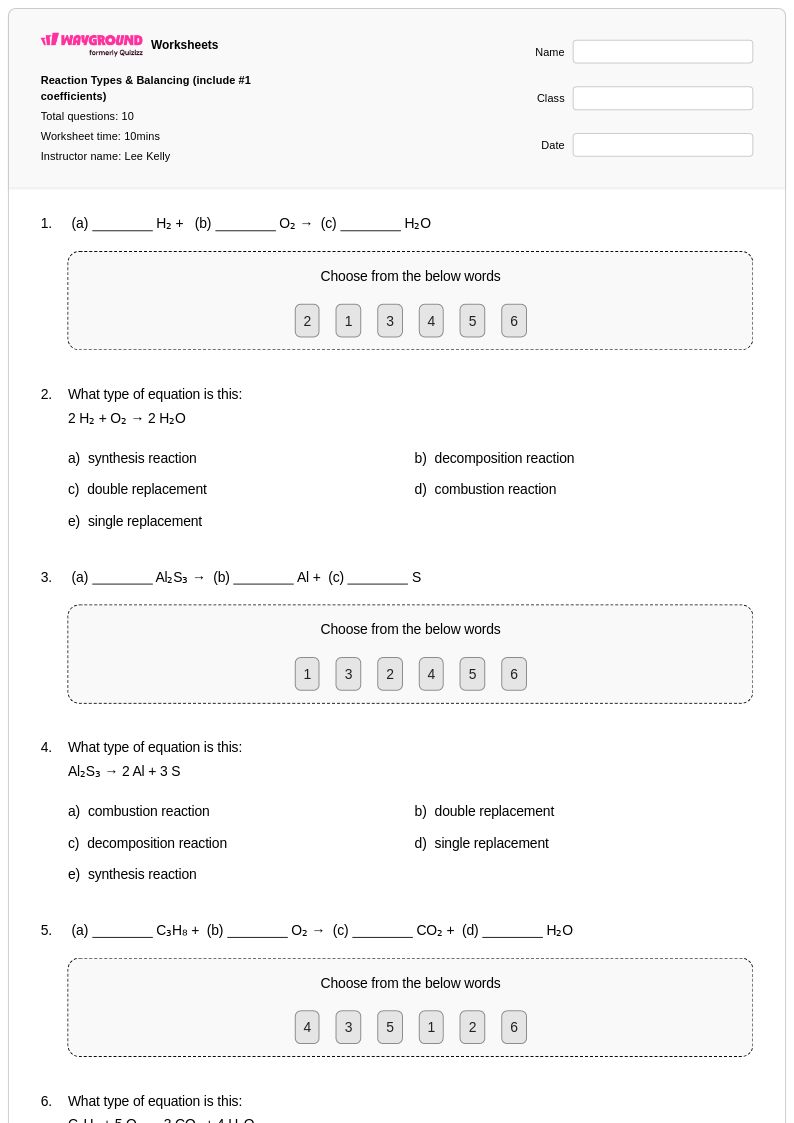
10 Q
9th - 12th
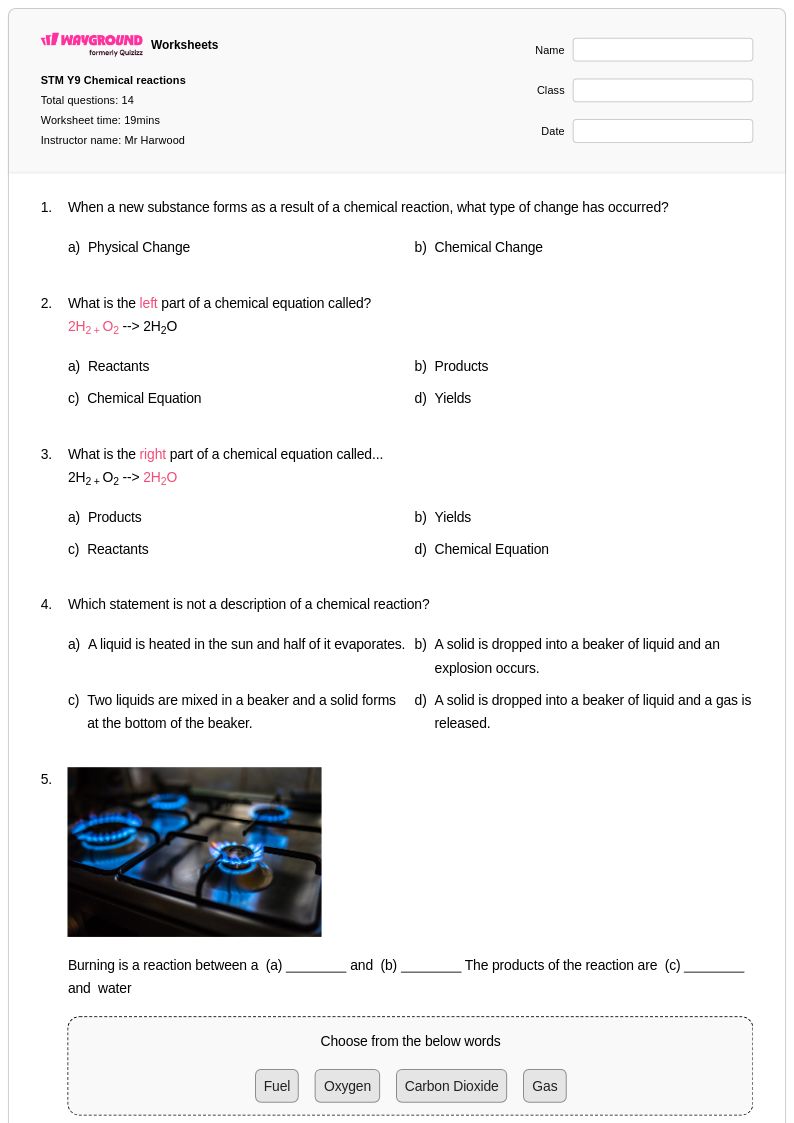
14 Q
9th - 12th
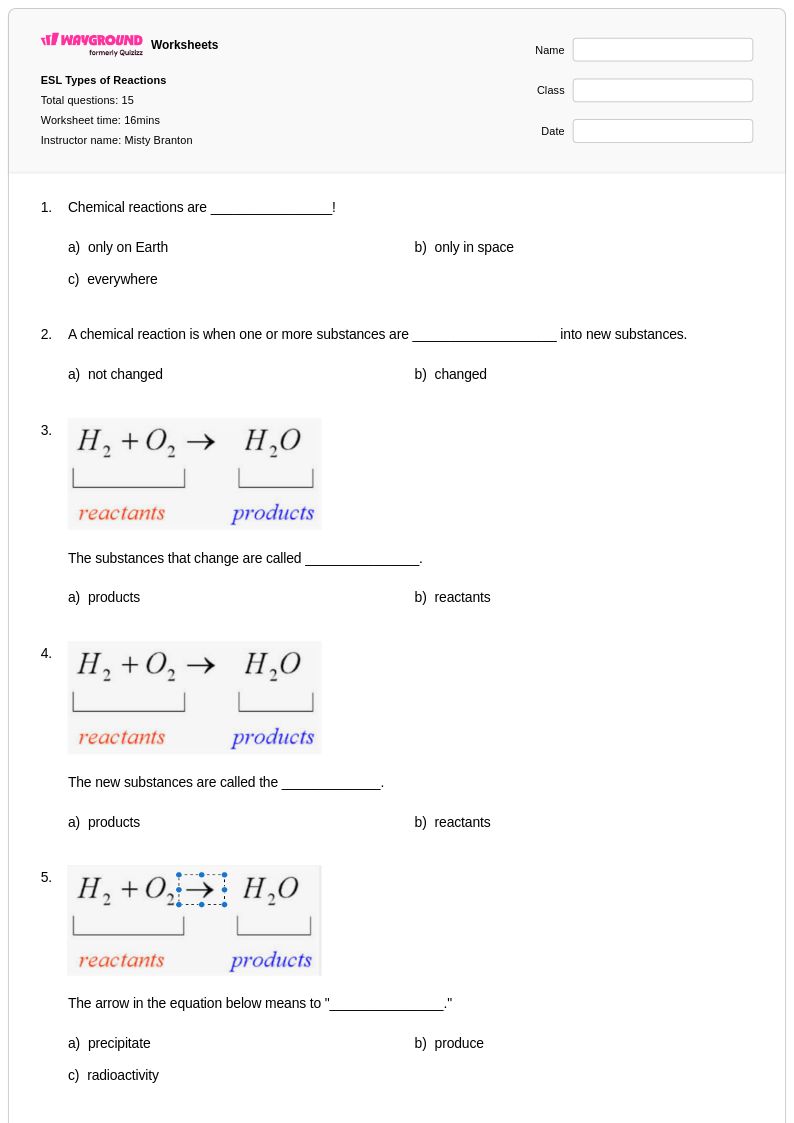
15 Q
9th - 12th
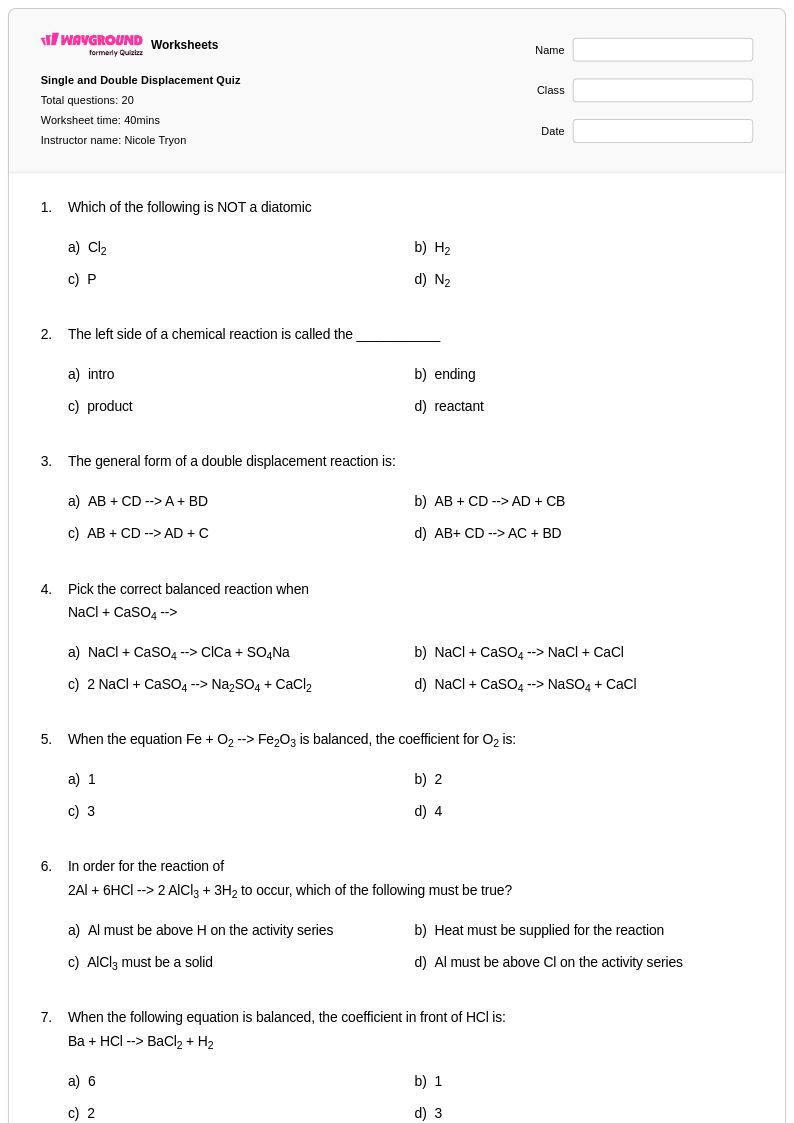
20 Q
10th - 12th
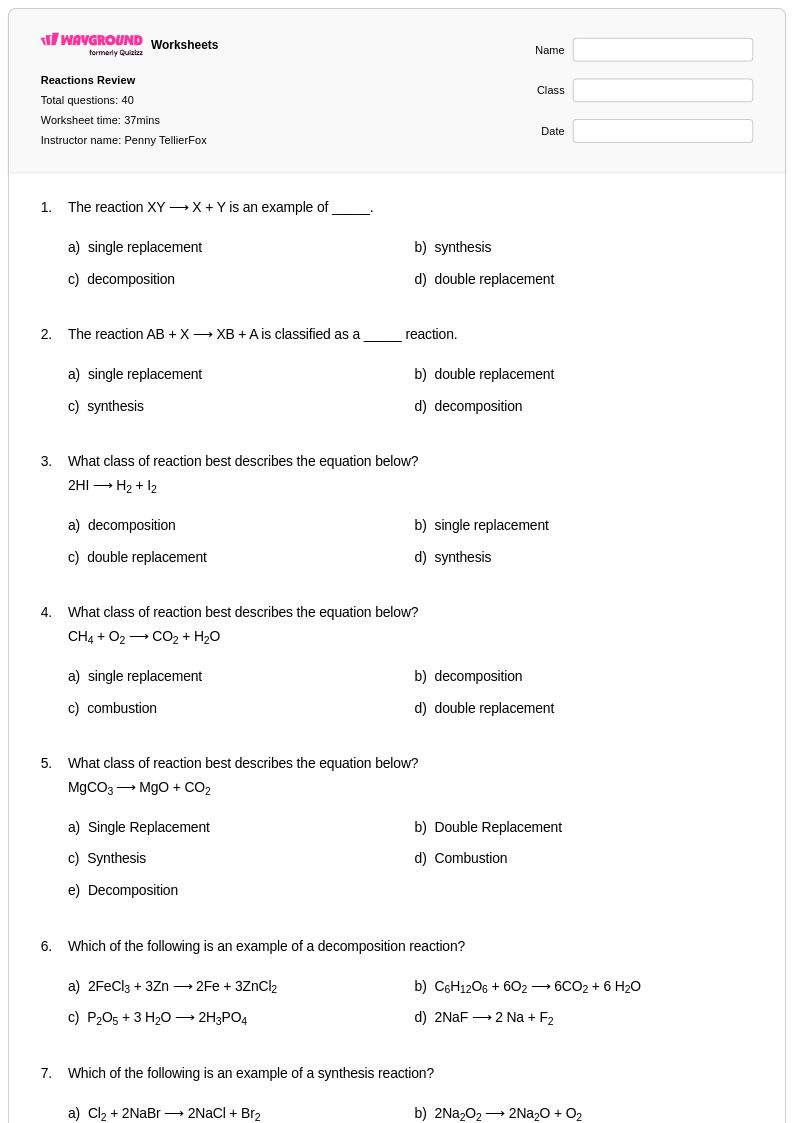
40 Q
9th - 12th
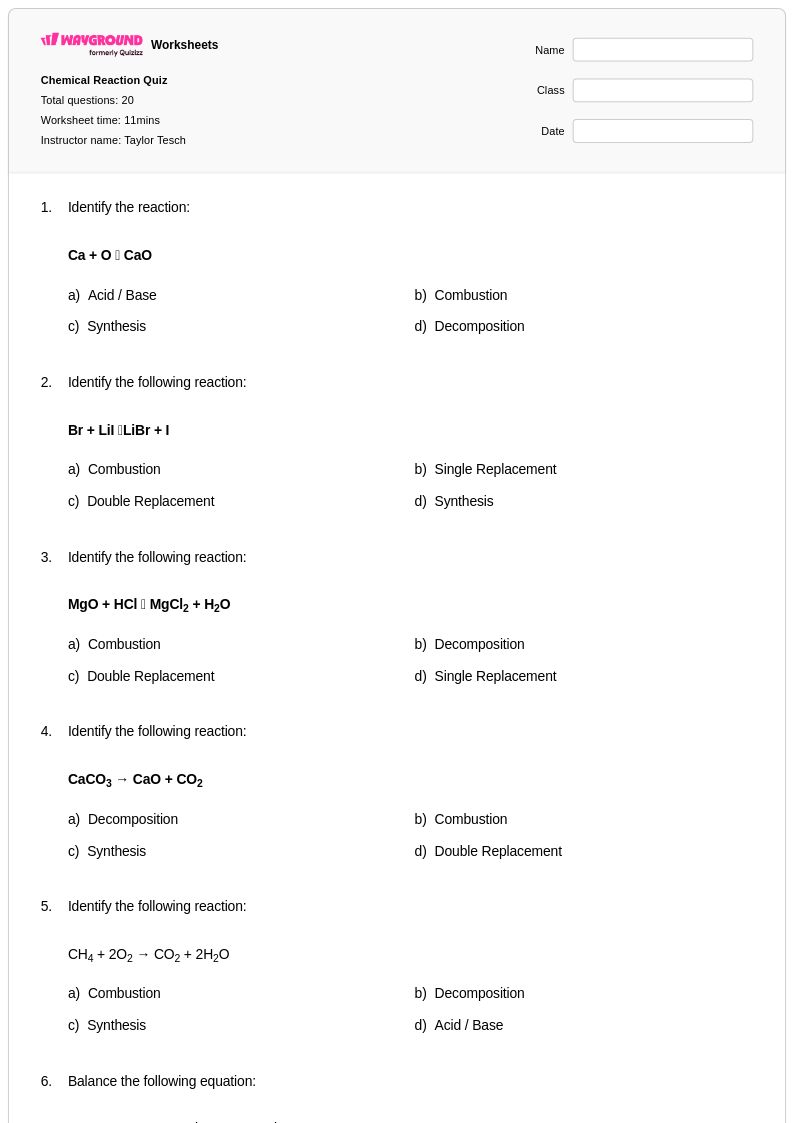
20 Q
9th - 12th
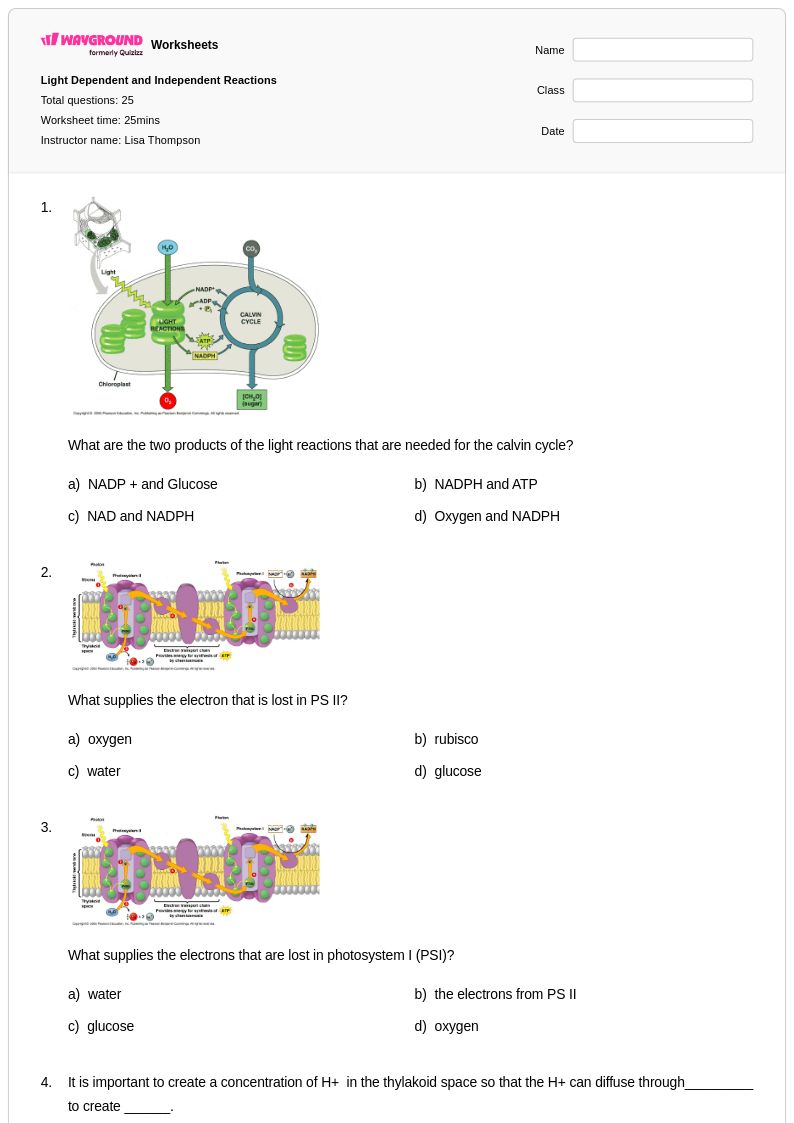
25 Q
9th - Uni
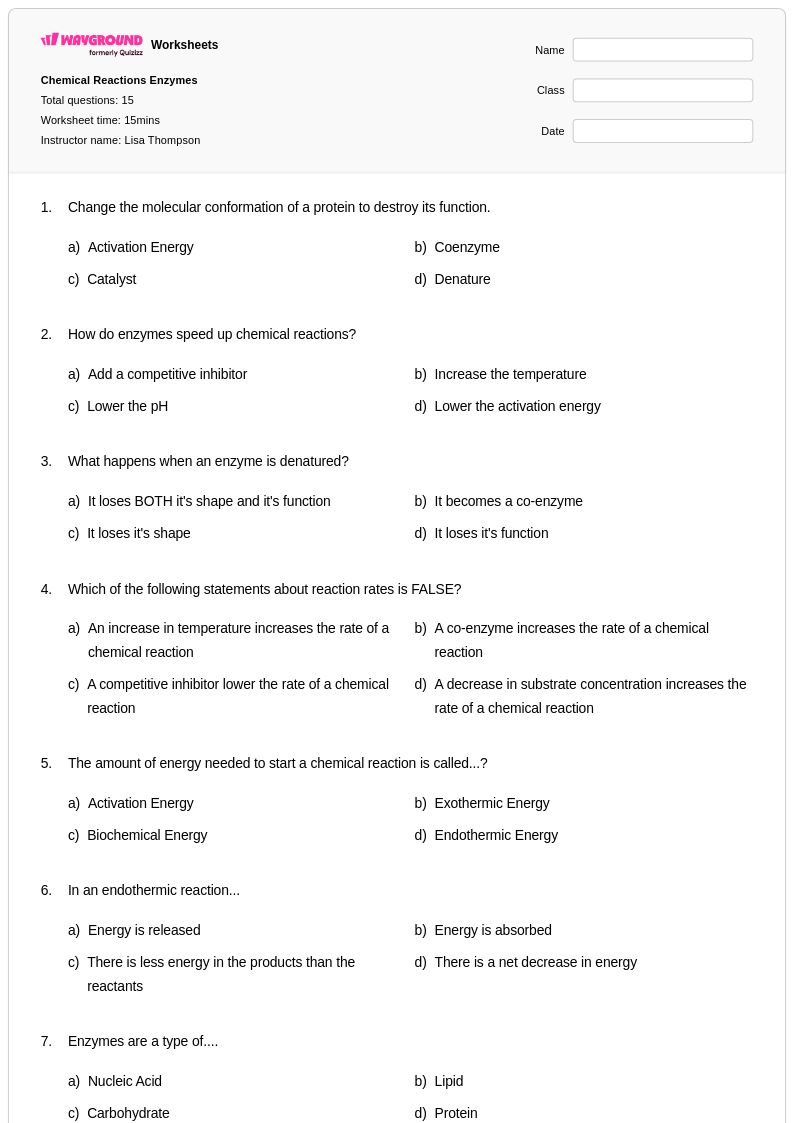
15 Q
9th - Uni
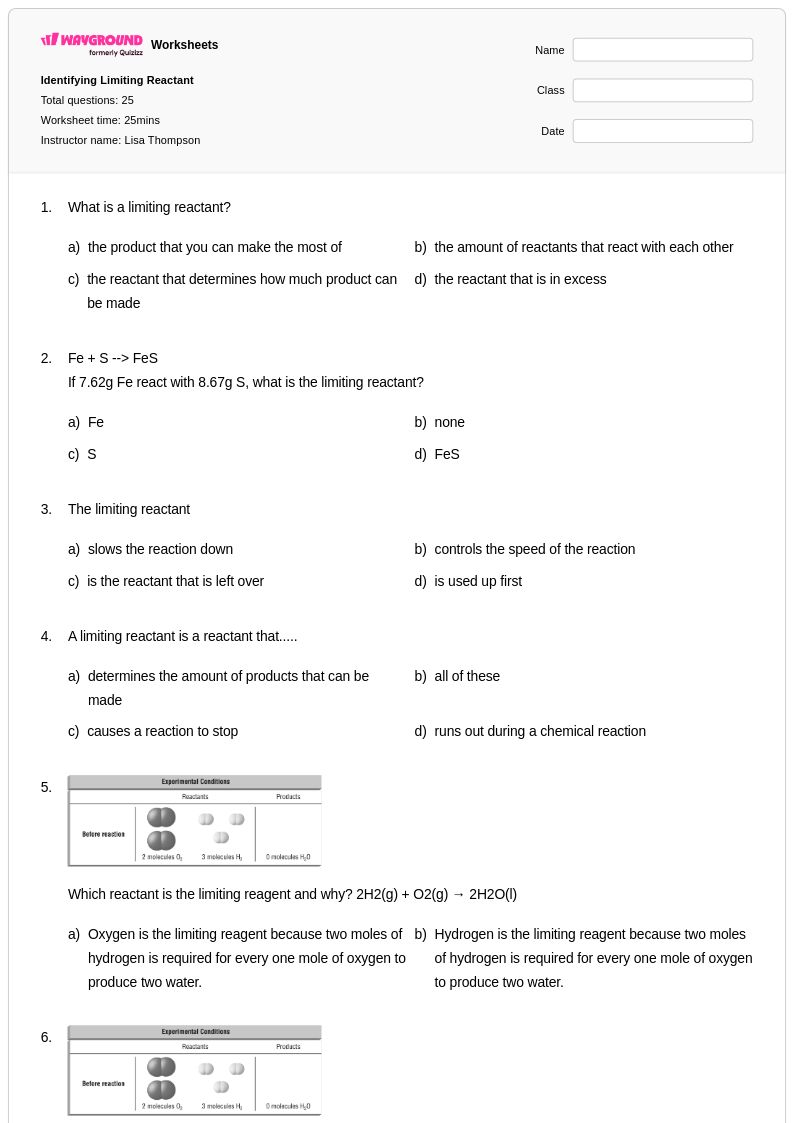
25 Q
11th - Uni
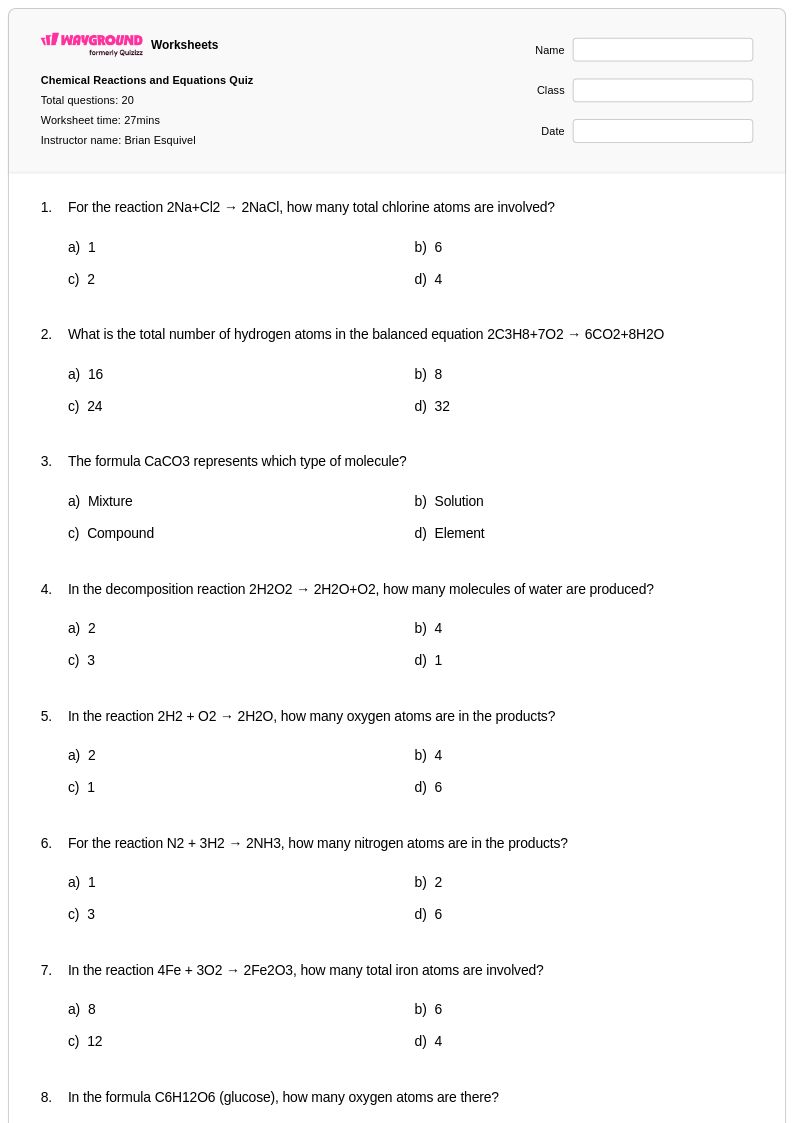
20 Q
8th - Uni
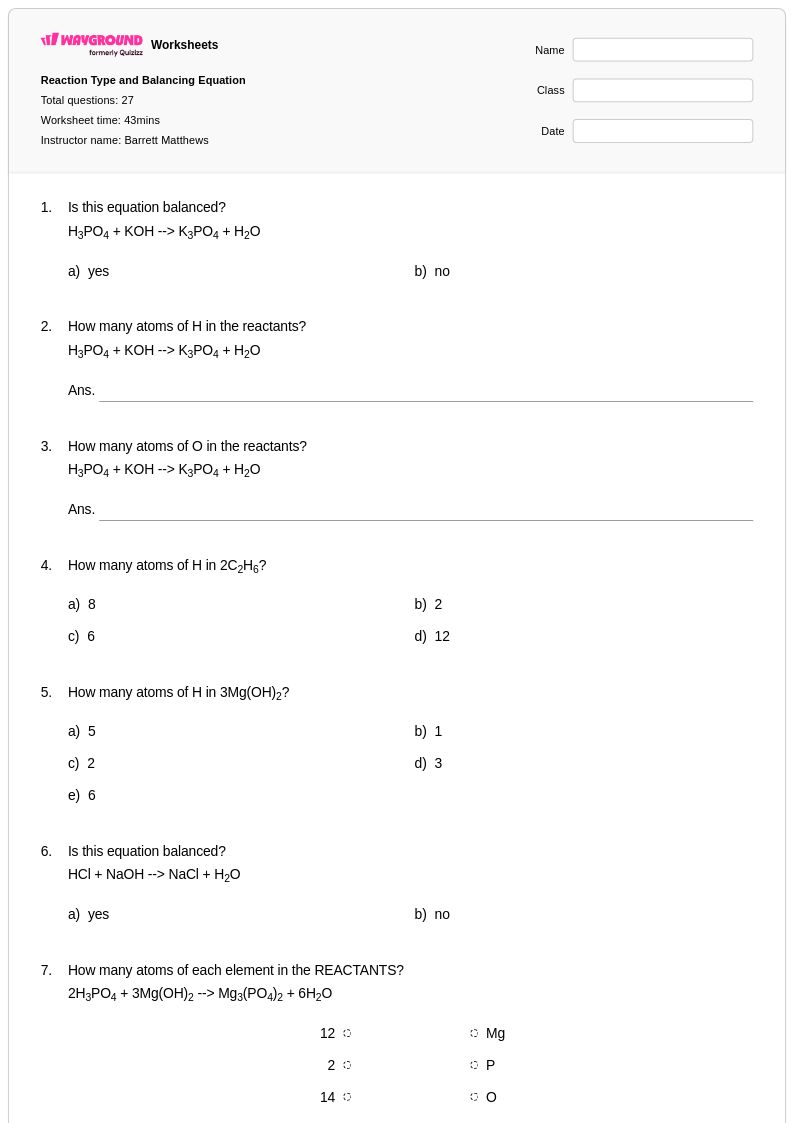
27 Q
12th
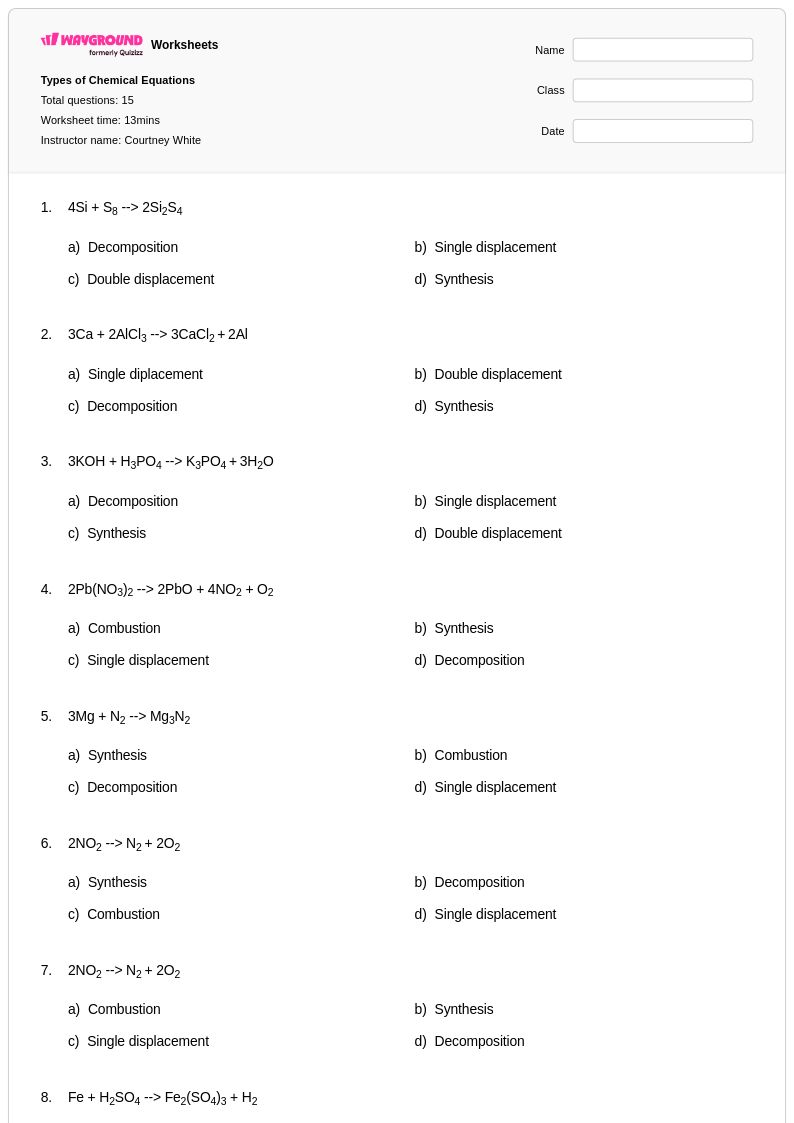
15 Q
9th - 12th
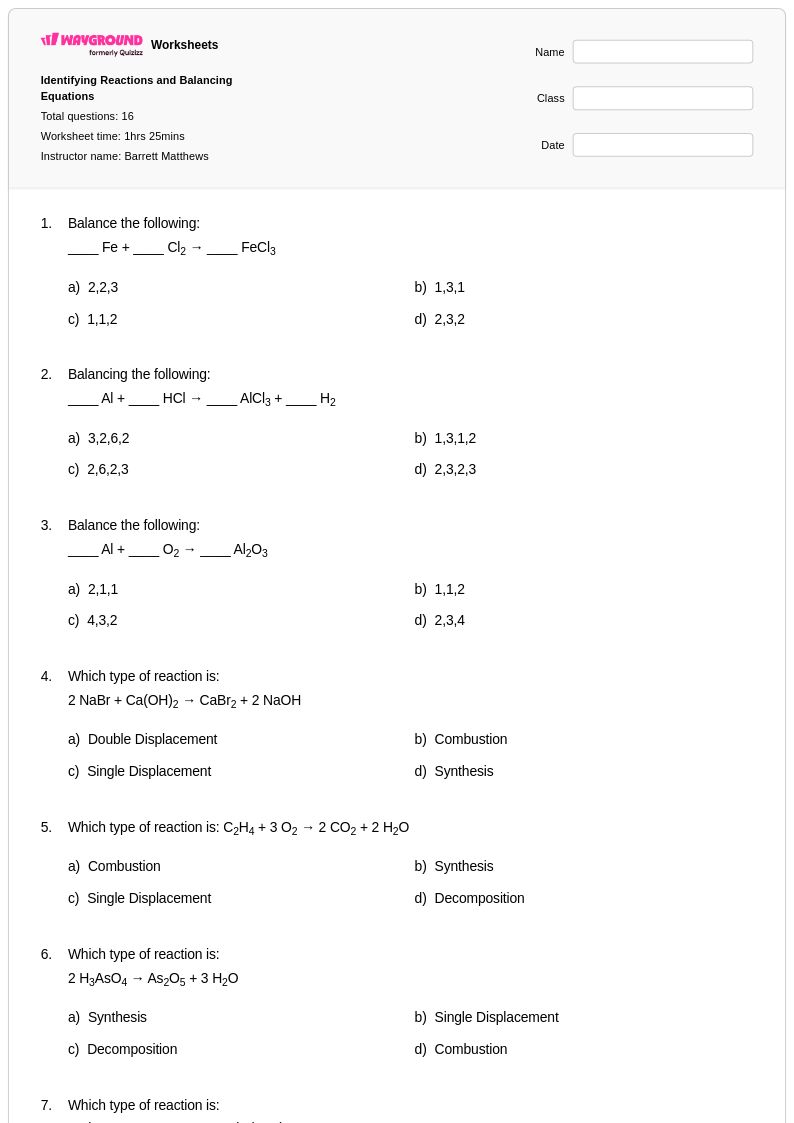
16 Q
12th
Explore Other Subject Worksheets for year 12
Explore printable Identifying Reactions worksheets for Year 12
Identifying reactions worksheets for Year 12 chemistry students through Wayground (formerly Quizizz) provide comprehensive practice with the fundamental skill of recognizing and categorizing different types of chemical reactions. These expertly crafted resources help students master the critical ability to distinguish between synthesis, decomposition, single replacement, double replacement, combustion, and acid-base reactions by analyzing chemical equations and experimental observations. Each worksheet collection includes detailed answer keys that guide students through the systematic approach of examining reactants, products, and reaction conditions to make accurate identifications. The free printable materials feature progressively challenging practice problems that strengthen students' analytical thinking skills while building confidence in predicting reaction types based on molecular formulas, ionic charges, and reaction patterns essential for advanced chemistry coursework.
Wayground (formerly Quizizz) empowers educators with access to millions of teacher-created identifying reactions worksheets specifically designed for Year 12 chemistry instruction, featuring robust search and filtering capabilities that allow teachers to locate resources aligned with specific learning standards and curriculum requirements. The platform's differentiation tools enable instructors to customize worksheet difficulty levels and problem types to meet diverse student needs, while the flexible format options provide both printable pdf versions for traditional classroom use and digital formats for interactive learning experiences. These comprehensive collections support effective lesson planning by offering ready-made materials for initial instruction, targeted remediation for struggling students, and enrichment activities for advanced learners, ultimately helping teachers provide systematic skill practice that builds student mastery in chemical reaction identification across various contexts and complexity levels.