Free Printable Chemical Equation Writing Worksheets for Year 12
Master chemical equation writing with Wayground's Year 12 chemistry worksheets featuring comprehensive practice problems, free printables with answer keys, and PDF downloads to strengthen balancing equations and reaction prediction skills.
Explore printable Chemical Equation Writing worksheets for Year 12
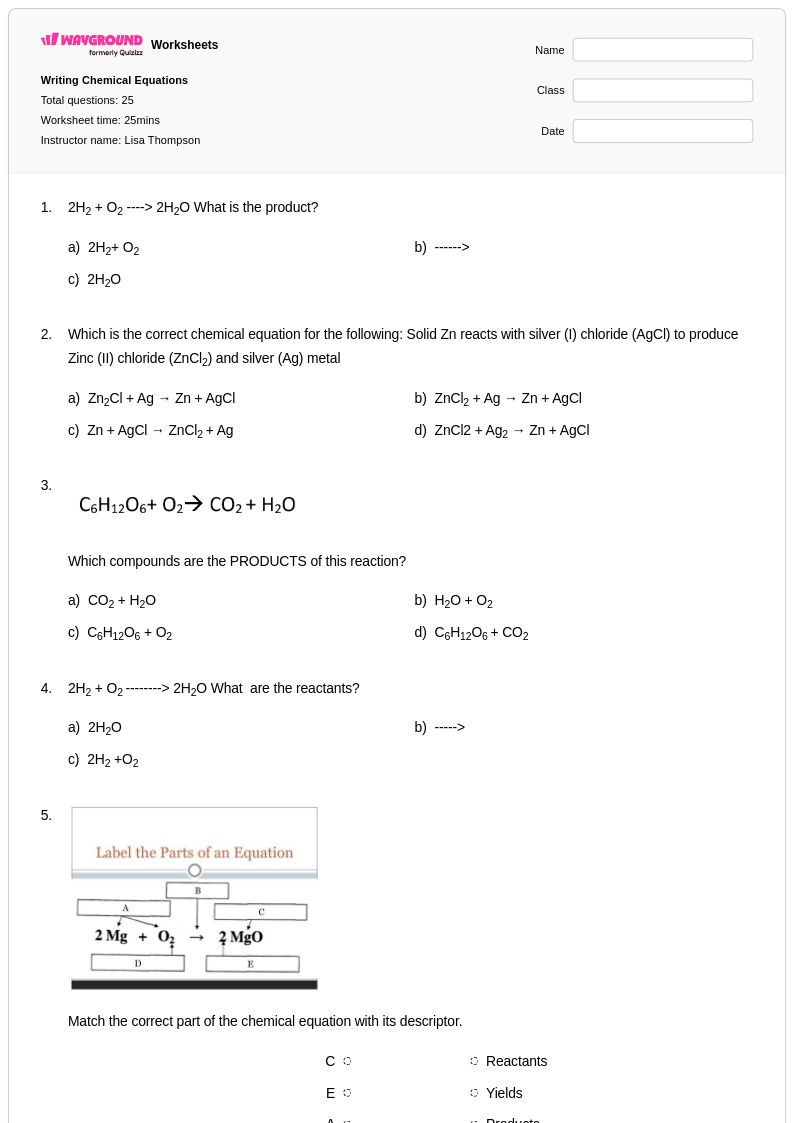
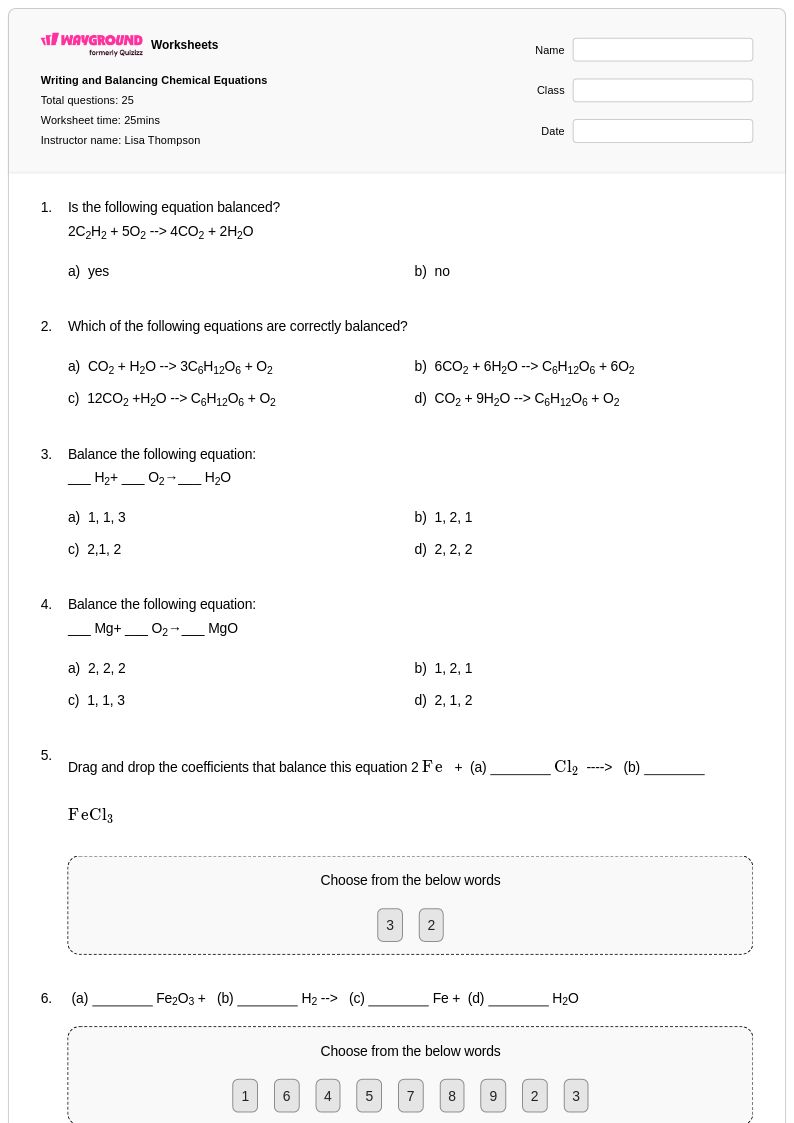
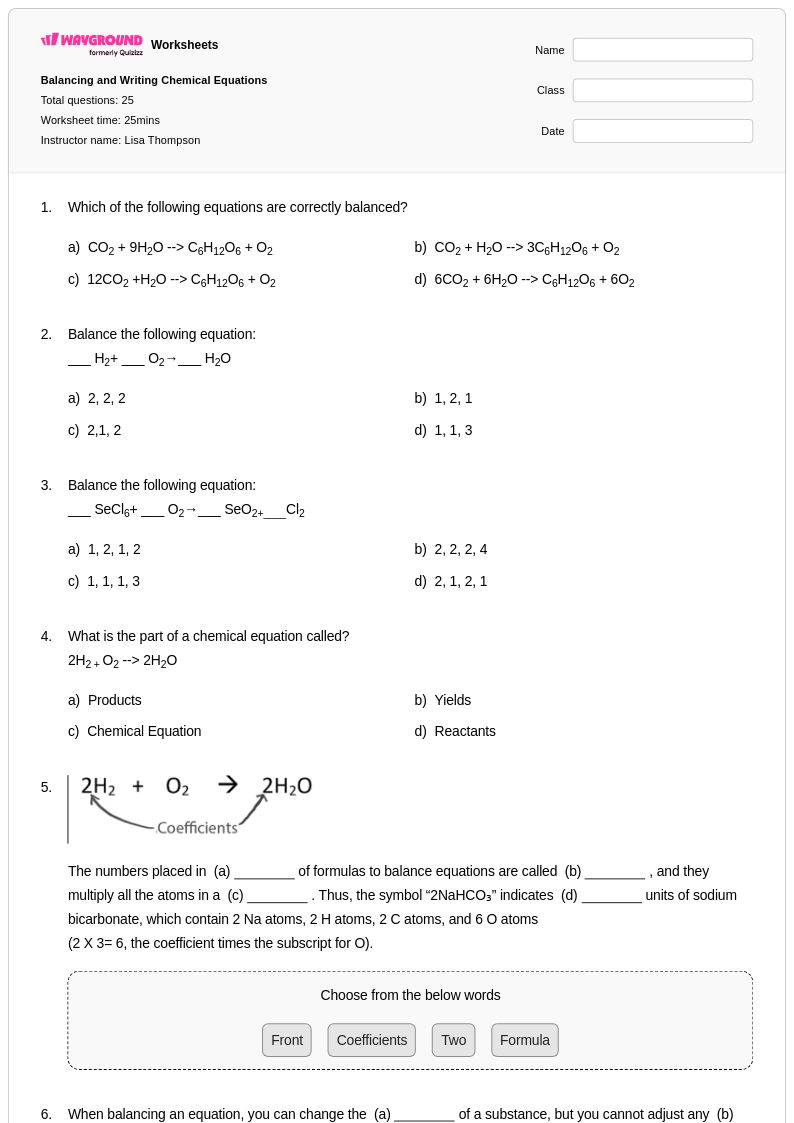
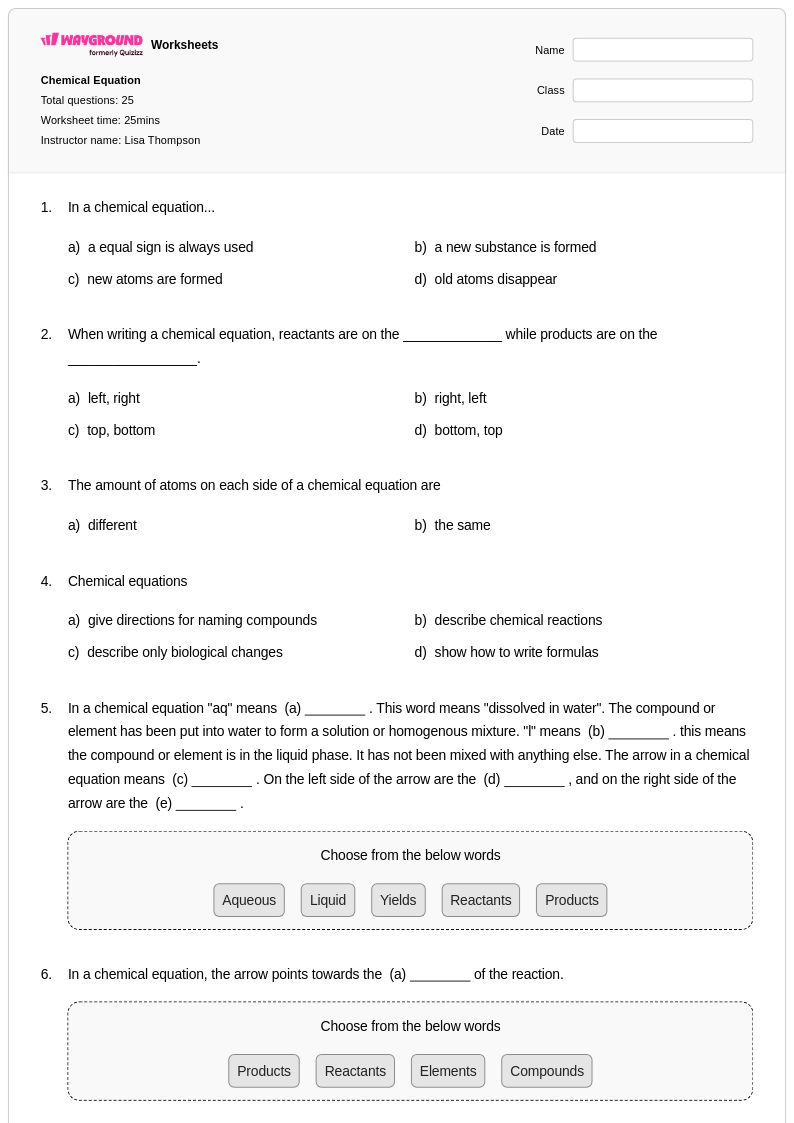
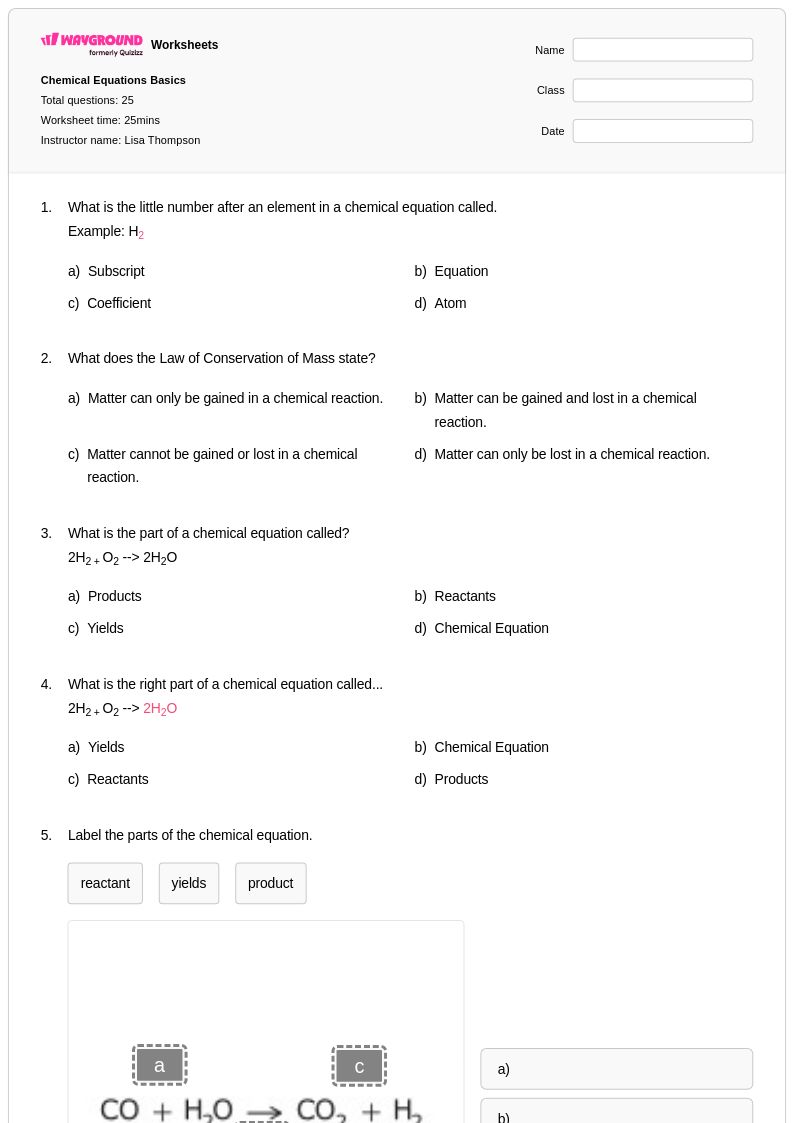
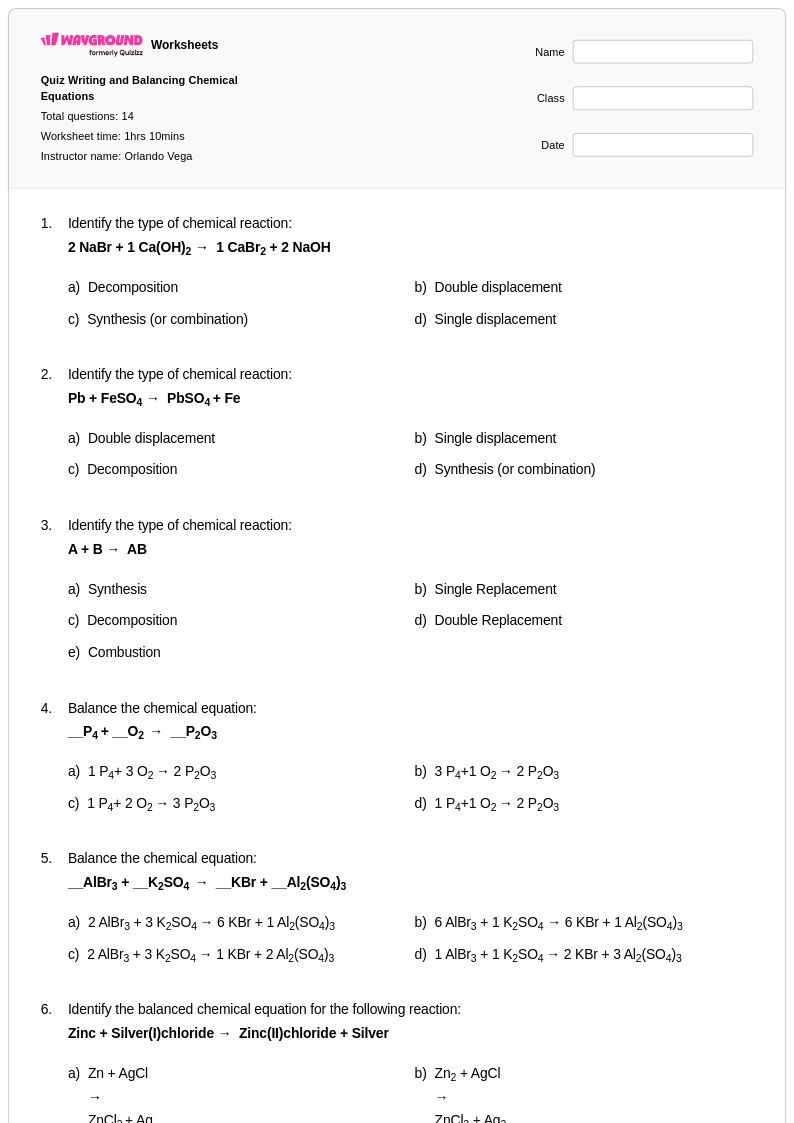
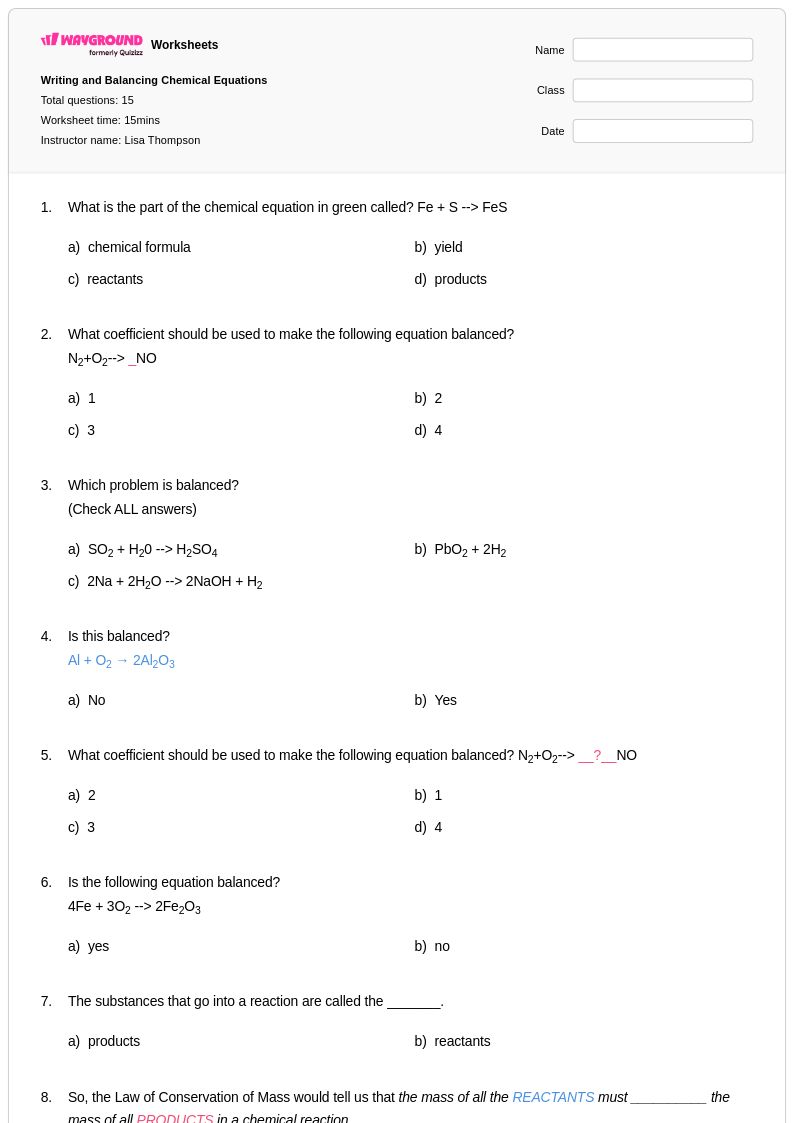
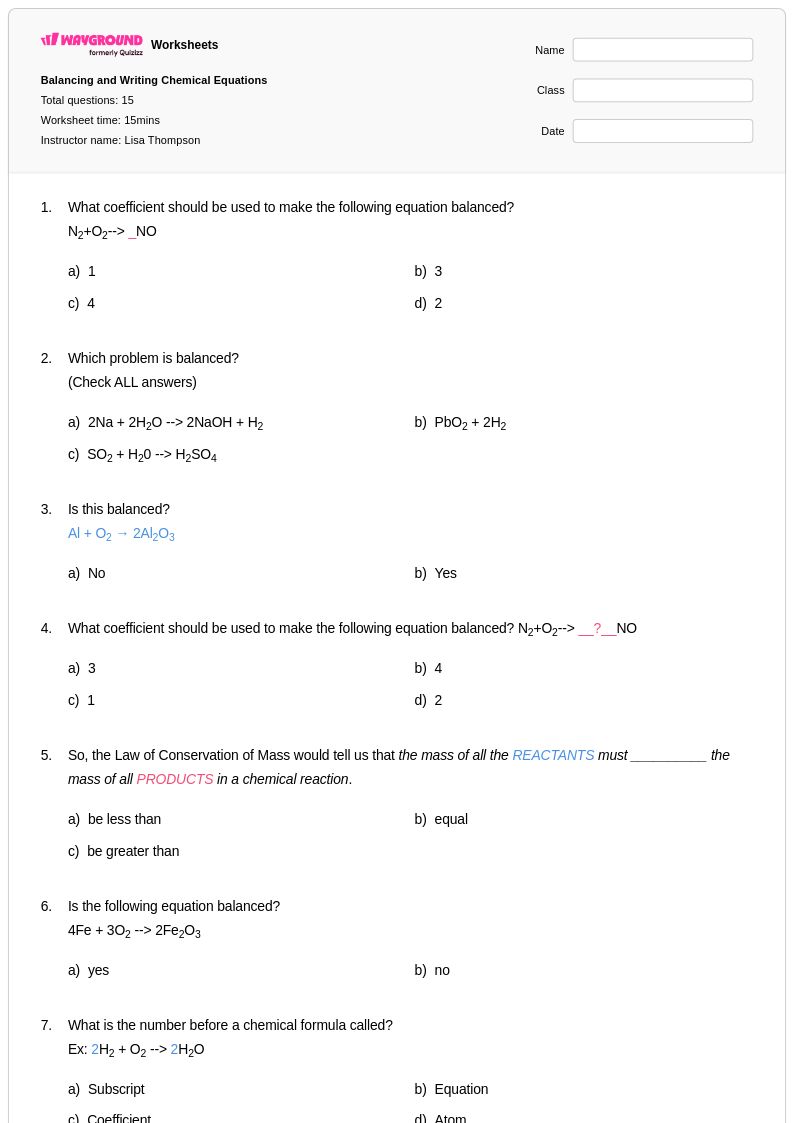
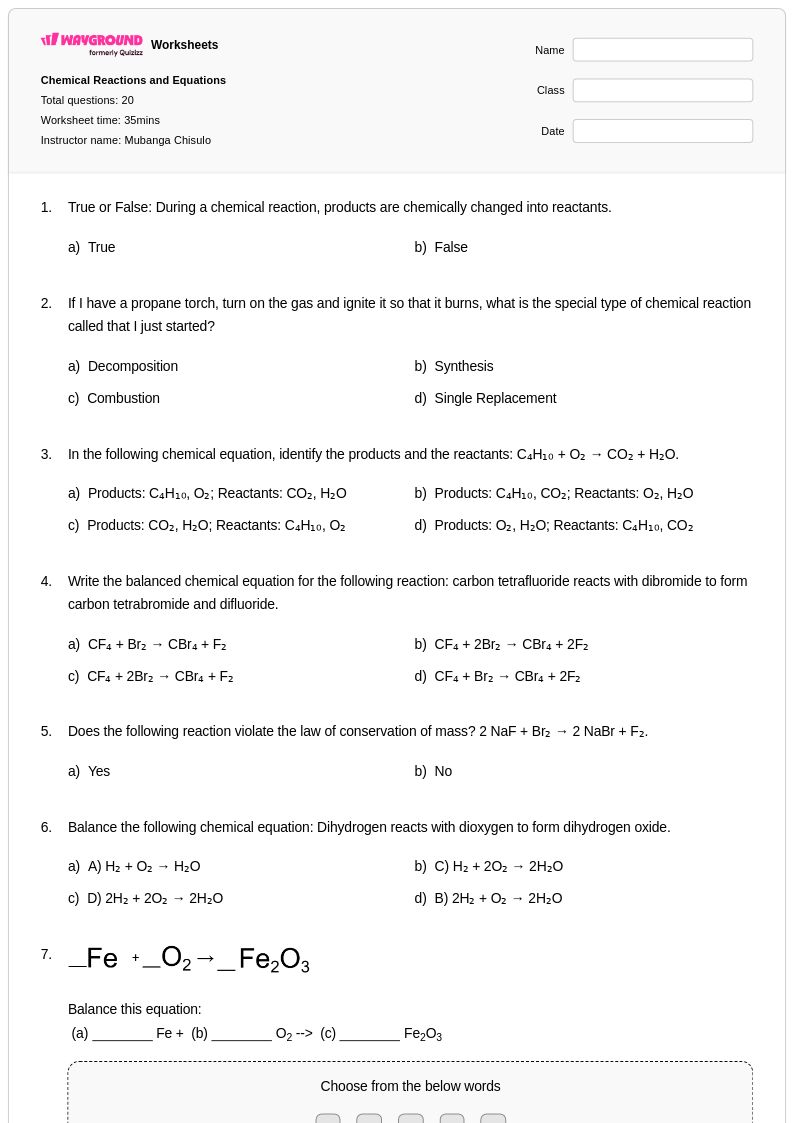
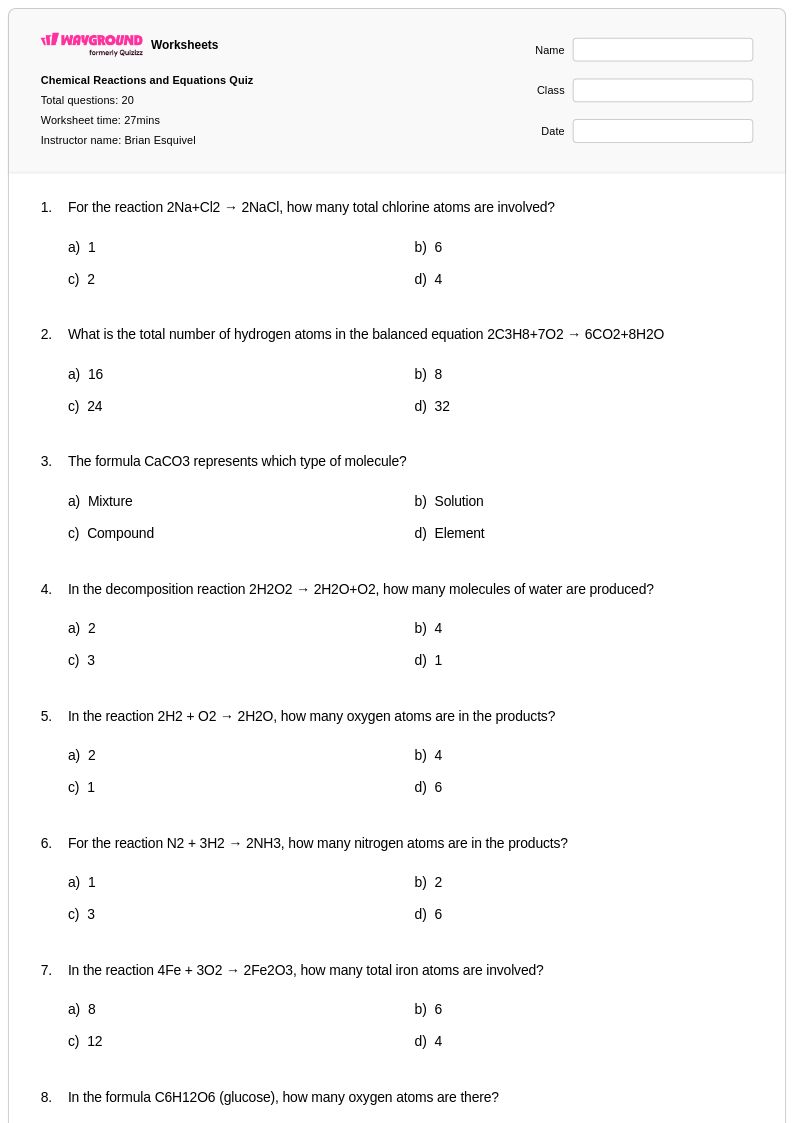
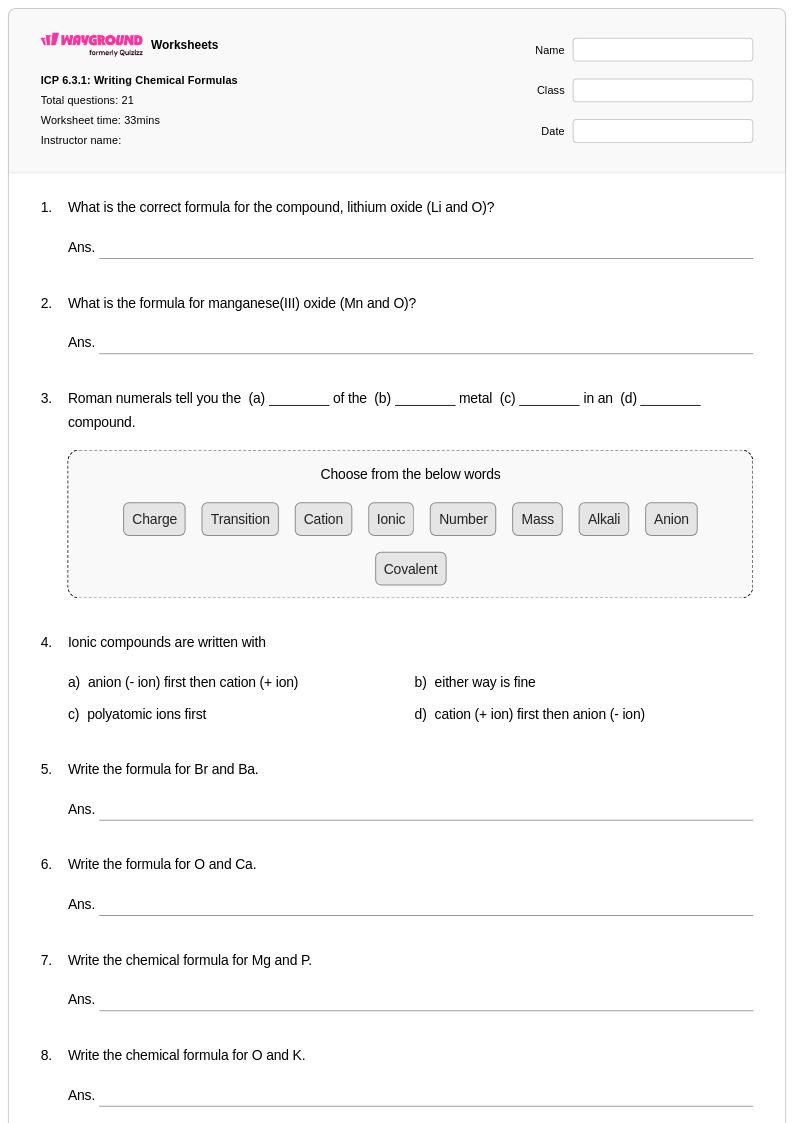
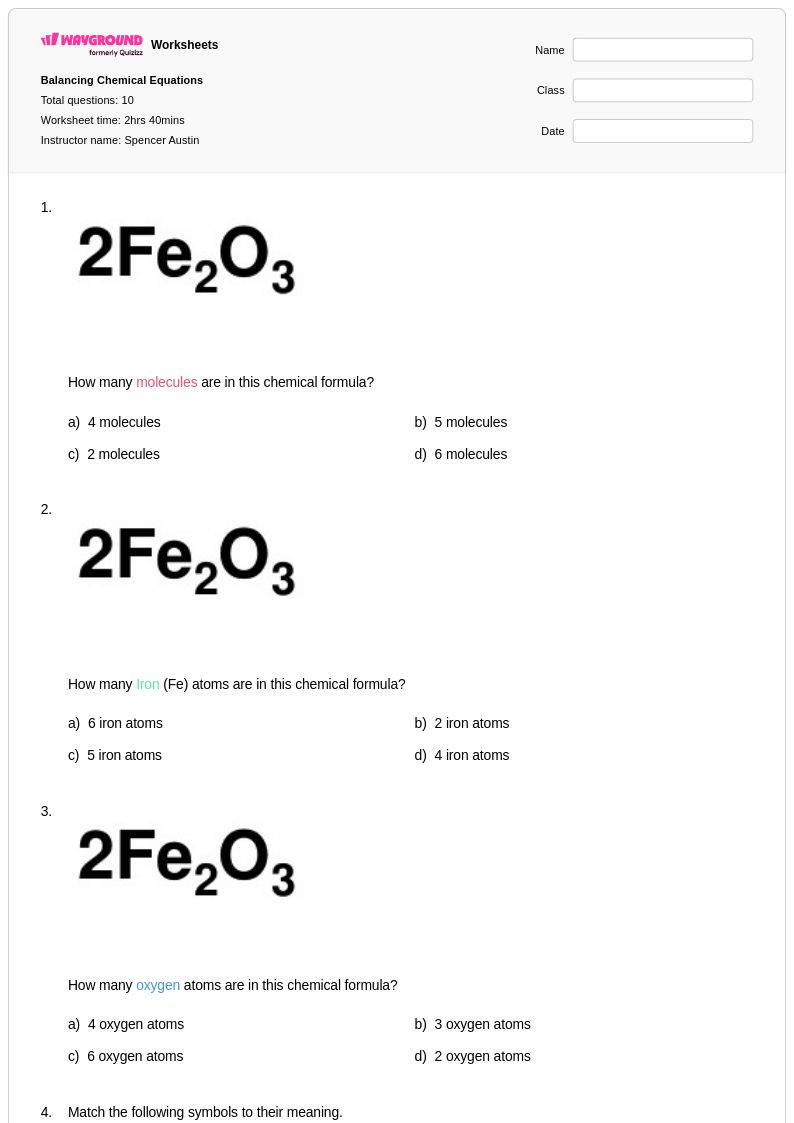
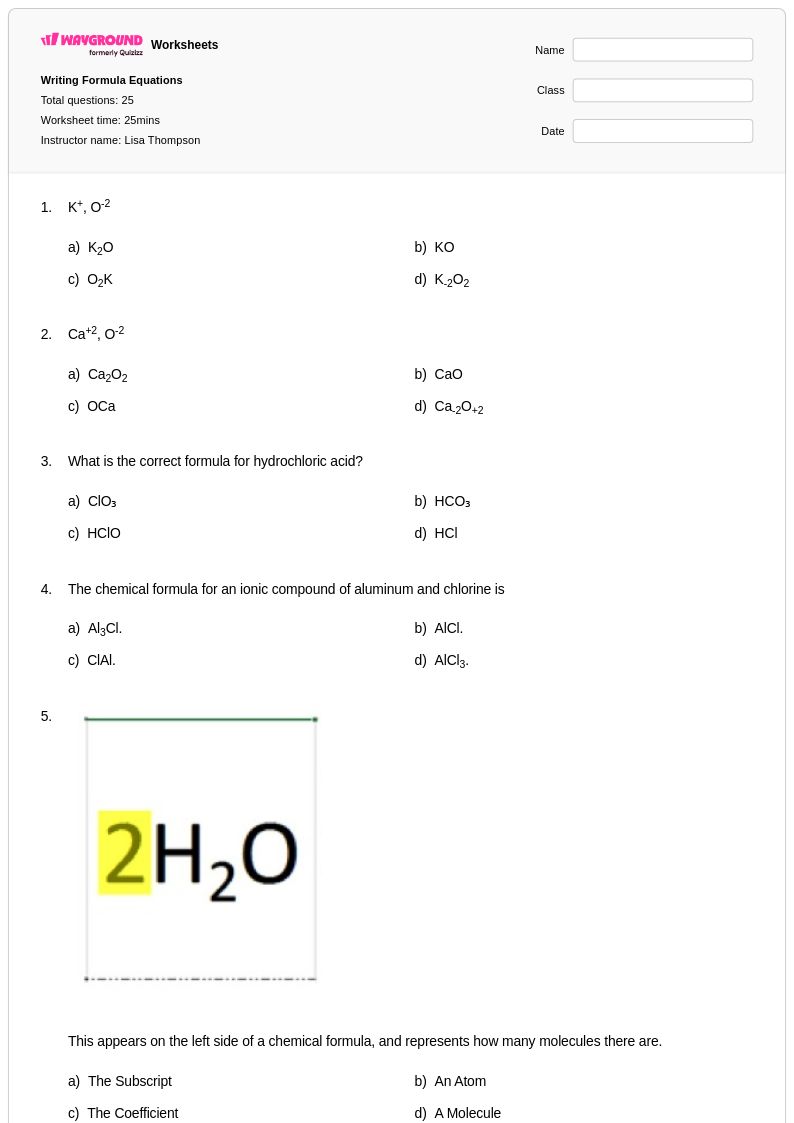
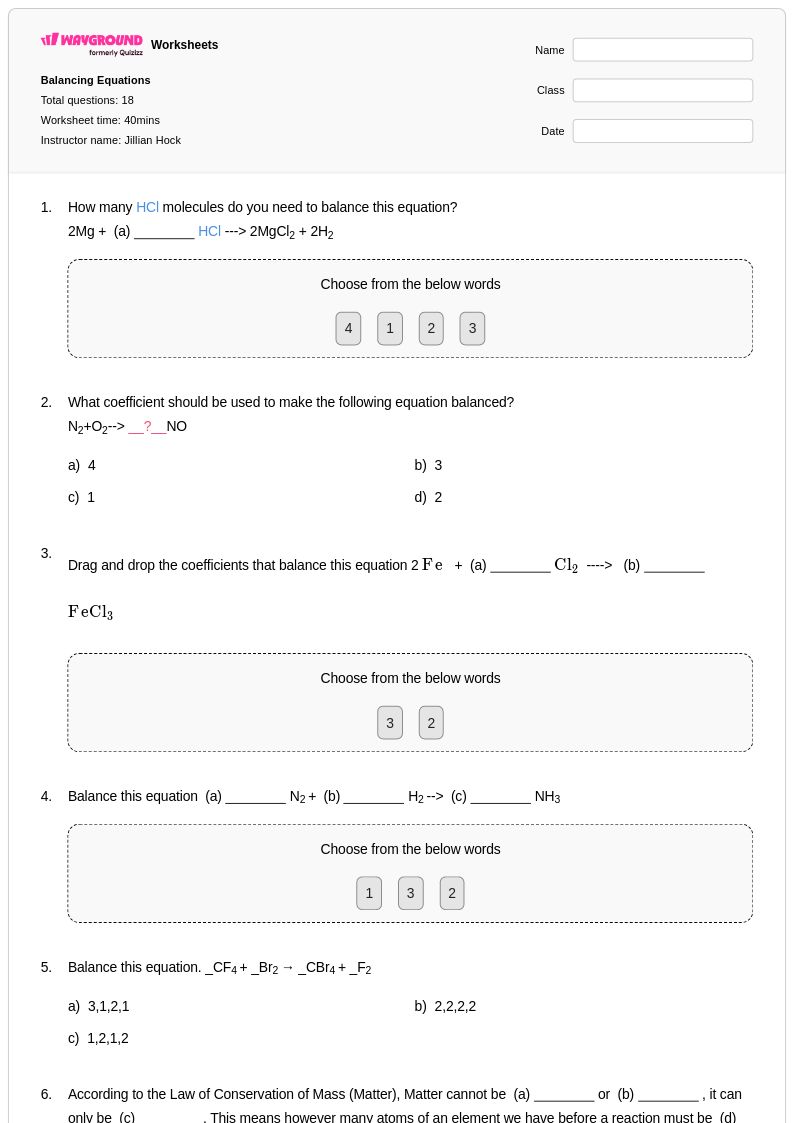
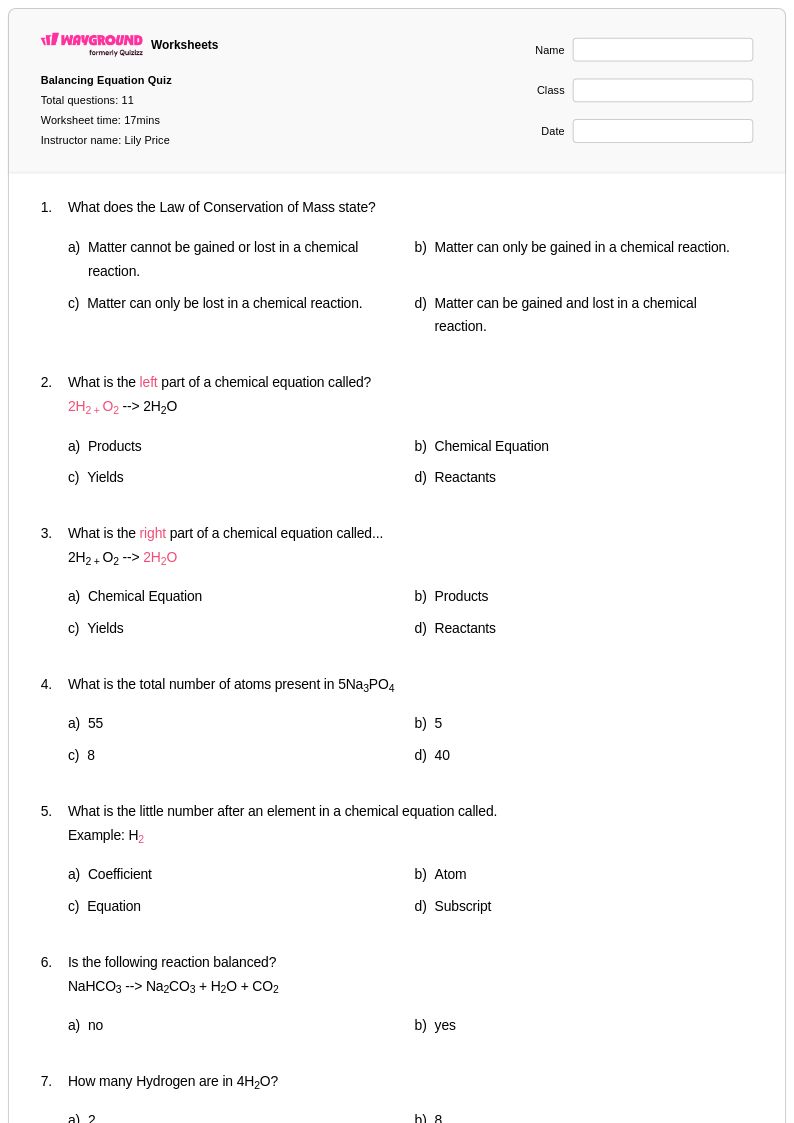
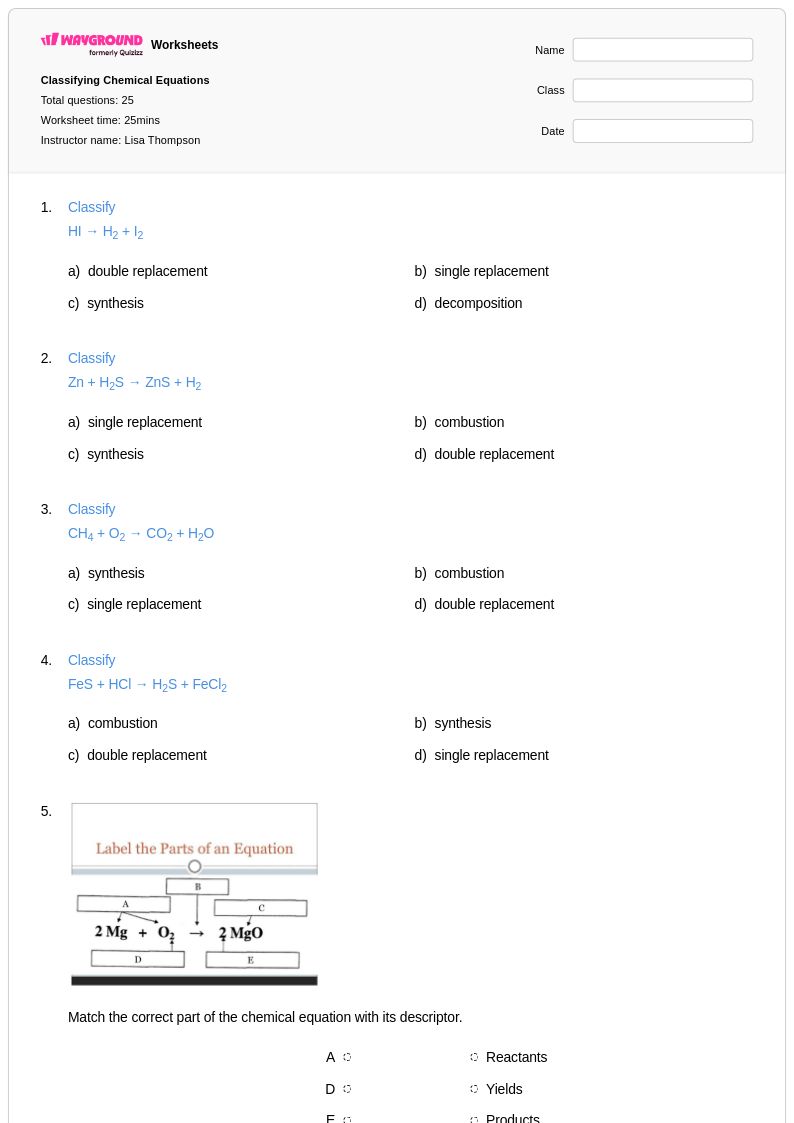
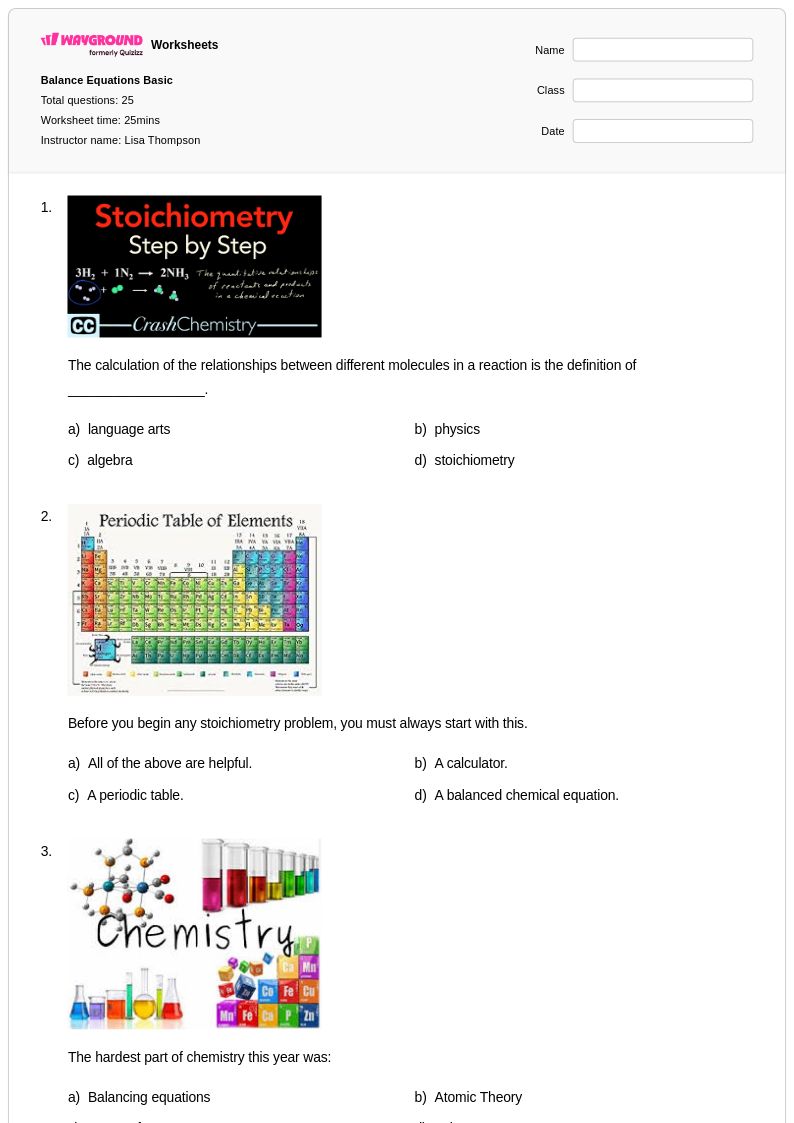
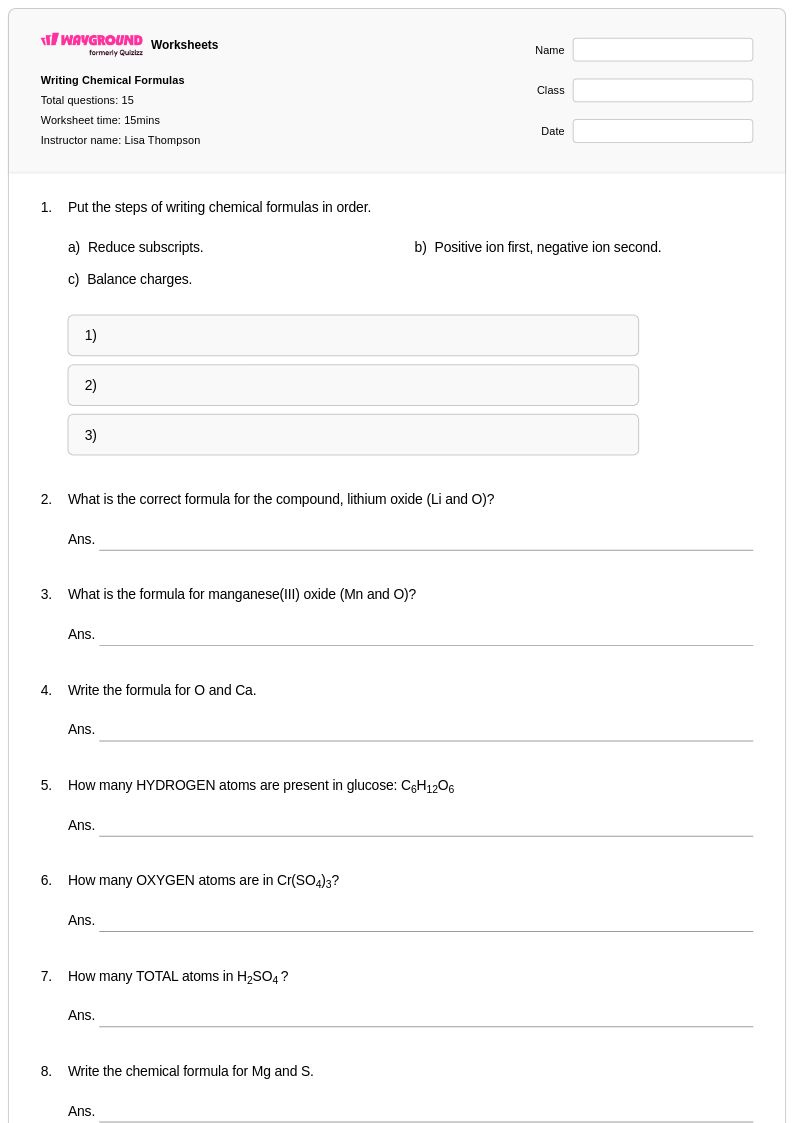
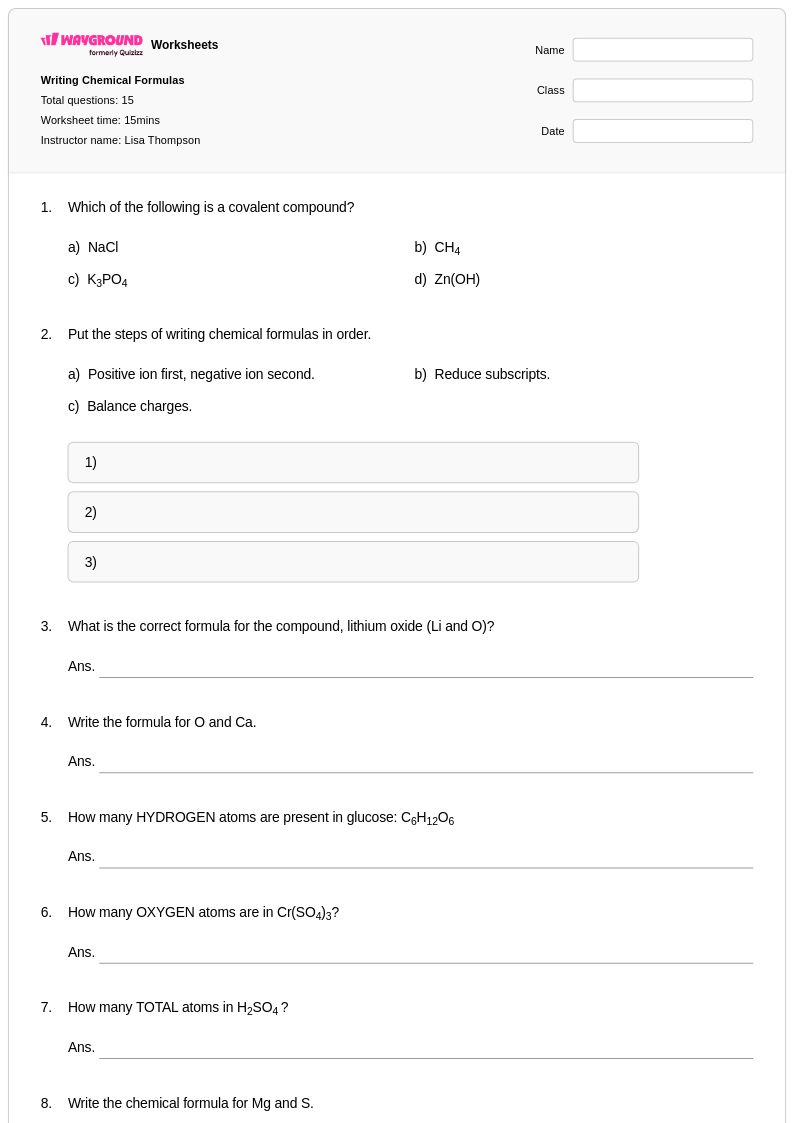
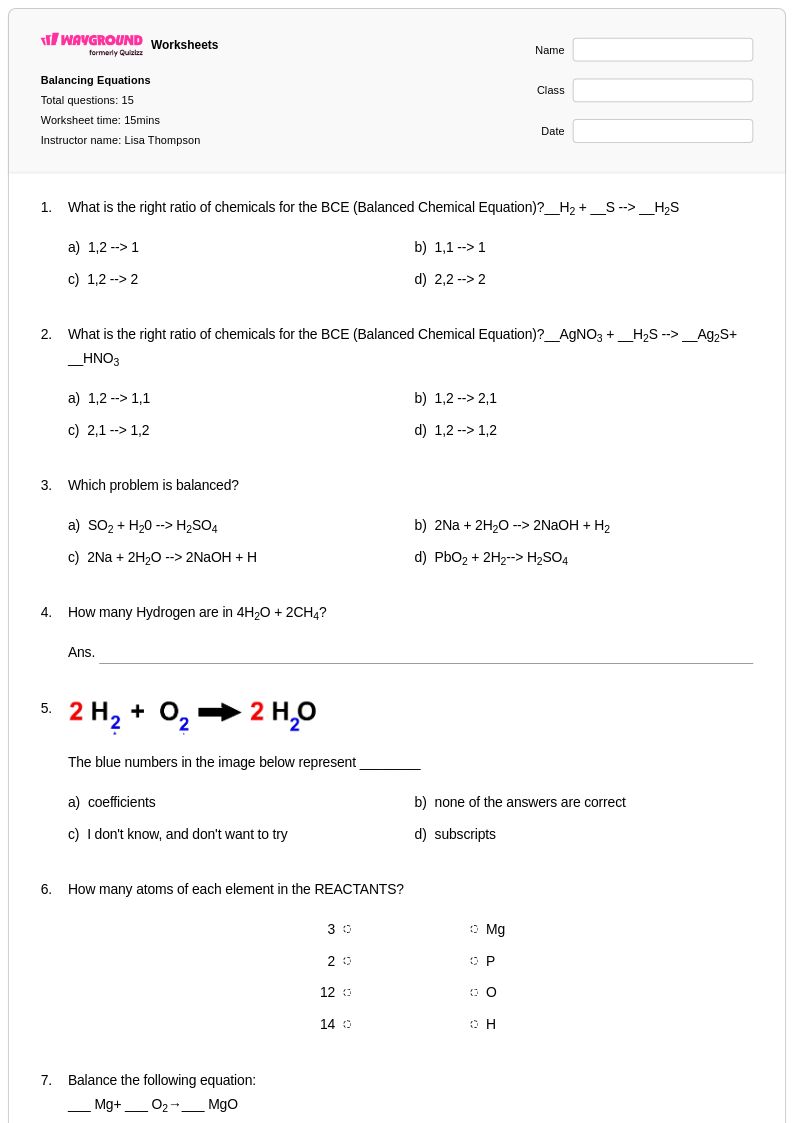
Chemical equation writing worksheets for Year 12 students available through Wayground (formerly Quizizz) provide comprehensive practice in balancing complex chemical equations and applying stoichiometric principles essential for advanced chemistry mastery. These expertly designed resources strengthen critical skills including identifying reactants and products, applying conservation of mass principles, balancing multi-step equations, and writing complete ionic and net ionic equations for various reaction types. Students develop proficiency in predicting products for synthesis, decomposition, single and double replacement reactions while working through carefully scaffolded practice problems that progress from fundamental concepts to advanced applications. Each worksheet collection includes detailed answer keys and is available as free printables in convenient PDF format, allowing students to build confidence through repeated practice with immediate feedback on their equation balancing techniques.
Wayground (formerly Quizizz) empowers chemistry educators with an extensive library of millions of teacher-created chemical equation writing resources specifically curated for Year 12 instruction. The platform's robust search and filtering capabilities enable teachers to quickly locate worksheets aligned with specific curriculum standards and learning objectives, while built-in differentiation tools allow seamless customization to meet diverse student needs within the same classroom. These versatile resources are available in both printable PDF format and interactive digital versions, providing maximum flexibility for lesson planning, targeted remediation sessions, and enrichment activities. Teachers can efficiently modify difficulty levels, select specific reaction types, and create customized practice sets that support skill development from basic equation balancing through advanced stoichiometric calculations, ensuring every student receives appropriate challenge and support in mastering this fundamental chemistry concept.
FAQs
How do I teach students to write and balance chemical equations?
Start by teaching students to identify reactants and products before introducing symbolic notation, then introduce the law of conservation of mass as the conceptual foundation for balancing. Have students practice with simple synthesis and decomposition reactions before progressing to more complex types like combustion or double displacement. A common instructional sequence moves from word equations to skeleton equations to fully balanced equations, giving students a scaffold that builds confidence at each stage.
What types of practice problems help students get better at writing chemical equations?
Effective practice includes translating word equations into symbolic form, completing skeleton equations by adding correct formulas, and balancing equations using coefficients without changing subscripts. Students benefit most from working through diverse reaction types, including synthesis, decomposition, single replacement, double replacement, and combustion, because each type reinforces different pattern recognition skills. Progressing from simpler to more complex reactions within each type helps build systematic fluency rather than rote memorization.
What mistakes do students commonly make when writing chemical equations?
The most frequent error is changing subscripts instead of coefficients when balancing, which alters the identity of the compound rather than the amount. Students also commonly forget to apply the conservation of mass principle and instead focus on making both sides look symmetrical by guessing. Another common misconception is writing incorrect formulas for polyatomic ions or diatomic elements, which undermines the entire equation before balancing even begins.
How do I differentiate chemical equation writing practice for students at different skill levels?
For beginning students, focus on simple one-step reactions with common elements and provide a reference table of polyatomic ions and diatomic molecules to reduce cognitive load. Intermediate students can work through multi-step balancing problems with transition metals and variable valences. Advanced learners benefit from stoichiometric extensions where they connect balanced equations to molar ratios and reaction yields. On Wayground, teachers can configure accommodations such as reduced answer choices and read-aloud support for individual students without disrupting the rest of the class.
How can I use Wayground's chemical equation writing worksheets in my classroom?
Wayground's chemical equation writing worksheets are available as printable PDFs for traditional classroom use and in digital formats for technology-integrated environments, giving teachers flexibility in how they assign and deliver practice. Teachers can also host the worksheets as a quiz directly on Wayground, which allows for structured formative assessment with immediate feedback. Each worksheet includes a detailed answer key, making them suitable for independent practice, homework, or in-class review without additional teacher preparation.
In what order should students learn the different types of chemical equations?
Students should begin with word equations to establish the concept of reactants and products in plain language, then move to skeleton equations where they practice writing correct chemical formulas without worrying about balance. Fully balanced equations should come last, once students are confident in formula writing, so that balancing with coefficients is the only new skill introduced at that stage. This sequence prevents students from conflating formula errors with balancing errors, making it easier to identify and correct specific gaps.