Free Printable Ions and Atoms Worksheets for Year 12
Year 12 chemistry worksheets on ions and atoms provide comprehensive practice problems and printables with answer keys to help students master atomic structure, ion formation, and chemical bonding concepts.
Explore printable Ions and Atoms worksheets for Year 12
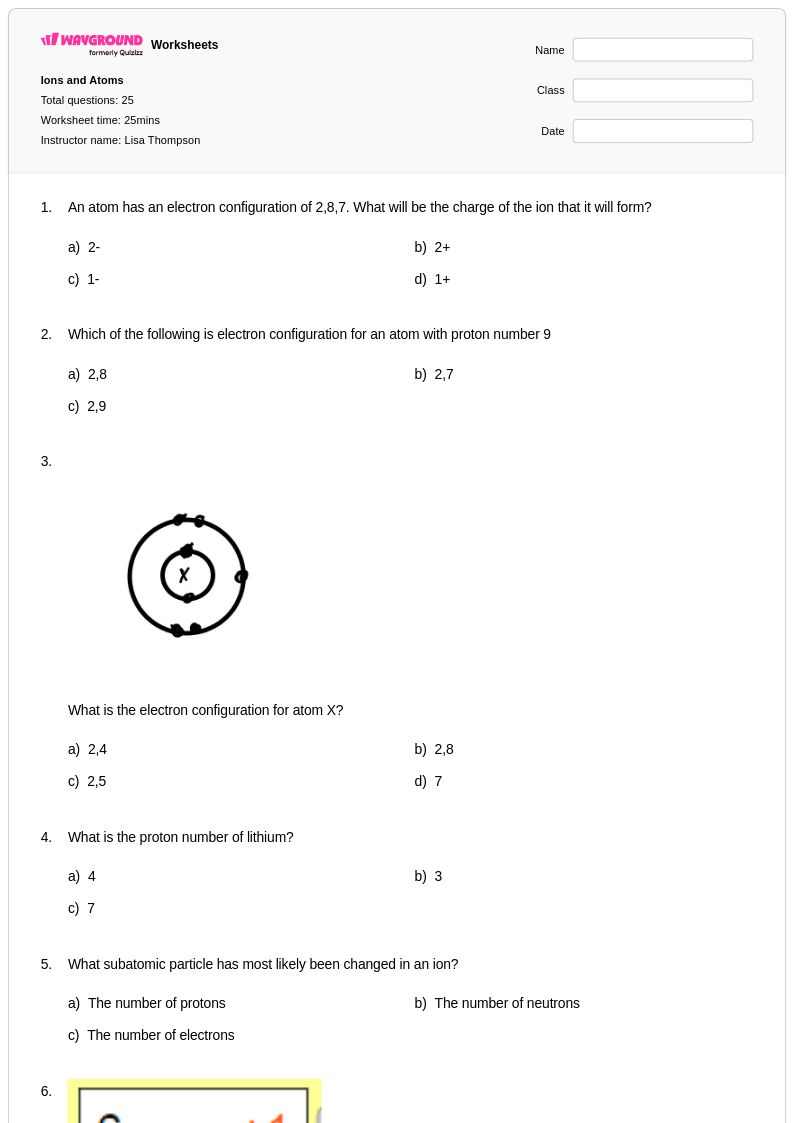
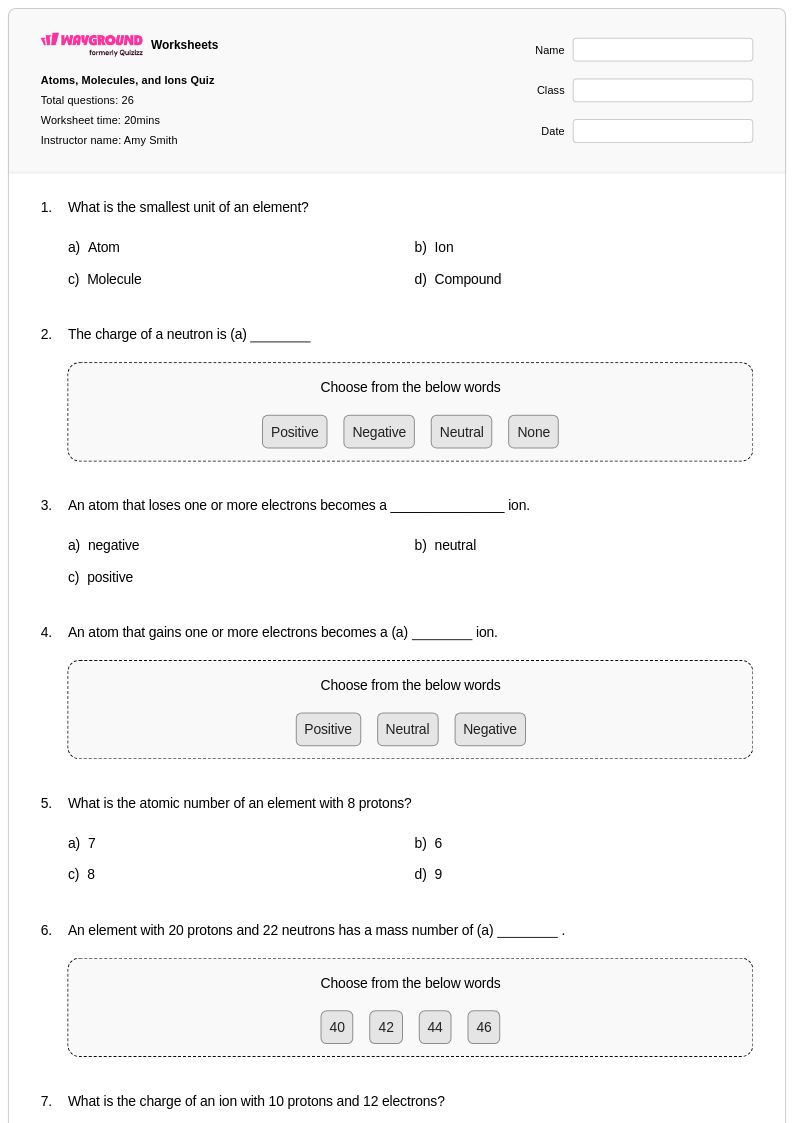
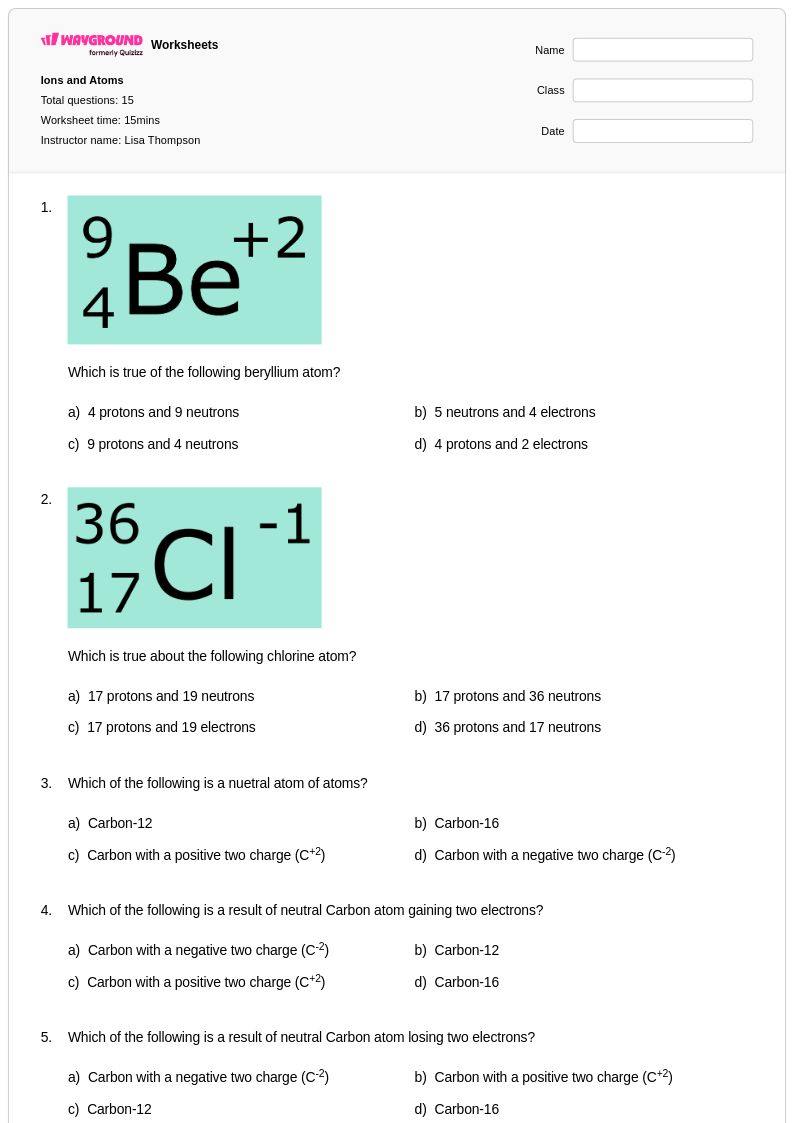
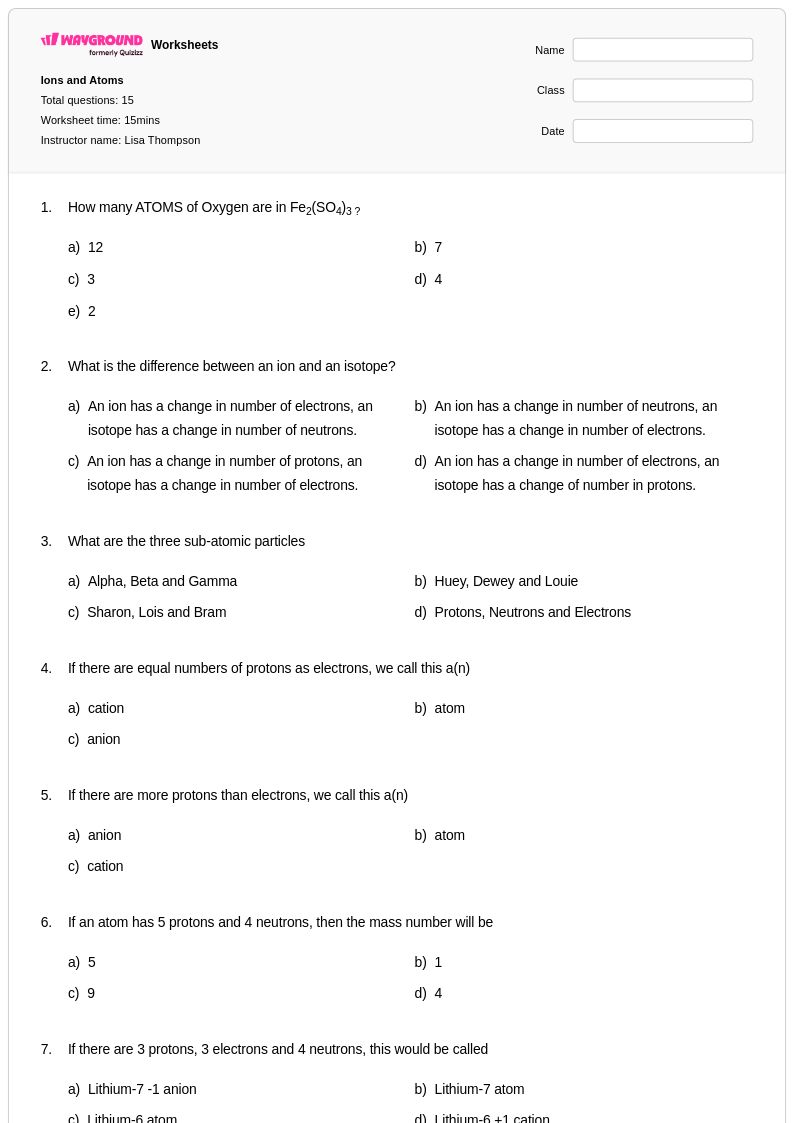
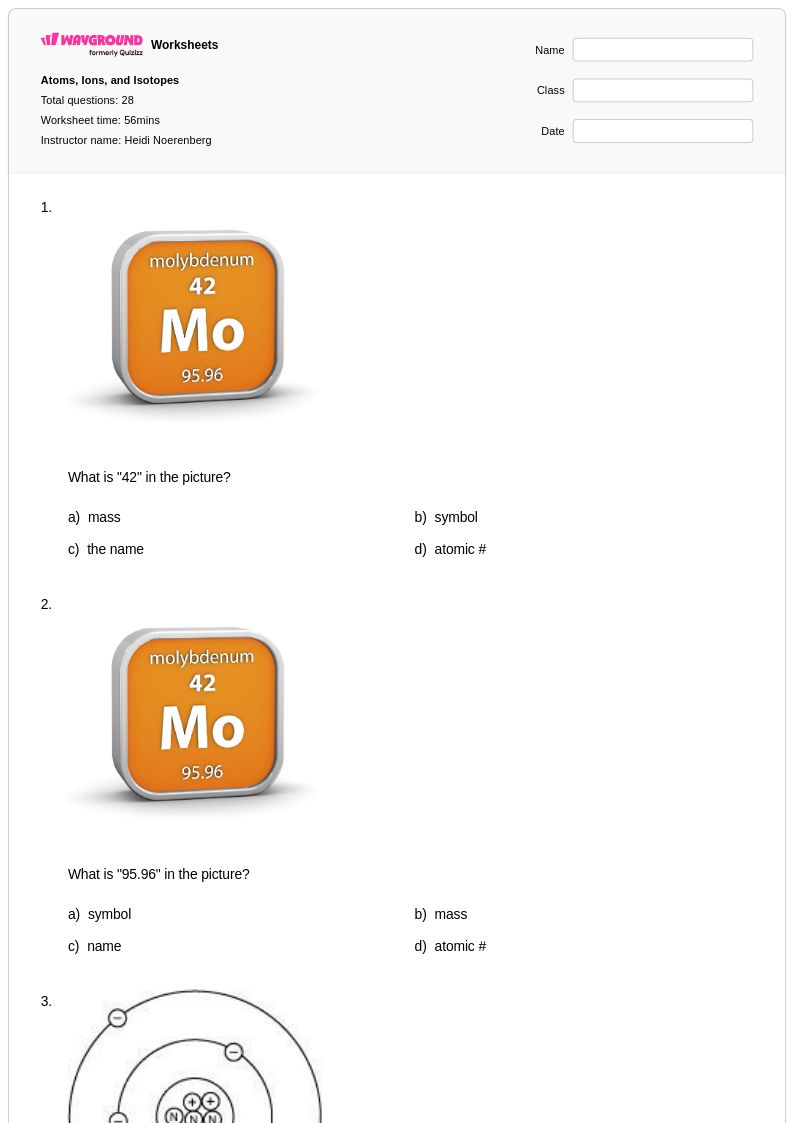
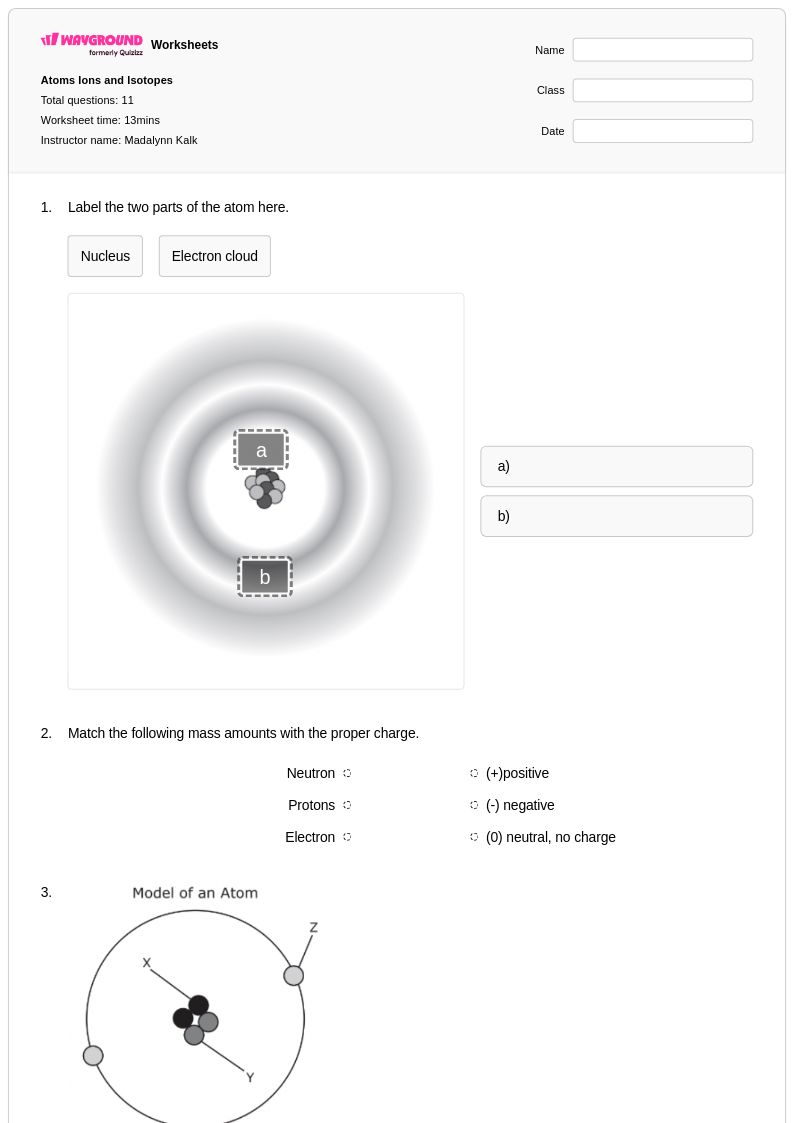
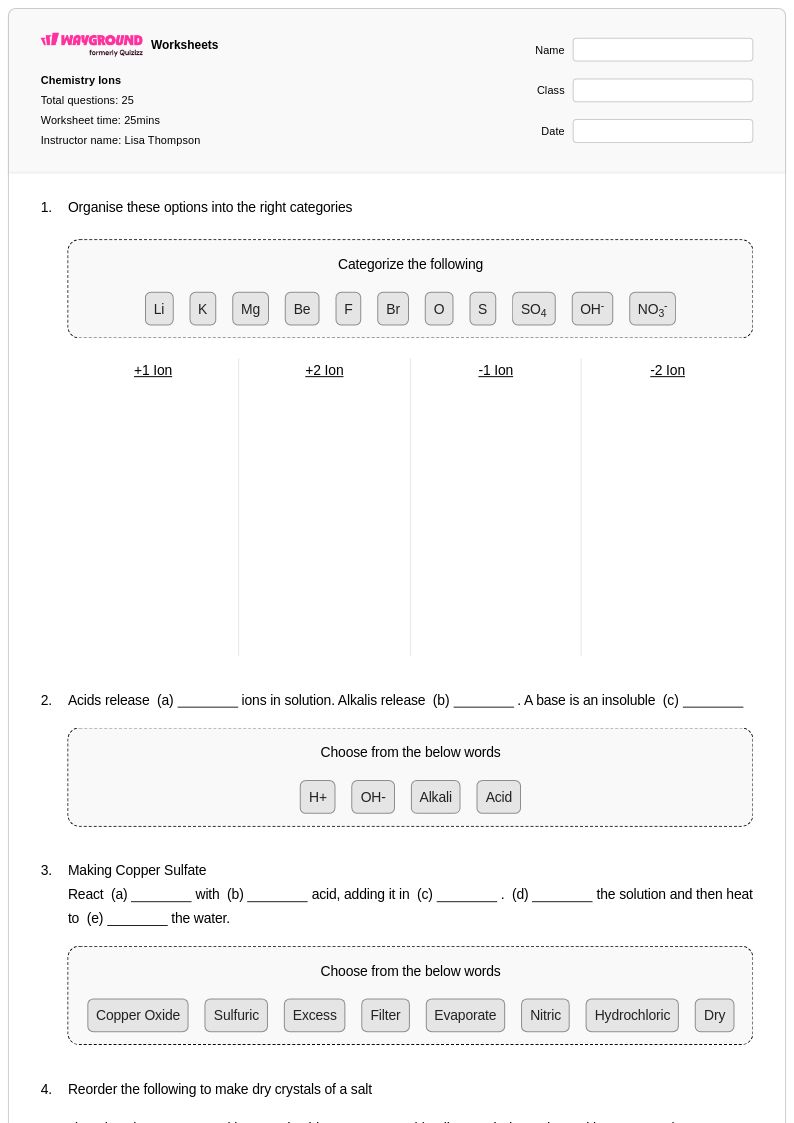
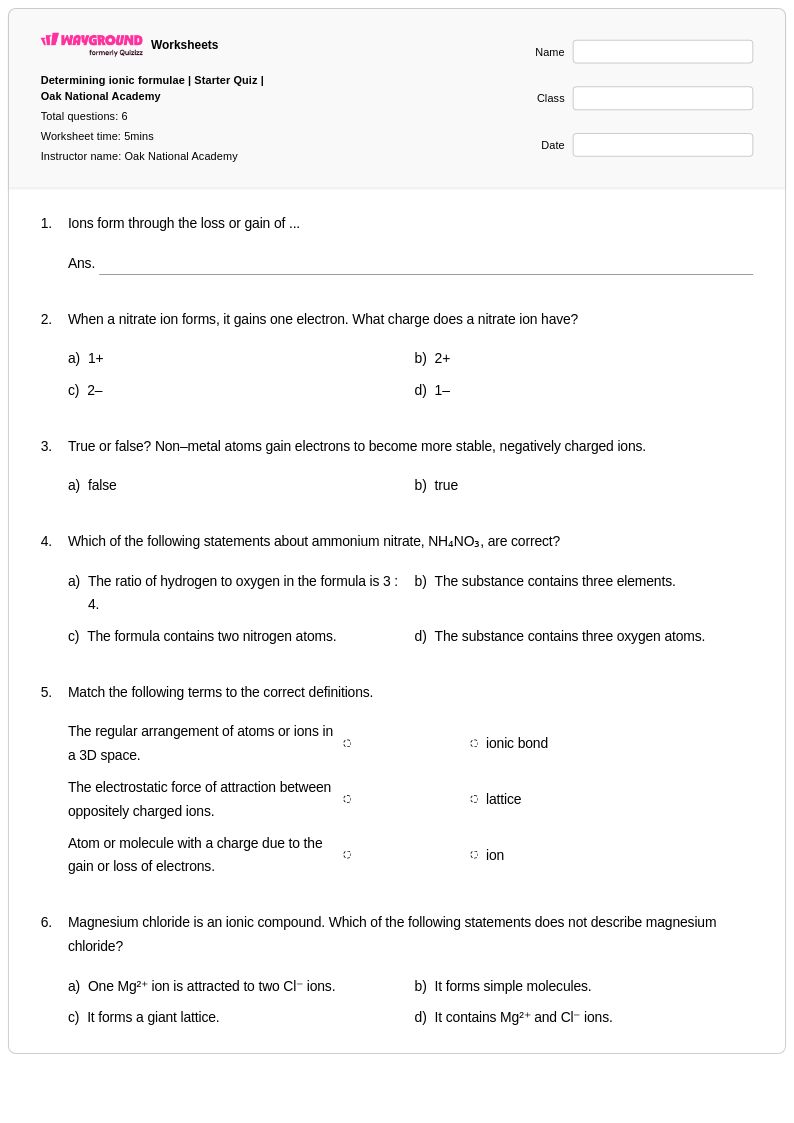
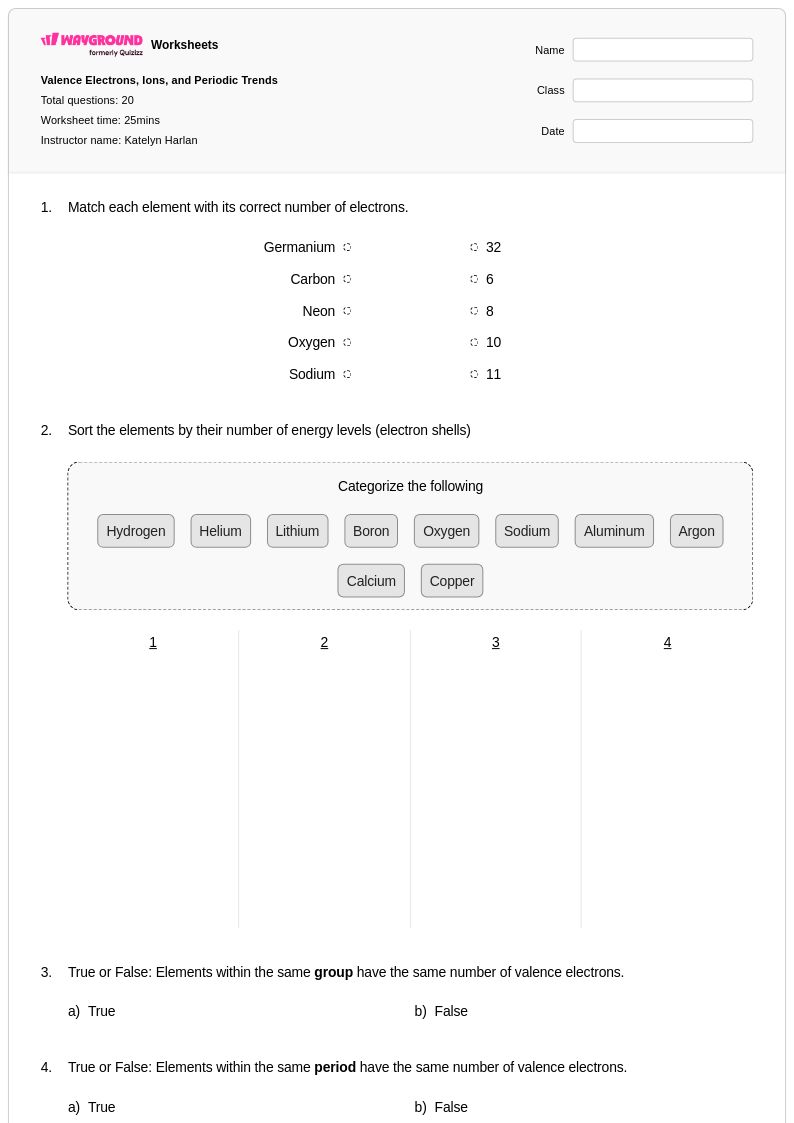
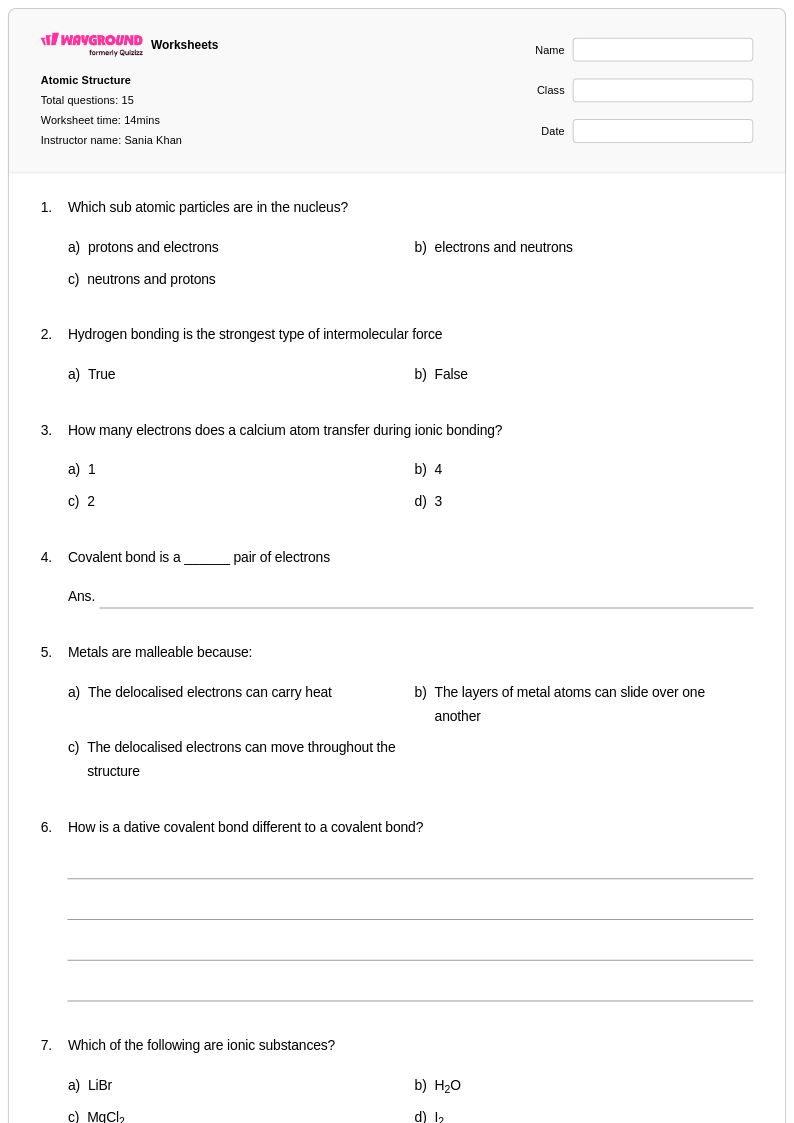
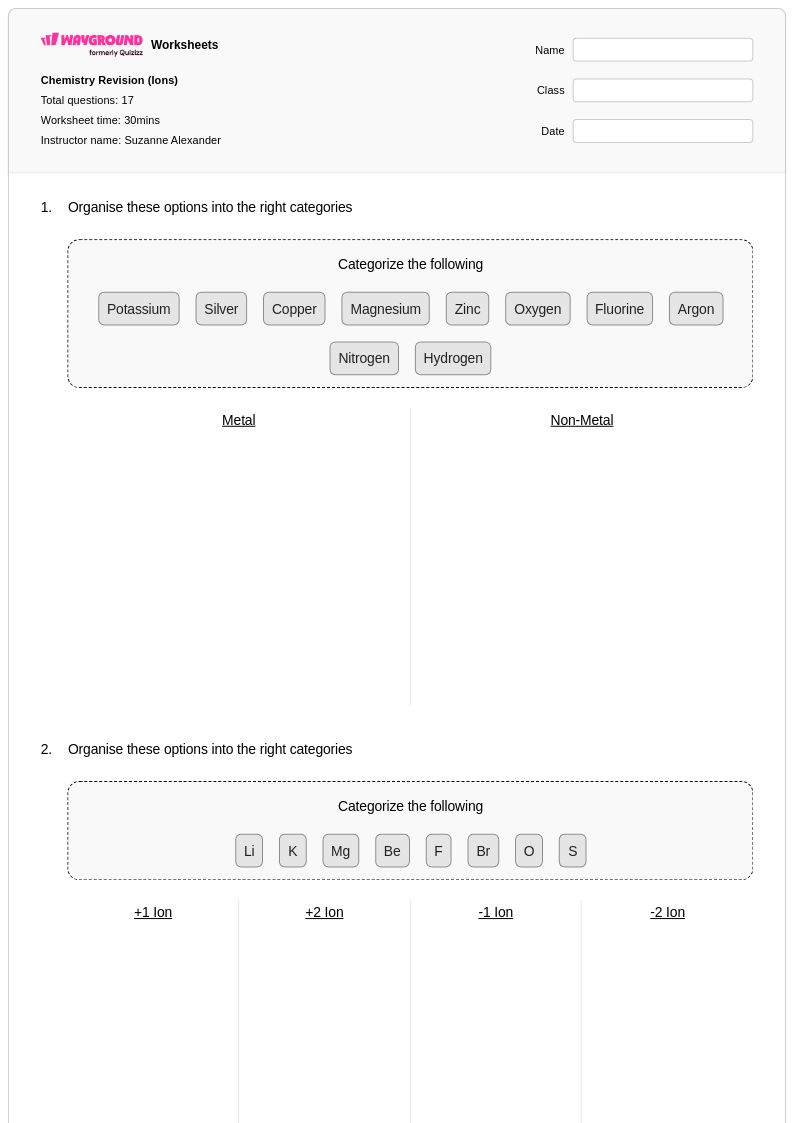
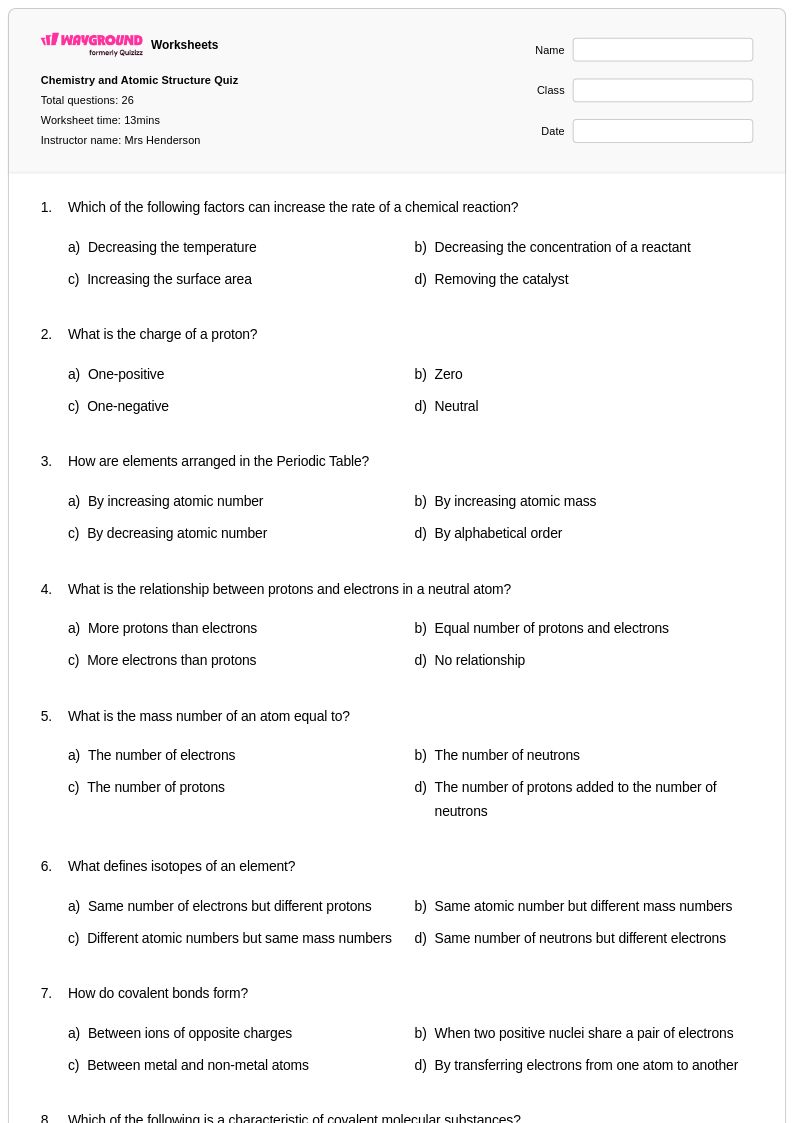
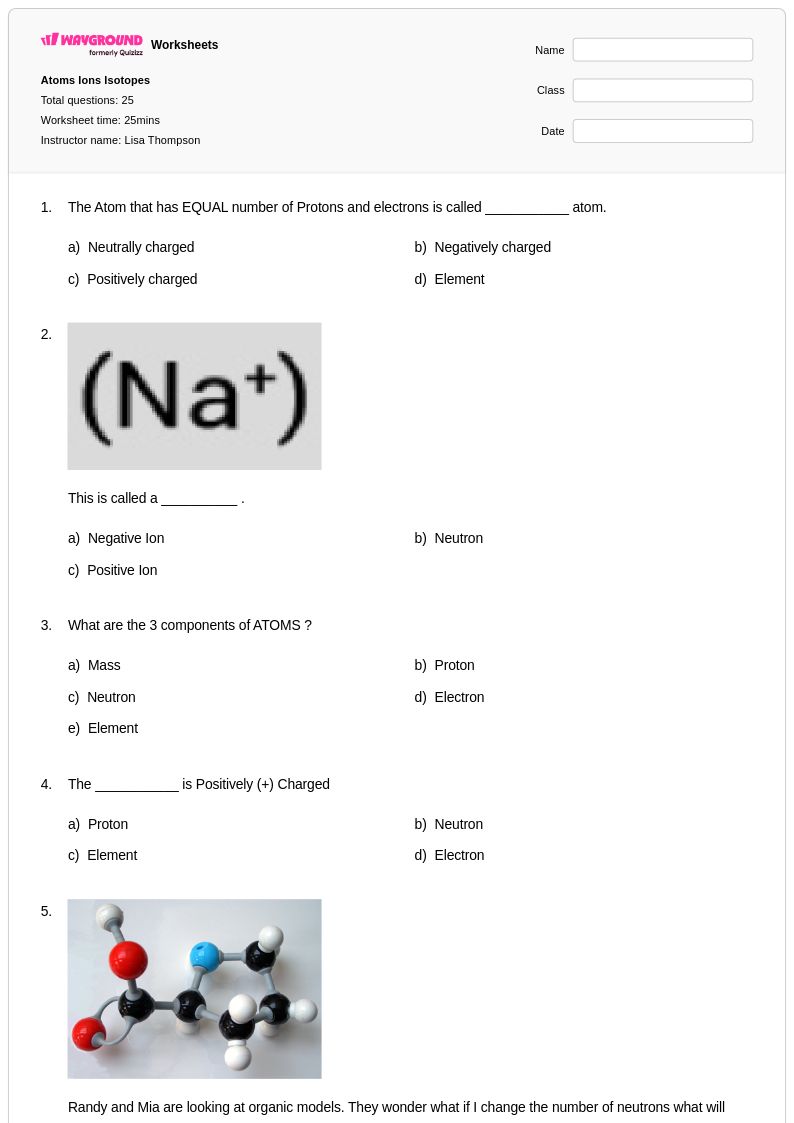
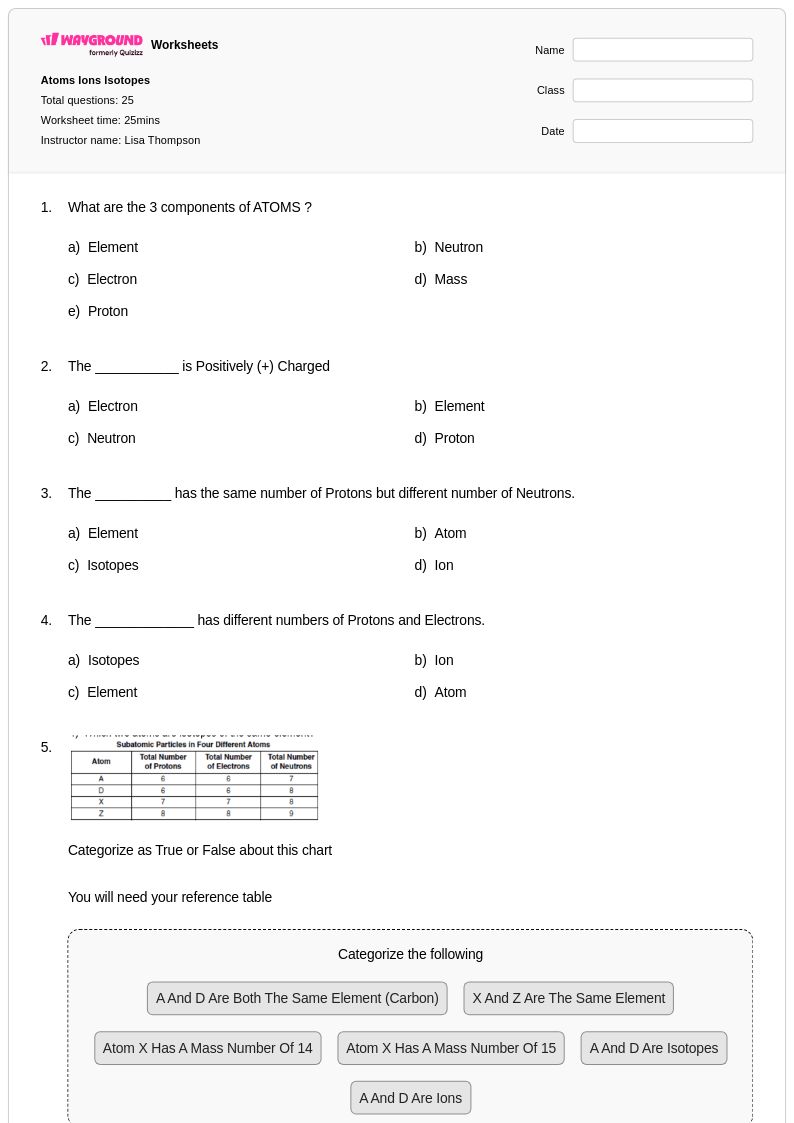
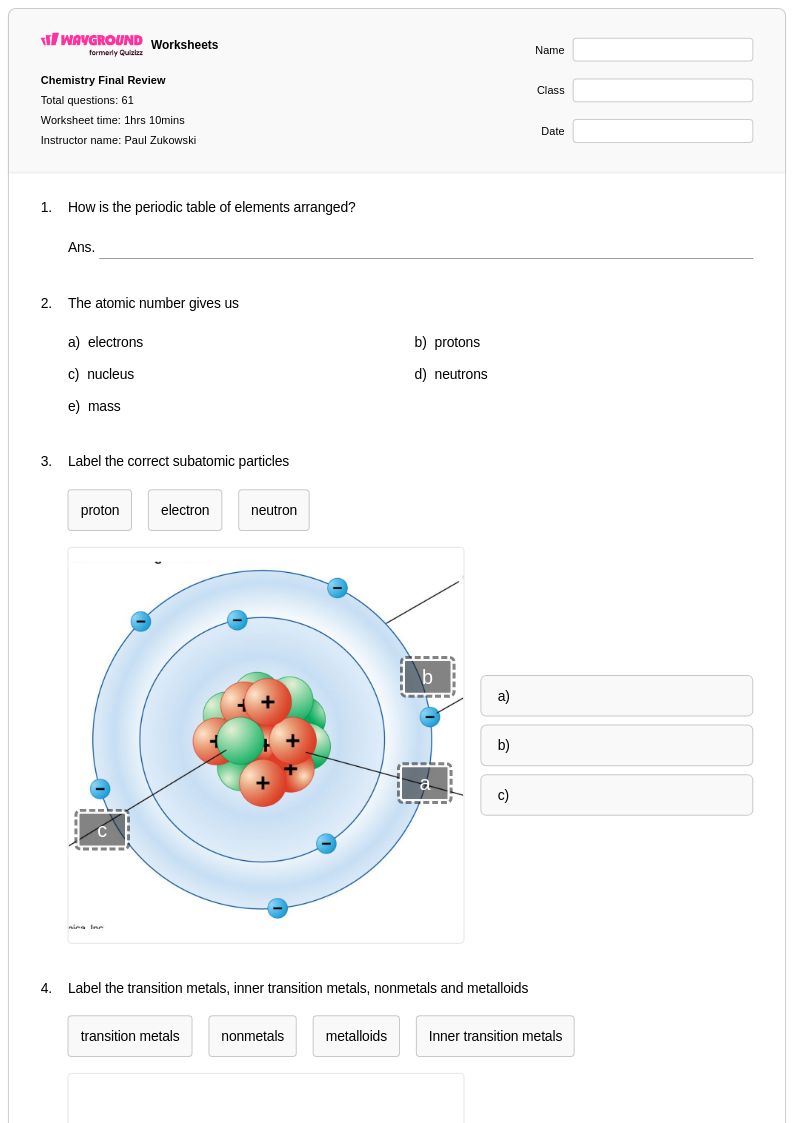
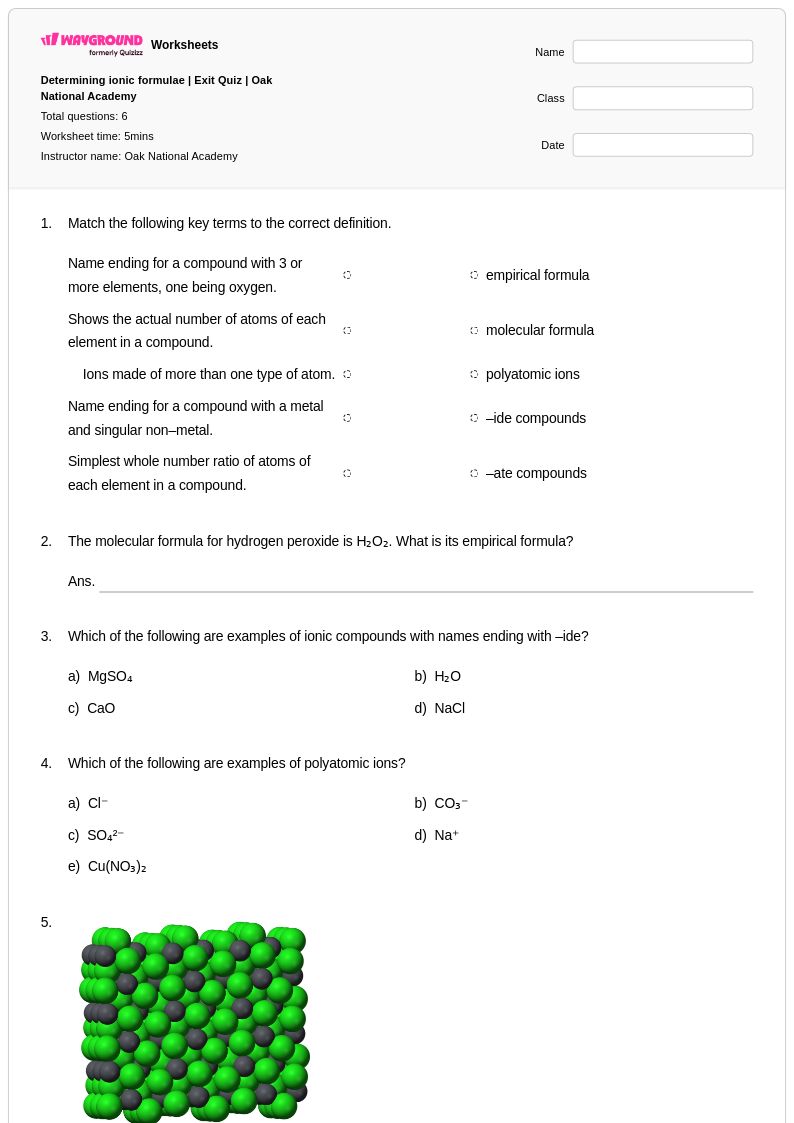
Year 12 ions and atoms worksheets available through Wayground (formerly Quizizz) provide comprehensive practice with fundamental concepts that bridge atomic structure and chemical bonding. These expertly designed resources strengthen students' understanding of electron configuration, ionization energy, atomic radius trends, and the formation of cations and anions across the periodic table. Each worksheet collection includes detailed answer keys and is available as free printables in convenient pdf format, allowing students to work through practice problems that cover electron dot structures, predicting ionic charges, and analyzing the relationship between atomic structure and ion formation. The materials emphasize critical thinking skills needed for advanced chemistry coursework, including the ability to explain periodic trends in terms of nuclear charge and electron shielding effects.
Wayground (formerly Quizizz) supports chemistry educators with millions of teacher-created resources specifically designed for Year 12 ions and atoms instruction, featuring robust search and filtering capabilities that align with state and national chemistry standards. The platform's differentiation tools enable teachers to customize worksheets for varying skill levels, while flexible formatting options provide both printable and digital versions including downloadable pdf files for seamless classroom integration. These comprehensive collections facilitate effective lesson planning by offering multiple assessment formats, from conceptual understanding checks to computational practice problems, making them invaluable for targeted remediation of electron configuration concepts and enrichment activities that challenge advanced learners to apply periodic trends in predicting ionic behavior and chemical reactivity patterns.
FAQs
How do I teach students the difference between atoms and ions?
Start by ensuring students have a firm grasp of atomic structure, specifically the roles of protons, neutrons, and electrons, before introducing the concept of ion formation. Emphasize that an atom becomes an ion when it gains or loses electrons, which changes its charge but not its identity as an element. Using the periodic table to show predictable charge patterns for groups of elements helps students connect atomic structure to ionic behavior in a systematic way.
What exercises help students practice identifying cations and anions?
Practice problems that require students to determine whether an atom has gained or lost electrons are most effective for building cation and anion identification skills. Exercises that pair atomic diagrams with charge calculations, or ask students to predict ionic charges based on periodic group trends, reinforce both conceptual understanding and procedural accuracy. Structured practice with electron configuration notation alongside ion identification deepens the connection between atomic structure and charge formation.
What mistakes do students commonly make when learning about ions and atoms?
One of the most frequent misconceptions is that losing electrons makes an atom negatively charged, when in fact losing electrons produces a positively charged cation. Students also commonly confuse atomic number with mass number, leading to errors in electron configuration and ion charge predictions. Another persistent error is assuming that all atoms form ions with the same charge, rather than recognizing that charge is determined by the element's position in the periodic table and its valence electron count.
How can I help struggling students understand oxidation states and ionic charges?
Breaking oxidation state determination into explicit steps, such as identifying valence electrons first and then applying charge rules for common groups, reduces cognitive overload for struggling learners. Color-coded periodic tables that highlight predictable ionic charges by group can serve as effective scaffolds during initial practice. On Wayground, teachers can apply accommodations such as reduced answer choices and read-aloud support to individual students, making the same worksheet accessible across varying skill levels without singling anyone out.
How do I use Wayground's ions and atoms worksheets in my classroom?
Wayground's ions and atoms worksheets are available as printable PDFs for traditional classroom use and in digital formats for technology-integrated environments, giving teachers flexibility across instructional settings. Teachers can also host these worksheets as a live quiz directly on Wayground, which enables real-time tracking of student responses and immediate identification of misconceptions. This makes the materials suitable for direct instruction support, independent practice, homework assignments, and formative assessment checkpoints within a chemistry unit.
How do I differentiate ions and atoms instruction for advanced versus remedial students?
For advanced learners, extend practice to include predicting ionic charges for transition metals, writing full electron configurations for ions, and exploring how ionic charge affects bonding behavior. For students who need remediation, focus first on the proton-electron relationship and use simplified diagrams before introducing periodic trends. Wayground's built-in differentiation tools allow teachers to customize worksheet experiences by adjusting answer choices or enabling read-aloud support for individual students, so the same resource can serve multiple learner profiles simultaneously.