Free Printable Balancing Chemical Equations Worksheets for Year 12
Year 12 balancing chemical equations worksheets provide comprehensive practice problems and answer keys to help students master stoichiometry concepts through printable PDF exercises and free learning materials.
Explore printable Balancing Chemical Equations worksheets for Year 12
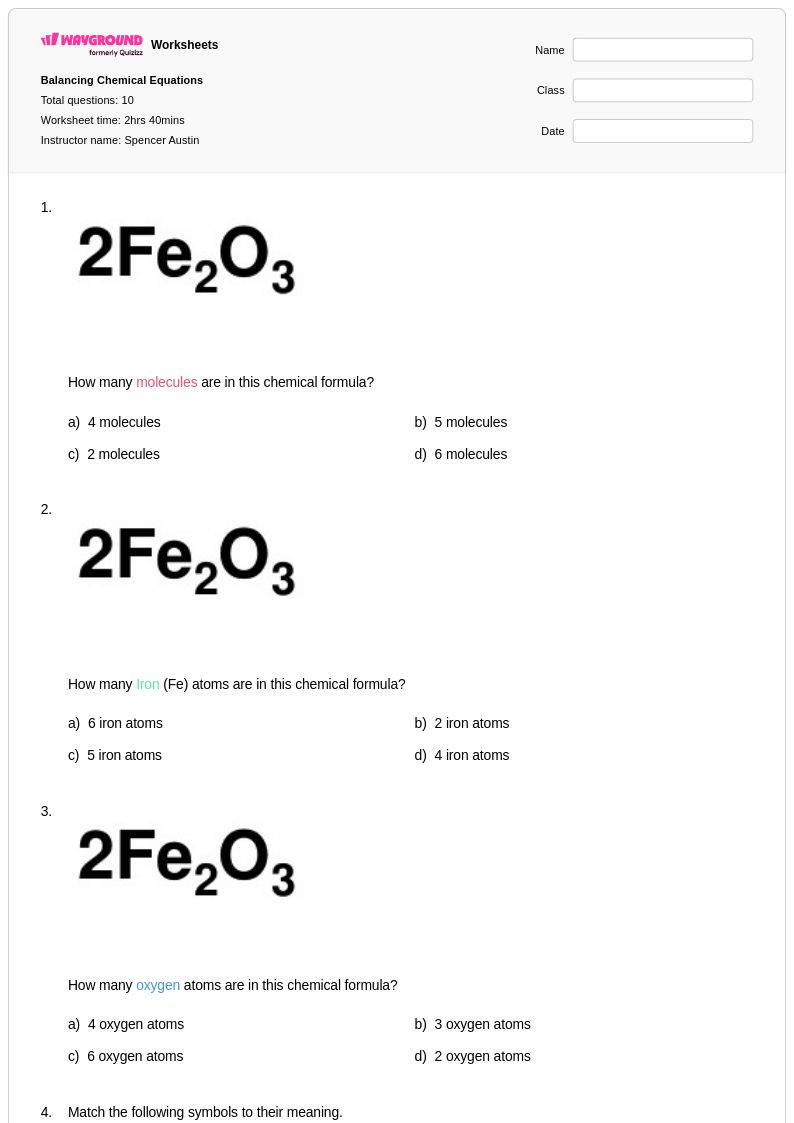
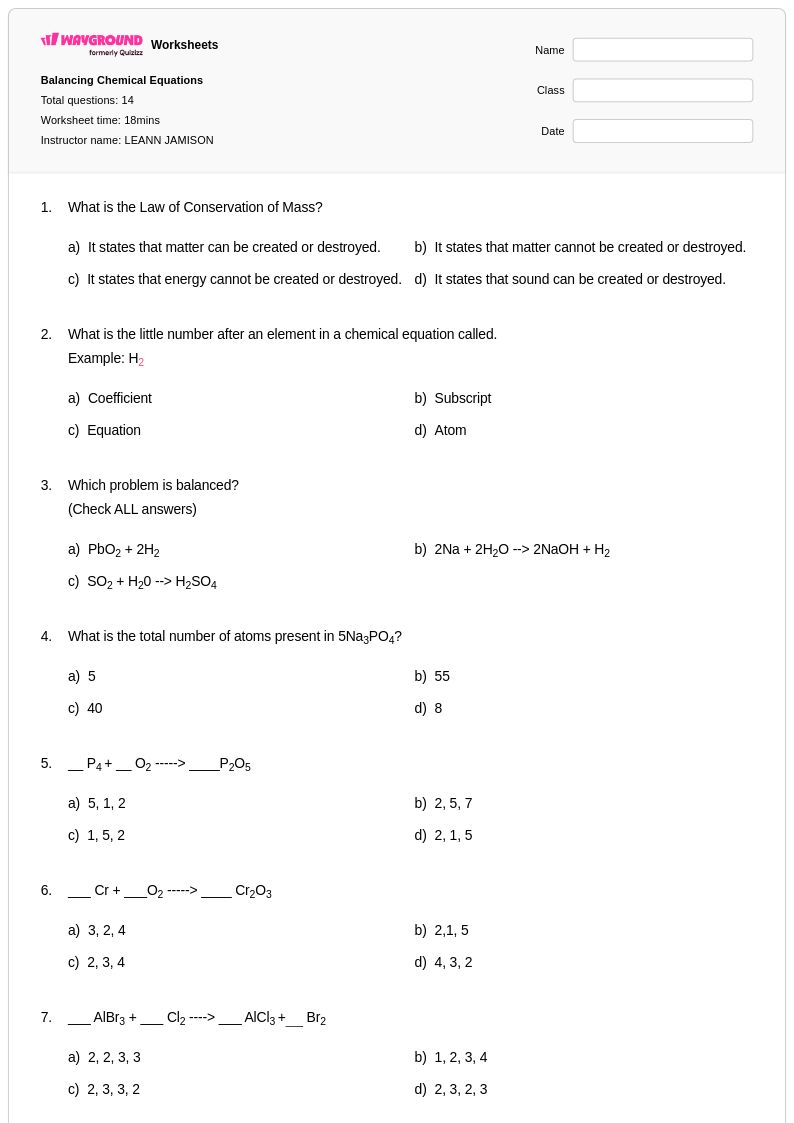
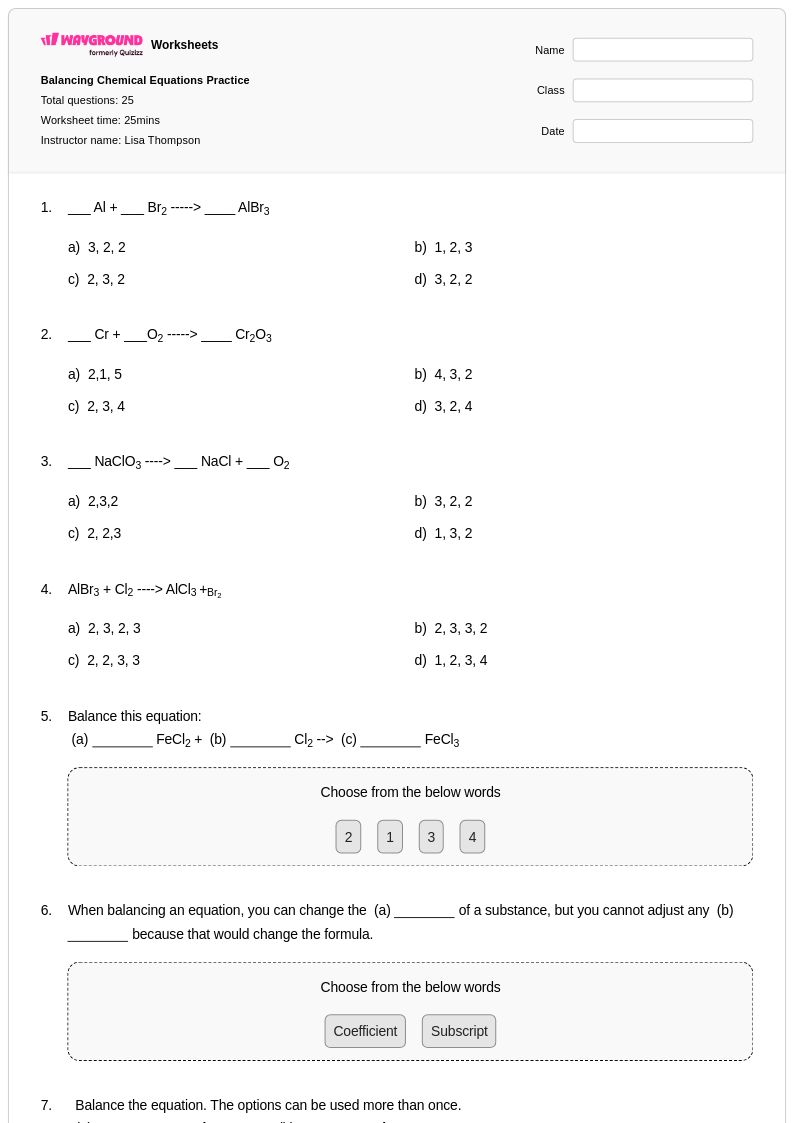
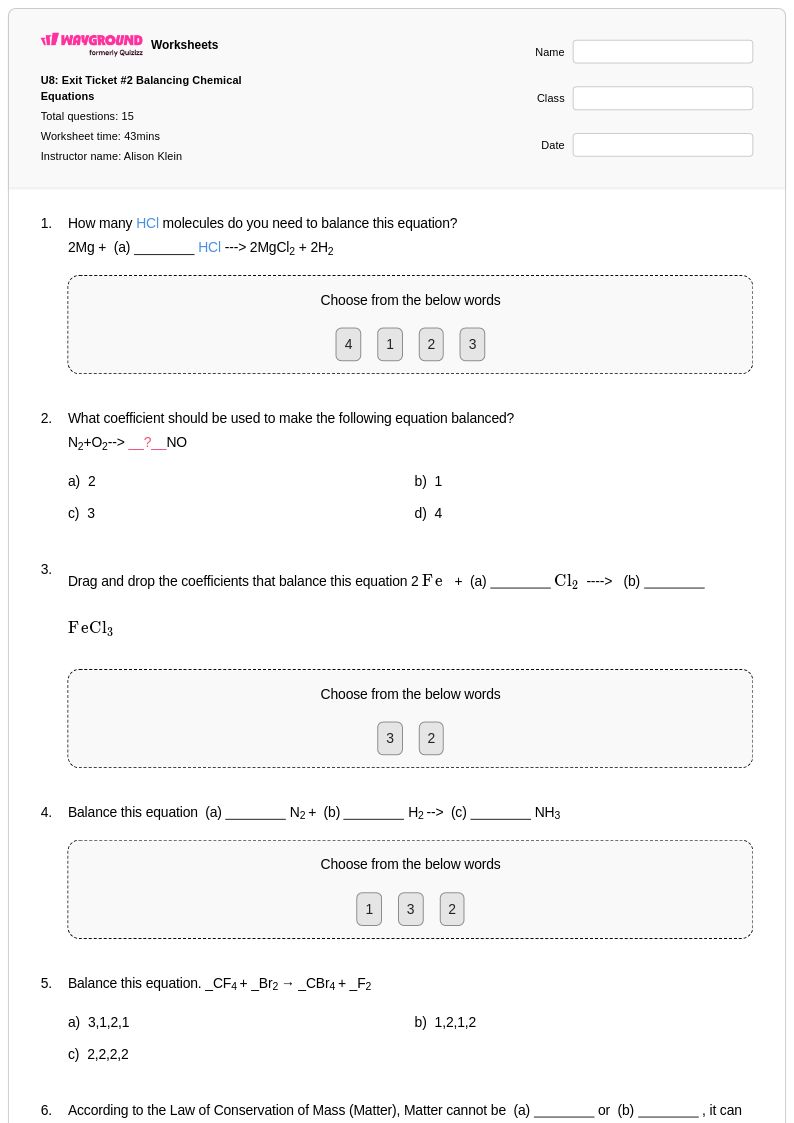
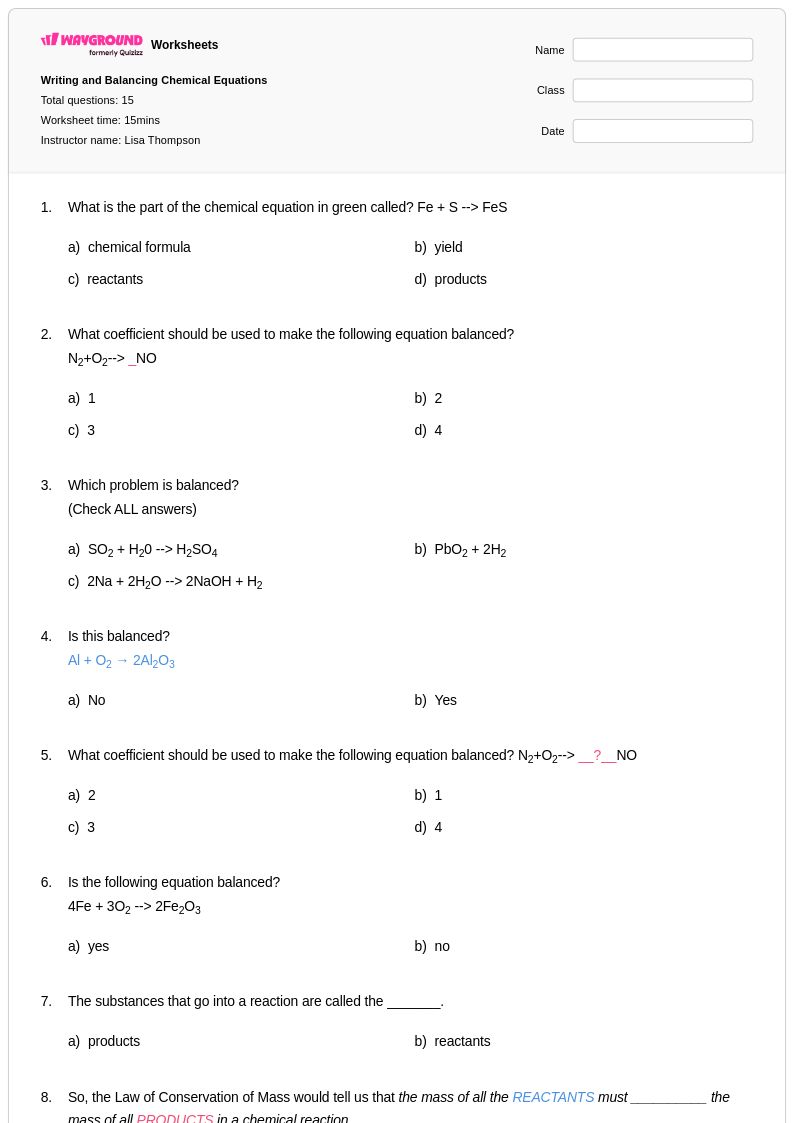
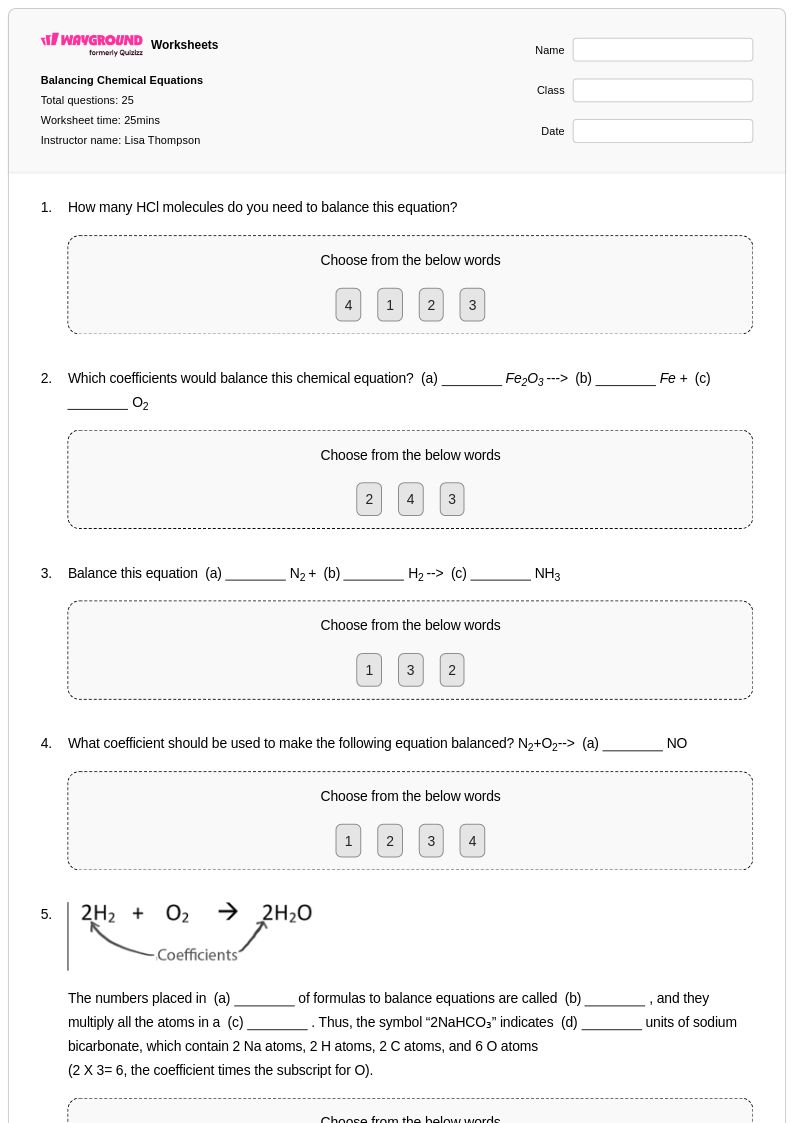
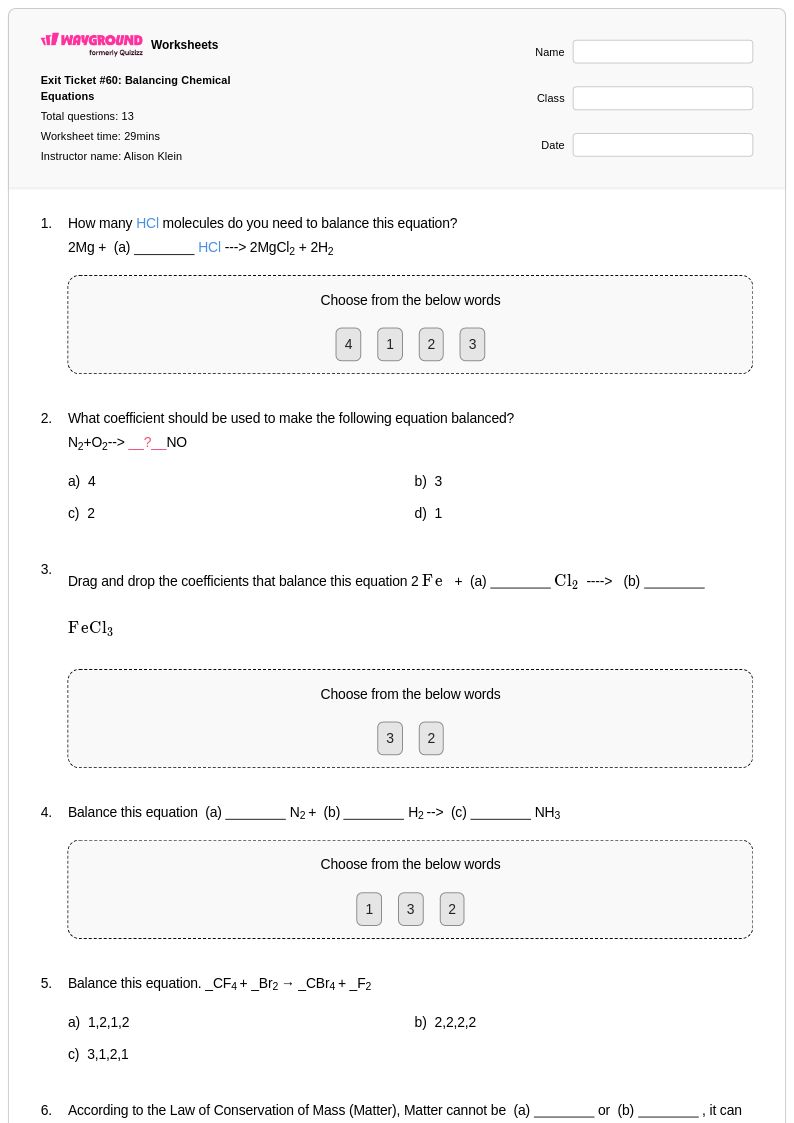
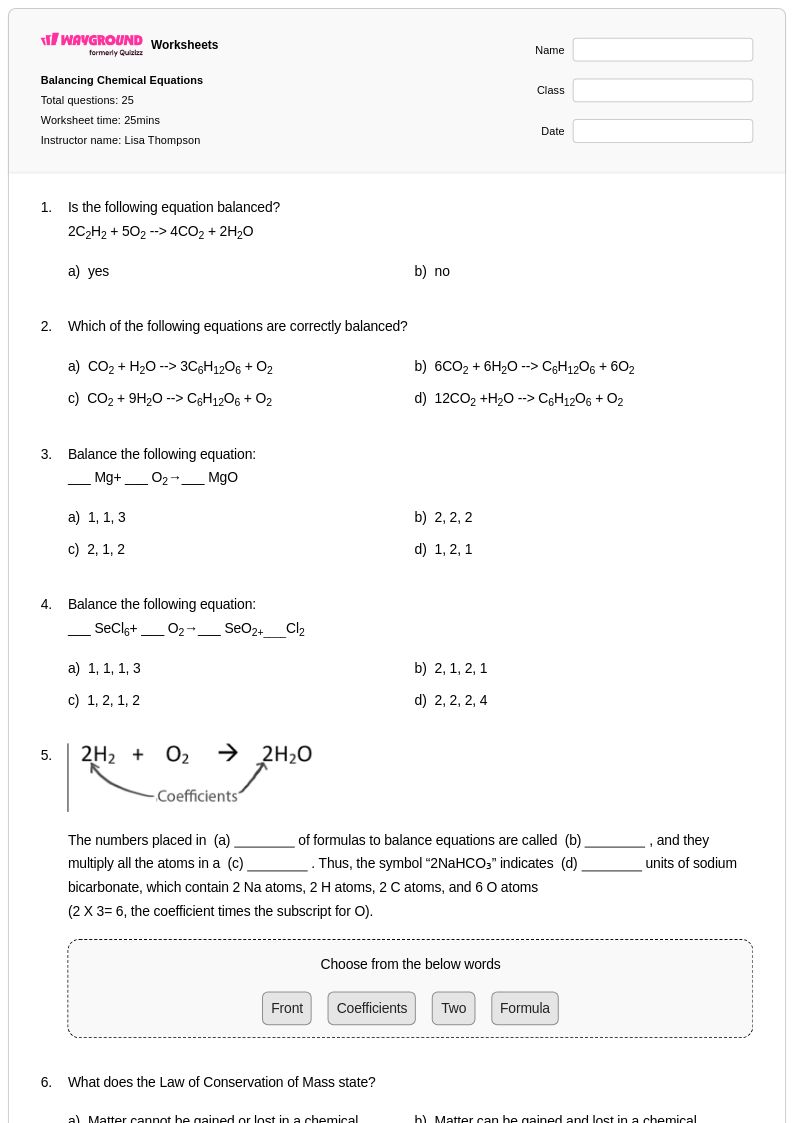
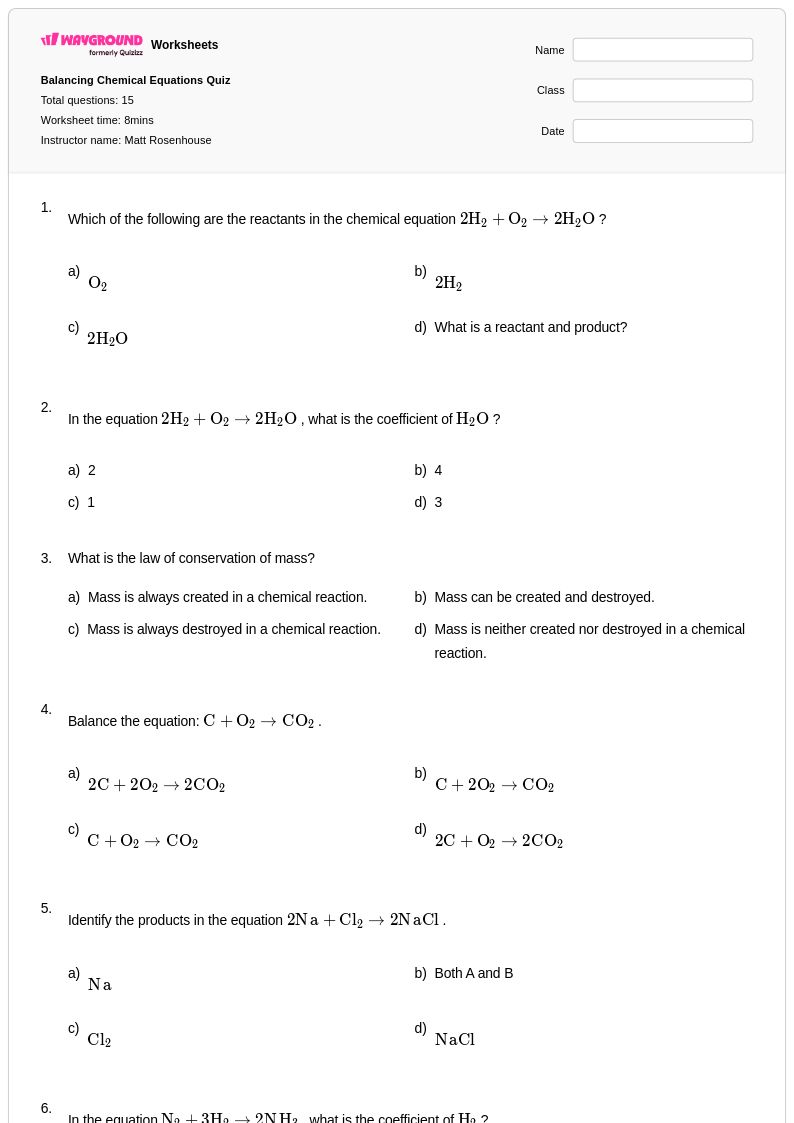
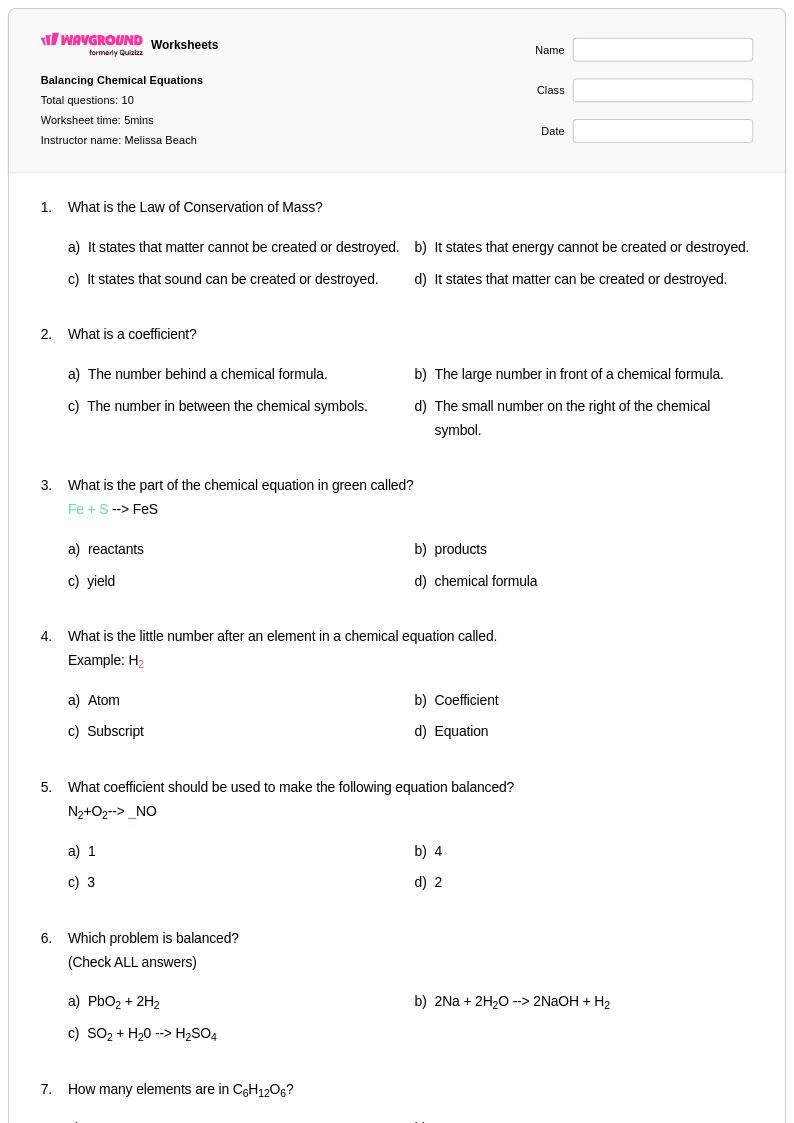
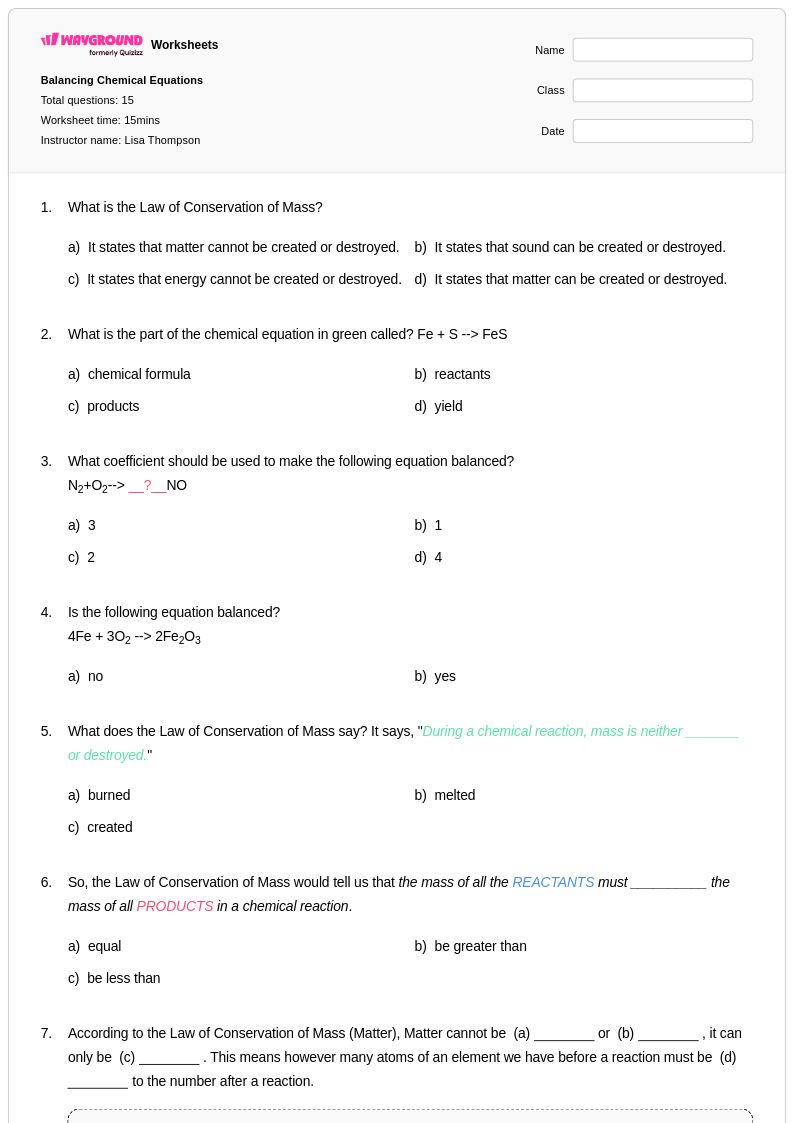
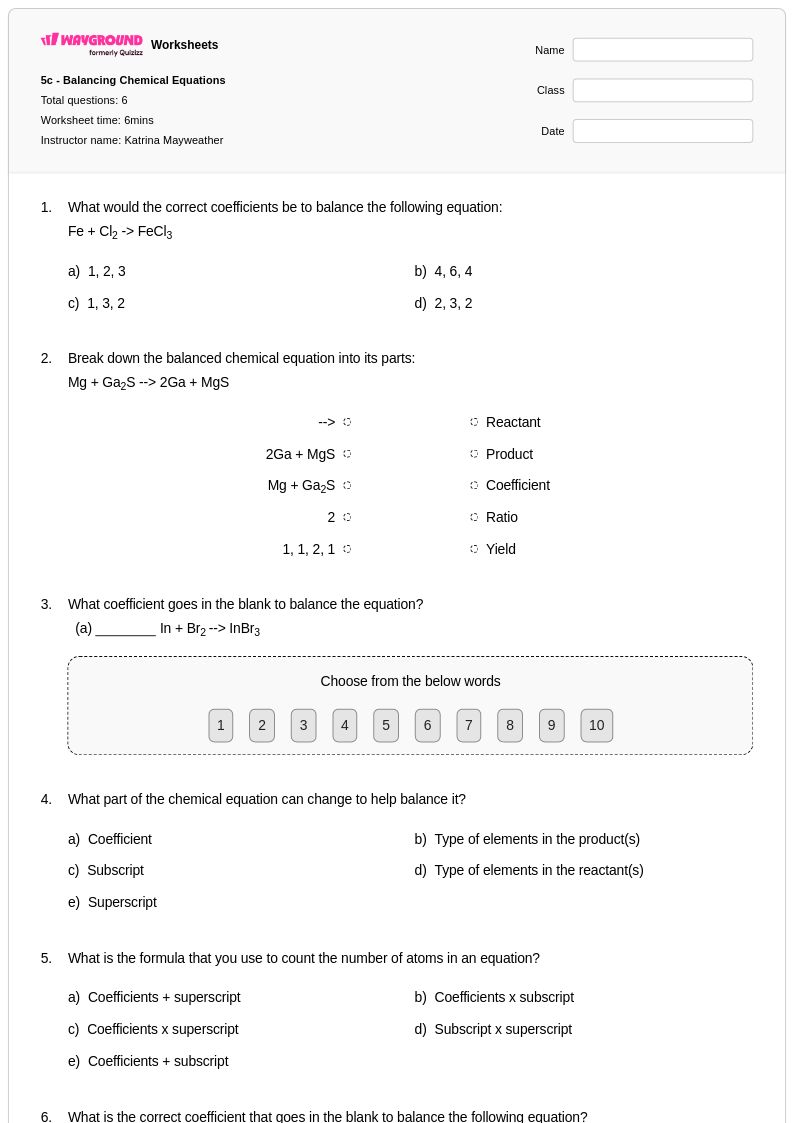
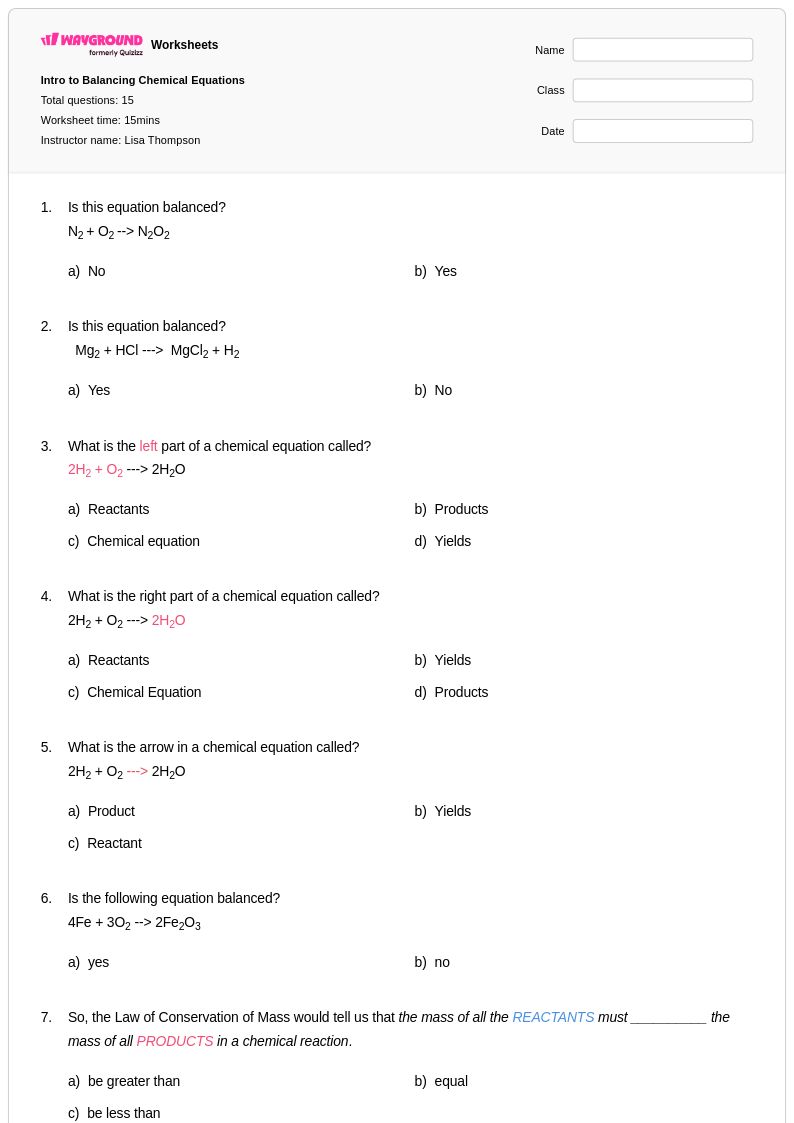
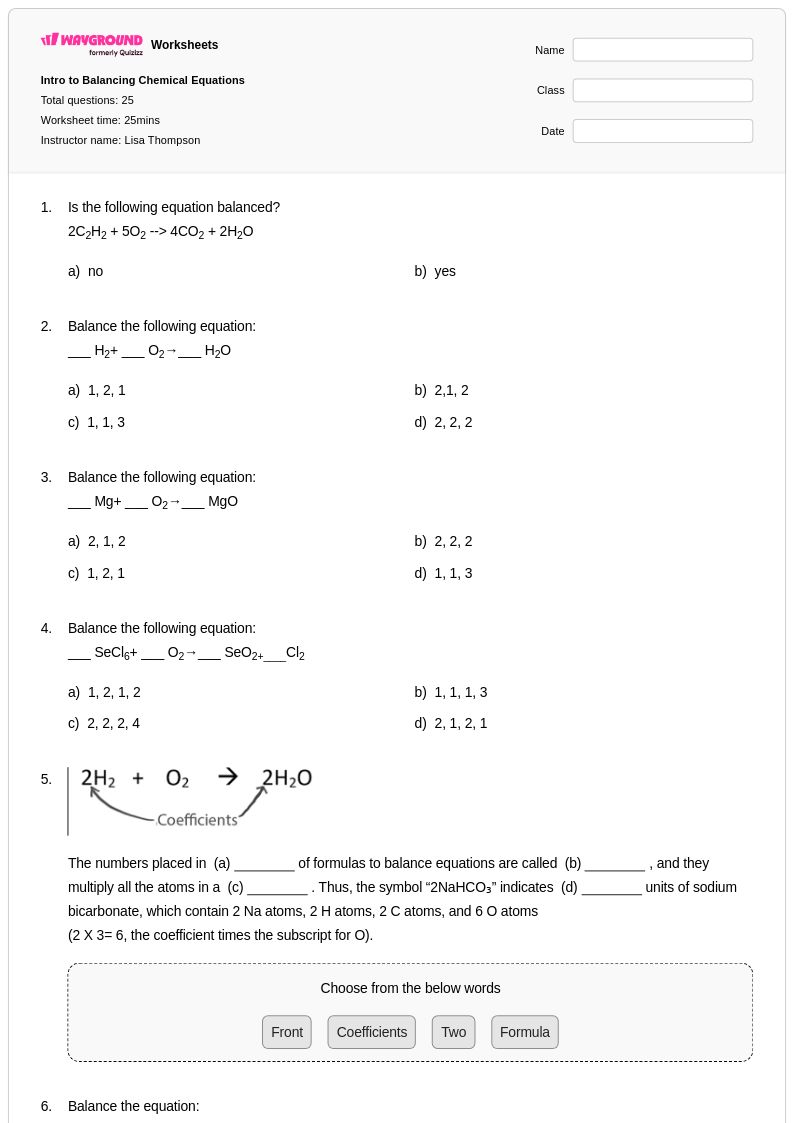
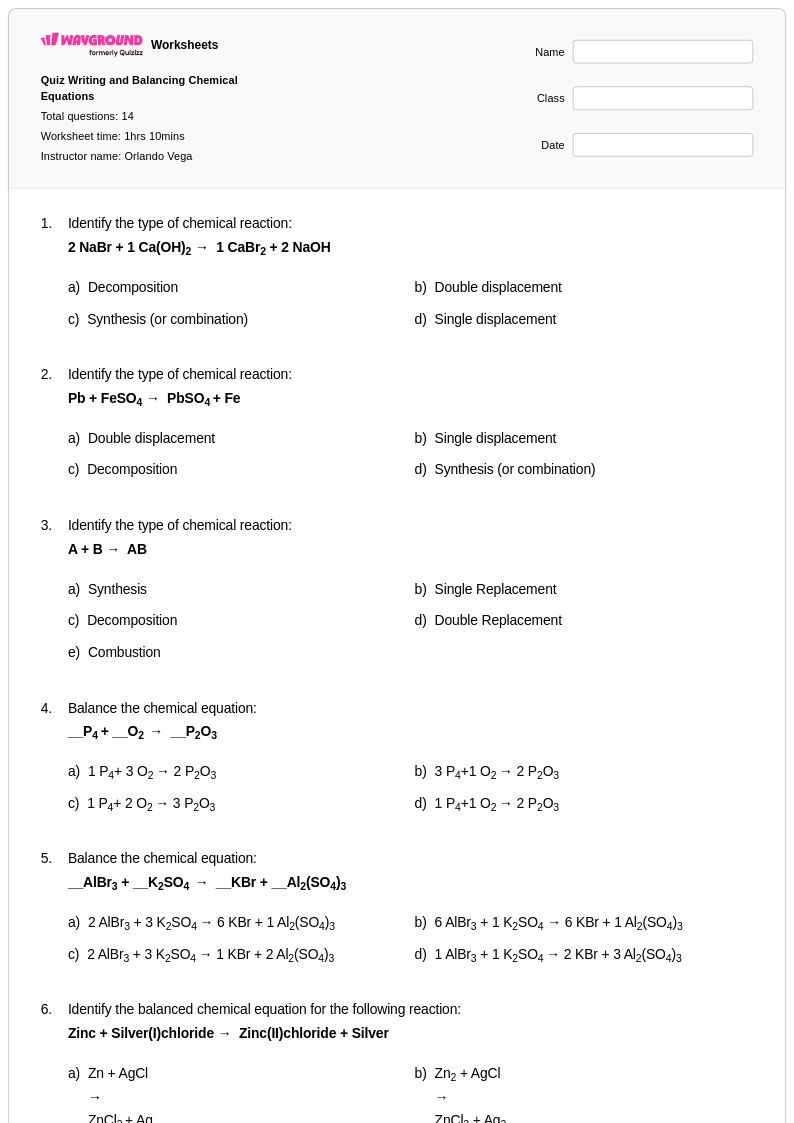
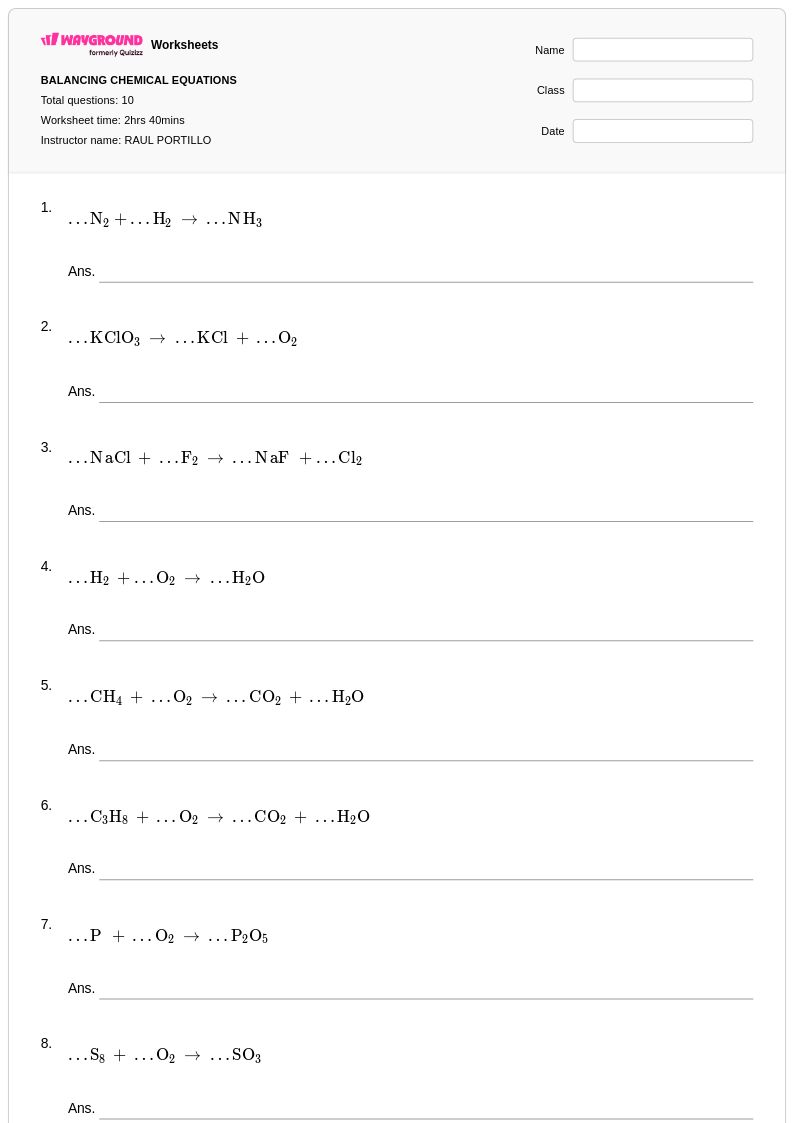
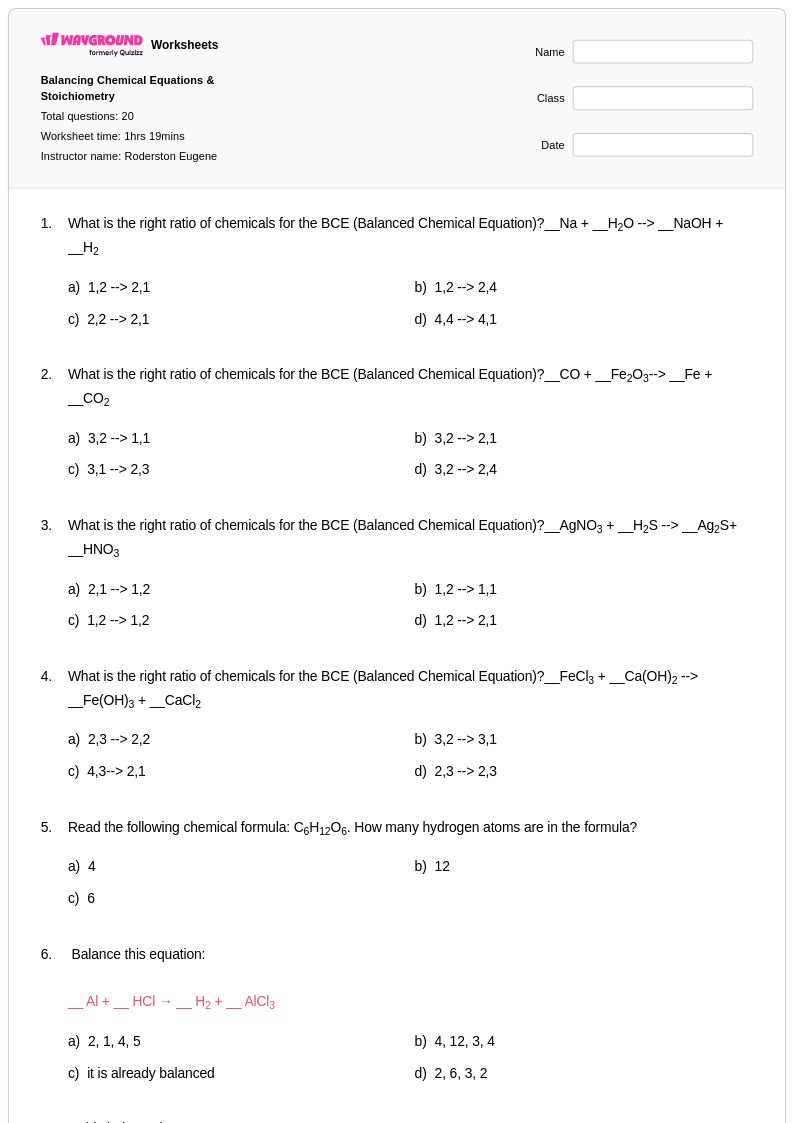
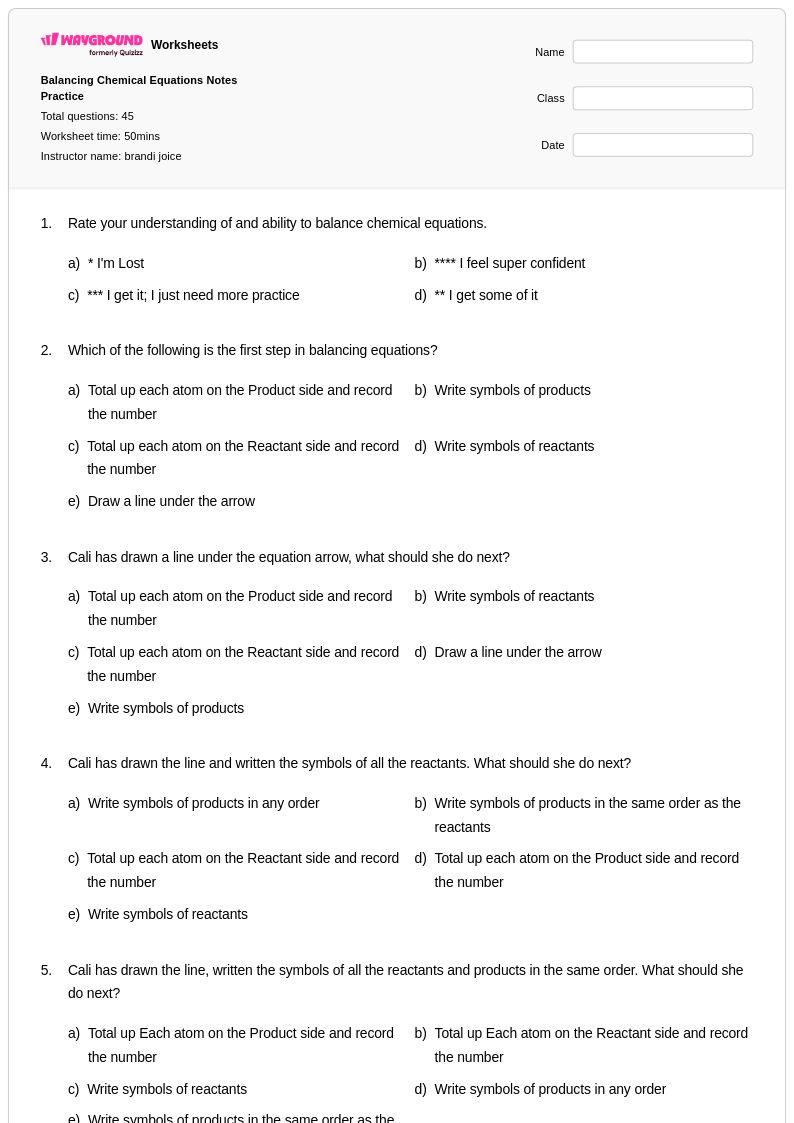
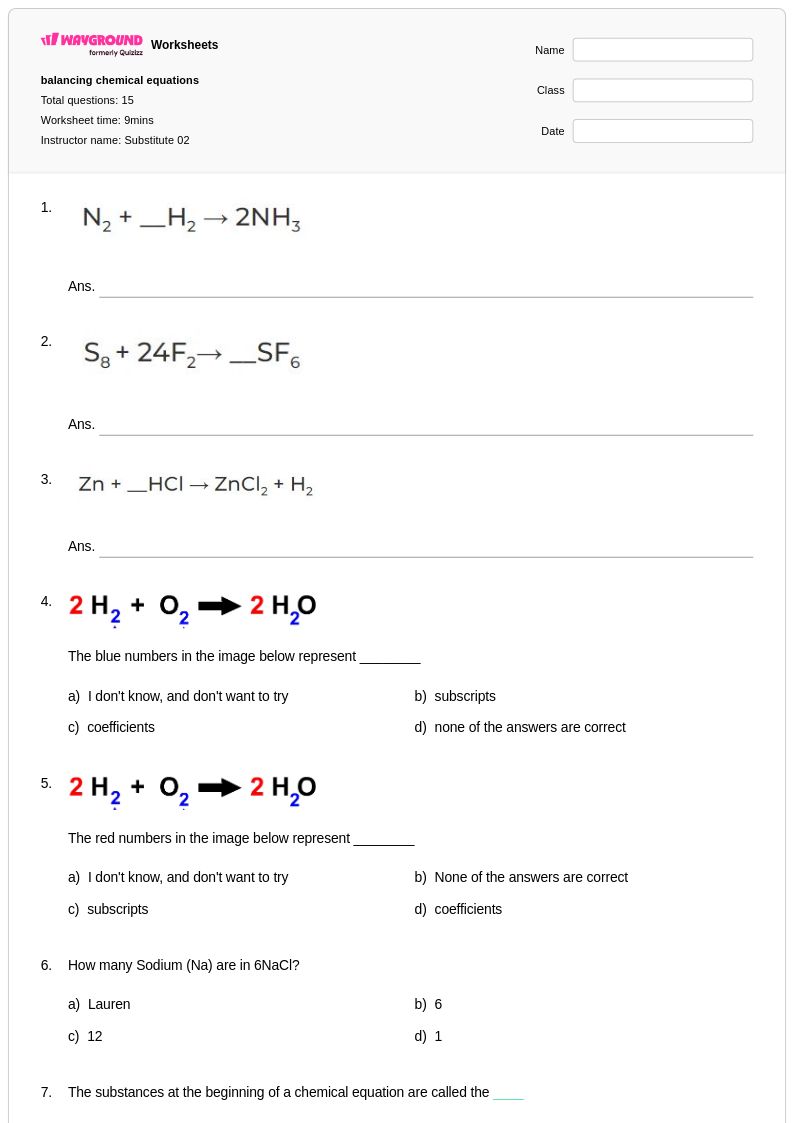
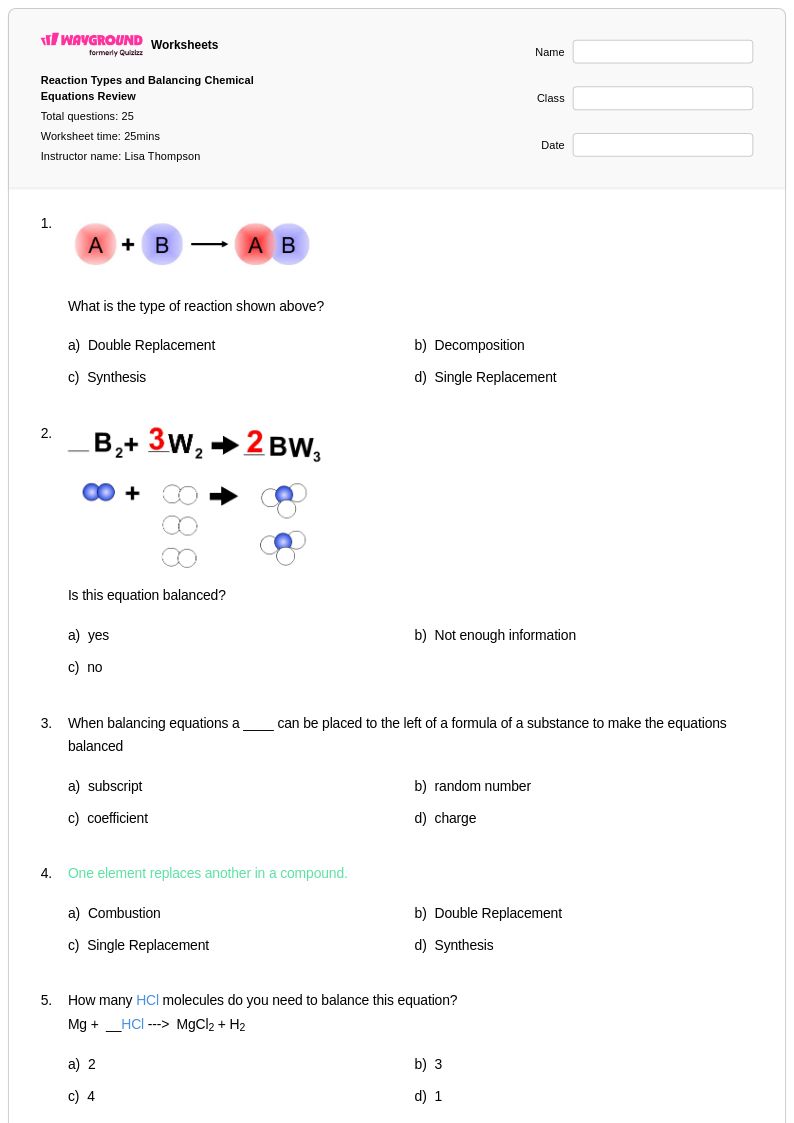
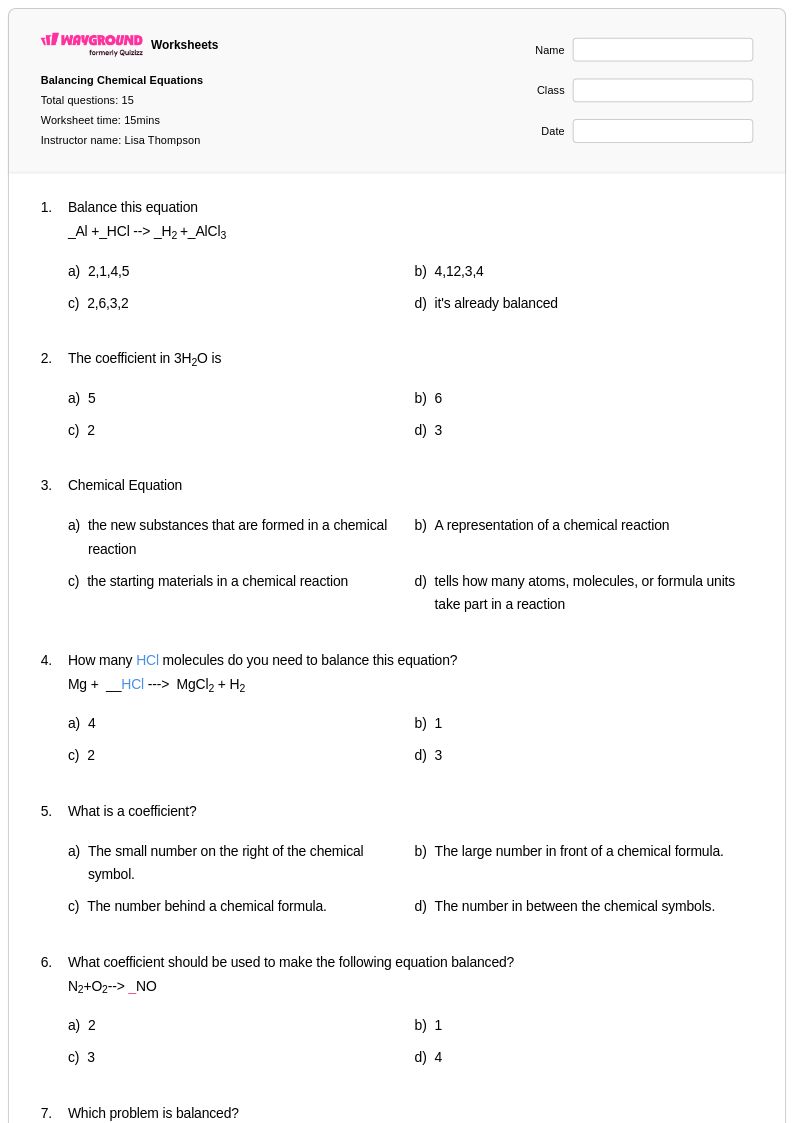
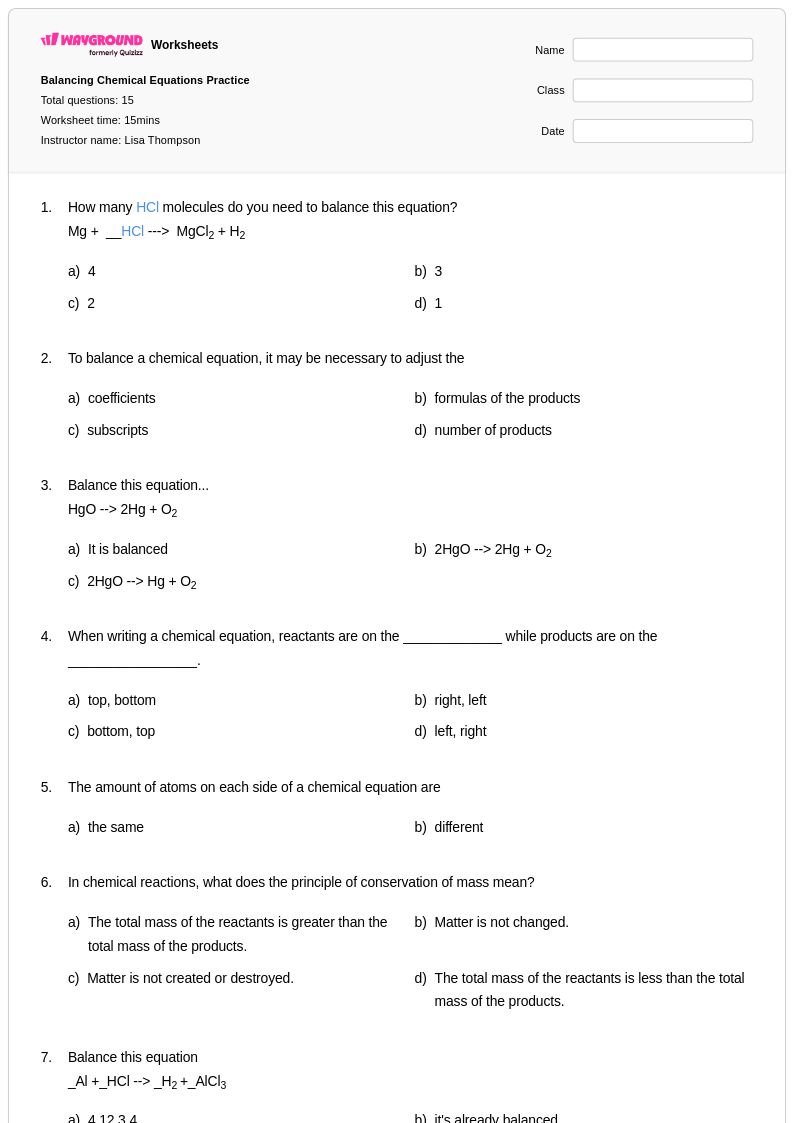
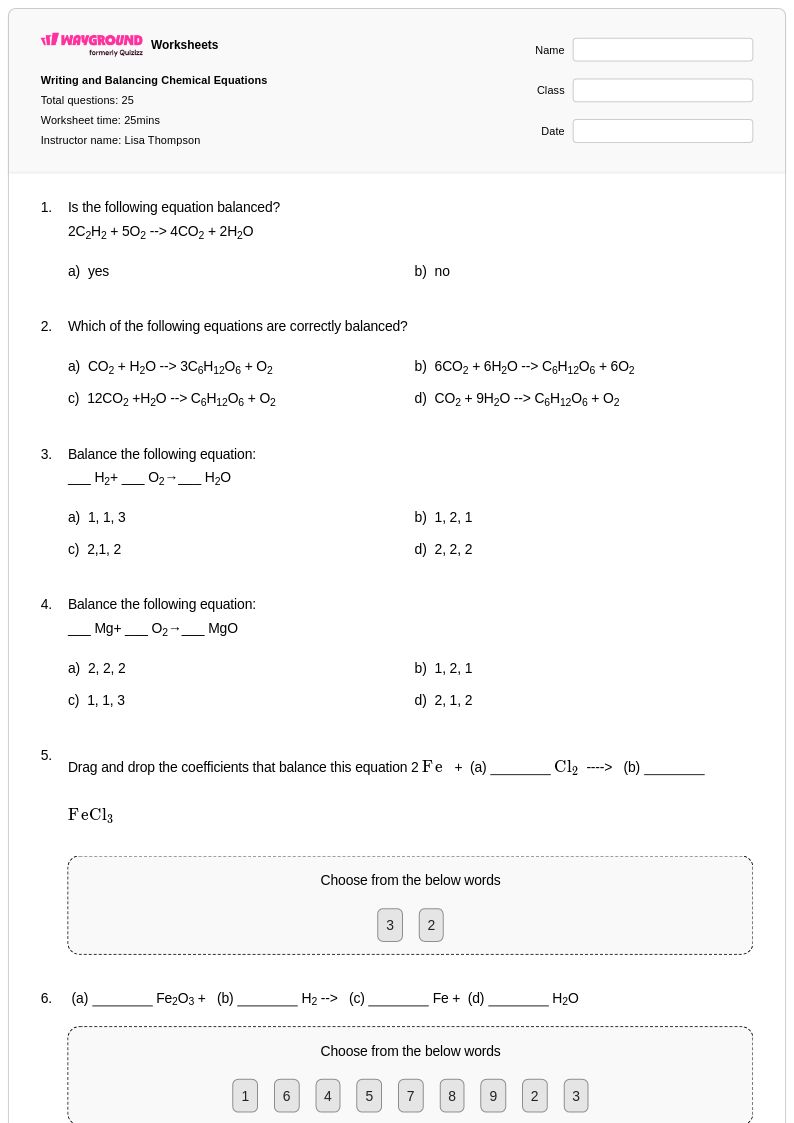
Balancing chemical equations represents one of the most fundamental skills Year 12 chemistry students must master to succeed in advanced chemical analysis and stoichiometric calculations. Wayground's comprehensive collection of balancing chemical equations worksheets provides students with systematic practice in applying conservation of mass principles, identifying reactants and products, and determining appropriate coefficients for complex chemical reactions. These expertly crafted worksheets progress from simple synthesis and decomposition reactions to challenging multi-step equations involving polyatomic ions, combustion processes, and redox reactions. Each worksheet includes detailed answer keys that guide students through step-by-step balancing techniques, while the free printable format allows for flexible classroom integration and independent study sessions where students can work through practice problems at their own pace.
Wayground supports chemistry educators with millions of teacher-created resources specifically designed for Year 12 chemical equation balancing instruction, featuring robust search and filtering capabilities that allow teachers to locate worksheets aligned with specific curriculum standards and learning objectives. The platform's differentiation tools enable instructors to customize worksheet difficulty levels, from basic single-replacement reactions for struggling learners to complex organic chemistry equations for advanced students seeking enrichment opportunities. Teachers can access these resources in both digital and printable pdf formats, facilitating seamless integration into traditional classroom settings, remote learning environments, and hybrid instructional models. This versatility proves invaluable for lesson planning, targeted remediation of common balancing errors, and providing additional skill practice that reinforces proper chemical notation and equation manipulation techniques essential for success in advanced chemistry coursework.
FAQs
How do I teach balancing chemical equations to students who struggle with the concept?
Start by grounding students in the law of conservation of mass before introducing any equations — they need to understand why balancing is necessary, not just how to do it. Begin with simple synthesis and decomposition reactions where only one or two elements need adjustment, then gradually introduce polyatomic ions and multi-step equations as confidence builds. Using a systematic approach — identify reactants and products, tally atoms on each side, adjust coefficients one element at a time, and verify — gives students a repeatable method they can apply independently rather than guessing.
What are the most common mistakes students make when balancing chemical equations?
The most frequent error is changing subscripts instead of coefficients, which alters the chemical formula entirely rather than adjusting the ratio of molecules. Students also commonly balance one element at a time without rechecking others, leading to cascading errors across the equation. Another persistent misconception is assuming that a balanced equation looks symmetrical or has equal numbers on both sides, when in fact the requirement is only that atom counts match for each element individually.
What practice exercises help students get better at balancing chemical equations?
Scaffolded practice is most effective: begin with equations that require adjusting only one coefficient, then progress to reactions involving polyatomic ions, combustion reactions, and finally acid-base neutralization. Having students work through step-by-step problems that require them to explicitly write out atom counts before and after each coefficient change builds the verification habit that prevents careless errors. Timed practice sets also help fluency, since balancing equations appears frequently on chemistry assessments and students benefit from being able to work efficiently under pressure.
How do I differentiate balancing chemical equations practice for students at different skill levels?
For struggling learners, provide partially completed equations where some coefficients are already filled in, reducing the cognitive load to one or two adjustments at a time. Advanced students can be challenged with organic compound equations, multi-step reactions, or open-ended problems where they must write and balance their own equations from a described reaction. On Wayground, teachers can also apply accommodations such as reduced answer choices or read-aloud support to individual students, allowing the same worksheet session to serve a mixed-ability class without singling anyone out.
How can I use Wayground's balancing chemical equations worksheets in my classroom?
Wayground's balancing chemical equations worksheets are available as printable PDFs for traditional classroom use and in digital formats for technology-integrated environments, making them suitable for in-class practice, homework, lab preparation, or test review. Teachers can also host worksheets as a quiz directly on Wayground, enabling student responses to be collected and reviewed digitally. Each worksheet includes answer keys, so they function equally well for independent student practice, guided group work, or teacher-led instruction with immediate answer checking.
At what grade level should students start balancing chemical equations?
Balancing chemical equations is typically introduced in high school chemistry, most commonly in grades 9 or 10 as part of a first-year chemistry course, though some accelerated middle school science programs introduce the concept in grade 8. Students should have a working understanding of atomic structure, chemical symbols, and the periodic table before beginning, as well as basic algebraic reasoning to manipulate coefficients systematically. The skill is foundational for stoichiometry, which appears throughout all subsequent chemistry coursework.
How does balancing chemical equations connect to stoichiometry and other chemistry topics?
Balancing chemical equations is the direct prerequisite to stoichiometry — students cannot calculate molar ratios, limiting reagents, or theoretical yields without a correctly balanced equation as their starting point. It also reinforces conservation of mass as a physical law rather than an abstract concept, which carries forward into thermochemistry and reaction kinetics. Because coefficients in a balanced equation represent molar ratios, students who balance fluently enter stoichiometry with a concrete numerical foundation rather than treating ratios as arbitrary values.