Free Printable Nomenclature of Acids Worksheets for Year 12
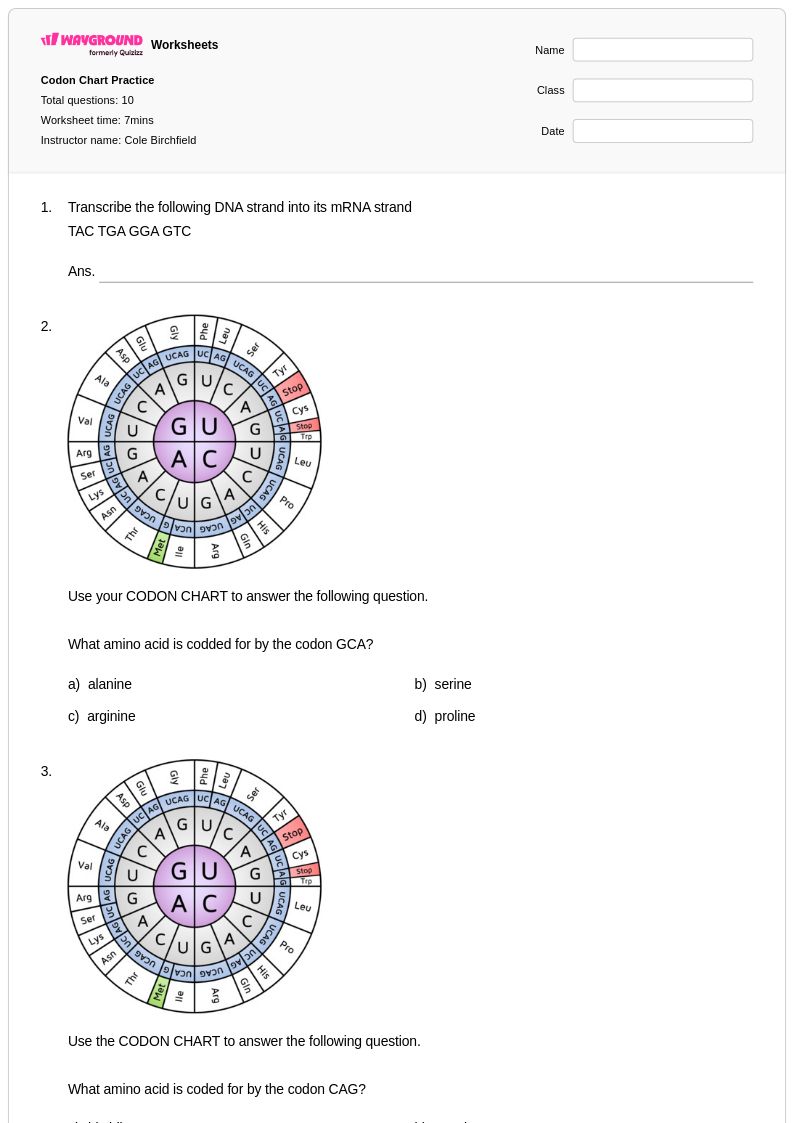
Year 12 chemistry students can master nomenclature of acids with Wayground's comprehensive collection of free worksheets, printables, and practice problems featuring detailed answer keys and PDF formats for effective learning.
Explore printable Nomenclature of Acids worksheets for Year 12
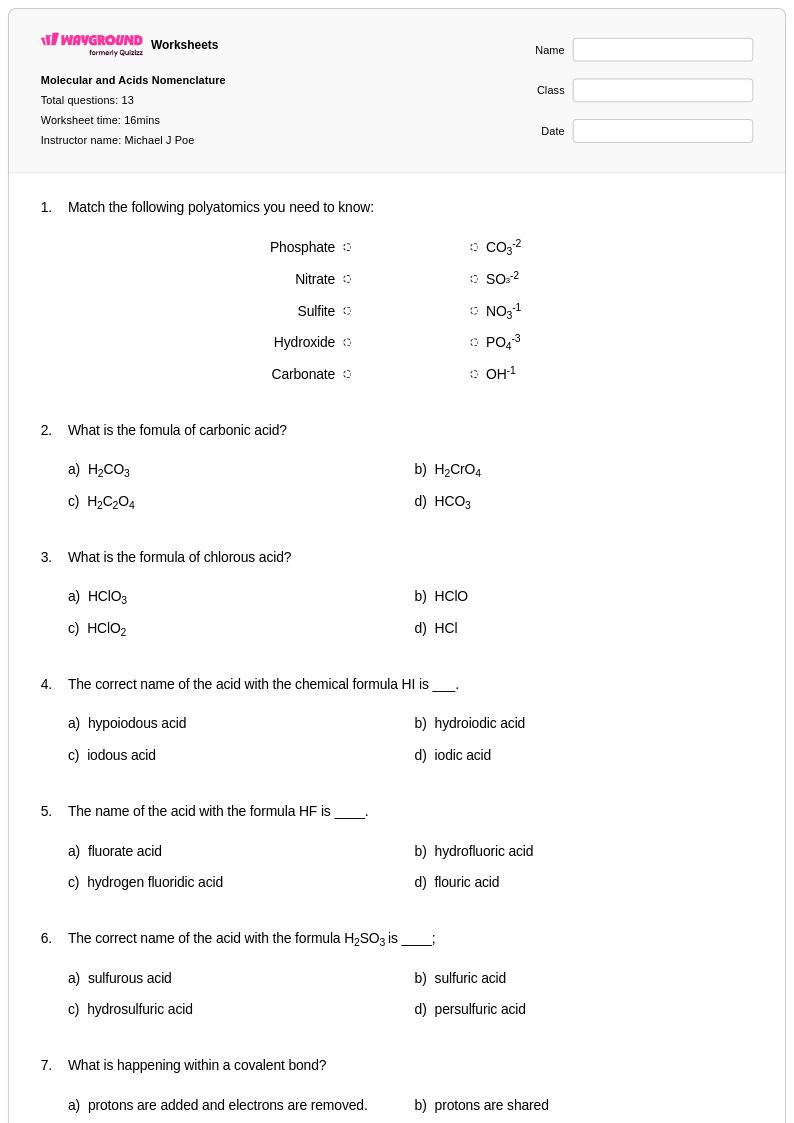
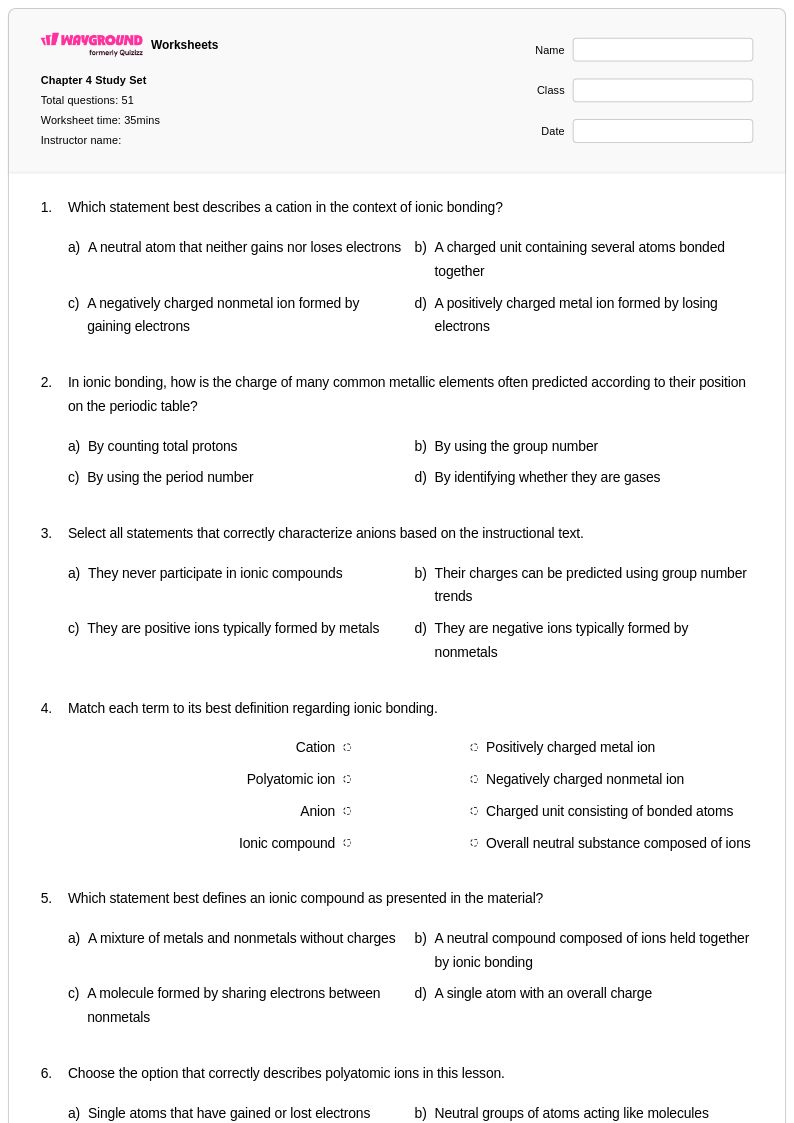
Nomenclature of acids represents a fundamental component of Year 12 chemistry education, requiring students to master systematic naming conventions for both binary and oxyacids. Wayground's comprehensive collection of nomenclature of acids worksheets provides targeted practice opportunities that strengthen students' ability to identify acid formulas, apply IUPAC naming rules, and distinguish between different acid classifications. These expertly designed resources feature progressive difficulty levels that guide students from basic acid identification through complex polyprotic acid nomenclature, with each worksheet including detailed answer keys that facilitate self-assessment and error analysis. The free printable materials offer extensive practice problems covering hydracids, oxoacids, and their corresponding naming patterns, ensuring students develop the precision and confidence needed for advanced chemistry coursework and standardized assessments.
Wayground's platform empowers chemistry educators with access to millions of teacher-created resources specifically designed to support nomenclature of acids instruction at the Year 12 level. The sophisticated search and filtering capabilities allow teachers to quickly locate worksheets that align with specific curriculum standards while accommodating diverse learning needs through built-in differentiation tools. These customizable materials are available in both digital and printable pdf formats, enabling seamless integration into various instructional models whether for in-class practice, homework assignments, or assessment preparation. Teachers can efficiently plan remediation activities for struggling students, provide enrichment opportunities for advanced learners, and implement targeted skill practice sessions that address individual gaps in acid nomenclature understanding, all while maintaining the flexibility to modify content based on their specific classroom requirements and pacing guides.
FAQs
How do I teach nomenclature of acids to chemistry students?
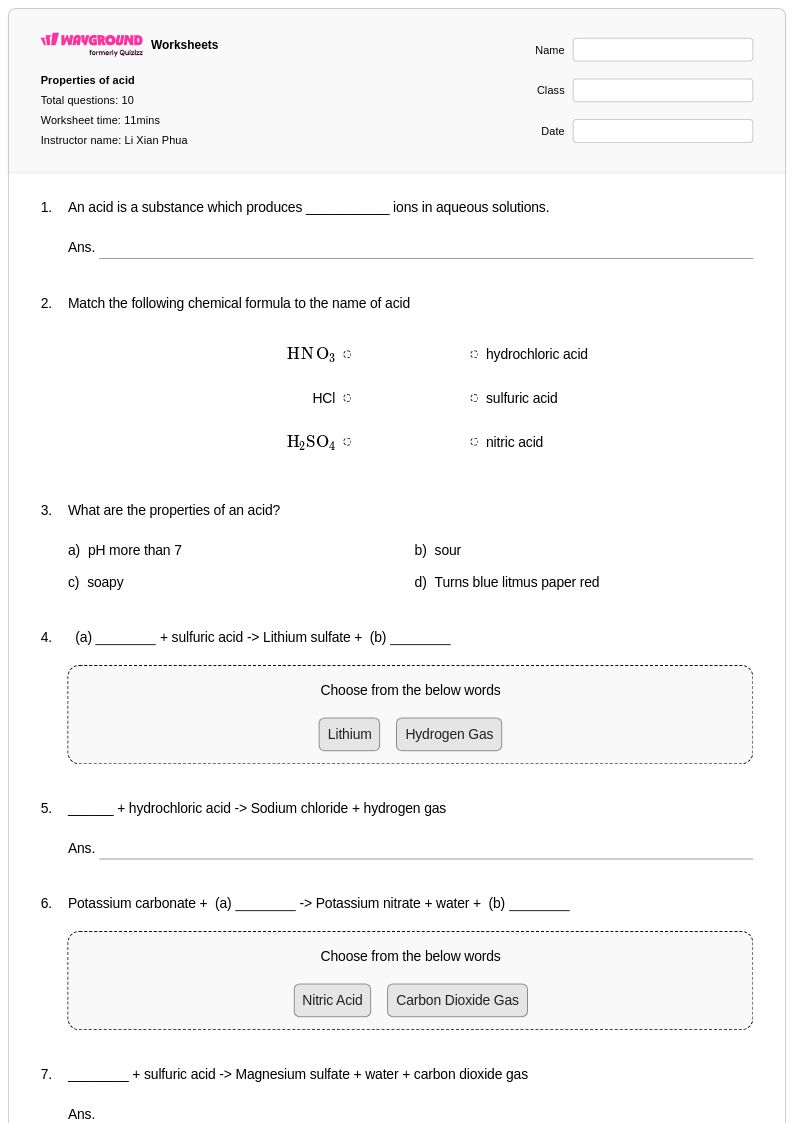
Start by establishing the two main categories: binary acids (hydrogen + nonmetal, e.g., HCl) and oxyacids (hydrogen + polyatomic ion containing oxygen, e.g., H₂SO₄). Teach binary acids first using the 'hydro-___-ic acid' pattern, then introduce oxyacids by connecting the polyatomic ion name to the corresponding acid suffix rules (-ate → -ic acid, -ite → -ous acid). Using formula-to-name and name-to-formula exercises in tandem helps students internalize both directions of the naming convention rather than memorizing them in isolation.
What exercises help students practice acid naming conventions?
The most effective practice exercises pair formula identification with systematic naming: students first classify the acid as binary or oxyacid, then apply the appropriate naming rule. Reverse-direction problems — writing formulas from given acid names — are equally important because they force students to recall polyatomic ions and oxidation states rather than passively pattern-match. Mixed practice sets that interleave binary acids, oxyacids, and polyprotic acids are especially useful for building fluency across all acid types.
What mistakes do students commonly make when naming acids?
The most frequent error is confusing oxyacid suffix rules: students often apply '-ic acid' to both -ate and -ite polyatomic ions, missing the '-ous acid' ending for lower-oxidation-state ions. A second common mistake is failing to recognize when a compound is an acid at all — students may name HCl(aq) as 'hydrogen chloride' (the gaseous form) rather than 'hydrochloric acid.' Reinforcing the distinction between the dissolved aqueous form and the pure compound form is critical for reducing this error.
How do I differentiate acid nomenclature instruction for students at different skill levels?
For students who are struggling, begin with binary acids only and provide a reference table of common polyatomic ions before introducing oxyacids. More advanced students can tackle polyprotic acids (H₂SO₄, H₃PO₄) and practice writing net ionic equations alongside naming. On Wayground, teachers can apply accommodations such as reduced answer choices for students who need additional scaffolding, or enable Read Aloud for students who benefit from auditory support during digital practice sessions.
How can I use Wayground's nomenclature of acids worksheets in my classroom?
Wayground's acid nomenclature worksheets are available as printable PDFs for traditional classroom use and in digital formats for technology-integrated environments, including the option to host them as a quiz directly on Wayground. Each worksheet includes a detailed answer key, making them suitable for independent practice, homework, guided instruction, or formative assessment. Teachers can use the search and filtering tools to locate worksheets aligned to specific acid types — binary, oxyacid, or polyprotic — depending on where students are in the instructional sequence.
How do I help students remember the difference between '-ic' and '-ous' acid names?
Tie the acid suffix directly to the polyatomic ion suffix students already know: if the ion ends in '-ate' (higher oxidation state), the acid ends in '-ic acid'; if the ion ends in '-ite' (lower oxidation state), the acid ends in '-ous acid.' A mnemonic that helps is 'ate more, get ic' — the ion with more oxygen takes the '-ic' ending. Consistent practice converting between ion names and acid names, rather than memorizing acid names in isolation, reinforces this pattern durably.