Free Printable Chemical Reactions Worksheets for Year 12
Master Year 12 chemical reactions with Wayground's comprehensive collection of free worksheets, featuring printable PDFs with practice problems and detailed answer keys to strengthen your chemistry understanding.
Explore printable Chemical Reactions worksheets for Year 12
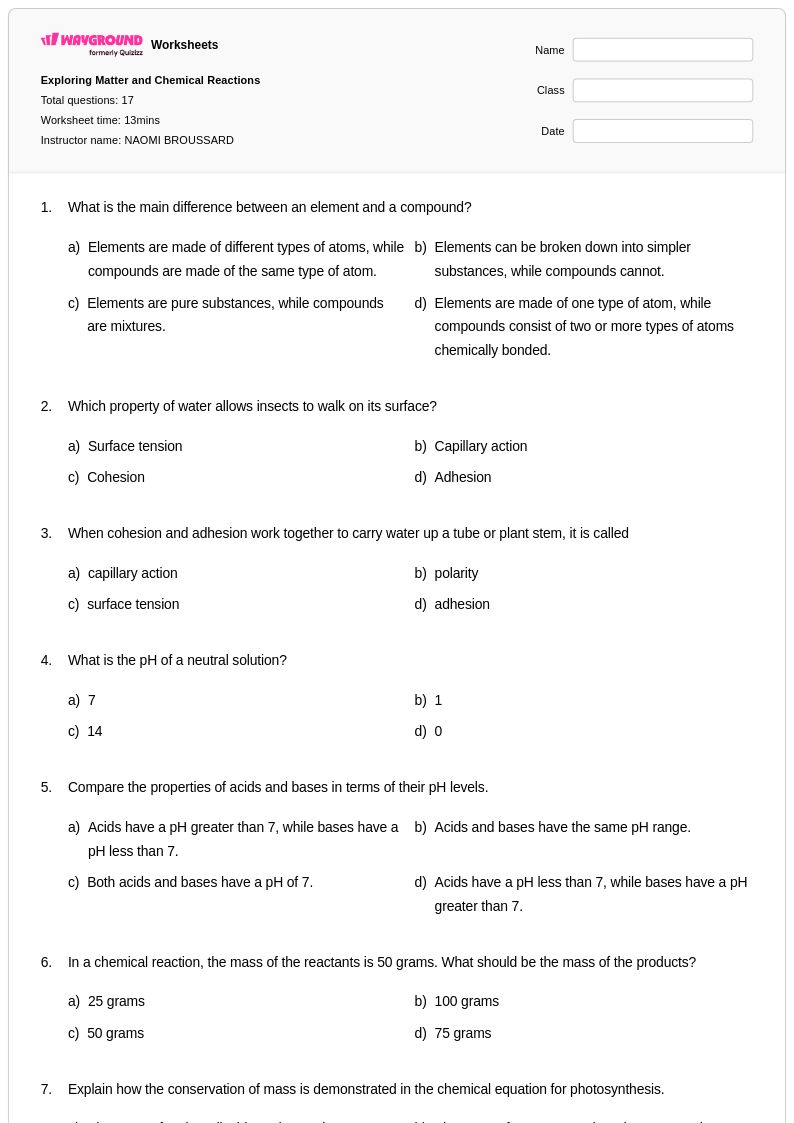
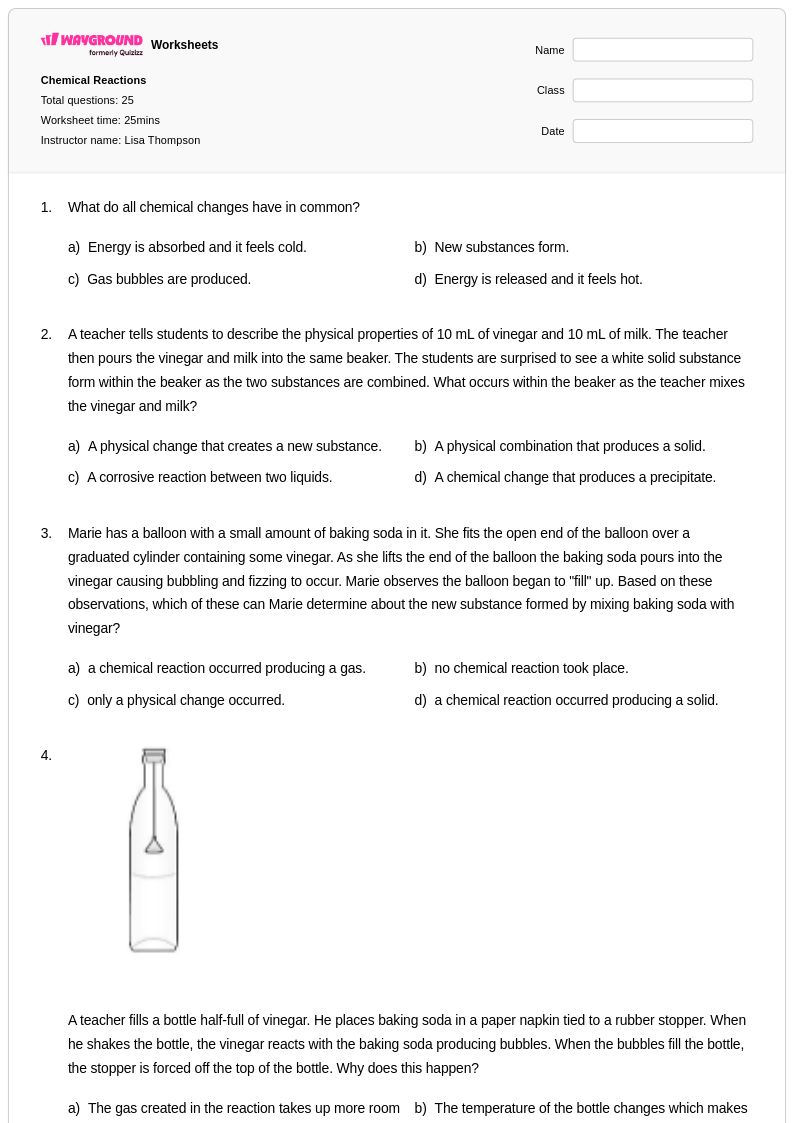
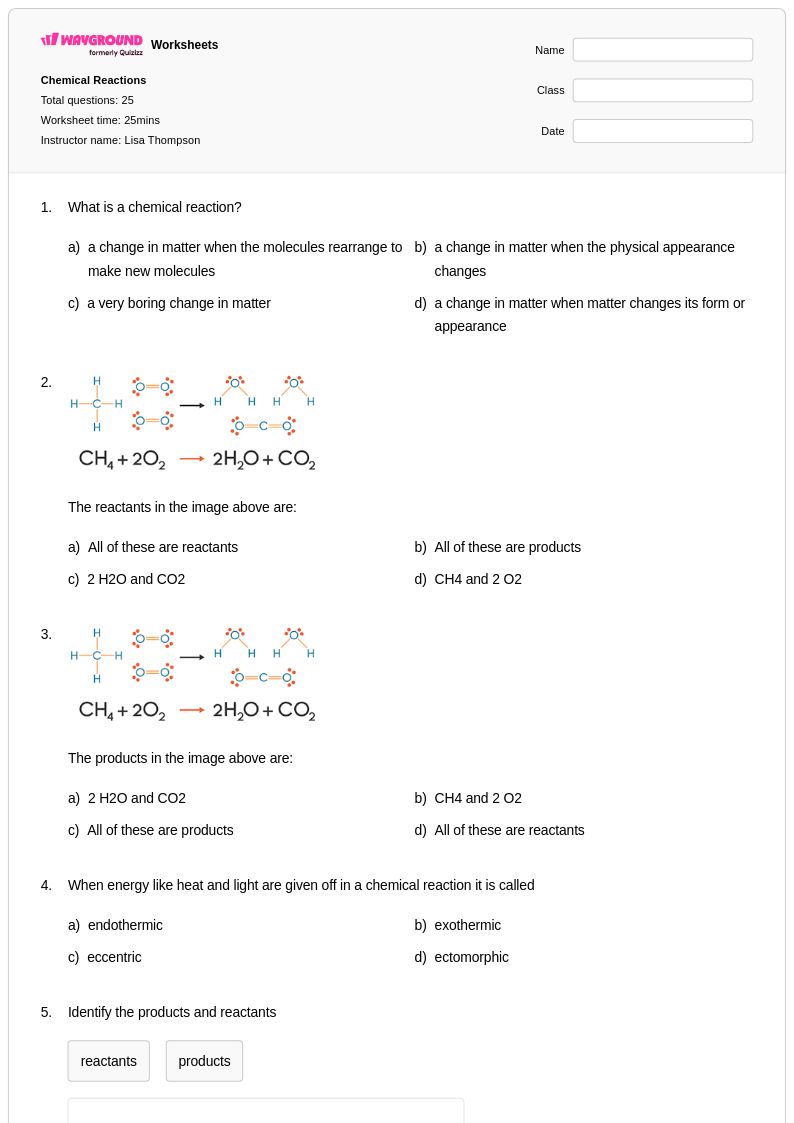
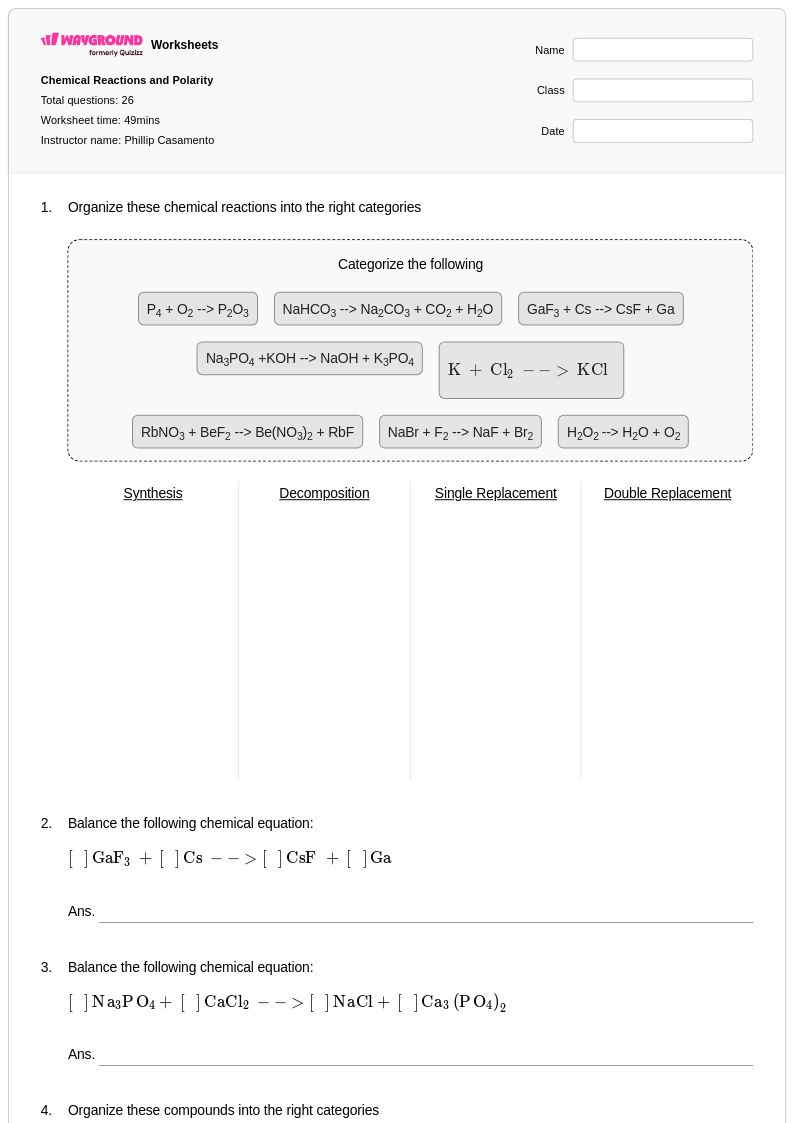
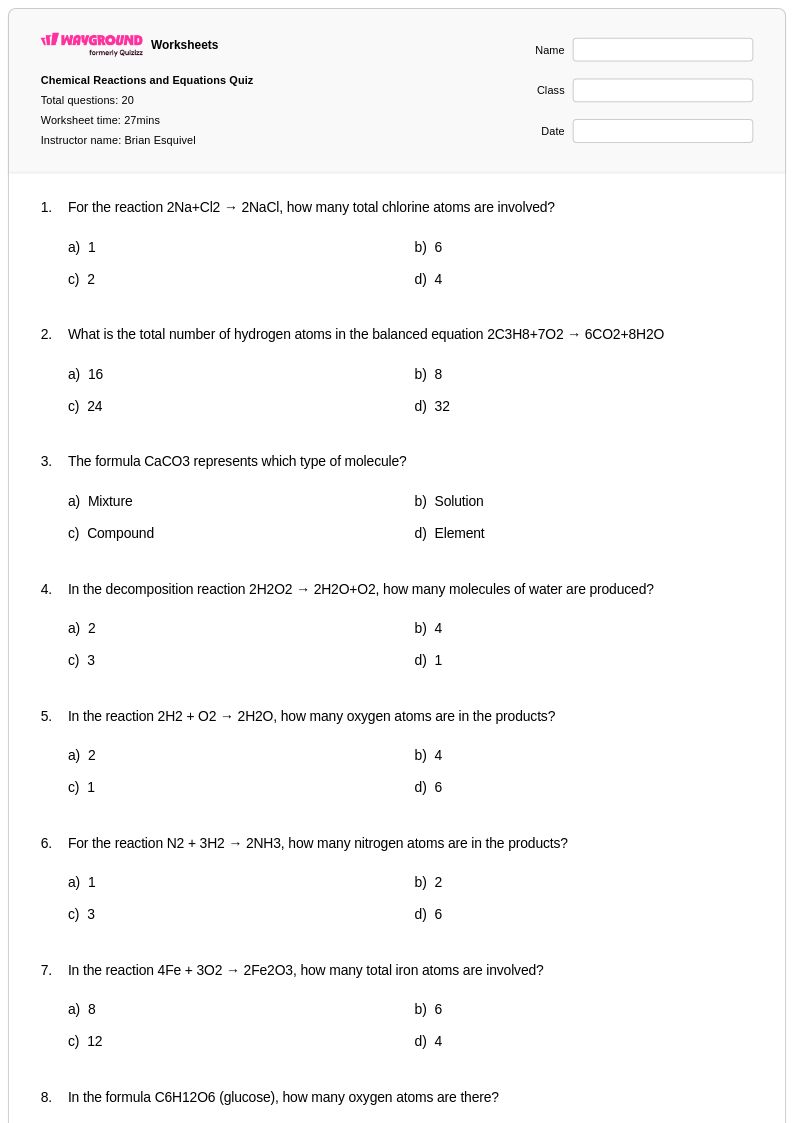
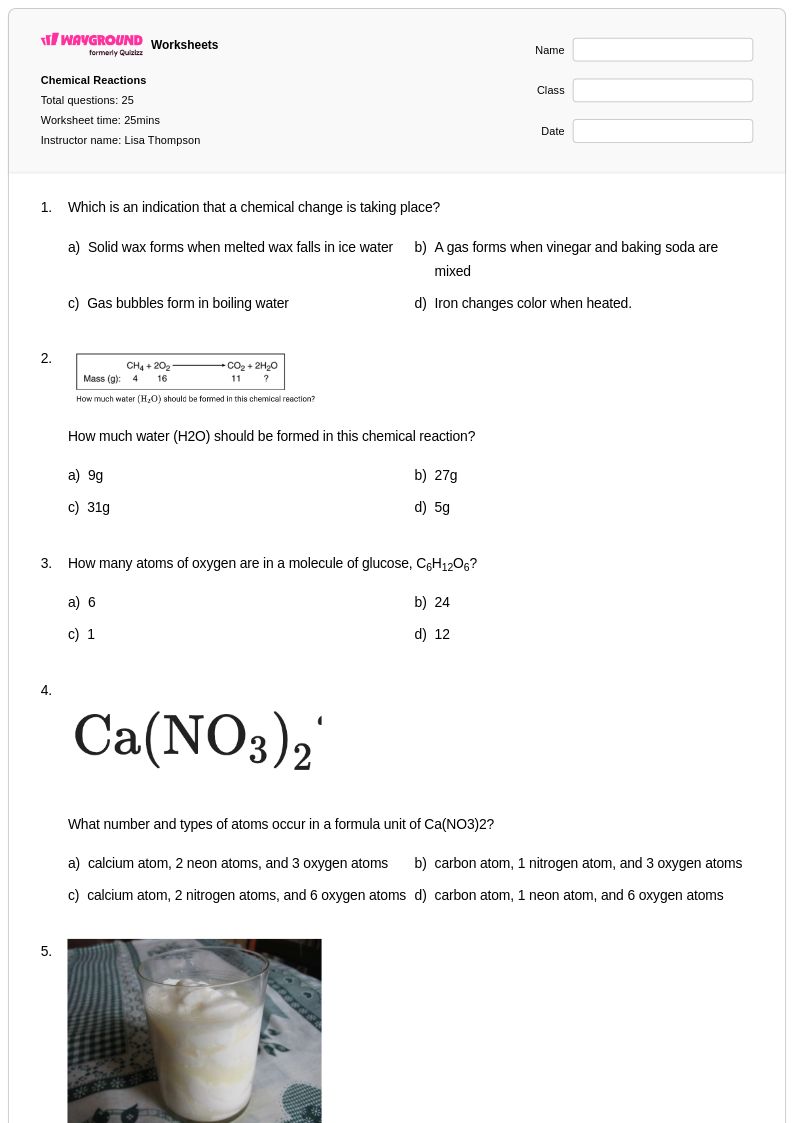
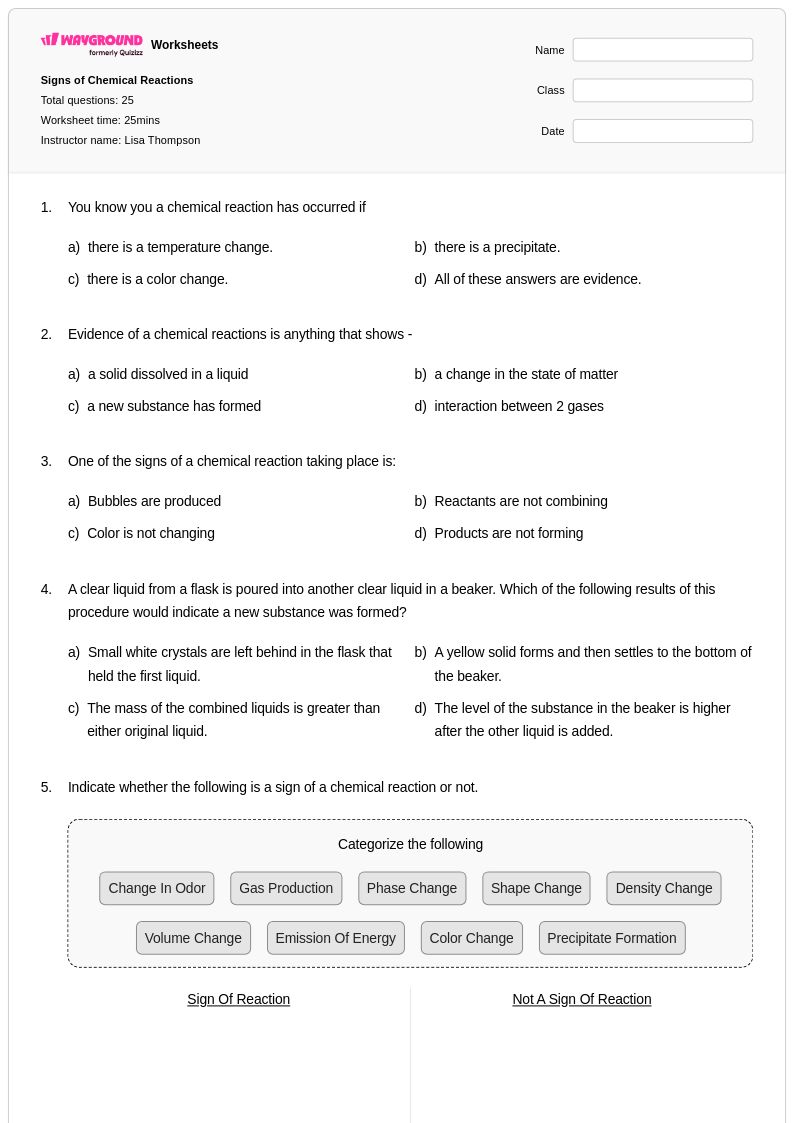
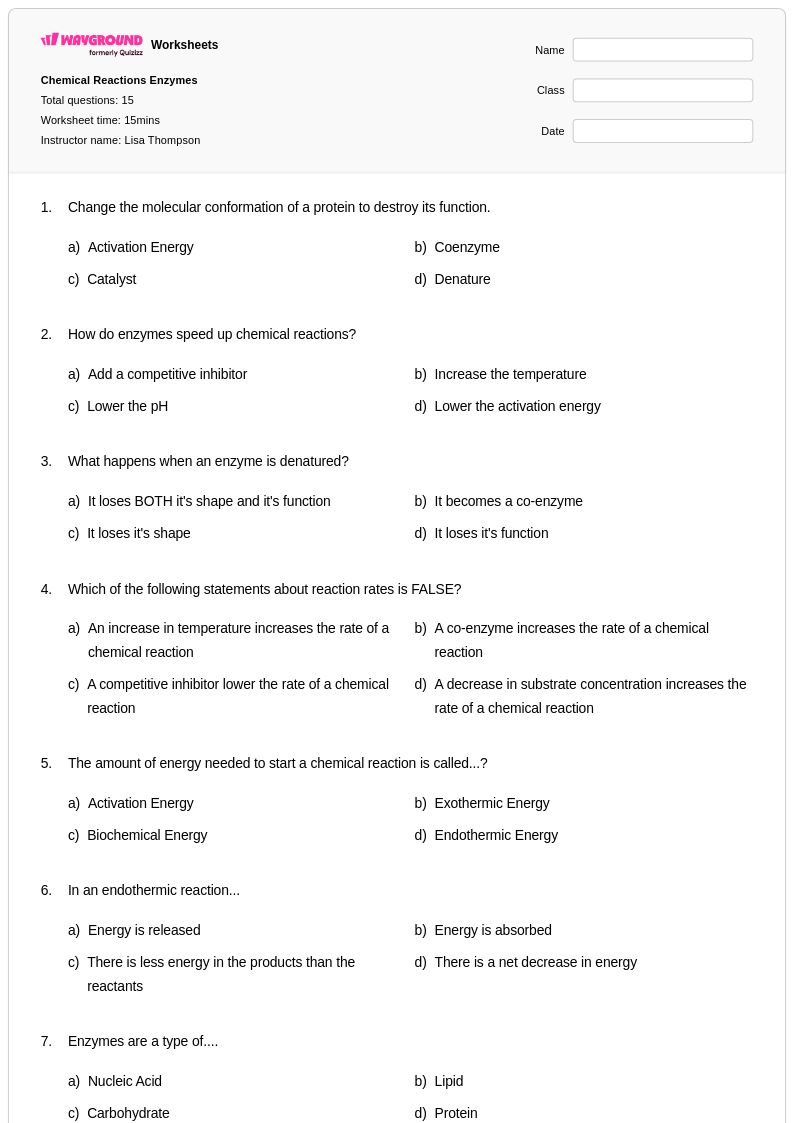
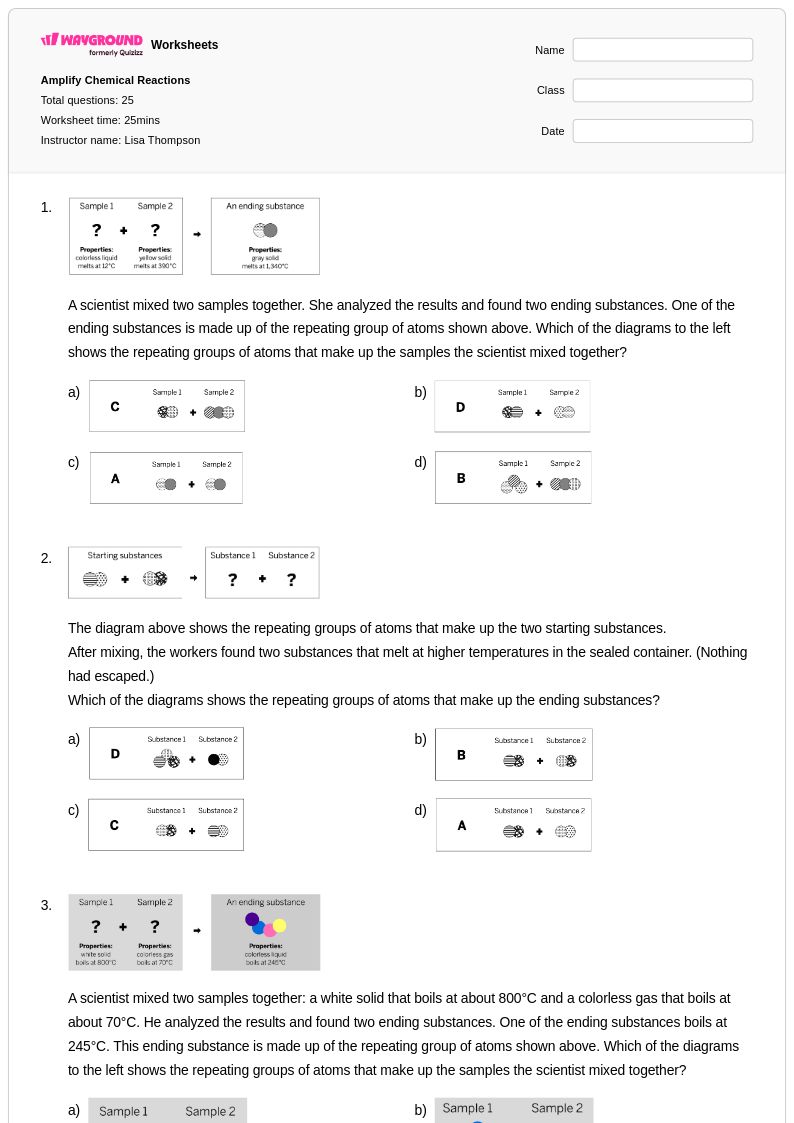
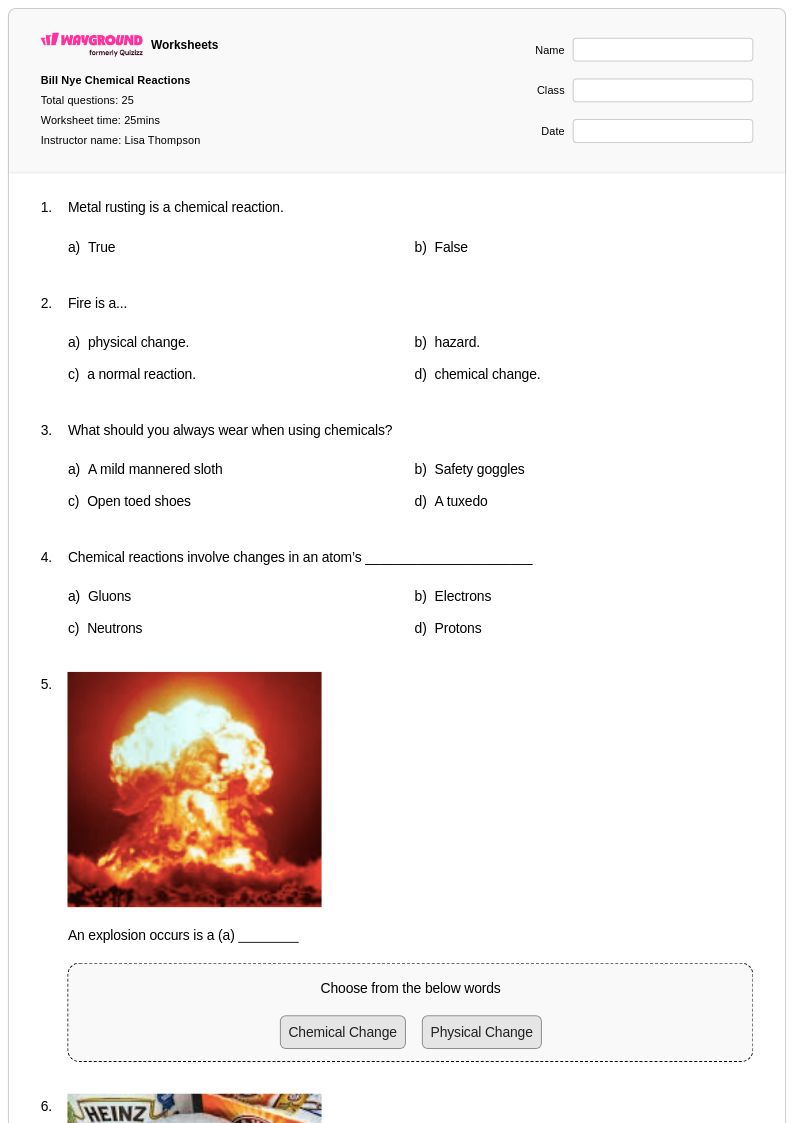
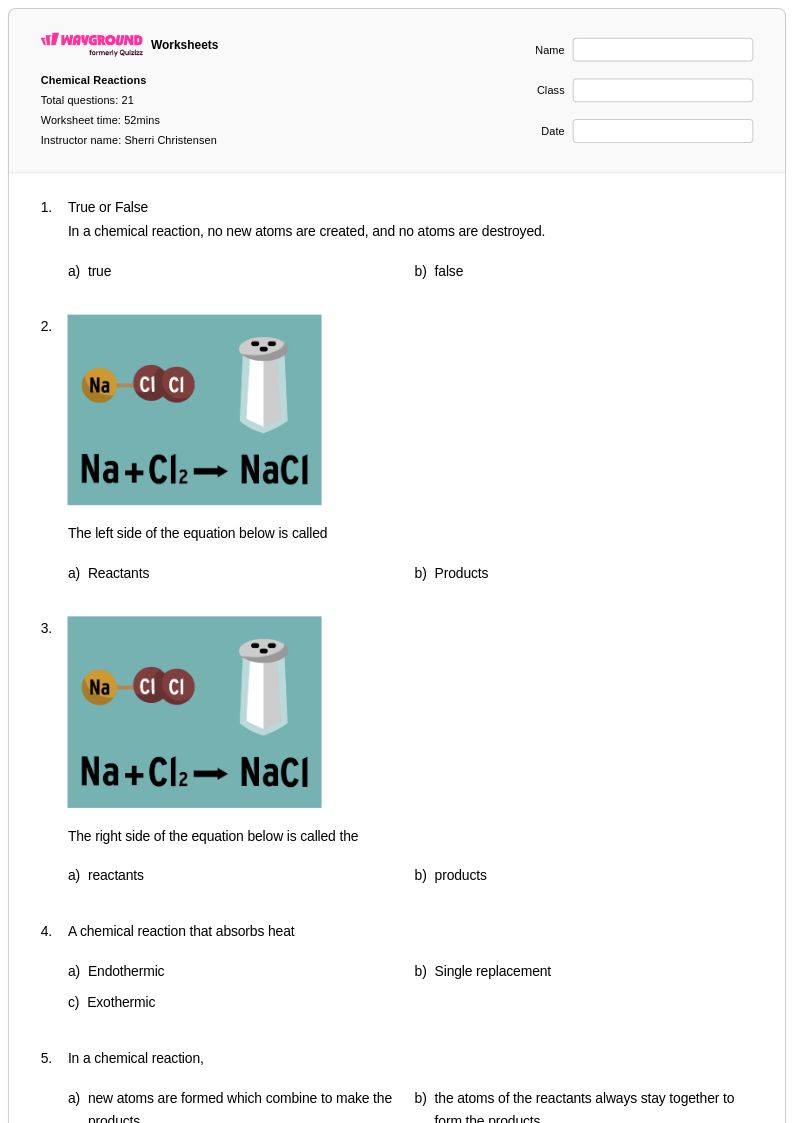
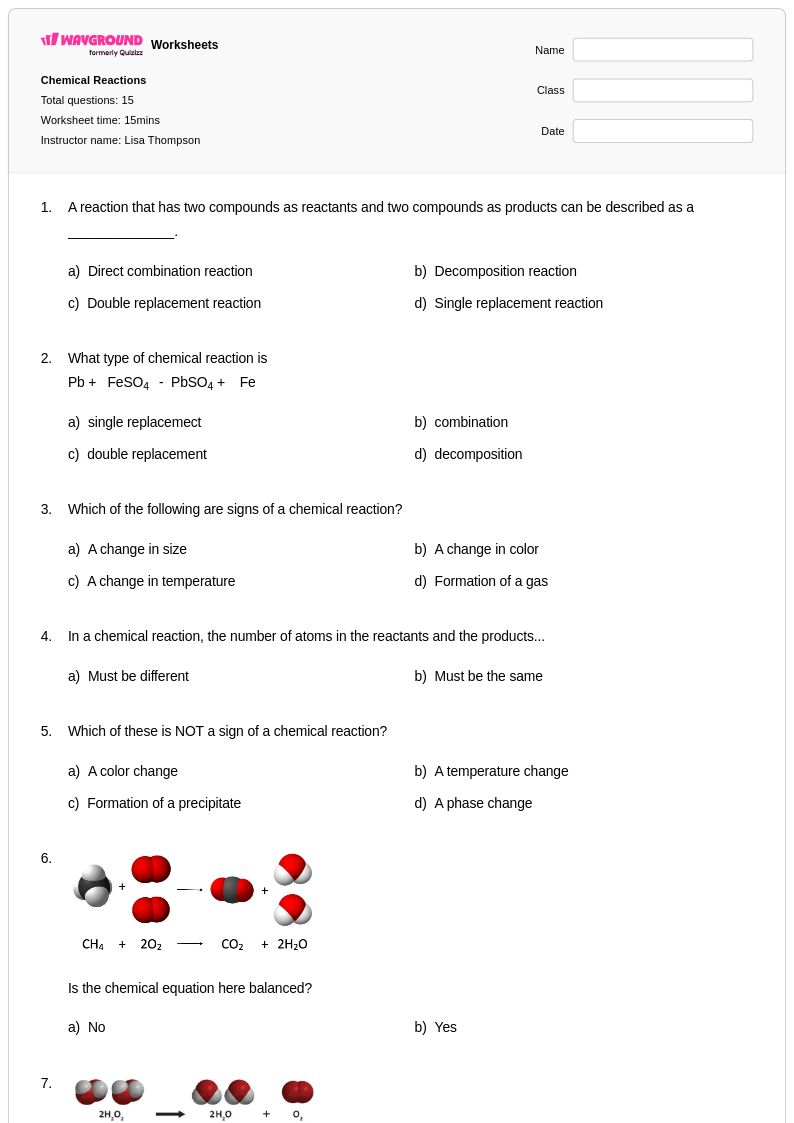
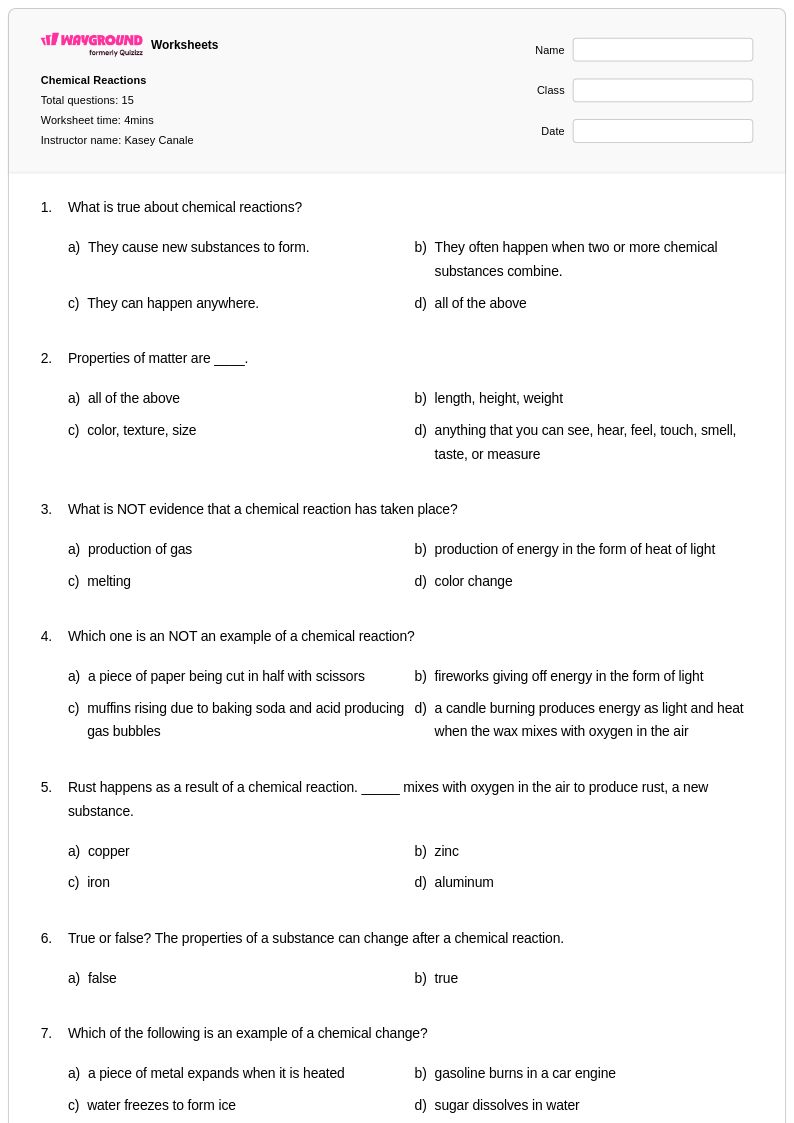
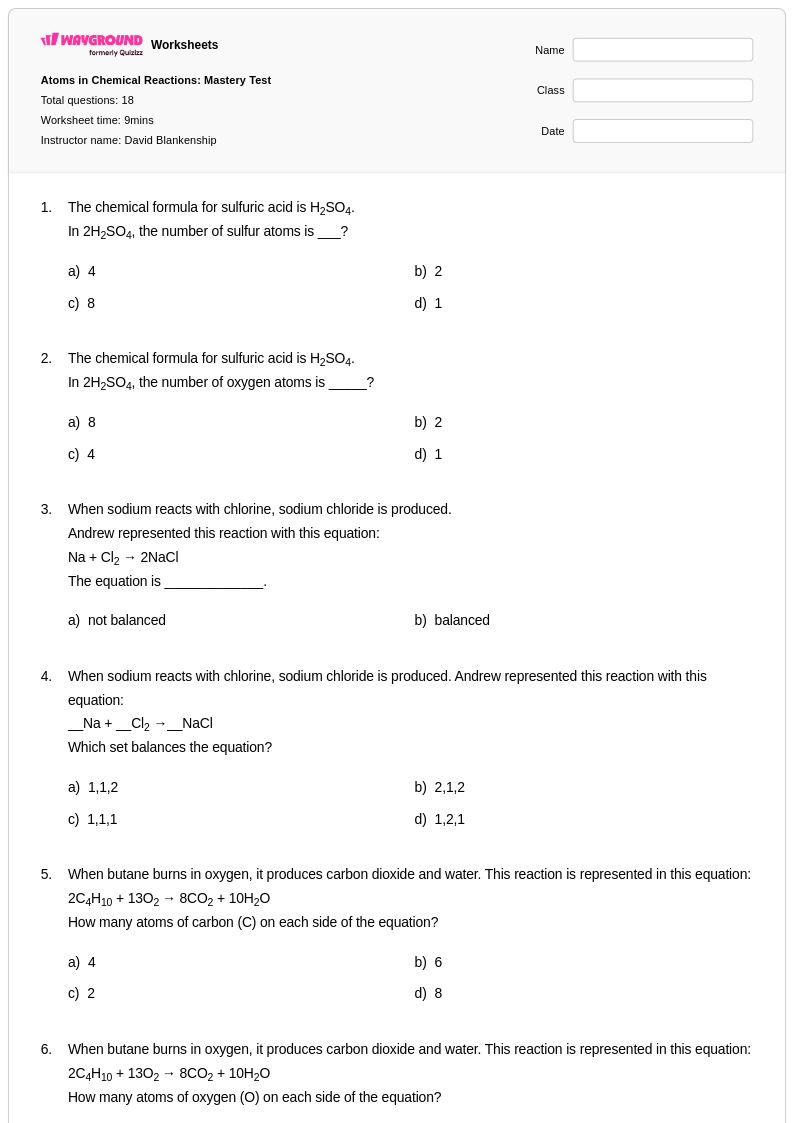
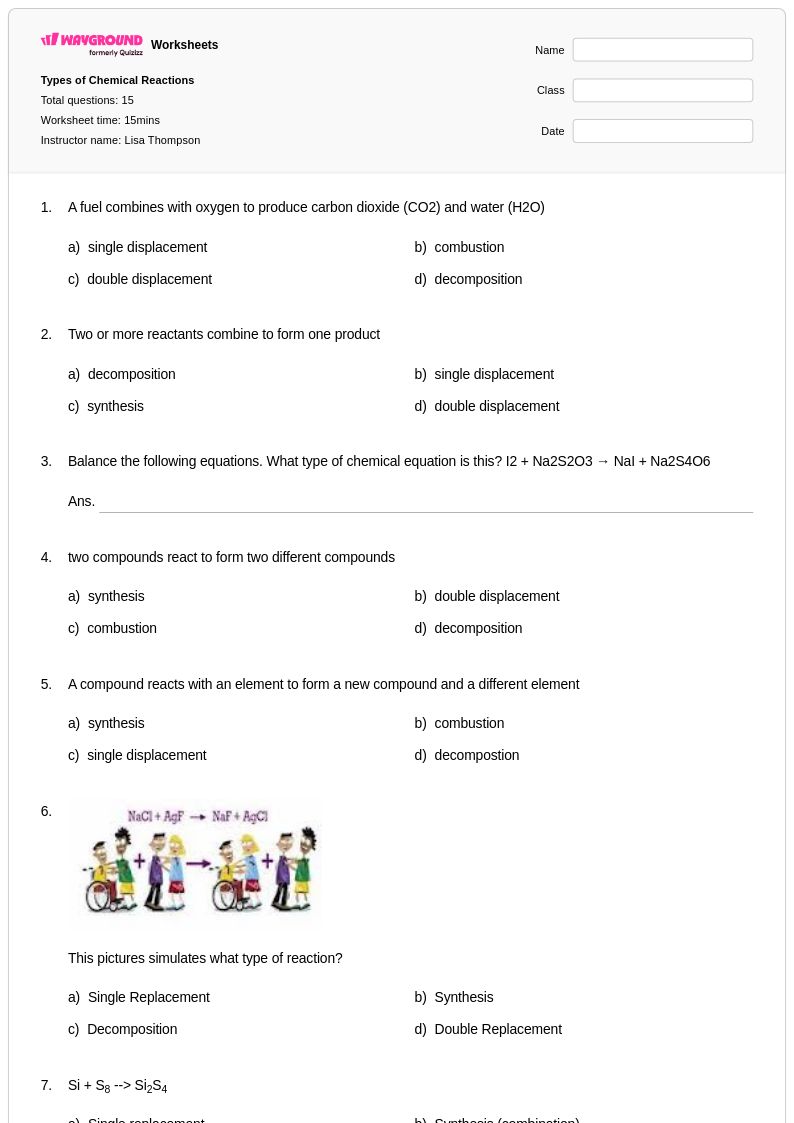
Chemical reactions form the cornerstone of Year 12 chemistry education, and Wayground's extensive collection of worksheets provides comprehensive coverage of this fundamental topic. These expertly crafted resources guide students through complex reaction mechanisms, stoichiometric calculations, thermodynamics, and kinetics while building critical analytical skills essential for advanced chemistry studies. Each worksheet incorporates detailed practice problems that challenge students to identify reaction types, balance chemical equations, predict products, and calculate yields with precision. The collection includes complete answer keys and is available in convenient PDF format, offering both free printables and digital versions that accommodate diverse learning environments and teaching preferences.
Wayground, formerly Quizizz, empowers educators with millions of teacher-created resources specifically designed for Year 12 chemical reactions instruction, featuring robust search and filtering capabilities that allow quick access to materials aligned with specific curriculum standards. The platform's differentiation tools enable teachers to customize worksheets for varying skill levels, supporting both remediation for struggling students and enrichment opportunities for advanced learners. These flexible resources are available in both printable and digital formats, including downloadable PDFs, making lesson planning seamless whether conducting in-person laboratory work or remote learning sessions. Teachers can efficiently address individual student needs through targeted skill practice while maintaining alignment with state and national chemistry education standards, ensuring comprehensive preparation for advanced placement exams and post-secondary chemistry coursework.
FAQs
How do I teach chemical reactions to high school students?
Start by grounding students in the law of conservation of mass before introducing reaction types, since understanding why atoms must be conserved is the conceptual foundation for balancing equations. Use concrete examples like combustion and rusting to connect abstract molecular changes to real-world phenomena students already recognize. From there, sequence instruction from simple synthesis and decomposition reactions toward more complex redox and double-displacement processes, building procedural fluency alongside conceptual understanding.
What exercises help students practice balancing chemical equations?
Structured worksheets that progress from single-element balancing to multi-compound equations are the most effective practice format, because they allow students to build confidence before encountering more complex stoichiometric relationships. Practice problems that require students to first classify the reaction type before balancing reinforce both skills simultaneously. Repeated exposure to varied equation types, including synthesis, decomposition, combustion, and redox reactions, builds the pattern recognition students need to balance equations fluently.
What mistakes do students commonly make when balancing chemical equations?
The most common error is changing subscripts instead of coefficients when balancing, which alters the identity of the compounds rather than adjusting the quantity of molecules. Students also frequently balance one element while inadvertently throwing off another, failing to recheck all elements after each adjustment. A second persistent misconception is assuming a balanced equation means equal numbers of molecules on each side, rather than understanding it reflects conservation of atoms.
How do I help students identify types of chemical reactions?
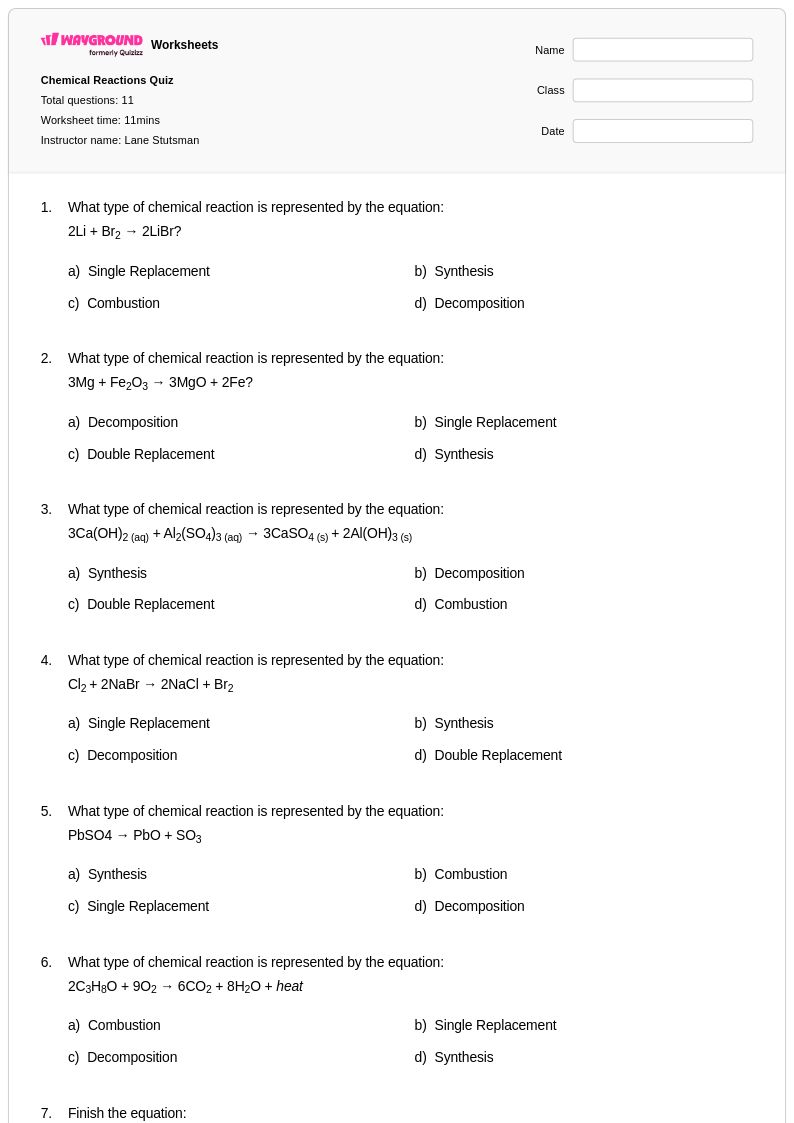
Teach students to look for structural patterns in the reactants and products rather than memorizing reaction types in isolation. For example, synthesis reactions always combine simpler substances into one product, while decomposition does the reverse, and recognizing these patterns reduces reliance on rote memorization. Providing classification practice worksheets where students must justify their categorization in writing strengthens both analytical reasoning and chemistry vocabulary.
How can I use chemical reactions worksheets from Wayground in my classroom?
Chemical reactions worksheets on Wayground are available as printable PDFs for traditional classroom use and in digital formats for technology-integrated or hybrid learning environments, giving teachers flexibility in how they assign practice. Teachers can host worksheets as a quiz directly on Wayground, making it easy to collect student responses and review results in one place. Each worksheet includes an answer key, so they work equally well as in-class assignments, homework, or independent review materials.
How do I differentiate chemical reactions instruction for students at different skill levels?
For struggling students, reduce cognitive load by focusing first on single-replacement reactions with clear structural cues before introducing more abstract redox processes. Wayground supports individual student accommodations including reduced answer choices, extended time, and read-aloud features, which can be assigned to specific students without disrupting the rest of the class. Advanced learners benefit from open-ended prediction tasks, such as writing and balancing the products of an unfamiliar reaction given only the reactants, which pushes beyond procedural practice into genuine chemical reasoning.