Free Printable Single Replacement Reaction Worksheets for Year 12
Master Year 12 single replacement reactions with Wayground's comprehensive collection of free chemistry worksheets, featuring printable PDFs, guided practice problems, and complete answer keys to strengthen your understanding.
Explore printable Single Replacement Reaction worksheets for Year 12
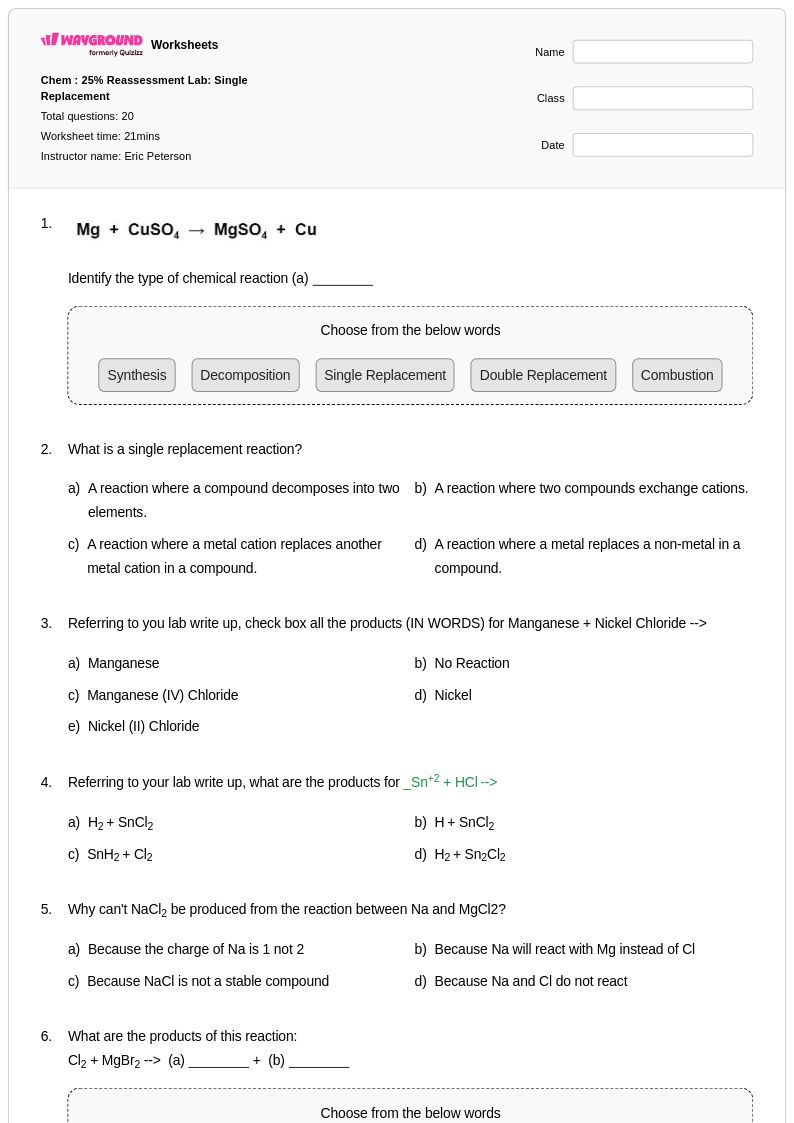
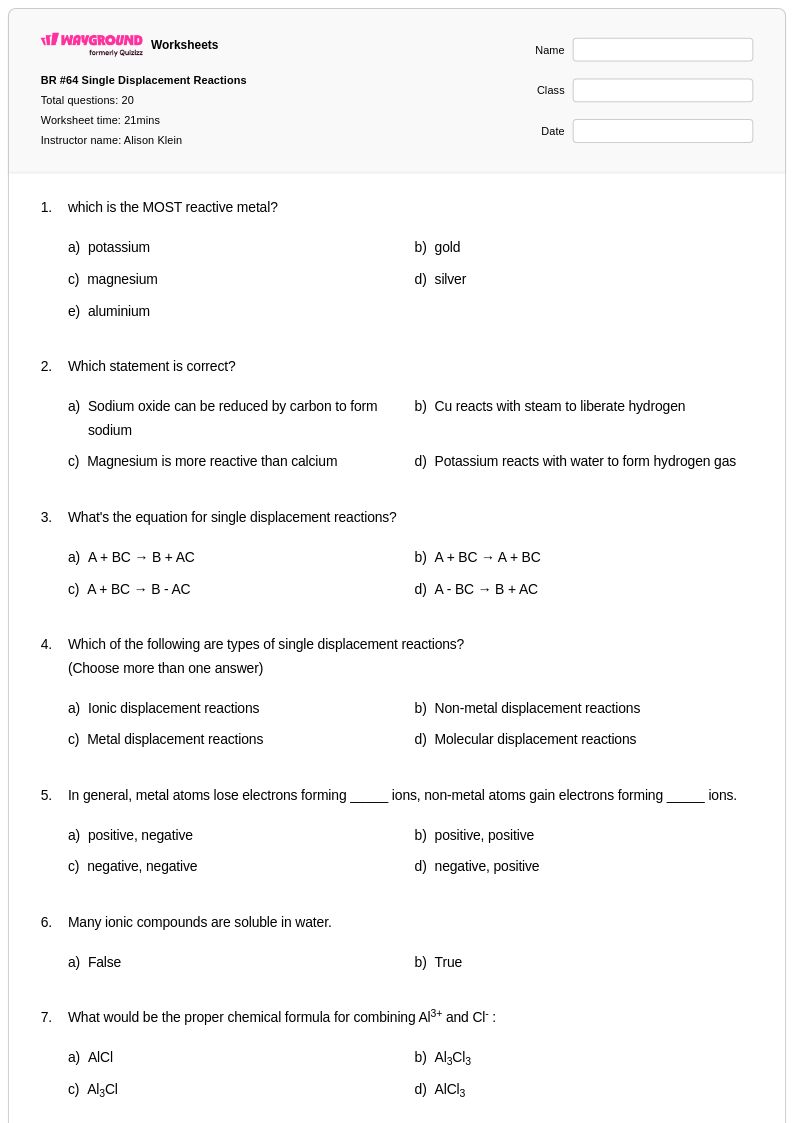
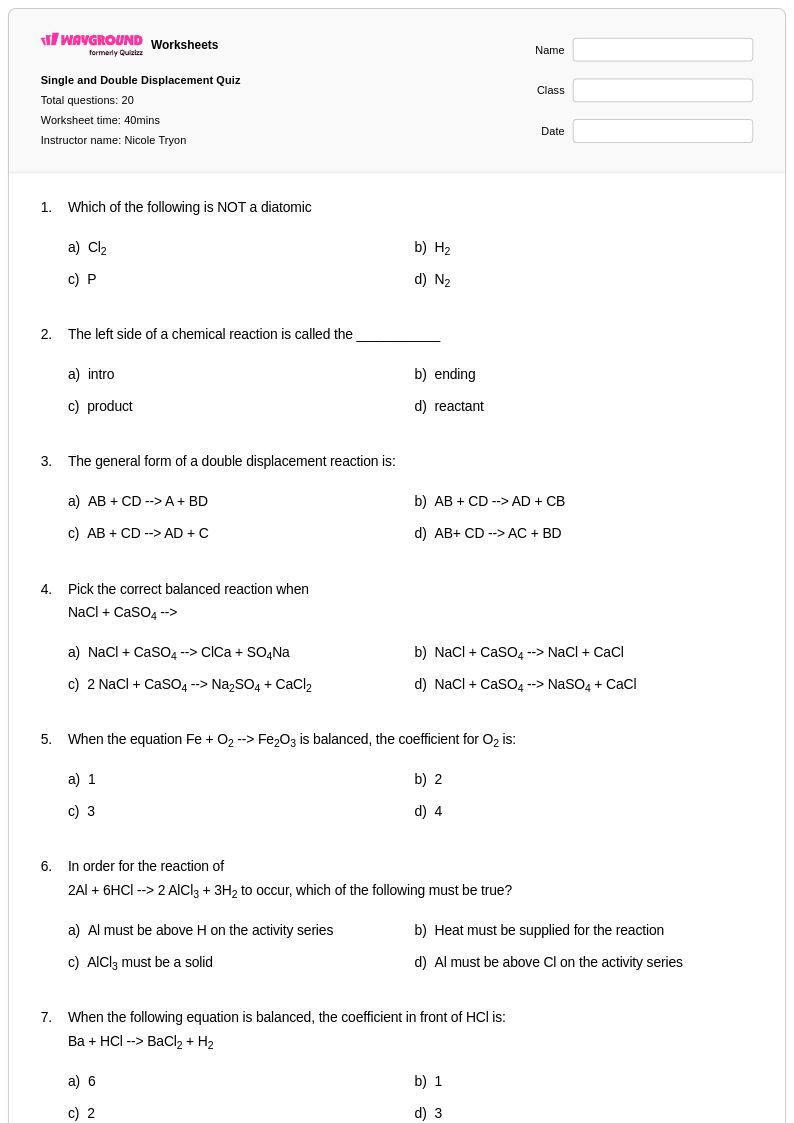
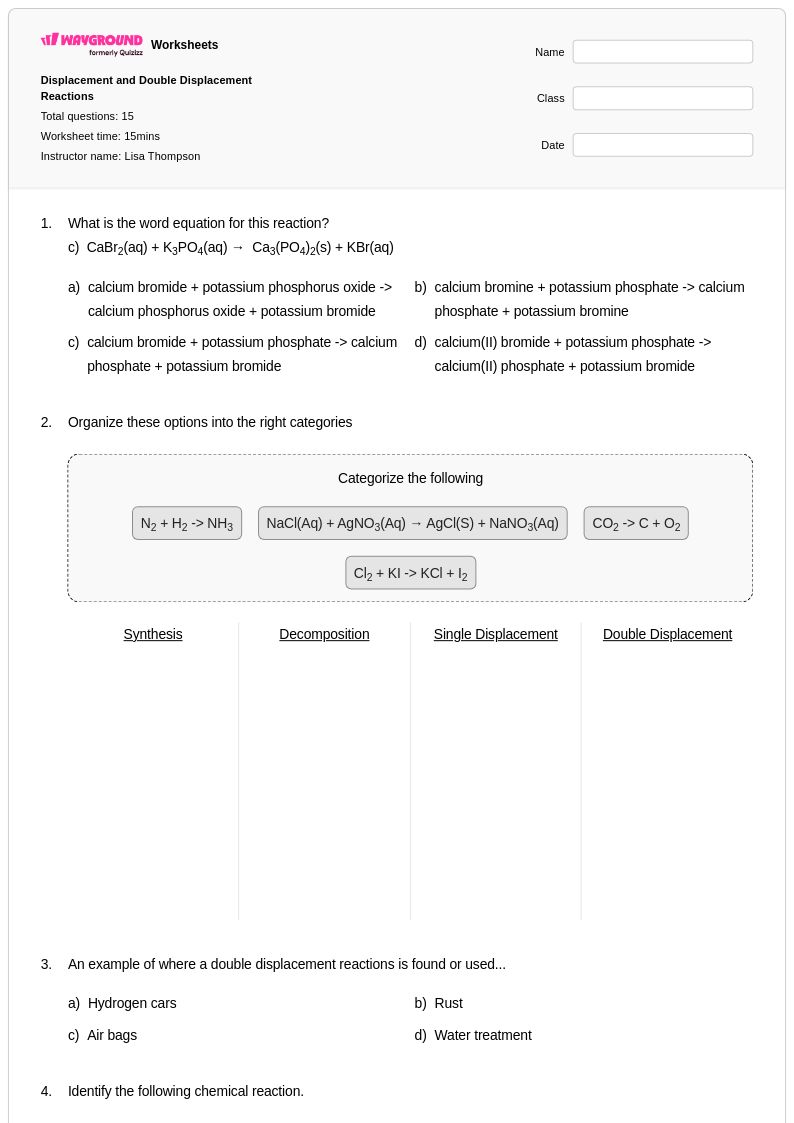
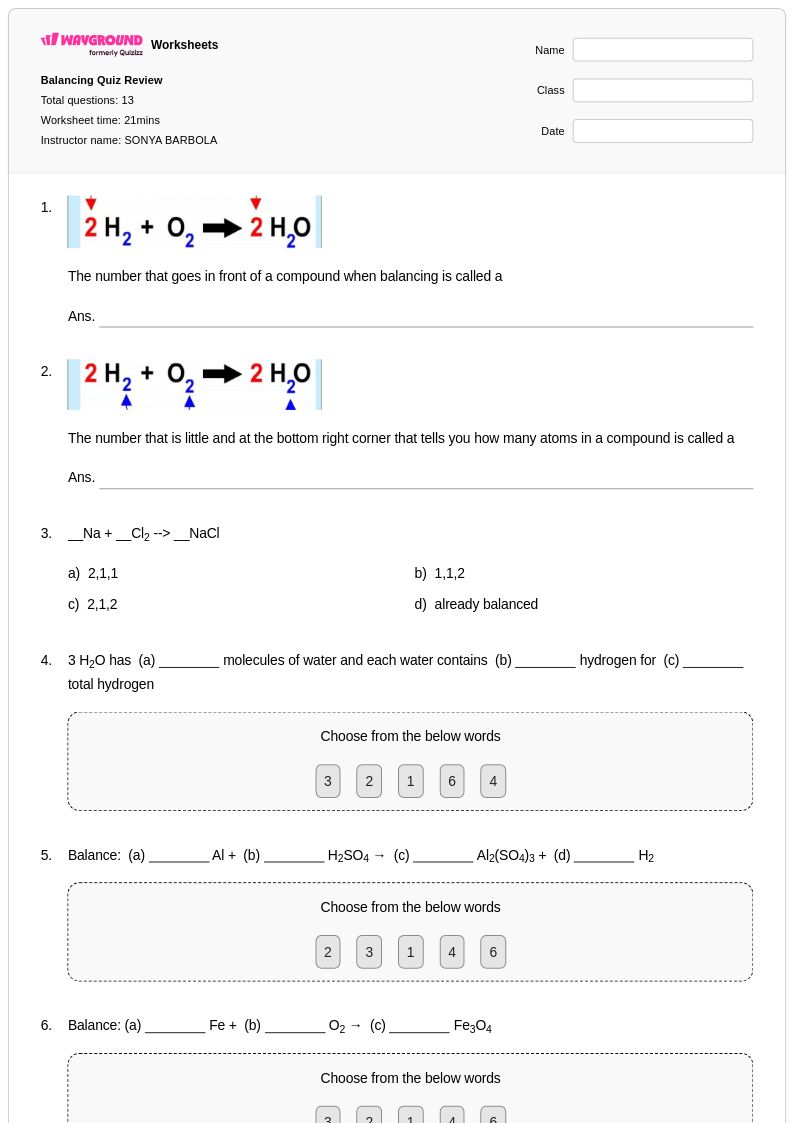
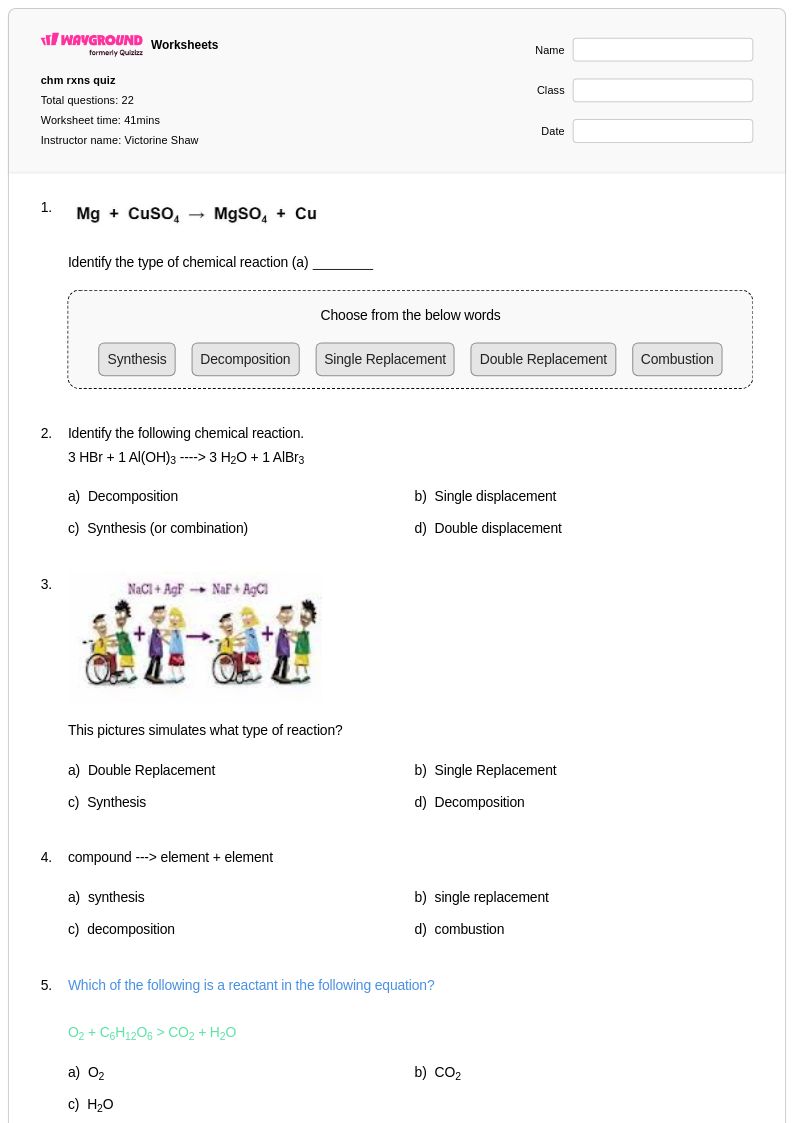
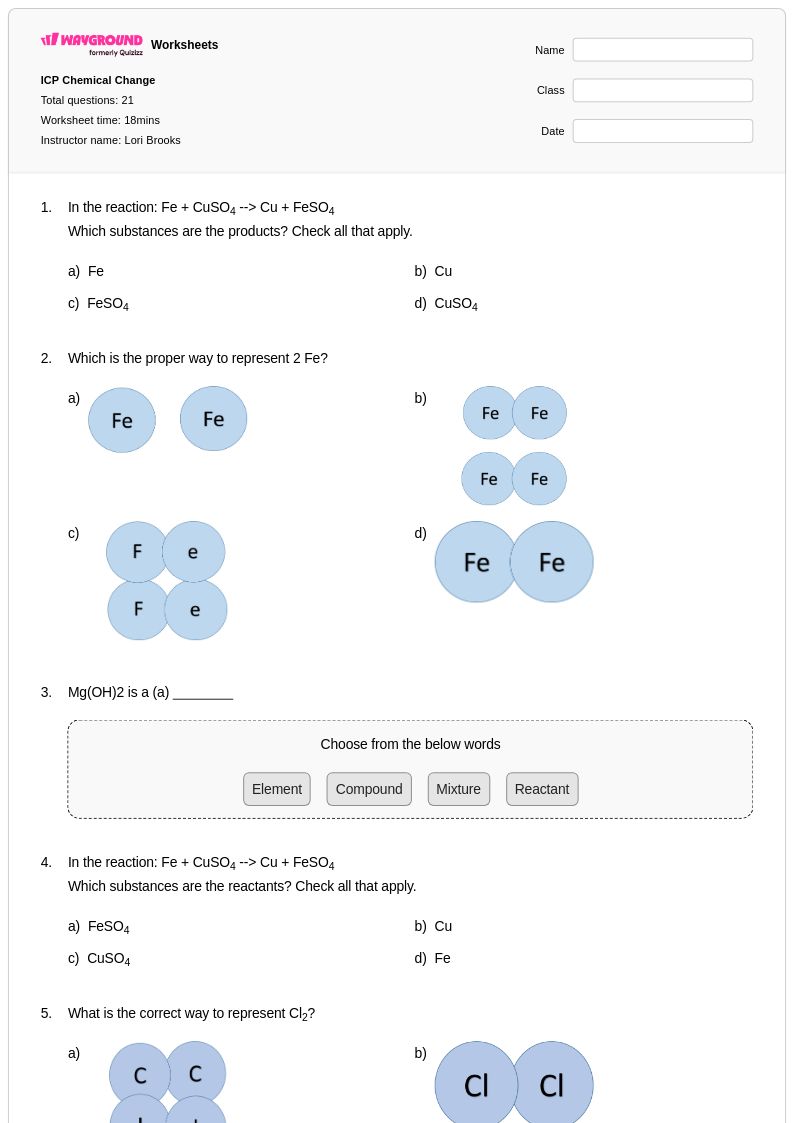
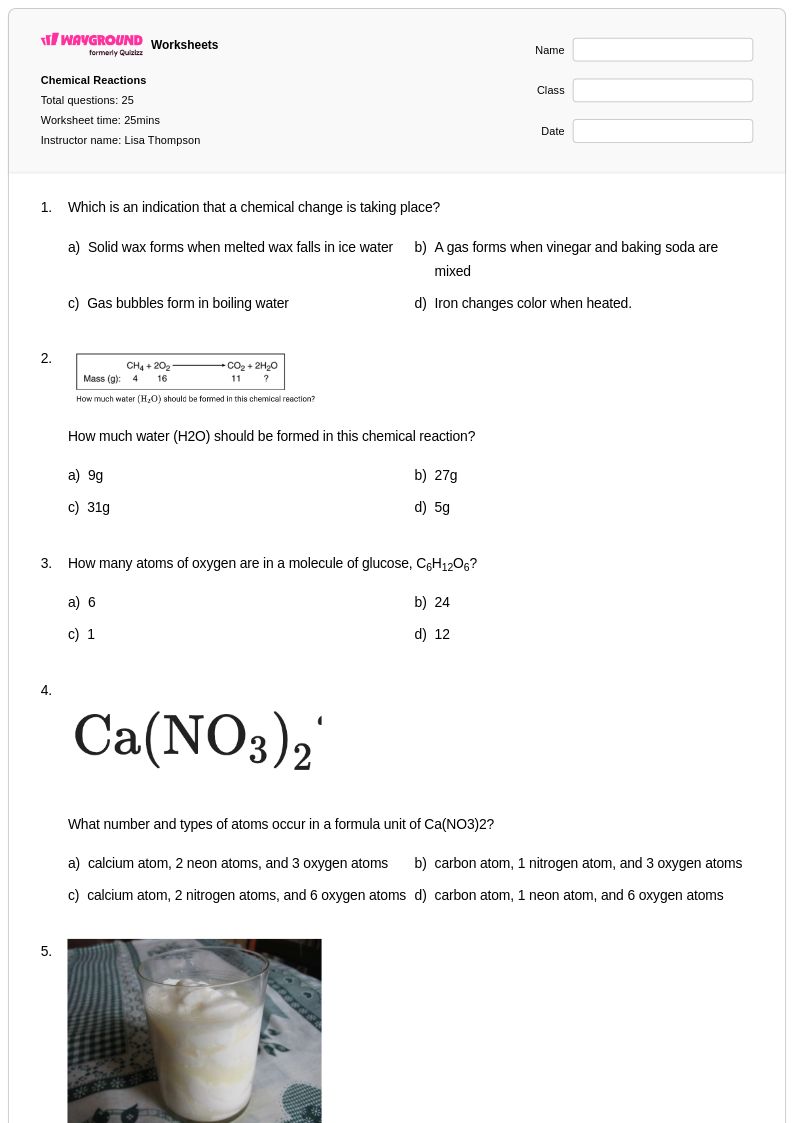
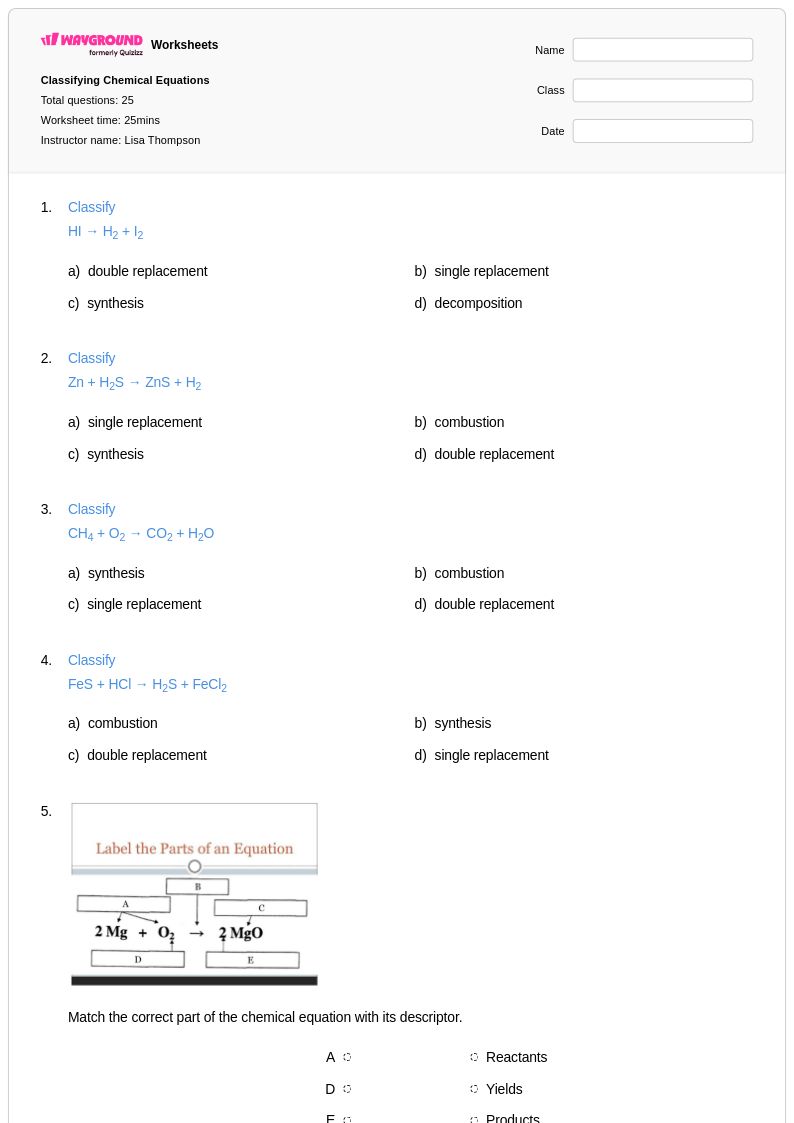
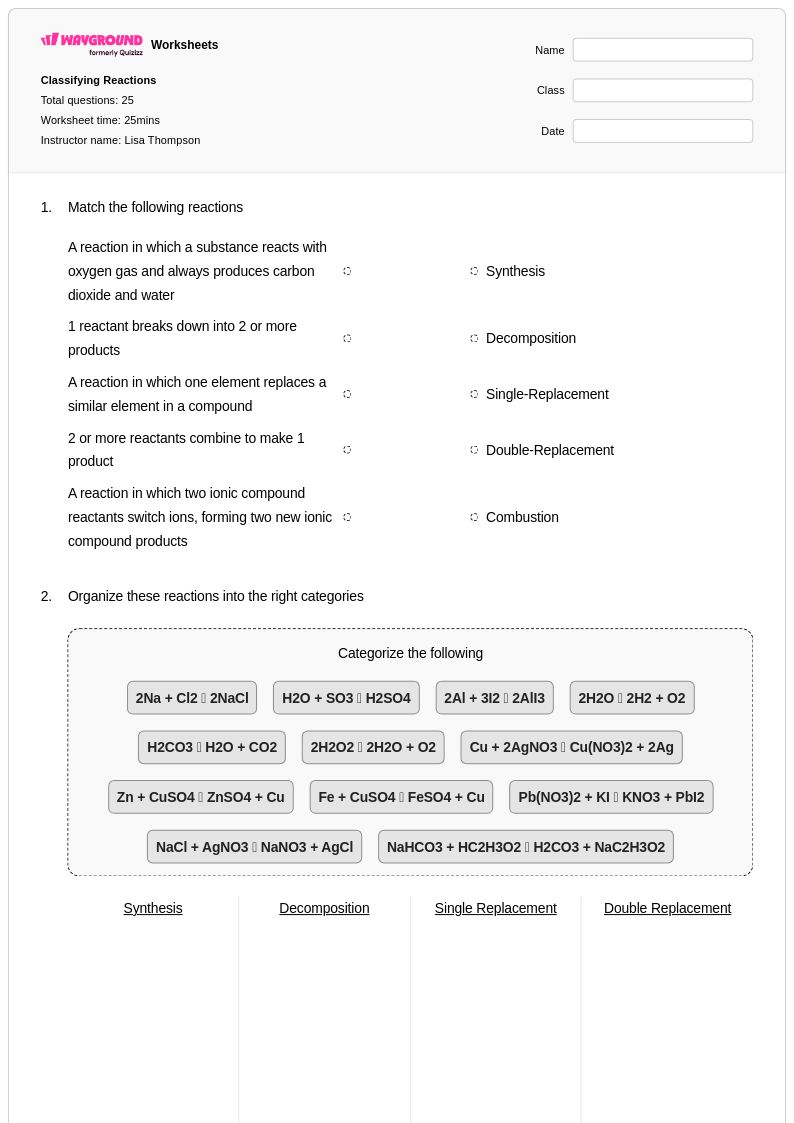
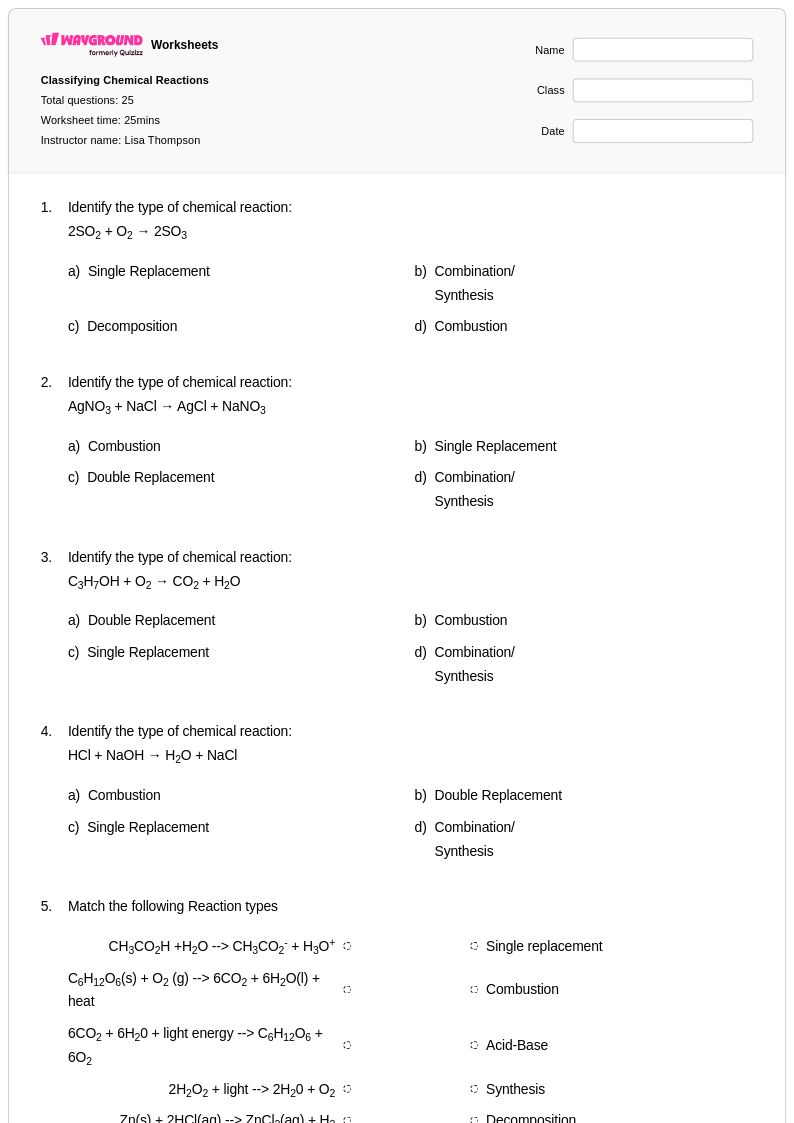
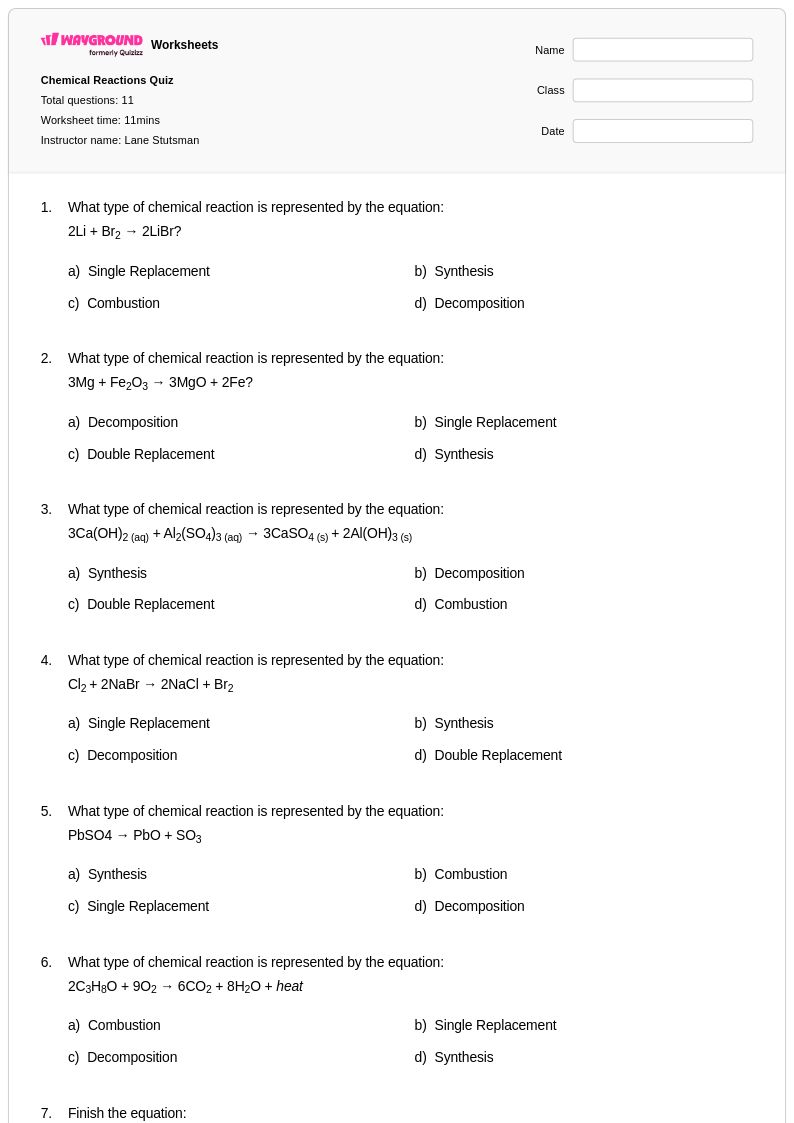
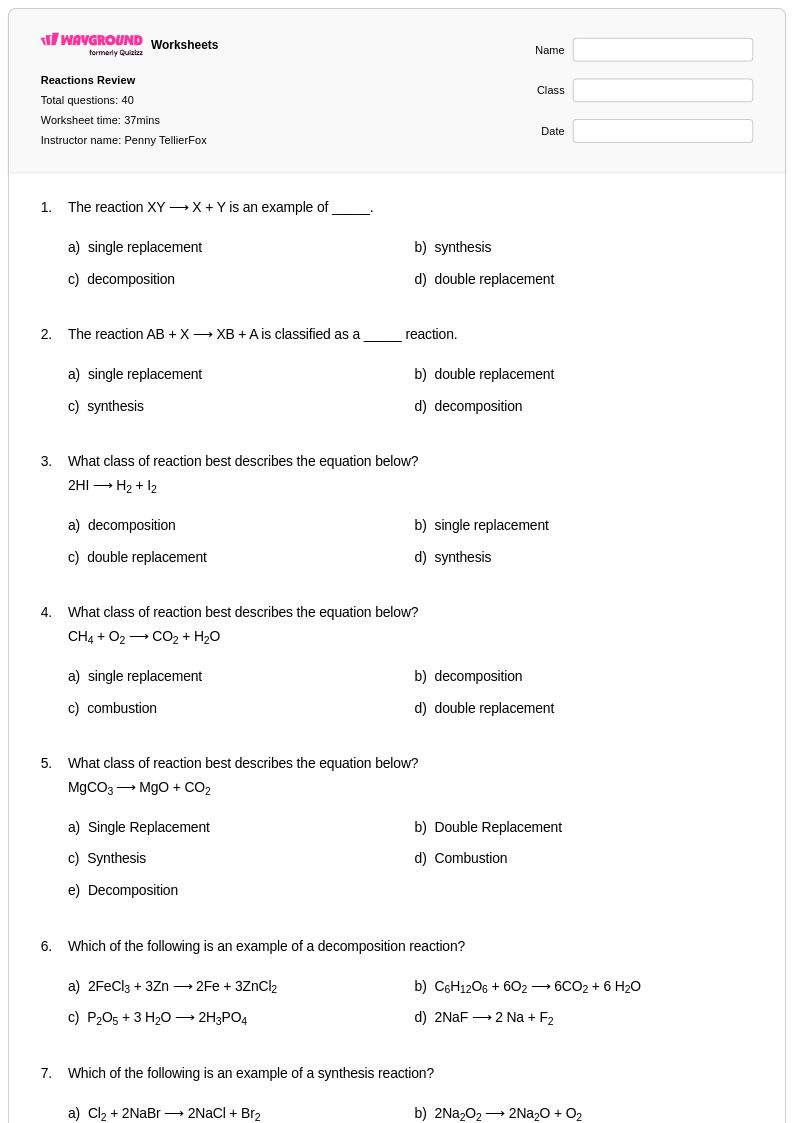
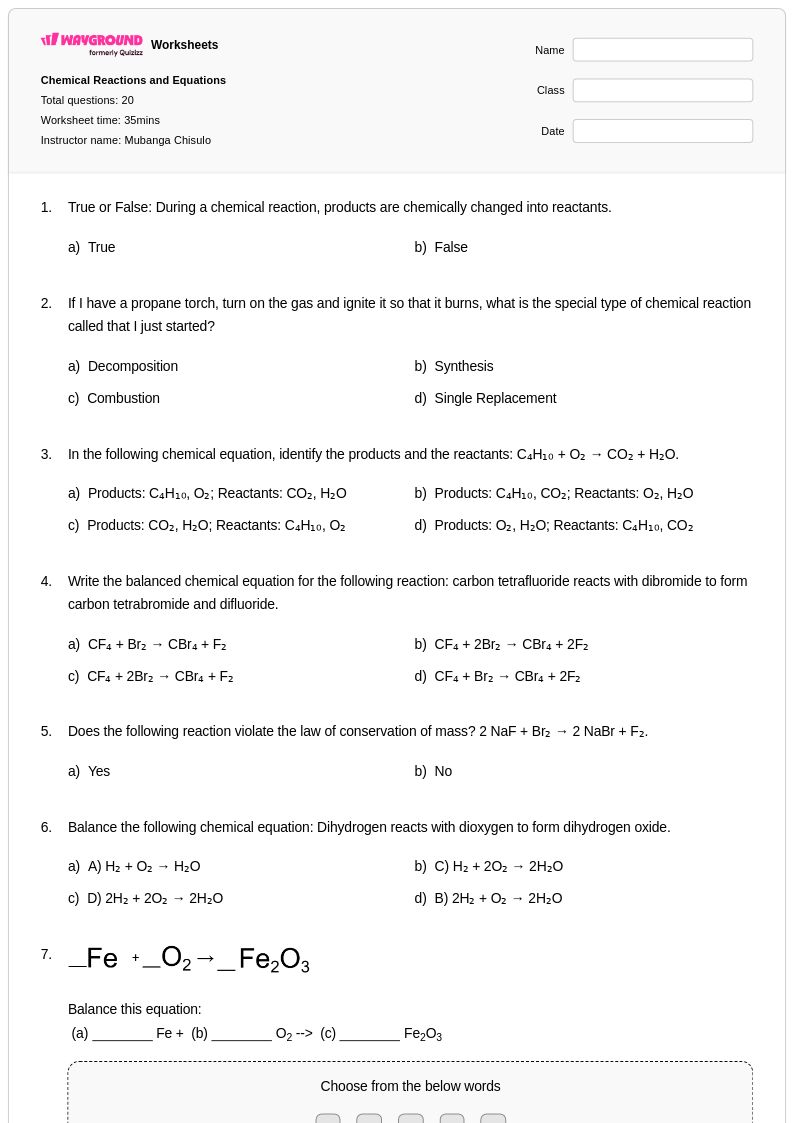
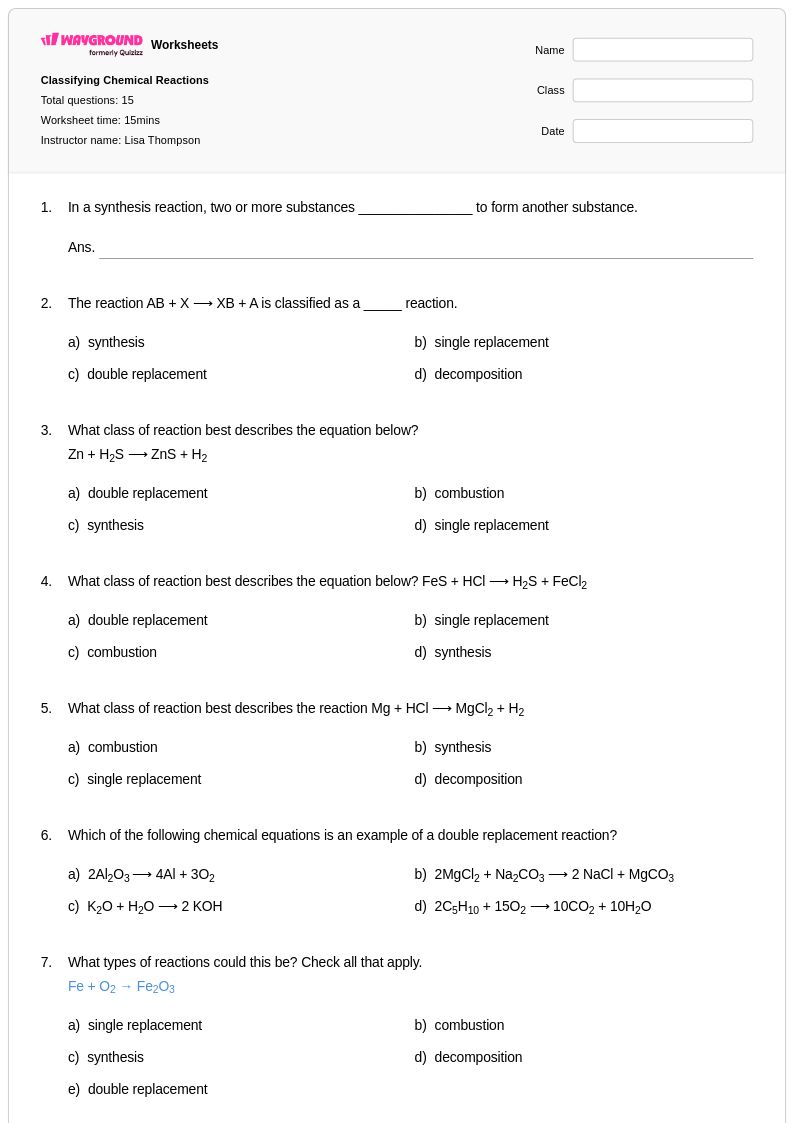
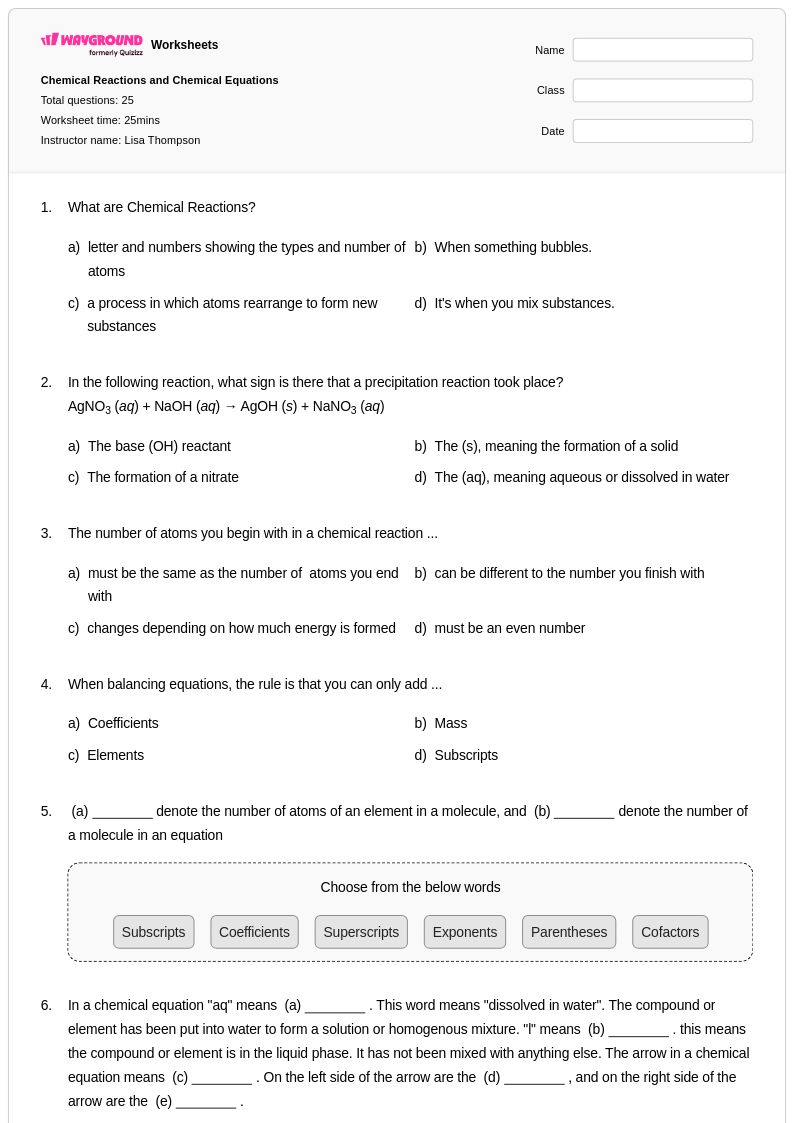
Single replacement reaction worksheets for Year 12 chemistry students through Wayground (formerly Quizizz) provide comprehensive coverage of this fundamental reaction type where one element displaces another in a compound. These expertly designed resources strengthen students' abilities to predict reaction products, balance chemical equations, and apply activity series concepts to determine reaction feasibility. The worksheets feature diverse practice problems ranging from basic copper-zinc displacement reactions to complex scenarios involving halogens and alkali metals, ensuring students master both theoretical understanding and practical application. Each worksheet collection includes detailed answer keys and is available in convenient pdf format, making these free printables invaluable for reinforcing classroom instruction and developing chemical reasoning skills essential for advanced chemistry coursework.
Wayground (formerly Quizizz) empowers chemistry educators with millions of teacher-created single replacement reaction worksheets that streamline lesson planning and enhance student learning outcomes. The platform's robust search and filtering capabilities allow teachers to quickly locate resources aligned with specific curriculum standards, while built-in differentiation tools enable customization for varying skill levels within Year 12 classrooms. These flexible worksheet collections are available in both printable pdf format and interactive digital versions, supporting diverse teaching environments and learning preferences. Teachers utilize these comprehensive resources for targeted skill practice, remediation of challenging concepts like predicting spontaneous reactions, and enrichment activities that challenge advanced students to analyze complex displacement scenarios across different chemical families.
FAQs
How do I teach single replacement reactions to chemistry students?
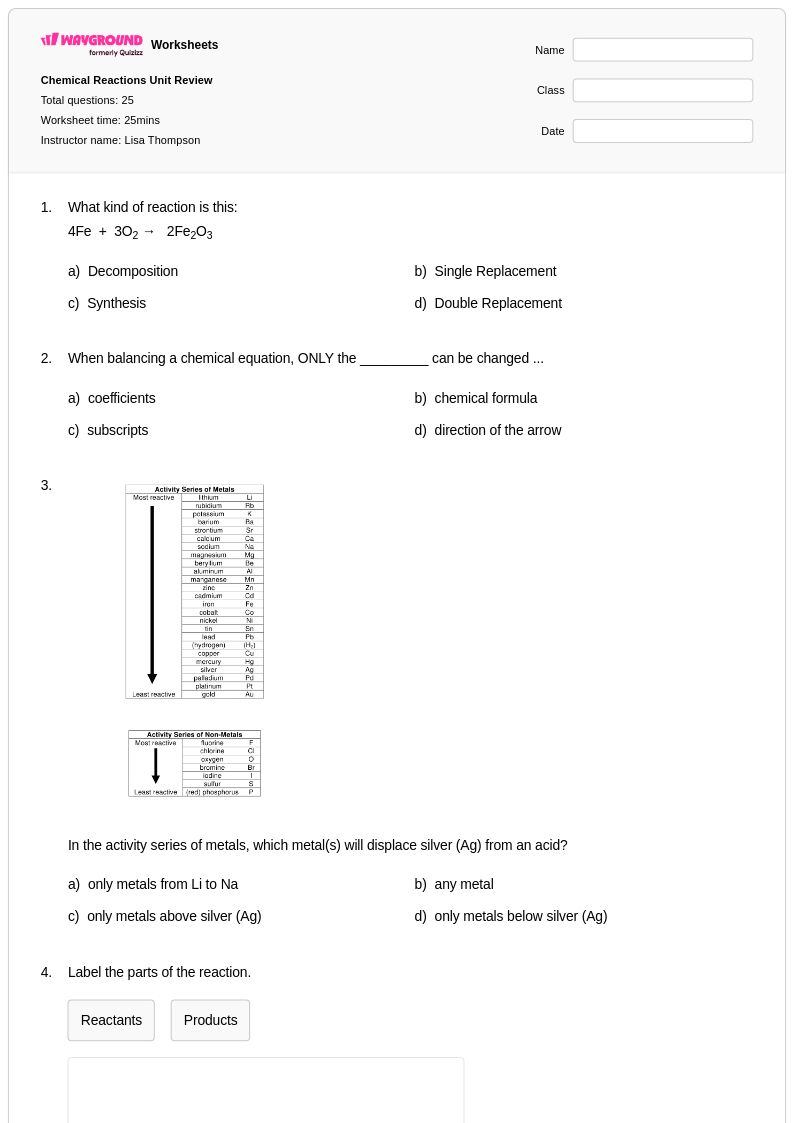
Start by grounding students in the activity series before asking them to predict any products. Teach them to compare the reactivity of the free element to the element it might displace, using the activity series as a reference chart rather than a memorization task. Once students understand the logic of reactivity, introduce balanced equation writing as a second step so they are not simultaneously managing two new skills. Connecting single replacement reactions to real-world examples, such as iron rusting or zinc reacting with hydrochloric acid, helps students see why reactivity patterns matter.
What practice problems help students get better at predicting single replacement reaction products?
Students benefit most from problems that require them to first consult the activity series and decide whether a reaction will even occur before writing any products. Structured practice sets that progress from metal-in-acid reactions to metal-in-salt-solution reactions and then to halogen displacement build skill systematically. Including a mix of problems where no reaction occurs alongside problems where it does forces students to apply the activity series critically rather than assuming every setup yields products.
What mistakes do students commonly make with single replacement reactions?
The most common error is assuming a reaction always occurs regardless of the activity series, essentially writing products without checking whether the free element is more reactive than the one it would replace. Students also frequently swap the wrong element during displacement, substituting the wrong ion in the product compound. A related issue is failing to balance the final equation after identifying the products, treating product prediction and equation balancing as unconnected tasks.
How do I help students who struggle to use the activity series correctly?
Students who struggle with the activity series often treat it as a list to memorize rather than a ranked comparison tool. Have them physically annotate the series by circling the reacting element and the element being displaced, then draw an arrow from higher to lower to confirm direction of reactivity before writing any equation. Color-coded reference cards that students keep at their desk during practice reduce cognitive load and help them internalize the logic over time. On Wayground, teachers can apply reduced answer choices for students who need additional scaffolding, lowering the decision complexity while they build confidence with the activity series.
How do I use Wayground's single replacement reaction worksheets in my classroom?
Wayground's single replacement reaction worksheets are available as printable PDFs for traditional classroom use and in digital formats for technology-integrated environments, including the option to host them as a quiz directly on Wayground. Teachers can use printable versions for guided notes, in-class practice, or homework, while digital versions work well for self-paced review or formative checks. The included answer keys make grading efficient and allow students to self-check work during practice sessions.
How do I assess whether students truly understand single replacement reactions versus just memorizing steps?
True understanding is best assessed by giving students unfamiliar reactant pairs and asking them to predict outcomes with written justification referencing the activity series, not just a balanced equation. Including at least one 'no reaction' scenario in any assessment reveals whether students are applying the reactivity logic or mechanically writing products. Short explanation prompts, such as asking students to explain why zinc displaces copper from copper sulfate but copper cannot displace zinc, distinguish conceptual understanding from procedural mimicry.