Free Printable Percentage Yield Worksheets for Year 12
Master Year 12 percentage yield calculations with Wayground's comprehensive collection of free chemistry worksheets, featuring printable PDFs, guided practice problems, and complete answer keys to strengthen stoichiometry skills.
Explore printable Percentage Yield worksheets for Year 12
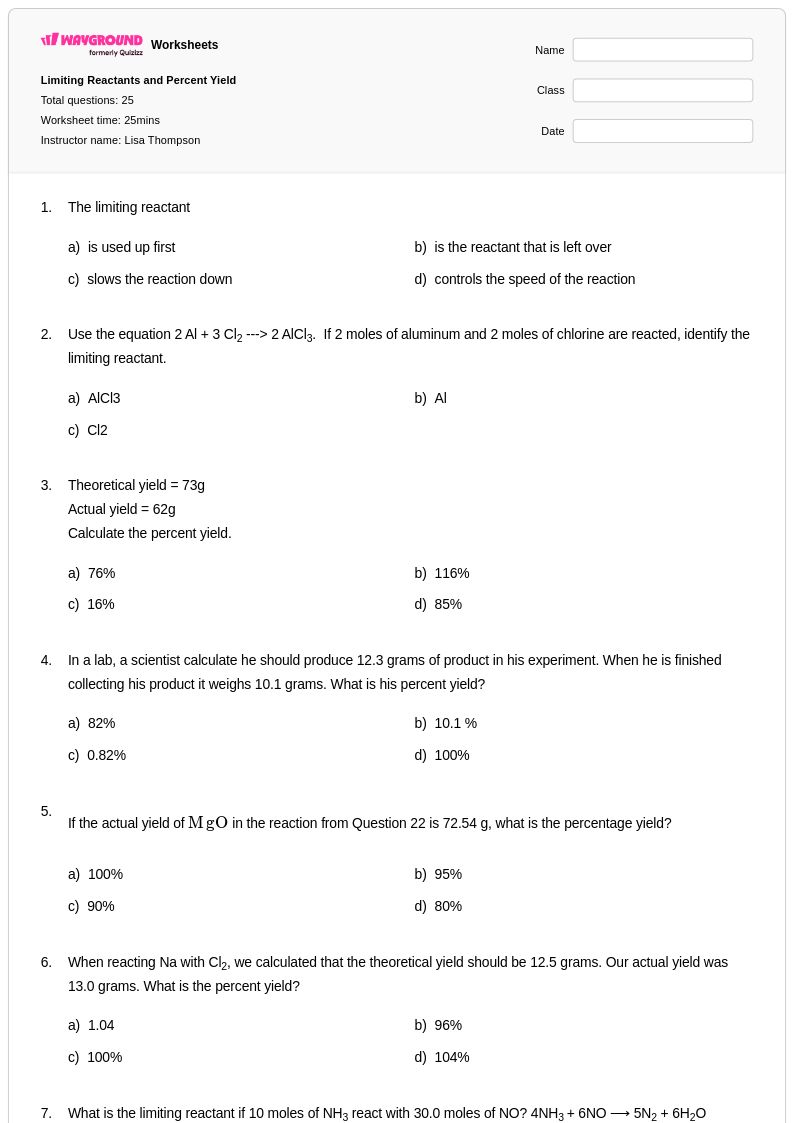
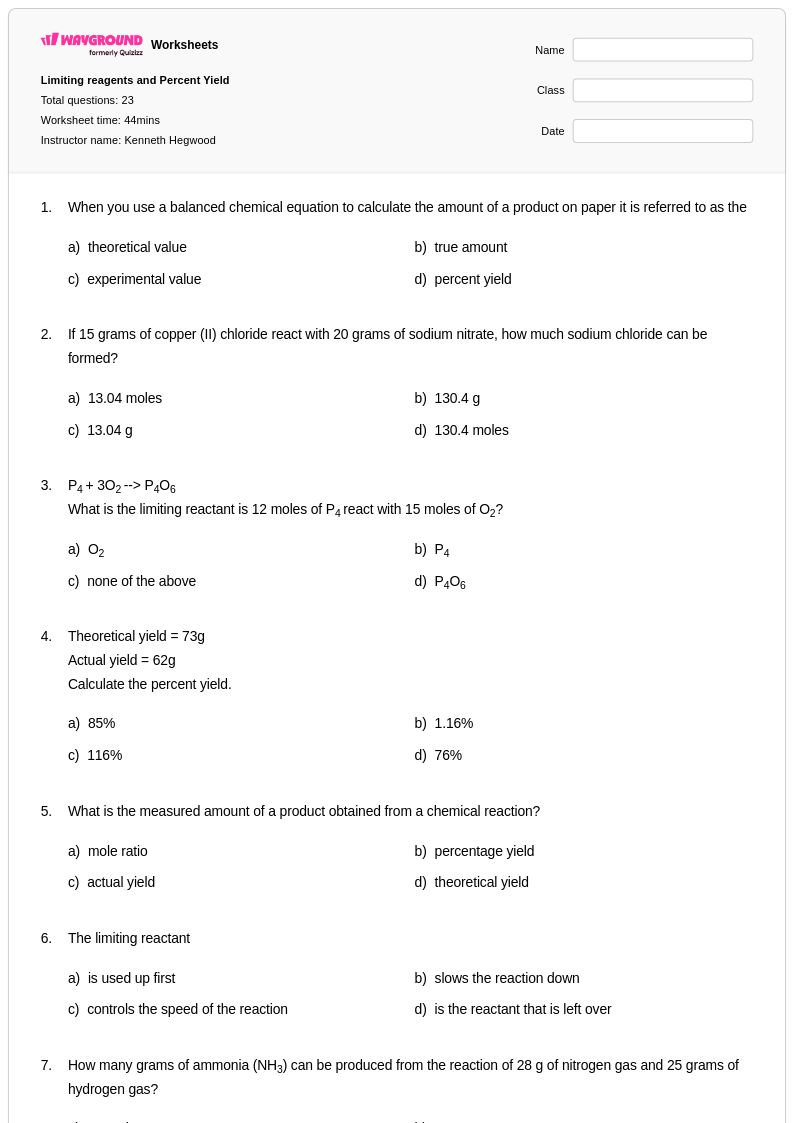
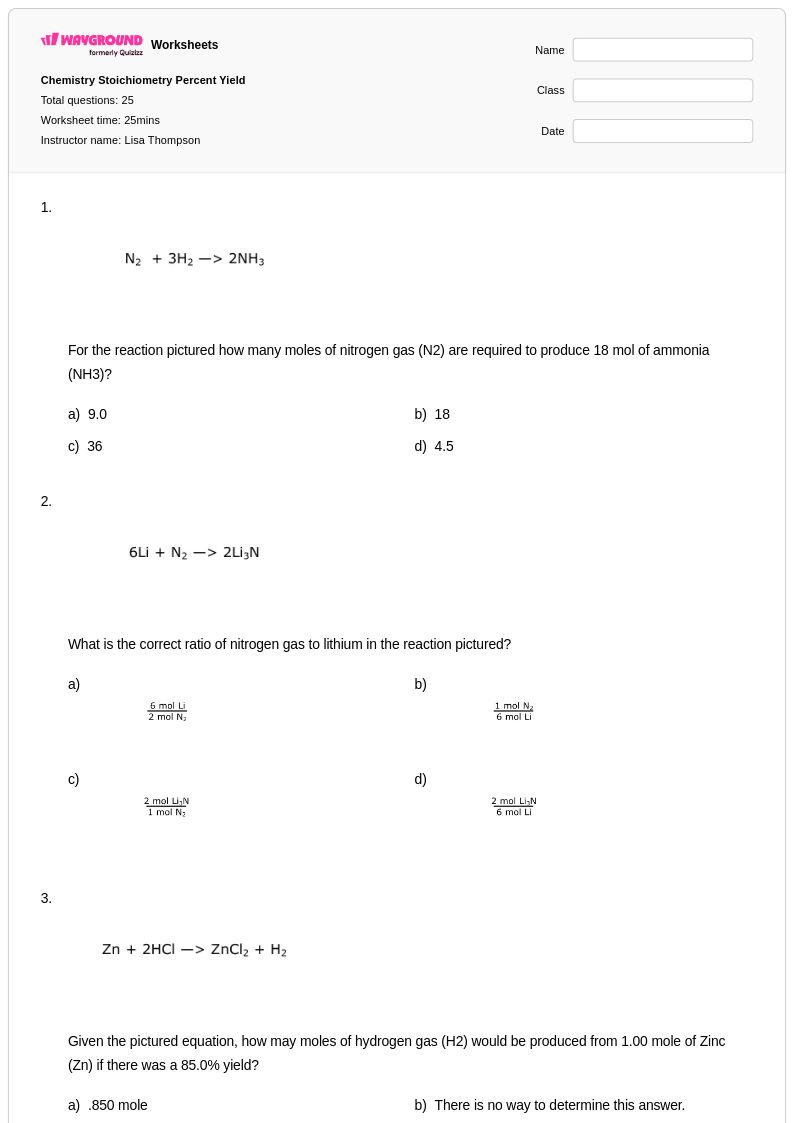
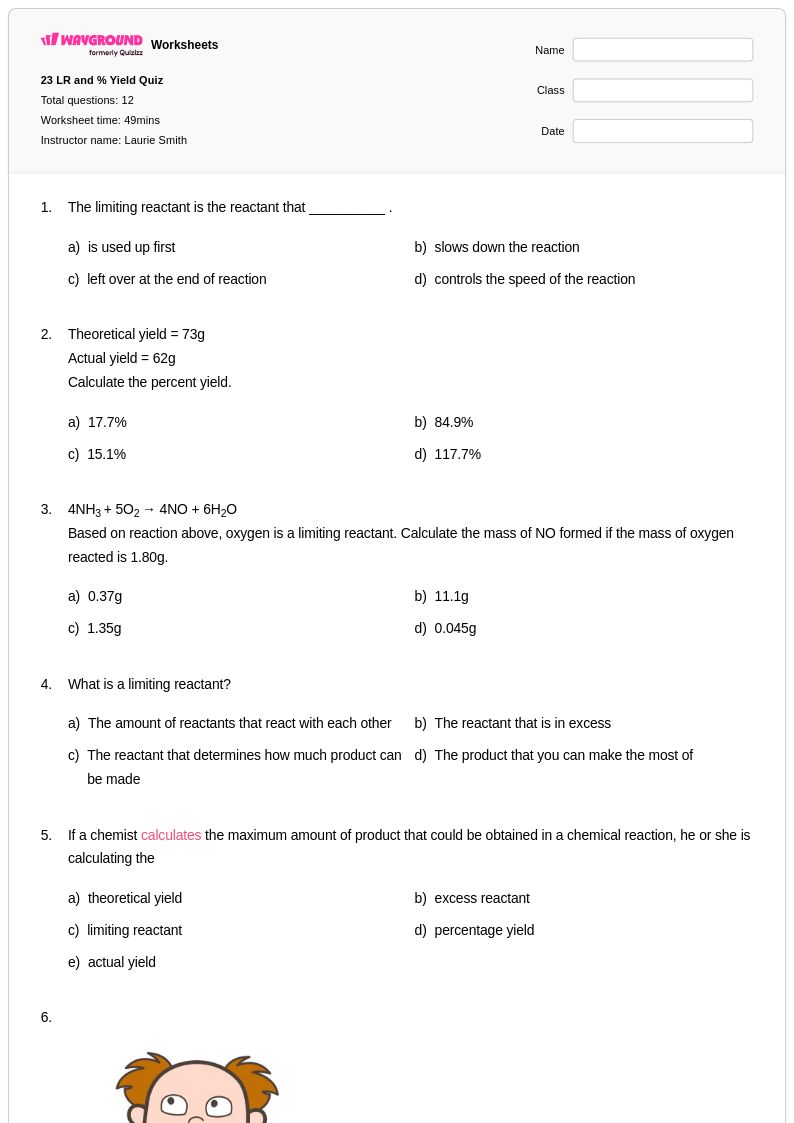
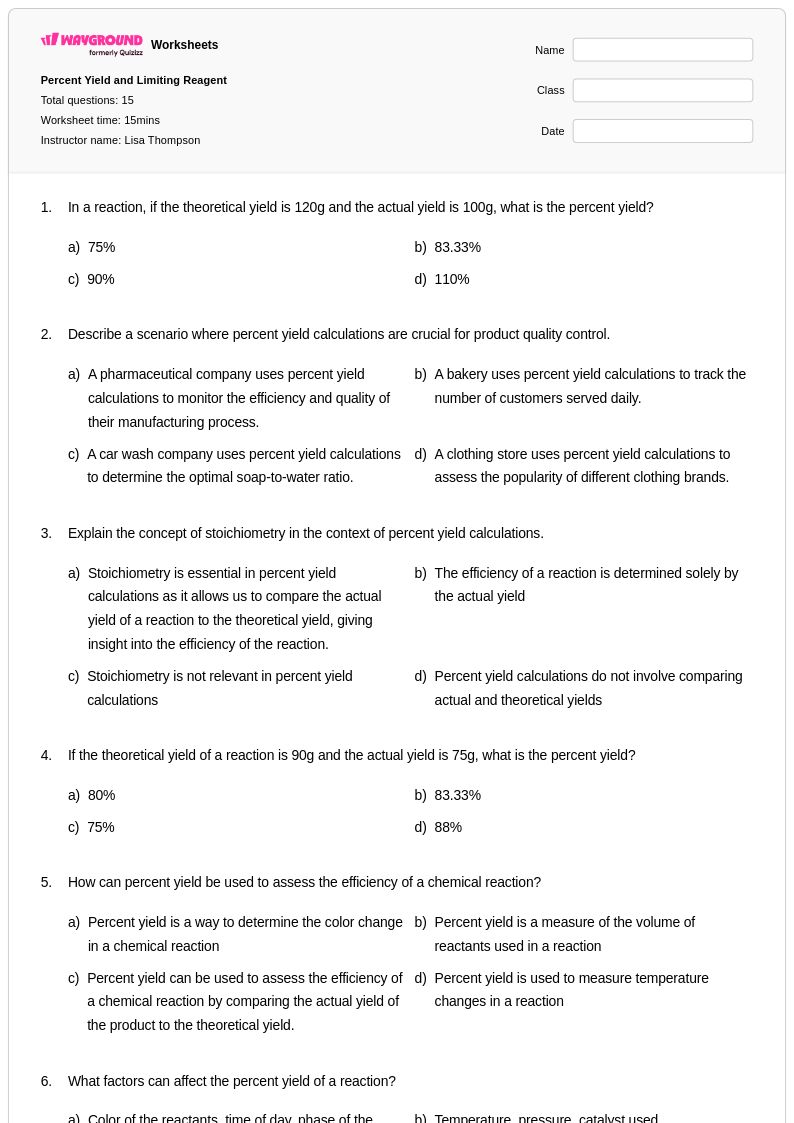
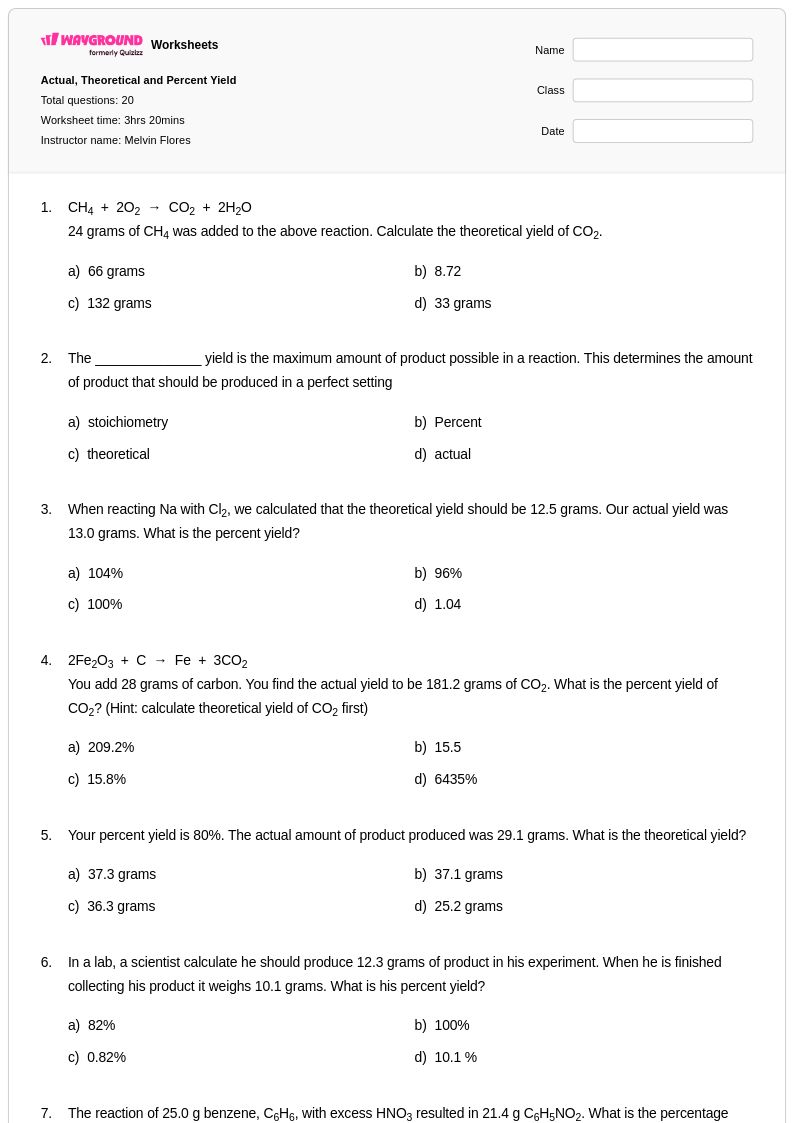
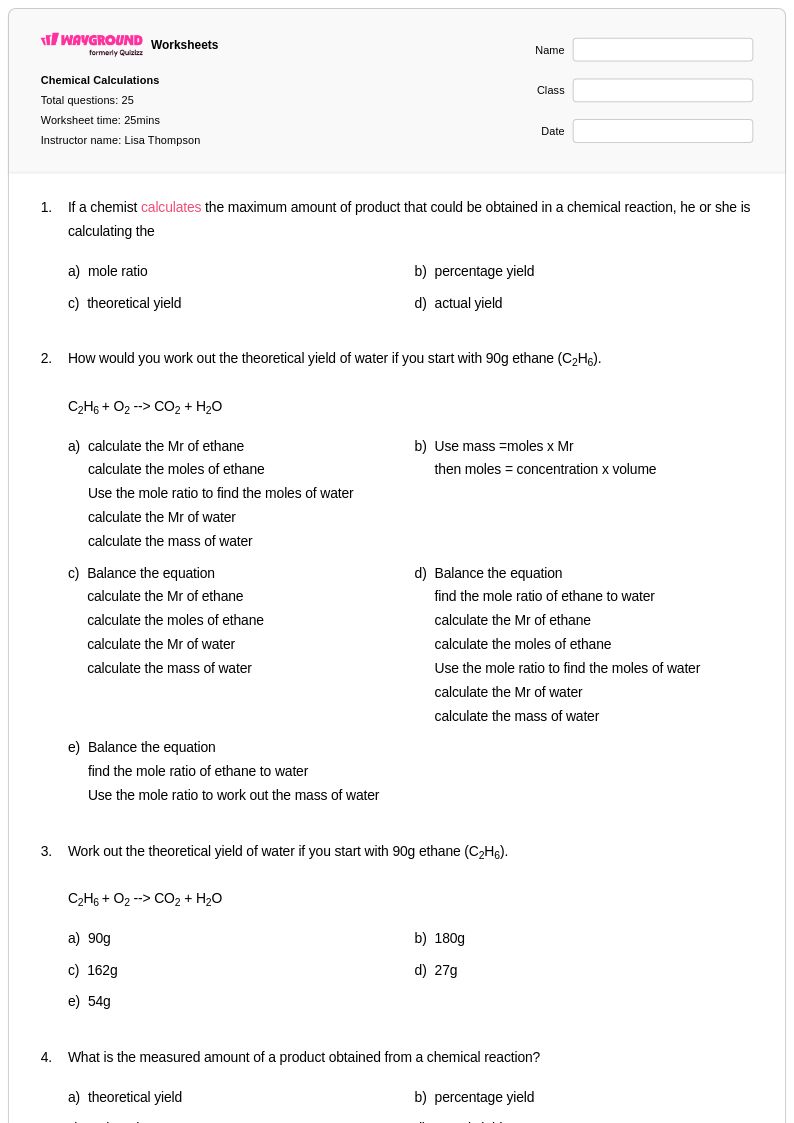
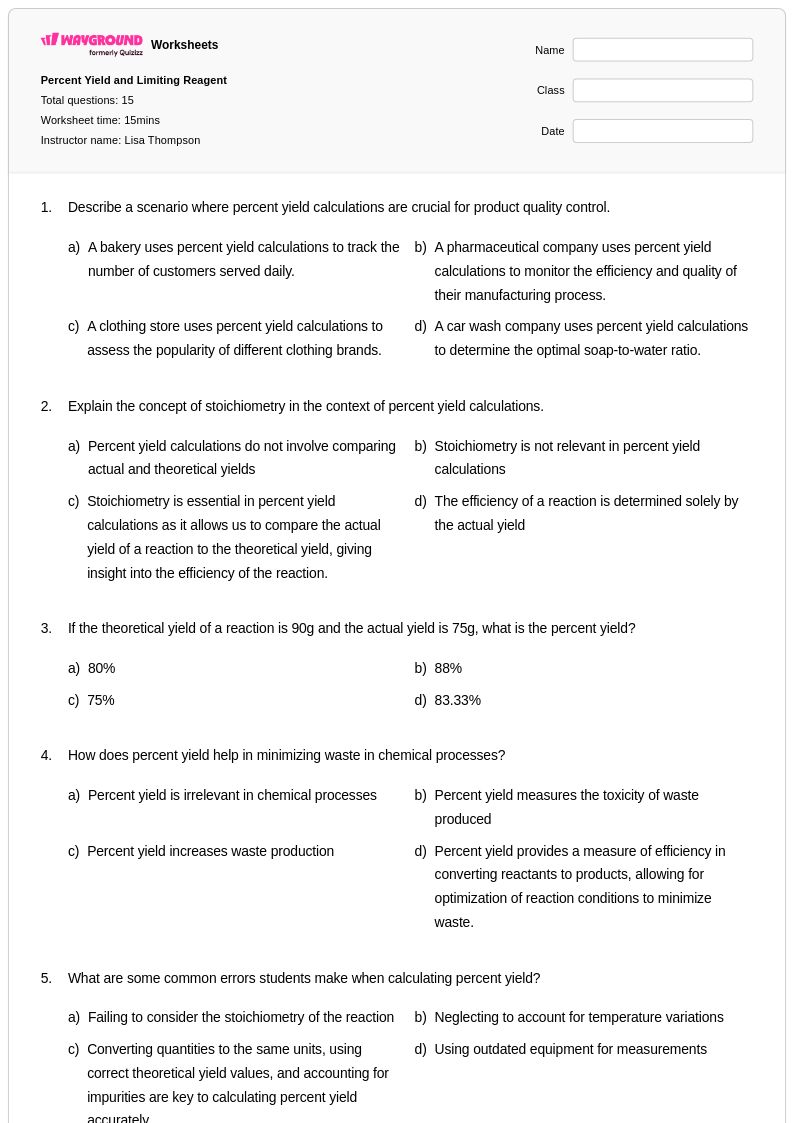
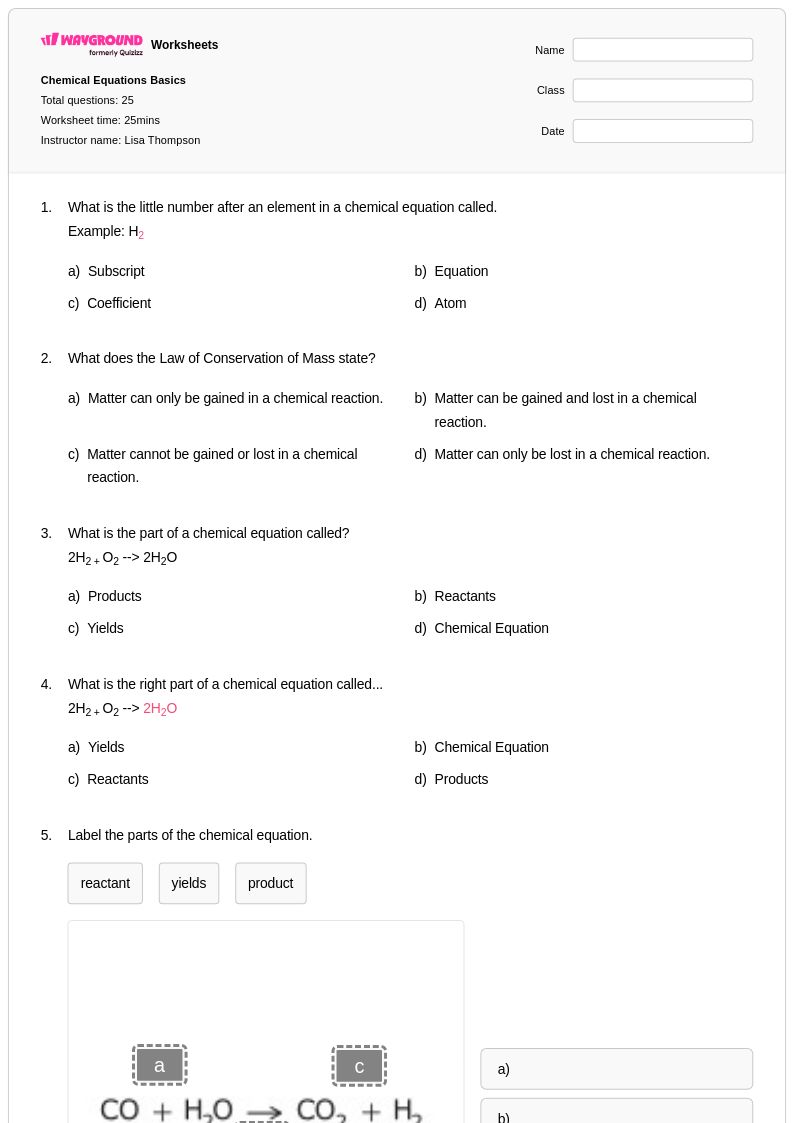
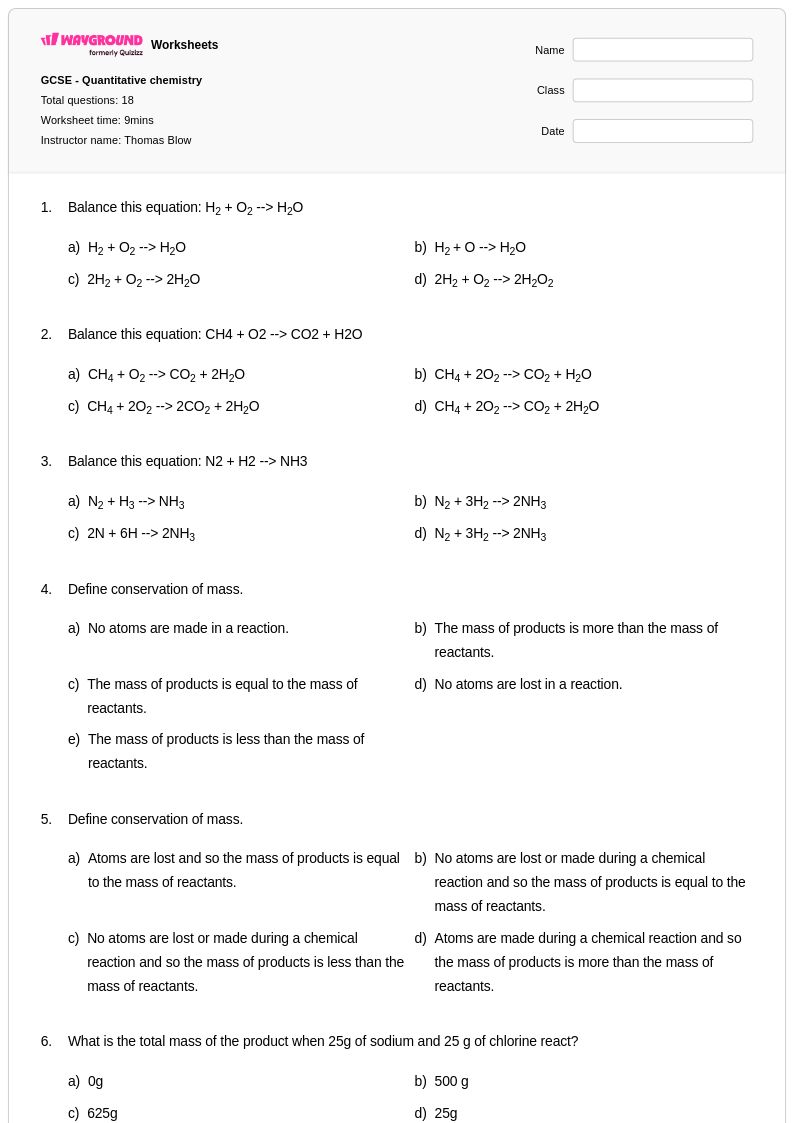
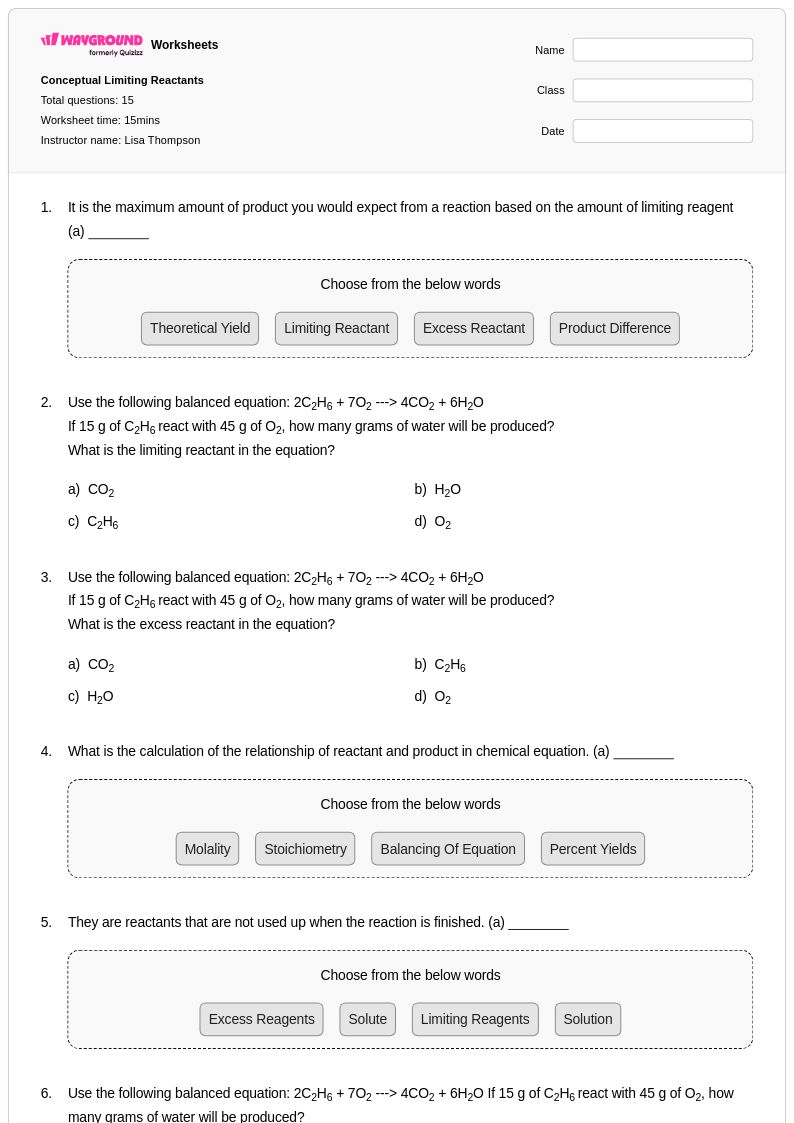
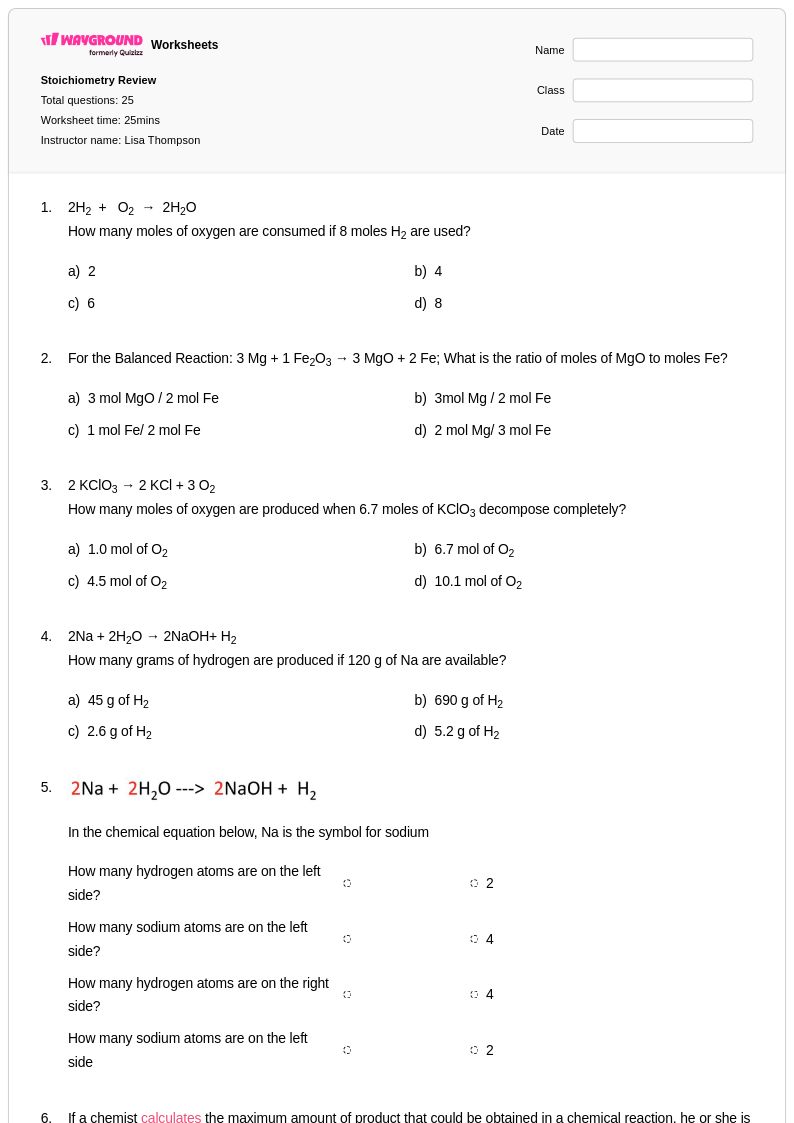
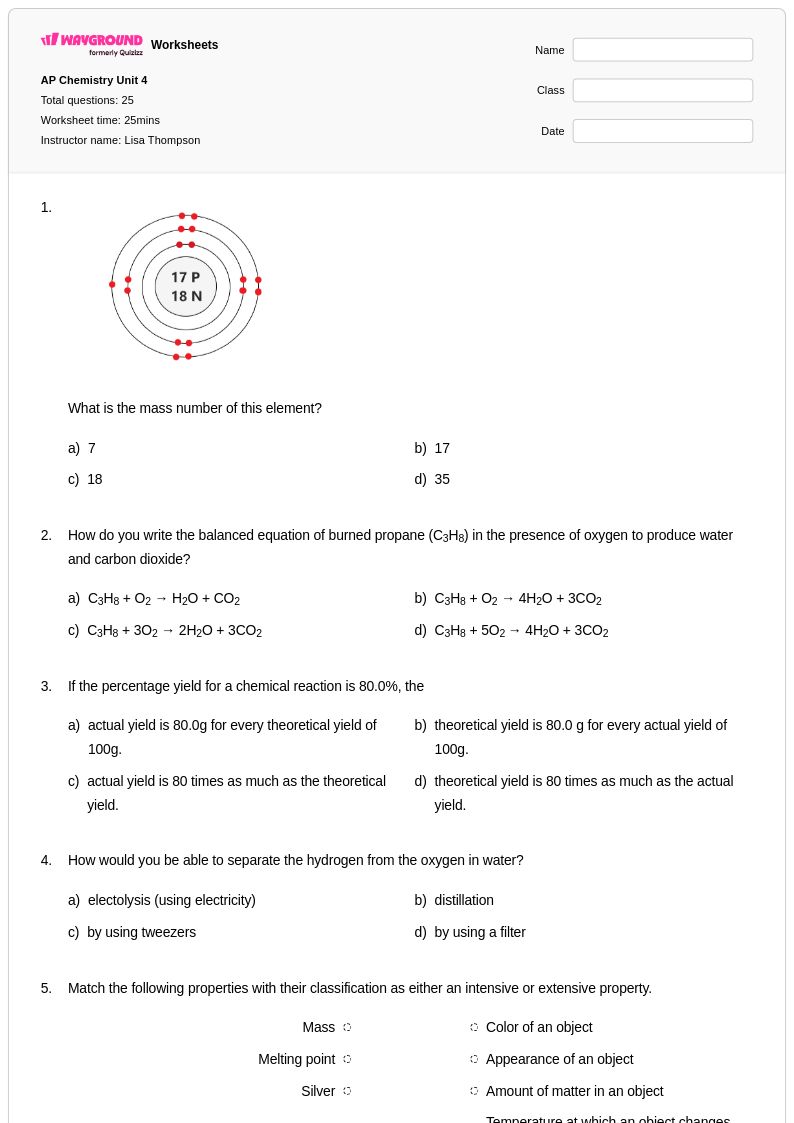
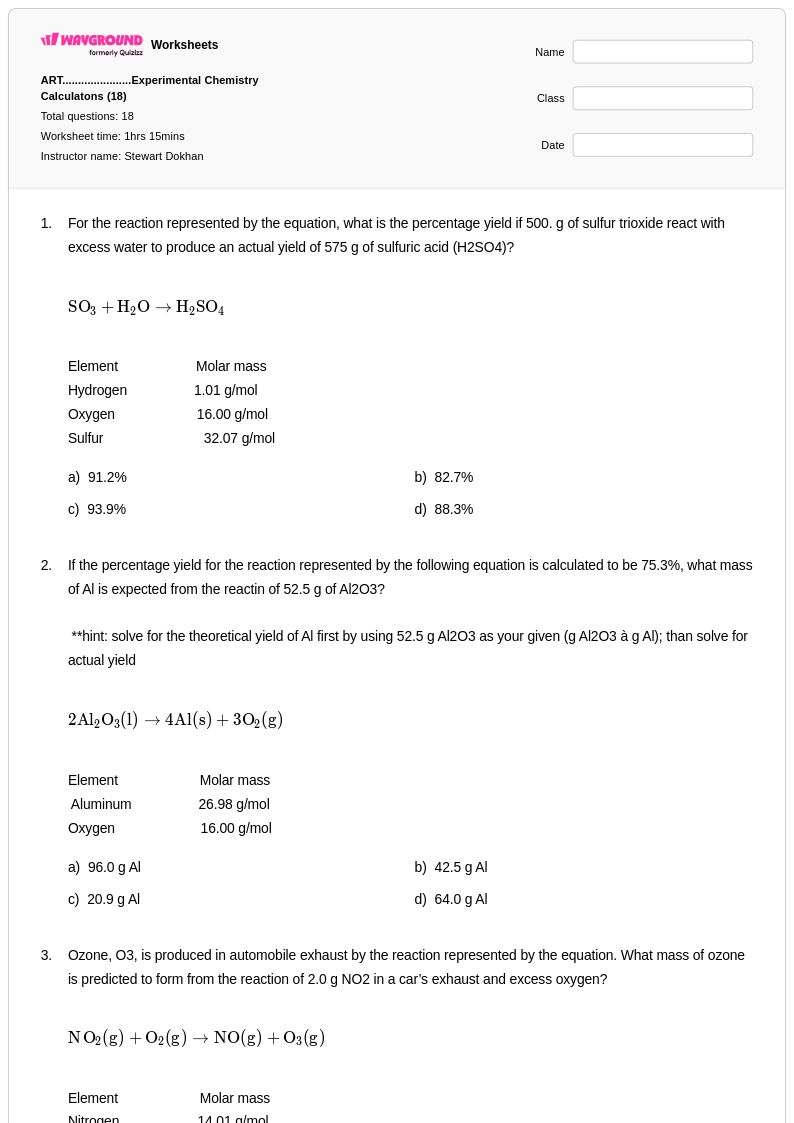
Percentage yield worksheets for Year 12 chemistry students available through Wayground (formerly Quizizz) provide comprehensive practice with one of the most critical quantitative concepts in advanced chemistry coursework. These expertly crafted worksheets guide students through calculating theoretical yields, determining actual yields from experimental data, and computing percentage yields using the fundamental formula that compares actual to theoretical results. Students develop essential problem-solving skills as they work through multi-step stoichiometric calculations, analyze limiting reagents, and interpret real-world laboratory scenarios where reactions rarely achieve 100% efficiency. The collection includes detailed answer keys that allow students to verify their work independently, while free printable pdf formats ensure accessibility for both classroom instruction and independent study, making these practice problems invaluable for mastering this challenging topic.
Wayground (formerly Quizizz) empowers chemistry educators with millions of teacher-created resources specifically designed for percentage yield instruction, featuring robust search and filtering capabilities that allow quick identification of worksheets aligned to specific learning standards and difficulty levels. The platform's differentiation tools enable teachers to customize worksheets for diverse learning needs, from basic percentage yield calculations to complex multi-reaction scenarios involving side reactions and purification losses. These resources are available in both printable and digital formats, including downloadable pdfs, providing flexibility for traditional classroom settings or remote learning environments. Teachers can seamlessly integrate these worksheets into lesson planning for initial concept introduction, targeted remediation for struggling students, or enrichment activities for advanced learners, while the comprehensive scope of practice problems ensures thorough skill development in this essential chemistry calculation technique.
FAQs
How do I teach percentage yield to chemistry students?
Start by ensuring students have a solid grasp of stoichiometry and mole calculations before introducing percentage yield, since the formula — (actual yield ÷ theoretical yield) × 100 — requires them to first determine the theoretical yield from a balanced equation. Use real laboratory examples, such as a synthesis reaction where product is inevitably lost during filtration or transfer, to make the concept of efficiency tangible. Connecting the math to physical lab conditions helps students understand why actual yield is almost always less than theoretical yield.
What exercises help students practice percentage yield calculations?
Effective practice progresses from single-step problems — where theoretical yield is given and students calculate the percentage — to multi-step problems that require students to first use stoichiometry to find the theoretical yield before applying the percentage yield formula. Including problems that incorporate limiting reagents adds another layer of rigor and mirrors actual laboratory conditions. Percentage yield worksheets that provide worked answer keys allow students to self-check their reasoning at each step, not just their final answer.
What mistakes do students commonly make when calculating percentage yield?
The most frequent error is using mass values directly without converting to moles first, leading to a theoretical yield that is dimensionally inconsistent with the actual yield. Students also commonly confuse which reactant is the limiting reagent when multiple reactants are involved, causing their theoretical yield calculation to be inflated. A third common mistake is inverting the formula — dividing actual yield by theoretical yield but forgetting to multiply by 100, or reversing the numerator and denominator entirely.
How do I differentiate percentage yield instruction for students at different skill levels?
For students who are still building confidence, begin with problems where the theoretical yield is pre-calculated so they can focus solely on applying the percentage yield formula before tackling multi-step problems. More advanced students can work through complex scenarios involving limiting reagents, impure reactants, or percent purity. On Wayground, teachers can apply accommodations such as reduced answer choices or read-aloud support to individual students, allowing the same worksheet to serve the full range of learners without disrupting the rest of the class.
How do I use Wayground's percentage yield worksheets in my classroom?
Wayground's percentage yield worksheets are available as printable PDFs for traditional classroom use and in digital formats for technology-integrated environments, including the option to host them as a quiz directly on Wayground. The printable format works well for in-class problem sets or independent study, while the digital version supports remote learning and allows for faster turnaround on student feedback. Each worksheet includes a complete answer key, so teachers can use them for guided instruction, exit tickets, or self-paced review.
How does percentage yield connect to real-world chemistry and lab work?
Percentage yield is a direct measure of a reaction's efficiency and is used in industrial chemistry to evaluate the cost-effectiveness of manufacturing processes — a pharmaceutical company, for example, must know its yield percentage to determine whether a synthesis route is commercially viable. In the school lab, it teaches students that experimental results are rarely perfect and prompts them to analyze sources of error, such as incomplete reactions, product loss during transfer, or side reactions. This makes it one of the most practically relevant calculations students encounter in quantitative chemistry.