Free Printable Electron Orbitals Worksheets for Year 12
Explore Year 12 electron orbitals with Wayground's comprehensive collection of free chemistry worksheets, featuring printable PDFs with practice problems and answer keys to master orbital shapes, energy levels, and electron configurations.
Explore printable Electron Orbitals worksheets for Year 12
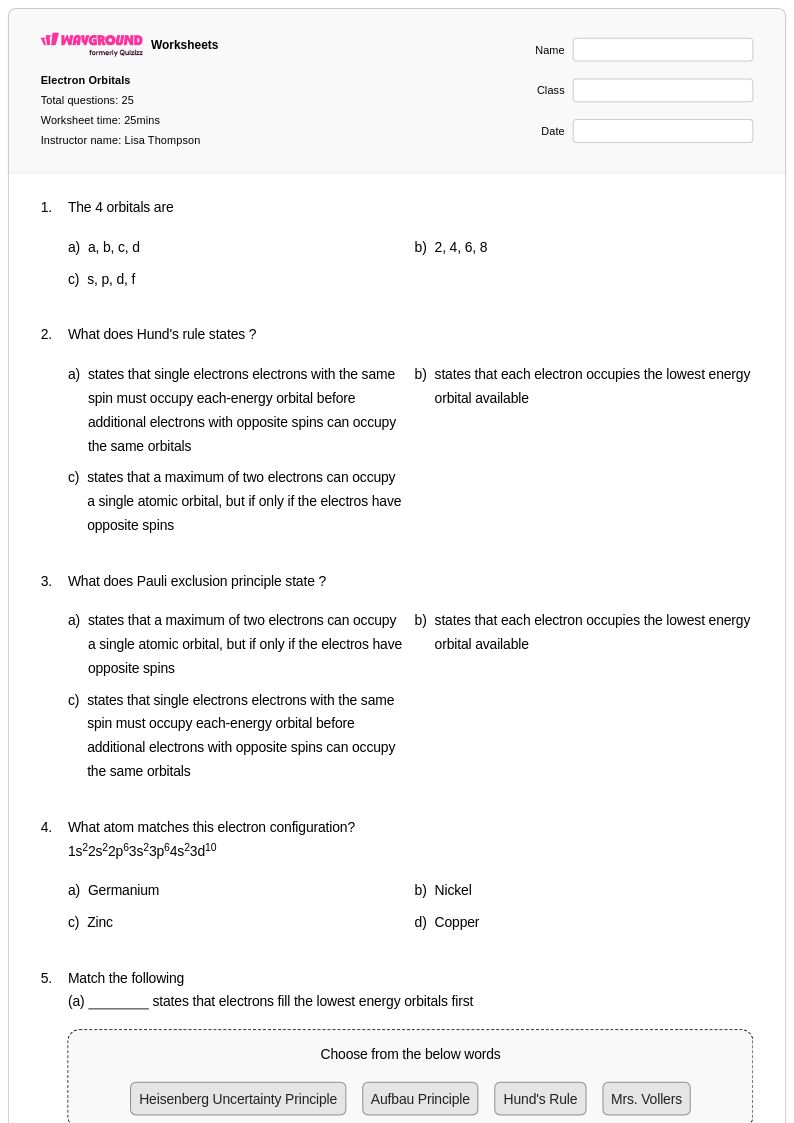
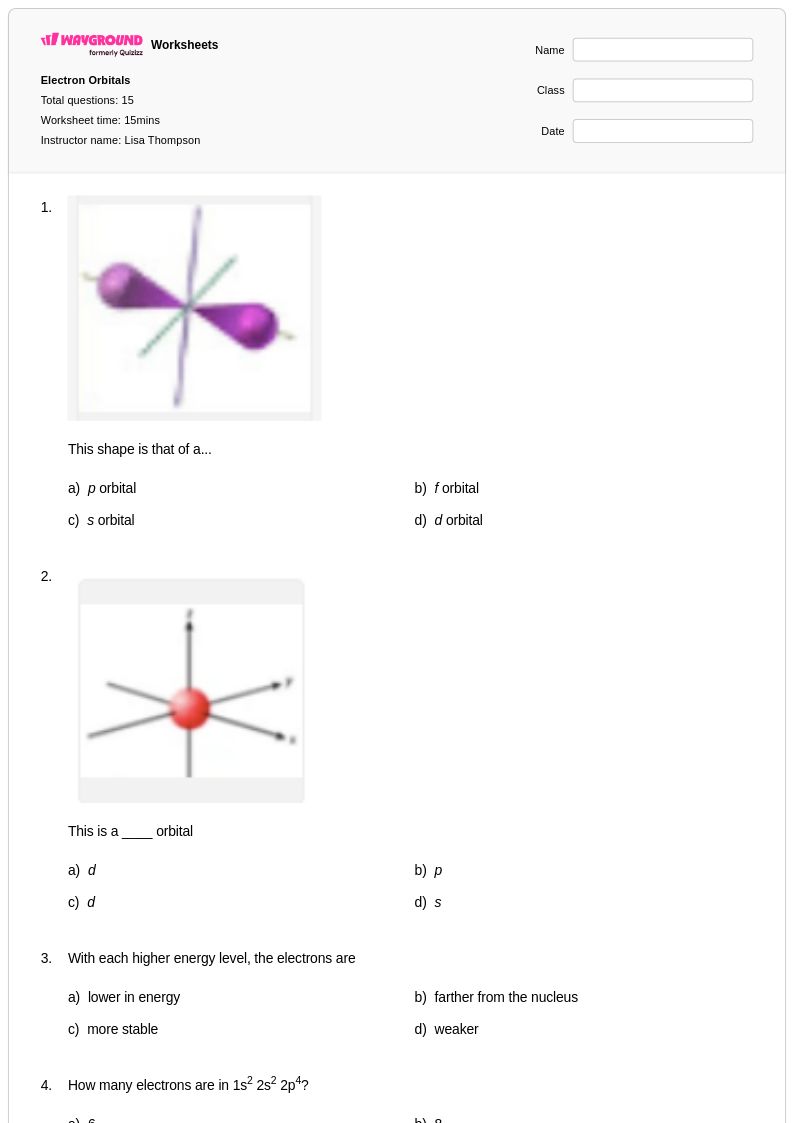
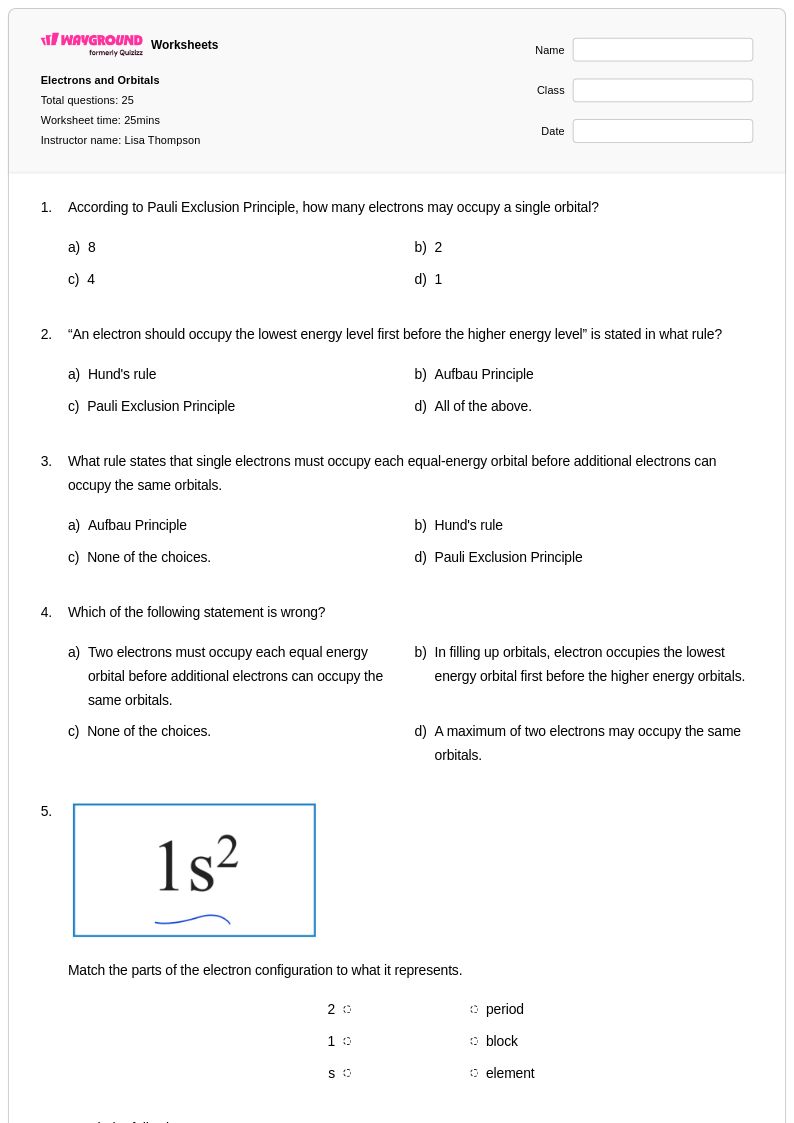
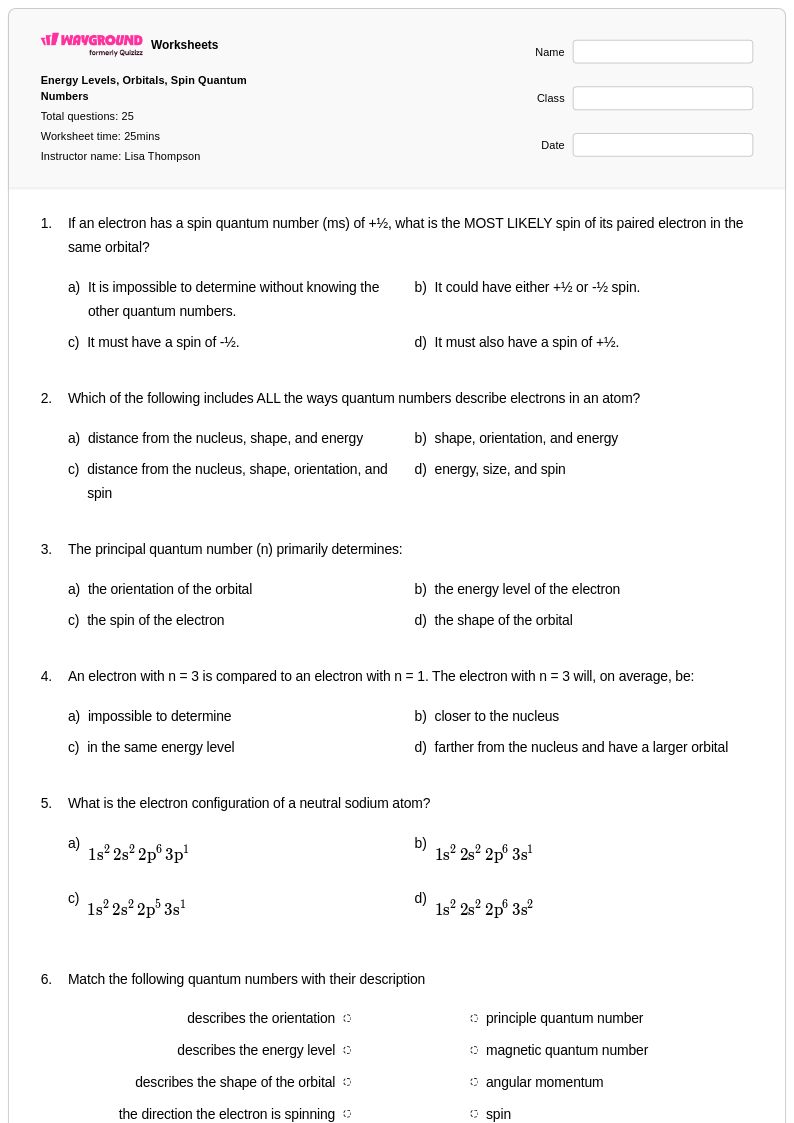
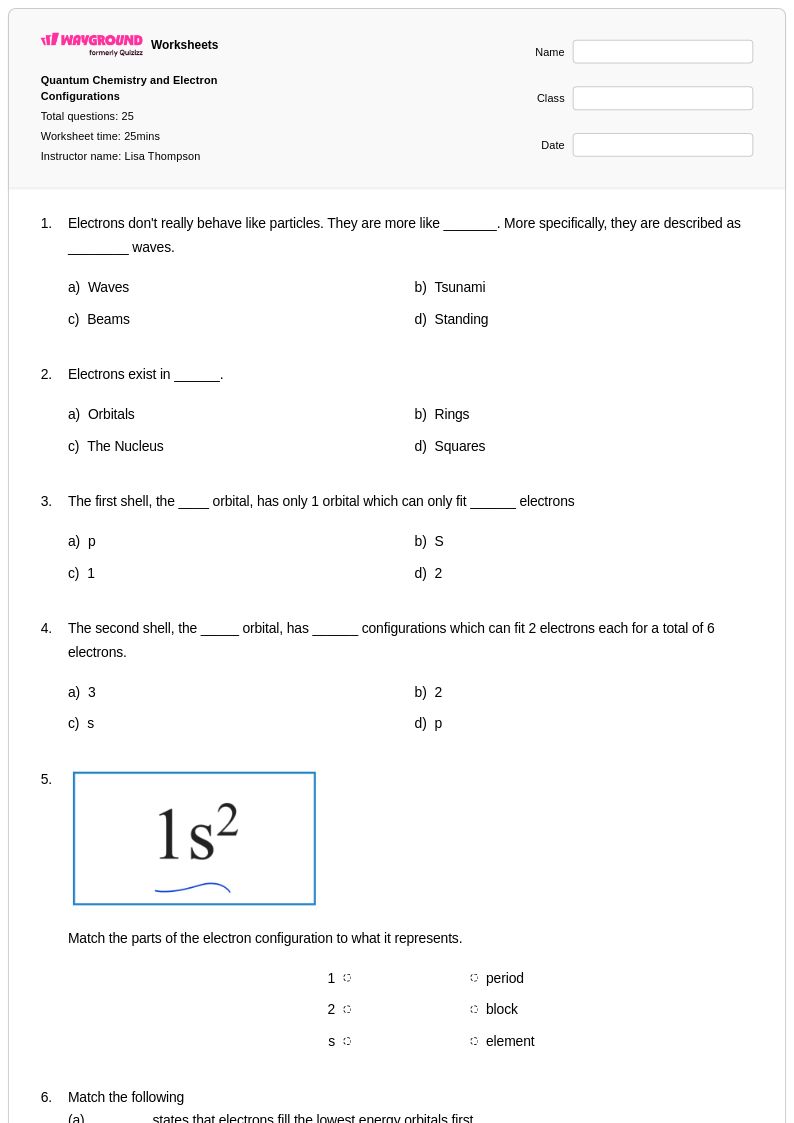
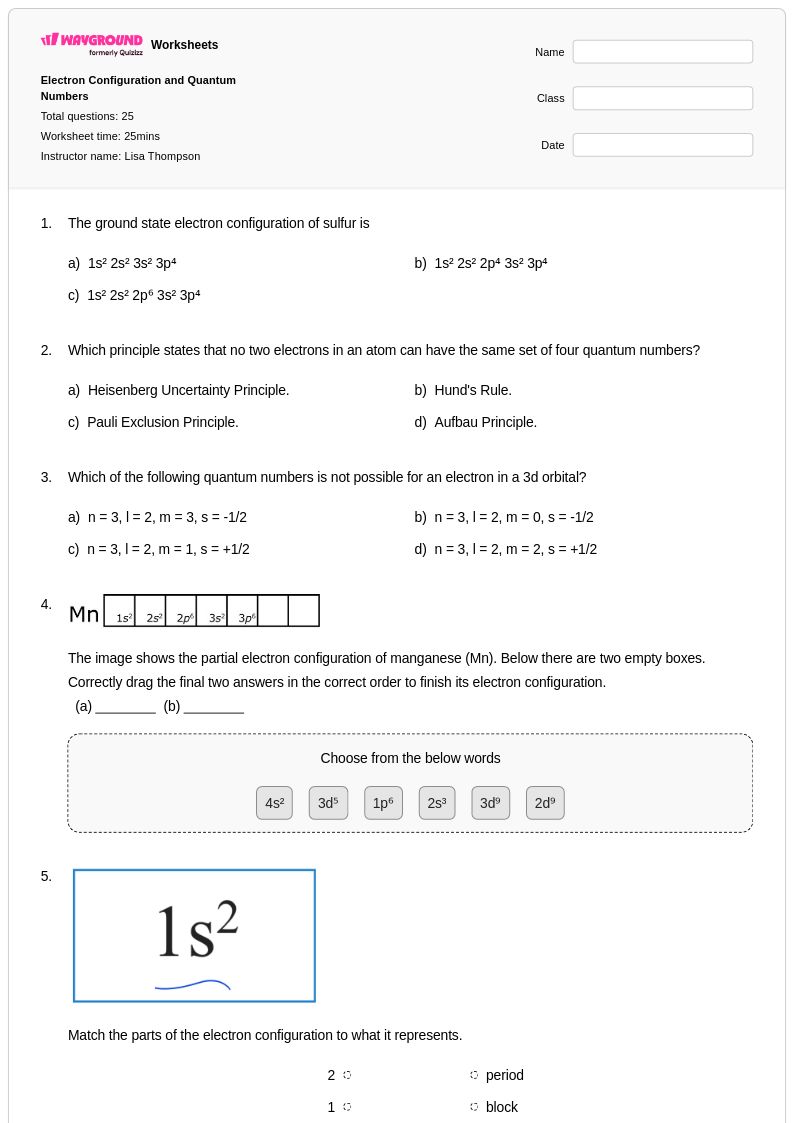
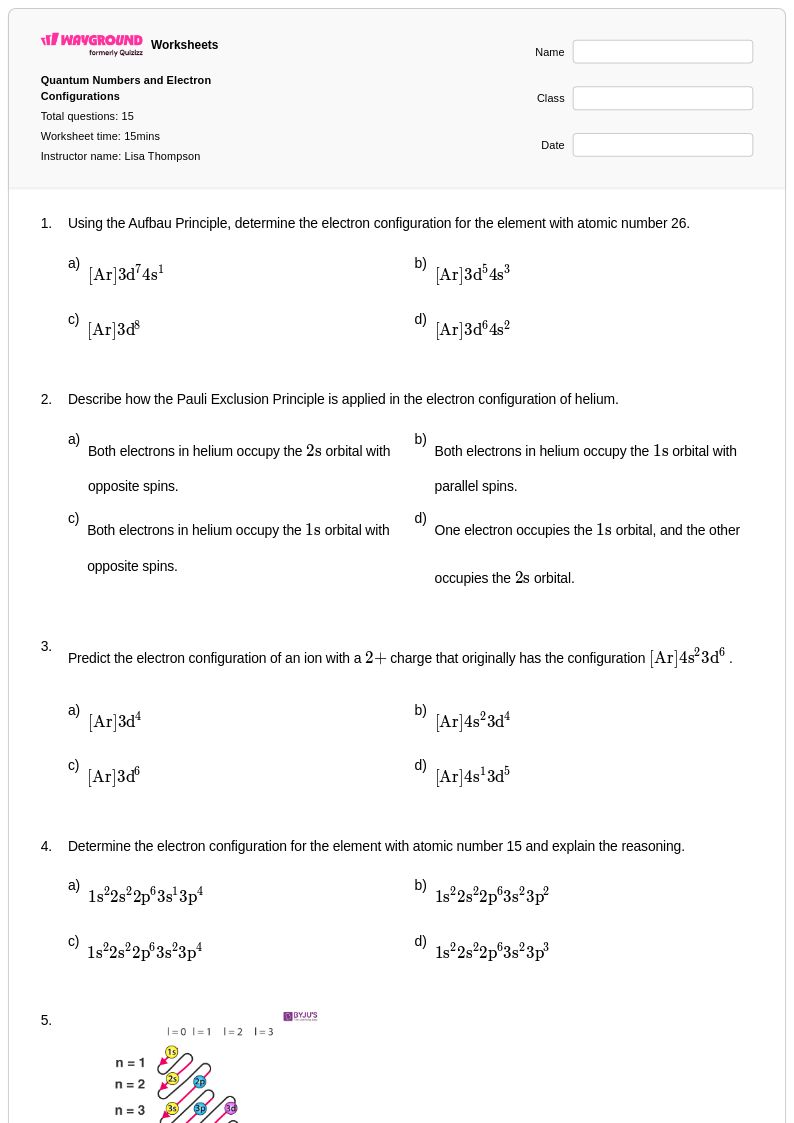
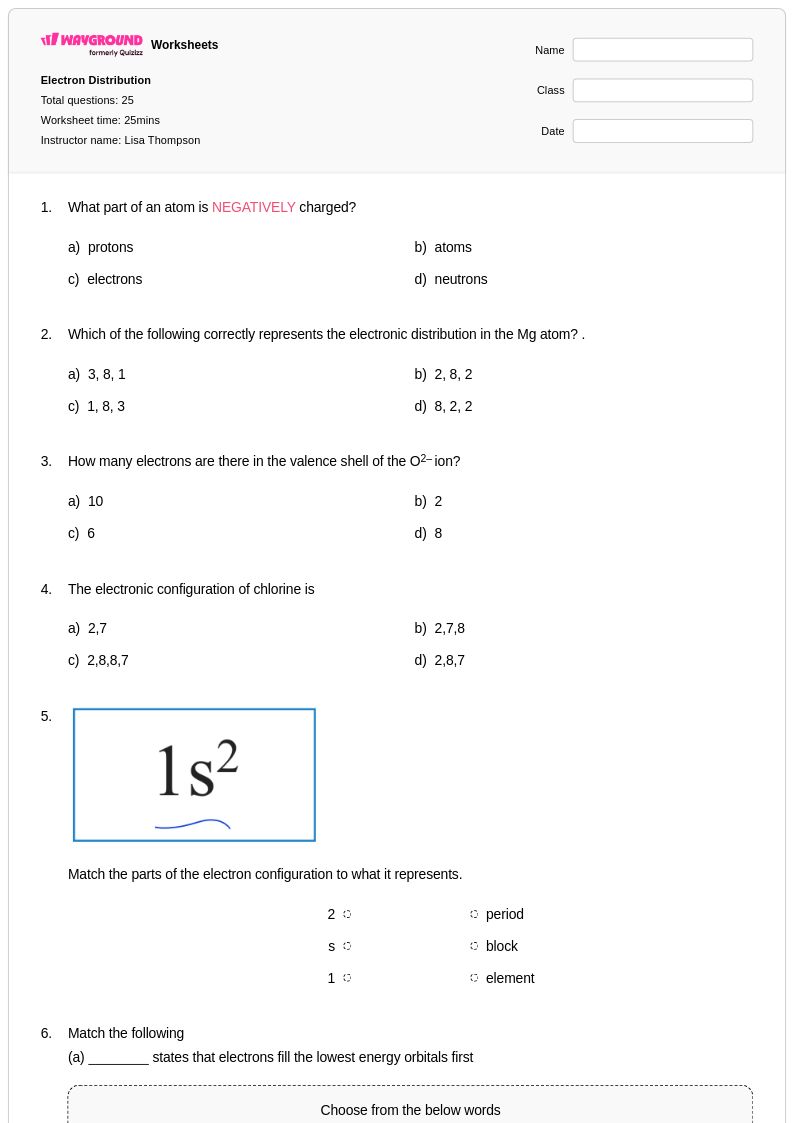
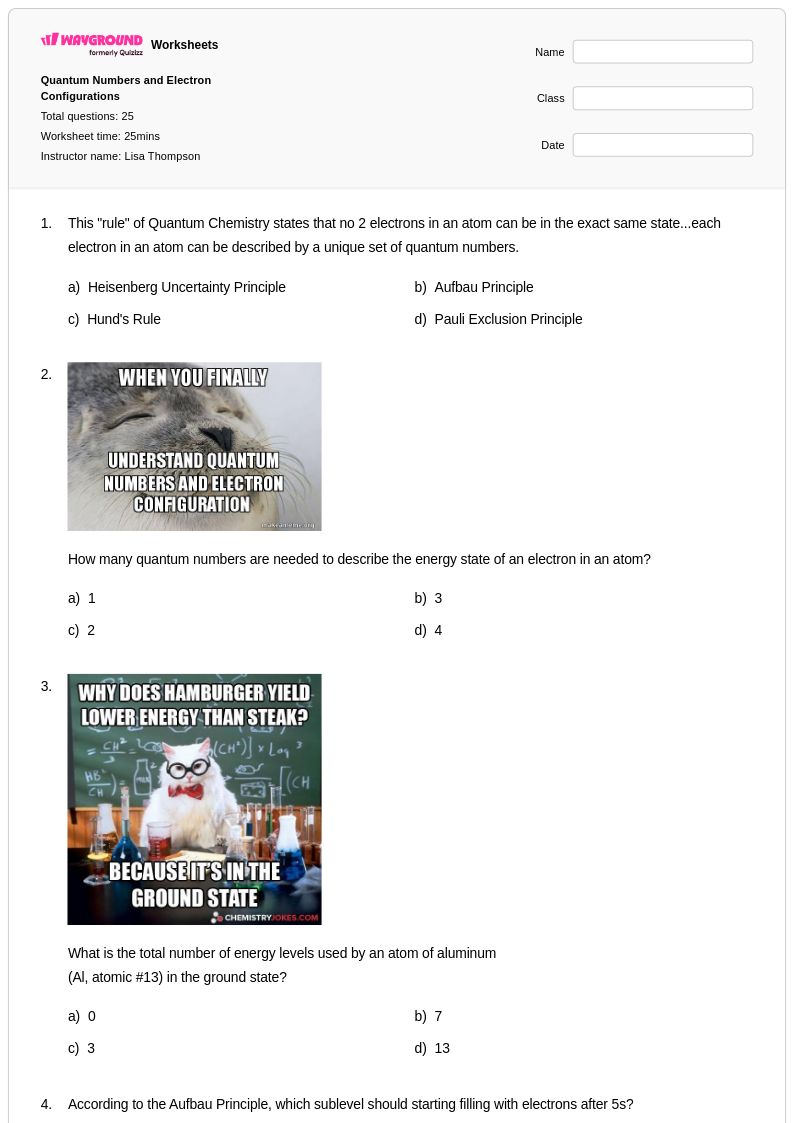
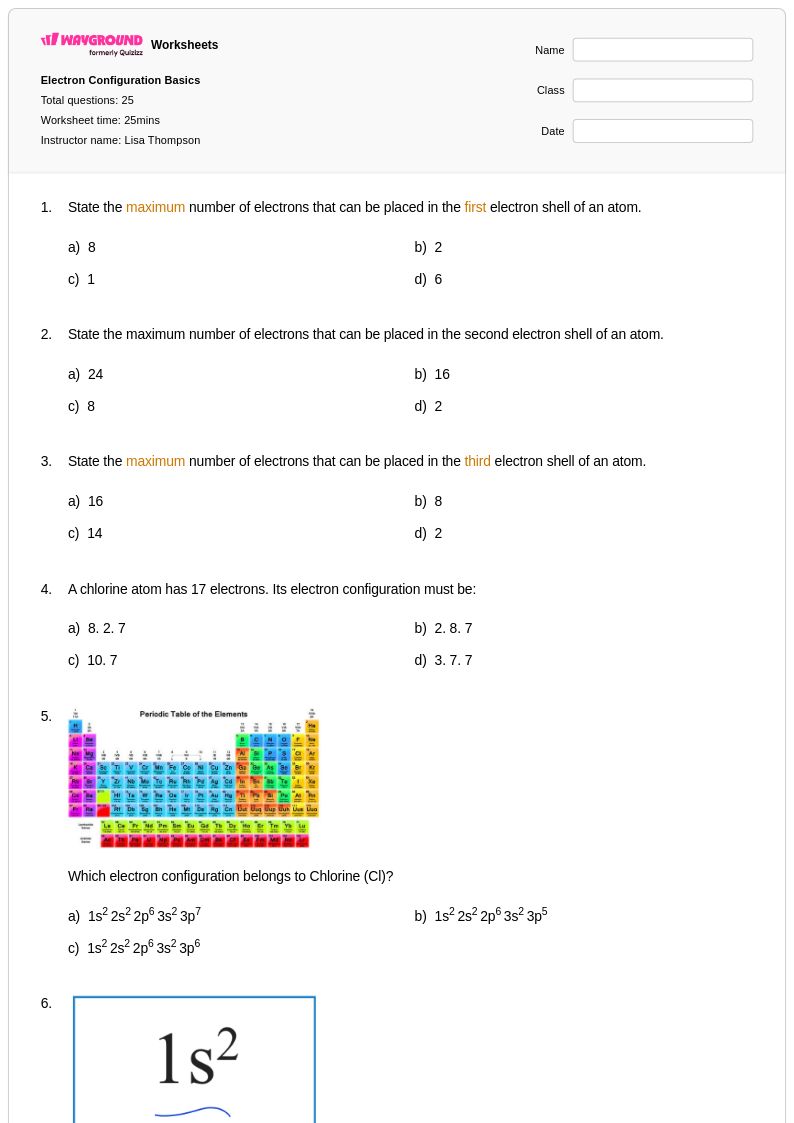
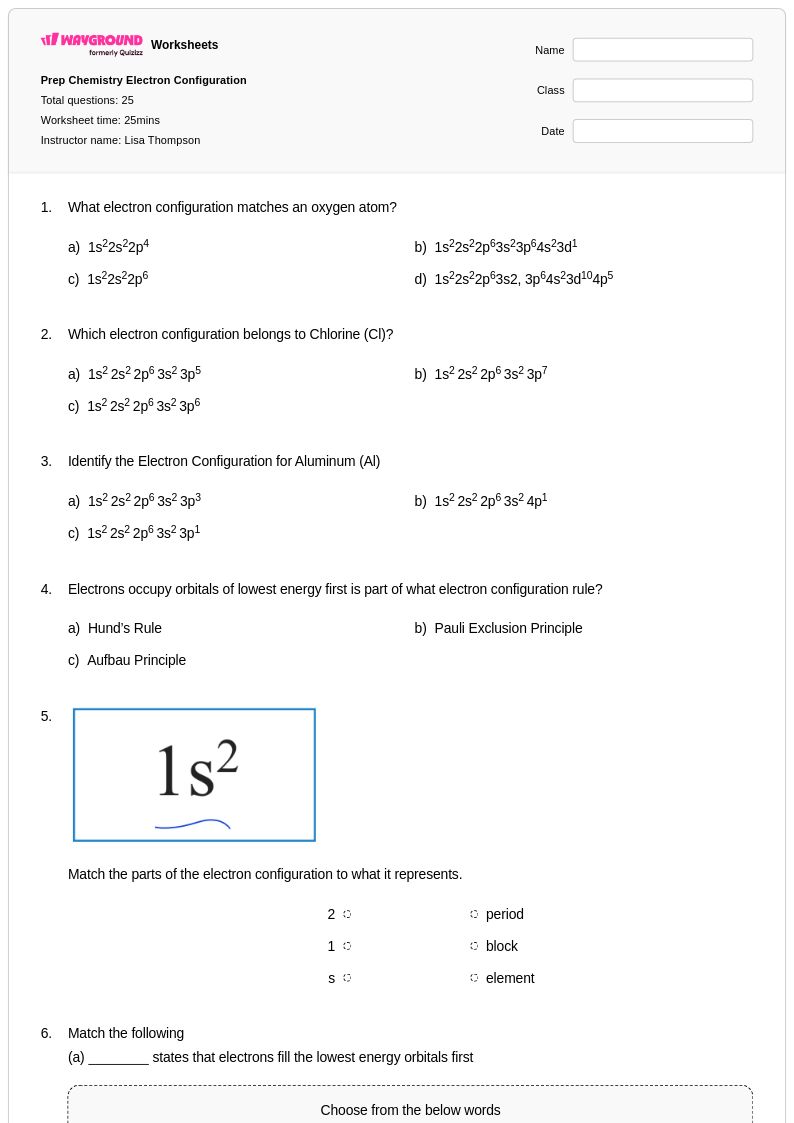
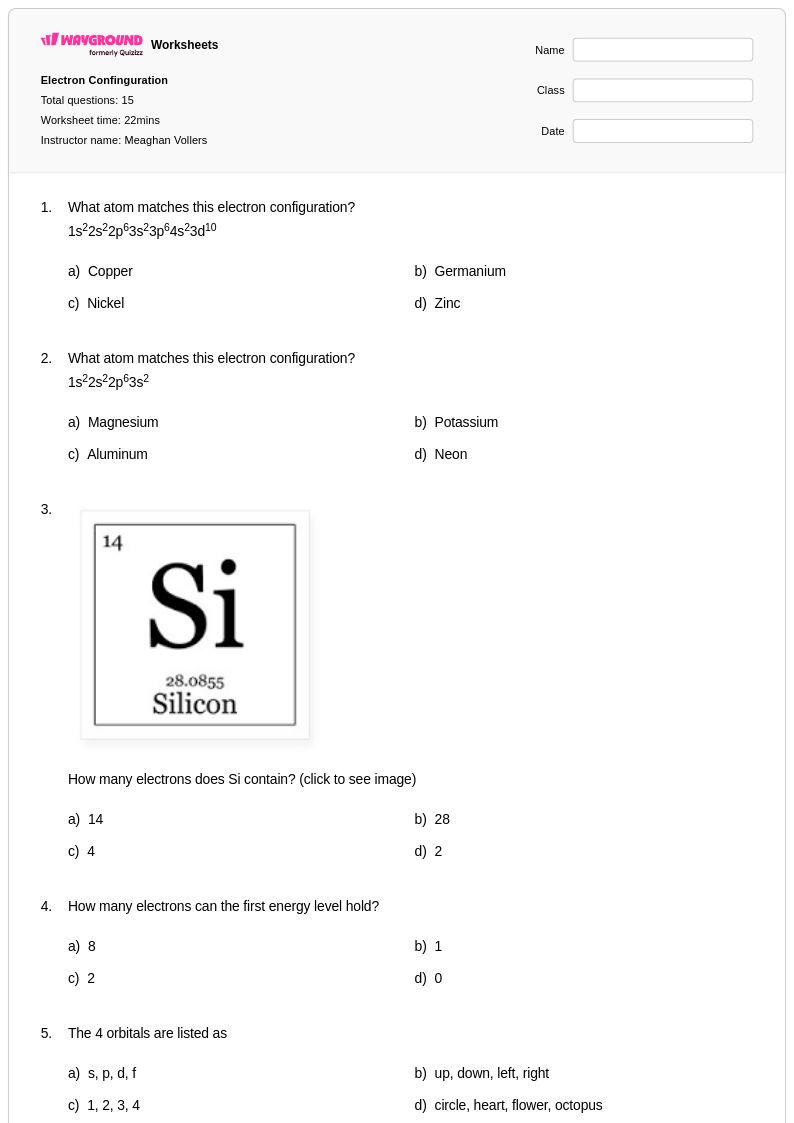
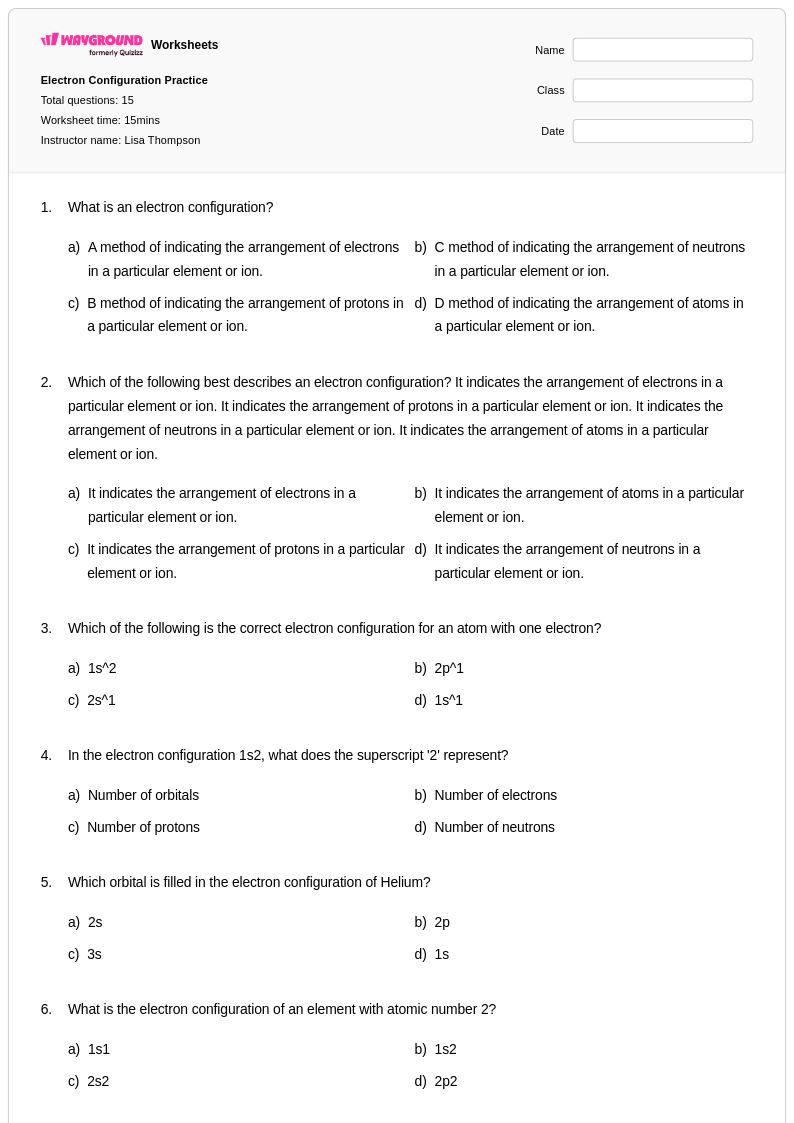
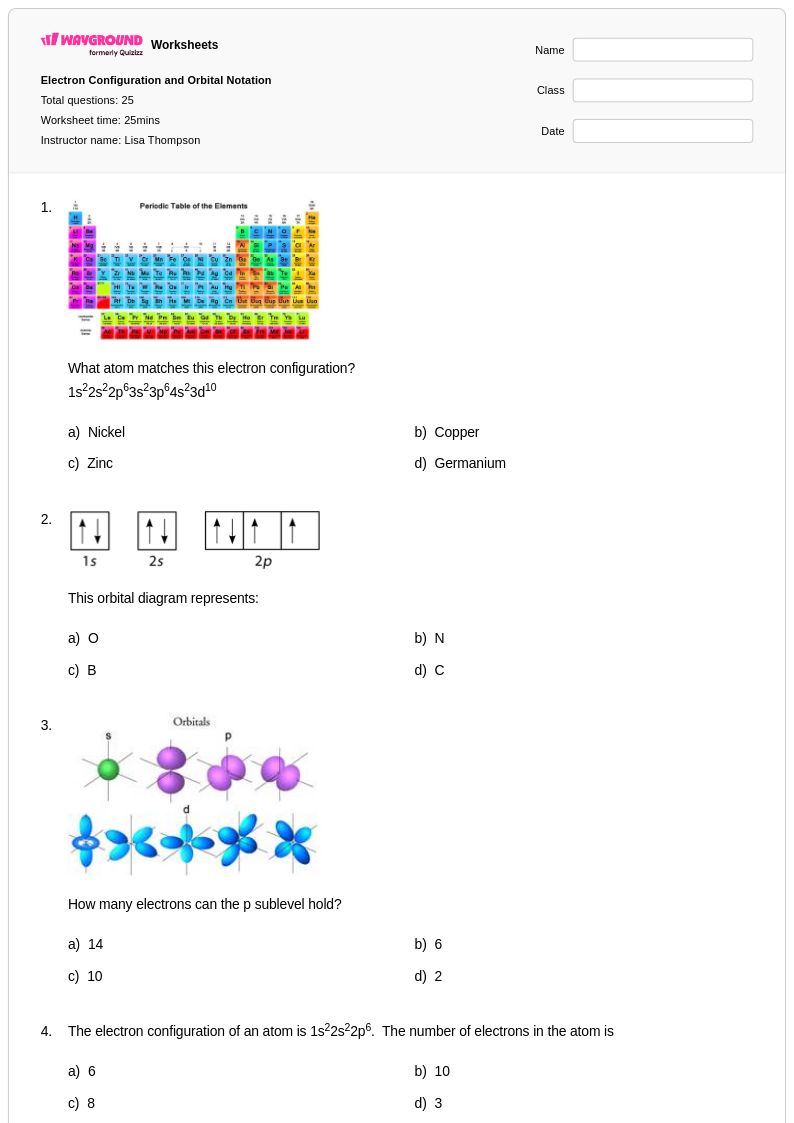
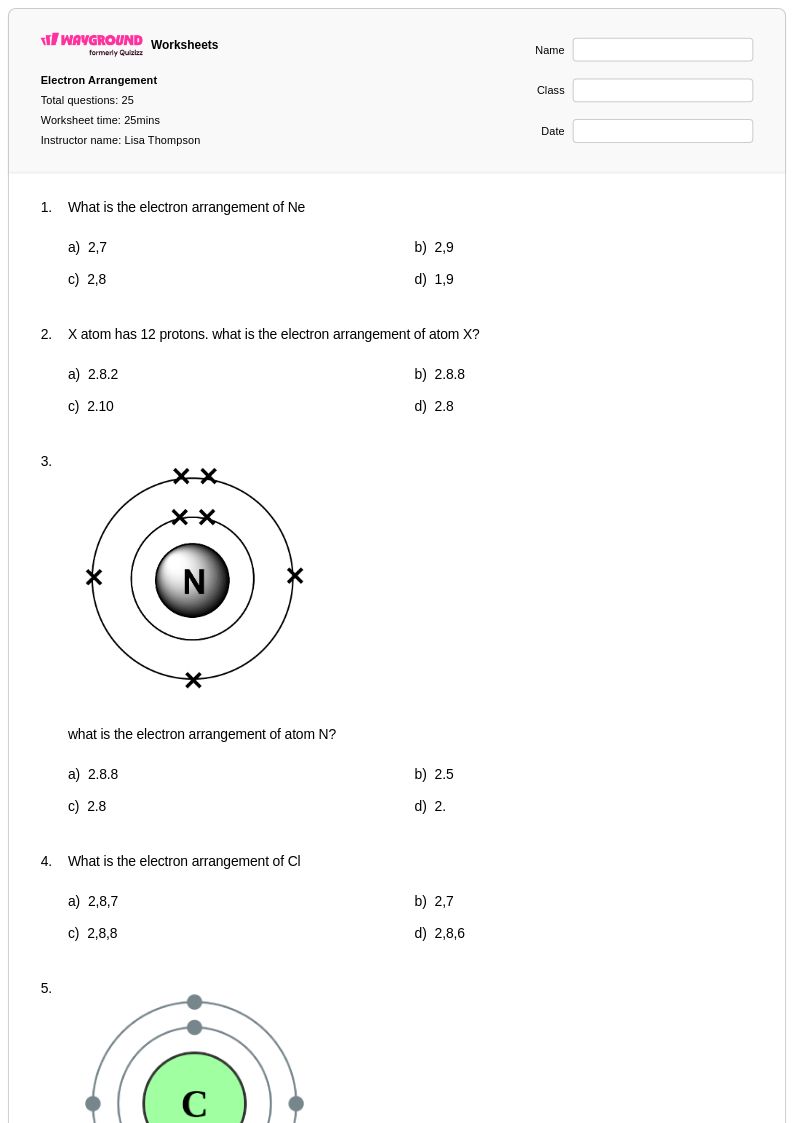
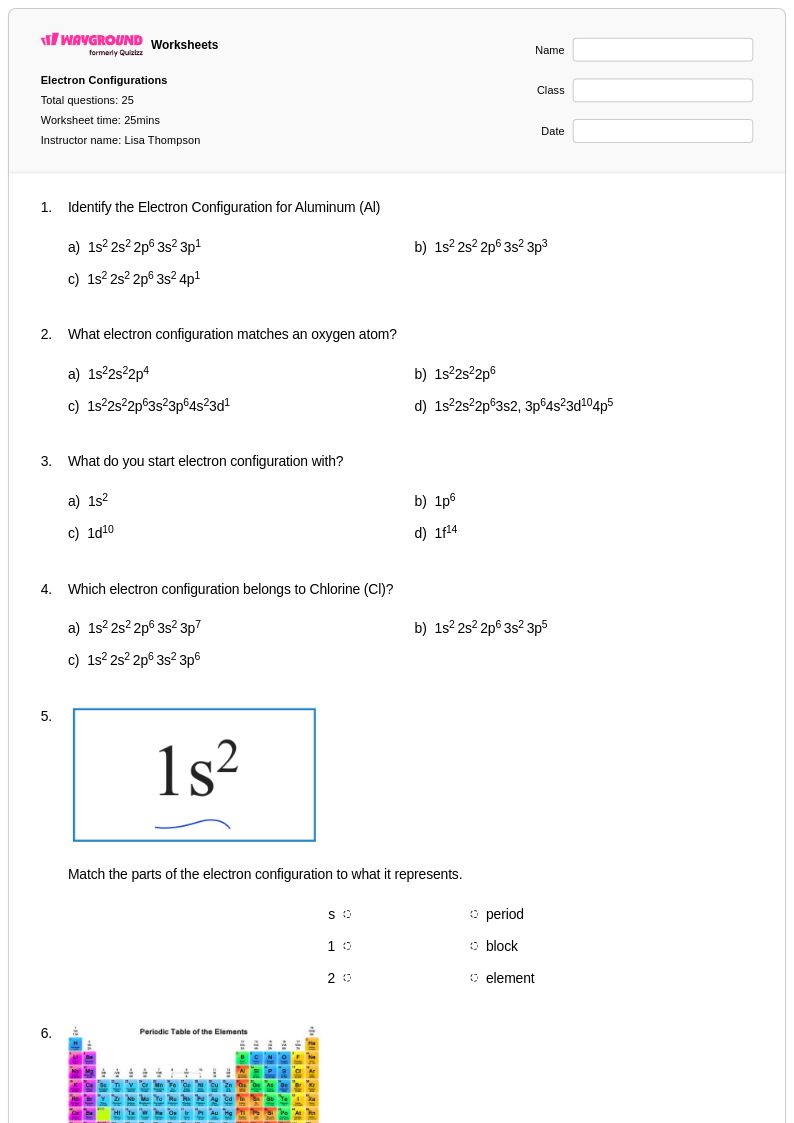
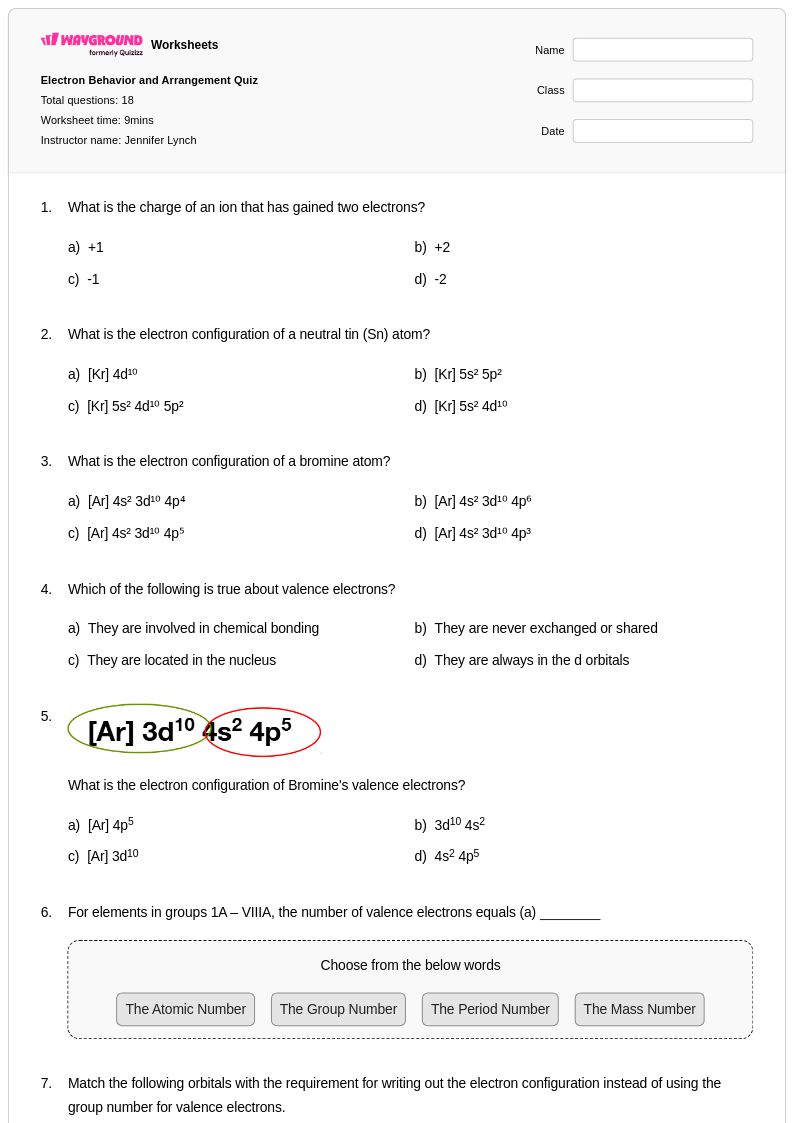
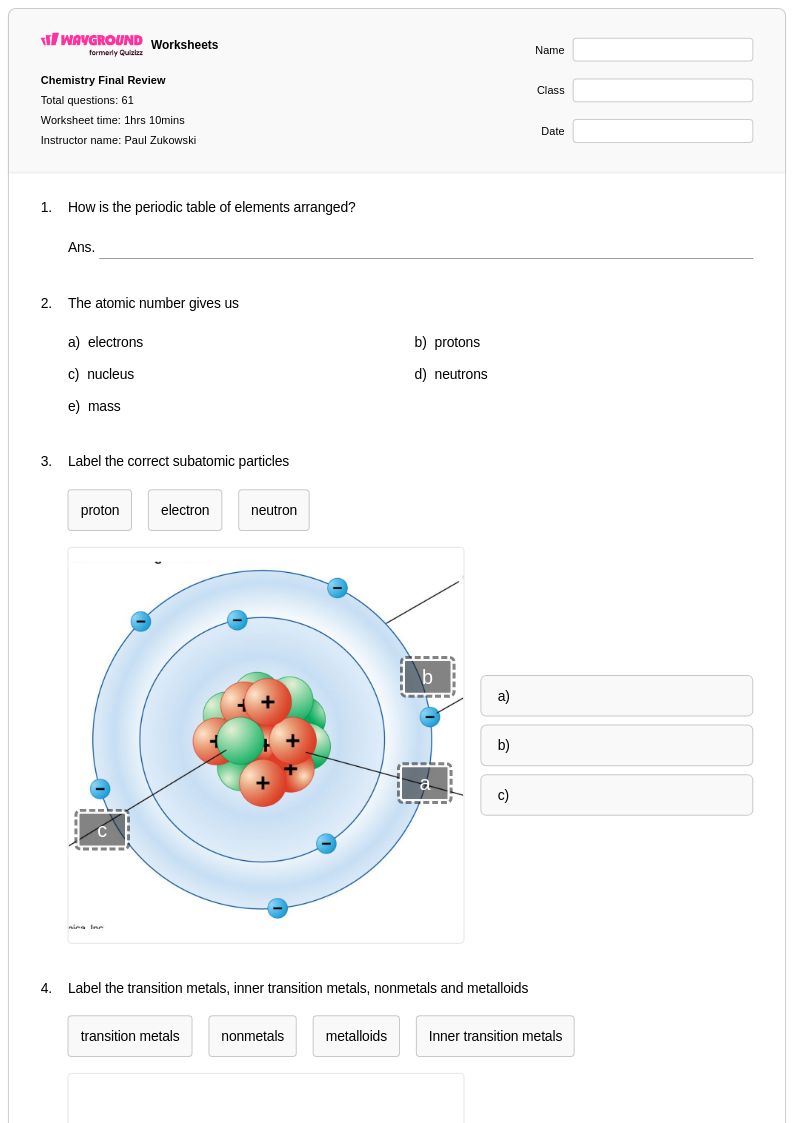
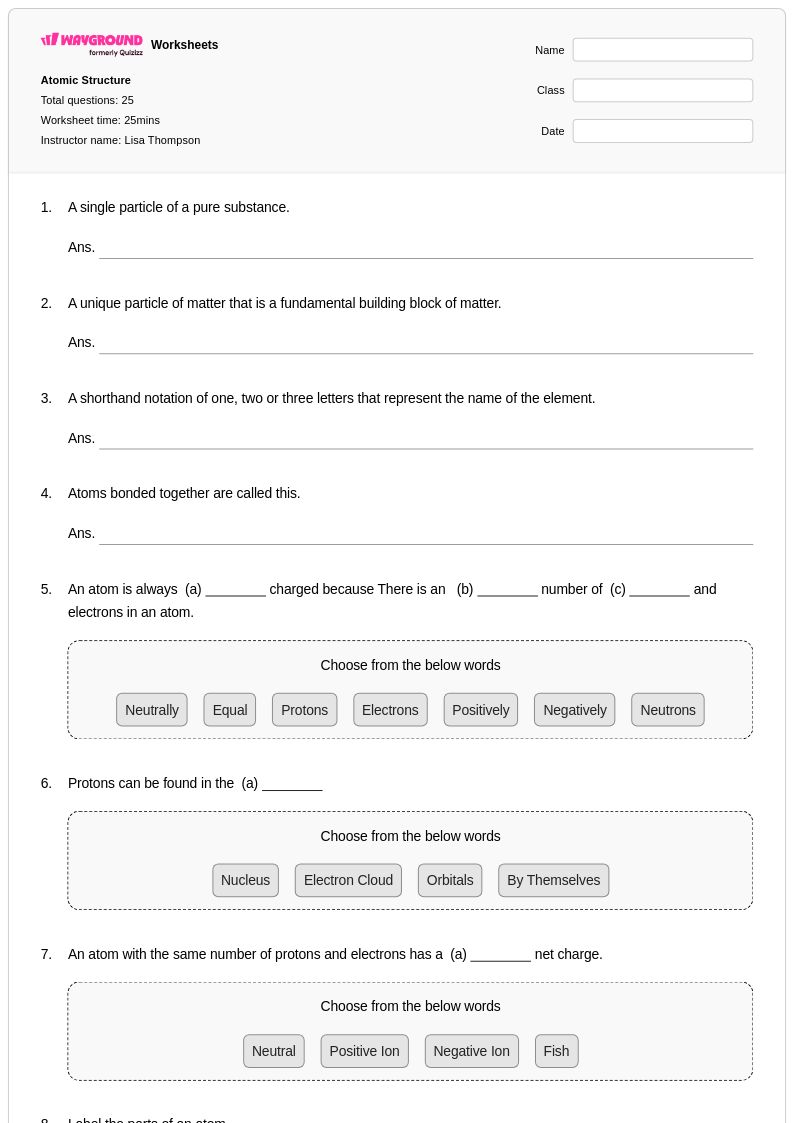
Electron orbitals for Year 12 represent one of the most fundamental yet complex concepts in advanced chemistry, requiring students to master three-dimensional thinking about atomic structure and electron behavior. Wayground's comprehensive collection of electron orbital worksheets provides students with essential practice problems that reinforce quantum mechanical principles, orbital shapes, electron configurations, and hybridization theory. These carefully designed printables help students visualize s, p, d, and f orbitals while developing critical skills in predicting molecular geometry and understanding chemical bonding patterns. Each worksheet comes complete with detailed answer keys that guide students through complex orbital diagrams and electron distribution problems, ensuring they can confidently tackle advanced topics like molecular orbital theory and transition metal chemistry that are essential for college-level success.
Wayground's millions of teacher-created resources offer chemistry educators unparalleled support for delivering effective electron orbital instruction through carefully curated worksheet collections that align with advanced placement and state chemistry standards. The platform's robust search and filtering capabilities allow teachers to quickly locate materials that target specific orbital concepts, from basic quantum numbers to advanced hybrid orbital formation, while differentiation tools enable customization for students with varying mathematical backgrounds and spatial reasoning abilities. Available in both printable pdf format and interactive digital versions, these resources streamline lesson planning while providing flexible options for in-class practice, homework assignments, and targeted remediation sessions that help students master the abstract concepts crucial for understanding modern atomic theory and chemical bonding.
FAQs
How do I teach electron orbitals to high school chemistry students?
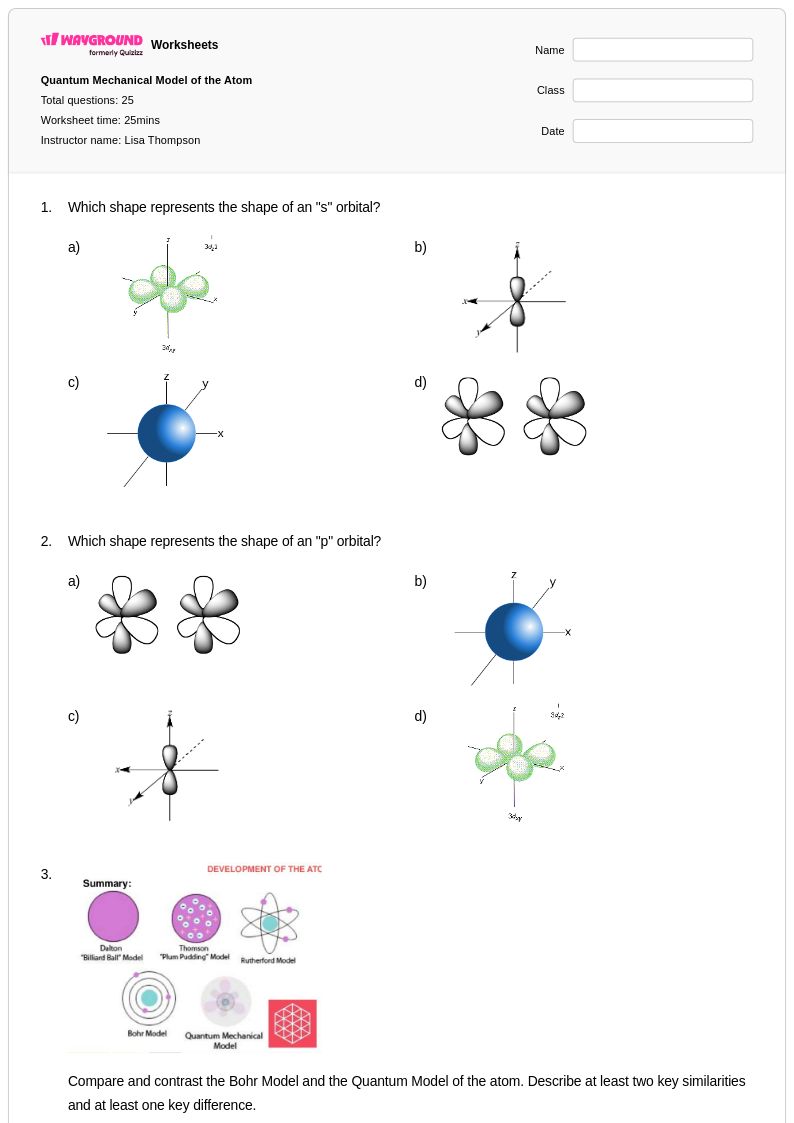
Start by grounding students in the Bohr model before introducing the quantum mechanical model, making clear that orbitals are probability regions, not fixed paths. Use 3D visual aids or diagrams to distinguish the shapes of s, p, d, and f orbitals before moving to energy levels and filling rules. Connecting orbital theory to observable chemical behavior, such as why certain elements bond the way they do, helps students see the concept as functional rather than abstract.
What exercises help students practice electron orbital concepts?
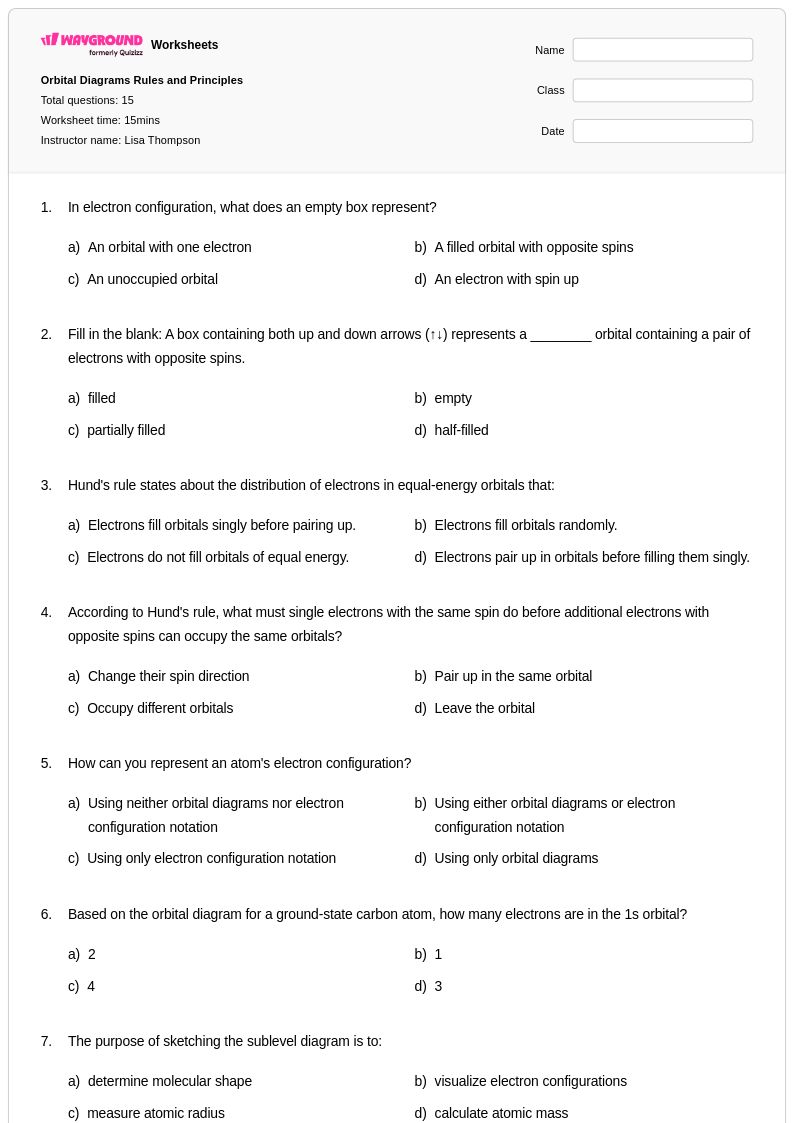
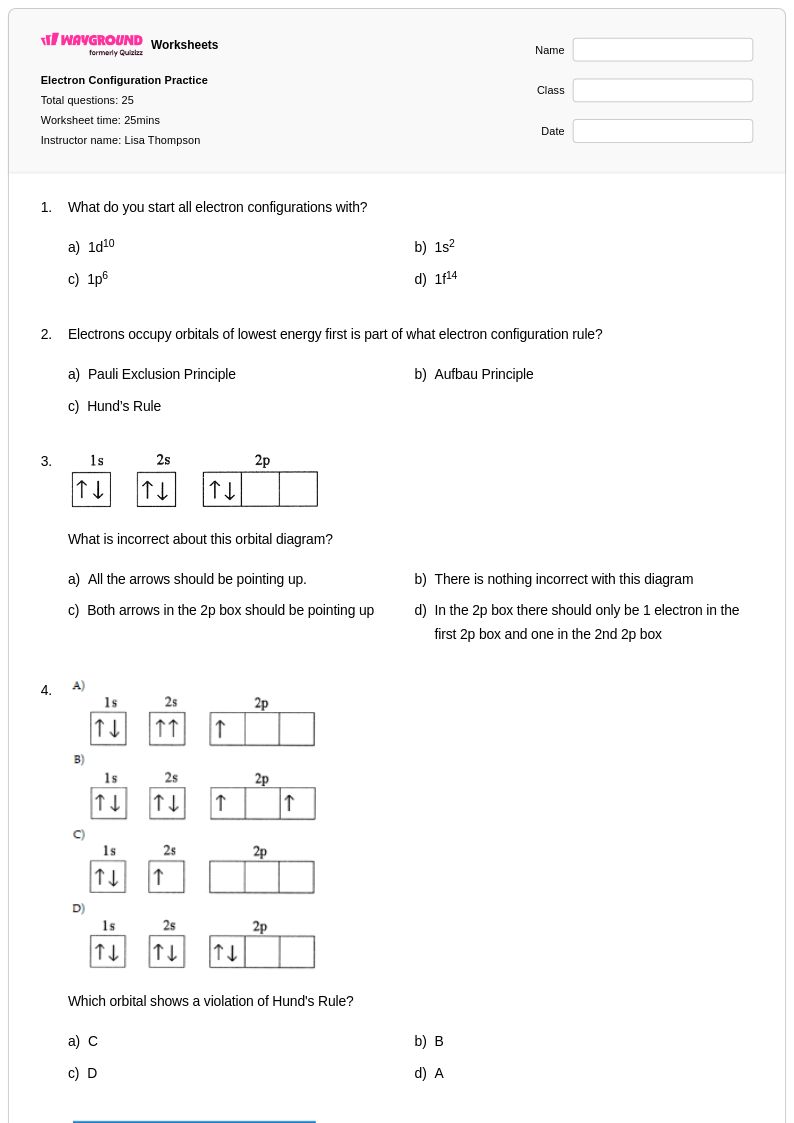
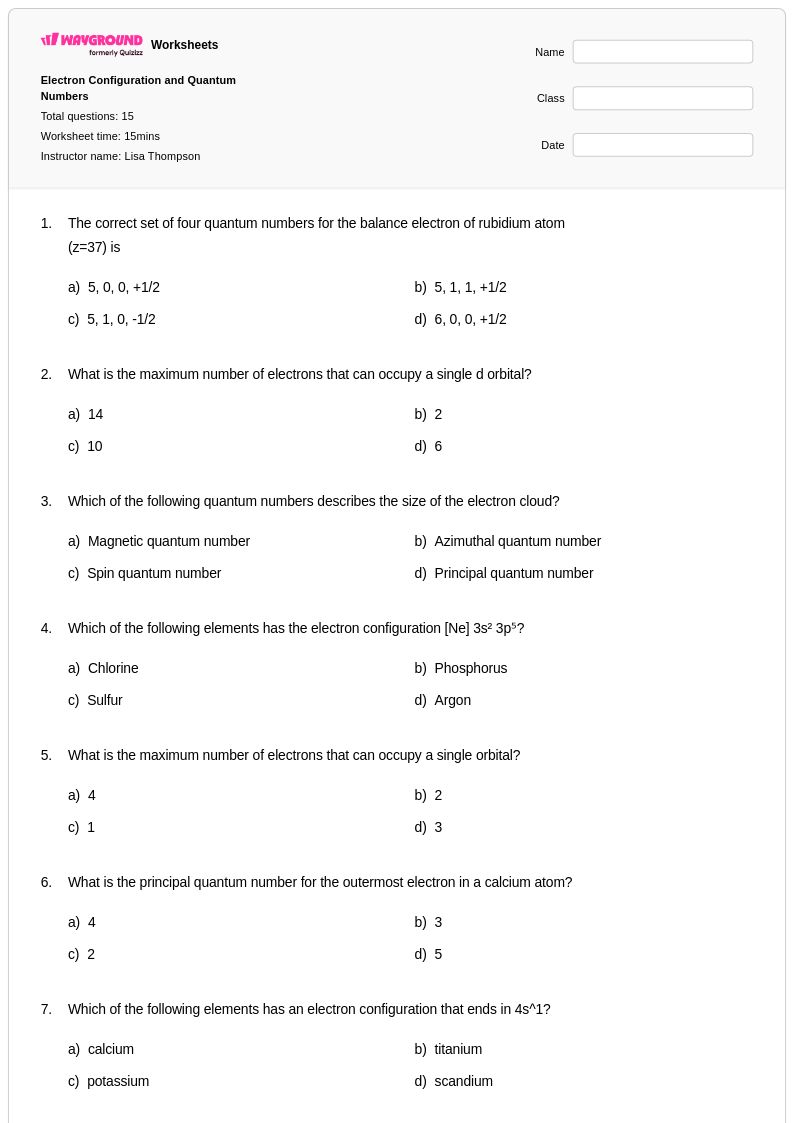
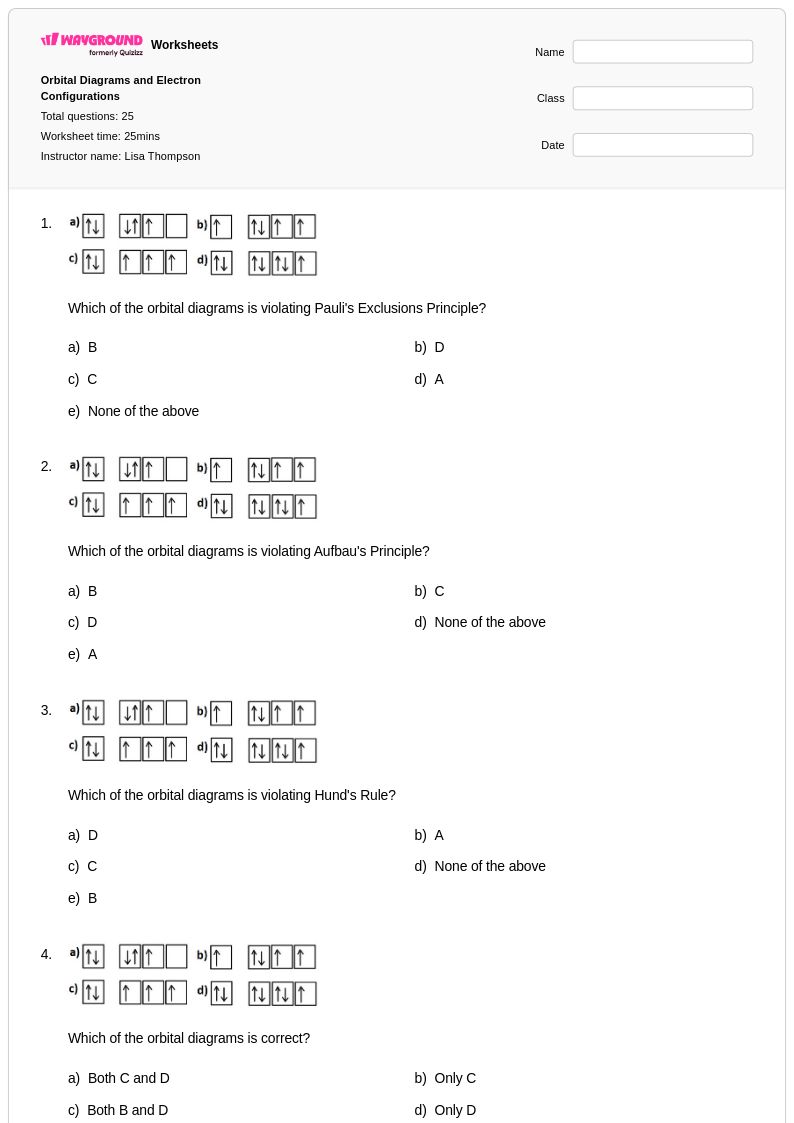
Effective practice includes orbital diagram exercises where students draw and label s, p, d, and f orbital shapes, followed by electron configuration problems that apply the Aufbau principle, Hund's rule, and the Pauli exclusion principle. Problems that ask students to predict orbital hybridization in common molecules, such as water or methane, bridge orbital theory to chemical bonding. Progressing from basic identification tasks to quantum number assignments and hybridization problems builds cumulative mastery.
What mistakes do students commonly make when learning electron orbitals?
One of the most common errors is confusing orbitals with orbits, leading students to treat orbitals as defined circular paths rather than probability distributions. Students also frequently misapply Hund's rule by pairing electrons in the same orbital before filling degenerate orbitals singly. Another persistent mistake is incorrectly ordering subshell energy levels, particularly around the 3d and 4s crossover, which leads to wrong electron configurations for transition metals.
How can I differentiate electron orbital instruction for students at different levels?
For students who need more support, start with visual orbital diagram activities focused on s and p subshells before introducing d and f orbitals, and reduce the complexity of quantum number problems. Advanced learners can engage with wave function descriptions and electron probability density calculations that go beyond standard configuration rules. On Wayground, teachers can apply accommodations such as read aloud, reduced answer choices, and extended time to individual students, allowing the rest of the class to work at the default level without interruption.
How do I use electron orbitals worksheets from Wayground in my classroom?
Wayground's electron orbitals worksheets are available as printable PDFs for traditional classroom use and in digital formats for technology-integrated environments, giving teachers flexibility across instructional settings. Teachers can also host worksheets as a quiz directly on Wayground, making it straightforward to assign practice, collect responses, and provide immediate feedback. All worksheets include complete answer keys, supporting independent student review as well as whole-class correction.
How does orbital theory connect to chemical bonding and molecular structure?
Orbital hybridization explains why molecules adopt specific geometries: carbon's four sp3 hybrid orbitals in methane produce a tetrahedral shape, while sp2 hybridization in ethene results in a planar structure. Understanding orbital overlap also clarifies the difference between sigma and pi bonds, which directly determines a molecule's reactivity and physical properties. Teaching bonding through orbital theory gives students a mechanistic framework rather than a set of memorized rules.