Free Printable Titration Calculations Worksheets for Year 12
Master Year 12 titration calculations with Wayground's comprehensive collection of free worksheets, featuring step-by-step practice problems, detailed answer keys, and printable PDF resources to strengthen your analytical chemistry skills.
Explore printable Titration Calculations worksheets for Year 12
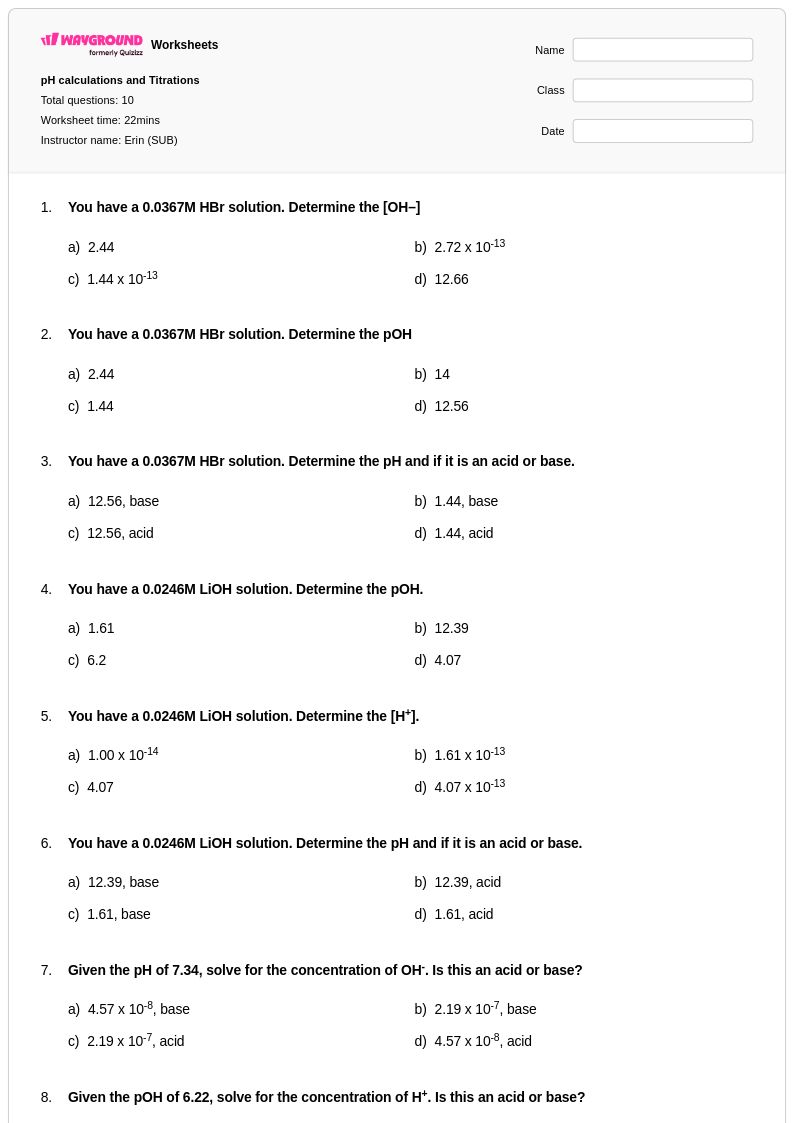
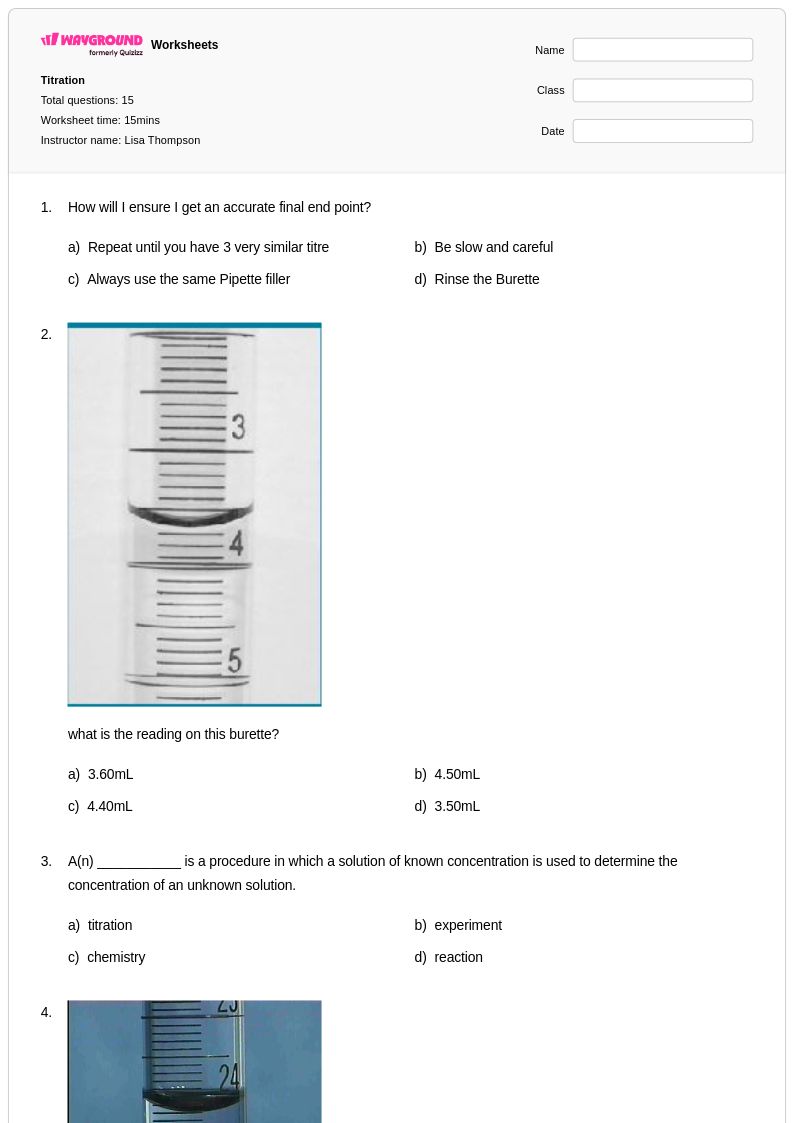
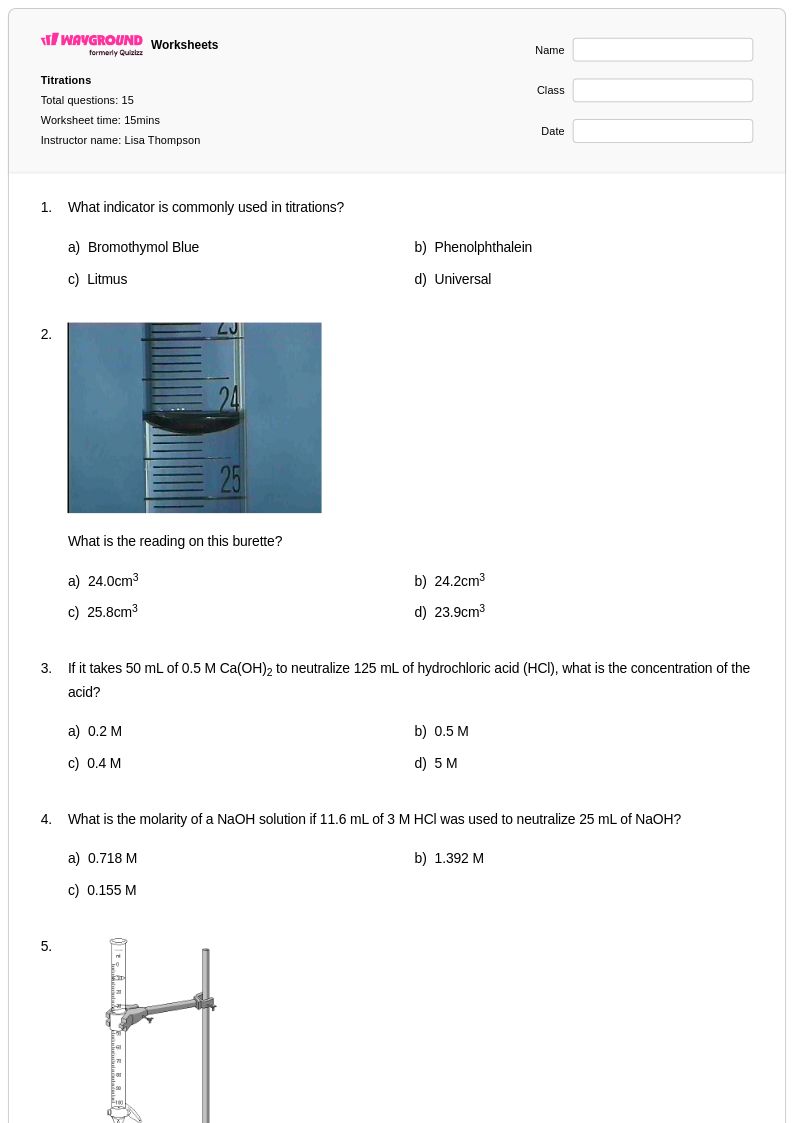
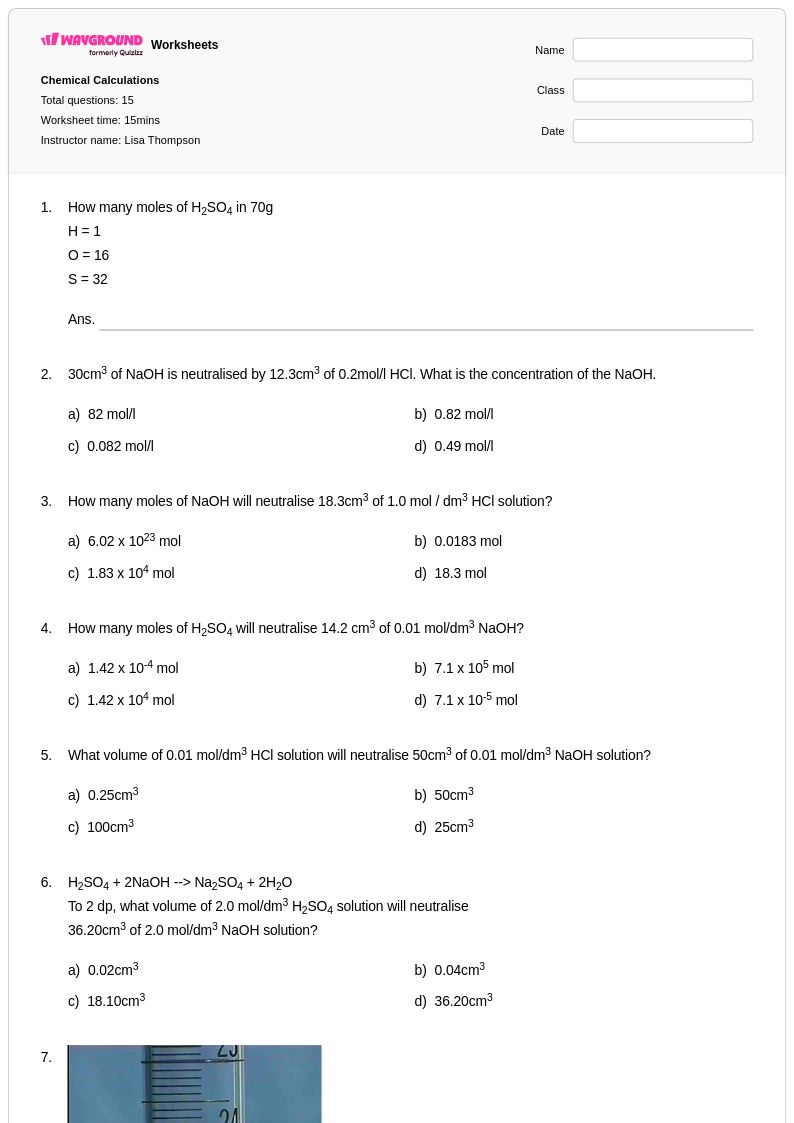
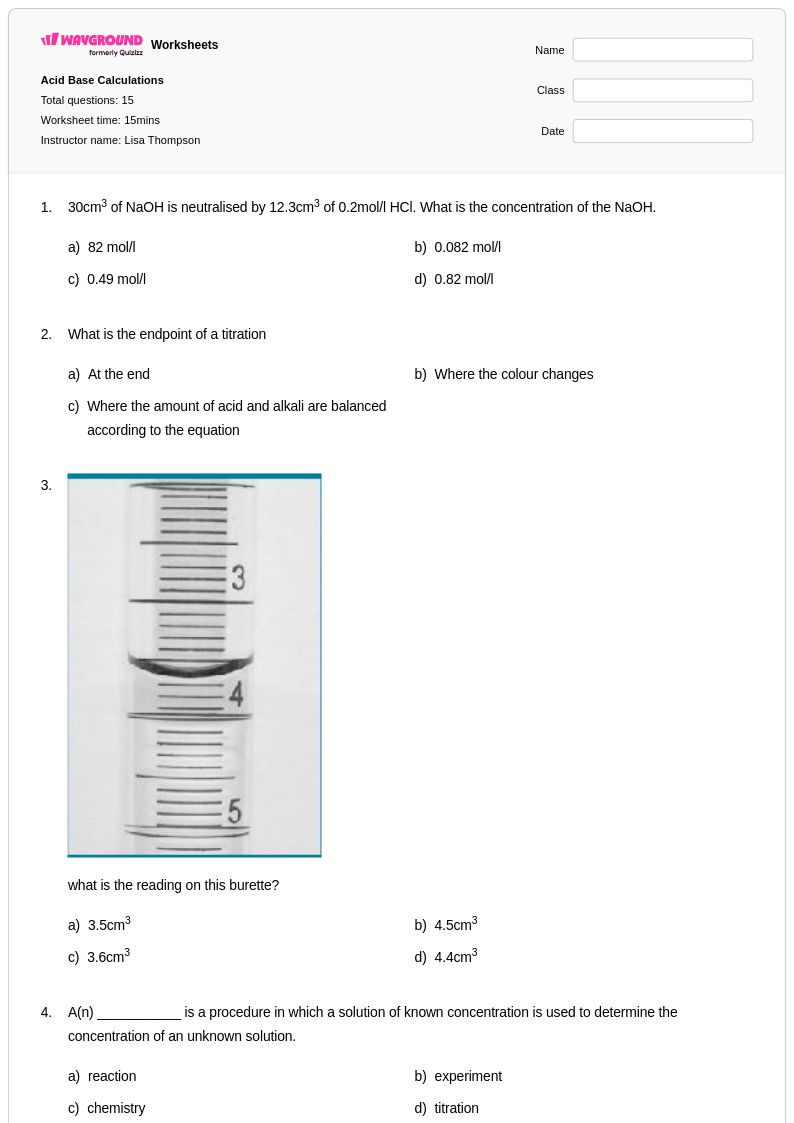
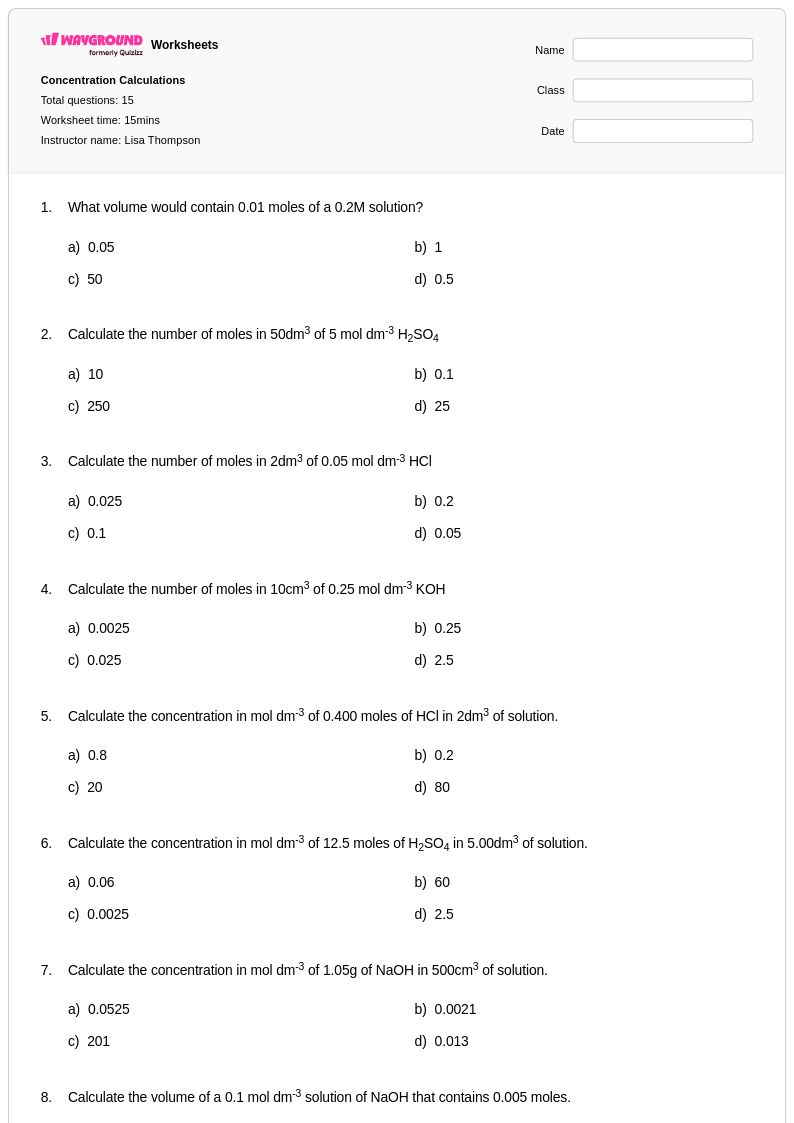
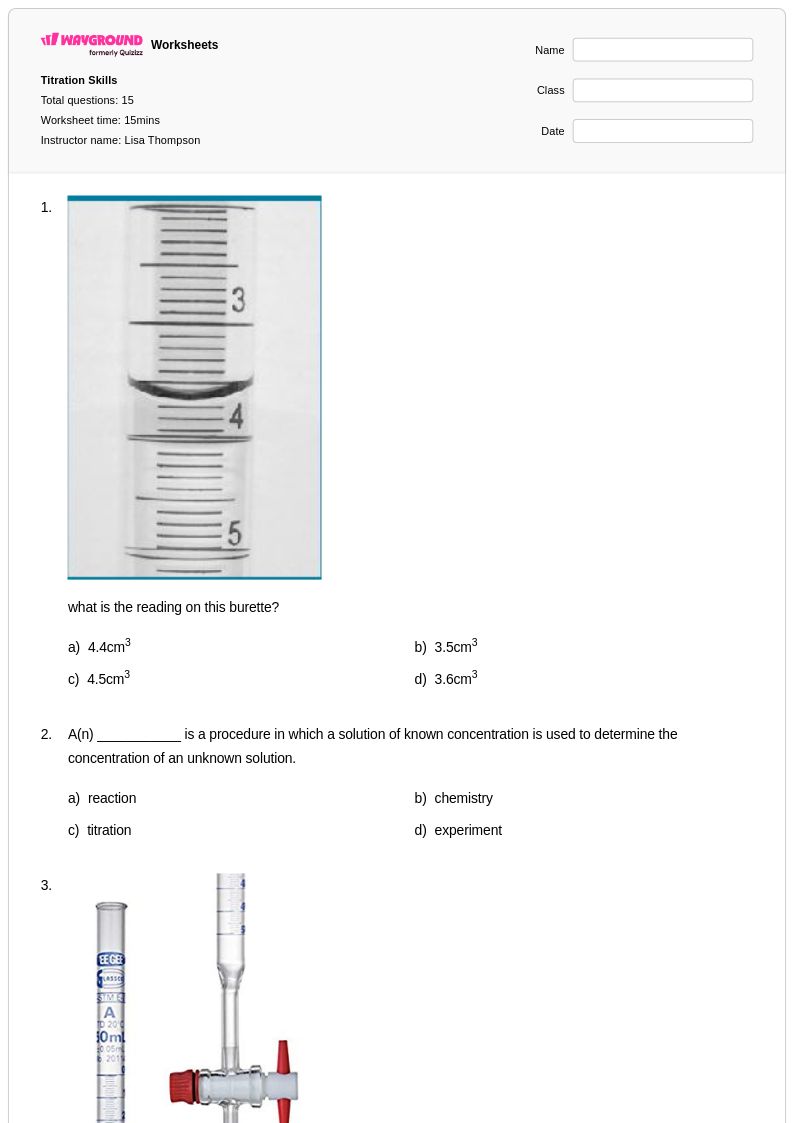
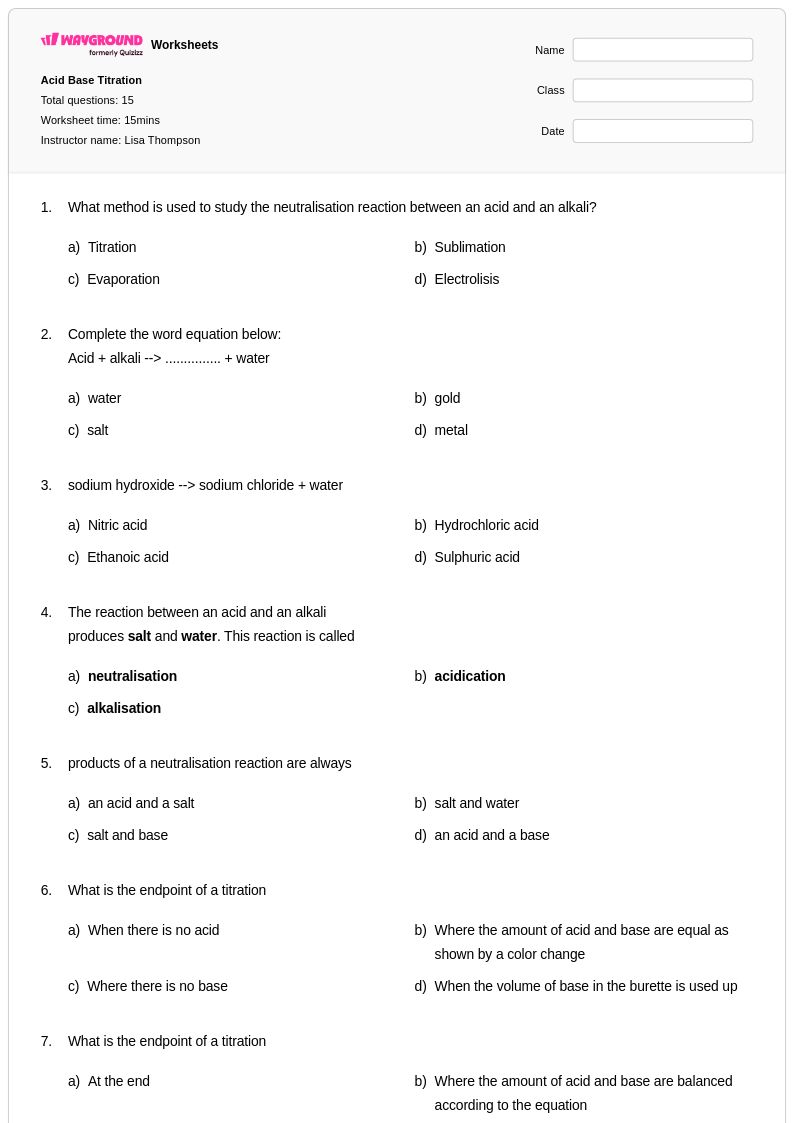
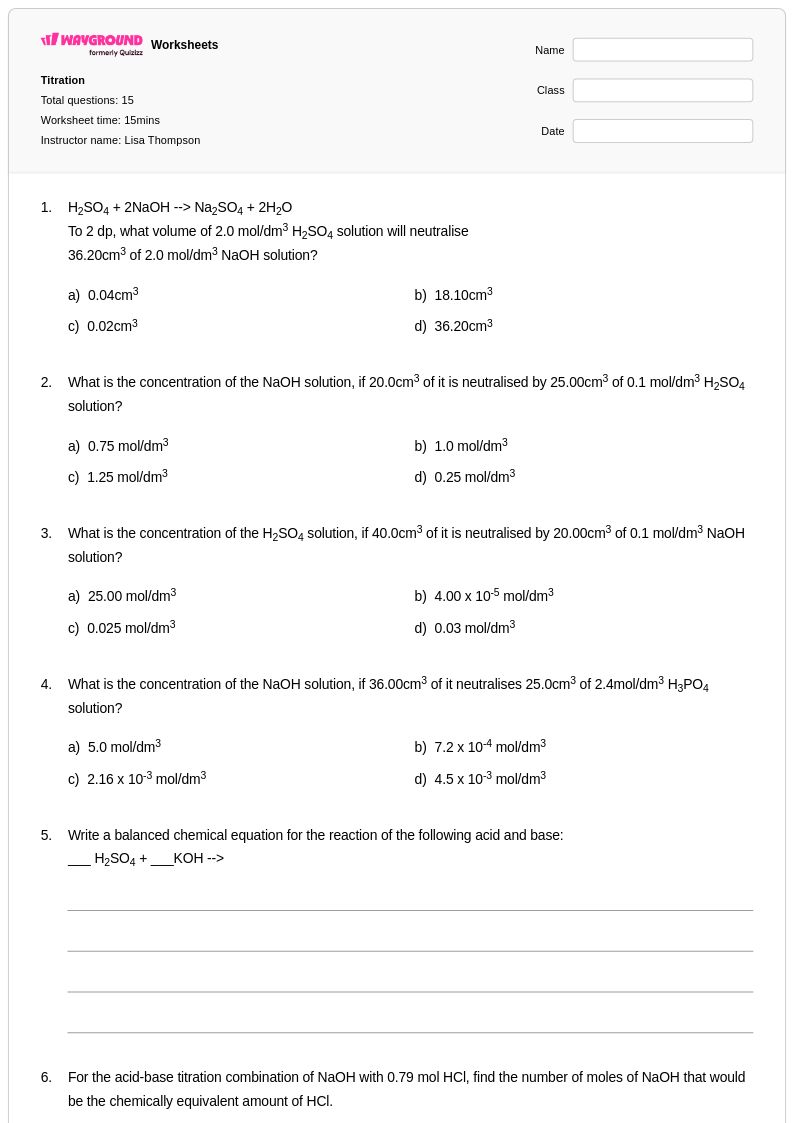
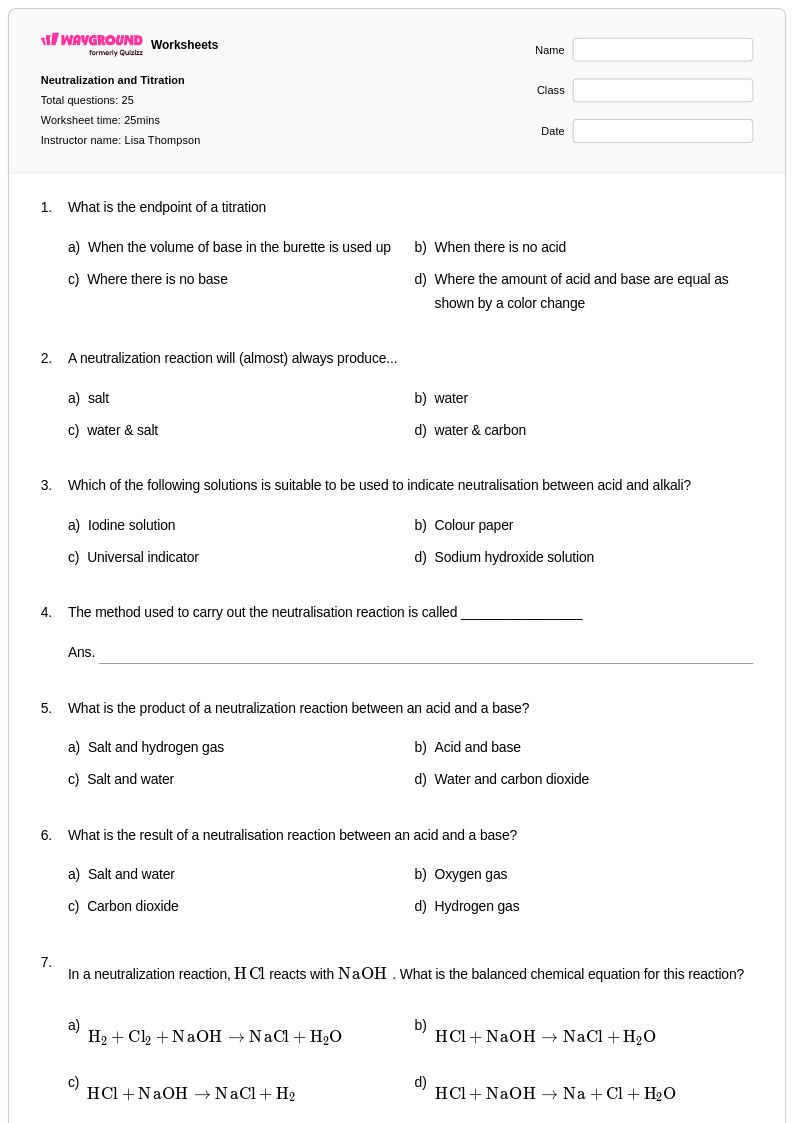
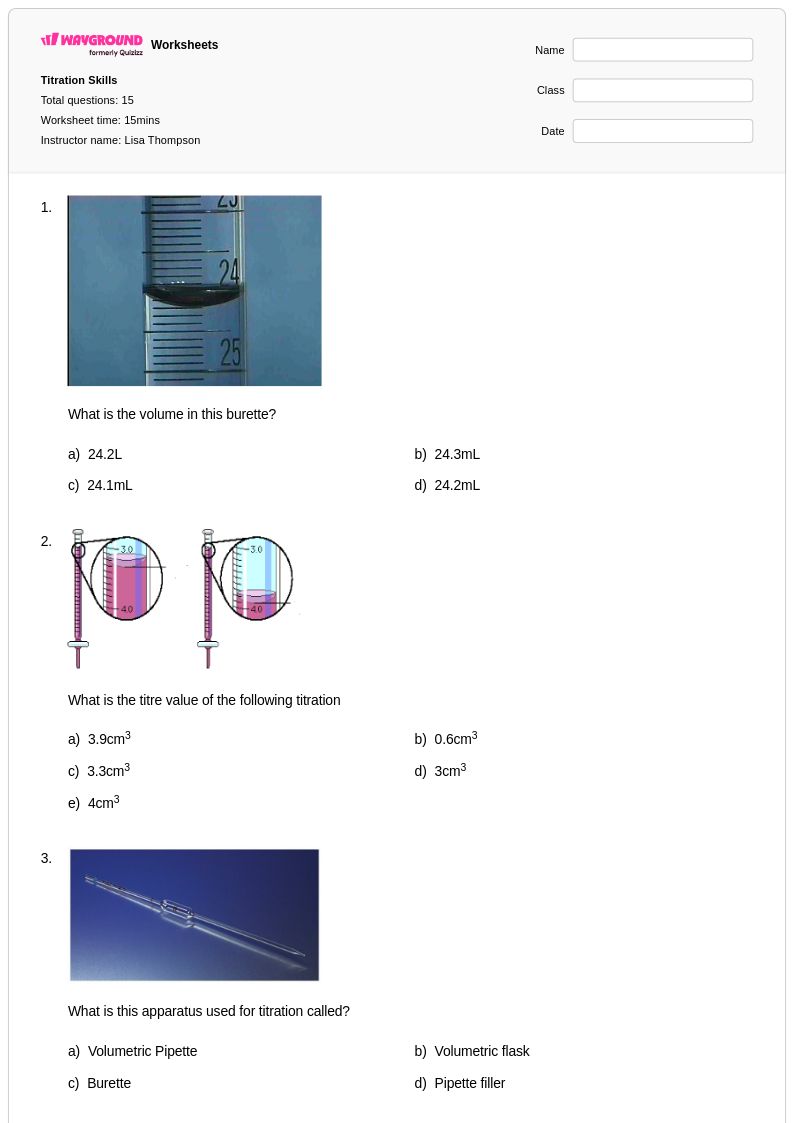
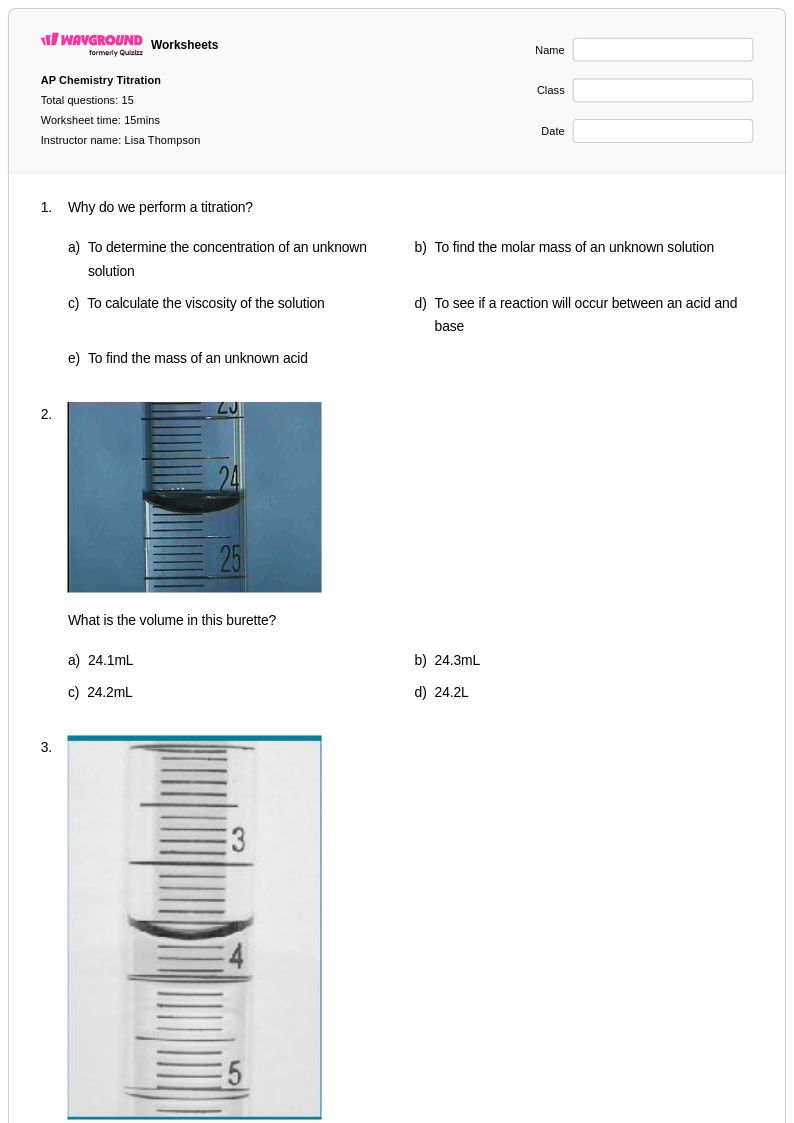
Titration calculations represent one of the most fundamental and challenging concepts in Year 12 chemistry, requiring students to master complex mathematical relationships between molarity, volume, and stoichiometry. Wayground's comprehensive collection of titration calculations worksheets provides students with extensive practice problems that systematically build proficiency in acid-base titrations, redox titrations, and complex analytical procedures. These expertly crafted resources strengthen critical skills including balanced equation writing, endpoint determination, concentration calculations, and multi-step problem solving that are essential for success in advanced chemistry coursework and standardized assessments. Each worksheet comes complete with detailed answer keys and step-by-step solutions, available in convenient pdf format as free printables that teachers can seamlessly integrate into classroom instruction or assign as independent practice.
Wayground's robust platform, formerly known as Quizizz, empowers chemistry educators with access to millions of teacher-created titration calculation resources that can be easily discovered through powerful search and filtering capabilities. The platform's standards-aligned content supports differentiated instruction by offering worksheets at varying complexity levels, from basic molarity calculations to advanced multi-step analytical procedures involving indicators and equivalence points. Teachers benefit from flexible customization tools that allow modification of practice problems to match specific curriculum requirements, while the availability of both printable pdf formats and interactive digital versions accommodates diverse classroom environments and learning preferences. These comprehensive resources prove invaluable for lesson planning, targeted remediation of weak areas, enrichment activities for advanced students, and consistent skill practice that builds the mathematical confidence essential for mastering quantitative analytical chemistry concepts.
FAQs
How do I teach titration calculations to chemistry students?
Titration calculations are best taught by first ensuring students are comfortable with molarity and stoichiometry before introducing the titration equation (C1V1 = C2V2 for 1:1 reactions, then expanding to molar ratio problems). Start with simple strong acid-strong base examples, then build toward polyprotic acids and back-titrations. Emphasizing the logic of the equivalence point — where moles of acid equal moles of base — helps students understand why the math works rather than just memorizing formulas. Using worked examples alongside practice problems is essential for building procedural fluency.
What are the most common mistakes students make in titration calculations?
The most frequent error is failing to account for molar ratios in reactions that are not 1:1, such as H2SO4 reacting with NaOH in a 1:2 ratio — students often treat all titrations as if the ratio is always equal. A second common mistake is unit confusion, particularly mixing mL and L when calculating moles from molarity. Students also frequently misidentify the equivalence point or confuse it with the endpoint. Explicitly drilling unit conversions and requiring students to write out balanced equations before calculating can prevent most of these errors.
What practice exercises help students get better at titration calculations?
Structured problem sets that progress from single-step molarity calculations to multi-step stoichiometric titration problems are the most effective practice format. Students benefit from problems that require them to find unknown concentration, unknown volume, and unknown moles in rotation so they cannot rely on a single formula path. Including problems with non-1:1 molar ratios and requiring students to show every conversion step reinforces both conceptual understanding and procedural accuracy. Timed mixed-review sets are useful before assessments to build fluency.
How do I use Wayground's titration calculations worksheets in my class?
Wayground's titration calculations worksheets are available as printable PDFs for traditional classroom use and in digital formats for technology-integrated or remote learning environments, and can also be hosted as a quiz directly on Wayground. Each worksheet includes a detailed answer key demonstrating proper problem-solving technique, making them practical for both in-class practice and self-paced review. Teachers can use them as guided practice during instruction, independent classwork, homework assignments, or targeted remediation for students who need additional support with multi-step calculations.
How do I differentiate titration calculation instruction for students at different levels?
Differentiation in titration calculations means offering tiered problems: foundational tasks focused on molarity and unit conversion for students still building fluency, standard problems involving straightforward acid-base titrations for on-level learners, and advanced problems covering polyprotic acids or back-titrations for students ready for deeper challenge. On Wayground, teachers can set accommodations such as read aloud, extended time, and reduced answer choices for individual students without disrupting the rest of the class, allowing all learners to engage with the same content at an appropriate level.
At what point in a chemistry course should students work on titration calculations?
Titration calculations are typically introduced after students have a working understanding of molarity, solution stoichiometry, and acid-base chemistry, which usually places them in the second semester of a first-year chemistry course or early in an AP or honors chemistry curriculum. Students need to be comfortable converting between moles, grams, and liters and writing balanced neutralization equations before tackling titration math. Introducing the calculations too early, before stoichiometry is secure, is a leading cause of persistent confusion.