Free Printable Iupac Naming Worksheets for Year 12
Master Year 12 IUPAC naming conventions with Wayground's comprehensive collection of free worksheets, printables, and practice problems featuring detailed answer keys to strengthen organic chemistry nomenclature skills.
Explore printable Iupac Naming worksheets for Year 12
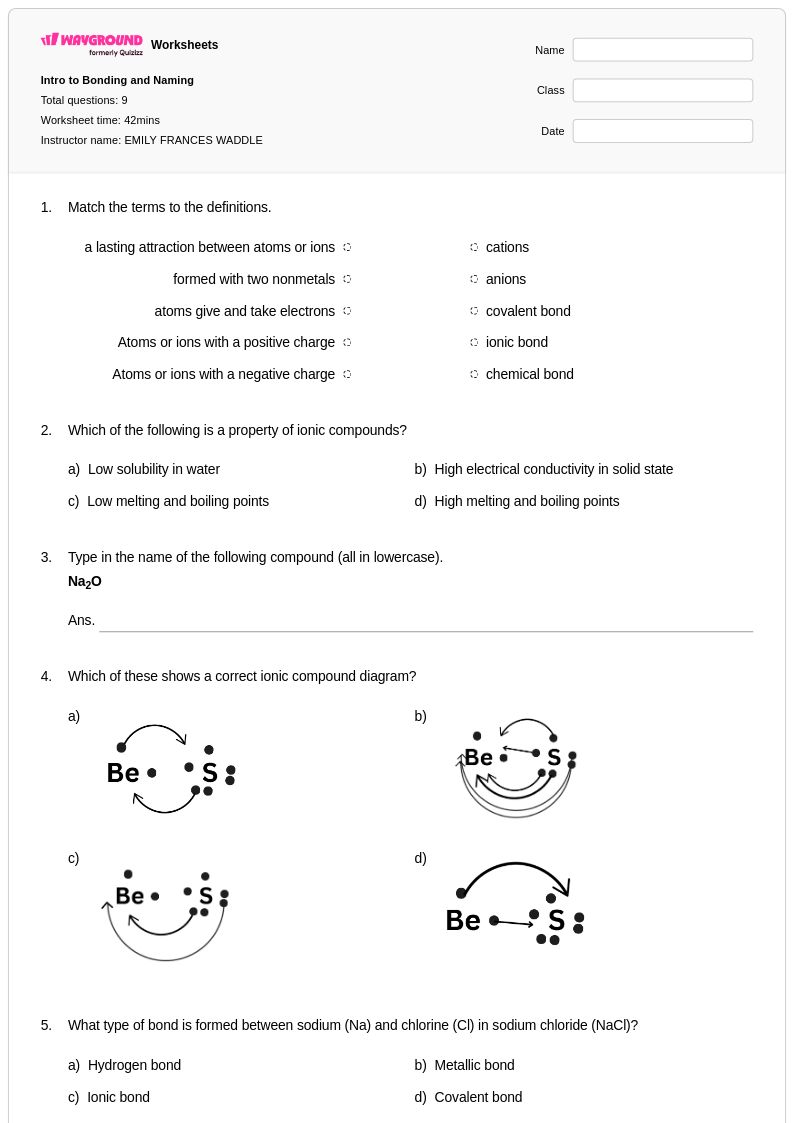
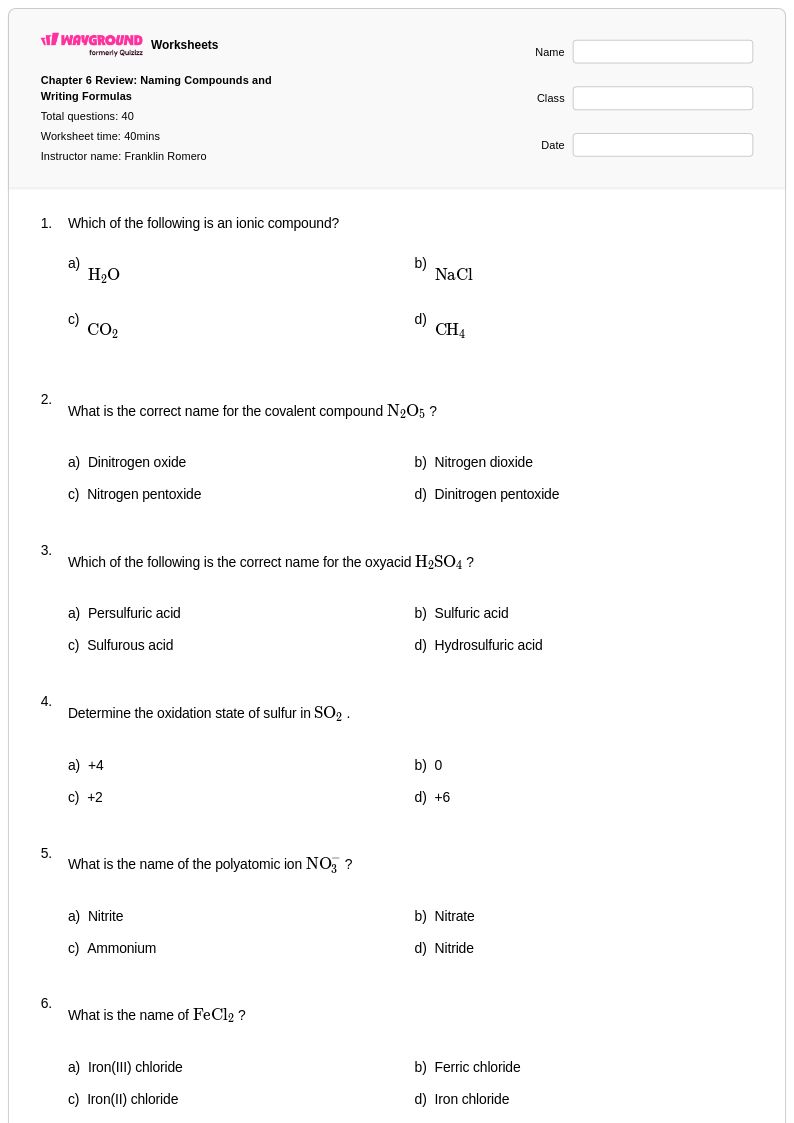
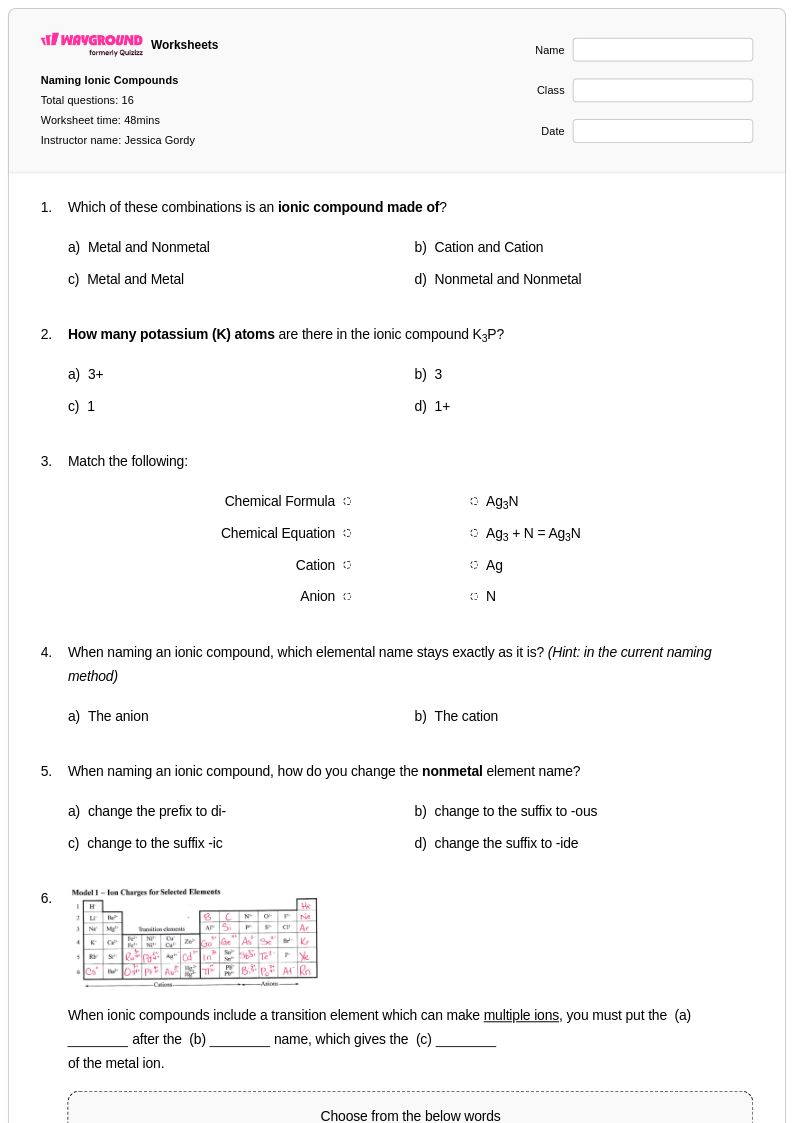
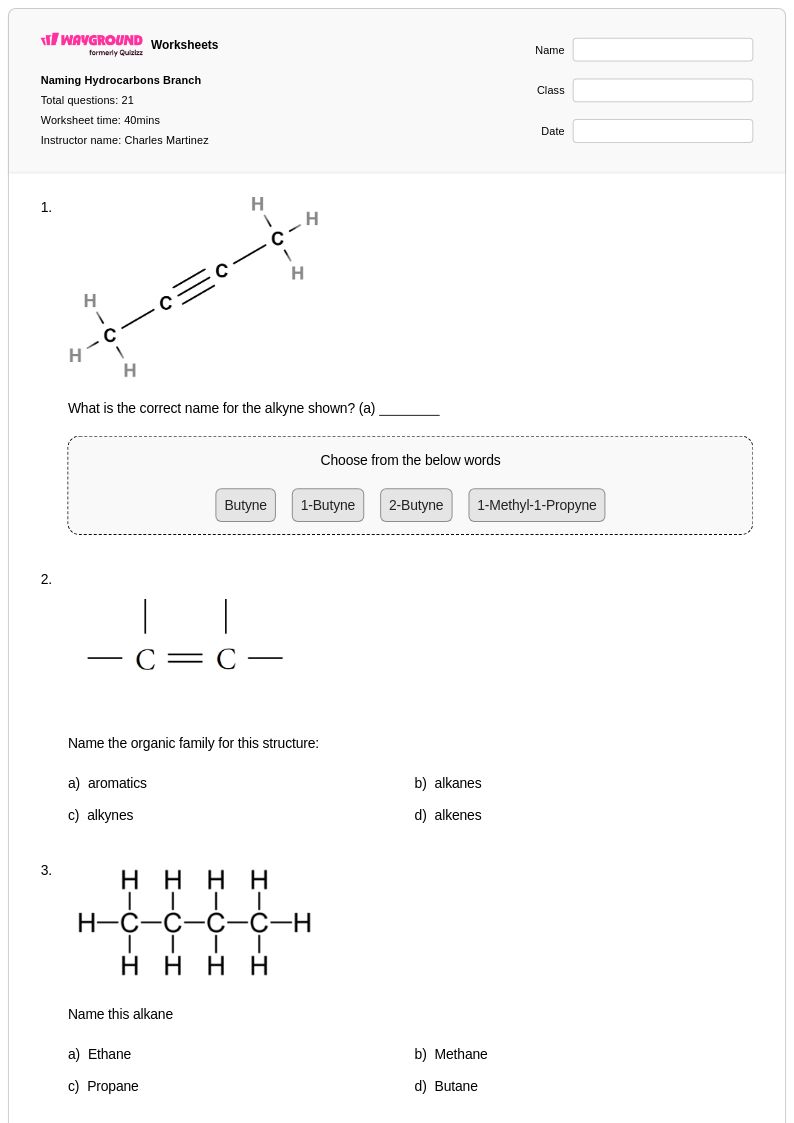
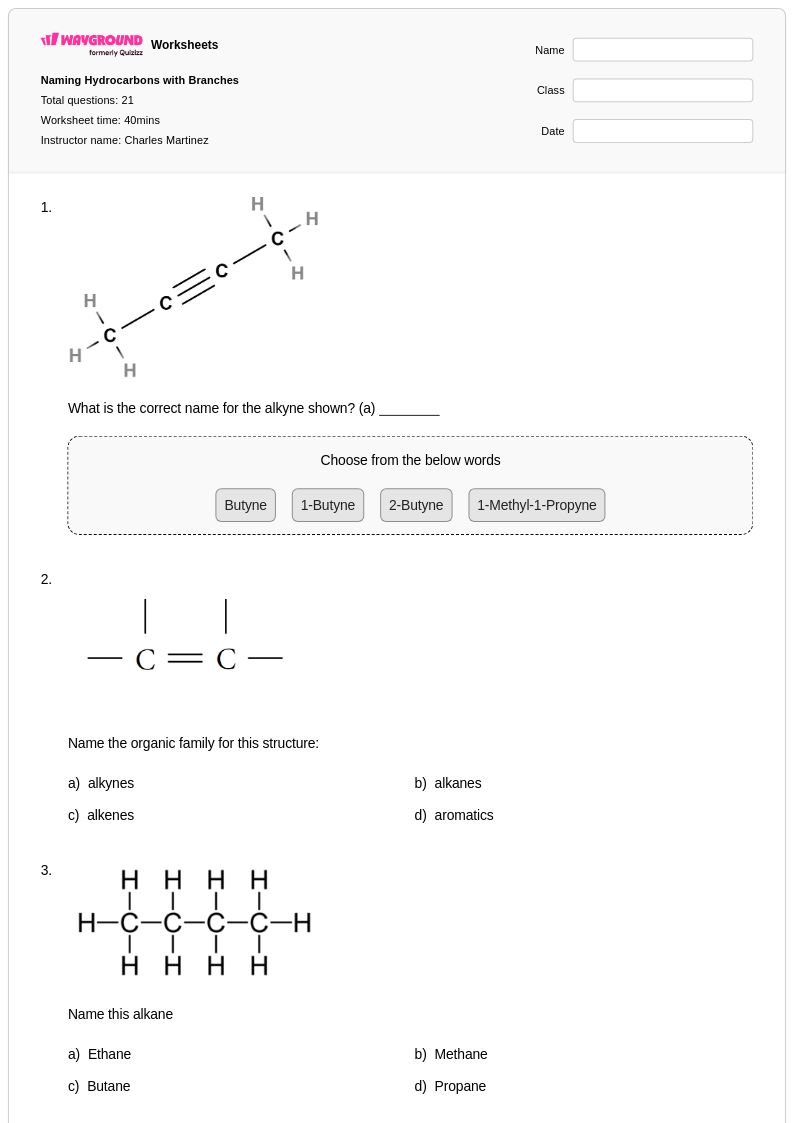
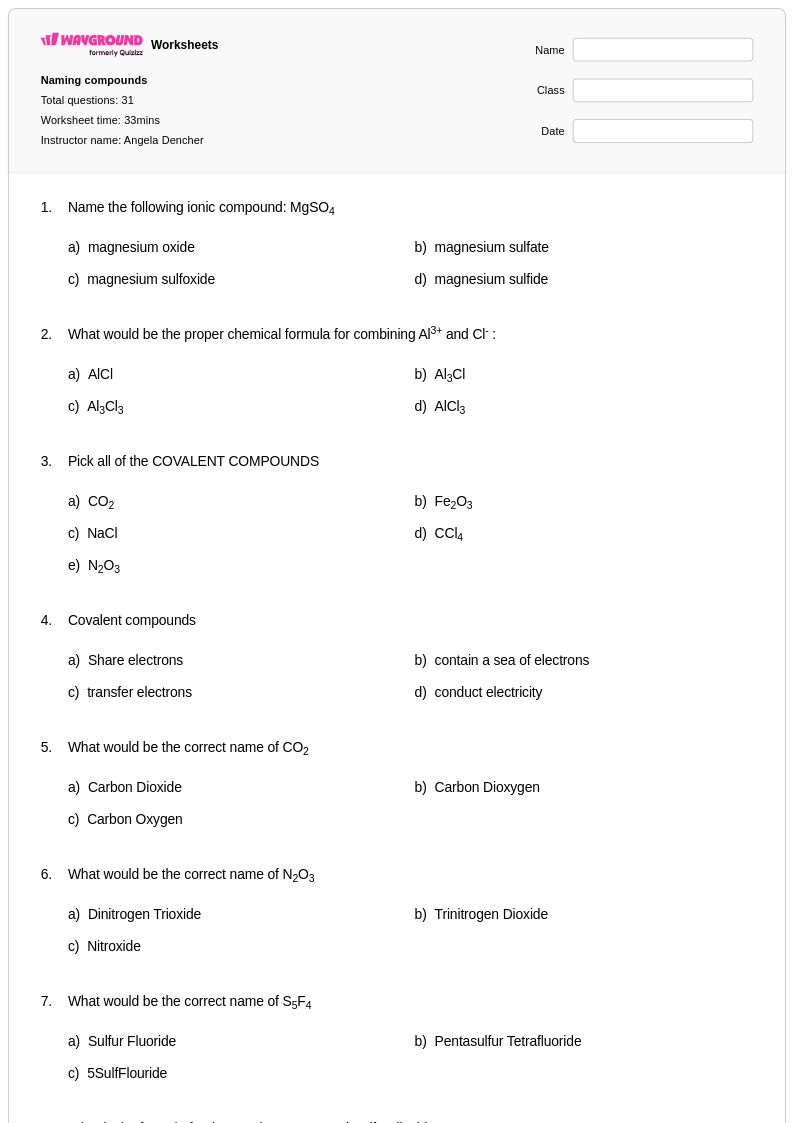
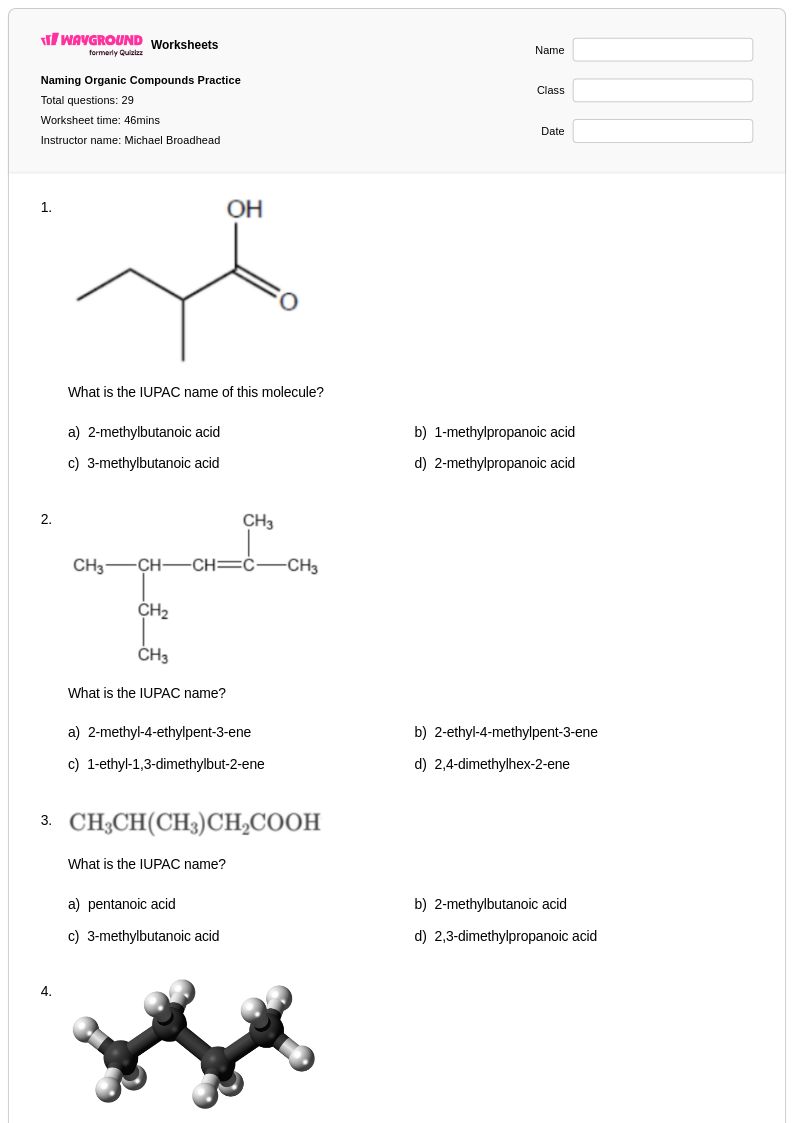
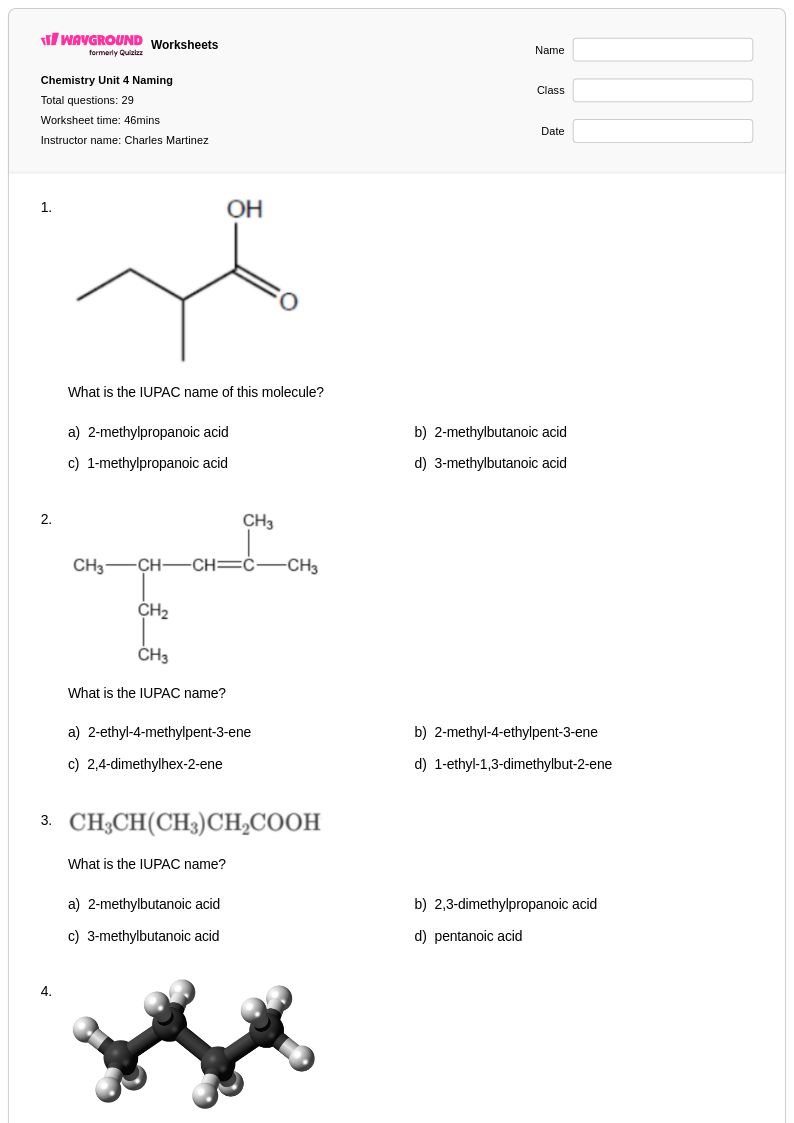
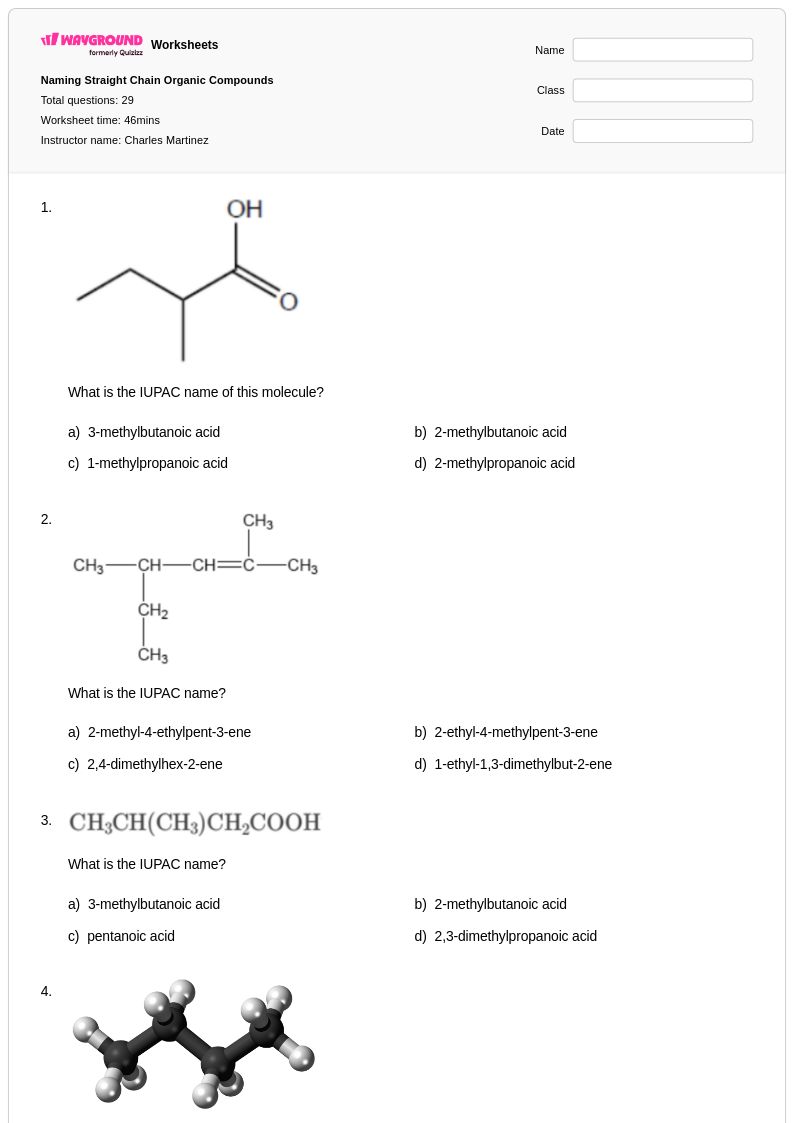
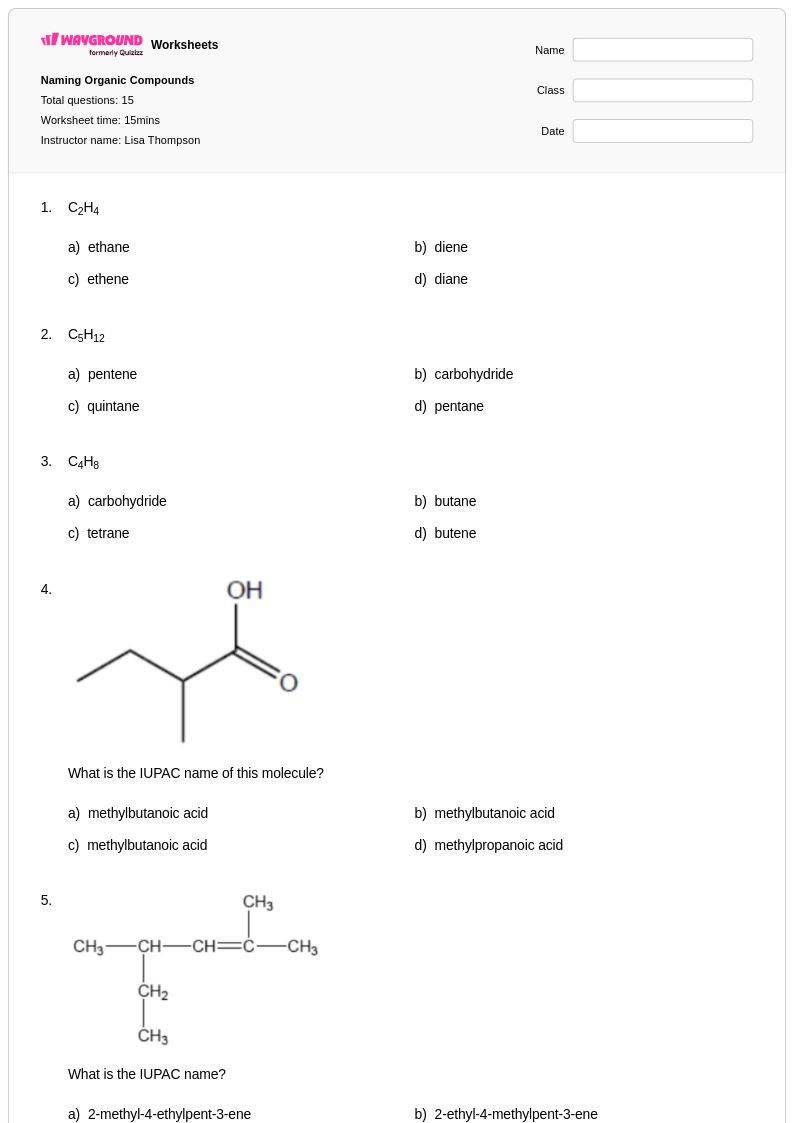
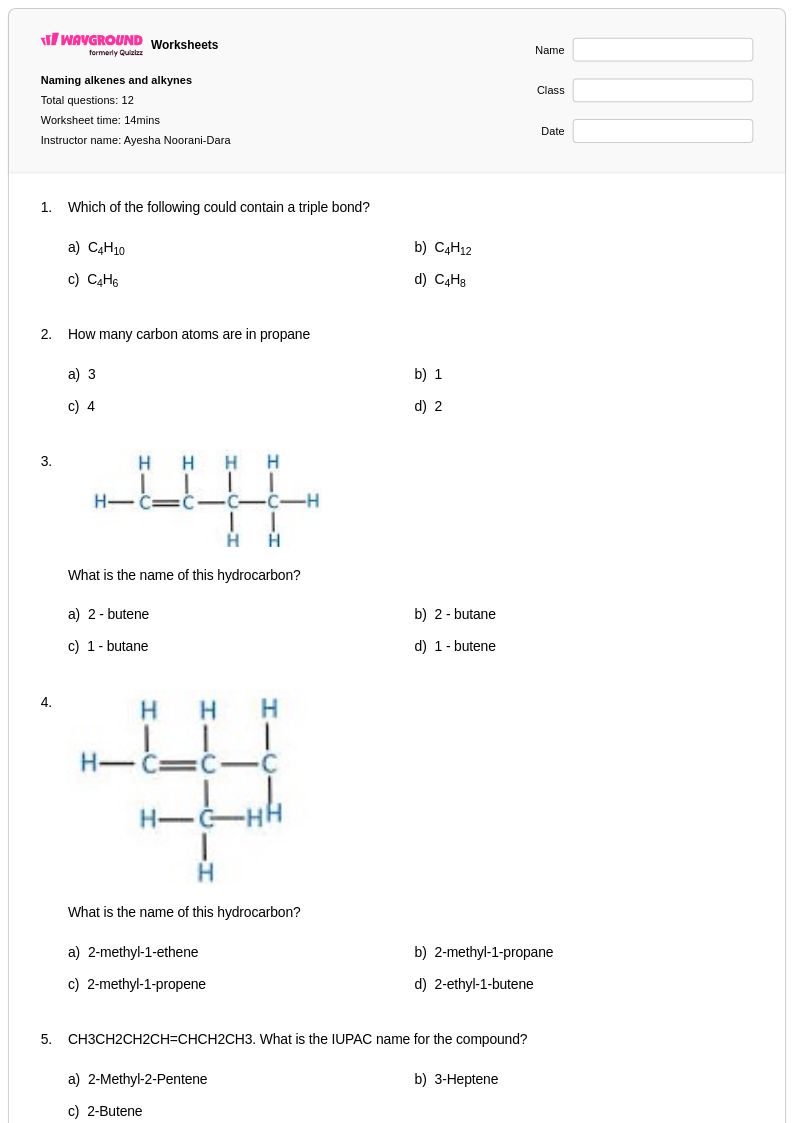
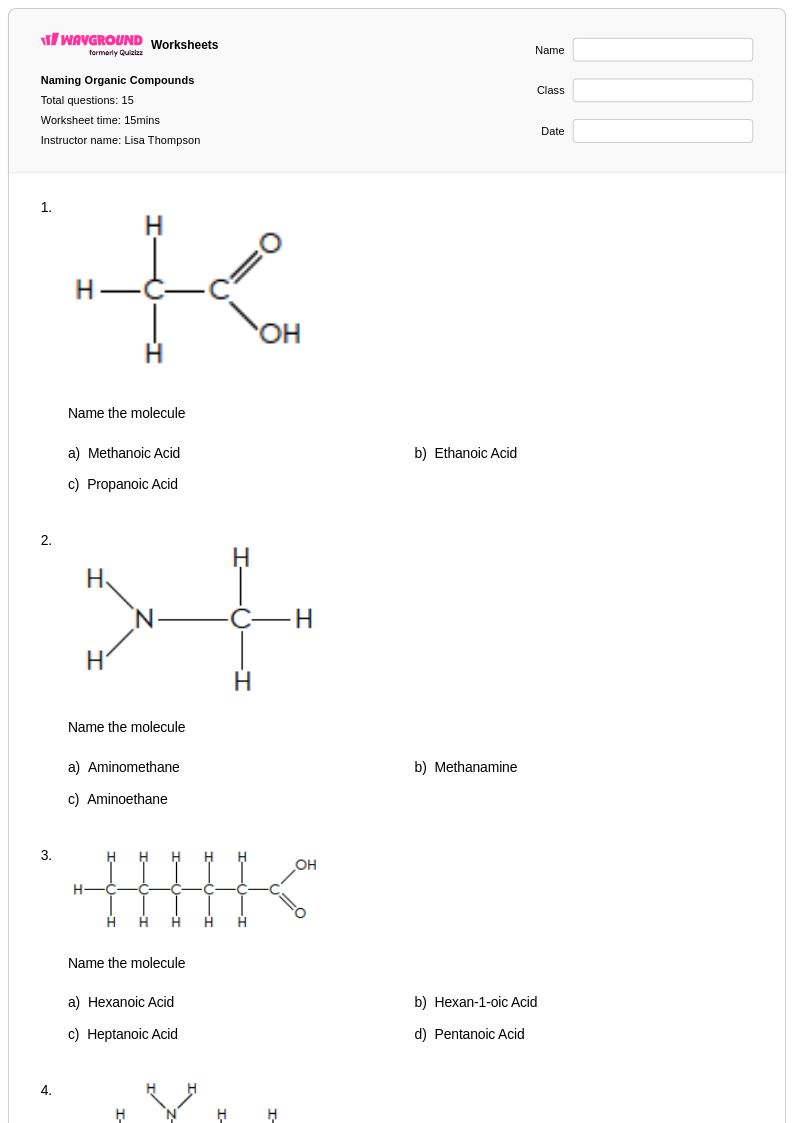
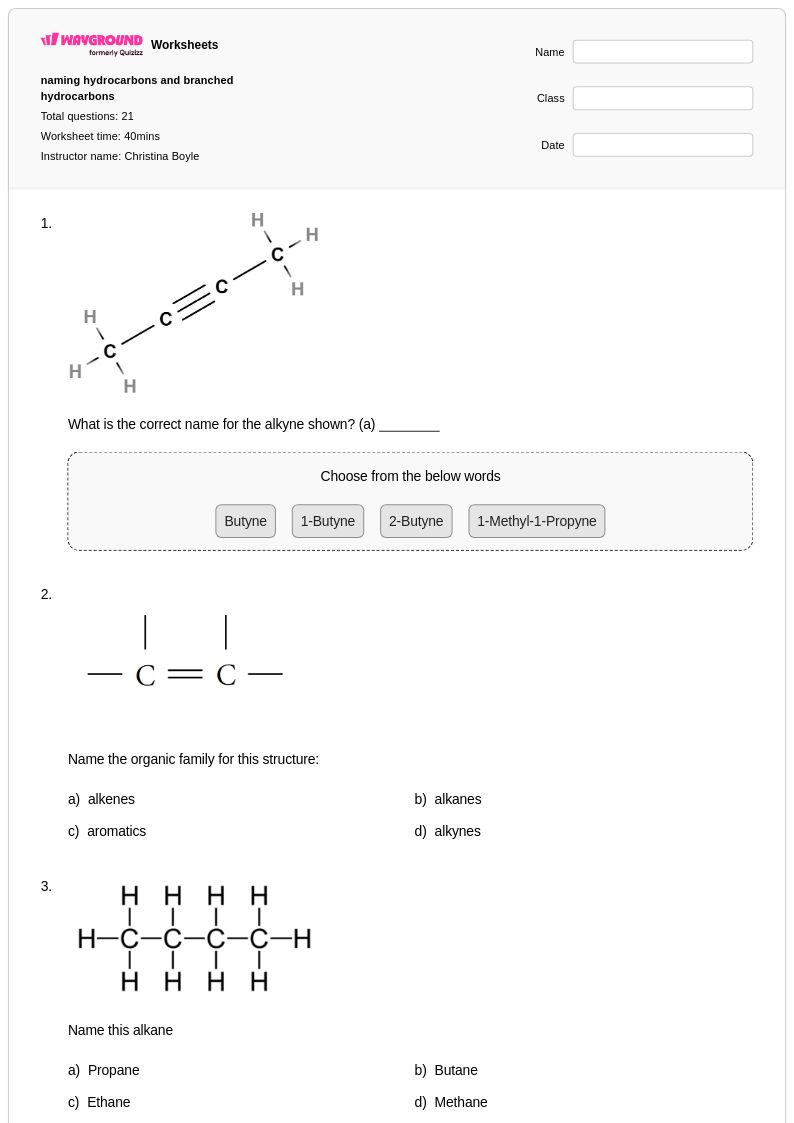
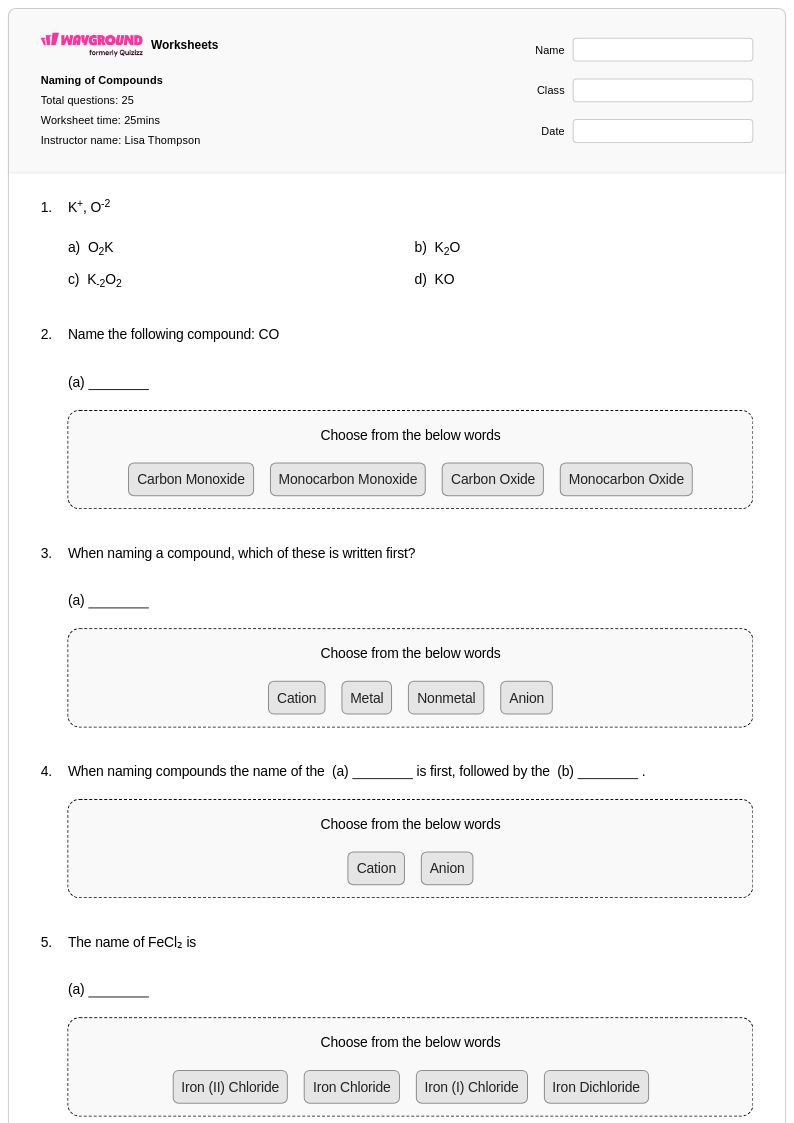
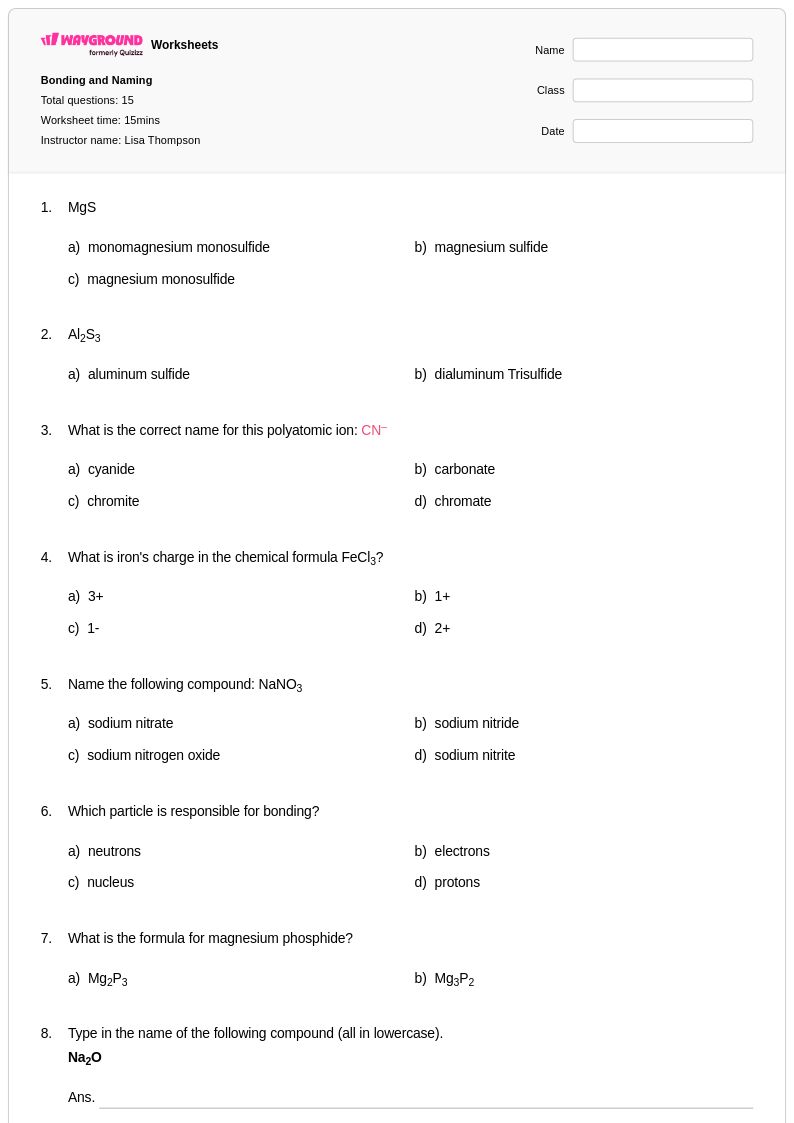
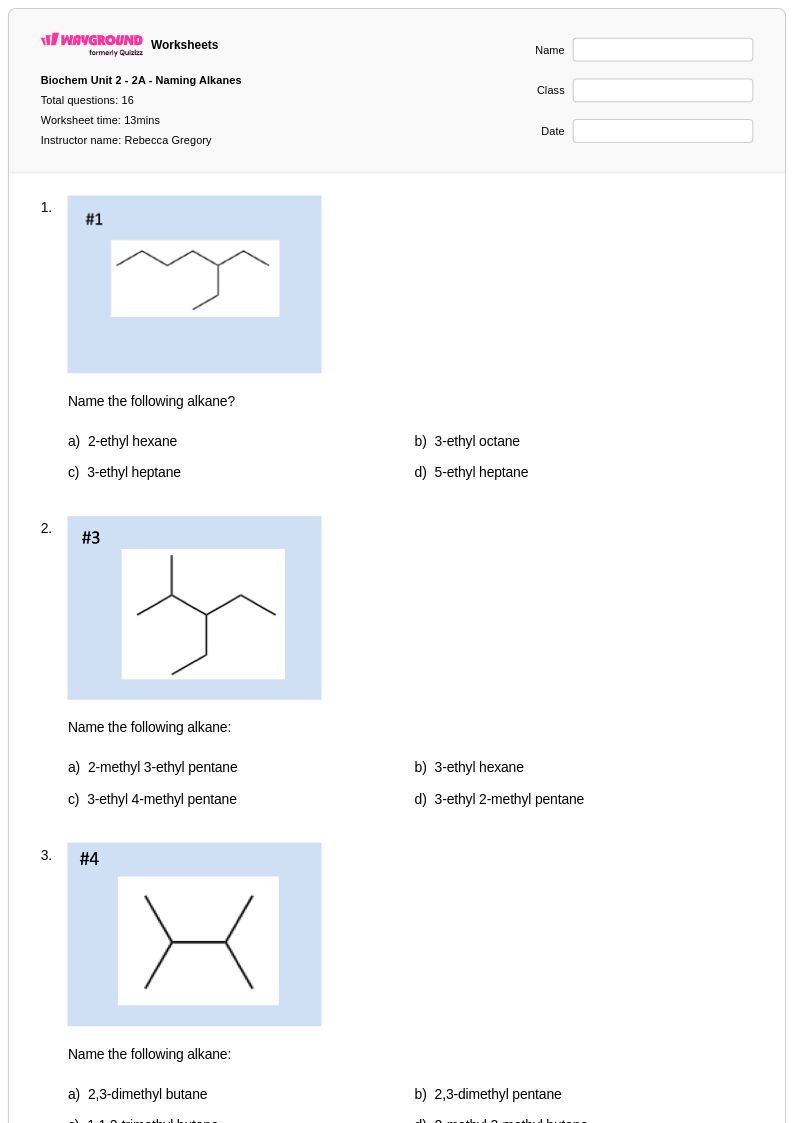
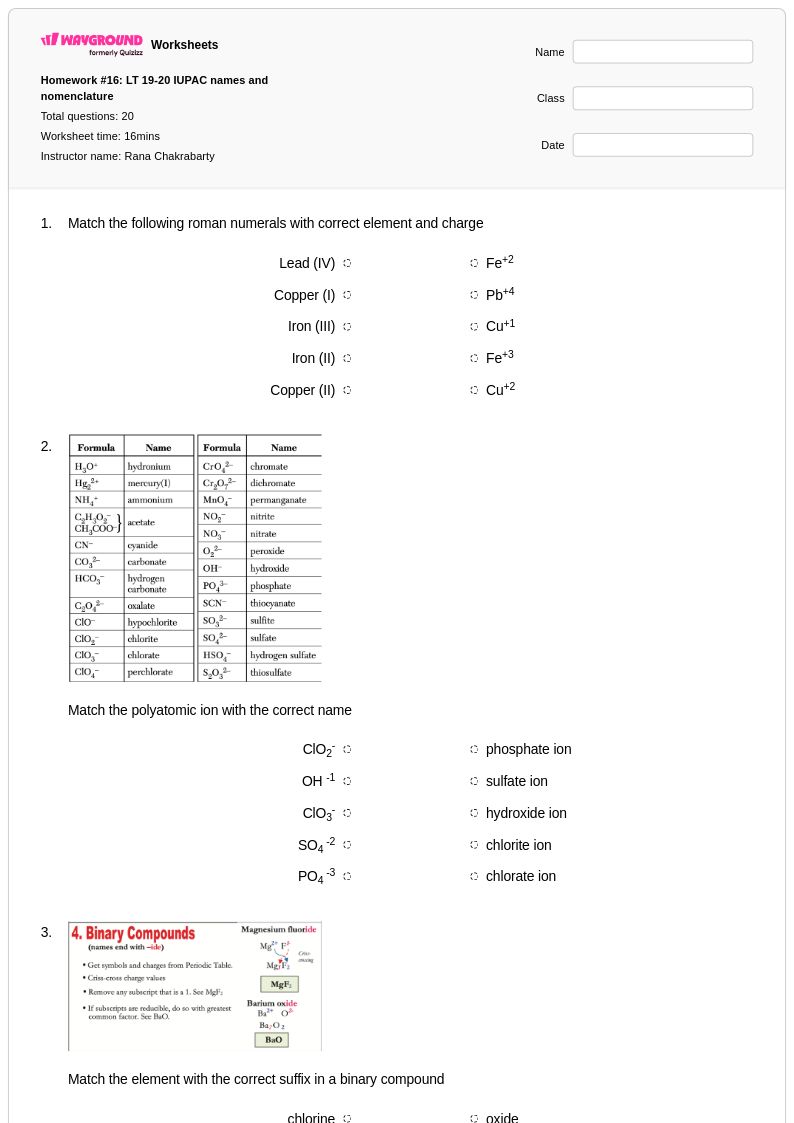
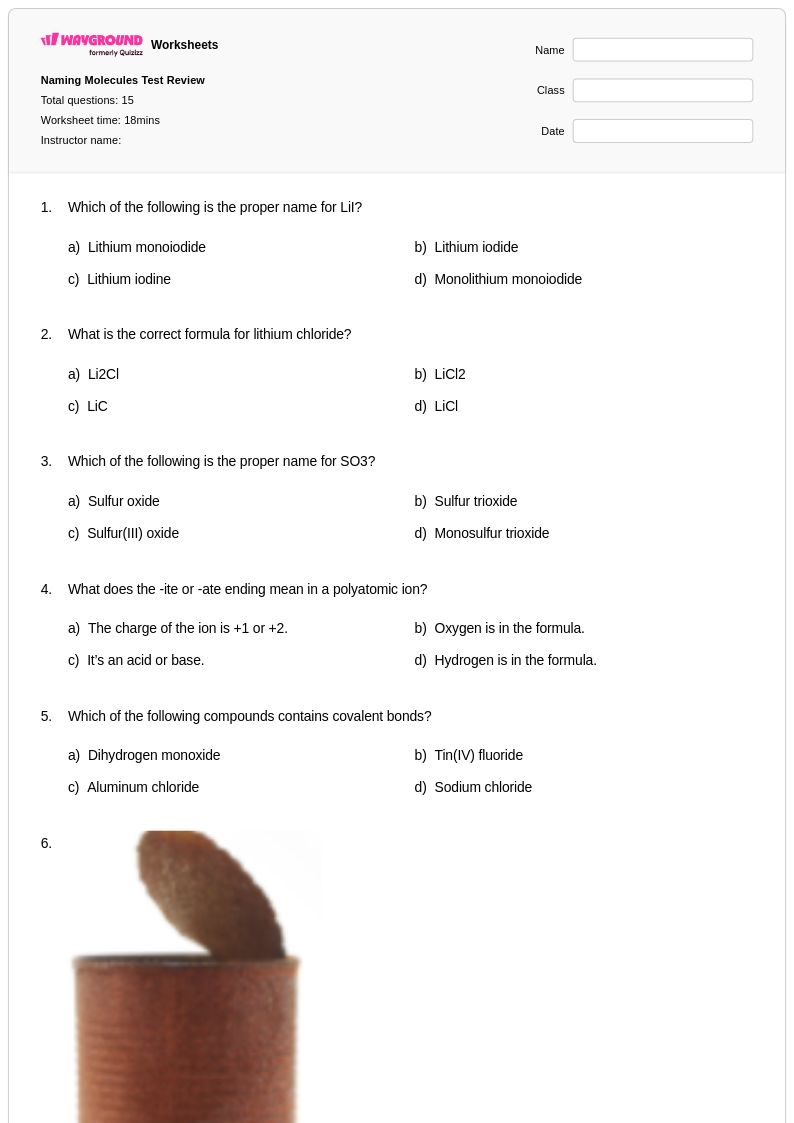
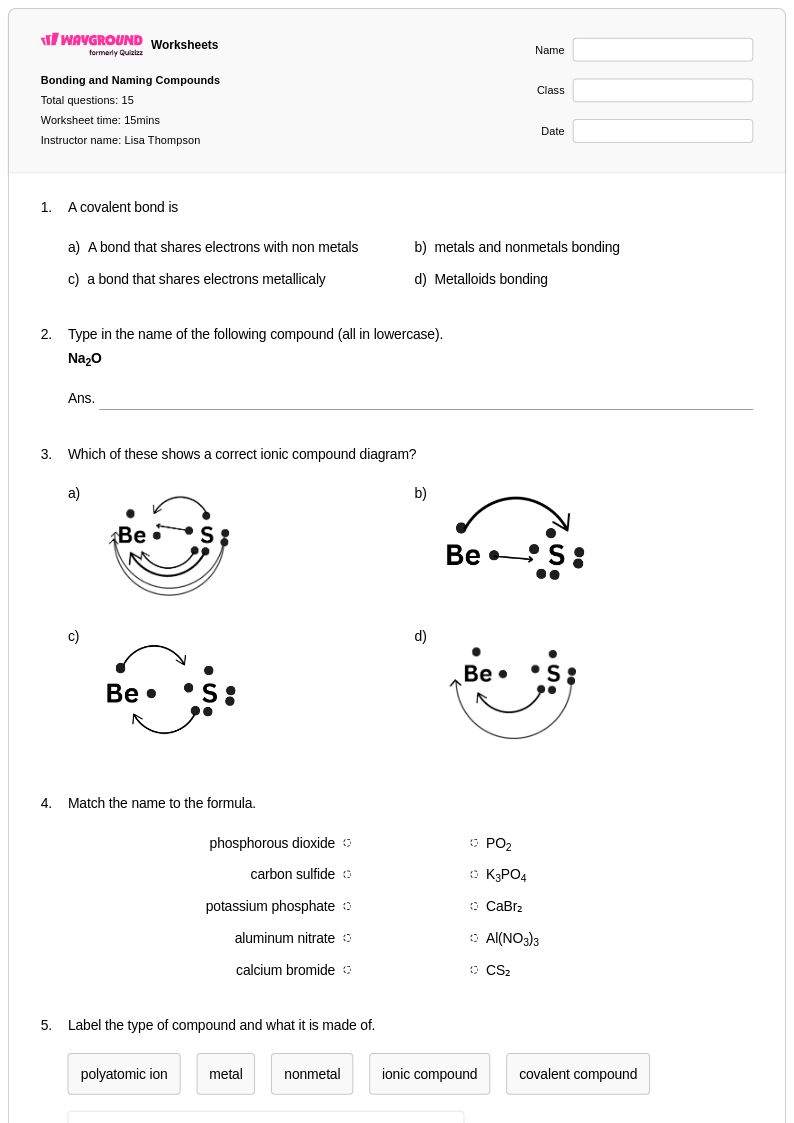
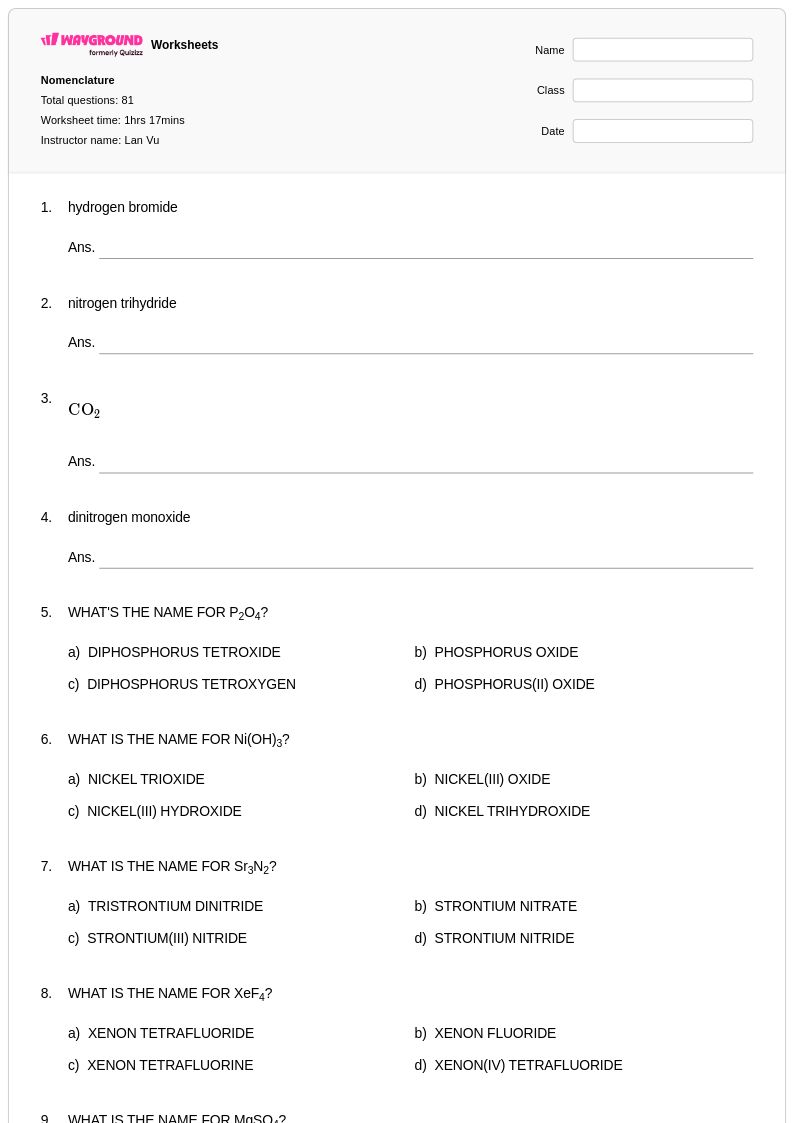
IUPAC naming worksheets for Year 12 chemistry provide comprehensive practice with the systematic nomenclature rules essential for advanced organic and inorganic chemistry studies. These expertly designed worksheets through Wayground (formerly Quizizz) strengthen students' mastery of complex naming conventions including substituted hydrocarbons, functional group priorities, stereochemistry indicators, and multi-functional organic compounds. Students work through progressively challenging practice problems that reinforce proper prefix and suffix usage, carbon chain identification, and systematic naming procedures required for college-level chemistry coursework. Each worksheet includes detailed answer keys that explain the step-by-step reasoning behind correct nomenclature, while free printable pdf formats ensure accessibility for both classroom instruction and independent study sessions.
Wayground (formerly Quizizz) empowers chemistry teachers with millions of teacher-created IUPAC naming resources that feature robust search and filtering capabilities aligned to advanced chemistry standards. The platform's differentiation tools allow educators to customize worksheet difficulty levels, from basic alkane naming to complex polyfunctional molecules with multiple chiral centers, ensuring appropriate challenge levels for diverse student needs. Teachers can seamlessly access both printable and digital formats including downloadable pdfs, facilitating flexible lesson planning whether for in-class practice, homework assignments, or targeted remediation sessions. These comprehensive worksheet collections support systematic skill building in chemical nomenclature while providing enrichment opportunities for students pursuing advanced placement chemistry or preparing for standardized chemistry assessments.
FAQs
How do I teach IUPAC naming conventions to chemistry students?
Start by building a strong foundation in identifying carbon chain length and functional groups before introducing naming rules. Teach alkanes first, then systematically layer in prefixes, suffixes, and priority rules for alkenes, alkynes, and functional groups such as alcohols, aldehydes, and carboxylic acids. Using worked examples that move from structure to name and back again helps students internalize the bidirectional nature of nomenclature. Scaffolded practice problems that increase in complexity reinforce each rule before introducing the next.
What exercises help students practice IUPAC naming?
Effective practice exercises include naming compounds from drawn structural formulas, drawing structures from given IUPAC names, and identifying and correcting errors in incorrectly named compounds. Problems that progress from simple straight-chain alkanes to branched hydrocarbons and then to multifunctional organic molecules build procedural fluency systematically. Mixed-format worksheets that combine multiple-choice, short-answer, and structure-drawing tasks help students practice IUPAC naming from multiple angles, which is especially useful for exam preparation.
What mistakes do students commonly make with IUPAC naming?
One of the most frequent errors is numbering the carbon chain from the wrong end, which leads to incorrect locants for substituents or functional groups. Students also commonly confuse suffix priority rules when multiple functional groups are present, defaulting to the wrong principal characteristic group. Forgetting to apply alphabetical ordering when listing multiple substituents and misidentifying the longest continuous carbon chain in branched structures are also persistent misconceptions. Targeted error-correction exercises, where students identify what is wrong in a named compound, are especially effective at addressing these patterns.
How do I use Wayground's IUPAC naming worksheets in my classroom?
Wayground's IUPAC naming worksheets are available as both printable PDFs and in digital formats, making them suitable for traditional lab settings, hybrid classrooms, and remote instruction. You can assign them as independent practice, in-class guided work, or homework, and each worksheet includes an answer key so students can self-check or receive immediate feedback. Hosting a worksheet as a quiz on Wayground lets you track student responses and identify which naming rules need further review. The platform's search and filtering tools allow you to locate worksheets aligned to specific compound types or difficulty levels, saving lesson planning time.
How can I differentiate IUPAC naming practice for students at different skill levels?
For students still building foundational skills, begin with worksheets focused solely on straight-chain alkanes and simple substituents before introducing ring structures or multifunctional compounds. Wayground's differentiation tools allow teachers to customize content difficulty and modify practice problems to support remediation or provide enrichment for advanced learners. For students who need additional support during digital assignments, Wayground also offers accommodations such as read aloud and reduced answer choices, which can be configured per student without affecting the rest of the class.
In what order should students learn IUPAC naming rules?
Students should learn IUPAC naming in a progression that mirrors increasing molecular complexity. Begin with naming straight-chain and branched alkanes, then move to alkenes and alkynes, which introduce locants for double and triple bonds. Functional group classes such as alcohols, aldehydes, ketones, and carboxylic acids should be introduced one at a time, with priority rules for principal characteristic groups addressed once students are comfortable with single-functional-group molecules. Multifunctional and complex molecules should come last, after students have internalized the underlying logic of each naming layer.