
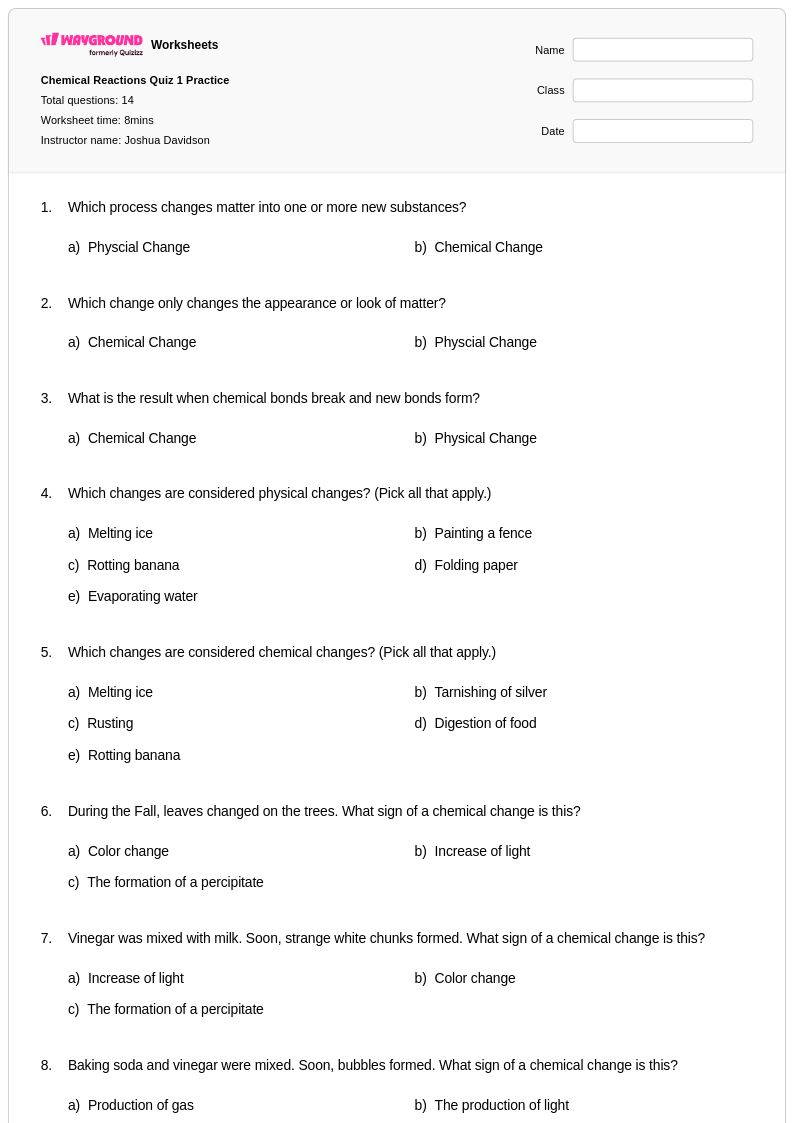
14 Q
6th
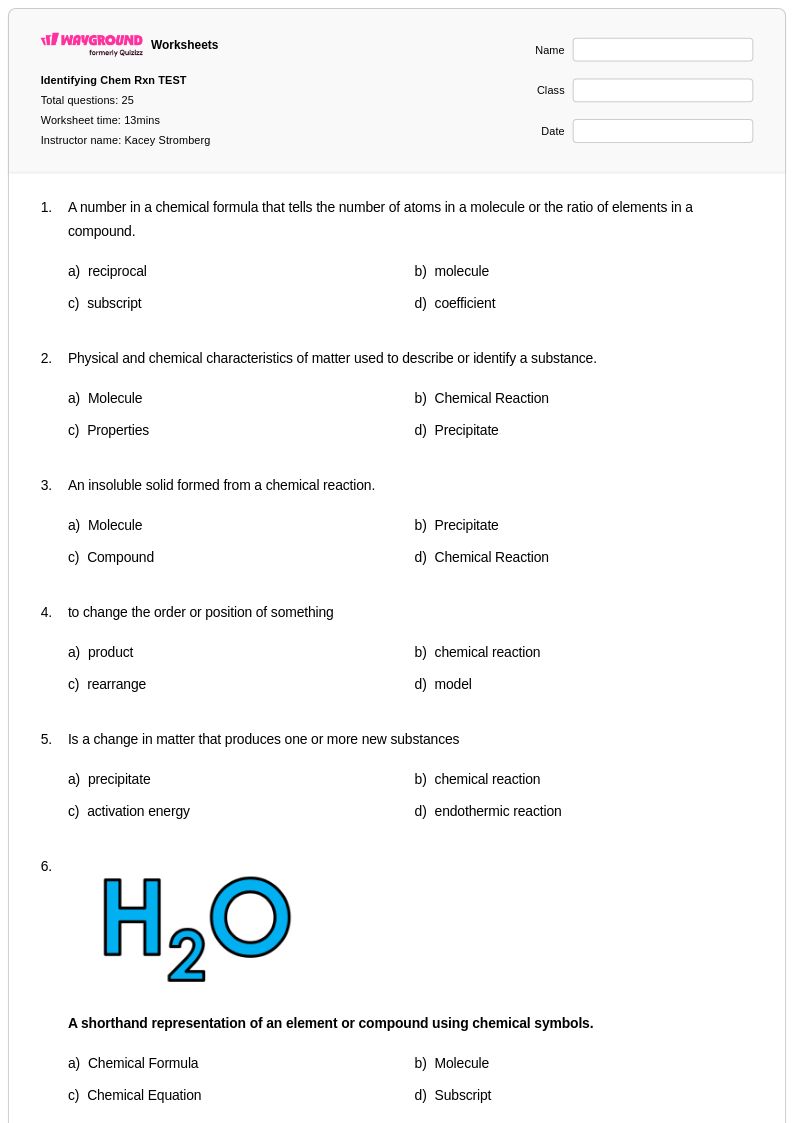
25 Q
6th - 8th
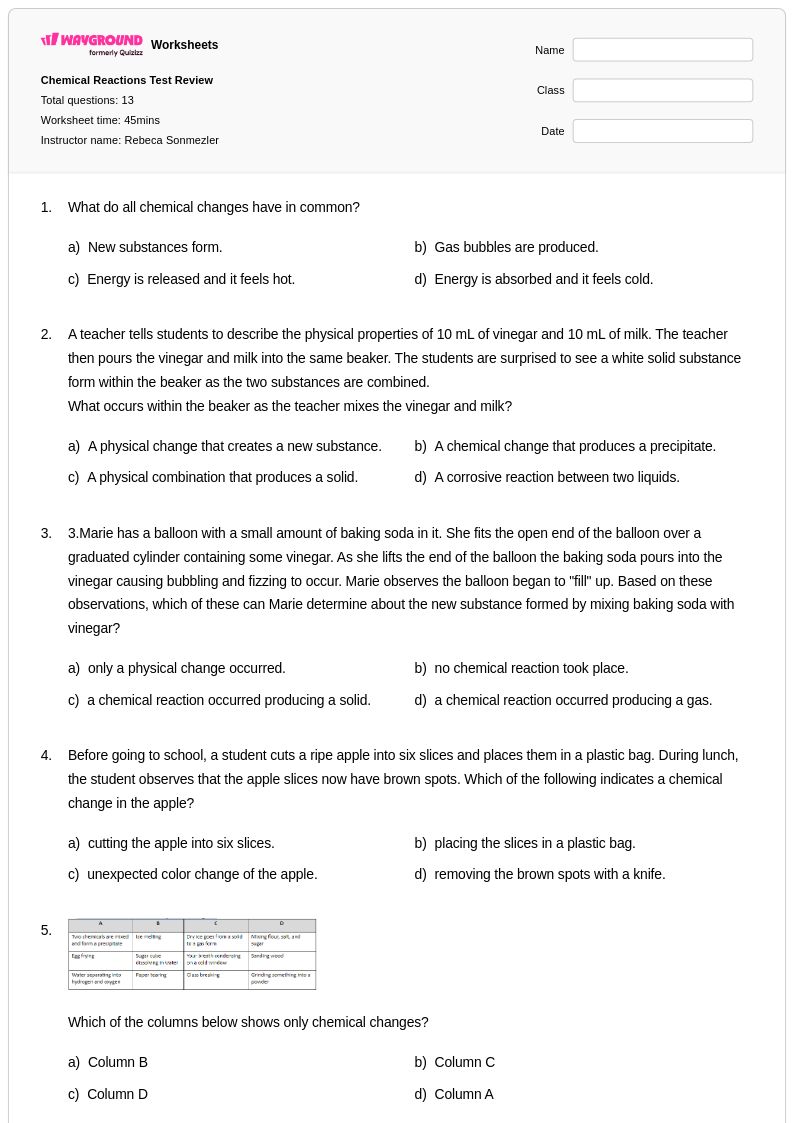
13 Q
6th
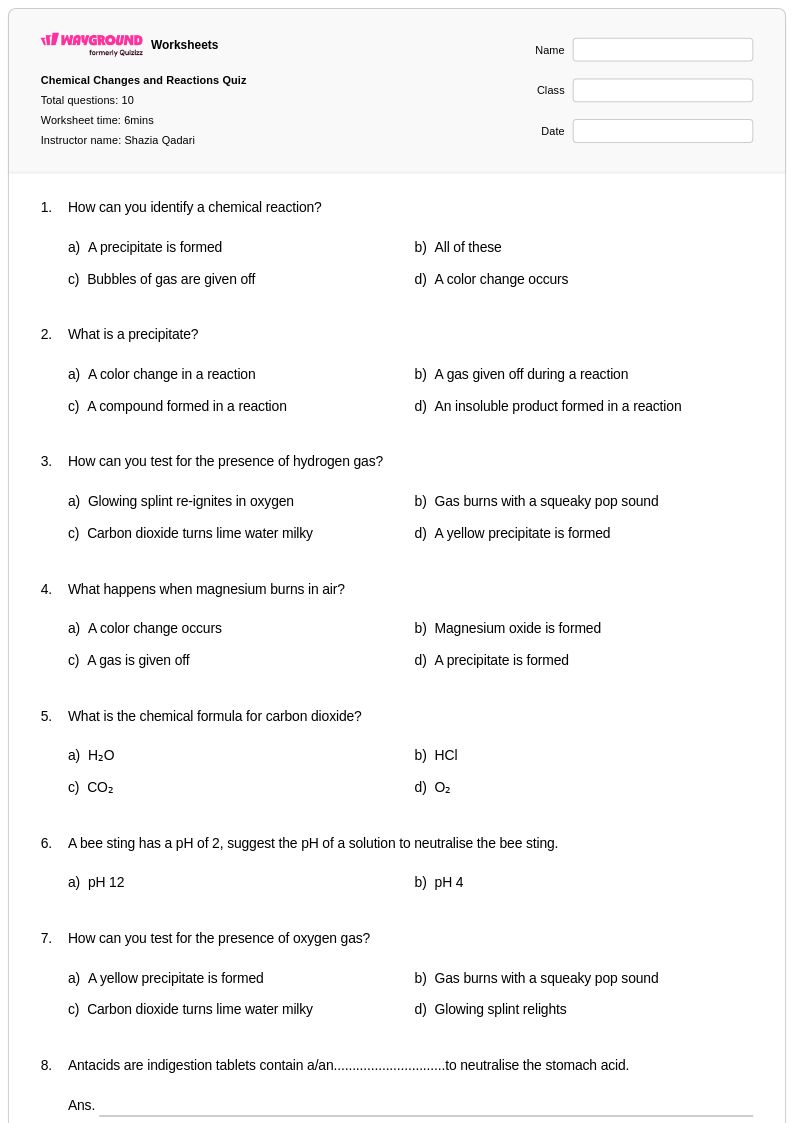
10 Q
6th
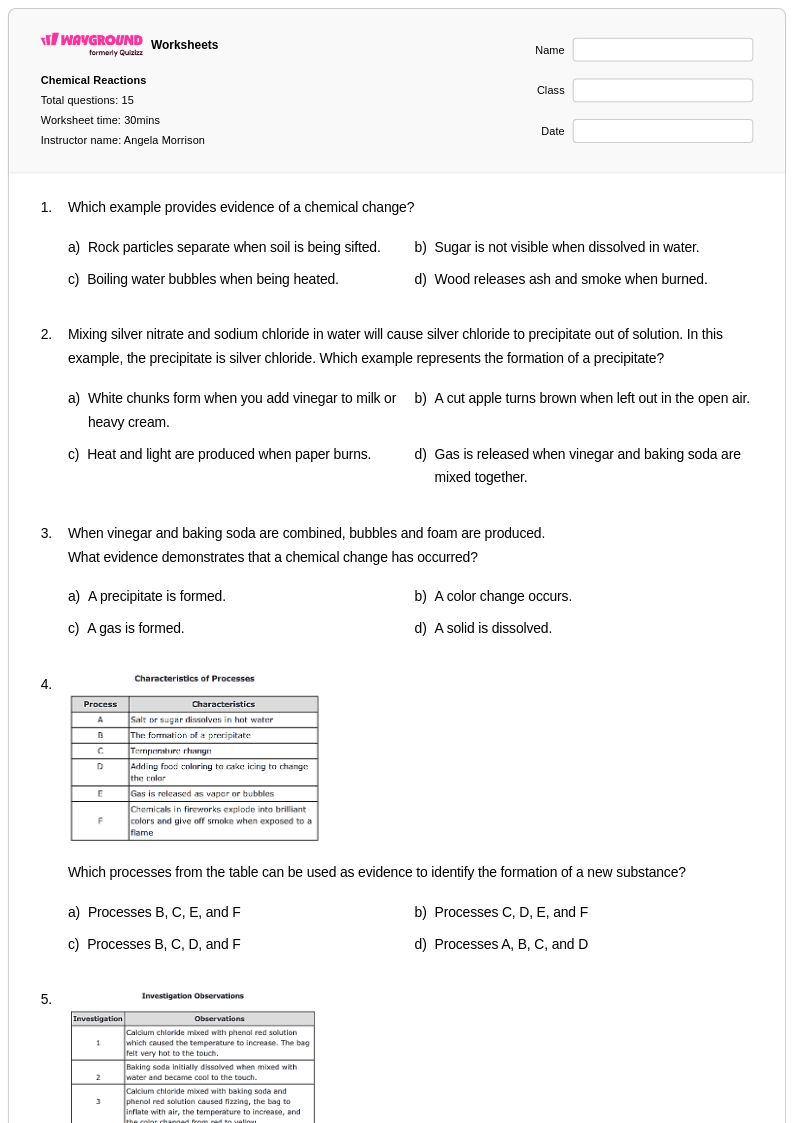
15 Q
6th
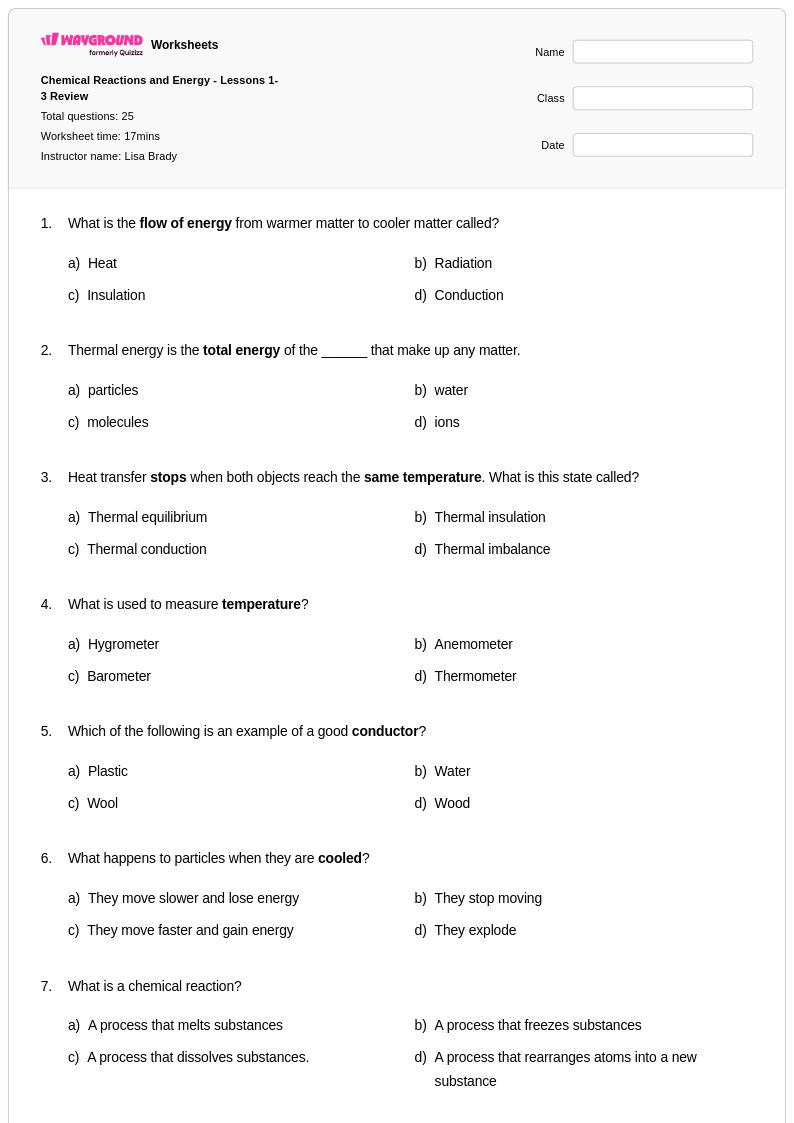
25 Q
6th
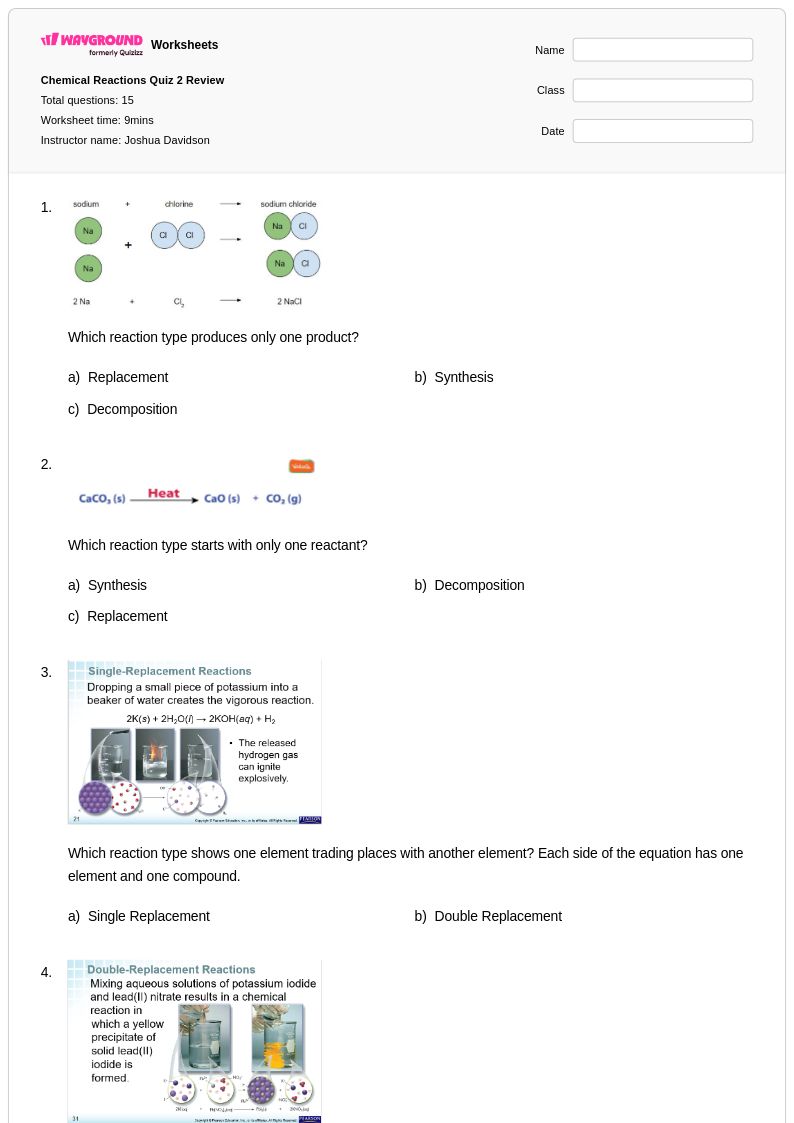
15 Q
6th
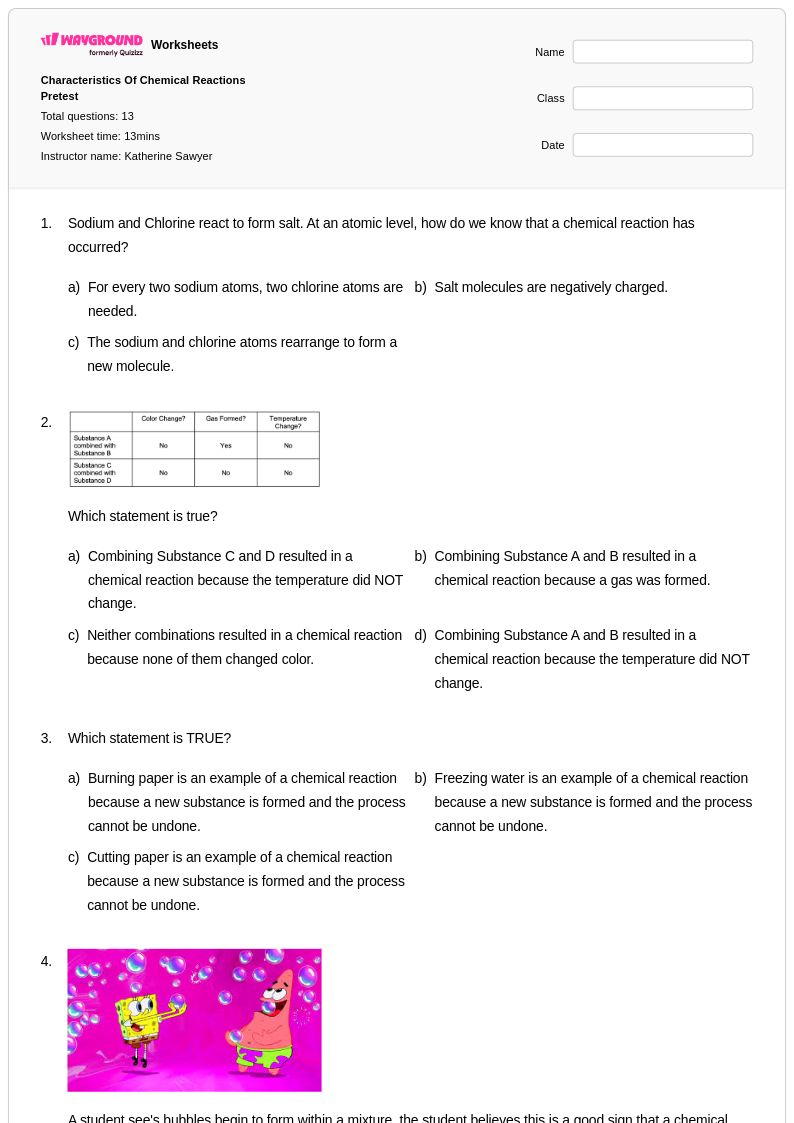
13 Q
6th
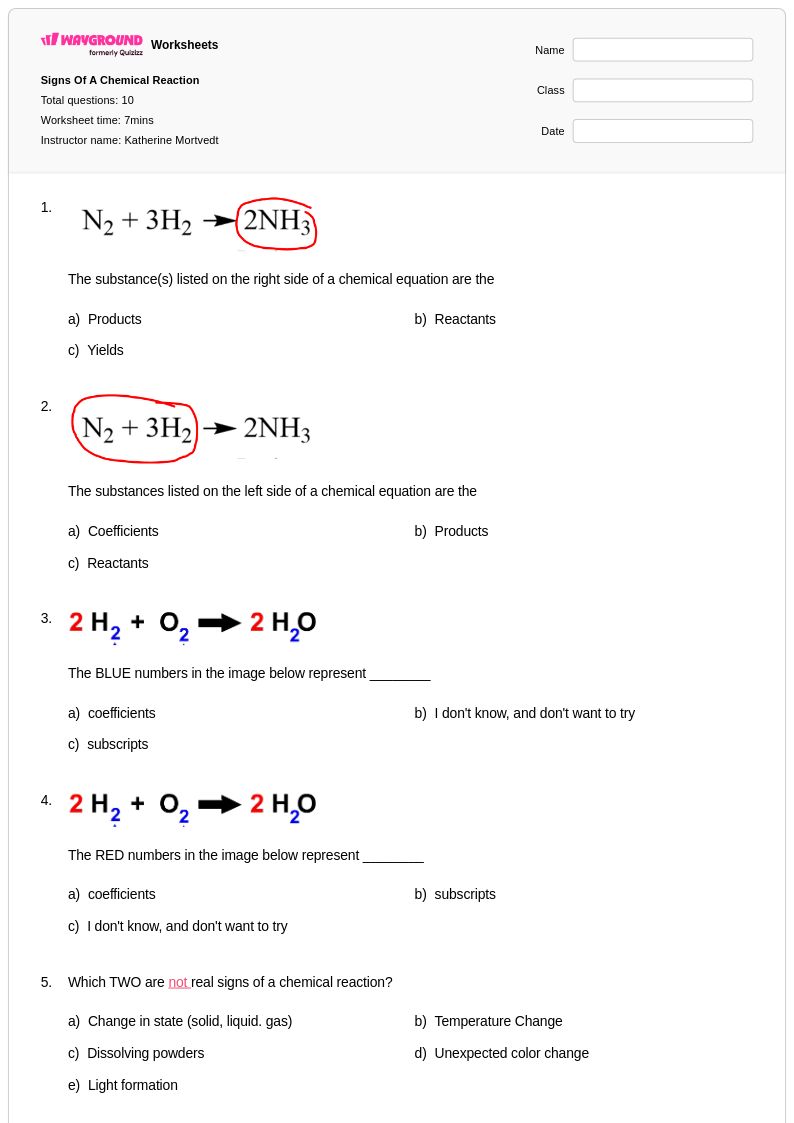
10 Q
6th
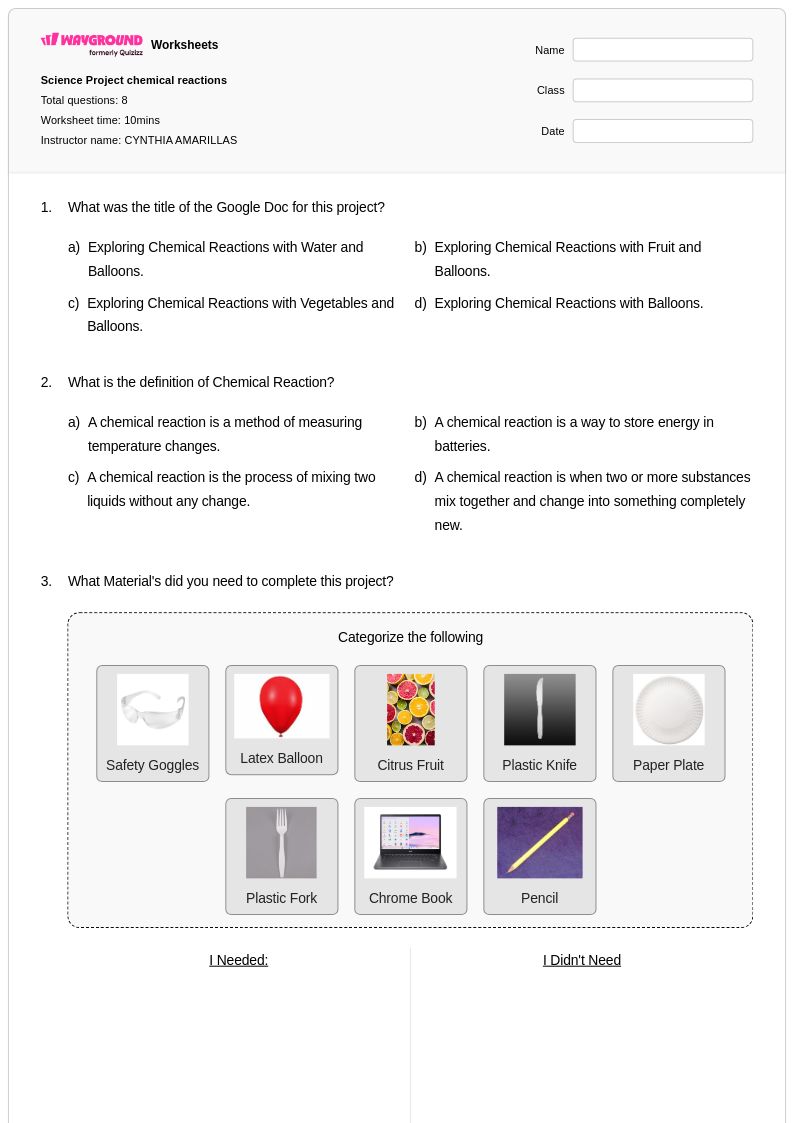
8 Q
6th - Uni
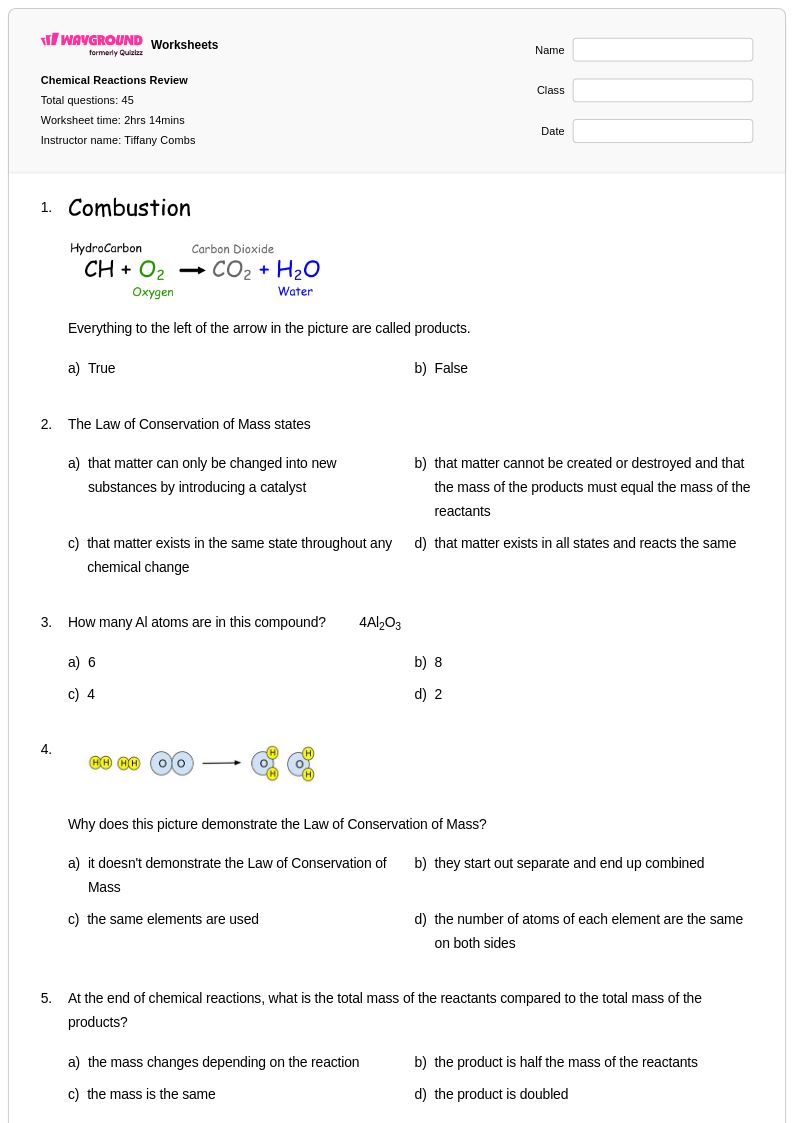
45 Q
6th - 8th
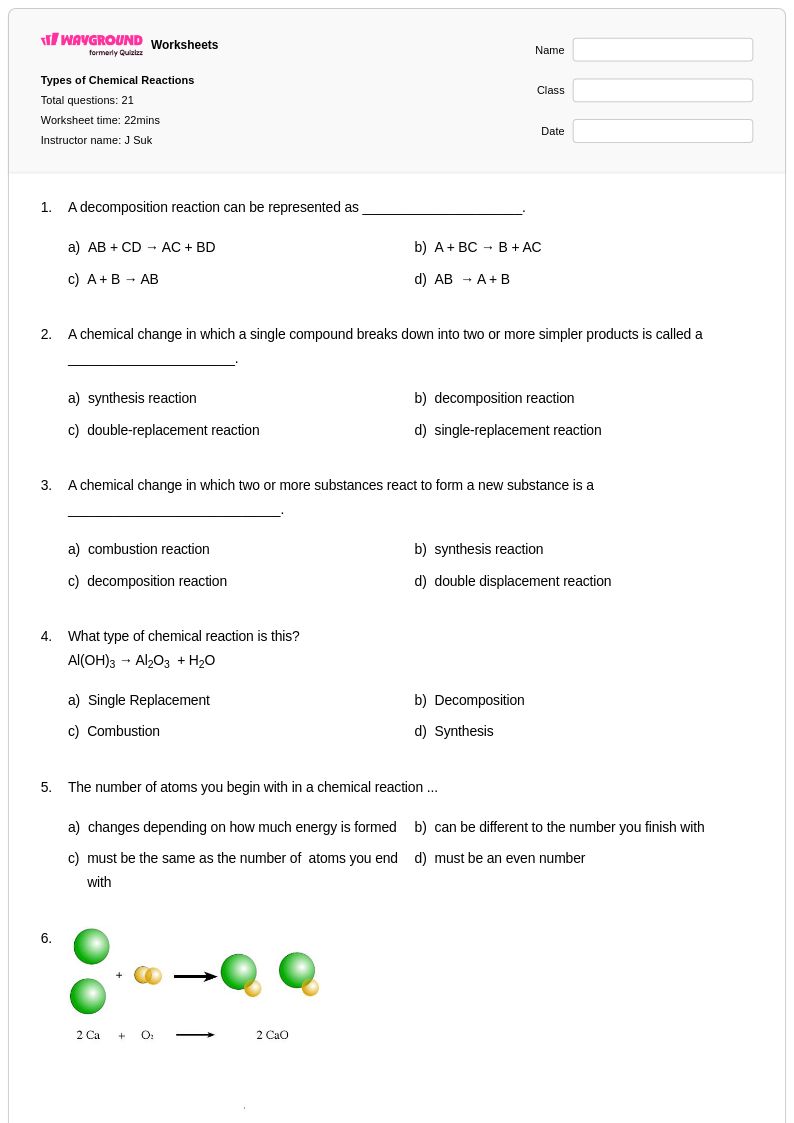
21 Q
6th
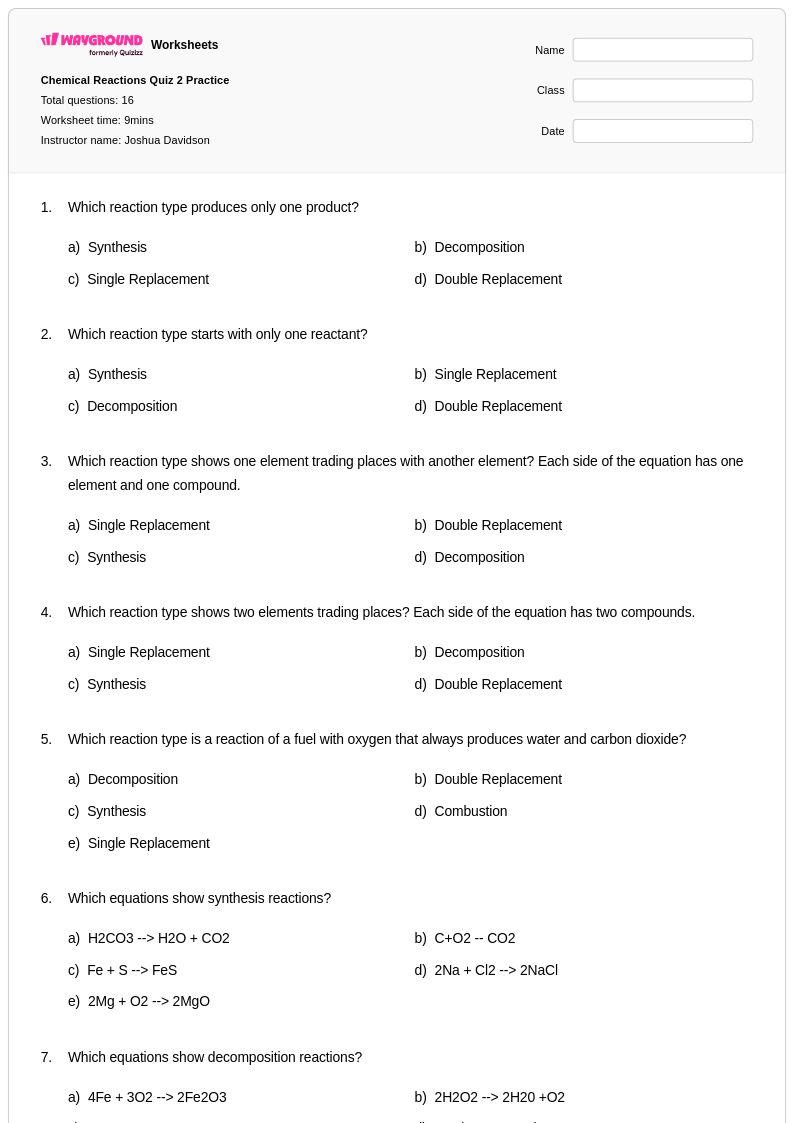
16 Q
6th
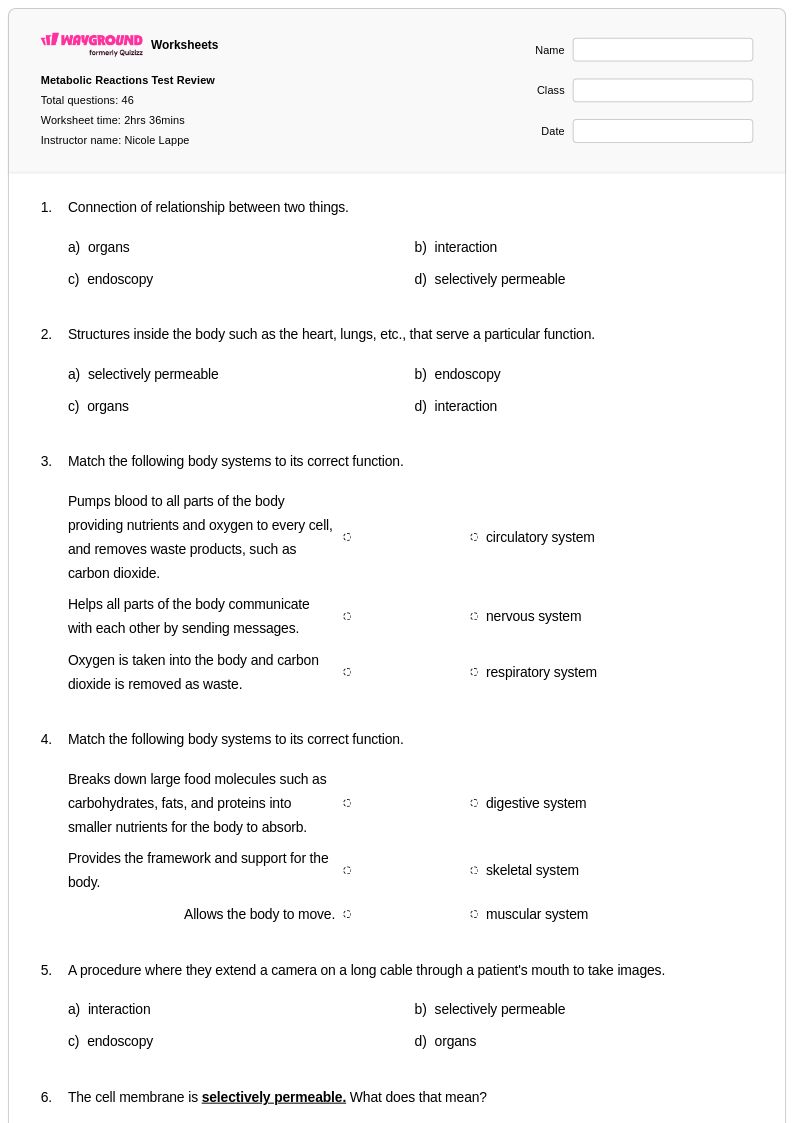
46 Q
6th
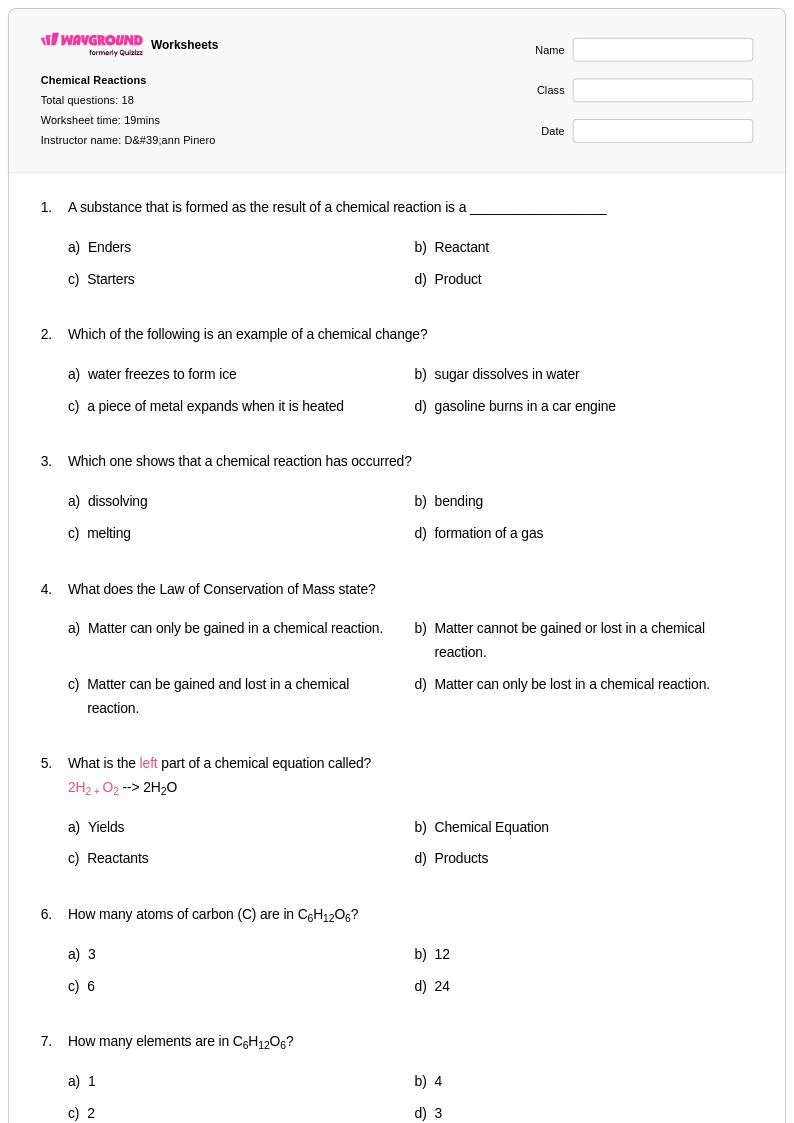
18 Q
6th - 8th
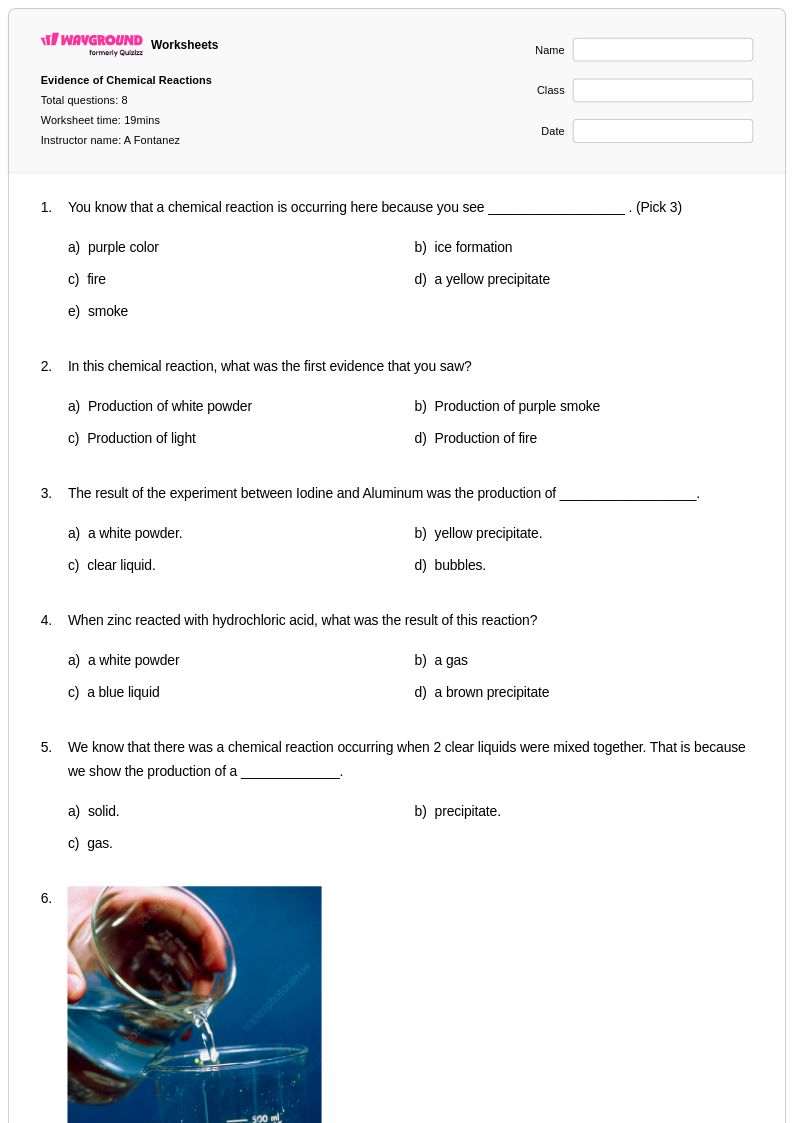
8 Q
6th - 9th
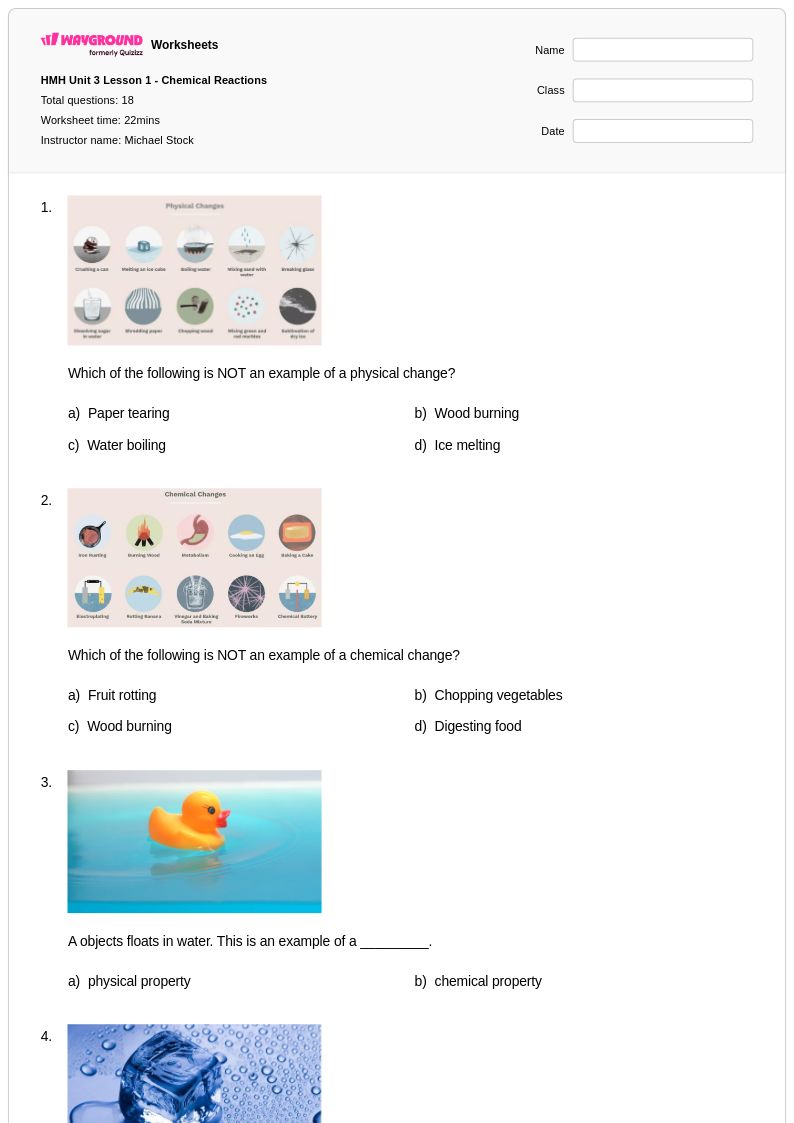
18 Q
6th - 8th
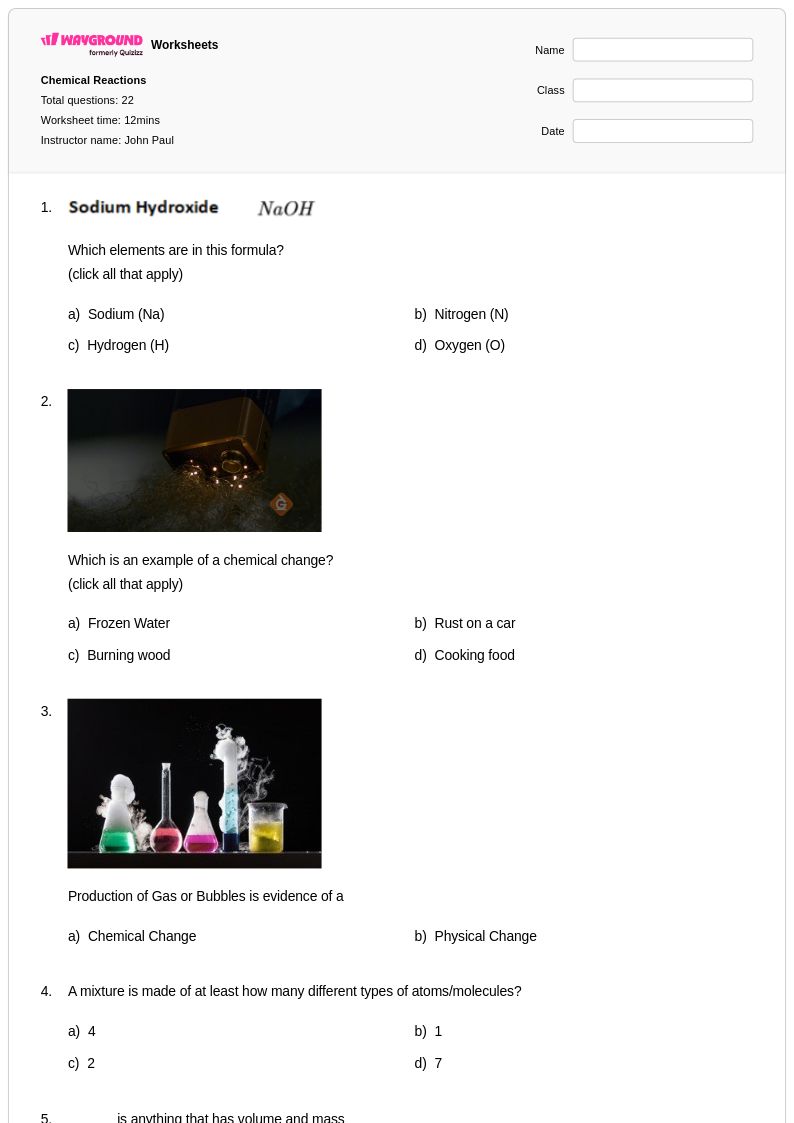
22 Q
6th
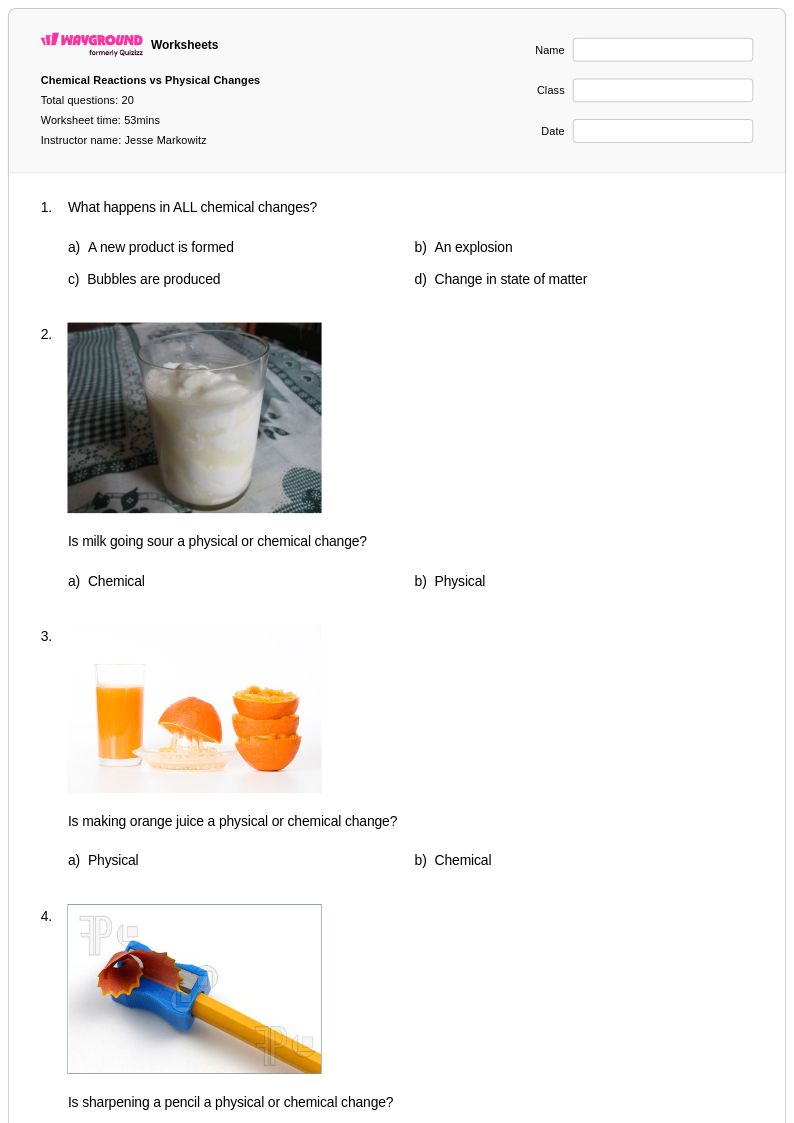
20 Q
5th - 8th
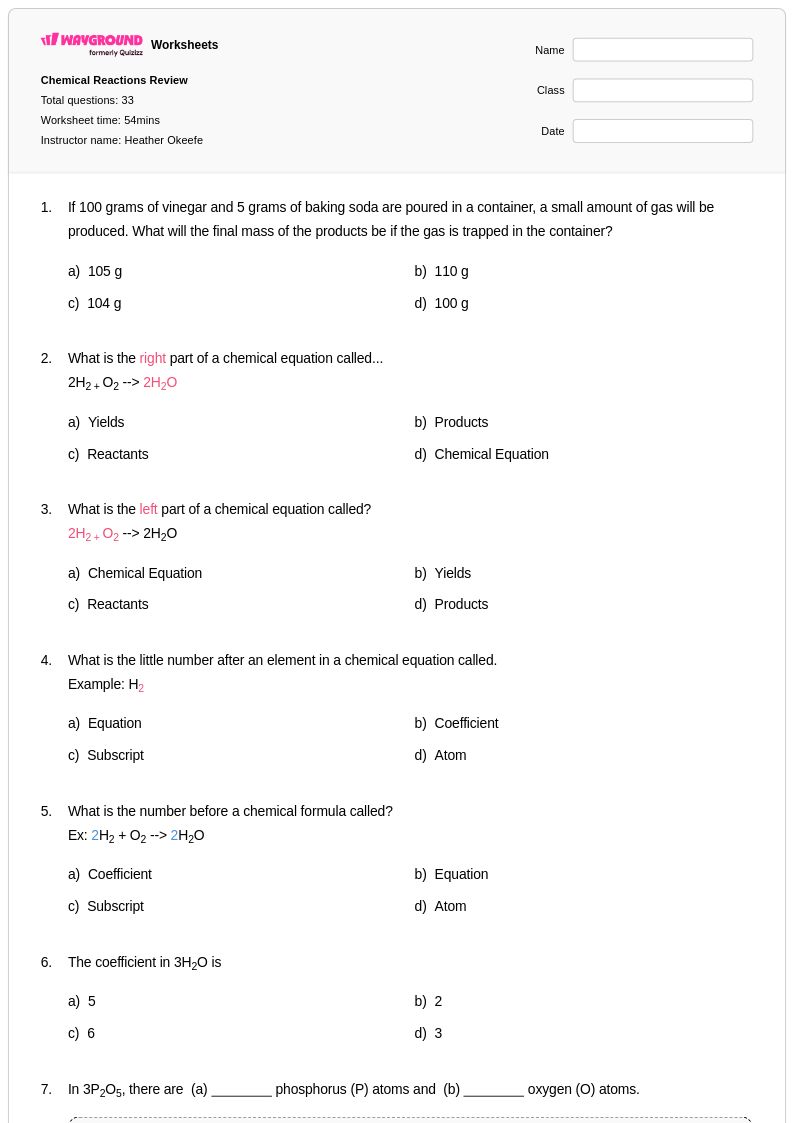
33 Q
6th - 8th
10 Q
6th - 8th
27 Q
6th
20 Q
6th - 8th
25 Q
4th - 6th
Explore Other Subject Worksheets for year 6
Explore printable Identifying Reactions worksheets for Year 6
Identifying reactions worksheets for Year 6 students through Wayground (formerly Quizizz) provide comprehensive practice in recognizing and categorizing different types of chemical changes. These educational resources help sixth-grade students develop critical observation skills by analyzing reaction scenarios, identifying reactants and products, and distinguishing between physical and chemical changes through engaging practice problems. The worksheets strengthen foundational chemistry concepts by presenting age-appropriate examples of common reactions such as combustion, precipitation, and acid-base interactions, with each printable resource including detailed answer keys to support independent learning and self-assessment. Students work through free pdf materials that build their ability to recognize visual and descriptive clues that indicate when chemical reactions have occurred, establishing essential scientific reasoning skills for future chemistry studies.
Wayground (formerly Quizizz) empowers educators with millions of teacher-created identifying reactions worksheets specifically designed for Year 6 chemistry instruction, offering robust search and filtering capabilities that allow teachers to quickly locate resources aligned with state science standards and curriculum requirements. The platform's differentiation tools enable teachers to customize worksheet difficulty levels and modify content to meet diverse learning needs, while flexible formatting options provide both printable pdf versions for traditional classroom use and digital formats for interactive learning environments. These comprehensive worksheet collections support effective lesson planning by offering varied practice opportunities for remediation of struggling students and enrichment activities for advanced learners, ensuring that all sixth-grade students can develop strong foundational skills in recognizing and understanding chemical reactions through targeted skill practice and assessment.