
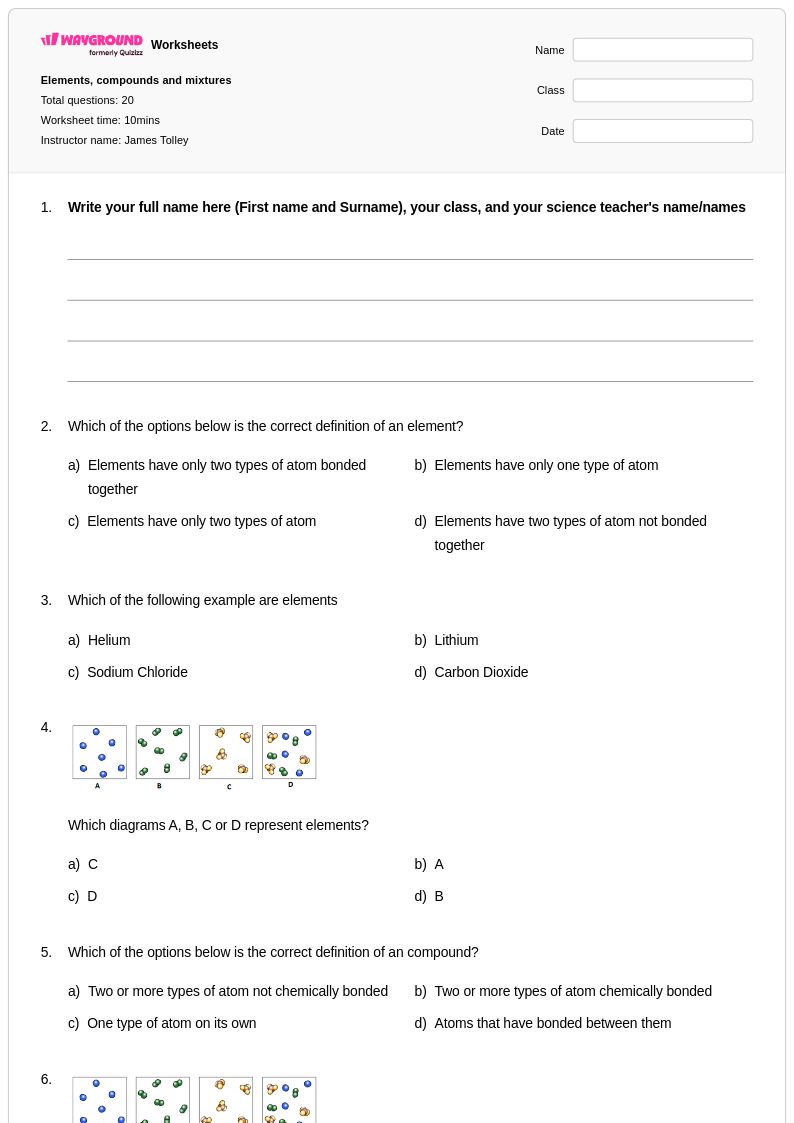
20 Q
7th
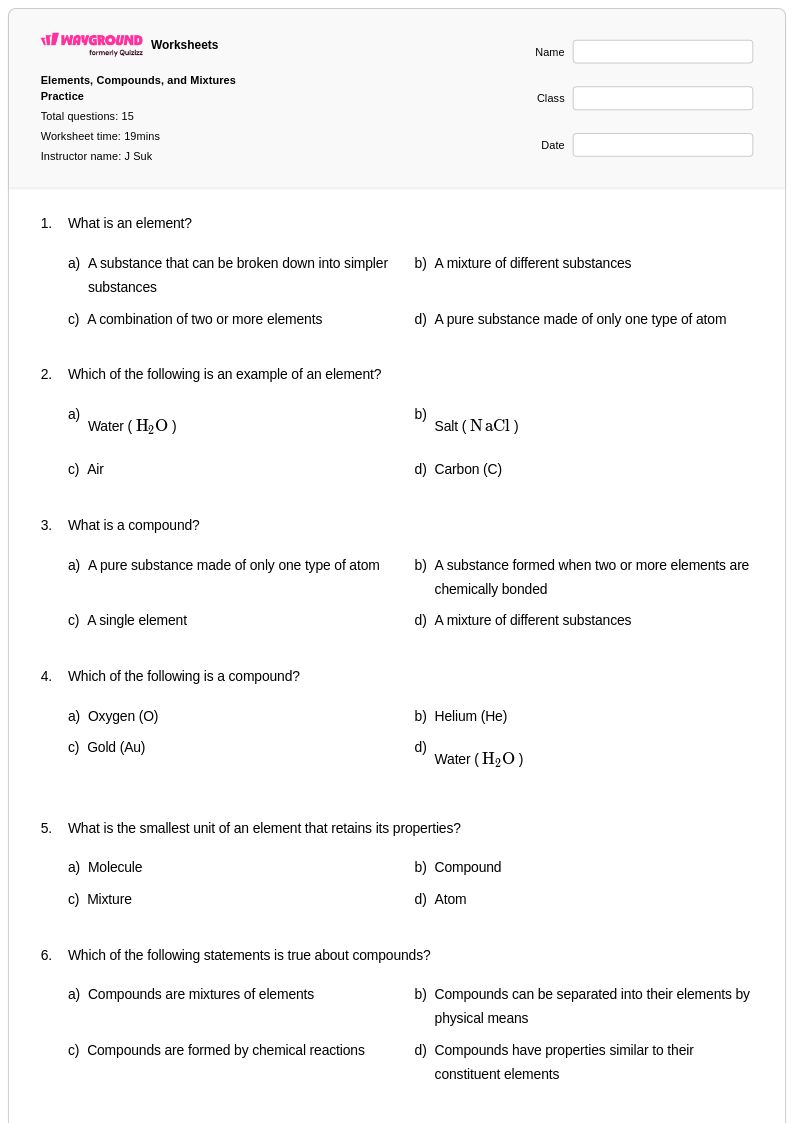
17 Q
6th
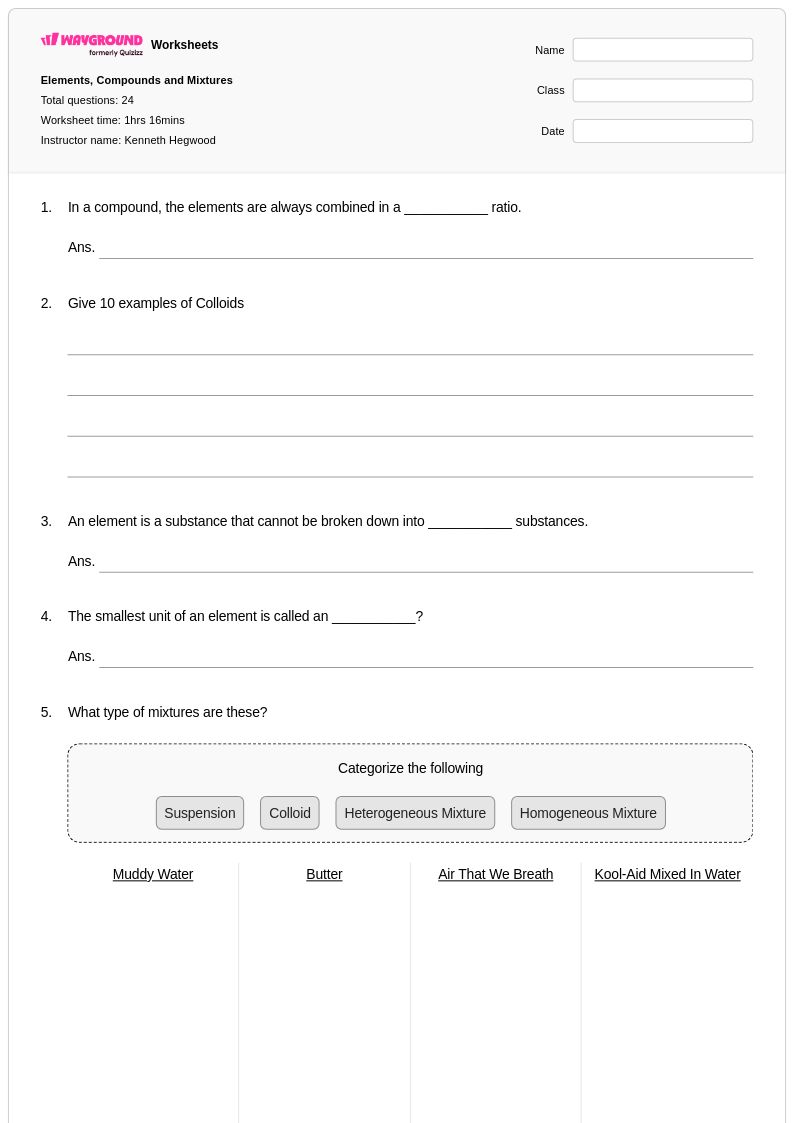
24 Q
9th - 12th
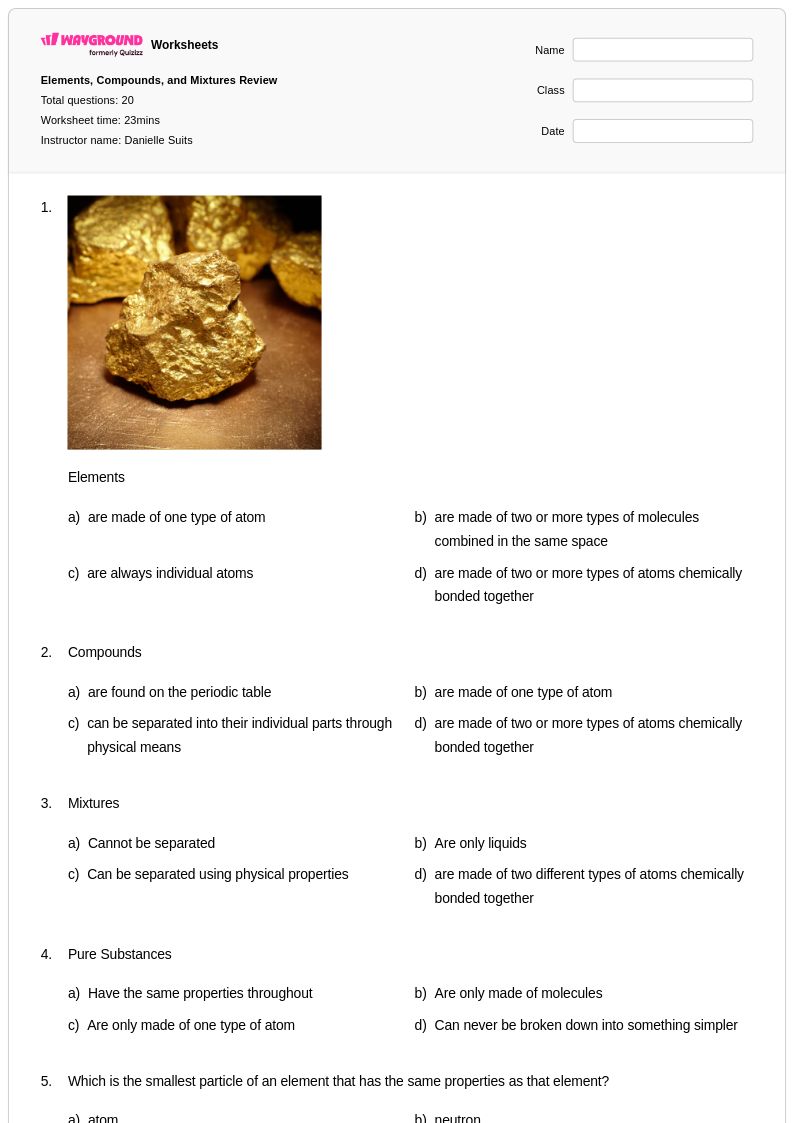
20 Q
7th
8 Q
10th
27 Q
9th - 12th
25 Q
7th - Uni
11 Q
6th
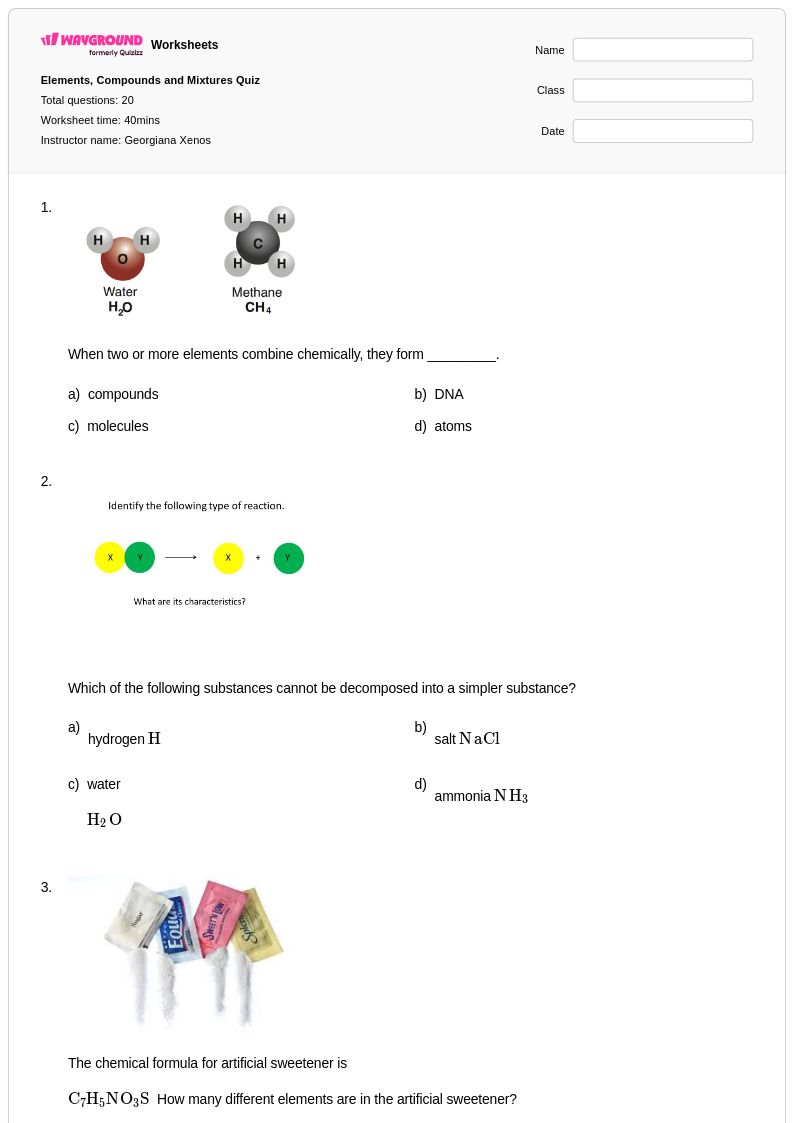
20 Q
6th
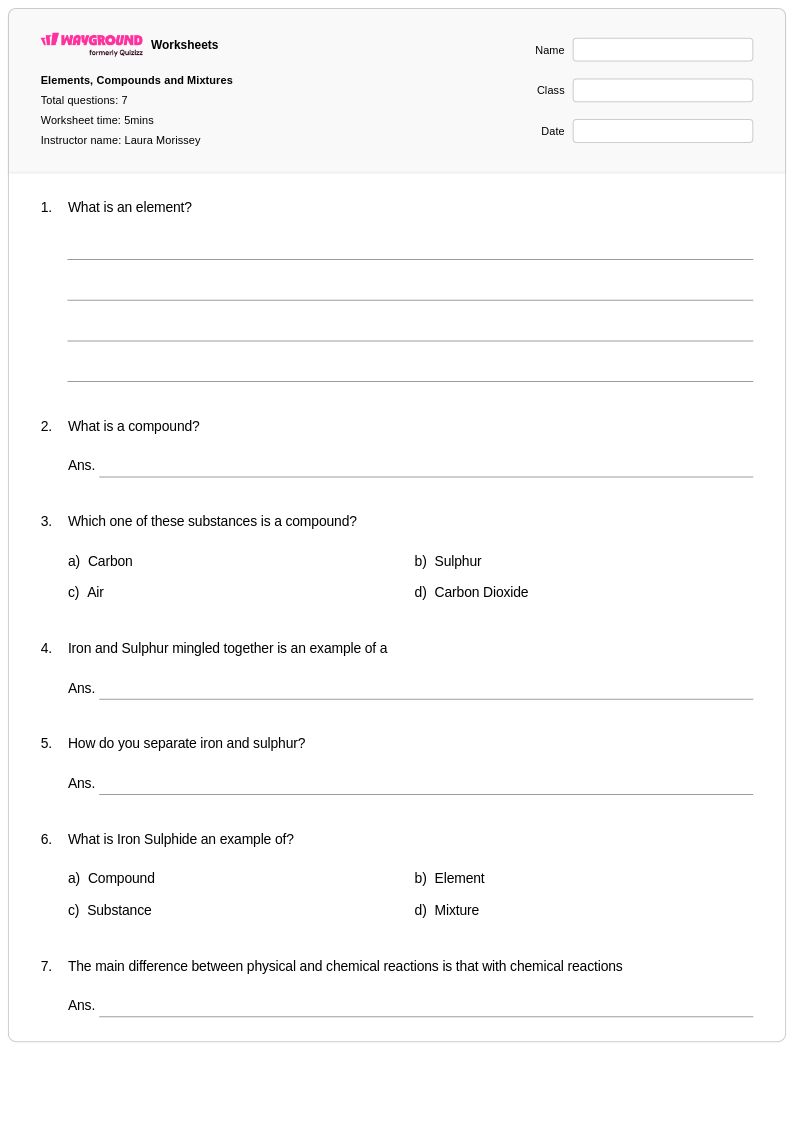
7 Q
KG
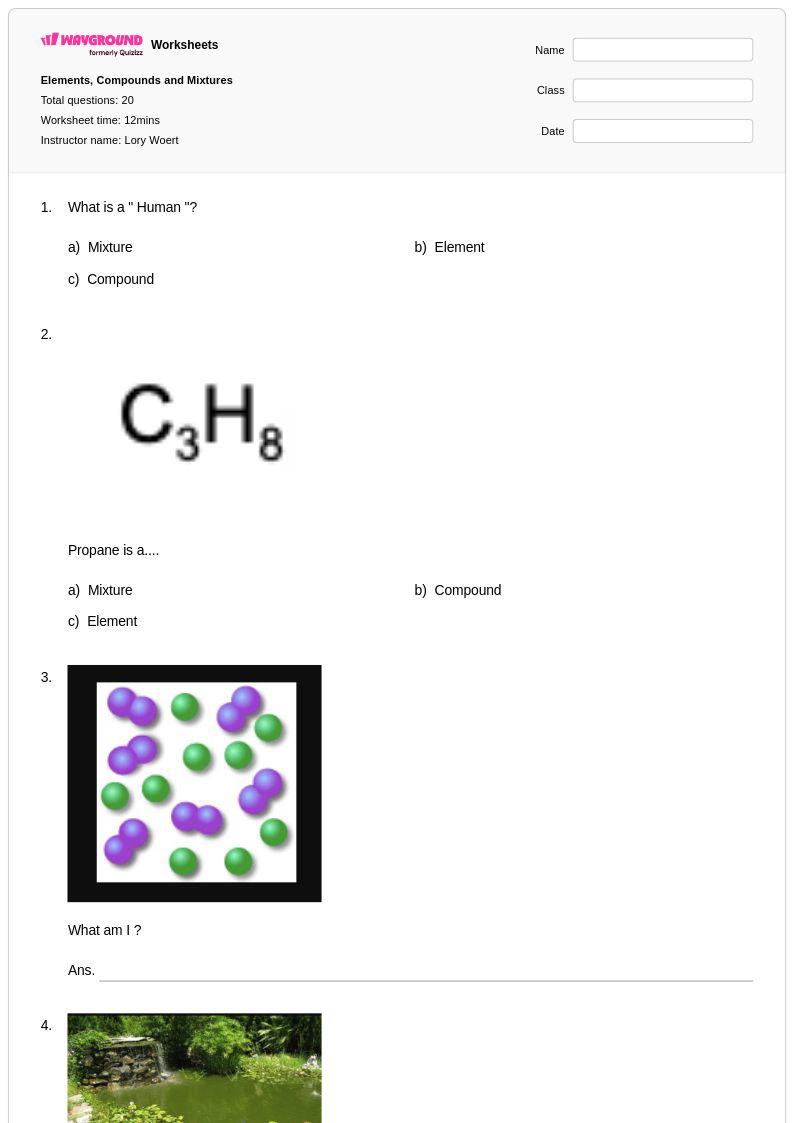
20 Q
6th - 9th
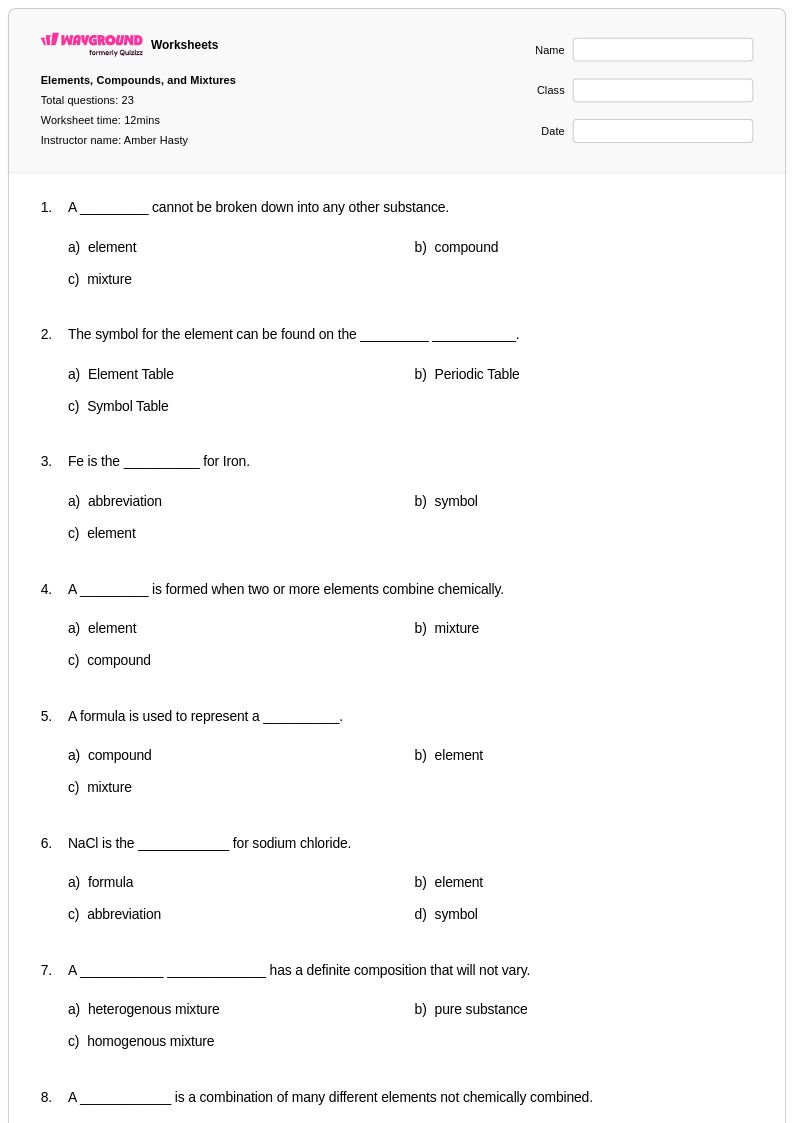
23 Q
8th
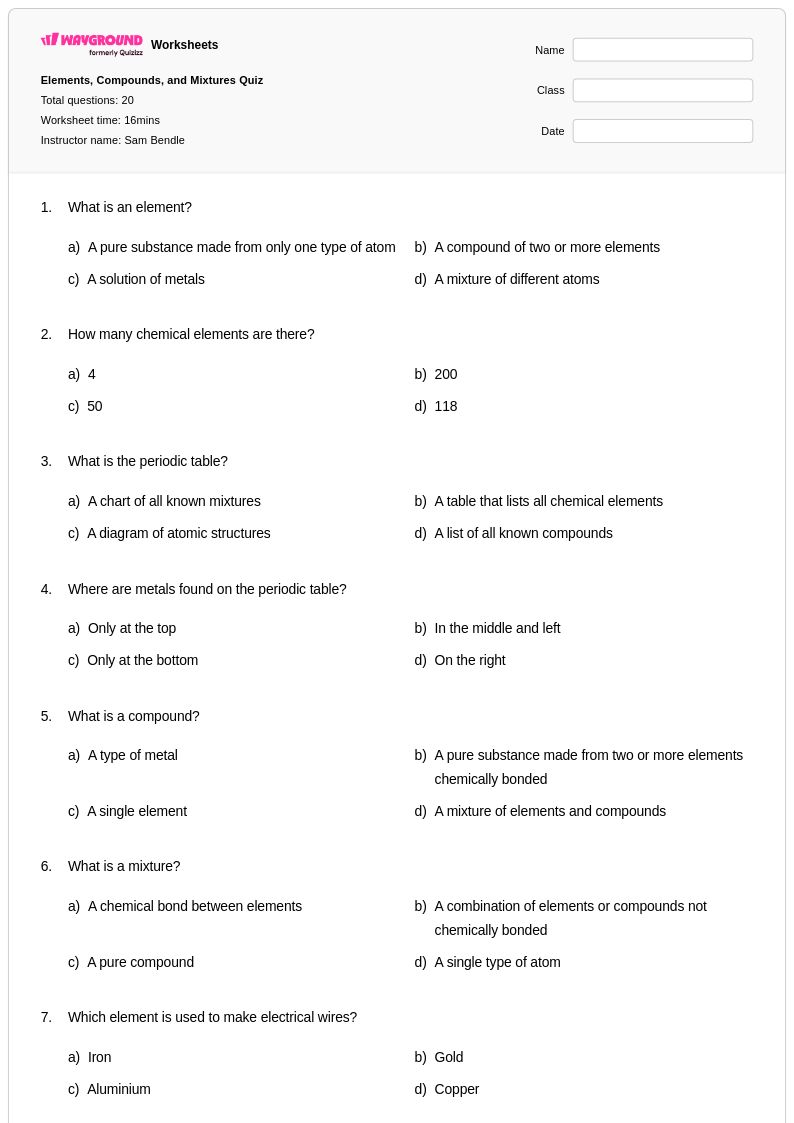
20 Q
7th
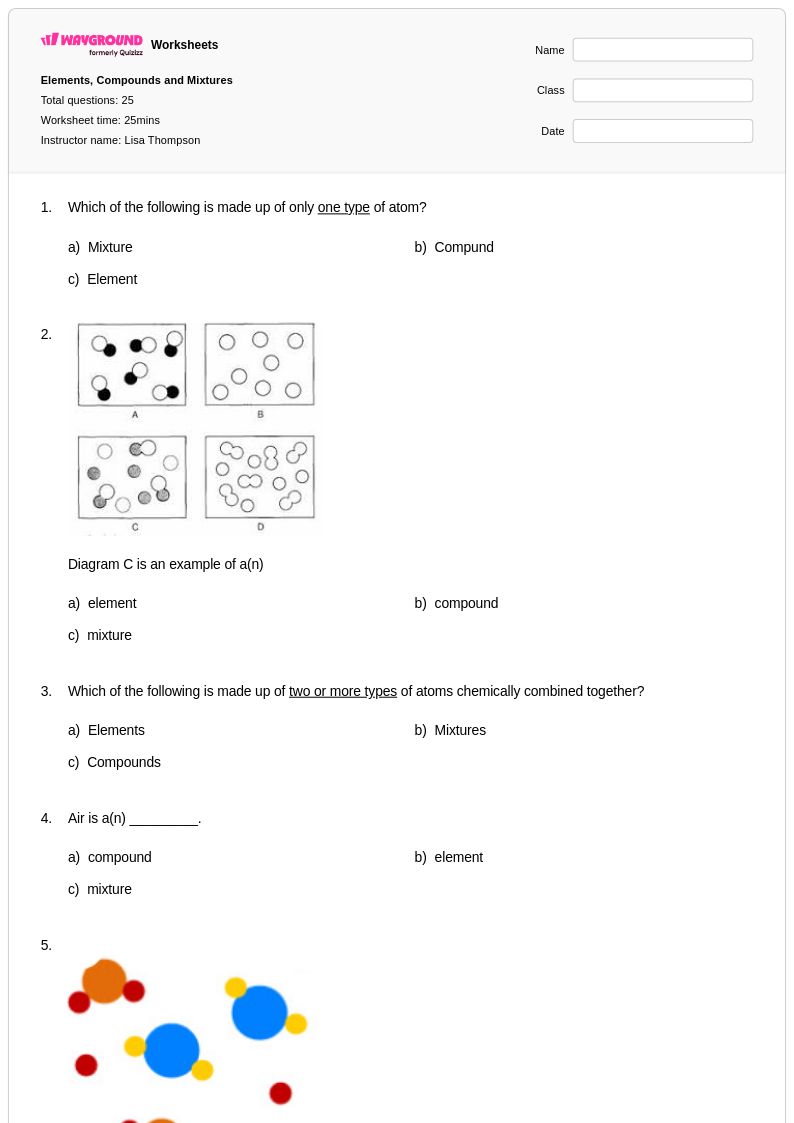
25 Q
8th - Uni
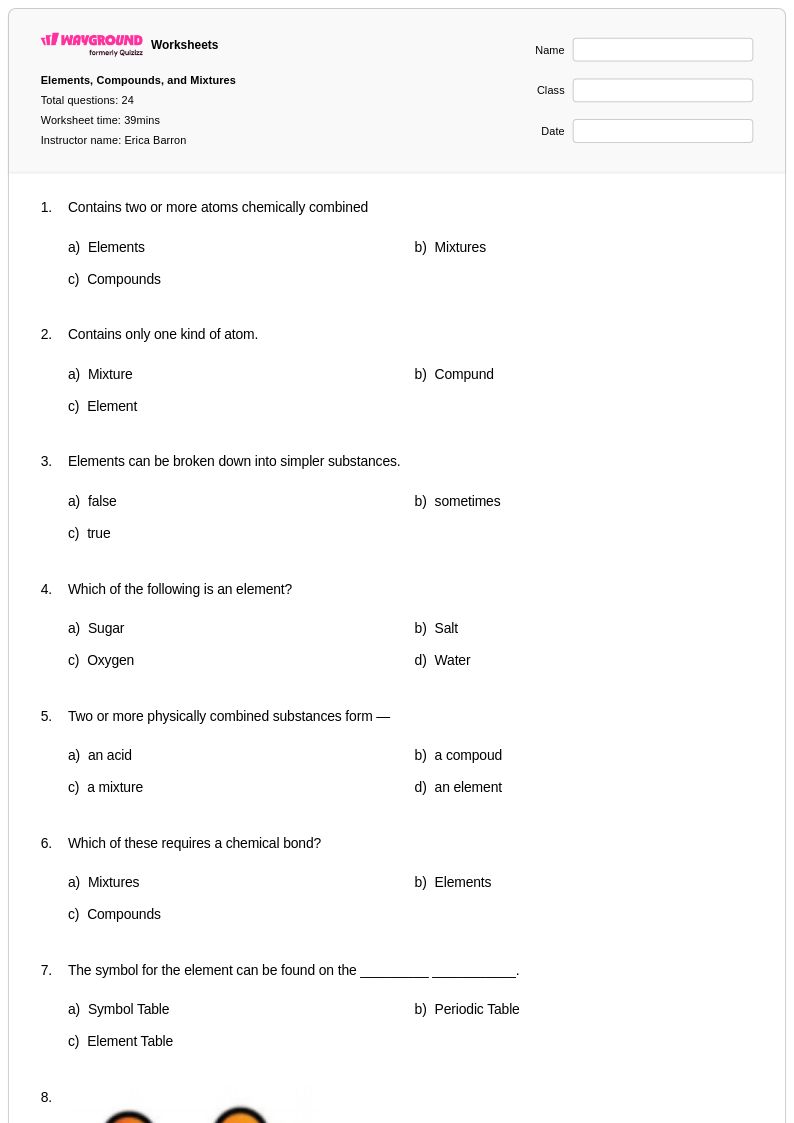
24 Q
6th - 8th
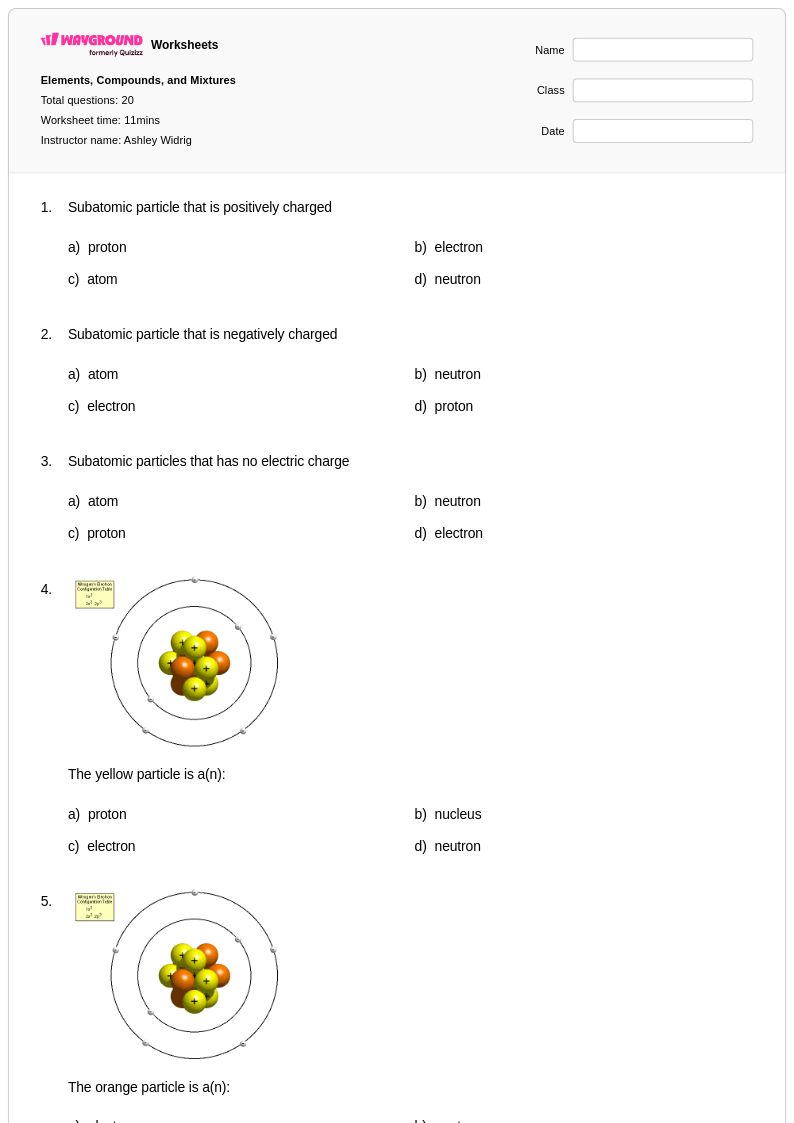
20 Q
6th - 8th
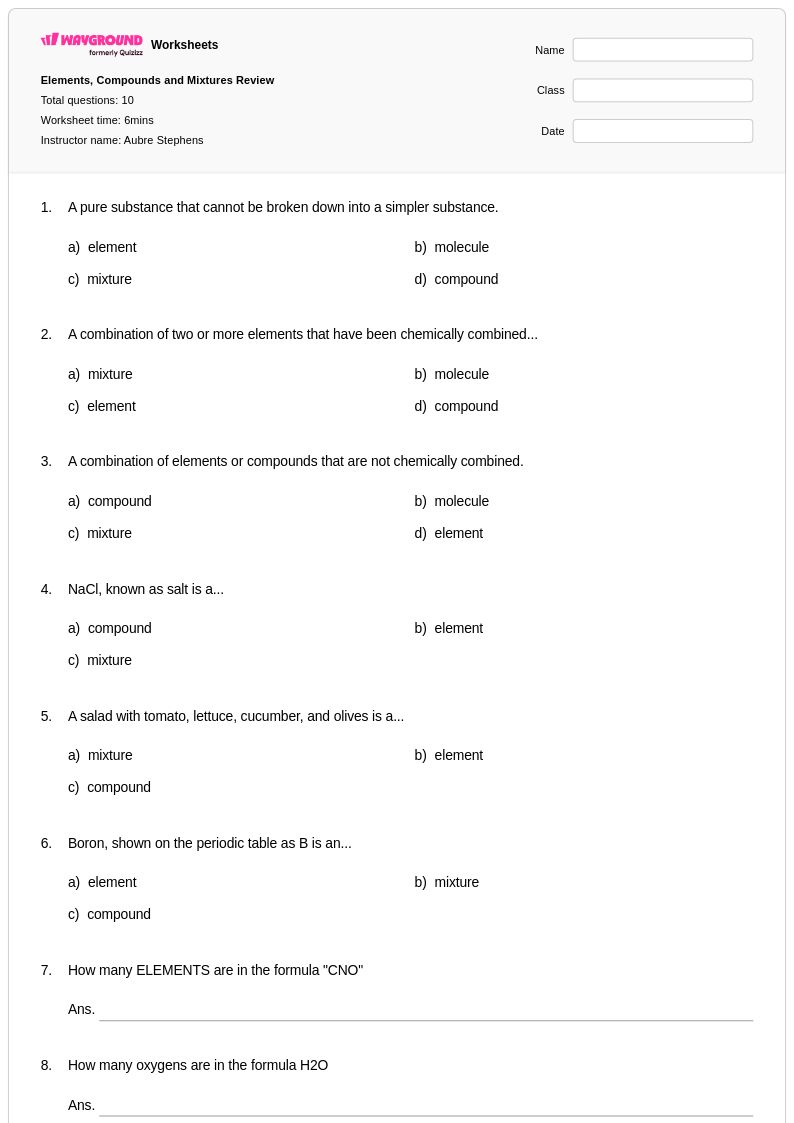
10 Q
6th - 8th
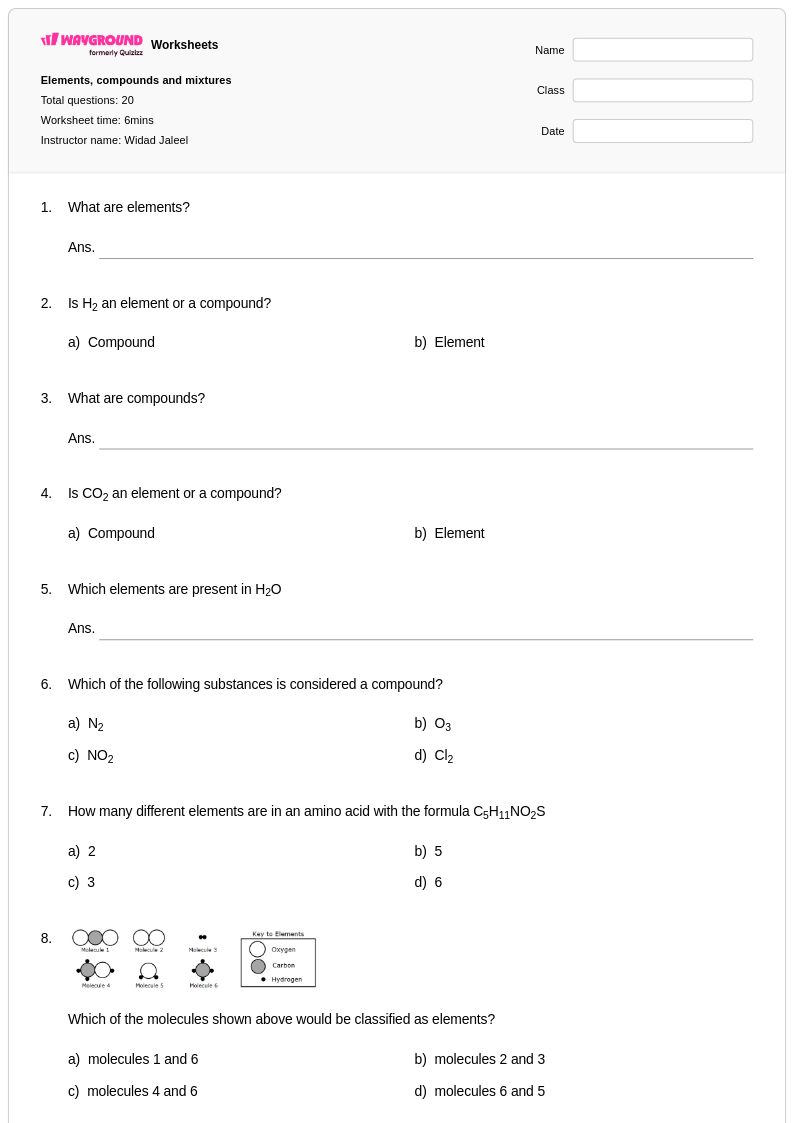
20 Q
7th - 8th
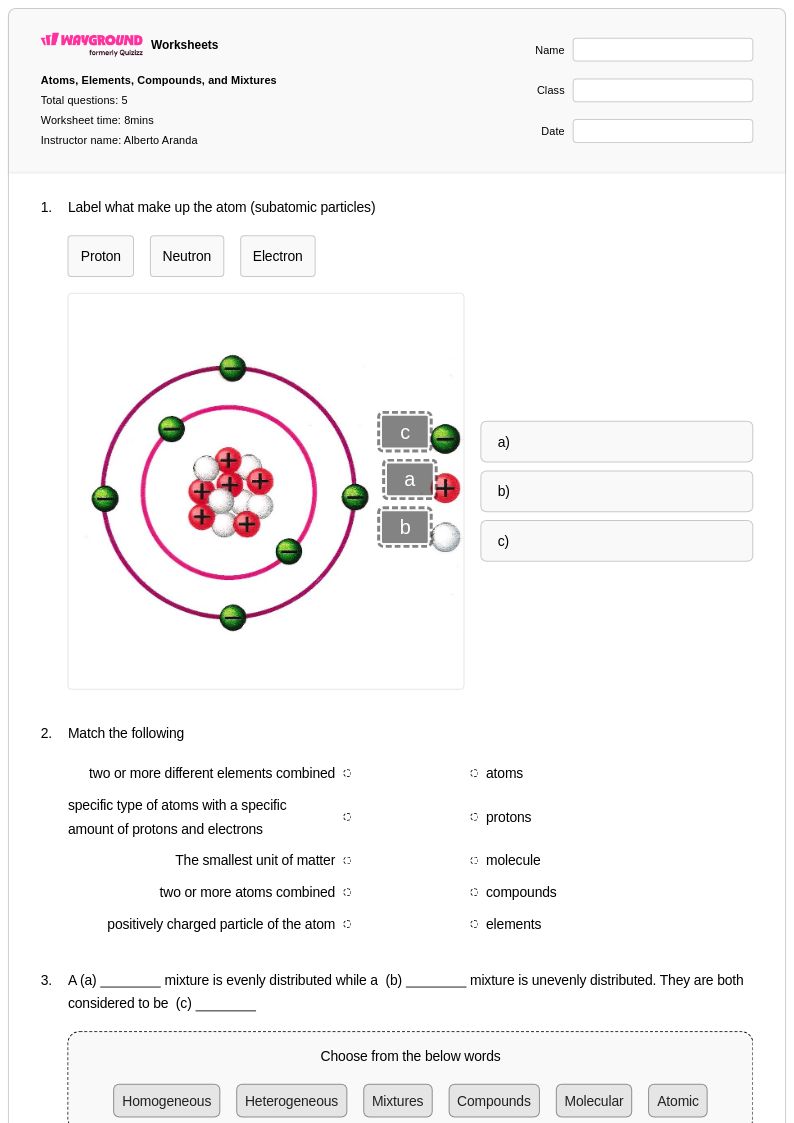
5 Q
KG - Uni
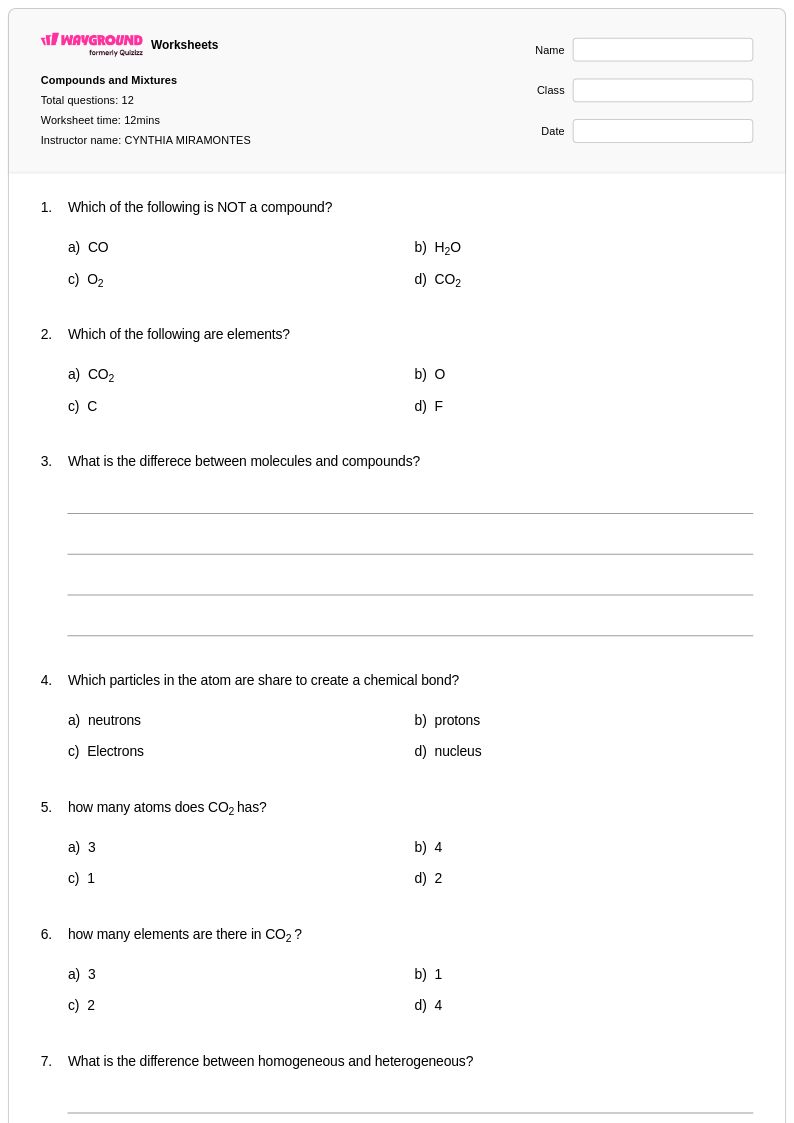
12 Q
8th
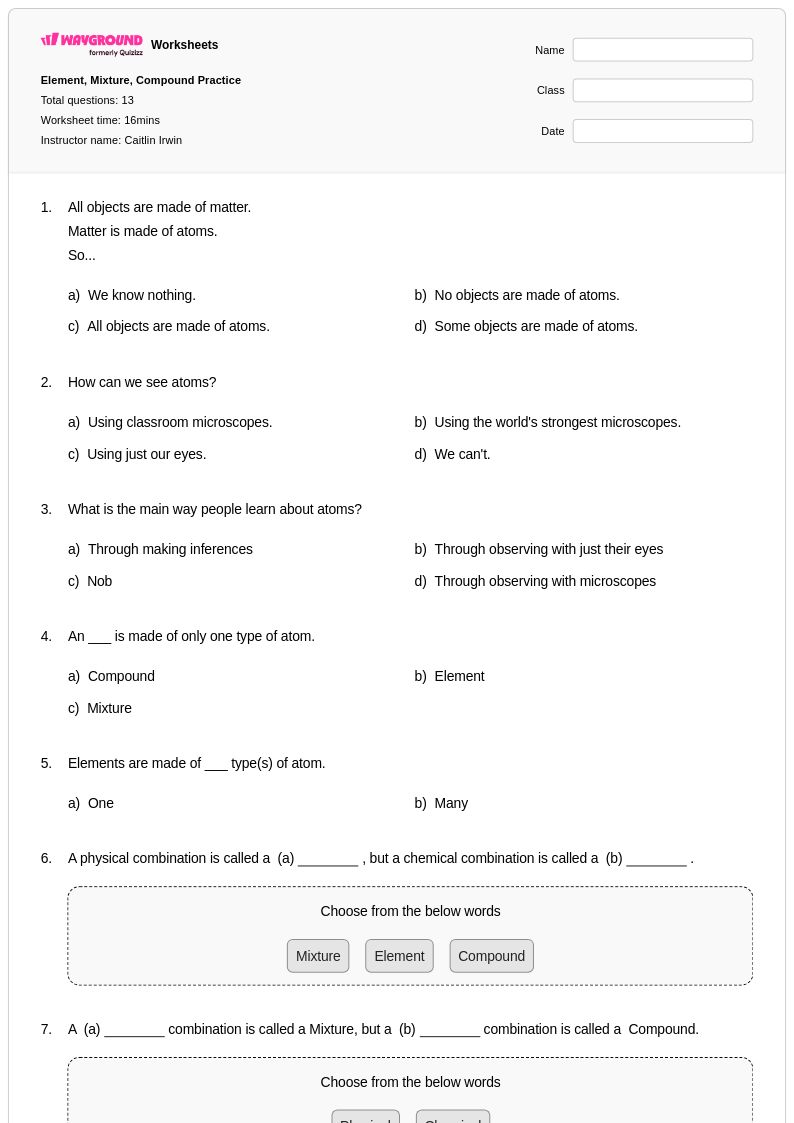
13 Q
6th - 8th
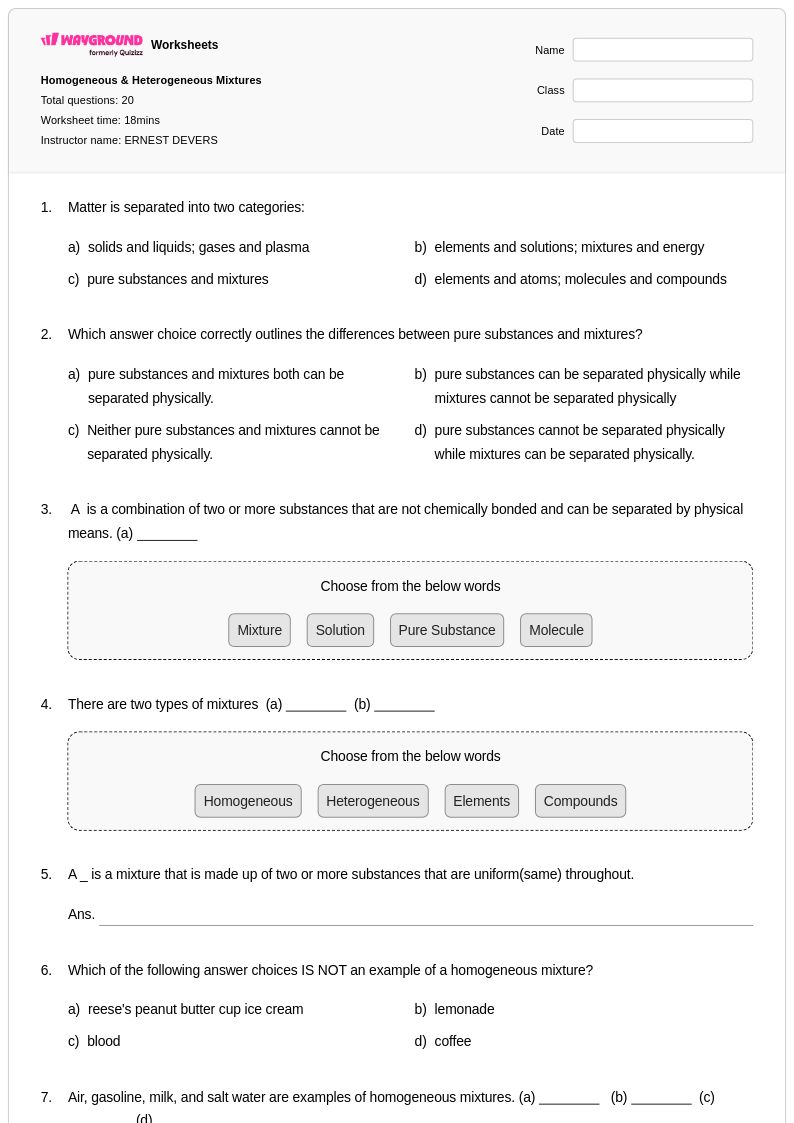
20 Q
6th - 8th
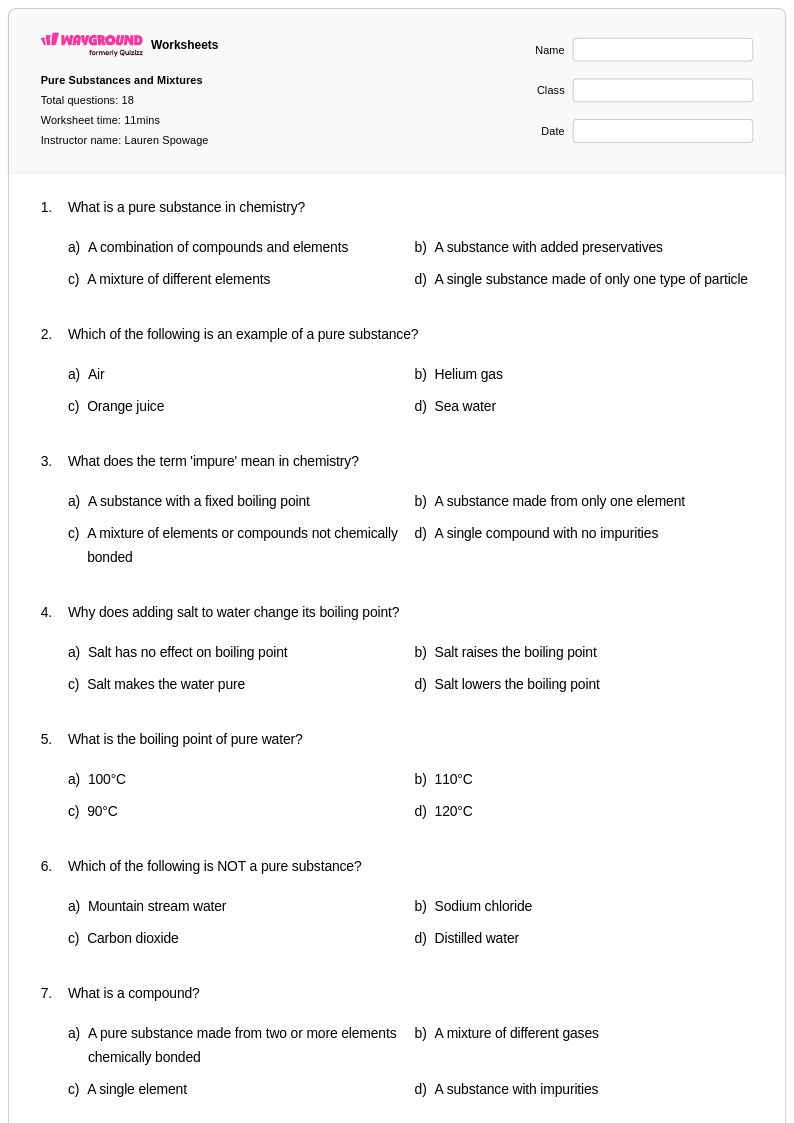
18 Q
6th
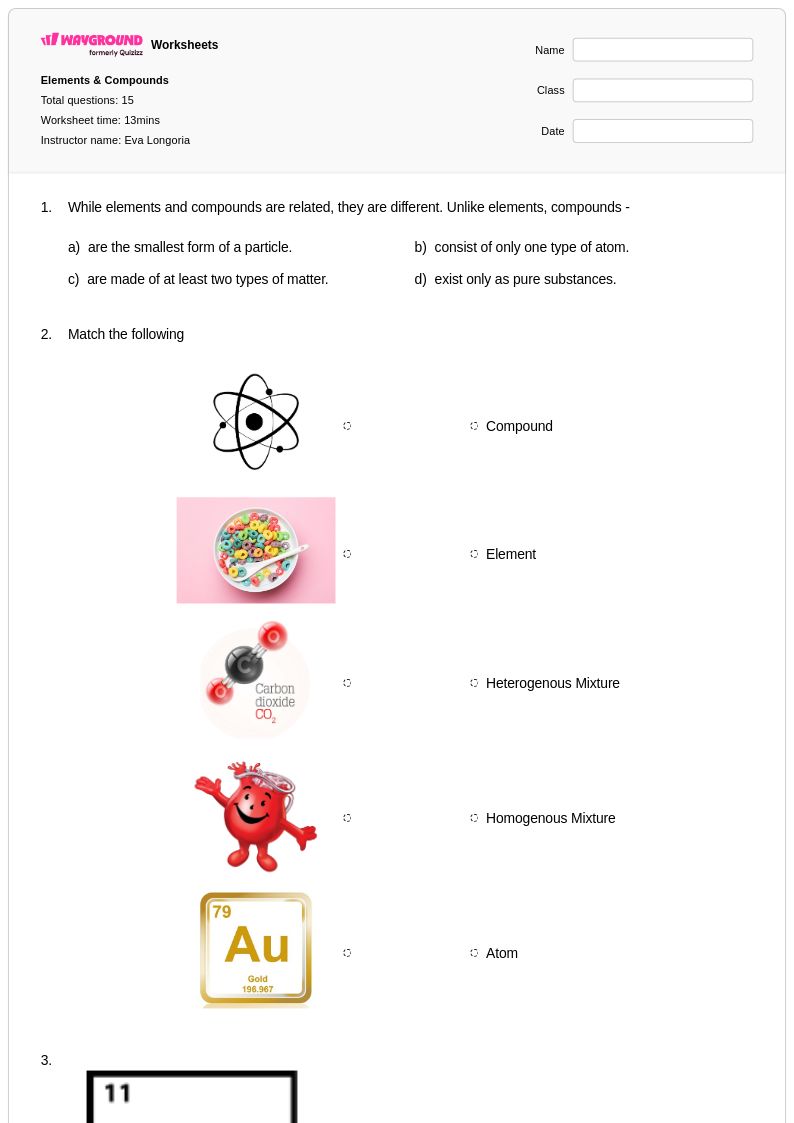
15 Q
6th
Explore Worksheets by Subjects
Explore printable Elements, Compounds, and Mixtures worksheets
Elements, compounds, and mixtures worksheets available through Wayground (formerly Quizizz) provide comprehensive practice materials that help students master fundamental concepts in matter classification and chemical composition. These expertly designed resources strengthen critical thinking skills as students learn to distinguish between pure substances and mixtures, identify characteristic properties of elements and compounds, and analyze particle arrangements at the molecular level. The extensive collection includes practice problems that challenge students to classify everyday materials, interpret chemical formulas, and understand the differences between homogeneous and heterogeneous mixtures. Each worksheet comes with detailed answer keys that support independent learning and self-assessment, while printable PDF formats ensure easy access for both classroom instruction and homework assignments. These free resources cover essential topics from basic element identification to complex mixture separation techniques, providing scaffolded practice that builds conceptual understanding progressively.
Wayground's robust platform supports chemistry educators with millions of teacher-created worksheet resources specifically focused on elements, compounds, and mixtures, all enhanced by powerful search and filtering capabilities that streamline lesson planning. The platform's standards alignment features ensure that worksheets meet curriculum requirements while differentiation tools allow teachers to modify content complexity for diverse learner needs. Teachers can customize existing materials or create new assessments using the flexible editing interface, then distribute resources in both digital and printable PDF formats to accommodate various classroom environments. These comprehensive tools facilitate targeted skill practice, enable efficient remediation for struggling students, and provide enrichment opportunities for advanced learners, making it simple for educators to address individual student needs while maintaining rigorous academic standards in chemistry instruction.
FAQs
How do I teach students the difference between elements, compounds, and mixtures?
What exercises help students practice classifying elements, compounds, and mixtures?
What mistakes do students commonly make when classifying elements, compounds, and mixtures?
How do I help struggling students understand particle arrangements in elements, compounds, and mixtures?
How can I use elements, compounds, and mixtures worksheets in my classroom?
How do I assess student understanding of elements, compounds, and mixtures?