Enhance student understanding of ionic bonds with Wayground's comprehensive collection of free chemistry worksheets, featuring engaging practice problems, detailed answer keys, and printable PDF resources for effective classroom learning.
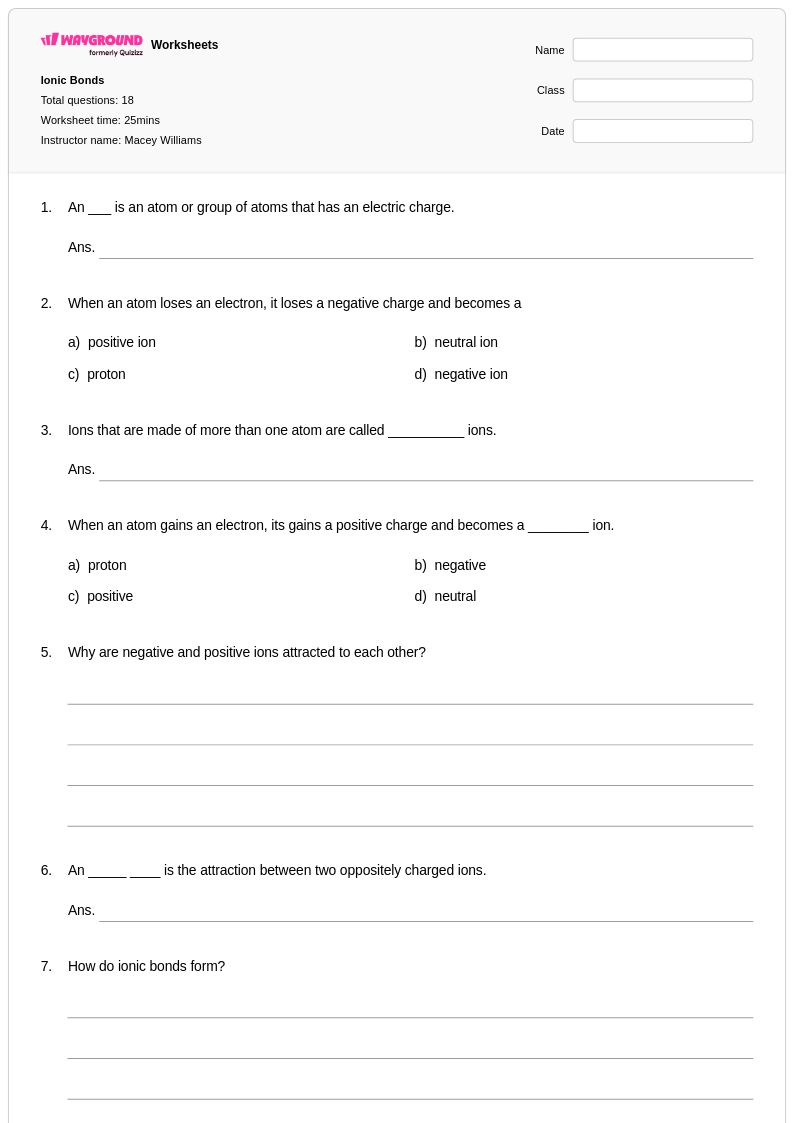
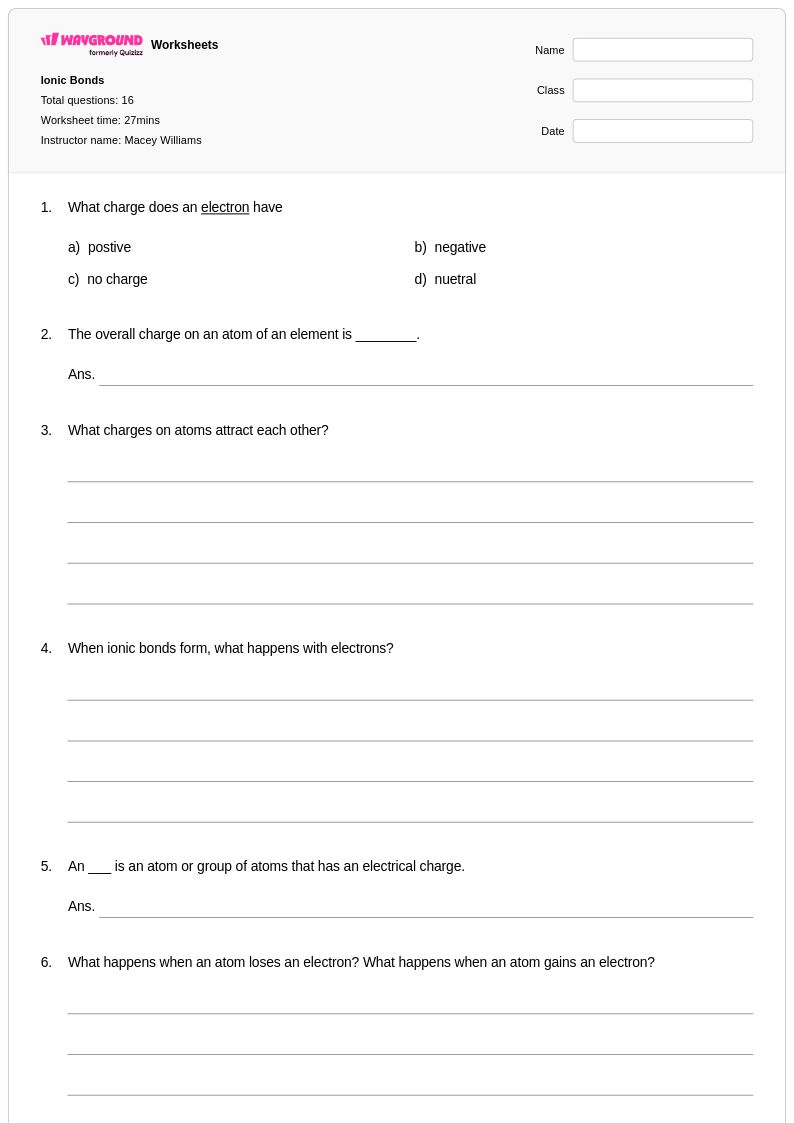
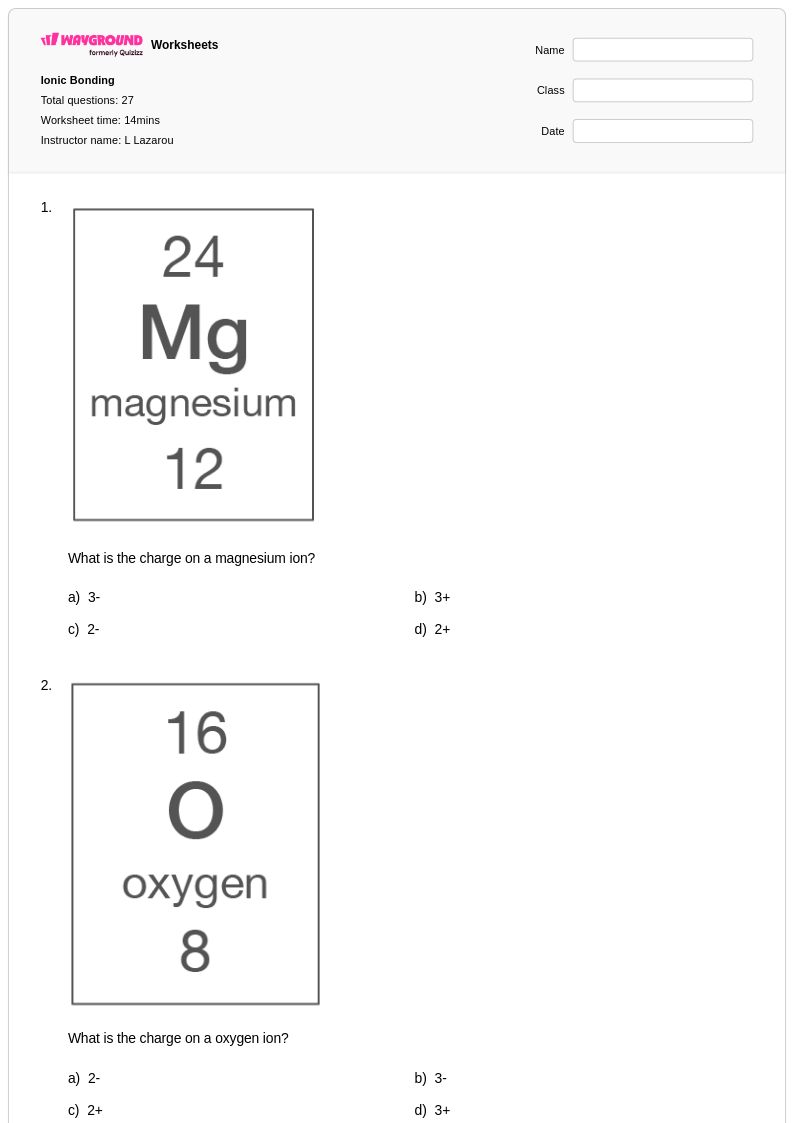
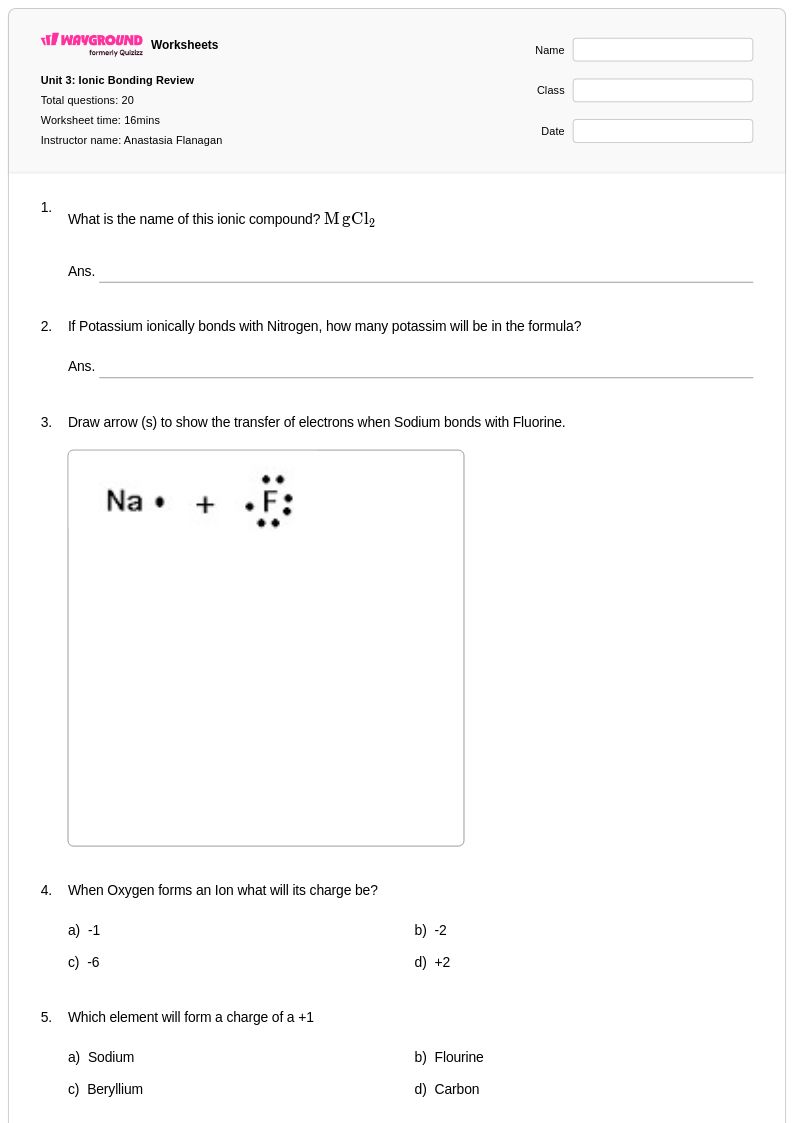
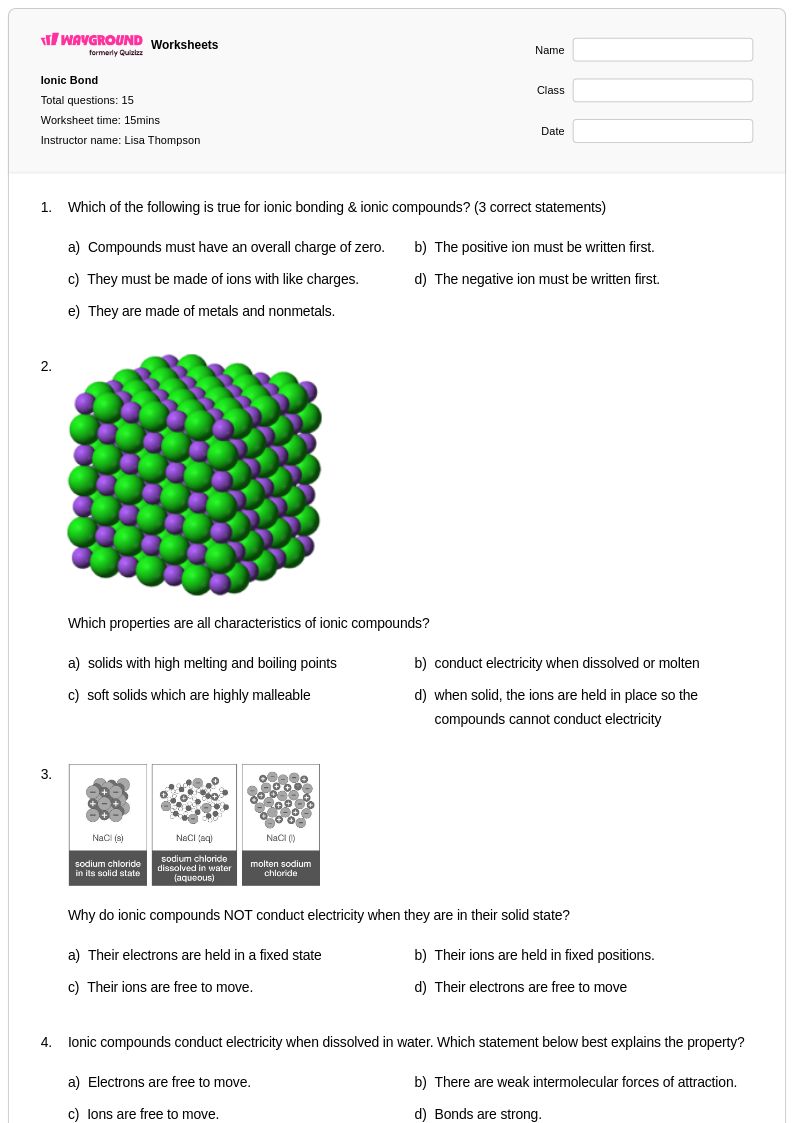
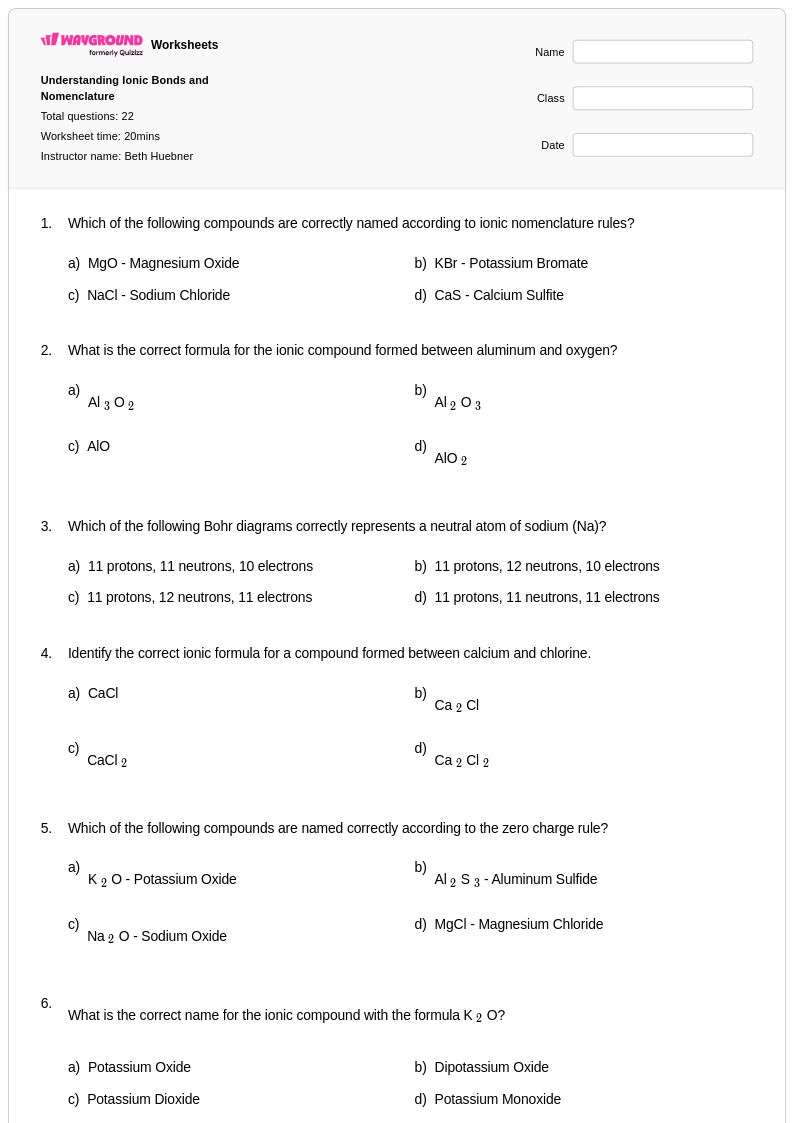
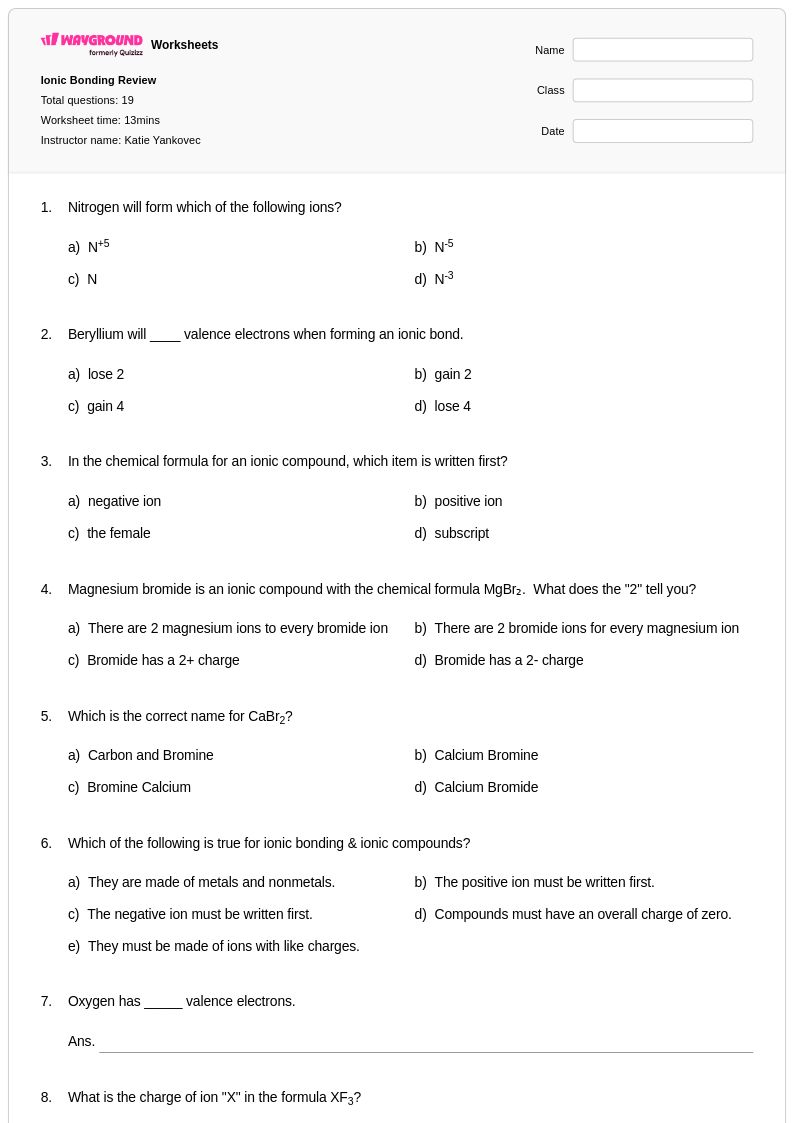
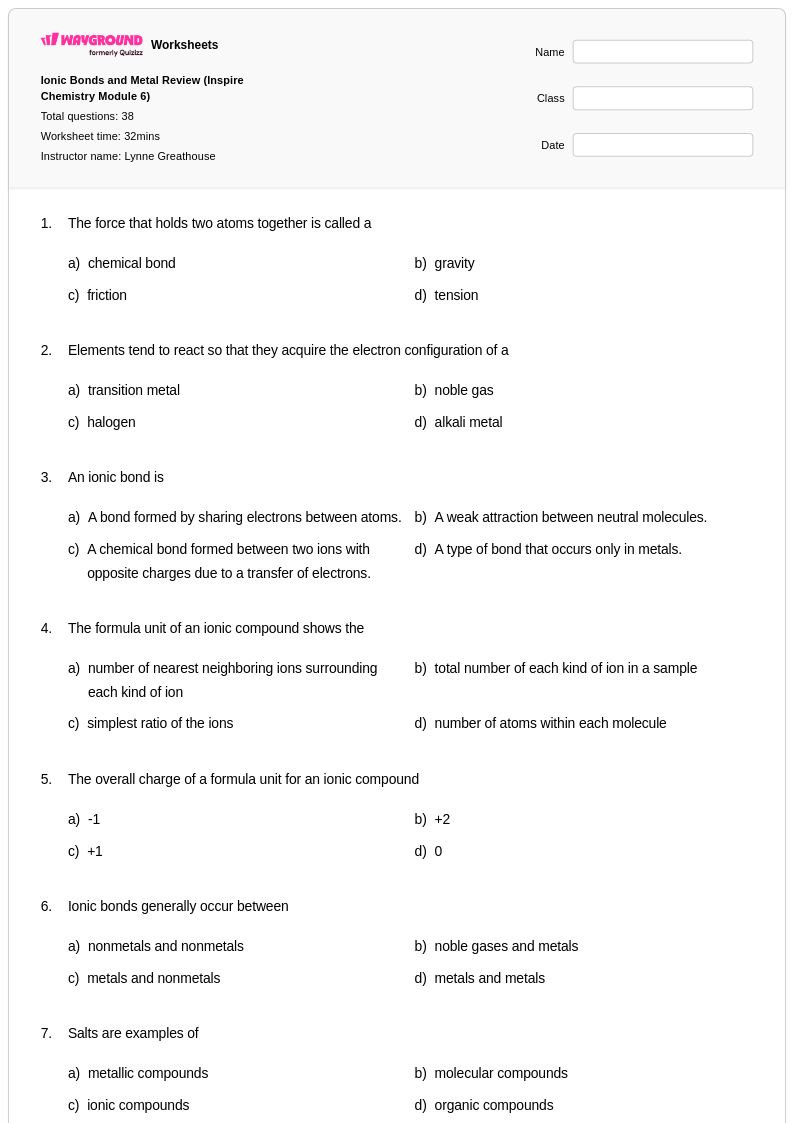
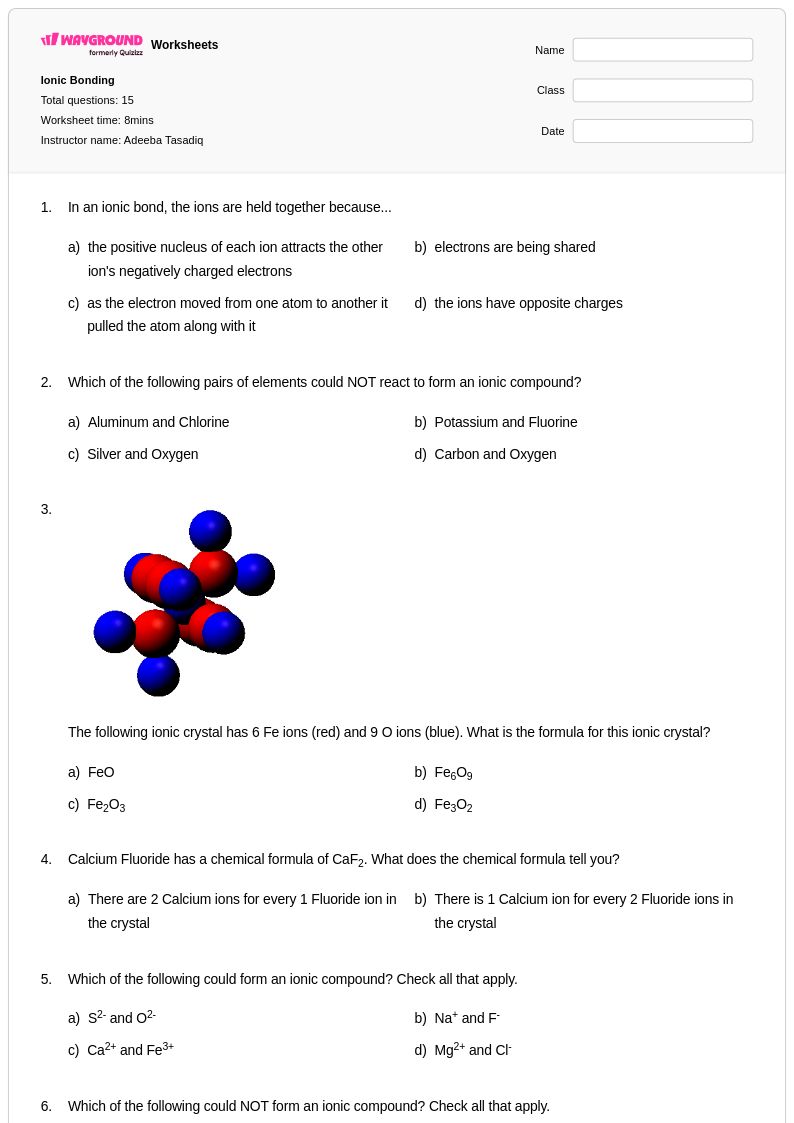
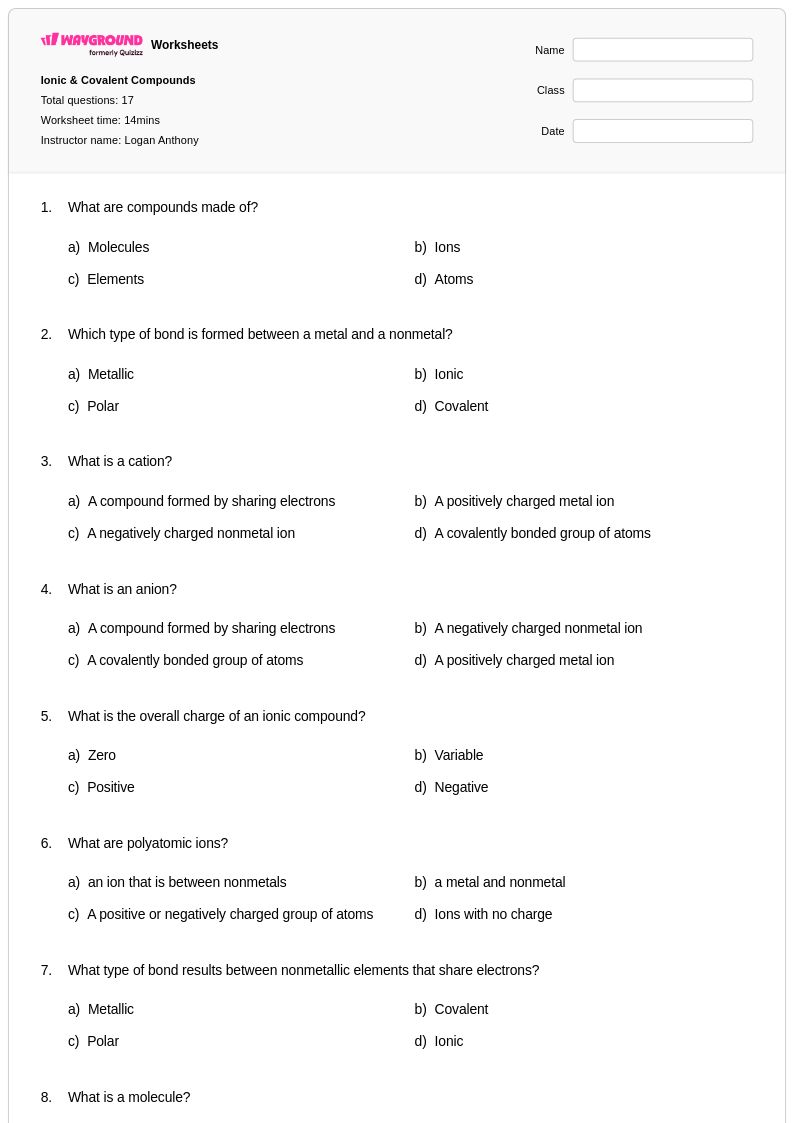
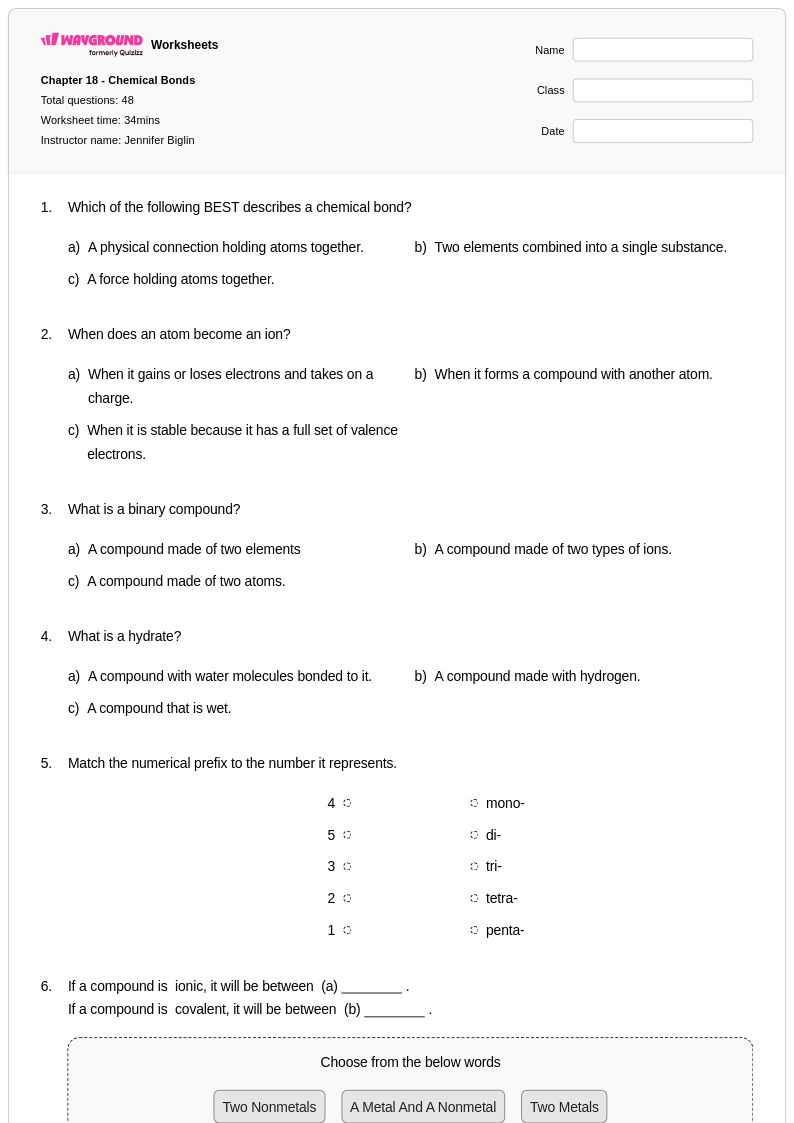
Ionic bonds represent a fundamental concept in chemistry that describes how atoms transfer electrons to form stable compounds, and Wayground's comprehensive worksheet collection provides educators with expertly crafted resources to help students master this essential topic. These worksheets guide learners through the systematic study of how metals lose electrons to become cations while nonmetals gain electrons to become anions, creating the electrostatic attractions that hold ionic compounds together. Each worksheet includes detailed practice problems that reinforce key concepts such as electron configuration, lattice energy, and the formation of crystal structures, while comprehensive answer keys enable both independent study and classroom assessment. Available as free printables in convenient PDF format, these resources strengthen students' analytical skills as they learn to predict ionic compound formation, write chemical formulas, and understand the relationship between ionic bonding and material properties.
Wayground, formerly Quizizz, empowers chemistry educators with access to millions of teacher-created ionic bonding worksheets that have been carefully curated and organized through powerful search and filtering capabilities. The platform's extensive collection aligns with educational standards and provides differentiation tools that allow teachers to customize content for diverse learning needs, whether supporting struggling students through remediation exercises or challenging advanced learners with enrichment activities. Teachers can seamlessly integrate these resources into their lesson planning by selecting from both printable PDF formats for traditional classroom use and digital formats for interactive learning environments. This flexibility, combined with the platform's robust customization features, enables educators to create targeted skill practice sessions that address specific learning objectives while providing the scaffolded support students need to develop deep conceptual understanding of ionic bonding principles and their real-world applications in compound formation and material science.
FAQs
How do I teach ionic bonds to high school chemistry students?
Start by grounding students in atomic structure and valence electrons before introducing electron transfer. Use the octet rule as the driving logic behind why metals lose electrons to form cations and nonmetals gain electrons to form anions. Visual models of electron dot diagrams and crystal lattice structures help students see ionic bonding as a physical phenomenon, not just an abstract concept. Connecting ionic bond strength to real-world material properties, like the hardness and high melting points of table salt, reinforces why this concept matters beyond the formula page.
What exercises help students practice writing ionic compound formulas?
The most effective practice combines charge identification, ion pairing, and formula balancing in a structured sequence. Students should first practice determining the charges of common cations and anions, then use the criss-cross method to balance charges when writing formulas. Worksheets that progress from binary ionic compounds to polyatomic ions give students scaffolded repetition across increasing complexity. Including naming exercises alongside formula writing reinforces bidirectional fluency with ionic nomenclature.
What mistakes do students commonly make with ionic bonds?
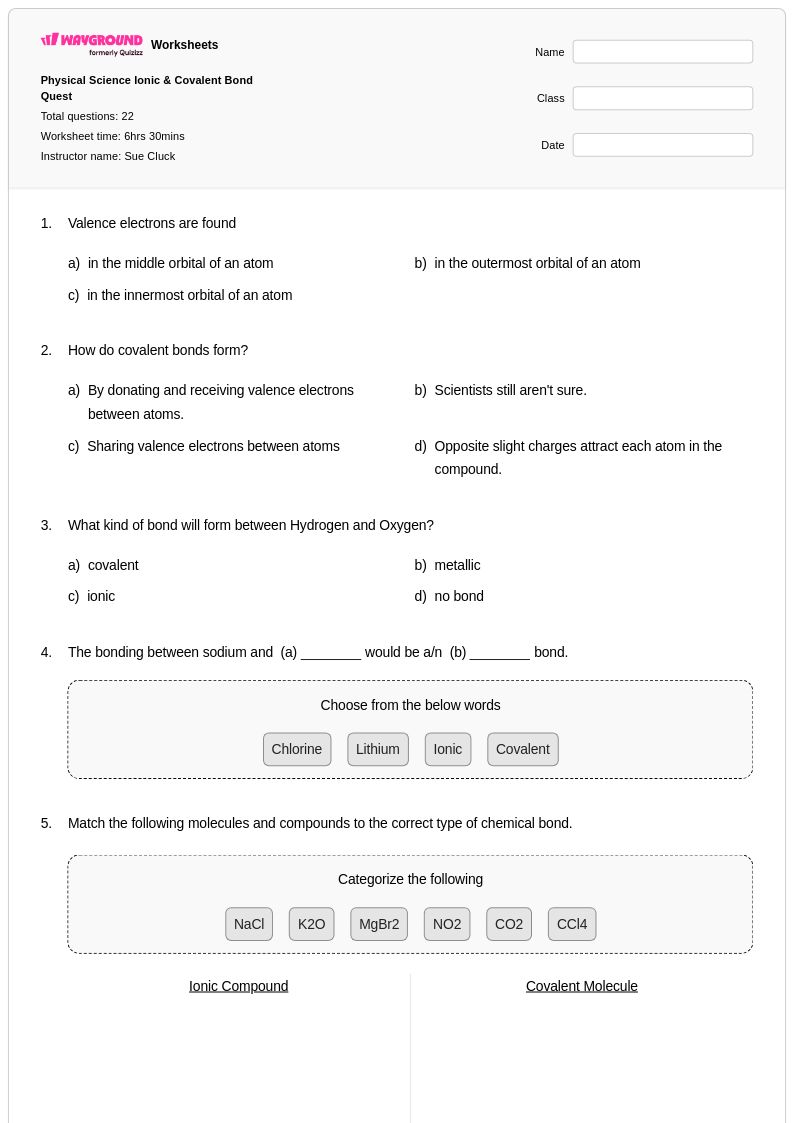
One of the most frequent errors is confusing ionic bonding with covalent bonding, particularly when students see two nonmetals and still attempt to apply electron transfer logic. Students also commonly forget to balance charges when writing ionic formulas, especially with transition metals that have variable oxidation states. Another persistent misconception is treating ionic compounds as containing discrete molecules rather than extended lattice structures. Targeted practice problems that explicitly contrast ionic and covalent examples help address these patterns directly.
How can I use ionic bond worksheets to assess student understanding?
Ionic bond worksheets work well as formative checkpoints after introducing electron transfer, formula writing, or lattice energy concepts. Problems that ask students to predict whether a compound is ionic based on its constituent elements reveal whether they have internalized the metal-nonmetal distinction. Including short-answer or explanation prompts alongside formula problems helps teachers assess conceptual understanding rather than just procedural accuracy. Answer keys allow students to self-assess, which is especially useful for identifying gaps before a summative assessment.
How do I use Wayground's ionic bond worksheets in my classroom?
Wayground's ionic bond worksheets are available as printable PDFs for traditional classroom use and in digital formats for technology-integrated learning environments, giving teachers flexibility depending on their setup. You can assign them as independent practice, homework, or structured review sessions. Wayground also allows teachers to host worksheets as a quiz directly on the platform, enabling real-time visibility into student responses. Digital versions support accommodations such as read aloud, extended time, and reduced answer choices, which can be configured individually for students who need additional support.
How do I differentiate ionic bond instruction for students at different levels?
For students who are struggling, focus first on identifying metals versus nonmetals and predicting charge using group number before introducing formula writing. For advanced learners, extend the content to lattice energy calculations, trends in ionic compound stability, and comparisons between ionic and covalent bond strength. On Wayground, teachers can apply accommodations such as reduced answer choices or read aloud to individual students without affecting the rest of the class, making it straightforward to support diverse learners within the same assignment.