Explore Wayground's comprehensive collection of decay worksheets featuring free printables and practice problems with answer keys to help students master radioactive decay processes, half-life calculations, and nuclear chemistry concepts.
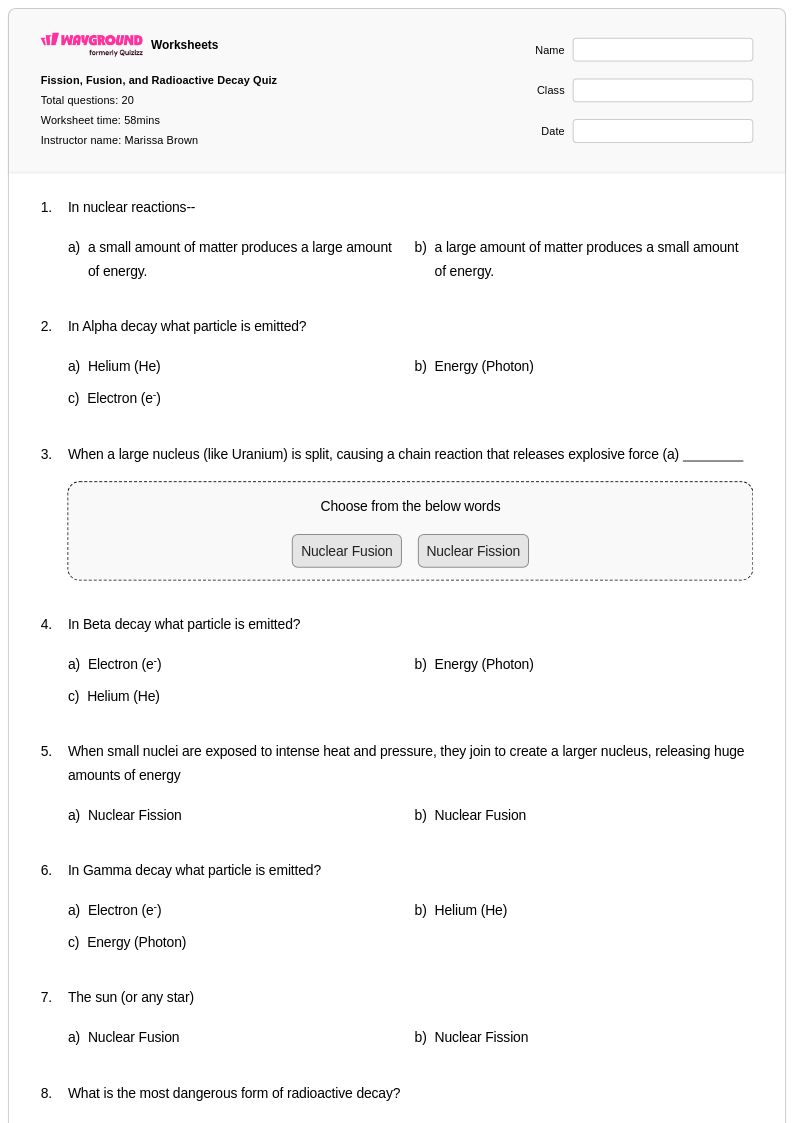
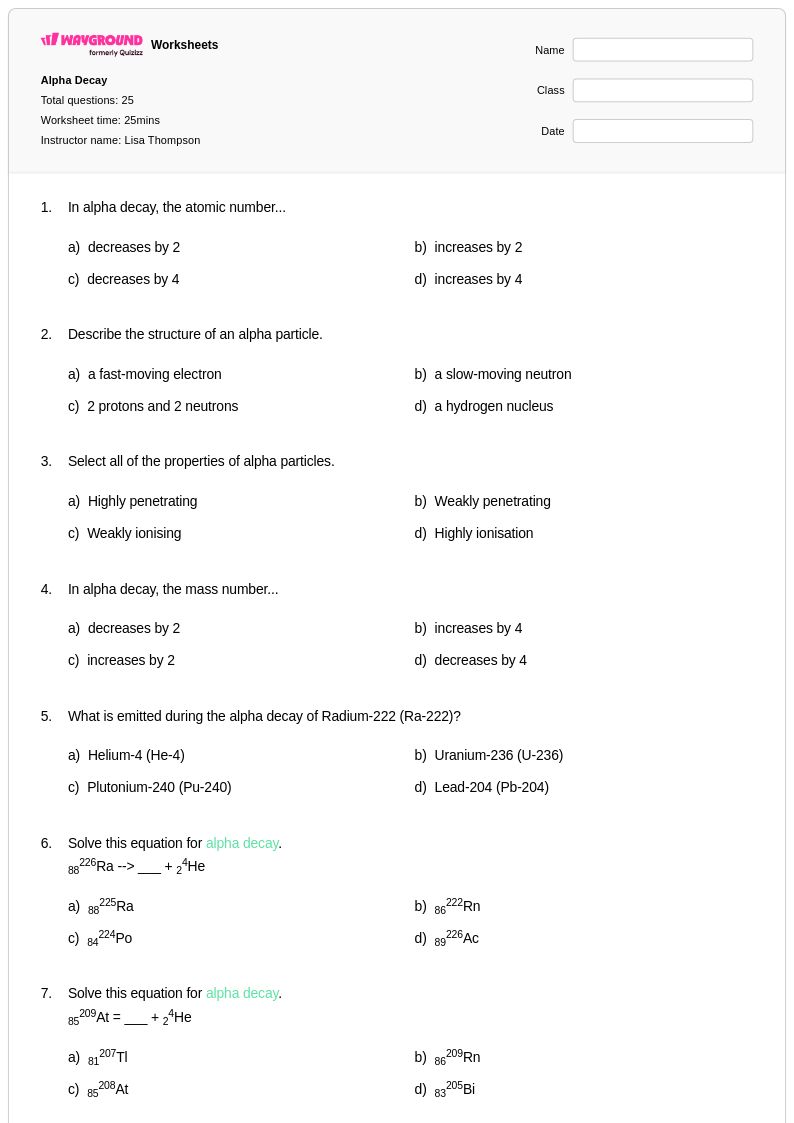
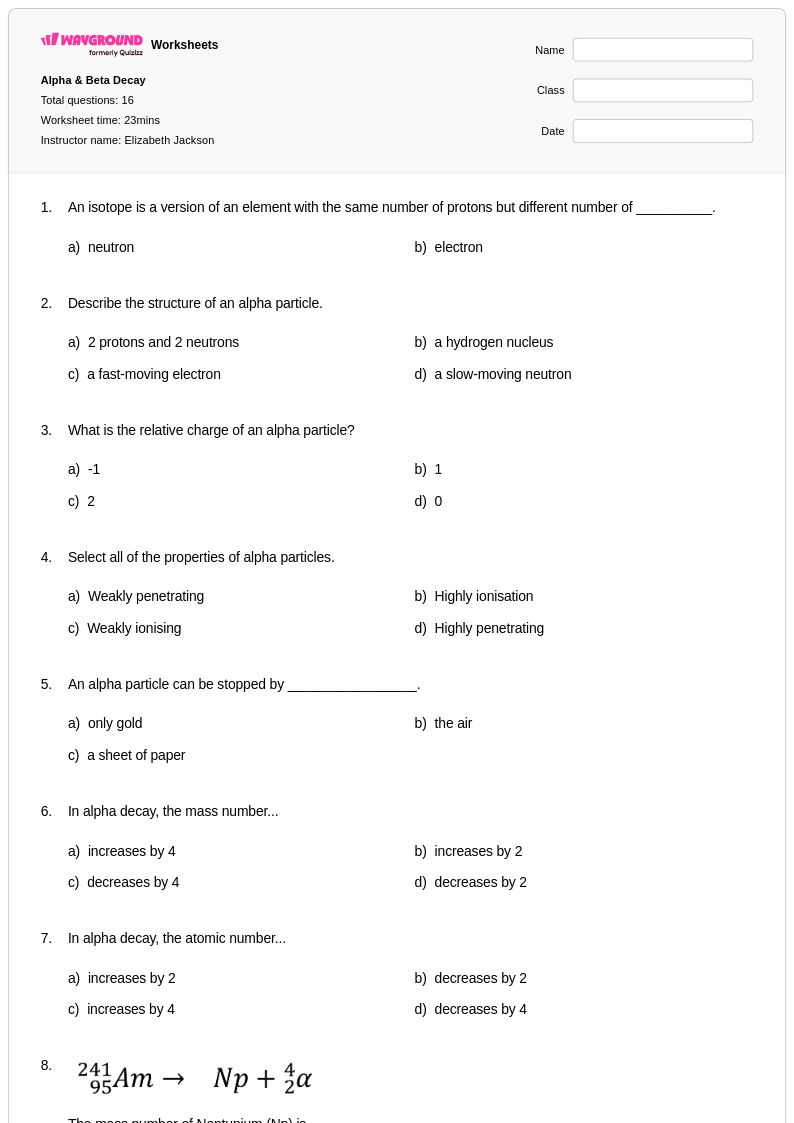
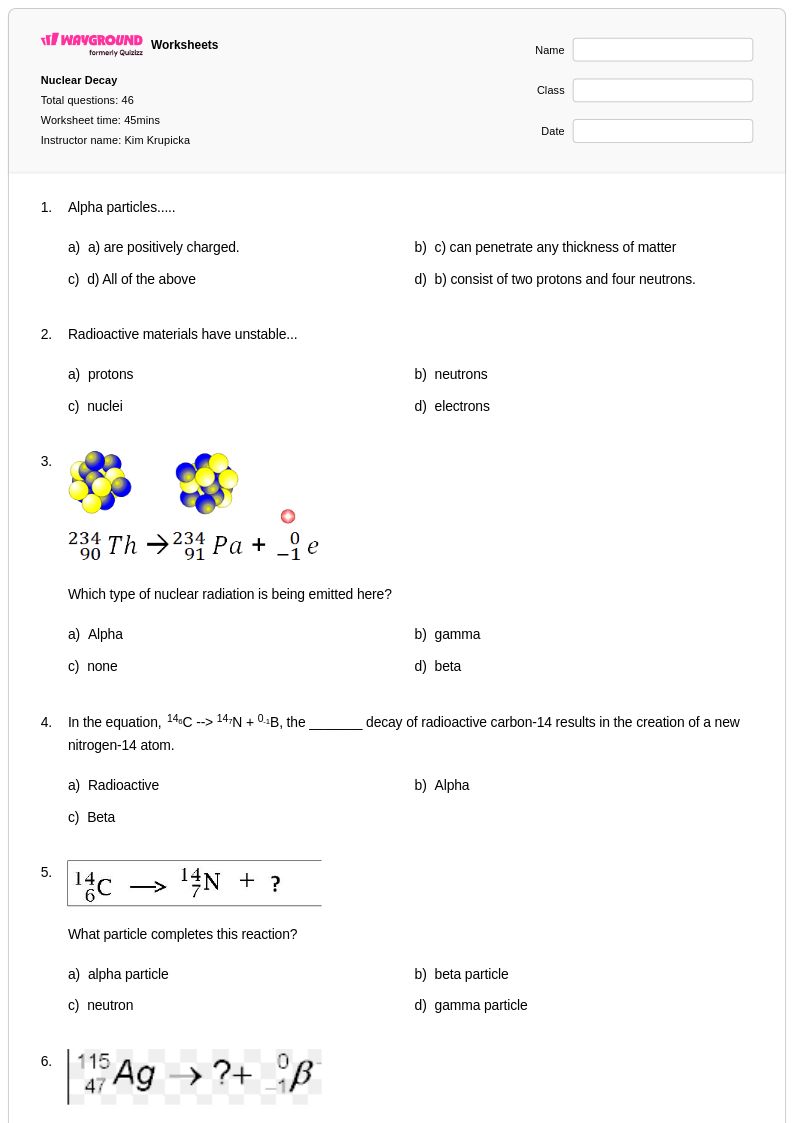
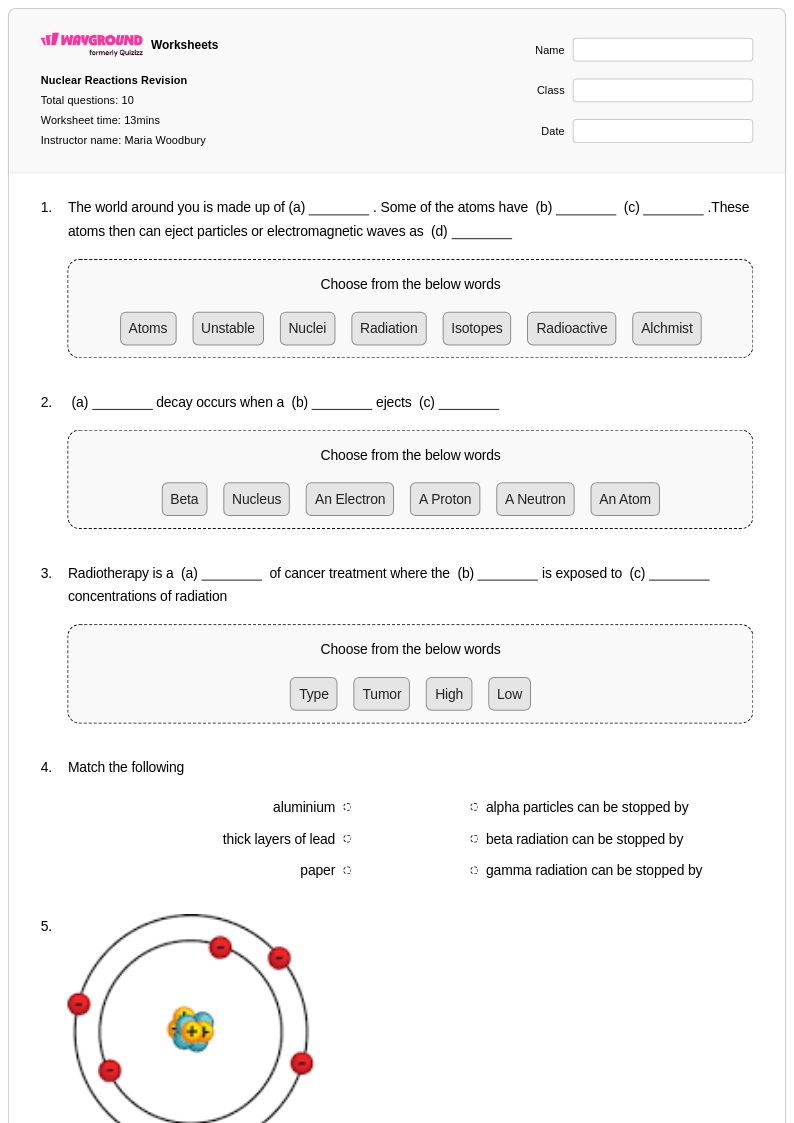
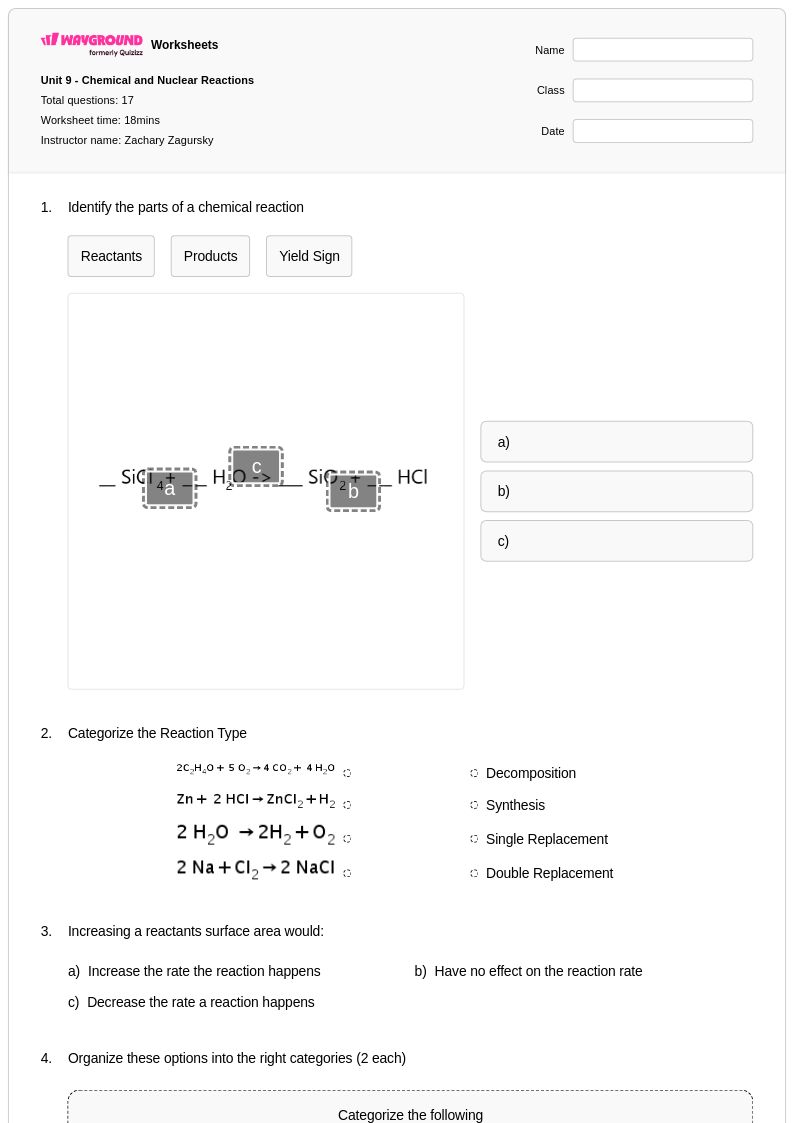
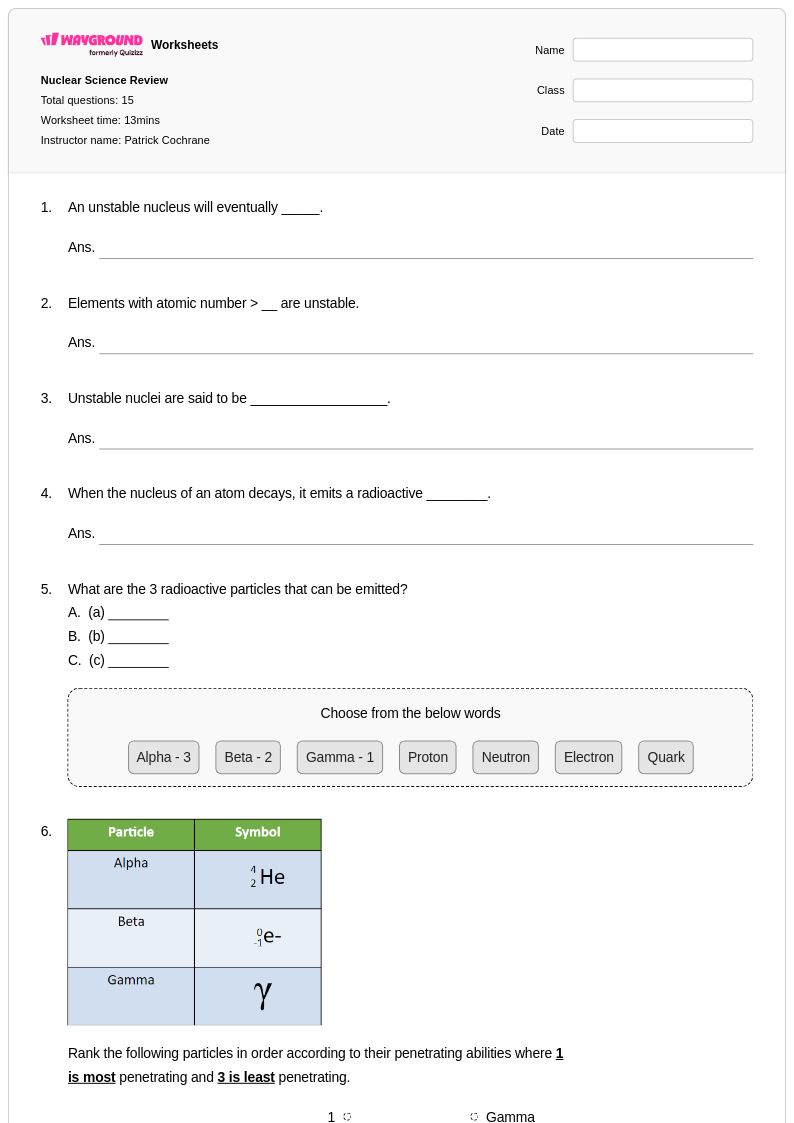
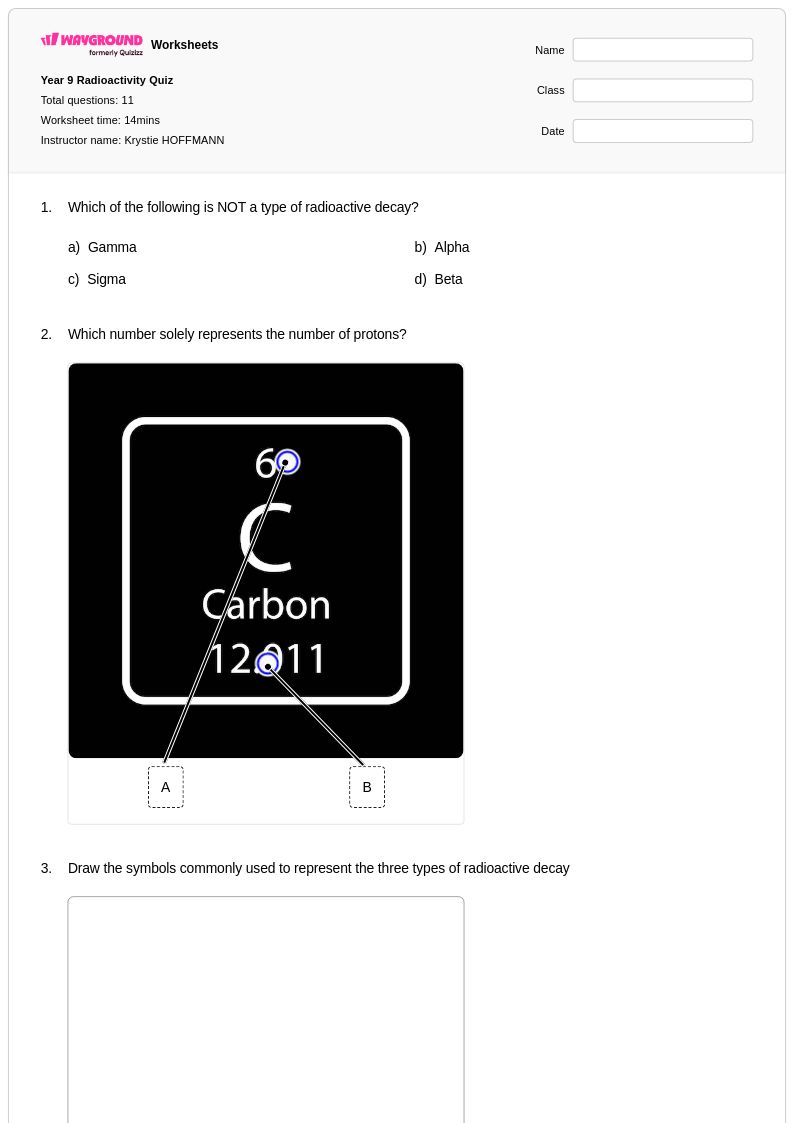
Decay worksheets available through Wayground (formerly Quizizz) provide comprehensive resources for exploring the fundamental processes of radioactive decay, chemical decomposition, and molecular breakdown in chemistry education. These expertly crafted materials strengthen students' understanding of half-life calculations, decay rates, exponential functions in chemical contexts, and the underlying mechanisms that govern how unstable atoms and compounds transform over time. The collection includes detailed practice problems that guide learners through complex decay equations, free printables featuring real-world applications of decay processes, and comprehensive answer keys that support both independent study and classroom instruction. Students develop critical analytical skills as they work through pdf worksheets covering alpha decay, beta decay, gamma radiation, and chemical degradation patterns that occur in various molecular systems.
Wayground (formerly Quizizz) empowers educators with millions of teacher-created decay worksheet resources that streamline lesson planning and enhance chemistry instruction across all academic levels. The platform's robust search and filtering capabilities allow teachers to quickly locate materials aligned with specific curriculum standards, whether focusing on nuclear chemistry concepts or broader chemical kinetics principles. Advanced differentiation tools enable instructors to customize worksheets for diverse learning needs, supporting both remediation for struggling students and enrichment opportunities for advanced learners. These versatile resources are available in both printable and digital formats, including downloadable pdf options, making them ideal for classroom practice, homework assignments, laboratory preparation, and assessment activities that reinforce essential decay chemistry concepts through systematic skill development.
FAQs
How do I teach radioactive decay and half-life to high school chemistry students?
Start by grounding students in the concept of nuclear instability before introducing decay types: alpha, beta, and gamma. Use visual decay chains and worked examples of half-life calculations to build conceptual understanding before moving to quantitative problems. Connecting decay to exponential functions helps students who have seen that math in algebra recognize the pattern, which reduces cognitive overload when the chemistry notation is new.
What are the best practice problems for helping students master half-life calculations?
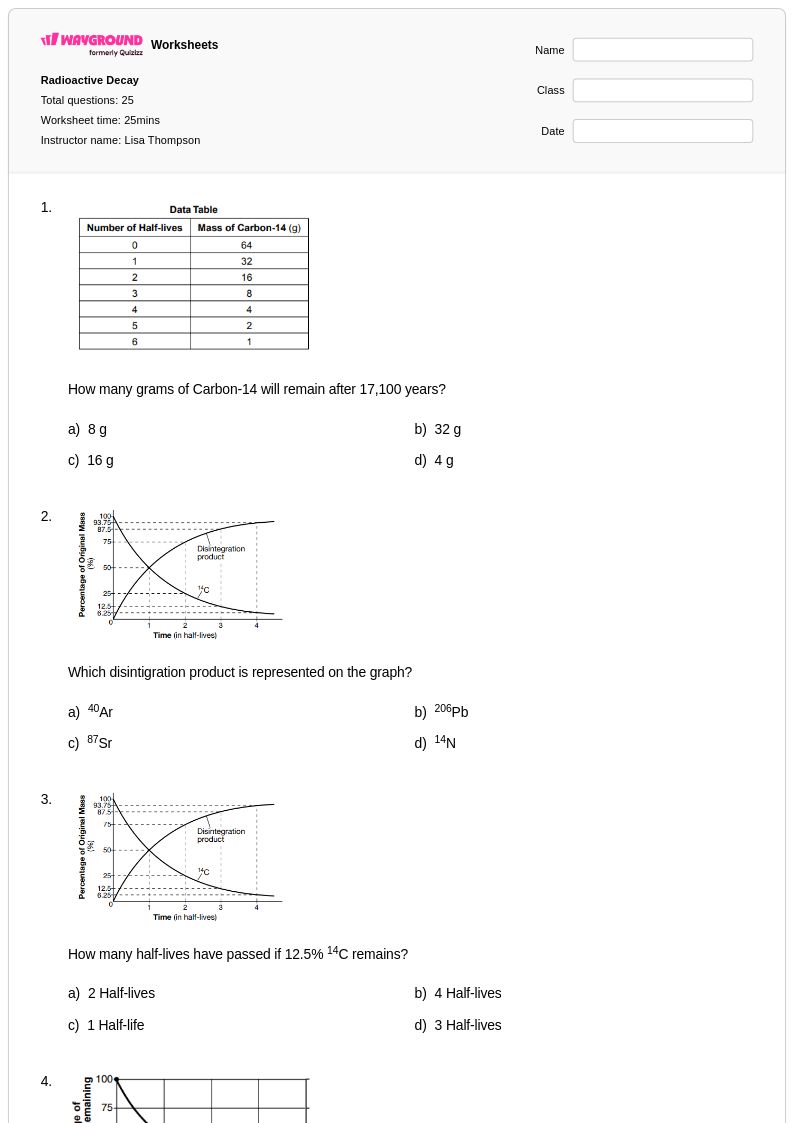
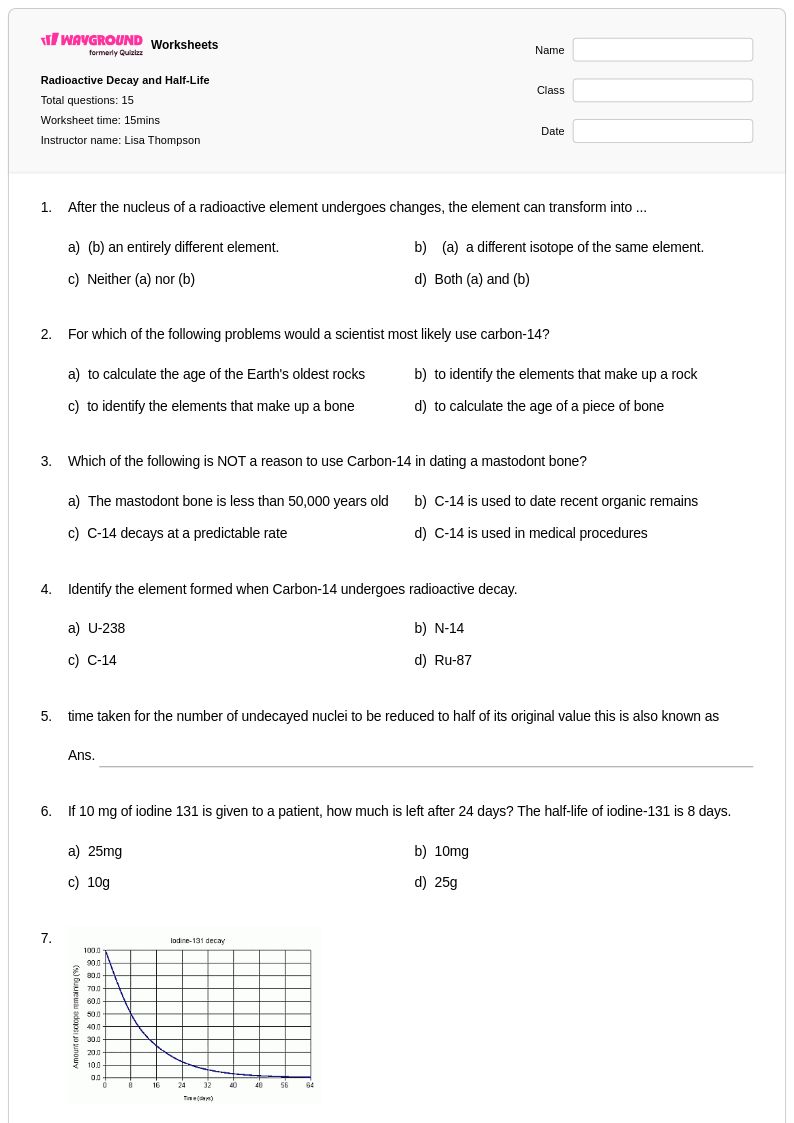
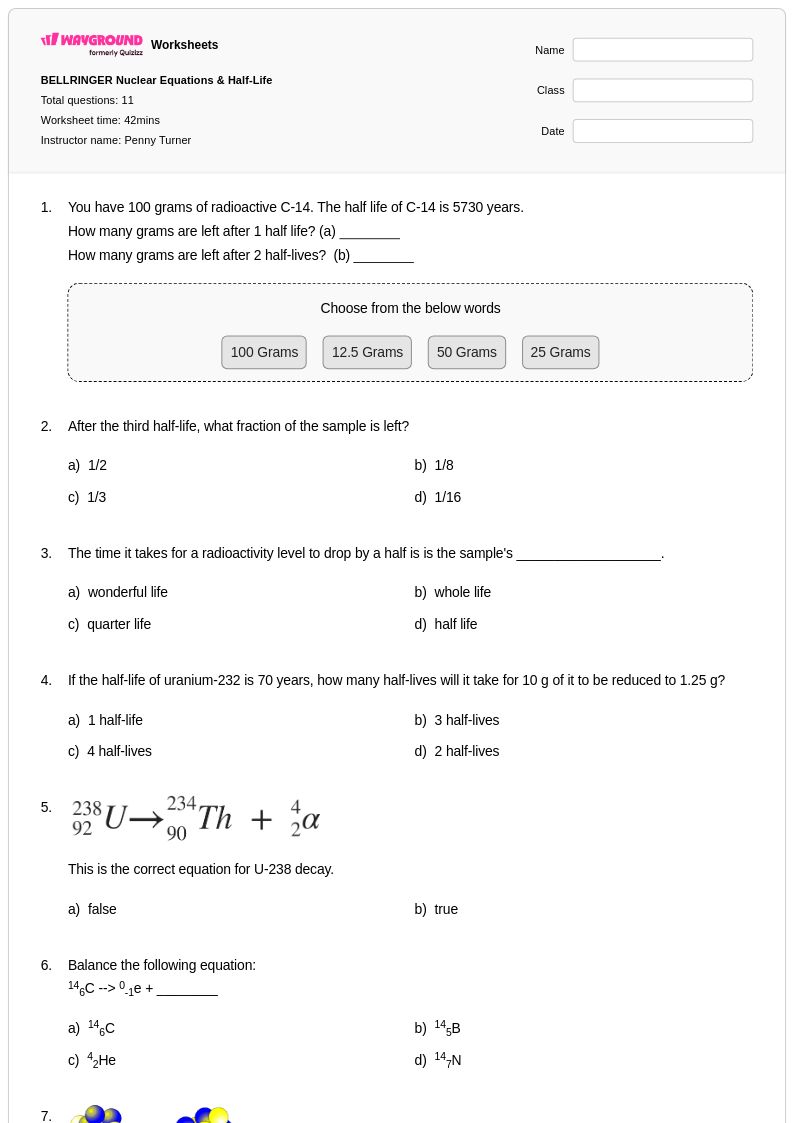
Effective practice for half-life calculations should progress from single-step problems (how much remains after one half-life?) to multi-step problems requiring students to determine elapsed time or identify an unknown isotope from decay data. Problems that embed real-world contexts, such as carbon-14 dating or medical isotope decay, give students a reason to engage with the math and reinforce why the concept matters beyond the worksheet.
What mistakes do students commonly make when solving radioactive decay problems?
The most frequent error is confusing the number of half-lives elapsed with the fraction of substance remaining, leading students to subtract rather than multiply repeatedly by one-half. Students also commonly misapply the decay equation by plugging in total time instead of converting it to the number of half-life intervals first. A targeted misconception check, asking students to explain in words what happens after each half-life before calculating, catches these errors early.
How can I differentiate decay worksheets for students at different skill levels?
For struggling students, begin with conceptual decay problems that use simple fractions and visual timelines before introducing the exponential decay equation. Advanced learners can be challenged with multi-variable problems, decay series involving sequential transformations, or real isotope data requiring them to derive the decay constant. On Wayground, teachers can apply individual accommodations such as reduced answer choices or read-aloud support to specific students without affecting the rest of the class, making differentiation manageable within a single assignment.
How do I use Wayground's decay worksheets in my classroom?
Wayground's decay worksheets are available as printable PDFs for traditional classroom use and in digital formats for technology-integrated instruction, including the option to host them as a quiz directly on the platform. Teachers can assign worksheets for in-class practice, homework, laboratory preparation, or formative assessment, with complete answer keys included to support grading and independent student review. The digital format allows teachers to track student performance and apply individual accommodations, such as extended time or adjustable reading modes, within the same assignment.
How does chemical decomposition differ from radioactive decay, and should I teach them together?
Radioactive decay is a nuclear process in which an unstable isotope transforms by emitting particles or energy, while chemical decomposition is a reaction in which a compound breaks down into simpler substances without altering atomic nuclei. Teaching them together can be effective when the goal is helping students understand decay as a broad category of breakdown processes, but the mechanisms and the mathematics involved are distinct enough that clear labeling of each is essential to prevent conflation. Most high school chemistry courses treat nuclear decay and chemical decomposition in separate units.