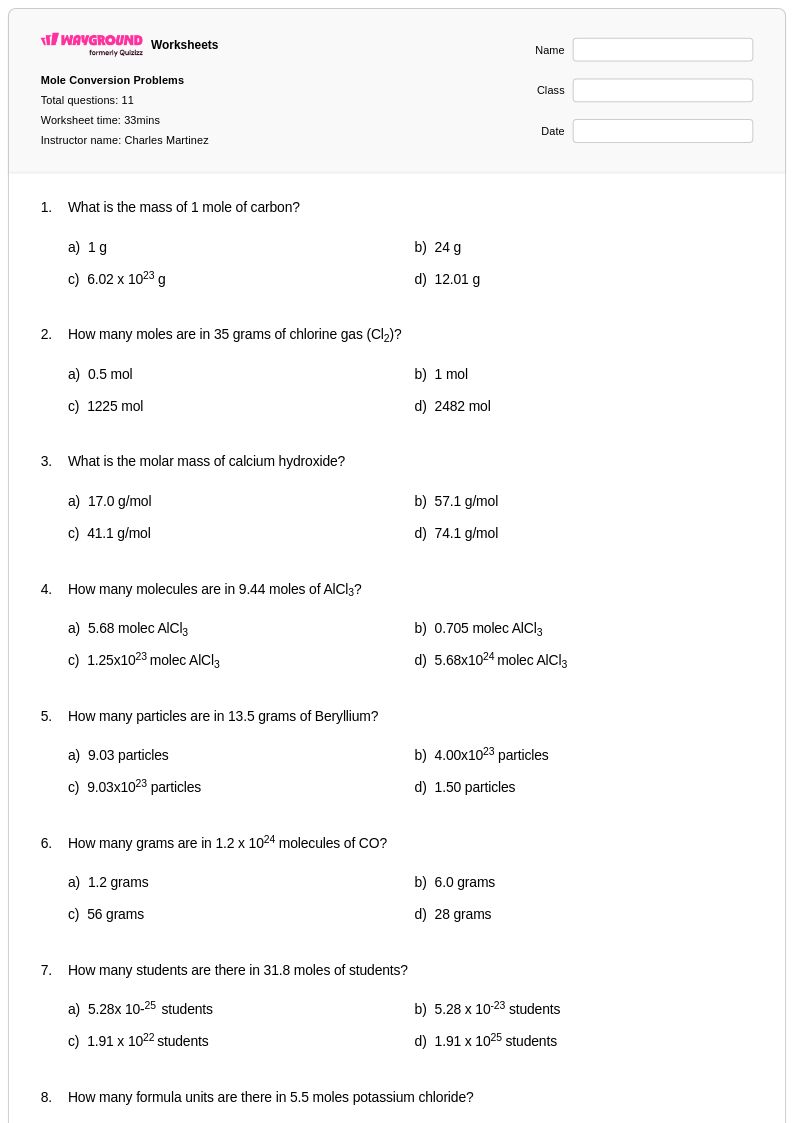
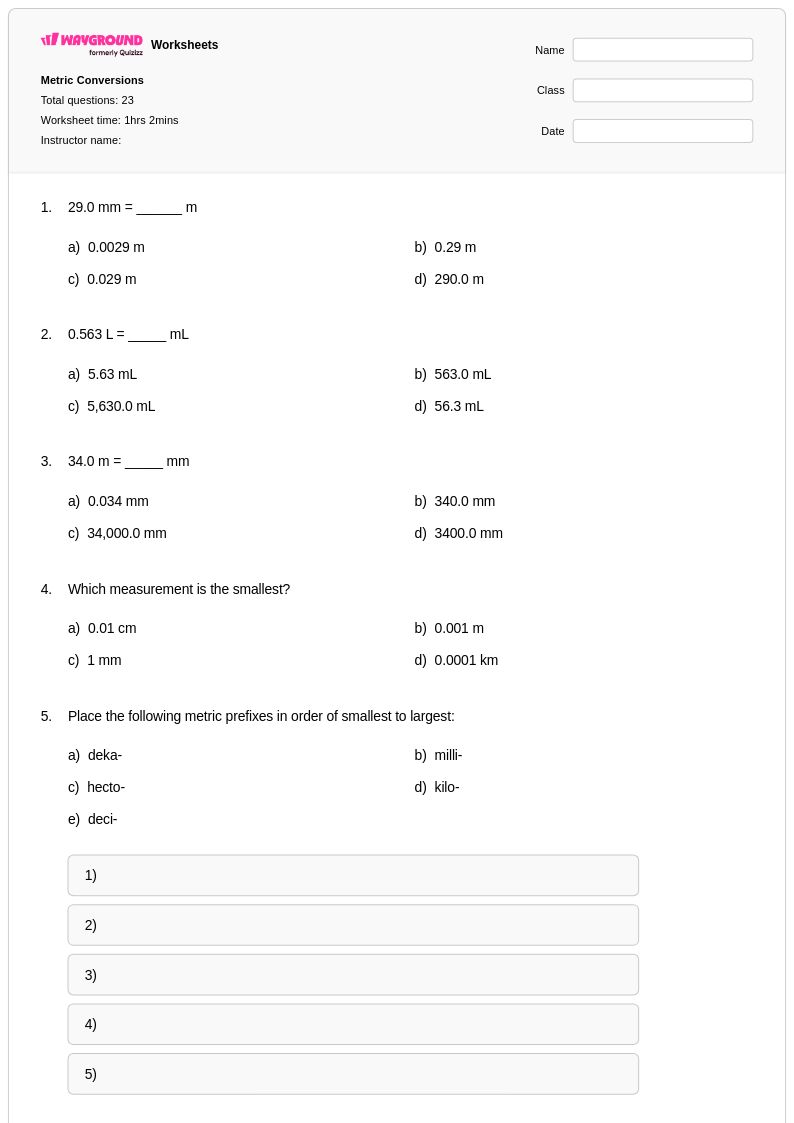
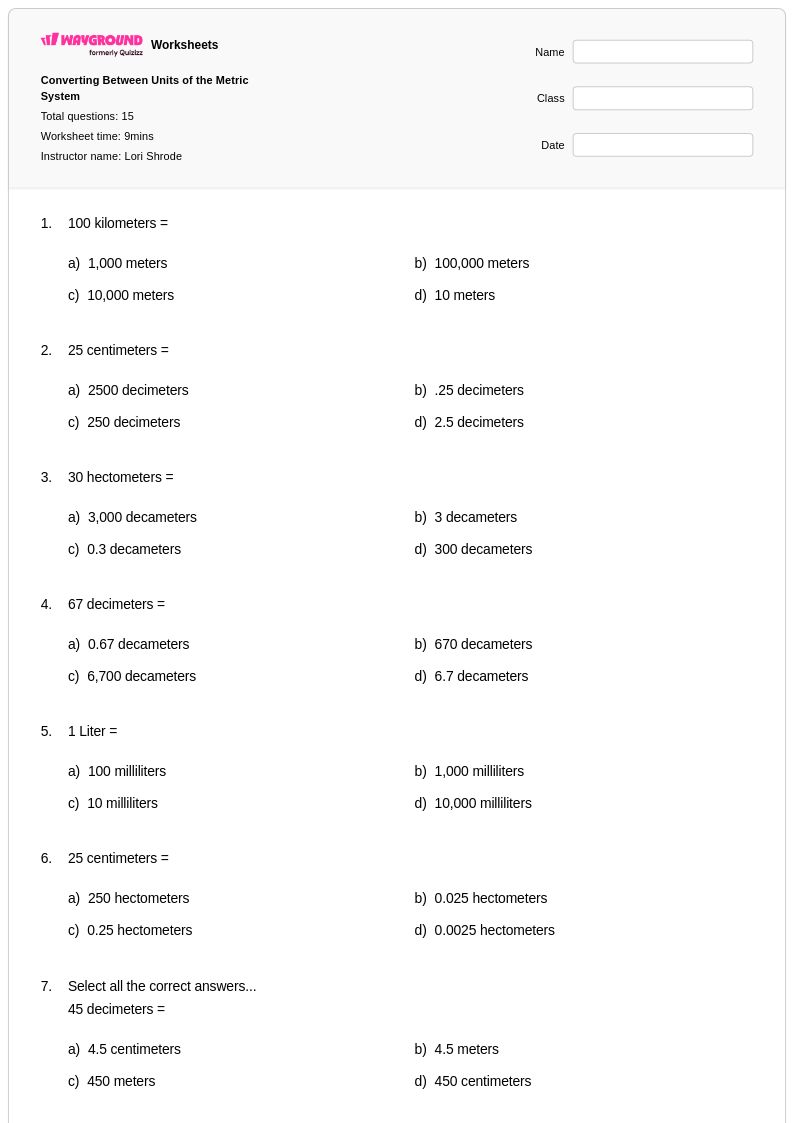
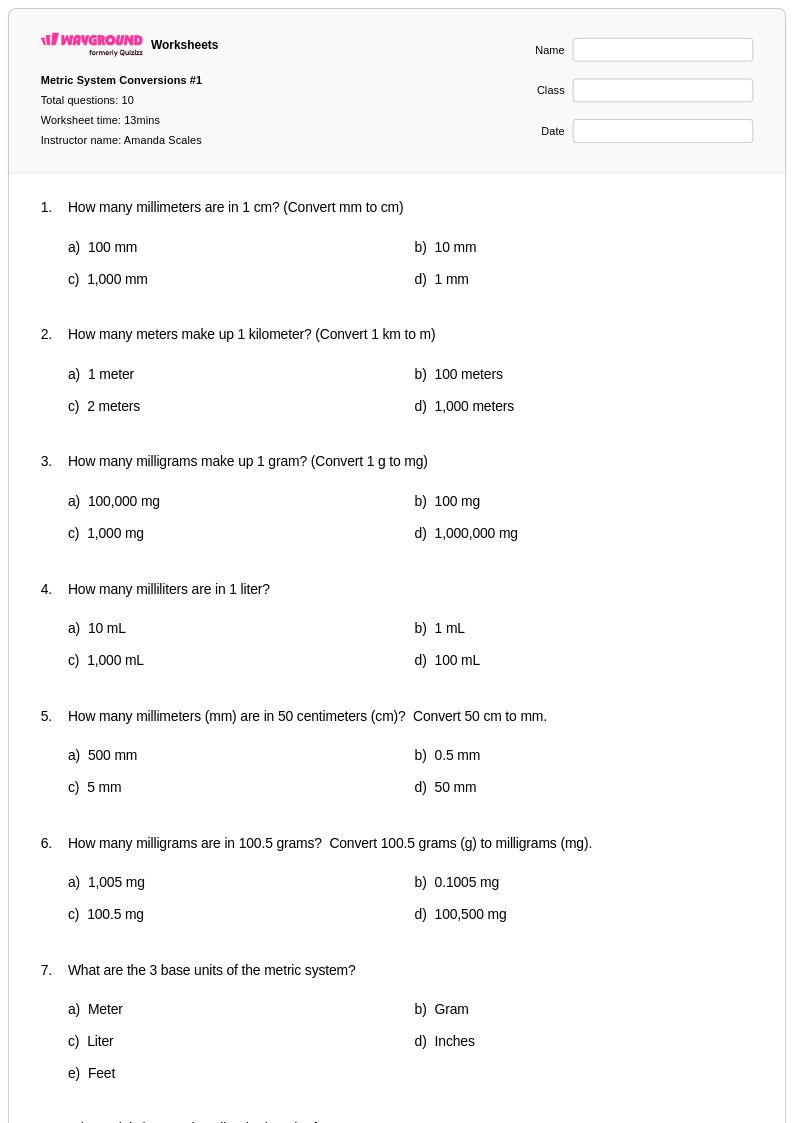
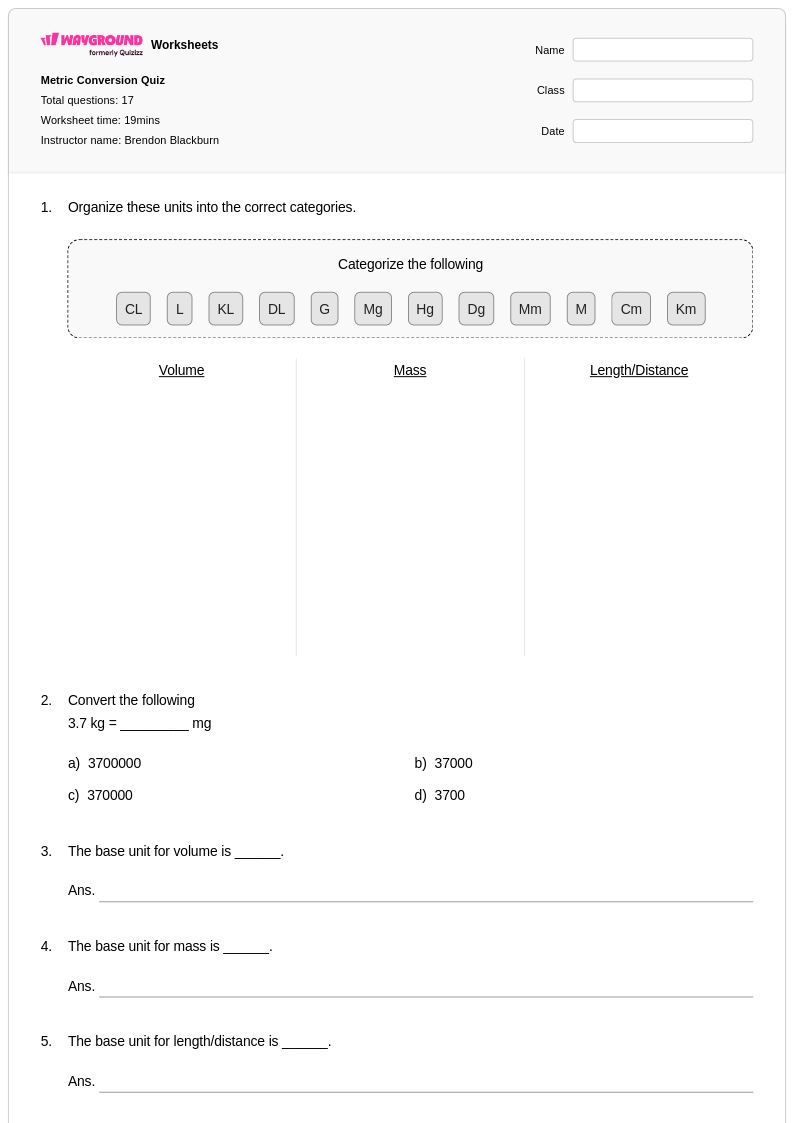
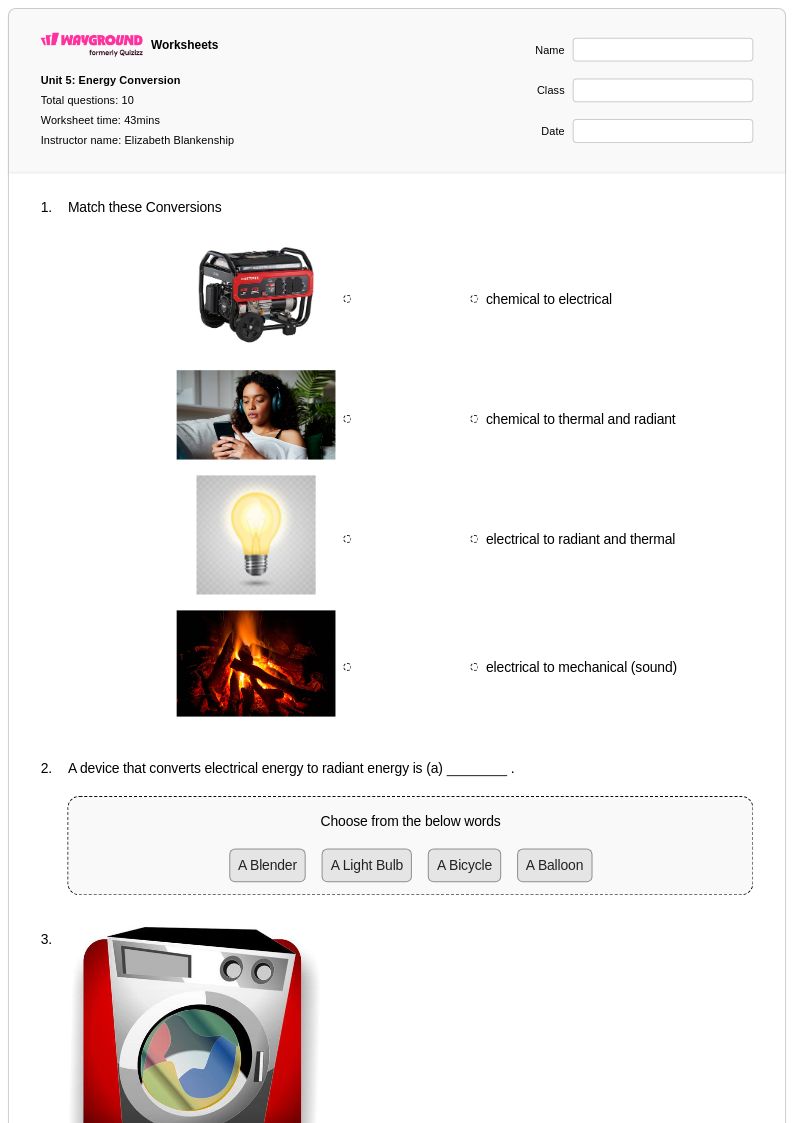
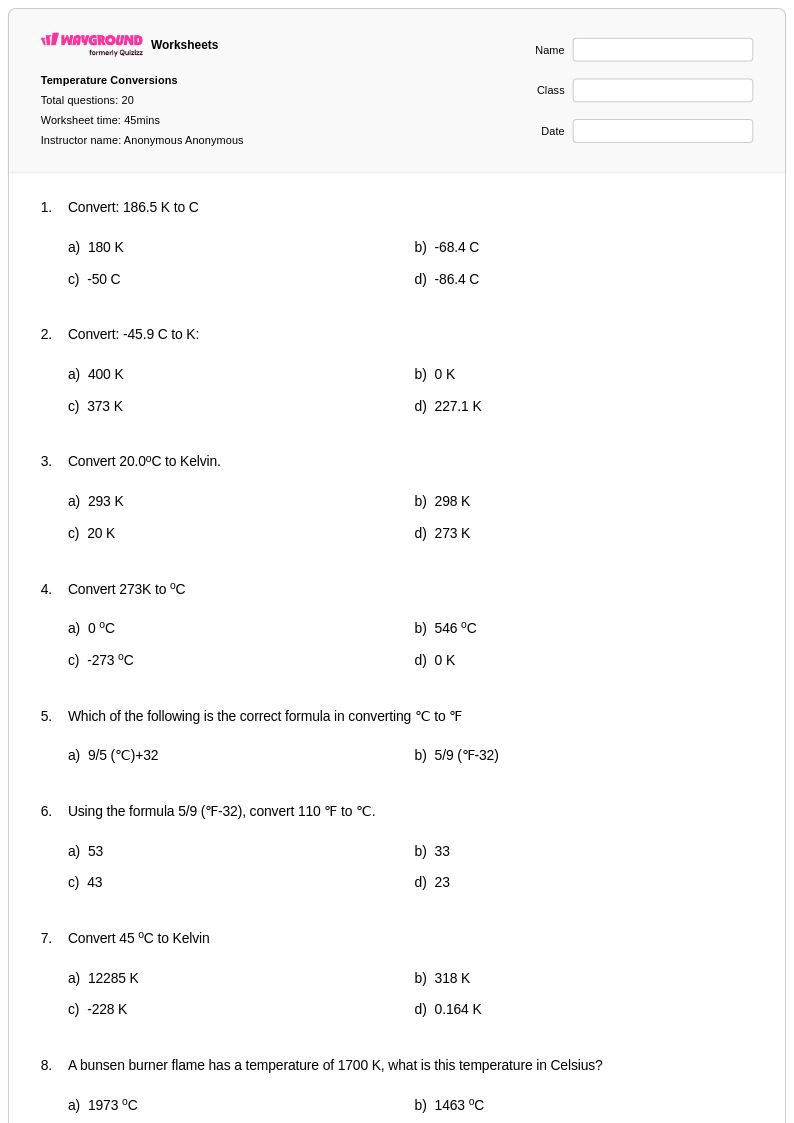
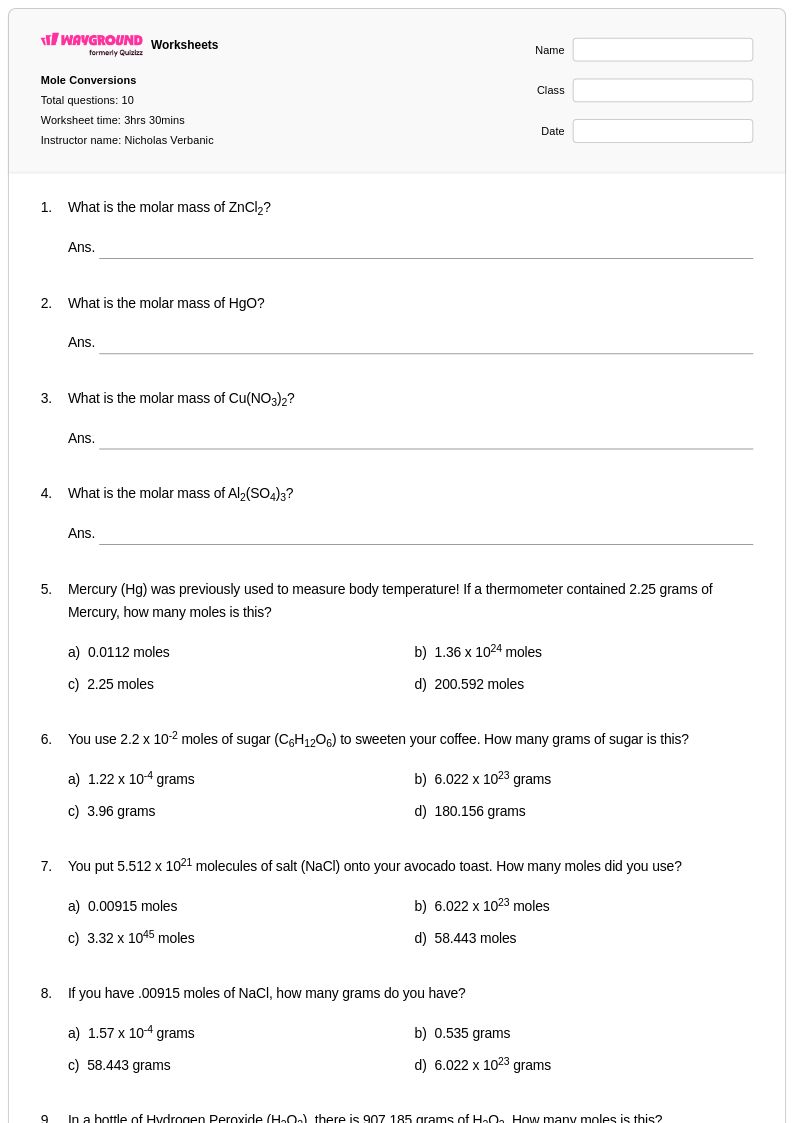
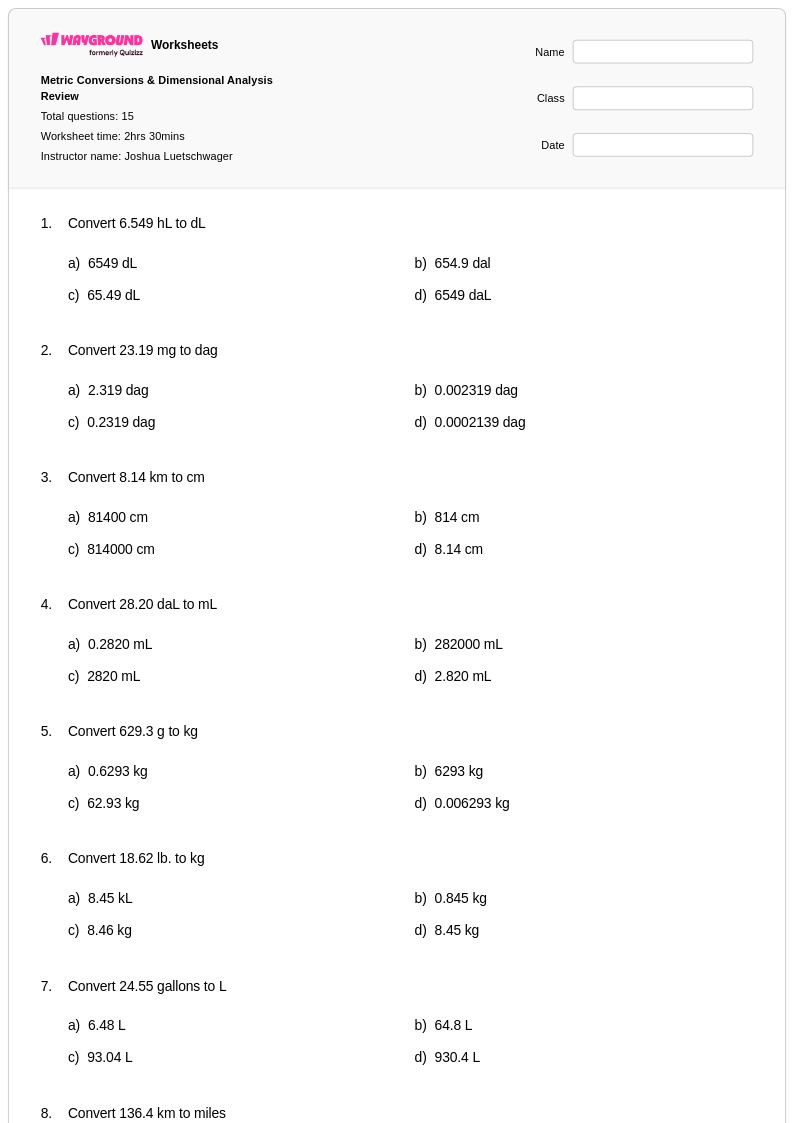
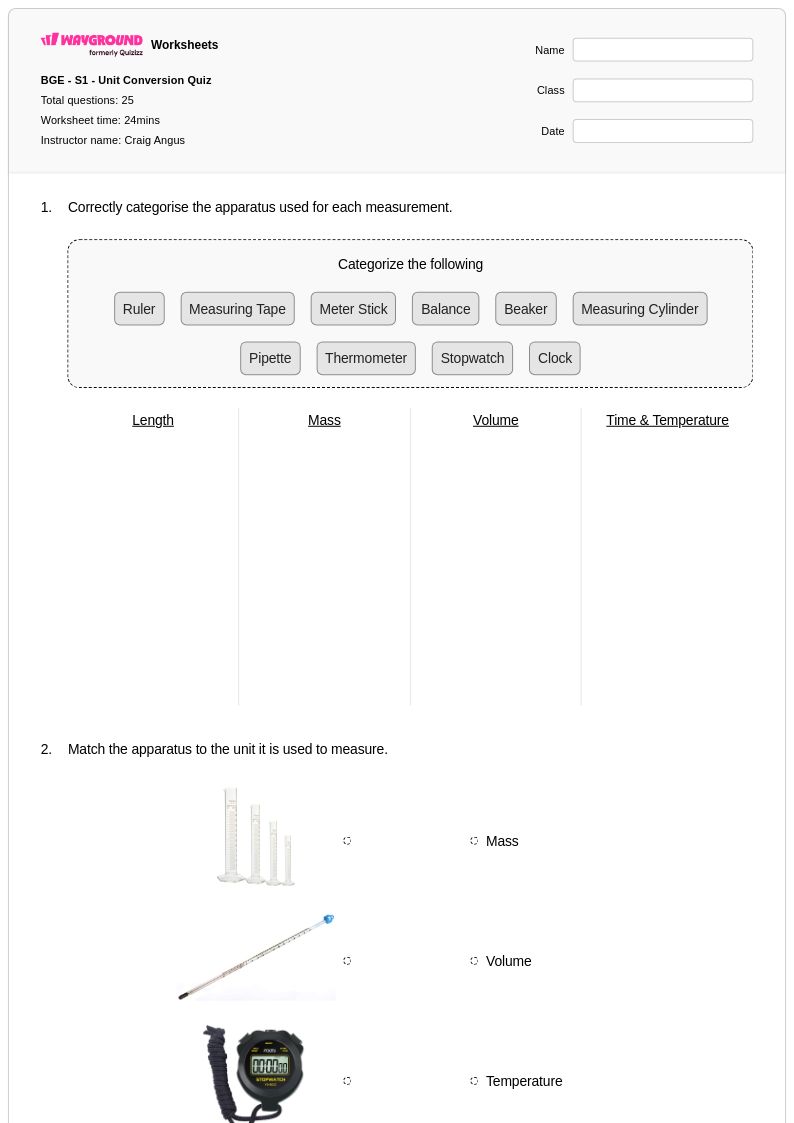
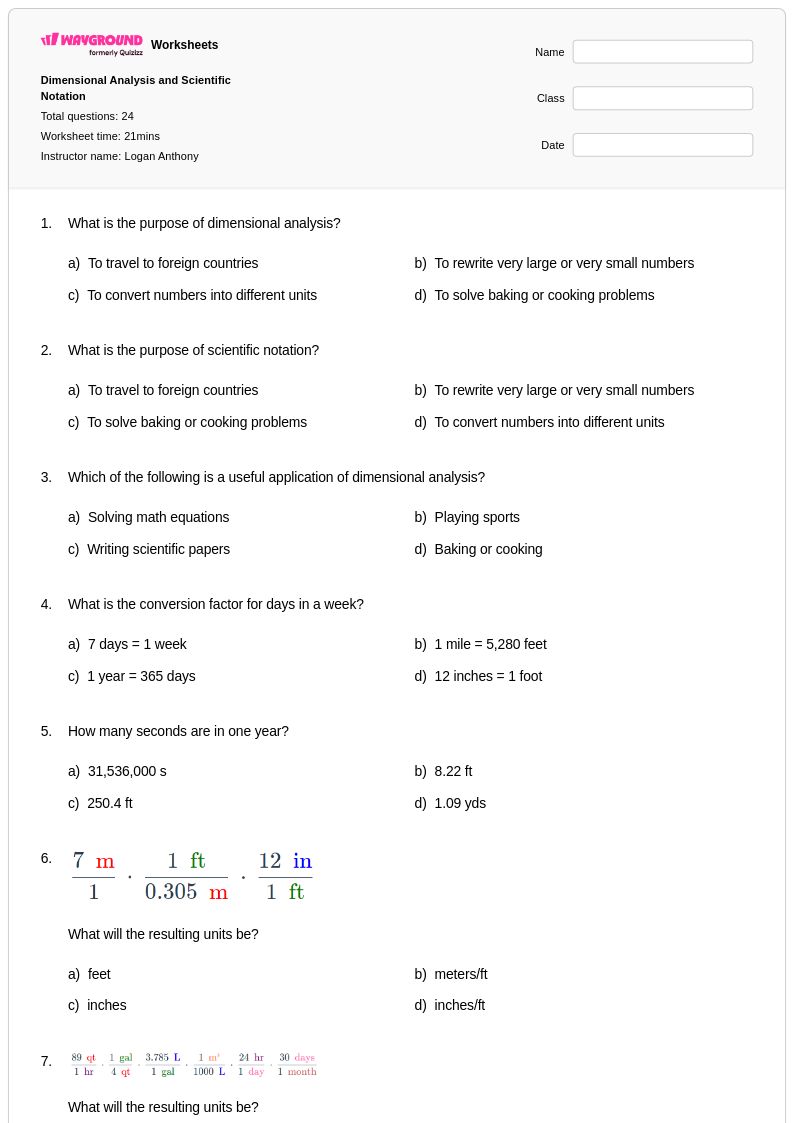
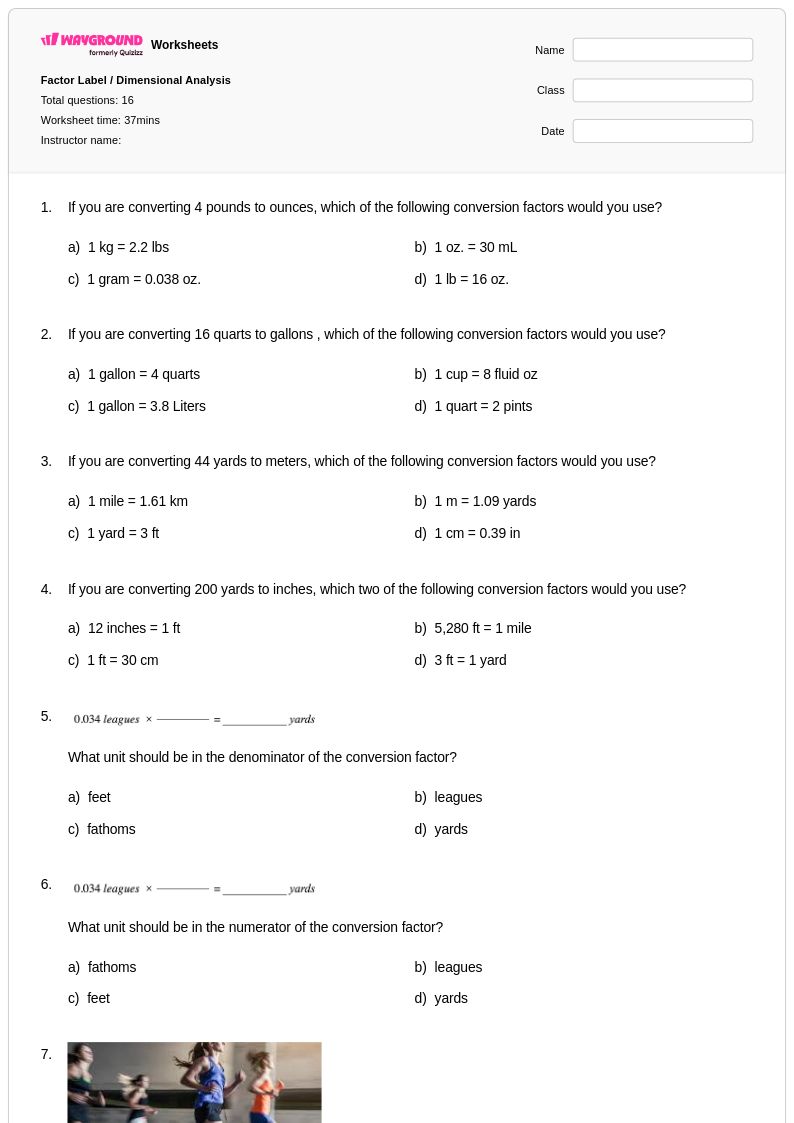
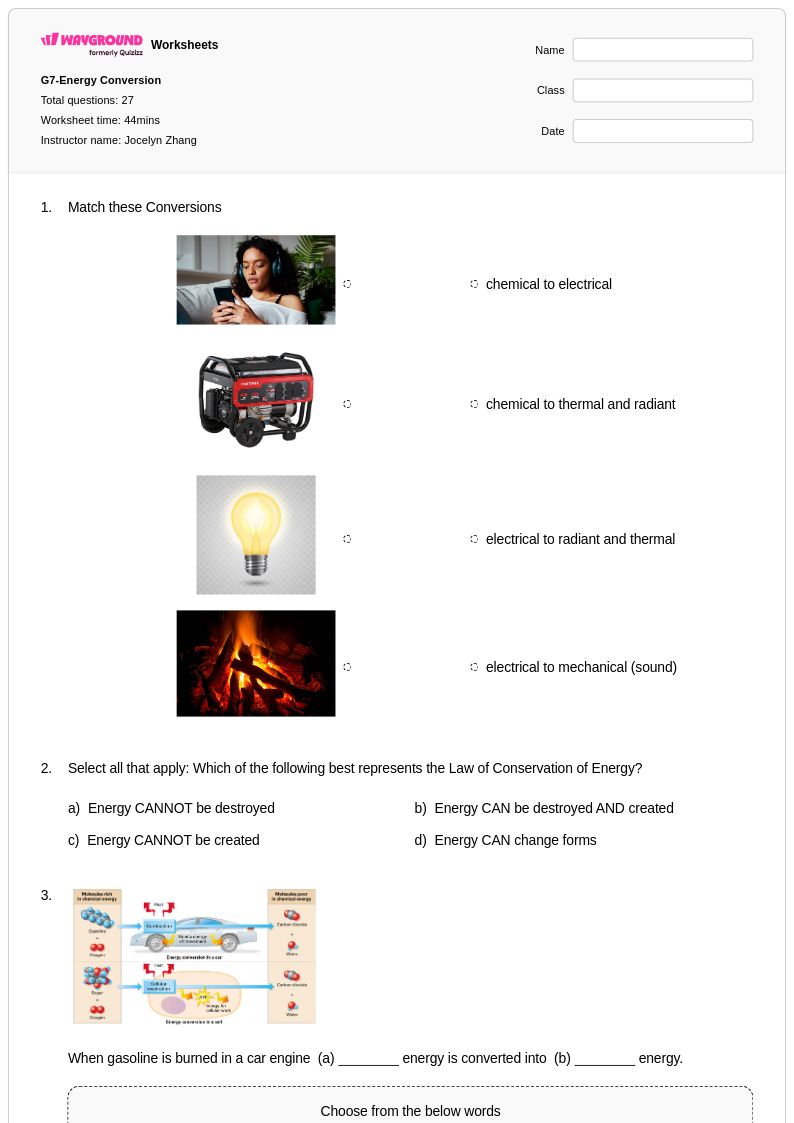
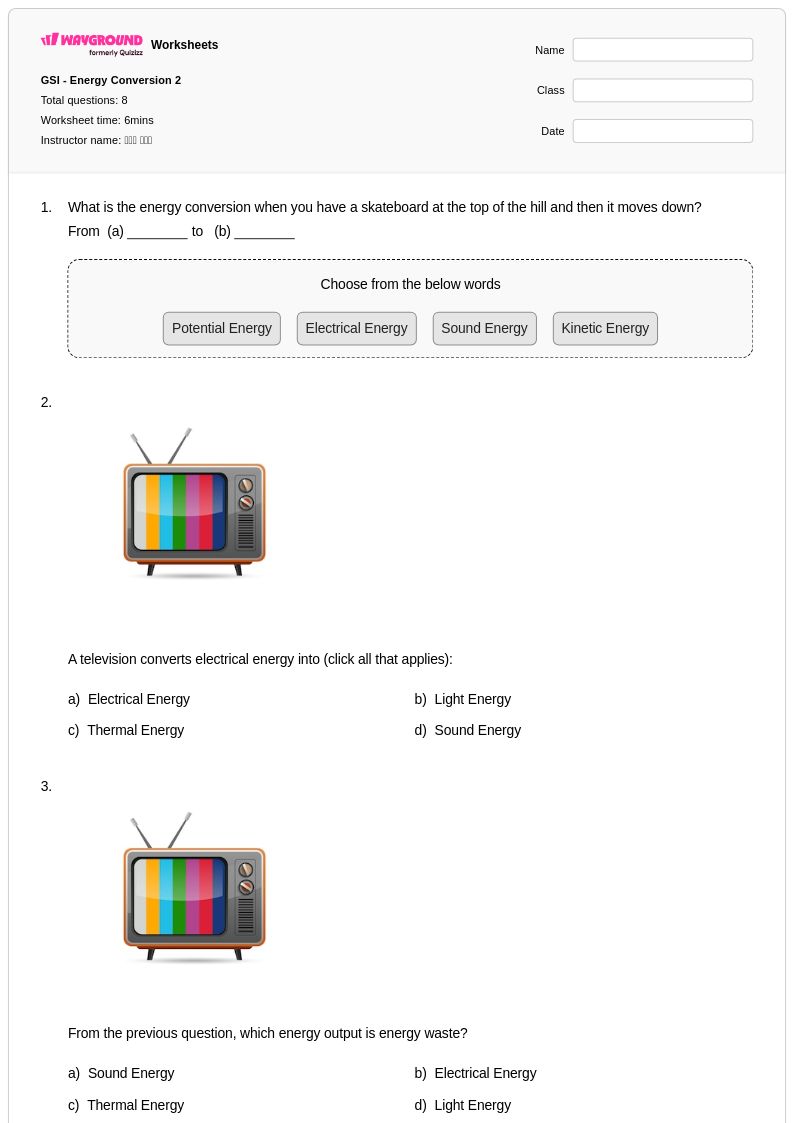
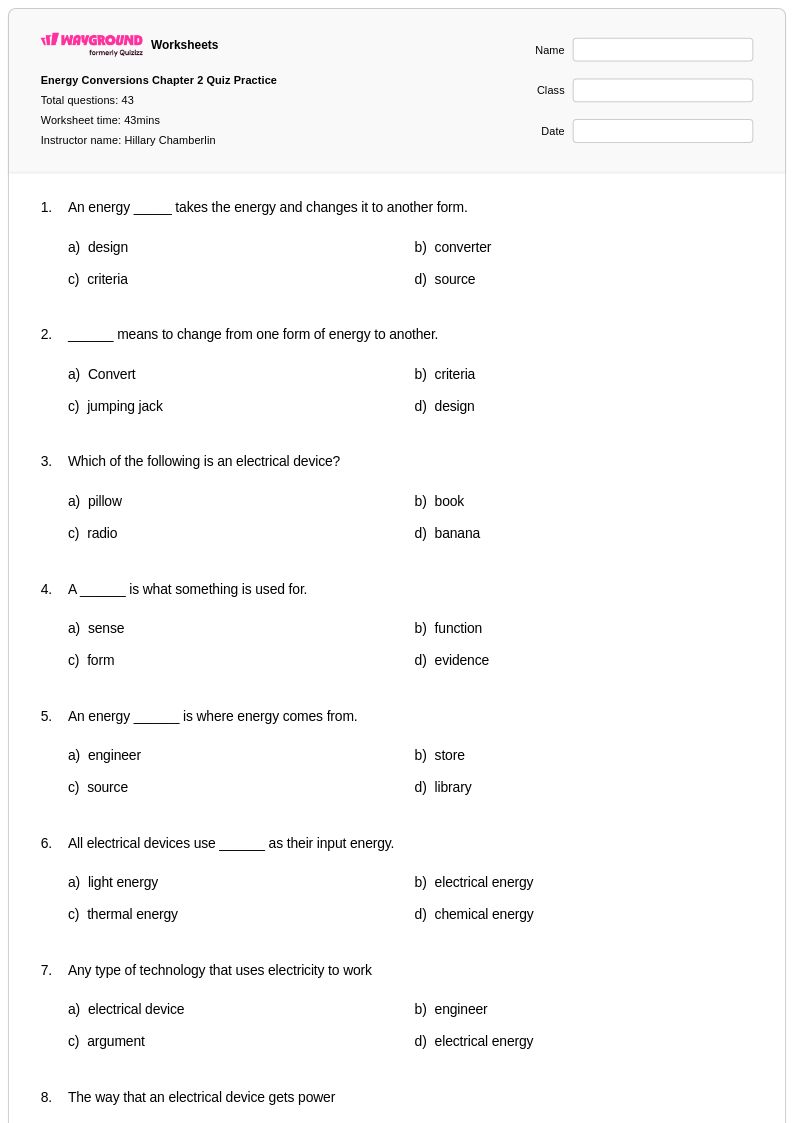
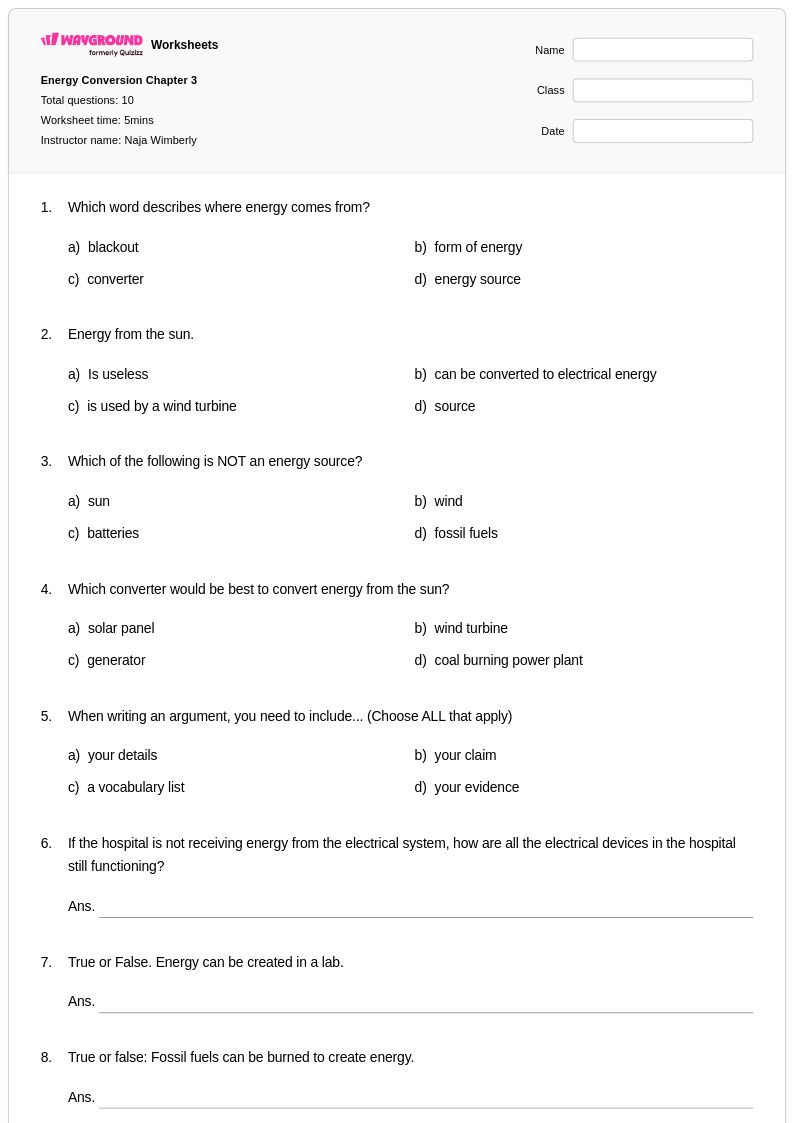
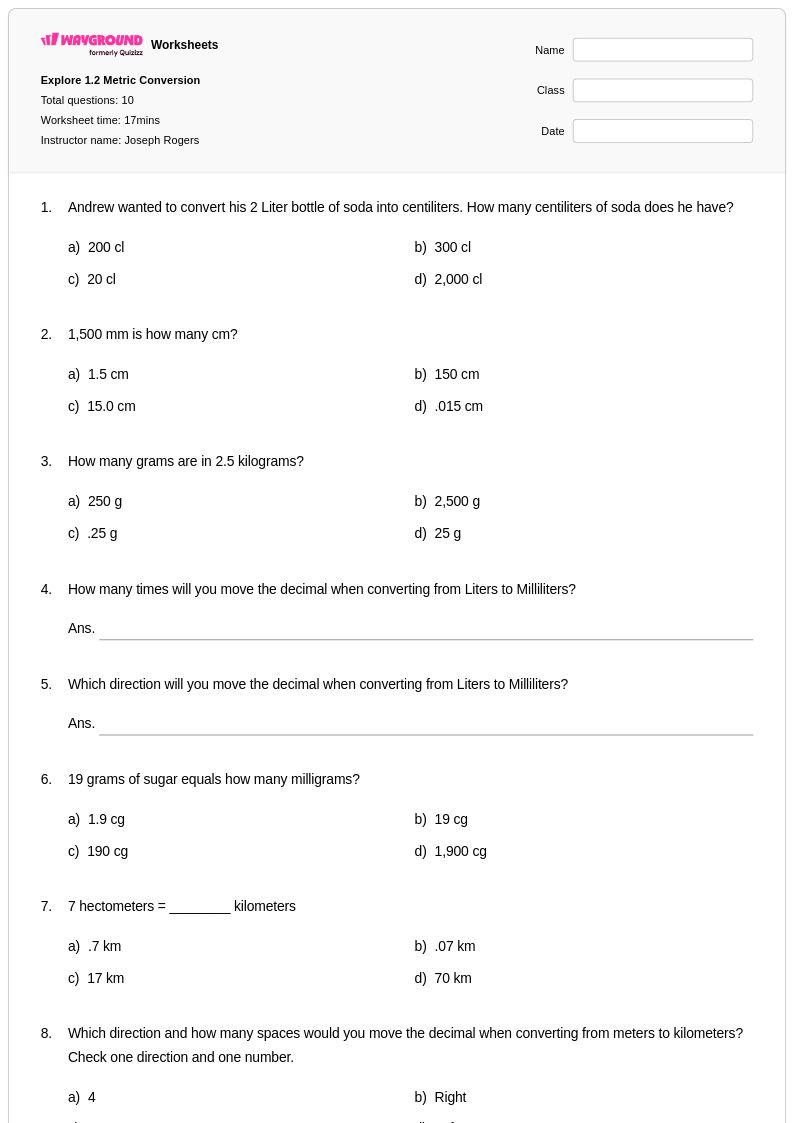
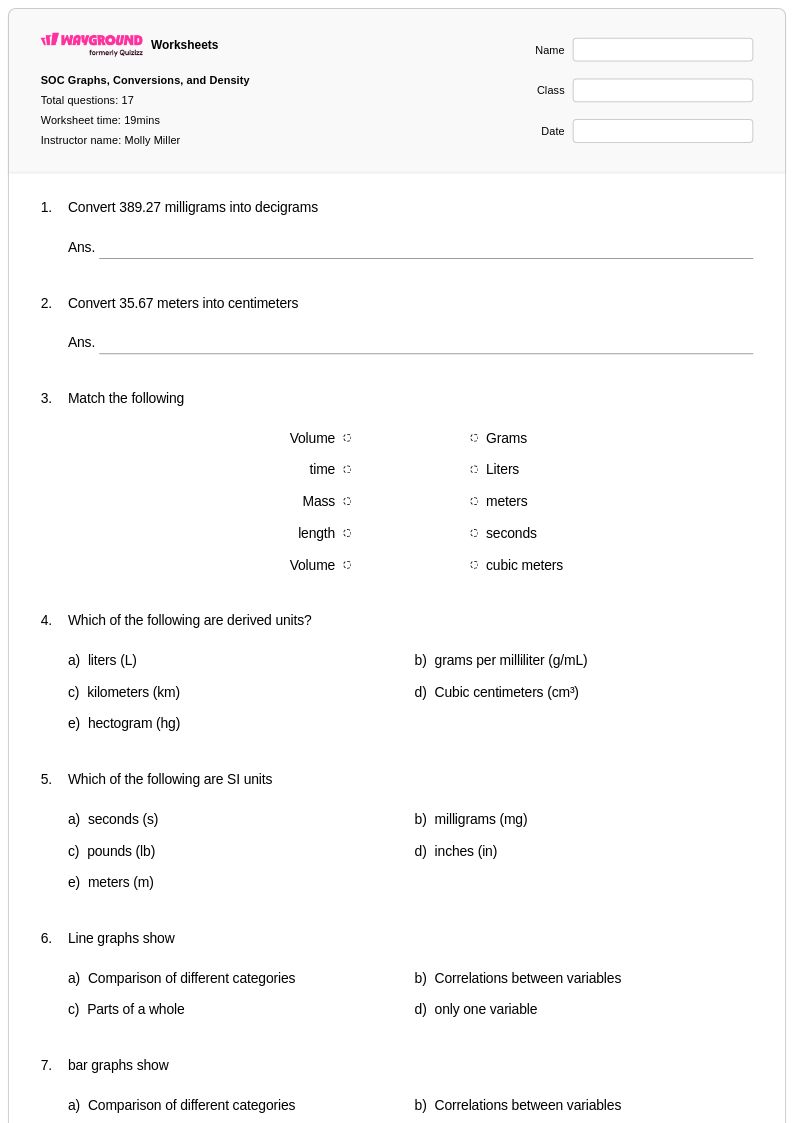
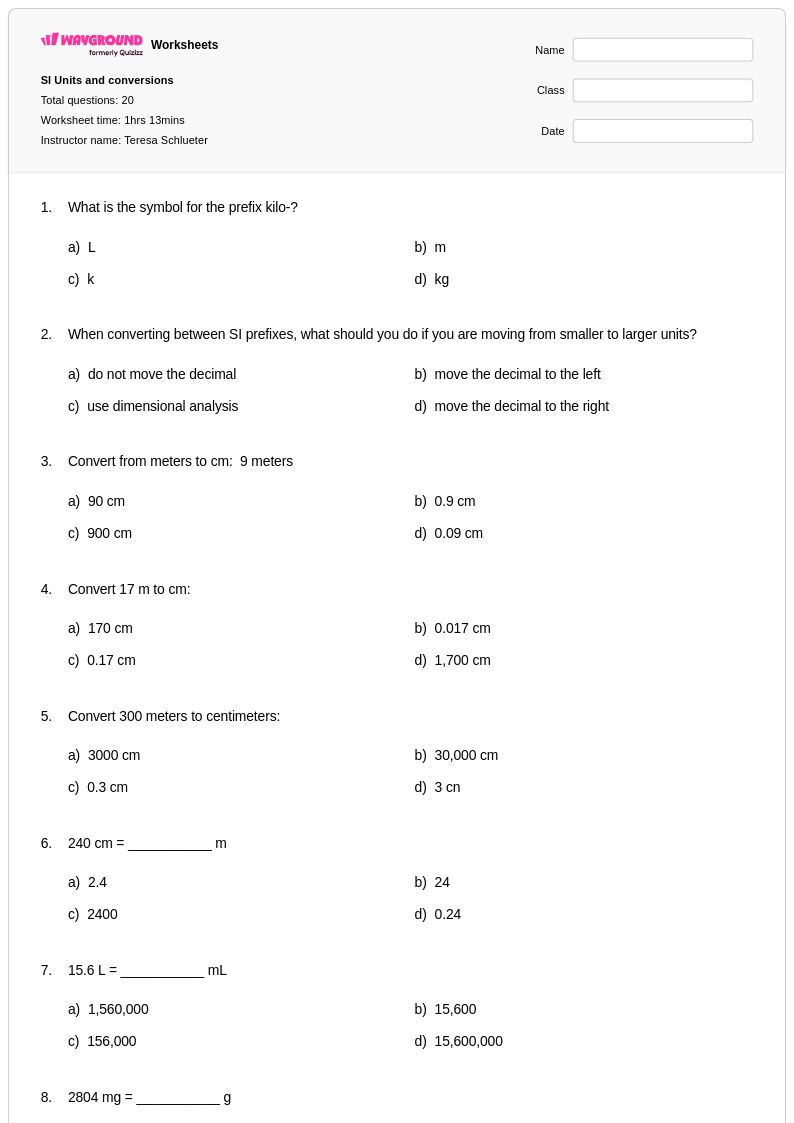
Master chemistry conversion problems with Wayground's comprehensive collection of free worksheets and printables, featuring step-by-step practice problems and complete answer keys to build essential unit conversion skills.
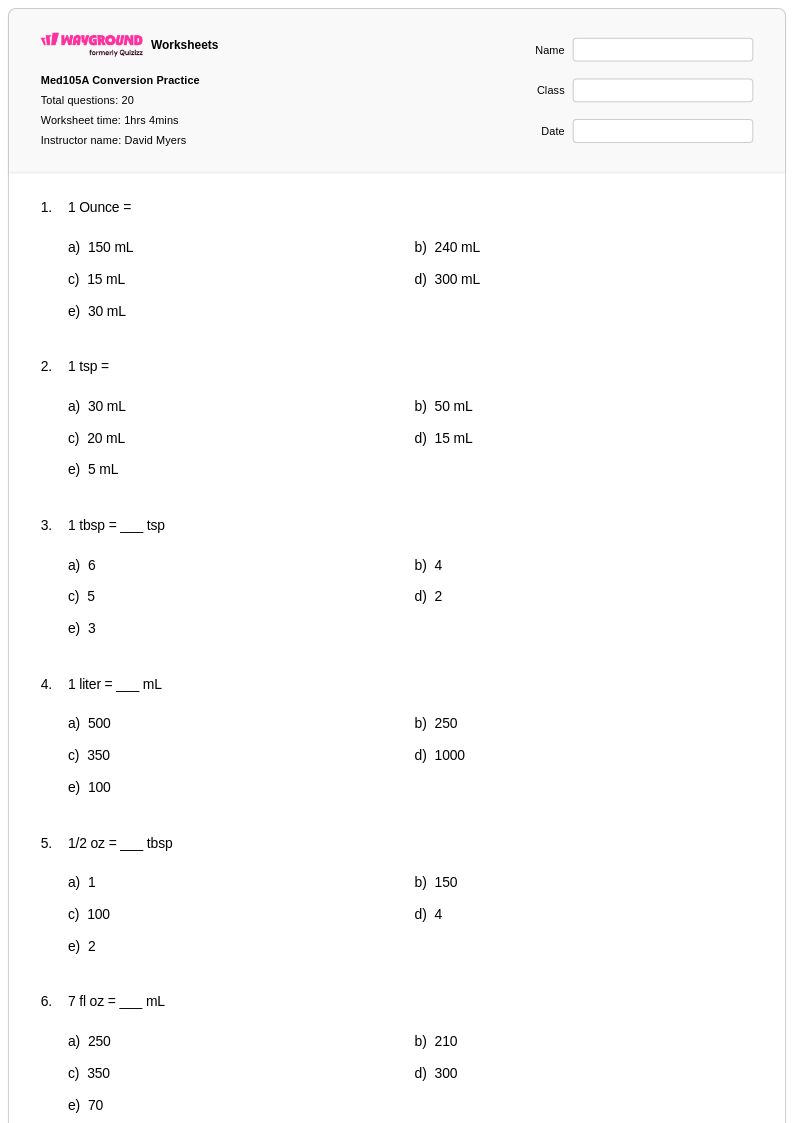
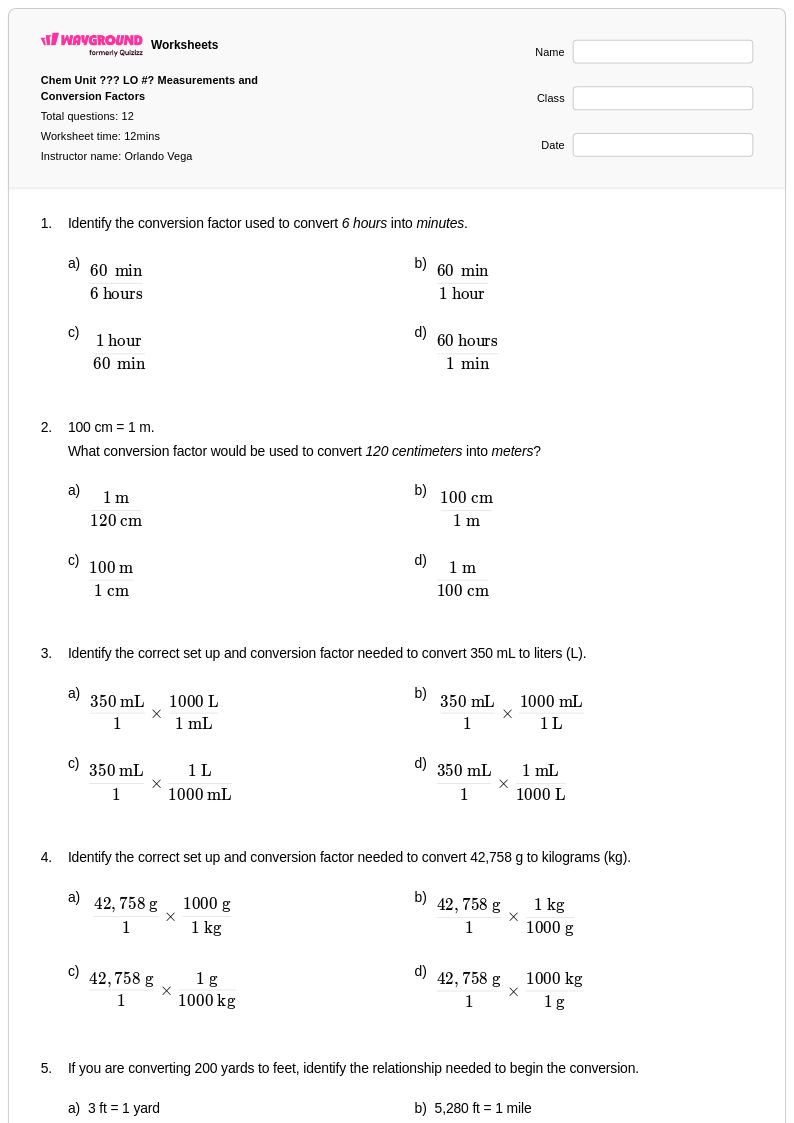
Conversion problems form the cornerstone of practical chemistry education, requiring students to master the systematic application of dimensional analysis, stoichiometry, and unit conversions across various chemical contexts. Wayground's comprehensive collection of conversion problem worksheets provides students with structured practice in converting between different units of measurement, calculating molar masses, determining empirical and molecular formulas, and solving complex stoichiometric equations. These carefully designed practice problems strengthen critical analytical thinking skills while building confidence in mathematical problem-solving techniques essential for advanced chemistry coursework. Each worksheet includes detailed answer keys and step-by-step solutions, making them invaluable resources for both independent study and classroom instruction, available as free printables and downloadable pdf formats for maximum accessibility.
Wayground's robust platform, formerly known as Quizizz, empowers chemistry educators with access to millions of teacher-created conversion problem resources, supported by advanced search and filtering capabilities that allow precise targeting of specific skill areas and difficulty levels. The platform's standards alignment features ensure that worksheet collections meet curriculum requirements while offering extensive differentiation tools that accommodate diverse learning needs and academic abilities. Teachers can seamlessly customize existing materials or create original content, with flexible formatting options including both printable worksheets and interactive digital versions that facilitate immediate feedback and progress tracking. These comprehensive features streamline lesson planning while providing targeted resources for remediation, enrichment, and systematic skill development, enabling educators to address individual student needs effectively within their conversion problem instruction.
FAQs
How do I teach unit conversion and dimensional analysis in chemistry?
The most effective approach to teaching conversion problems in chemistry is to anchor instruction in dimensional analysis, also called the factor-label method, where students multiply by conversion factors expressed as fractions that equal one. Begin with single-step conversions such as grams to moles, then progressively build toward multi-step problems involving stoichiometric ratios. Consistent emphasis on labeling units at every step prevents the most common procedural errors and reinforces why the method works mathematically.
What types of conversion problems do students typically practice in chemistry?
Chemistry conversion practice spans several interconnected skill areas, including mass-to-mole and mole-to-mass conversions, molar mass calculations, empirical and molecular formula determination, and multi-step stoichiometric equations involving limiting reagents and percent yield. Students also practice converting between units of concentration, volume, pressure, and temperature depending on the course level. Structured worksheet practice that isolates each conversion type before combining them helps students build procedural fluency before tackling complex problems.
What mistakes do students commonly make when solving conversion problems in chemistry?
The most frequent error is inverting a conversion factor, placing the wrong unit in the numerator or denominator, which causes answers to be off by orders of magnitude. Students also commonly forget to carry units through each step, making it impossible to verify whether the setup is correct. A second widespread misconception is treating molar mass as a single fixed number rather than a substance-specific value derived from the periodic table, which leads to systematic errors across an entire problem set.
How can I differentiate conversion problem practice for students at different skill levels?
Scaffold differentiation by varying the number of conversion steps required and the complexity of the substances involved. Struggling students benefit from partially worked examples where the conversion factor framework is provided and they fill in values, while advanced students can tackle multi-step stoichiometry with limiting reagents. On Wayground, teachers can apply individual accommodations such as reduced answer choices and extended time to specific students, allowing the same worksheet to serve diverse learners without disrupting the rest of the class.
How do I use Wayground's conversion problem worksheets in my chemistry class?
Wayground's conversion problem worksheets are available as printable PDFs for traditional classroom use and in digital formats for technology-integrated environments, including the option to host them as a live quiz directly on Wayground. Teachers can use the platform's search and filtering tools to target specific conversion skill areas and difficulty levels, making it straightforward to match a worksheet to a particular lesson objective. Each worksheet includes complete answer keys and step-by-step solutions, supporting both independent student practice and guided classroom instruction.
How do conversion problems connect to broader chemistry skills like stoichiometry?
Conversion problems are the procedural foundation of stoichiometry because every stoichiometric calculation requires at least one unit conversion, typically using molar mass or a mole ratio from a balanced equation. Students who cannot reliably execute dimensional analysis will struggle to set up and solve limiting reagent, theoretical yield, and percent yield problems. Treating conversion fluency as a prerequisite skill and providing dedicated practice before introducing stoichiometric concepts significantly improves student success in advanced chemistry.