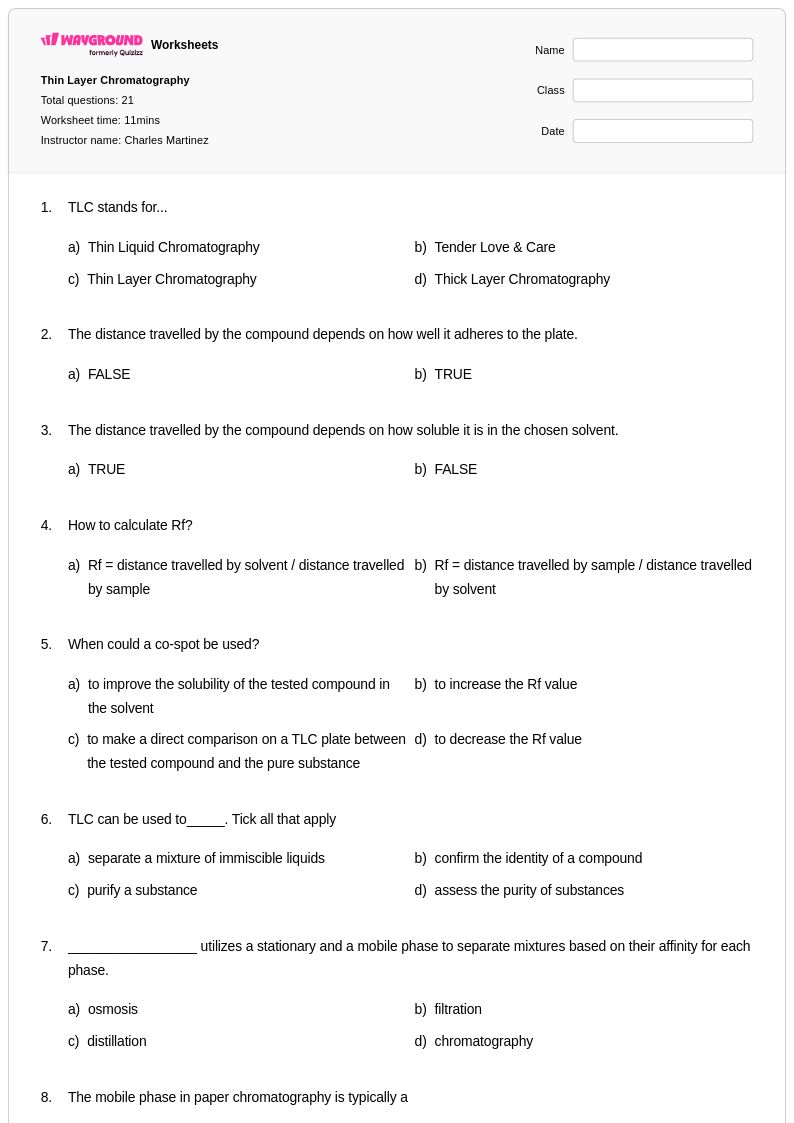
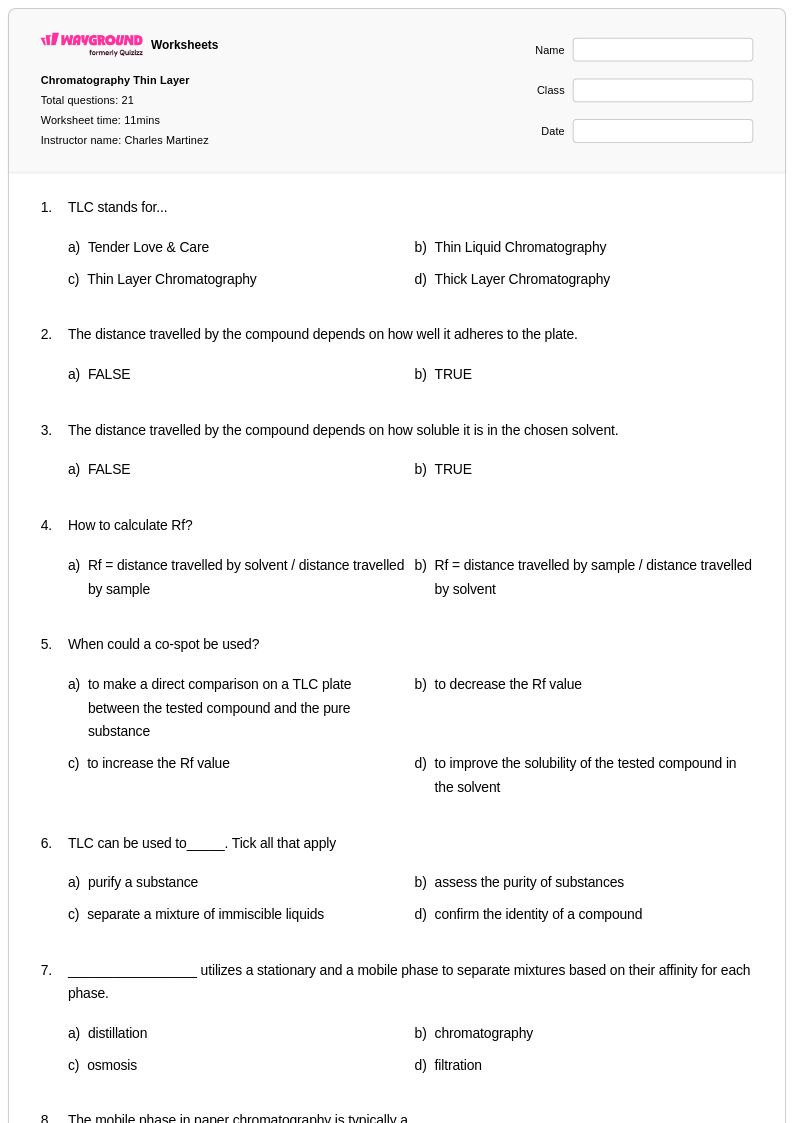
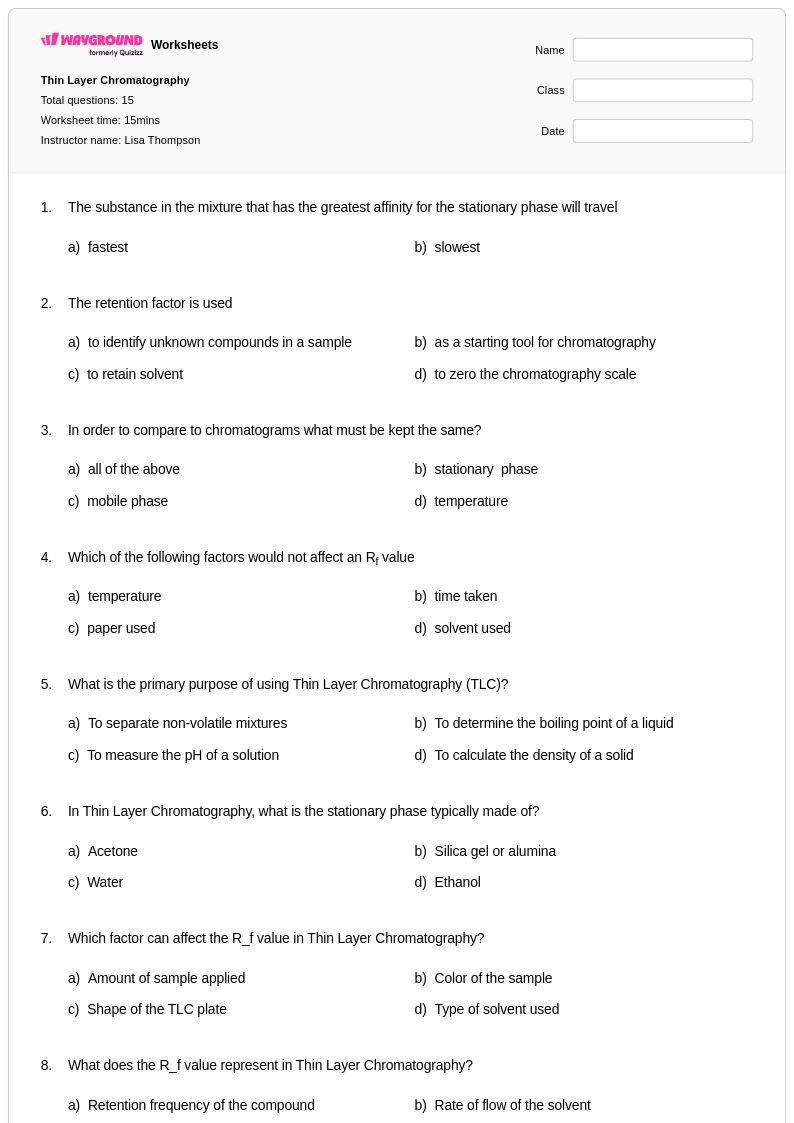
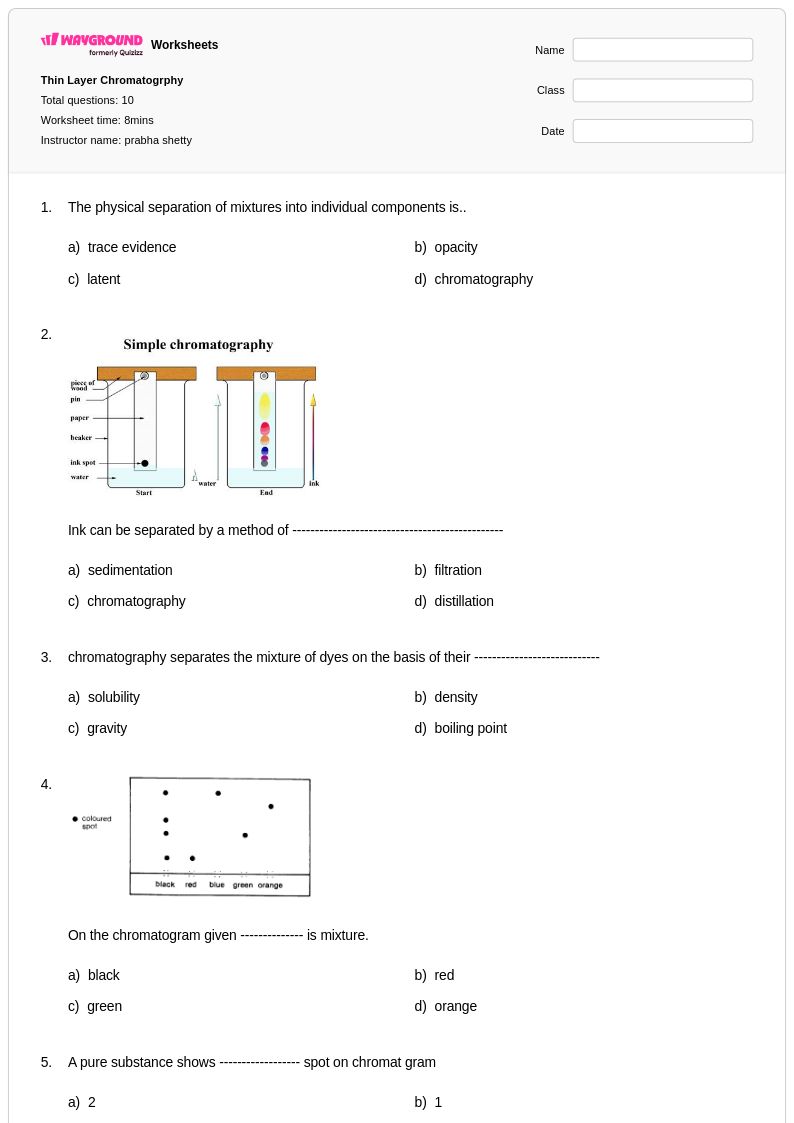
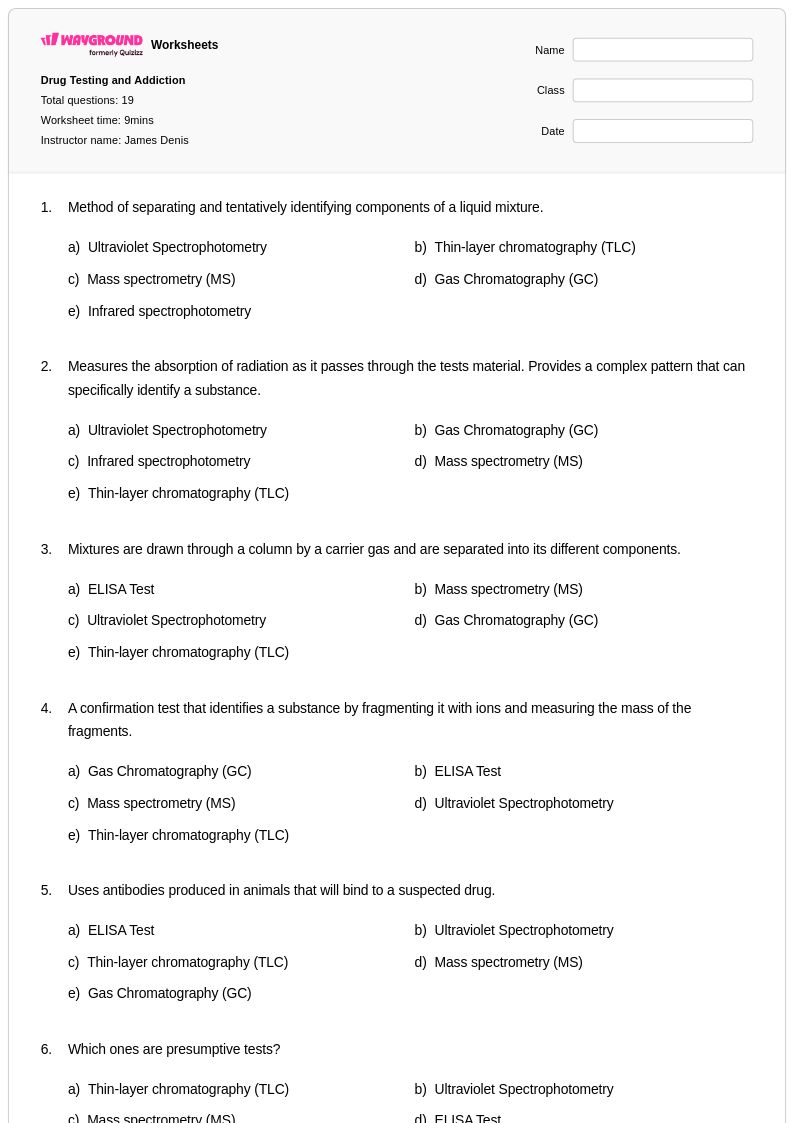
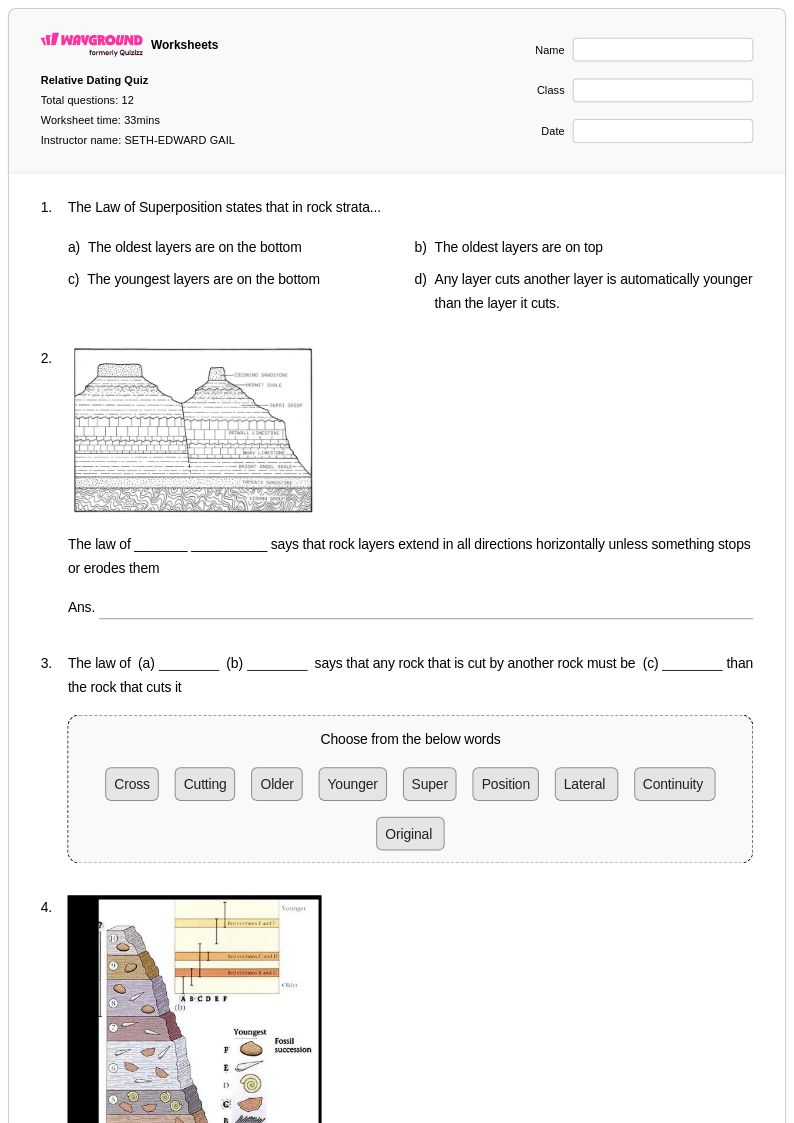
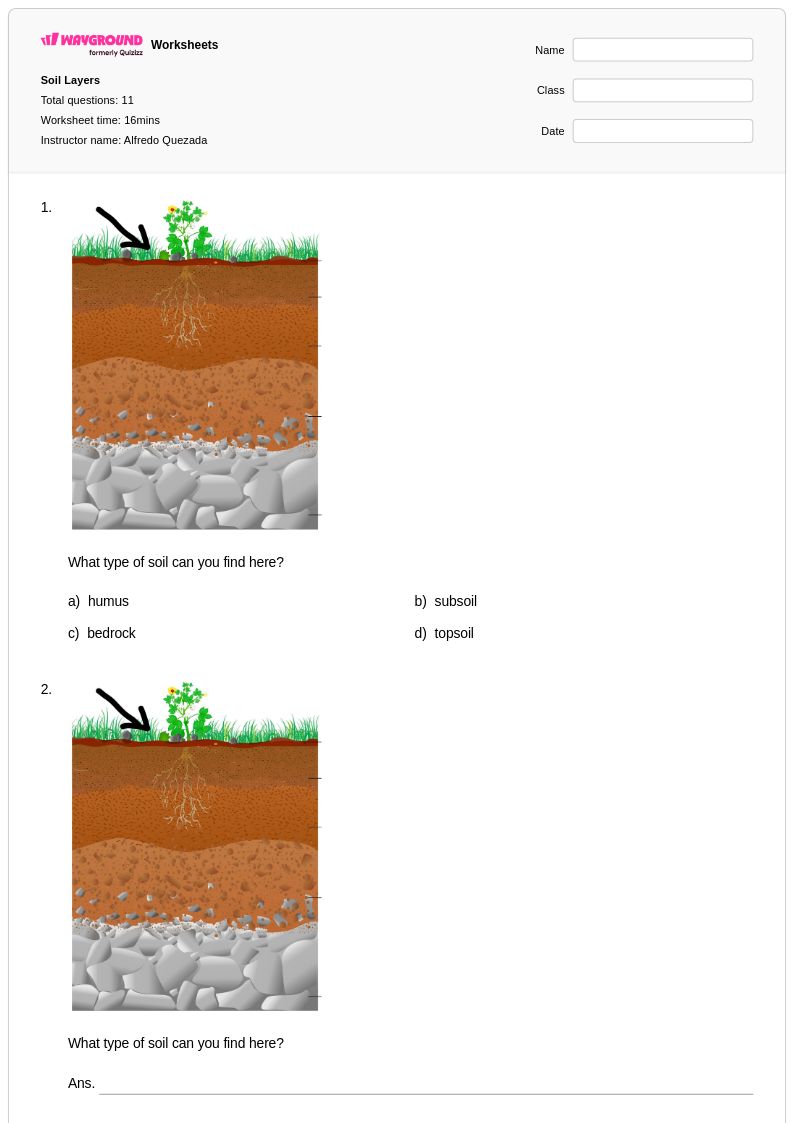
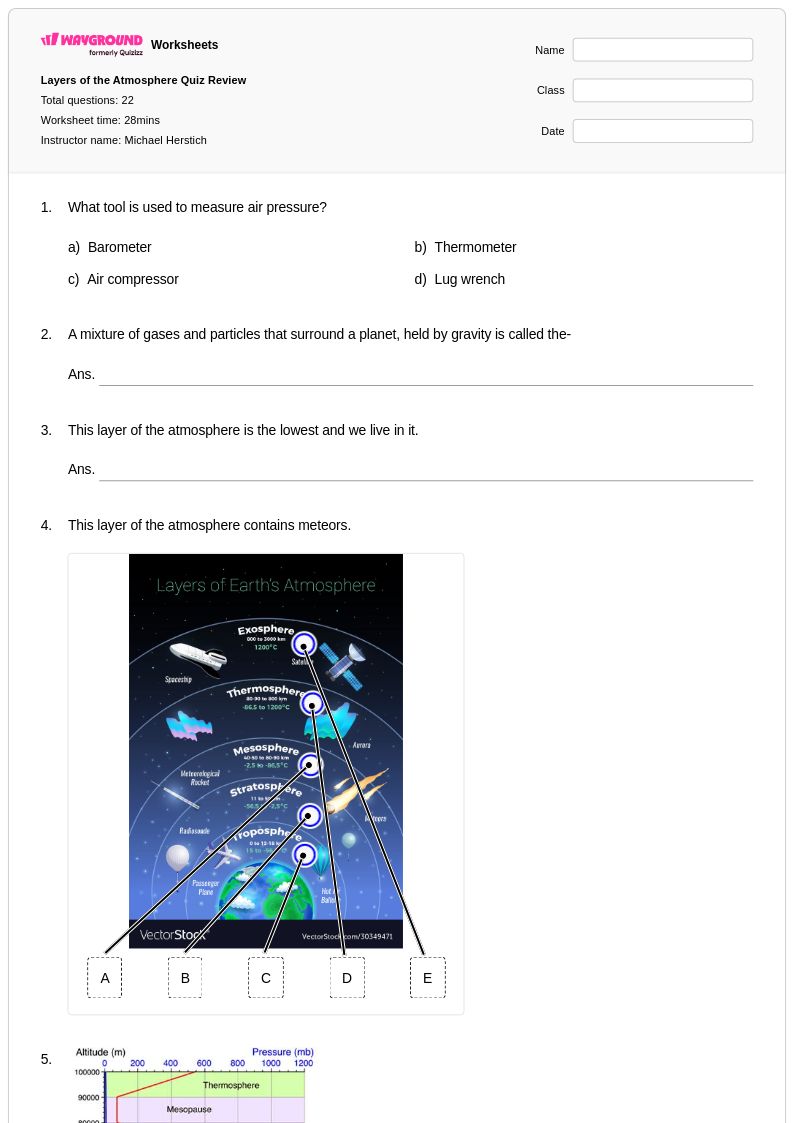
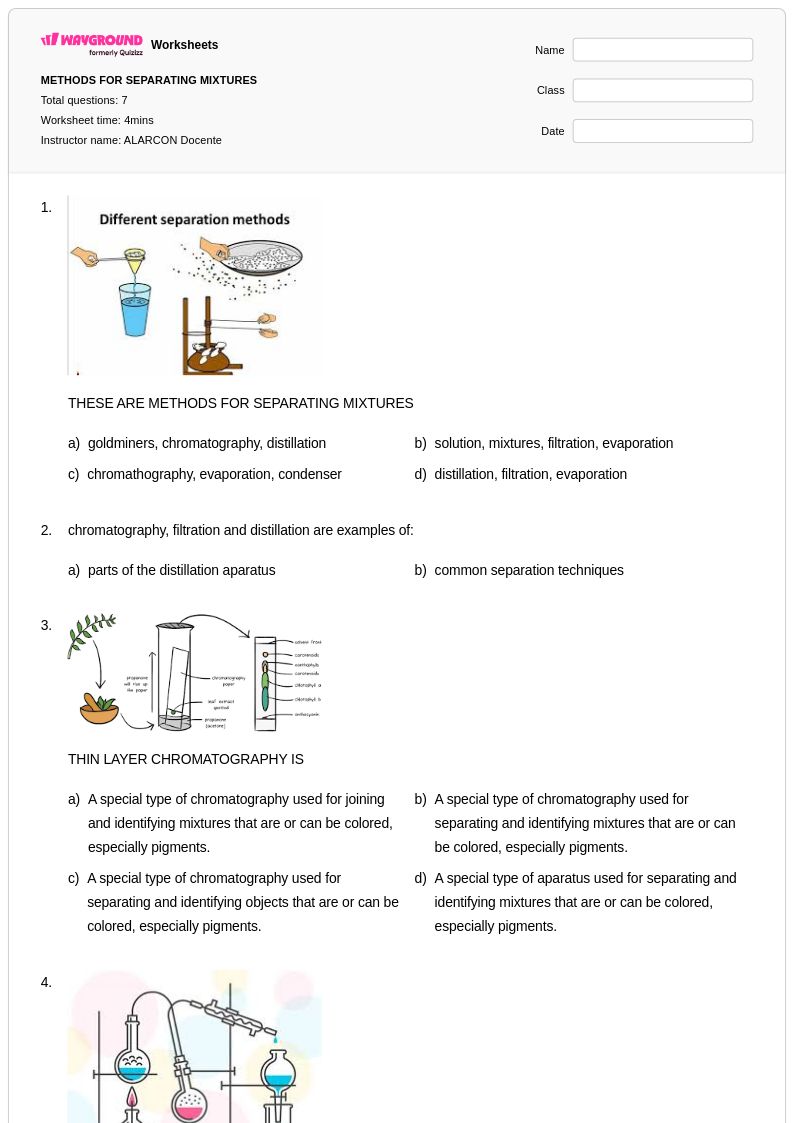
Discover comprehensive thin layer chromatography worksheets and printables that help students master separation techniques, analyze compound mixtures, and understand chromatographic principles through engaging practice problems with detailed answer keys.
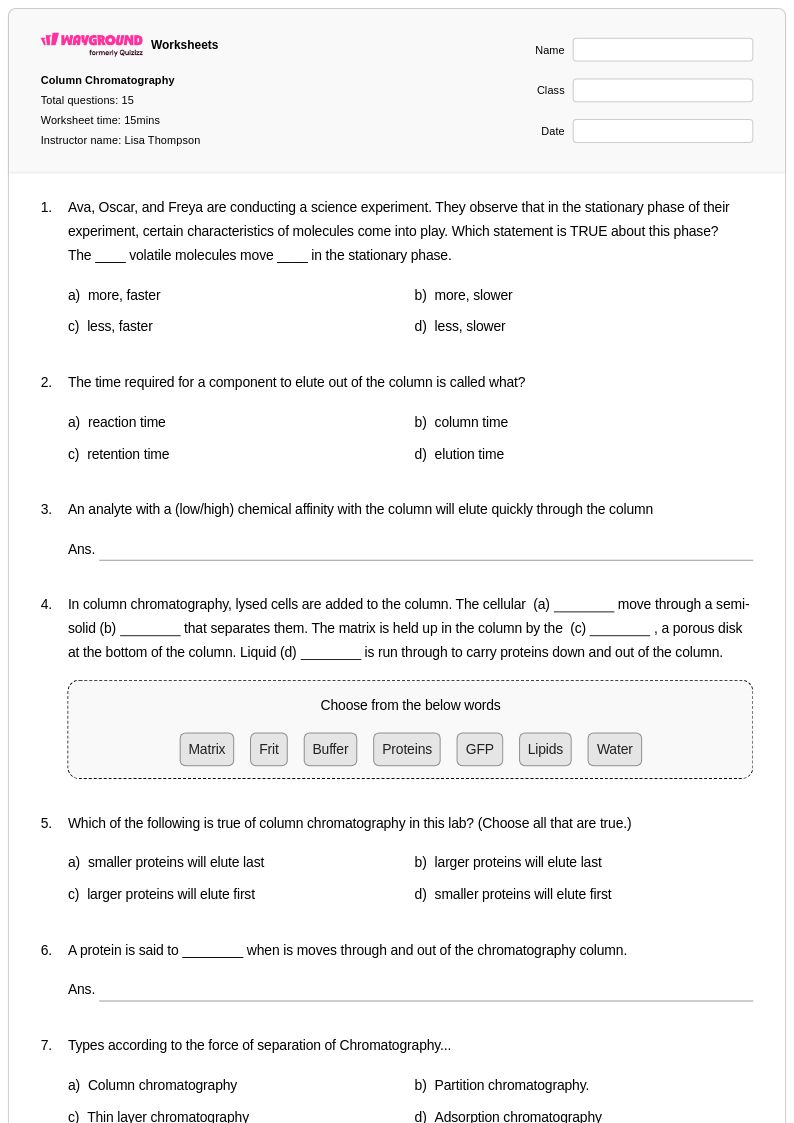
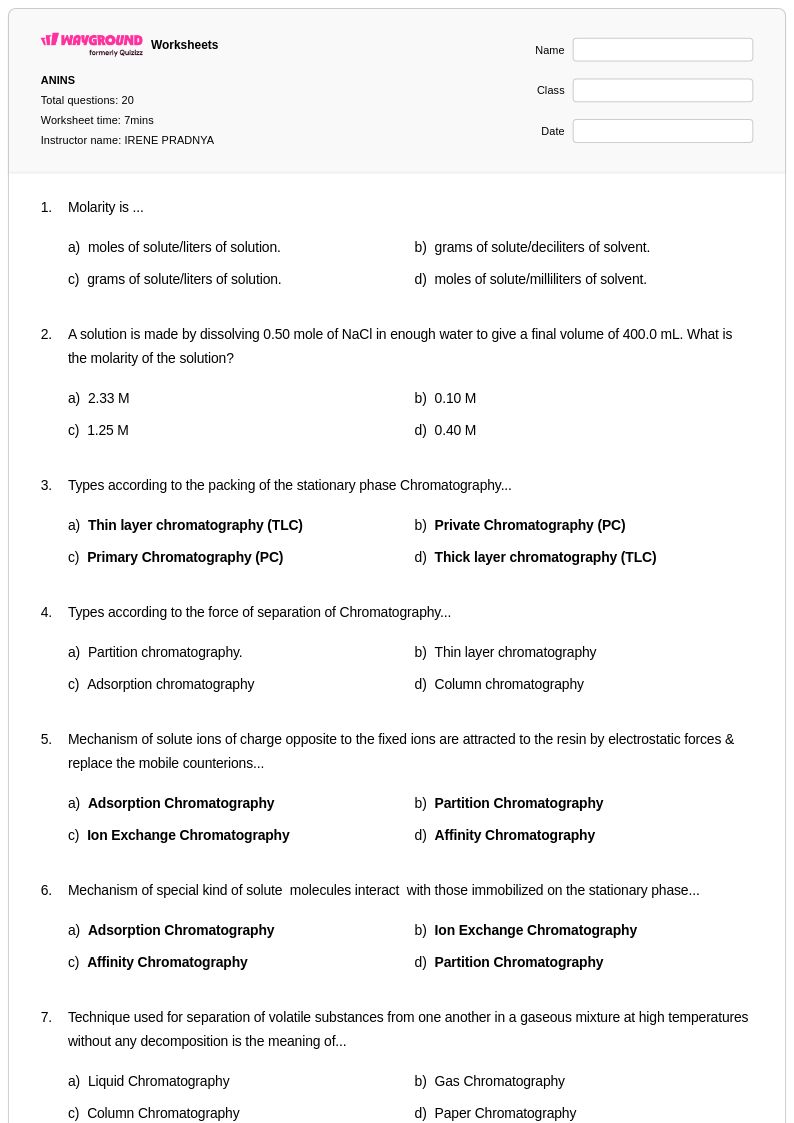
Thin layer chromatography worksheets available through Wayground (formerly Quizizz) provide comprehensive practice materials that help students master this fundamental analytical chemistry technique. These educational resources focus on developing critical skills including understanding the principles of separation based on polarity, calculating retention factor values, interpreting chromatographic results, and applying TLC methodology to identify unknown compounds. The collection includes detailed practice problems that guide students through each step of the chromatographic process, from preparing sample solutions and selecting appropriate mobile phases to analyzing spotted plates and drawing meaningful conclusions from their observations. Many worksheets come with complete answer keys and are available as free printables in convenient pdf format, making them accessible resources for both classroom instruction and independent study.
Wayground's extensive platform supports chemistry educators with millions of teacher-created thin layer chromatography resources that can be easily discovered through robust search and filtering capabilities. The platform's standards alignment features ensure that worksheet collections match specific curriculum requirements, while built-in differentiation tools allow teachers to customize content difficulty levels to meet diverse student needs. These materials are available in both printable pdf formats for traditional classroom use and digital formats for online learning environments, providing maximum flexibility for lesson planning and delivery. Teachers can efficiently utilize these resources for targeted skill practice, remediation sessions for struggling students, and enrichment activities for advanced learners, creating a comprehensive approach to teaching chromatographic analysis techniques that strengthens student understanding through varied practice opportunities.
FAQs
How do I teach thin layer chromatography to chemistry students?
Start by grounding students in the principle that TLC separates compounds based on differences in polarity and their relative affinity for the stationary phase (silica) versus the mobile phase (solvent). Use a hands-on analogy like ink chromatography before moving to formal TLC technique, then walk students through each procedural step: spotting the plate, developing the chamber, and visualizing results under UV light. Reinforce the concept of retention factor (Rf) calculation early, since this value is central to interpreting results and comparing unknowns to reference standards.
What exercises help students practice calculating Rf values in thin layer chromatography?
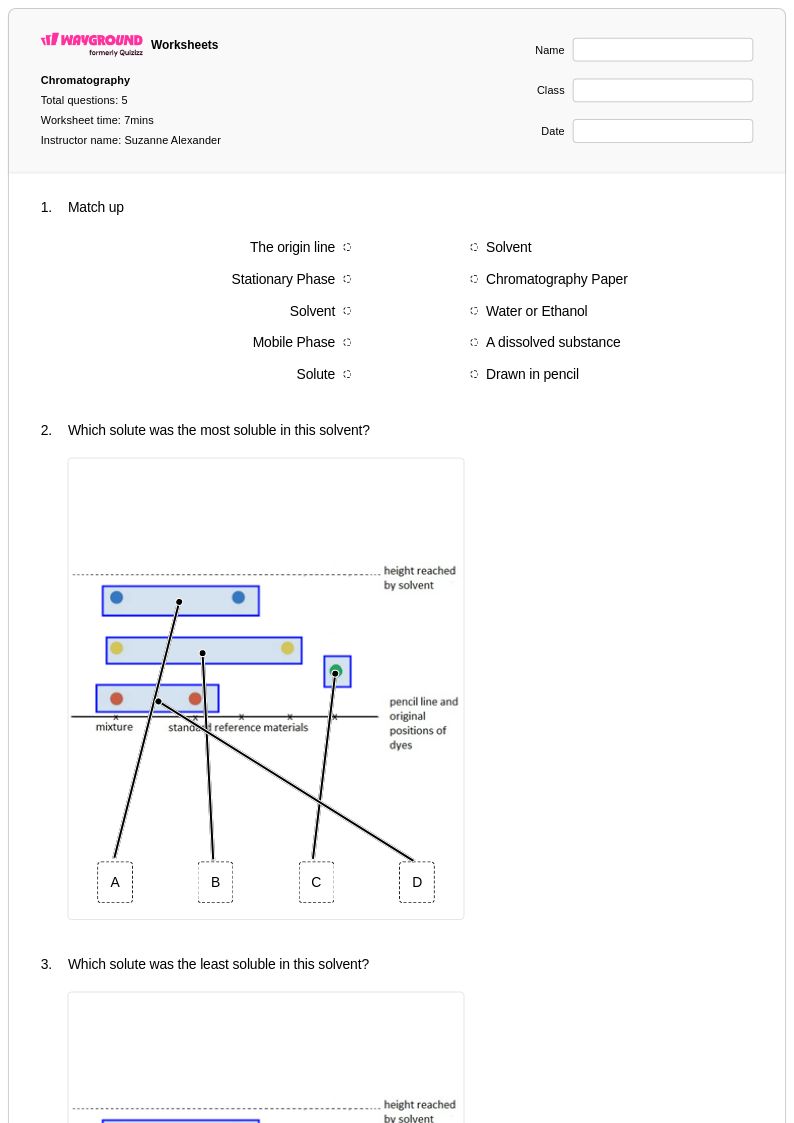
Effective practice problems give students a labeled TLC plate diagram and ask them to measure the distance traveled by each compound spot and the solvent front, then calculate Rf using the formula: distance traveled by compound divided by distance traveled by solvent. Students should practice with multiple spots per plate to compare compounds, and problems should escalate to asking them to identify unknowns by matching Rf values to known reference compounds. Including problems where students must determine which solvent system produced better separation reinforces the connection between polarity and mobile phase selection.
What mistakes do students commonly make when interpreting TLC results?
The most frequent error is measuring Rf from the wrong baseline — students often measure from the top of the plate or the solvent line rather than from the original spotting line. Another common misconception is assuming a higher Rf value always means a more pure compound; Rf indicates polarity behavior, not purity. Students also struggle with over-spotting samples, which causes streaking and makes accurate distance measurement impossible, and with confusing the roles of the stationary and mobile phases when predicting which compounds will travel farther.
How do I use thin layer chromatography worksheets in my chemistry class?
TLC worksheets work well as pre-lab preparation, post-lab analysis tasks, or standalone problem sets for students who need additional practice with Rf calculations and polarity reasoning. On Wayground, these worksheets are available as printable PDFs for traditional lab-adjacent instruction and in digital formats for technology-integrated classrooms, and teachers can host them as interactive quizzes directly on the platform. Using the digital format allows for immediate feedback, which is especially useful when students are first learning to interpret chromatographic data.
How do I differentiate TLC instruction for students at different skill levels?
For students who are still building foundational skills, simplify plate diagrams to single-compound spots and provide scaffolded Rf calculation steps before asking for independent work. Advanced students can be challenged with multi-compound separation problems, solvent polarity comparison tasks, or questions requiring them to predict separation outcomes before seeing results. On Wayground, teachers can apply accommodations such as reduced answer choices and read-aloud support for individual students, ensuring that the same worksheet resource can serve a full range of learners without requiring separate materials.
How do I assess whether students understand the polarity principles behind TLC separation?
Strong assessment items go beyond Rf calculation and ask students to predict which of two compounds will travel farther on a silica plate given their structural formulas, or to explain why changing the solvent polarity shifts compound mobility. Asking students to justify their reasoning — not just produce a number — reveals whether they understand the like-dissolves-like principle driving separation. Common misconceptions to probe include the belief that heavier compounds always travel less far, and confusion about whether a polar mobile phase increases or decreases Rf for a polar analyte.