Free Printable Nomenclature for Ionic Compounds worksheets
Master ionic compound nomenclature with Wayground's comprehensive collection of free worksheets, printables, and practice problems that help students learn systematic naming rules, chemical formulas, and bonding concepts through engaging PDF exercises with complete answer keys.
Explore printable Nomenclature for Ionic Compounds worksheets
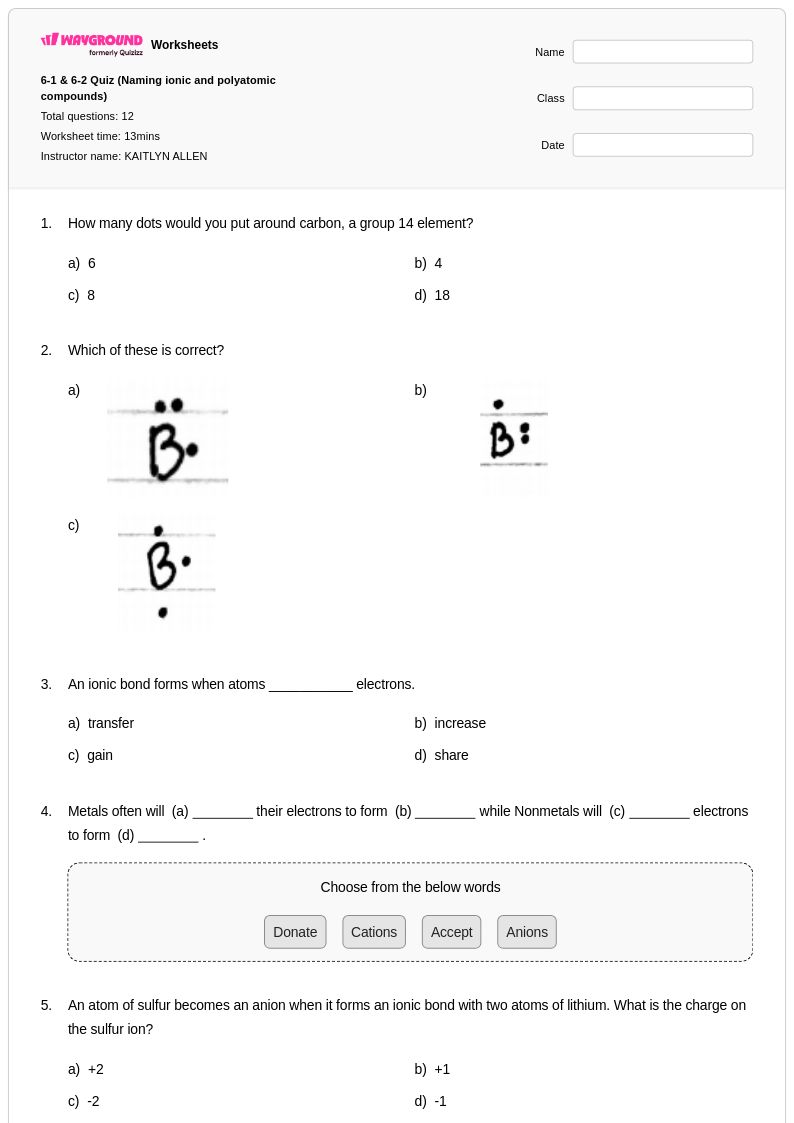
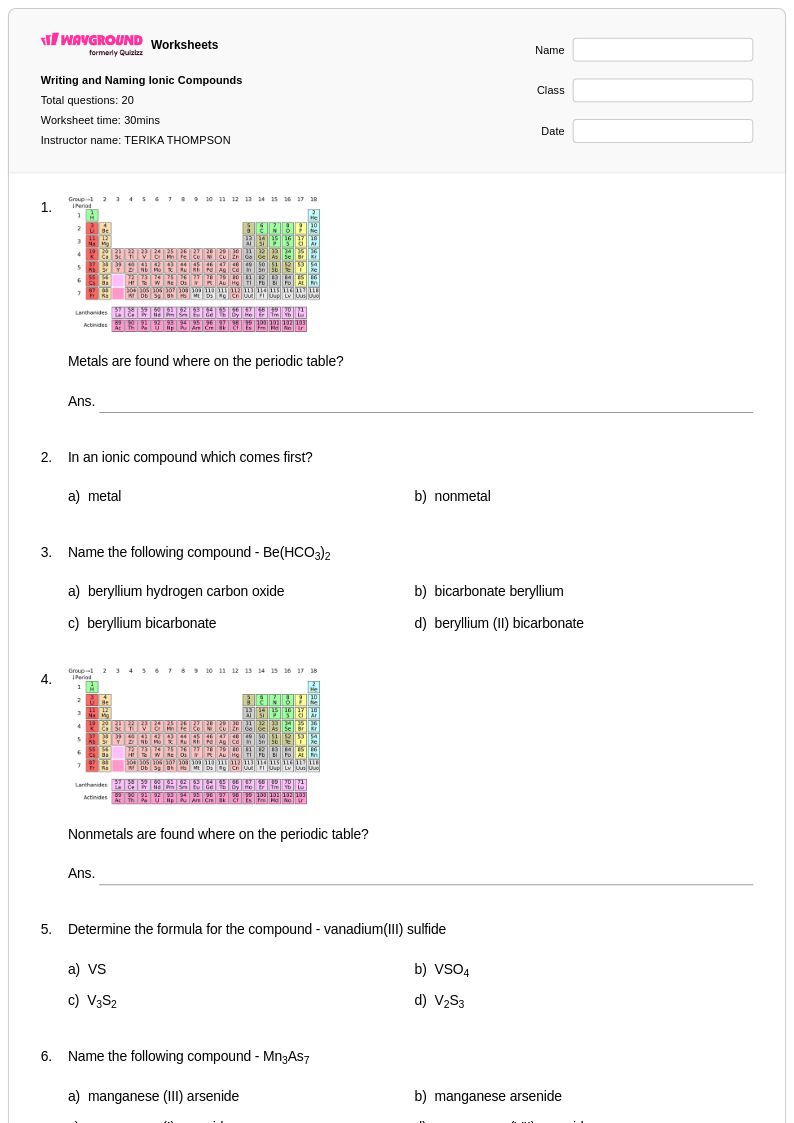
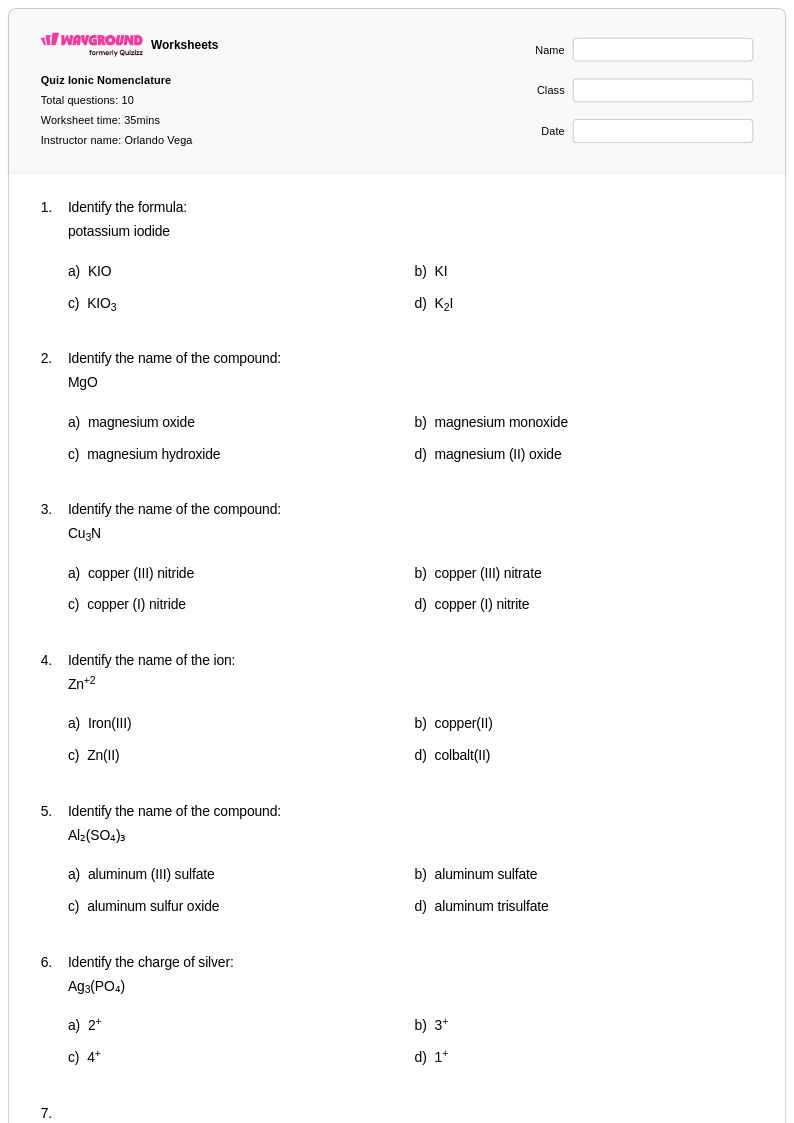
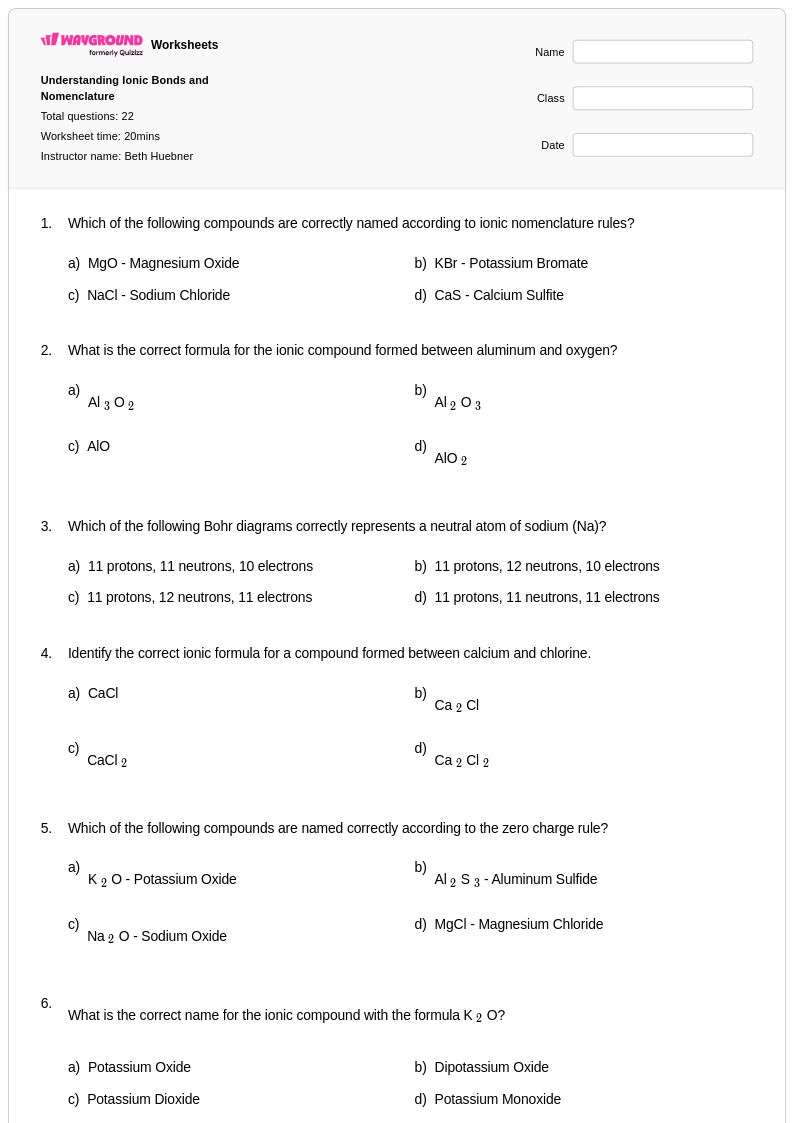
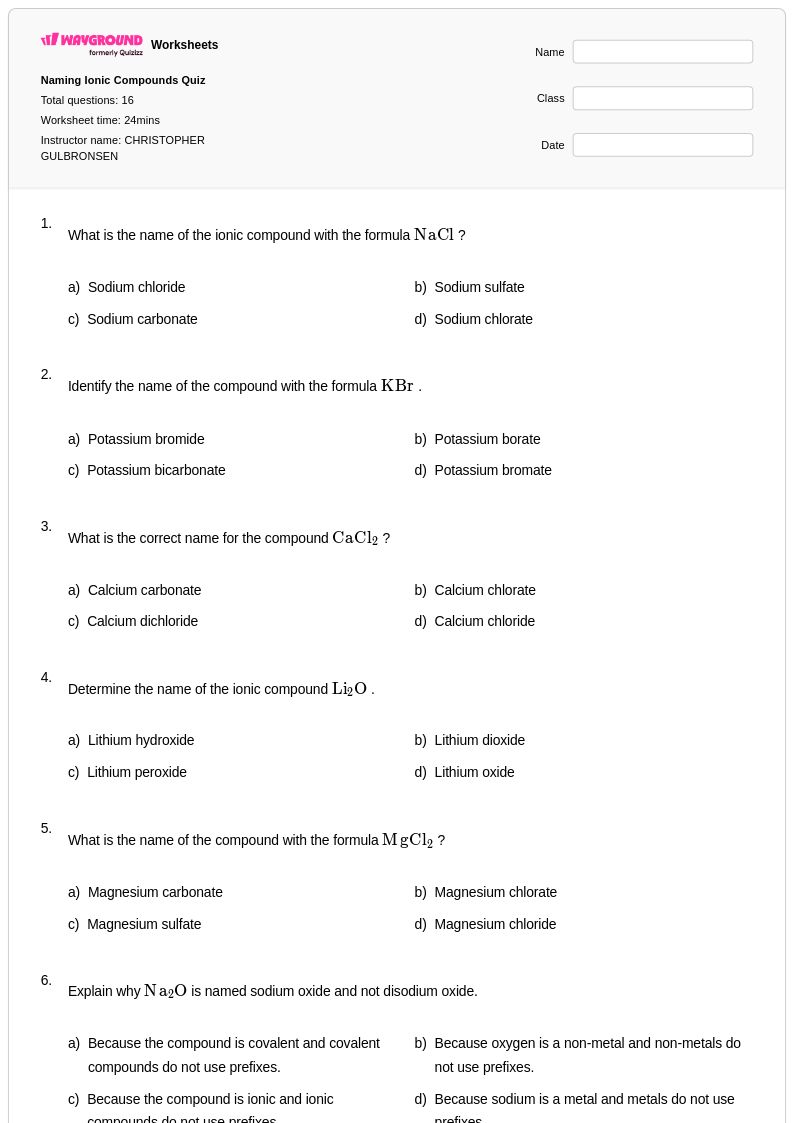
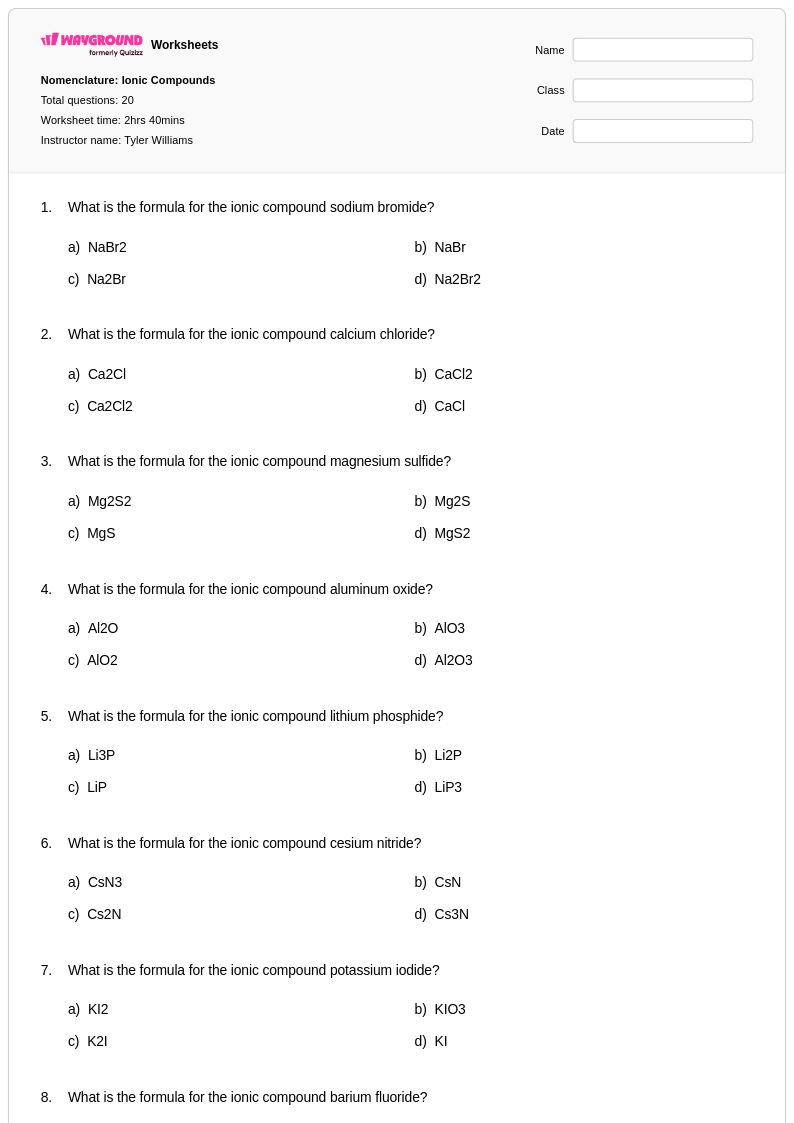
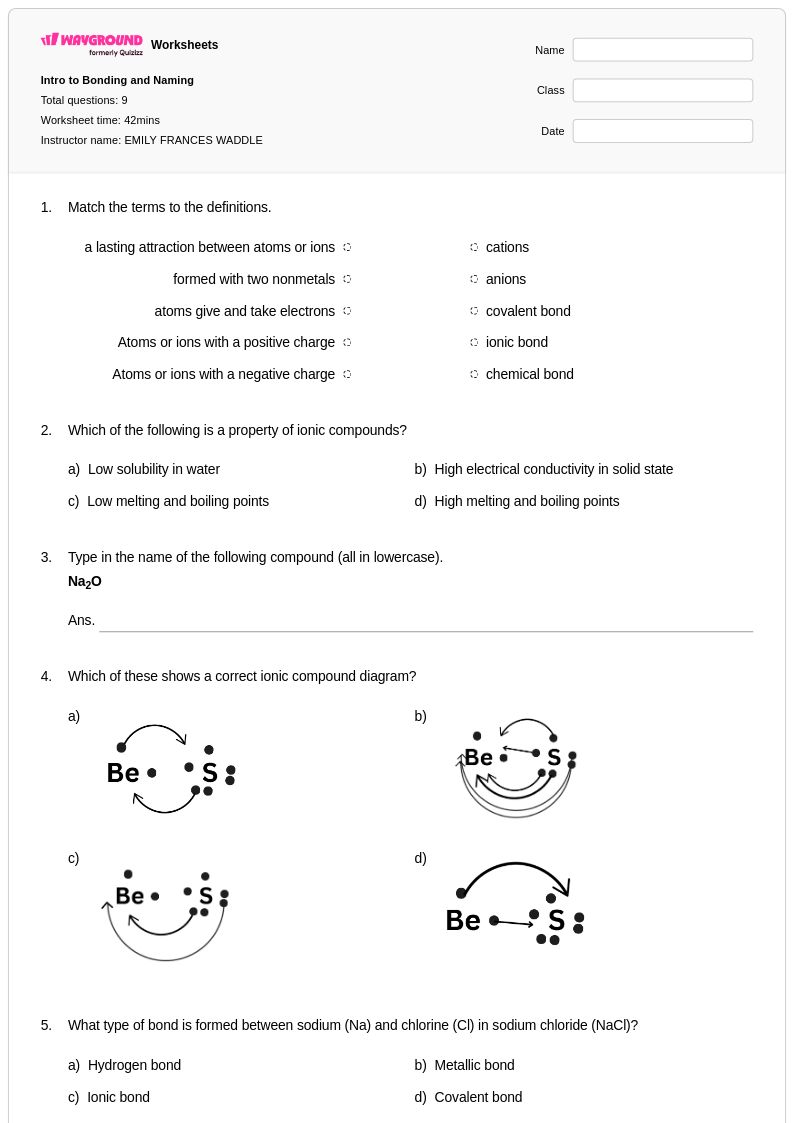
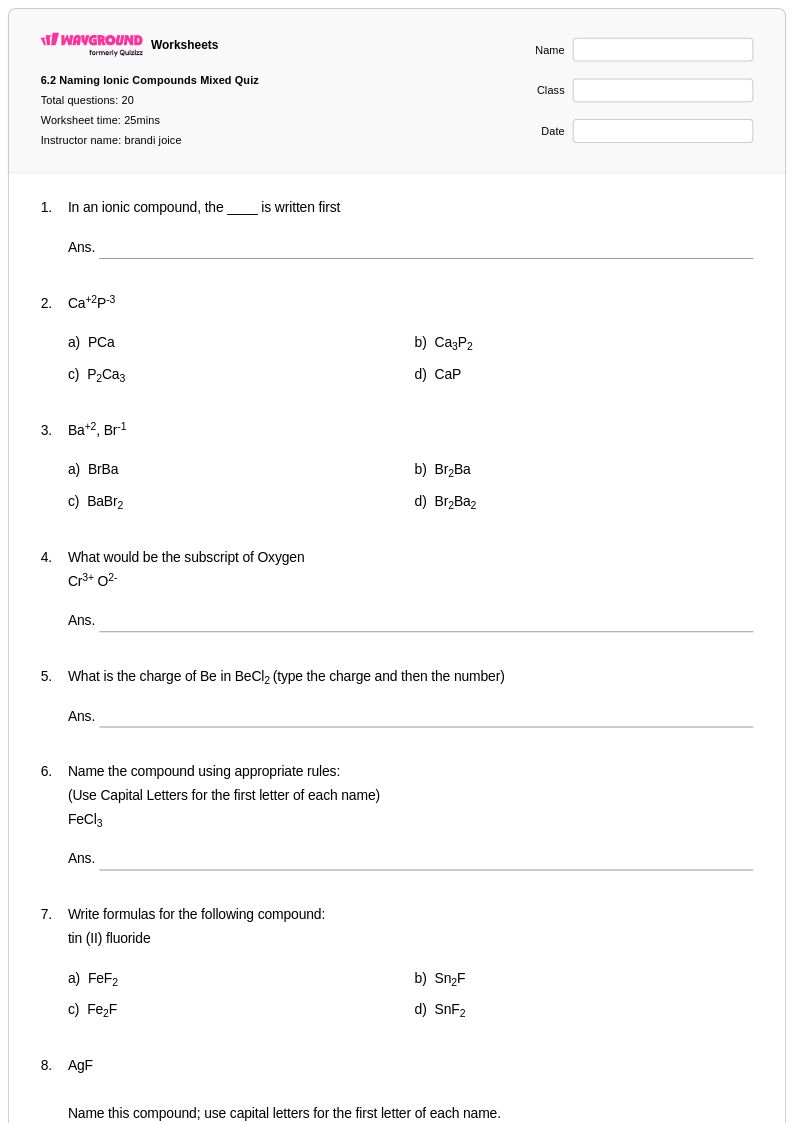
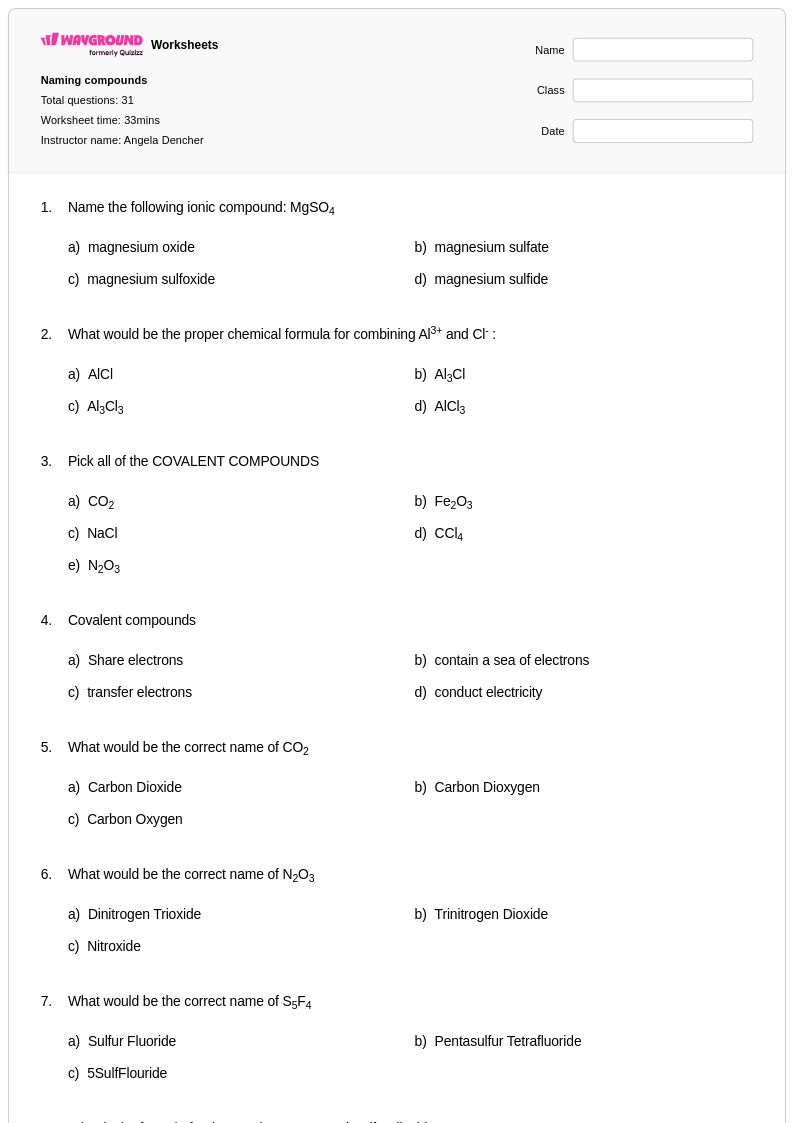
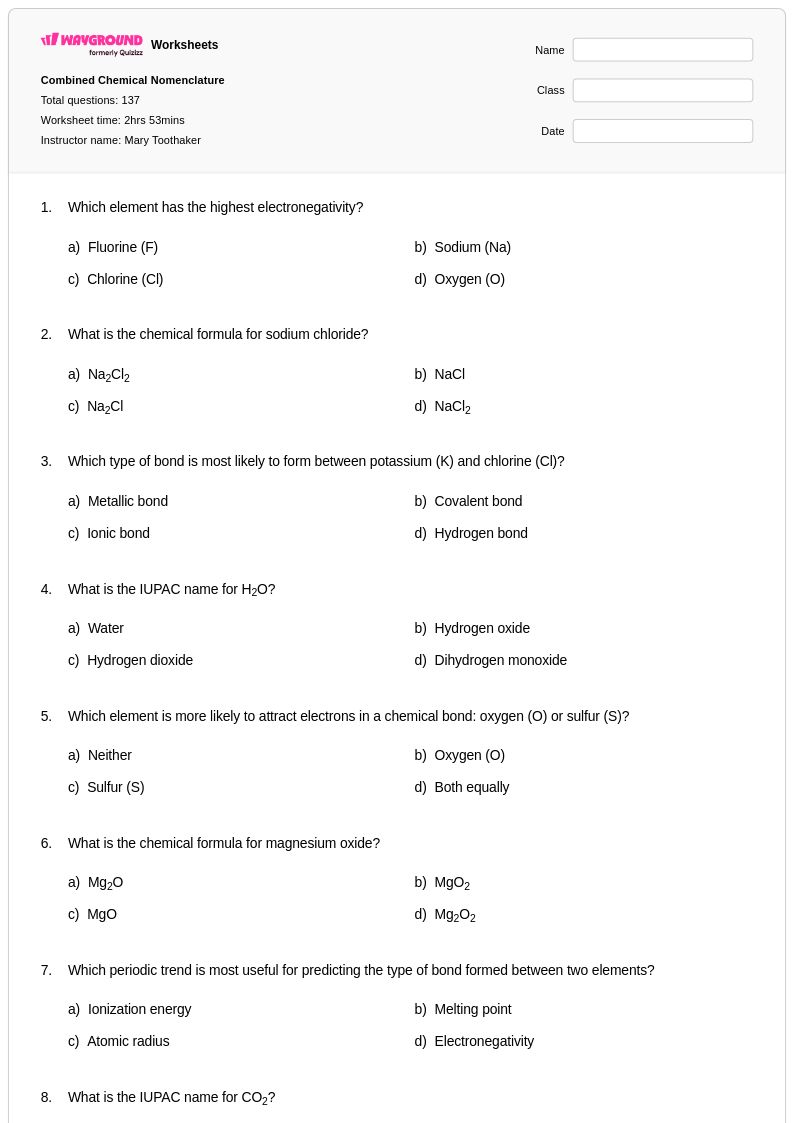
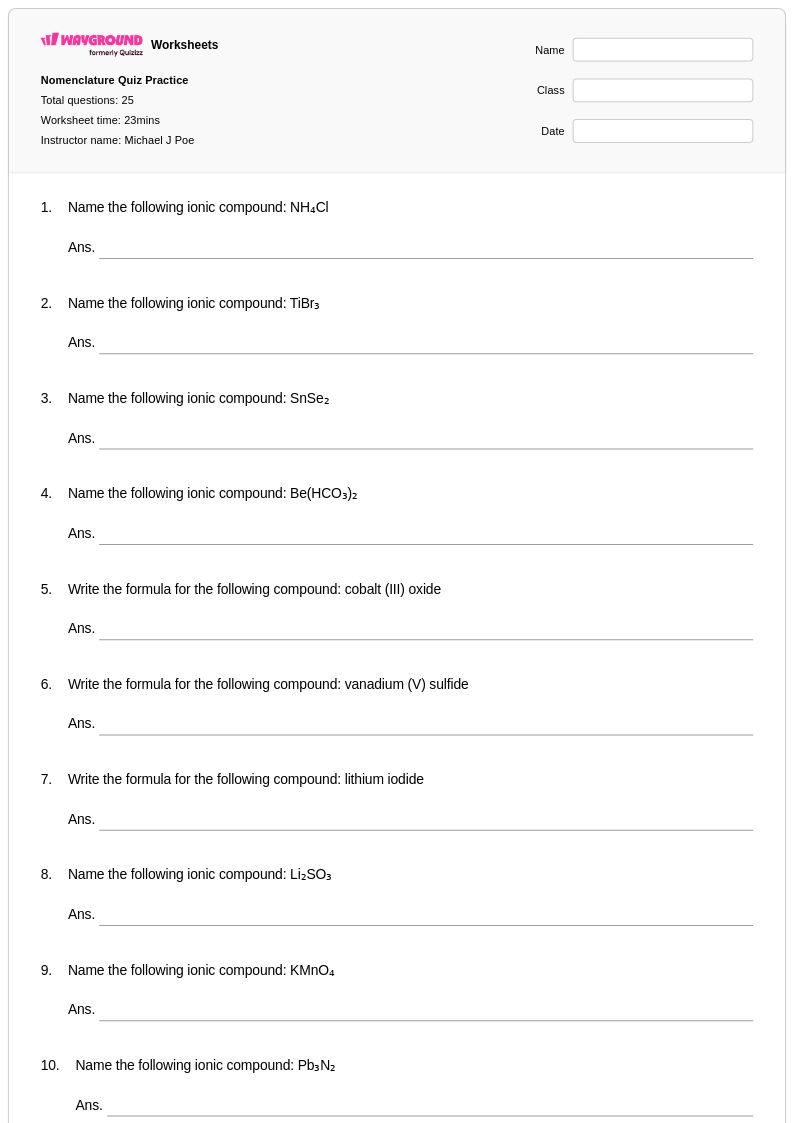
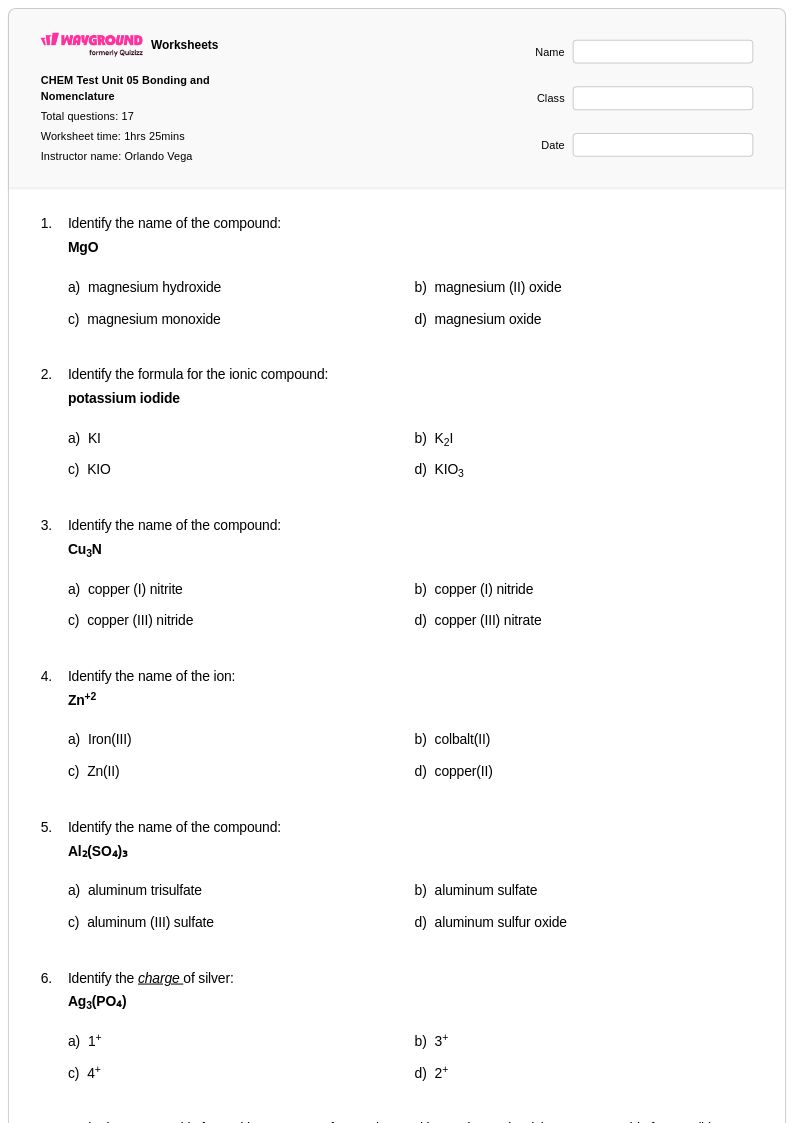
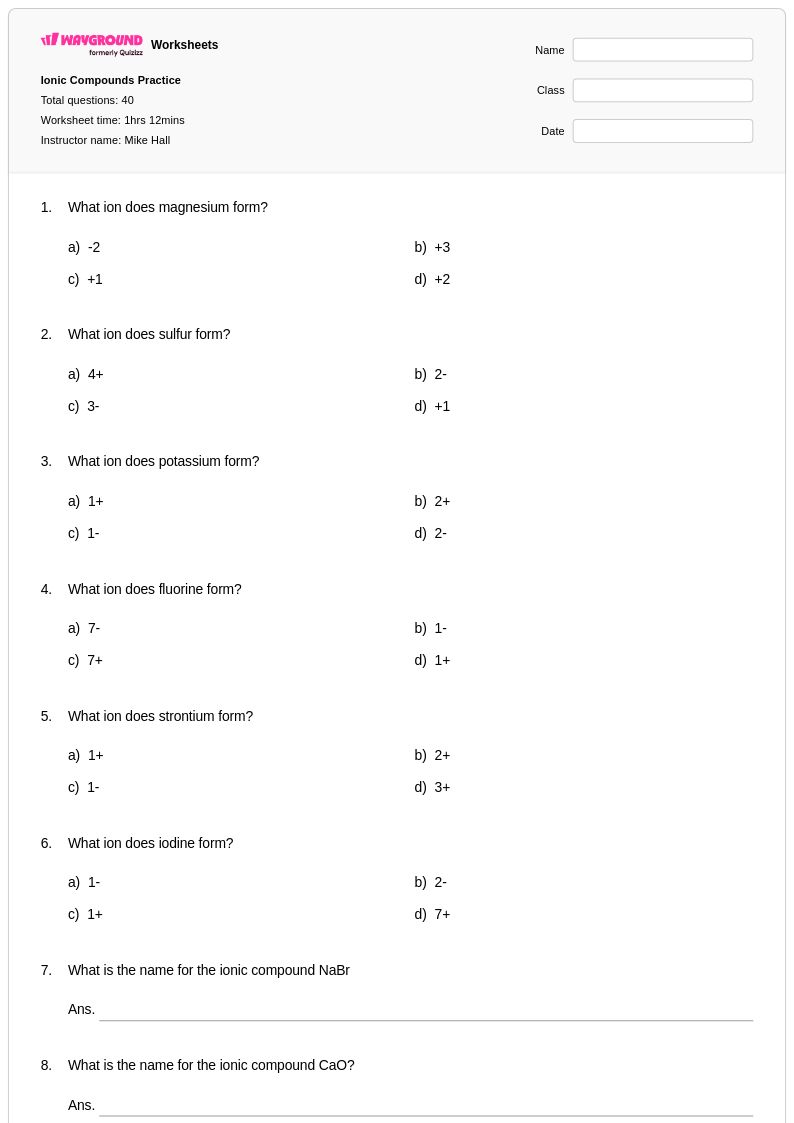
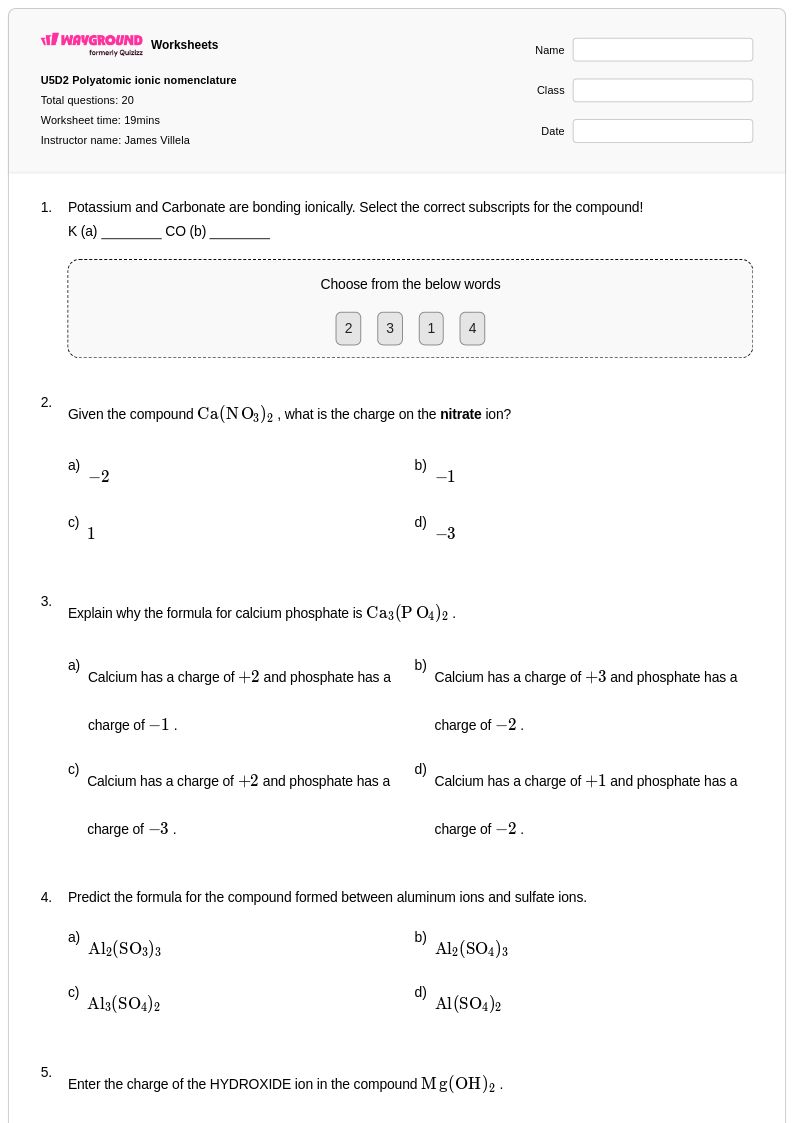
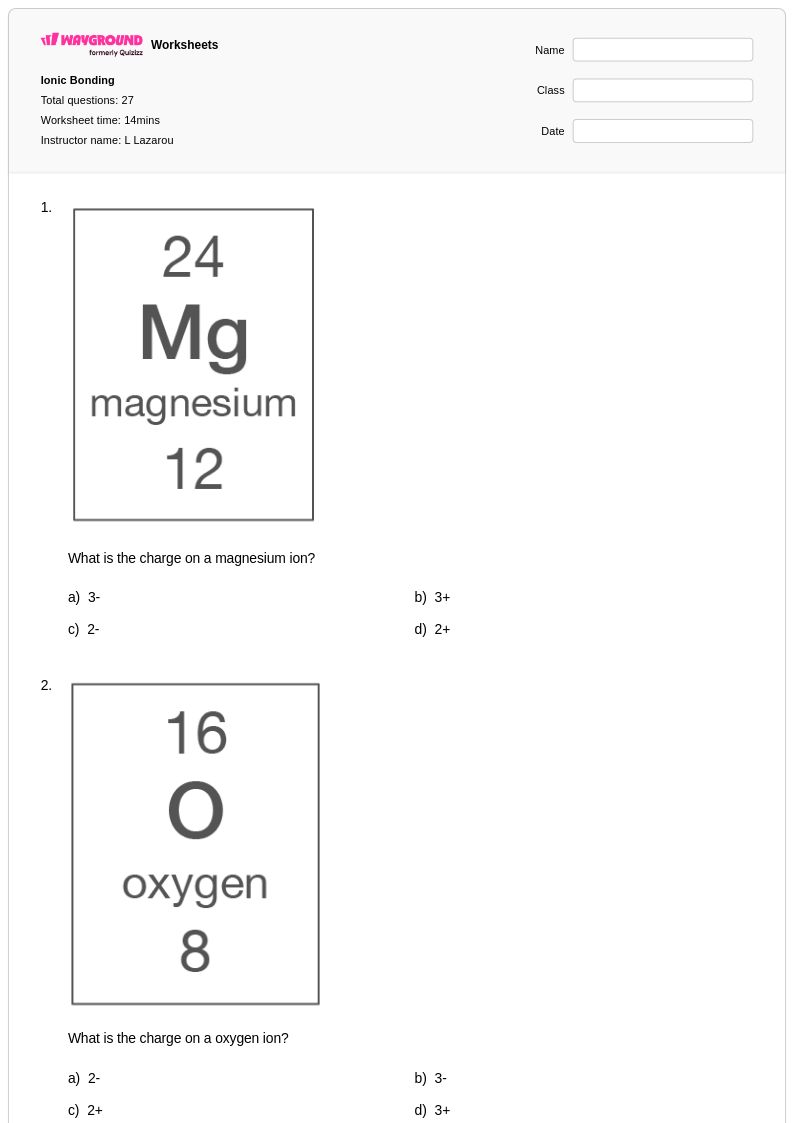
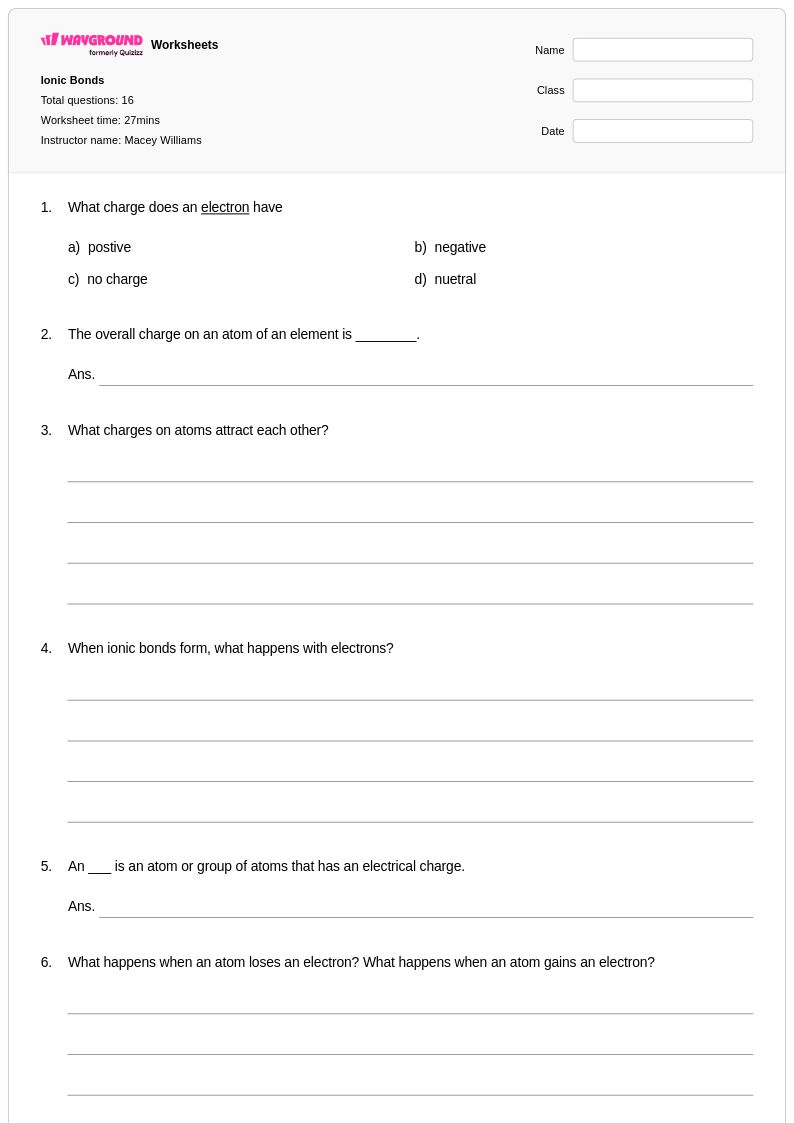
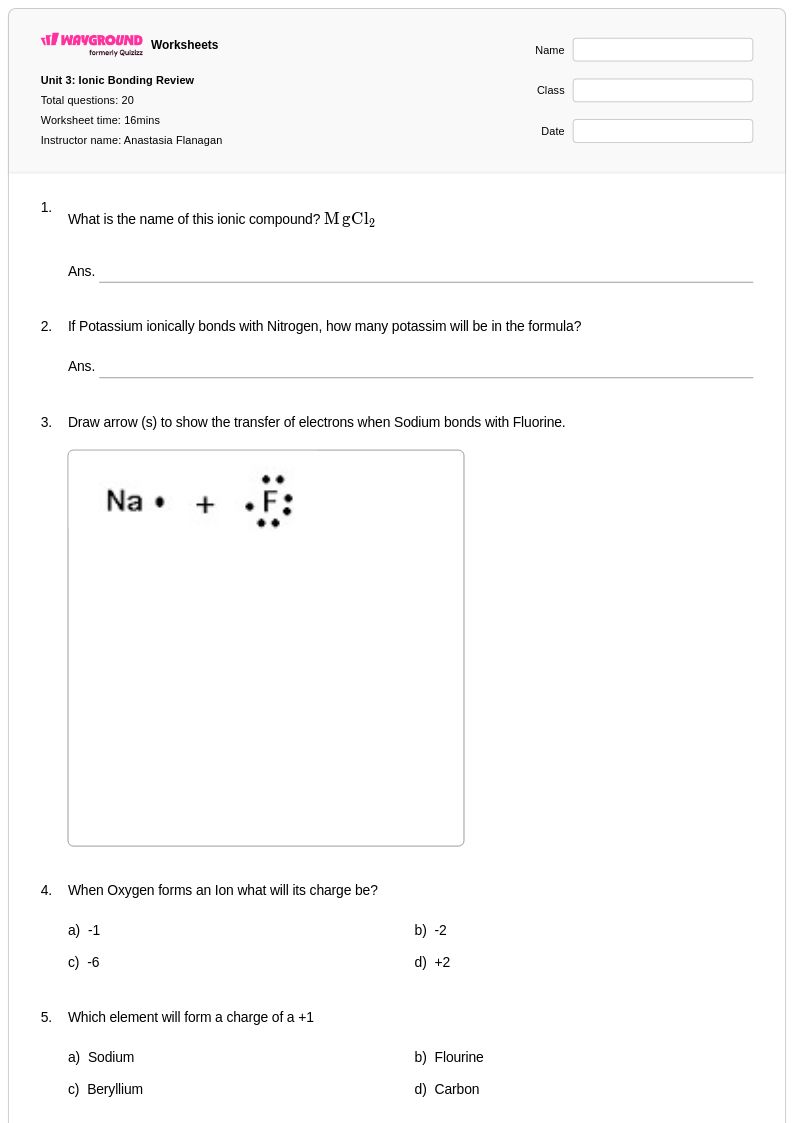
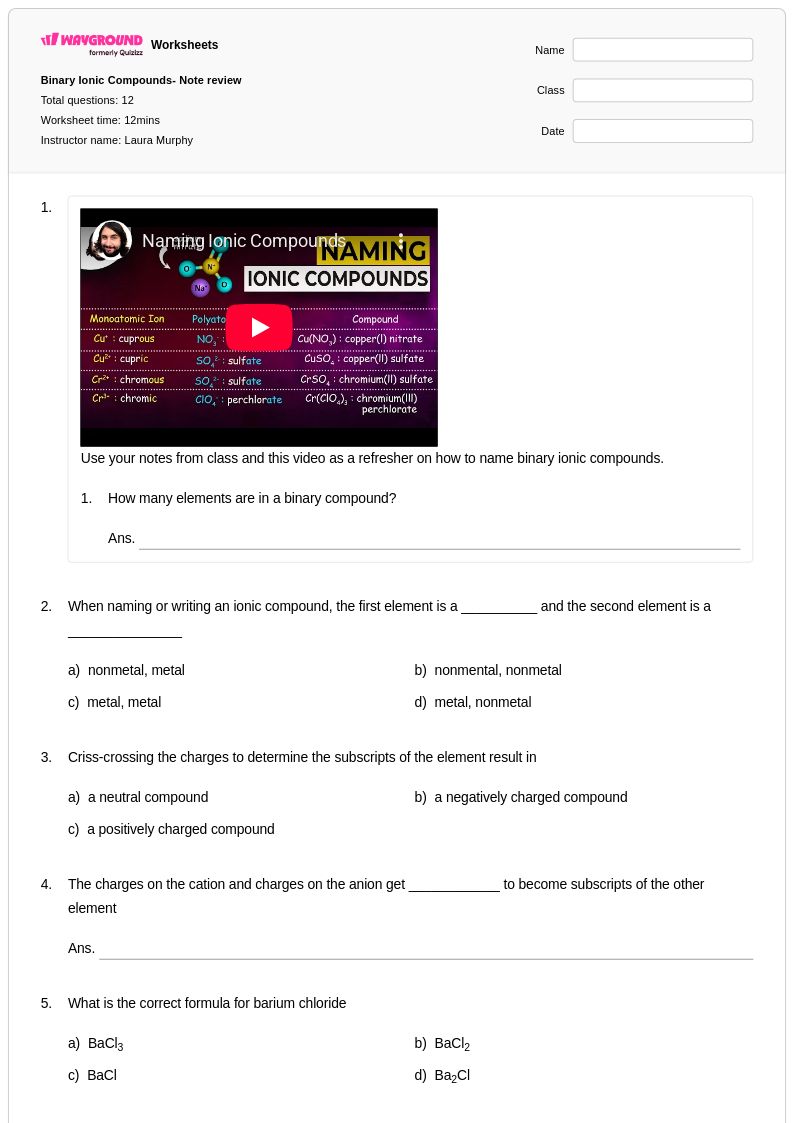
Nomenclature for ionic compounds represents a fundamental skill in chemistry education, requiring students to master the systematic naming conventions that govern how ionic substances are identified and communicated in scientific contexts. Wayground's comprehensive collection of nomenclature worksheets provides educators with extensive practice problems that guide students through the essential processes of naming ionic compounds from their chemical formulas and writing correct formulas from compound names. These carefully structured worksheets strengthen critical thinking skills by requiring students to identify cations and anions, apply proper naming rules for monatomic and polyatomic ions, and recognize patterns in chemical nomenclature systems. Each worksheet includes detailed answer keys that support both independent study and classroom instruction, while the free printable format ensures accessibility for diverse learning environments and study preferences.
Wayground's platform empowers chemistry teachers with millions of educator-created resources specifically designed to support ionic compound nomenclature instruction across various skill levels and learning objectives. The platform's robust search and filtering capabilities enable teachers to quickly locate worksheets that align with specific curriculum standards and match their students' current understanding of chemical naming conventions. Teachers can easily customize these digital and printable resources to accommodate different learning paces, create differentiated assignments for remediation or enrichment, and generate multiple versions for assessment purposes. The flexibility of both pdf downloads and interactive digital formats allows educators to seamlessly integrate nomenclature practice into diverse instructional models, whether supporting struggling students who need additional skill reinforcement or challenging advanced learners with more complex polyatomic ion combinations and transition metal compounds.
FAQs
How do I teach ionic compound nomenclature to chemistry students?
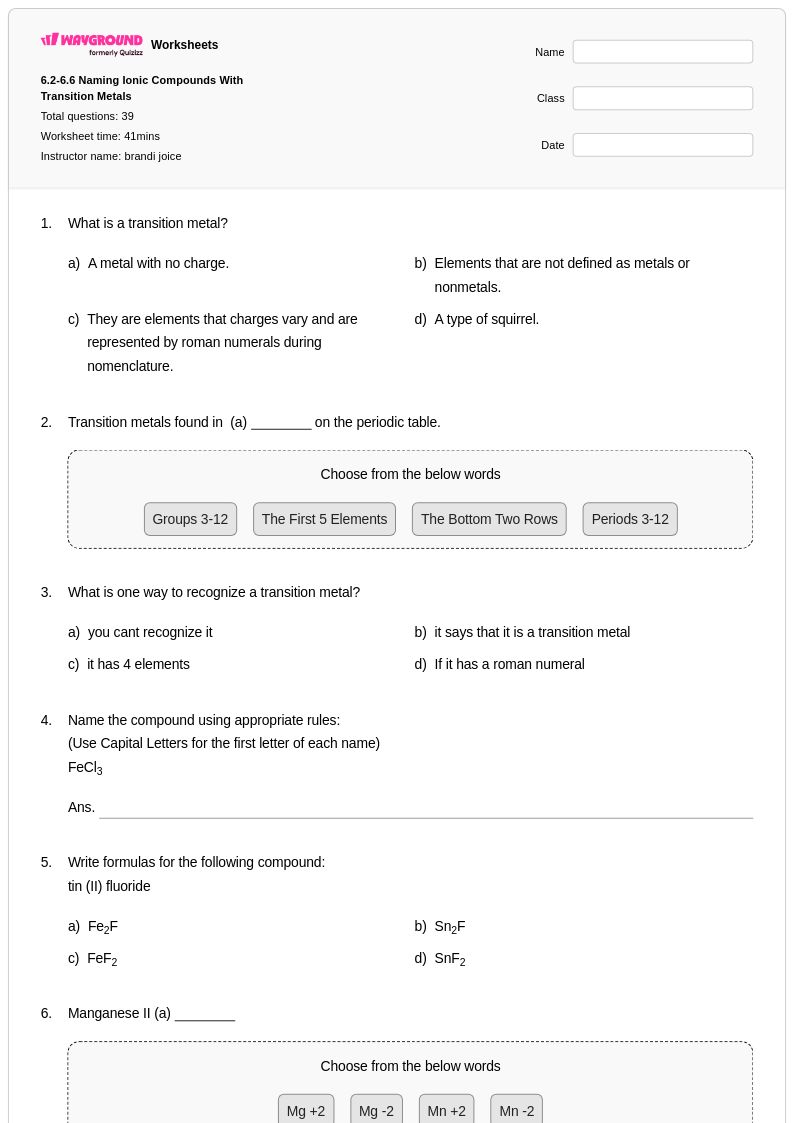
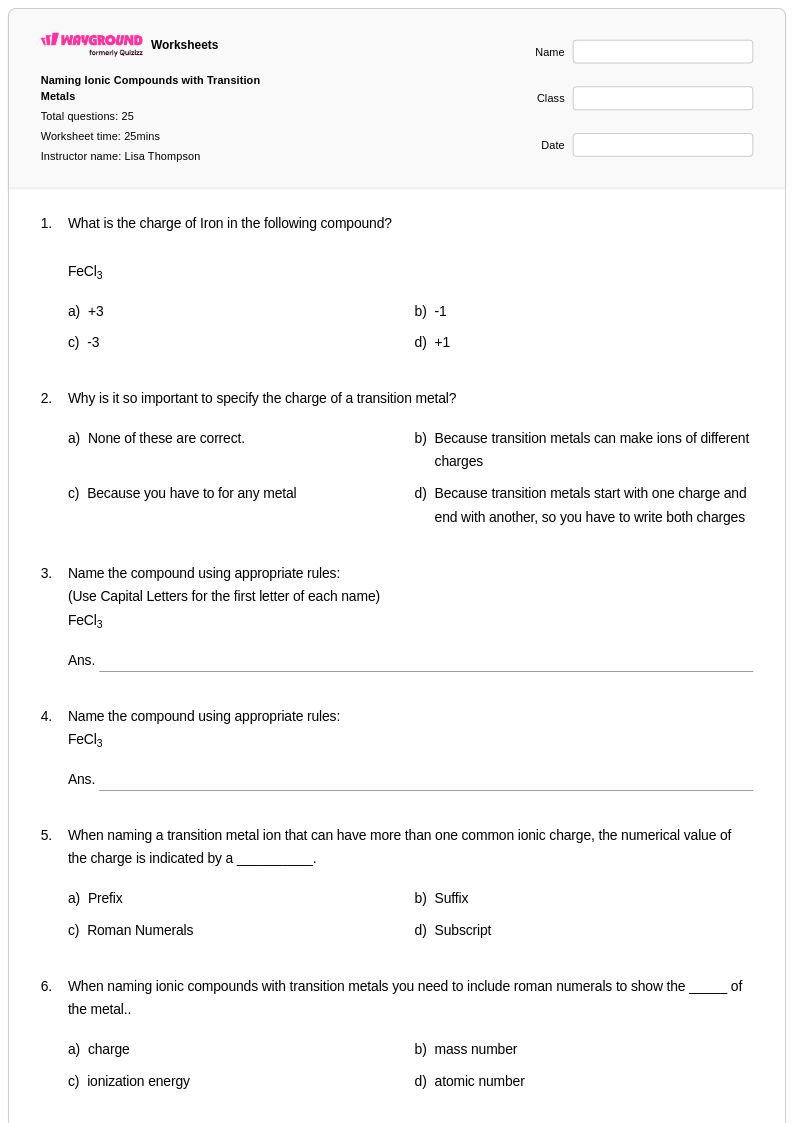
Start by teaching students to distinguish between cations and anions before introducing naming rules, since the entire system depends on correctly identifying each ion type. Introduce monatomic ions first using the periodic table to establish patterns, then layer in polyatomic ions like sulfate, nitrate, and ammonium once students are comfortable with binary compounds. Transition metals require a separate instructional step, as students must determine the metal's oxidation state from the compound's overall charge and express it using Roman numerals in the name. Using worked examples alongside guided practice problems helps students internalize each rule before applying it independently.
What exercises help students practice naming ionic compounds?
The most effective practice alternates between two complementary tasks: naming ionic compounds from their chemical formulas and writing formulas from compound names. This bidirectional approach reinforces that students truly understand the system rather than memorizing patterns in one direction. Exercises that mix monatomic, polyatomic, and transition metal compounds within the same worksheet build fluency by requiring students to identify which naming rule applies before answering. Timed practice sets can help students develop automaticity with common ion names and charges, which is essential before they encounter more complex reaction and stoichiometry problems.
What mistakes do students commonly make when naming ionic compounds?
One of the most frequent errors is applying covalent naming rules to ionic compounds, particularly adding prefixes like 'di-' or 'tri-' where they do not belong. Students also struggle with transition metals, often forgetting to include the Roman numeral indicating oxidation state or calculating it incorrectly from the compound's formula. Polyatomic ion names are another common stumbling block, as students frequently confuse ions with similar names, such as sulfate and sulfite or nitrate and nitrite. Reinforcing the distinction between ionic and covalent naming conventions early and returning to it frequently reduces these errors significantly.
How do I differentiate ionic compound naming practice for students at different skill levels?
For students who are still developing foundational skills, begin with binary ionic compounds using metals with fixed charges before introducing variable-charge transition metals or polyatomic ions. More advanced students can be challenged with compounds that combine polyatomic ions and transition metals, which require applying multiple naming rules simultaneously. On Wayground, teachers can apply accommodations such as reduced answer choices for students who need additional support, which lowers cognitive load without removing the conceptual challenge. Extended time settings and read-aloud options are also available for individual students, allowing the same worksheet to serve the full range of learners in a single class.
How can I use Wayground's ionic compound nomenclature worksheets in my classroom?
Wayground's nomenclature for ionic compounds worksheets are available as printable PDFs, making them easy to distribute for in-class practice, homework, or review, and in digital formats that support technology-integrated classrooms and remote learning. Teachers can also host these worksheets as a quiz directly on Wayground, enabling students to complete them interactively while the platform handles grading. Every worksheet includes a complete answer key, so teachers can use them for self-paced independent study, peer review, or formative assessment without additional preparation. The availability of both formats means the same resource can be used across different instructional contexts without modification.
When should students learn ionic compound nomenclature in a chemistry course?
Ionic compound nomenclature is typically introduced in the first semester of a high school chemistry course, after students have learned basic atomic structure, the periodic table, and the concept of ions. It serves as a prerequisite skill for writing and balancing chemical equations, understanding reaction types, and working through stoichiometry, so it needs to be solidified early. Students who lack fluency in naming conventions often struggle later in the course because formula interpretation is embedded throughout subsequent topics. Revisiting nomenclature in context, such as when introducing acid-base reactions or solubility rules, helps reinforce retention beyond the initial unit.