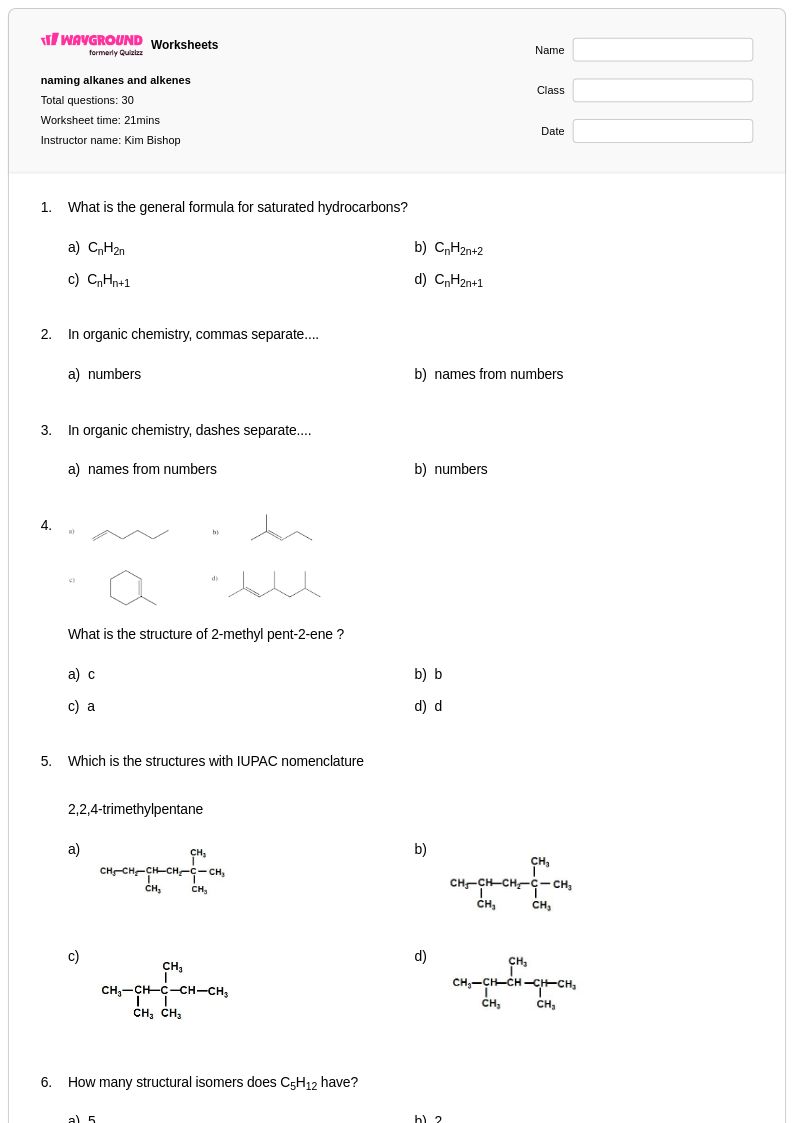
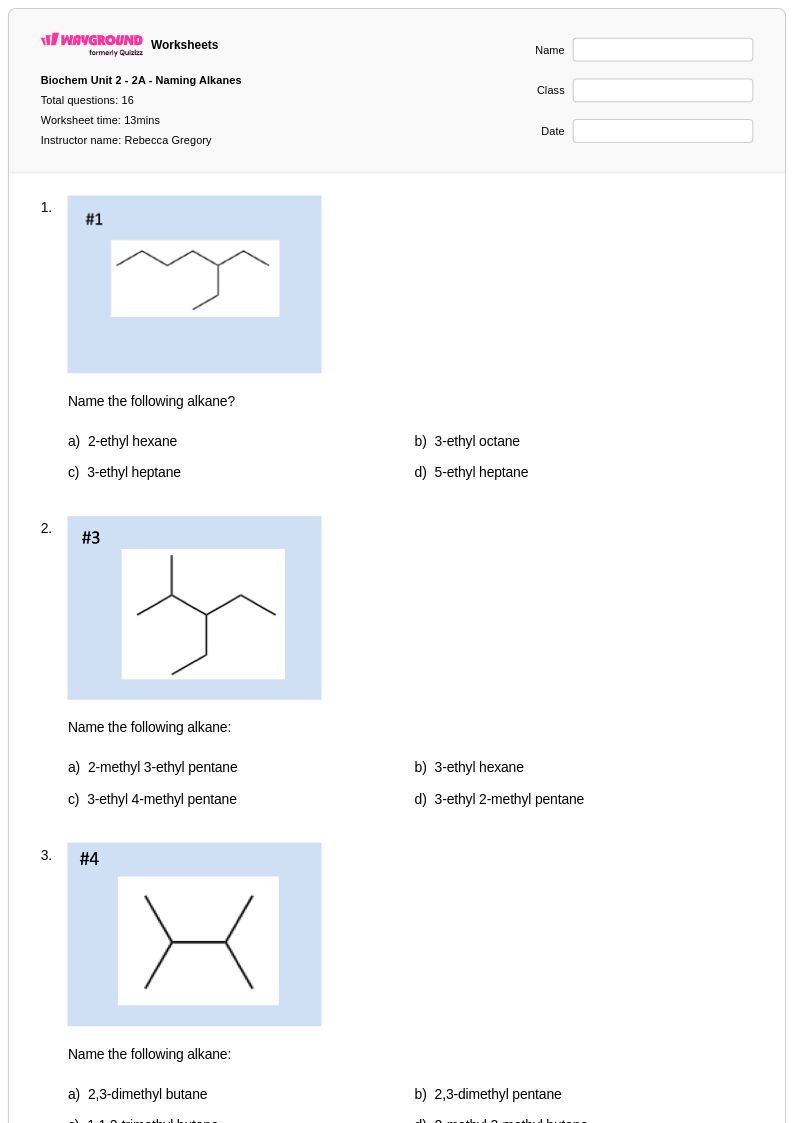
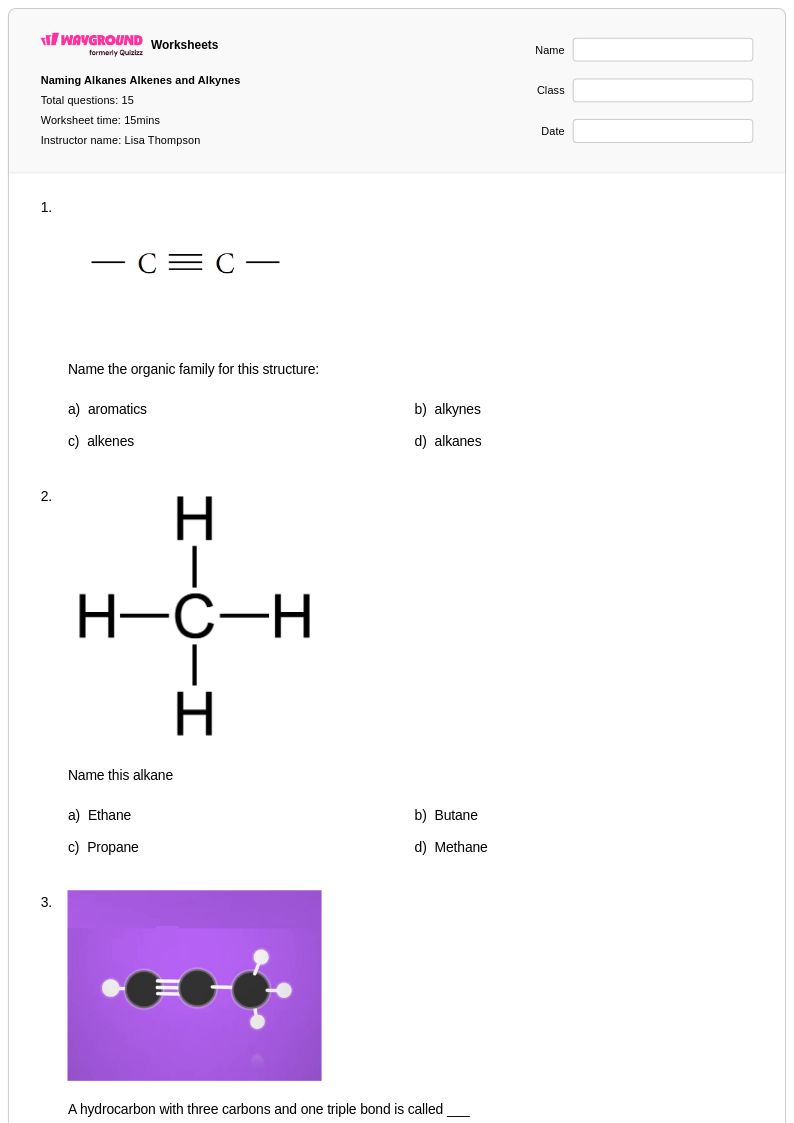
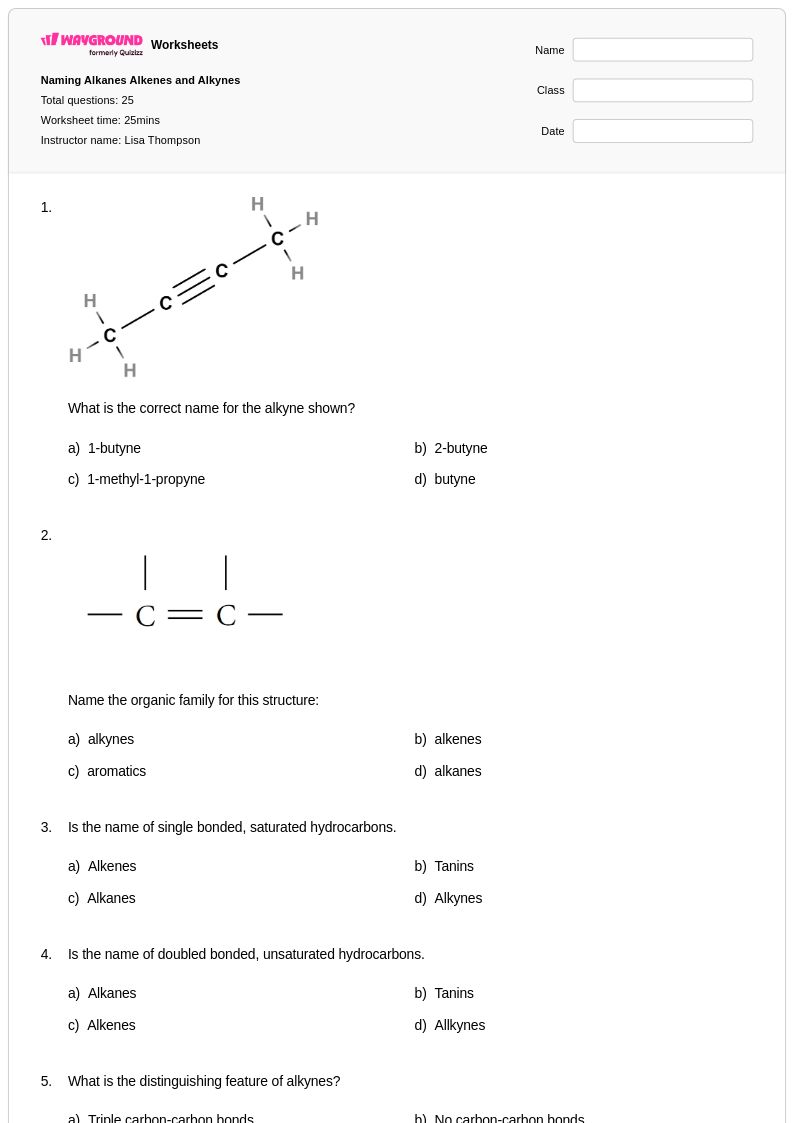
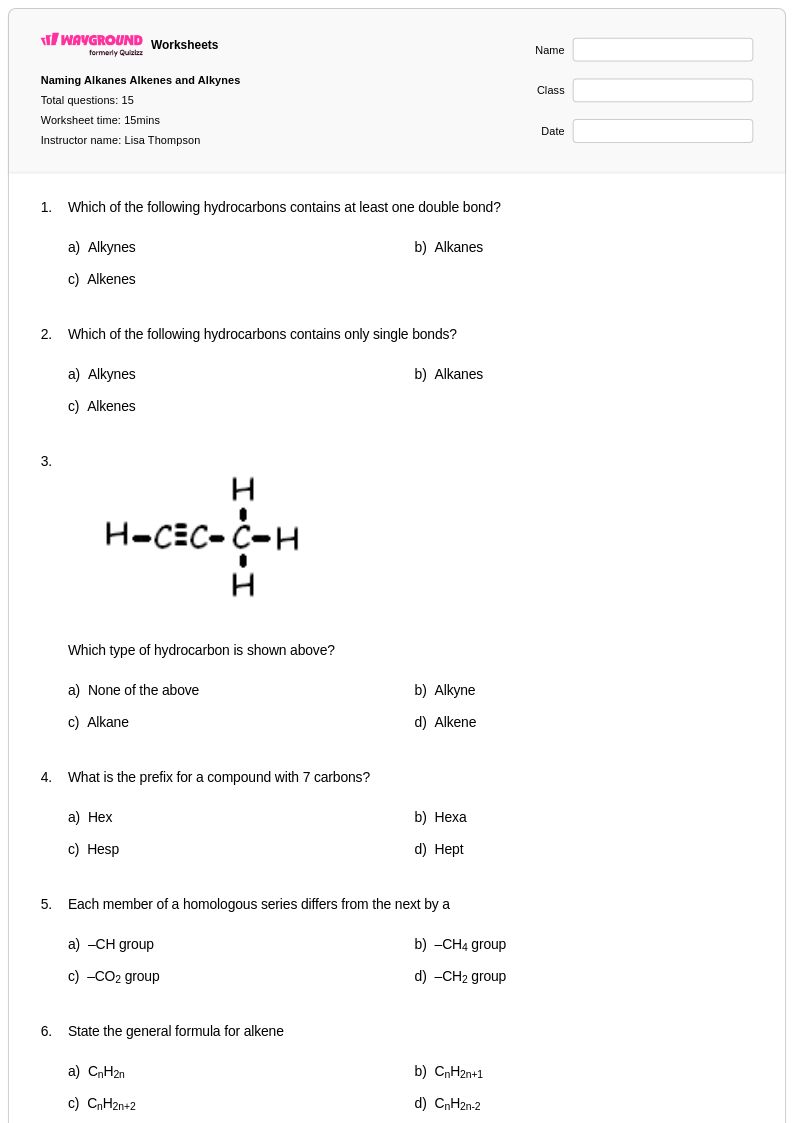
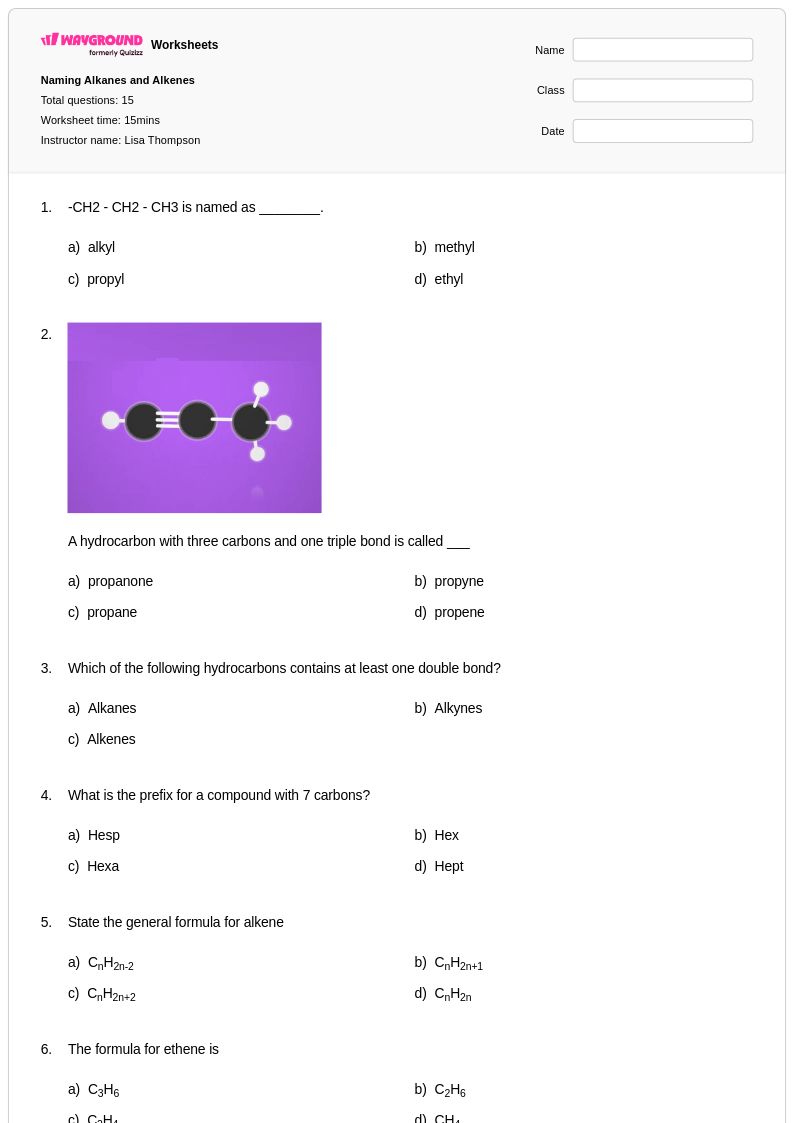
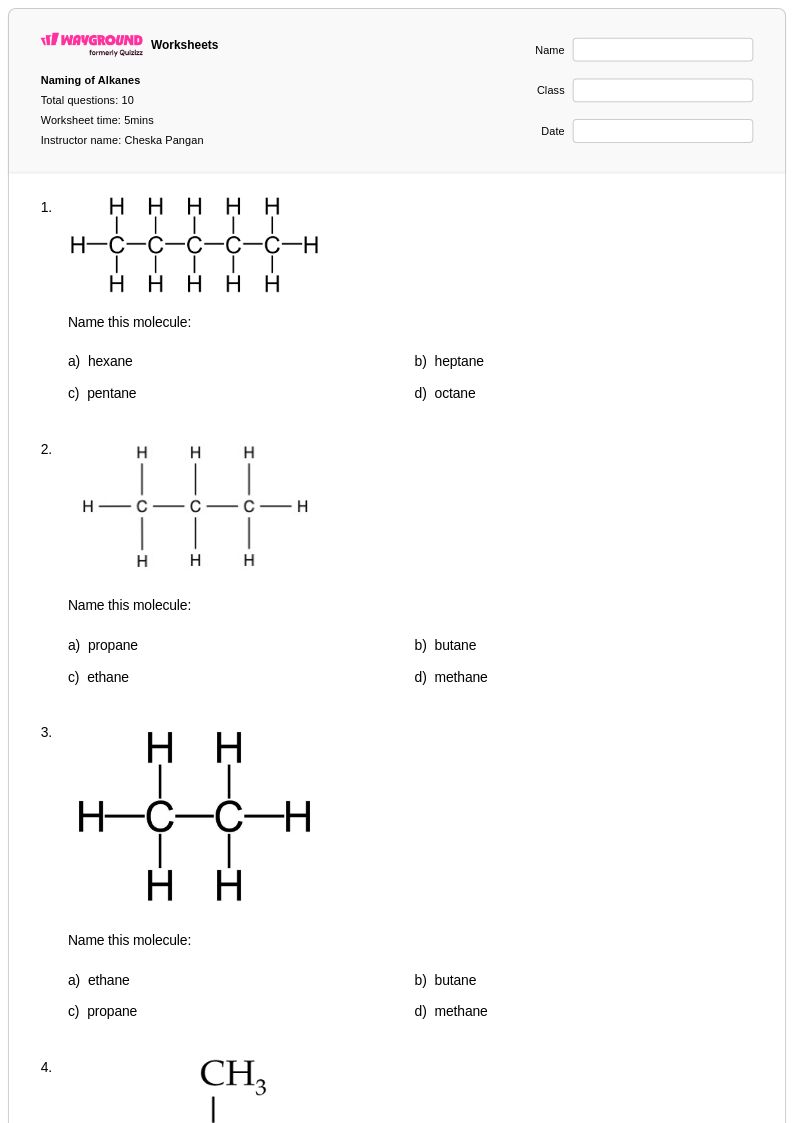
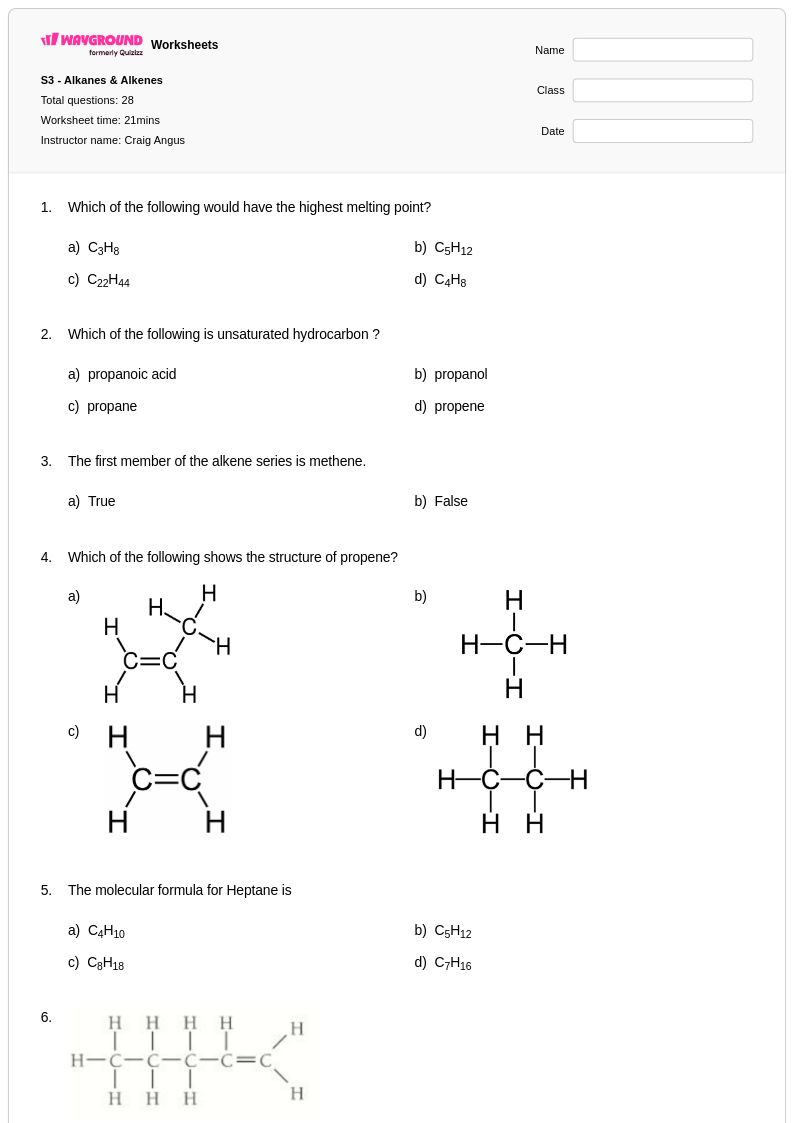
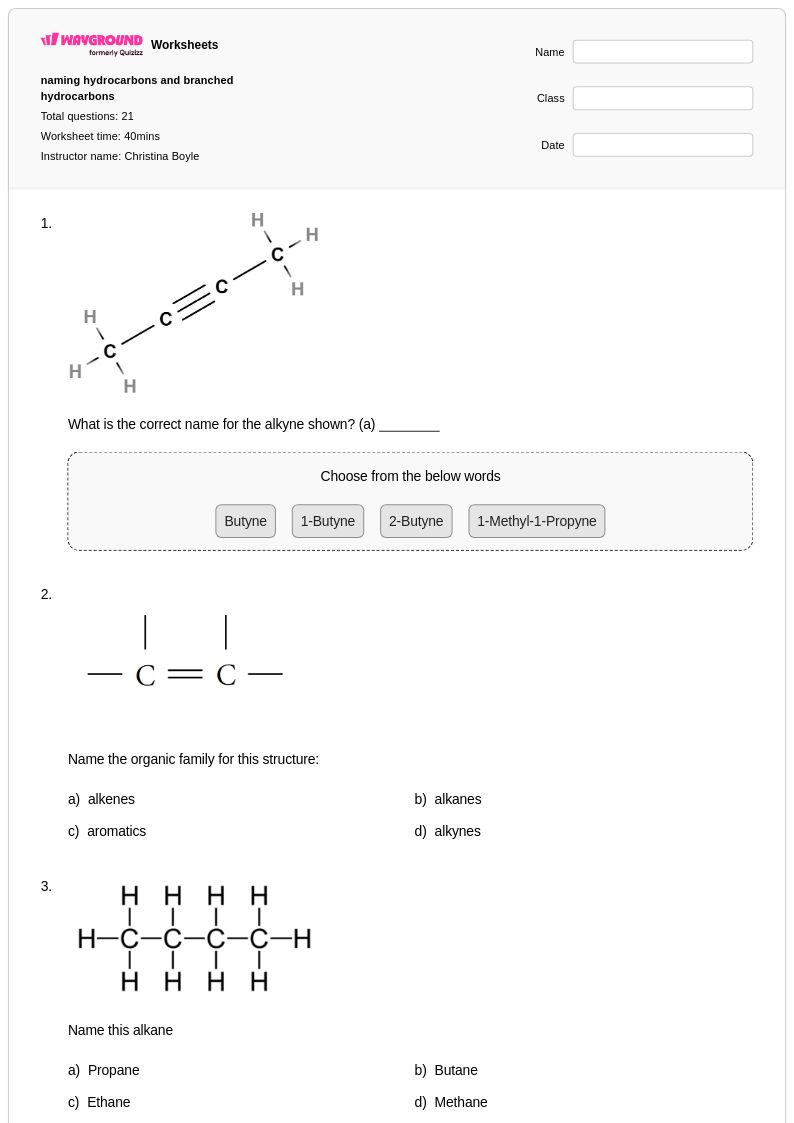
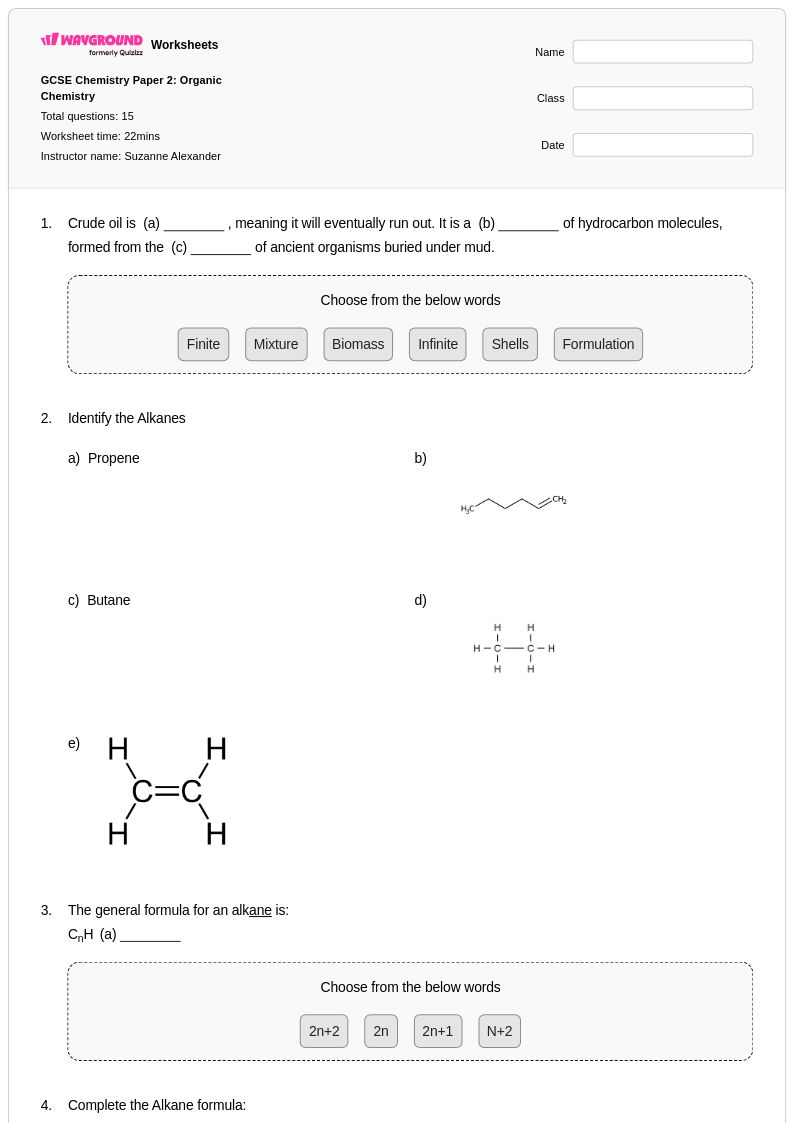
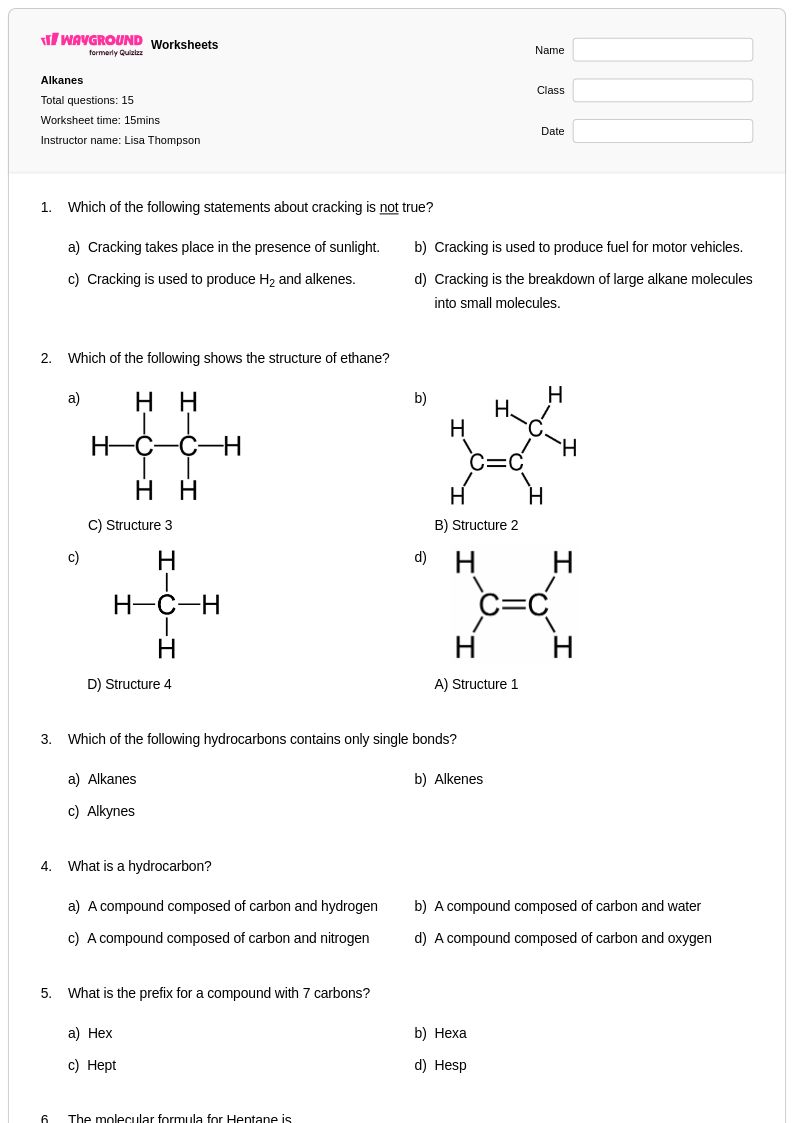
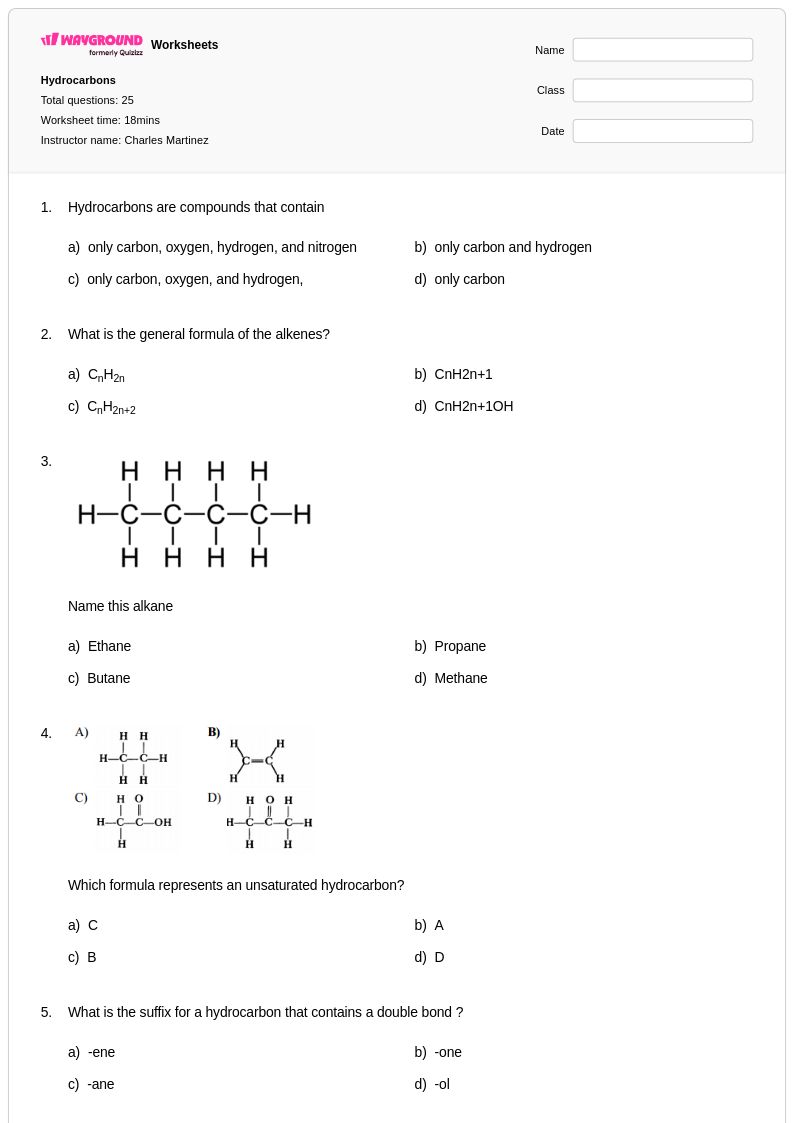
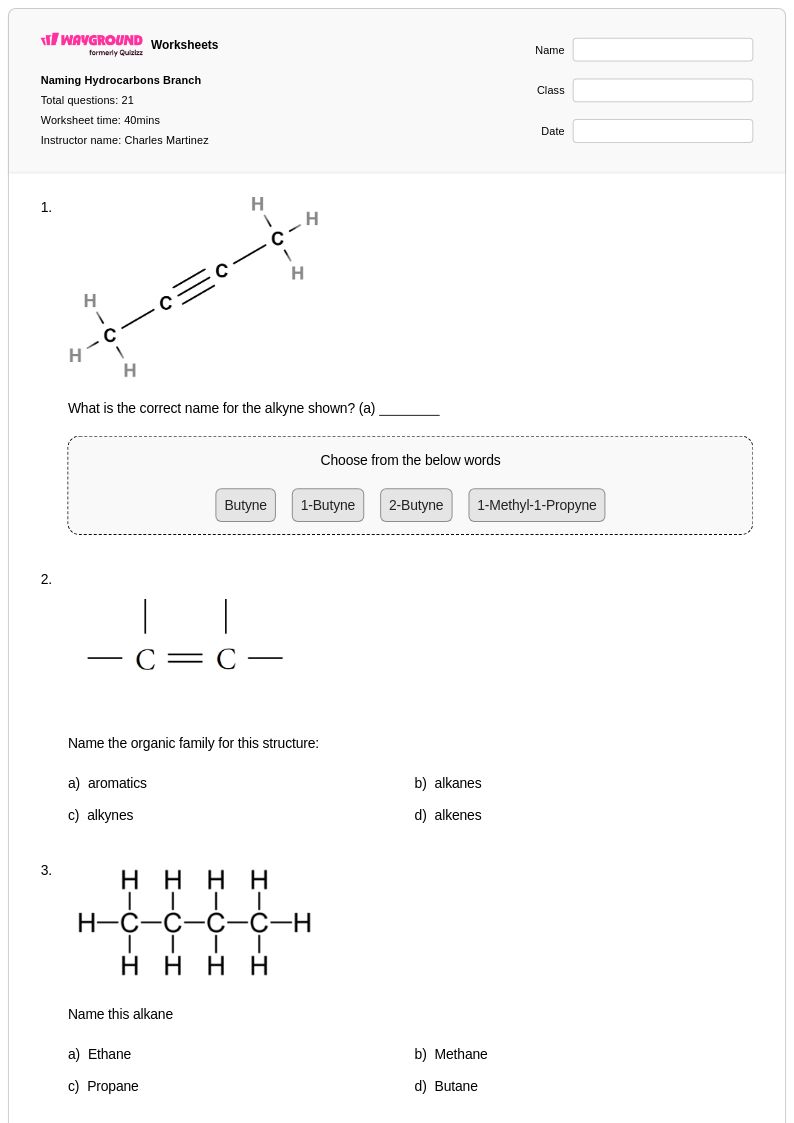
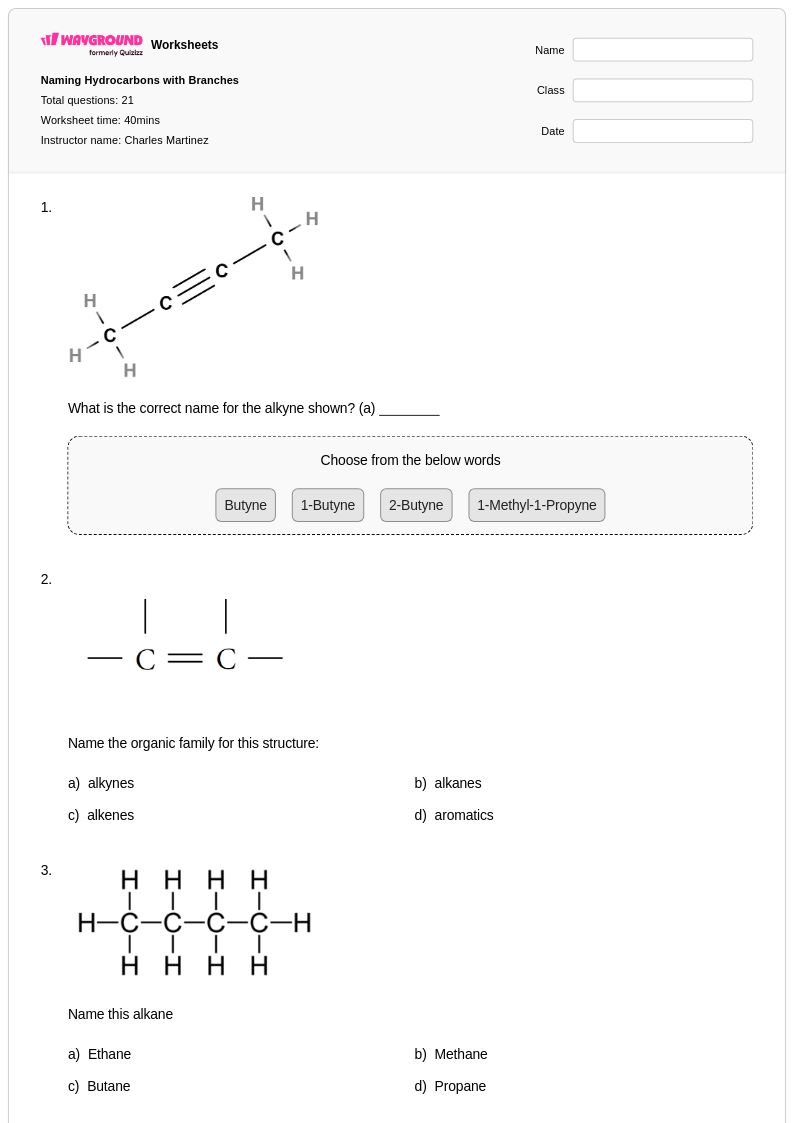
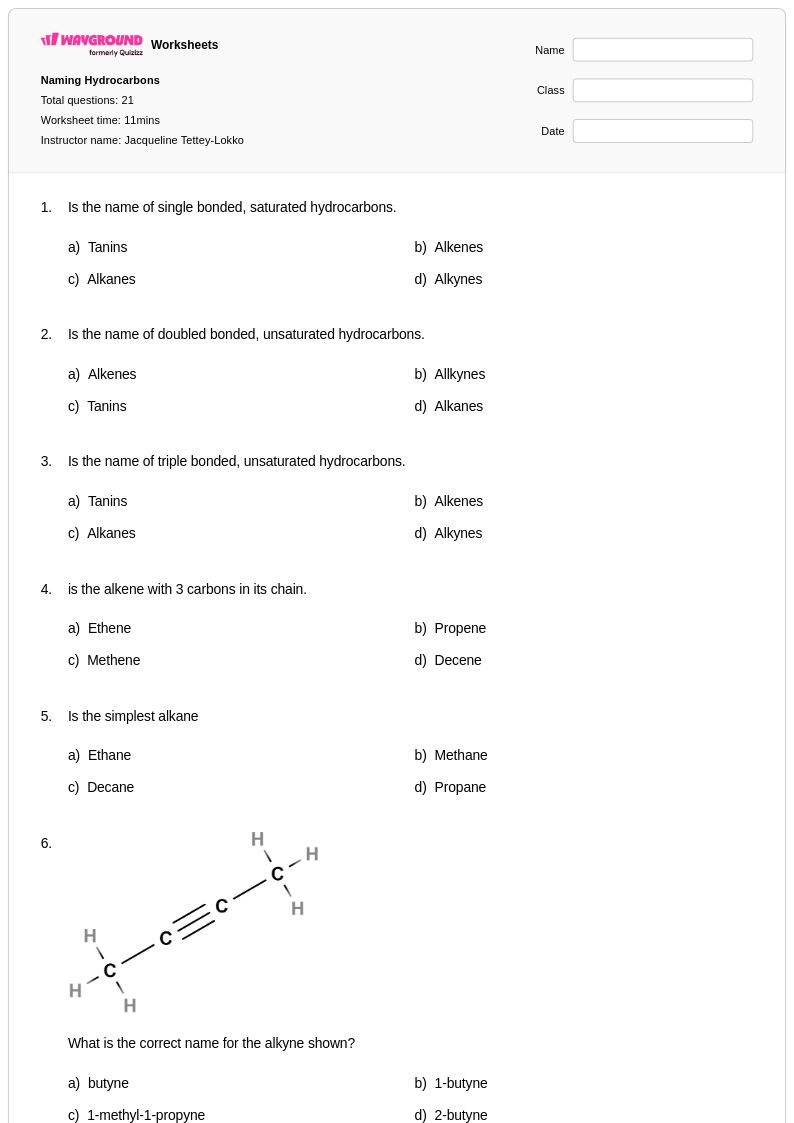
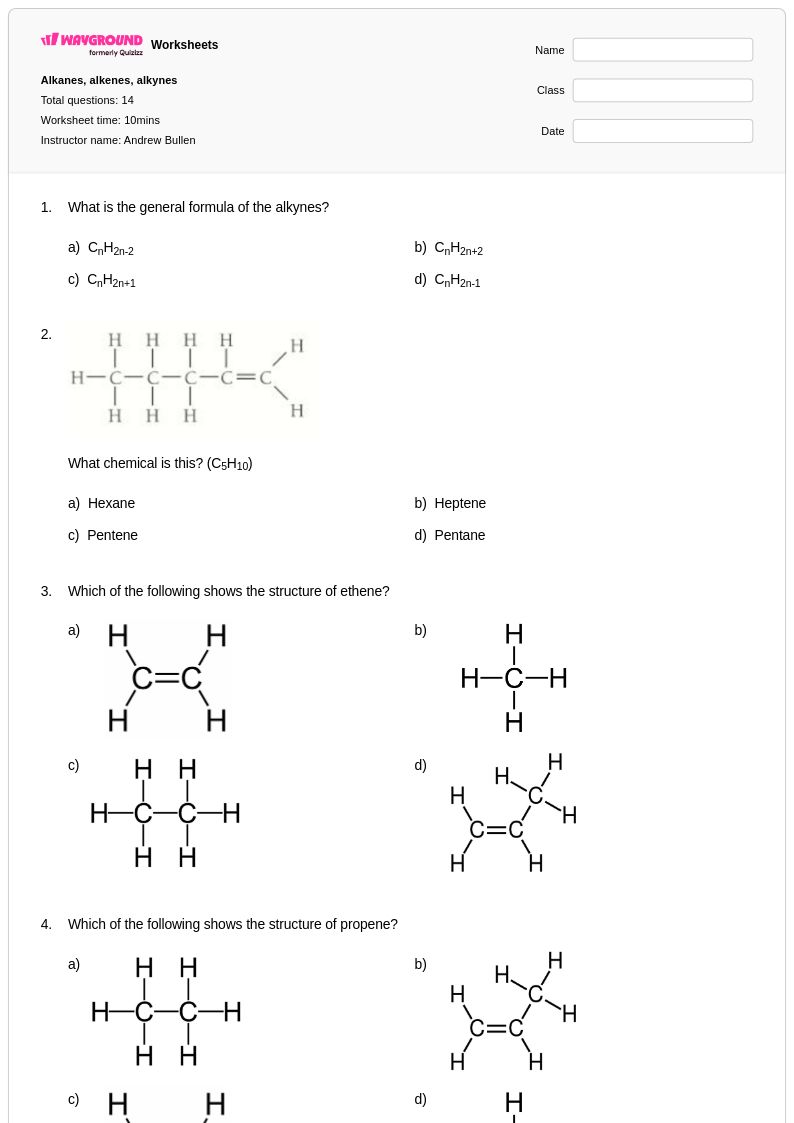
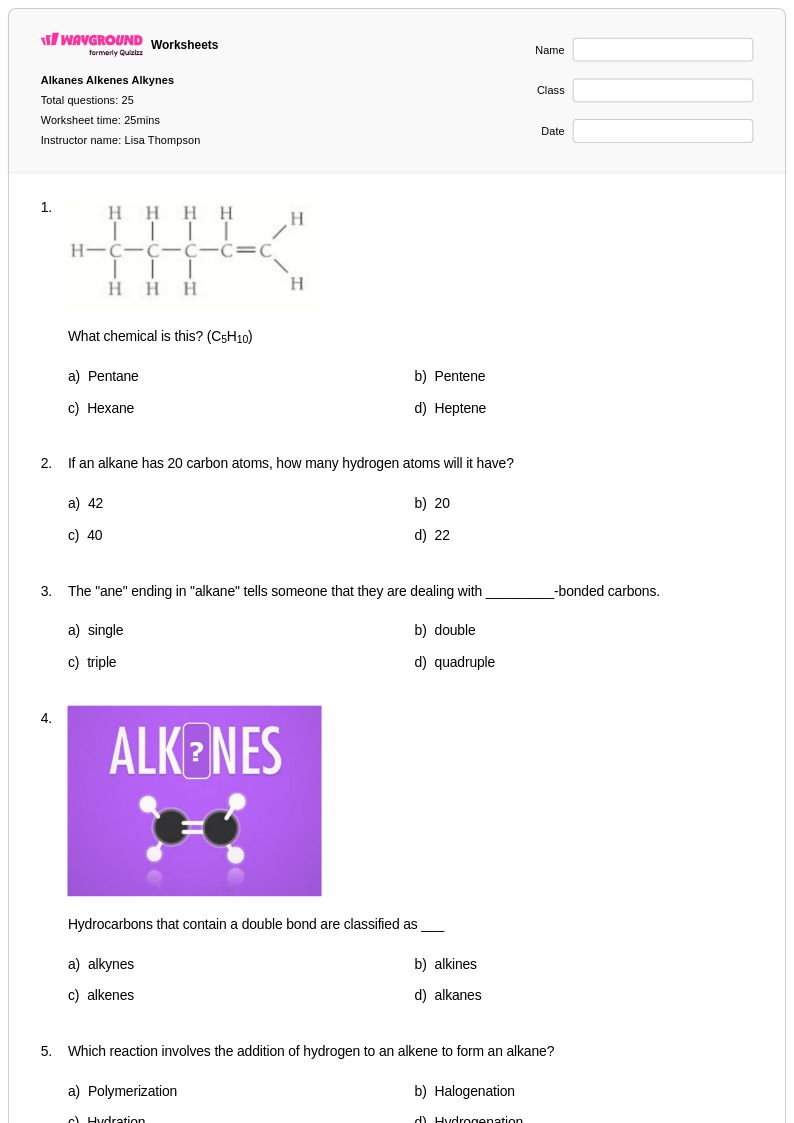
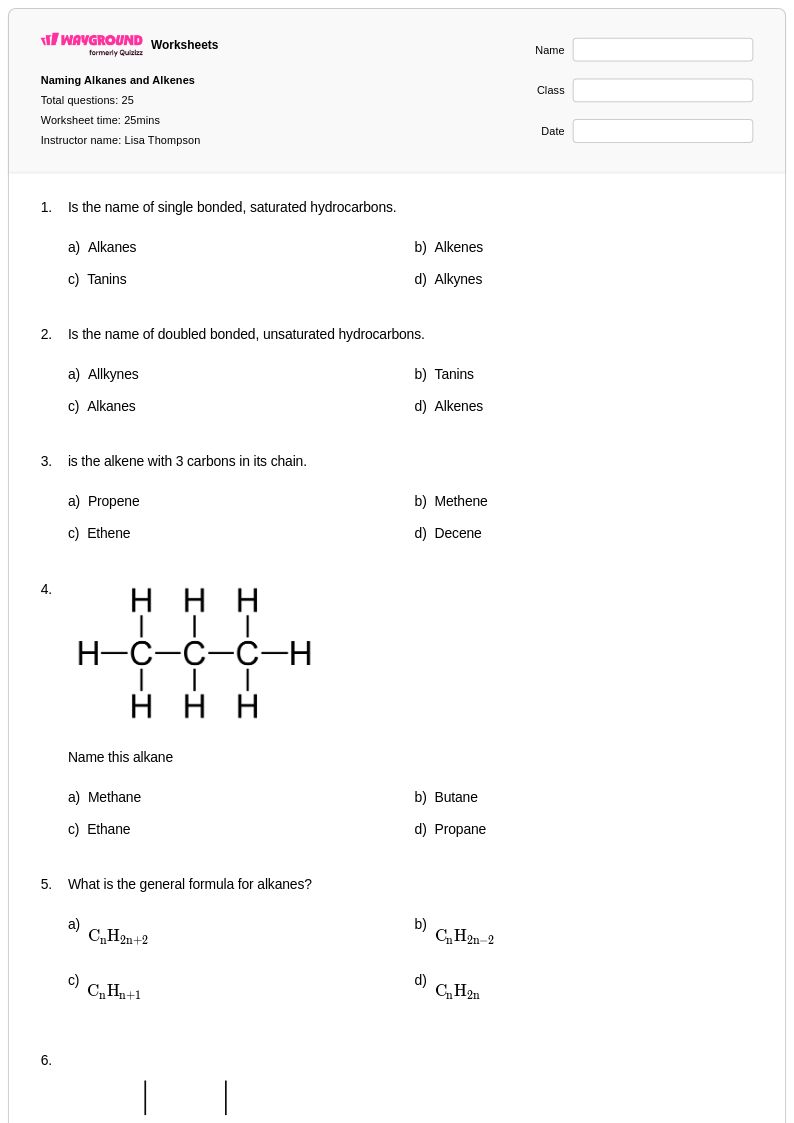
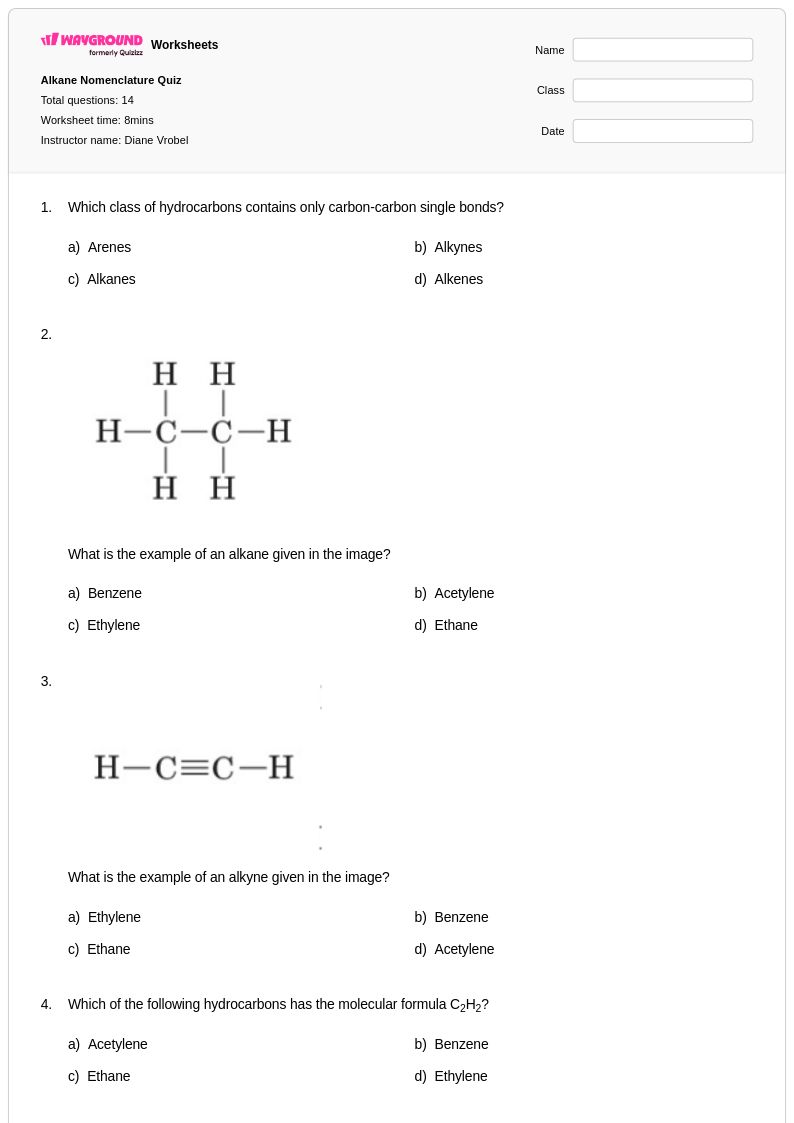
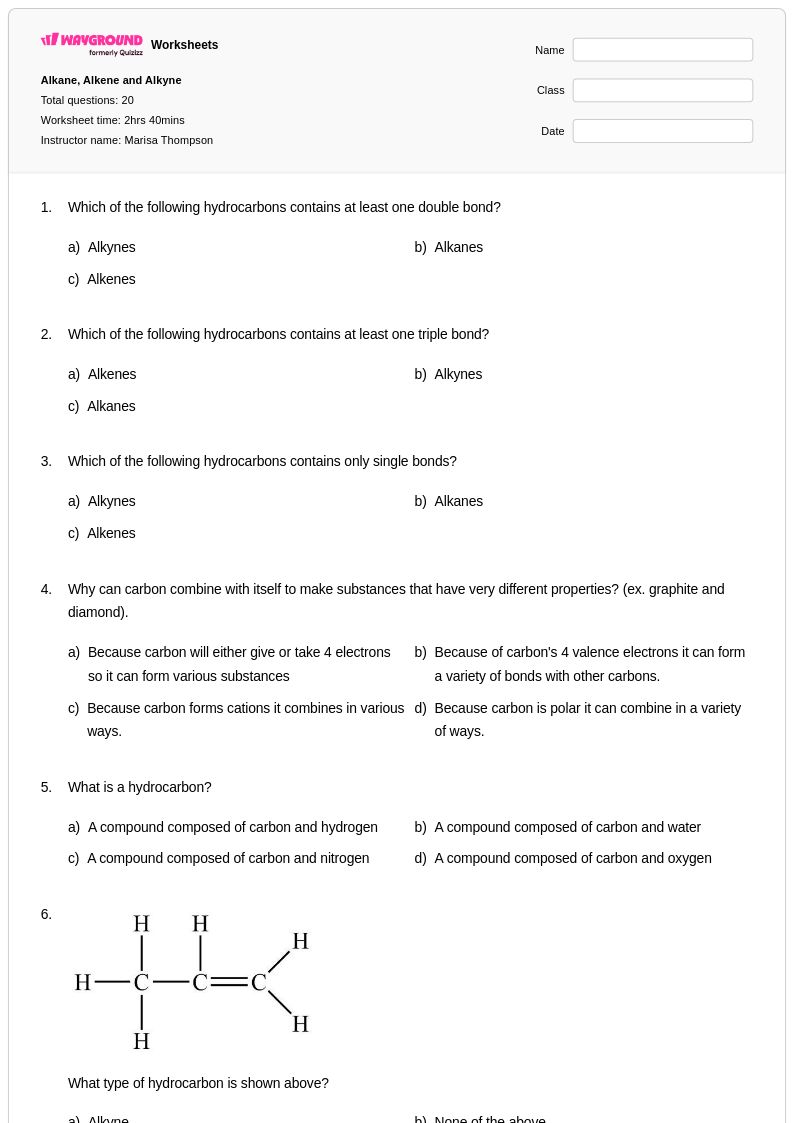
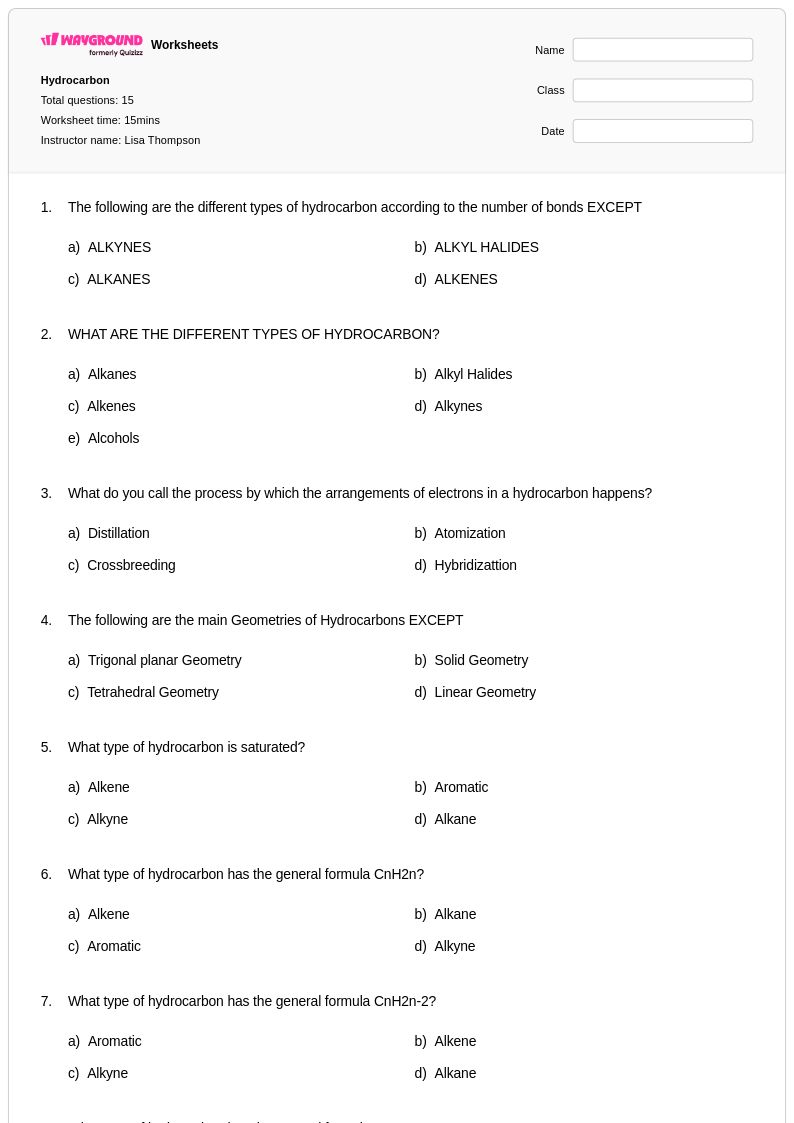
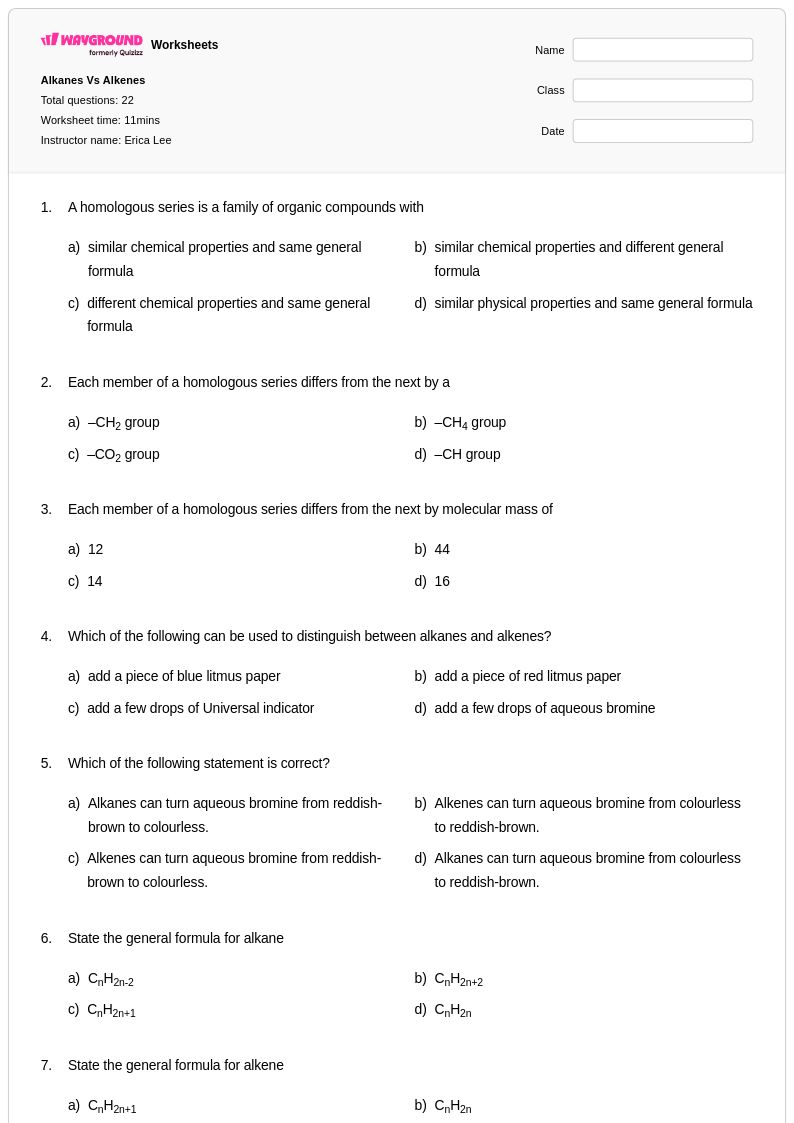
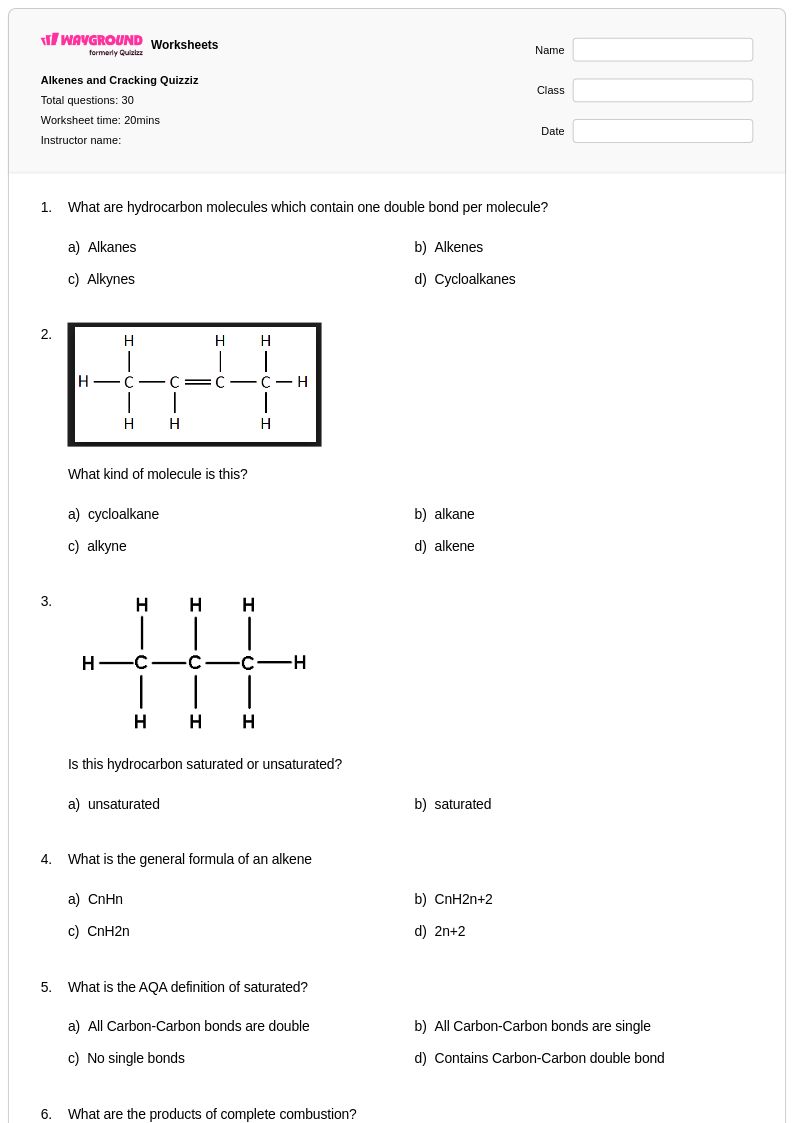
Naming alkanes represents a fundamental skill in organic chemistry that students must master to progress in their understanding of hydrocarbon structures and nomenclature systems. Wayground's comprehensive collection of naming alkanes worksheets provides students with systematic practice in identifying carbon chain lengths, recognizing branched structures, and applying IUPAC naming conventions correctly. These expertly designed worksheets strengthen critical thinking skills as students learn to analyze molecular structures, identify the longest carbon chain, number carbons appropriately, and name substituent groups in alphabetical order. Each worksheet collection includes detailed answer keys and step-by-step solutions, making them valuable resources for both independent study and classroom instruction, with free printable options available in convenient PDF format for immediate use.
Wayground, formerly Quizizz, empowers educators with access to millions of teacher-created resources specifically designed for naming alkanes instruction, featuring robust search and filtering capabilities that allow teachers to locate worksheets perfectly aligned with their curriculum standards and student needs. The platform's differentiation tools enable seamless customization of practice problems, allowing teachers to adjust complexity levels from simple straight-chain alkanes to more challenging branched structures with multiple substituents. These flexible resources are available in both printable PDF format and interactive digital versions, supporting diverse classroom environments and learning preferences while facilitating effective lesson planning, targeted remediation for struggling students, and enrichment opportunities for advanced learners seeking additional skill practice in organic chemistry nomenclature.
FAQs
How do I teach IUPAC naming conventions for alkanes?
Start by teaching students to identify the longest continuous carbon chain, which determines the parent alkane name. Then introduce the rules for numbering carbons from the end closest to a substituent, naming each substituent group, and listing them alphabetically with appropriate locants. Building up from simple straight-chain alkanes before introducing branched structures helps students internalize each rule before adding complexity.
What exercises help students practice naming alkanes?
Effective practice exercises include identifying and naming straight-chain alkanes by carbon count, working from structural formulas to IUPAC names, and drawing structures from a given name. Progressively complex problems that introduce branching, multiple substituents, and alphabetical ordering give students the repetition needed to internalize nomenclature rules. Naming alkanes worksheets with answer keys allow students to self-check and correct their reasoning immediately.
What mistakes do students commonly make when naming alkanes?
The most frequent errors are failing to identify the longest carbon chain, numbering the chain from the wrong end, and listing substituents in non-alphabetical order. Students also commonly confuse substituent prefixes such as di- and tri- when applying alphabetical ordering rules. Targeted practice with branched structures and detailed answer keys that show step-by-step reasoning help students recognize and correct these specific misconceptions.
How can I differentiate alkane naming practice for students at different levels?
Begin struggling students with straight-chain alkanes where only carbon count determines the name, then gradually introduce single substituents before moving to multiple branching points. Advanced students can tackle structures with several different substituents, cycloalkane variants, or naming challenges that require identifying non-obvious longest chains. On Wayground, teachers can also enable accommodations such as Read Aloud and reduced answer choices for individual students who need additional support, without disrupting the rest of the class.
How do I use Wayground's naming alkanes worksheets in my chemistry class?
Wayground's naming alkanes worksheets are available as printable PDFs for traditional classroom use and in digital formats for technology-integrated environments, including the option to host them as a quiz directly on Wayground. Teachers can assign worksheets as in-class practice, homework, or formative assessment, with detailed answer keys and step-by-step solutions included. The platform's search and filtering tools make it straightforward to locate worksheets aligned to specific curriculum standards or complexity levels.