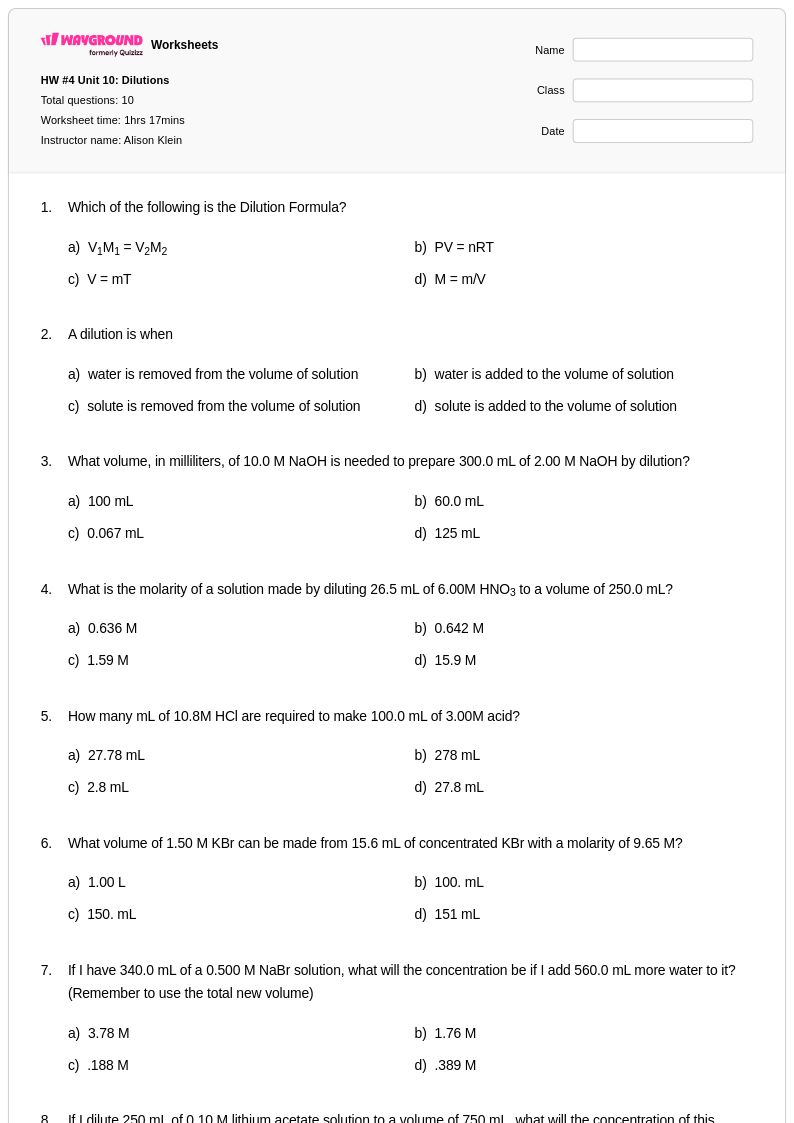
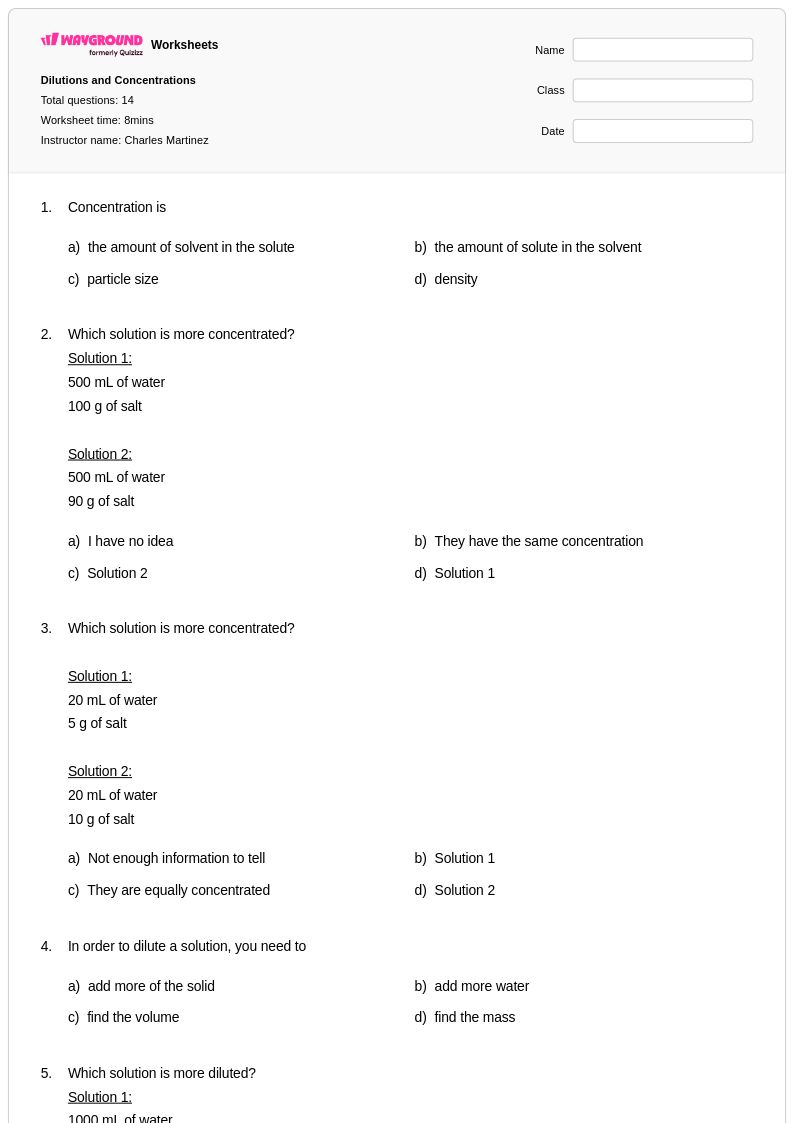
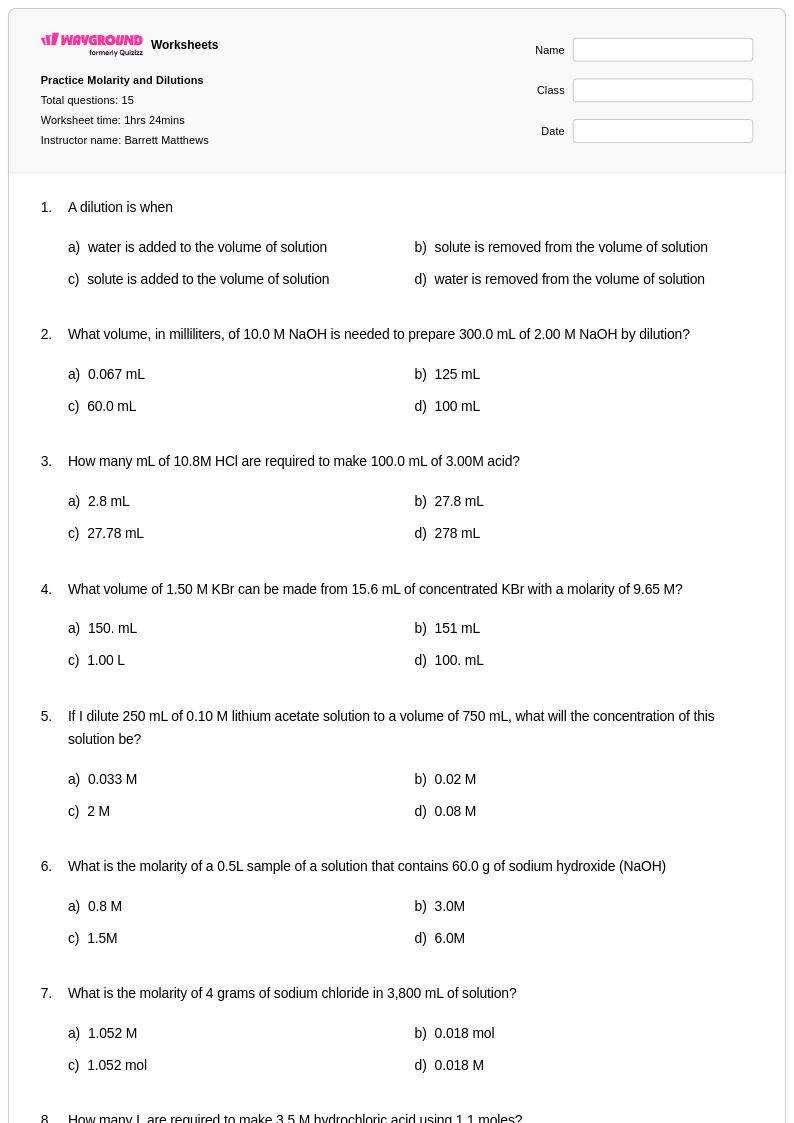
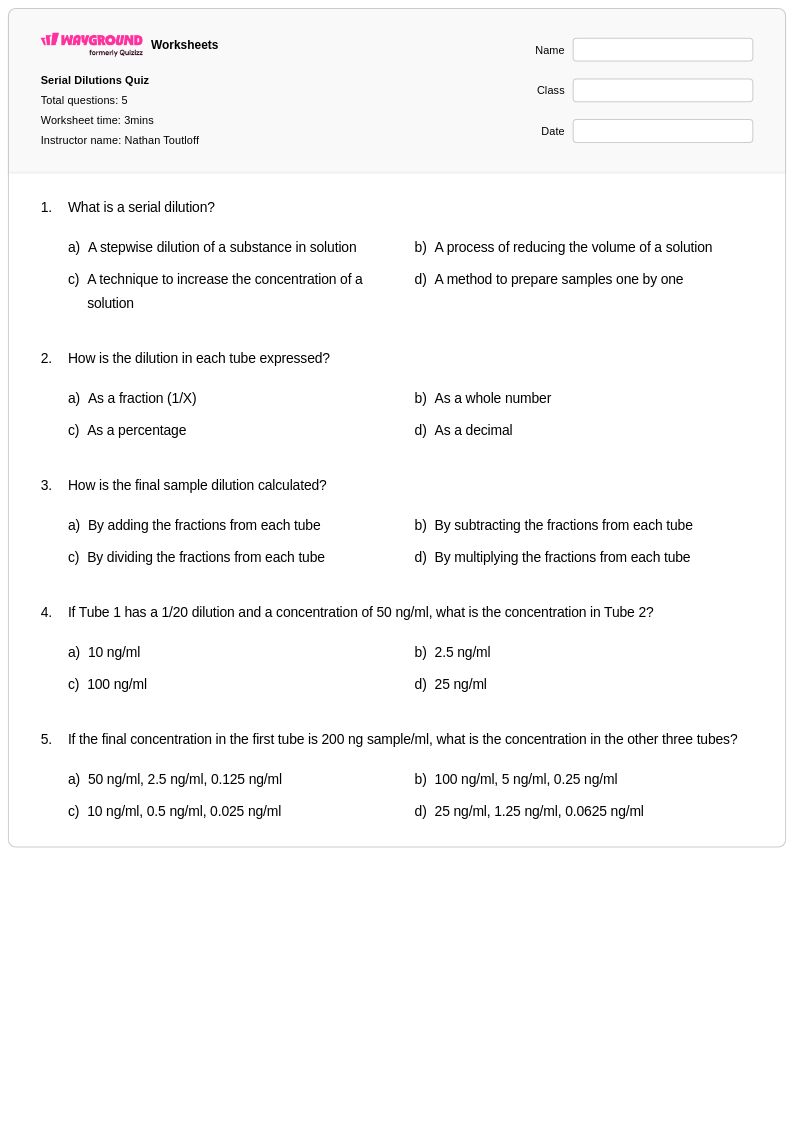
Enhance chemistry understanding with Wayground's comprehensive dilutions worksheets featuring printable PDFs, practice problems, and answer keys that help students master concentration calculations and solution preparation techniques.
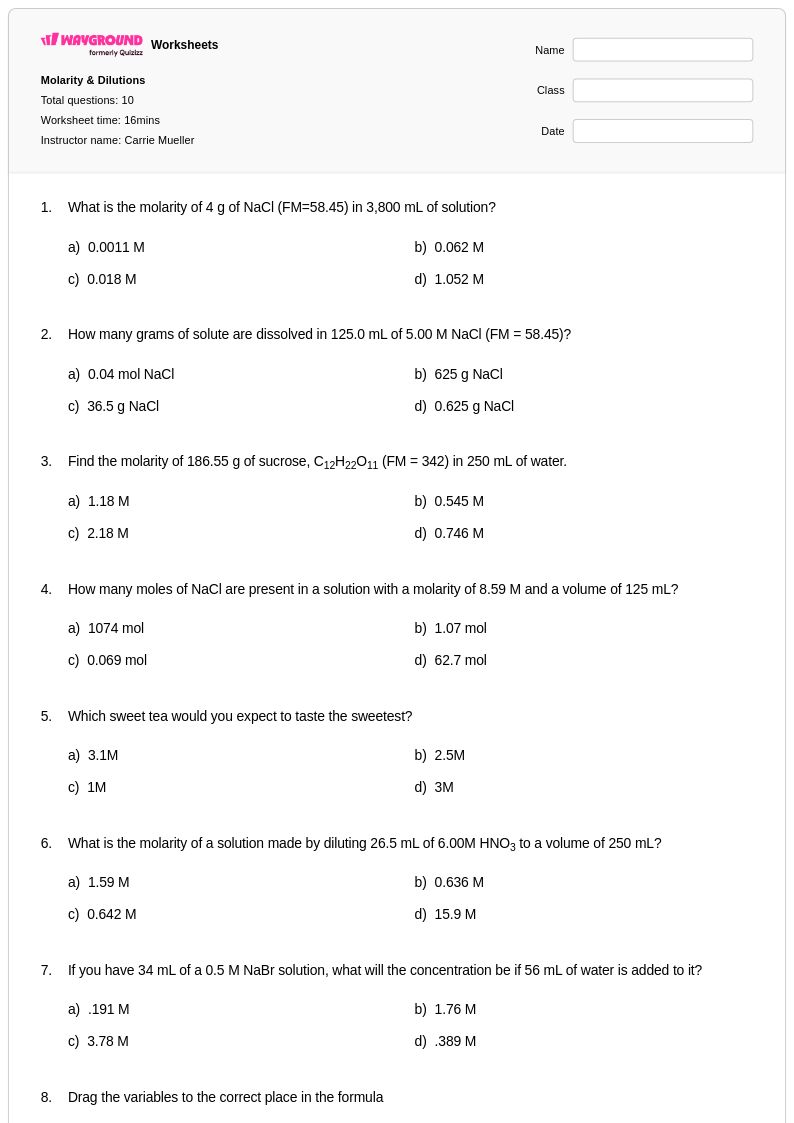
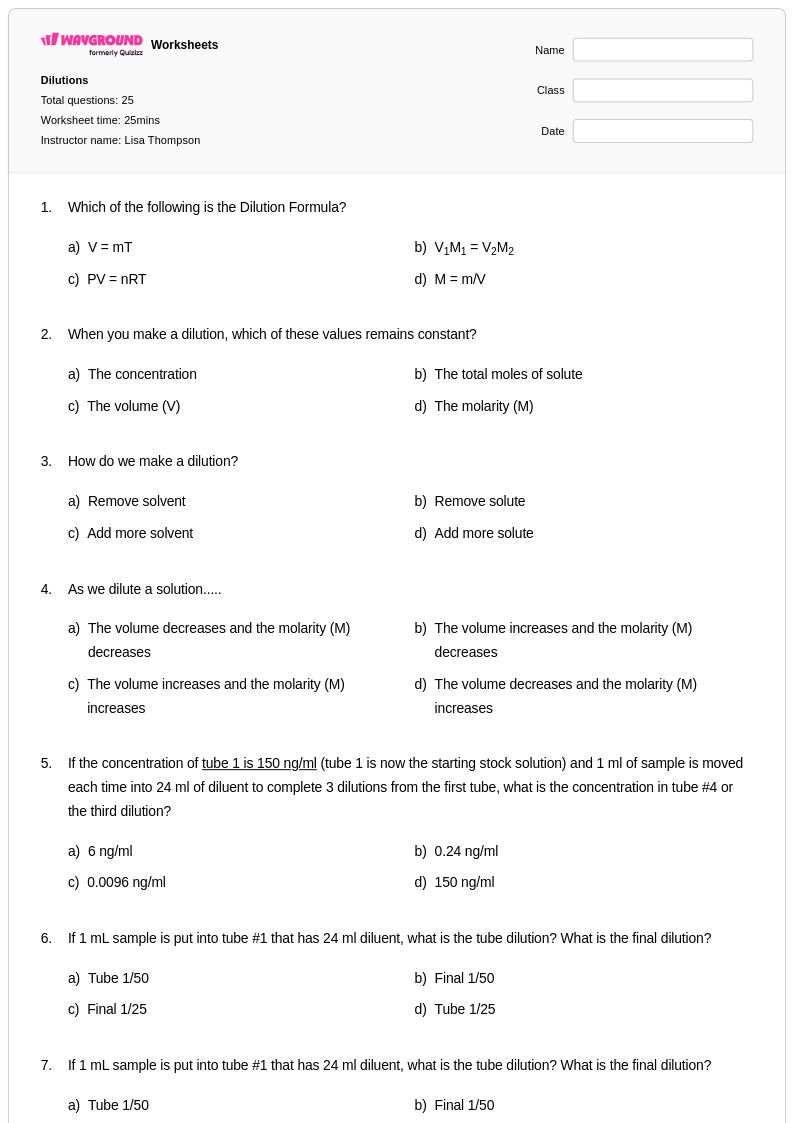
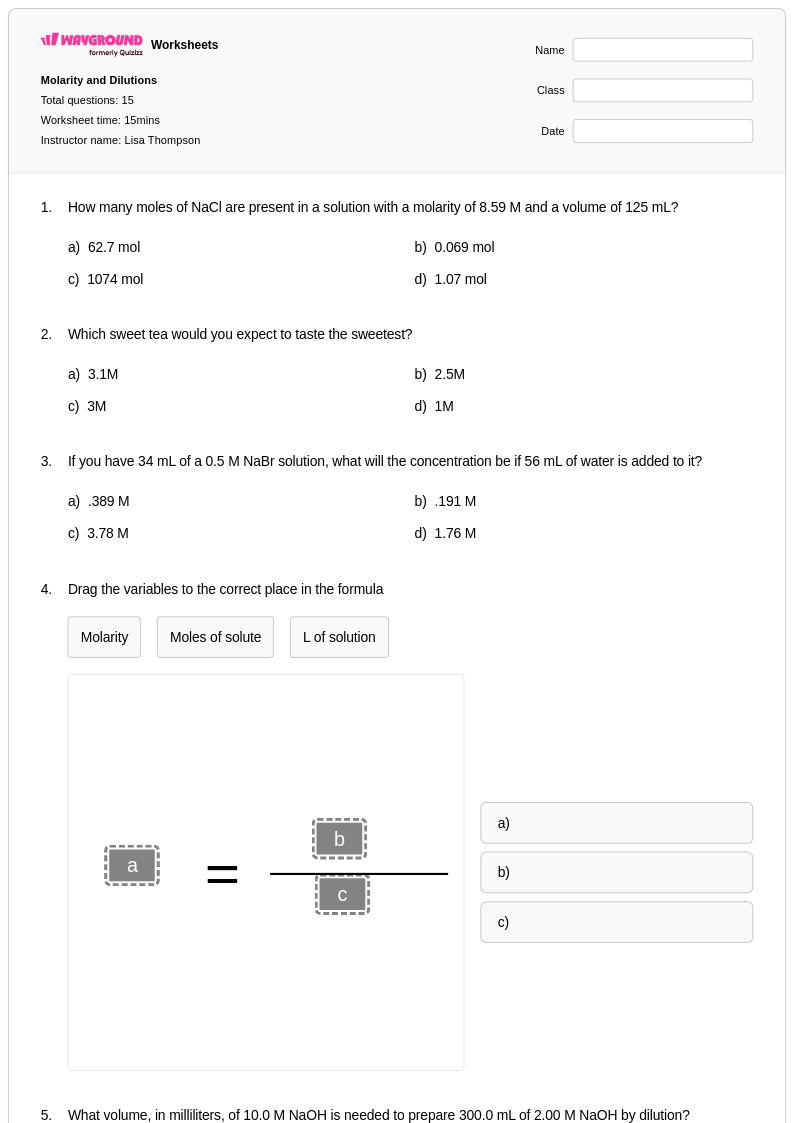
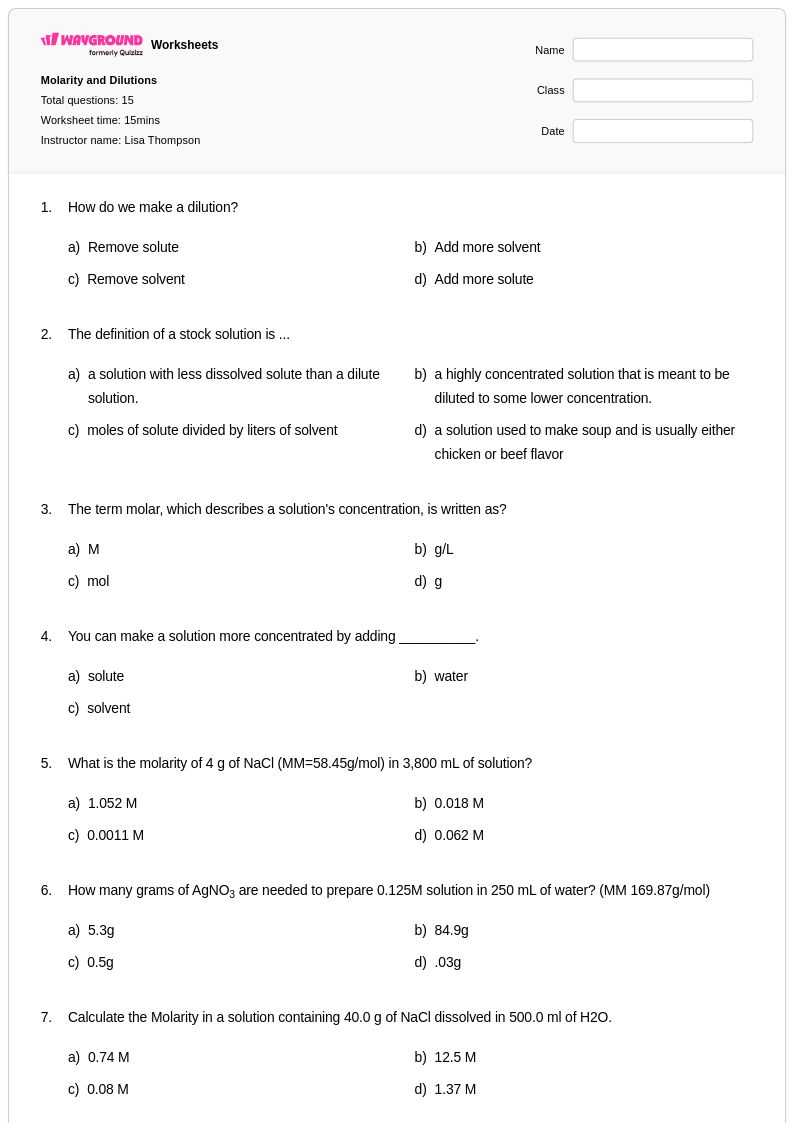
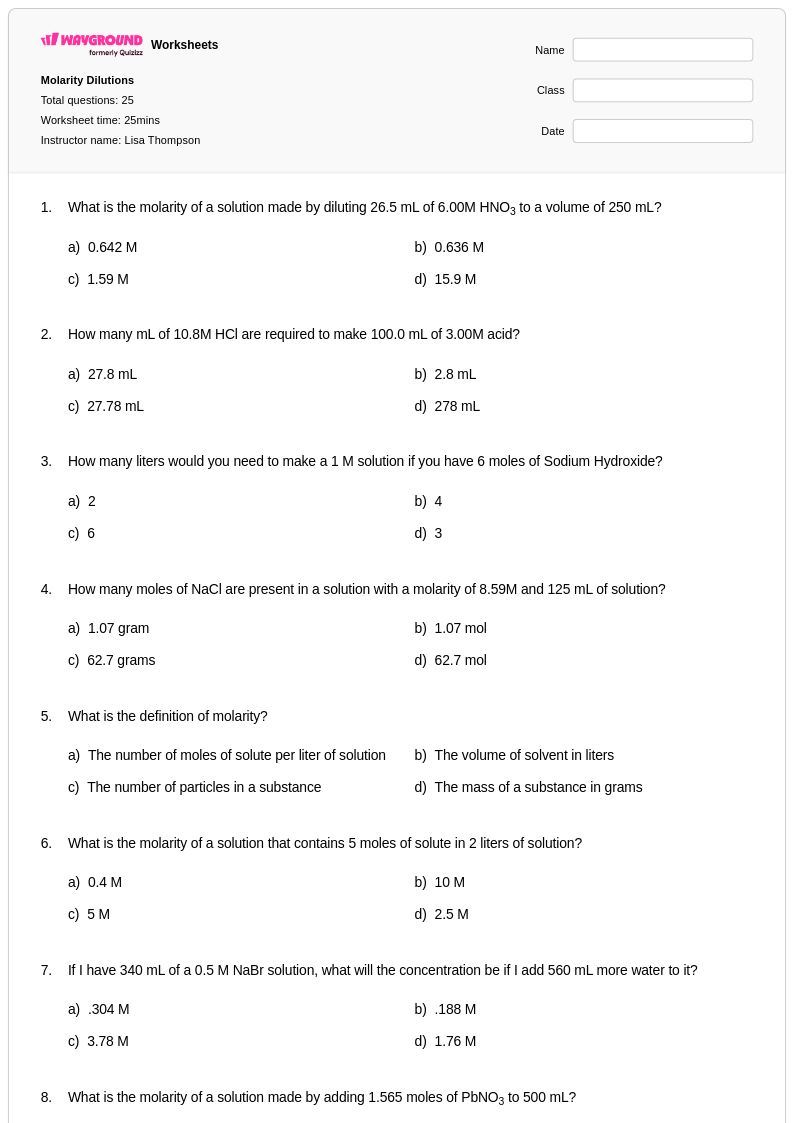
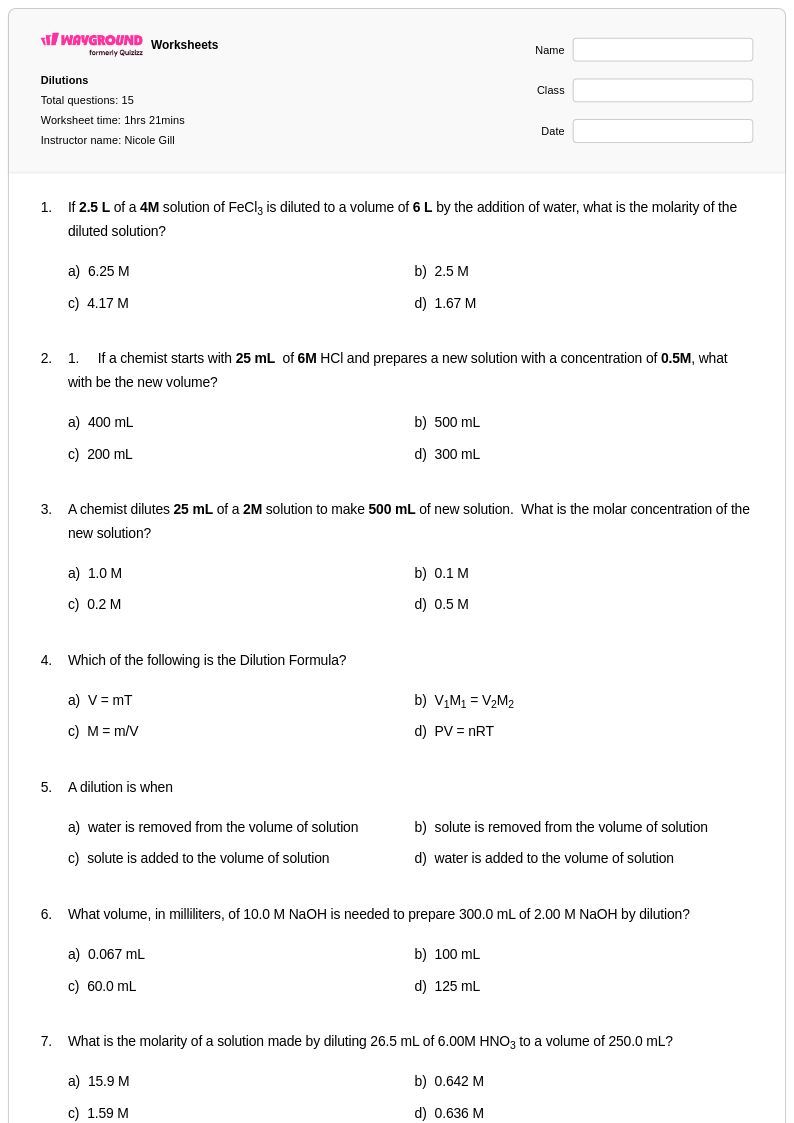
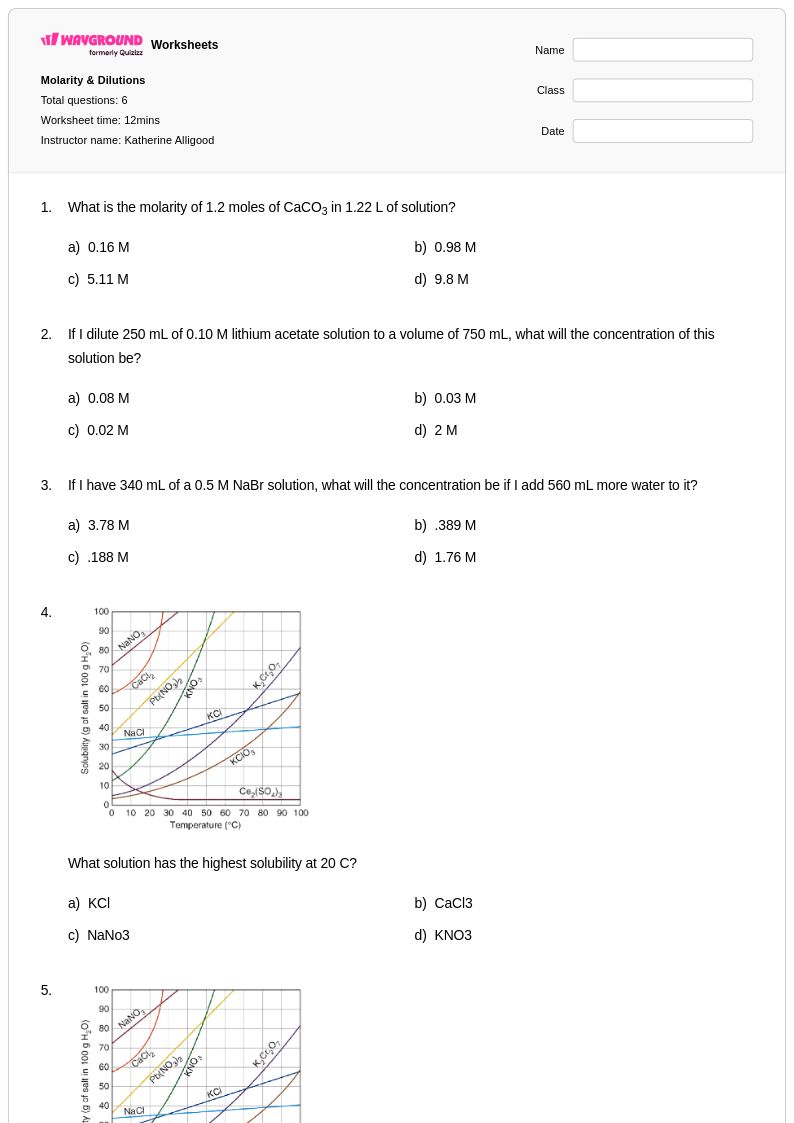
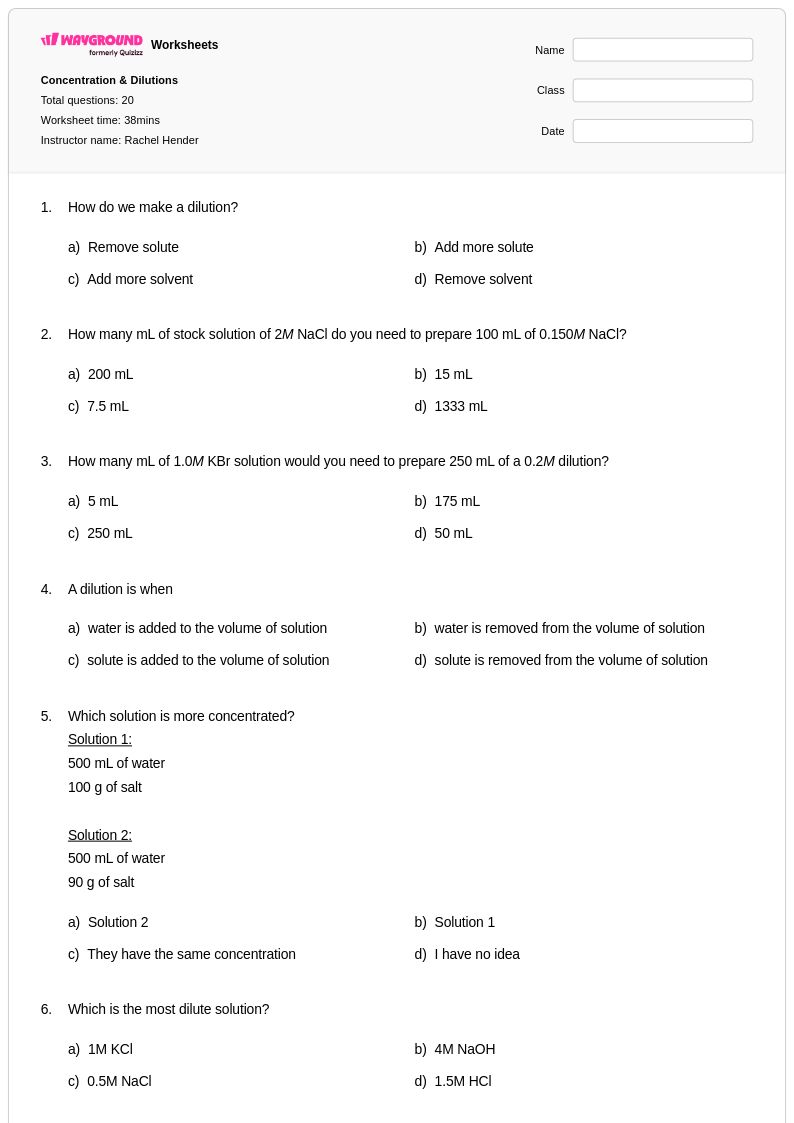
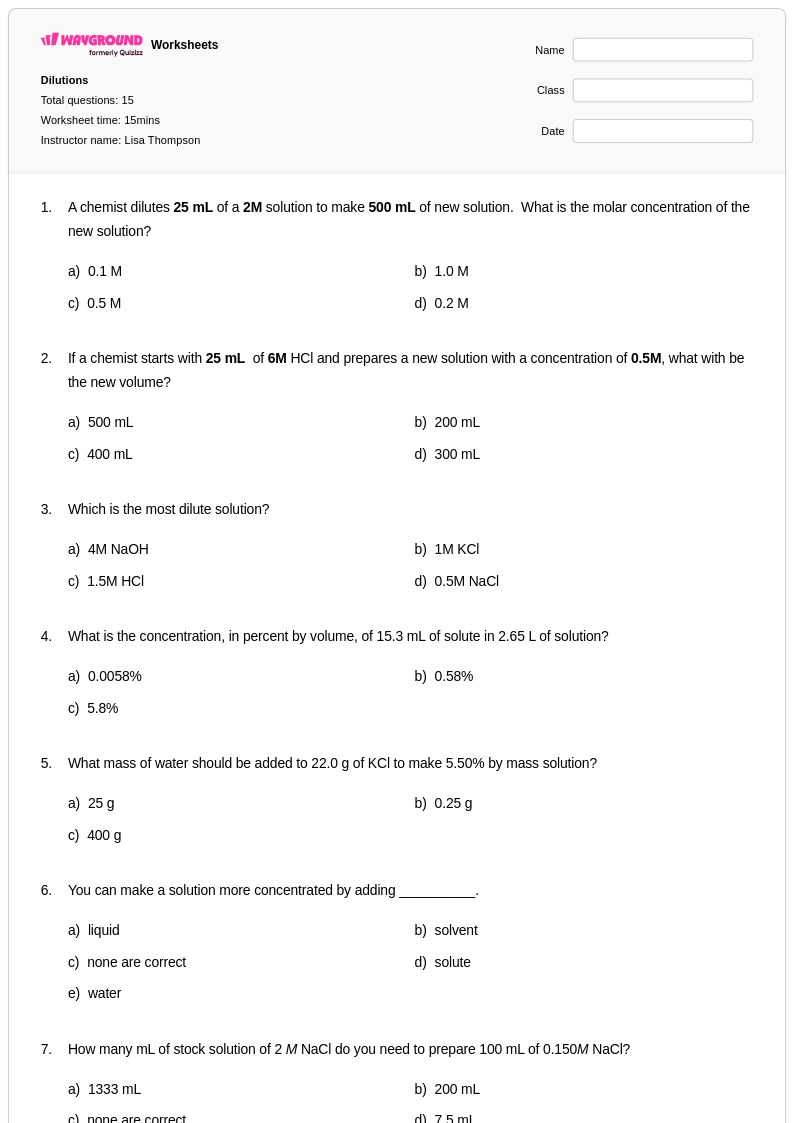
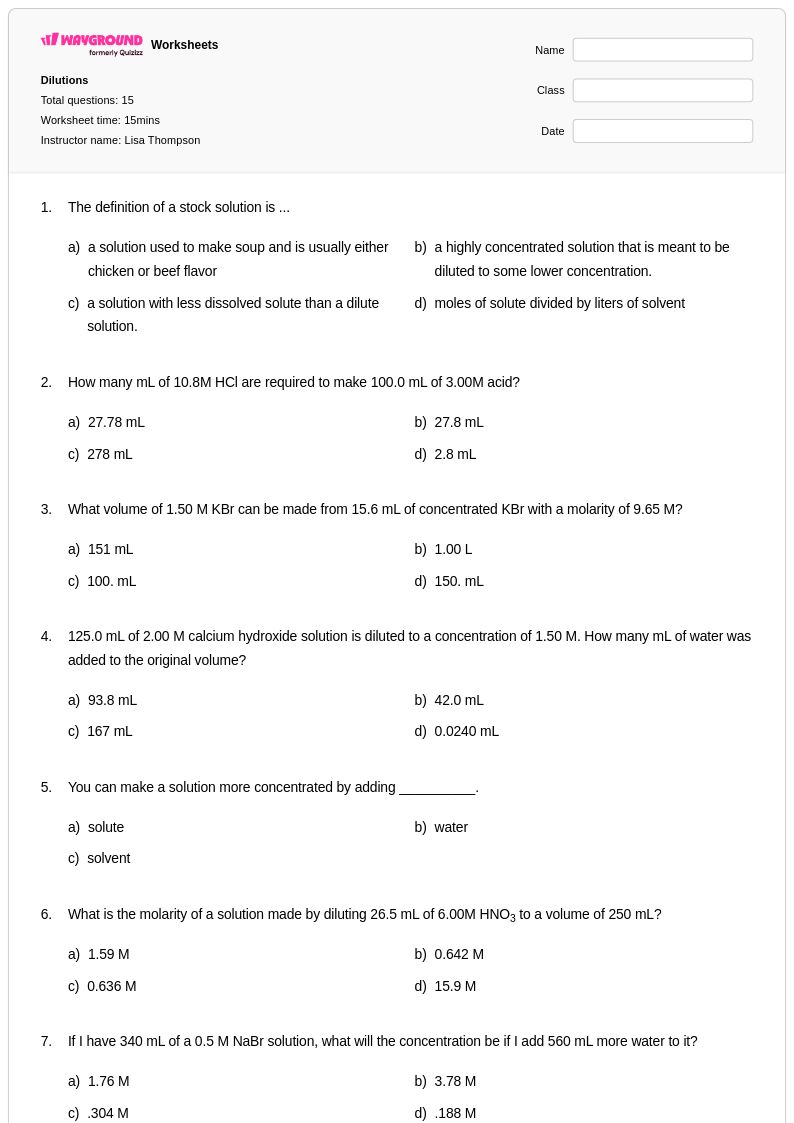
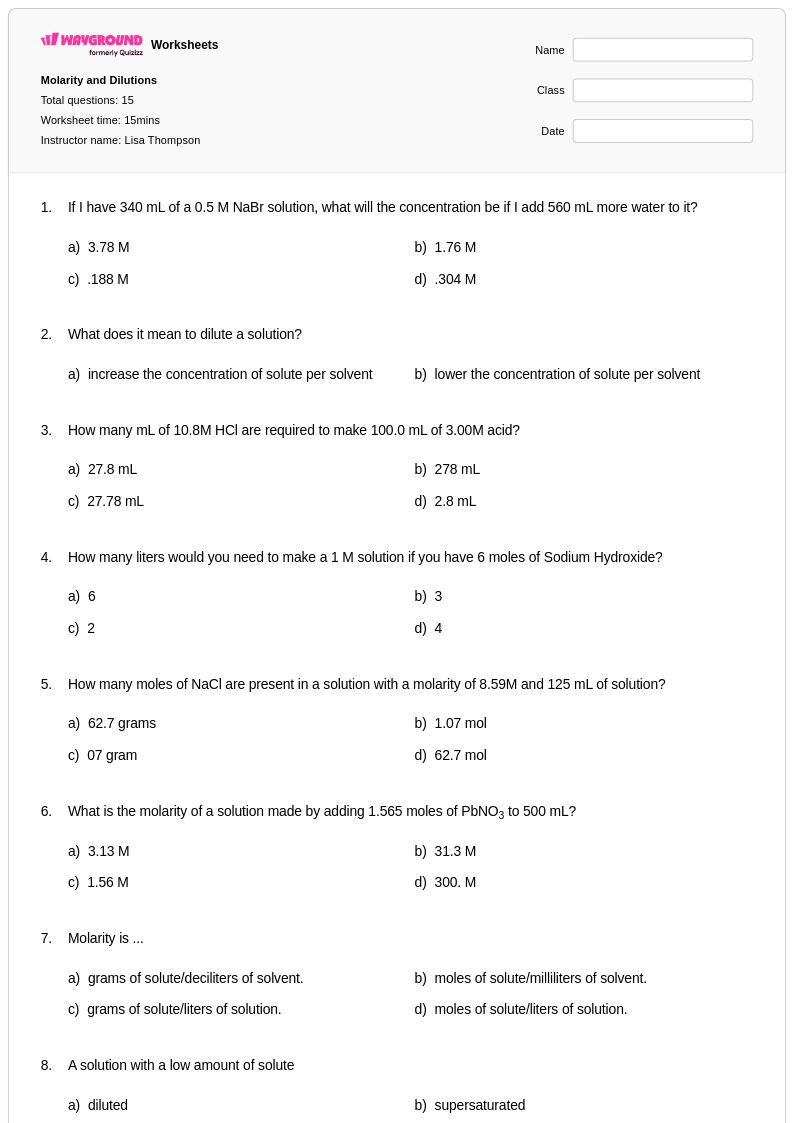
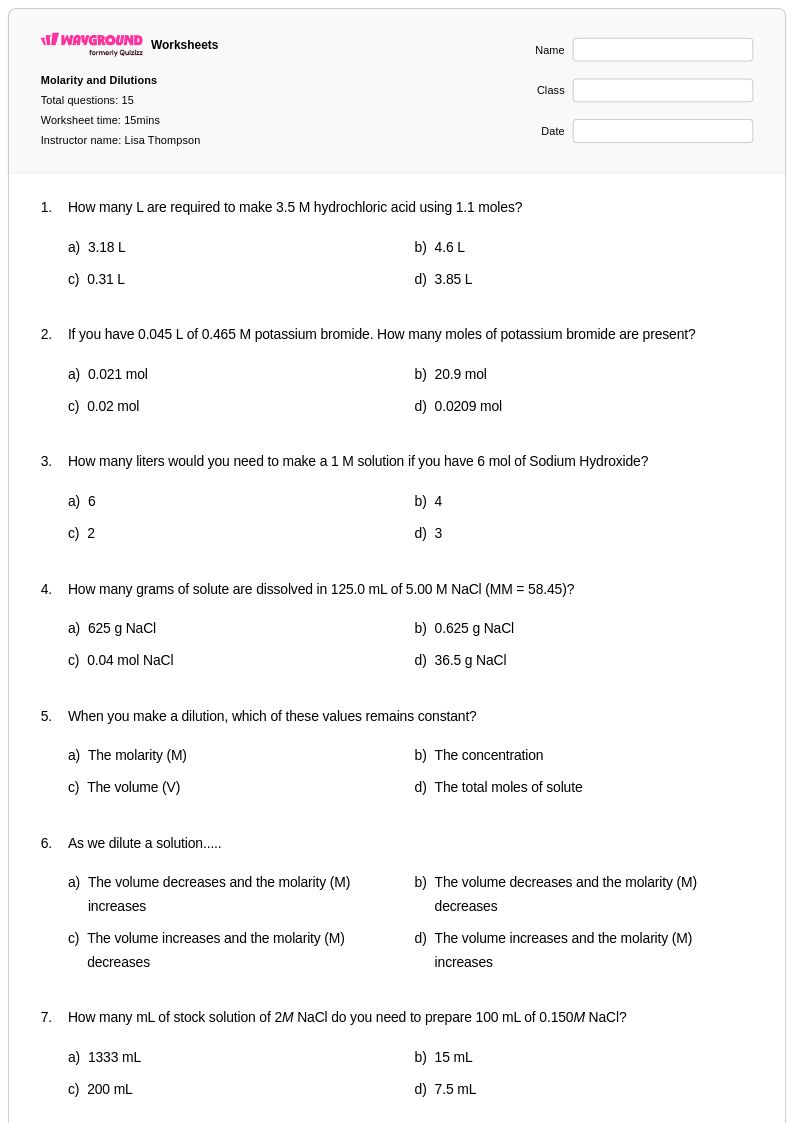
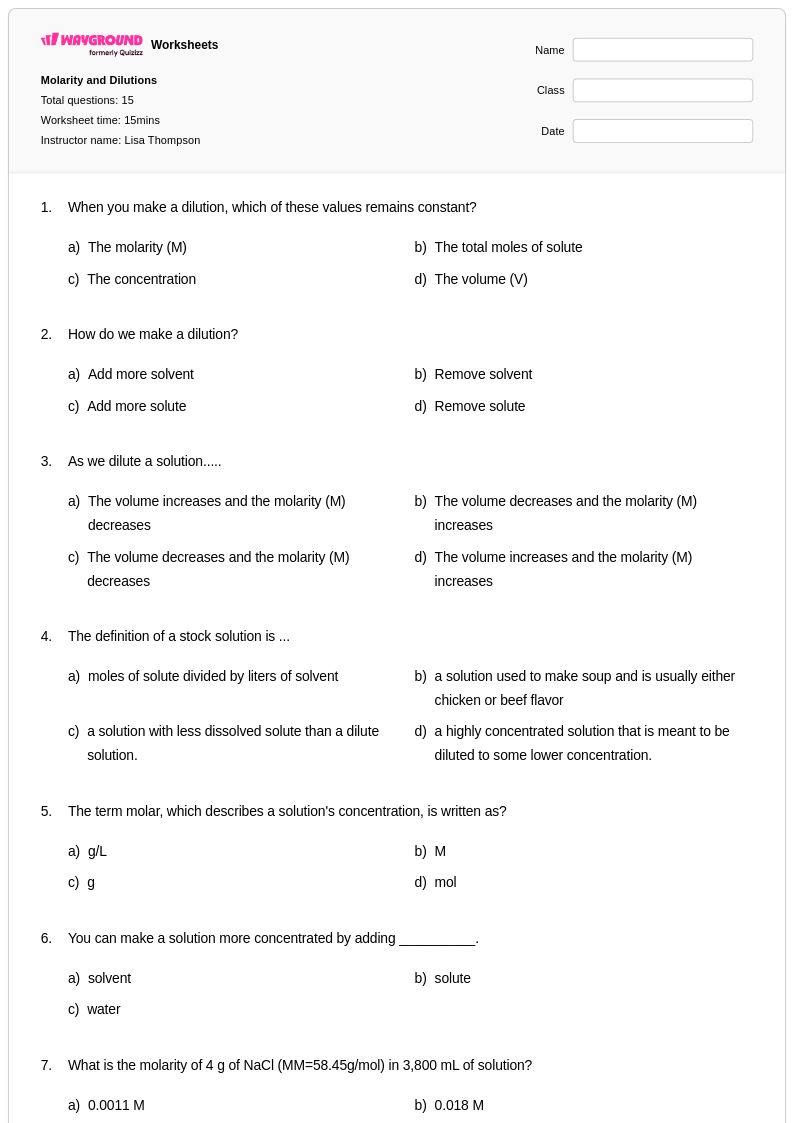
Dilutions worksheets available through Wayground (formerly Quizizz) provide comprehensive practice opportunities for students to master the fundamental chemistry concept of reducing solution concentration through the systematic addition of solvent. These expertly designed practice problems guide learners through essential calculations involving initial and final concentrations, volumes, and the application of the dilution equation C₁V₁ = C₂V₂. Each worksheet strengthens critical analytical skills including molarity calculations, unit conversions, and problem-solving techniques that form the foundation for advanced solution chemistry concepts. The collection includes detailed answer keys and free printables in convenient pdf format, allowing students to work through progressively challenging scenarios from simple serial dilutions to complex multi-step preparation procedures commonly encountered in laboratory settings.
Wayground (formerly Quizizz) empowers educators with an extensive library of millions of teacher-created dilutions worksheets that streamline lesson planning and enhance chemistry instruction across all learning levels. The platform's robust search and filtering capabilities enable teachers to quickly locate resources aligned with specific curriculum standards, whether focusing on basic concentration concepts or advanced analytical chemistry applications. These differentiation tools support diverse classroom needs through customizable content that can be adapted for remediation, enrichment, or targeted skill practice. Available in both printable and digital formats including downloadable pdf versions, these worksheets integrate seamlessly into hybrid learning environments while providing the flexibility teachers need to address individual student requirements and reinforce essential dilution principles through varied practice opportunities.
FAQs
How do I teach dilutions in chemistry class?
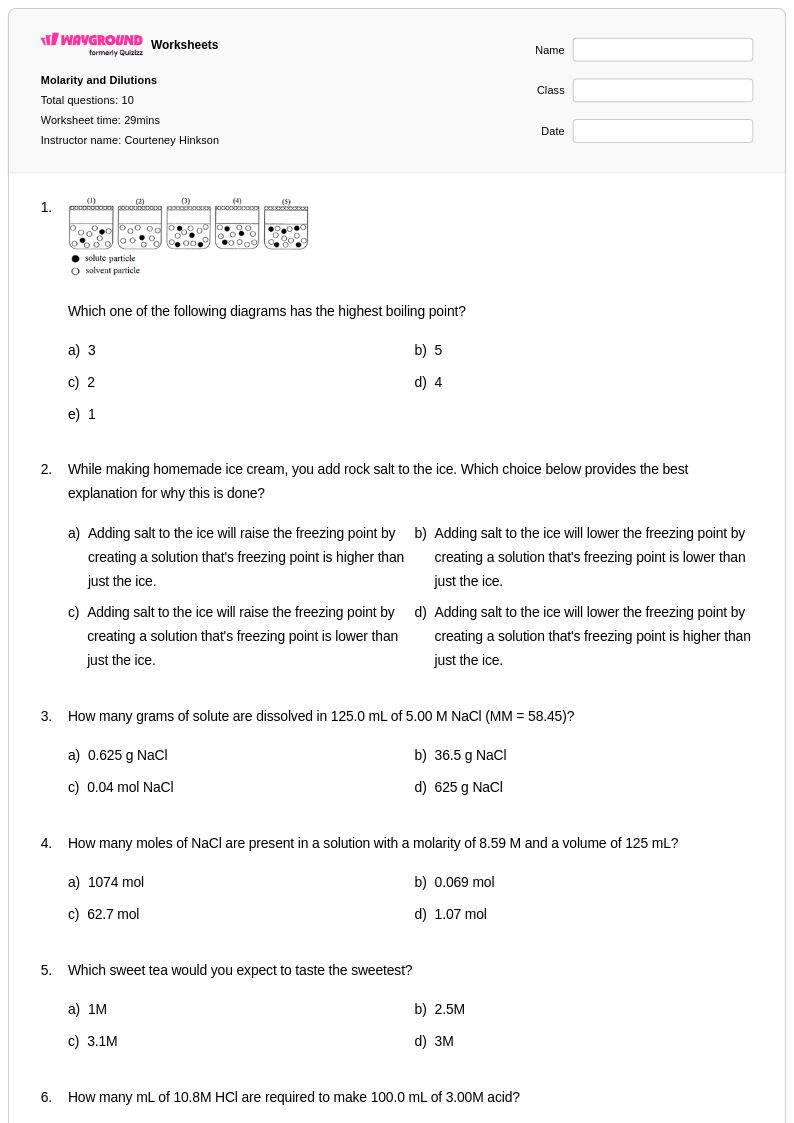
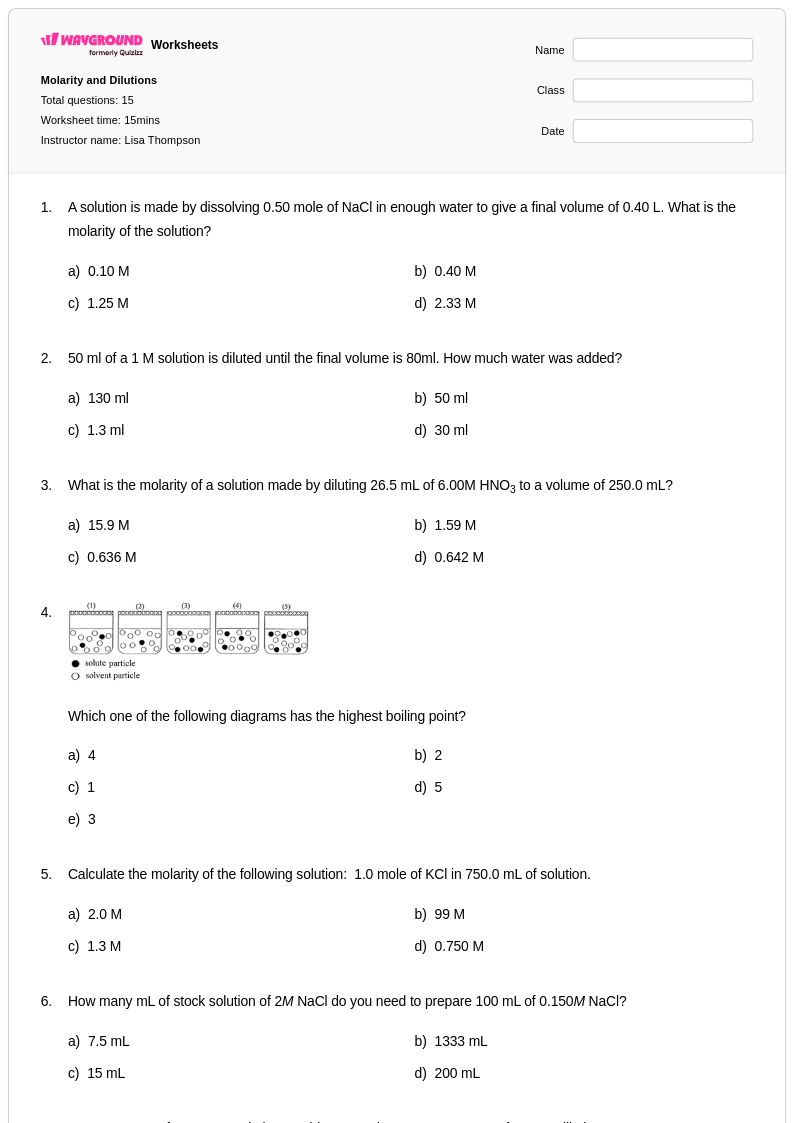
Begin by establishing a clear conceptual foundation: dilution does not change the number of moles of solute, only the volume of the solution. Introduce the dilution equation C₁V₁ = C₂V₂ with concrete examples before moving to calculations, and use visual models such as particle diagrams to show how adding solvent decreases concentration. Connecting the math to real laboratory procedures, like preparing standard solutions from a stock, helps students see why the skill matters beyond the worksheet.
What types of practice problems help students get better at dilution calculations?
Effective practice should progress from single-step problems, where students solve directly for one unknown using C₁V₁ = C₂V₂, to multi-step serial dilution problems that require tracking concentration changes across several stages. Including unit conversion problems alongside concentration calculations builds the analytical fluency students need for lab and exam settings. Problems set in realistic laboratory contexts, such as preparing reagents for a titration, improve retention and transfer.
What mistakes do students commonly make with dilution problems?
The most frequent error is confusing which variables represent initial versus final states, particularly when problems present information out of order. Students also commonly mishandle unit conversions, mixing milliliters and liters within the same calculation, which produces answers that are off by a factor of 1000. A third persistent misconception is assuming that dilution changes the amount of solute rather than only the concentration, which leads to errors in multi-step serial dilution sequences.
How can I use Wayground's dilutions worksheets in my classroom?
Wayground's dilutions worksheets are available as printable PDFs for traditional classroom use and in digital formats for technology-integrated or hybrid learning environments, including the option to host them as a quiz directly on Wayground. Teachers can use the printable versions for guided practice or homework and switch to the digital format for self-paced review or formative assessment. For students who need additional support, Wayground's accommodation tools allow teachers to enable read-aloud, extended time, or reduced answer choices on an individual basis without disrupting the rest of the class.
How do I differentiate dilutions instruction for students at different skill levels?
For students still building confidence, start with problems where three of the four variables in C₁V₁ = C₂V₂ are given explicitly and units are already consistent. Advanced students benefit from problems requiring them to design a dilution procedure from a target concentration and available stock, or to work backwards from a final volume to determine how much stock to use. On Wayground, teachers can assign differentiated worksheets and apply individual accommodations such as reduced answer choices or read-aloud to specific students while the rest of the class works through standard problems.
How do serial dilutions differ from simple dilutions, and how should I teach them?
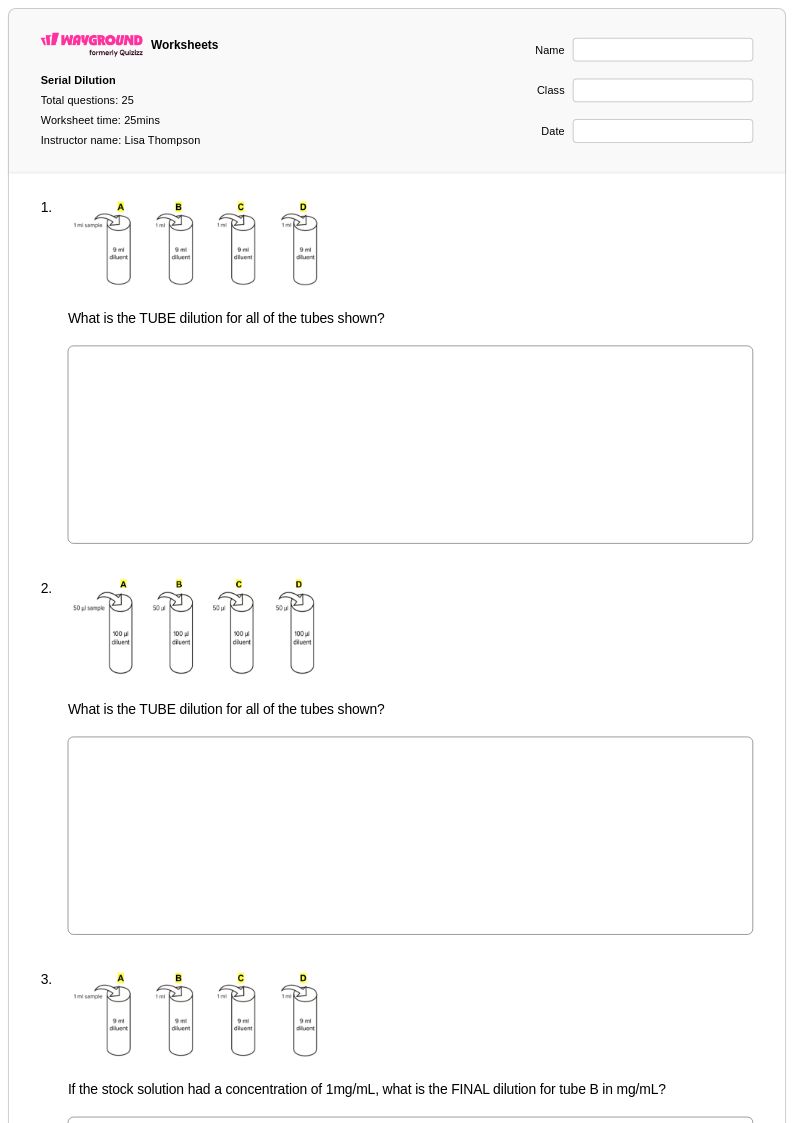
A simple dilution reduces concentration in a single step, while a serial dilution involves a sequence of repeated dilutions where the diluted solution from each step becomes the starting solution for the next. Serial dilutions are common in microbiology and analytical chemistry when extremely low concentrations are needed that cannot be prepared accurately in one step. Teach serial dilutions after students are fluent with C₁V₁ = C₂V₂, and use a table format to help students track concentration and volume at each stage systematically.