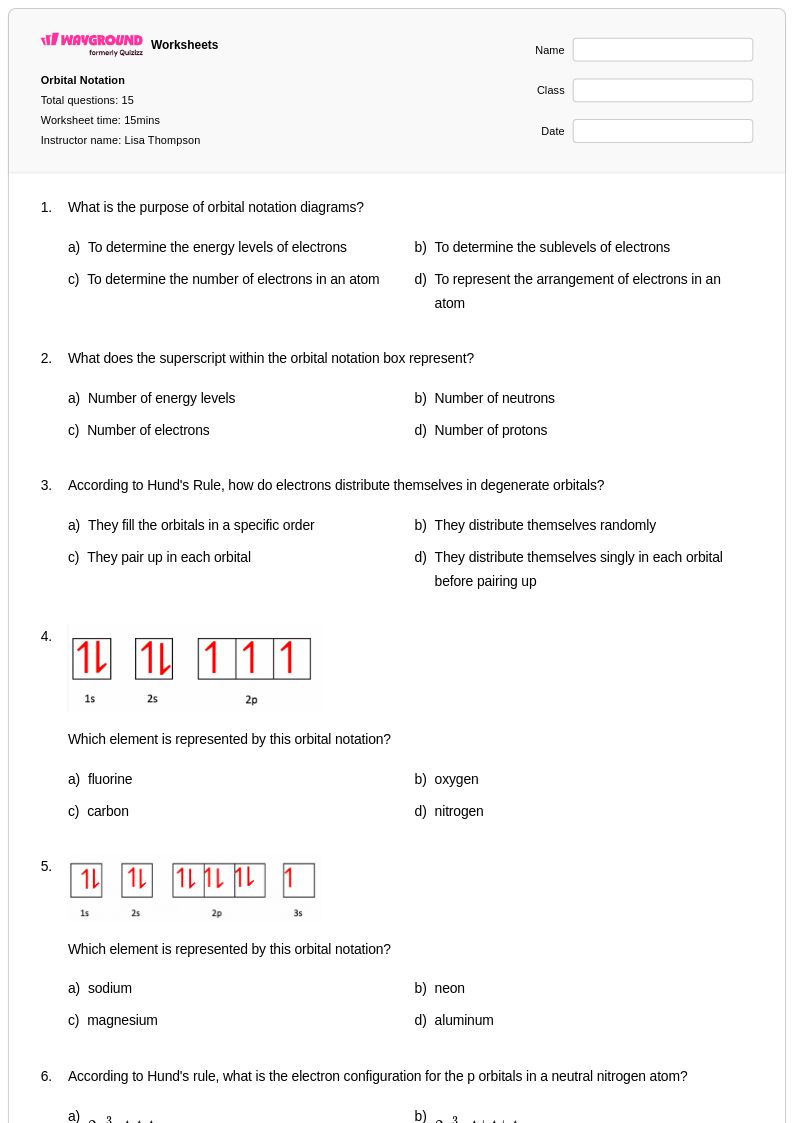
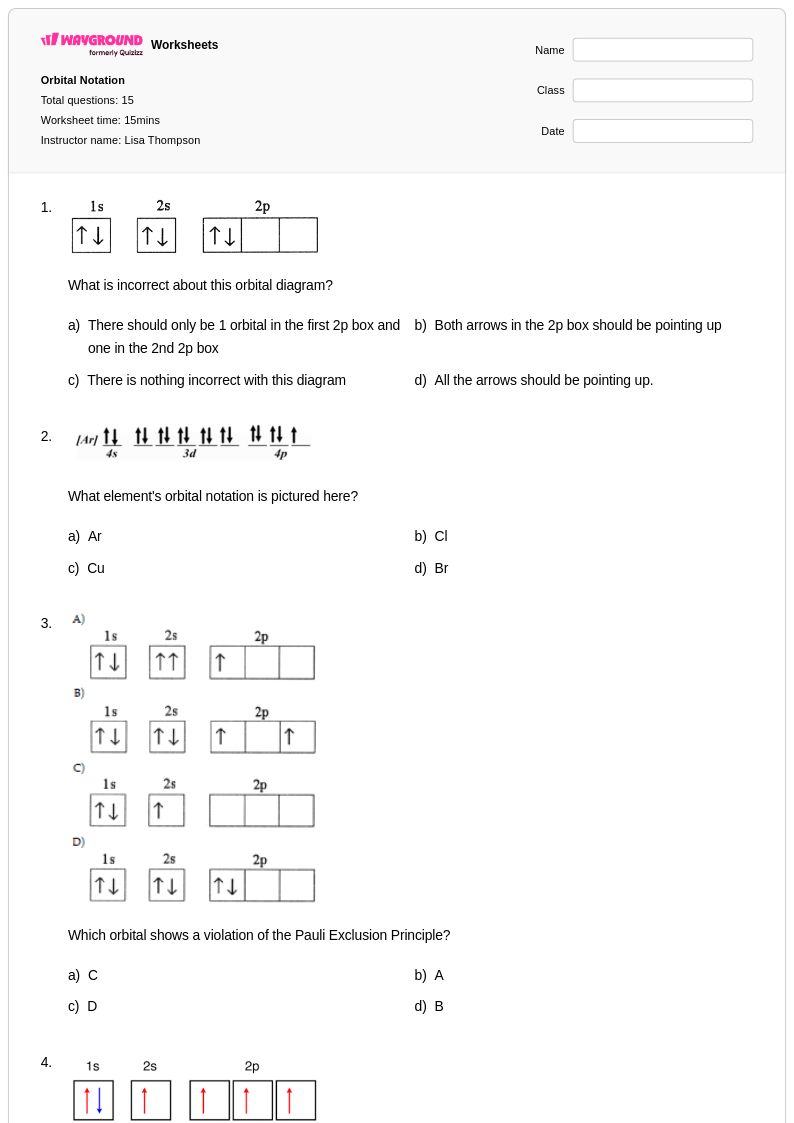
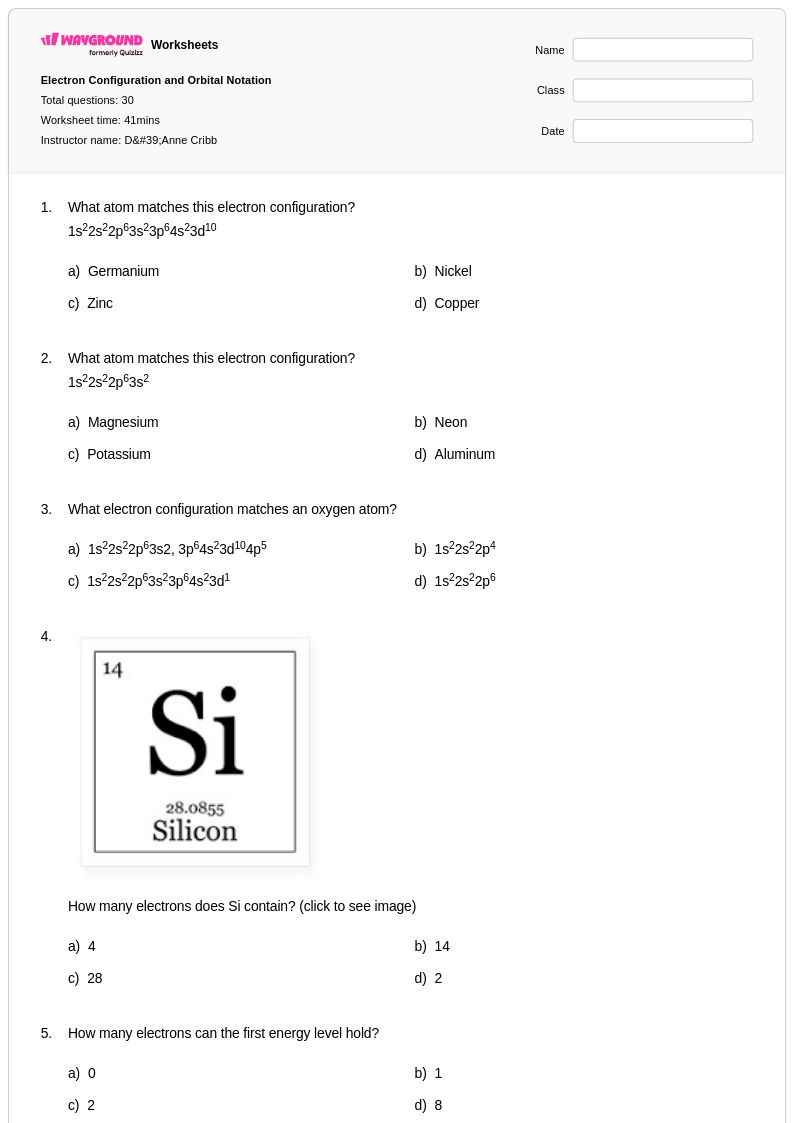
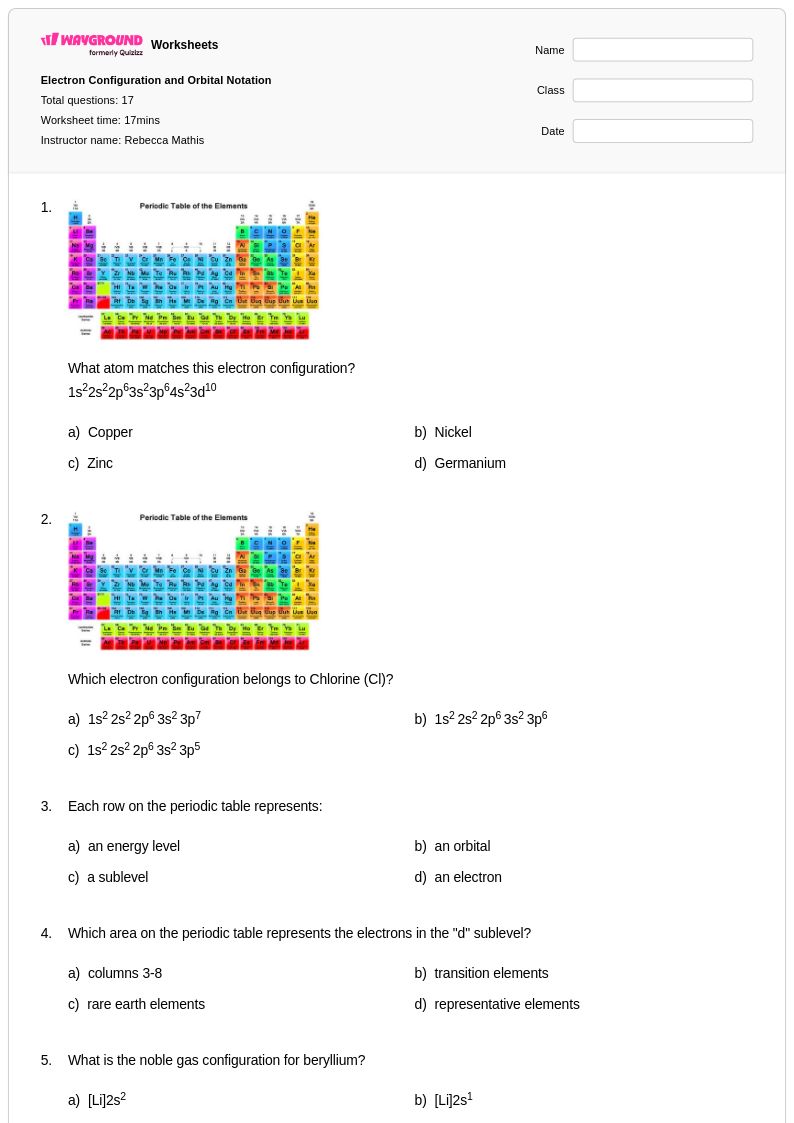
Explore Wayground's comprehensive collection of free orbital notation worksheets and printables that help students master electron configuration through engaging practice problems and detailed answer keys.
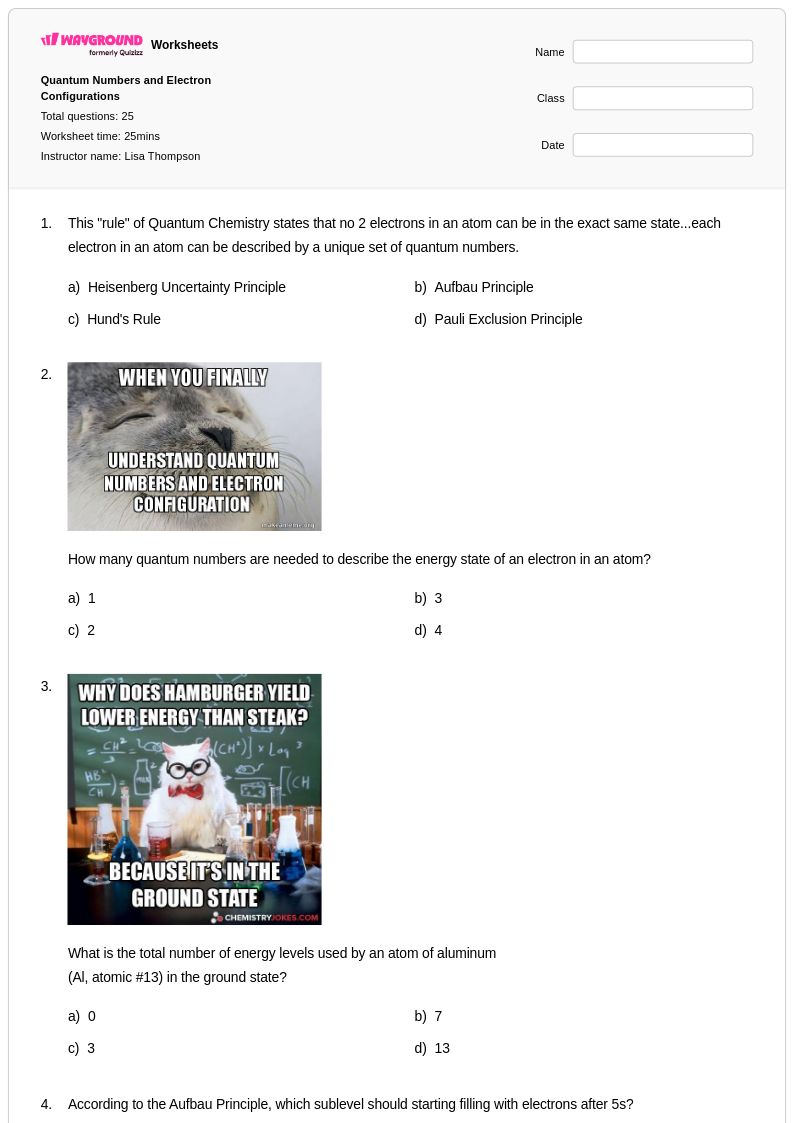
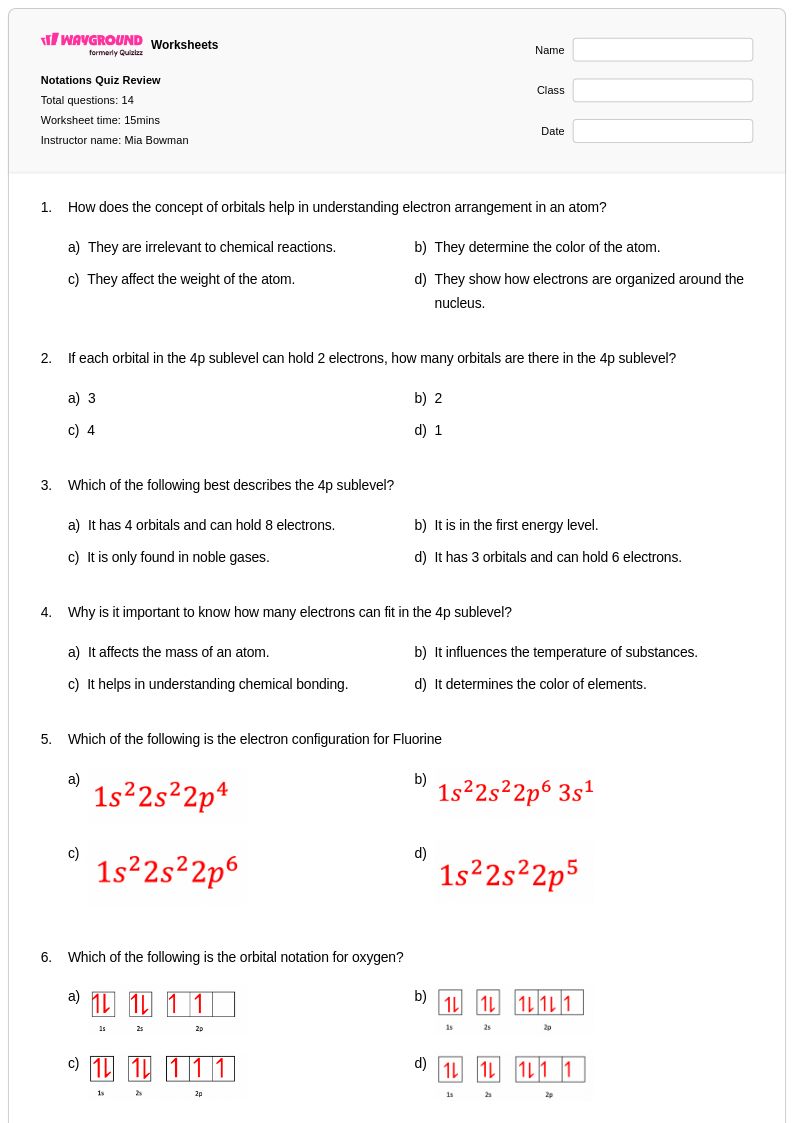
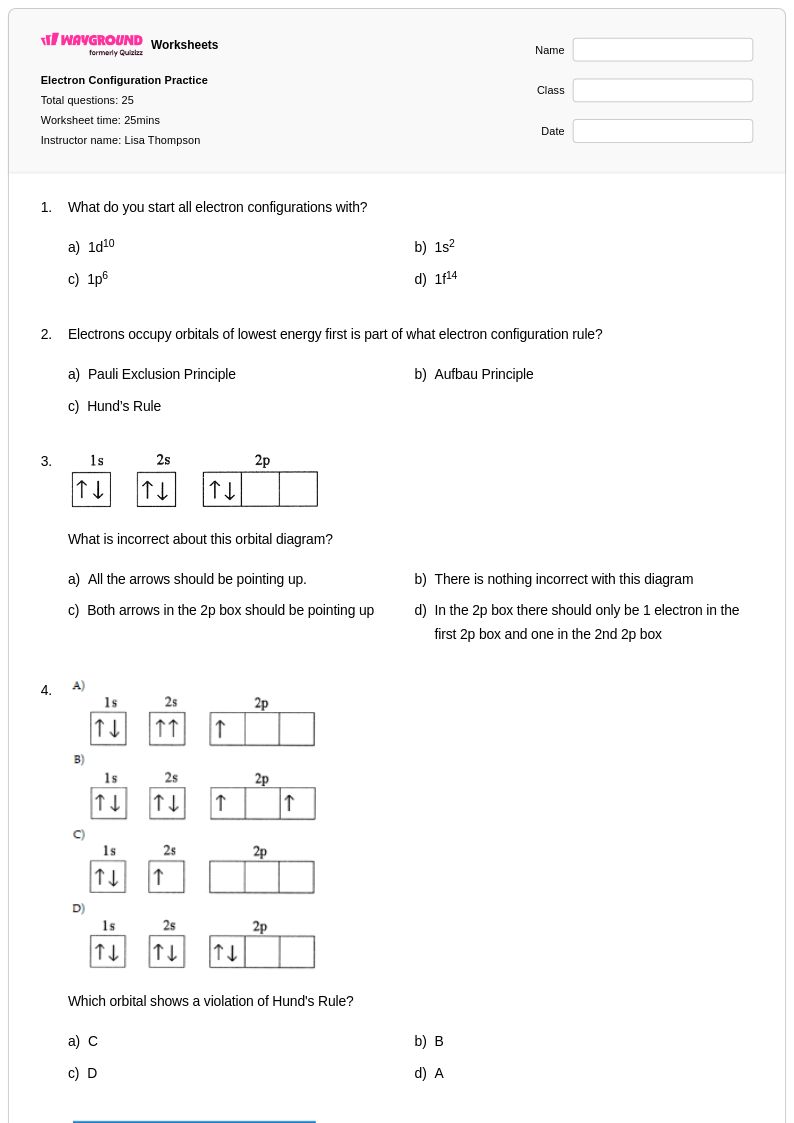
Orbital notation worksheets available through Wayground (formerly Quizizz) provide comprehensive practice in one of chemistry's most fundamental concepts for visualizing electron configuration and atomic structure. These educational resources strengthen students' ability to write electron configurations using orbital diagrams, understand Hund's rule and the Pauli exclusion principle, and accurately represent electron spin through arrow notation in s, p, d, and f orbitals. The worksheet collection includes detailed practice problems that guide learners through the systematic process of filling orbitals according to the aufbau principle, while answer keys enable students to verify their understanding of proper orbital filling sequences. These free printables and pdf resources systematically build proficiency in translating between standard electron configuration notation and visual orbital representations, ensuring students master this critical foundation for understanding chemical bonding and periodic trends.
Wayground (formerly Quizizz) supports chemistry educators with an extensive collection of orbital notation worksheets drawn from millions of teacher-created resources that can be easily located through robust search and filtering capabilities. The platform's alignment with chemistry standards ensures that worksheet content meets curriculum requirements while offering differentiation tools that allow teachers to customize materials for varying skill levels within their classrooms. These flexible resources are available in both printable and digital formats, including downloadable pdf versions, making them adaptable to diverse teaching environments and learning preferences. Teachers can efficiently plan targeted instruction, provide remediation for struggling students, offer enrichment opportunities for advanced learners, and deliver consistent skill practice through these professionally curated orbital notation materials that streamline lesson preparation while maintaining high academic rigor.
FAQs
How do I teach orbital notation to chemistry students?
Start by ensuring students have a firm grasp of electron configuration before introducing orbital diagrams, since orbital notation is essentially a visual extension of that skill. Introduce the three governing rules in sequence: the aufbau principle (fill lowest energy orbitals first), the Pauli exclusion principle (no two electrons share the same four quantum numbers), and Hund's rule (one electron per orbital before pairing begins). Using a step-by-step buildup approach with the first 20 elements before moving to transition metals helps students internalize the filling order without cognitive overload.
What exercises help students practice orbital notation?
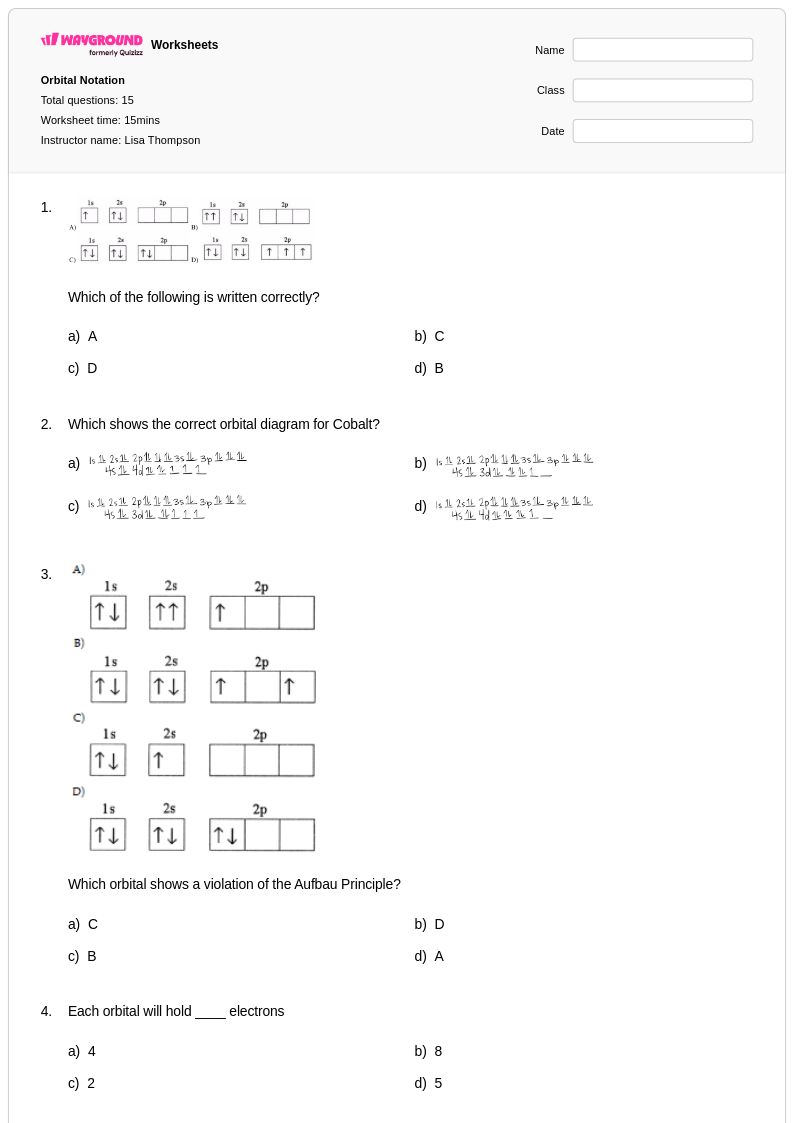
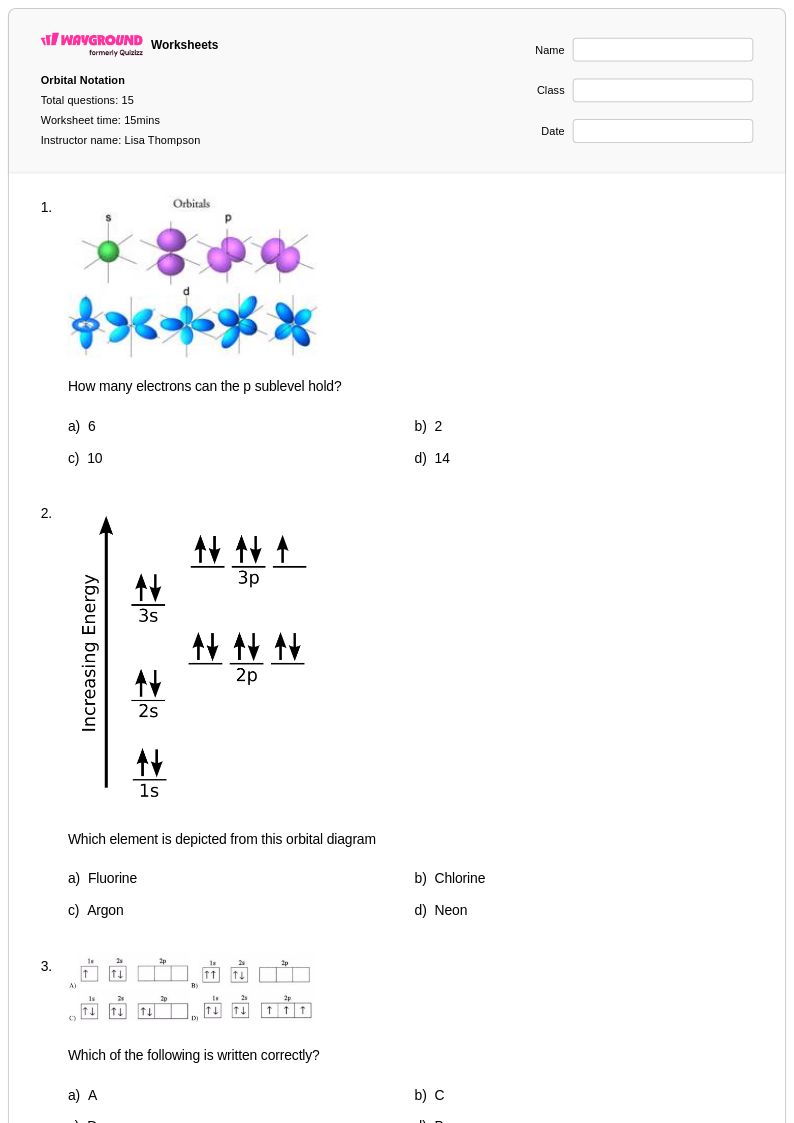
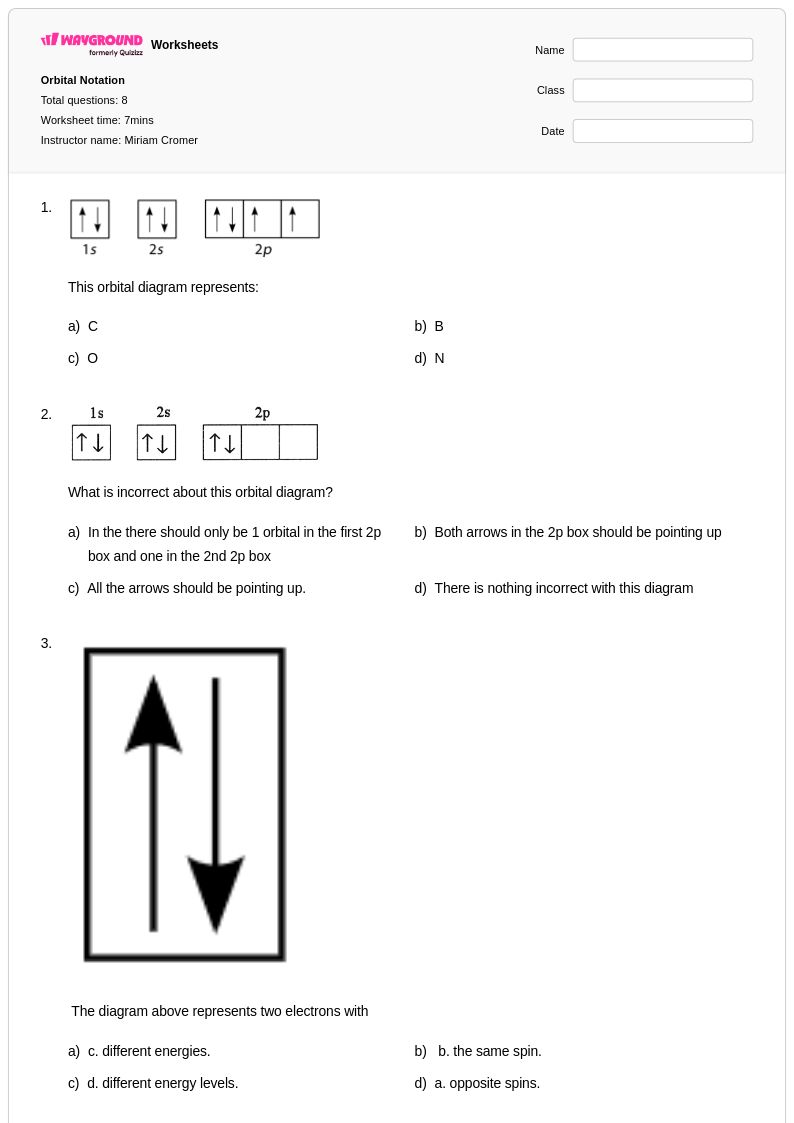
The most effective practice exercises require students to draw orbital diagrams for a range of elements, translate between standard electron configuration notation and arrow-in-box orbital diagrams, and identify errors in pre-filled diagrams. Including periodic table elements from s, p, d, and f blocks ensures students encounter all orbital types. Worksheet problems that ask students to determine the number of unpaired electrons or predict magnetic properties add an application layer that deepens understanding beyond rote notation.
What mistakes do students commonly make with orbital notation?
The most frequent error is violating Hund's rule by pairing electrons in the same orbital before filling all orbitals of equal energy, particularly in the p and d subshells. Students also commonly reverse arrow directions inconsistently, ignoring the convention that the first electron in any orbital is spin-up. A third common mistake is misapplying the aufbau principle for elements like chromium and copper, which have anomalous configurations due to the stability of half-filled and fully filled d subshells.
How do I use orbital notation worksheets from Wayground in my classroom?
Wayground's orbital notation worksheets are available as printable PDFs for traditional classroom use and in digital formats for technology-integrated environments, including the option to host them as a quiz directly on Wayground. All worksheets include complete answer keys, so they work equally well as guided practice, independent assignments, or self-checking homework. For classes with mixed readiness levels, Wayground's accommodation tools allow teachers to apply supports such as read aloud or reduced answer choices to individual students without disrupting the rest of the class.
How is orbital notation different from electron configuration notation?
Electron configuration notation uses a shorthand alphanumeric format (e.g., 1s² 2s² 2p³) to indicate how many electrons occupy each subshell, while orbital notation uses a box-and-arrow diagram to show the specific spin orientation of each individual electron within those subshells. Orbital notation makes Hund's rule and the Pauli exclusion principle visually explicit, which is why it is typically introduced after students are comfortable with standard electron configuration writing.
How can I differentiate orbital notation instruction for students at different skill levels?
For students still building foundational skills, limit initial practice to elements in the first three periods where only s and p orbitals are involved, and provide a partially completed orbital diagram as a scaffold. Advanced students can work with transition metals and lanthanides, practice identifying exceptions to the aufbau principle, and connect orbital notation to properties like paramagnetism. On Wayground, teachers can assign extended time or reduced answer choices to individual students who need additional support while other students work through standard versions of the same material.