
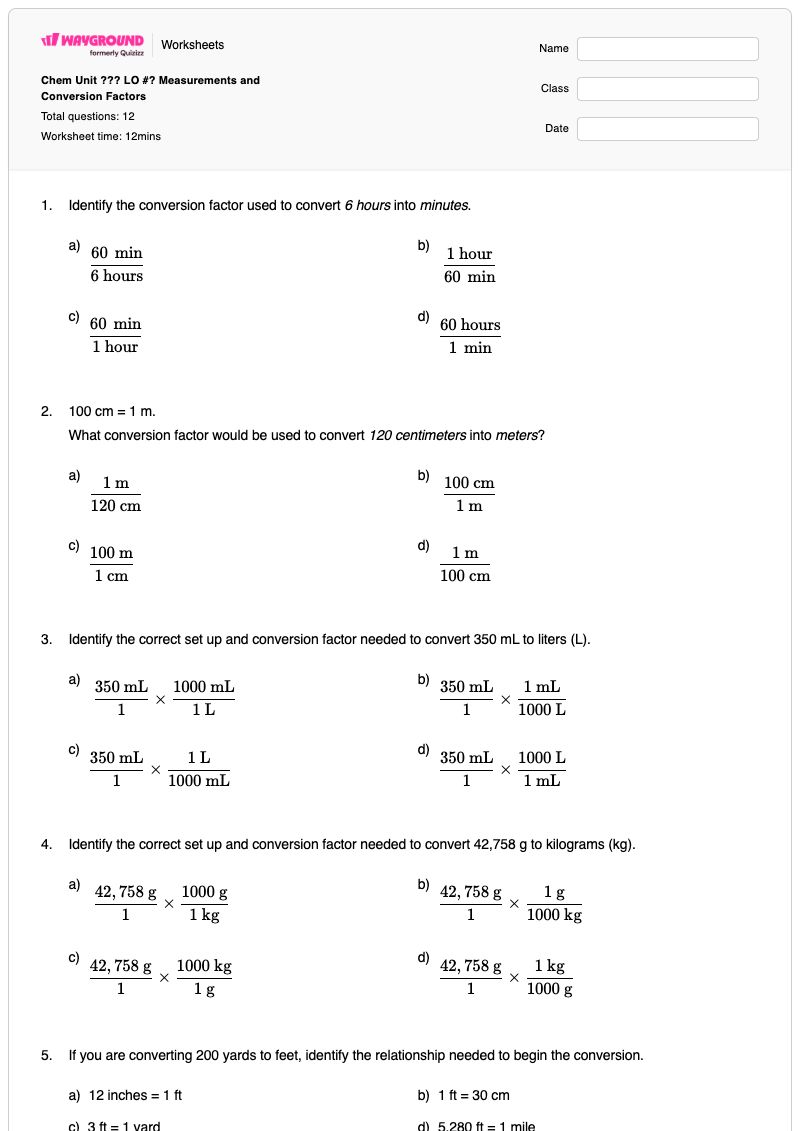
12 Q
9th - 12th
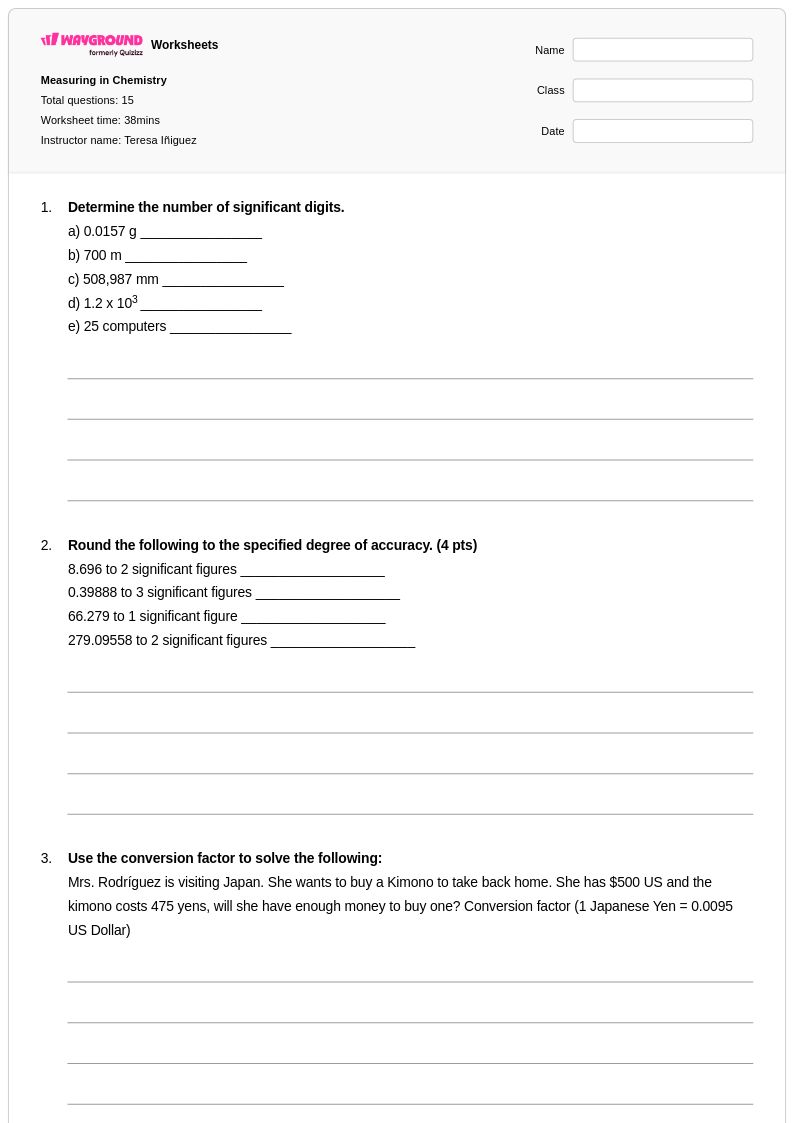
15 Q
10th
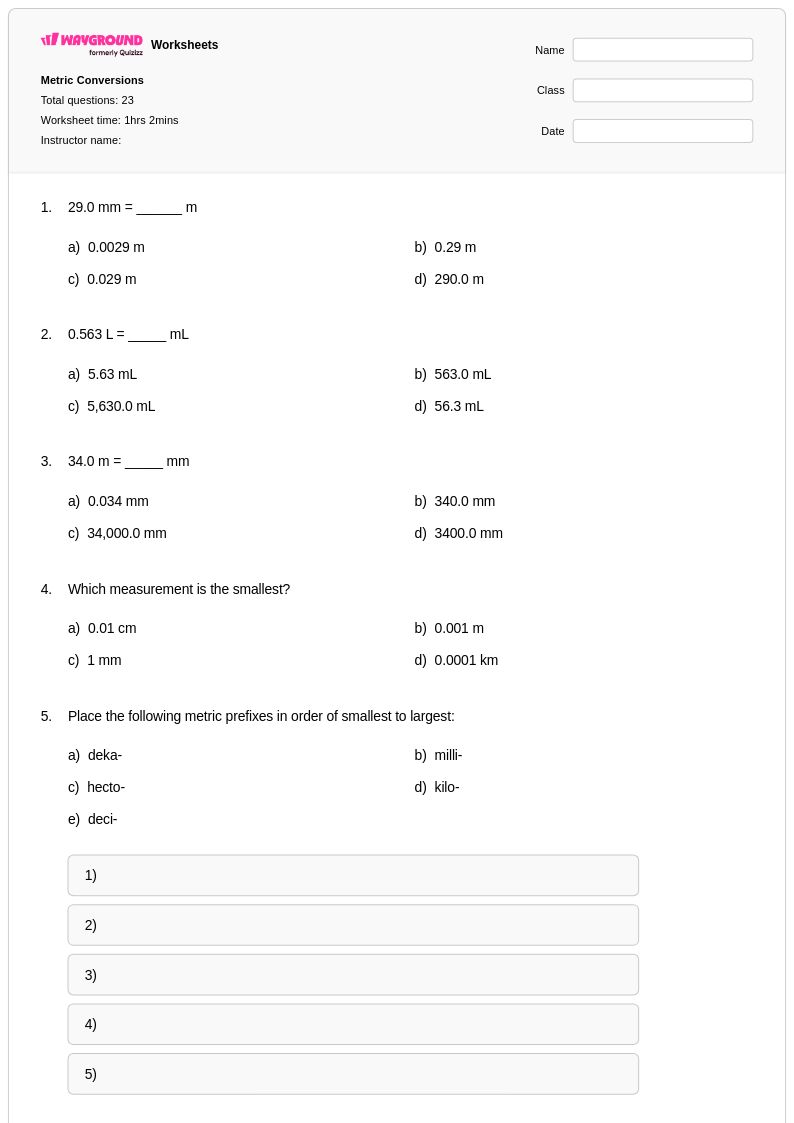
23 Q
6th - 8th
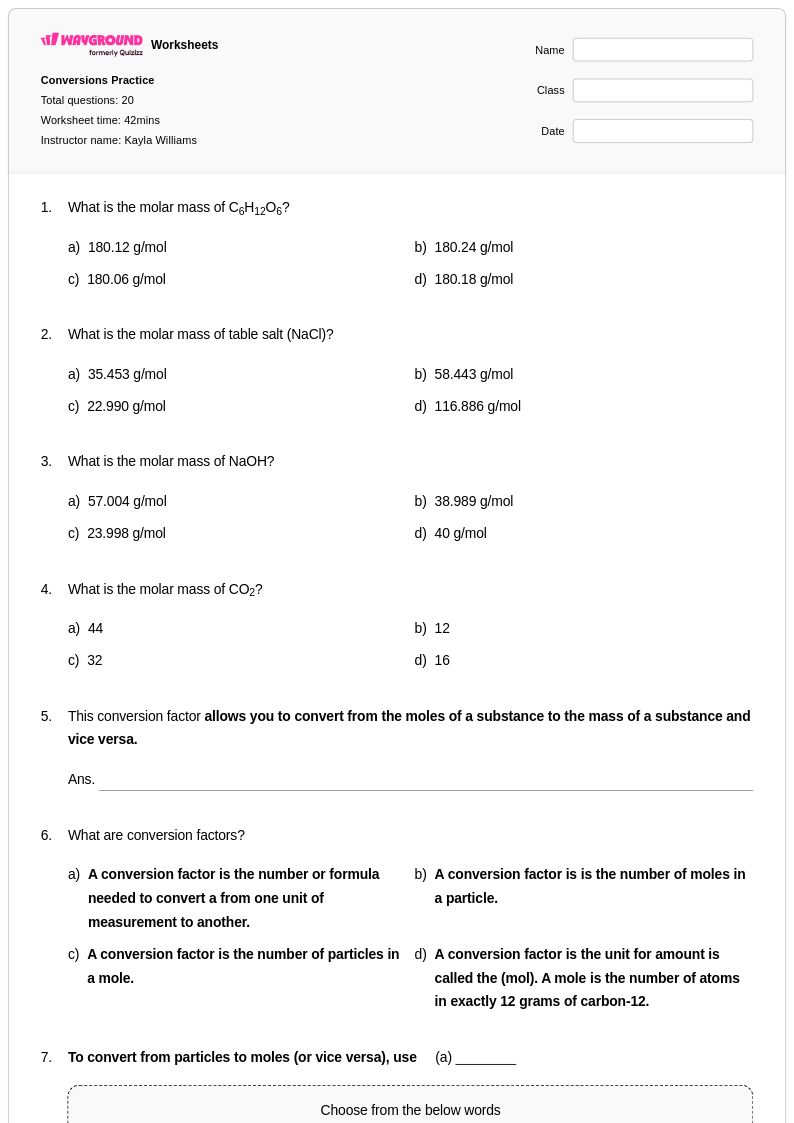
20 Q
11th
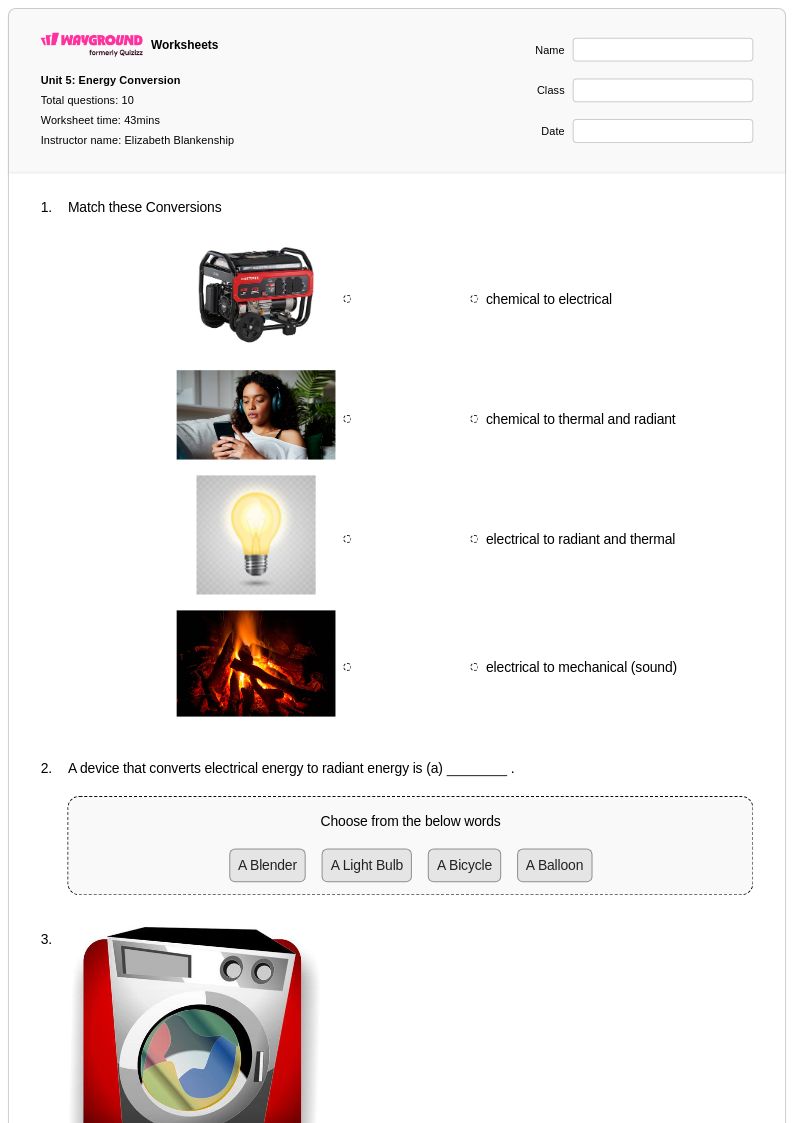
10 Q
6th - 8th
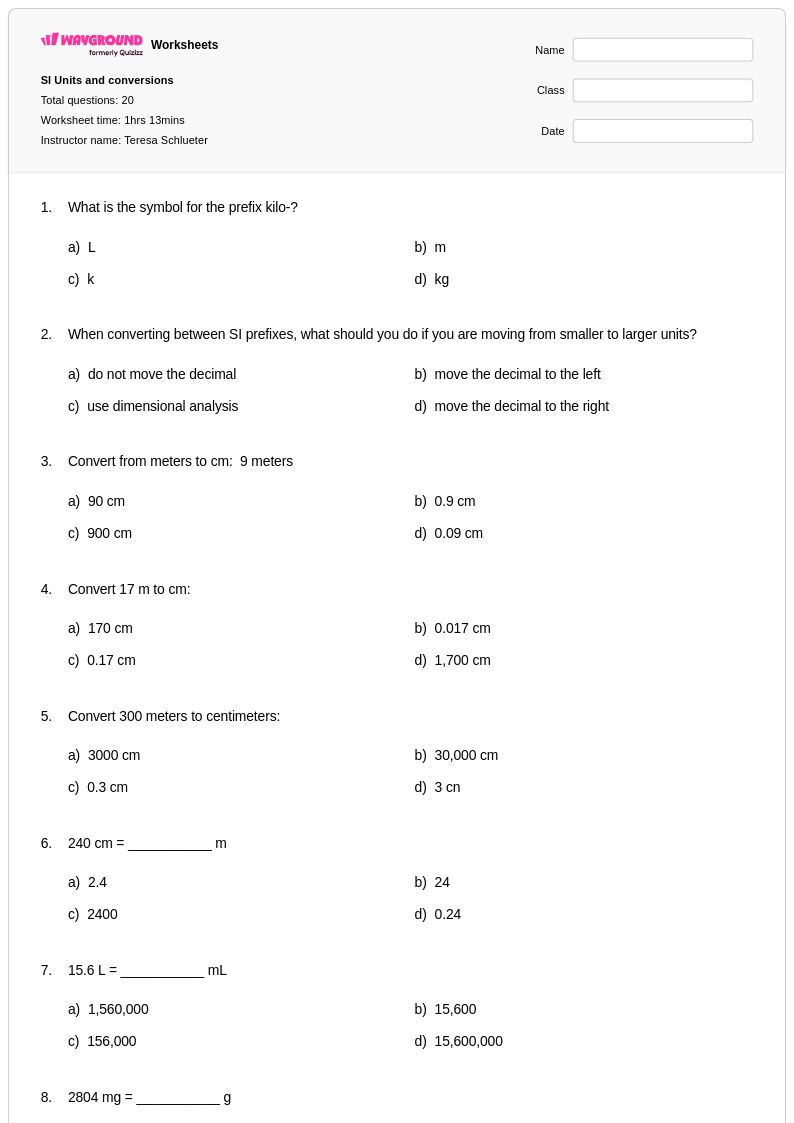
20 Q
8th - 9th
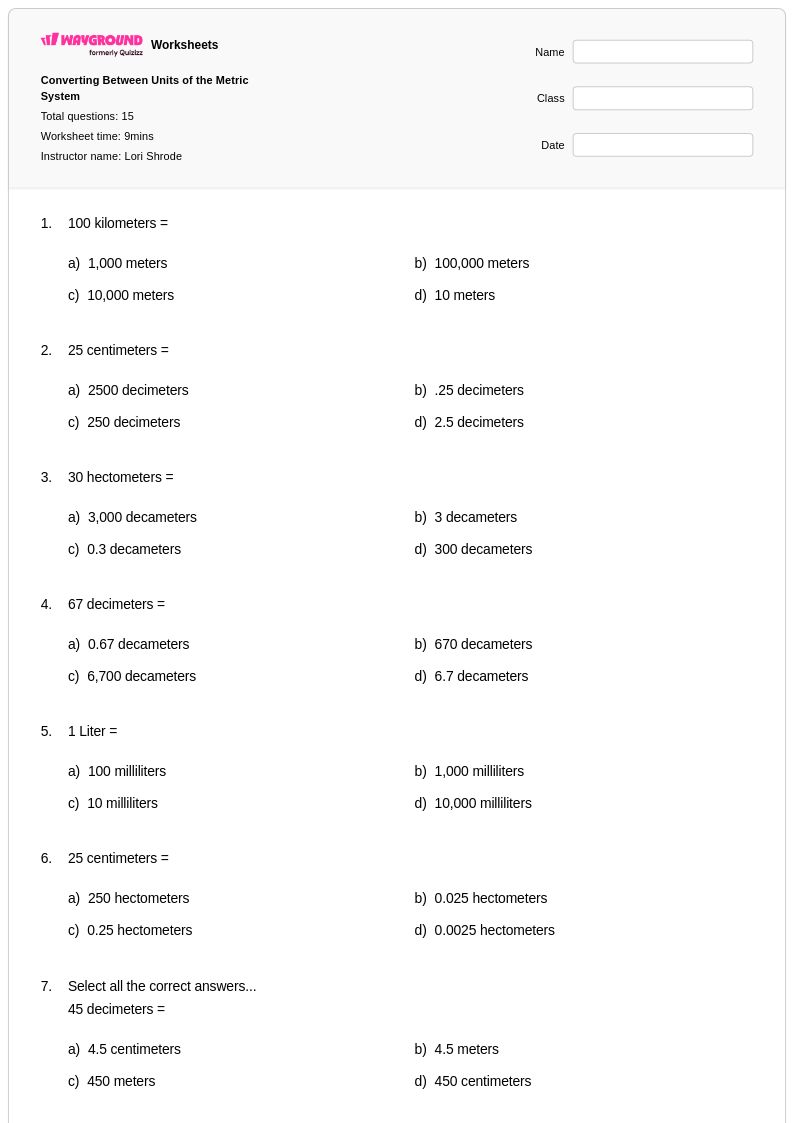
15 Q
8th
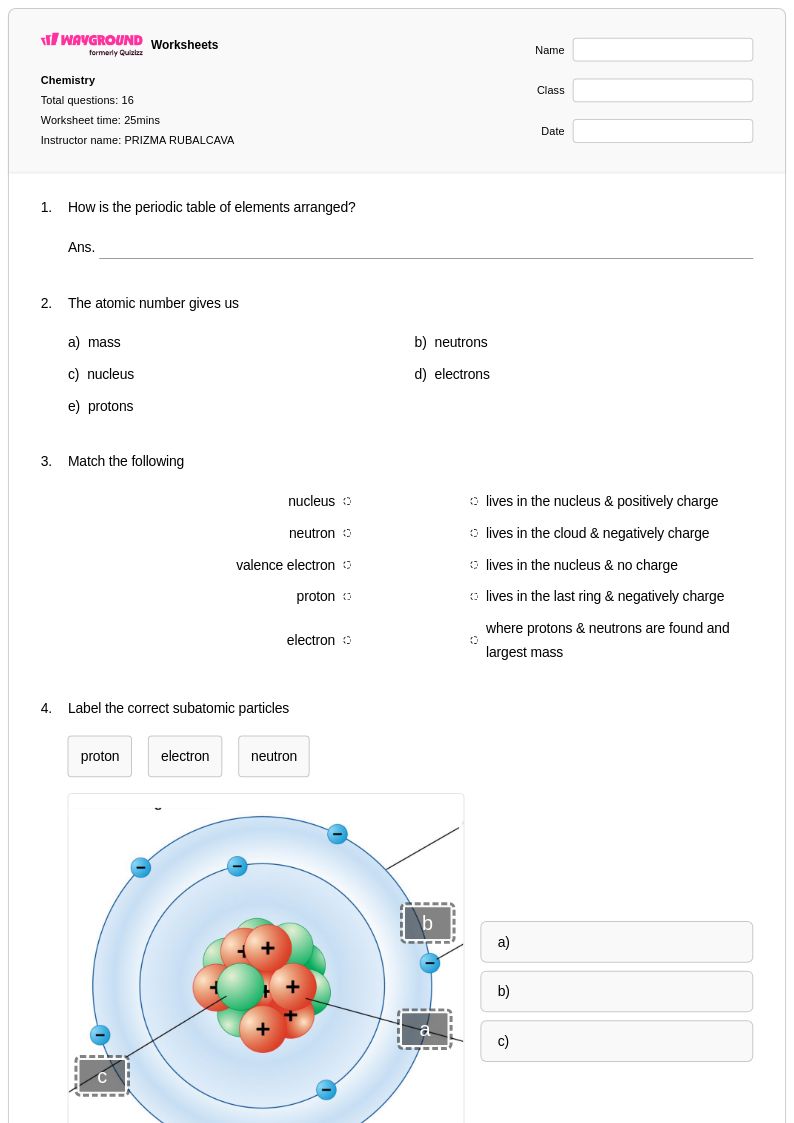
16 Q
6th - 8th
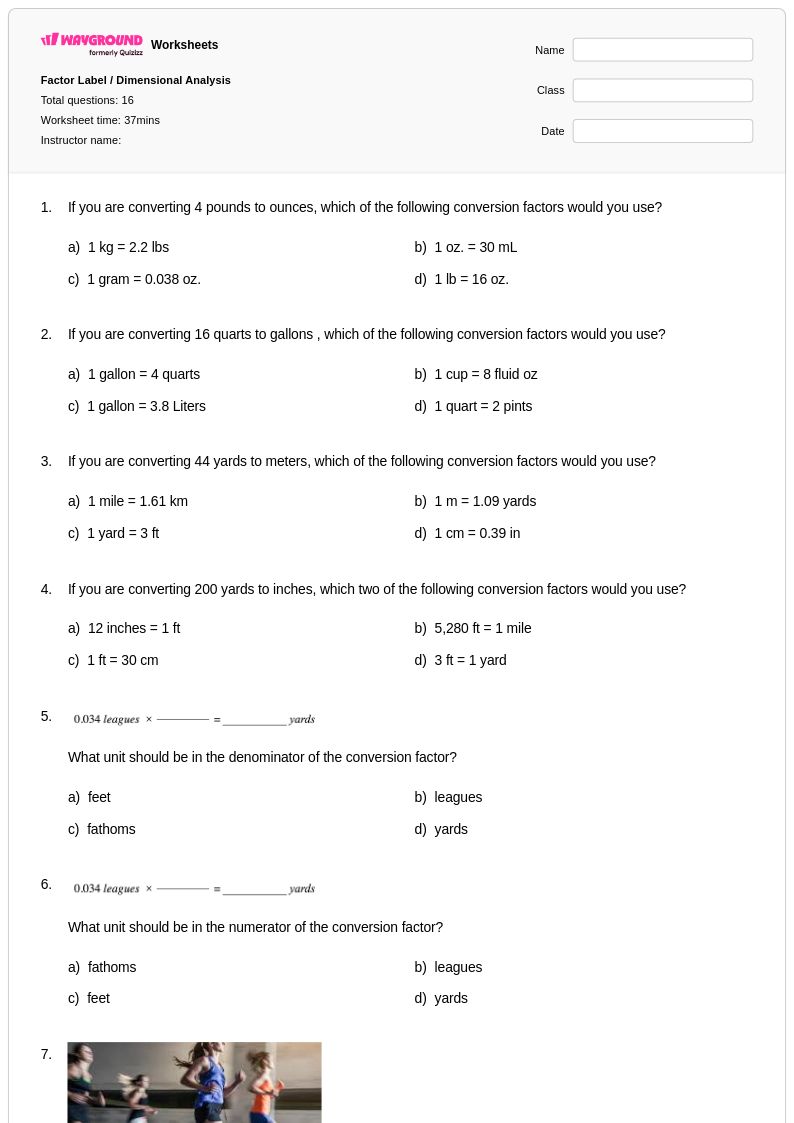
16 Q
9th
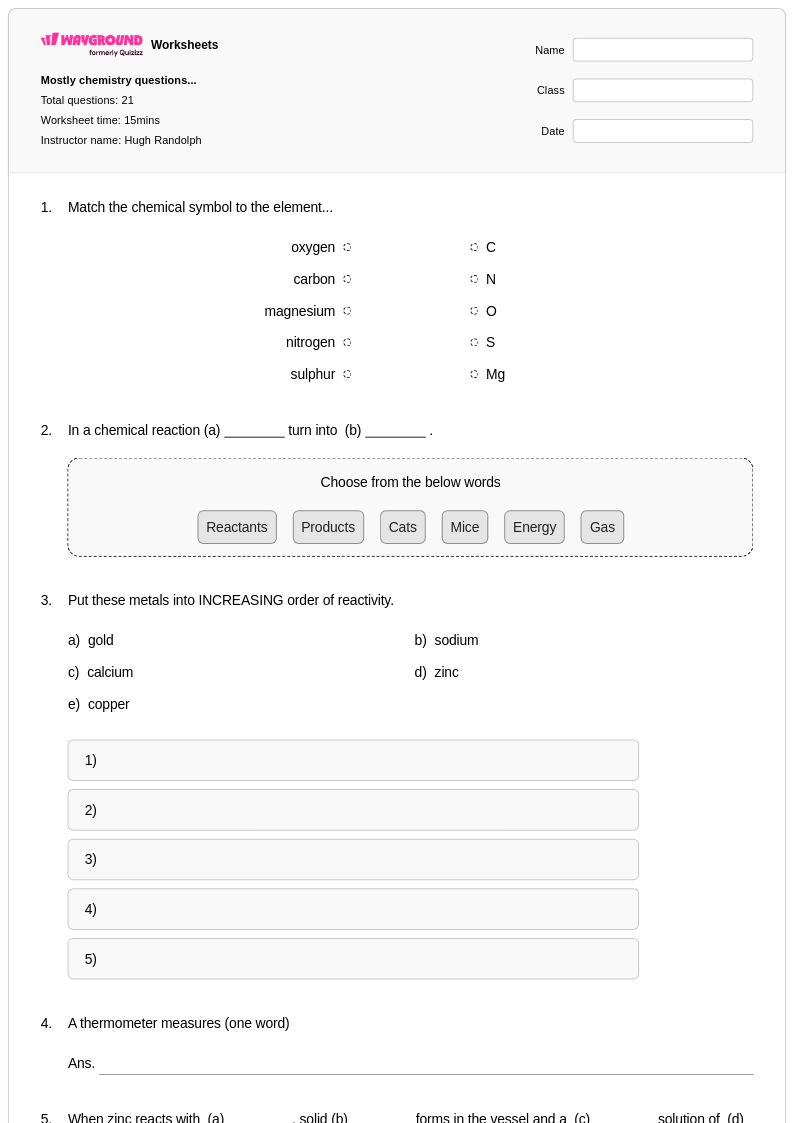
21 Q
7th
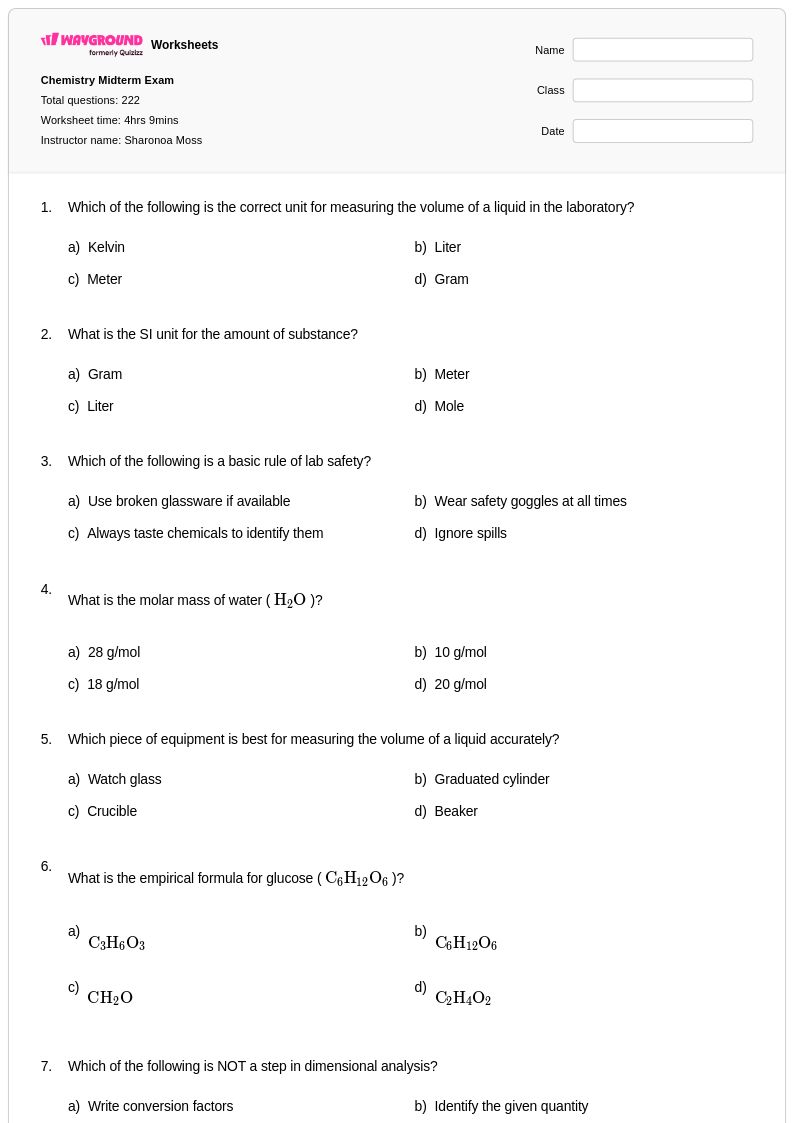
222 Q
11th
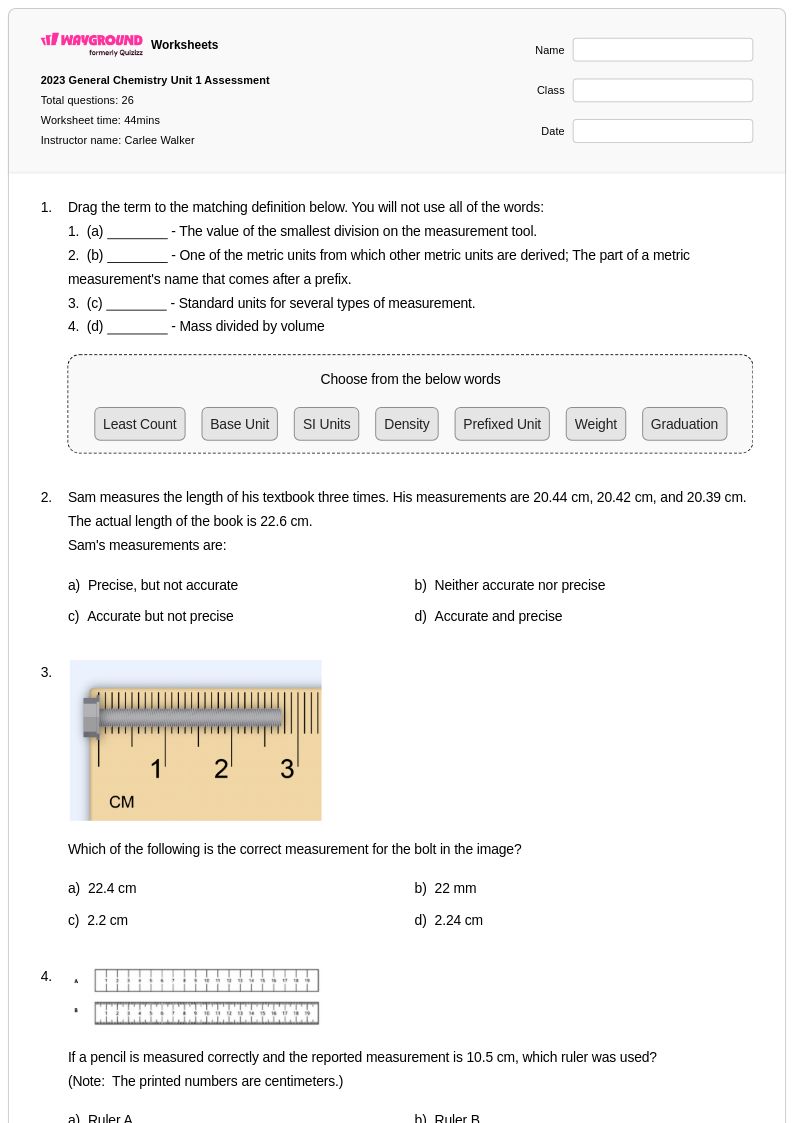
26 Q
9th - 12th
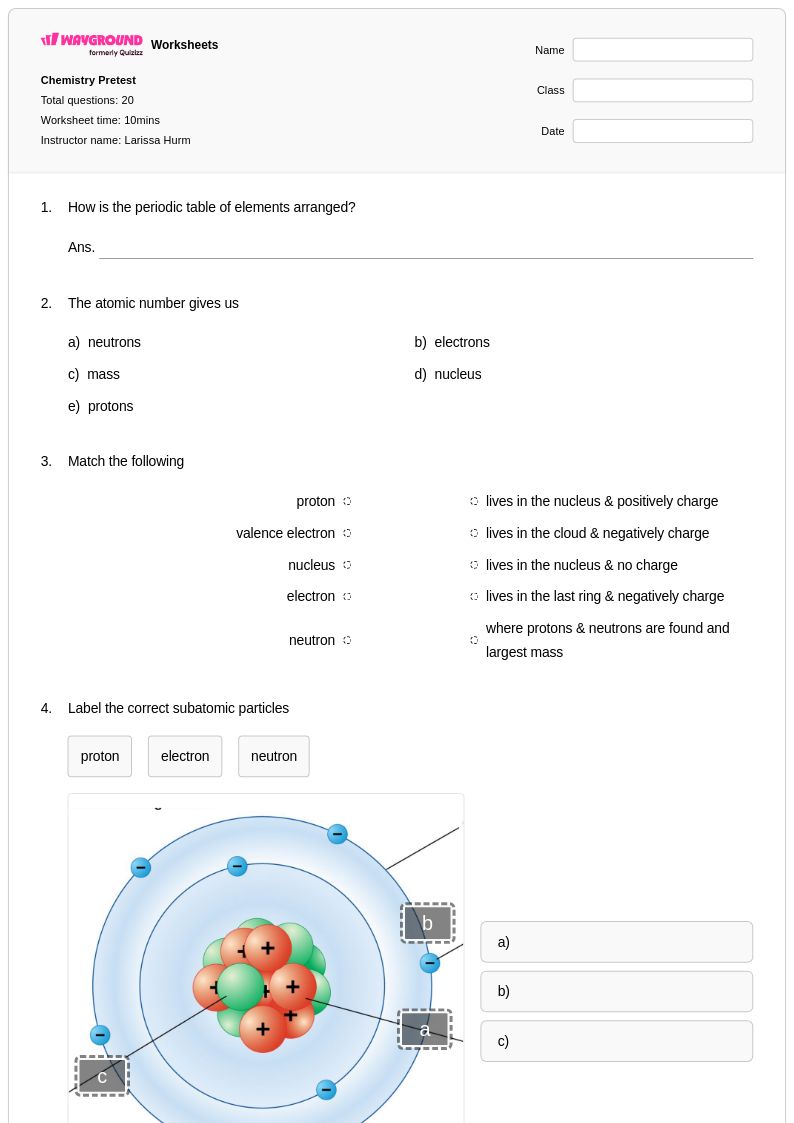
20 Q
8th
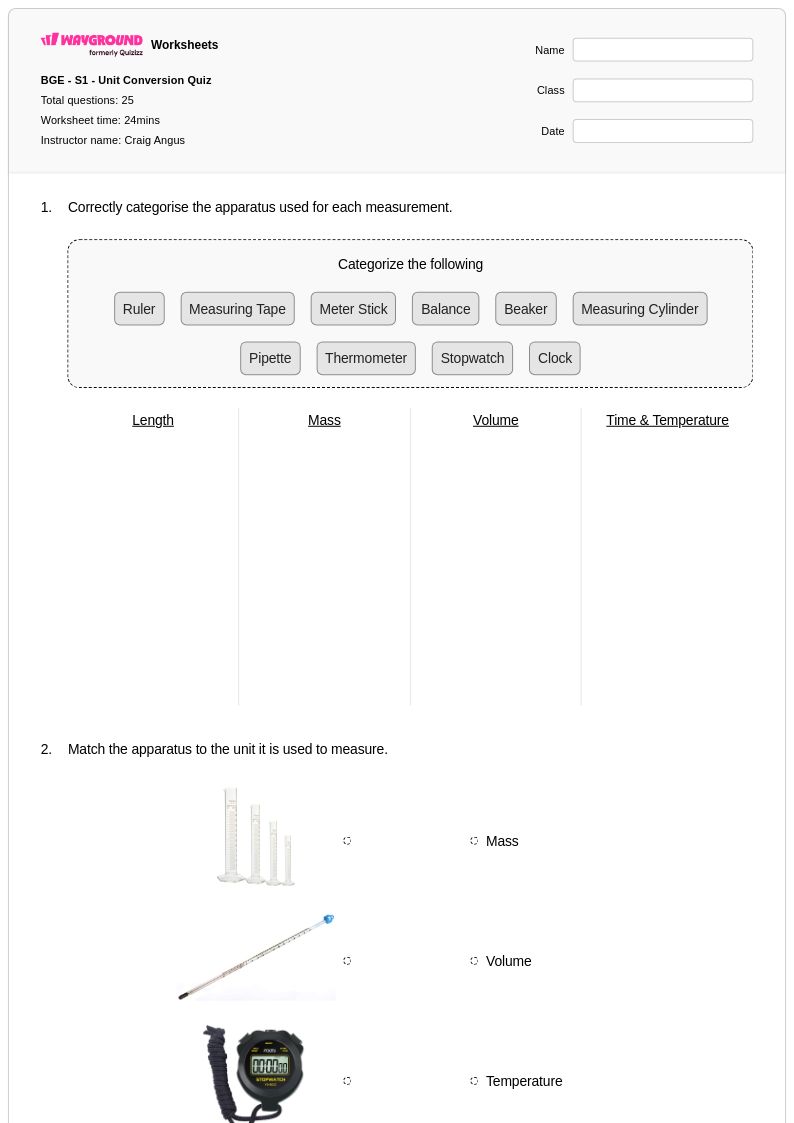
25 Q
7th
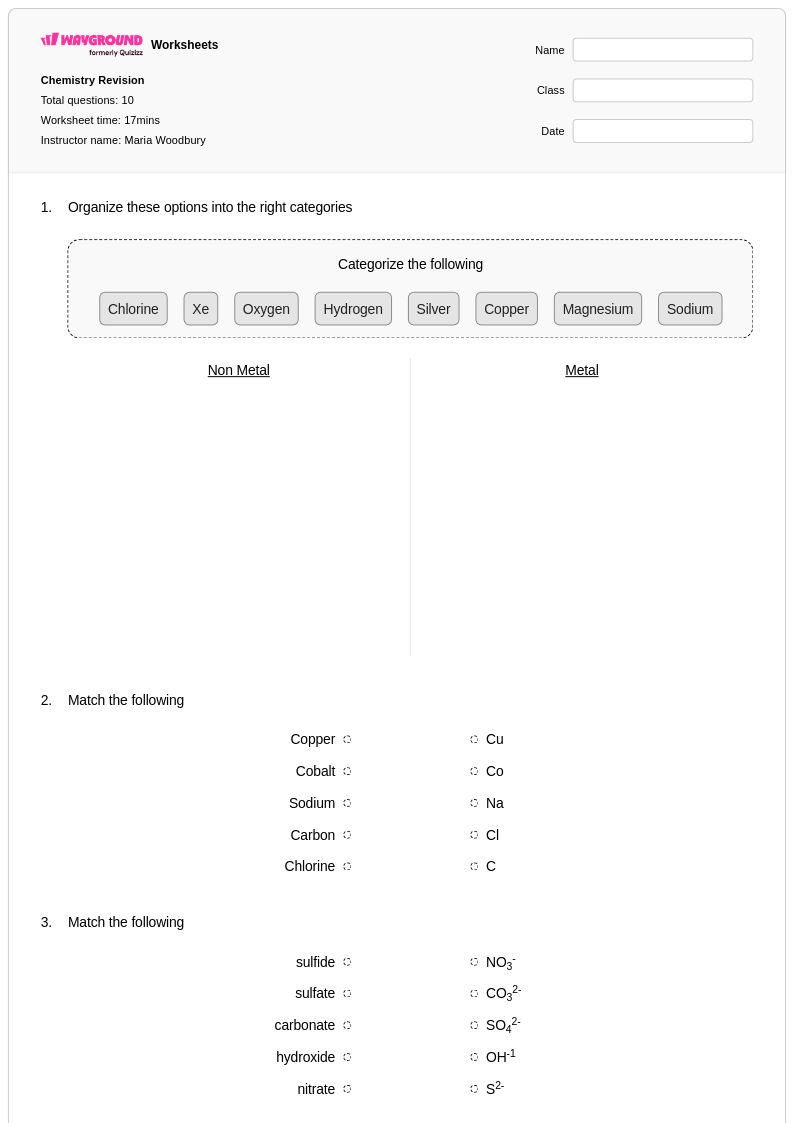
10 Q
12th
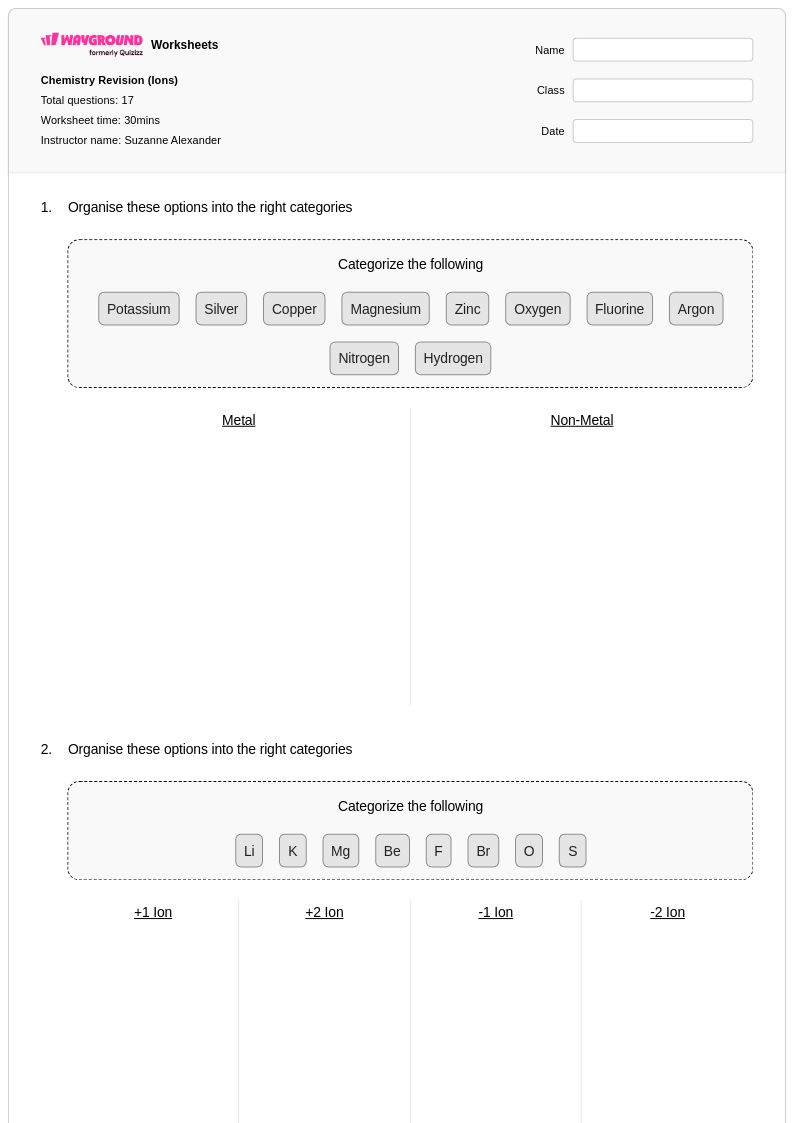
17 Q
9th - 12th
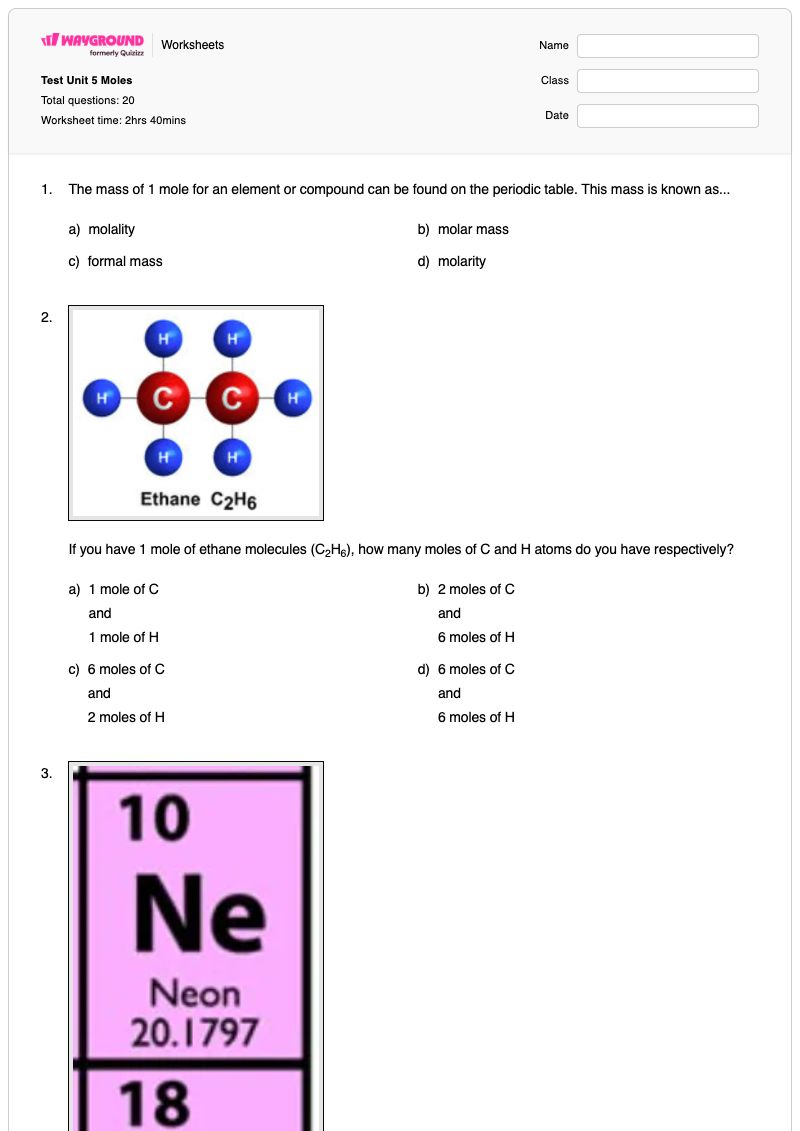
20 Q
9th
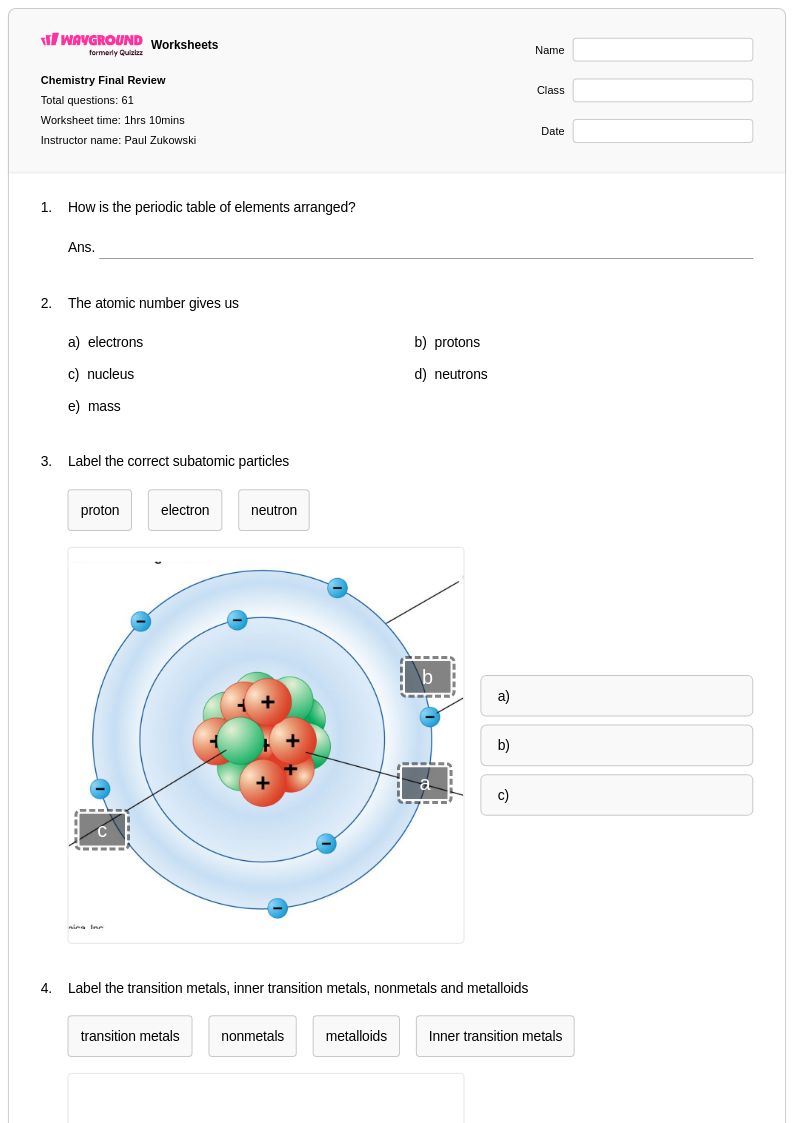
61 Q
12th
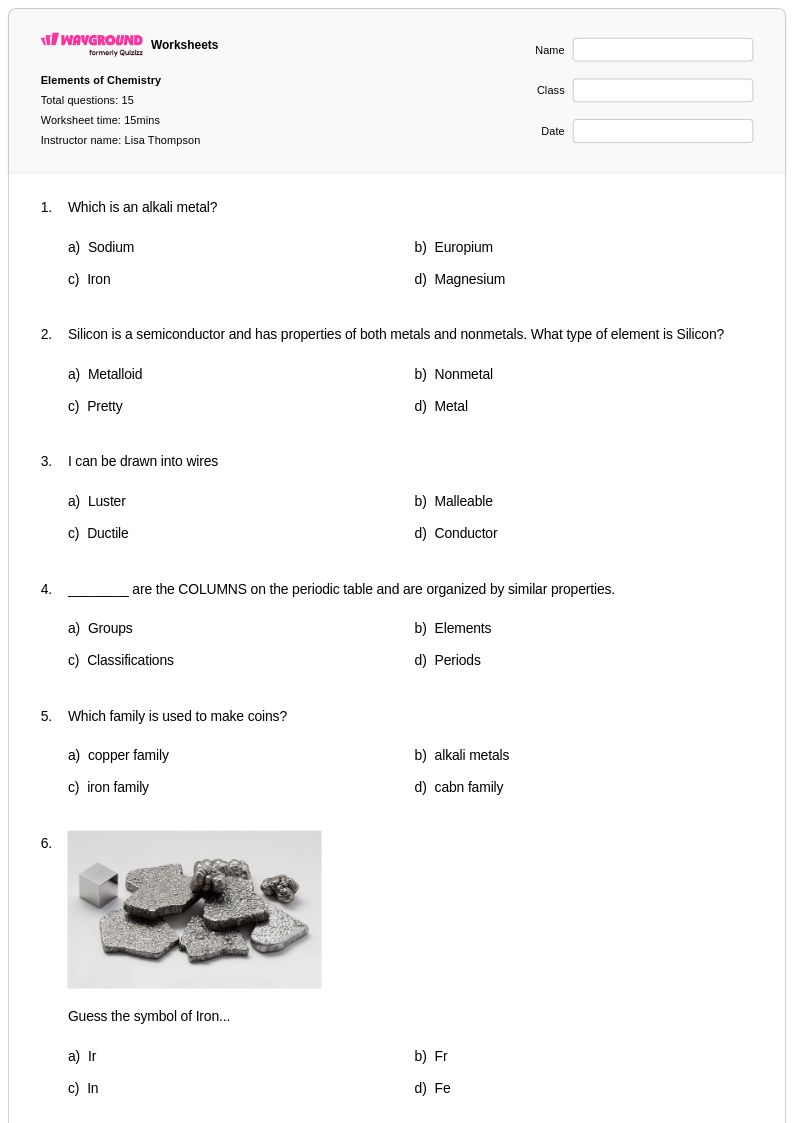
15 Q
8th - Uni
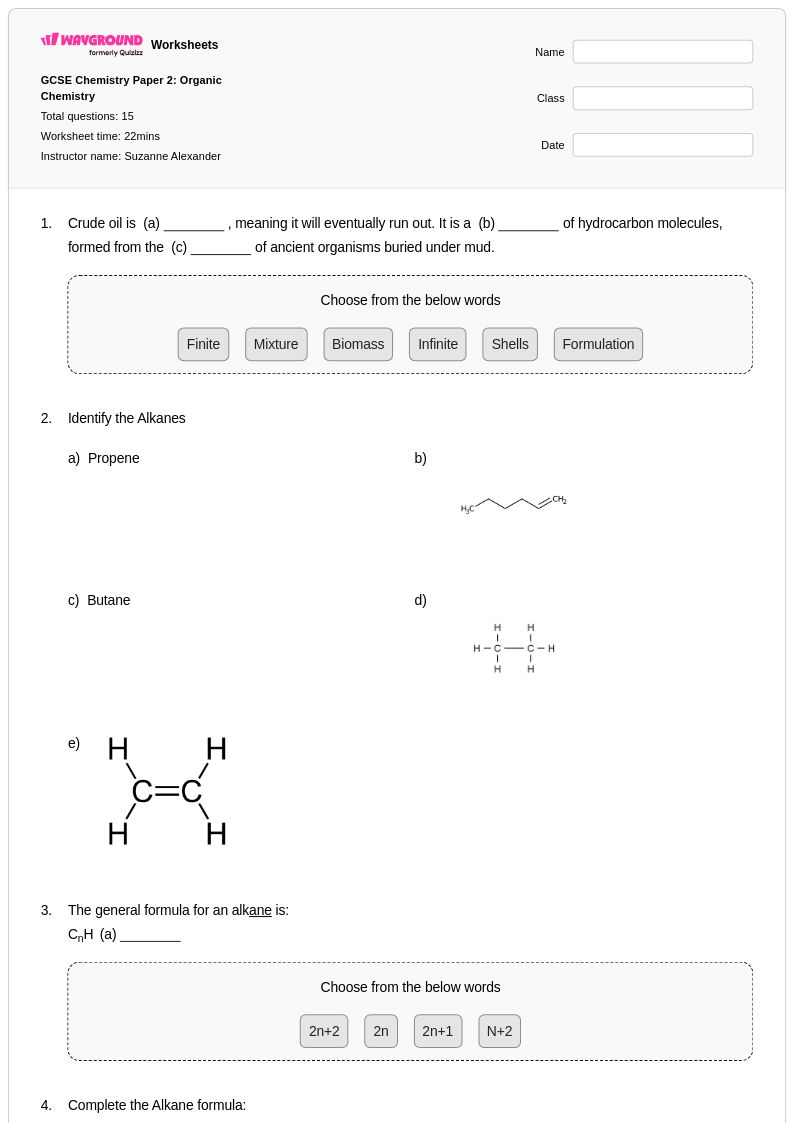
15 Q
9th - 12th
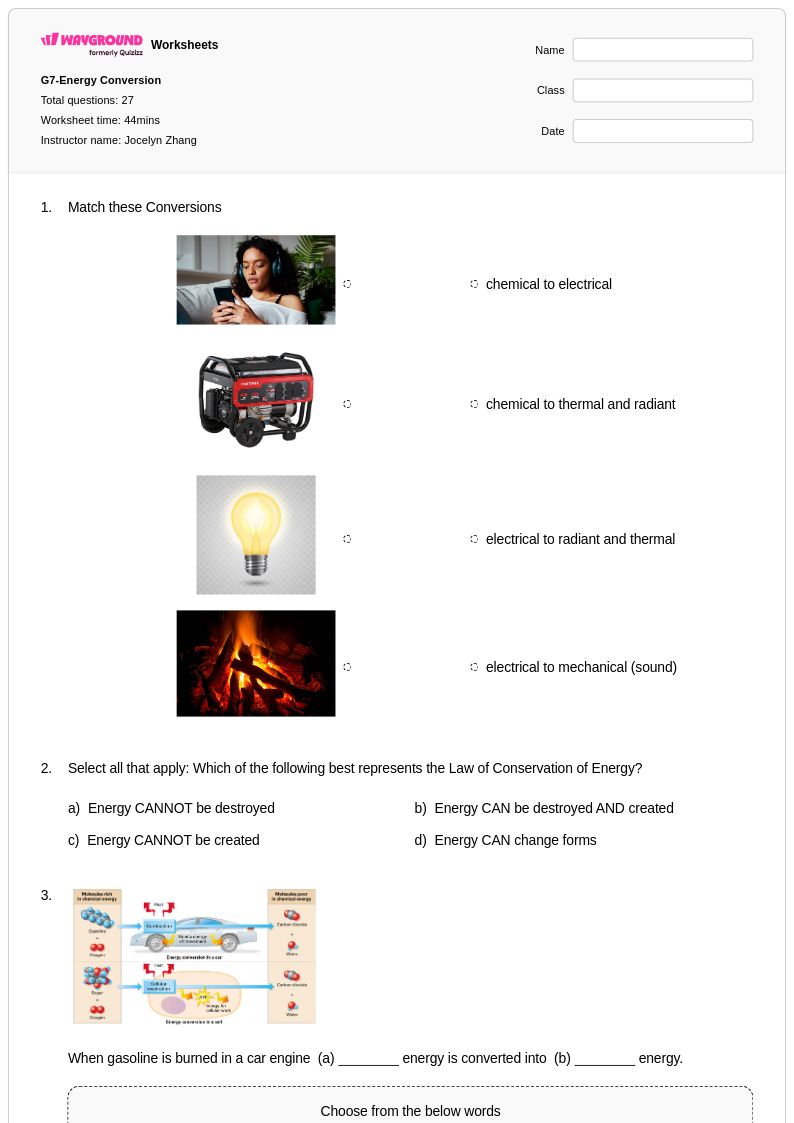
27 Q
6th - 8th
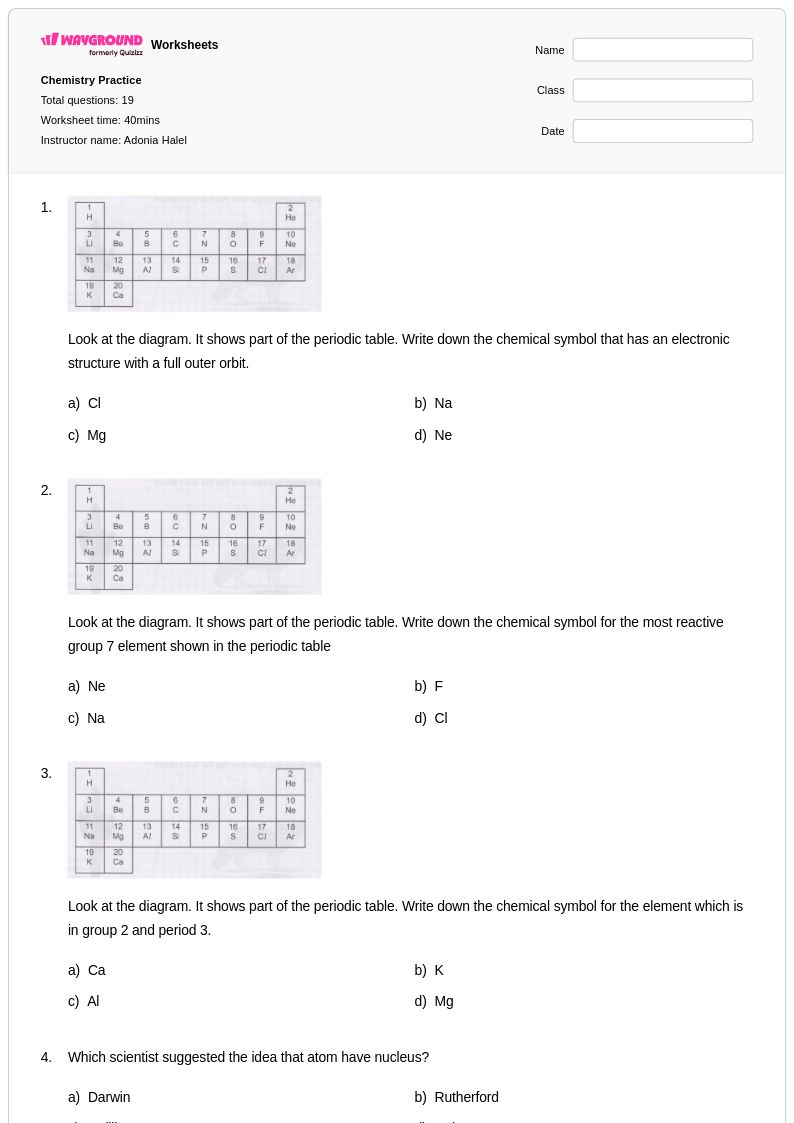
19 Q
8th
10 Q
6th
13 Q
3rd
Explore Worksheets by Subjects
Explore printable Conversion Factors in Chemistry worksheets
Conversion factors in chemistry worksheets available through Wayground (formerly Quizizz) provide students with essential practice in dimensional analysis, unit conversions, and stoichiometric calculations that form the foundation of quantitative chemistry. These comprehensive worksheets strengthen critical problem-solving skills by guiding students through step-by-step conversion processes involving molar mass, Avogadro's number, density relationships, and concentration calculations. Each worksheet collection includes detailed answer keys that demonstrate proper setup and cancellation techniques, while the free printables offer varied practice problems ranging from basic unit conversions to complex multi-step stoichiometry problems. Students develop proficiency in recognizing conversion pathways, selecting appropriate conversion factors, and maintaining dimensional consistency throughout chemical calculations.
Wayground (formerly Quizizz) supports chemistry educators with millions of teacher-created worksheet resources specifically designed for conversion factor instruction and practice. The platform's advanced search and filtering capabilities allow teachers to quickly locate worksheets aligned with specific chemistry standards and learning objectives, while differentiation tools enable customization based on student ability levels and learning needs. These conversion factor worksheets are available in both printable pdf formats and interactive digital versions, providing flexibility for classroom instruction, homework assignments, and independent study sessions. Teachers can efficiently plan lessons around systematic skill-building progressions, implement targeted remediation for students struggling with dimensional analysis concepts, and offer enrichment activities that challenge advanced learners with complex chemical conversion scenarios.