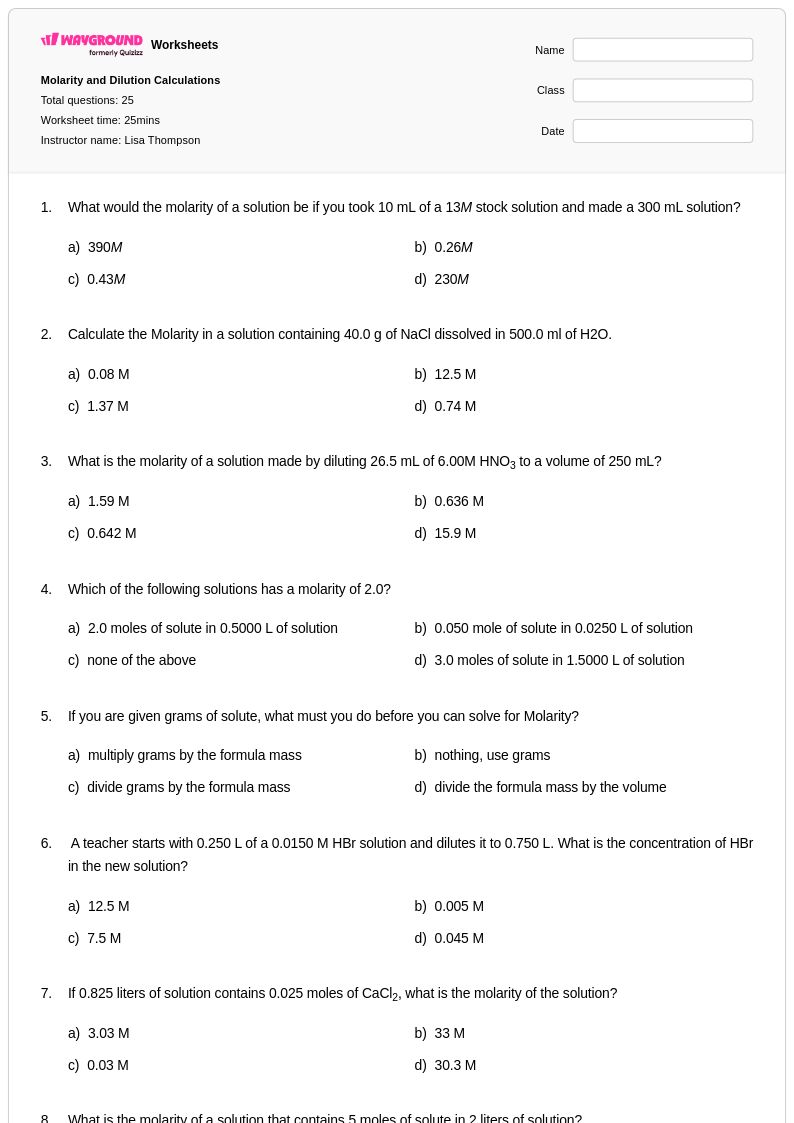
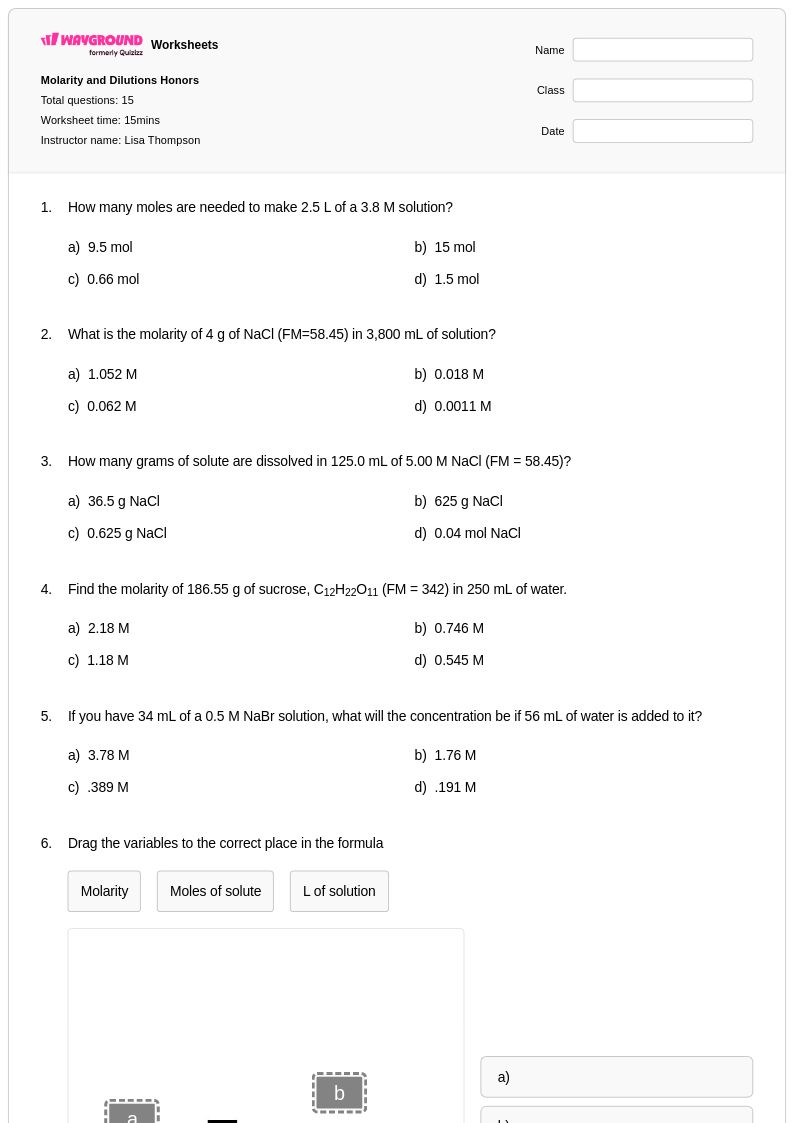
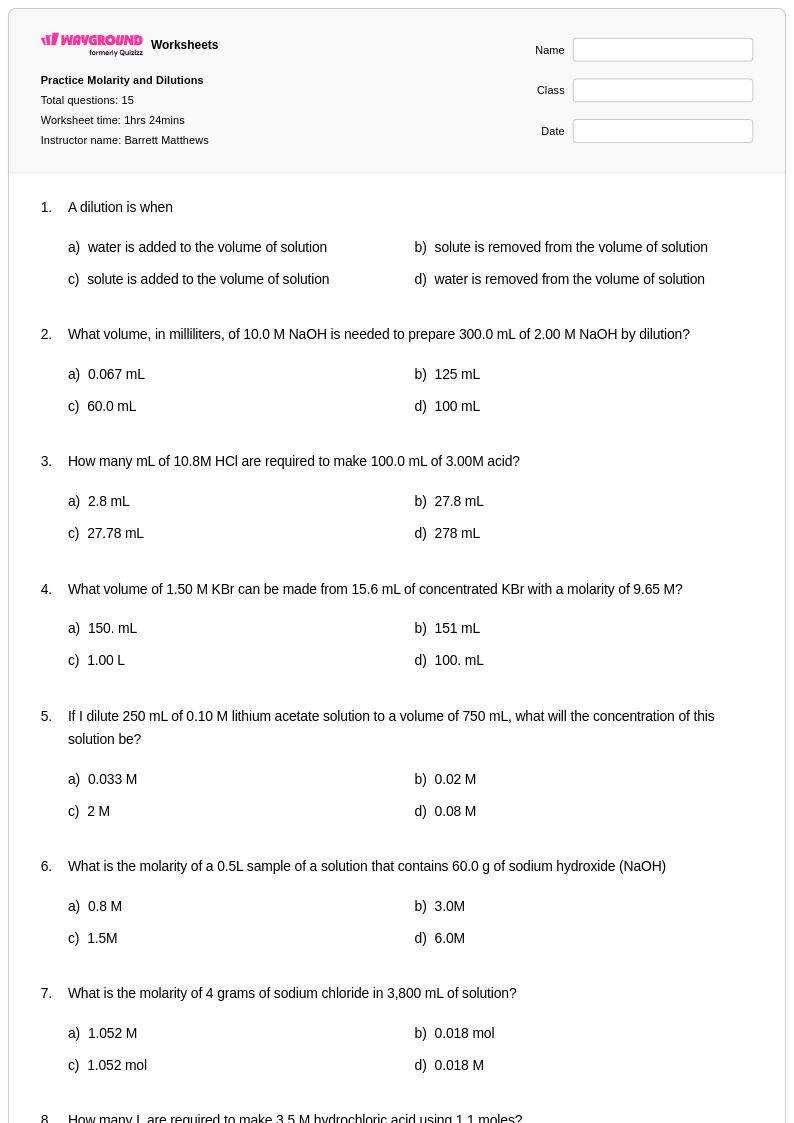
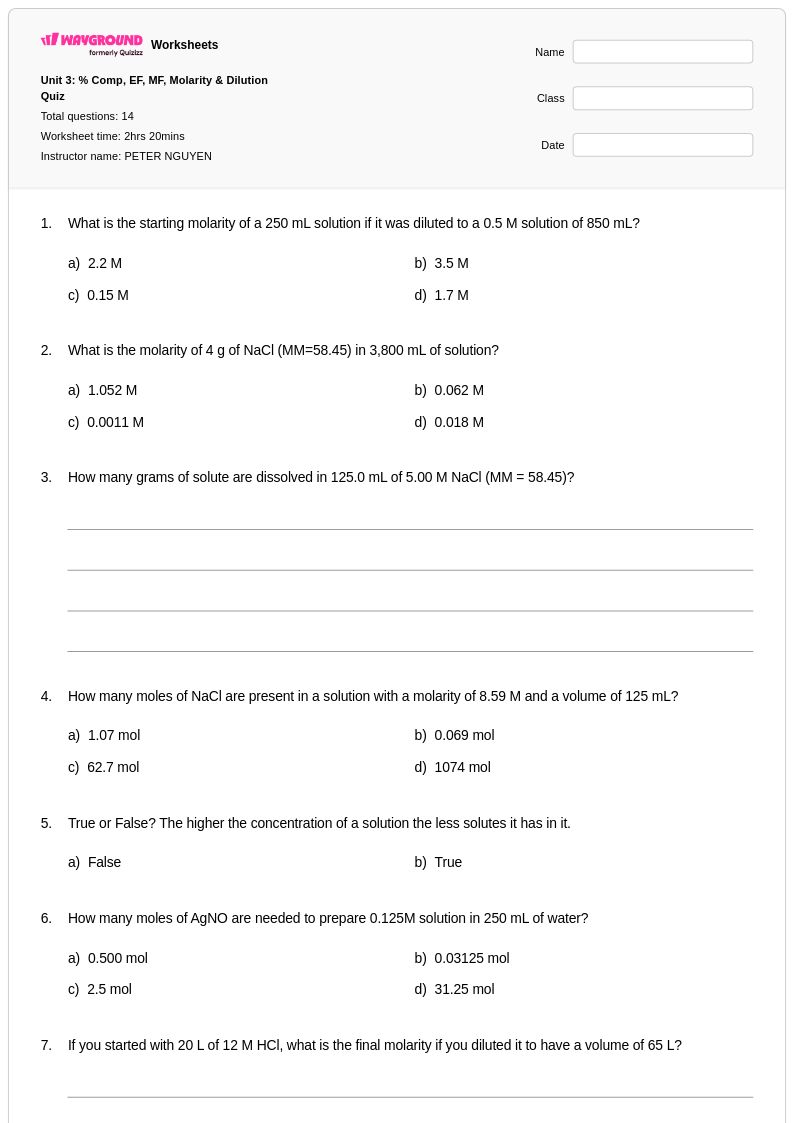
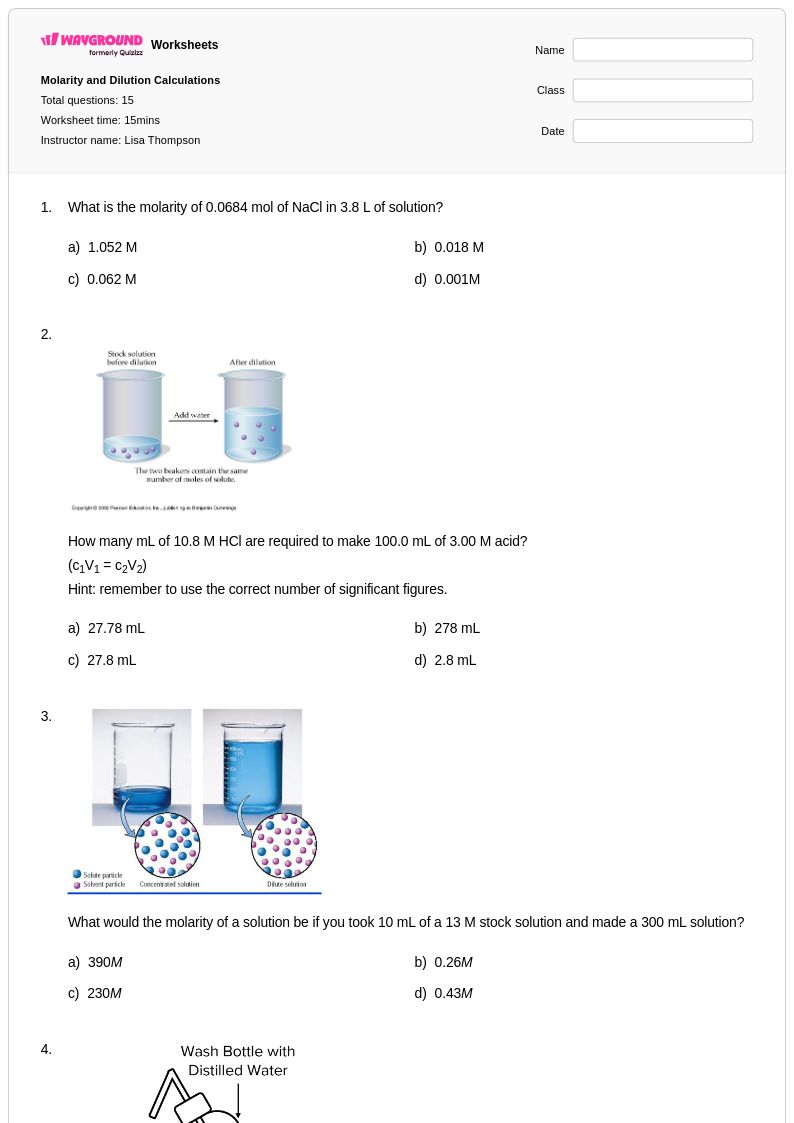
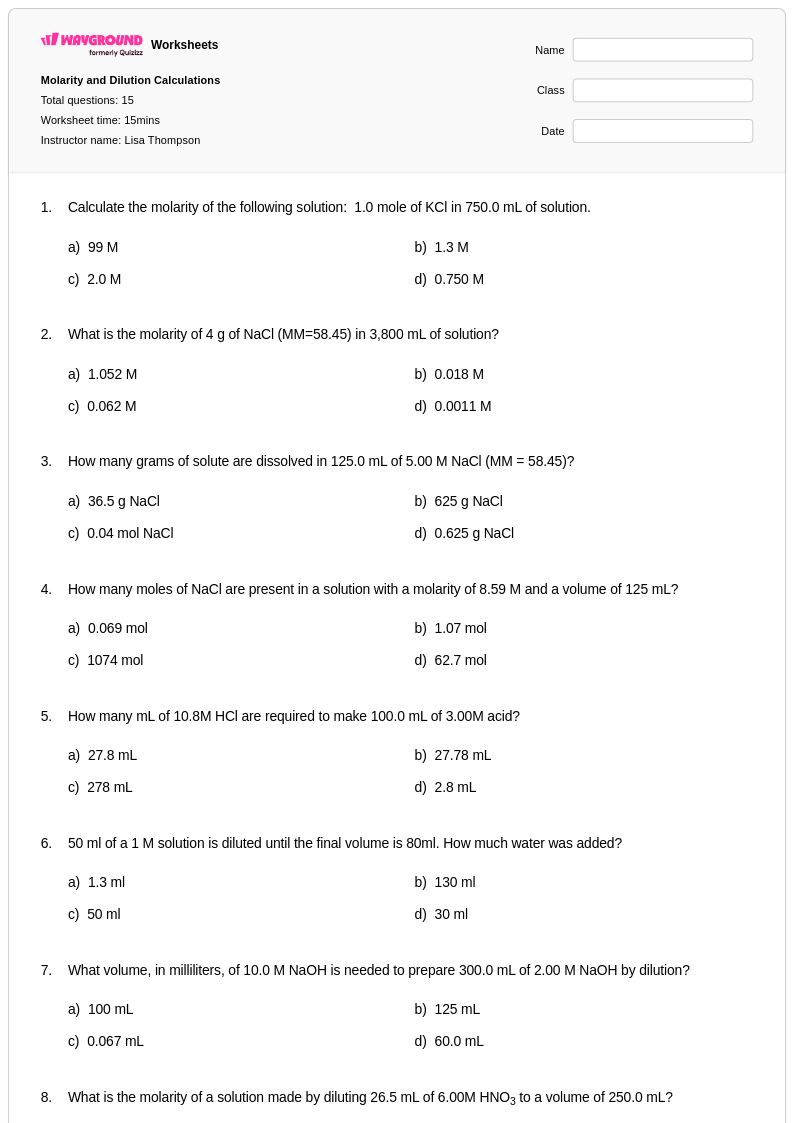
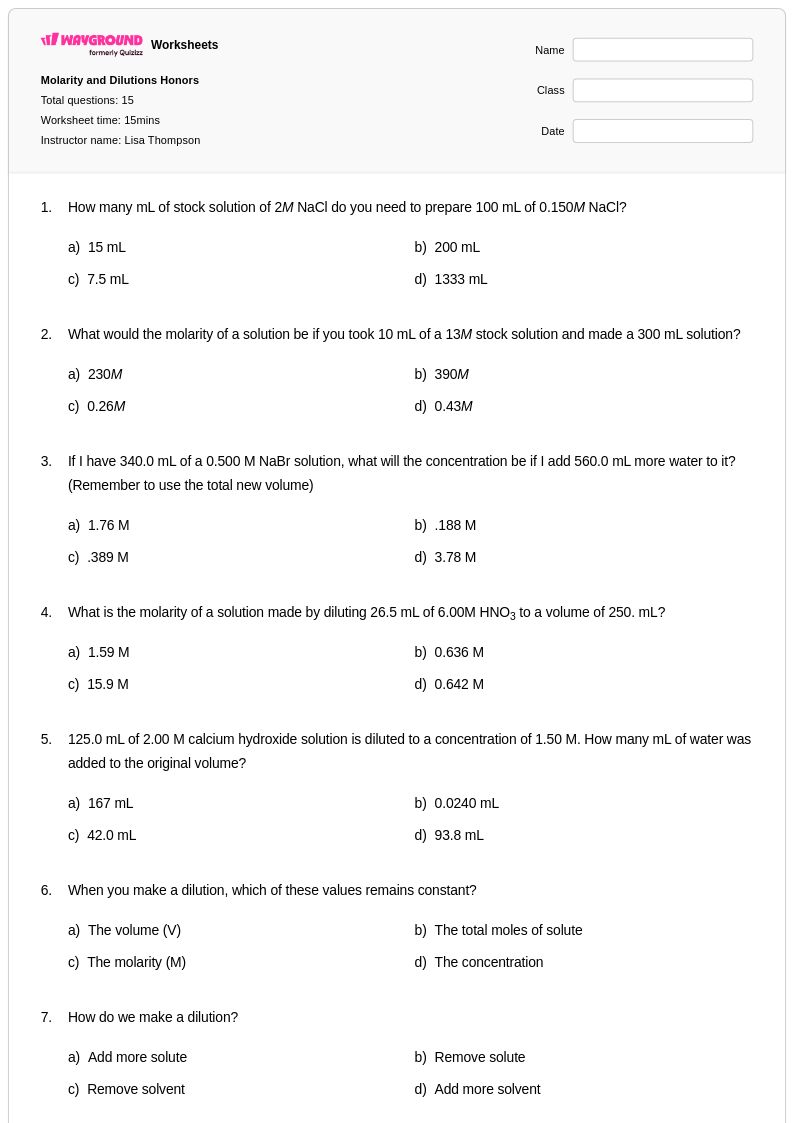
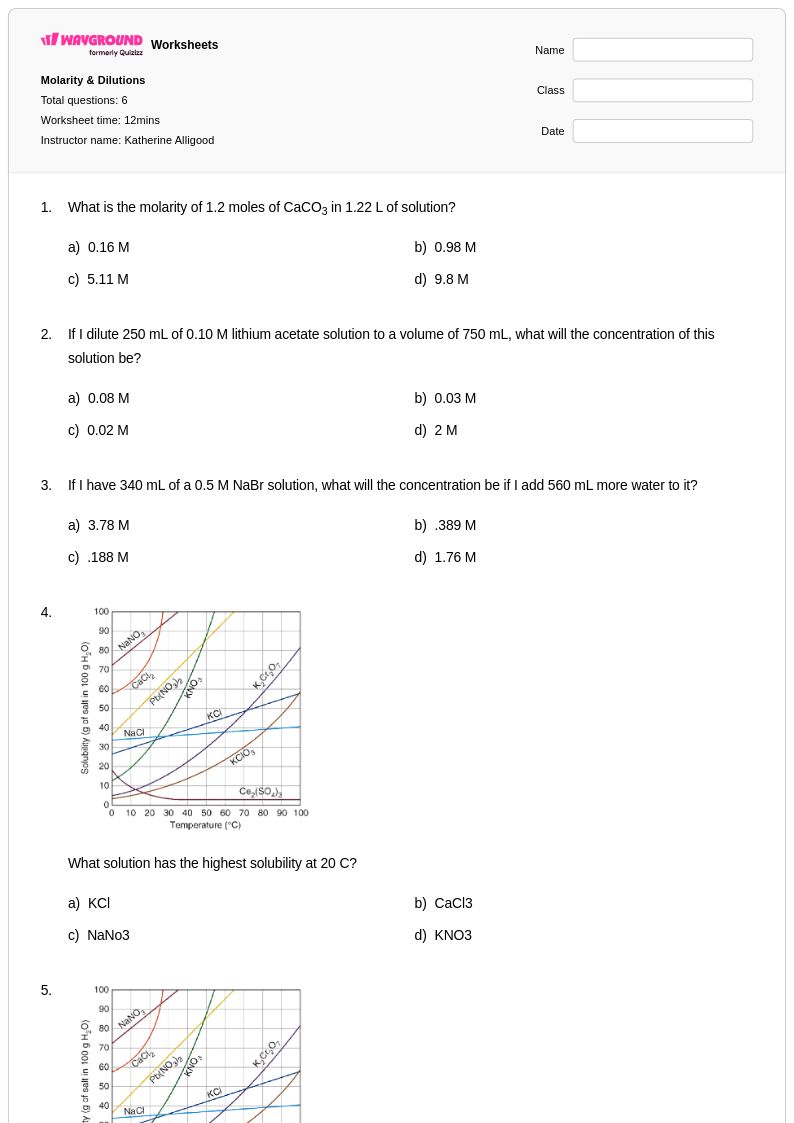
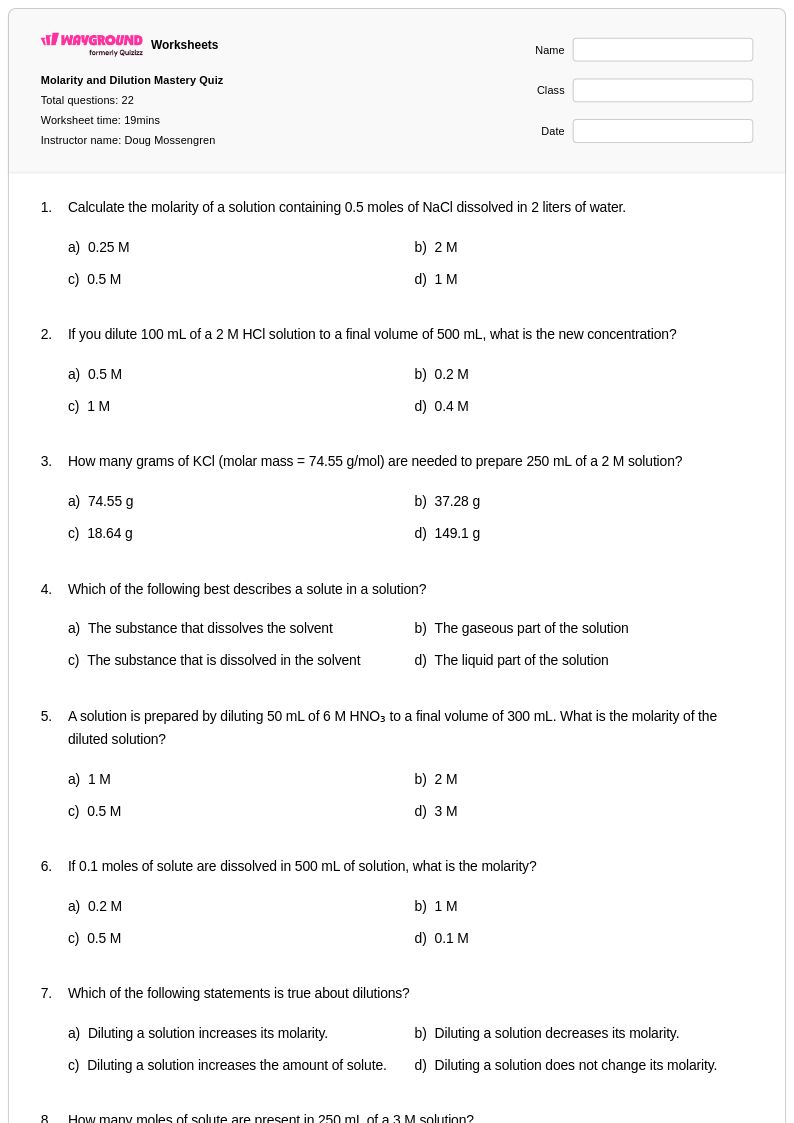
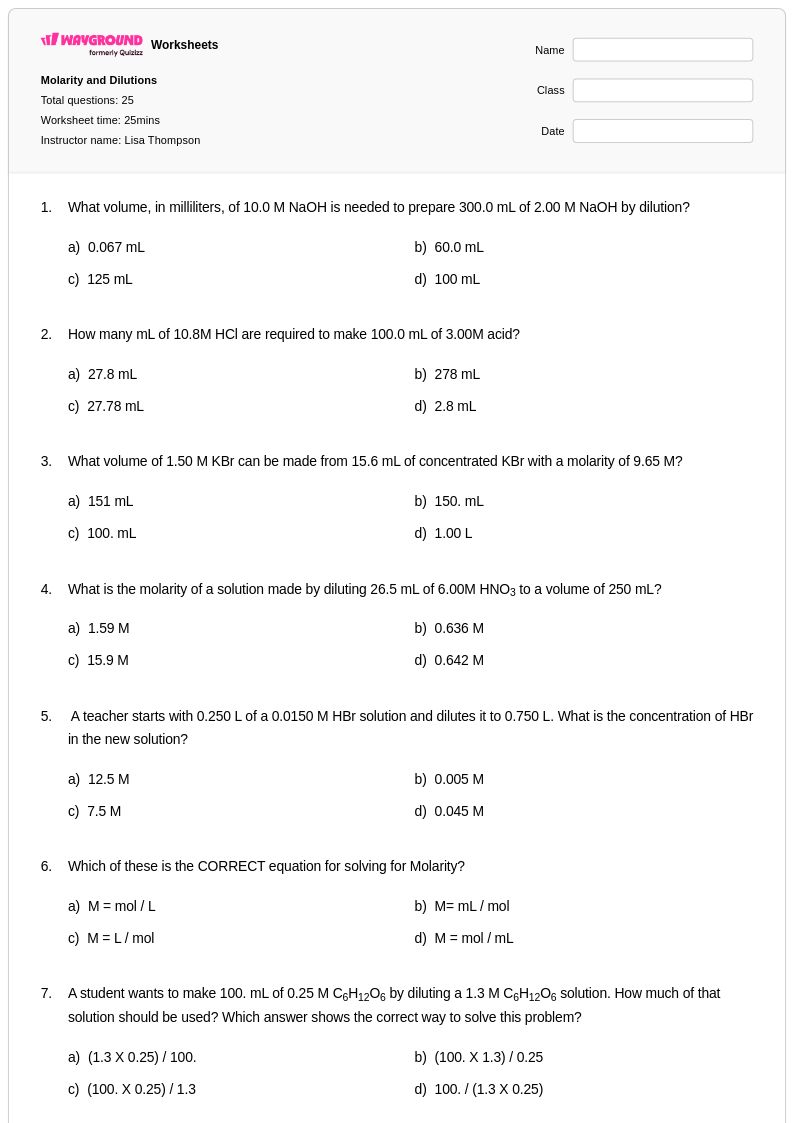
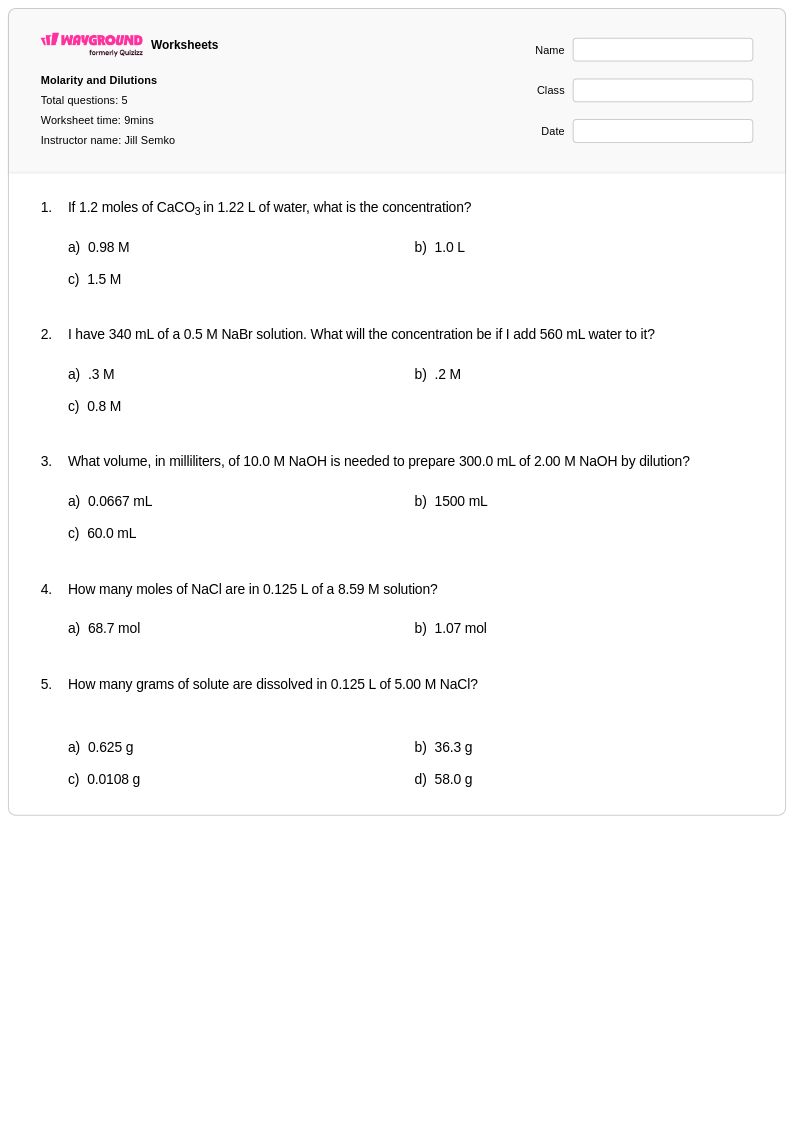
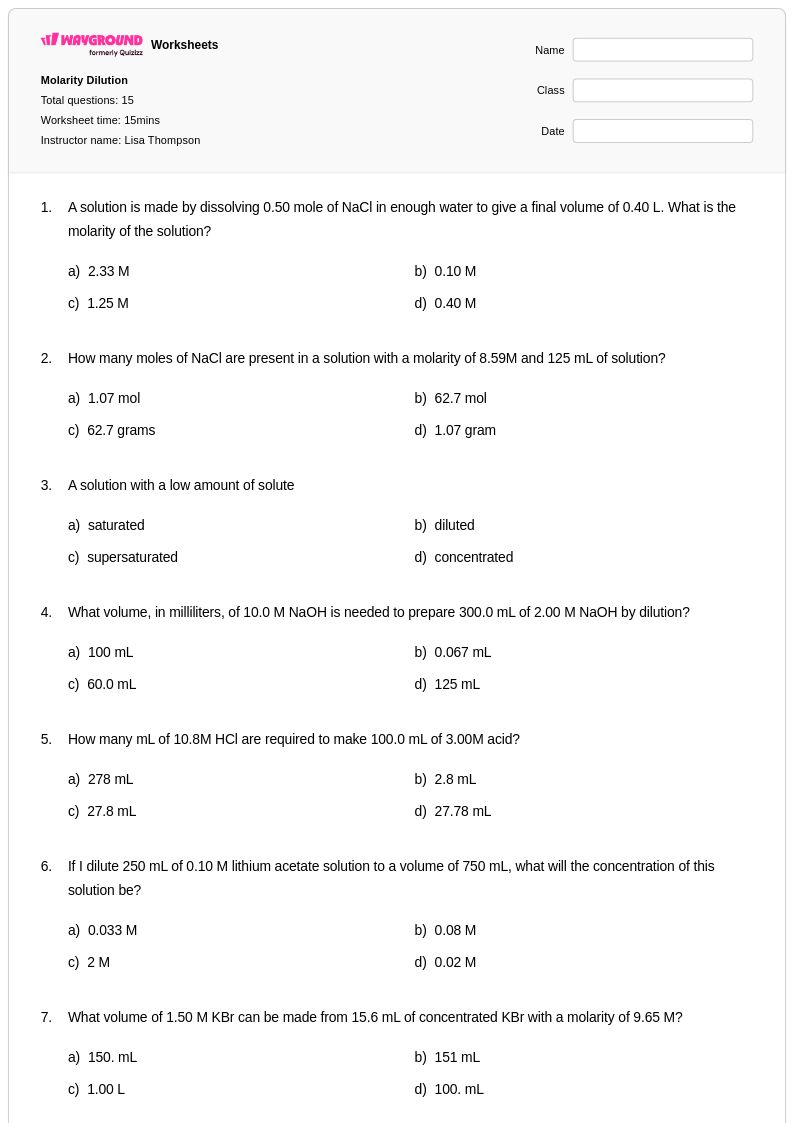
Free printable molarity and dilution worksheets with answer keys help students master solution concentration calculations and dilution problems through comprehensive practice exercises and step-by-step problem-solving activities.
Explore printable Molarity and Dilution worksheets
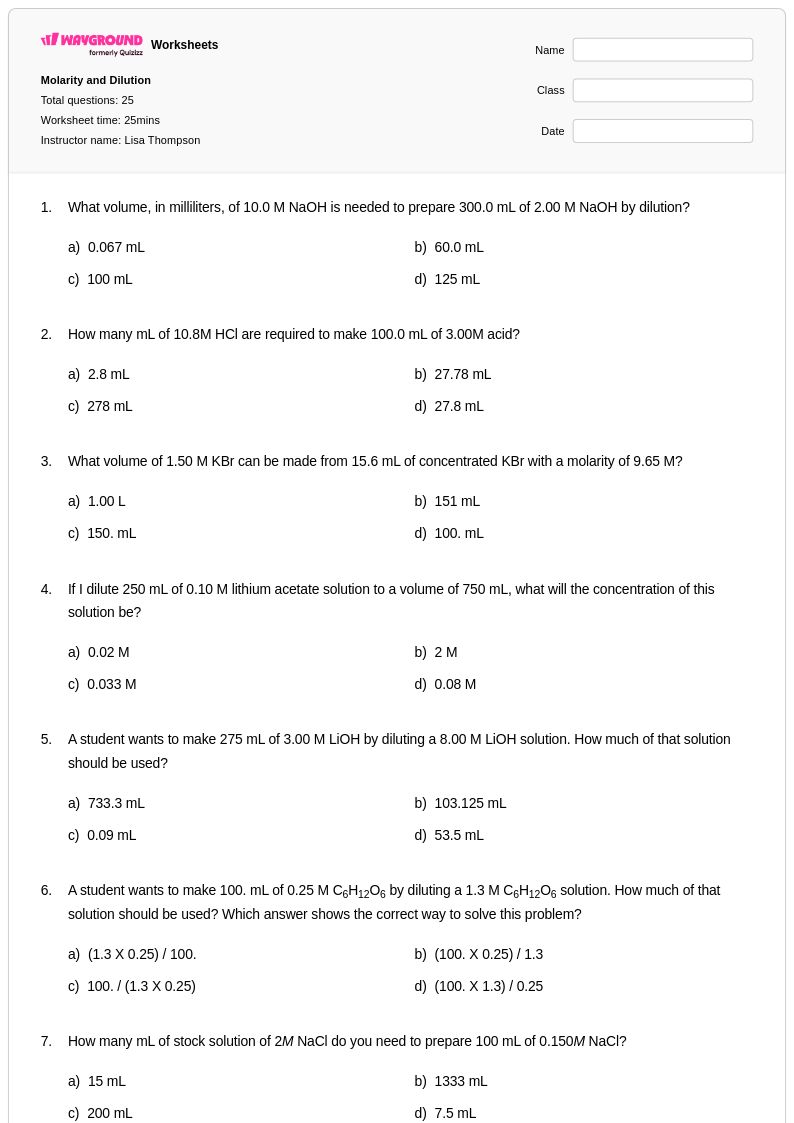
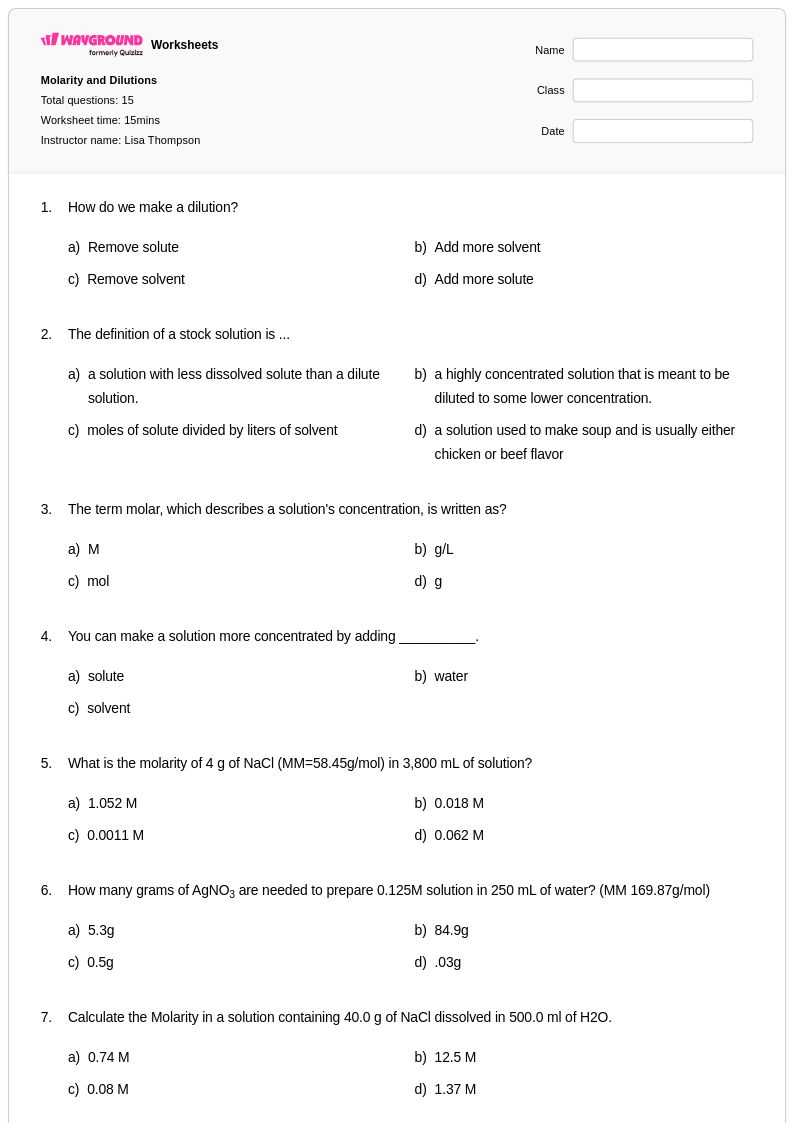
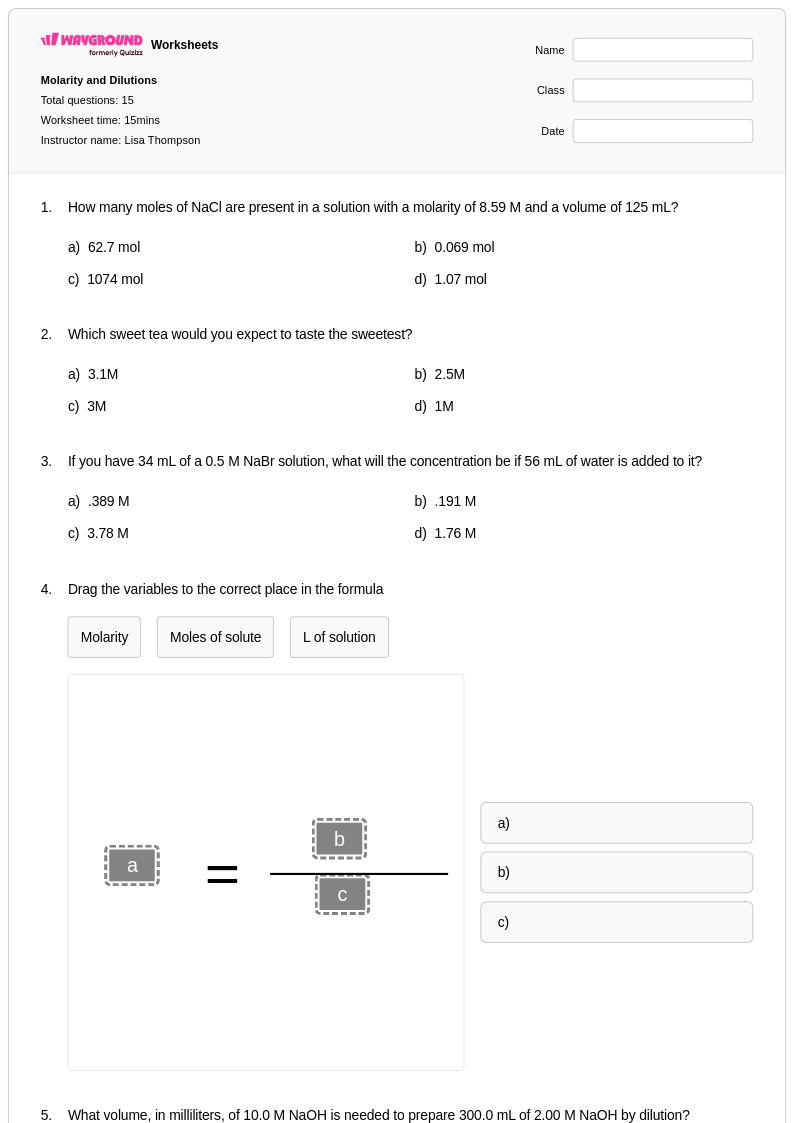
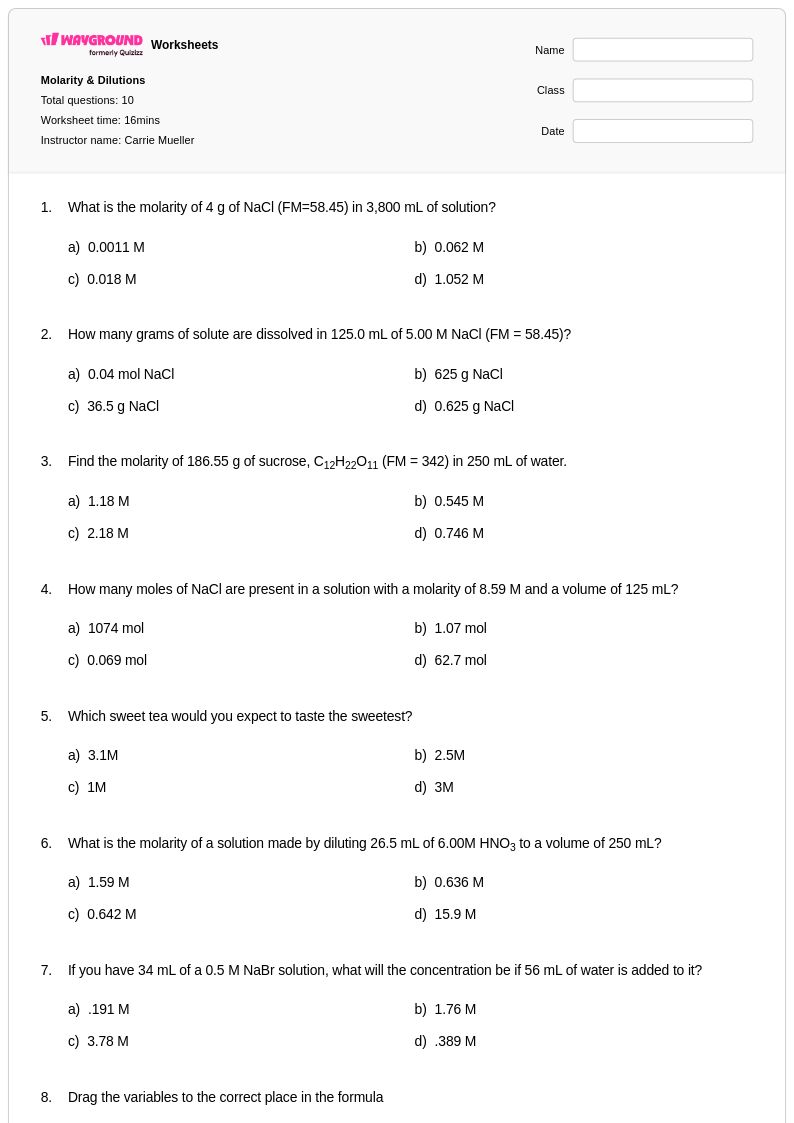
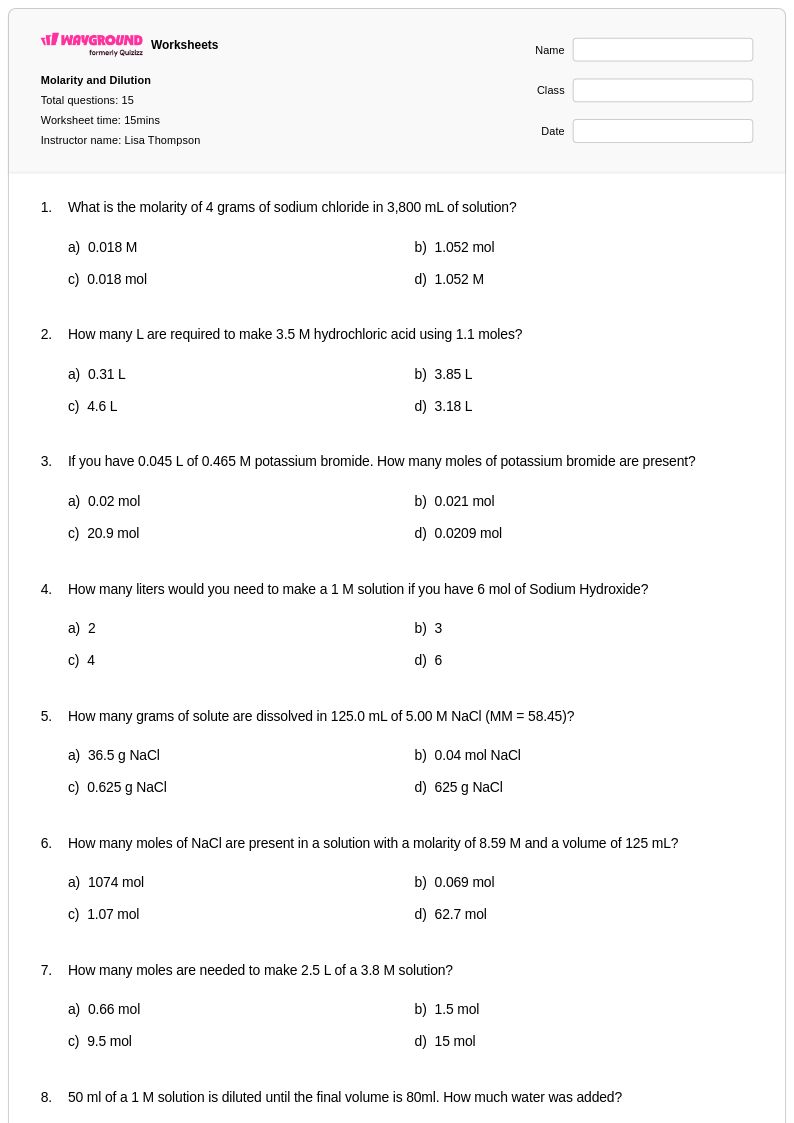
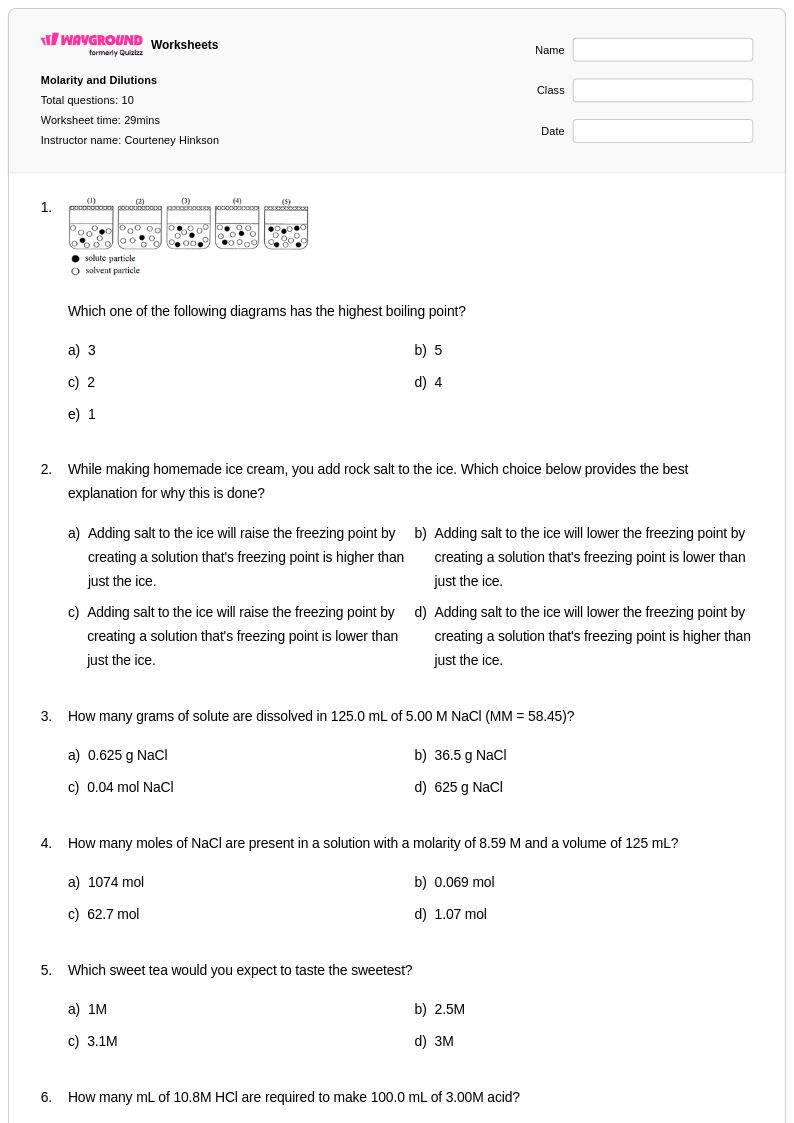
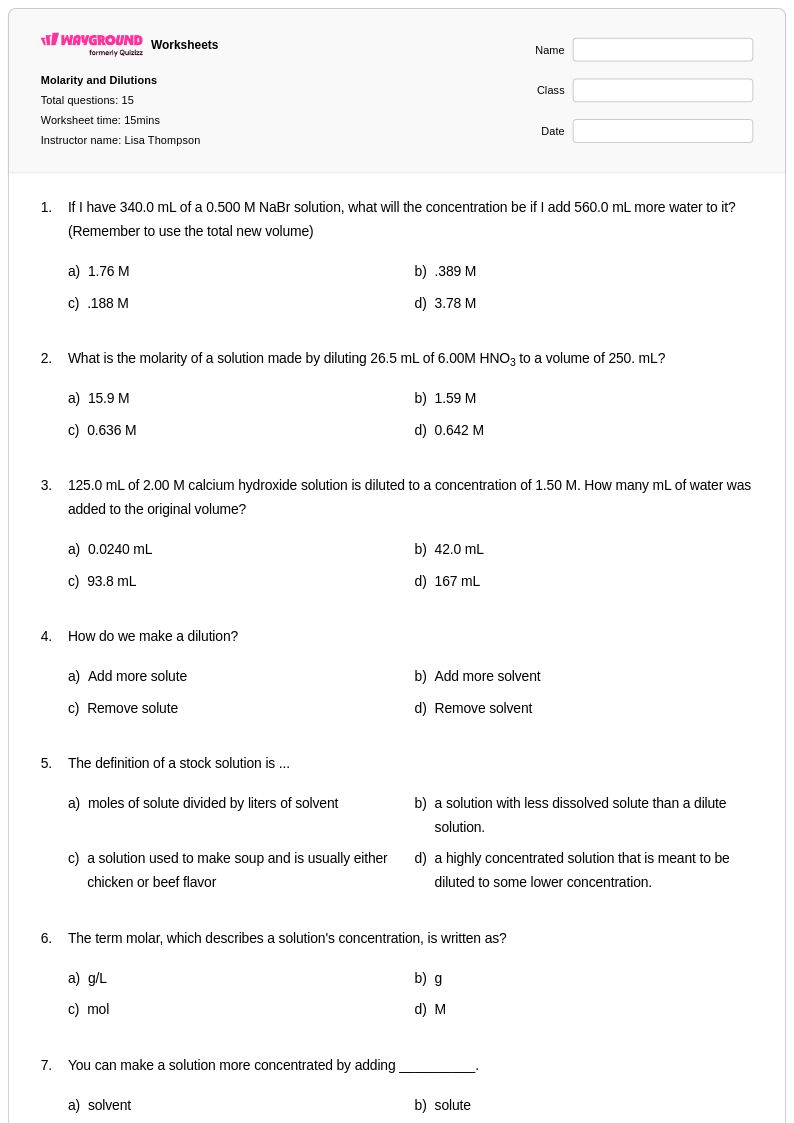
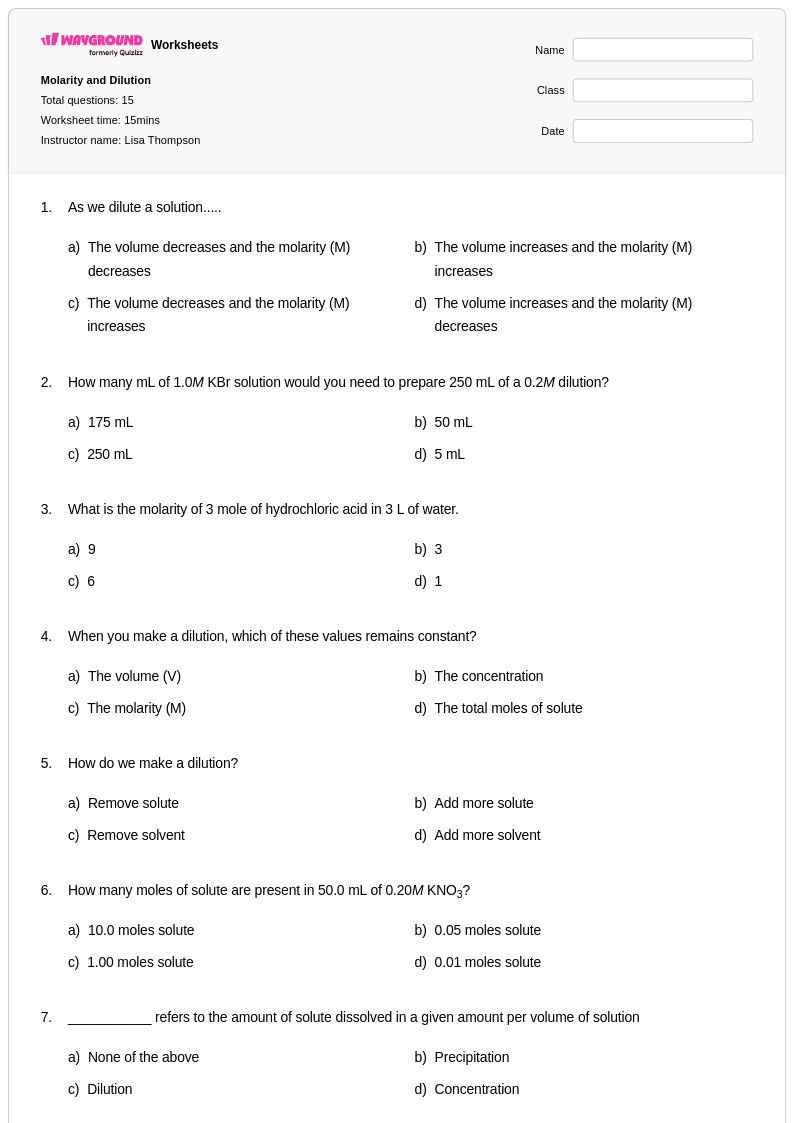
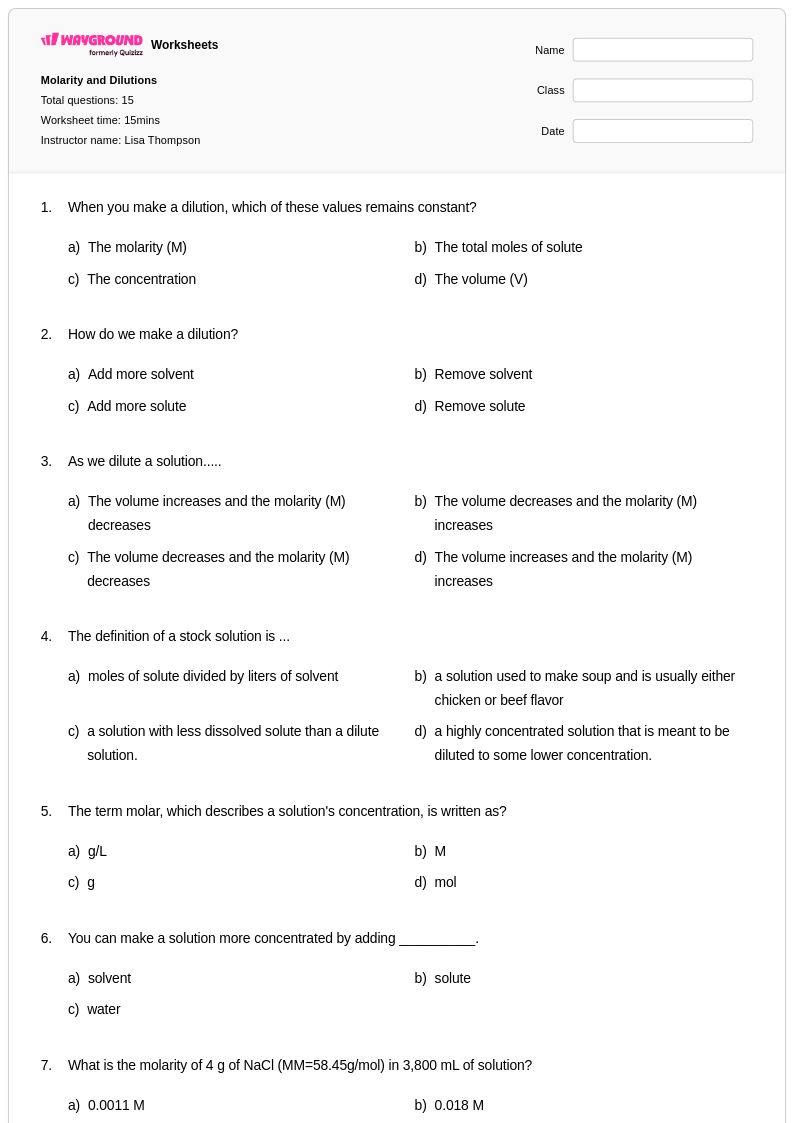
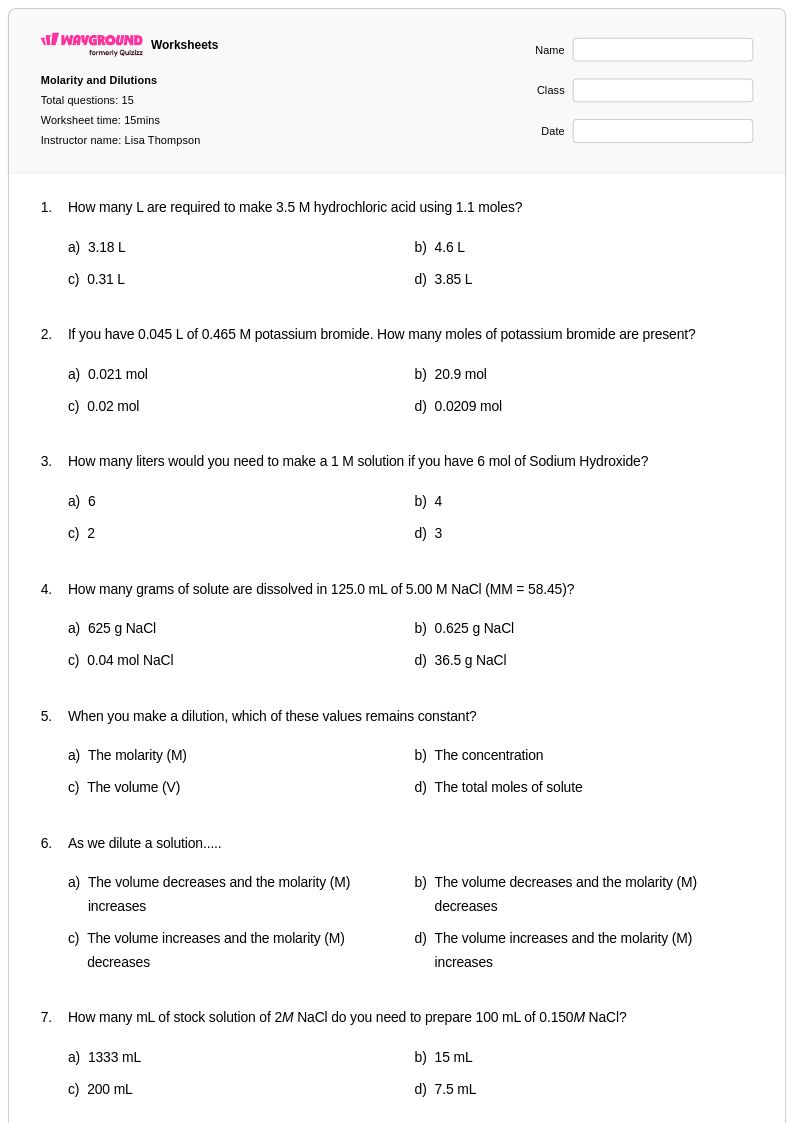
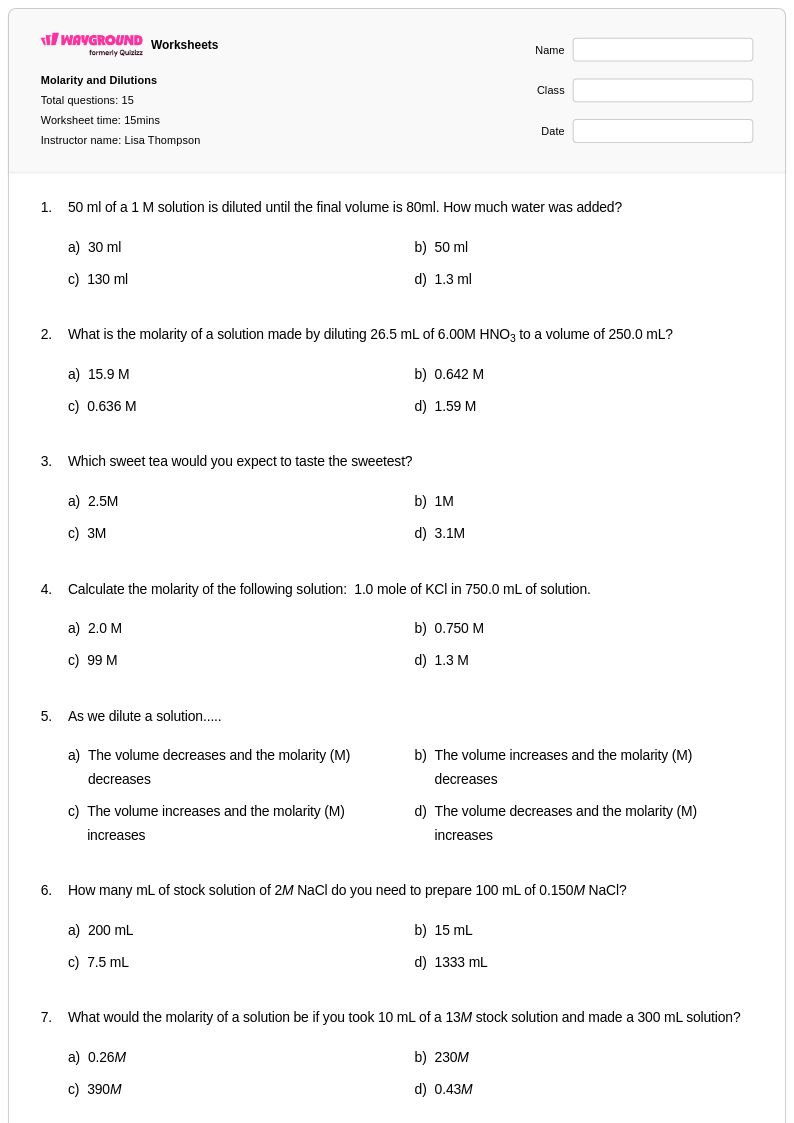
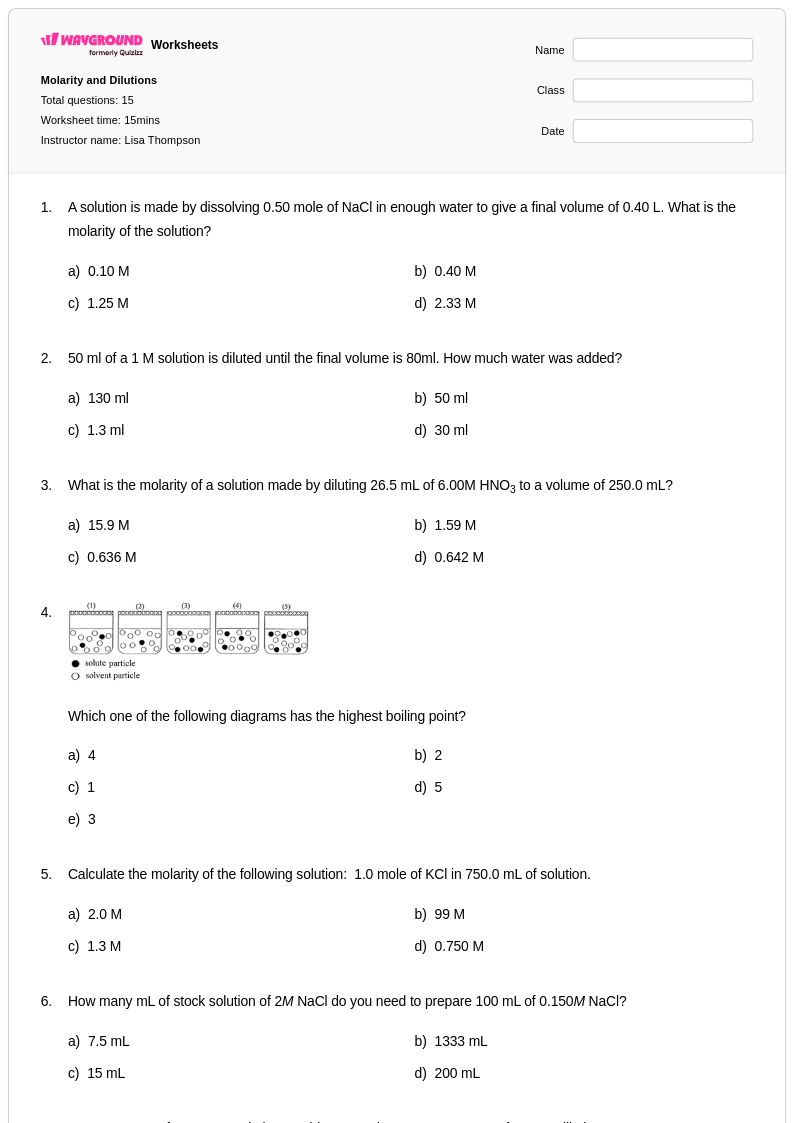
Molarity and dilution worksheets available through Wayground (formerly Quizizz) provide comprehensive practice materials that strengthen students' understanding of solution chemistry fundamentals. These expertly crafted resources guide learners through calculating molar concentrations, performing dilution calculations using the M1V1 = M2V2 formula, and solving complex problems involving stock solutions and serial dilutions. The worksheets feature step-by-step practice problems that progress from basic molarity calculations to advanced scenarios requiring multiple conversion steps, ensuring students develop both computational skills and conceptual understanding of how solute amounts relate to solution volumes. Each worksheet includes detailed answer keys that show complete solution pathways, making these free printable resources invaluable for both independent study and classroom instruction in PDF format.
Wayground (formerly Quizizz) empowers chemistry educators with an extensive collection of millions of teacher-created molarity and dilution worksheets that streamline lesson planning and enhance student learning outcomes. The platform's robust search and filtering capabilities allow teachers to quickly locate materials aligned with specific chemistry standards and learning objectives, while built-in differentiation tools enable customization for varying skill levels within the same classroom. These versatile resources are available in both printable PDF format for traditional paper-and-pencil work and digital formats for interactive online practice, supporting flexible implementation across diverse teaching environments. Teachers can efficiently use these materials for initial skill introduction, targeted remediation of calculation weaknesses, enrichment activities for advanced students, and ongoing practice to reinforce solution chemistry concepts throughout the academic year.
FAQs
How do I teach molarity and dilution to chemistry students?
Start by grounding students in the mole concept and solution vocabulary before introducing molarity as moles of solute per liter of solution. Once students can calculate molarity from given data, introduce dilution using the M1V1 = M2V2 formula with concrete lab scenarios such as preparing a working solution from a stock solution. Progressing from single-step problems to multi-step conversions involving unit changes helps students build both procedural fluency and conceptual understanding of why concentration changes when volume increases.
What practice problems best help students master molarity calculations?
Effective molarity practice should move from straightforward calculations — given moles and liters, find molarity — toward problems that require students to convert grams to moles using molar mass before applying the formula. Including problems that work backwards, such as finding the mass of solute needed to prepare a solution of a given molarity and volume, strengthens conceptual understanding alongside computation. Mixing problem types within a single practice set also prevents students from pattern-matching without reasoning.
What common mistakes do students make with dilution problems?
The most frequent error is confusing which volume to use in the M1V1 = M2V2 equation — students often use the volume of solvent added rather than the total final volume of the diluted solution. A second common mistake is treating dilution as reducing the number of moles rather than understanding that moles of solute remain constant while volume increases. Explicitly asking students to identify moles before and after dilution helps correct this misconception before it becomes entrenched.
How do I differentiate molarity and dilution instruction for students at different skill levels?
For students still developing fluency, reduce cognitive load by providing formula reference sheets and breaking multi-step problems into labeled sub-steps. Advanced students benefit from serial dilution problems and scenarios that integrate stoichiometry with solution chemistry. On Wayground, teachers can apply individual accommodations such as reduced answer choices or read-aloud support for specific students, while the rest of the class works with default settings, allowing differentiation without disrupting classroom workflow.
How can I use Wayground's molarity and dilution worksheets in my classroom?
Wayground's molarity and dilution worksheets are available as printable PDFs for traditional paper-and-pencil work and in digital formats for technology-integrated instruction, including the option to host them as an interactive quiz on Wayground. The included answer keys show complete solution pathways, making them useful for independent practice, guided instruction, and targeted remediation of specific calculation weaknesses. Teachers can use the platform's search and filtering tools to quickly find materials aligned with specific chemistry standards and learning objectives.
How do I help students understand the conceptual meaning of molarity rather than just the formula?
Connect molarity to familiar concentration ideas — a stronger cup of coffee has more dissolved solute per unit volume — before introducing the formal definition of moles per liter. Visual representations such as particle diagrams showing the same number of solute particles in increasing volumes of solution make the relationship between concentration and volume tangible. Asking students to predict what happens to molarity when volume doubles, without calculating, builds intuition that supports accurate formula use.