Discover comprehensive molality worksheets and printables through Wayground that help students master solution concentration calculations with guided practice problems, step-by-step examples, and complete answer keys for effective chemistry learning.
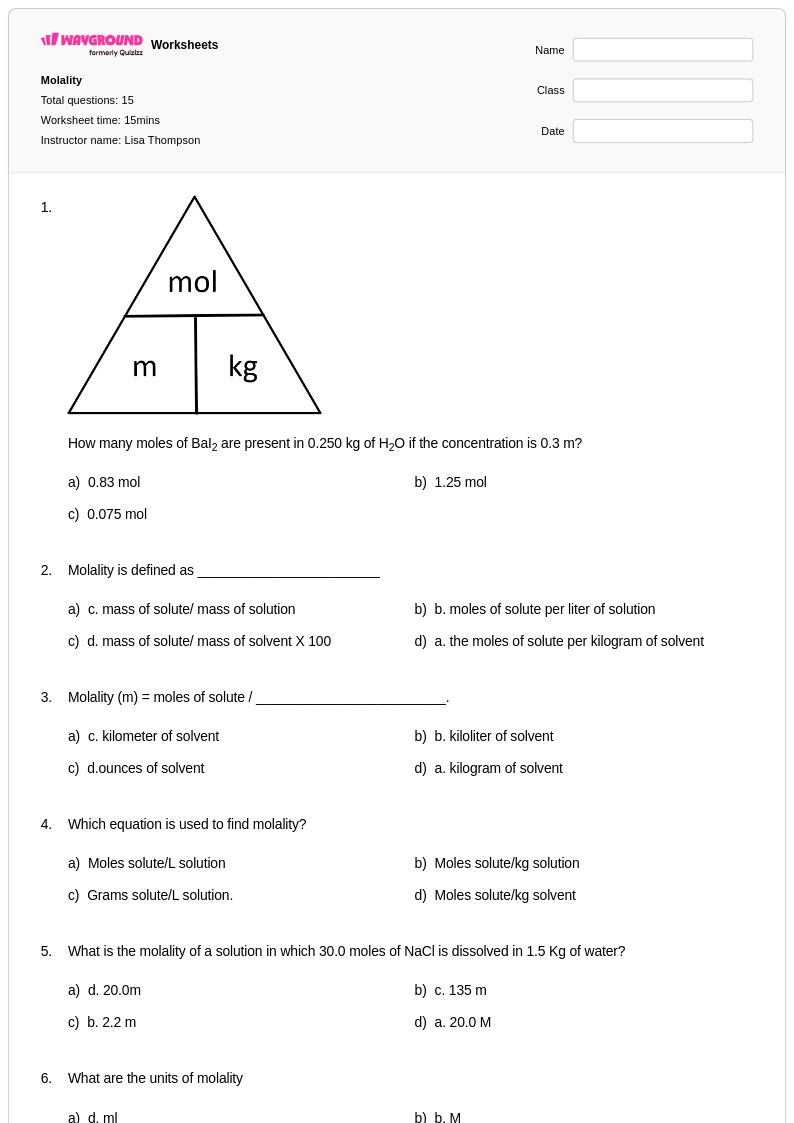
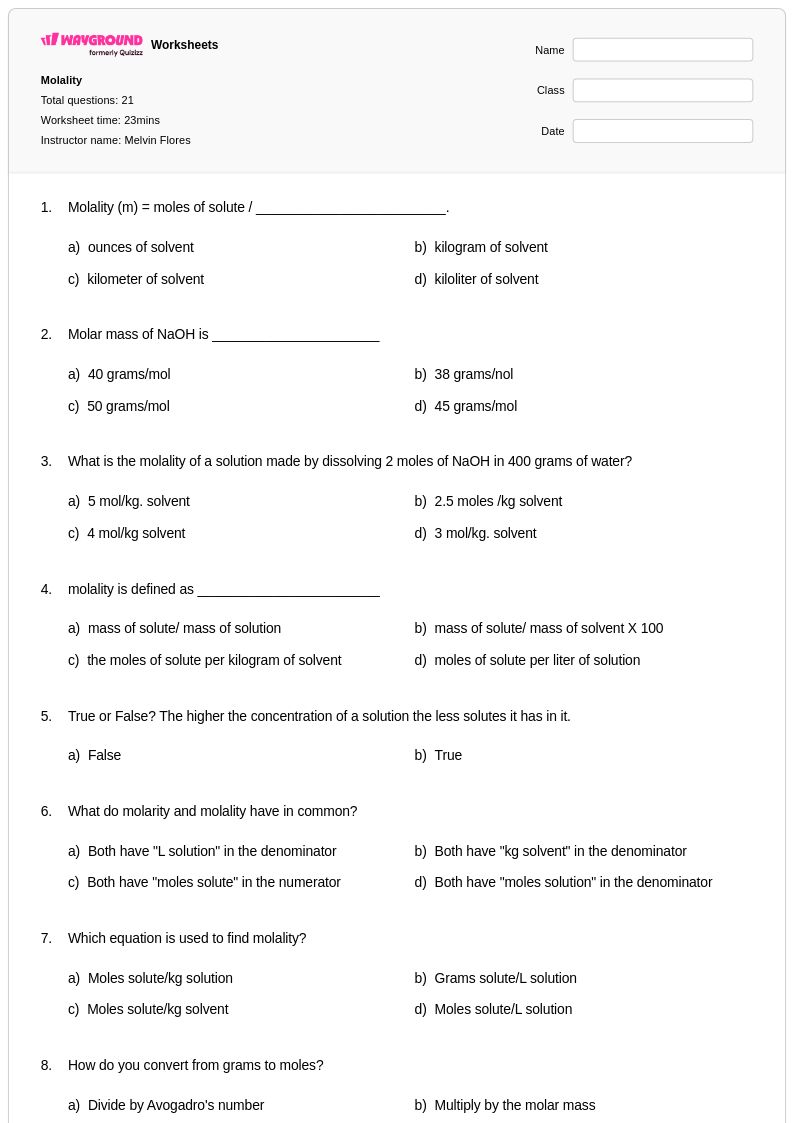
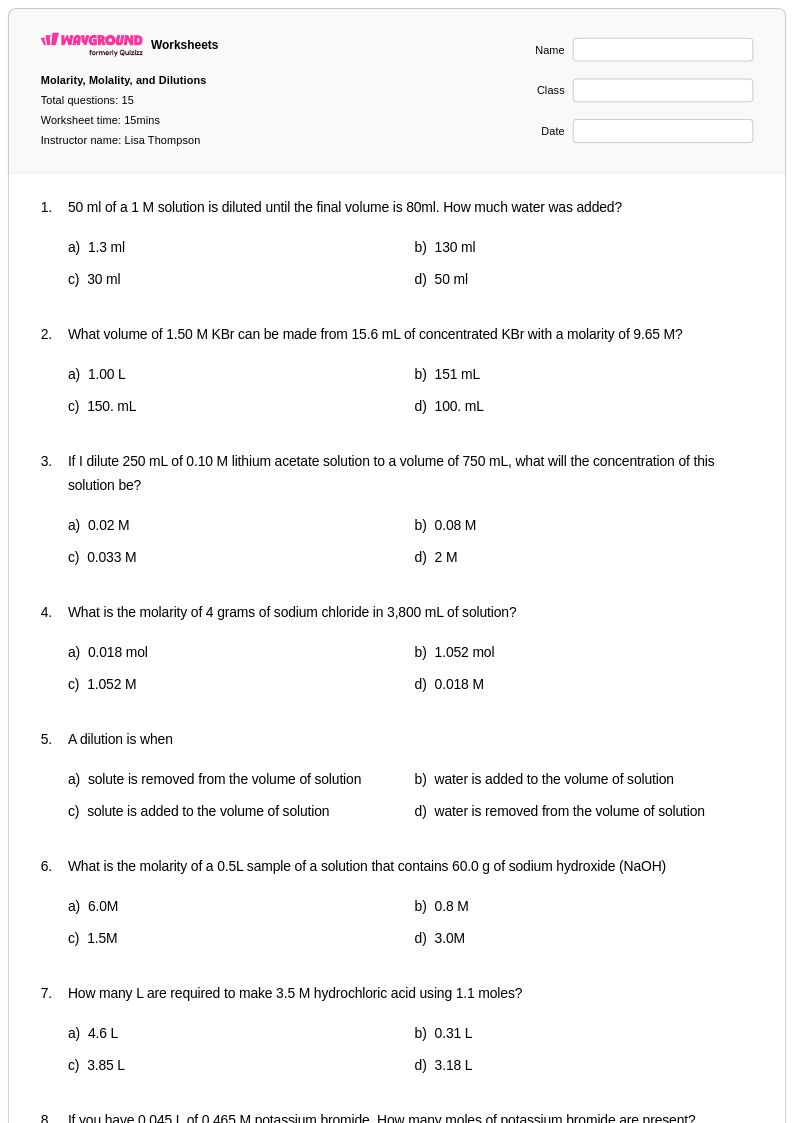
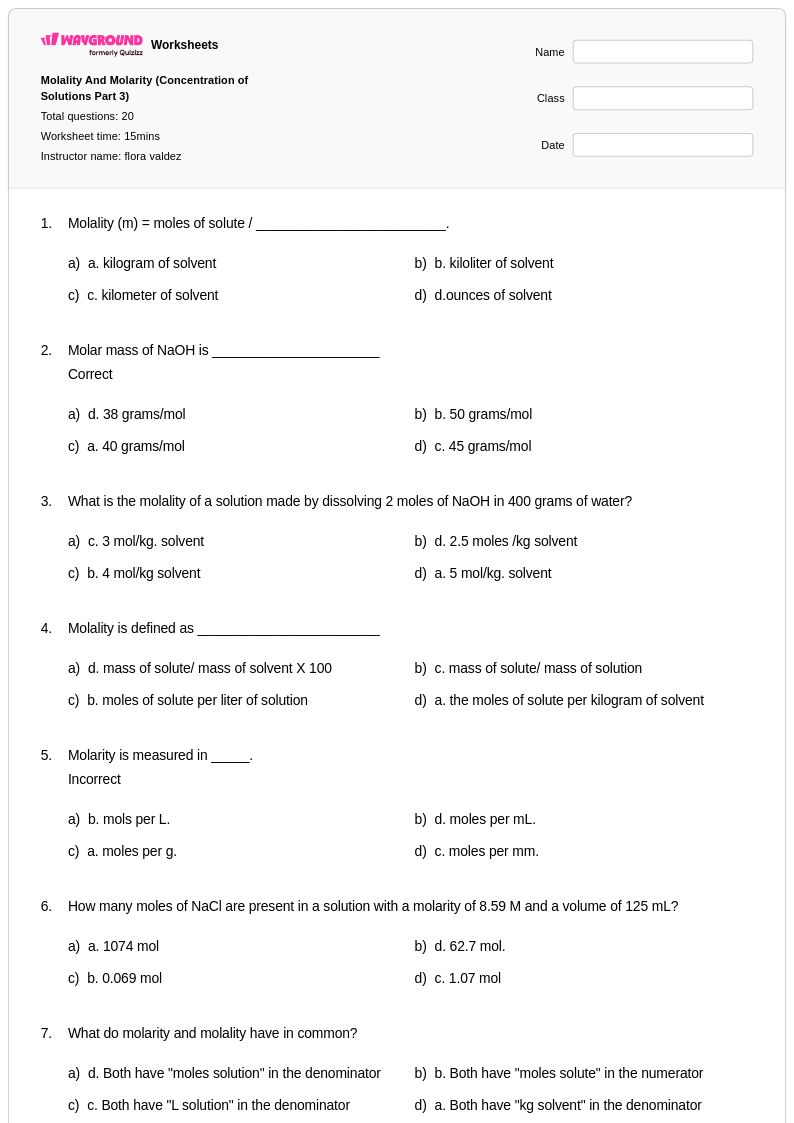
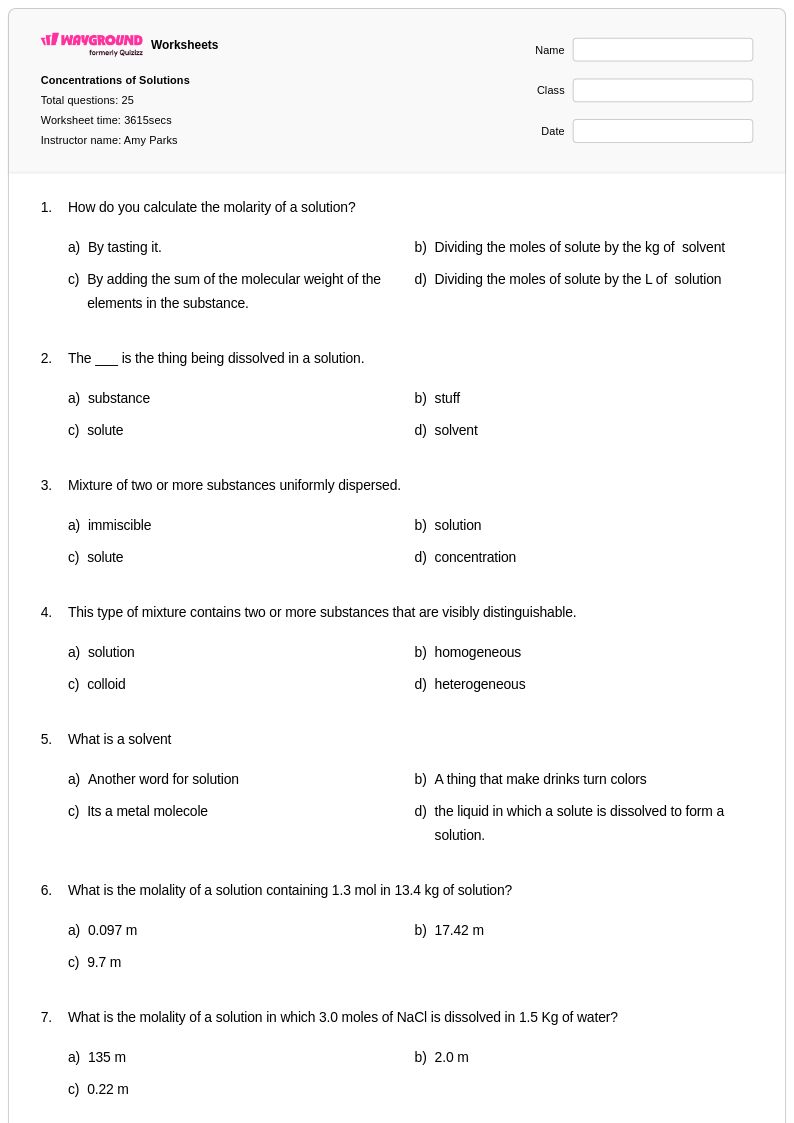
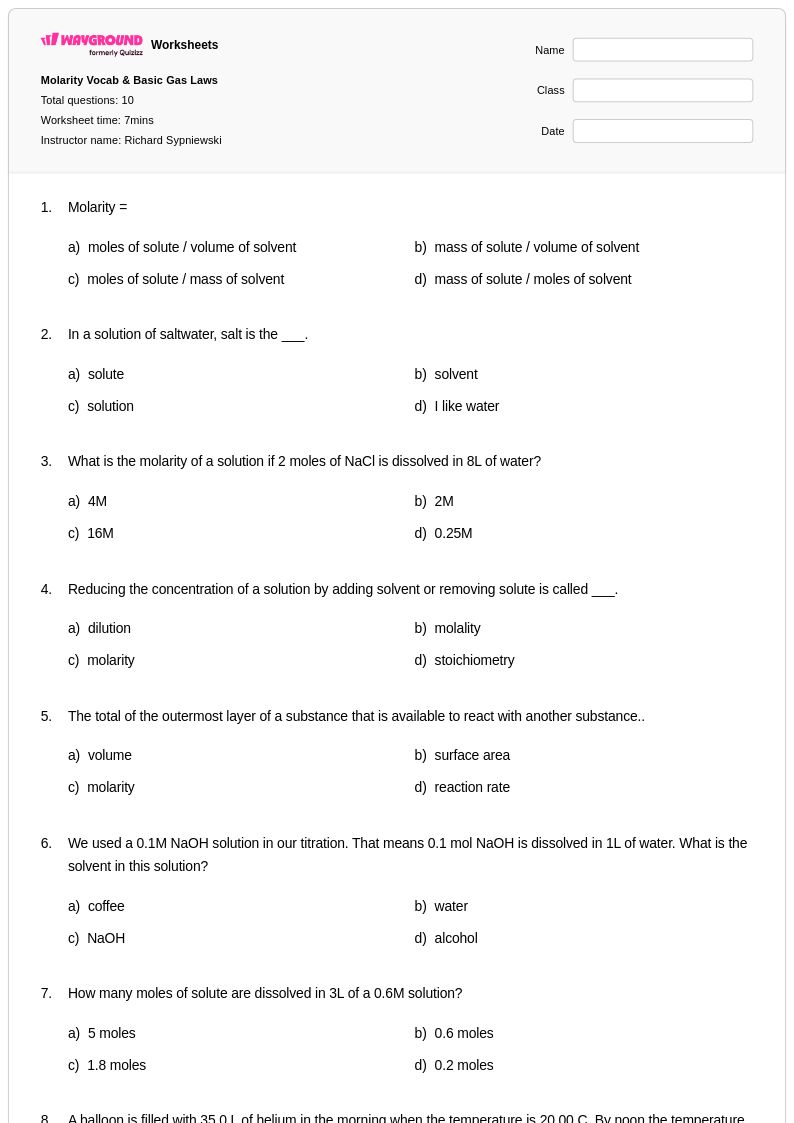
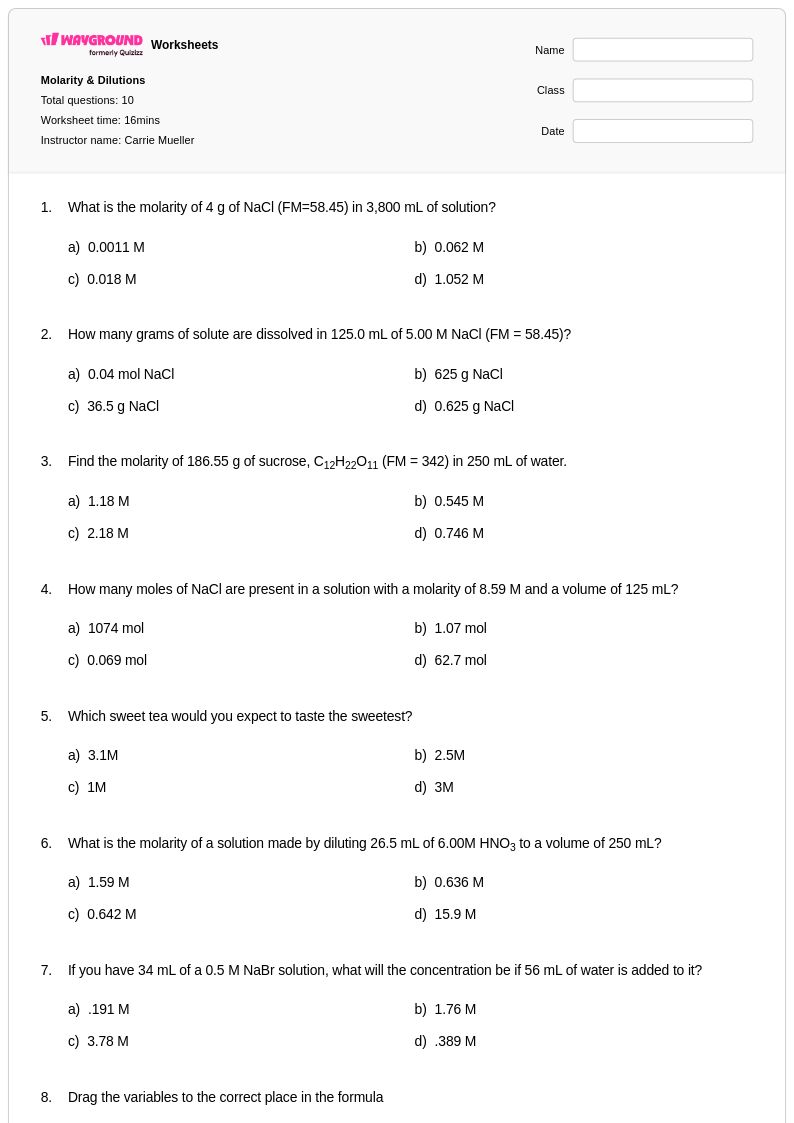
Molality worksheets available through Wayground (formerly Quizizz) provide comprehensive practice with this essential concentration measurement in chemistry. These expertly designed resources help students master the calculation of molality as moles of solute per kilogram of solvent, distinguishing it from other concentration units like molarity. The worksheets strengthen critical problem-solving skills through systematic practice problems that cover molality calculations in various scenarios, including temperature-dependent solutions and colligative property applications. Students develop proficiency in unit conversions, molar mass calculations, and solution preparation techniques while working through free printables that include detailed answer keys for immediate feedback and self-assessment.
Wayground (formerly Quizizz) supports chemistry educators with millions of teacher-created molality resources that streamline lesson planning and enhance student understanding. The platform's robust search and filtering capabilities allow teachers to quickly locate worksheets aligned with specific chemistry standards and learning objectives, while differentiation tools enable customization for diverse student needs and skill levels. These molality worksheet collections are available in both printable pdf formats and interactive digital versions, providing flexibility for classroom instruction, homework assignments, and remediation activities. Teachers can efficiently identify knowledge gaps, provide targeted enrichment opportunities, and ensure consistent skill practice through these comprehensive resources that adapt to various teaching styles and classroom environments.
FAQs
How do I teach molality to chemistry students?
Teach molality by first distinguishing it from molarity: molality is moles of solute per kilogram of solvent, not per liter of solution, which makes it temperature-independent. Start with unit conversion practice so students are fluent in converting grams to moles and grams to kilograms before introducing the full calculation. Connecting molality to colligative properties like boiling point elevation and freezing point depression gives students a meaningful context for why the unit matters in real chemistry.
What practice problems help students get better at molality calculations?
Effective molality practice should include problems that vary the unknown: sometimes students solve for molality, sometimes for mass of solvent, and sometimes for moles of solute. Including problems that require molar mass lookups or multi-step unit conversions builds the layered skill set the calculation demands. Problems tied to colligative property applications, such as calculating freezing point depression using molality, help students see the unit in a broader chemical context rather than as an isolated formula.
What mistakes do students commonly make when calculating molality?
The most frequent error is confusing kilograms of solvent with kilograms or liters of solution. Students often use the total mass of the solution in the denominator instead of isolating the mass of the solvent alone. A second common mistake is failing to convert grams of solute to moles before dividing, or using liters instead of kilograms for the solvent. Targeted practice problems that force students to identify and label each component of the solution before calculating can catch these errors early.
How is molality different from molarity, and why does it matter?
Molarity measures moles of solute per liter of solution, while molality measures moles of solute per kilogram of solvent. Because volume changes with temperature but mass does not, molality is the preferred concentration unit for temperature-sensitive calculations such as colligative properties. Teaching students to recognize which unit a problem requires is a key conceptual milestone in solution chemistry.
How can I use Wayground's molality worksheets in my chemistry class?
Wayground's molality worksheets are available as printable PDFs for traditional classroom use and in digital formats for technology-integrated learning environments, and teachers can host them as a quiz directly on Wayground. Each worksheet includes complete answer keys, making them practical for independent practice, homework, or remediation without requiring additional grading preparation. Wayground's search and filtering tools allow teachers to quickly locate resources aligned to specific chemistry standards, and differentiation settings such as read aloud and reduced answer choices can be applied to individual students to support diverse learners.