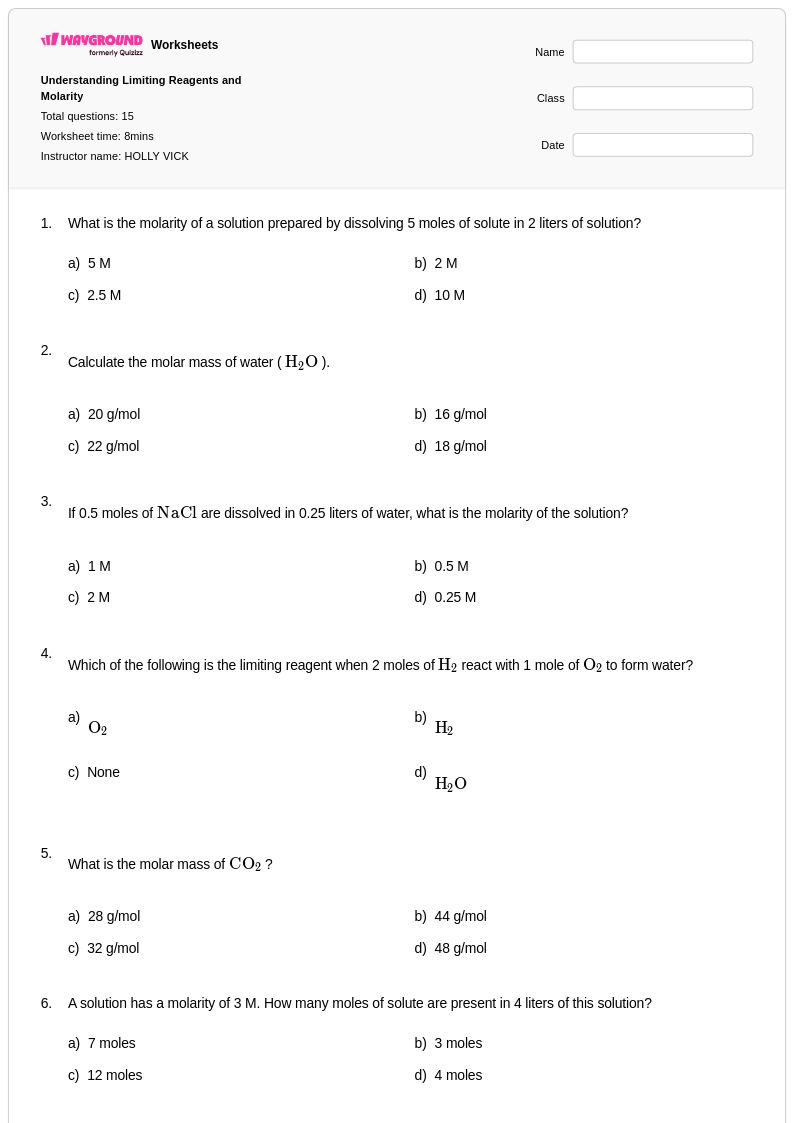
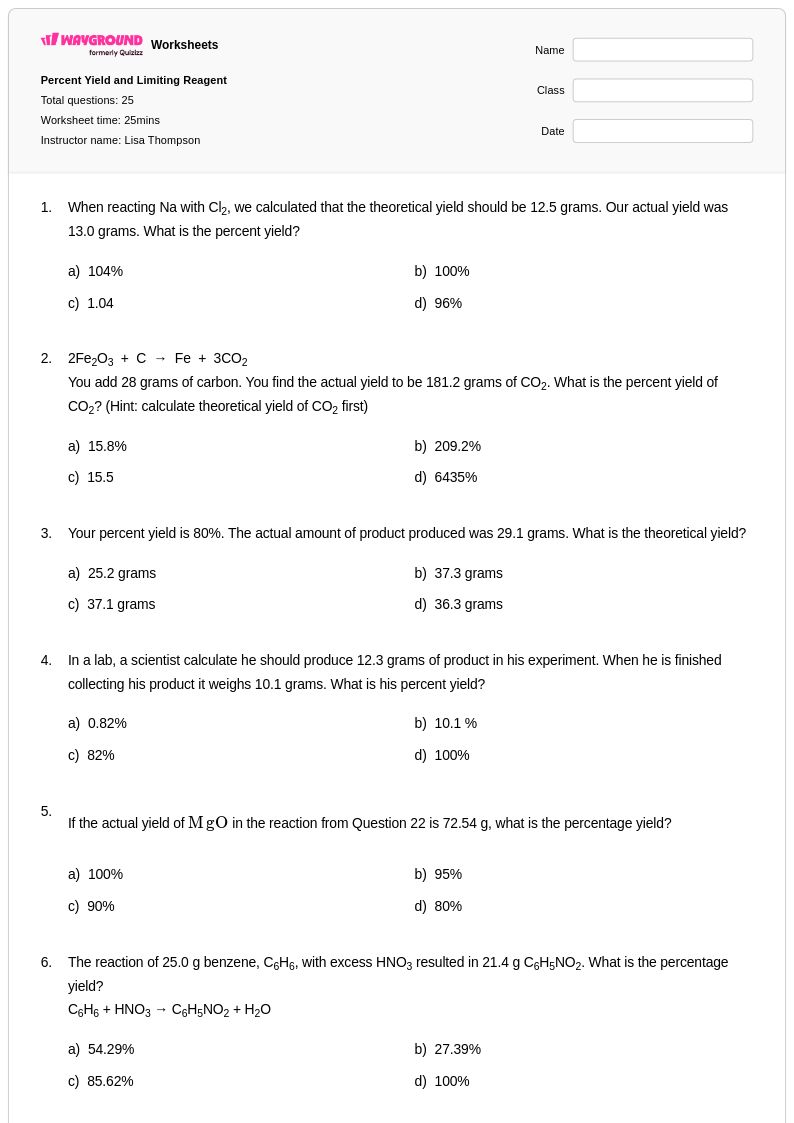
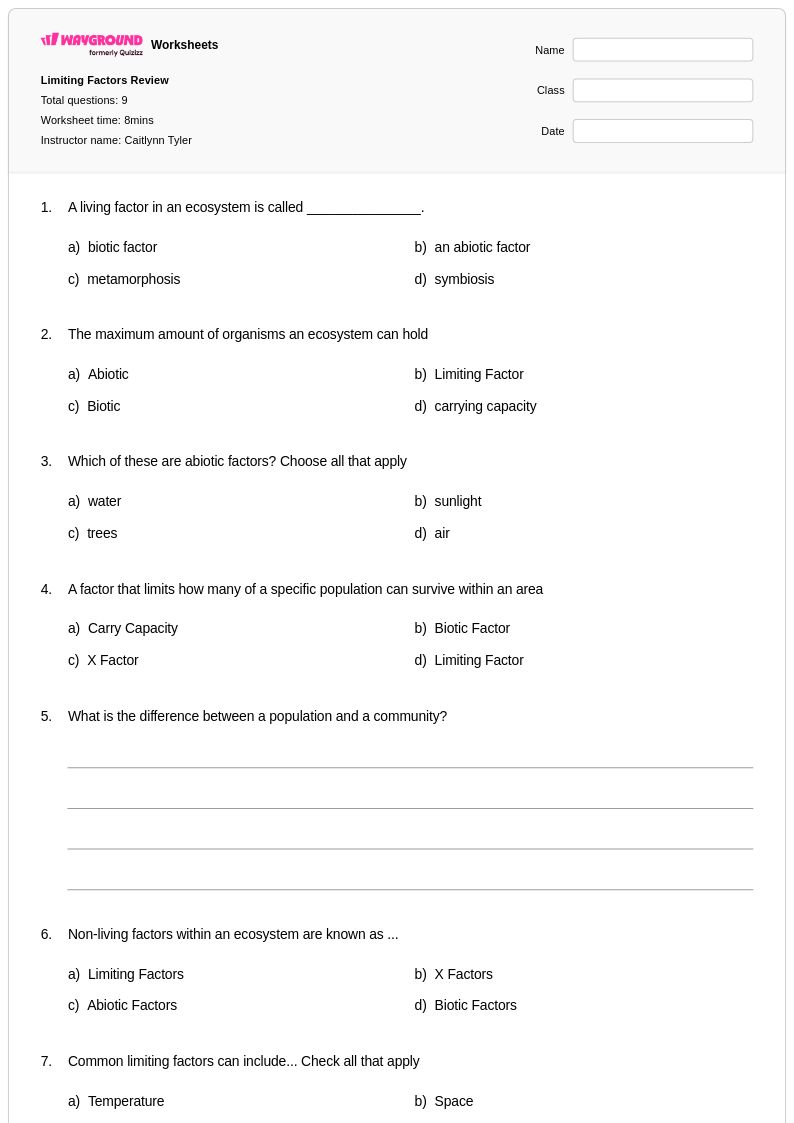
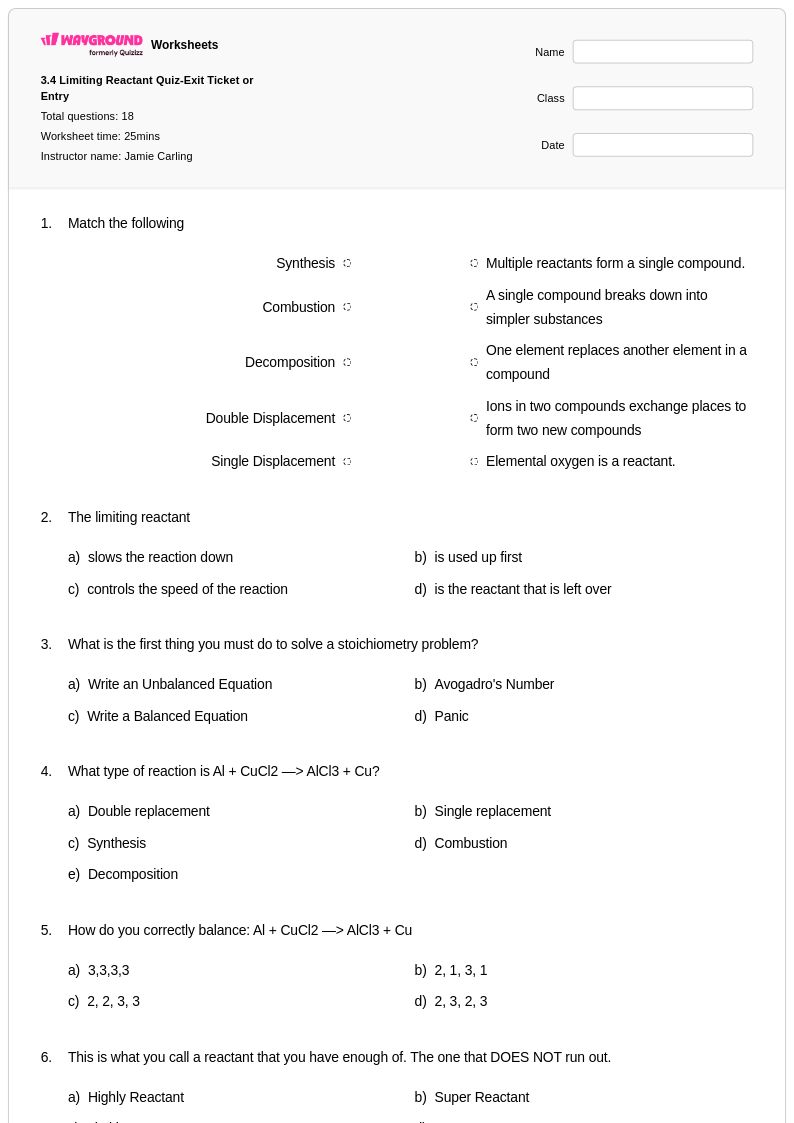
Master limiting reagent concepts with Wayground's comprehensive collection of free chemistry worksheets, featuring printable PDF practice problems and detailed answer keys to strengthen stoichiometry skills.
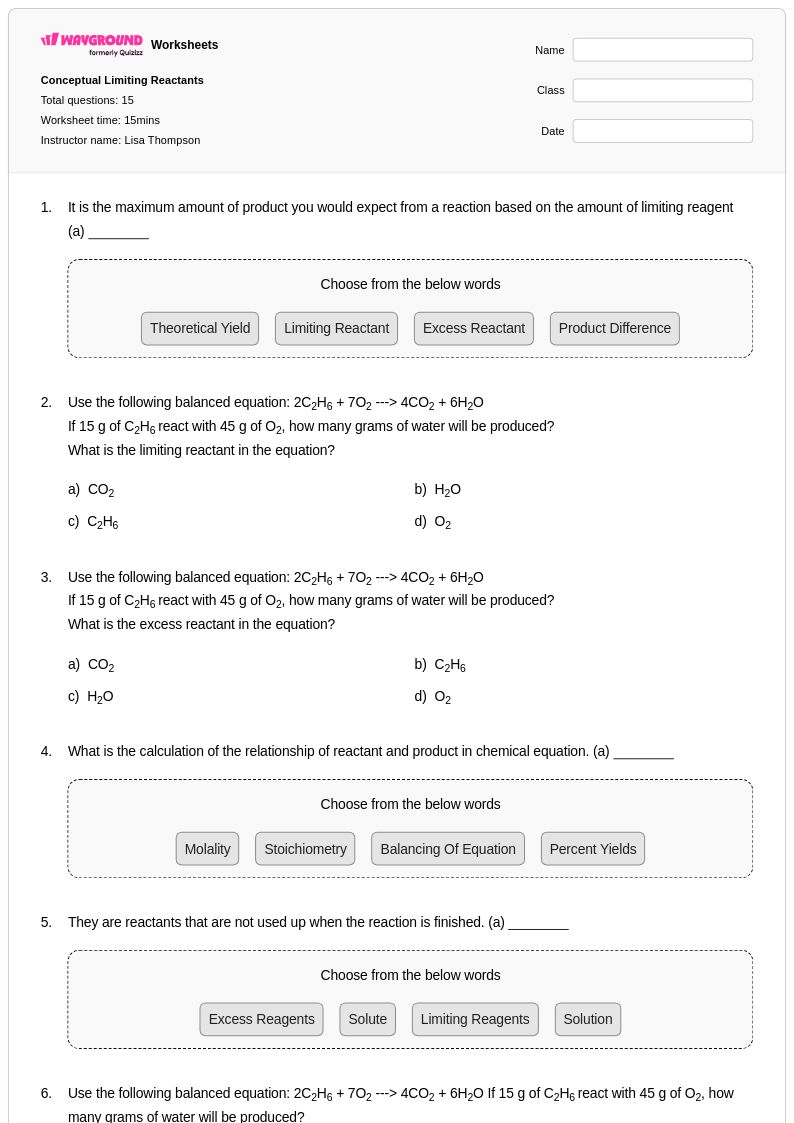
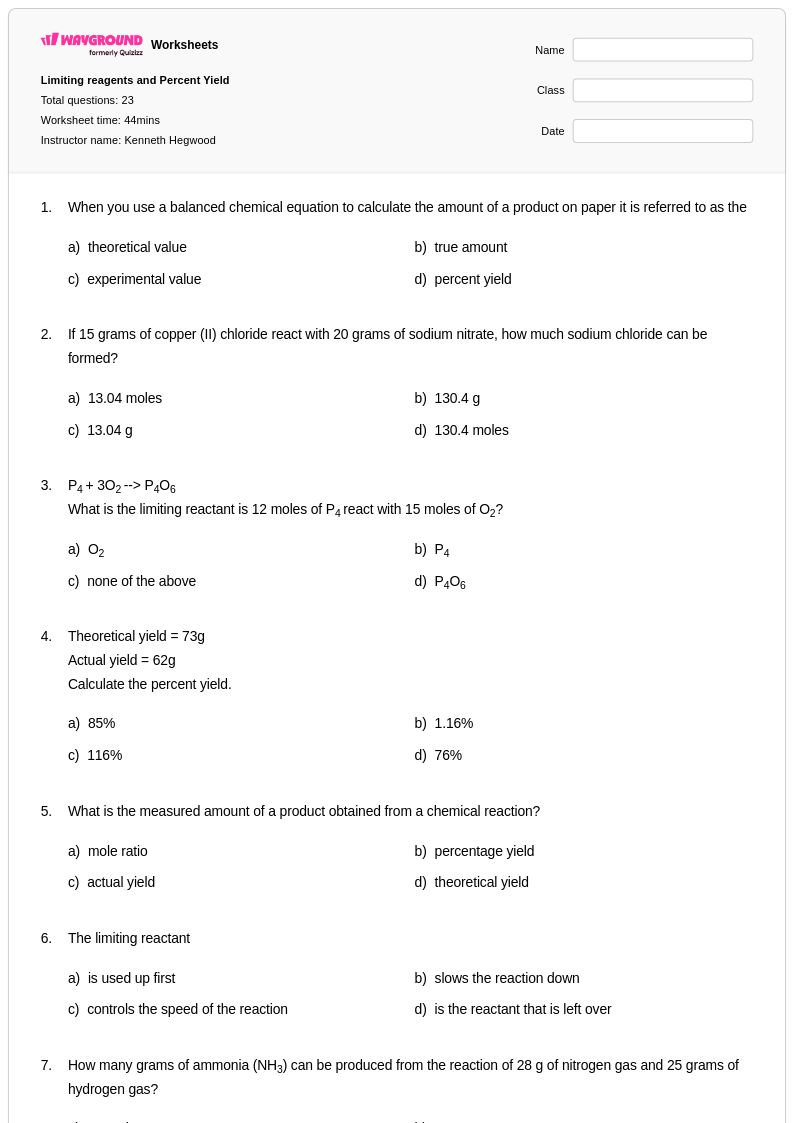
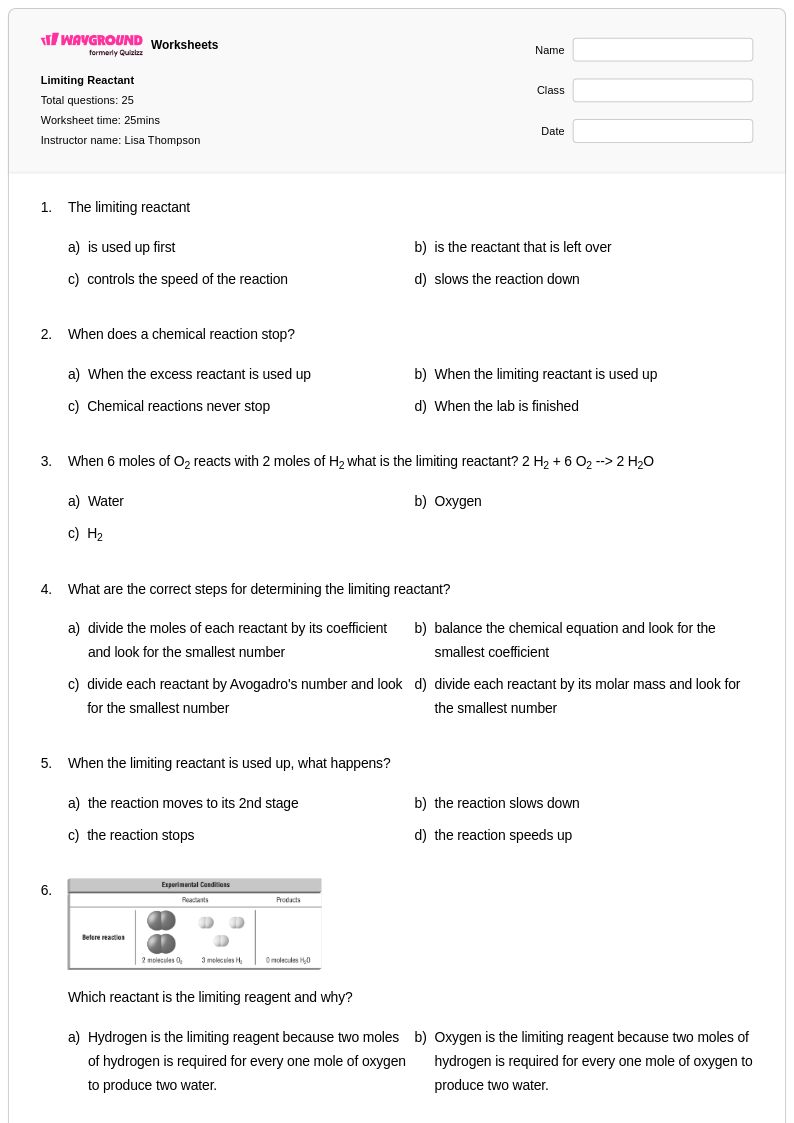
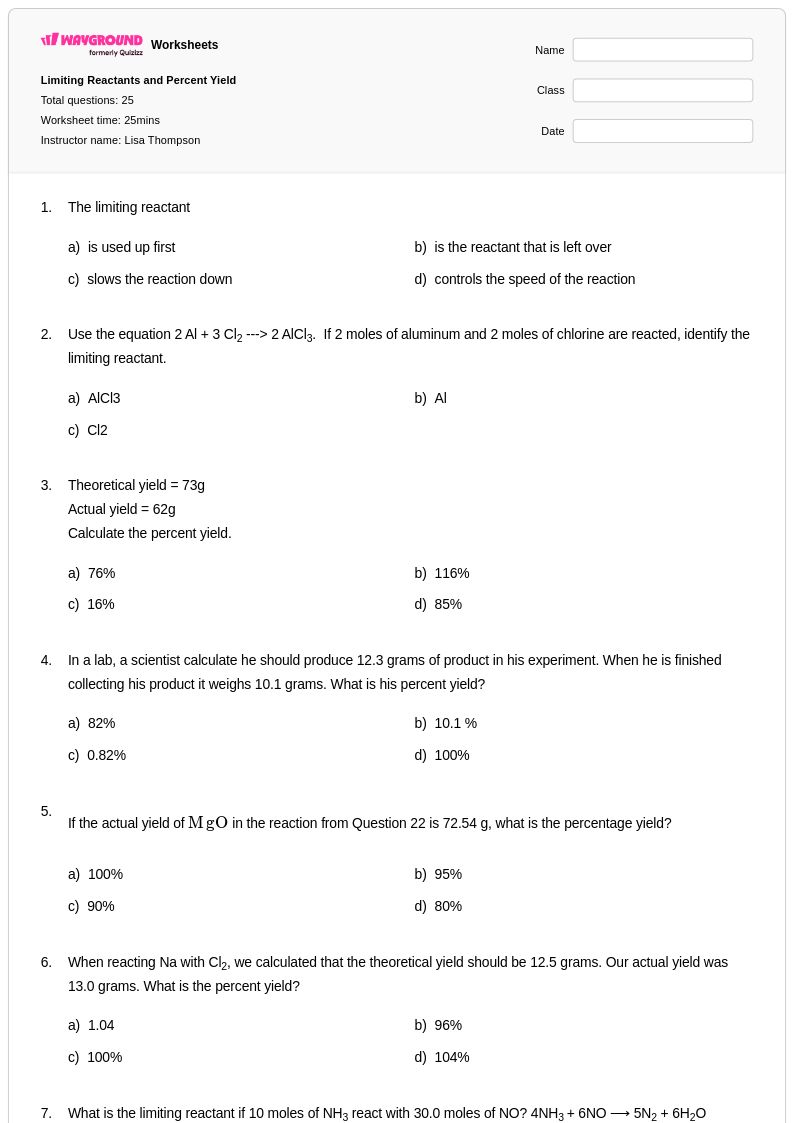
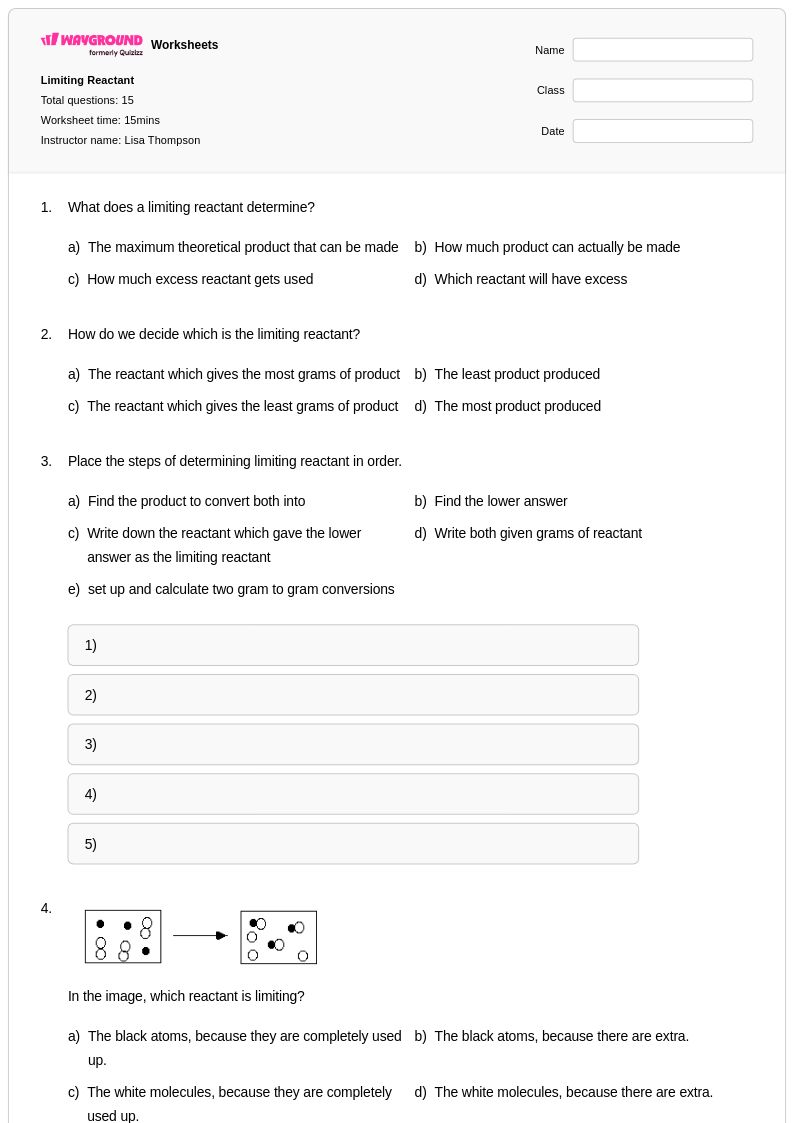
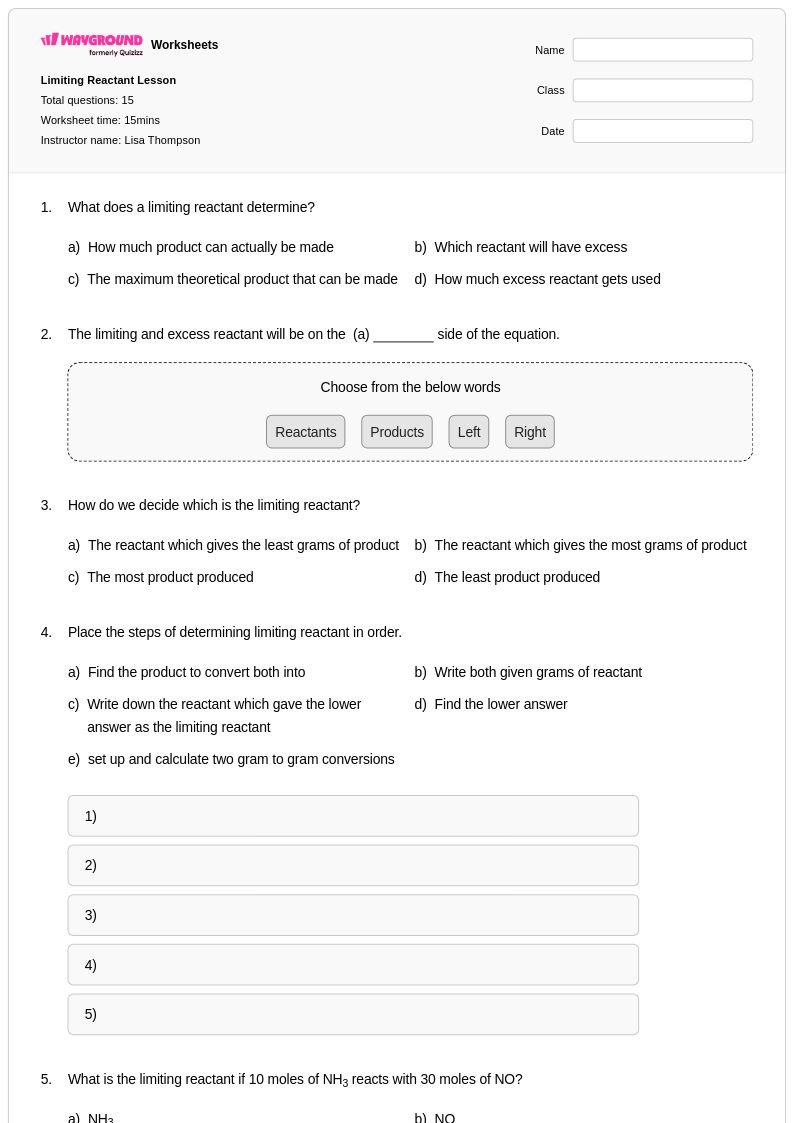
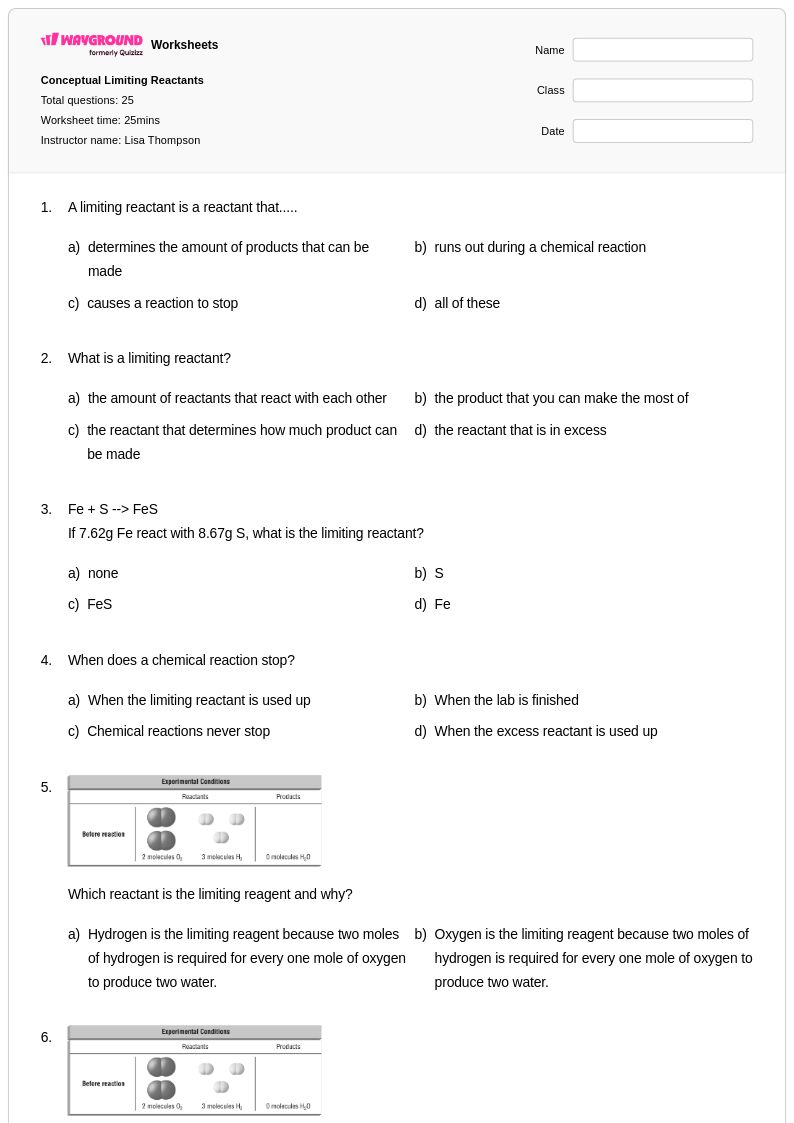
Limiting reagent worksheets available through Wayground (formerly Quizizz) provide comprehensive practice for students learning to identify which reactant will be completely consumed in a chemical reaction. These expertly designed worksheets strengthen critical analytical skills by guiding students through stoichiometric calculations, helping them determine theoretical yields, and teaching them to predict excess reactants remaining after reactions conclude. The collection includes detailed practice problems that progress from basic single-step limiting reagent identification to complex multi-step scenarios involving percentage yield calculations. Each worksheet comes with a complete answer key, making them valuable resources for both independent study and classroom instruction, and teachers can access these materials as free printables in convenient pdf format for immediate classroom implementation.
Wayground (formerly Quizizz) supports chemistry educators with an extensive collection of millions of teacher-created limiting reagent worksheets that can be easily discovered through advanced search and filtering capabilities. The platform's resources align with established chemistry standards and offer robust differentiation tools that allow teachers to modify content complexity based on individual student needs and learning objectives. These worksheets are available in both printable and digital formats, including downloadable pdf versions, giving educators maximum flexibility in delivery methods whether for in-person instruction, remote learning, or hybrid classroom environments. Teachers can customize existing worksheets or use them as-is for targeted skill practice, remediation sessions for struggling students, or enrichment activities for advanced learners, streamlining lesson planning while ensuring comprehensive coverage of limiting reagent concepts and calculations.
FAQs
How do I teach limiting reagent to chemistry students?
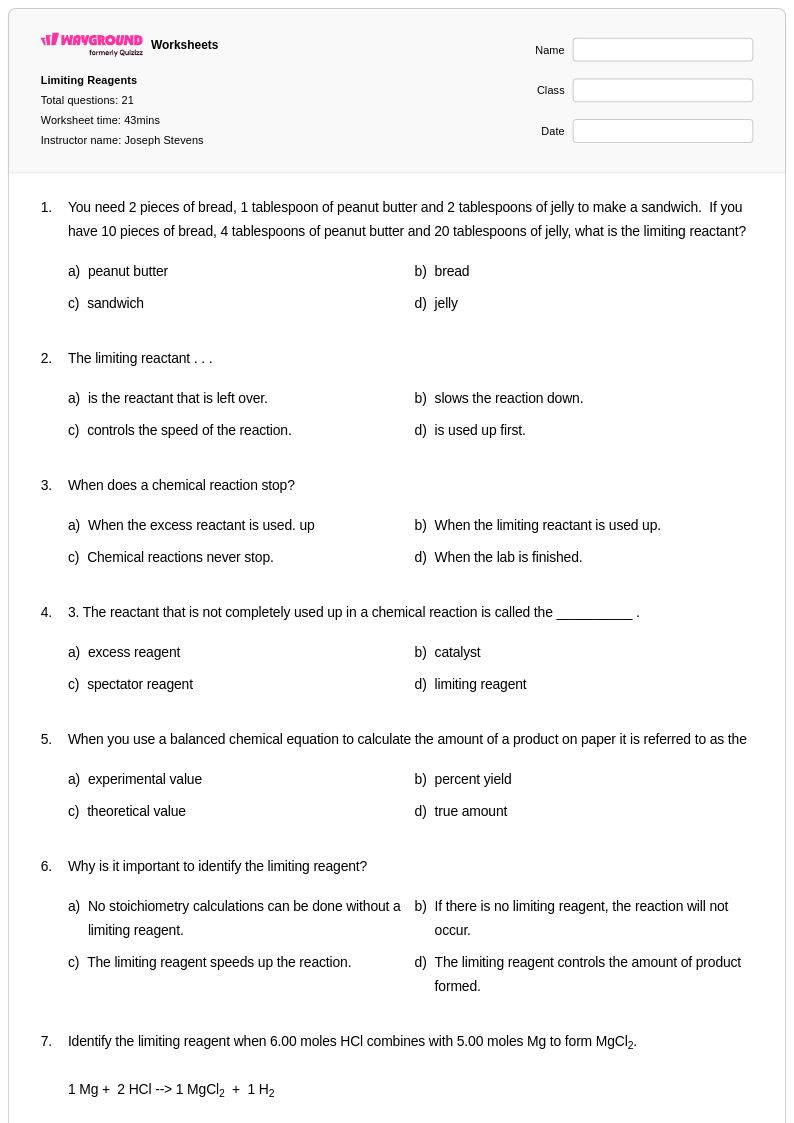
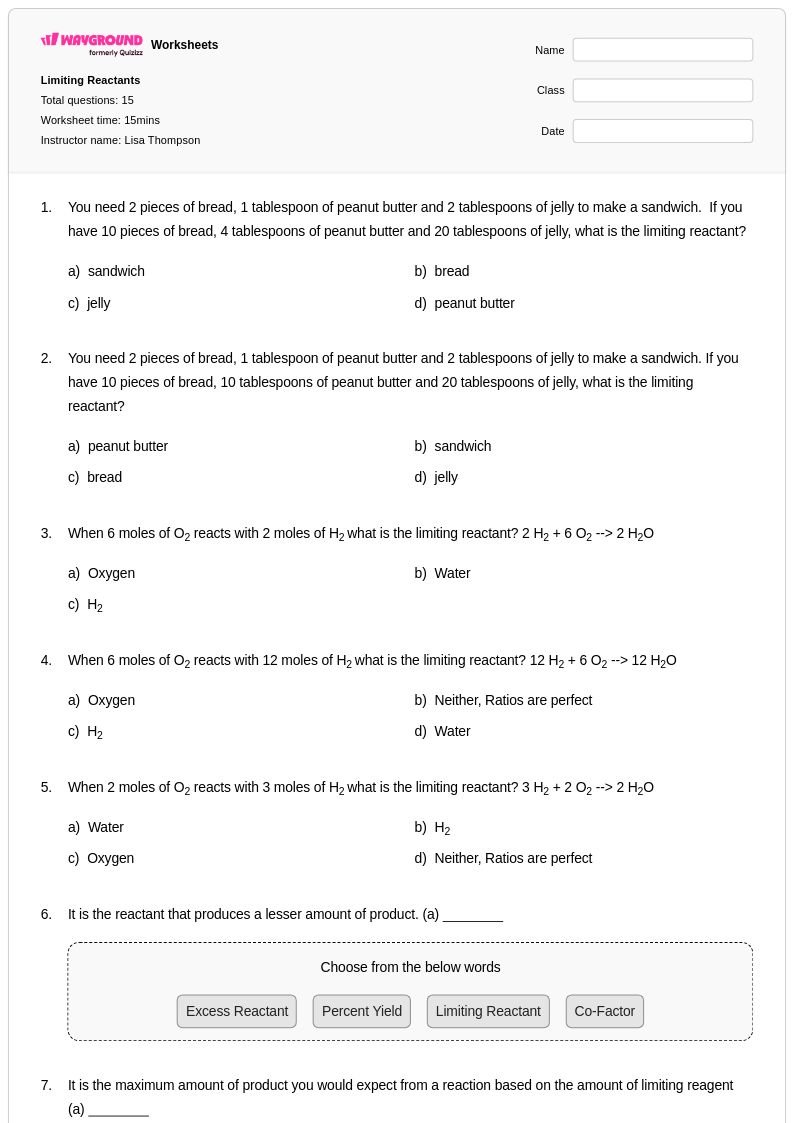
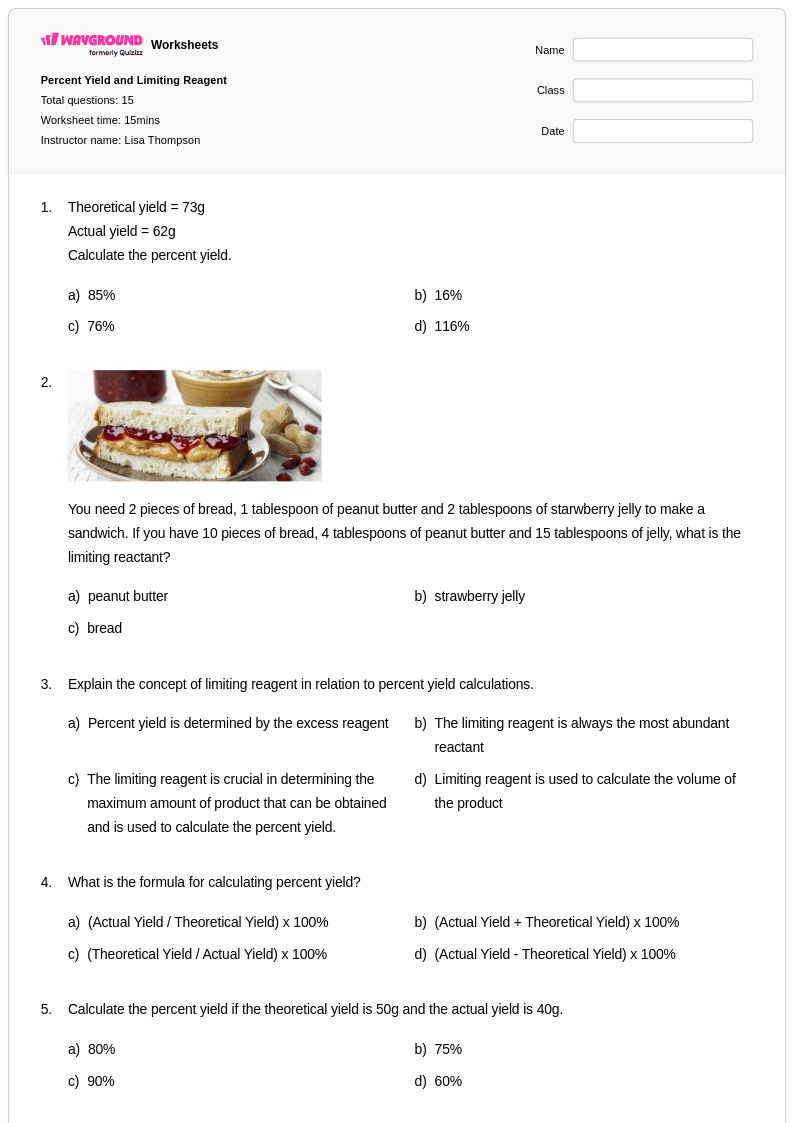
Start by grounding students in the concept that chemical reactions stop when one reactant is fully consumed, regardless of how much of the other reactants remain. Use a concrete analogy — such as making sandwiches with a fixed number of bread slices and fillings — before moving into mole-ratio calculations. Once students can identify the limiting reagent conceptually, introduce stoichiometric calculations to determine theoretical yield and excess reactant amounts. Scaffolding from single-step identification problems to multi-step percentage yield scenarios helps students build confidence progressively.
What exercises help students practice identifying limiting reagents?
The most effective practice moves from basic identification problems — where students determine which reactant runs out first given mole quantities — to more complex problems involving mass-to-mole conversions and theoretical yield calculations. Multi-step problems that require students to calculate both the limiting reagent and the amount of excess reactant remaining reinforce the full analytical process. Including percentage yield calculations in advanced problems pushes students to connect theoretical outcomes with real-world experimental results.
What mistakes do students commonly make when solving limiting reagent problems?
The most common error is comparing raw masses or volumes of reactants rather than converting to moles and applying stoichiometric ratios from the balanced equation. Students also frequently forget to verify that the equation is balanced before starting calculations, which leads to incorrect mole ratios and wrong conclusions. Another persistent misconception is assuming the reactant present in the smallest amount is always the limiting reagent, without accounting for differing coefficients in the balanced equation.
How do I use limiting reagent worksheets in my chemistry class?
Limiting reagent worksheets on Wayground are available as printable PDFs for traditional classroom use and in digital formats for technology-integrated environments, including the option to host them as a quiz directly on Wayground. Printable versions work well for guided practice, homework assignments, or in-class problem sets, while digital formats support remote learning and allow for faster feedback. Each worksheet includes a complete answer key, so teachers can use them for independent student practice or structured review sessions without additional preparation.
How do I differentiate limiting reagent instruction for students at different skill levels?
For struggling students, begin with limiting reagent problems that provide balanced equations and pre-converted mole quantities so the focus stays on applying ratios rather than multi-step conversions. Advanced learners benefit from problems that integrate percentage yield, impure reactant scenarios, or multi-reaction sequences. On Wayground, teachers can also apply accommodations such as read aloud support, reduced answer choices, and extended time to individual students, ensuring all learners can access the same core content at an appropriate challenge level.
At what point in a stoichiometry unit should I introduce limiting reagents?
Limiting reagent concepts are best introduced after students are comfortable with mole-to-mole and mass-to-mole stoichiometric conversions using a single reactant. Students need to be fluent with balanced equations and molar ratios before they can meaningfully compare reactant quantities to determine which one is consumed first. Introducing limiting reagents too early, before stoichiometry fundamentals are secure, is a leading cause of confusion and calculation errors on this topic.