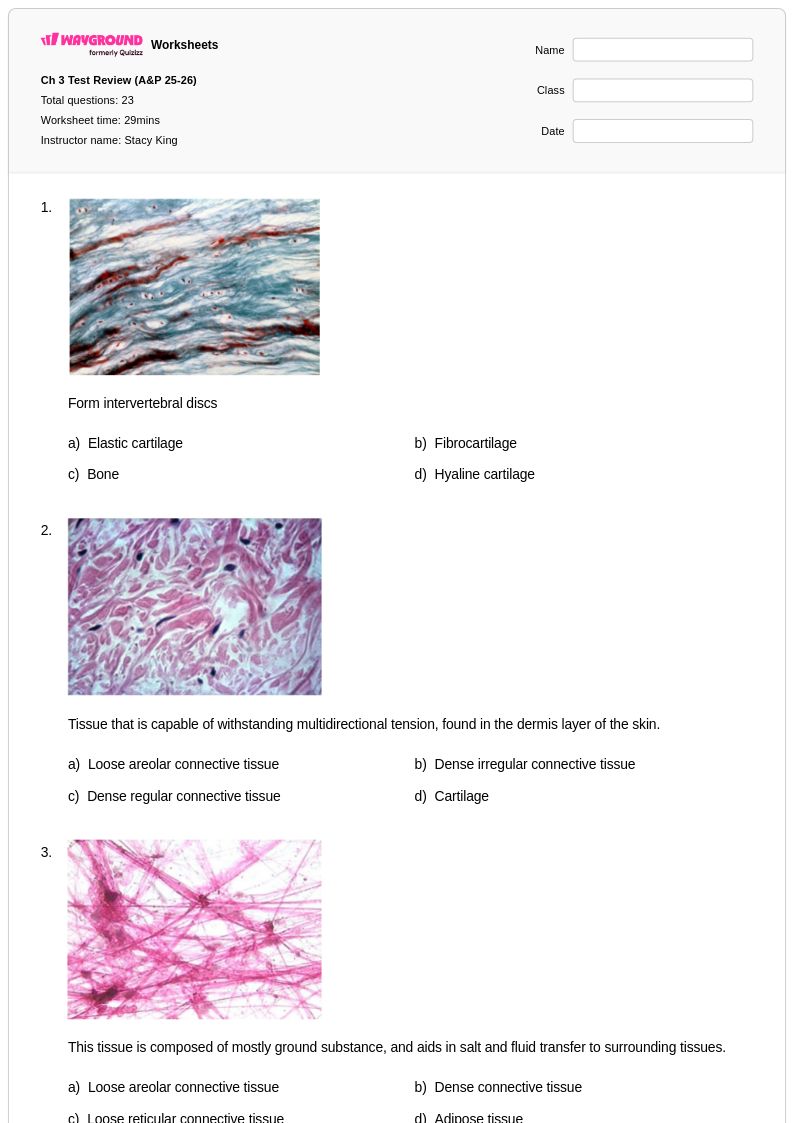
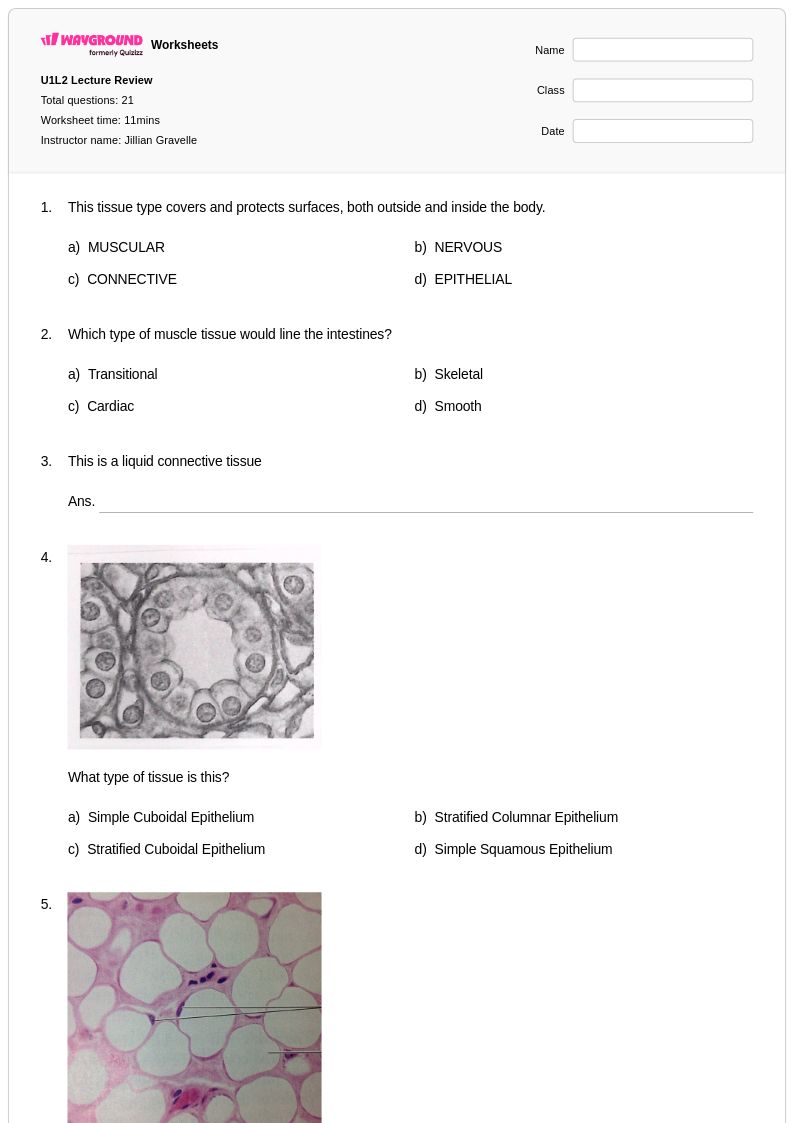
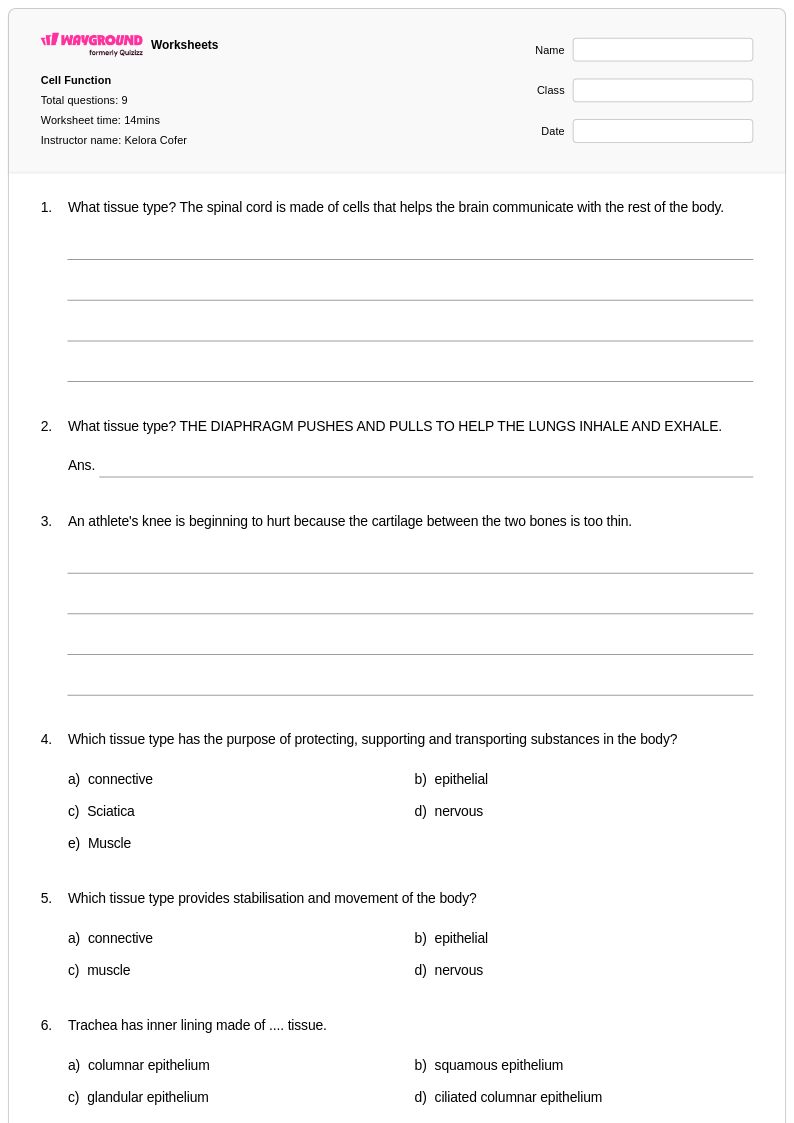
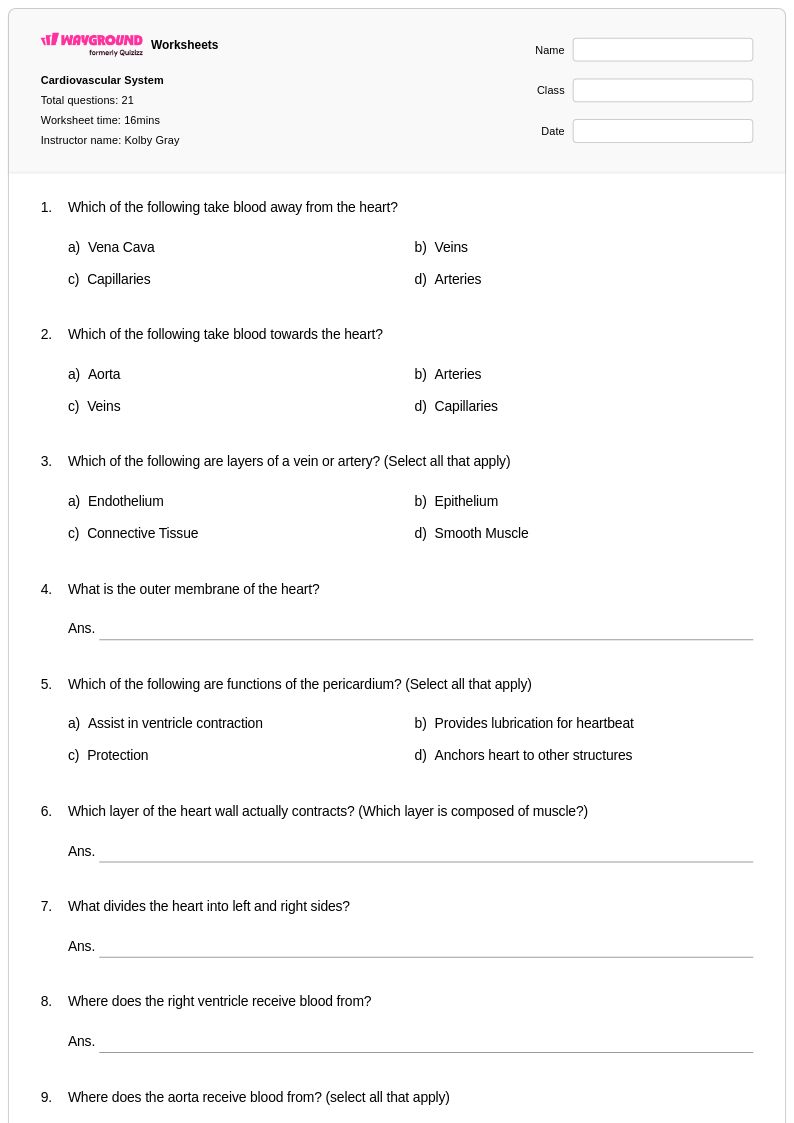
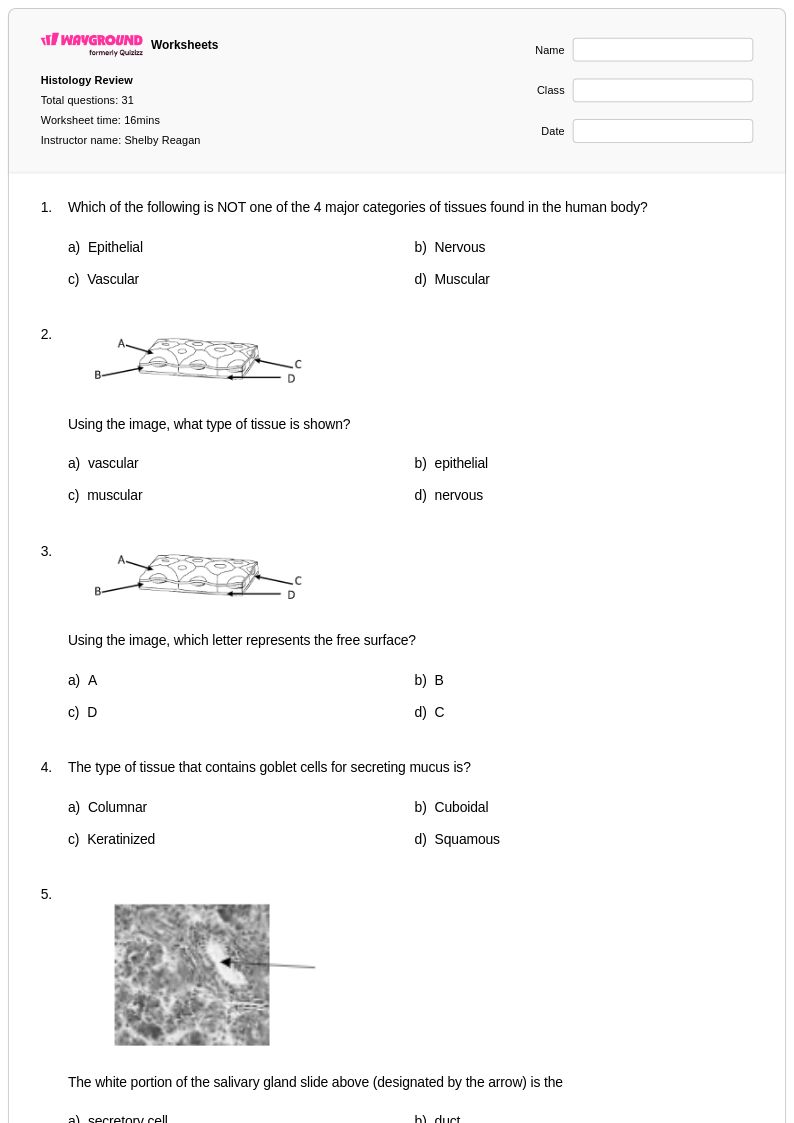
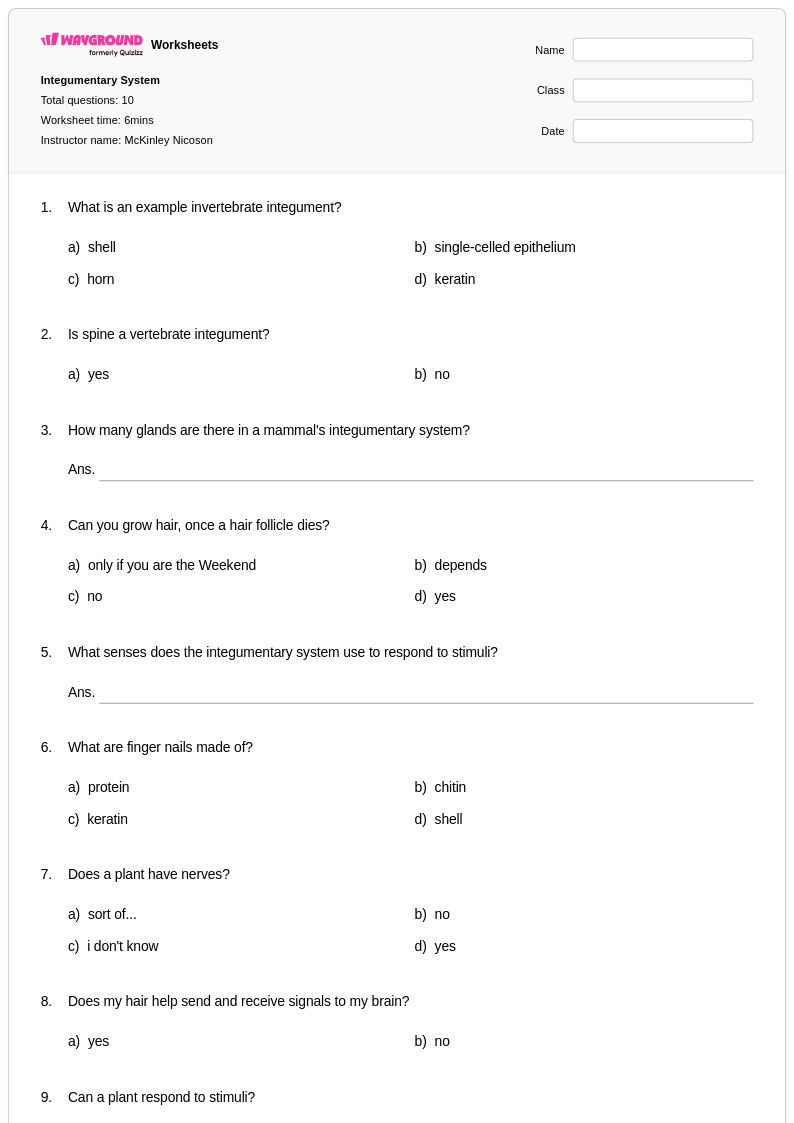
Explore Year 9 epithelium worksheets and printables from Wayground that help students master tissue types, cellular structures, and functions through engaging practice problems with comprehensive answer keys.
Explore printable Epithelium worksheets for Year 9
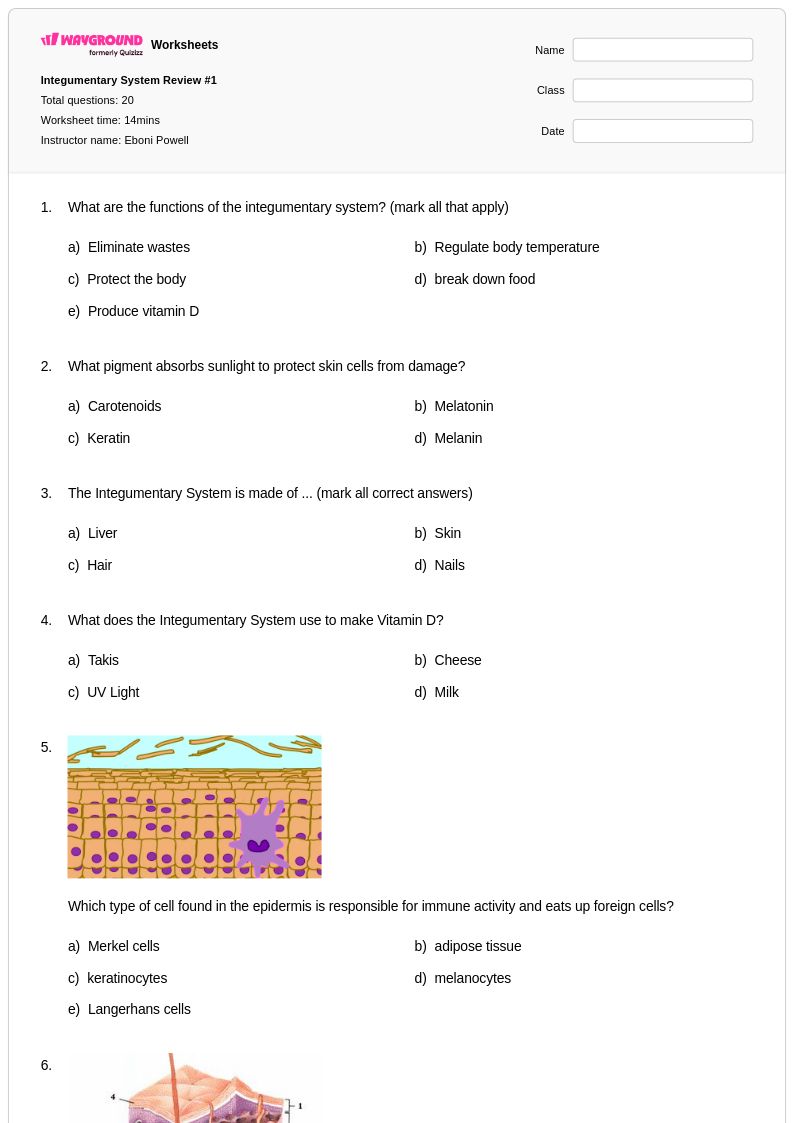
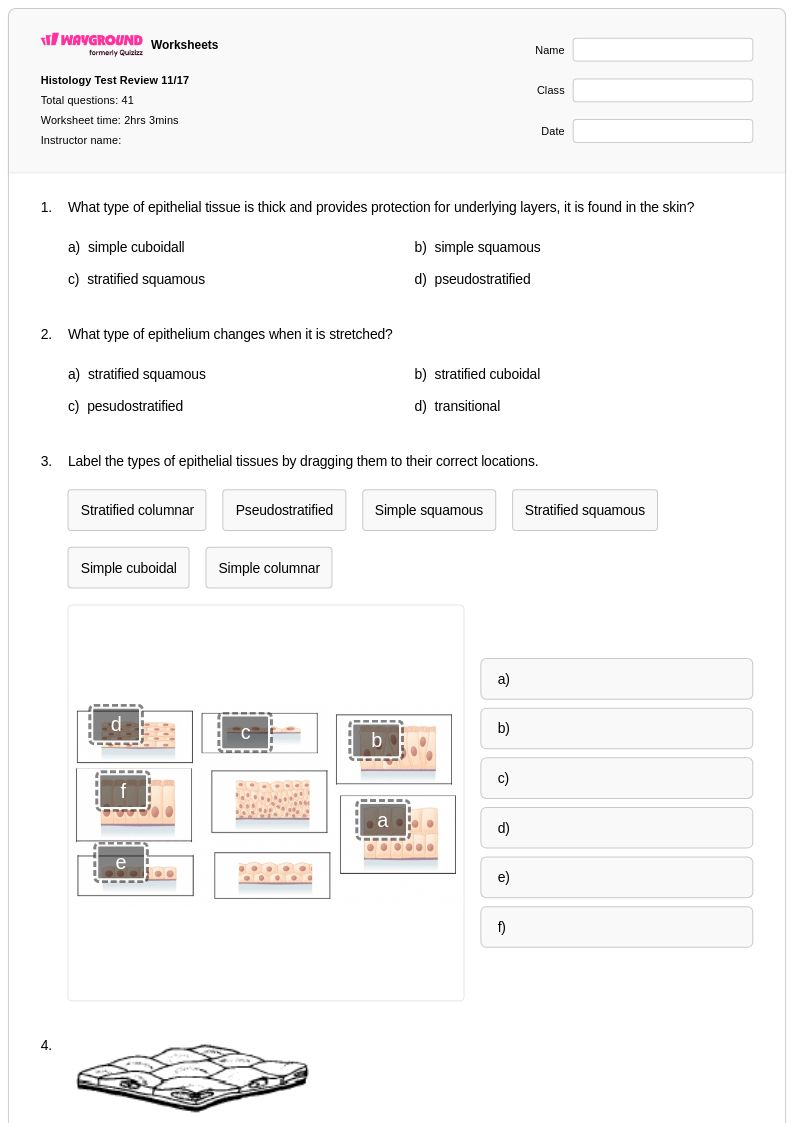
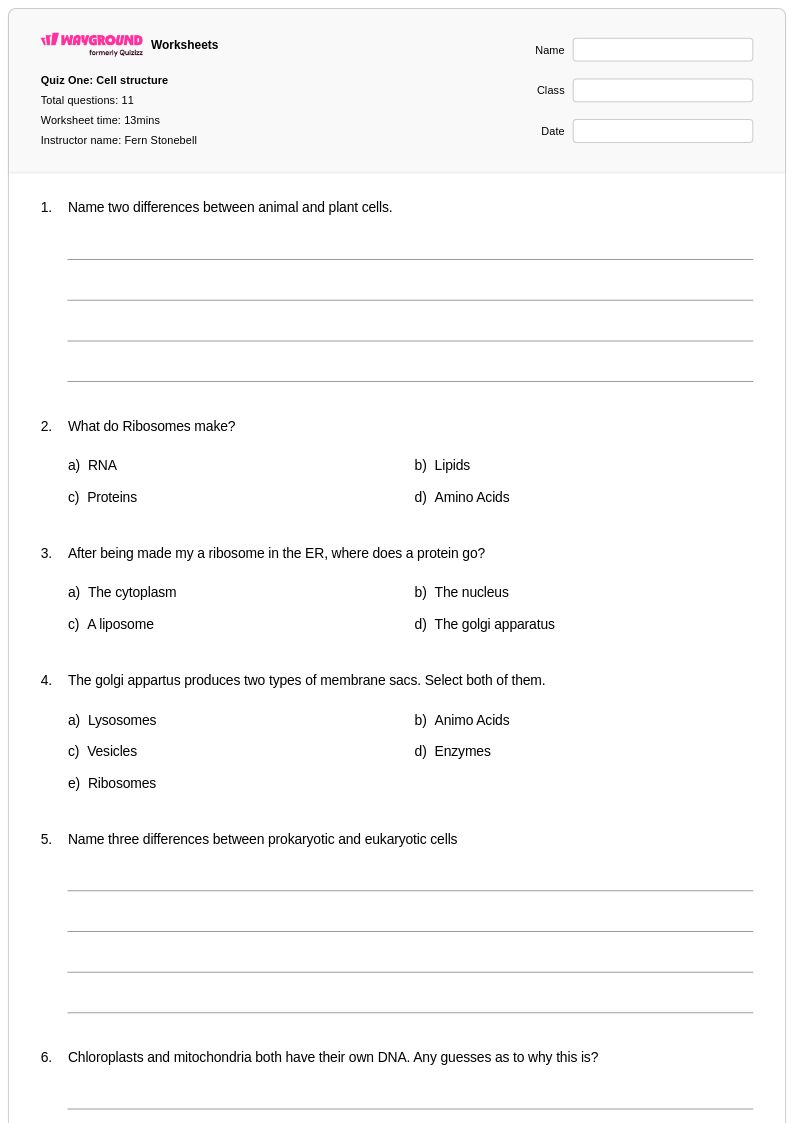
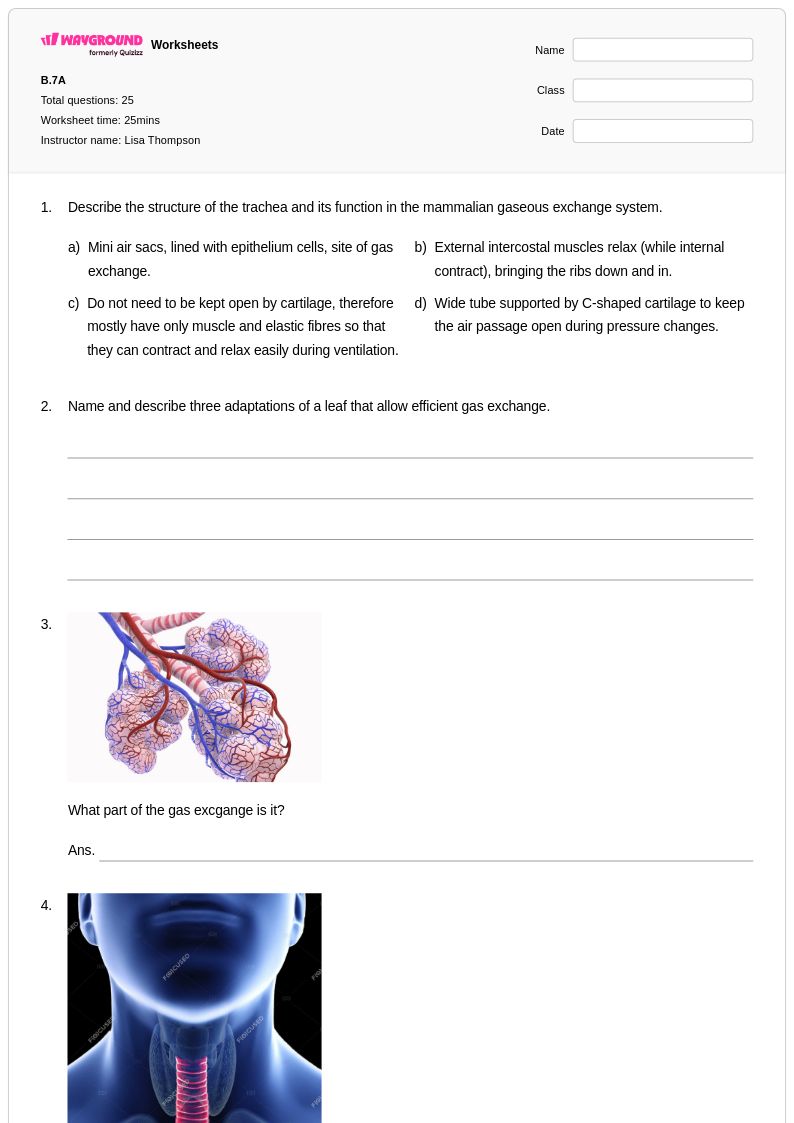
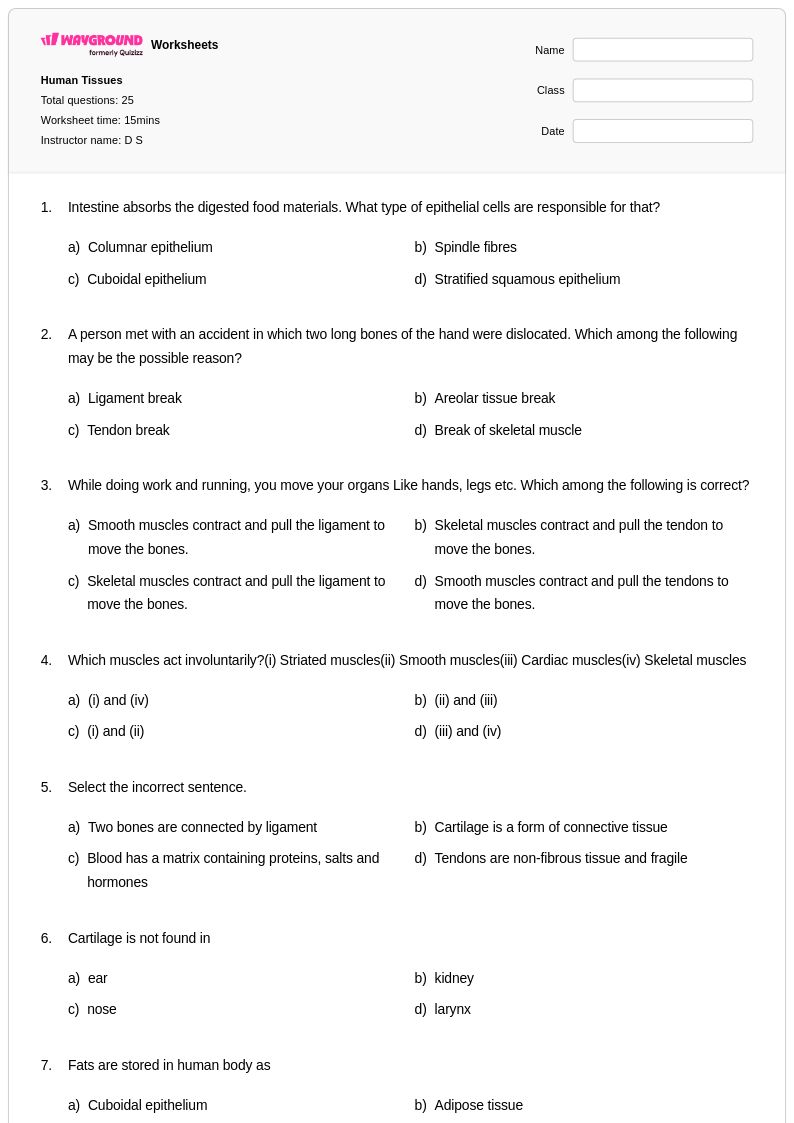
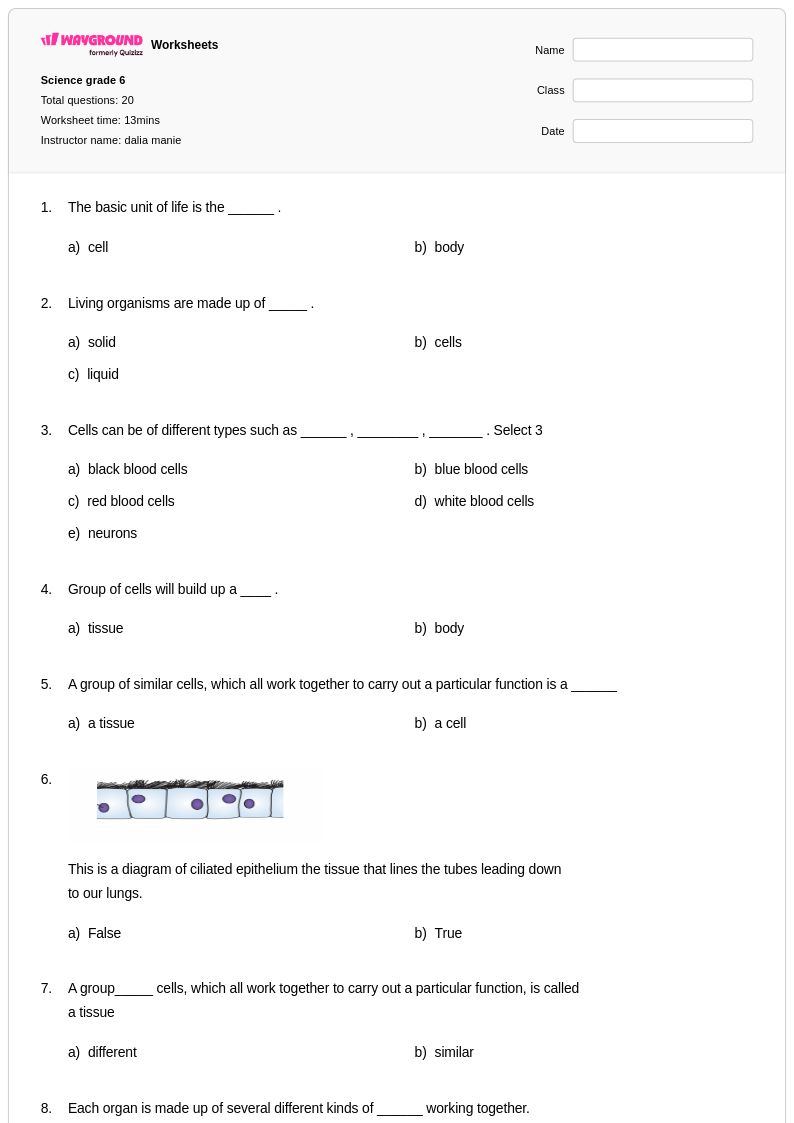
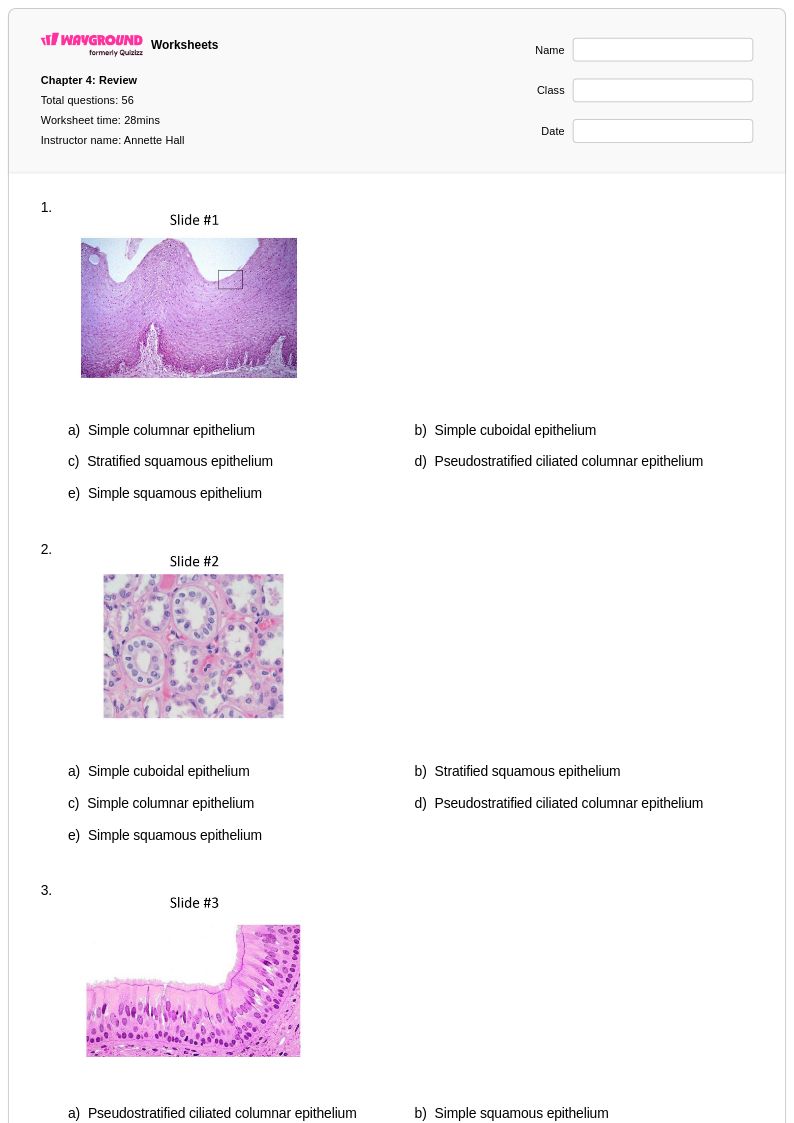
Year 9 epithelium worksheets available through Wayground (formerly Quizizz) provide comprehensive coverage of this fundamental tissue type that forms protective barriers and secretory surfaces throughout the human body. These expertly designed resources strengthen students' understanding of epithelial cell classification systems, including simple versus stratified arrangements and squamous, cuboidal, and columnar cell shapes. The worksheets feature detailed practice problems that guide students through identifying epithelial tissues under microscopic examination, analyzing the relationship between epithelial structure and function, and distinguishing between different epithelial subtypes found in organs like the skin, respiratory tract, and digestive system. Each worksheet collection includes answer keys and free printables in pdf format, enabling students to master the complex vocabulary and classification systems essential for advanced biology study while developing critical observation and analytical skills.
Wayground (formerly Quizizz) supports biology educators with an extensive library of millions of teacher-created epithelium resources that streamline lesson planning and enhance student comprehension of tissue biology concepts. The platform's robust search and filtering capabilities allow teachers to quickly locate materials aligned with specific curriculum standards, while differentiation tools enable customization for varying student ability levels within the same Year 9 classroom. These epithelium worksheet collections are available in both printable pdf formats for traditional classroom use and digital formats for interactive learning environments, providing flexibility for diverse teaching approaches. Teachers can leverage these resources for targeted remediation of students struggling with tissue identification, enrichment activities for advanced learners ready to explore specialized epithelial functions, and regular skill practice that reinforces the foundational knowledge students need for success in advanced biology coursework and laboratory investigations.
FAQs
How do I teach epithelial tissue classification to biology students?
Start by establishing two classification axes: the number of cell layers (simple vs. stratified) and the shape of the surface cells (squamous, cuboidal, columnar). Use diagrams and microscope images to help students visualize each type before introducing function. Anchoring each tissue type to a specific organ — for example, simple squamous in alveoli for gas exchange, transitional epithelium in the bladder for stretching — helps students connect structure to physiological role rather than memorizing in isolation.
What exercises help students practice identifying epithelial tissue types?
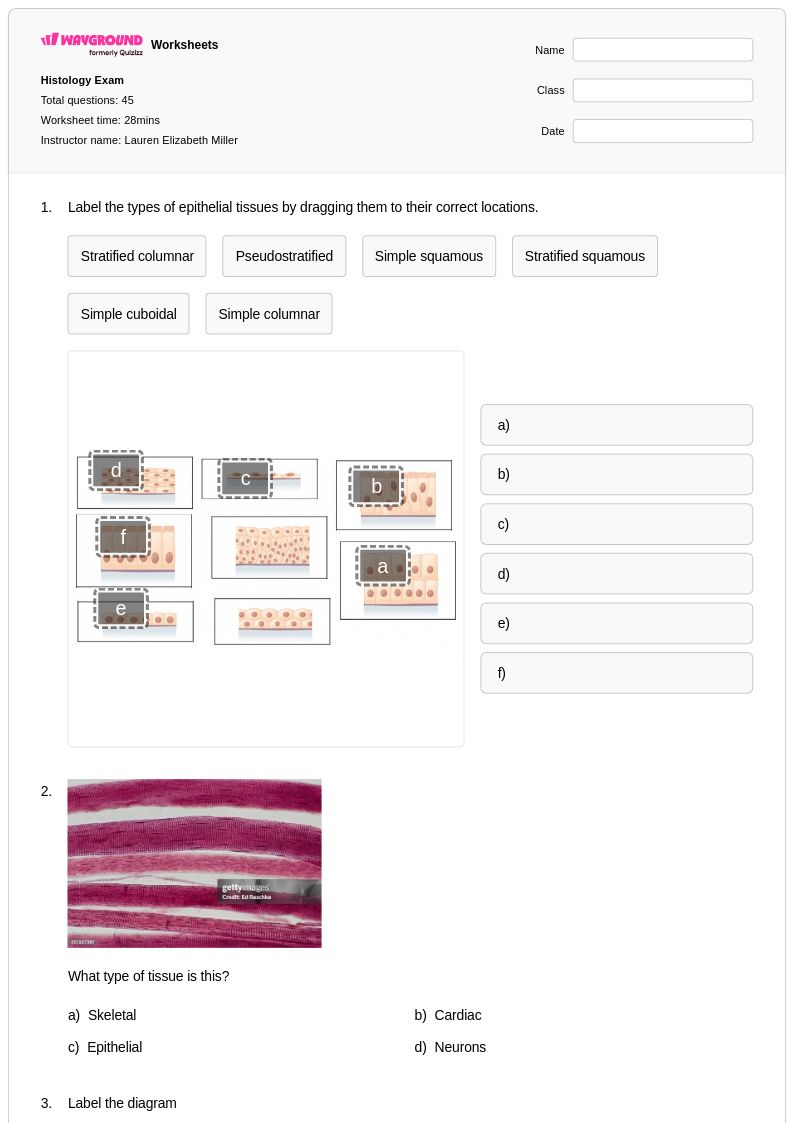
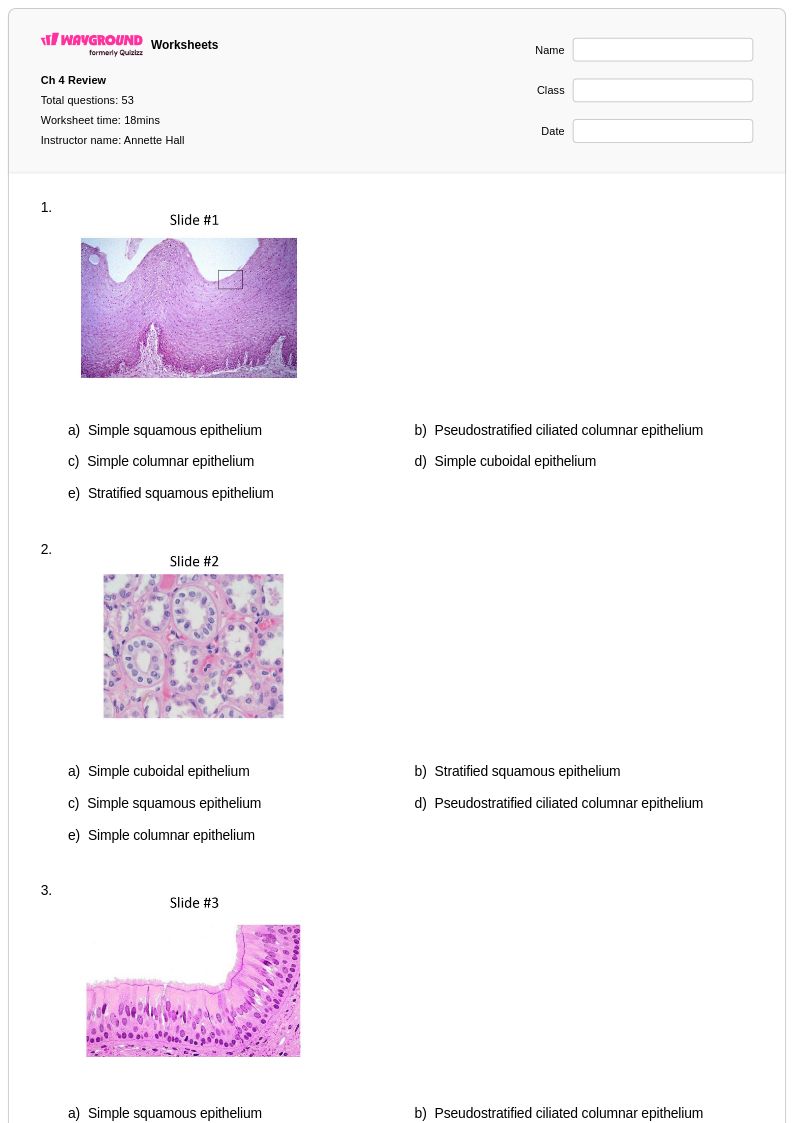
Labeling diagrams of histological slides is one of the most effective practice formats, as it requires students to apply both shape and layering criteria simultaneously. Matching exercises that pair tissue types with their locations and functions reinforce classification logic, while short-answer questions asking students to justify why a specific epithelium suits a given organ push deeper analytical thinking. Worksheets that present unlabeled micrograph-style images and ask students to name the tissue type and predict its function are especially valuable for building exam readiness.
What mistakes do students commonly make when classifying epithelial tissue?
The most frequent error is misidentifying stratified epithelium by focusing on the shape of basal cells rather than the surface layer — classification is always based on the outermost cell shape. Students also confuse pseudostratified columnar epithelium with true stratified epithelium because the staggered nuclei create the appearance of multiple layers. A third common misconception is treating simple squamous and endothelium as the same category; clarifying that endothelium and mesothelium are specialized subtypes helps students use terminology precisely.
How can I use epithelium worksheets to support students with different learning needs?
Epithelium worksheets on Wayground are available in both printable PDF and digital formats, making them adaptable for in-person, remote, and hybrid classrooms, and they can be hosted as a quiz directly on the platform. For students who need additional support, Wayground's digital format allows teachers to enable accommodations such as read-aloud for question text, reduced answer choices to lower cognitive load, and extended time — all configurable per individual student without disrupting the rest of the class. These settings are saved and reusable across future sessions, making differentiation sustainable rather than a one-off adjustment.
How do I help students understand the relationship between epithelial structure and function?
Frame every tissue type as an engineering solution to a physiological problem: thin, flat squamous cells minimize diffusion distance; tightly packed cuboidal cells support secretion and absorption; tall columnar cells maximize surface contact for nutrient uptake, especially when paired with microvilli. Having students complete function-prediction tasks — given a tissue location and its job, choose or draw the most appropriate epithelium — builds this logic systematically. This approach shifts learning from rote memorization to applied biological reasoning.
What's the best way to assess student understanding of epithelial tissue before a unit exam?
A short diagnostic using unlabeled histology-style diagrams, where students must name the tissue, describe its structure, and state one function, quickly reveals whether students can integrate all three dimensions of understanding. Common gaps to watch for include correct naming with incorrect functional explanation, and correct function with incorrect structural justification — these partial errors indicate surface-level memorization rather than conceptual mastery. Running this as a formative quiz mid-unit gives teachers time to reteach specific tissue types before the summative assessment.