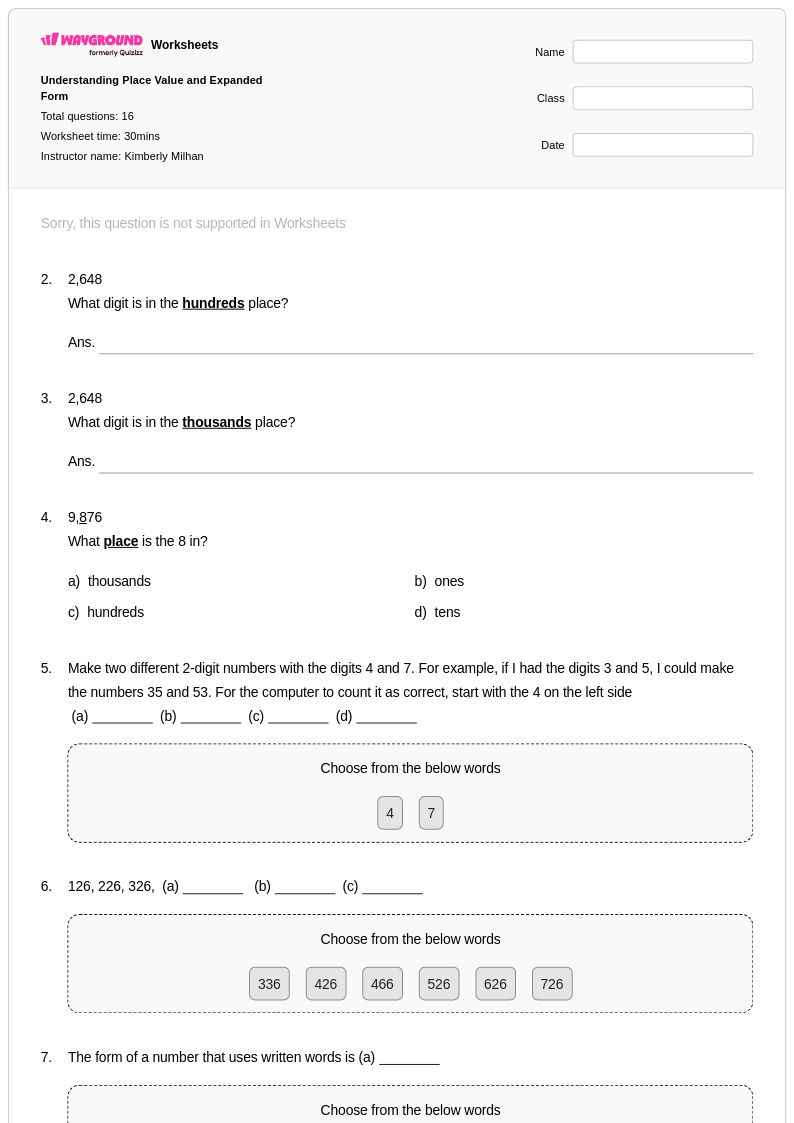
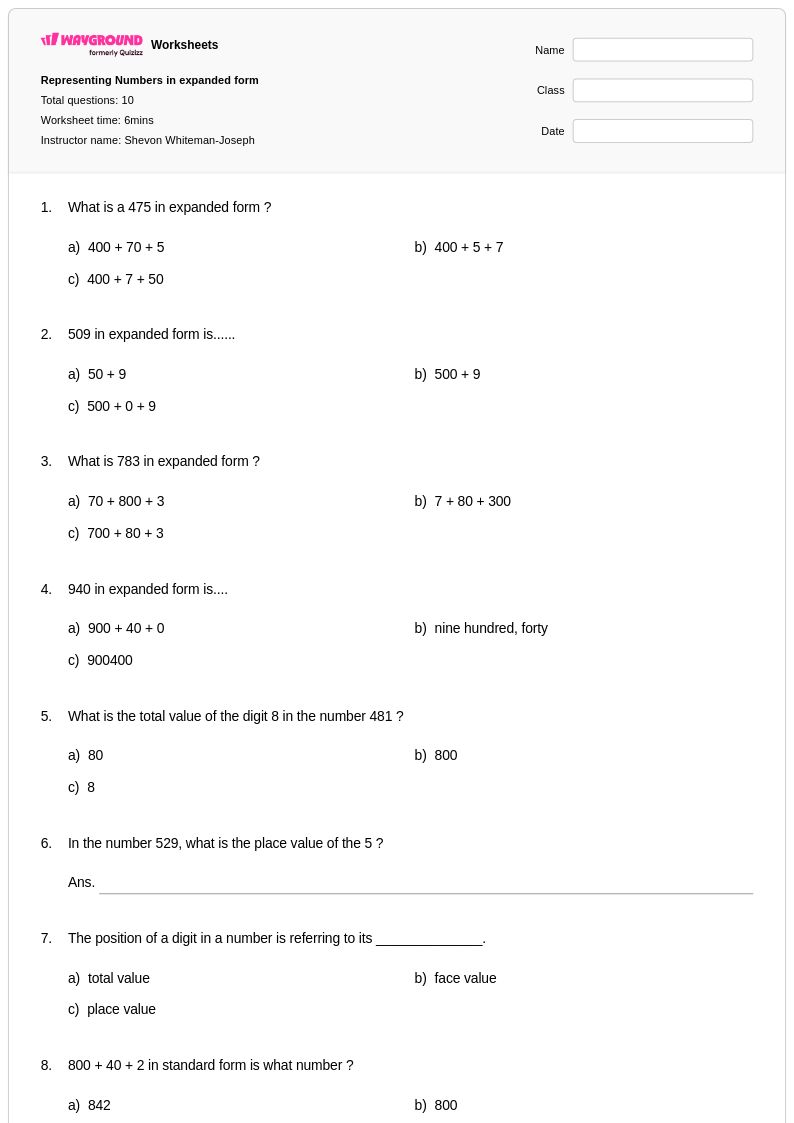
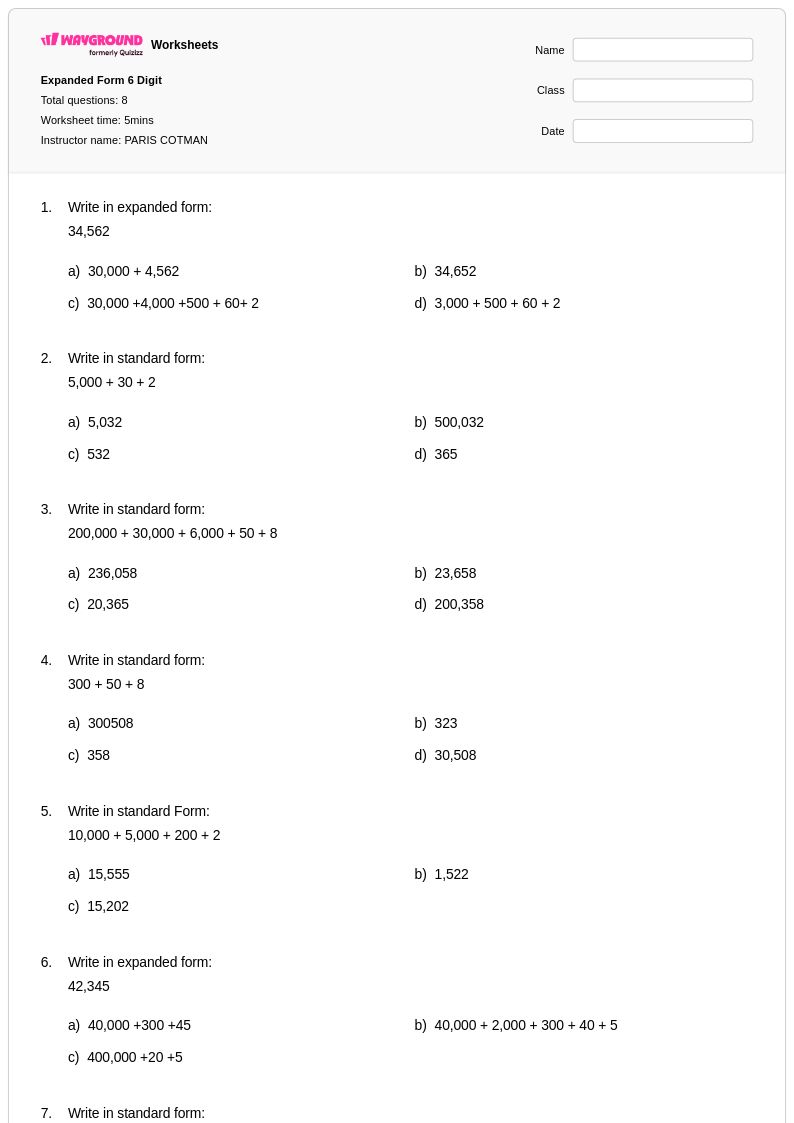
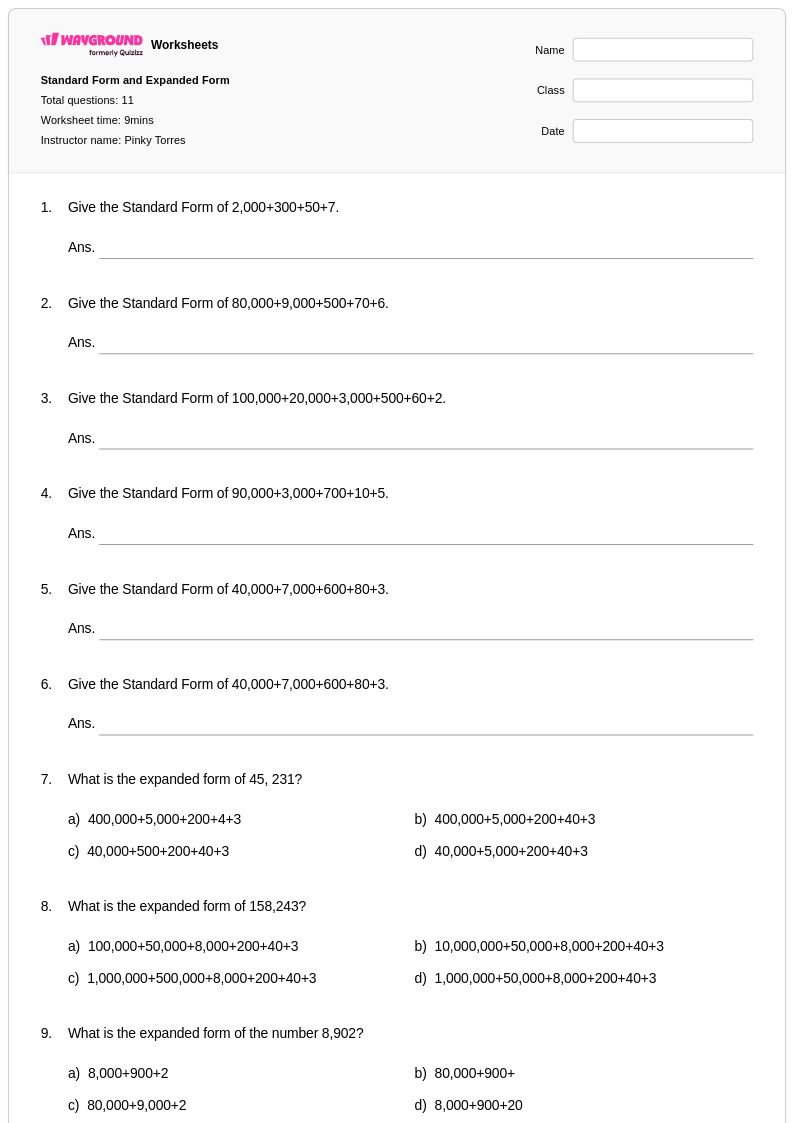
Free Printable Expanded Form Worksheets for Year 3
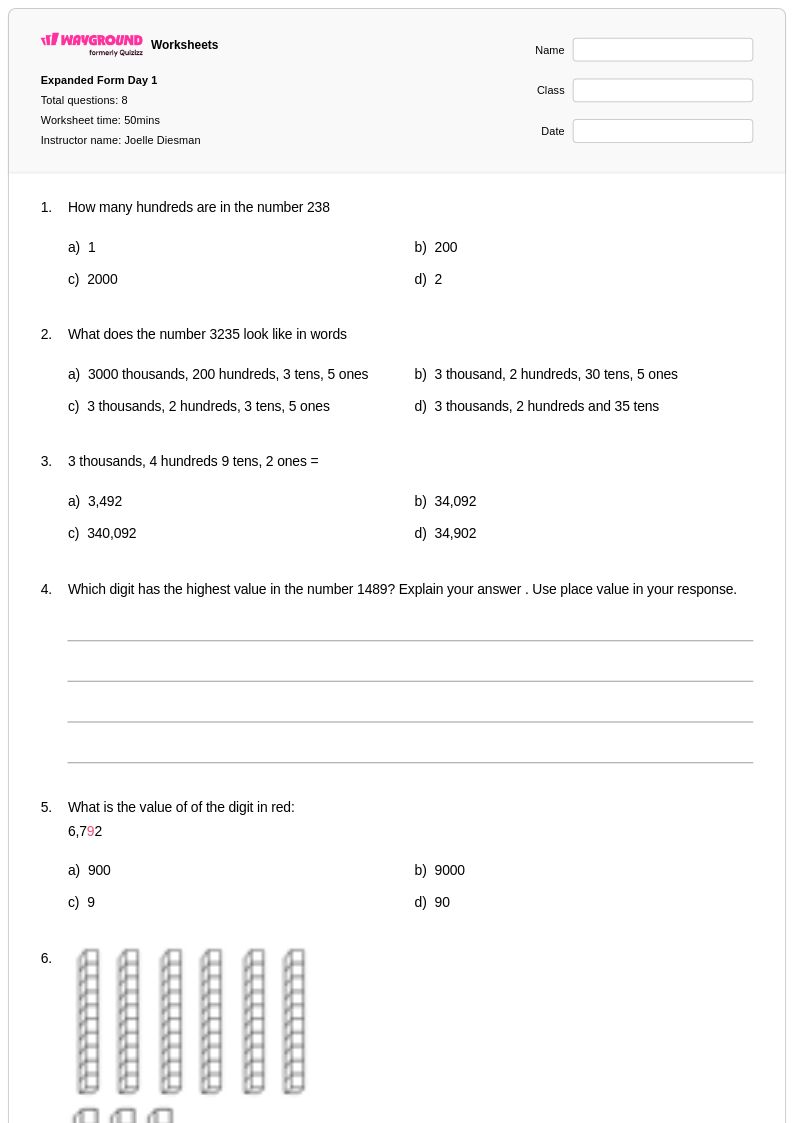
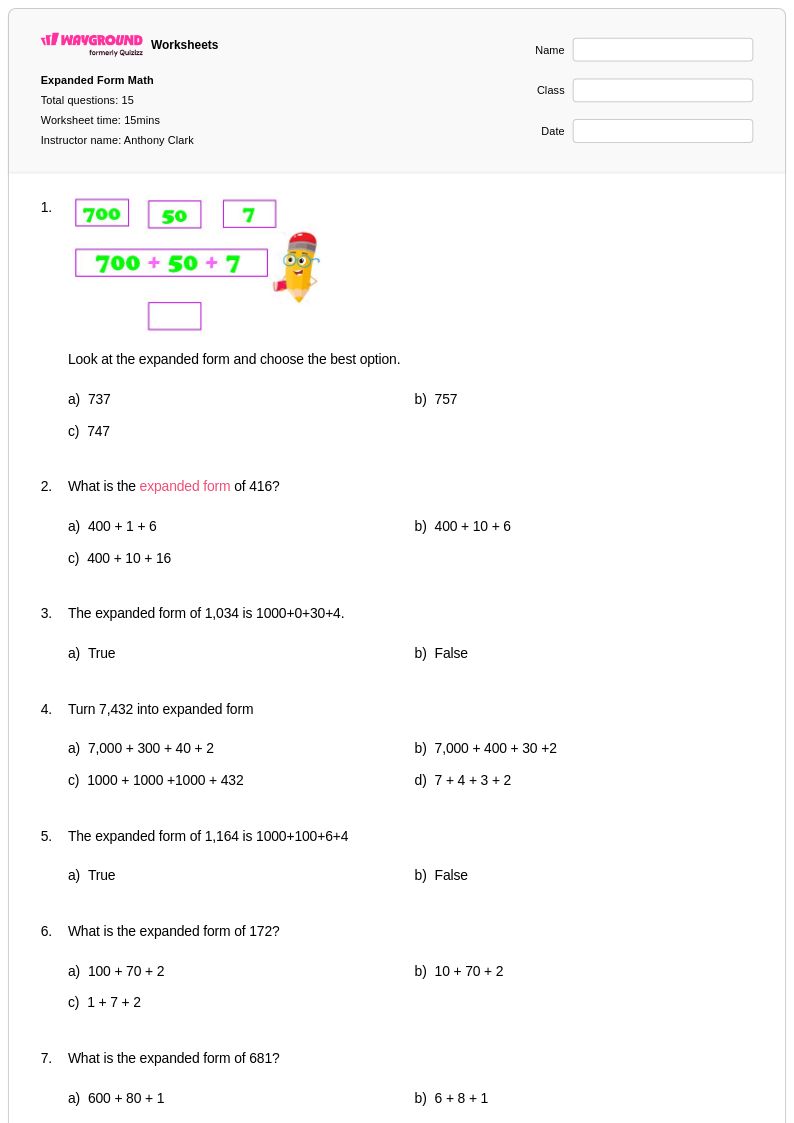
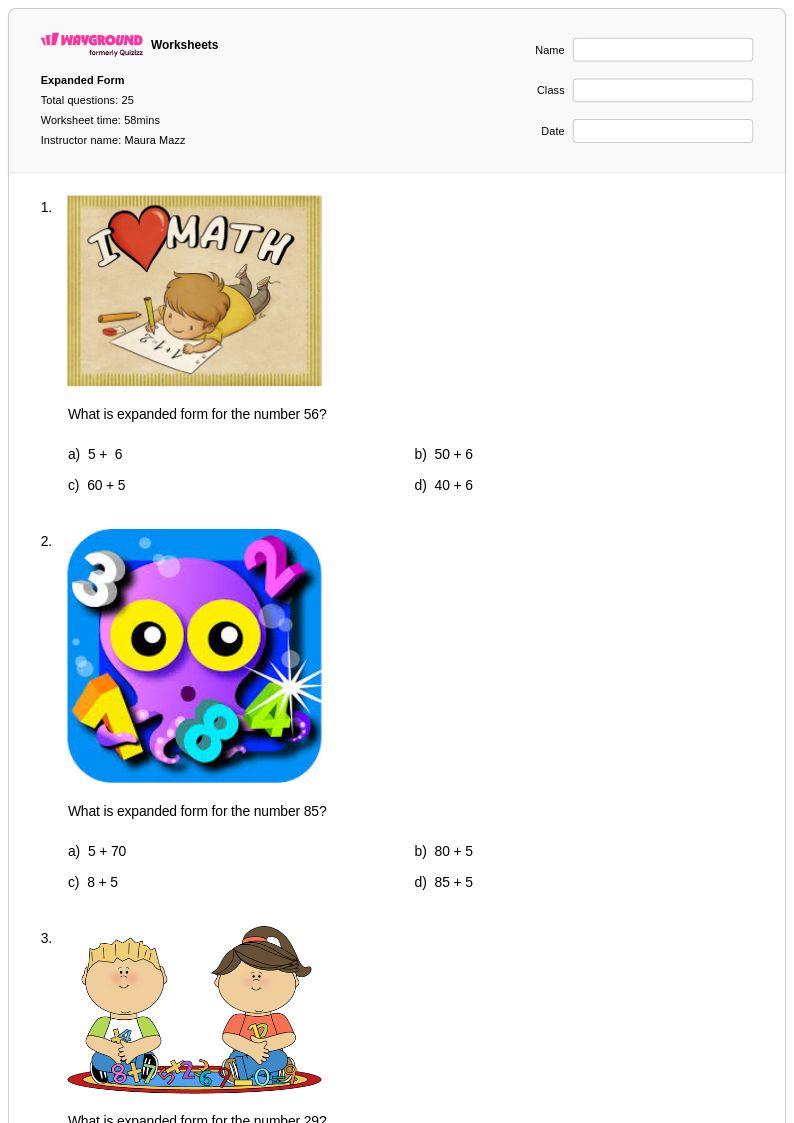
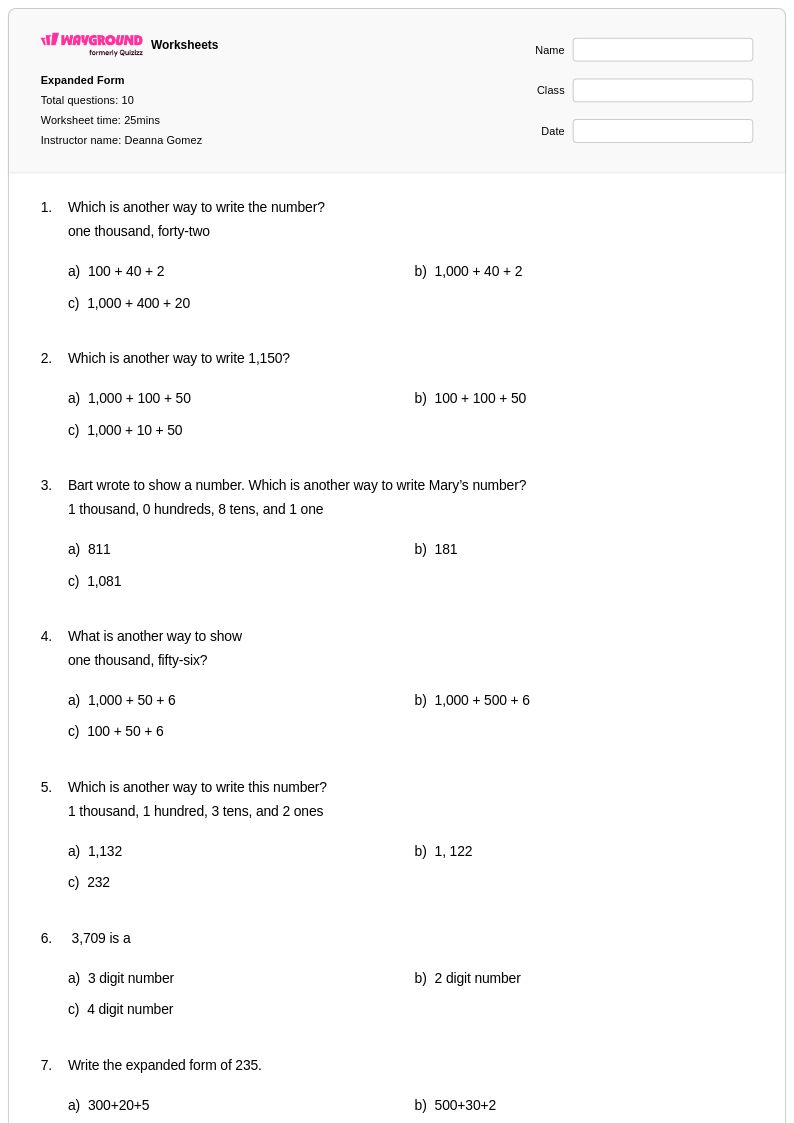
Wayground's free Year 3 expanded form worksheets provide comprehensive practice problems and answer keys to help students master breaking numbers into their place value components through engaging printable PDF activities.
Explore printable Expanded Form worksheets for Year 3
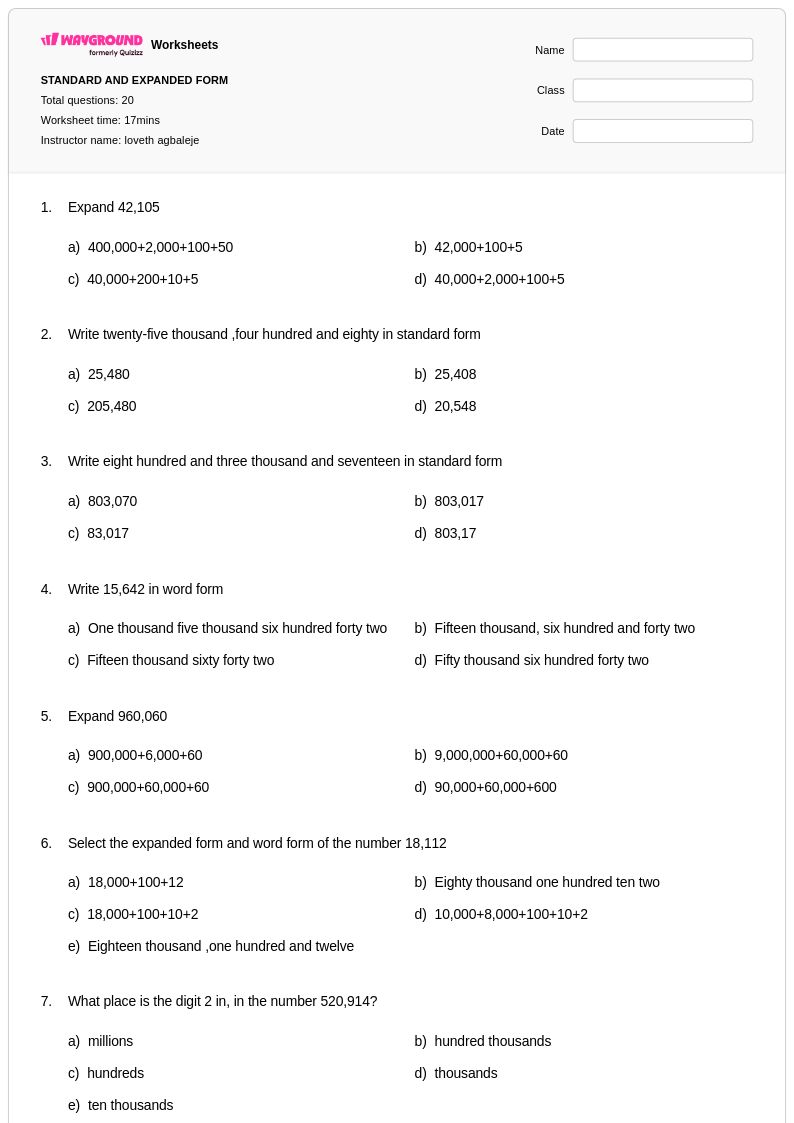
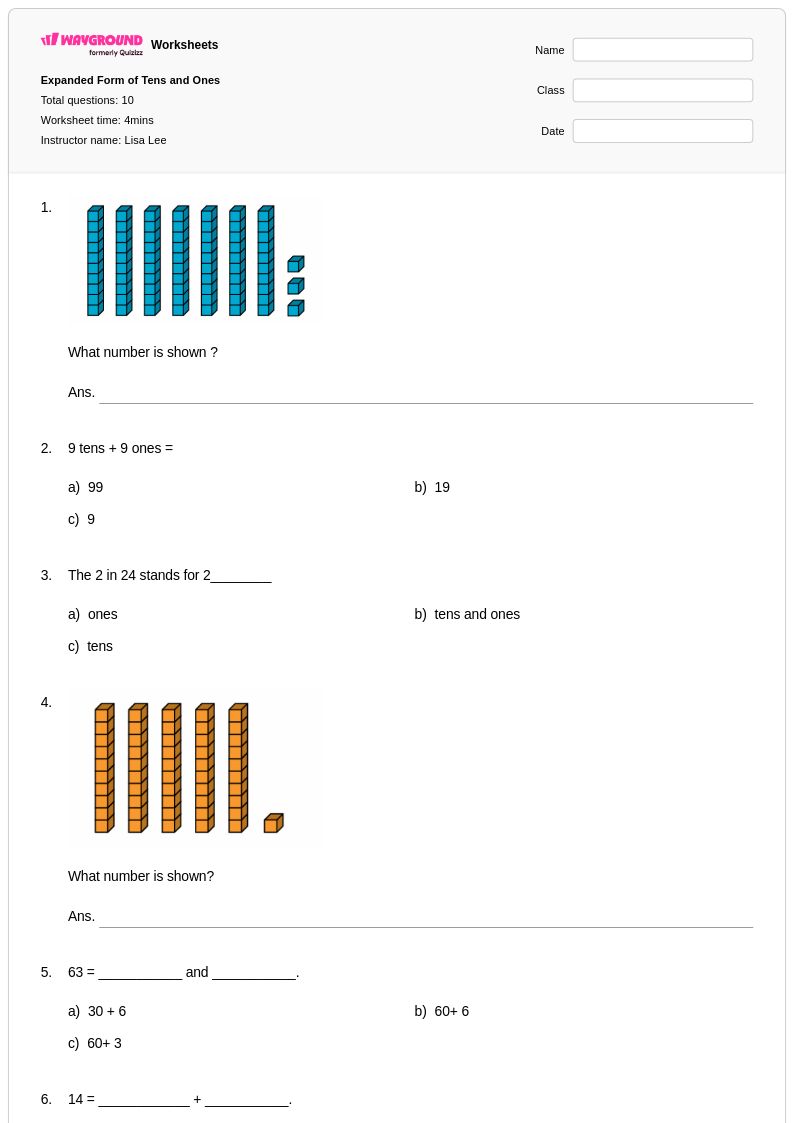
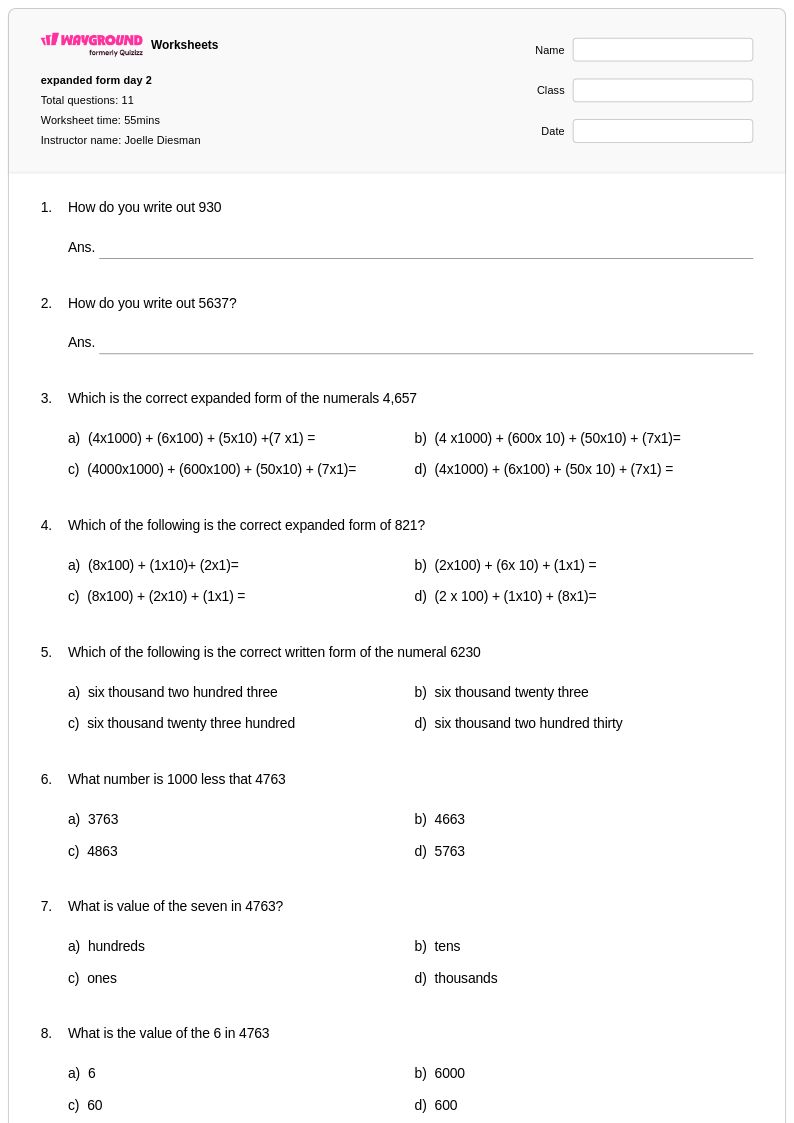
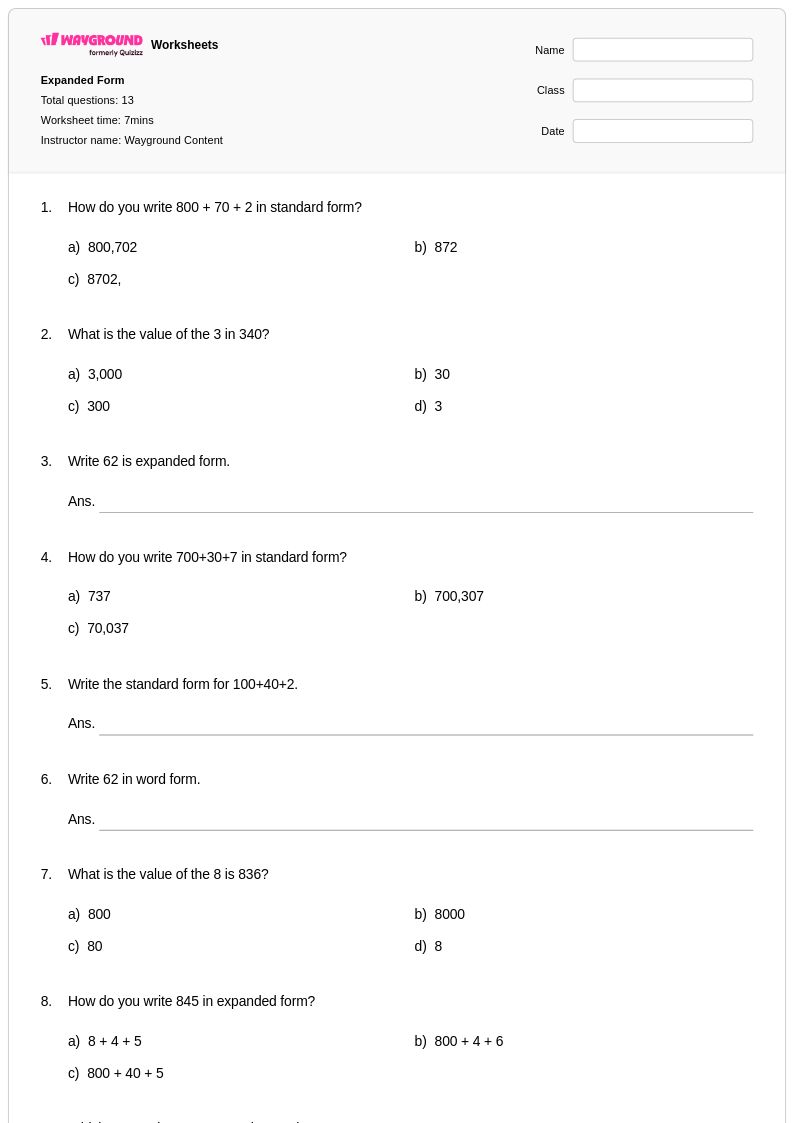
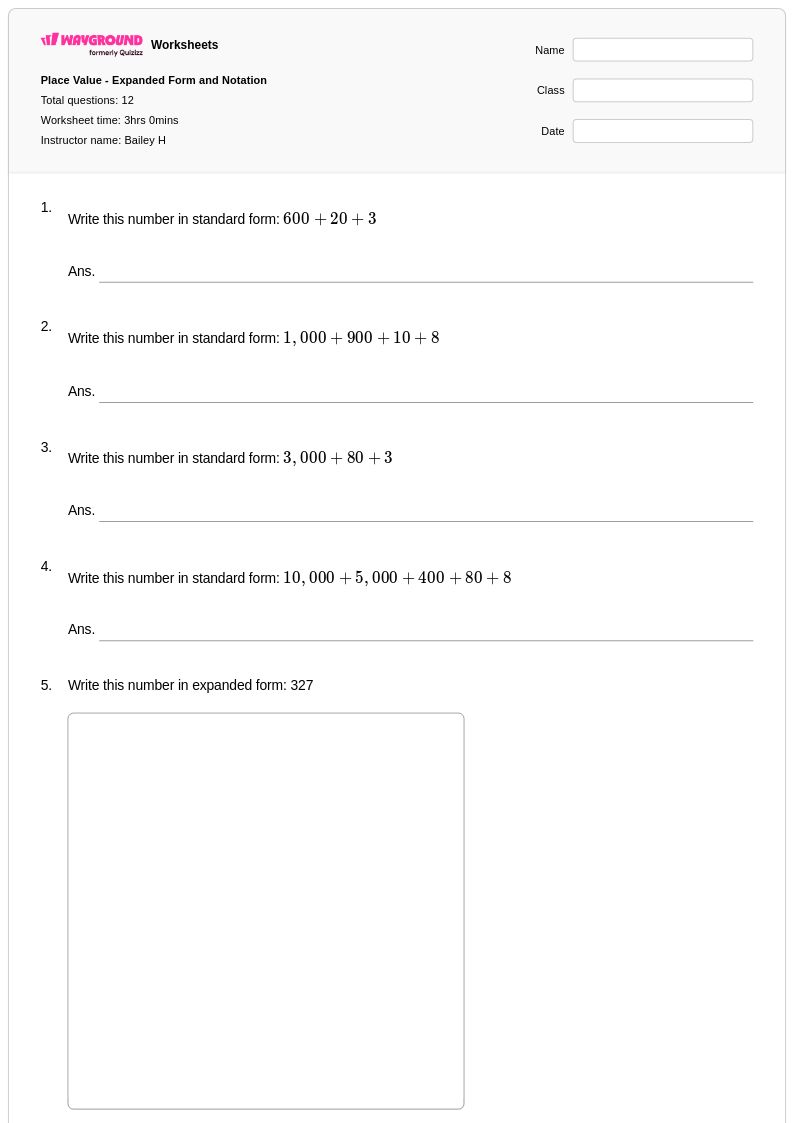
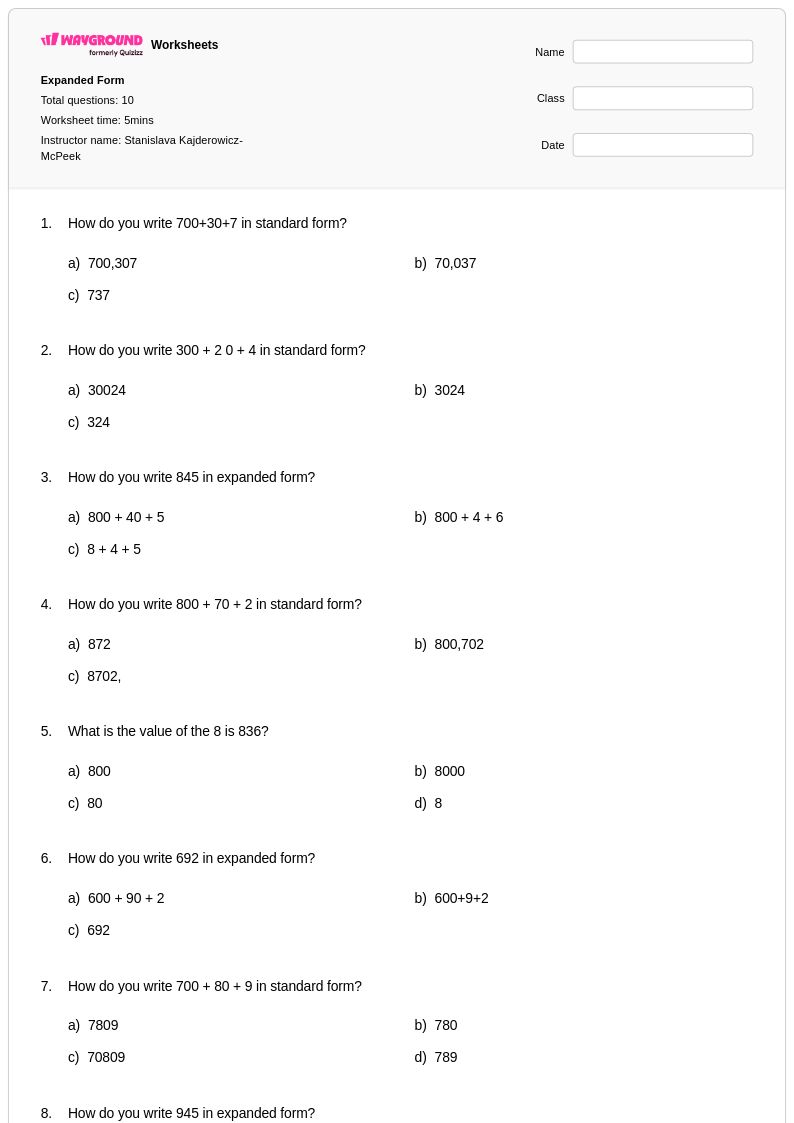
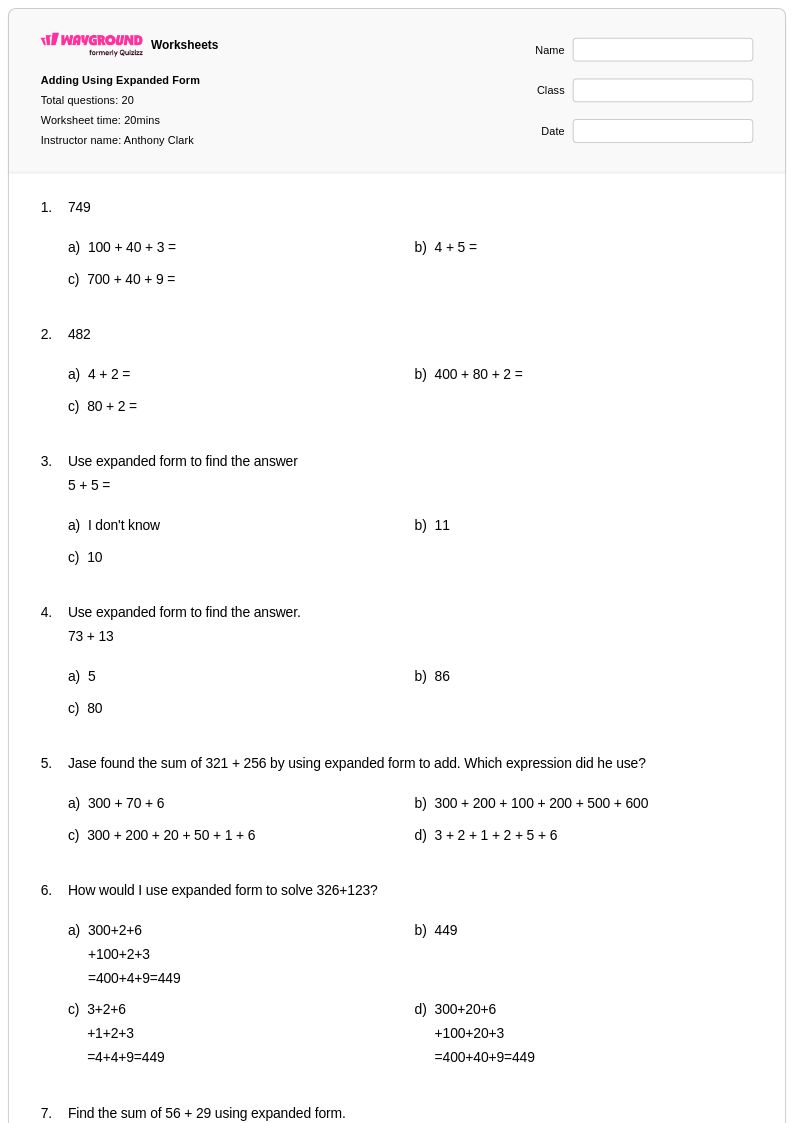
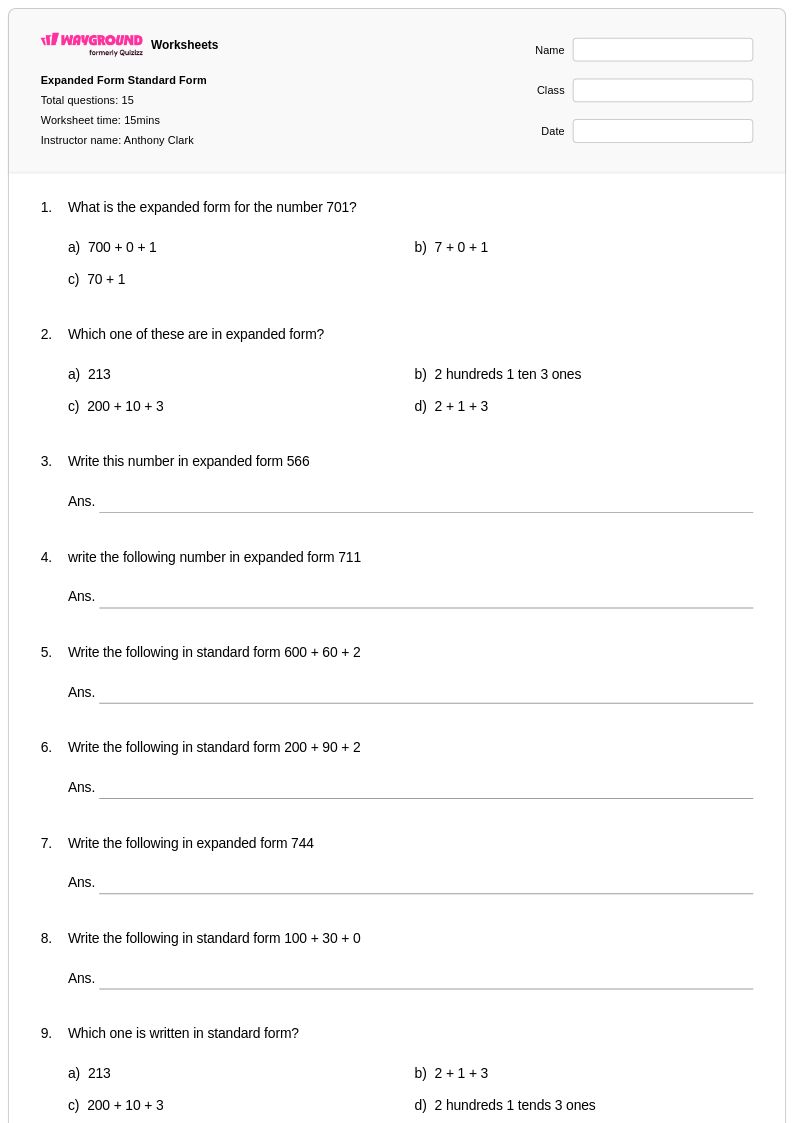
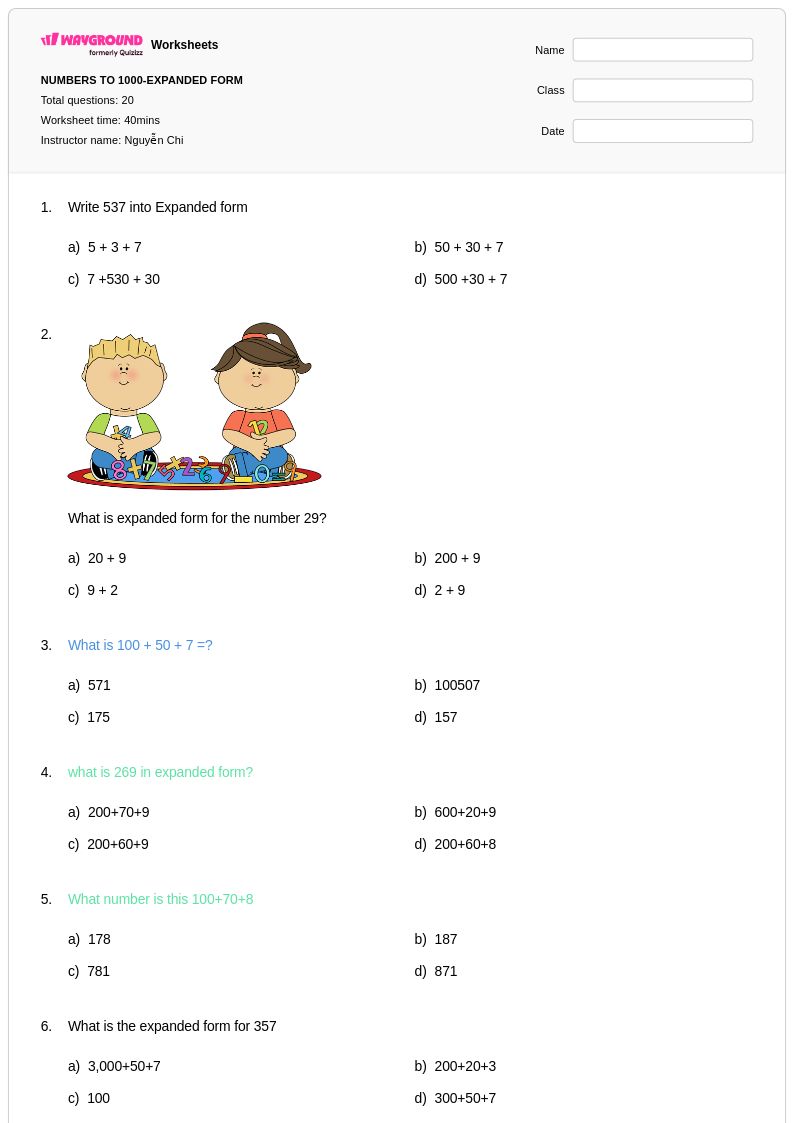
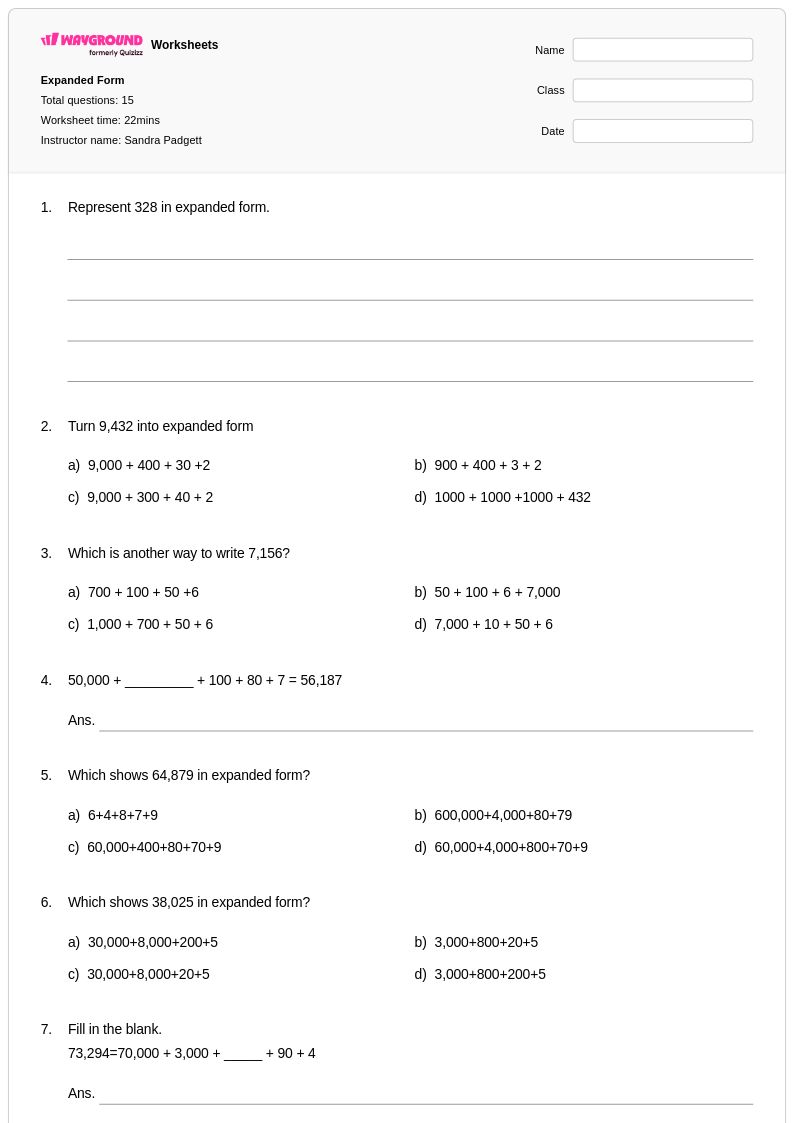
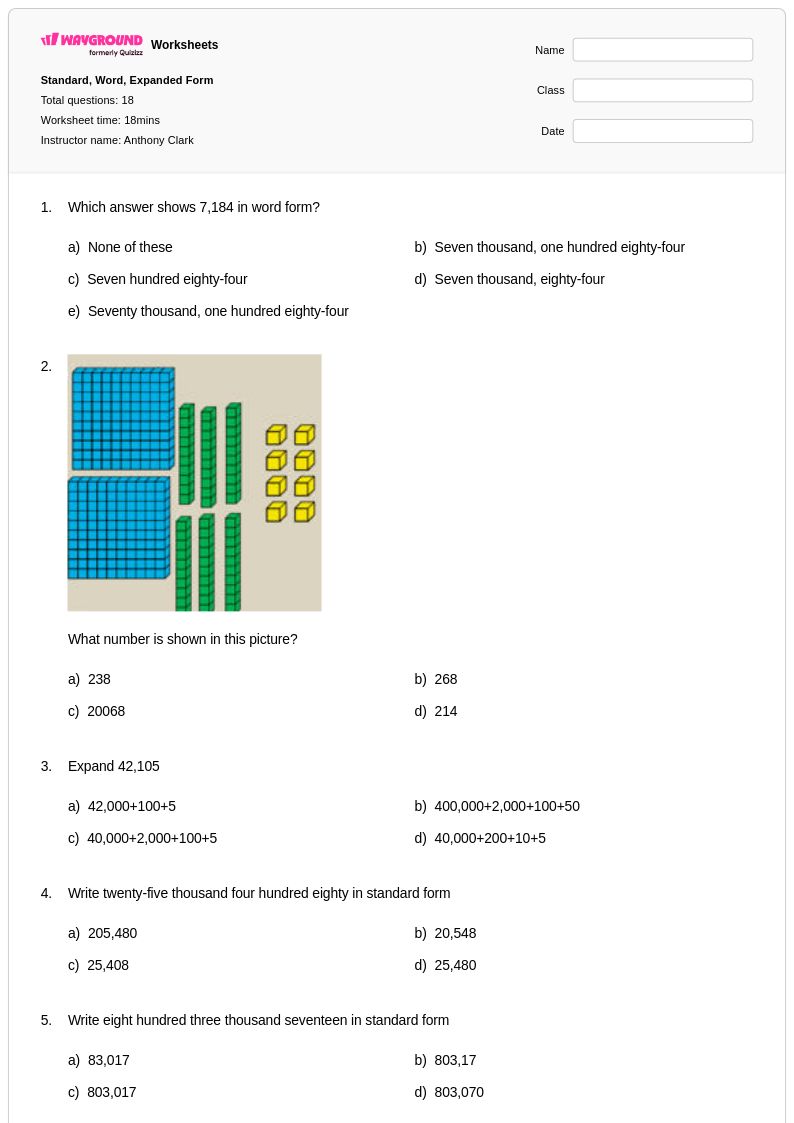
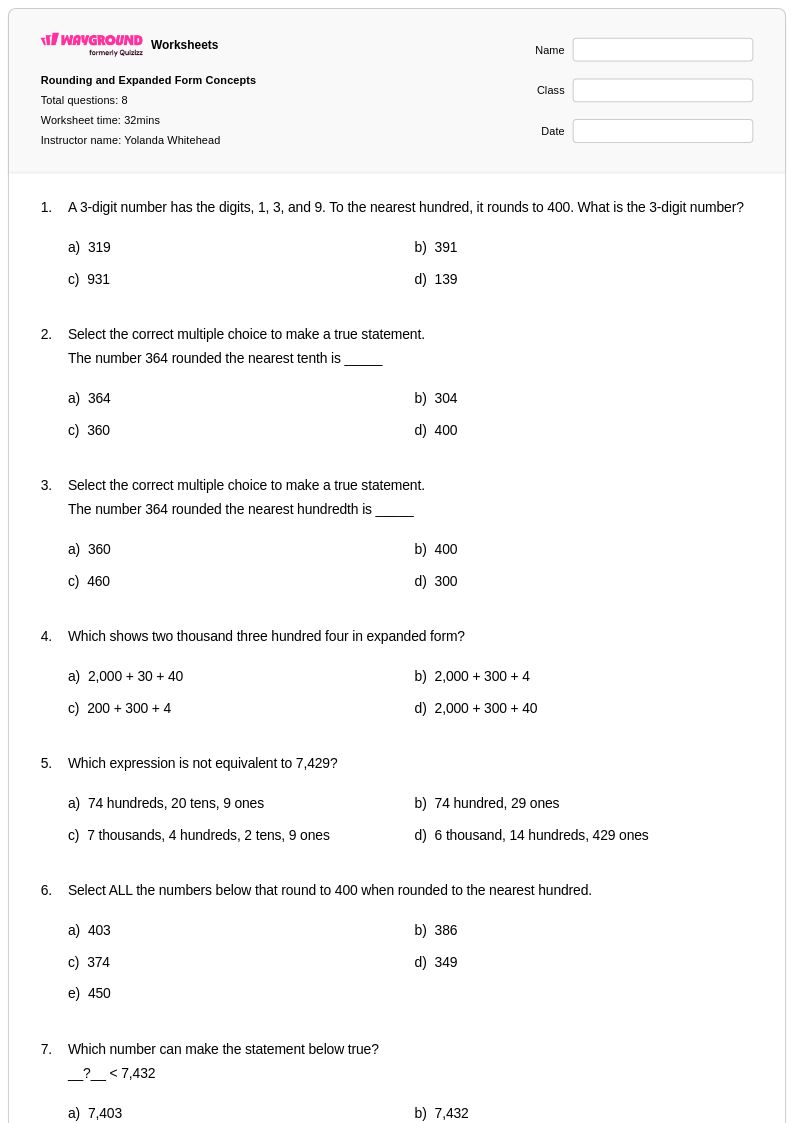
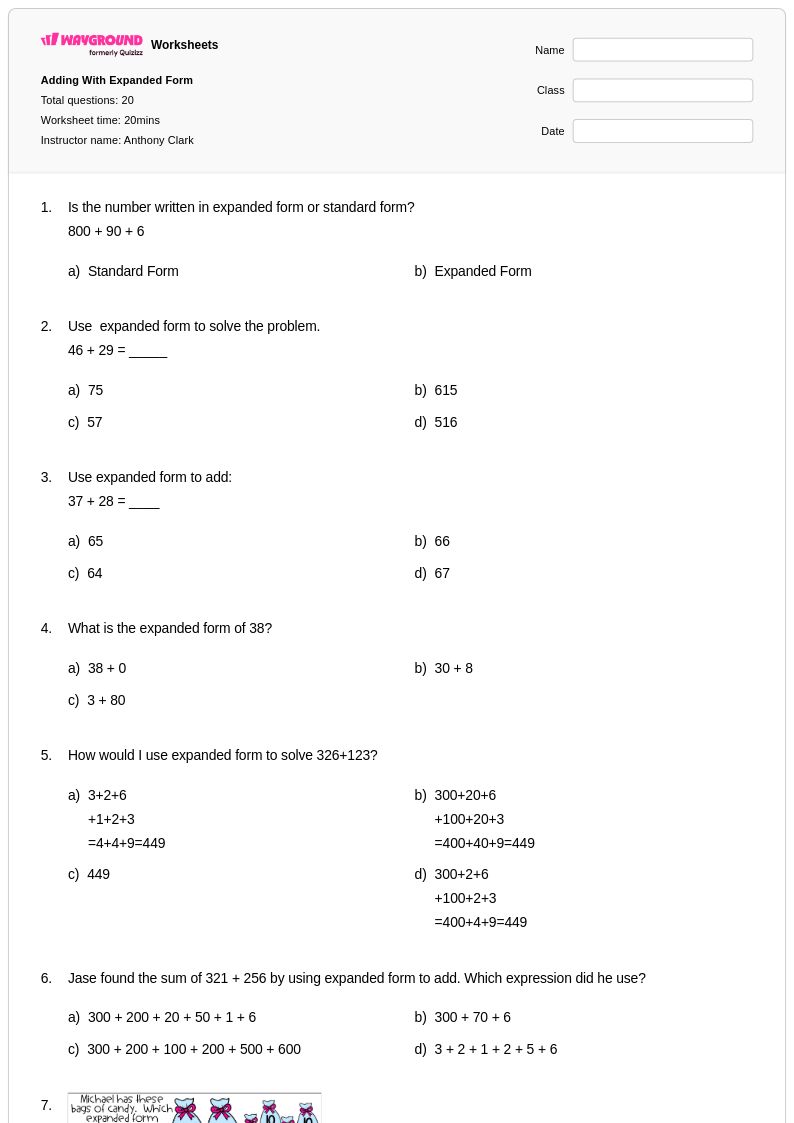
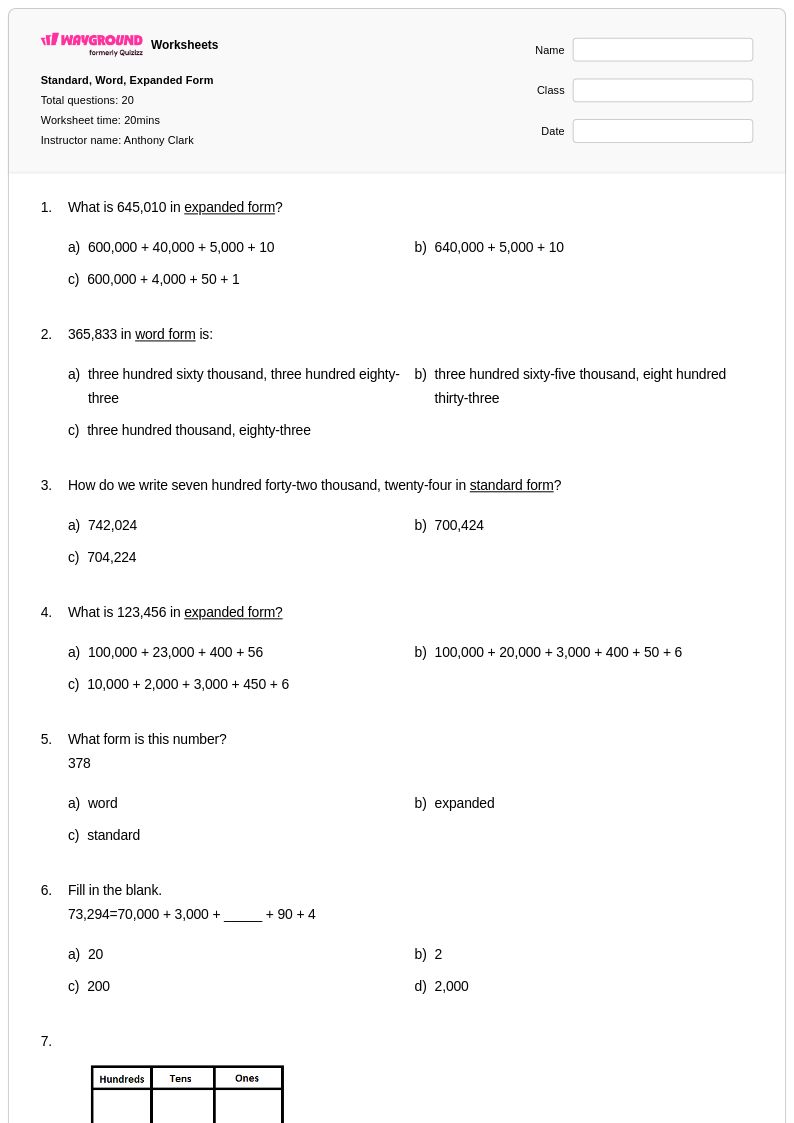
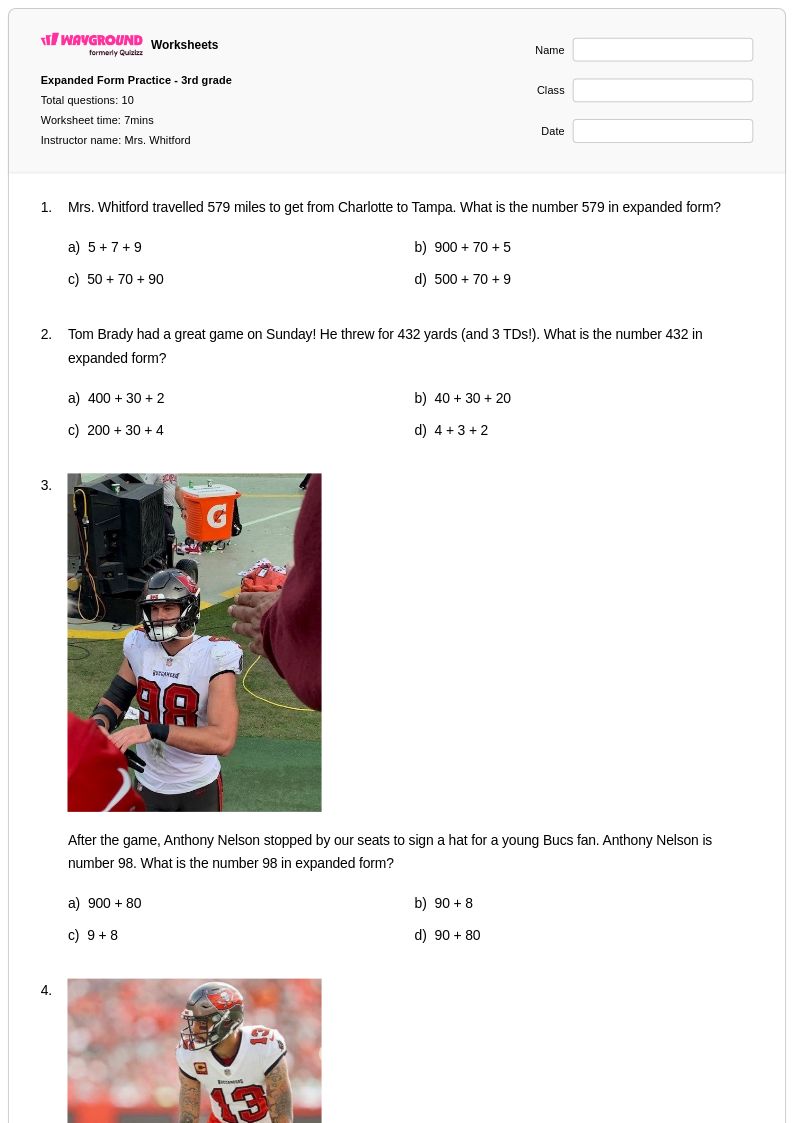
Year 3 expanded form worksheets available through Wayground (formerly Quizizz) provide essential practice for students learning to break down numbers into their place value components. These comprehensive worksheet collections strengthen foundational number sense skills by teaching third graders how to express numbers as sums of hundreds, tens, and ones, such as writing 347 as 300 + 40 + 7. The carefully crafted practice problems progress systematically from two-digit to three-digit numbers, helping students develop a deep understanding of place value concepts that will support their mathematical growth throughout elementary school. Teachers can access these free printables with complete answer keys, making assessment and feedback efficient while ensuring students receive proper guidance on this critical mathematical concept.
Wayground (formerly Quizizz) empowers educators with millions of teacher-created expanded form resources that seamlessly integrate into Year 3 mathematics instruction. The platform's robust search and filtering capabilities allow teachers to quickly locate worksheets aligned with specific standards and learning objectives, while differentiation tools enable customization for students at varying skill levels. These expanded form worksheet collections are available in both printable pdf format and digital versions, providing flexibility for classroom instruction, homework assignments, and remote learning scenarios. Teachers can efficiently plan lessons, provide targeted remediation for struggling learners, offer enrichment activities for advanced students, and deliver consistent skill practice that builds mathematical confidence and competency in place value understanding.
FAQs
How do I teach expanded form to Grade 3 students?
By third grade, most students have seen two-digit expanded form, so the teaching move is to extend that understanding to three-digit numbers rather than re-teach from scratch. A place value chart with labeled columns (hundreds, tens, ones) works well as a bridge — students fill in each column, then translate the chart into the addition expression. Once three-digit numbers are solid, push toward four-digit numbers to preview what's coming in Grade 4.
What exercises help third graders practice expanded form?
Mix three types of problems: standard-to-expanded (write 347 as 300 + 40 + 7), expanded-to-standard (what number is 500 + 20 + 9?), and comparison tasks (which is greater: 400 + 60 + 3 or 400 + 30 + 8?). The comparison problems are especially useful because they force students to think about the value of each component rather than just executing a procedure.
What errors do third graders typically make with expanded form?
The most persistent error at this grade is mishandling zeros — writing 402 as 400 + 2 instead of 400 + 0 + 2, or collapsing 520 into 500 + 2. Students also sometimes reverse the tens and ones values in three-digit numbers. Both errors are worth targeting directly with a short set of zero-containing numbers before moving on to four-digit practice.
How do I use Wayground's Grade 3 expanded form worksheets?
You can assign the worksheet as a digital quiz on Wayground for immediate, self-paced practice, or download the PDF and print it for paper-based work. Either way, every worksheet includes a complete answer key. If you go the print route, the Wayground for Teachers app lets you scan student submissions for grading rather than marking each page manually — useful when you're running the same worksheet across multiple groups.
How does expanded form fit into the Common Core progression at Grade 3?
Common Core builds place value understanding grade by grade: two-digit numbers in Grade 1, three-digit in Grade 2, and by Grade 3 students are expected to fluently read and write numbers within 1,000 using expanded form as one of several representations. Third grade is also where students begin rounding to the nearest 10 and 100 — a skill that depends directly on understanding what each digit's value actually is, which is exactly what expanded form reinforces.
How can I differentiate expanded form practice for my Grade 3 class?
For students still consolidating two-digit work, pull a simpler worksheet from Wayground's collection and assign it alongside the grade-level version without drawing attention to the difference. For students who need layout support, generate an alternate version with a dyslexia-friendly font or larger text — same problems, more accessible format. The Reduced Answer Choices accommodation is also worth considering for students who understand the concept but get stuck when too many options are on screen at once.