
6 Q
6th
15 Q
6th
20 Q
6th - Uni
18 Q
6th - Uni
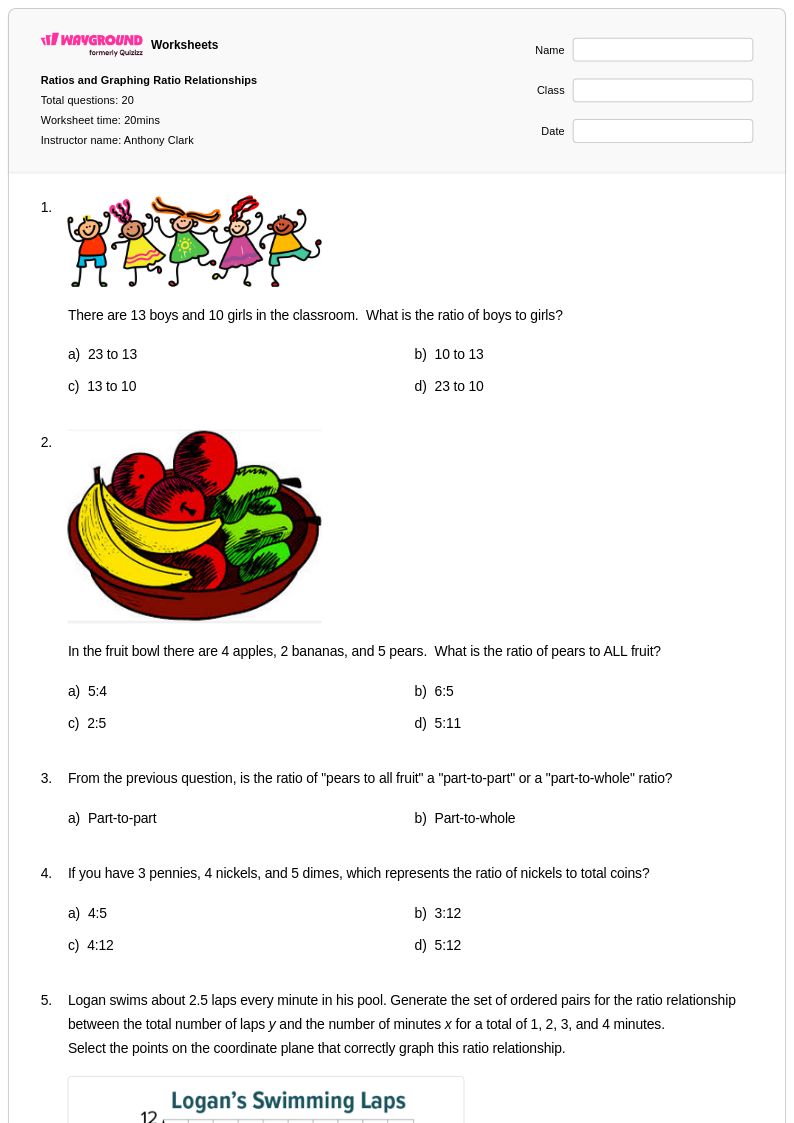
20 Q
6th - Uni
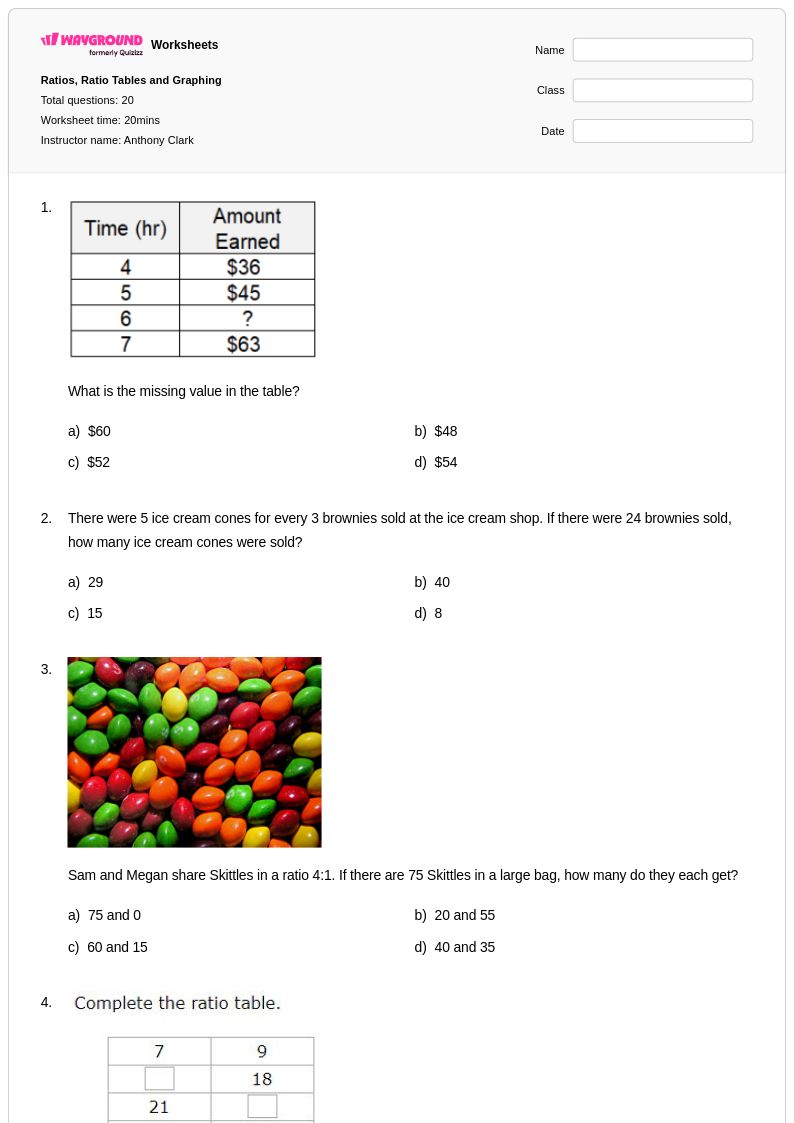
20 Q
6th - Uni
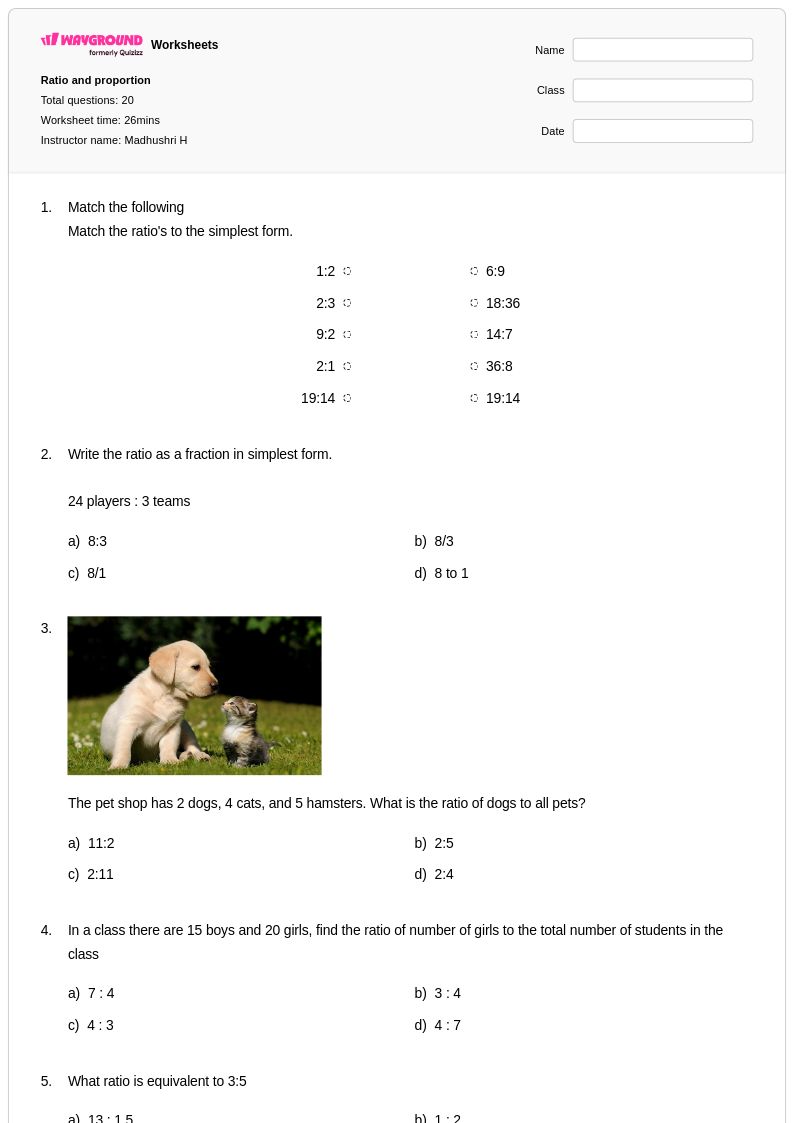
20 Q
6th
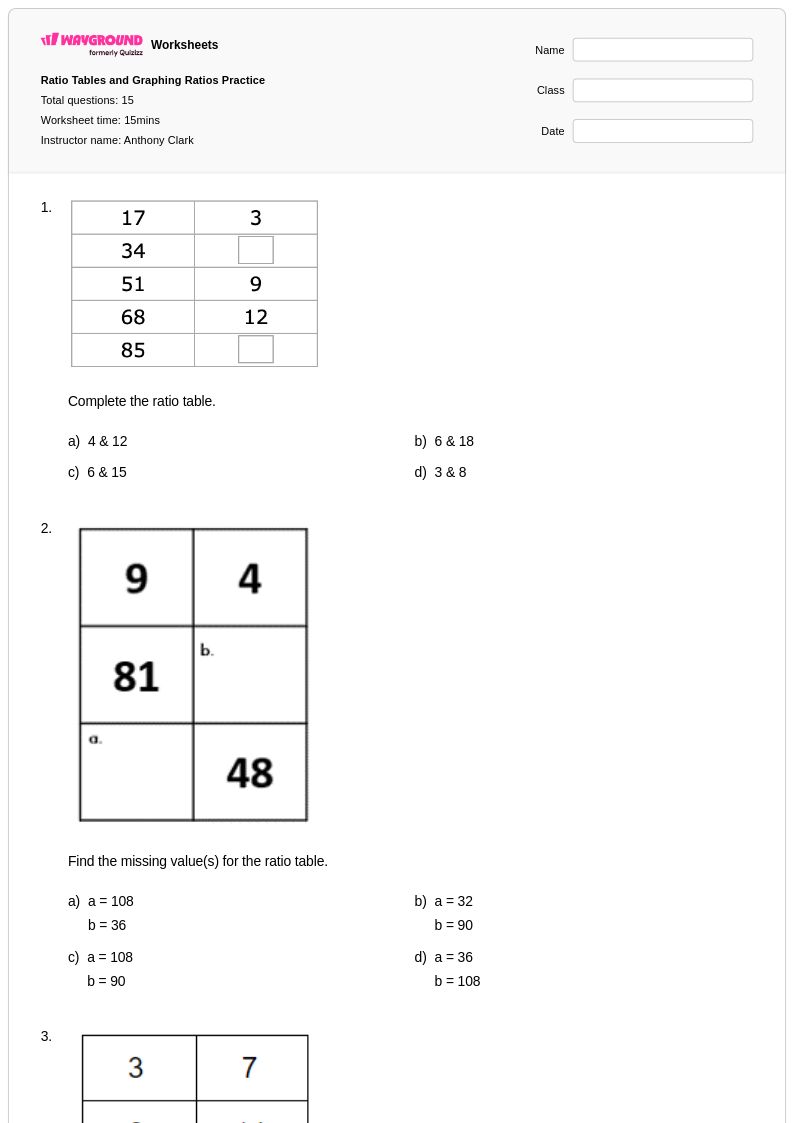
15 Q
6th - Uni
20 Q
6th - Uni
12 Q
6th
10 Q
6th
15 Q
7th
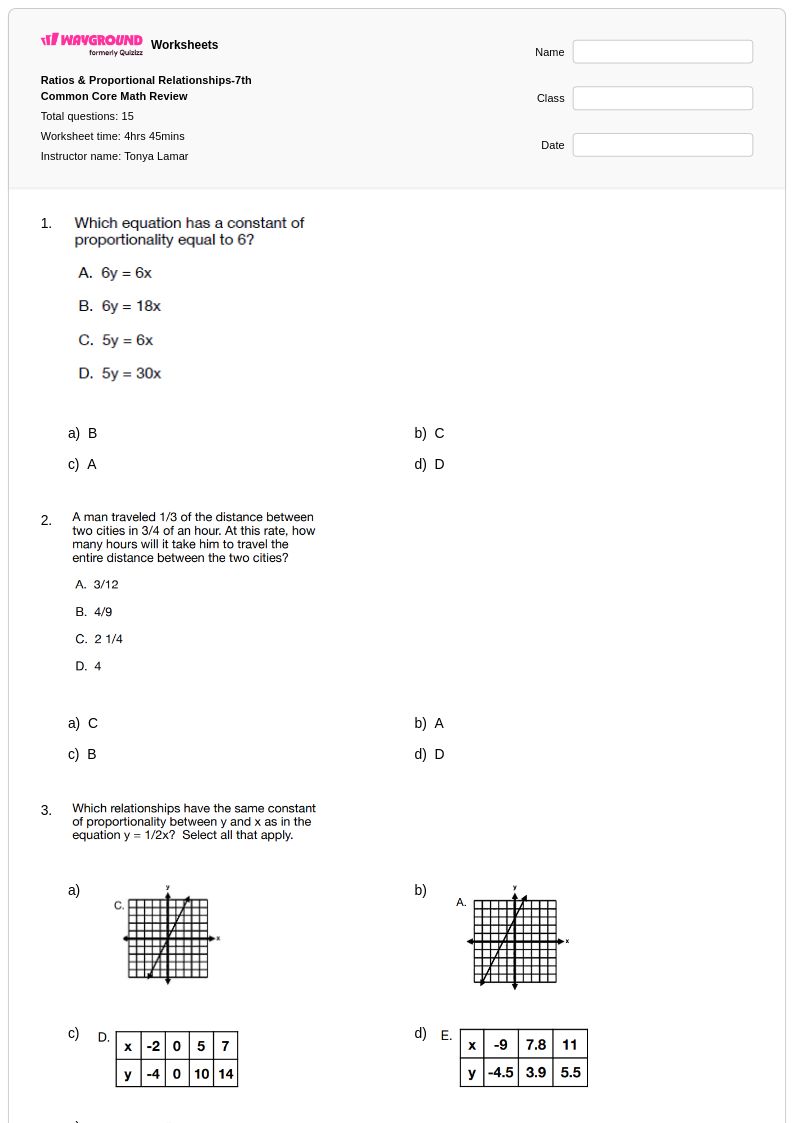
15 Q
6th - 8th
11 Q
6th - Uni
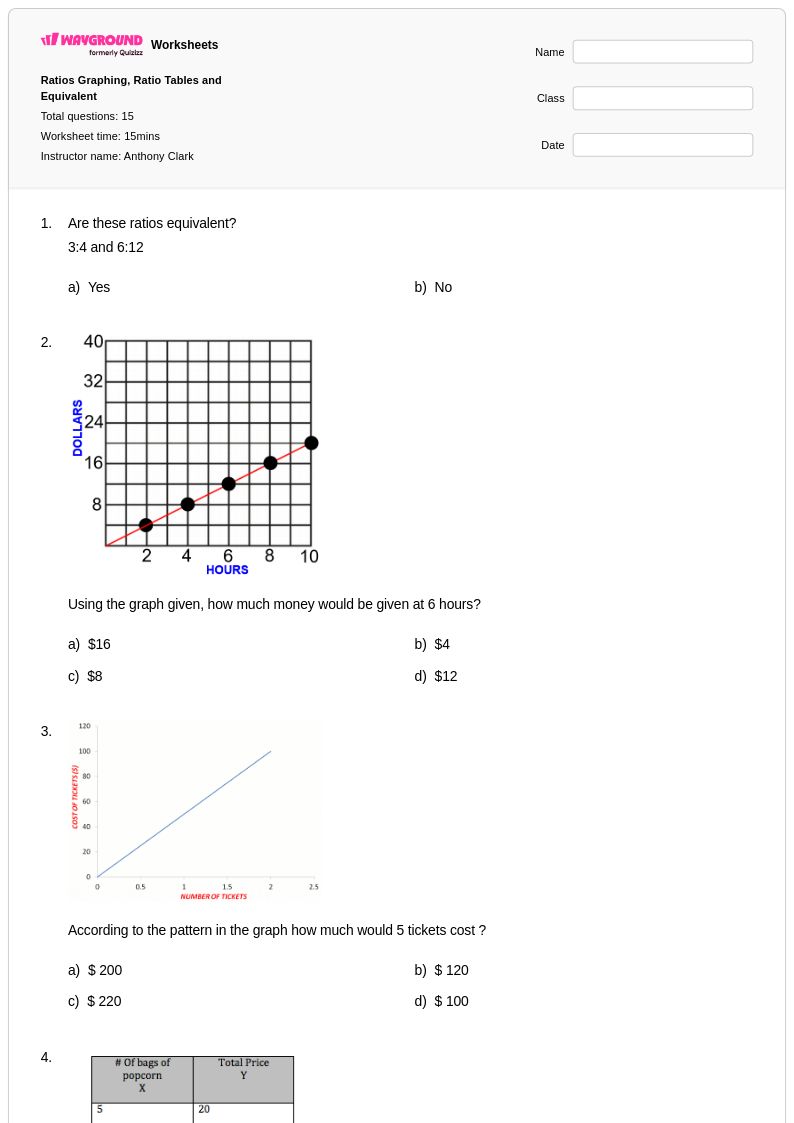
15 Q
6th - Uni
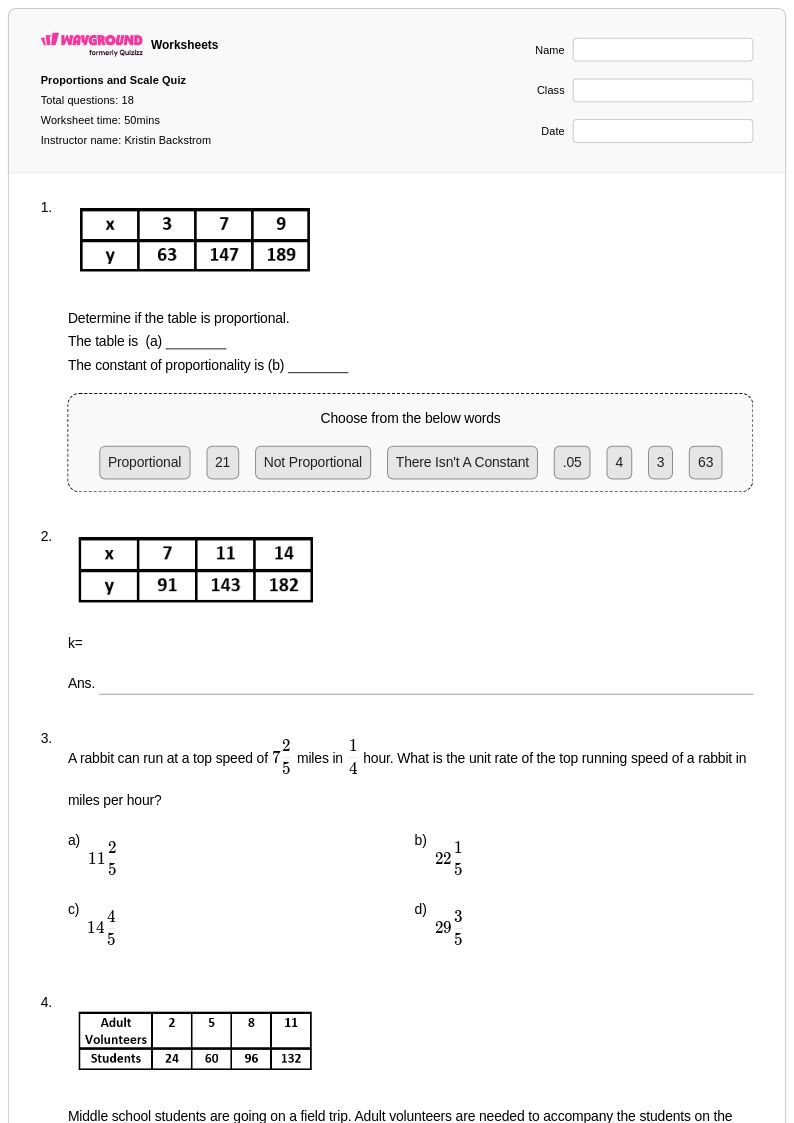
18 Q
7th
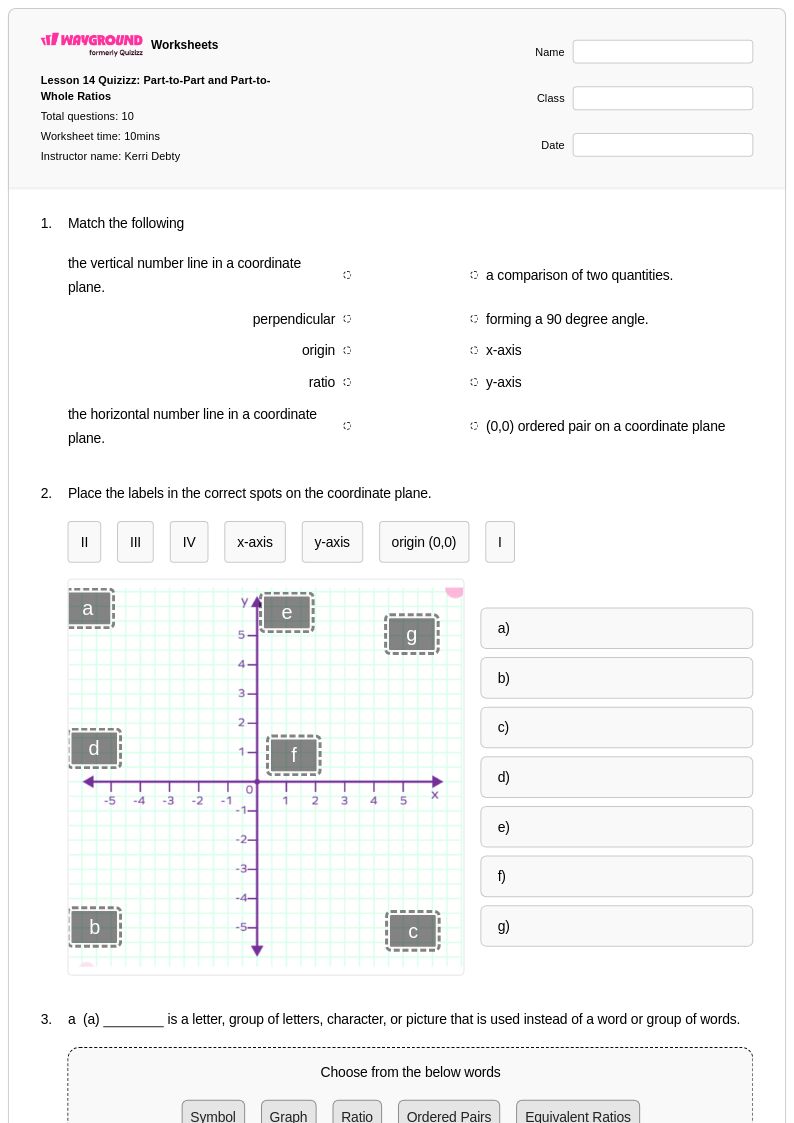
10 Q
6th
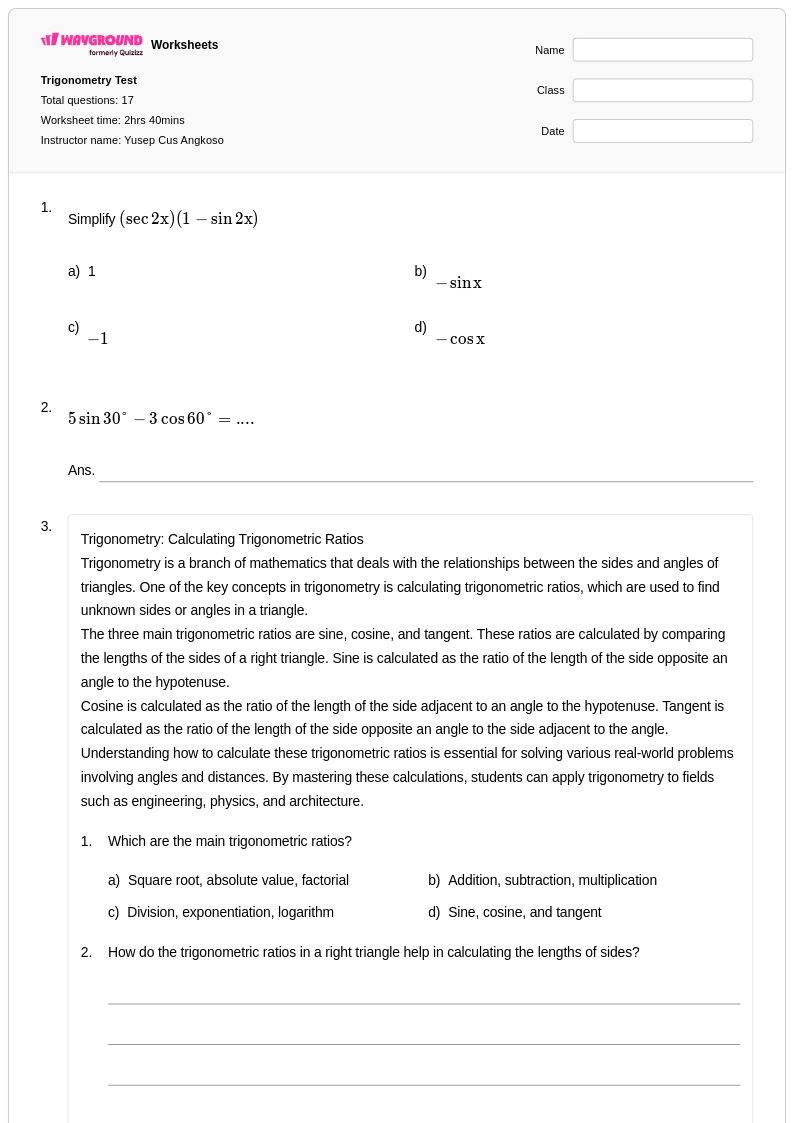
20 Q
10th
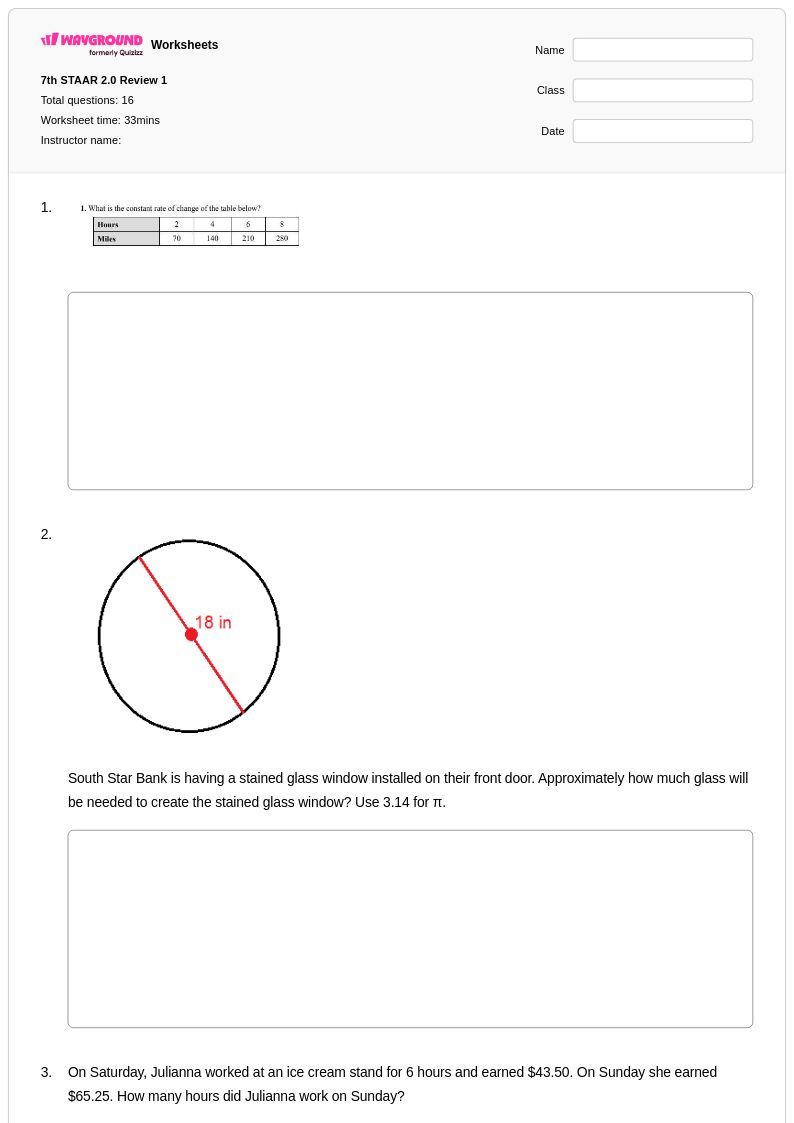
16 Q
7th
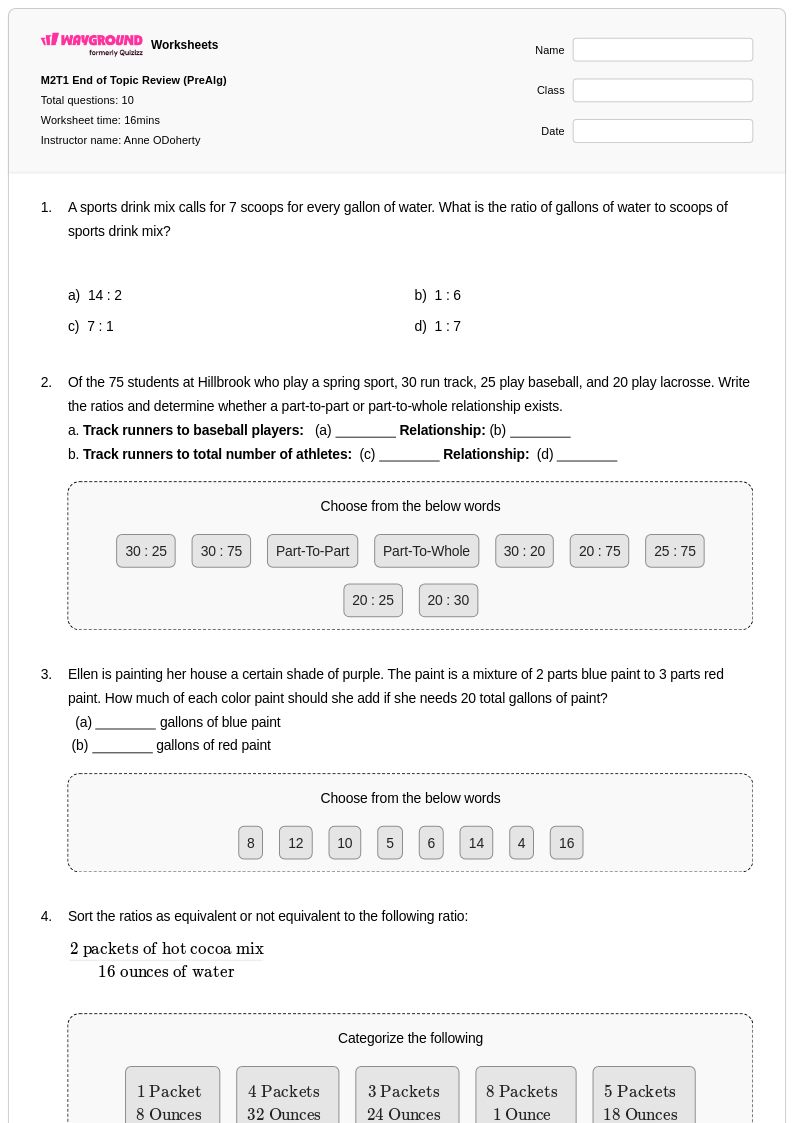
10 Q
6th
45 Q
7th
25 Q
6th
20 Q
6th
20 Q
12th
Explore Worksheets by Subjects
Explore printable Graphing Ratios worksheets
Graphing ratios worksheets available through Wayground (formerly Quizizz) provide students with essential practice in visualizing proportional relationships through coordinate plane representations. These comprehensive resources strengthen critical mathematical skills including plotting ratio tables as coordinate pairs, identifying patterns in graphed ratios, and recognizing whether ratios form linear relationships through the origin. The worksheet collection features diverse practice problems that guide students through creating graphs from given ratios, interpreting ratio graphs to solve real-world problems, and connecting visual representations to numerical ratio concepts. Each worksheet comes with a complete answer key and is available as free printables in convenient pdf format, making them accessible for both classroom instruction and independent study.
Wayground (formerly Quizizz) supports mathematics educators with an extensive collection of millions of teacher-created graphing ratios resources that streamline lesson planning and enhance student learning outcomes. The platform's robust search and filtering capabilities allow teachers to quickly locate worksheets aligned with specific mathematical standards and appropriate for their students' skill levels. Advanced differentiation tools enable educators to customize worksheets for varying ability levels within their classrooms, while the flexible format options provide both printable pdf versions for traditional paper-and-pencil work and digital formats for technology-integrated learning environments. These versatile resources prove invaluable for targeted skill practice, remediation support for struggling learners, and enrichment opportunities for advanced students ready to explore more complex ratio and proportion concepts.
FAQs
How do I introduce graphing ratios to my students?
What exercises help students practice graphing ratios?
What are common mistakes students make when graphing ratios?
How does graphing ratios fit into the Common Core math standards?
How can I support students who struggle with graphing?
How can I use this graphing ratios worksheet with my class?