Free Printable Monocots and Dicots Worksheets for Year 6
Year 6 monocots and dicots worksheets from Wayground help students master plant classification through engaging printables and practice problems with comprehensive answer keys.
Explore printable Monocots and Dicots worksheets for Year 6
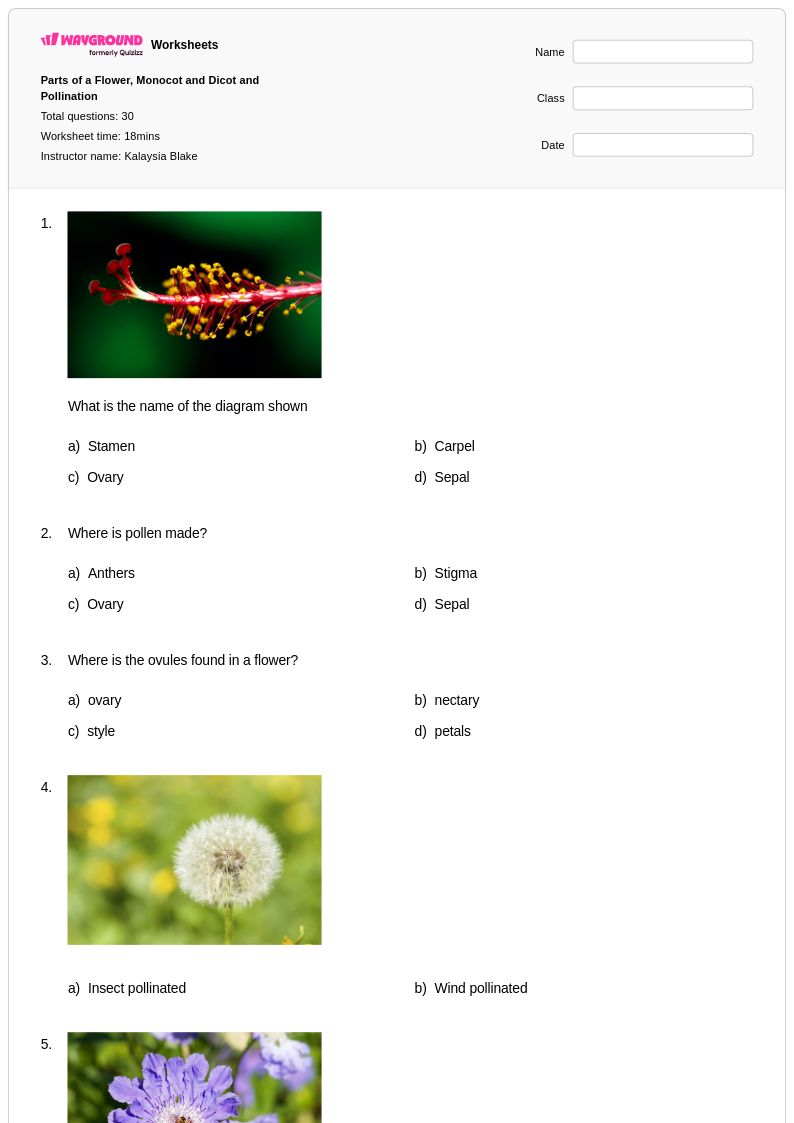
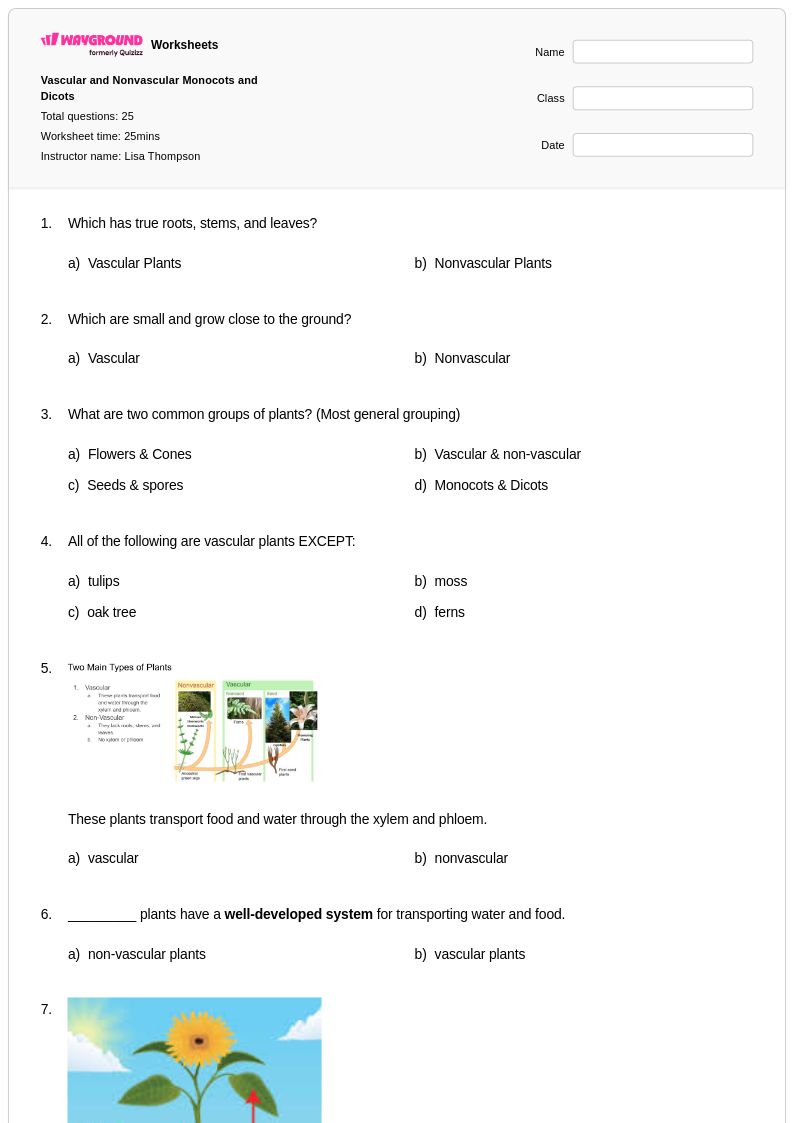
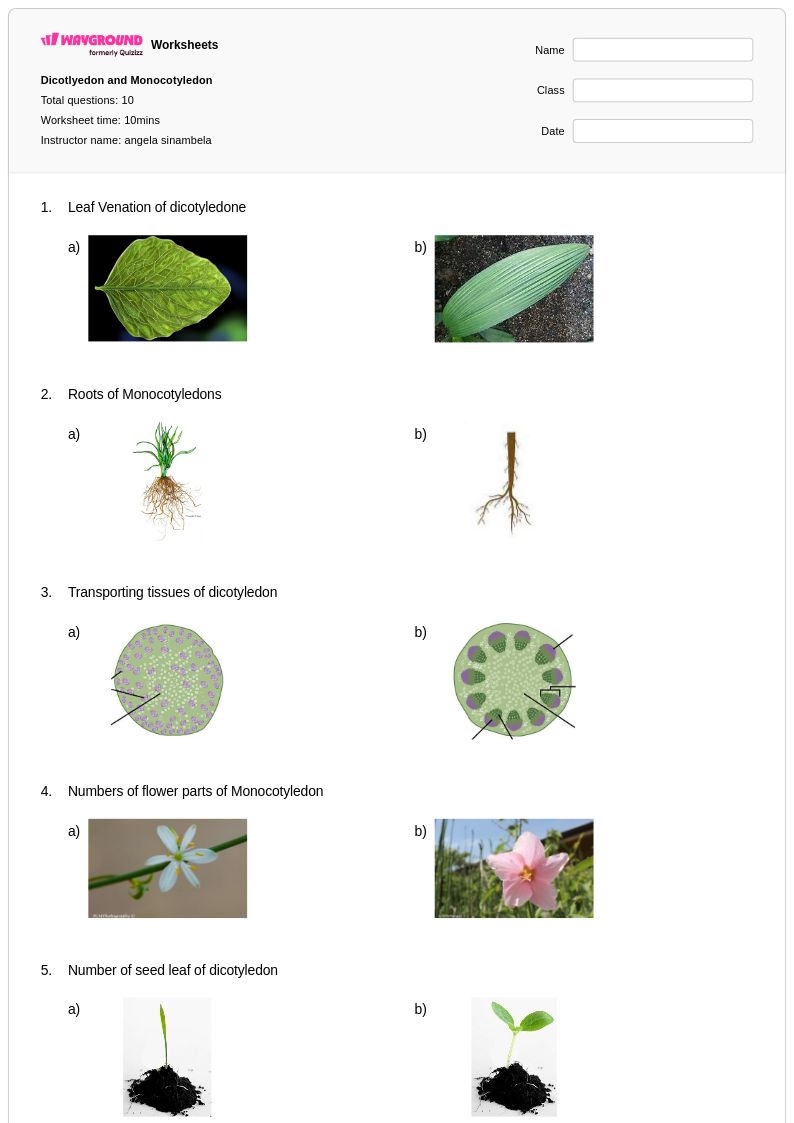
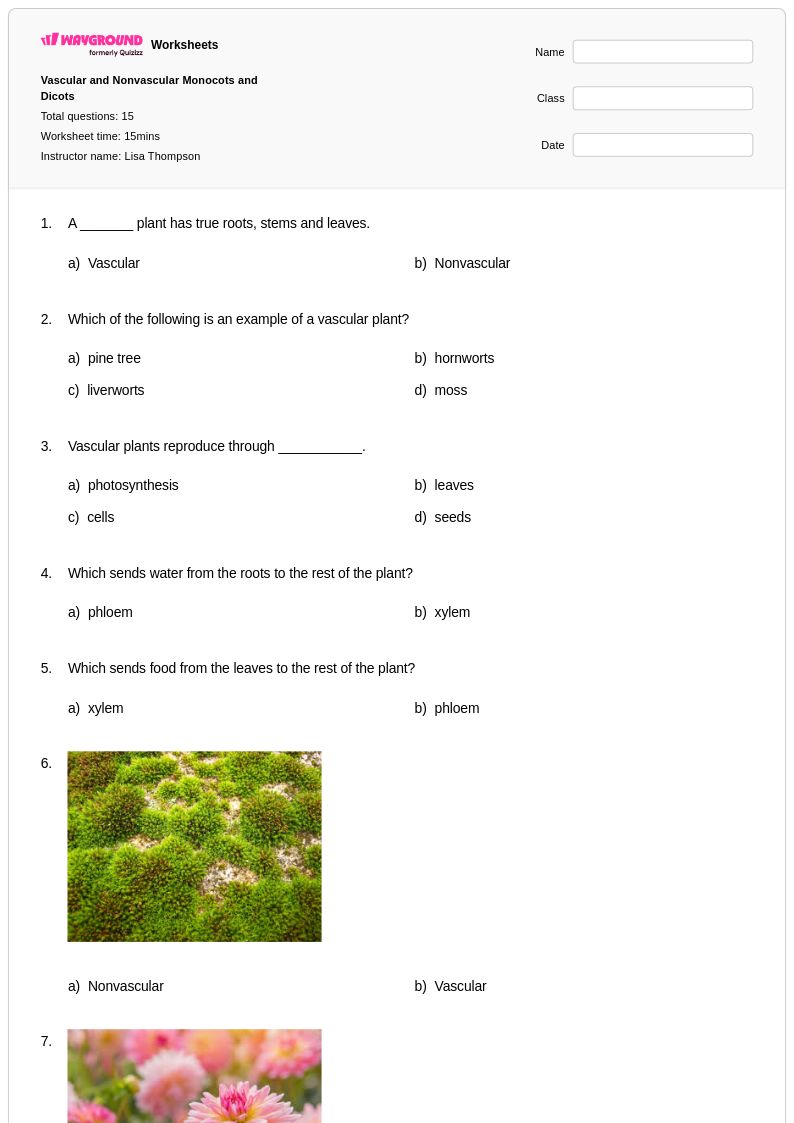
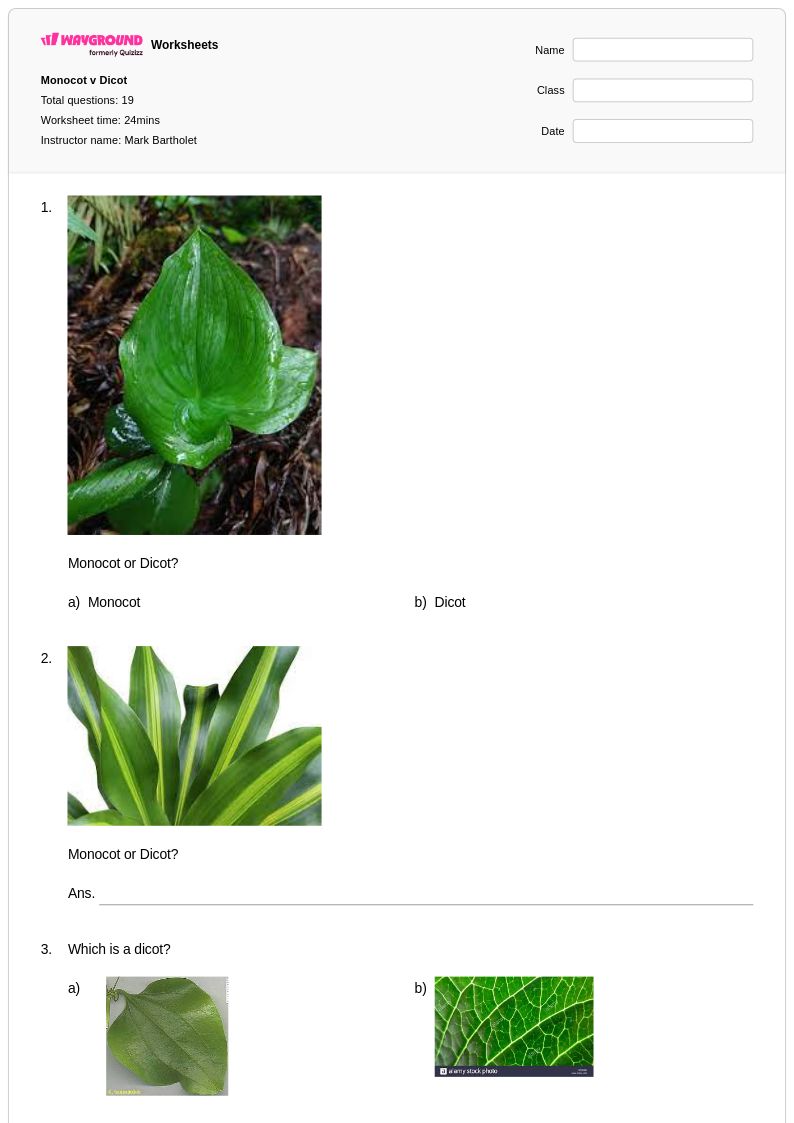
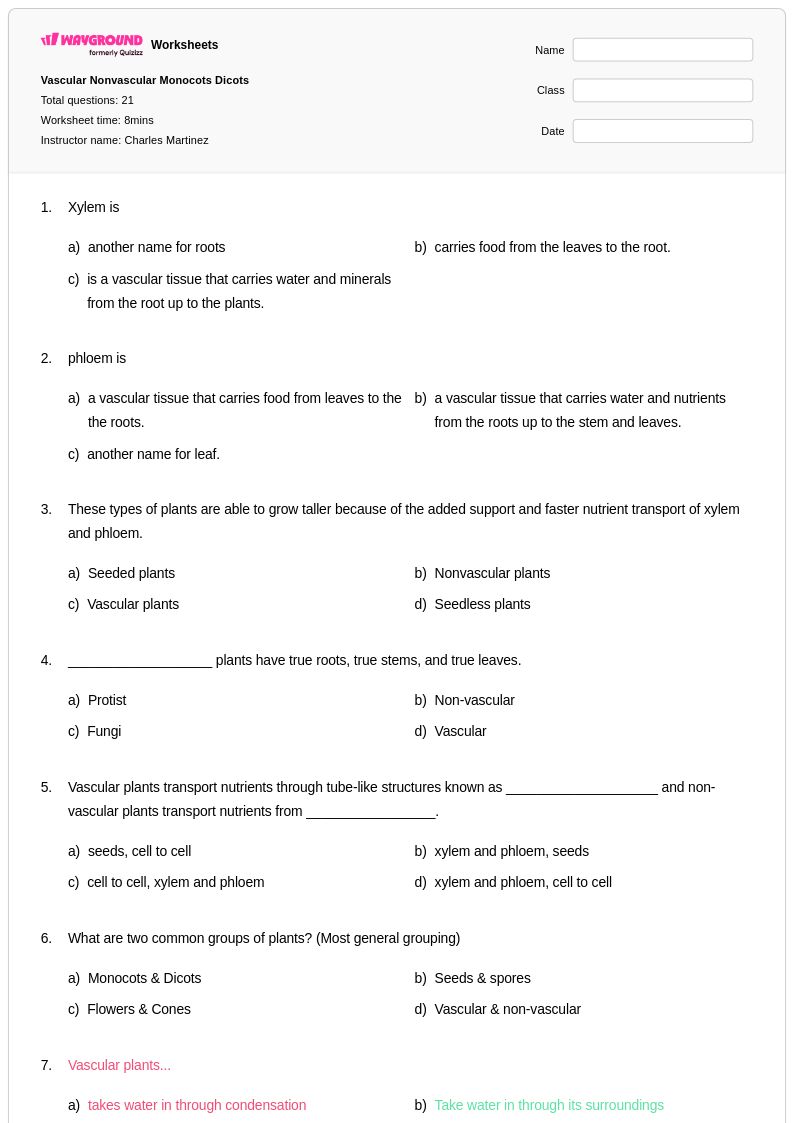
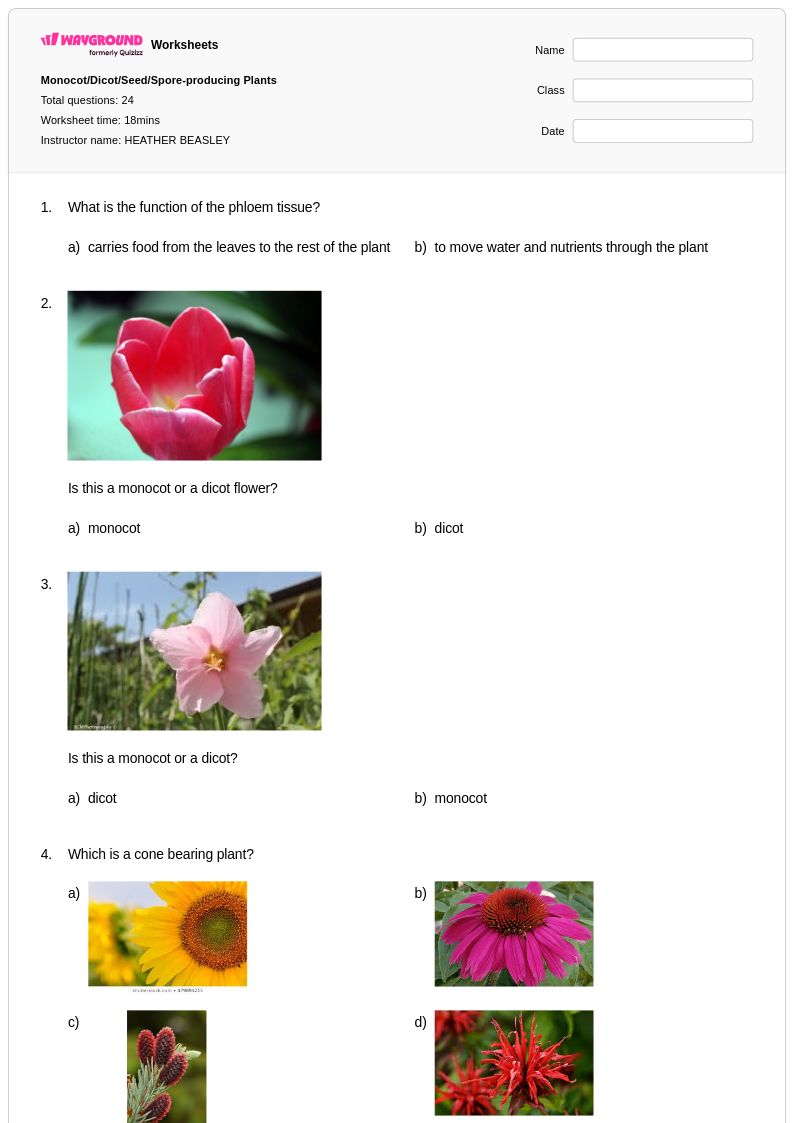
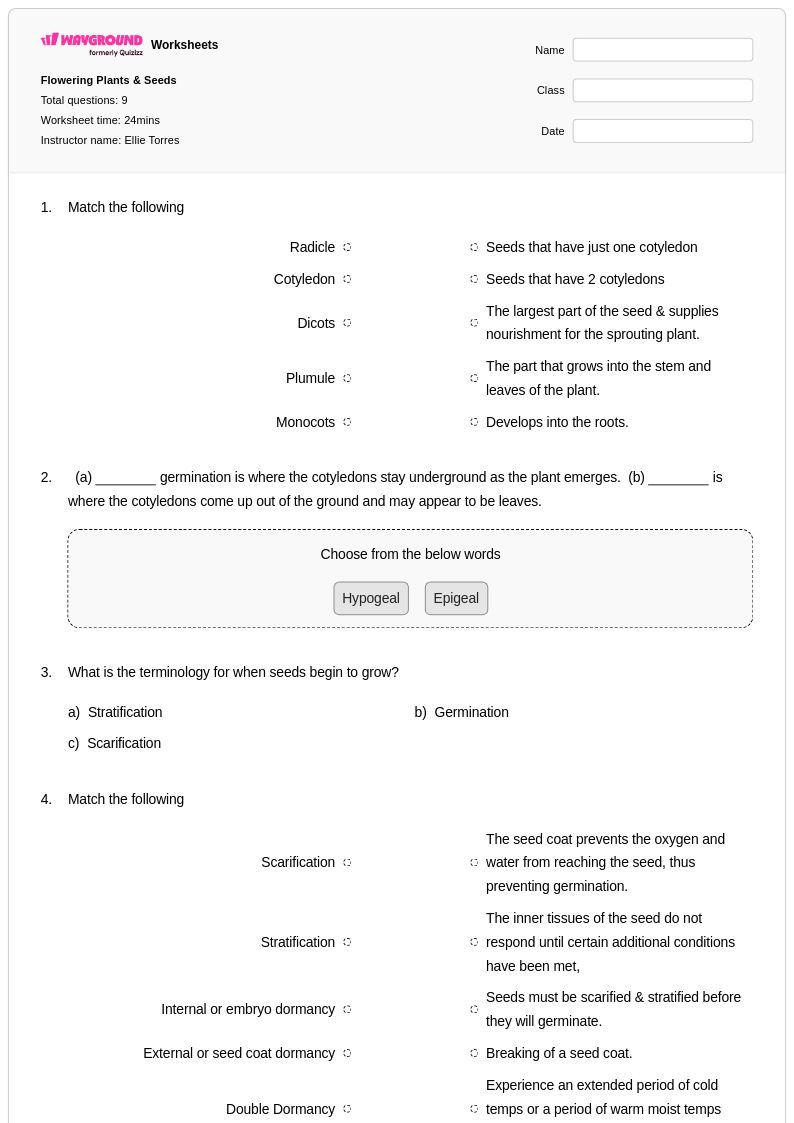
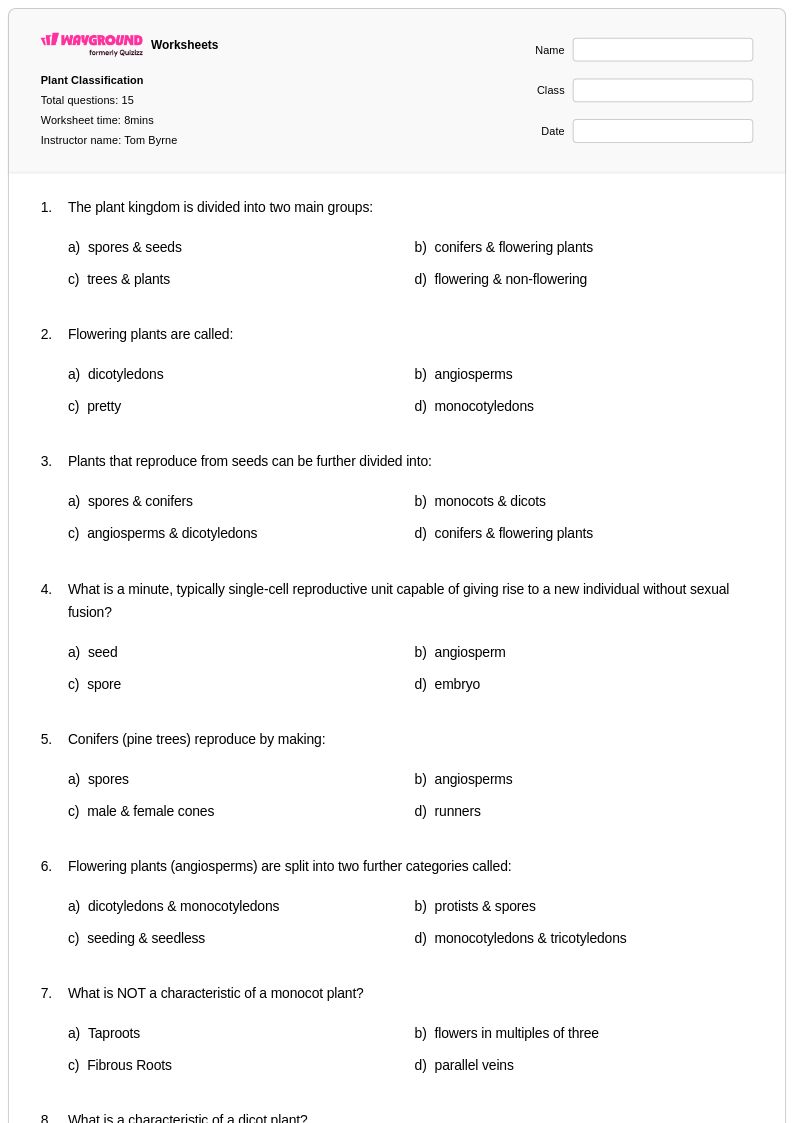
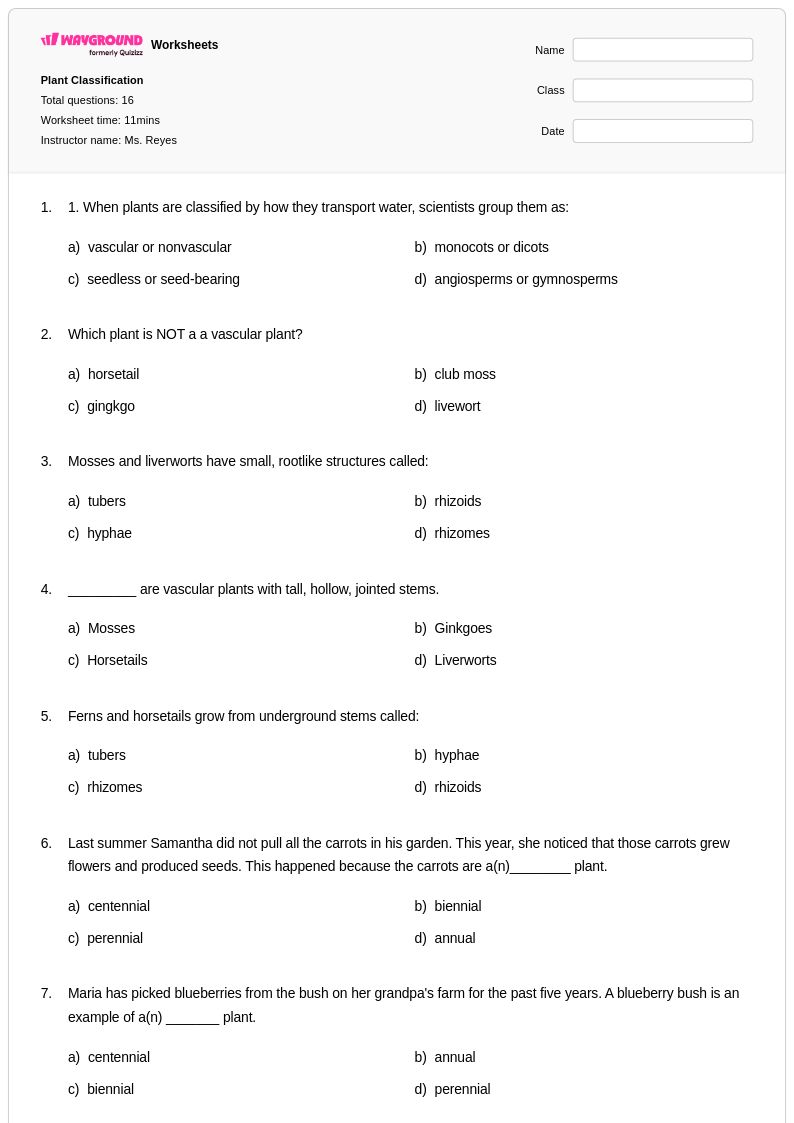
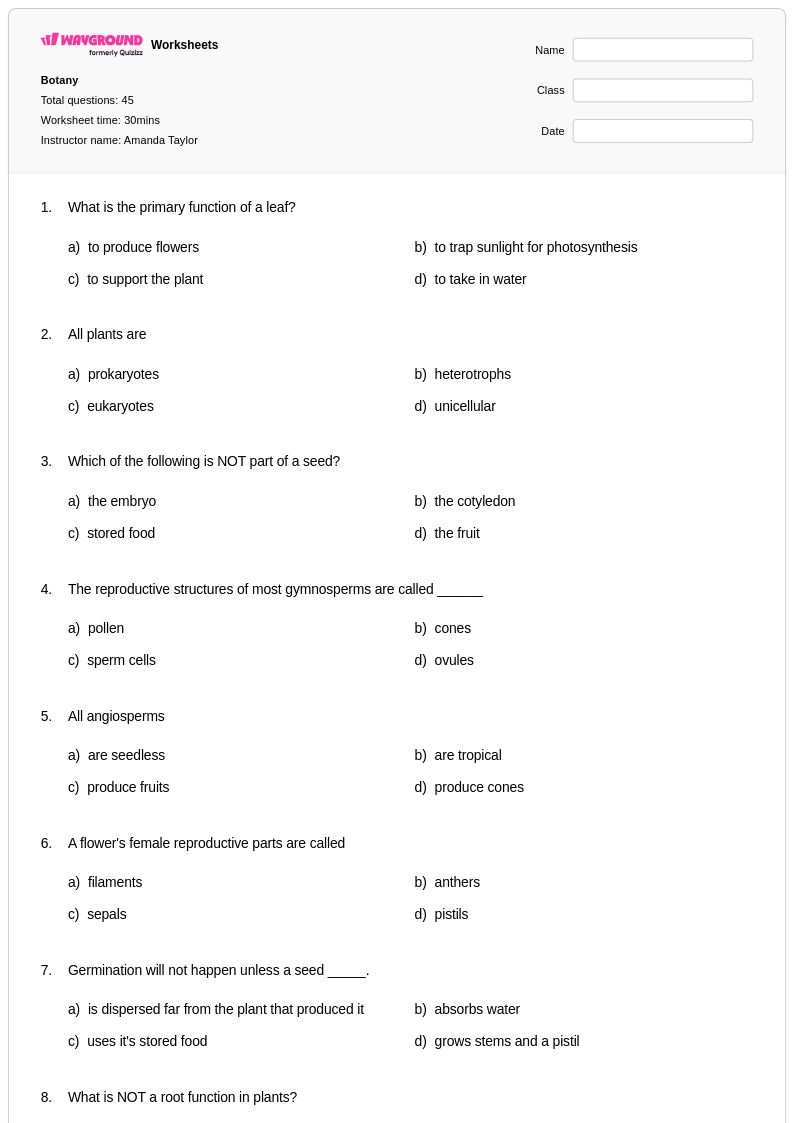
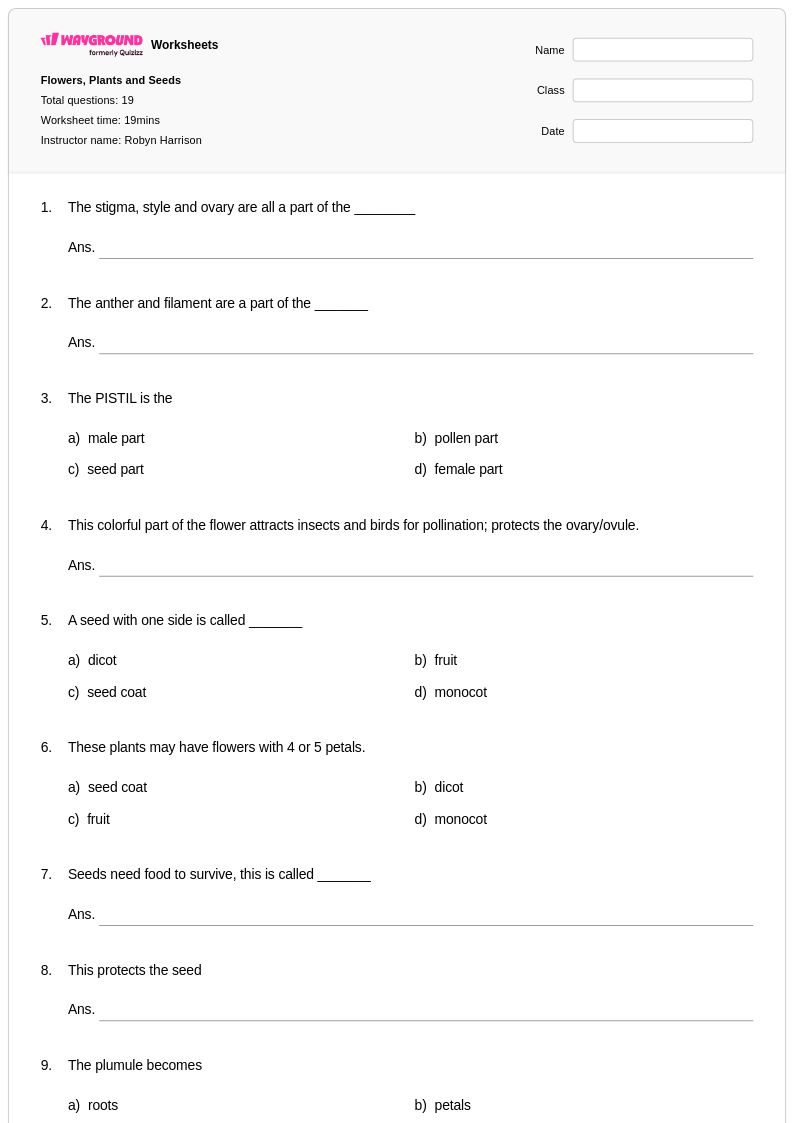
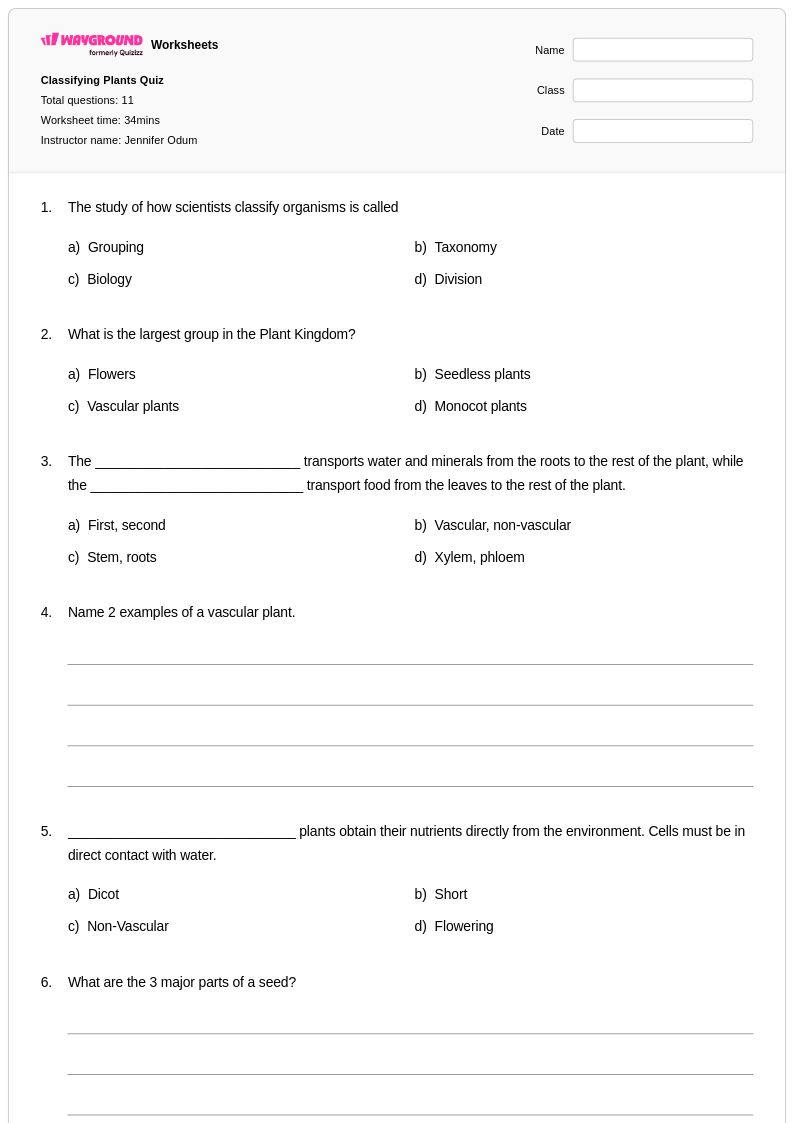
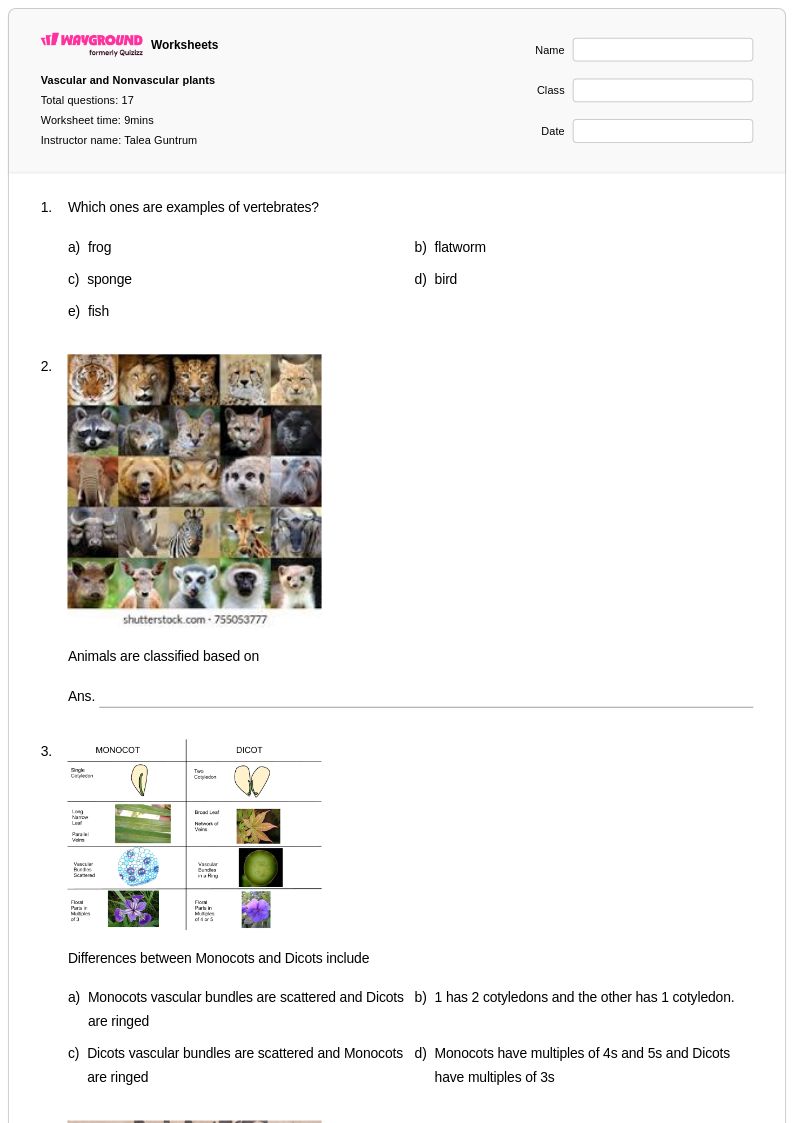
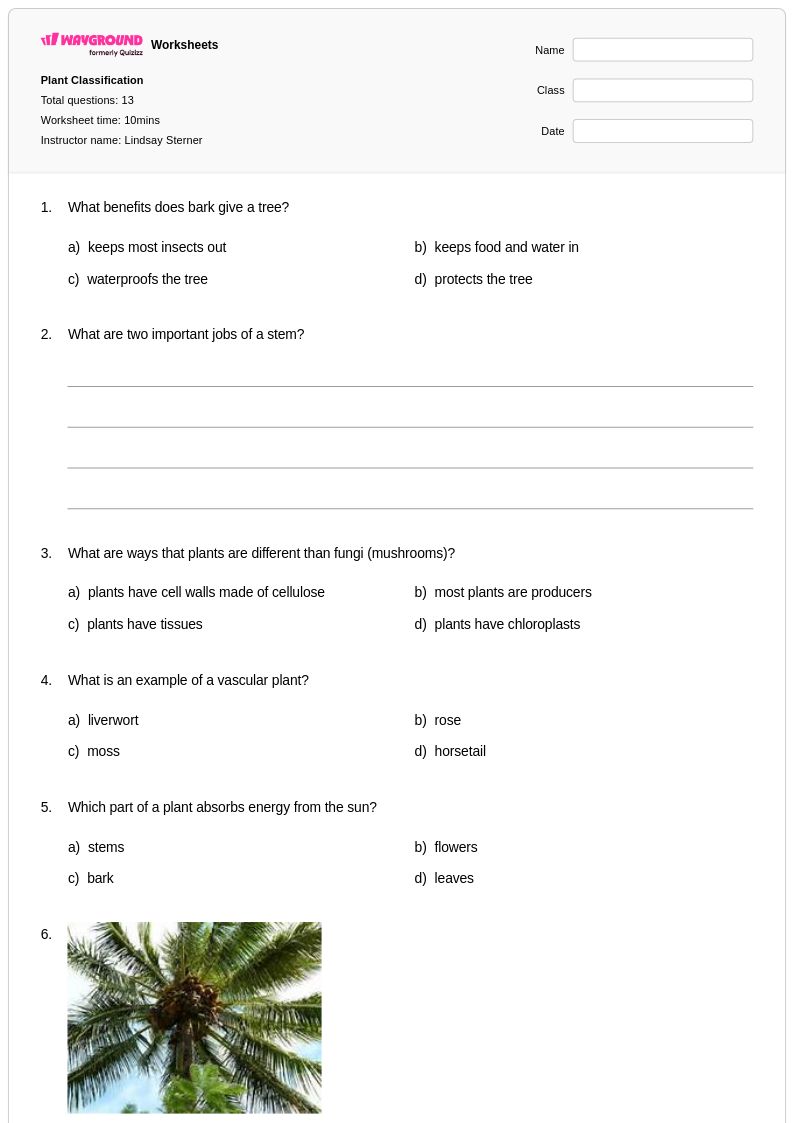
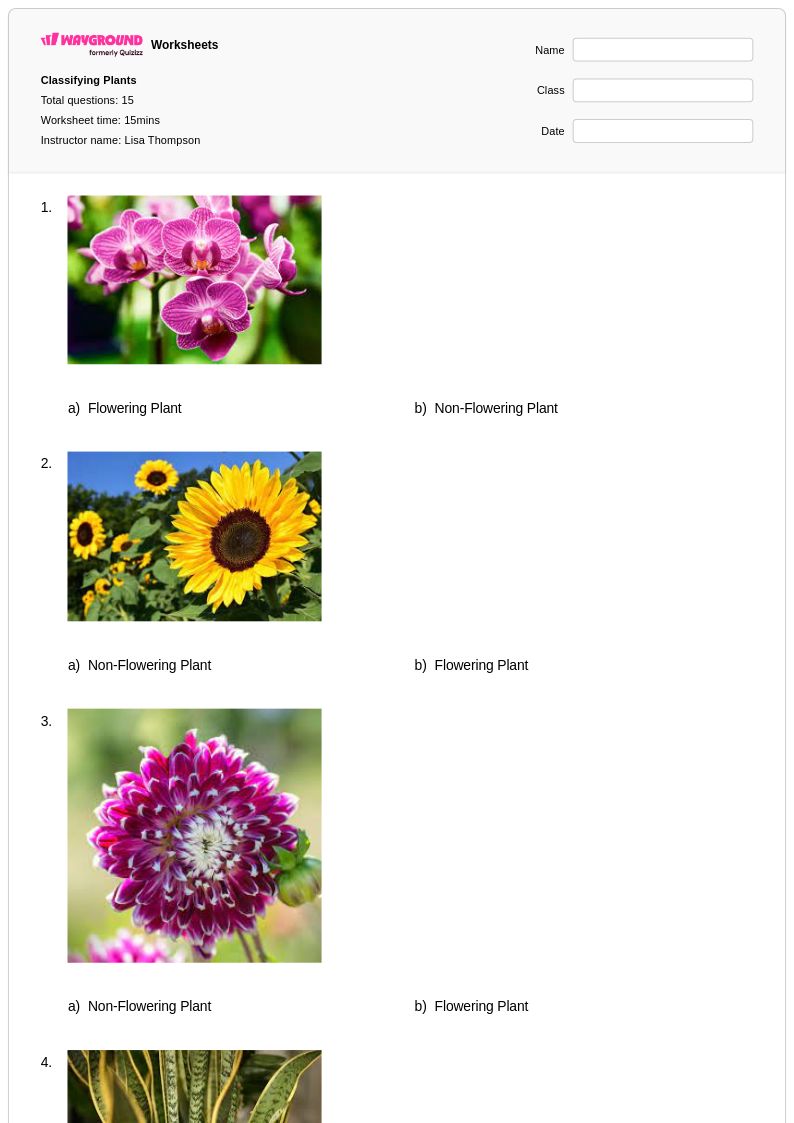
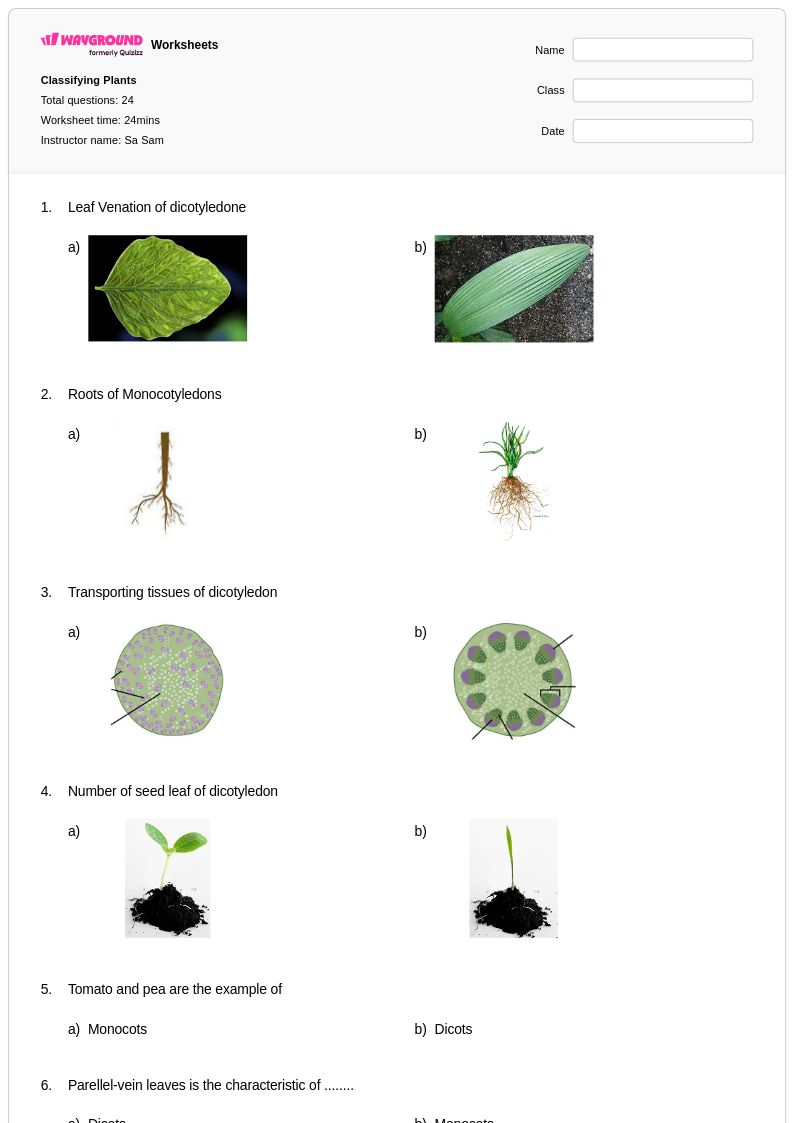
Monocots and dicots worksheets for Year 6 students available through Wayground (formerly Quizizz) provide comprehensive practice in distinguishing between these two fundamental plant classifications. These educational resources strengthen students' observational skills and botanical knowledge by challenging them to identify key structural differences including leaf venation patterns, root systems, stem arrangements, and flower parts. The worksheets feature detailed diagrams, comparative analysis activities, and classification exercises that help students master the scientific criteria used to categorize flowering plants. Each worksheet collection includes an answer key for immediate feedback, and teachers can access these materials as free printables in convenient pdf format, making it easy to incorporate practice problems into both classroom instruction and independent study sessions.
Wayground (formerly Quizizz) supports educators with an extensive library of millions of teacher-created resources specifically designed for monocot and dicot instruction at the Year 6 level. The platform's robust search and filtering capabilities allow teachers to quickly locate worksheets that align with specific learning standards and curriculum requirements, while built-in differentiation tools enable customization for diverse learning needs and ability levels. These botanical classification worksheets are available in both printable and digital formats, including downloadable pdf versions, giving teachers the flexibility to adapt materials for various instructional settings. Whether used for initial concept introduction, skill reinforcement, remediation support, or enrichment activities, these comprehensive worksheet collections streamline lesson planning while providing students with multiple opportunities to practice identifying and comparing the distinctive characteristics that separate monocotyledonous and dicotyledonous plants.
FAQs
How do I teach monocots and dicots to my students?
Start by anchoring instruction around the five key structural comparisons: leaf venation (parallel vs. net-like), root systems (fibrous vs. taproot), stem vascular arrangement, seed structure (one cotyledon vs. two), and flower part counts (multiples of three vs. four or five). Using real plant specimens or high-quality diagrams alongside classification worksheets helps students move from memorization to genuine pattern recognition. Building in time for students to sort unknown plants into monocot or dicot categories reinforces analytical thinking over rote recall.
What exercises help students practice identifying monocots and dicots?
Identification exercises that present labeled diagrams of leaf venation, root systems, and flower structures are highly effective for building recognition skills. Comparative analysis tasks that ask students to place two plants side by side and systematically work through each diagnostic feature prevent guessing and build procedural habit. Practice problems that range from basic labeling to open-ended classification justification help students at different proficiency levels engage meaningfully with the same core content.
What mistakes do students commonly make when classifying monocots and dicots?
The most common error is over-relying on a single characteristic, such as flower petal count, rather than cross-checking multiple structural features before making a classification decision. Students frequently confuse parallel venation with simple leaf shape, or assume all fibrous-rooted plants must be monocots without verifying other traits. Another frequent misconception is treating these categories as perfectly rigid, when in practice some plants display features that don't align neatly with either group, which is worth addressing explicitly in instruction.
How do I differentiate monocot and dicot instruction for students at different levels?
For students who need additional support, begin with two-characteristic sorts using only venation and root type before introducing all five diagnostic features. Advanced students benefit from tasks that challenge them to classify unfamiliar or ambiguous specimens and justify their reasoning in writing. On Wayground, teachers can apply accommodations such as reduced answer choices to lower cognitive load for individual students, or enable Read Aloud so that question text is read to students who need it, without affecting the experience of the rest of the class.
How do I use Wayground's monocots and dicots worksheets in my classroom?
Wayground's monocots and dicots worksheets are available as printable PDFs for traditional classroom use and in digital formats for technology-integrated learning environments. Teachers can also host these materials as a quiz directly on Wayground, enabling real-time student responses and immediate feedback. The included answer keys support both independent student practice and teacher-led review, making them practical for homework, in-class practice, or assessment prep.